Connect with us

Business

Average pay of CEOs of S&P 500 companies rose to record $22.8 million following Elon Musk’s nearly $1 trillion compensation, AFL-CIO finds

Published

on

Average pay of CEOs of S&P 500 companies rose to record $22.8 million following Elon Musk's nearly $1 trillion compensation, AFL-CIO finds
Elon Musk’s record-setting compensation packages from Tesla and SpaceX are reshaping executive CTC across corporate America, with S&P 500 boards increasingly using them as a benchmark for larger CEO pay, an American Federation of Labour and Congress of Industrial Organisations study found, according to a Reuters report.

Excluding Musk, the average compensation for S&P 500 chief executives jumped 21% to a record $22.8 million in 2025, data released on Thursday by the AFL-CIO showed. It was the highest figure since the AFL-CIO began tracking CEO pay in the 1990s.

Labour officials attributed the increase to a growing number of mega-pay packages inspired by Musk’s Tesla compensation plan, which could be worth as much as $1 trillion if he meets all its targets.

Tesla shareholders approved the restricted-stock plan in November, with the company valuing it at $158 billion. Including that amount, average S&P 500 CEO compensation reached $340.1 million last year, according to the AFL-CIO’s latest Paywatch study.

Advertisement

Musk also became the world’s first trillionaire based on his stake in satellite and AI company SpaceX.


Musk’s pay “changes the dynamic when other CEO compensation plans come up, boards use it as a reference,” Fred Redmond, the AFL-CIO’s secretary-treasurer, told Reuters in a telephone interview.
Meanwhile, employee wages are being held back by the rise of artificial intelligence and a Republican-led National Labour Relations Board, which labour leaders view as hostile to union-organising efforts, Redmond said.Excluding Musk’s Tesla compensation, the average CEO-to-worker pay ratio at S&P 500 companies widened to 312:1 last year from 285:1 in 2024. Including Musk’s package, the ratio reached 5,387:1.

“As we talk to our members, they’re pissed off over what’s happening to them, and they feel as though they should be more vocal in terms of calling attention to inequality,” Redmond said.

He noted that union representation had reached its highest level in 16 years.

Rising CEO pay and inequality have fed into broader political debates over why US workers struggle to afford housing, healthcare and other necessities.

Advertisement

The mean annual wage for US workers was $69,770 in May 2025, up 3% from a year earlier, according to Labour Department data.

Corporate compensation committees often argue that executive pay plans are tied to shareholder value and incentivise executives to deliver results. They also note that investors, including the largest asset managers, usually support such proposals at annual meetings.

Average shareholder support for advisory “say-on-pay” votes at S&P 500 companies stood at 90.6% through late June, according to compensation consultancy Semler Brossy, up from 89.4% for all of 2025.

Special awards draw scrutiny.

Advertisement

Shareholders have been less supportive of the growing number of special compensation awards, Semler Brossy found.

“These awards, which are usually intended to be one-offs and exist outside of annual compensation programs, are a hot-button issue,” the firm found.

Among S&P 500 companies that disclosed special awards, Goldman Sachs paid CEO David Solomon $118.9 million last year, including a major retention award. About 71% of votes cast backed the package, well below the broader S&P 500 average.

“We’re very pleased with the strong supermajority this vote received,” Goldman Sachs spokesperson Tony Fratto said.

Advertisement

Real estate investment trust Welltower awarded CEO Shankh Mitra $821 million, intended to cover most of his compensation over the next decade. Only 19% of votes cast supported the package.

“Welltower’s board and compensation committee remain committed to engaging with shareholders to gather their feedback and understand their perspectives,” a spokesperson told Reuters.

The spokesperson added that Mitra would receive the full amount only if he met all performance targets.

(Disclaimer: This article is based on inputs from agencies. These do not represent the views of The Economic Times)

Advertisement
Continue Reading
Click to comment

You must be logged in to post a comment Login

Leave a Reply

Business

Tyson Foods to shutter 2 facilities amid cattle shortage

Published

on

US beef prices may not drop until 2029 as cattle herd hits 72-year low

Tyson Foods announced Thursday that it will close two facilities and is pursuing the sale of a third as it makes “strategic changes” to its beef business.

The company will end operations at its Joslin, Illinois, beef plant and its Eagle Mountain, Utah, case-ready facility, while pursuing a sale of its Pasco, Washington, beef facility, according to a Tyson Foods news release.

Advertisement

“Tyson Foods will anchor its beef business around three strategically located beef facilities in the central United States: Dakota City, Nebraska; Holcomb, Kansas and Amarillo, Texas, to create a more competitive footprint amidst one of the most historic cattle shortages the country has ever experienced,” the meatpacking giant said.

HIGH BEEF PRICES HITTING CONSUMERS AS MEATPACKING GIANT WARNS OF SUPPLY STRUGGLES

Herd of beef cattle grazing on open grassland.

Beef cattle gather in a pasture. Tyson pointed to recent data showing continued limited heifer retention, a sign that tight cattle supplies could persist. (Angela Piazza/The Dallas Morning News, File)

Tyson pointed to recent data showing continued limited heifer retention, a sign that tight cattle supplies could persist.

“Recent USDA cattle inventory data, which included continued evidence of limited heifer retention, indicates these supply constraints are likely to persist, requiring strategic action,” the company said.

Advertisement

Capacity from the Illinois and Utah facilities will be shifted to other Tyson locations that the company said have “ample capacity to grow.”

Tyson also plans to ramp a second shift back up at its Amarillo, Texas, plant as more cattle become available.

US SOYBEAN FARMERS RACE TO MEET GLOBAL DEMAND AS FARMLAND SHRINKS

the logo of Tyson Foods, Inc.

Capacity from the Illinois and Utah facilities will be shifted to other Tyson locations that the company said have “ample capacity to grow.” (Cheng Xin/Getty Images)

“These changes will allow the company to maintain a similar level of cattle harvesting across a more efficient and modern network,” the news release states.

Advertisement

The company also said it will support employees affected by the closures.

Ticker Security Last Change Change %
TSN TYSON FOODS INC. 56.39 +0.58 +1.04%

“The company is committed to supporting our team members through this transition, including helping them apply for open positions at other facilities,” Tyson said. 

The changes come as American consumers continue to face elevated beef prices and meatpackers grapple with tight cattle supplies and higher costs.

TRUMP DECLARES FOOD SUPPLY EMERGENCY, SUSPENDS TARIFFS ON KEY FERTILIZER IMPORTS

Advertisement
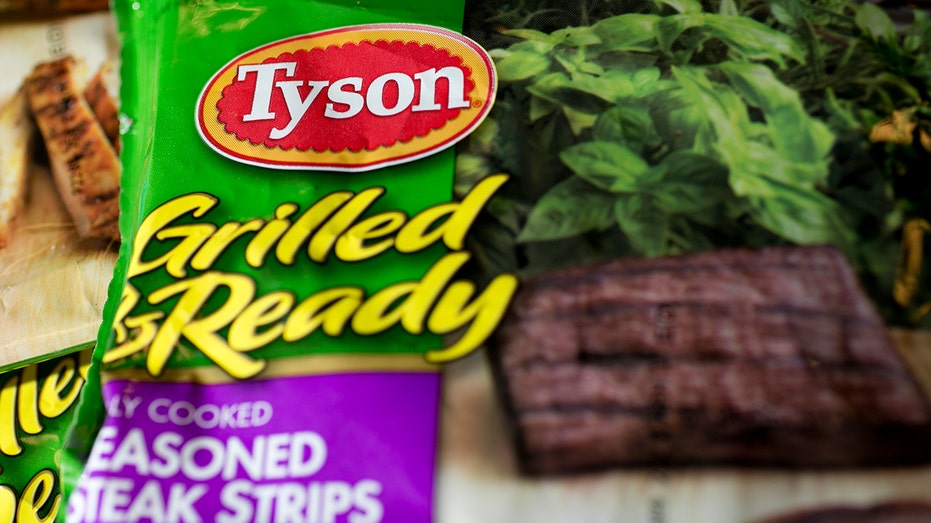
Packages of Tyson Foods Inc.

Tyson Foods packaged steak strips are displayed at a store in Washington, D.C., on Nov. 19, 2012. Tyson also plans to ramp a second shift back up at its Amarillo, Texas, plant as more cattle become available. (Andrew Harrer/Bloomberg via Getty Images)

The U.S. cattle herd has fallen to historically low levels due to drought reducing forage areas in key ranching regions, which forced ranchers to liquidate cattle. 

GET FOX BUSINESS ON THE GO BY CLICKING HERE

Tyson highlighted those pressures during its recent earnings call, with CEO Donnie King saying, “Beef hasn’t performed the way we expected, and we’re not pretending otherwise.”

FOX Business’ Eric Revell contributed to this report.

Advertisement
Continue Reading

Business

Earnings call transcript: Afya posts steady Q2 2026 growth as margins narrow

Published

on


Earnings call transcript: Afya posts steady Q2 2026 growth as margins narrow

Continue Reading

Business

Expectations are high for new B&G Foods CEO

Published

on

Expectations are high for new B&G Foods CEO

Robert Mills has “deeper understanding of challenges and opportunities,” CFO says.

Continue Reading

Business

Alithya Q1 F2027 slides: soft quarter prompts strategic review

Published

on


Alithya Q1 F2027 slides: soft quarter prompts strategic review

Continue Reading

Business

Soluna Q2 2026 slides: 145% revenue surge masks profitability pressure

Published

on


Soluna Q2 2026 slides: 145% revenue surge masks profitability pressure

Continue Reading

Business

Onex Corporation (ONEX:CA) Q2 2026 Earnings Call Transcript

Published

on

OneWater Marine Inc. (ONEW) Q1 2026 Earnings Call Transcript

Operator

Welcome to Onex Second Quarter 2026 Conference Call and Webcast. [Operator Instructions] As a reminder, this conference call is being recorded.

And now I’ll hand the conference over to Zev Korman, Vice President, Shareholder Relations & Communications at Onex. Please go ahead, sir.

Advertisement

Zev Korman
Vice President of Shareholder Relations & Communications

Thank you. Good morning, everyone. Thanks for joining us. We’re broadcasting this call on our website. Hosting the call today are Bobby Le Blanc, Onex’s Chief Executive Officer; and Meg McClellan, our Chief Financial Officer. Also joining today’s Q&A session is Paul Brand, Chief Executive Officer of Convex.

Earlier this morning, we issued our second quarter 2026 press release, MD&A and consolidated financial statements, which are available on the Shareholders section of our website and have also been filed on SEDAR. Our supplemental information package is also available on our website.

As a reminder, all references to dollar amounts on this call are in USD unless otherwise stated. I must also point everyone to our webcast presentation for our usual disclaimer and cautionary factors relating to any forward-looking statements contained in today’s presentation and remarks.

Advertisement

With that, I’ll now turn the call over to Bobby.

Robert LeBlanc
CEO, President & Director

Good morning, everyone. I’d like to thank Convex’s CEO, Paul Brand, for joining Meg and me for this call and for being available to answer your Convex-related questions when we get to

Advertisement
Continue Reading

Business

Jaguar Land Rover sales slump as supplier fire and Middle East conflict disrupt production

Published

on

Business Live

The UK’s largest car manufacturer said revenues fell by 9.6% year-on-year to £6bn for the three months to June 30

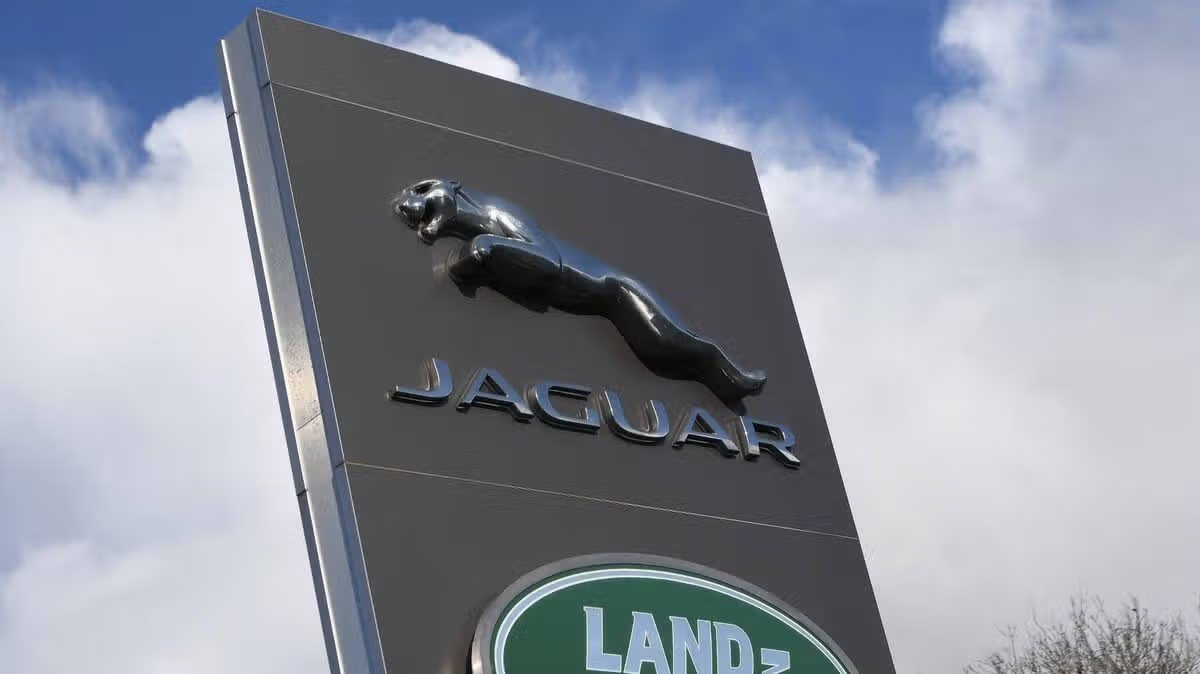
A Jaguar Land Rover sign

Jaguar Land Rover is Britain’s biggest car manufacturer(Image: Darren Quinton/Birmingham Live)

Jaguar Land Rover has reported a sharp drop in sales after the supply of new vehicles was disrupted by a fire at a parts supplier and disruption linked to the conflict in the Middle East.

Advertisement

The company, owned by India’s Tata Motors, said revenues were further hit by the planned phase-out of several Jaguar models.

The UK’s largest car manufacturer disclosed that revenues fell by 9.6% year-on-year to £6 billion for the three months to June 30, driven by a 9.2% decline in car volumes.

The figures came after car production was severely disrupted by a series of factors, including a fire at a supplier’s factory.

JLR temporarily halted production of its Range Rover and Range Rover Sport models at its Solihull plant in March, following a major blaze at the factory of a component manufacturer in Norway.

Advertisement

Car sales volumes have also been affected by Jaguar’s decision to cease production of a number of diesel and petrol-powered models, including its F-Pace.

Jaguar is shifting its focus towards electric models as part of a wider strategic overhaul aimed at reviving the brand’s fortunes.

PB Balaji, chief executive of JLR, said: “Despite the near-term industry challenges, we continue to see strong demand for our brands and look forward to the launch of four sensational new products in the coming months: Range Rover Electric, Range Rover Sport Electric, Range Rover GT and Jaguar Type 01.

“I would like to thank all our people, suppliers and retail partners for their continued dedication, resilience and support.”

Advertisement

JLR also posted a pre-tax profit, excluding exceptional items, of £109 million for the quarter, down from £351 million recorded during the same period a year ago.

Profit margins were further dented by a one-off provision tied to US fuel economy regulations, which partially counteracted the benefits of reduced US-UK tariffs.

Continue Reading

Business

‘I lost $14,000 in a month’: Investors hit by Korean stock market’s wild swings

Published

on

A woman and South Korean investor Yongjoon Kim posing for a selfie

Bank worker Yongjoon Kim lost 20 million Korean won ($14,000; £10,500) on the South Korean stock market last month.

Kim’s money was meant to help buy a home, as he is getting married later this year.

Instead the value of his tech investments slumped by around 25% in July.

“It’s going to sting and I’m going to have to work really hard to make up for this,” Kim says. “But for others who have taken more risk, they’re going to feel the pain.”

Advertisement

Many of his friends are worse off, and now in a “desperate” situation after “going all in” with their savings, he says.

While plenty of investors are piling into technology stocks, sharp market swings mean the bets don’t always pay off, with prices often moving on every major headline.

Nowhere is that instability more pronounced than in South Korea’s tech-heavy Kospi, widely regarded as the world’s most volatile stock index.

A global frenzy around artificial intelligence has driven wild swings in the value of the country’s biggest chipmakers.

Advertisement

The Kospi faced “one of the sharpest corrections” in its history between June and August, comparable to the drops seen during Covid-19 and the 1997 Asian financial crisis, says Wee Khoon Chong from financial services company BNY.

The index more than doubled its value since the start of the year to rise above 9,000 points in mid-June, before plunging to 5,500 within a few weeks. It has now recovered some ground to about 6,800 points.

Continue Reading

Business

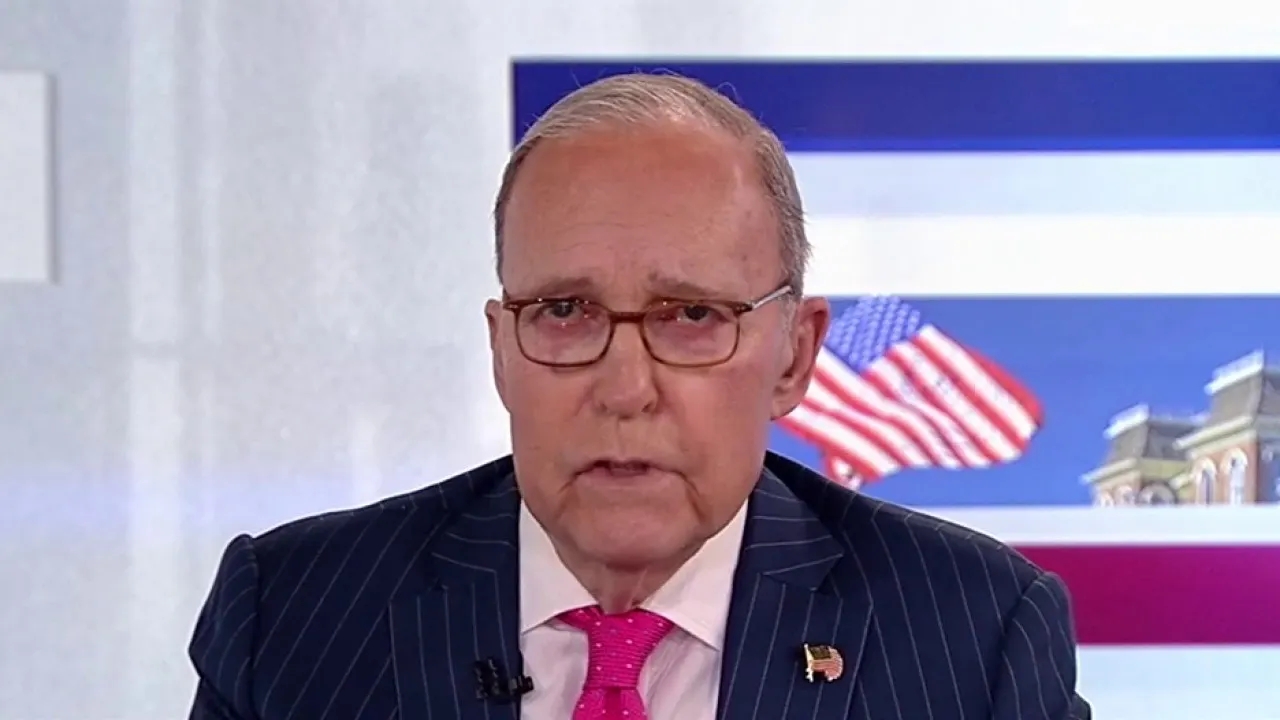
LARRY KUDLOW: 156.4 million American adults love the new S&P 500 record high

Published

on

LARRY KUDLOW: 156.4 million American adults love the new S&P 500 record high

Once again, the inflationistas who are really rooting against new Fed head Kevin Warsh have been proven wrong. The June inflation numbers went negative. The July inflation numbers did almost the same thing. Consumer prices were basically flat, and producer prices the same.

I don’t really think much of the producer price index the way it’s been reconfigured by the Bureau of Labor Statistics, but anyway it was flat, 0.0 percent, for July. So for the last 3 months, the PPI is running 1.3 percent at an annual rate. And the CPI is up 0.5 percent at an annual rate. You can chop and slice and dice these numbers 100 different ways, but the reality is, disinflation is setting in this summer.

And just to confuse the matter, if you look at the old Producer Price Index, before the BLS mucked it up, and when it used to actually represent wholesale prices, the old way shows two negative prints in June and July and a 0.7 percent annual rise over the past 3 months. Now, that doesn’t mean that the inflation battle is over. It just means that Mr. Warsh was correct in not moving to raise the Fed’s target rate in his first few months in office.

Advertisement

Mr. Warsh is steady as you go, with a clear commitment to bring inflation back to its 2 percent target. A feat that his predecessor, Jay Powell, couldn’t achieve for five years. And as the Wall Street Journal editorial board points out, Mr. Warsh is not using “forward guidance”  because it’s not necessary and people should focus on the actual data — not a dozen Federal Reserve regional presidents babbling all over the country. And the chairman himself is not leaking to certain reporters about what he intends to do. In other words, Mr. Warsh is cleaning up the system.

Now in terms of the inflation numbers, for context, the Cleveland Fed’s median CPI for the last 12 months is 2.7 percent. And its 16 percent trimmed mean is 2.6 percent. Mr. Warsh watches these alternative measures. So, the Fed is likely to stay on hold for a while, to see if the underlying inflation numbers come down to the 2 percent target. Along the way, they will hopefully be reducing their balance sheet holdings of Treasuries and treasury-backed securities.

Yet progress is progress, the Warsh critics are wrong. And the S&P 500 stock market index hit a new record high today, 7,800. And I know some people don’t like it when President Trump boasts about the stock market records. But I like it. As he put it on Tuesday night: “The country is doing well. The stock market, a fantastic record. We have 79 records so far in a short period of time.”

That’s right, I like it a lot. And you know who else likes it? Roughly 156 million American adults. That’s right. Ordinary working folks are participants in the stock market. It’s not just the wealthy pied-à-terre crowd in NYC, or rich people for short. It’s roughly 58 percent of adults, according to the Gallup poll, which comes to about 156 million American adults who own stock one way or another: index funds, ETFs, IRAs, brokerage accounts, bank accounts, even union pension funds.

Advertisement

That last one’s kind of my favorite, because most of the union leaders, most of them corrupt and stealing from those pension funds, filled with lefty Trump haters, even they benefit because a big chunk of their funds are invested in stocks. So the market’s having another great year, with a booming high-tech and manufacturing related economic prosperity, that all has a lot to do with Trumpian policies.

Is that going to help in the midterm elections? I’m going to bet that it does help. Americans love Trumpian free enterprise prosperity, not socialism.

Continue Reading

Business

How Consistent Branding Creates a More Professional Online Experience with Ecomm Business Solution

Published

on

How Consistent Branding Creates a More Professional Online Experience with Ecomm Business Solution

A business’s online presence often shapes the first impression customers, partners, and prospective clients form long before a conversation takes place.

Whether someone discovers a company through its website, social media profiles, online directory listings, or digital marketing materials, they naturally expect a consistent experience from one platform to the next. When every touchpoint feels connected, the business appears organized, thoughtful, and professional.

Consistent branding is not simply about using the same logo everywhere. It involves creating a recognizable identity that reflects a company’s values, personality, and goals across every digital interaction. As businesses grow and adapt, maintaining that consistency becomes an ongoing effort rather than a one-time project.

Ecomm Business Solution works with businesses to develop branding strategies that align visual identity, messaging, and website presentation with each organization’s unique objectives. Instead of relying on generic templates or one-size-fits-all branding, the company helps businesses create cohesive digital experiences designed to support long-term brand recognition and professionalism.

What Brand Consistency Means in Today’s Digital Environment

The modern customer journey rarely follows a straight path. Someone might first encounter a business through an online search, visit its website, browse social media pages, read customer reviews, and later return after receiving an email newsletter or recommendation.

Advertisement

Throughout that journey, people expect each interaction to feel connected. The colors, writing style, visuals, and overall presentation should reinforce that they are engaging with the same business.

This is the foundation of brand consistency.

Consistent branding means presenting a unified visual and verbal identity across every digital platform. Rather than treating each online channel as a separate project, businesses create an experience where every element supports the same overall impression.

When customers recognize familiar design elements and messaging wherever they encounter a company, the business appears more polished and intentional. That consistency contributes to a professional online presence that reflects attention to detail and thoughtful communication.

Advertisement

Visitors Expect a Connected Experience Across Every Platform

Imagine visiting a company’s website that features clean typography, modern colors, and a professional tone. Later, you click through to the business’s social media page only to find completely different colors, outdated graphics, and messaging that feels disconnected from the website.

While visitors may not consciously identify every inconsistency, they often notice that something feels off.

The opposite experience creates greater confidence. A website that shares the same visual identity, language, and overall personality as other digital platforms feels cohesive and trustworthy.

This expectation has become increasingly important because businesses interact with audiences across multiple channels. Websites, social media profiles, email communications, digital brochures, online advertisements, and customer portals all contribute to the broader digital presence.

Advertisement

Ecomm Business Solution helps businesses approach these touchpoints as connected pieces of a larger branding strategy instead of isolated marketing assets. By considering how each platform supports the others, businesses can present a unified identity that reflects their goals and values.

Branding Is Much More Than a Logo

Many people associate branding with logo design, but a logo represents only one part of a much larger visual identity.

Strong business branding combines several elements that work together to create a recognizable and professional experience.

Color Palette

A carefully selected color palette creates familiarity across digital platforms. Whether visitors are browsing a website, viewing social media graphics, or reading an email, consistent colors reinforce recognition and help create visual continuity.

Advertisement

Color choices also communicate personality. A consulting firm may favor understated, refined tones, while a creative agency might embrace more vibrant combinations that reflect innovation and energy.

Typography

Typography influences readability as well as perception. Consistently using the same fonts across websites and digital materials helps establish a polished appearance while making content easier to recognize.

Mixing unrelated fonts without purpose can make a brand appear fragmented, even when the logo remains the same.

Visual Style

Photography, illustrations, icons, and graphic treatments all contribute to a company’s visual identity.

Advertisement

Some businesses favor bright lifestyle photography, while others rely on clean product imagery or minimalist graphics. The important factor is maintaining a consistent visual style that reflects the business rather than changing direction from one platform to another.

Tone of Voice and Messaging

Branding extends beyond visuals into communication.

The language a company uses on its website should feel familiar when customers read blog articles, social media posts, service descriptions, or email updates.

Some businesses communicate with warmth and approachability. Others adopt a more technical or professional tone. Neither approach is inherently better. What matters is consistency.

Advertisement

Clear messaging also helps explain who the business serves, what it offers, and what values guide its work. Repeating those themes naturally across digital platforms creates a more cohesive brand identity.

Layout and Design Elements

Spacing, navigation, buttons, icons, headings, and page structure all contribute to website branding.

A consistent layout creates familiarity for visitors while reinforcing the overall visual identity. Even subtle design choices, such as rounded buttons or specific image framing, become recognizable when used consistently throughout a digital presence.

How Every Branding Element Works Together

Each branding element supports the others rather than standing alone.

Advertisement

Colors attract attention. Typography improves readability. Images communicate personality. Messaging explains purpose. Layout guides visitors through information.

When all these components align, they create an experience that feels intentional instead of accidental.

For example, consider two local accounting firms.

The first uses navy and gray throughout its website, employs professional photography, writes in clear language, and maintains similar branding across social media and downloadable resources.

Advertisement

The second features different fonts on every page, inconsistent colors, unrelated stock images, and messaging that shifts dramatically between platforms.

Both firms may provide excellent services, but the first business presents a more cohesive and professional online presence simply because every branding element supports the same identity.

This illustrates why thoughtful branding often involves much more than graphic design alone.

The Impact of Inconsistent Branding

Inconsistent branding does not necessarily prevent a business from attracting customers, but it can create unnecessary confusion.

Advertisement

Visitors may wonder whether different social profiles belong to the same company. They may question whether outdated branding reflects outdated information. In some cases, inconsistent messaging makes it harder to understand what the business actually offers.

These inconsistencies often develop gradually.

A company redesigns its website but leaves old logos on social media. Marketing materials continue using outdated fonts. New graphics adopt different colors while older content remains unchanged.

Individually, these issues may seem minor. Together, they create a fragmented experience that may make the business appear less polished than intended.

Advertisement

Maintaining consistency helps reduce these disconnects by ensuring every digital touchpoint reflects the same professional identity.

Branding Evolves Alongside the Business

One of the most common misconceptions about branding is that it ends once a logo and website have been completed.

In reality, branding evolves as businesses expand, introduce new services, refine their messaging, or reach different audiences.

A startup’s visual identity may change as the company matures. An established organization may refresh its website branding while preserving the recognition it has built over time.

Advertisement

The goal is not constant redesign but thoughtful evolution.

Successful branding balances consistency with adaptability, allowing businesses to modernize their presentation without losing the qualities customers already recognize.

This ongoing approach helps ensure the brand continues reflecting the organization’s direction while maintaining a cohesive identity across digital platforms.

A Branding Strategy Built Around Each Business

No two businesses share identical goals, audiences, or industries. A branding strategy that works for a creative studio may not suit a professional services firm, nonprofit organization, or online retailer.

Advertisement

Ecomm Business Solution recognizes that effective branding begins with understanding the business itself.

Rather than applying the same visual approach to every client, the company develops branding strategies based on each organization’s objectives, industry, target audience, and long-term vision.

This collaborative process includes refining visual identity, strengthening messaging, improving professional website presentation, and helping businesses maintain consistency across their digital presence.

By focusing on supportive communication throughout the process, Ecomm Business Solutions helps clients create branding that reflects who they are rather than following short-lived design trends.

Advertisement

The result is a cohesive brand identity built to support professional presentation across websites and other digital platforms while remaining flexible enough to evolve over time.

Building a Stronger Digital Presence Through Consistency

Every interaction contributes to how people perceive a business online. A thoughtfully designed website, recognizable visual identity, clear messaging, and consistent presentation across digital platforms all work together to create a more professional experience.

Consistent branding is not about perfection or rigid rules. It is about creating familiarity through intentional design, communication, and presentation that reflect the business accurately and consistently.

Businesses that invest in maintaining a cohesive brand identity often find it easier to present themselves with clarity as their digital presence continues to grow. While branding alone does not guarantee specific business outcomes, a consistent approach can help strengthen professionalism, improve recognition, and build customer confidence over time.

Advertisement

Ecomm Business Solution supports businesses throughout this ongoing process by developing branding strategies tailored to each client’s goals, audience, and vision. Through collaborative planning, clear messaging, visual identity development, and professional website presentation, the company helps businesses create digital experiences that remain consistent, authentic, and aligned with the image they want to share with the world.

Advertisement
Continue Reading

Trending

Copyright © 2025