Over the last several years, fusion power has gone from the butt of jokes — always a decade away! — to an increasingly tangible and tantalizing technology that has drawn investors off the sidelines.
The technology may be challenging to master and expensive to build today, but fusion promises to harness the nuclear reaction that powers the sun to generate nearly limitless energy here on Earth. If startups are able to complete commercially viable fusion power plants, then they have the potential to upend trillion-dollar markets.
The bullish wave buoying the fusion industry has been driven by three advances: more powerful computer chips, more sophisticated AI, and powerful high-temperature superconducting magnets. Together, they have helped deliver more sophisticated reactor designs, better simulations, and more complex control schemes.
It doesn’t hurt that, at the end of 2022, a U.S. Department of Energy lab announced that it had produced a controlled fusion reaction that produced more power than the lasers had imparted to the fuel pellet. The experiment had crossed what’s known as scientific breakeven, and while it’s still a long ways from commercial breakeven, where the reaction produces more than the entire facility consumes, it was a long-awaited step that proved the underlying science was sound.
Advertisement
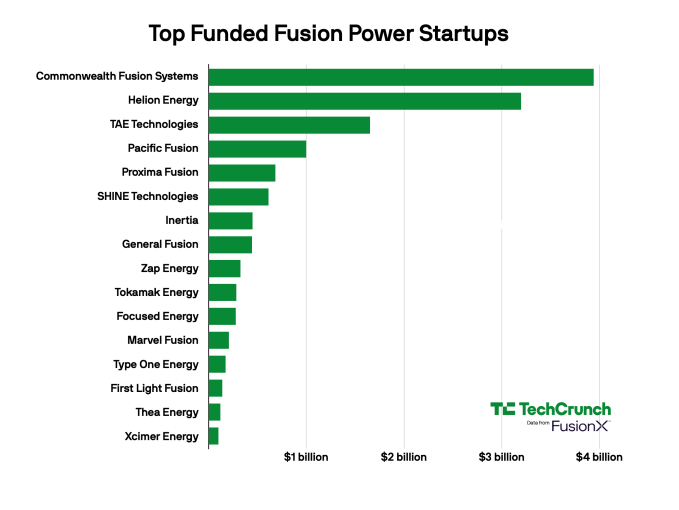
Founders have built on that momentum in recent years, pushing the private fusion industry forward at a rapid pace. Below is a list of startups that have raised over $100 million in committed capital from private investors, according to data provided to TechCrunch by FusionX.
Image Credits:Tim De Chant
Commonwealth Fusion Systems
Commonwealth Fusion Systems (CFS) has raised about a third of all private capital invested in fusion companies to date. Its latest round, which closed in July, added $1 billion to its coffers, bringing its total raised to $3.94 billion, according to FusionX.
CFS’s catapulted into the lead in 2021 with a $1.8 billion Series B. Since then, the startup has been hard at work in Massachusetts building Sparc, its first-of-a-kind power plant intended to produce power at what it calls “commercially relevant” levels. The company says Sparc should reach scientific breakeven — also known as Q > 1 — sometime in 2027.
Sparc’s reactor is a tokamak design, which resembles a doughnut. The D-shaped cross section is wound with high-temperature superconducting tape, which, when energized, generates a powerful magnetic field that will contain and compress the superheated plasma. Heat generated from the reaction is converted to steam to power a turbine. CFS designed its magnets in collaboration with MIT, where co-founder and CEO Bob Mumgaard worked as a researcher on fusion reactor designs and high-temperature superconductors.
The Massachusetts-based CFS expects to have Sparc operational in late 2026 or early 2027. Later this decade, the company says it will begin construction on Arc, its commercial power plant that will produce 400 megawatts of electricity. The facility will be built near Richmond, Virginia, and Google has agreed to buy half its output.
Advertisement
CFS is backed by a long list of investors, including Breakthrough Energy Ventures, The Engine, Bill Gates, and others.
Helion
Of all fusion startups, Helion has the most aggressive timeline. The company plans to produce electricity from its reactor in 2028. Its first customer? Microsoft.
Helion, based in Everett, Washington, uses a type of reactor called a field-reversed configuration, where magnets surround a reaction chamber that looks like an hourglass with a bulge at the point where the two sides come together. At each end of the hourglass, the reactor spins the plasma into doughnut shapes that are shot toward each other at more than 1 million mph. When they collide in the middle, additional magnets help induce fusion. When fusion occurs, it boosts the plasma’s own magnetic field, which induces an electrical current inside the reactor’s magnetic coils. That electricity is then harvested directly from the machine.
The company most recently raised $465 million in June in a Series G that valued the company at $15.5 billion. Its previous round, announced in January 2025, totaled $425 million. Altogether, Helion has raised $3.2 billion in committed capital, according to FusionX. Investors include Sam Altman, SoftBank Vision Fund 2, Reid Hoffman, KKR, BlackRock, Peter Thiel’s Mithril Capital Management, and Capricorn Investment Group.
Advertisement
TAE Technologies
Founded in 1998, TAE Technologies (formerly known as Tri Alpha Energy) was spun out of the University of California, Irvine by Norman Rostoker. It uses a field-reversed configuration, but with a twist: after the two plasma shots collide in the middle of the reactor, the company bombards the plasma with particle beams to keep it spinning in a cigar shape. That improves the stability of the plasma, allowing more time for fusion to occur and for more heat to be extracted to spin a turbine.
In December 2025, TAE announced that it would merge with President Donald Trump’s social media company, Trump Media & Technology Group. The all-stock transaction would value the combined company at $6 billion. TAE would receive $200 million plus another $100 million upon filing paperwork with the Securities and Exchange Commission. When the deal was announced, the companies said the combined entity would be led by two co-CEOs, TAE CEO Michl Binderbauer and Trump Media’s CEO, which is currently Kevin McGurn, who is serving in an interim capacity.
The fusion startup had previously raised $150 million in June 2025 from existing investors, including Google, Chevron, and New Enterprise. Prior to the merger announcement, TAE had raised a total of $1.65 billion, according to FusionX.
Pacific Fusion
Pacific Fusion burst out of the gate with a Series A that topped $1 billion, the startup has told TechCrunch. That’s a whopping sum even among well-funded fusion startups. The company will use inertial confinement to achieve fusion, but instead of lasers compressing the fuel, it will use coordinated electromagnetic pulses. The trick is in the timing: All 156 impedance-matched Marx generators need to produce 2 terawatts for 100 nanoseconds, and those pulses need to simultaneously converge on the target.
Advertisement
The company is led by CEO Eric Lander, the scientist who led the Human Genome Project, and chief scientist Will Regan. Pacific Fusion’s funding might be massive, but the startup hasn’t gotten it all at once. Rather, its investors will pay out in tranches when the company achieves specified milestones, an approach that’s common in biotech.
Proxima Fusion
Most investors have favored large startups that are pursuing tokamak designs or some flavor of inertial confinement. But stellarators have shown great promise in scientific experiments, including the Wendelstein 7-X reactor in Germany.
Proxima Fusion is making the most of its proximity to the successful experiment, raising more than $682.9 million across rounds, according to FusionX. The most recent round, which was announced in July, valued the company at $2.7 billion. Investors include Google, RWE, Balderton Capital, Cherry Ventures, East X Ventures, and XTX Ventures.
Stellarators are similar to tokamaks in that they confine plasma in a ring-like shape using powerful magnets. But they do it with a twist — literally. Rather than force plasma into a human-designed ring, stellarators twist and bulge to accommodate the plasma’s quirks. The result should be a plasma that remains stable for longer, increasing the chances of fusion reactions.
Advertisement
Proxima is planning to complete Alpha, it’s net-energy demonstrator, in the early 2030s, and Stellaris, it’s commercial power plant, later that decade.
Shine Technologies
Shine Technologies is taking a cautious — and possibly pragmatic — approach to generating fusion power. Selling electrons from a fusion power plant is years off, so instead, it’s starting by selling neutron testing and medical isotopes. More recently, it has been developing a way to recycle radioactive waste. Shine hasn’t picked an approach for a future fusion reactor, instead saying that it’s developing necessary skills for when that time comes.
The company has raised a total of $1 billion, according to PitchBook. Investors include Energy Ventures Group, Koch Disruptive Technologies, Nucleation Capital, and the Wisconsin Alumni Research Foundation. The company most recently raised a $240 million round in February led by NantWorks with participation from investors including Deerfield Management, Fidelity Management & Research Company, Oaktree Capital Management, Pelican Energy Partners, and the Sumitomo Corporation of Americas.
Inertia Enterprises
Only one fusion experiment, the National Ignition Facility (NIF), has surpassed scientific breakeven, and the chief scientist of that endeavor, Annie Kritcher, is part of Inertia Enterprises‘ founding team. She’s joined by Mike Dunne, a Stanford professor, and Jeff Lawson, who co-founded Twilio and currently owns The Onion. In April, the startup signed three agreements to commercialize the technology developed at the NIF.
Advertisement
Inertia plans to use lasers to bombard fusion fuel pellets, an inertial confinement design that echoes the one Kritcher successfully used at the NIF. Inertia Enterprises emerged from stealth in February with $450 million in Series A funding in a round led by Bessemer Venture Partners with participation from GV, Modern Capital, Threshold Ventures, and others.
General Fusion
Now in its third decade, General Fusion has raised over $442 million, according to FuionX data. The Richmond, British Columbia-based company was founded in 2002 by physicist Michel Laberge, who wanted to prove a different approach to fusion known as magnetized target fusion (MTF). Investors include Jeff Bezos, Temasek, BDC Capital, and Chrysalix Venture Capital.
In a General Fusion’s reactor, a liquid metal wall surrounds a chamber in which plasma is injected. Pistons surrounding the wall push it inward, compressing the plasma inside and sparking a fusion reaction. The resulting neutrons heat the liquid metal, which can be circulated through a heat exchanger to generate steam to spin a turbine.
General Fusion hit a rough patch in spring 2025. The company ran short of cash as it was building LM26, its latest device that it hoped would hit breakeven in 2026. Just days after hitting a key milestone, it laid off 25% of its staff. CEO Greg Twinney penned an open letter pleading for funding from investors.
Advertisement
In August 2025, they delivered somewhat, injecting $22 million in a pay-to-play round that one investor called “the least amount of capital possible” to keep General Fusion afloat. Then in November, securities filings in Canada revealed that the company had raised $51.1 million in SAFE notes from nearly 70 investors, the Globe and Mail reported.
In January, General Fusion said it would go public via a reverse merger with a special purpose acquisition company. The company listed on the Nasdaq on July 13, 2026, and the transaction net the company $127 million, per FusionX.
Zap Energy
Zap Energy isn’t using high-temperature superconducting magnets or super-powerful lasers to keep its plasma confined. Rather, it zaps the plasma (get it?) with an electric current, which then generates its own magnetic field. The magnetic field compresses the plasma to about 1 millimeter, at which point ignition occurs. The neutrons released by the fusion reaction bombard a liquid metal blanket that surrounds the reactor, heating it up. The liquid metal is then cycled through a heat exchanger, where it produces steam to drive a turbine.
The startup announced a partial pivot in April, saying it will pursue nuclear fission in addition to fusion, while also exploring a hybrid power plant that would blend both nuclear fusion and fission. It also hired a new CEO, Zabrina Johal, who has expertise in the fission industry. Zap claims the move will help it bring in revenue earlier than fusion alone.
Advertisement
The Everett, Washington-based company has raised $325 million, according to FusionX. Backers include Bill Gates’ Breakthrough Energy Ventures, DCVC, Lowercarbon, Energy Impact Partners, Chevron Technology Ventures, and Bill Gates as an angel.
Tokamak Energy
Tokamak Energy takes the usual tokamak design — the doughnut shape — and squishes it, reducing its aspect ratio to the point where the outer bounds start resembling a sphere. Like many other tokamak-based startups, the company uses high-temperature superconducting magnets (the rare earth barium copper oxide, or REBCO, variety). Since its design is more compact than a traditional tokamak, it requires less in the way of magnets, which should reduce costs.
The Oxfordshire, U.K.-based startup’s ST40 prototype, which looks like a large, steampunk Fabergé egg, generated an ultra-hot, 100-million degree Celsius plasma in 2022. Its next generation, Demo 4, is currently under construction and is intended to test the company’s magnets in “fusion power plant-relevant scenarios.” Tokamak Energy raised $125 million in November 2024 to continue its reactor design and expand its magnet business. In April, the startup said it would be supplying magnets for the U.K.’s STEP Fusion program, a government program that is working toward a spherical tokamak-based power plant.
In total, the company has raised $284 million according to FusionX. Its investors include Future Planet Capital, In-Q-Tel, Midven, and Capri-Sun founder Hans-Peter Wild, according to PitchBook.
Advertisement
Focused Energy
Germany-based Focused Energy is another fusion startup that traces its lineage to the National Ignition Facility (NIF). In addition to using laser pulses to compress a fuel target, the company has hired Debbie Callahan as its chief strategy officer. Callahan helped design the fuel target at NIF. Her job at Focused Energy will be to figure out how to turn the NIF’s painstakingly crafted fuel target into something that can be mass manufactured at a rate of nearly 1 million per day.
Focused Energy raised an oversubscribed $240 million Series A in June, bringing its total private capital raised to $277 million, according to FusionX. The company has also received $200 million in grants. Investors include the German Federal Agency for Breakthrough Innovation (SPRIND), Prime Movers Lab, and the utility RWE, which has granted Focused Energy access to a decommissioned nuclear fission power plant it operates.
Marvel Fusion
Marvel Fusion follows the inertial confinement approach, the same basic technique that the National Ignition Facility used to prove that controlled nuclear fusion reactions could produce more power than was needed to kick them off. Marvel fires powerful lasers at a target embedded with silicon nanostructures that cascade under the bombardment, compressing the fuel to the point of ignition. Because the target is made using silicon, it should be relatively simple to manufacture, leaning on the semiconductor manufacturing industry’s decades of experience.
The inertial confinement fusion startup is building a demonstration facility in collaboration with Colorado State University, which it expects to have operational by 2027. Munich-based Marvel has raised a total of $208 million from investors including b2venture, Deutsche Telekom, Earlybird, and HV Capital with Taavet Hinrikus and Albert Wenger as angels.
Advertisement
Type One Energy
Stellarator startup Type One Energy is planning to build a fusion reactor on the site of a retired Tennessee Valley Authority (TVA) coal power plant. The magnetic confinement device is expected to generate 350 megawatts of electricity, and the company hopes to bring it online by the mid-2030s.
Unlike other fusion startups, Type One plans to sell key technology to organizations like the TVA, allowing them to build, own, and operate the equipment, similar to how many fossil fuel power plants are developed today. Type One has raised $174.5 million to date, according to FusionX, including an extended Series A that totaled $82.5 million. The startup is currently raising a $250 million Series B.
Kyoto Fusioneering
With all the startups pursuing fusion power, it was perhaps inevitable that another would pop up to develop components that round out a power plant. The so-called balance of plant, or the parts that sit outside the reactor, range from gyrotrons that heat plasma to heat extraction systems to harvest power from fusion reactions to turn it into electricity.
Kyoto Fusioneering has made an early bet that if even one fusion startup succeeds in generating enough power to sell to the grid, that the industry will need a supplier for the balance of plant and the expertise to integrate it into whichever fusion technologies win out.
Advertisement
Venture capitalists appear to agree, having invested $121 million in Kyoto Fusioneering, per FuxionX. Investors include 31Ventures, In-Q-Tel, JIC Venture Growth Investments, Mitsubishi, and Sumitomo Mitsui Trust Investment, according to PitchBook.
First Light Fusion
Unlike many other fusion startups, First Light Fusion doesn’t use magnets to generate the conditions necessary for fusion. Instead, it follows an approach known as inertial confinement, in which fusion fuel pellets are compressed until they ignite.
But even then, First Light doesn’t hew to orthodoxy. Most attempts at inertial confinement use lasers to do the dirty work, following the lead of the National Ignition Facility, which produced a groundbreaking experiment in 2022. First Light had previously planned to fire a projectile at a target using a two-stage gun, but it has since dropped those plans
Currently, First Light says it is offering its core technologies to other companies looking to build an inertial confinement power plant. A spokesperson for First Light said that it is planning to build “pulsed power capability that would act as our demonstrator plant but would have other science and defense applications.”
Advertisement
Based in Oxfordshire, U.K., First Light has raised $140 million, per FusionX data Its investors include Invesco, IP Group, and Tencent, according to PitchBook.
Thea Energy
Thea Energy is betting its pixel-inspired magnets will help it build a stellarator for less money. Stellarators can keep plasmas burning for long periods of time — a boon when it comes to running a commercial power plant — but to do so, they require twisty magnetic fields. Most stellarators build magnets that mimic that complex shape, but Thea Energy thinks that by wreathing its doughnut-shaped reactor in dozens of smaller magnets, it can use control software to create the necessary kinks.
In May, Thea raised $100 million in a Series B led by the U.S. Innovative Technology Fund, just over two years after a $20 million Series A. Across all rounds, the startup has raised $120 million in private capital. Other investors include Prelude Ventures, Lowercarbon Capital, Hitachi Ventures, and Emerald Technology Ventures.
Xcimer
Though nothing about fusion can be described as simple, Xcimer takes a relatively straightforward approach: follow the basic science that’s behind the National Ignition Facility’s breakthrough net-positive experiment and redesign the technology that underpins it from the ground up. The Colorado-based startup is planning to build a 10-megajoule laser system, 5x more powerful than the NIF setup that made history. Molten salt walls surround the reaction chamber, absorbing heat and protecting the first solid wall from damage. In June, Xcimer turned on Phoenix, a prototype system that it says is the most powerful privately owned laser in the world.
Advertisement
Founded in July 2022, Xcimer has raised $101 million from investors, including Hedosophia, Breakthrough Energy Ventures, Emerson Collective, Gigascale Capital, and Lowercarbon Capital.
This story was originally published in September 2024 and will be continually updated.
When you purchase through links in our articles, we may earn a small commission. This doesn’t affect our editorial independence.
Nobody appears to have informed the Compact Disc that its funeral was held years ago.
U.S. CD sales increased 16% to 16.3 million units during the first half of 2026, according to Luminate, and that growth still reached 6.7% when K-pop sales were removed from the equation. At the same time, the hardware industry has suddenly developed a serious case of silver-disc fever, with new CD players and transports arriving from Marantz, NAD, FiiO, Quad, Shanling, Cayin, Mission, TEAC and others at prices ranging from under $200 to several thousand dollars.
The latest manufacturer to join that increasingly crowded party is hardly some Kickstarter operation with a transparent plastic lid and Bluetooth.
Accuphase has introduced the DP-470, a dedicated high-end CD player that replaces the DP-450 and borrows technology from the considerably more ambitious DP-570S SACD/CD player. It goes on sale in Japan in late August for ¥528,000 including tax. Accuphase has not announced U.S. pricing or availability, and we will update this article when those details become available.
Advertisement
There is something wonderfully 2026 about one of Japan’s most traditional high-end manufacturers introducing a new machine whose primary purpose is extracting 16-bit/44.1kHz audio from a plastic disc introduced in 1982.
Apparently progress occasionally involves finding your jewel cases again.
This Is Not Just a DP-450 With a New Number
The DP-470 remains a CD-only player. It does not play SACDs, which Accuphase reserves for models such as the DP-570S higher in the range. But calling it a conventional Red Book player understates what Accuphase has done with the digital section.
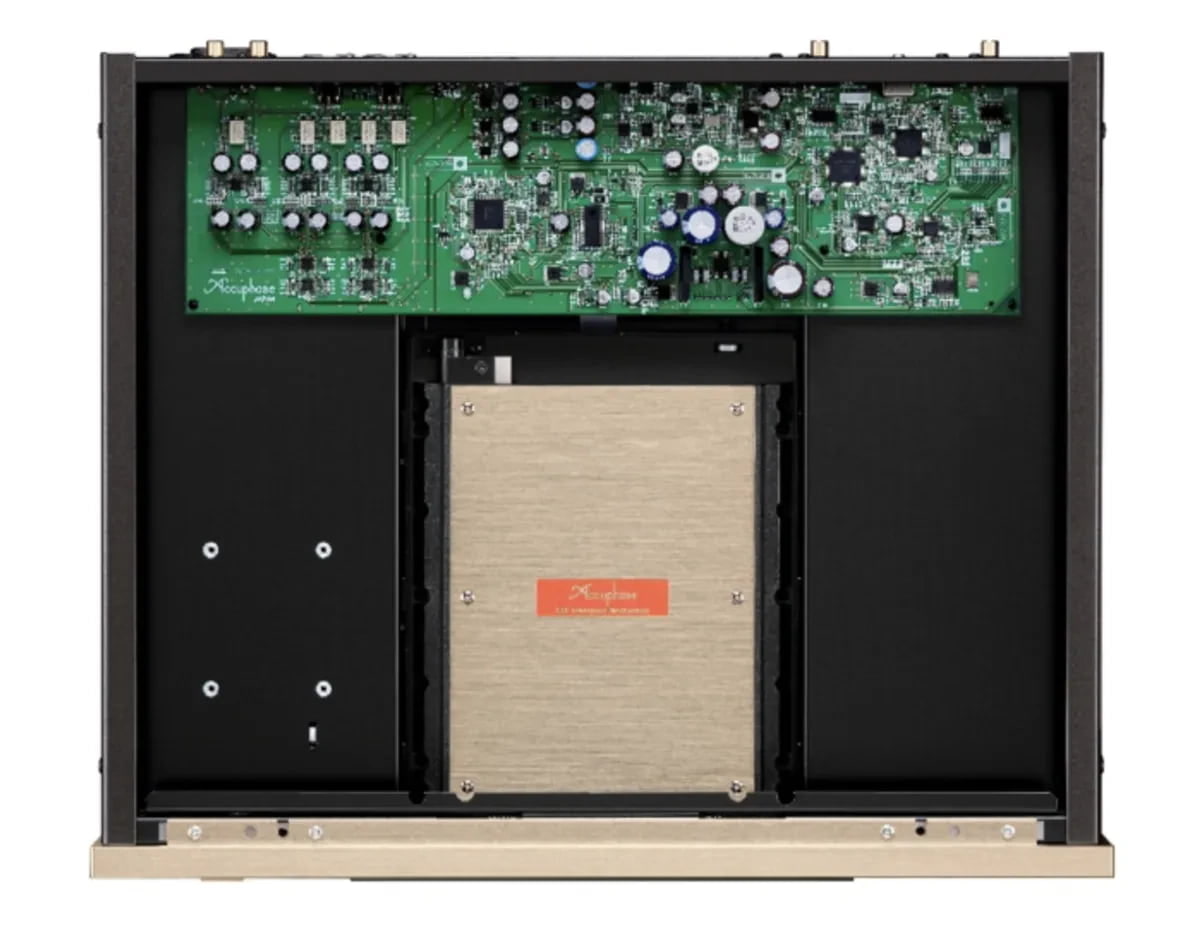
The mechanical side starts with a high-rigidity, low-center-of-gravity CD drive designed to isolate the optical pickup from vibration. Accuphase uses an elastic damping system between the transport and loading mechanisms, an eight-pole neodymium magnetic disc clamp and a three-layer bridge structure intended to suppress chassis resonance and noise generated by the spinning disc. The tray itself is machined from an aluminum block.
Advertisement
None of that makes the disc contain more data. The objective is to give the optical system the quietest and most mechanically stable environment possible while it reads what is already there.
This is Accuphase, after all. Nobody was expecting the transport to be held together with two screws and optimism.
The More Important Changes Are Inside the DAC
Accuphase retains the ESS ES9026PRO used by the DP-450, but employs it through the company’s four-circuit parallel MDS+ conversion architecture. Accuphase says operating four DAC circuits in parallel improves characteristics including noise, distortion and linearity compared with using a single circuit.
Advertisement. Scroll to continue reading.
The more significant change is the addition of ANCC — Accuphase Noise and distortion Cancelling Circuit — in the I/V conversion stage. The circuit uses a secondary amplifier to cancel noise and distortion generated by the main amplifier. The company has also redesigned the DAC board and optimized the power supply architecture. ANCC is technology already used in the more expensive DP-570S, so this represents some meaningful trickle-down rather than changing the display font and calling it a new generation.
Advertisement
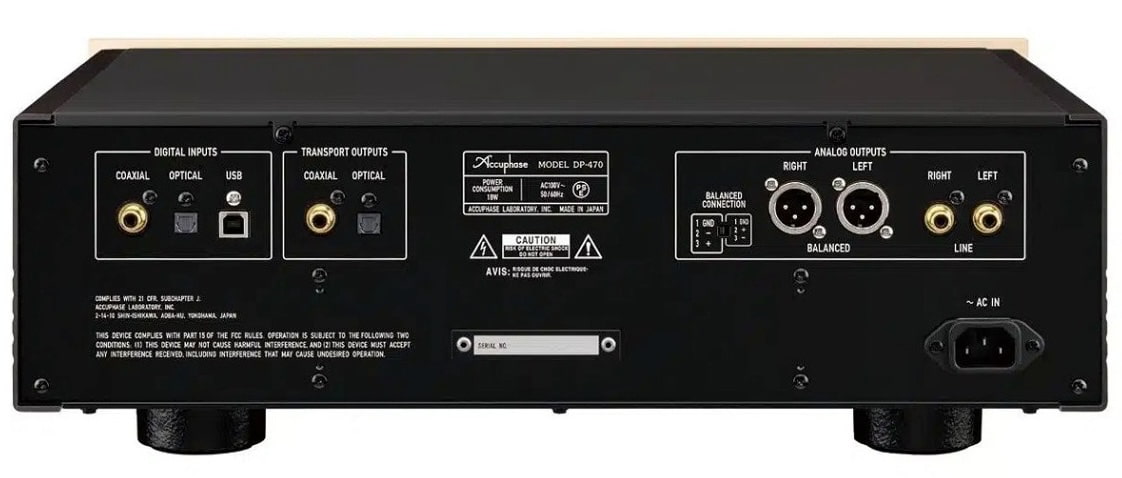
Accuphase also uses its Direct Balanced Filter architecture with independent signal paths for the RCA and balanced XLR analog outputs, reducing interaction between them. Output level can be adjusted from 0 dB to -60 dB in 1 dB increments, and the balanced outputs include a phase selector.
ANCC noise and distortion cancellation in the I/V conversion stage
High-rigidity, low-center-of-gravity CD transport
Machined aluminum disc tray
Independent Direct Balanced Filter circuitry for RCA and XLR outputs
RCA and balanced XLR analog outputs
Coaxial and optical digital outputs
USB Type-B, coaxial and optical digital inputs
USB PCM support up to 384kHz/32-bit
USB DSD support up to 22.5MHz using ASIO Native
DSD up to 11.2MHz using DoP
Coaxial PCM input up to 192kHz/24-bit
Optical PCM input up to 96kHz/24-bit
Adjustable analog output level from 0 to -60 dB
465 x 151 x 393mm
13.7kg / approximately 30.2 pounds
Five-year warranty in Japan
Your Streamer Is Invited Too
This may be the most important thing separating the DP-470 from purist machines such as the Hegel Viking.
Accuphase has turned the DP-470 into a high-resolution standalone DAC as well as a CD player. A computer can feed the USB input, while a network streamer or other digital source can use the coaxial or optical connections. Owners can therefore use the same Accuphase DAC and analog output stage for both physical discs and other digital sources.
That makes considerably more sense in a modern high-end system than requiring someone to buy an expensive CD player and then duplicate its DAC circuitry in another box for streaming.
The irony is difficult to miss. Streaming was supposed to eliminate the CD player. The new generation of CD players is responding by becoming the DAC for the streamer.
Advertisement
Who Is the DP-470 Competing With?
Until Accuphase announces U.S. pricing, positioning the DP-470 precisely against American-market competitors requires some restraint. Converting ¥528,000 into dollars and pretending that figure represents a U.S. MSRP would be misleading because distributor margins, tariffs, freight and regional pricing can substantially alter the final number.
But the competitive neighborhood is already obvious.
The Hegel Viking, currently selling for about $5,500 in the U.S., takes the opposite approach. It is unapologetically devoted to 16-bit/44.1kHz Red Book CD playback and does not provide digital inputs for using its DAC with outside sources. Hegel’s argument is purity; Accuphase’s is versatility without abandoning serious mechanical engineering.
The Luxman D-03X is probably the closest conceptual rival. It is another Japanese dedicated CD player with balanced outputs and a high-resolution DAC section that accepts USB, coaxial and optical sources. Its USB implementation supports PCM up to 384kHz/32-bit and DSD to 11.2MHz.
Advertisement
Further down the price ladder, products such as the Rotel DT-6000 combine dedicated CD playback with a high-quality DAC, while the new Marantz CD 70 at $750 demonstrates just how quickly the category is filling up at more attainable prices. The point is not that a $750 Marantz buyer is cross-shopping an Accuphase. It is that manufacturers at almost every level have reached the same conclusion: people are buying discs again, and quite a few of them would apparently like something better than the DVD player hiding in the basement.
Why the DP-470 Is Interesting
The DP-470 is unusual because Accuphase is not treating the CD revival as retro fashion.
Advertisement. Scroll to continue reading.
There is no Bluetooth transmitter, transparent lid, rechargeable battery or attempt to make the player resemble something that escaped from a 1997 Sony catalog. Accuphase has instead applied some of its current high-end digital engineering to a format with a fixed 16-bit/44.1kHz specification and then made the DAC useful enough to justify its existence in a system that probably streams as well.
Advertisement
That tells us something about where the CD revival is going.
The first wave was inexpensive used discs and younger buyers rediscovering physical ownership. The next brought portable players from FiiO, Shanling and Cayin. Marantz, NAD, TEAC and Mission followed with new home components. Now Accuphase is willing to invest in an entirely new high-end player.
Nobody builds a 30-pound CD player with a machined aluminum tray because they expect the format to disappear next Tuesday.
The Bottom Line
The Accuphase DP-470 is not interesting because CD playback suddenly required DSD 22.5MHz support. It is interesting because the company is investing serious engineering resources in a dedicated CD player at the exact moment the supposedly obsolete format is showing unexpected sales growth.
Advertisement
U.S. CD sales rising 16% in the first half of 2026 does not mean streaming is in trouble, and it certainly does not mean vinyl has been dethroned. It does mean that millions of listeners still want physical music they actually own, while manufacturers have recognized that those listeners range from teenagers buying $200 portable players to audiophiles willing to put an Accuphase on the equipment rack.
The DP-470 gives the latter group a substantial transport, balanced analog stage and high-resolution DAC without trying to turn itself into a music server or streaming platform.
Thirty-four years after people started predicting the death of the Compact Disc, Accuphase has built another one.
The CD remains extremely poor at following instructions.
Advertisement
Price & Availability
The Accuphase DP-470 will be released in Japan in late August 2026 for ¥528,000 including tax. Accuphase’s Japanese website officially lists the player, while the company’s international site currently identifies the DP-470 as a forthcoming product.
U.S. pricing and availability have not been announced. We have not converted the Japanese price into a speculative U.S. MSRP because that would not accurately reflect Accuphase’s regional distribution and pricing structure.
We will update this article as soon as official U.S. pricing and availability become available.
The memory crisis has already pushed up prices across phones, laptops, consoles, and cameras, and now it is starting to reach smaller everyday gadgets. Amazon has raised prices on several Echo, Kindle, Fire TV, and Eero products, and Fortune reports that the company has blamed the increases on rising memory and storage component costs.
Some of the jumps are pretty steep. The Echo Dot, which previously cost $49.99, is now $79.99. That is a 60% increase on a device that was supposed to be one of the cheapest ways into Amazon’s smart home ecosystem.
Amazon
Even the cheap stuff is getting caught up in it
Amazon’s streaming hardware is feeling the pressure too. The Fire TV Stick 4K Max has climbed from $59.99 to $84.99, while the cheaper Fire TV Stick HD is now $39.99 instead of $34.99. The 16GB Kindle has gone from $109.99 to $149.99, and the Kindle Paperwhite is up another $40 to $199.99. Home networking gear has not escaped either, with the Eero Pro 7 rising by $100 to $799.99.
Christine Romero-Chan / Digital Trends
Amazon confirmed the increases, saying the consumer electronics industry is facing “significant increases in memory and storage component costs.” The company says it held off on passing those costs to customers for as long as it could.
The RAM crisis is spreading well beyond PCs and phones
Most of the damage from rising memory prices has so far been easiest to spot in products where RAM and storage make up a noticeable part of the hardware cost. But smart speakers, streaming sticks, e-readers, and Wi-Fi systems still need memory and storage to function.
For months, analysts and industry executives have warned that skyrocketing memory costs would eventually spread beyond smartphones, computers, and consoles to the wider consumer electronics market. We are now seeing more of those warnings play out, with Amazon’s latest price hikes showing how far the memory crunch has started to spread.
Nvidia published some interesting new research on Friday suggesting it’s the harness, more than the underlying model, that is far more important when asking an AI to do long-horizon tasks. A harness is the software wrapper around an AI model — the tools, memory management, and rules that turn a raw model into something that can act on its own.
The TL;DR: Simply by using a custom harness tweaked to handle memory well and including a “supervisor” boss-like component, researchers got Claude Opus 5 to achieve a 100% score on the interactive reasoning benchmark ARC-AGI-3 — a set of 2D games with no instructions, where the model has to figure out how to play and win, similar to how a human would. (That’s a benchmark that has particularly irked rival frontier lab OpenAI.) Without the harness, Opus 5 scored 30%, which was the top result among all the models tested.
Nvidia’s research is another indicator that, while model choice does matter, the model itself — the part that acts as the agent’s “brain” — is a smaller part of an agentic system than many AI users realize, especially for long-horizon tasks. The harness is what makes a model an agent: It handles memory, context, and feedback.
“Generally speaking, the world interprets an agent almost as an API of the model,” Adel El Hallak, vice president of product in Nvidia’s AI unit (pictured above), tells TechCrunch. But an agent is actually more than that. “It is the model. It is the scaffolding around the model, which we call the harness, i.e. the set of tools that it utilizes. It is the runtime and the associated skills and libraries that we give it access to.”
Advertisement
Long-horizon tasks are those that require stringing many decisions together, sometimes over days, to produce completed work. This is in contrast to an AI just spitting out a response to a prompt. Figuring out how to get an AI to do long-horizon tasks without getting distracted and going off in la-la land is one of the holy grails in agentic research.
For example: Microsoft published research in April that tested 19 LLMs on long-horizon tasks involving document editing and discovered that all the models, including frontier ones, filled the documents with errors. (If humans produced work like that, they would be promptly fired.)
The choice by Nvidia researchers to use this interactive reasoning benchmark for their tests is particularly meaningful, almost funny. A 100% score means that the model can beat the games as well as humans.
Advertisement
OpenAI was so flustered by its models’ abysmal scores (less than 10%) on ARC-AGI-3 that it conducted its own research last month. Like Nvidia, OpenAI discovered that simply by tweaking two settings on the harness, its models tripled their scores.
But none of the models came close to hitting a 100% score, like Nvidia’s researchers achieved. They showed that the harness needs a “supervisor” component that prods the agent in the right direction if it gets stuck.
“The more interesting part was introducing a supervising agent in addition to your main agent that’s doing the work,” El Hallak said. It “almost acts like a CEO to nudge the agent when it goes off direction or starts exploring a path that it might lead to a dead end, or re-explore a path that it had previously trod.”
While the concept of the supervising agent isn’t exactly new, today most agent users are relying on only one layer for their harness, like Claude Code, Codex, or Hermes. Nvidia researchers created their own souped-up harness called the Agentic Variation Operators (AVO).
Still, Nvidia’s results add to the growing evidence that model choice is far from the only factor in agentic performance. In July, for instance, Databricks published some stunning research that shows that the harness, more than the model, dramatically impacts AI costs.
“You can pick the same model but different harnesses, and you get significantly more cost if you use the wrong harness,” Databricks CEO Ali Ghodsi told TechCrunch. “So you think, oh, this is an expensive model. This is a cheap model. But wait, which harness are you using? That itself can 2x your cost.”
Nvidia’s larger point is to show that open harnesses, like open models, put users in control far more than they realize.
Advertisement
“We believe, and we’re demonstrating with the ecosystem, how open harnesses allow you to turn a lot more knobs to drive up that accuracy,” El Hallak said. “It relates to OpenAI slowing down the training of their models,” as a result of models creating security breaches.
“We believe in having an open agent stack — where you have control across the harness, across the infrastructure, across the runtime — is what’s required for us to usher the ecosystem forward and securely,” he added.
When you purchase through links in our articles, we may earn a small commission. This doesn’t affect our editorial independence.
Watch Hull vs Man Utd live streams as the Tigers face a huge test in their first game back in the Premier League against a United side looking to build on a hugely impressive run under now-permanent manager Michael Carrick.
Back in the top flight for the first time since suffering relegation in 2017, Hull surprised many last season by defying a transfer embargo and overcoming Middlesbrough in the play-off final. They’ll start the new campaign as relegation candidates but have significantly improved the squad over the summer, with talented Aussie centre-back Luca Herrington the pick of the signings. However, goals could be an issue, having found the net just once in their final three friendlies.
After a nightmare spell under Ruben Amorim, United fans will feel they are back on the right track with Carrick at the helm. The 45-year-old lost just two of his 17 games as caretaker manager and, having been handed the job full-time, has strengthened the squad with the additions of Andrey Santos and Youri Tielemans. Yet it is the form in pre-season of Bryan Mbeumo and Amad Diallo that has supporters excited, as both attackers look razor sharp and will be relishing the trip to the MKM Stadium.
Advertisement
Read on for our dedicated guide on how to stream Hull vs Man Utd in the Premier League, live and from anywhere in the world.
Can I watch Hull vs Man Utd for free?
Hull vs Man Utd isn’t technically available for free anywhere; however, there is a way for viewers in the US to watch at no cost.
US coverage is live on USA Network, which can be accessed via YouTube TV, Hulu + Live TV and DirecTV Stream and all have free trials of varying lengths for new customers.
Advertisement
Not in the US? Use NordVPN to access your USA Network stream – more details below.
Hull vs Man Utd team news
TBC
Advertisement
Use a VPN to watch Hull vs Man Utd from anywhere
A VPN is a handy piece of software that can make your device appear as if it’s back in your home country, thereby letting you unlock your usual streaming service. The best VPN right now? We recommend NordVPN – it does everything and comes with a 75% discount.
It’s really straightforward to use a VPN to watch Hull vs Man Utd.
1. Install the VPN of your choice. As we’ve said, NordVPN is our favorite.
Advertisement
2. Choose the location you wish to connect to in the VPN app. For example, if you want to watch the TNT Sports via HBO Max stream, select ‘United Kingdom’ from the listed countries.
3. Sit back and enjoy the action. Head to HBO Max and tune into Hull vs Man Utd.
How to watch Hull vs Man Utd live streams in the US
Hull vs Man Utd will be shown on USA Network in the US.
Advertisement
USA Network is part of NBC Universal, which holds the Premier League broadcast rights in the US.
Outside the US this Saturday? Use NordVPN to unlock your stream of the game.
Advertisement
How to watch Hull vs Man Utd live streams in the UK
Fans in the UK can watch Hull vs Man Utd on TNT Sports.
The game will be live on TNT Sports 1 and via its streaming partner HBO Max. A subscription costs £30.99 per month on a rolling monthly contract, or £25.99 per month for a minimum 12-month term.
Not in the UK right now? Use NordVPN to watch Hull vs Man Utd on HBO Max.
Advertisement
How to watch Hull vs Man Utd live streams in Canada
Fubo is the Premier League’s broadcast partner in Canada and has live coverage of Hull vs Man Utd.
Prices start from CA$31.49 per month for Fubo’s Sports Monthly package. You can also watch Fubo’s content if you have a selected DAZN subscription in Canada.
Traveling away from Canada? Use NordVPN to access your Premier League live streams from anywhere in the world.
Advertisement
How to watch Hull vs Man Utd live streams in Australia
Hull vs Man Utd will be broadcast on Stan Sport in Australia.
Stan Sport will show all 380 Premier League games, with prices starting at A$29.99/month. This includes a basic Stan plan (A$9.99) and the Sports add-on (A$20).
Missing the game because you’re outside Australia?Use a VPN to login to your Stan Sport account.
What is the Hull vs Man Utd start time?
Hull vs Man Utd kicks off at 4.30am PT / 7.30am ET / 12.30pm BST / 9.30pm AEST on Saturday, August 22.
Advertisement
Can I watch Hull vs Man Utd on my mobile?
Of course, most broadcasters have streaming services that you can access through mobile apps or via your phone’s browser.
You can also stay up-to-date with all the key Premier League 2026/27 moments on the official social media channels on Instagram (@PremierLeague), TikTok (@PremierLeague) and YouTube (@PremierLeague).
We test and review VPN services in the context of legal recreational uses. For example: 1. Accessing a service from another country (subject to the terms and conditions of that service). 2. Protecting your online security and strengthening your online privacy when abroad. We do not support or condone the illegal or malicious use of VPN services. Consuming pirated content that is paid-for is neither endorsed nor approved by Future Publishing.
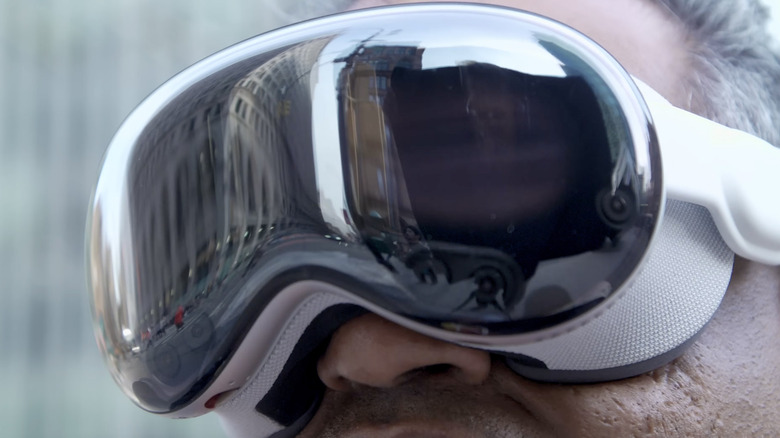
The Vision Pro layoffs are focused on teams working on gaming and immersive video.
Engadget
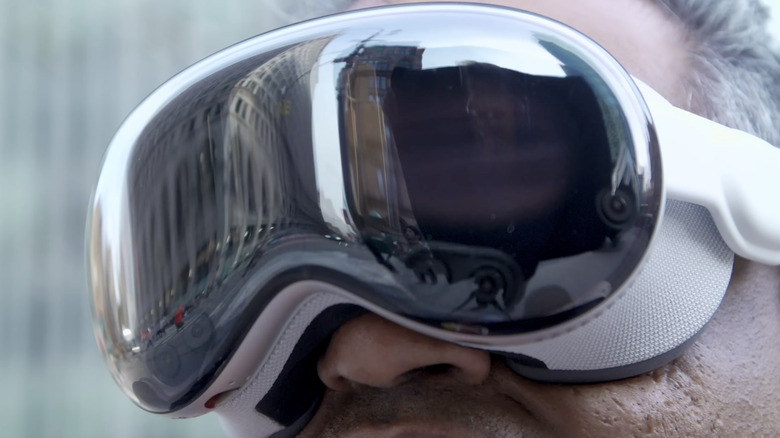
Apple has laid off employees in its Vision Pro and Siri teams as it shifts focus to smart glasses and next-gen AI tech, Bloomberg‘s Mark Gurman reported. The cuts are said to affect around 200 workers, with 100 cuts in the Vision Pro division and another 100 in the Siri and software divisions.
The Vision Pro layoffs are focused largely on gaming and immersive video teams, according to the report. The Siri cuts, meanwhile, are aimed at teams working on the old version of the Siri assistant, as the new Siri AI system requires personnel with a different type of expertise.
Apple acknowledged that it was making cuts and realigning teams based on a changing product mix. “While we will create new roles as part of this change, it will also impact a limited number of existing roles,” the company said. “We are grateful to these team members for their contributions, and we are committed to supporting them throughout their transition, including opportunities to apply for other roles at Apple.”
Advertisement
The news isn’t a large surprise. According to a rumor from last year, Apple shelved a successor to the Vision Pro and is working on Meta-like AI glasses instead. Apple’s VP in charge of the Vision Pro recently left for OpenAI, and Apple has reportedly pulled teams away from the Vision Pro to work on its rumored AR glasses. Apple is also shifting away from the Siri of old into the new LLM-based Siri AI that arrived with iOS 27.
Immersive video has been a key feature of the Vision Pro since launch. However, Apple reportedly decided that the high cost of producing such content isn’t justified, given the limited number of Vision Pro users. The headset never caught fire due to its high $3,699 price and cumbersome user experience.
Apple told employees that the Vision Pro and its VisionOS operating system aren’t going away, and it still plans a new model for release as early as 2028, Gurman wrote. However, with the company focusing efforts on smart glasses that support neither immersive video nor gaming, cuts to those areas were likely inevitable. Engadget has reached out to Apple for comment.
The new $225 Pebble Time 2 smartwatch feels like a toy, and we mean that in the best sense of the word. The refreshed version of the indie smartwatch brand, rebooted by its original founder, feels casual, fun, and playful, — not like a mini-computer on your wrist. Its quirky watch faces and simple apps and games give it a sort of hacker energy, while its physical buttons, e-paper screen, and long battery life provide its retro vibes.
The first thing you’ll notice about the new Pebble Time 2 is that the device looks nothing like an Apple Watch. Where the Apple Watch has an OLED touchscreen display, the Pebble opts for a color e-paper screen. Where the Apple Watch comes in a range of band types, from sporty straps to high-end metals and leather, the Pebble Time 2 has a silicone watch band, making it feel more like a Swatch rival than a fancy smartwatch. And instead of picking between different aluminum finishes, as with the Apple Watch, the Pebble Time 2 offers a choice of colors: blue, red, silver, or black wrapped around its stainless steel frame of silver or black.
Pebble Time 2 colors.Image Credits:Core Devices
The watch’s 64-color e-paper screen is always on but can be backlit (via an RGB LED) with a flick of your wrist or via taps. Like almost everything on the watch, you can customize this, too. (I set mine to light up with a single tap instead of two.)
This display is more muted compared with an Apple Watch’s Retina display, but it’s easy to see in bright sunlight, and the trade-off here means the battery can last a long time: about 21 days on a charge, depending on use, with a charger included in the box.
But where Pebble really differentiates itself from other smartwatches is its software and, especially, its community. The community is really the reason the watch still exists at all — after the company behind the original Pebble shut down.
Advertisement
Pebble’s comeback
Pebble had first begun as a Kickstarter project before ultimately making its way to Google, by way of a Fitbit acquisition. Before its exit, the company sold 2 million watches, generating $230 million in sales. Even so, its founder, Eric Migicovsky (who has since co-founded the messaging app Beeper), openly shared that Pebble’s financials weren’t able to sustain the business, which forced the sale.
Fitbit kept the watch’s servers and app store alive until mid-2018. After that, the job was taken over by Pebble’s own user community, an unusual show of brand loyalty that effectively kept the product on life support for free.
Image Credits:Core Devices
Then, in 2025, Migicovsky, with the help of some ex-Pebblers and Fitbit folks at Google, convinced the tech giant to open source the original Pebble operating system. This made it possible for him to take another crack at building Pebble watches under his new company, Core Devices.
Core Devices has since shipped a limited-edition Pebble 2 Duo watch and has now sold more than 25,000 of its Pebble Time 2 watches across 93 countries. Its third device, the Pebble Round 2, is expected to begin shipping in September.
While Migicovsky hopes the do-over will give him a chance to correct the mistakes of the past, what hasn’t been left behind is Pebble’s spirit.
Advertisement
Watch faces! So many watch faces!
Still very much sustained by its hacker community, the device already ships with over 2,120 watch faces and apps built by Pebble developers, including over 500 new ones from a spring developer contest. This is where things start to get fun. Since the first thing many people do is customize their watch face, this large, whimsical selection showcases the community’s playful vibes.
Pebble Time 2.Image Credits:Core Devices
Using the Pebble companion mobile app, you can choose from simple analog or digital displays, or you can pick from those featuring silly characters, like cartoon dogs, cats, or axolotls; various backgrounds and scenes; pixelated retro displays; giant, brightly colored numbers; text shown styled in creative fonts, like those from comic books or sci-fi; and more.
You can set the screen to be a favorite meme, like Nyan Cat, or to a watch face with characters from classic video games like Mario, Kirby, Pokémon, and more. (Don’t ask about the licensing — just enjoy it while it lasts.)
Image Credits:TechCrunch
Apps and games
Despite a much smaller user base than the Apple Watch, the Pebble app store is full of creative and often niche applications across categories like health and fitness, games, tools and utilities, remotes, and others. There are many useful tools here — timers, Spotify controls, weather apps, to-do lists, calculators, navigation aids, stock trackers, a Strava activity tracker, medication reminders, health apps, calendars, and many fun, often retro-inspired, games.
Pebble app store.Image Credits:Core Devices
What’s incredible about the selection is that many of these were created by individuals who simply wanted an app for a specific purpose, so they built it themselves. That could be an app for tracking a local train schedule, or their tennis score, their Claude AI usage, when to apply more sunscreen, or a thousand other things that would never make sense for an indie developer to build as a business.
There are also newer AI-powered apps for those who want access to a chatbot or agent on their wrist.
There are many playful apps, too, like the PebGoBrrrr app that tells time by vibrating the watch, or one where you can whack a mole for fun. (I don’t know, why not?). Among the most popular apps is the self-described “pointless” Pixel Miner game, where your little character mines for treasure. Another popular creation offers a FitCat virtual pet and activity tracker.
If there’s any complaint to be made here, it’s that there’s almost too much to explore. The Pebble app store could benefit from more search and discovery tools, similar to Apple’s App Store — subcategories, lists, editorial selections, or personalized recommendations. You could spend hours, weeks, or months browsing the app store and still find new things.
Image Credits:TechCrunch
All the basics, too
However, even if you used the Pebble Time 2 without installing extra apps, the watch is still very functional. It mirrors the notifications sent to your phone, which you can individually toggle on and off in the Pebble companion app. Plus, you can control your music playing on your phone, set alarms and timers, and more. While the app doesn’t market itself as a fitness tracker, it does offer some basic functions, like tracking steps, sleep, and heart rate.
Image Credits:TechCrunch
The watch also offers a classic Pebble feature known as the timeline, accessed by the down button on the right side. This lets you scroll through your day, including past and upcoming calendar events, reminders, weather, and pins added by other apps. It’s an at-a-glance look at what you have coming up next, which is handy.
Image Credits:TechCrunch
The Pebble Time 2’s buttons are intuitive to use. The watch comes with four buttons, more than you’ll find on the Apple Watch, but they make sense. The top button is the up button, the bottom one is down, and the middle is select. The button on the left side of the watch is back. What’s more, you can customize any button to launch a favorite app with a tap or long press. (By default, a long press on the back button launches Quiet Time, which silences your notifications.)
Image Credits:Core Devices
Further specs are available on Migicovsky‘s blog. Note that the watch has some water resistance — 30 m / 3 ATM — which means it can handle everyday water exposure like rain or handwashing, but don’t go swimming or diving with it.
Being less connected: A perk or a problem?
Where the watch falls short is mainly in areas the company can’t control, like its compatibility with iOS. Apple’s rules restrict the watch from being able to do many things, like taking actions on notifications, responding to texts, or making various iOS apps work with the watch. That means even basic features, like your daily alarms, won’t sync over automatically to the Pebble — you’ll have to set them up directly on the watch.
But there’s a silver lining to this. Because Pebble is more limited, it doesn’t become another thing you have to pay attention to and engage with. You can stay connected without feeling an obligation to immediately respond or take some sort of action. Though it took some adjustment, I’ll admit, after a while I found it easier to simply glance at the watch and look away without feeling the tug to do something.
What’s worth watching here is where this goes next. The company ships new firmware every few weeks and updates its companion mobile app. It’s been adding new APIs and other improvements after launch and still plans to add features in the future, like enabling the second mic for noise cancellation.
Advertisement
When you purchase through links in our articles, we may earn a small commission. This doesn’t affect our editorial independence.
Going into the project, [GRMNT] didn’t really know what he was working with, but it turned out grandpa had good taste and was rocking a Bianchi. No stovepipe bike boom stuff here, only high quality Tange steel. After cleaning off the years of grime, it was time to rebuild a second-hand Bafang mid-drive electric motor for the electric boost for the ride.
We really like the custom solenoid-powered display that [GRMNT] built into the handlebars for an excellent electromechanical readout of the battery charge. Coupled with the hand-built battery pack inside a leather case and hidden motor actuation button, this build looks slick without screaming e-bike.
Following on from 2025/26, Match of the Day will continue to be fronted by a trio of presenters in Mark Chapman, Kelly Cates and Gabby Logan for the Premier League 2026/27.
Beyond the presenters, there has also been a shake-up in the punditry line-up, with Dion Dublin, Martin Keown, Nedum Onuoha, Theo Walcott, Shay Given and Stephen Warnock all departing. But don’t worry, the BBC already have their replacements lined up, with former Tottenham players Toby Alderweireld and Robbie Keane joining the team, alongside Thomas Frank, who was Spurs’ manager at the beginning of last season. Ashley Young has also joined following his retirement.
MOTD is a godsend for footy fans who don’t have access to live TV broadcasts from the likes of Sky Sports and TNT Sports. It neatly rounds up all the highlights of the day’s Premier League action every Saturday night, with a sister show, Match of the Day 2, providing the same service on Sundays. Don’t forget about the Champions League version of Match of the Day which joined the collection back in 2024.
Advertisement
Here’s how to watch Match of the Day online and on TV from anywhere in the world, for free.
How to watch Match of the Day in the UK for free
Match of the Day is free-to-air on BBC One in the UK. It goes out live on Saturday nights roughly at 10:20pm BST, with Match of the Day 2 following on the same channel around the same time the next day.
There is also a continued addition to the BBC’s football highlights portfolio this season, with Match of the Day: Champions League streaming every Wednesday following a matchday.
Advertisement
If you miss an episode, or simply prefer to watch it on a portable device, don’t worry. Every Match of the Day episode is also available on BBC iPlayer.
Just keep in mind that each episode is only available to stream until the next episode airs, or for seven days after broadcast, whichever comes first.
How to watch Match of the Day from anywhere
If you’re keen to watch Match of the Day but you’re away from the UK and access to the show is geo-blocked, then you could use a VPN to access it (assuming you’re not breaching any broadcaster T&Cs, of course). You may be surprised by how simple it is to do. Plus, we have a great 75% discount on our #1 VPN…
Advertisement
How to watch BBC iPlayer with a VPN
Using a VPN to unblock Match of the Day is very straightforward. Just follow these steps:
1. Download and install a VPN: As we say, our top choice is NordVPN.
2. Connect to the appropriate server location: Open the VPN app, hit ‘choose location’ and select your home geographical location (anywhere in the UK).
Advertisement
3. Go to the broadcaster’s live stream: In this case, just head to BBC iPlayer.
Android TV (please note: some models aren’t supported)
Android (Mobile & Tablet) – Android 7.0 and above
Apple TV (tvOS 14 or later)
Google TV (Chromecast with Google TV and NVIDIA Shield)
Freely
Freesat (please note: some models aren’t supported)
Freeview Play (TVs and set-top boxes) (some models aren’t supported)
iOS (iPhone & iPad) – iOS 14 and above
LG Smart TVs (2016-2024)
NOW Smart Sticks and Boxes (minimum firmware v11.5.0)
PlayStation (PS4 and PS5)
Roku (Stick & Roku-OS powered TVs, minimum firmware v11.5.0)
Samsung Smart TVs (2017 and above)
Sky Q, Sky Glass and Sky Stream puck
Virgin Media (360, Stream, TiVo)
YouView (BT, Humax, Sony, TalkTalk)
Xbox (One, Series X, Series S)
Can I watch Match of the Day online in the US, Canada, Australia, and worldwide?
Since Match of the Day is exclusive to BBC iPlayer and BBC One in the UK, it’s not currently available to stream in any international locations.
If you’re a Brit traveling abroad, you can usethis VPN to watch your usual streaming services from anywhere in the world.
Note: Not all VPNs work for this, but NordVPN does. It’s also great for privacy and comes with a 30-day risk-free trial.
Advertisement
You may also like to watch…
We test and review VPN services in the context of legal recreational uses. For example: 1. Accessing a service from another country (subject to the terms and conditions of that service). 2. Protecting your online security and strengthening your online privacy when abroad. We do not support or condone the illegal or malicious use of VPN services. Consuming pirated content that is paid-for is neither endorsed nor approved by Future Publishing.
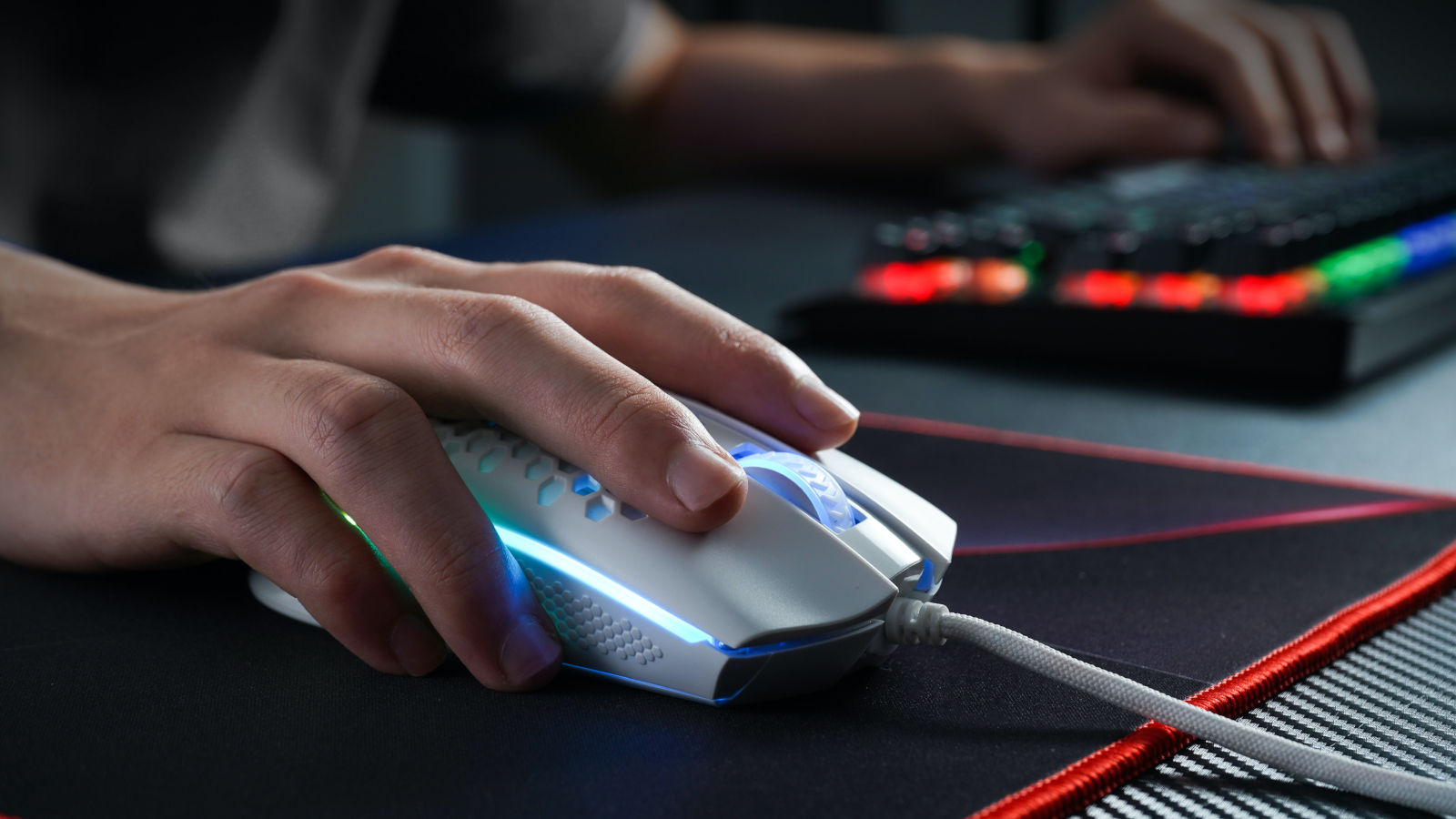
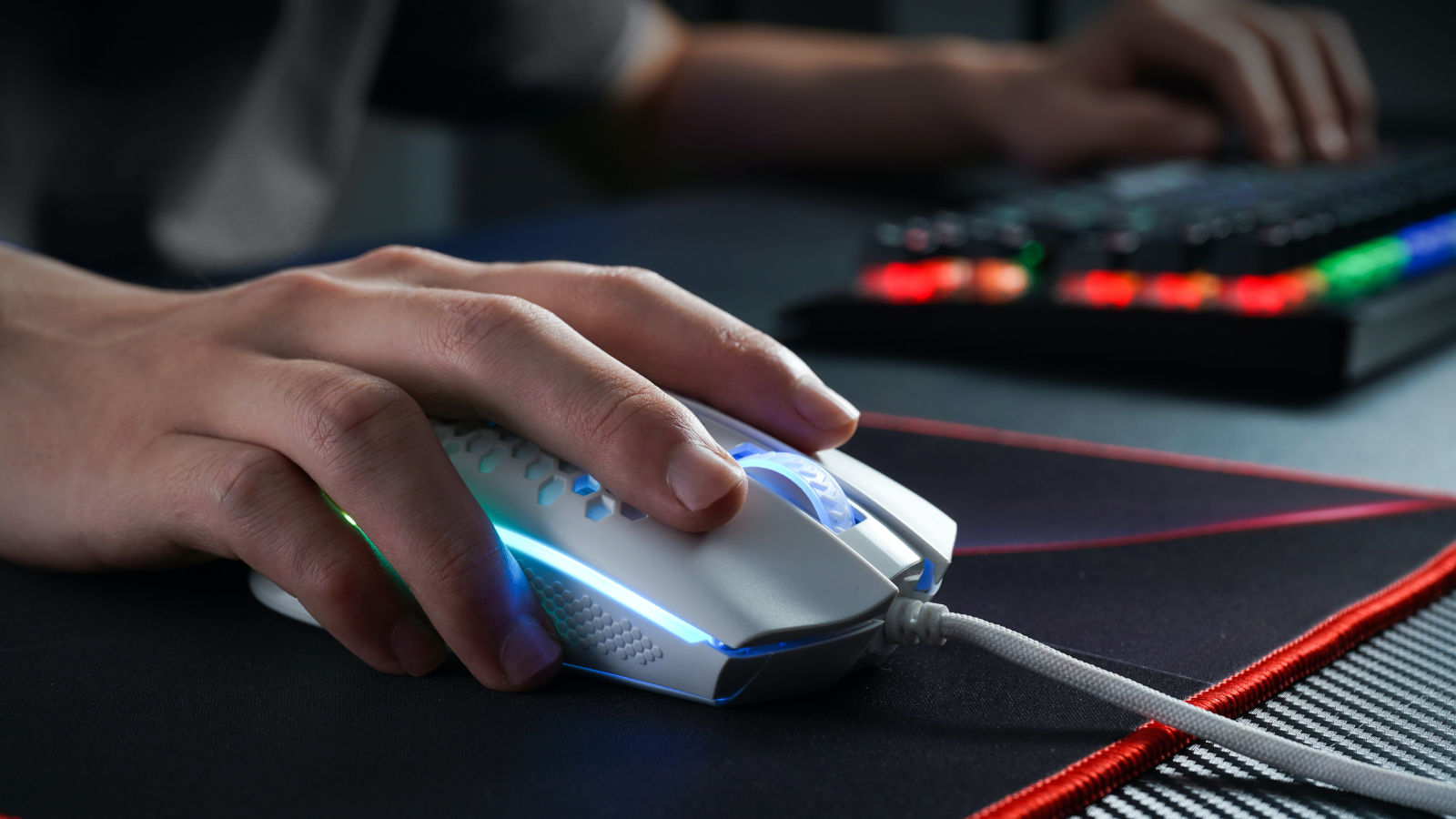
Microsoft says ongoing issues causing games to crash or fail to launch after installing the August 2026 Windows updates may be caused by peripherals with RGB lighting.
As Microsoft explained when it confirmed it’s investigating on Wednesday, this known issue affects games like ARC Raiders, MARVEL Tōkon: Fighting Souls, and The Finals on systems running Windows 11 24H2 and 25H2.
“Following the release of Windows updates on August 11, 2026 (KB5121003) and later, Microsoft received reports of issues involving inability to run games as expected,” Microsoft said on the Windows release health dashboard.
On impacted PCs, users are also experiencing gaming freezes, “EXCEPTION_ACCESS_VIOLATION” errors, and even unexpected system restarts.
In a Thursday update, Microsoft said the gaming issues may be caused by drivers or components installed by RGB devices on affected Windows systems.
Advertisement
“Ongoing investigation indicates that this issue is related to peripherals or internal device components which have RGB lighting features. Such devices may install drivers or code components with file names similar to inpoutx64. In systems where these drivers are found, the issue is then triggered by launching certain games,” it noted.
“We are presently working to understand the relationship between these RGB components and the games which trigger this issue. We will provide an update when more information is available.”
Unofficial workaround shared by game dev
Embark Studios, the Swedish video game developer behind ARC Raiders and The Finals, also said these issues are caused by inpoutx64.sys, but added that they stem from changes made to the Windows kernel driver.
“We’re aware of a crash that has been impacting some players since the most recent Windows update (KB5121003). This is a crash related to the file inpoutx64.sys, which changed with the Windows update,” Embark said on Monday.
Advertisement
Until Microsoft ships an official fix, Embark shared a multi-step temporary workaround that requires users to delete the service and remove the inpoutx64 file from the Windows drivers folder.
This isn’t the first time Microsoft has had to address gaming performance and stability issues caused by Windows updates. For instance, in October 2024, Microsoft blocked Windows 24H2 upgrades that caused Asphalt 8 crashes and Easy Anti-Cheat blue screens.
Early last year, Microsoft also removed several upgrade blocks that were preventing Asphalt 8: Airborne, Assassin’s Creed, Star Wars Outlaws, and Avatar: Frontiers of Pandora players from upgrading their devices to the latest Windows version.
Advertisement
Overall prevention scores can hide what happens after initial access. Once attackers are using valid credentials, prevention drops sharply.
The Blue Report 2026 measures defenses technique by technique across 338 million simulations run in customer production environments.
Some keyboard shortcuts are so ingrained that we barely think about using them anymore. Ctrl + C, Ctrl + V, Ctrl + Z, and Alt + Tab probably account for an absurd number of keystrokes on any given workday. But it’s the less universal ones that tend to reveal how someone actually uses their computer.
For me, Ctrl + Shift + V for pasting without formatting is probably near the top. I also use Ctrl + T constantly for new browser tabs, while Ctrl + Shift + T has rescued more accidentally closed tabs than I’d care to admit. Another favorite is Ctrl + Shift + S, which I’ve mapped to a third-party screenshot app for quickly grabbing and annotating part of the screen.
Not all of my most-used shortcuts even involve a keyboard. On my MacBook, the three-finger trackpad swipe between virtual desktops has become just as automatic.
There are plenty of other favorites among power users: Win + V for clipboard history, Ctrl + Shift + Esc for Task Manager, Win + E for File Explorer, and Ctrl + Backspace to delete an entire word at once. We even put together a massive shortcut compilation years ago, and quite a few of them still hold up today.
Advertisement
So here’s this weekend’s question: excluding copy, paste, undo, and Alt + Tab, what’s the keyboard shortcut you use the most? And better yet, what’s one you think everyone else should know?
































































You must be logged in to post a comment Login