Connect with us
DAPA Banner

NewsBeat

The outrage over the Enhanced Games ignores the risks many already accept in sport

Published

on

The outrage over the Enhanced Games ignores the risks many already accept in sport

The Enhanced Games, slated to commence in May 2026, has sparked outrage across the sporting world. This new competition is the first in history to openly permit performance-enhancing drugs, and sporting bodies aren’t happy about it.

World Athletics president Sebastian Coe called the concept “bollocks”, while World Anti-Doping Agency president Witold Bańka has dismissed it as “dangerous” and “ridiculous”.

Such criticisms might be justified, but they overlook the fact that the Enhanced Games is making obvious what society has always quietly accepted – that most people are willing to watch athletes risk harm when the entertainment is good enough. And that’s something that all sporting bodies should spend more time considering.

This bargain between spectacle and safety isn’t new to sport. Ancient Romans packed the Colosseum to watch gladiators fight to the death. It’s certainly been toned down over the last 2,000 years. But the gladiatorial spirit remains alive in modern arenas. How it’s packaged has merely become more sophisticated.

Advertisement

Consider boxing. Society has allowed professional boxing for more than 100 years despite the dangers to fighters. In one group of amateur and professional boxers, 62% were found to have dementia or amnesia.

Yet arenas still sell out. Fans celebrate knockout victories even though they know they may shorten a boxer’s life. Sporting bodies and fans have decided this trade-off is acceptable. Every time a ticket is bought, a statement is made about acceptable risk.

The multi-sport Enhanced Games simply extends this logic. Held in Las Vegas, athletes will be able to use performance-enhancing substances (approved by the drugs regulator for medical uses) “off-label” under medical supervision. These include testosterone, growth hormone and anabolic steroids.

Long-term use of substances like these can damage the heart and blood vessels, harm the liver, disrupt the body’s natural hormone production (potentially causing infertility) and affect a person’s mood and mental health.

Advertisement


À lire aussi :
From bodybuilding to the local gym: how performance-enhancing drugs can damage the heart


The organisers aim to usher in a “new era of elite competition” and with it “the future of human performance”. Founder Aron D’Souza, an Australian businessman, thinks athletes should be free to do whatever they want to their own bodies. The International Federation of Sports Medicine has challenged the Enhanced Games for putting athletes at risk.

But isn’t the Enhanced Games simply a more dangerous version of traditional athletics? If brain trauma is the potential price of boxing entertainment, why the outrage about pharmaceutical enhancement risks? The moral panic about chemical enhancement seems inconsistent with society’s silence about the proven harms in so many of the sports people already love.

Sportspeople regularly push themselves to the limit physically and mentally.
Eddie Gerald/Alamy

The Olympics already celebrates athletes who push their bodies to extremes through punishing training regimens, strict diets and recovery methods that test the limits of human physiology. Research has documented serious physical and psychological harms in many sports, including some like gymnastics and figure skating where even child athletes have faced high risks of injury and mental illness, including eating disorders, anxiety and depression.

Advertisement

The Enhanced Games just moves the risk threshold further along a spectrum society has already accepted.

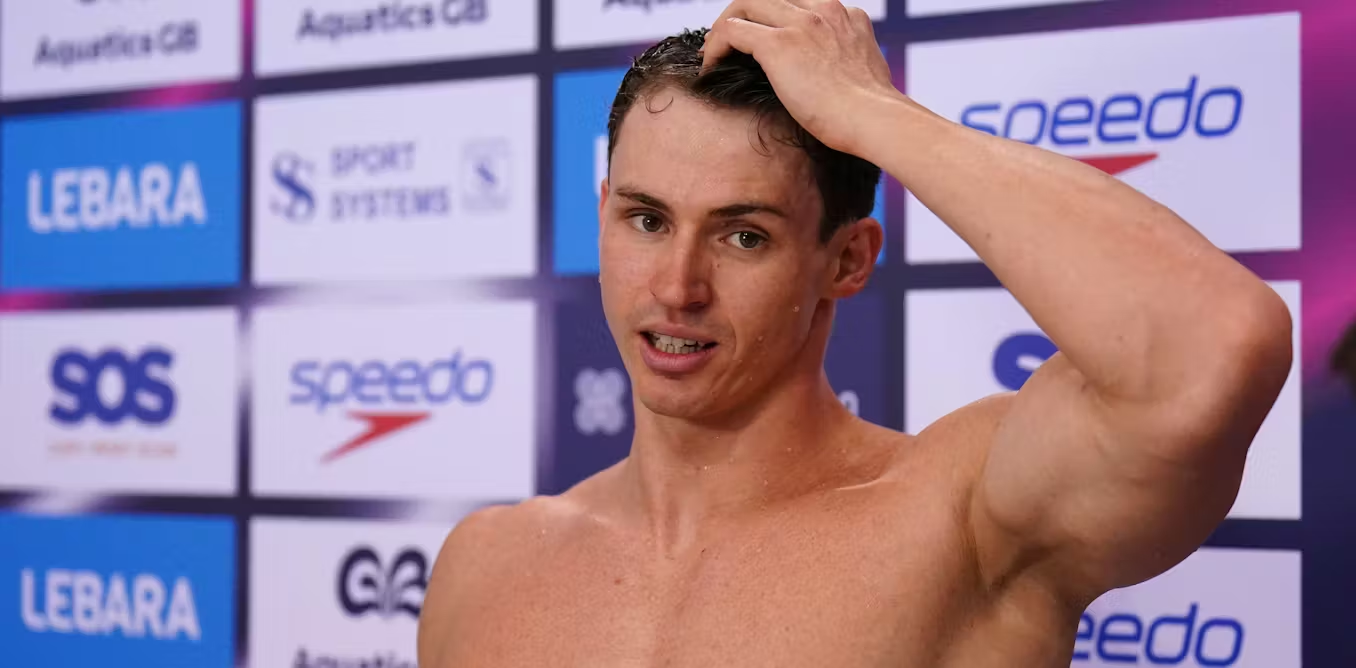
Every time a new enhanced athlete is announced, their national sporting bodies issue condemnations. Sport Ireland stated that they were “deeply disappointed” about swimmer Shane Ryan’s decision to join the Enhanced Games. When fellow swimmer Ben Proud announced his intention to participate, governing body UK Sport said it “condemns everything the Enhanced Games stands for” and that they were “incredibly disappointed” with his decision.

But these same bodies preside over sports where athletes routinely suffer serious injuries. When will they acknowledge the risks they’re already asking athletes to accept?

The question isn’t whether the Enhanced Games introduces something morally unprecedented. It doesn’t. What it does is forces sports fans to confront the bargain they’ve always accepted but rarely discuss. Fans want extraordinary athletic performances, and they’re willing to let athletes pay extraordinary prices to deliver them.

Advertisement

The Enhanced Games describes itself as a ‘sports spectacle for the 21st century’.

Being honest about risk

If sporting bodies are serious about athlete welfare rather than just moral posturing, they need to be honest about risk across all of sport. In research ethics, institutional review boards conduct formal risk-benefit analyses before approving human studies. They document potential harms and assess whether benefits justify risks.

Sporting bodies should do the same. This includes the Enhanced Games. So far, they’re failing just as badly as traditional sports, hiding behind claims of medical supervision rather than stating the trade-offs.

Informed consent is central to medical ethics and some ethicists argue it isn’t talked about enough in sport. Athletes should understand the specific risks of their sport based on robust data, not vague warnings.

Advertisement


À lire aussi :
In Victorian Britain the crowds approved of sports doping – with cocaine


For example, all boxers should be aware of the dangers they face each time they take a punch to the head. Similarly, all enhanced athletes should understand what prolonged testosterone and growth hormone do to the body. Informed consent requires real information, not liability waivers.

As a philosopher of science, I suggest we need to be consistent about our judgments across different sports. The sporting establishment denouncing the Enhanced Games should look in the mirror. Boxing, rugby and motorsports organisations as well as bodies representing a host of other sports preside over activities with documented long-term harms.

The selective outrage is telling. It suggests this is more about maintaining comfortable fictions than protecting athletes. We prefer our sports wrapped in the language of safety and personal freedom. The Enhanced Games threatens to make that fiction harder to maintain.


Advertisement

Source link

Continue Reading
Click to comment

You must be logged in to post a comment Login

Leave a Reply

NewsBeat

Avoid crowds and long queues by visiting fairytale village hidden within hills

Published

on

Manchester Evening News

The charming medieval village is a tranquil and historic destination rather than an overcrowded tourist spot. You can walk through town or stop and enjoy some lovely pastries at the local cafe

Visiting a well-known tourist destination can often mean navigating large crowds, which is entirely understandable for those seeking a more peaceful experience. Overcrowded spots can feel overwhelming, with lengthy queues for food and drink adding to the frustration.

Fortunately, there’s one breathtaking village tucked away among rolling hills that boasts some of the most spectacular views imaginable. Better still, the location doesn’t attract overwhelming numbers of visitors, meaning you can truly unwind away from the hustle and bustle. So where exactly is this hidden treasure? Monreal in Germany is renowned for its half-timbered houses, narrow cobblestone streets and a charming riverside setting. Many would say this picturesque village feels like something straight out of a fairytale.

Advertisement

A TikTok channel recently shared footage of the tranquil destination, nestled in western Germany.

In the caption, it said: “Monreal is a charming medieval village in western Germany, beautifully nestled in a quiet valley surrounded by rolling hills.

“Known for its half-timbered houses, narrow cobblestone streets, and romantic riverside setting, the village feels like a scene from a fairytale.

“Overlooking the town are the ruins of two hilltop castles, adding a dramatic and historic touch to the landscape.

Advertisement

“With its peaceful atmosphere, picturesque, scenery and timeless architecture, Monreal stands as one of Germany’s most enchanting hidden gems.”

Content cannot be displayed without consent

What to do in Monreal:

You can visit the ruins of Löwenburg, known as the Castle of Lions, or Philippsburg, which both offer panoramic views of the town.

Traumpfad trails offer an enjoyable hiking experience for those who are passionate about walking. The Monrealer Ritterschlag trail winds through the town and its surrounding woodland.

The Half-Timbered Village, Fachwerkdorf, is a stunning attraction where visitors can stroll through the historic village centre, lined with traditional houses, many of which feature plaques detailing their heritage.

Advertisement

Nearby, the Nepomuk Bridge spans the Elzbach stream and is well worth a visit. After taking in the sights, you can unwind at one of the local cafés – Cafe Plüsch, for instance, is renowned for its coffee and pastries.

There is also a small pottery in the old schoolhouse, where visitors can explore numerous signs chronicling the village’s history as a hub for the textile industry.

Best time to go:

The village is widely regarded as a charming, peaceful and historic destination, rather than an overcrowded tourist hotspot.

Late spring or early summer (May to June) is considered the prime time to visit. Early autumn, such as September, is another excellent option, offering pleasant hiking conditions and manageable crowds.

Advertisement

For those seeking warm, sunny weather, late June to August is ideal. Monreal also makes for a wonderful destination during winter, thanks to its enchanting Christmas atmosphere.

The nearest major airports to Monreal are Frankfurt or Cologne/Bonn. Rail connections are accessible from these cities to the Monreal area.

Source link

Advertisement
Continue Reading

NewsBeat

Judge halts Trump effort requiring colleges to show data on race admissions

Published

on

Judge halts Trump effort requiring colleges to show data on race admissions

BOSTON (AP) — A federal judge has halted efforts by the Trump administration to collect data that proves higher education institutions aren’t considering race in admissions.

The ruling from U.S. District Court Judge F. Dennis Saylor IV in Boston on Friday granting the preliminary injunction follows a lawsuit filed last month by a coalition of 17 Democratic state attorneys general. It will only apply to public universities in plaintiffs.

The federal judge said the federal government likely has the authority to collect the data, but the demand was rolled out to universities in a “rushed and chaotic” manner.

“The 120-day deadline imposed by the President led directly to the failure of NCES (National Center for Education Statistics) to engage meaningfully with the institutions during the notice-and-comment process to address the multitude of problems presented by the new requirements,” Saylor wrote.

Advertisement

President Donald Trump ordered the data collection in August after he raised concerns that colleges and universities were using personal statements and other proxies to consider race, which he views as illegal discrimination.

In 2023, the Supreme Court ruled against the use of affirmative action in admissions but said colleges could still consider how race has shaped students’ lives if applicants share that information in their admissions essays.

The states argue the data collection risks invading student privacy and leading to baseless investigations of colleges and universities. They also argued that universities have not been given enough time to collect the data.

“The data has been sought in such a hasty and irresponsible way that it will create problems for universities,” a lawyer for the plaintiffs, Michelle Pascucci, told the court, adding that the effort seem was aimed at uncovering unlawful practices.

Advertisement

The Education Department has defended the effort, arguing taxpayers deserve transparency on how money is spent at institutions that receive federal funding.

The administration’s policy echoes settlement agreements the government negotiated with Brown University and Columbia University, restoring their federal research money. The universities agreed to give the government data on the race, grade-point average and standardized test scores of applicants, admitted students and enrolled students. The schools also agreed to be audited by the government and to release admissions statistics to the public.

The National Center for Education Statistics is to collect the new data, including the race and sex of colleges’ applicants, admitted students and enrolled students. Education Secretary Linda McMahon has said the data, which was originally due by March 18, must be disaggregated by race and sex and retroactively reported for the past seven years.

If colleges fail to submit timely, complete and accurate data, the administration has said McMahon can take action under Title IV of the Higher Education Act of 1965, which outlines requirements for colleges receiving federal financial aid for students.

Advertisement

The Trump administration separately has sued Harvard University over similar data, saying it refused to provide admissions records the Justice Department demanded to ensure the school stopped using affirmative action. Harvard has said the university has been responding to the government’s requests and is in compliance with the high court ruling against affirmative action. On Monday, the Education Department’s Office for Civil Rights directed Harvard to comply with the data requests within 20 days for face referral to the U.S. Justice Department.

Source link

Advertisement
Continue Reading

NewsBeat

Is a White Easter as likely as a White Christmas?

Published

on

Two lambs lie in a snowy field

Using the 1981-2010 average of number of days where snow falls in a month, March sees 4.2 snow days whilst there are just 3.9 days on average in December.

The majority of Easter Days occur in April, when the chance of snowfall drops to just 2.3 days.

Taking that into account we can say that white Christmases and white Easters are about as frequent as each other when Easter is in March.

When snow does fall, it may be more inclined to settled during a March Easter compared to Christmas, as soil temperatures (away from the surface layer) are lower compared to December.

Advertisement

spring is a season of big weather contrasts and temperature swings. Days lengthen and the Sun gets stronger, but when cold air moves in from the north, we can be quickly plunged back into wintry weather.

So even when Easter falls in April, spring snow can still happen, especially over the higher ground of Scotland.

Source link

Advertisement
Continue Reading

NewsBeat

North East police launch pilot giving victims spiking test kits

Published

on

North East police launch pilot giving victims spiking test kits

Northumbria Police is one of three forces in the country trialling a new pilot scheme this month, offering potential victims a test to detect and identify known substances with which drinks may have been spiked.

The testing kits will be available through trusted providers, including education and health settings, in Newcastle city centre, so victims have more options for support. 

It is recognised that spiking is underreported to police, but officers still want victims to come forward for testing, even if they don’t want their case to go through the criminal justice system.

Police make spiking test kits available for city centre drinkers (Image: North Yorkshire Police)

The pilot project, overseen by the Home Office and National Centre for Violence Against Women and Girls and Public Protection (NCVPP), will be evaluated before being considered for wider roll-out.

Advertisement

It will be an indicator to determine whether it increases the number of people coming forward.

Any improved data will only strengthen the police’s ability to prevent and tackle these offences going forward.

Detective Chief Superintendent Claire Hammond, the lead Violence Against Women and Girls officer at the NCVPP, said: “We hope that by providing direct access to testing we will empower victims with a choice over the support they receive and help them to get answers.

“If something doesn’t feel right, then please seek support and come forward for a test.

Advertisement

“Spiking has a significant impact of feelings of safety, particularly for women and girls, and we are absolutely focused on tackling it.

“It is, therefore, crucial that we know and understand when and where it is happening, so we can use that intelligence to prevent further cases and disrupt offenders.”

Superintendent Joanne Park-Simmons, of Northumbria Police, said: “We completely recognise the distress and worry that potential spiking incidents can cause victims, and, ultimately, we want people to know we’re here to help them.

“We’re proud to have been selected as one of three police forces in the country for this new pilot, which we hope will only strengthen our response to such incidents going forward.

Advertisement

 “By working in collaboration with our partners in Newcastle, including health and education settings, we can further understand the bigger picture and ensure those affected are supported in a way that suits them.

“We know that not everyone wants to progress a criminal outcome, but it’s hugely important we can understand what is happening in our area, so we can take more action.

“Newcastle has always been a safe and welcoming city, and we want to make sure it stays that way.

“If you think you have unfortunately experienced spiking, please consider accessing a test through a provider near you.

Advertisement

 “You will be listened to, and as ever we’ll be here if you need us.”

 A new webpage has been created on the Northumbria Police website which allows potential victims to find the closest venue stocking the new kits.

Read next … more crime stories from The Northern Echo, by clicking here

Project Vigilant targets potential sex, spiking and theft offenders  

Advertisement

North Yorkshire Police launch anti-spiking campaign

Spiking | The Northern Echo

To report spiking, members of the public can send the force a direct message on social media or use live chat and report forms on their website.

Anyone unable to make contact in those ways should call 101.

Advertisement

In an emergency, including where a crime is taking place, the advice is to always dial 999.


Source link

Advertisement
Continue Reading

NewsBeat

Crew member from downed US warplane rescued after ‘heavy firefight’

Published

on

Daily Mirror

According to reports, the crew member has been recovered but has not yet been flown from Iran – and the special rescue mission remains in progress as of Sunday morning UK time

Reports suggest that the second crew member from a downed US warplane has now been recovered after a ‘heavy firefight’.

A US government official has told Al Jazeera that the second crew member from the downed F-15E has now been found – the official has stated, however, that the rescue operation is still in progress.

The missing crew member is confirmed rescued, they said – but is not safe yet. The rescue team must still successfully exfiltrate from Iran and get back to safety.

Advertisement

Iran shot down a F15-E Strike Eagle fighter jet Friday, with one service member getting rescued and the search then desperately being conducted for the second US officials say.

The last time a U.S. warplane was shot down by enemy fire in combat was an A-10 Thunderbolt II during the 2003 U.S. invasion of Iraq, said retired Air Force Brig. Gen. Houston Cantwell, a former F-16 fighter pilot.

US special forces have reportedly conducted a rescue operation for the downed pilot in Chaharmahal and Bakhtiari Province, Iran, following clashes with the Basij Resistance Forces.

Advertisement

US airstrikes have reportedly targeted communication towers in Dehdasht, Kohgiluyeh and Boyer-Ahmad Province, attempting to disrupt communication and coordination of Iranian forces.

It comes as Donald Trump warned Iran to open the crucial Strait of Hormuz by his Monday deadline and Tehran called his threat “unbalanced and foolish.”

Source link

Advertisement
Continue Reading

NewsBeat

Bolton’s new Conservative candidate for Bromley Cross

Published

on

Bolton's new Conservative candidate for Bromley Cross

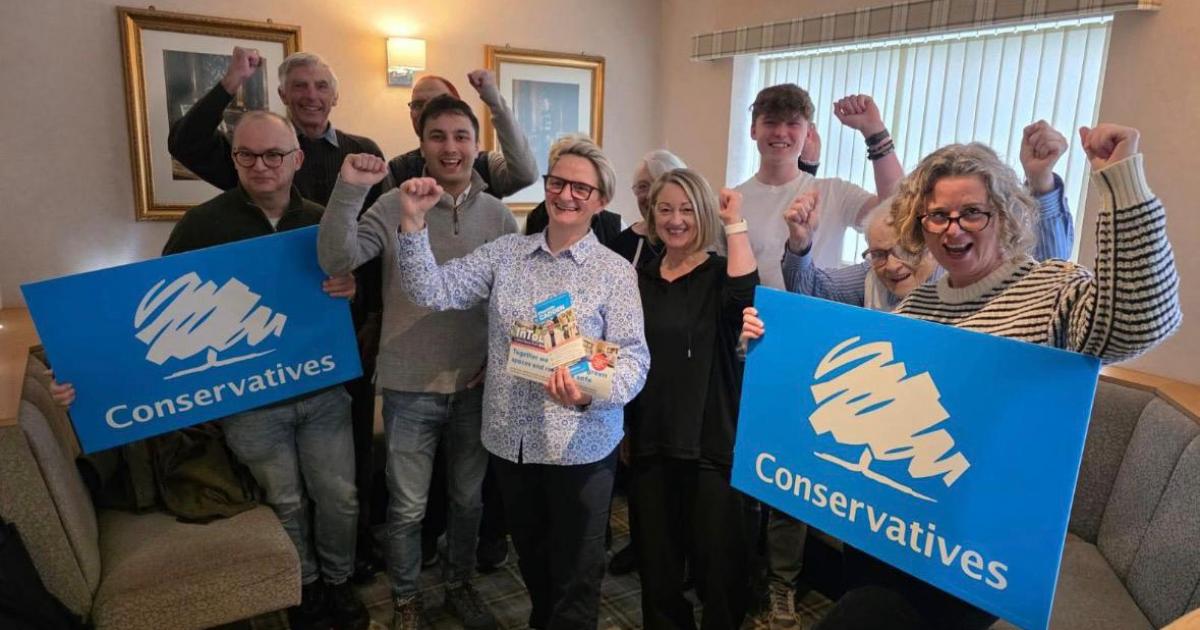
Conservative councillor Amy Cowen has served since 2021, with Charlotte Cadden handed the baton as campaigning is getting underway.

Having a career in policing for 30 years, Ms Cadden said her priorities would centre on tackling crime, anti-social behaviour and protecting local green spaces.

Charlotte Cadden with councillors Nadim Muslim and Samantha Connor (Image: Charlotte Cadden)

Ms Cadden, who has previously lived in Egerton, said: “I’ve worked in Bolton at all different ranks, but I’ve investigated serious crime alongside anti-social behaviour.

“We do suffer a number of burglaries, car crimes, as well as anti-social behaviour, especially as we come into summer.

Advertisement

“You’ve now got a lot of e-bikes, these illegal bikes that shouldn’t be on the road that teenagers have got no insurance for, and a lot of the time they’re masked up, and it’s frightening for local residents.”

The Conservative candidate actively supporter of women’s rights, being part of introducing Police SEEN UK which challenges sex discrimination in forces across the country.

Charlotte Cadden (Image: Charlotte Cadden)

She also pointed to concerns around development, including opposition to building on green belt, or new grey belt sites, such as Tongfields.

Ms Cadden said she hoped to continue the work of Cllr Cowen and praised her time in office.

Advertisement

She added: “Amy has been a fantastic councillor since 2021. She’s done some incredible casework over the past few years.”

Cllr Nadim Muslim, also representing Egerton and Bromley Cross, said: “We’re really pleased to have some more of her experience.

“We have general issues around speeding and anti-social behaviour, so her police background is going to make a huge difference to how we tackle those issues in our ward.”

Ms Cadden, is currently a governor at Rumworth School in Ladybridge and stood as Conservative candidate for Gorton and Denton. The seat was won by the Green Party’s Hannah Spencer, who is from Bolton.

Advertisement

Council elections will take place on Thursday 7 May in Bolton.


Source link

Advertisement
Continue Reading

NewsBeat

Why is Pep Guardiola not on touchline for Man City vs Liverpool?

Published

on

Why is Pep Guardiola not on touchline for Man City vs Liverpool?

The Premier League giants go head to head for the third time this season at the Etihad Stadium, each looking to seal a return to Wembley.

They now take on a Liverpool side who went into the international break on another low note after a 2-1 loss at Brighton, their 10th league defeat of the campaign so far that left the defending champions sitting fifth, five points adrift of the top four with seven games remaining amid more questions over the future of manager Arne Slot.

John Stones is a doubt for City after withdrawing from England duty with a calf injury, with defensive colleague Josko Gvardiol still unavailable.

Advertisement

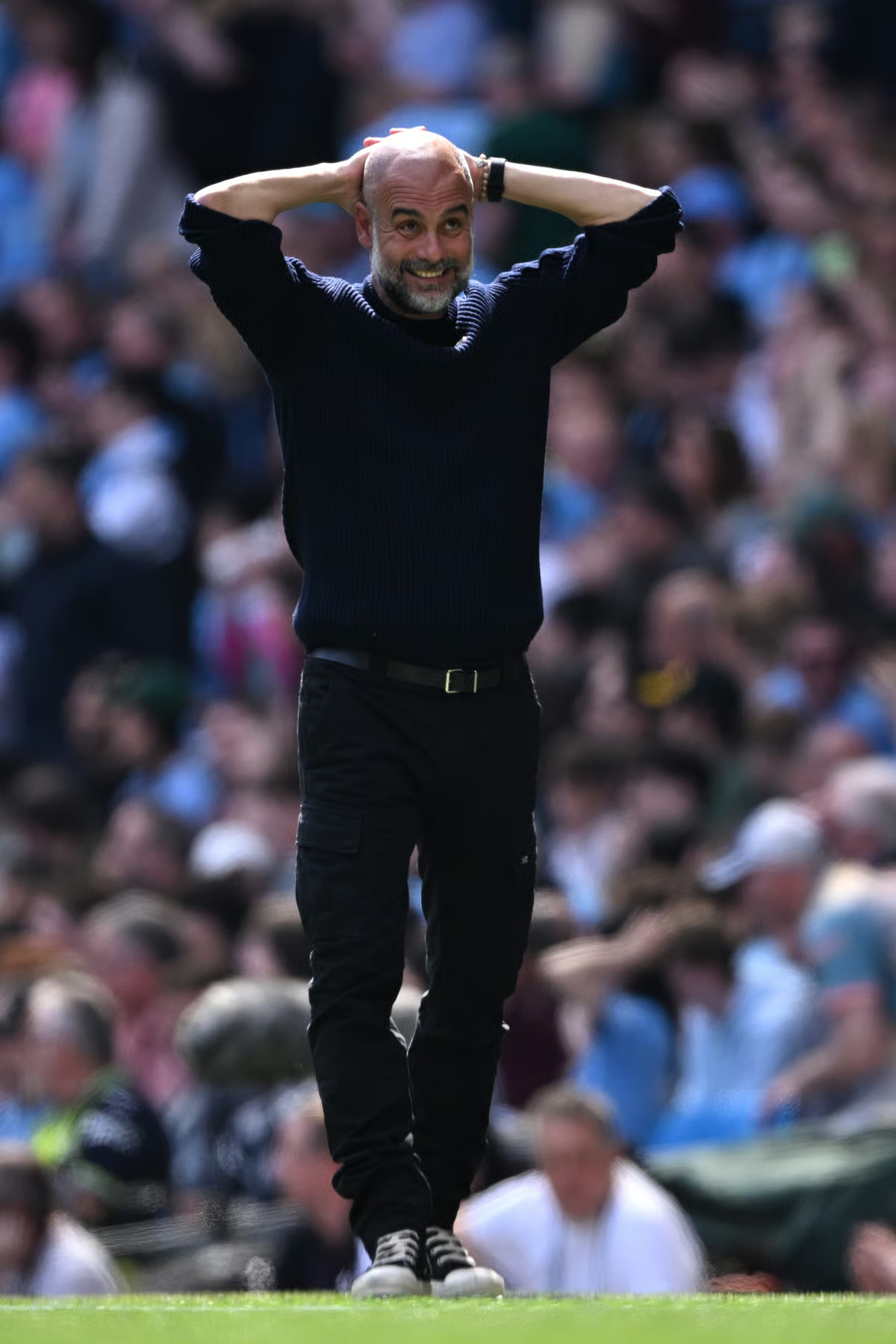
Why is Pep Guardiola not on touchline for Man City vs Liverpool?

City, last year’s beaten finalists, will not have Guardiola in the dugout on Saturday as they attempt to reach the FA Cup semi-finals for the eighth successive season against opponents who have not made the last four since winning the competition for the eighth time in 2022.

Source link

Continue Reading

NewsBeat

Over Hulton couple challenge Peel Land fence ‘enforcement’

Published

on

Over Hulton couple speak out after having to rip down £4k fence

David and Denise Hopwood, of Duchy Avenue in Over Hulton, were given 14 days by Peel Land to clear the structures from a strip of land next to their property.

Now the couple instructed solicitors to challenge the decision.

The dispute centres on land the couple say they have maintained for around eight years, after contacting Peel in 2019 about looking after the area.

The fence sits adjacent to the couples property (Image: NQ)

Mr Hopwood said they were not explicitly given permission to install structures but believed they had approval to maintain the land, and had offered to pay for a licence at the time.

Advertisement

Over the years, the couple installed a small fence and planter features, which they say improved the appearance of the land and helped prevent anti-social behaviour.

A planter that has been removed as a consequence of Peel’s enforcement (Image: NQ)

David said: “We don’t want their land, we just wanted to keep it tidy and make it look nice.

“It had previously been overgrown and attracting anti-social problems.”

Peel later issued an enforcement notice, stating the structures were unauthorised and must be removed, with the land returned to its previous condition.

Advertisement

David said he has since taken down the fence panels, planters and ornaments, leaving only some posts and base boards in place.

He said: “I really want to win, but I’m not holding out hope.

“I’m simply taking a one-time stab at this — I can’t plough money into it.

He added that if allowed to keep the land as it is, the couple would be willing to pay a licence fee and continue maintaining it.

Advertisement

David said he also pointed out that other nearby residents had made informal use of the land, including placing boulders and creating a small memorial for a neighbour who had passed.

Source link

Advertisement
Continue Reading

NewsBeat

UConn reaches 3rd national title game in 4 seasons, beating Illinois 71-62

Published

on

UConn reaches 3rd national title game in 4 seasons, beating Illinois 71-62

INDIANAPOLIS (AP) — Dan Hurley had UConn ready for another Final Four fight night. Once again, his Huskies scored a knockout.

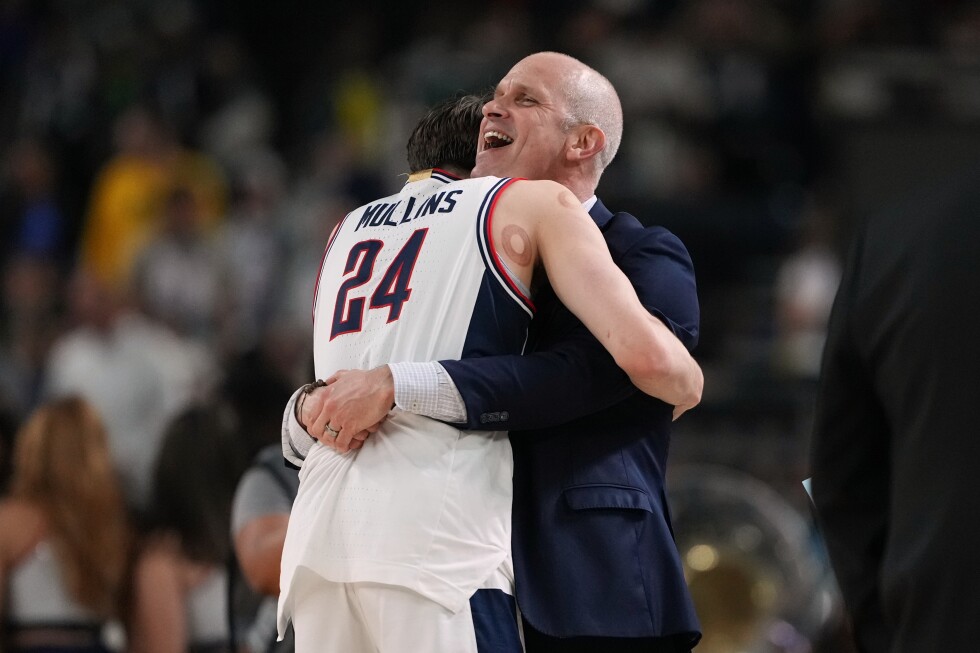
Fabulous freshman Braylon Mullins made another last-minute 3-pointer — his only basket of the second half — and the Huskies muscled their way past Illinois 71-62 on Saturday to reach their third national championship game in four years.

Tarris Reed Jr. had 17 points and 11 rebounds and Mullins finished with 15 points as the Huskies (34-5) rode strong inside play and tough defense to their 19th straight victory in the Sweet 16 or later rounds of the NCAA Tournament.

They’ll face either Arizona or Michigan with a chance to win their seventh national title, all since 1999, as Hurley tries to become the only active coach with more than two championships.

Advertisement

“We’re a tough program, we’re a group of fighters,” said Hurley, who won it all in 2023 and 2024. “We’ve got incredible will. We go into these games, we’re ready for battle. For us, it’s not a game that we’re just kind of running around in uniforms throwing the ball around, hoping it goes in. That’s not what we’re doing out there. We’re fighting. It’s a life-and-death struggle for us to get to Monday night for the opportunity to win a championship.”

Mullins sent the Huskies past Duke, the top overall seed, in the Elite Eight last weekend with the shot of the tourney — a 35-foot 3-pointer with 0.4 seconds left. He was equally effective this time, a short drive from his hometown of Greenfield, Indiana.

After Silas Demary Jr. secured an offensive rebound, Mullins hit a catch-and-shoot 3 with 52 seconds left that gave UConn a 66-59 and thwarted Illinois’ late charge.

“The set was going to be run for anybody on the team. You’ve just got to shoot with confidence,” Mullins said. “Just trying to find the best look on the floor, and I know our point guards are going to get us the ball, so I think that was the biggest shot I hit tonight.”

Advertisement

UConn needed it on a night star forward Alex Karaban struggled with his shot. He had nine points on 1-of-8 shooting while adding four rebounds and four assists as he tied Hurley’s brother, Bobby, for second in career March Madness victories by a player with 18. A win Monday also would make him the first player since John Wooden’s dominant UCLA teams in the 1960s and 1970s to finish as a three-time champion.

Thanks in part to Karaban, the Huskies haven’t lost a tournament game played past the opening weekend since 2009, when they fell in the national semifinals to Michigan State. With one more victory, they would break a tie with North Carolina and move into third place alone in national titles, trailing only UCLA (11) and Kentucky (eight).

Freshman guard Keaton Wagler had 20 points and eight rebounds to lead the Fighting Illini (28-9), who reached their first Final Four since losing the championship game to UNC in 2005.

Wagler and Mullins became the first pair of freshmen to top 15 points in a Final Four game since Michael Jordan and Patrick Ewing in 1982.

Advertisement

“It’s margins, they’re so small,” said Illinois’ Brad Underwood, a 62-year-old coaching lifer who reached his first Final Four. “Getting here is really hard. Winning is really hard. It’s why I have so much appreciation for Alex Karaban. He’s been to three of them. That’s freaky. It’s a rebound, it’s a loose ball, it’s a ball rolling in, it’s a banked 3.”

Tomislav Ivisic had 16 points and seven rebounds for the Illini, who couldn’t replicate the blueprint that carried them to double-digit victories over Penn, VCU, Houston and Iowa. Illinois made just 3 of 14 3-pointers in the first half and finished 6 of 26 beyond the arc.

UConn took full advantage even though the Huskies had two long scoring droughts — nearly six minutes in the first half and more than six minutes in the second. The latter allowed Illinois to charge back from its biggest deficit of the season, 57-43 with 9:43 to play, to get within 57-53 with 5:03 remaining.

But the Huskies answered and closed it out at the free-throw line for their fifth straight win in the series. UConn beat Illinois 74-61 on Nov. 28 in Madison Square Garden, and now the Huskies have held the Illini to their two lowest scoring totals and shooting percentages of the season. UConn also beat Illinois 77-52 in the Elite Eight two years ago.

Advertisement

“We held them to 35 percent (shooting),” Underwood said. “They just made more 3s than we did.”

And finished with a little more punch.

“The year hasn’t been a joy ride,” Hurley said. “We haven’t been a machine of destruction. We’ve been a team that’s had to grind out games like this.”

___

Advertisement

AP March Madness bracket: https://apnews.com/hub/ncaa-mens-bracket and coverage: https://apnews.com/hub/march-madness

Source link

Advertisement
Continue Reading

NewsBeat

what Fifa’s new women’s football rule gets right (and wrong)

Published

on

what Fifa’s new women’s football rule gets right (and wrong)

Fifa’s latest decision to require every team in its women’s competitions to include at least one female head coach or assistant is, on the surface, a landmark moment.

The rule will apply across all women’s tournaments, from youth level to senior competition, beginning this year with the U17 and U20 World Cups and the Women’s Champions Cup.

In a sport where the technical area remains overwhelmingly male, the symbolism is powerful. But symbolism in sport is rarely neutral. It can signal progress while exposing how far the structures around it still have to travel.

Women’s football has grown rapidly in visibility and commercial value. Coaching, however, has not kept pace. At the 2023 Women’s World Cup, only 12 of 32 head coaches were women. Across some national associations, women make up as little as 5% of the coaching workforce. Against that backdrop, Fifa’s intervention is both unsurprising and, in many ways, overdue.

Advertisement

It is also an admission that organic change has failed. But there is a deeper issue. Research on coaching cultures consistently shows that underrepresentation is not the root problem but a symptom of more deeply embedded behaviour. Increasing numbers without addressing those issues risks leaving the foundations intact.

The timing, too, invites scrutiny. If the imbalance has been clear for years, why act now? And why only within the women’s game?

A problem contained within a single domain

The policy applies exclusively to women’s competitions. On one level, that makes practical sense. Structurally, however, it reinforces a familiar pattern. Gender inequality is treated as an issue to be solved within women’s sport, rather than across football as a whole.

The men’s game – where coaching pathways are more entrenched, better funded and more resistant to disruption – remains untouched. In effect, the responsibility for reform is placed on the side of the sport with the least power to drive it.

Advertisement

There is also a flawed assumption at play: that appointing more women will, in itself, transform coaching cultures. It may not. Women, like men, can reproduce the same patriarchal structures they have been socialised into. Representation alone does not guarantee change.

Policies like this walk a narrow line. Without intervention, inequality persists. But mandates risk introducing a parallel narrative: that women are present because they are required, not because they are qualified.

Fifa’s chief football officer, Jill Ellis, has framed the rule as an accelerant, designed to “create clearer pathways, expand opportunities, and increase visibility for women on our sidelines”. The logic is compelling.

Yet elite coaching is as much about perceived authority as it is about expertise. If female coaches are seen, however unfairly, as fulfilling a quota, the policy risks undermining its own aims.

Advertisement

There is another trap here too. The expectation that women will bring inherently different, more collaborative or empathetic approaches leans on gender stereotypes. It risks reinforcing the very assumptions that have historically limited women’s progression.

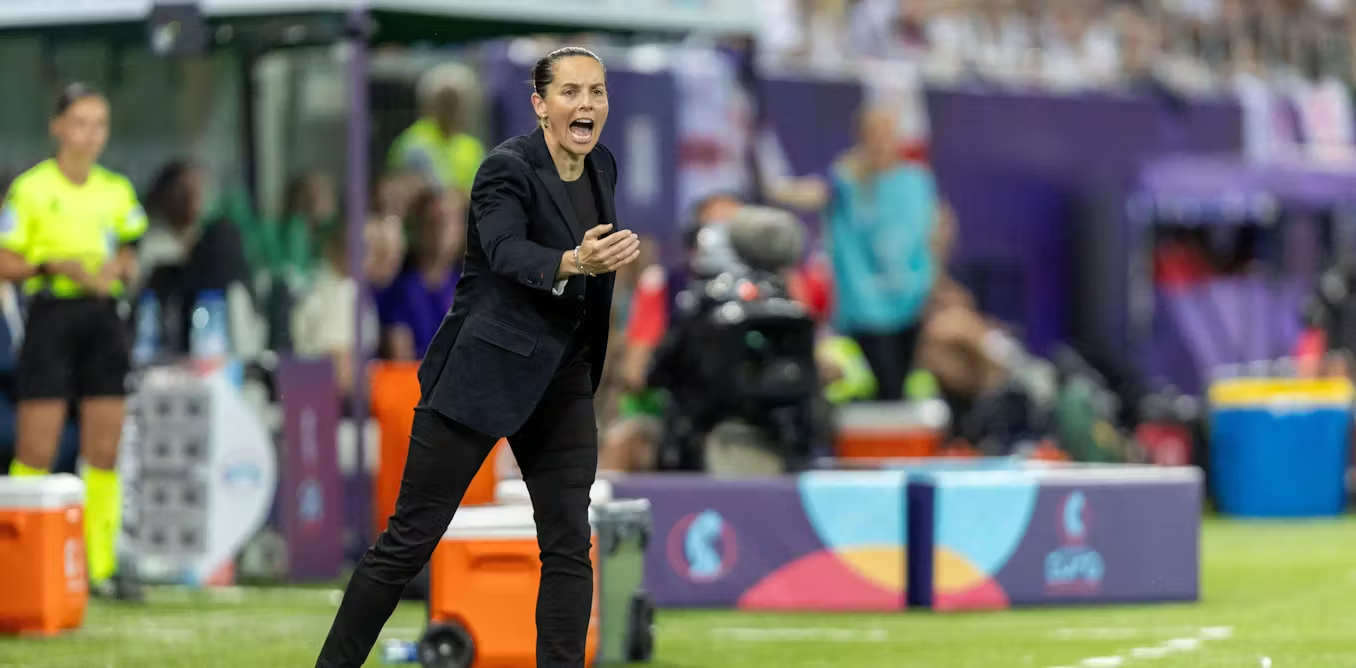
England’s senior women’s manager, Sarina Wiegman.
PA Images/Alamy

Visibility at the top does not necessarily mean readiness. Fifa has invested in coach development and nearly 800 women have received scholarship support since 2021. But the gap between training and elite international competition remains significant.

If exposure outpaces infrastructure, early difficulties may be interpreted as evidence that the policy itself is flawed. Sport is quick to remember failure and slow to acknowledge context. And if those stepping into these roles have been shaped by the same systems they are expected to change, criticism risks missing the point entirely.

Beyond visibility

None of this is an argument against increasing the number of women in coaching. Representation matters. It shapes expectations, broadens ambition and challenges long-standing assumptions about who leads.

Advertisement

But meaningful change is rarely immediate. It happens in coach education, in hiring practices, in mentoring networks and in grassroots environments where coaching identities first take shape. A mandate can open the door. It cannot, on its own, build the path.


À lire aussi :
What makes a good football coach? The reality behind the myths


Without deeper structural change, such as in how coaching is taught, valued and practised, new appointments risk being placed into old systems.

Fifa’s decision is part of a broader effort to increase the presence of women in technical roles and align leadership with the rapid growth of the women’s game. It is not insignificant. It disrupts a long-standing status quo and will have visible effects, not least at the 2027 World Cup. But visibility alone will not transform a system.

Advertisement

If women on the touchline are to become unremarkable – as an expectation not an exception – the structures beneath elite coaching must change as well. Otherwise, mandates risk becoming what sport has seen before: gestures that are symbolically powerful, but structurally fragile. Real change will come not when women are required to be present, but when their presence no longer needs to be required.

Source link

Advertisement
Continue Reading

Trending

Copyright © 2025