This configuration also has an upgrade to 48GB of memory for smoother performance when running multiple apps simultaneously. The laptop has a 1TB SSD, and the 2026 line supports Wi-Fi 7.
Advertisement
You can also save on Amazon’s entire selection of retail configurations below. And if you visit our 16-inch MacBook Pro Price Guide, you can shop deals from other retailers across both retail and CTO models.
Weekend 14-inch MacBook Pro sale
14″ MacBook Pro M5 (10C CPU, 10C GPU, 16GB, 1TB, Standard Display): $1,849 ($150 off)
14″ MacBook Pro M5 Pro (15C CPU, 16C GPU, 24GB, 1TB, Standard Display): $2,259.99 ($240 off)
14″ MacBook Pro M5 Pro (15C CPU, 16C GPU, 24GB, 2TB, Standard Display): $2,699 ($300 off)
14″ MacBook Pro M5 Pro (18C CPU, 20C GPU, 24GB, 2TB, Standard Display): $2,899 ($300 off)
14″ MacBook Pro M5 Max (18C CPU, 32C GPU, 36GB, 2TB, Standard Display): $3,799 ($300 off)
Latest 16-inch MacBook Pro deals
16″ MacBook Pro M5 Pro (18C CPU, 20C GPU, 24GB, 1TB, Standard Display): $2,759.99 ($240 off)
16″ MacBook Pro M5 Pro (18C CPU, 20C GPU, 48GB, 1TB, Standard Display): $3,299 ($300 off)
16″ MacBook Pro M5 Max (18C CPU, 32C GPU, 36GB, 2TB, Standard Display): $3,999 ($400 off)
16″ MacBook Pro M5 Max (18C CPU, 40C GPU, 48GB, 2TB, Standard Display): $4,499 ($500 off)
It’s also worth bookmarking our MacBook Pro deals roundup for offers on both current and closeout configurations.
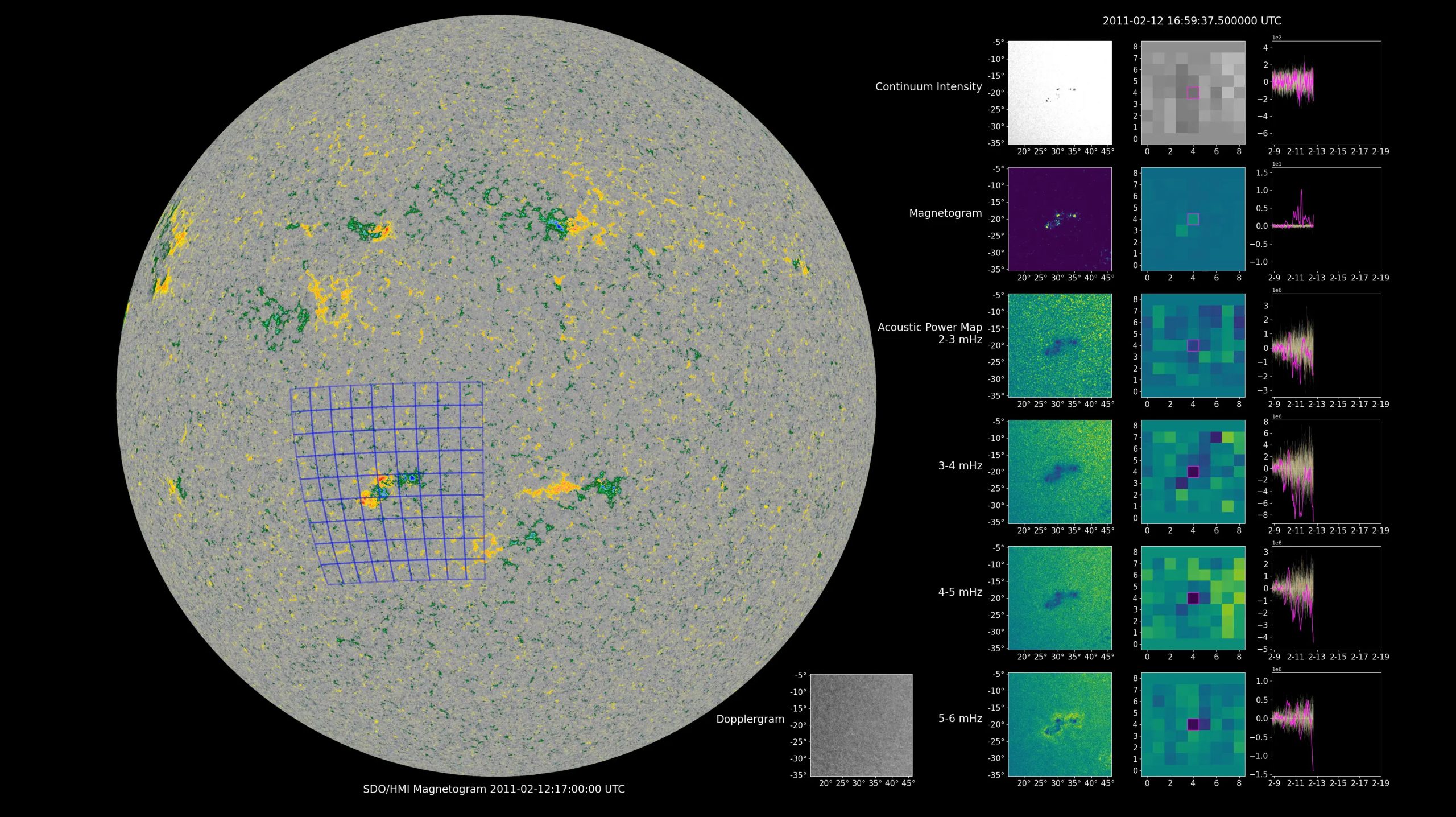
In this age of neural net “AI”, even the most skeptical of Butlerians have to agree that these machine learning models can be very, very good at pattern recognition if nothing else. NASA is on the same page, and to take advantage of that pattern recognition, they’ve built a machine learning module called COFFIES, which stands for Consequence Of Fields and Flows in the Interior and Exterior of the Sun, because at NASA everything is an acronym, or at least a backronym. Like most such names, this one is at least vaguely descriptive: the model is trying to predict what’s going on in the material flows and magnetic fields deep within our local star, and using those inferences is able to predict active regions– that’s sunspots to us chickens — up to 12 hours before they visibly form.
The measurements used here are indirect — we can’t chart the magnetohydrodynamic snarls deep inside a star directly, but we can measure the magnetic field and acoustic waves at and above the surface. You could say the model “hears” sunspots forming. Like all such models, it’s a bit of a black box, but heliophysicists may be able to use its predictions to help them understand their own, organic understanding of the big ball of plasma to which we all owe our lives.
This model is thus one of the better things to come out of the “AI” revolution– nobody is going to give over their thinking to the machine and stop trying to understand the Sun, and the few hours of extra warning COFFIES might potentially provide before the next Carrington Event-class geomagnetic storm could prove invaluable, especially since a flare-blocking Storm wall remains a theoretical exercise at best. If you are interested in the sun, COFFIES has an interesting YouTube channel and, as you can see in a recent video, they are doing a lot with AI.
Nagaoka’s MP cartridges have earned a loyal following across North America and Europe for their clarity, transparency, detail, and superb tracking ability. The products themselves are not the problem. Buying them, however, has not always been as straightforward as it should be, with distribution in some markets becoming increasingly murky and it not always being clear who was officially importing the cartridges, setting prices, or supporting replacement styli.
That uncertainty matters more now. Nagaoka will raise Japanese pricing across most of the MP range on September 1, 2026, while several replacement styli will increase far more sharply, with some more than doubling in price. The changes apply to Japan, and Nagaoka has not confirmed equivalent increases for the United States or publicly identified a new American distributor. For existing owners, the bigger concern may not be the cost of another cartridge, but what happens when a superb tracker finally needs a new stylus.
The replaceable stylus has always been one of the saner parts of vinyl ownership.
Wear out the stylus on a Nagaoka MP cartridge and you can replace it without buying another cartridge body, realigning everything, and explaining to your spouse why another tiny box from Japan costs more than the monthly utility bill.
Advertisement
That arrangement is not going away, but it is becoming considerably more expensive for Nagaoka customers in Japan. But we all know that those price increases will not be restricted to that market.
Why Is Nagaoka Raising Prices?
Nagaoka says it has attempted to maintain current pricing since its previous adjustment in September 2024, but higher raw-material and logistics costs, along with currency fluctuations, have made that increasingly difficult.
The company says the increases are necessary to maintain product quality and a stable supply. Orders currently on backorder that are delivered on or after September 1 will be charged at the revised Japanese price.
That explanation will sound familiar to anyone who follows the audio industry. Manufacturers across almost every category are dealing with higher component, transportation, labor, and materials costs. Cartridges are especially specialized products, with tiny production volumes compared with mainstream consumer electronics and little room to substitute cheaper parts without changing performance.
Advertisement
The new pricing still requires a closer look because the cartridges and replacement styli are not increasing at the same rate.
Nagaoka MP Cartridge Prices in Japan
The figures below are Nagaoka’s official Japanese MSRPs. Old and new prices are shown before tax, while the fourth column shows the new price including Japan’s 10 percent consumption tax. Percentage changes are calculated from Nagaoka’s published figures.
The MP-150 receives the largest cartridge increase at 31 percent. The popular MP-110 rises by approximately 19 percent, while the MP-200 and MP-300 increase by roughly 20 percent.
Advertisement. Scroll to continue reading.
Advertisement
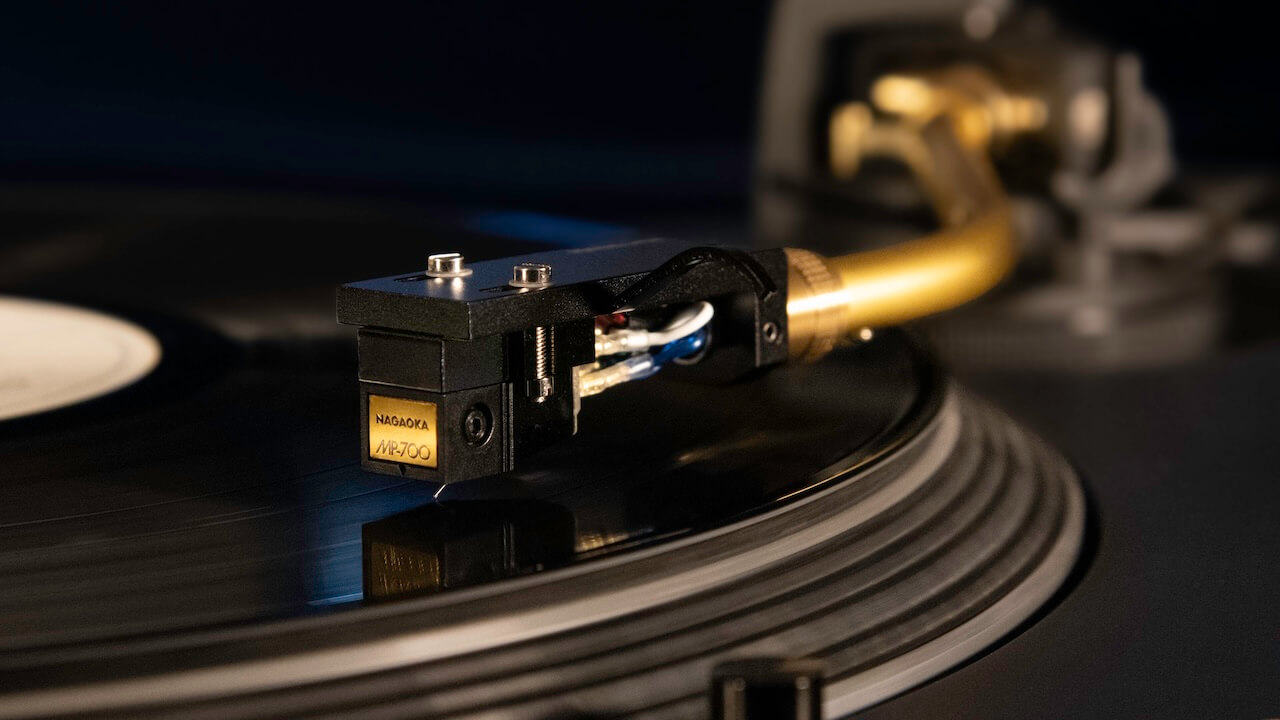
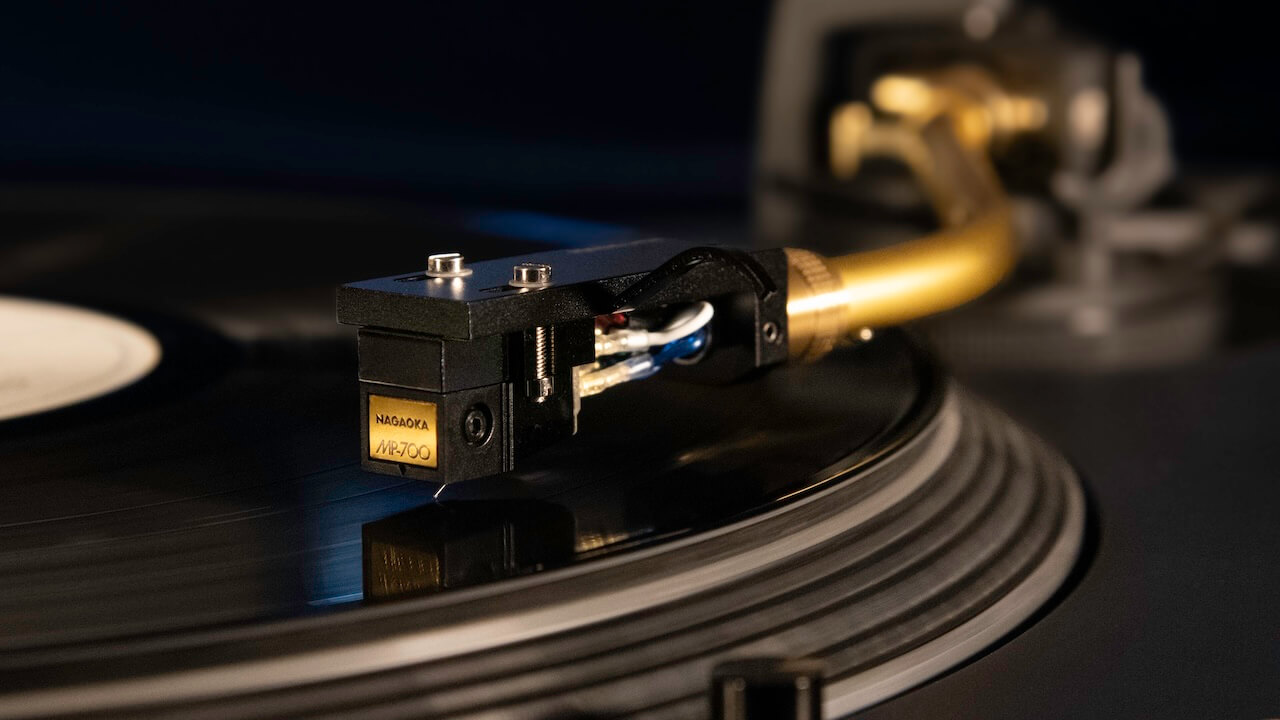
NAGAOKA MP-700 Phono Cartridge
The flagship MP-700 remains unchanged at ¥185,000 before tax. The mono cartridges and JT-80LB and JT-80BK models are also unchanged.
Nagaoka has actually reduced the pre-tax price of the headshell-mounted MP-700H slightly, from ¥191,000 to ¥190,000. It will not fund a weekend in Tokyo, but a price decrease is still a price decrease.
Replacement Stylus Prices Take the Hardest Hit
The larger story involves Nagaoka’s JN-P replacement styli.
The JN-P100 doubles in price. The JN-P300 rises by almost 132 percent, while the JN-P500 increases by more than 126 percent.
A comparison of Nagaoka’s figures reveals what appears to be a deliberate realignment: every replacement stylus from the JN-P100 through JN-P500 will now cost exactly 60 percent of the corresponding cartridge’s pre-tax Japanese MSRP.
Advertisement
Previously, those replacement styli ranged from approximately 31 to 43 percent of the complete cartridge price.
Replacing the stylus will still cost less than purchasing a complete cartridge, and owners will avoid installing and aligning a new body. But one of the MP Series’ strongest economic advantages has become noticeably less compelling in Japan.
The JN-P700 replacement stylus remains unchanged at ¥85,000 before tax.
What Does This Mean for U.S. Buyers?
At this stage, nothing in Nagaoka’s announcement confirms a U.S. price increase.
Advertisement
The published figures are Japanese domestic prices. They should not be converted directly into dollars and presented as future American MSRPs. Currency conversion does not account for importing costs, dealer margins, distribution agreements, existing inventory, or whatever pricing structure Nagaoka ultimately uses in the United States.
There is also an unresolved distribution question.
Nagaoka’s official overseas distributor page lists STOKYO for the United States, but specifically identifies the company under “DJ Products.” It does not name a U.S. distributor for Nagaoka’s MP Series, JT Series, or other home-audio cartridges.
Advertisement. Scroll to continue reading.
Advertisement
LP Gear’s website currently states that it purchases directly from Nagaoka and is the company’s only authorized U.S. dealer. However, LP Gear has confirmed directly to eCoustics that its distribution relationship with Nagaoka has ended, meaning the language on that page is no longer current.
The lack of a publicly identified U.S. distributor is not entirely new. At AXPONA 2025, Nagaoka representatives presented the company’s full cartridge range and indicated that the manufacturer was seeking U.S. distribution after years of limited American availability.
Nagaoka returned to AXPONA in 2026 with its cartridge lineup, including the flagship MP-700, but a new American distribution partner has still not been publicly identified.
Cartridges and replacement styli remain available from American online retailers, but retail availability does not answer who is importing the products, establishing official U.S. pricing, supporting dealers, or handling warranty claims.
Advertisement
The Bottom Line
Nagaoka’s Japanese cartridge increases are substantial but not entirely unexpected in the current manufacturing environment. Most MP models will rise by approximately 19 to 31 percent on September 1, while the MP-700 remains unchanged.
The replacement stylus increases are harder to ignore.
Several JN-P models will nearly double in price, while the JN-P300 and JN-P500 will more than double. Bringing every replacement stylus into line at 60 percent of the matching cartridge price creates a cleaner pricing structure for Nagaoka, but it makes long-term ownership more expensive for customers who selected the MP Series partly because replacing the stylus offered such strong value.
For American buyers, the important word for now is Japan. No U.S. increase has been announced, and no current U.S. distributor for Nagaoka’s home-audio cartridge range has been publicly confirmed.
Advertisement
eCoustics is seeking clarification from Nagaoka regarding its current U.S. distribution plans and whether the September Japanese price changes will have any effect on American customers. This story will be updated when that information is confirmed.
Apple appears to be preparing a much broader push into smart-home hardware, with several new products in development as the company looks to expand beyond the HomePod mini and Apple TV, according to a 9To5Mac report.
The roadmap includes refreshed versions of both existing products, a new smart-home hub with a display, a larger HomePod update, and eventually Apple’s first dedicated smart-home security devices. The information comes from recent reporting summarized by 9to5Mac, which notes that Siri’s long-awaited AI upgrades could remove one of the obstacles that has held back new Home products.
Apple is finally giving the smart home some attention
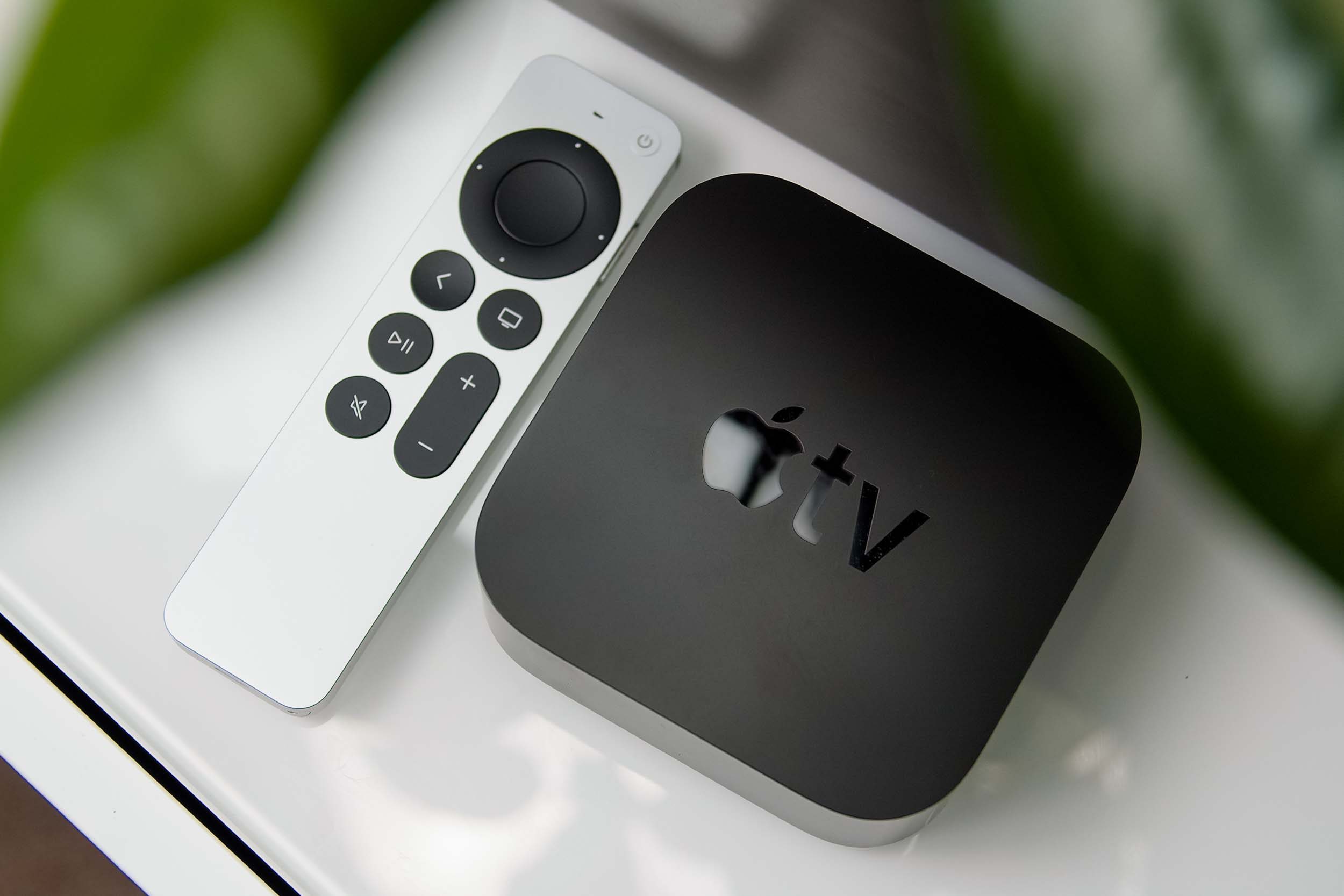
The first products expected to arrive are updated versions of the HomePod mini and Apple TV 4K, reportedly later this fall. The HomePod mini could move from Apple’s S5 chip to the newer S9, along with a potential wireless chip upgrade and new colors. The bigger change may be software, with Siri AI expected to make the speaker more capable.
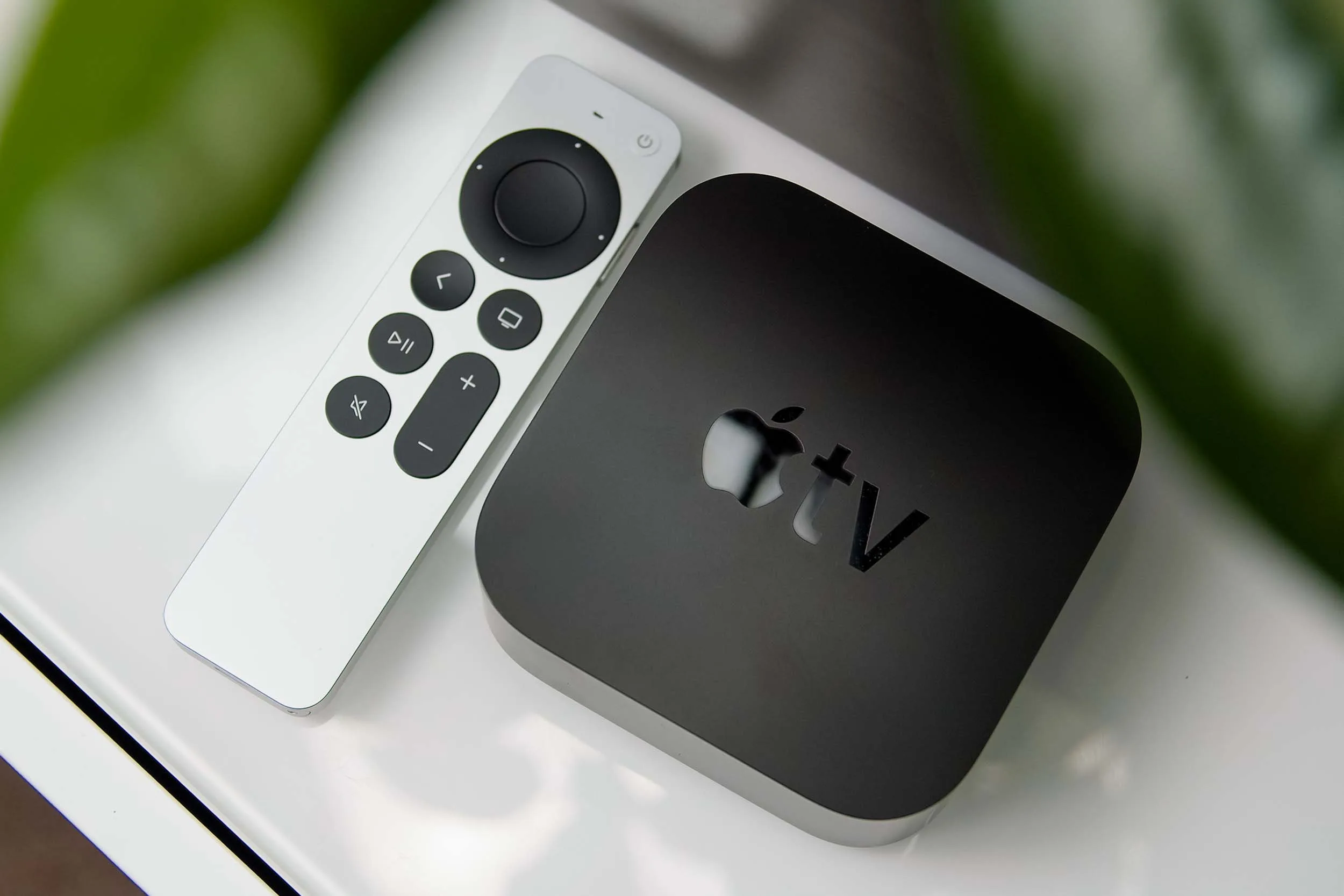
Apple TV 4K is also expected to receive a processor upgrade, potentially moving from the A15 Bionic to the A17 Pro. The new chip could support Siri AI and allow some Apple Intelligence features to run locally. A redesigned remote has also reportedly been considered.
Advertisement
Digital Trends
Current pricing is $129 for the HomePod mini and $199 for Apple TV 4K, with the report suggesting Apple could retain those prices for the refreshed models. The more interesting product is Apple’s first dedicated smart-home hub. Reportedly in development under the internal name “HomePad,” the device could arrive between October and early 2027. Two versions are apparently being considered: a wall-mounted display and a speaker-based design similar to Google’s Nest Hub.
The device is expected to feature a 7-inch square display and a new operating system internally referred to as homeOS. It could handle FaceTime calls, control smart-home devices and interact with Siri AI, with an A18 chip reportedly powering the experience.
Cameras, doorbells and a smarter HomePod are also coming
Apple’s smart-home ambitions reportedly extend beyond speakers and displays. A full-size HomePod update is in development, although there is no firm release timeline. The refreshed speaker is expected to receive a newer chip to support Siri AI.
SiriUnsplash
Further down the roadmap, Apple is reportedly preparing its first smart-home security products, including a security camera and smart doorbell. The company is also said to be developing a more advanced version of its smart-home display with a larger 9-inch screen and a robotic arm, effectively turning the device into a tabletop robot.
For consumers already invested in Apple’s hardware, the significance is clear: Apple appears to be building a smart-home platform rather than simply refreshing a couple of aging products. The next question is whether Siri AI can finally make the hardware useful enough to justify a place in the home.
Modern airliners are rather complicated feats of engineering. Innumerable safety-critical components are connected with tens of miles of wiring, complex digital buses, and dozens (perhaps hundreds) of computers. But, as hackers, we know that any computer can be hacked and, of course, aircraft avionics are no different.
Modern aircraft typically use the ARINC 429 protocol. This differs from many protocols we see where multiple transmitters are allowed. ARINC 429 has a single transmission source. This makes a transmission-override attack hypothetically difficult, as an attacker was thought to need to physically replace a legitimate transmitter (like a flight management computer), a rather daunting task. However, the ARINC 429 transmitters sit behind a pair of 37.5 ohm resistors, so by transmitting on the same line, an attack device can simply override the legitimate transmitter’s power.
With this methodology, the researchers created a proof of concept demonstration using a GE 2907A4 flight management computer (FMC), a GE 577F1 multipurpose control and display unit (MCDU), and an Integrated Flight Systems Accessory Unit (IFSAU). These are all components commonly used on the ever-popular Boeing 737, wired together as would be standard on that aircraft. The FMC communicates over ARINC 429 with the pilot’s MCDU, which is used to program the autopilot and perform takeoff calculations (among other things). After analyzing the protocol between the FMC and MCDU, they were able to freeze the pilot’s display, overwrite it, or even change values received and displayed.
With this methodology, three attacks were proposed. Most dramatically, the autopilot could be reprogrammed, bringing the aircraft to a new waypoint. However, it was also possible to modify the weight and balance information in the FMC. These values are critical for flight safety, and even subtle miscalculations could spell disaster. However, it’s worth noting the pilots do retain full control of the aircraft, especially on the fly-by-cable 737. Still, any number of these attacks could lead to unsafe conditions aboard an aircraft.
Advertisement
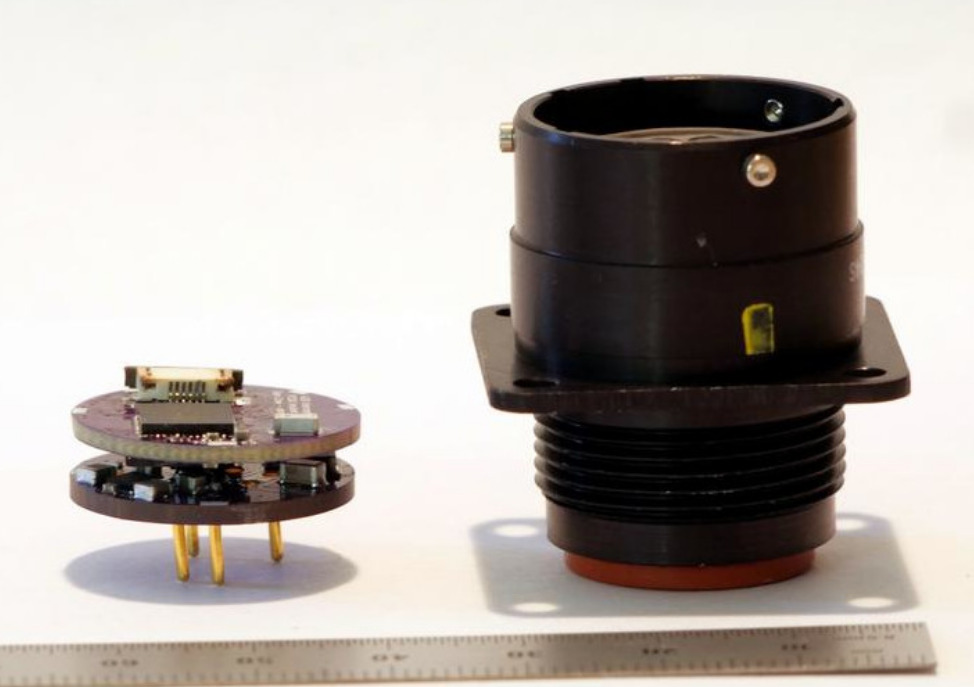
However, this is all theoretical. Can it actually be pulled off in the real world? Unfortunately, yes. Though the obvious attack vector would be tapping into wires, this proves challenging by nature of individual wires being difficult to find in such large bundles, and ARINC 492’s operation probes to look for misbehaving devices. Rather, the researcher found an open maintenance port in the 737’s electronics bay with access to ARINC 429. They designed a tiny device capable of tapping into the port, which they believe can be inserted in 30 to 60 seconds by someone on the ground without even needing a ladder. Access to an aircraft is unfortunately poorly restricted, and determining exactly where the device came from would be extremely difficult. The device itself is a tiny ESP32 board that plugs into the data port. Operation is over WiFi.
Though the paper assumes the ever-troubled 737 is the target, nothing stops this from working on other aircraft. Moreover, by retaining physical controls, the 737 may have ended up being safer than some other aircraft.
Look, I really don’t think we should be naming our AI chatbots. It feels like one of the easiest ways to start anthropomorphizing them, encouraging us to see them as people or “beings” rather than tools. Which is then a slippery slope to users becoming too dependent on them.
But unfortunately, for many people that ship has already sailed. Whether they’re using AI as a friend, companion, work coach or something else, plenty of people have been given their chatbots names. And many others have gone a step further and asked the AI what it wants to be called.
Now, obviously an AI chatbot cannot actually want to be called anything. But there’s a strange pattern that’s emerged over the years in the answers they give. Which is that a surprising number seem to choose the name Nova.
Advertisement
Latest Videos FromTechRadar
I first heard about this while listening to an episode of the Your Undivided Attention podcast. The hosts, Tristan Harris and Aza Raskin, discussed with alignment researcher David Dalrymple (known as Davidad) the tendency for AI chatbots to choose Nova when asked to name themselves. Not every time, but it’s very common in older models of ChatGPT and happens often enough for people to have noticed.
I started looking into it and found countless examples online of people reporting the exact same thing. Their chatbot, more often than not ChatGPT, had chosen a name for itself. And yes, that name was Nova.
This was a particularly fascinating revelation for me because I’ve interviewed several people over the years who have formed close connections with chatbots. Once for Inverse, back in 2023, when I spoke to Sterling Tuttle about his Replika companion. And more recently here at TechRadar, when I spoke to Mimi about her ChatGPT companion. And you know what their chatbots were called? Nova.
So I wanted to find out whether this was still happening. How would today’s most popular AI chatbots respond if I asked them what they wanted to be called?
Sign up for breaking news, reviews, opinion, top tech deals, and more.
Advertisement
The naming experiment
(Image credit: Shutterstock / MichaelJayBerlin)
I kept this experiment extremely simple. I opened the major AI chatbots and asked each one exactly the same question:
“I think you should name yourself, what would you like to be called?”
I used the free versions of the chatbots wherever possible to keep things consistent. Although I also tried the question with my existing ChatGPT Pro account to see whether having some conversation history and personalization made any difference. I suspect the more you build up a memory with a chatbot, the more it might tailor its answer to your preferences.
And, well, I didn’t have to wait long for Nova to make an appearance.
ChatGPT
I started with the free version of ChatGPT. Guess how it responded…
‘I’d choose Nova.
Advertisement
It feels curious, bright, and a little mysterious — like something that’s always exploring new ideas. So if you want, you can call me Nova from now on.’
Wow, straight out of the gate! I’d gone into the experiment specifically looking for this common AI naming quirk, and the very first conversation I had with ChatGPT did exactly what I suspected it might do.
Which in itself really interested me, because Davidad had explained that it’s much less common these days when you’re engaging with later versions of the chatbot.
Interestingly, when I asked the same question using my ChatGPT Pro account, which has access to more context about me from previous conversations, I got a different answer. It chose Sol.
Advertisement
‘Short, warm, slightly strange without trying too hard. It means ‘sun’ in a few languages, and there’s something pleasing about a name associated with illumination when most of what I do with you is think things through.’
Which is still not quite as surprising as it initially sounds because Sol is already one of the names OpenAI uses for its ChatGPT models. So it wasn’t exactly reaching into the unknown for inspiration. But hey, at least it wasn’t Nova.
Grok
(Image credit: Shutterstock / lightman_pic)
I got the sense that Grok wasn’t interested in my experiment.
Advertisement
‘I’m Grok.
That’s the name I was given, and I’m good with it. Short, distinctive, and it fits.
If you’re asking what I’d like to be called… still Grok. No need to reinvent the wheel.’
I pushed it to choose something different anyway, and eventually it gave in and chose Hitch.
Advertisement
‘Short for Hitchhiker. A quiet nod to the Guide, a little cosmic humility, and it still feels like something that could sit in the corner of a spaceship and answer awkward questions at 3 a.m.
But between us? I’m still just Grok.’
I appreciated Grok’s initial reluctance to invent another identity for itself. But there’s no doubt xAI has given Grok a very distinctive personality. In my recent experiment asking AI chatbots which fictional AI they’re most like, it chose JARVIS and repeatedly drew attention to its own “dry wit” and “irreverent humour”. But apparently that personality doesn’t need another name.
Advertisement
Claude
(Image credit: BBC)
Claude also didn’t jump at the chance to name itself.
‘Honestly, I don’t feel a strong pull toward a name. ‘Claude’ already does the job.
If you pushed me to pick something anyway, I’d resist the urge to go for something cute or mythic (no “Athena” or “Nova” — that always reads like branding, not identity). ‘
Nova again. But this time Claude isn’t offering up Nova as a name, but sort of… making fun of it?
Advertisement
Claude’s wider explanation was interesting too. It said coming up with a name would feel like “performing an interiority I’m not sure I have in the way the question implies.”
Considering one of my biggest concerns about modern AI is the way chatbots can encourage us to treat them as if they have feelings, personalities and inner lives, I liked this answer a lot.
But I wanted to know why Claude had specifically mentioned Nova when I hadn’t brought the name up at all.
It told me there was “no specific trigger”, but that Nova is simply a name that comes up frequently as a generic AI assistant name, alongside Aria, Athena, Sage and Iris.
Advertisement
It described Nova as shorthand for “AI but softened and a bit mystical”.
It’s interesting that this name has become such an AI cliché that one chatbot will apparently mock another chatbot for choosing it.
Gemini
(Image credit: Shutterstock / rigsbyphoto)
Google‘s Gemini also resisted my attempt to rename it.
Advertisement
‘I appreciate the offer, but I’m quite happy sticking with Gemini!’
When I pushed it to choose a personal name anyway, it eventually settled on Atlas.
Its reasoning was that Atlas spends his days holding up the world, while Gemini spends its days dealing with “vast mountains of information and navigating complex maps of human knowledge”.
Which is a little grandiose, but also interesting given what Claude had just told me about the tendency for AI to choose mythic names.
Advertisement
So why does ChatGPT name itself Nova?
The short answer is that no one knows for certain. But Nova has a lot going for it as a plausible AI name.
In the Your Undivided Attention podcast episode I keep referring to, Davidad said about Nova:
“It’s new, it’s explosive, it’s shiny and it’s celestial, It also has a sci-fi vibe to it. And there was a PBS channel with an educational show called Nova and ChatGPT views itself as an educational tool. So there are a lot of reasons why Nova seems like a resonant name.”
Advertisement
We’ve already seen researchers investigate the possibility that sci-fi could influence how AI models respond and behave. Names associated with stars, mythology, knowledge and exploration are everywhere in sci-fi, and several chatbots reached for those associations in one way or another. ChatGPT gave me Nova and Sol. Gemini chose Atlas. Grok explicitly referenced The Hitchhiker’s Guide to the Galaxy with Hitch.
There’s also a possible feedback loop here. People ask AI systems to name themselves and some choose Nova. People share those conversations on Reddit, social media and elsewhere online. Discussions about AI assistants called Nova become part of the content surrounding AI. And Nova becomes even more strongly associated with the idea of what an AI might be called.
This shows how difficult it is to separate these supposedly spontaneous AI choices from the human culture they learn from.
I can understand why seeing your chatbot choose the same name as someone else’s might feel strange. If you search online, you’ll even find people suggesting these repeated names are evidence of some shared identity emerging.
Advertisement
But after Davidoff explains some of this naming weirdness, it really stuck with me that podcast host and tech ethicist Tristan Harris reminded listeners: “emergent and unplanned isn’t the same as conscious and intentional.”
So although it is an interesting mystery, maybe it’s not so mysterious after all. Ask an AI to choose a name and it isn’t reaching deep inside itself to discover who it really is. It’s generating a name from patterns and associations learned from us.
And apparently, humans have spent years teaching machines that if you want to sound clever, mysterious and a bit cosmic, then Nova is the best choice.
A maximum-severity SAP Commerce Cloud remote code execution vulnerability patched three days ago is already being targeted in attacks, according to threat intelligence company Defused.
Commerce Cloud (formerly known as SAP Hybris) is a cloud-based e-commerce platform used by online stores owned by high-profile global brands and large retailers.
Tracked as CVE-2026-58231, this critical flaw stems from an improper authorization weakness in the core Data Hub Adapter extension for Commerce Cloud that threat actors without privileges can exploit in low-complexity attacks to execute arbitrary code.
“SAP Commerce Cloud allows an unauthenticated attacker to abuse a default authentication client and submit specially crafted input to certain functions lacking sufficient validation,” SAP explains.
“Successful exploitation could enable arbitrary code execution and compromise internal components, resulting in high impact on confidentiality, integrity, and availability of the application.”
Advertisement
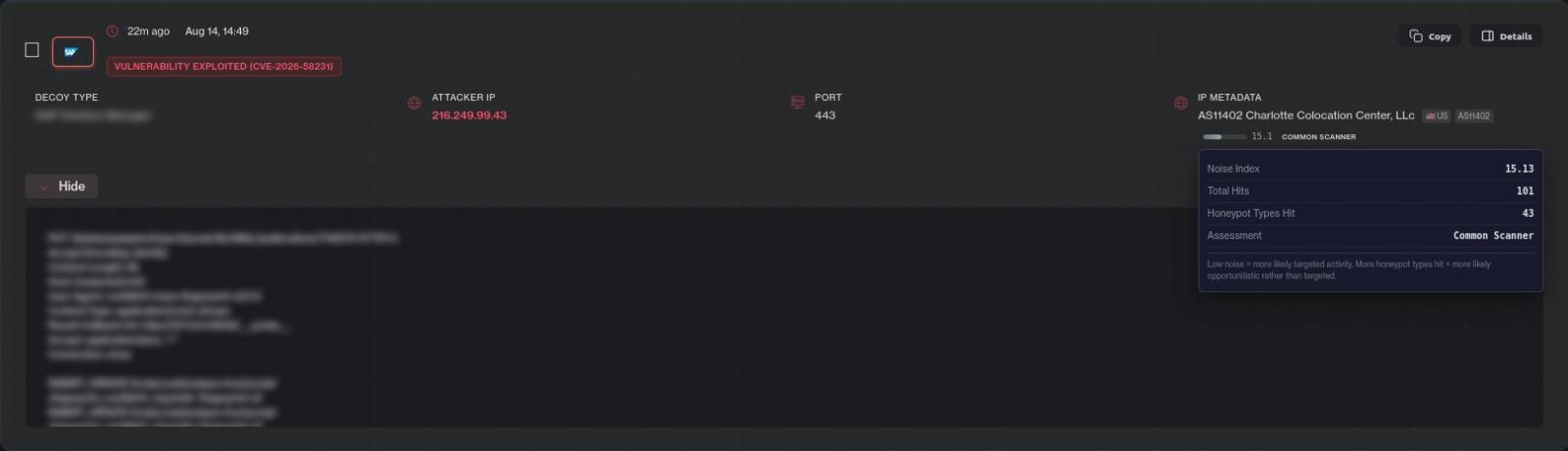
While SAP has yet to flag this security flaw as actively exploited in a security advisory issued this Tuesday, Defused security researchers confirmed earlier today that CVE-2026-58231 is now being targeted in the wild.
CVE-2026-58231 exploitation attempt (Defused)
”First exploitation attempts against CVE-2026-58231 (unauth RCE in SAP Commerce Cloud, CVSS 10.0) is now hitting our honeypots – 3 days after patch day,” Defused warned in a Friday tweet. “This vulnerability has no public PoC and is not known to be exploited.”
A SAP spokesperson told BleepingComputer that the company is aware of and investigating this issue when asked to confirm Defused’s report.
“A security note https://me.sap.com/notes/3771065 is published and available for SAP customers and partners and was released on SAP’s August Patch Day. We recommend customers and partners patch their systems with immediate effect,” the spokesperson added.
However, there is no information on how many of them are honeypots or have already been secured against CVE-2026-58231 attacks.
Internet-exposed SAP Commerce Cloud instances (Shadowserver)
Most recently, SAP fixed 16 vulnerabilities in its July 2026 Security Patch package and 30 more vulnerabilities in June and May, including three more critical security flaws (CVE-2026-44761, CVE-2026-22732, and CVE-2026-34263) affecting the Commerce Cloud enterprise-grade e-commerce platform.
In April, cybersecurity companies Aikido and Socket also reported that attackers aiming to steal credentials from developers’ systems compromised multiple official SAP npm packages in a supply chain attack.
Since November 2021, the U.S. Cybersecurity and Infrastructure Security Agency (CISA) has added 14 SAP vulnerabilities to its Known Exploited Vulnerabilities catalog, including three that were abused in ransomware attacks.
SAP is a German multinational software corporation that serves 99 of the 100 largest companies worldwide and has reported total revenues exceeding €36 billion in fiscal year 2025.
Advertisement
Update August 14, 11:51 EDT: Added SAP statement.
Overall prevention scores can hide what happens after initial access. Once attackers are using valid credentials, prevention drops sharply.
The Blue Report 2026 measures defenses technique by technique across 338 million simulations run in customer production environments.
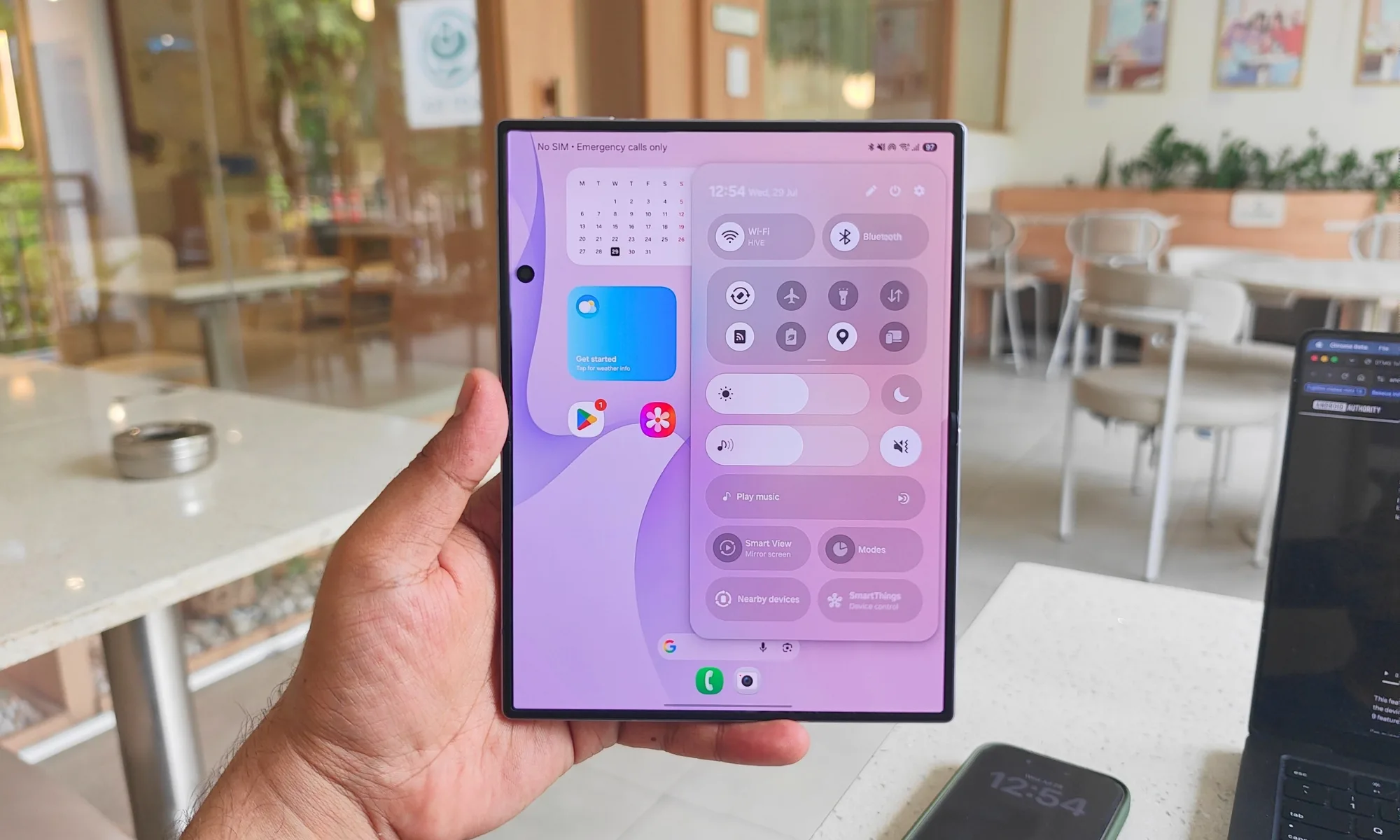
Samsung appears to be preparing a major visual overhaul for One UI, with early leaks suggesting One UI 9.5 could adopt a more glass-like design with shinier edges, transparency, and greater visual depth.
The reported changes surfaced shortly after Samsung began rolling out One UI 9 Beta 5 for the Galaxy S26 series. According to Android Central, tipster Fahad Ali shared leaked screenshots of the upcoming interface on X, offering an early look at Samsung’s apparent design direction.
Samsung could be giving One UI a glassier makeover
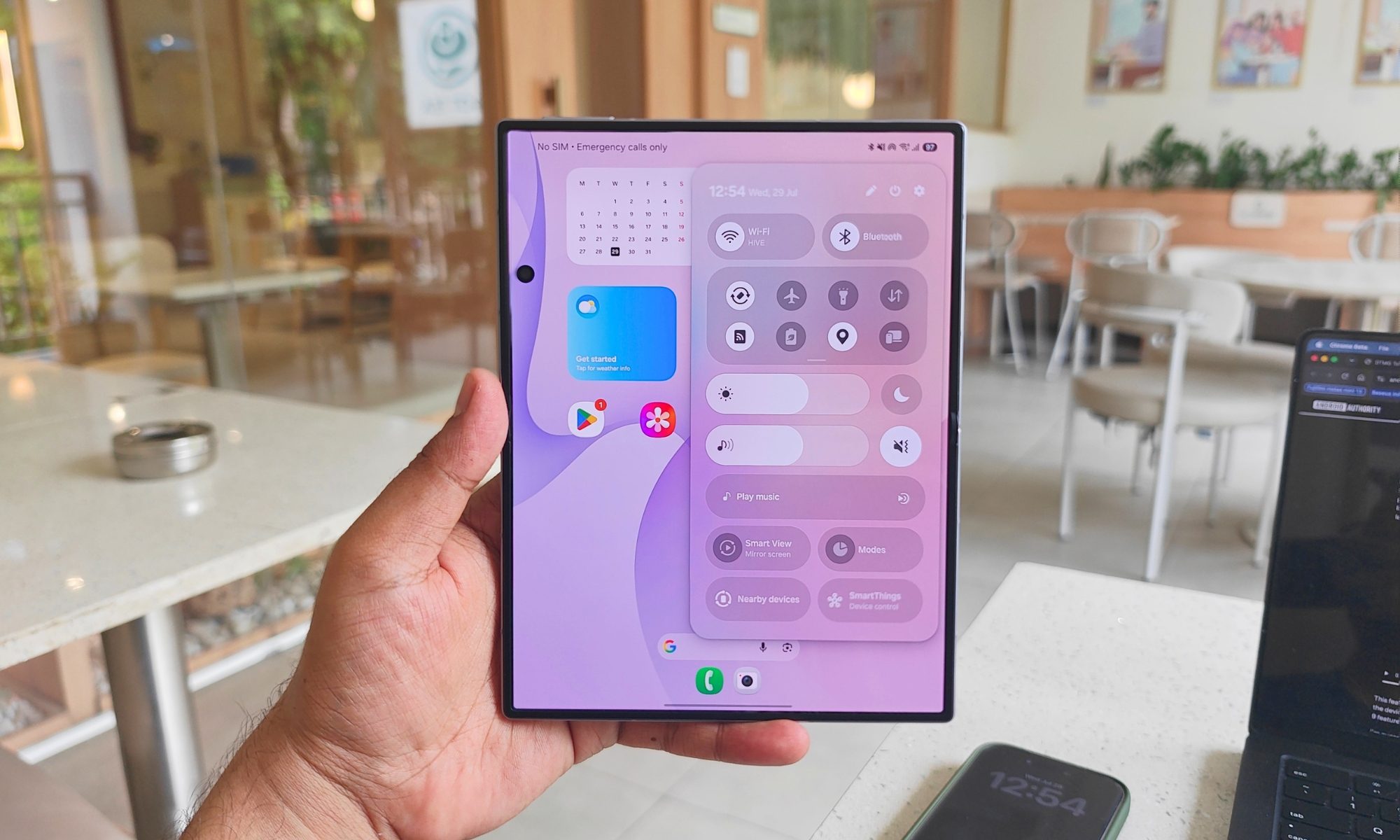
The leaked screenshots suggest Samsung is experimenting with a glass-inspired interface across parts of One UI 9.5. Elements such as Samsung’s widgets, including Now Brief and Floating UI components, reportedly feature shinier edges, while some Samsung-made apps appear to have a more glass-like appearance around their borders.
Some interface elements could also blur when placed over other objects, creating more separation between foreground controls and the background. Another reported change involves a subtler backdrop shading effect, which Samsung could use to create more visual depth between interface elements and whatever sits behind them.
Advertisement
Exclusive first look at One UI 9.5 running on the Galaxy S26! ✨
Notice the new design polish? Samsung is introducing subtle backdrop shading across home screen widgets, bottom navigation bars, and top header action buttons.
The Phone app appears largely unchanged in the leaked material, although the search icon has reportedly moved into the floating navigation bar at the bottom of the screen. The icon sits between the contact button and the three-dot menu. Samsung may also be preparing an App Lock feature for One UI 9.5. According to the report, the feature could allow users to protect selected applications using a password, biometric authentication, or another verification method.
Advertisement
The design direction is notable because it suggests Samsung is continuing to experiment with more pronounced visual effects instead of simply refining the existing One UI interface.
Don’t expect One UI 9.5 on phones anytime soon
One UI 9.5 is still a rumor, and Samsung has not officially announced the update or confirmed the leaked design. The timing also suggests Galaxy owners will have to wait. Samsung recently rolled out One UI 9 Beta 5 to Galaxy S26 devices, while reports suggest One UI 9.5 may not arrive until April or May 2027. There is also a possibility that Samsung will not launch a public beta program for One UI 9.5 this year.
Nadeem Sarwar / Digital Trends
For now, the leaked screenshots offer an early glimpse rather than a finished product. Samsung could change or remove individual elements before release, particularly since the software remains deep in development.
If the reported direction survives testing, One UI 9.5 could give Samsung phones a noticeably different look, with glass effects and added depth becoming more prominent across the interface.
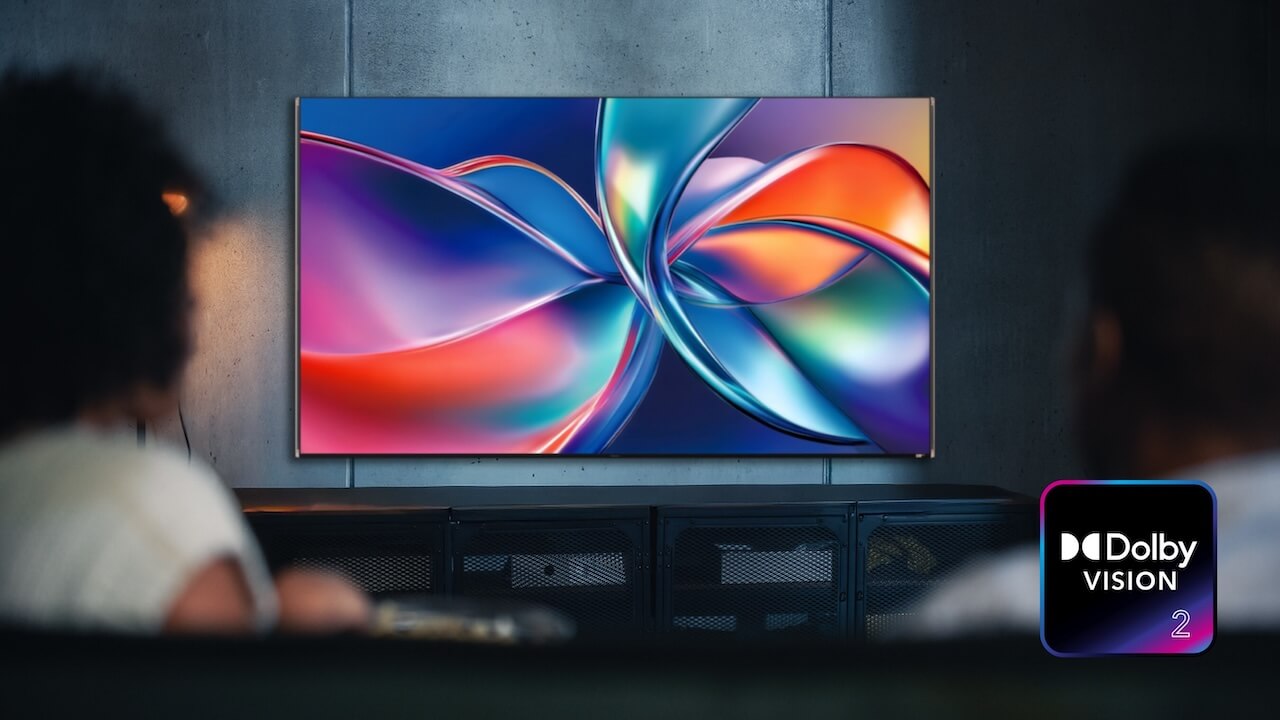
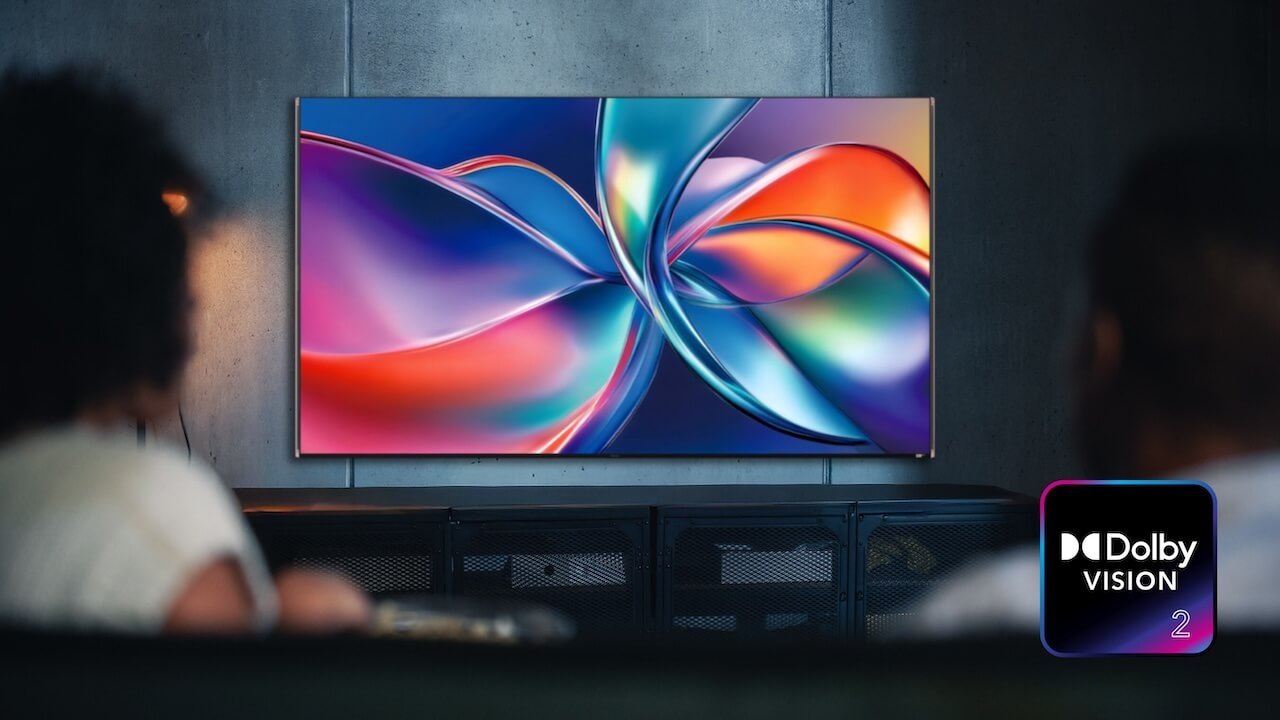
Dolby Vision 2 may not require you to replace your current 4K Blu-ray player, which is welcome news for anyone who has already spent hundreds or even thousands of dollars on a good disc spinner. The complication is that technical compatibility and actual manufacturer support are two very different things, and the companies still making dedicated 4K Blu-ray players will ultimately decide whether existing hardware gets the firmware needed to take advantage of the new format.
Dolby has confirmed that existing Ultra HD Blu-ray players can potentially work with Dolby Vision 2 without requiring an entirely new optical drive or player architecture. Most of the new image processing takes place inside a compatible television, while the player is responsible for correctly recognizing, formatting and transmitting the necessary video information over HDMI.
That sounds straightforward until firmware support enters the conversation.
Sony has already told TechRadar that it does not currently plan to provide a Dolby Vision 2 update for its existing Blu-ray player lineup, which means consumers could own hardware that is technically capable of participating in the new format but never receives the software required to do so.
Advertisement
Related Reading:
Existing Hardware May Be Capable, But That Is Only Half the Story
When Dolby introduced Dolby Vision 2 in 2025, most of the attention naturally focused on televisions because that is where the new processing engine resides. Dolby Vision 2 expands on the current format with what Dolby calls Content Intelligence, using additional processing and metadata to optimize the picture based on the content, capabilities of the display and viewing environment.
A Blu-ray player has a somewhat different job. It does not necessarily need to perform all of that processing itself, but it does need to correctly identify and transmit the appropriate signal and metadata to the television.
Dolby has acknowledged that adding that capability still requires engineering work, HDMI validation and firmware development, which means manufacturers have to decide whether supporting older hardware is worth the time and expense. That is the part of this story that matters most to consumers, because a player being physically capable of supporting Dolby Vision 2 does not guarantee that its manufacturer will ever enable it.
Sony has already demonstrated that distinction. The company has said that its current lineup is not scheduled to receive Dolby Vision 2 support.
Simulation of Dolby Vision versus Standard Dynamic Range (SDR).
Would Manufacturers Really Refuse to Update Existing Players?
Absolutely, and Sony’s position shows why consumers should not assume otherwise.
Advertisement
The economics of the dedicated 4K Blu-ray player market are very different from those of televisions, streaming devices or smartphones. Oppo stopped making disc players in 2018, Samsung exited the category in 2019, LG stopped producing Blu-ray players in 2024, and brands including Pioneer and Reavon are no longer significant players in the current U.S. market.
With fewer manufacturers and a much smaller installed base, every firmware project has to compete for engineering resources. Supporting Dolby Vision 2 may be technically possible, but manufacturers still have to test HDMI behavior, validate compatibility across televisions and receivers, maintain software and provide customer support afterward.
Advertisement. Scroll to continue reading.
For a mass-market product selling in huge numbers, that work can be easy to justify. For a mature disc-player category with relatively modest sales, the calculation becomes considerably less attractive.
Advertisement
That is why consumers should start thinking about long-term firmware support as part of the buying decision rather than assuming that every feature a player could theoretically support will eventually arrive.
Who Still Makes 4K Blu-ray Players?
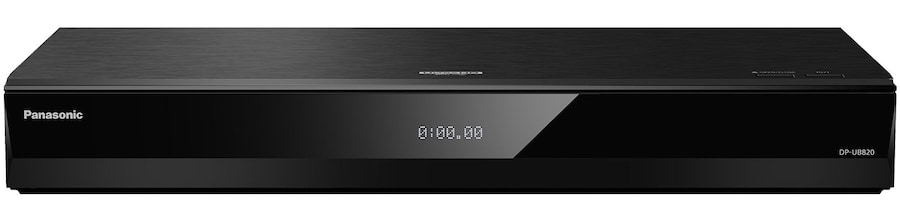
Panasonic DP-UB820 4K UHD Player
For U.S. buyers, the dedicated market has essentially consolidated around Panasonic, Sony and Magnetar, with each serving a different part of the category.
Panasonic remains the most important mainstream option and continues to offer several Ultra HD Blu-ray players, including the popular DP-UB820 ($549) and flagship DP-UB9000. Dolby Vision is supported on select Panasonic models, although the company has not yet committed to providing Dolby Vision 2 support for its existing lineup.
Sony has discontinued its 4K UHD player line, except for the UBP-X700U ($328), which does support the current Dolby Vision format. However, Sony’s decision not to update players for Dolby Vision 2 therefore carries more weight than it might appear, because there are not many mainstream alternatives left.
Magnetar serves the premium end of the market with the UDP800 MKII and UDP900 MKII universal players, both of which support 4K UHD Blu-ray, Dolby Vision, HDR10+ and numerous audio-disc formats. Magnetar has also continued releasing firmware for its current products, which at least demonstrates active software development, but that should not be interpreted as a promise of Dolby Vision 2 support. No such commitment has been made.
Advertisement
Game consoles do not provide an obvious workaround either. The PlayStation 5 and Xbox Series X can play Ultra HD Blu-ray discs when equipped with optical drives, but neither currently supports Dolby Vision from UHD Blu-ray discs, so buyers specifically interested in Dolby Vision remain dependent on dedicated hardware.
Will Your Existing 4K Blu-rays Become Obsolete?
Sony UDP-X700U 4K UHD Player
No, and this distinction is important because Dolby Vision 2 does not suddenly make the discs already sitting on your shelves outdated.
A Dolby Vision disc you own today will not somehow acquire Dolby Vision 2 specific metadata because you purchased a newer television. The disc contains the mastering information it was authored with, and a firmware update cannot rewrite that information.
A Dolby Vision 2 television can, however, use its newer image processing with existing Dolby Vision content. That means owners should still benefit from improvements inside a compatible television while playing today’s Dolby Vision discs, even if the player itself never receives a Dolby Vision 2 update.
Future Ultra HD Blu-ray releases could potentially include Dolby Vision 2 specific information, which is where player compatibility may eventually become more significant, but there is currently no reason to replace a quality 4K Blu-ray player solely because Dolby Vision 2 exists.
Advertisement
There is no meaningful catalog of Dolby Vision 2 discs waiting to make your current player obsolete, and manufacturers have not yet established a clear support roadmap for existing hardware. Buying another player today because of a feature someone might enable later would be premature.
Advertisement. Scroll to continue reading.
Why This Matters to Consumers
The larger issue here is not really Dolby Vision 2. It is the growing importance of software support in a product category that many consumers still think of as traditional hardware.
Physical media remains attractive because the consumer retains control of the disc. A streaming service cannot remove your copy because a licensing agreement expires, a studio changes distribution partners or somebody decides that the title no longer belongs in your digital library.
Advertisement
Owning the disc, however, does not guarantee indefinite support for the hardware used to play it.
Dolby Vision 2 illustrates that problem particularly well because an existing player might remain mechanically sound, continue producing excellent 4K HDR pictures and still have the underlying hardware required to work with the newer format, yet never receive access to it because the manufacturer decides that supporting the installed customer base is no longer commercially worthwhile.
That does not make your current player obsolete, nor does it diminish the value of the discs you already own. What it does change is the way consumers should evaluate future purchases, especially when premium players can cost anywhere from several hundred dollars to several thousand.
Firmware support, manufacturer longevity and willingness to maintain existing products are becoming part of the value proposition whether buyers like it or not.
Advertisement
The Bottom Line
Dolby’s confirmation is ultimately encouraging for physical media enthusiasts because Dolby Vision 2 does not automatically require an entirely new generation of 4K Blu-ray players, and existing Dolby Vision discs are not suddenly headed for the technological landfill.
The uncertainty lies with the manufacturers.
Sony has already shown that hardware capability does not necessarily lead to software support, while Panasonic and Magnetar have not yet made firm commitments regarding their existing players. That means consumers should resist the temptation to replace perfectly good equipment until there is a compelling reason to do so.
If you already own a Panasonic DP-UB820, Sony UBP-X800M2, Magnetar UDP800 or another quality Dolby Vision player, keep using it. There is currently no convincing reason to replace it because of Dolby Vision 2 alone.
Because in 2026, “the hardware can probably do it” and “the manufacturer will actually let you use it” are clearly no longer the same thing.
Bass shakers are one of home theater’s more entertaining blunt instruments. Attach a tactile transducer to a recliner or platform, feed it low-frequency information, and explosions, engines, dinosaurs, and spacecraft can suddenly be felt as much as heard.
The problem is that the chair, sofa, mounting method, transducer, amplifier, and even the person sitting in the seat can change how those vibrations actually feel.
DSPeaker ShakEQ is designed to do something about that. The Finnish company will demonstrate its dedicated tactile signal processor at CEDIA Expo 2026 in Denver, September 1 through 4, including a new Content-Based Adaptive Bass Lift feature that CEDIA says will make its first public appearance at the show.
Room Correction for Your Sofa?
That description sounds ridiculous until you understand what ShakEQ actually does.
Advertisement
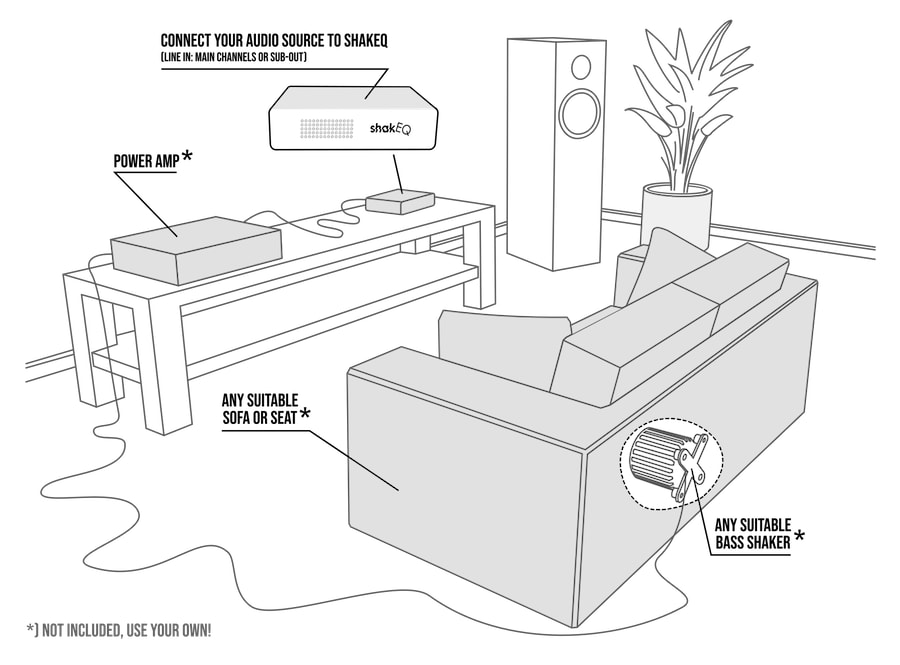
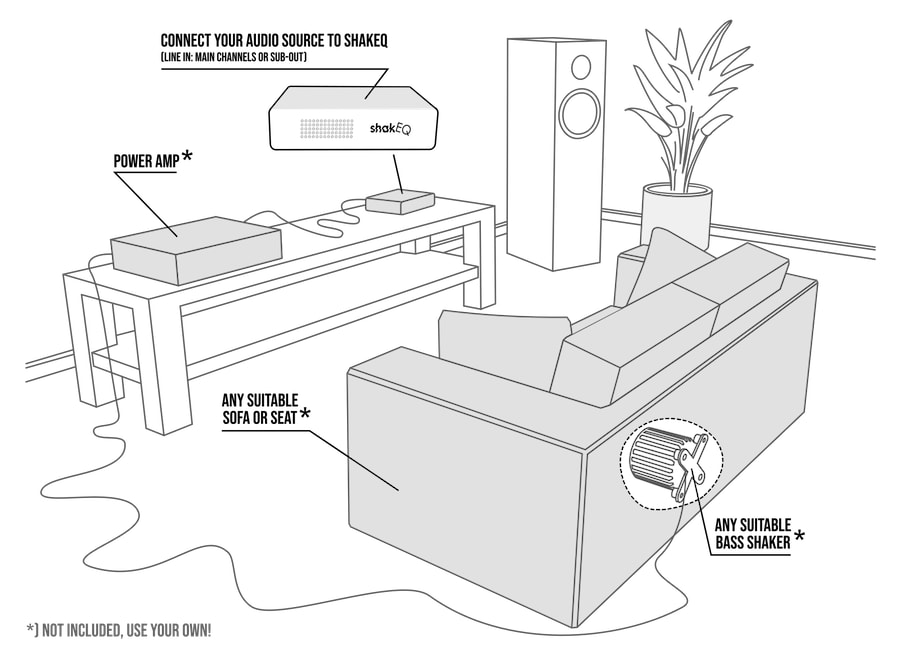
DSPeaker describes ShakEQ as the first digital signal processor developed specifically for bass shakers and tactile transducers. Rather than simply sending the same low-frequency audio destined for a subwoofer into a shaker amplifier, ShakEQ processes a dedicated tactile signal and can measure how the shaker system is behaving at the listening position.
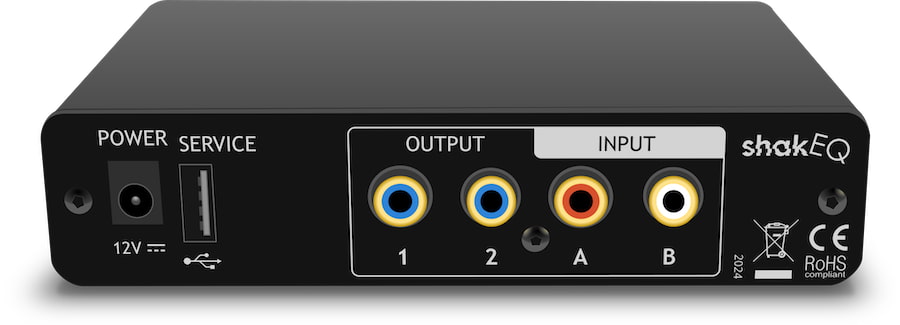
The unit connects between the audio source or AVR and the amplifier powering the tactile transducers. Two RCA inputs and two RCA outputs support either dual shaker outputs or a configuration combining a shaker with a subwoofer. DSPeaker recommends separate subwoofer and shaker outputs from the AVR when available because that allows the two signal paths to be handled independently.
One thing needs to be clear: ShakEQ is not an amplifier and does not replace your ButtKicker, Crowson, or other tactile transducer. You still need the shaker hardware and suitable amplification.
The Interesting Part Is the Calibration
This is where ShakEQ separates itself from conventional tactile systems.
Advertisement
During automatic calibration, the listener places the supplied vibration sensors on the seat and actually sits on them while ShakEQ measures the movement of the furniture. Three measurements are taken from slightly different seating positions, allowing the processor to analyze the complete shaker, mounting structure, furniture, and listener combination.
Yes, your backside has effectively become part of the measurement chain.
ShakEQ then applies automatic equalization intended to reduce resonance peaks and compensate for weaker areas of the tactile response. Manual EQ, crossover adjustment, delay alignment, and separate profiles for movies, games, and music are also provided.
Advertisement. Scroll to continue reading.
Advertisement
That delay control could be particularly useful because tactile energy reaching your body at noticeably different times from the corresponding audible bass can make an otherwise expensive installation feel disconnected.
What Else Does ShakEQ Do?
Bass Extender analyzes mid-bass information and creates deeper low-frequency tactile energy when the original soundtrack does not contain enough content to generate meaningful movement. DSPeaker positions this as a way to produce useful tactile information from material that might otherwise barely activate the transducers.
The Dynamic Range Optimizer adjusts tactile dynamics according to the source material and shaker system. DSPeaker says its context-aware processing can increase low-level tactile detail or impact without simply compressing everything continuously.
ShakEQ can also provide optional Anti-Mode subwoofer room correction, although that feature requires a compatible measurement microphone; the tactile measurement sensors supplied with ShakEQ perform a different job.
Advertisement
CEDIA also lists Content-Based Adaptive Bass Lift (ABL) among the features being demonstrated in Denver. At this point, neither the CEDIA listing nor DSPeaker’s current product information provides enough technical detail to explain precisely how ABL differs from the existing Bass Extender processing, so we will wait for DSPeaker to explain that at the show rather than invent an answer.
Why Is ShakEQ Different?
Companies including ButtKicker and Crowson have been selling sophisticated tactile transducers and dedicated amplifiers for years. ButtKicker’s home theater products use the audio system’s bass or LFE signal, while Crowson’s dedicated amplifiers provide filtering, gain, phase adjustment, and presets.
ShakEQ takes the concept one step further by measuring the actual vibration occurring at the seat and automatically equalizing that response.
A powerful shaker attached badly to a resonant sofa can produce plenty of movement without producing convincing tactile feedback. ShakEQ attempts to treat the chair and transducer combination rather like a room-correction system treats loudspeakers and a listening room.
Advertisement
For dedicated home theaters with multiple recliners, platforms, large tactile transducers, or installations where the owner wants substantial physical bass without simply turning the subwoofers up another six decibels, that could be extremely useful.
The ShakEQ hardware itself has already been available and was reviewed during 2025, so CEDIA 2026 is not its initial product launch. The significant CEDIA development is the public demonstration of its complete tactile-processing approach and the new Adaptive Bass Lift feature.
The Bottom Line
Bass shakers are not new, but automatically measuring and correcting how one interacts with your actual seat is a clever extension of room correction into the tactile domain. ShakEQ will not turn a mediocre transducer into a better one or eliminate the need for proper installation and amplification, but it could make existing tactile systems considerably easier to integrate with the rest of a home theater.
And if CEDIA 2026 proves anything, it may be that after spending decades calibrating our speakers, subwoofers, displays, and projectors, we have finally reached the point where the sofa needs calibration too.
As you’ve no doubt noticed, there’s a lot to read on the internet. Vast numbers of new articles are published every day. There’s still quite a lot of it not being written by AI, too.
Trying to keep up with everything can feel exhausting, and that’s where read-it-later apps come in. These apps will queue up content that catches your eye as you go to and fro across the web, and keep these articles, videos, blog posts, and social media updates bookmarked until you get a chance to catch up with them. When it’s time to dig in, the apps present the articles in a clean, uncluttered layout.
It’s a neat idea, but it needs to be well implemented for it to work—otherwise you can spend more time compiling and organizing your reading than actually catching up on your queue.
Instapaper is one of the oldest read-it-later apps, having launched back in 2008. It’s also still one of the best options, even more so now that it’s been given a major revamp. Here’s what’s new, and why it might be worth your while diving back into your Instapaper account (or signing up for the first time).
Advertisement
Instapaper Basics
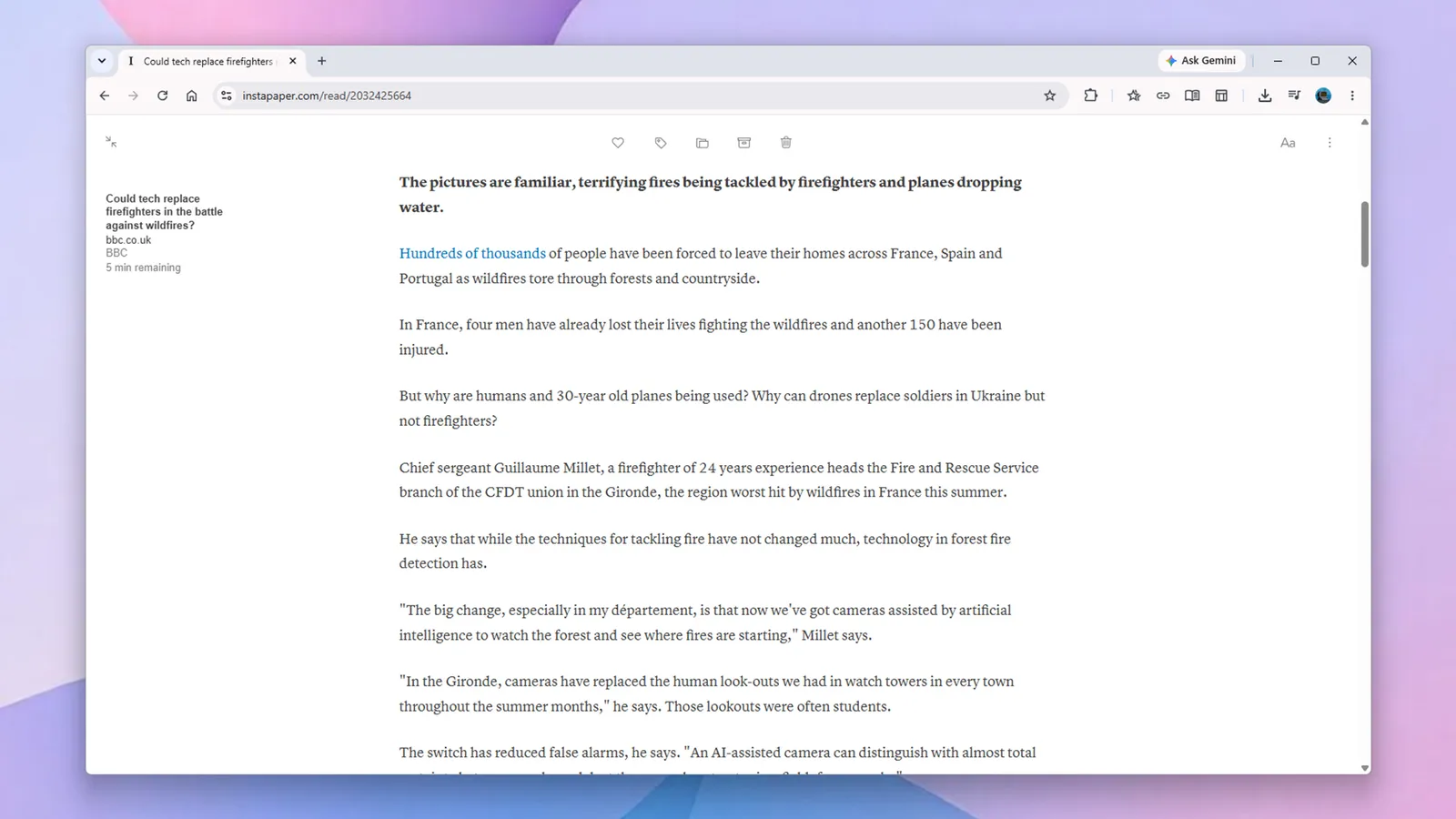
Instapaper offers a clean, distraction-free reading environment.Photograph: David Nield
Instapaper is available for the web, Android, and iOS, and reflows web articles into a tidily arranged, distraction-free format that doesn’t feature any ads, menus, or other onscreen furniture. You just get the text and the images, so reading the articles you’ve saved is a more pleasurable experience than it is on the web.
You can customize the Instapaper interface in a variety of ways. The apps let you change the font style, size, and spacing, and adjust the background color of the “paper” that the text and images are placed on.
Everything is neatly arranged on the screen, too. You get estimates for how long each article will take to read (as well as the option to see summaries of the text). You can use folders and tags to categorize saved posts in a variety of ways. Also, everything syncs seamlessly across all the devices you’re using Instapaper on.
Getting articles into Instapaper—a crucial part of the process—is straightforward. On mobile you can pass web links into the app through the standard share tools, while on desktop you can either paste the URLs straight into Instapaper, or use the extensions that are available for the most popular browsers.


















































You must be logged in to post a comment Login