




On the face of it, downsizing seems like a win-win way of future-proofing your finances in later life. It can boost your bank balance and free up wealth for retirement. It’s an opportunity to move closer to family and find a home that will suit your needs. And moving out of a large property means you’ll have lower bills and less upkeep – it also helps free up the housing market for younger people.
But do it at the wrong time or choose the wrong property in the wrong location and it could be a move you soon regret.
For some, the upheaval has forced them to say goodbye to a life they loved and now miss.
Wealth And Personal Finance has spoken to those who have downsized in recent years to hear what they would do differently and the lessons they learned. We have also weighed up the costs of swapping your family home for a smaller property and spoken to experts about whether it makes financial sense.
‘I am left with a sense of grief for the life we loved’
Karen Dempsey, 64, has always put her family first. So when her daughter Jane, who is now 38, couldn’t afford to buy a home for her growing family eight years ago, Karen knew what she would have to do.
The adult social care worker and her husband Patrick, 67, agreed to downsize from their £750,000 four-bedroom Victorian house in Barnet, north London, to free up cash.
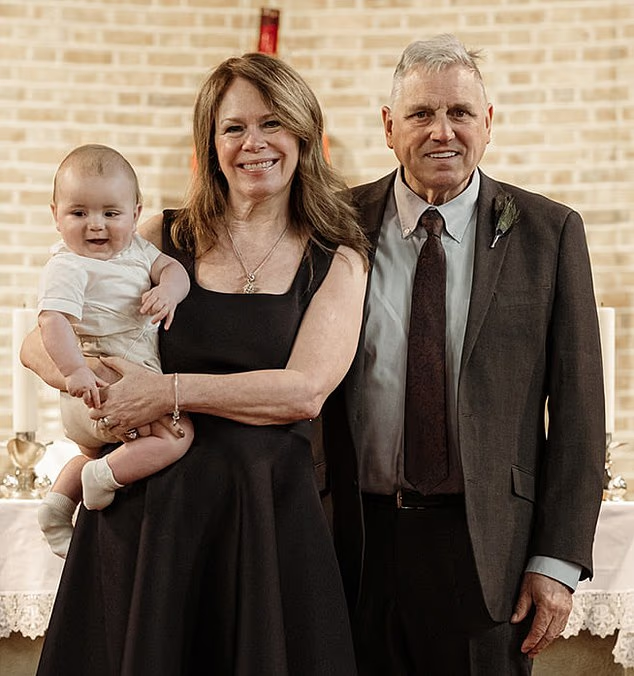
Karen, 64, and her husband Patrick, 67, moved from a £750,000 four-bedroom house in north London to a £350,000 property in Essex. But now she feels they sacrificed too much
By selling their home in the area they had lived in for 35 years, Karen and Patrick would be able to give Jane enough money to buy her own home. Moving to a smaller home was a change they knew they would one day make anyway, so didn’t see the harm in doing it sooner than planned.
The money from the sale would enable the couple to buy their own £350,000 property and have enough for her daughter to also buy a £350,000 home.
They decided to move closer to Jane and their now four grandchildren and found a three-bedroom semi-detached house in Witham, Essex. But within weeks of making the move, Karen said she felt they had made a mistake.
She says: ‘The idea was to help our daughter and her young family. By selling up, we could do this.
‘Initially they moved in with us while looking for a property. But the strain of living on top of each other pushed us apart rather than closer together – the opposite of why we made the move.’
Karen says that since making the move in 2018, she has missed the old life she had in the capital. She says: ‘Unfortunately I am left with a sense of grief for the life we loved in London and have lost – the vibrancy of the city and having more space and friends close by.
‘It makes me feel guilty, but I think we sacrificed too much.’
Karen says she doesn’t feel bitter about the decision and was happy to see Jane buy a home just eight minutes down the road.
She has also made new friends since setting up a local walking group – but fears it did not save her and Patrick any money.
She says: ‘We were delighted to help our daughter – and we are closer than ever. But we now find the cost of living more expensive.
‘My husband still works in London, and I regularly return to meet up with friends and this adds £600 a month to bills. We also have a son, Robert, 36, in London who we often visit.’

Although the couple still commute into London for work or to visit friends, they are pleased to be much closer to their daughter and four grandchildren, who live just eight minutes away
Karen advises others to weigh up the sacrifices they are making against the benefits of downsizing before taking the plunge.
She says one of the key mistakes they made was to move while they were both still working. In hindsight, Karen says she would have rented a property until they had both retired before committing to buying a smaller home.
Meirion Shaw, founder of removal firm The Homemover Specialist, believes making the move from around the age of 65 can be a ‘good time’. She says: ‘Never retire without a plan. Do not rush into a downsize without thinking through what you are going to do with your life when you stop working. This is why a good time to take the plunge is often once you have retired.
‘While it can be good to move close to family, you may want to keep your independence and must be aware that family often lead their own busy lives. You do not want to end up feeling lonely.’
But similarly, those who wait too long to make the big move could regret it. Moving can be both physically and emotionally draining, so it is important to do it while you still have the energy.
Shaw says she would recommend doing it within ten years of leaving full-time work.
She adds: ‘Downsizing can be part of a new exciting chapter, and you should do it while still fit and active if possible – it is important that you do not leave it too late.’
‘I am a glass half full type of person’
Keen golfer Annabel White, 93, realised it was time to downsize last year when she found completing her usual round of 18 holes at her Holywood Golf Club was getting too much last year.

Moving specialist Meirion Shaw advises waiting until you have retired before ‘taking the plunge’ and downsizing
This golf course in County Down was just six miles up the road from her three-bedroom Belfast apartment.
Widow Annabel decided the physical demands of walking five miles across the course were becoming too challenging.
It was an eye-opening moment that made her realise it was perhaps time to downsize to a smaller home. So last October, she bought a two-bedroom bungalow in the village of Markethill, County Armagh, more than 40 miles south-west of her old home.
This meant she now lived close to family, including her daughter, 70, granddaughter, 40, and three great-grandchildren, aged 13, 11, and five.
Annabel says: ‘I am a glass half full type of person but am not getting any younger. I miss the golf friends who I lunched with twice a week. They are in their late 80s, so although we had plans to meet up more often since I moved, it is a long drive now.
‘I have joined local bowls and bridge clubs, enjoy lots of reading and have a cat for company.’
The retired housewife, whose husband died 22 years ago, didn’t divulge how much she sold her home for but says the move means she now has no financial worries.
Annabel says: ‘I never want to be a burden – and do not want family to invite me to Sunday lunches out of duty. Keeping independence was key to the move. The nearest supermarket is 15 miles away, so thank goodness I still drive. But it is good to know family is around if required.’
Similar to Karen, Annabel says that in hindsight she should have rented out a place before buying her new home.
She adds: ‘Finding the right bungalow was like hunting for hen’s teeth. I lost a stone in weight due to stress. But fortunately my home sold in just a few days.’
‘Memories are in your head, not in bricks’
Susan Roberts, 78, and husband Jeffrey, 79, said it felt like they were on holiday for the first year after downsizing – and they have never looked back in the two decades since.
At age 58 and 59, when their son had moved out of the family home but the couple were still enjoying active working lives, they sold their three-bedroom semi-detached house in Newton Mearns, seven miles south of Glasgow, for £350,000, and bought a two-bedroom apartment in a 12-flat complex in Giffnock, three miles north-east, for £250,000.

Susan Roberts, who downsized to a two-bedroom flat, says her biggest tip is to start clearing out junk a few years before moving, as it can be therapeutic. (Picture posed by models)
Susan, a semi-retired medical secretary, says: ‘We had a lovely big house where we brought up our son. But after 20 years there, it was just the two of us and we didn’t need all that space.
‘The maintenance of houses as you get older can be a burden. We decided to take advantage of owning a home in a sought-after area for schools – something no longer important to us – and sell up.’
Susan says her biggest tip is to start clearing out the loft and garage of junk a couple of years before you take the leap.
She says: ‘Having a big clear-out is therapeutic – even if you never move. It also helps you realise there is stuff stored away you do not need or use.
‘There is no need to worry about what you leave behind. Memories are in your head and not the bricks of a house.’
The couple were keen to move before they got too old. Susan says: ‘Moving is stressful at any age but still being relatively young meant we could take a hands-on approach with a complete refurbishment of our new home.
‘We can go on holiday and not worry about returning to a leaky roof because the property is managed while away – and there are neighbours looking out for you.’
The new home is on the first floor and has lift access to shared gardens and a balcony. They pay £4,000 a year for property maintenance, including roof and electricals, window cleaning, gardens and regular bin collections.
Susan says: ‘Moving before it is too late ensures you are in control of the decision. My son came round and was concerned there was not much room for his family to stay. But your children do not have such worries when they buy a home. Why should you?
‘You can work it all out later.’
Top tips for downsizers
The first step is to imagine how you want to spend your time in retirement. Picture your golden years and consider whether you want to go to the theatre or eat out regularly, go on long walks with a dog, spend time gardening, see loved ones or travel the world.
This will help determine where you should settle and what kind of home you might need.
Shaw says: ‘Living in a city can hold a great attraction as you get older – all that free travel and entertainment you never had time for when working or the family were still living at home. If you are a couple you need to discuss future hopes, but if you live alone, be selfish.’
Location is often dictated by family, but Shaw says it’s common for downsizers to worry about being a burden without talking to loved ones first. She says: ‘No one wants to be a hindrance, and it is important you discuss this with your family. Although you may want to support them, it’s likely you also want to stay independent.’
Her guidance goes against the grain for most homeowners. Fewer than one in five people – 19 per cent – consider downsizing in retirement, according to a survey by Opinium for wealth manager Hargreaves Lansdown.

It’s crucial to weigh up the financial pros and cons before moving, as extra costs such as stamp duty can be a deterrent for many
And for those aged 55 or older, this figure fell to only 14 per cent. Some 37 per cent did not want less room for their belongings, while a third said they were too attached to their home. And 21 per cent said moving was too expensive, considering all the disruption.
Shaw says: ‘People look for excuses to do nothing – even clearing out is hindered by decision paralysis. We recently had someone with a dining table they could not fit into their new home, which they had bought for £12,000 and it was valued at just £1,200.
‘They were devastated until I asked them why it had been bought and to consider the many years of service and meals they had enjoyed on it. It had already done its job really well.’
If you are concerned about how physically demanding a move might be, consider a removal firm to do your packing and removals. You might pay anything from £1,500 to £5,000 or more.
Be prepared to face up to the costs
Downsizing can be a useful way of freeing up some cash, unless you move to an area with higher property prices. But it’s still important to weigh up the financial pros and cons.
Stamp duty is a major deterrent for many. It applies to the purchase of all homes above £125,000. You pay 2 per cent in tax between £125,000 and £250,000 and 5 per cent between £250,001 to £925,000.
A couple buying a £300,000 home would face a stamp duty bill of £5,000, on top of estate agent fees. But there is no capital gains tax to pay on selling a home.
And once you’ve moved, there should also be lower maintenance costs and cheaper energy bills, as your new home is likely to be smaller and more energy-efficient.
Have you downsized? Tell us about your experience: money@mailonsunday.co.uk


















































You must be logged in to post a comment Login