One of the oddest things about macOS is the installation dance. Dealing with disk images, dragging and dropping—it’s the main way of installing software from outside the Mac App Store, and it’s annoying.
You download a DMG file, open it to mount a virtual disk, and drag the application from there to your Applications folder. Then, to keep things tidy, you need to unmount the virtual disk and delete the DMG file. It’s … convoluted. To be fair, it was relatively streamlined back in 2001 when it became the main way to install applications on the then-new Mac OS X. But that was a quarter-century ago, and there has to be a better way by now.
Developer Jeff Schumann agrees, so he built a tool that does all these steps for you: EasyDMG. This completely free app has an adorable hamster mascot and the slogan “Created out of spite.” It lets you double-click DMGs to install software, the way it always should have worked.
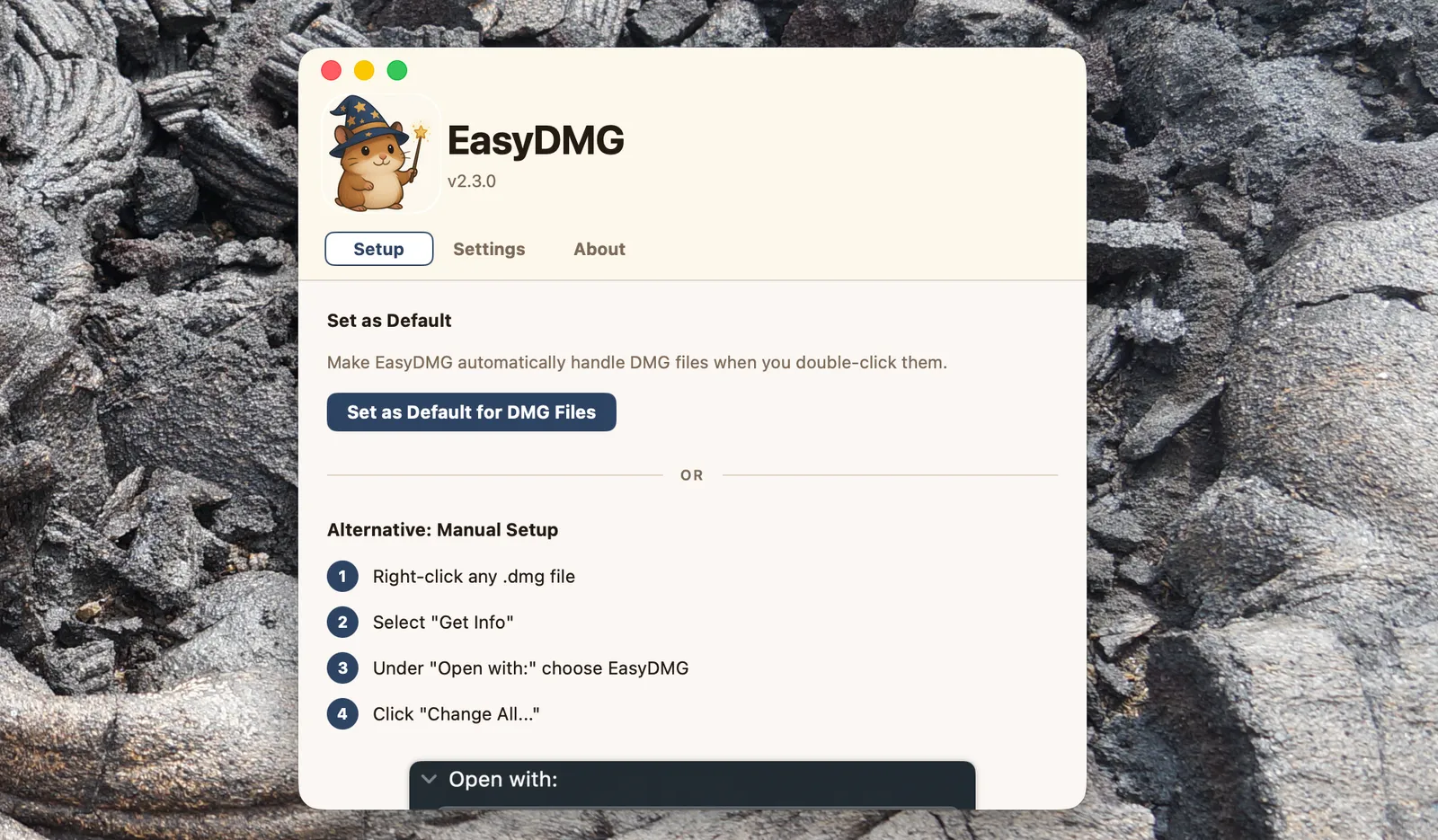
To get started, simply download the application and install it using the very same installation dance you’re trying to avoid. (Ironic, sure, but hopefully this is the last time.) After that you need to set EasyDMG as the default application for opening DMG files—there’s a button right in the settings that will do this for you.
Advertisement
Courtesy of Justin Pot
Do that and you’re basically done. The next time you need to install software from a DMG file you’ll see EasyDMG pop up instead of the virtual disk. A window with a progress bar will let you know how the process is going, from mounting the virtual disk to verifying the application to doing the actual installation.
The ultra-premium home theater display market is getting crowded, and projectors are no longer the only way to fill an entire wall with an image. DreamWall, a U.S.-based display company founded in 2025, will make its CEDIA Expo debut in Denver with the Elite Series Platinum P0.7, a direct-view COB MicroLED system aimed at luxury home theaters, media rooms, and commercial installations.
DreamWall is entering a market already populated by Samsung, LG, Hisense, Quantum Media Systems, and a growing number of custom video-wall specialists. What makes the Platinum P0.7 interesting is not simply its enormous size or MicroLED architecture, but DreamWall’s attempt to address two persistent problems with large direct-view LED installations: heat and installation complexity.
Related Review:
DreamWall Elite Series Platinum P0.7
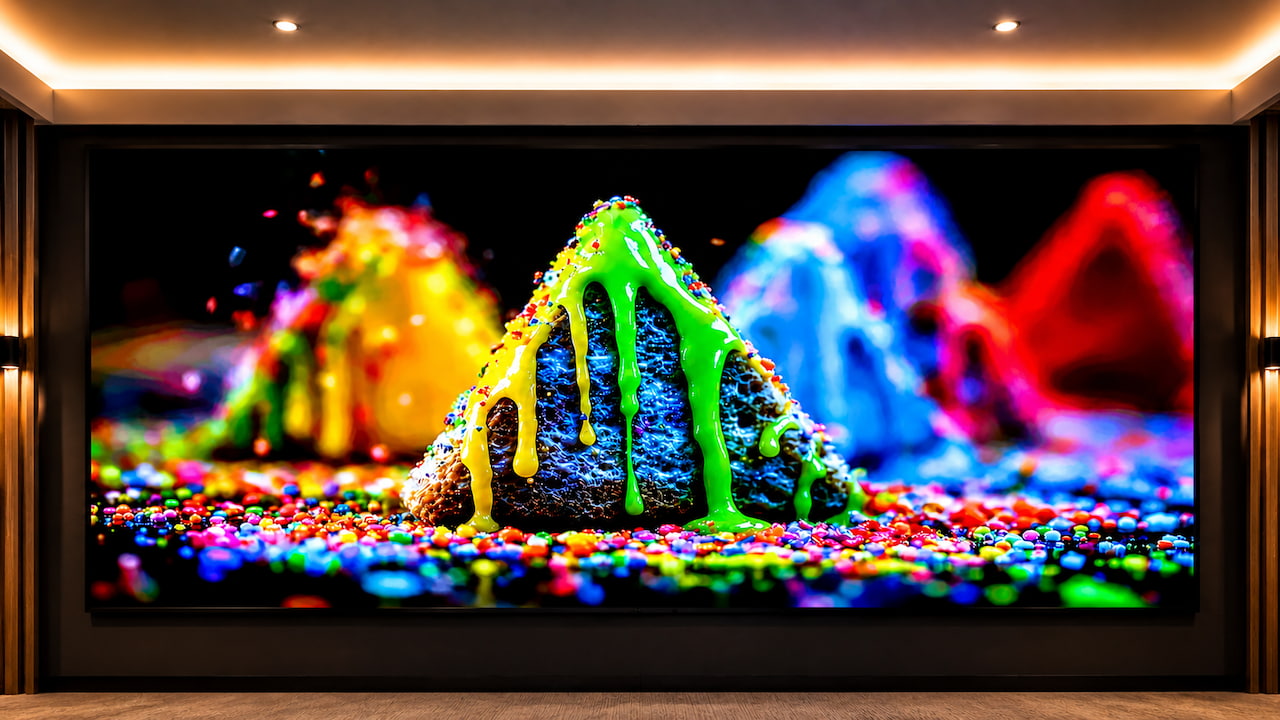
The Platinum P0.7 uses Chip-on-Board (COB) MicroLED technology with a 0.7mm pixel pitch, allowing DreamWall to create a true 4K configuration at approximately 121 inches. The display also supports true 10-bit HDR, an ultra-high refresh rate, advanced video processing, and a low-reflective surface designed to preserve image visibility in rooms with ambient light.
That last point matters because direct-view MicroLED systems are increasingly being positioned not only for completely dark dedicated theaters, but also for media rooms and multipurpose living spaces where projection can struggle against daylight or room lighting.
Advertisement
DreamWall’s indoor CooLED platform is available in 0.7, 0.9, and 1.25mm pixel pitches, with 16:9 and 21:9 configurations and screen sizes ranging from 108 to 216 inches. Custom installations can go larger.
What Makes DreamWall Different?
The more interesting technology may be hiding behind the pixels.
DreamWall calls its thermal-management platform CooLED, and the company claims many of its indoor cabinets consume only 50 watts at maximum output while producing sufficiently little heat that supplemental HVAC or active display cooling is not required. DreamWall says many installations can operate from a single 20-amp circuit.
Advertisement
That could be a meaningful advantage in residential installations. Giant LED walls can generate considerable heat, and once a theater requires additional cooling, electrical work, and HVAC capacity just to accommodate the display, installation costs and complexity escalate quickly.
DreamWall is also approaching the product as a complete custom-installation solution rather than shipping cabinets and leaving the integrator to figure everything out. Each system is configured around viewing distance, screen size, brightness, room conditions, and installation requirements, while the company provides installation assistance, calibration, U.S.-based technical support, and up to a five-year warranty on select products.
That may not sound as exciting as another million pixels, but anyone spending six figures on a wall-sized television probably wants something more reassuring than a tracking number and an installation manual.
Why Does This Matter?
eCoustics saw firsthand at CEDIA Expo 2025 how compelling a properly executed MicroLED video wall can be. Quantum Media Systems’ approximately 20-foot-wide Cinematic XDR delivered exceptional brightness, black levels, color, and image uniformity while making the seams between individual modules essentially disappear. It ultimately earned our Best Ultra Large TV recognition, despite pricing that started around $350,000.
Advertisement
Advertisement. Scroll to continue reading.
DreamWall is entering the same broader category from a slightly different direction. Its emphasis on lower heat generation, reduced power requirements, custom sizing, and integrator support suggests the company wants to make large direct-view LED installations easier to specify and deploy rather than simply chase the highest possible specifications.
MicroLED still sits at the extreme end of the residential market, but competition is expanding quickly. LG’s 136-inch MAGNIT Active Micro LED offers 4K resolution and Active Matrix pixel control, while Hisense sells a 136-inch MicroLED display and demonstrated an even larger 163-inch RGBY MicroLED system at CES 2026. Samsung’s The Wall remains one of the best-known names in the category, while Quantum Media Systems and other custom-installation specialists continue pushing screen sizes well beyond conventional televisions.
The larger issue for home theater is obvious: how long can projection remain the default solution for screens larger than 120 inches?
Advertisement
High-end projectors still offer enormous images for far less money and retain an important advantage with acoustically transparent screens, which allow the center and front speakers to sit directly behind the picture. MicroLED walls complicate speaker placement because you cannot put conventional loudspeakers behind an opaque LED display.
But direct-view displays counter with substantially higher brightness, deep blacks, strong HDR performance, and the ability to work in rooms that do not resemble underground bunkers.
Who Is It For?
The DreamWall Elite Series Platinum P0.7 is designed for high-end custom residential installations, including dedicated theaters, luxury media rooms, sports-oriented entertainment spaces, and homes where a conventional 100- or 115-inch television is simply not large enough. Commercial installations, private clubs, hospitality spaces, and executive environments are also part of the target market.
Advertisement
This is not a television you order online. DreamWall does not sell directly to consumers and does not publish consumer MSRP, instead working through dealers and custom integrators on project-specific configurations.
The Bottom Line
The DreamWall Elite Series Platinum P0.7 is entering a rapidly expanding ultra-large display market where Quantum, Samsung, LG, Hisense, and others are already demonstrating what direct-view MicroLED can do.
Its 0.7mm pixel pitch and 121-inch 4K capability are impressive, but DreamWall’s more meaningful differentiator may be the CooLED architecture and dealer-focused installation model, which are designed to reduce heat, power consumption, and some of the headaches associated with building an enormous modular display into a luxury home.
We already know from our CEDIA 2025 experience with Quantum that a properly installed MicroLED wall can deliver spectacular results. The question at CEDIA 2026 will be whether DreamWall can deliver comparable visual impact while making the technology easier — and potentially less expensive — to install.
Diary of an excuse hound: Pie charts make us hungry for pizza
EPISODE 15: The Boss has popped into Mission Control to remind us to send him the numbers he needs for his monthly management report.
Once’s he’s gone the PFY sighs, makes up a set of numbers, appends believable exponents, adds some fancy sounding units to the end and then sends them to through a script file to convert them into something the Boss can use.
Advertisement
None of it matters, as no one cares about the numbers anyway. At Management level there’s likely to be more interest in the undigested-meat portion of the Boss’ stool sample than our uptime stats, firewall throughput, or the Company’s online storage totals…
Still, the PFY will fabricate the data, extrude it through a Perl script to create a graphic panel complete with a pie chart or two, and maybe a Venn diagram, then send it to the Boss. The Boss then pastes it into the top right corner of his report document, which gets sent on to the higher-ups, month after month, year after year.
The real shame is that none of the higher ups has ever taken the time to flip through the Boss’ reports chronologically – and thereby view the PACMAN-like animation the PFY’s data has been so diligently creating all this time.
You’ve got to make your own fun in this job.
Advertisement
And no one cares if the numbers are wildly inaccurate. Back in the old days, someone might wonder how we’d achieved 117 percent uptime, or whether 17.6267 terafleptules was a real thing or not, but at this point no one will ask any questions so long as the pie chart isn’t a single color.
As stated, we stopped producing real data years ago, and, on the rare occasion we’re questioned about the validity of the data, we have an excuse close at hand.
For a good part of the ’90s we leaned heavily on blaming “The internet” for faulty data, though from ’97 till around 2001, “Y2K” was solid gold.
In recent times – i.e. the data-faking era – “Blockchain implementation” was surprisingly short-lived as an excuse – but we got a good four years out of “It’s a COVID thing,” before flipping between quantum computing and privacy restrictions for a bit.
Advertisement
If pressed, we’ll occasionally just shake our heads and quietly murmur “Viruses”, “Hackers” or “Zero day attacks”, as that covers a multitude of sins, and both the PFY and myself can ramble aimlessly for hours about viruses we have known, and what they might have done to our systems. The only thing we’d be missing in a scenarios like that would the onions in our belts, but no one would notice that while they were thinking up a good excuse to leave the room…
“AI” has at least another two years in it – unless of course AI becomes sentient during that time and kills us all… Still, AI might need someone to produce fake stats about how well they’re doing…
…
The Boss is back surprisingly fast with a query.
Advertisement
“I was just looking at the graph and I think there might be a data error.” He says, pointing to the graphic. “See there, where is says Terafloptules.”
“Uh-huh.” the PFY says.
“Is that a spelling mistake? Only I can’t find the work Terafloptules on Google. And last month it was in Terafloctules, not Terafloptules, but I can’t find Terafloctules either.”
“Well, you wouldn’t would you. I mean Google looks up data after the fact.”
Advertisement
“I’m not sure I follow.”
“Well, say you created a word. Idiomanagement, say. Will Google know about it?”
“Yes?”
“No, it won’t. It won’t notice it until it becomes a commonplace word or phrase. In the interim period, before it gets accepted and has a wider use, Google will simply skip over it, assuming it’s a spelling mistake of some similar word.”
Advertisement
“So… we’re… using a word that doesn’t exist?” the Boss asks.
“No, we’re using a word that doesn’t exist in common usage. It’s like DVD Player in 1996. If someone saw that written down then, they might have thought it was DUD player and thought you were referring to Aly Dia. Now though, the word’s in common usage.”
“So is there a word we could use that people would be more familiar with?”
“I guess we could use Gigafloptules, but then I’d have to mention on the legend that the units are in thousands.”
Advertisement
“What is a gigafloptule?” “I’m glad you asked!” the PFY blurts happily. “To get to the bottom of that you really need to know a little bit about the parsec measurement of the speeds of data – but don’t worry, it’s not nearly as complicated as it sounds! You see, when Rutherford split the neutron with a nitrogen atom back in the 1850s, he noticed that a small amount of energy, a floptule, was ejected from the uranium positron…
I leave the PFY rambling while I pop up to the cafeteria to see if they have any onions. Yellow ones, because of the war…
Kioxia’s GP1 reaches 10 million IOPS using PCIe 6.0 and XL-FLASH technology
Its 50 DWPD rating indicates substantial endurance for sustained enterprise workloads
A hypothetical 3TB model could theoretically withstand 109.5 PB written
KIOXIA Europe GmbH has unveiled the GP1 Series, a PCIe 6.0 NVMe SSD engineered for direct GPU access within demanding AI infrastructure — the first product in the KIOXIA GP Series introduced in early 2026.
Built to PCIe 6.0 and NVMe 2.2 specifications, the SSD carries an endurance rating of up to 50 drive writes per day (DWPD).
Latest Videos FromTechRadar
Advertisement
Why IOPS performance matters
The GP1 Series is intended to support emerging AI storage architectures that extend high-bandwidth memory using a flash-based tier for capacity.
This approach allows AI systems to access considerably larger datasets at a lower cost than continually adding more high-bandwidth memory.
The company states that this method also improves GPU utilization by keeping processing units supplied with data instead of waiting idle.
IOPS measure how many read and write requests a storage device can process every second, directly shaping how quickly GPUs receive fresh data.
Sign up to the TechRadar Pro newsletter to get all the top news, opinion, features and guidance your business needs to succeed!
In AI training and inference, thousands of parallel operations must move between storage and processing units without introducing costly delays.
Advertisement
Higher IOPS therefore reduce the risk of GPUs sitting idle while waiting for data, which can otherwise limit overall system performance.
KIOXIA’s endurance claims for the GP1 Series offer a further measure of how the drive is positioned for sustained AI workloads.
Assuming a two-year warranty and a 3TB capacity, a 50 DWPD rating would translate into roughly 109.5 PB of total write endurance over that period.
Advertisement
By comparison, Gigabyte’s AI TOP 100E drive claims an endurance rating of 219 PB, equivalent to a full year of continuous writing at maximum speed.
That endurance figure is notable partly because the Gigabyte drive relies on TLC NAND rather than the SLC-based flash found in KIOXIA’s design.
Form factors and industry context
The KIOXIA GP1 Series will ship in E3.S and E1.S form factors, available in both 9.5 mm and 15 mm heights.
Advertisement
These variants support cold-plate liquid cooling on the E3.S and 9.5 mm E1.S options, while every configuration also works in standard air-cooled setups.
Evaluation samples will be available to select customers by the end of 2026, ahead of a showcase at the FMS conference in California.
“The growing performance and memory demands of AI infrastructure require a broader memory hierarchy that can keep GPUs supplied with data efficiently,” said Paul Rowan, Vice President & Chief Marketing Officer at KIOXIA Europe GmbH.
“The KIOXIA GP1 Series enables flash-based memory extension and GPU direct access, helping to reduce latency and CPU overhead while increasing throughput for AI, HPC and data analytics workloads.”
Advertisement
The GP1 Series architecture is designed to scale well beyond current levels, with future generations aiming for as much as 100 million IOPS.
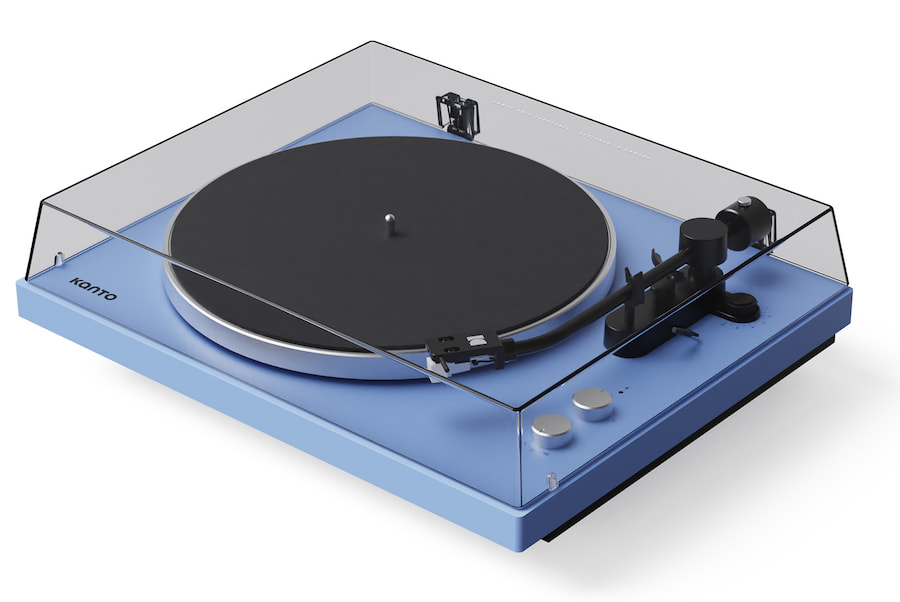
Ten months is not a very long product cycle for a turntable. Kanto introduced its first record player, the Obi3, in October 2025 for $199.99, and less than a year later the Canadian manufacturer is already replacing it with the Obi3G2 for $249.99. That might sound like the kind of generational update that involves a new finish, a revised logo, and some marketing copy, but Kanto has actually addressed several of the original model’s limitations.
The Obi3G2 remains an entry-level belt-drive turntable with Bluetooth 5.3, a switchable phono preamp, weighted aluminum platter, engineered-wood plinth, aluminum J-shaped tonearm, and pre-installed Audio-Technica AT3600L moving-magnet cartridge. However, Kanto has added a sensor-controlled drive system, adjustable tracking force and anti-skate, electronic speed selection, cue-activated start, and auto-stop while increasing the mass of the turntable considerably.
For an extra $50, that is substantially more interesting than another color.
Related Reviews:
What Changed From the Original Kanto Obi3?
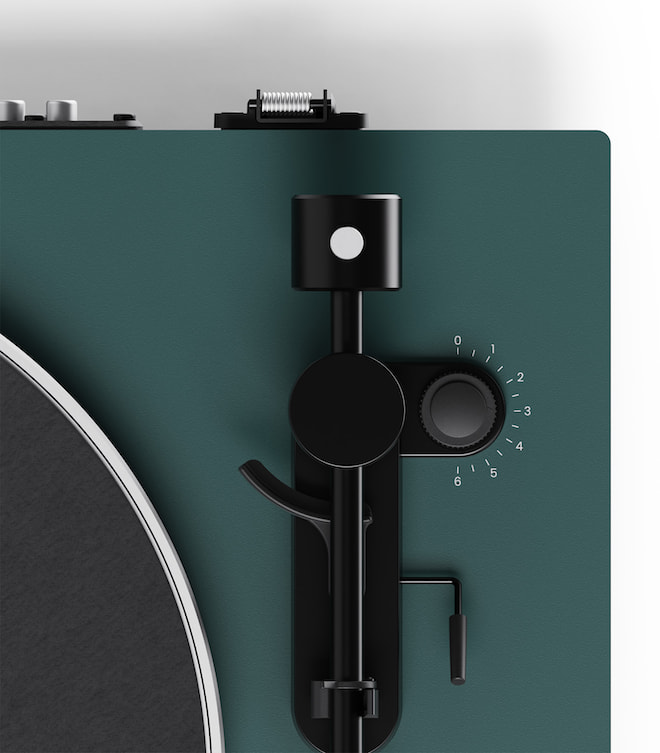
The original Obi3 offered a fixed counterweight and internally preset, non-adjustable anti-skate. That kept setup simple, but it also removed much of the adjustment that separates a traditional turntable from a more appliance-like record player. The Obi3G2 replaces both with an adjustable counterweight and dedicated anti-skate control, allowing owners to properly set tracking force and make adjustments themselves.
Advertisement
Kanto Obi3G2
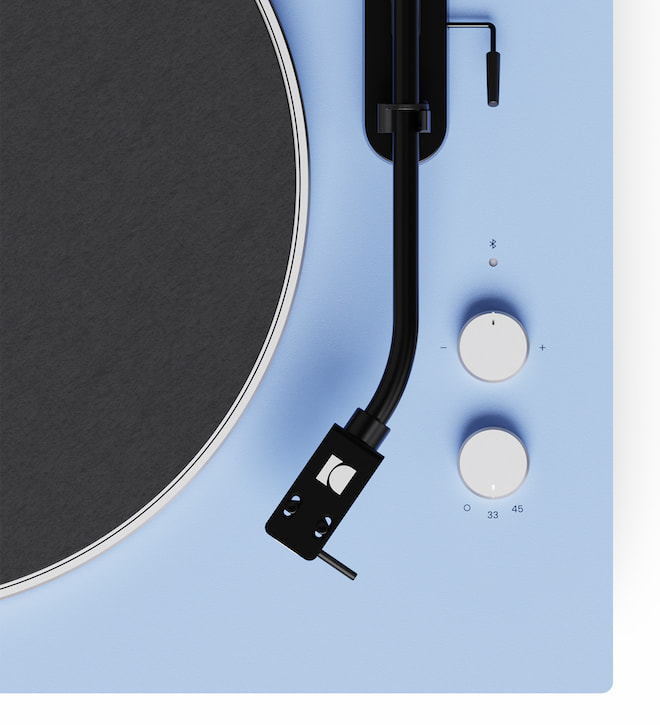
Kanto has also replaced the original belt-drive system with a sensor-controlled belt drive that continuously monitors motor speed. Electronic selection switches between 33⅓ and 45 RPM without requiring users to move the belt manually, while Kanto specifies wow and flutter at less than 0.15% WRMS. The ±10% pitch adjustment from the original model remains.
Auto-stop is another useful addition. The Obi3G2 remains a manual turntable, so users still position and lower the tonearm themselves, but the platter stops at the end of a record rather than leaving the stylus running indefinitely in the lead-out groove. That provides some of the convenience beginners may want without turning the Obi3G2 into a fully automatic design.
Kanto Obi3G2
The physical changes are also substantial. The original Obi3 weighed 8.6 pounds (3.9 kg), while the Obi3G2 weighs 12.1 pounds (5.5 kg). Kanto attributes the additional mass and more substantial plinth to improved vibration control. The G2 is also slightly larger at 17 x 14.3 x 4.9 inches compared with 15.7 x 14 x 3.7 inches for the original.
What Hasn’t Changed?
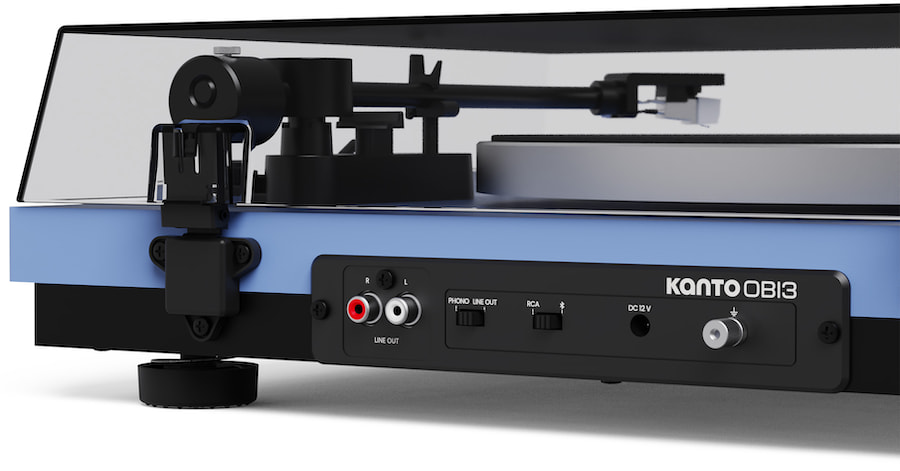
Kanto wisely left some things alone. The Obi3G2 retains the Audio-Technica AT3600L, a basic but proven moving-magnet cartridge commonly found on affordable turntables. It also retains the weighted aluminum platter, J-shaped aluminum tonearm, cue lever, Bluetooth 5.3 output, ±10% pitch control, and switchable phono preamp.
That last feature makes the Obi3G2 particularly flexible. Set the output to line level and it can connect directly to powered loudspeakers or any amplifier with a standard analog input. Switch the internal preamp out of the signal path and it can be connected to an integrated amplifier, receiver, or external phono preamp with a dedicated phono input. Bluetooth 5.3 also allows wireless playback through compatible powered speakers or headphones.
Kanto has not specified support for higher-quality Bluetooth codecs such as aptX or LDAC, however, and there is no USB output for digitizing records. Buyers looking for those features will need to consider alternatives.
Advertisement
Kanto Obi3G2 Specifications:
Drive: Belt drive with speed sensor
Speeds: 33⅓ and 45 RPM
Wow & Flutter: <0.15% WRMS, DIN weighted
Pitch Control: ±10%
Cartridge: Audio-Technica AT3600L
Tonearm: Aluminum J-shaped
Counterweight: Adjustable
Anti-Skate: Adjustable
Operation: Manual cueing with cue-activated start and auto-stop
Platter: Weighted aluminum
Plinth: Engineered wood
Phono Preamp: Built-in, switchable
Wireless: Bluetooth 5.3 output
Wired Output: RCA
Dimensions: 17 x 14.3 x 4.9 inches
Weight: 12.1 pounds
Finishes: Black, White, Green, Ice Blue, Walnut
What Makes the Obi3G2 Different?
No single feature on the Obi3G2 is revolutionary. The combination at $249.99 is what makes it interesting.
Advertisement. Scroll to continue reading.
Most entry-level turntables lean toward one of two approaches. Some emphasize convenience with fully automatic operation, fixed tonearm settings, built-in phono stages, and Bluetooth. Others provide a more traditional manual experience but eliminate Bluetooth and often charge extra for an internal phono preamp.
The Obi3G2 lands between those two camps. Buyers get Bluetooth and a built-in phono stage, but they also get an adjustable counterweight, adjustable anti-skate, manual cueing, electronic speed selection, sensor-controlled speed regulation, auto-stop, and an aluminum platter.
That gives beginners something they can learn on without requiring them to replace the entire turntable as soon as they become more comfortable with analog playback.
Advertisement
The Competition
The Audio-Technica AT-LP70XBT ($299 at Crutchfield) is probably the most obvious mainstream rival at $299. It is fully automatic, includes Bluetooth with aptX Adaptive, has a switchable phono preamp, and uses Audio-Technica’s AT-VM95C cartridge body, which supports the company’s broad VM95 stylus family. The tradeoff is that its cartridge body is fixed and the turntable is designed around simplicity rather than user-adjustable tracking force and anti-skate.
The U-Turn Orbit Basic starts at the same $249 price and takes the opposite approach. It is a more traditional analog design with U-Turn’s new OA3 magnesium tonearm, adjustable counterweight, internal anti-skate, and AT91B cartridge, but the standard $249 configuration does not include Bluetooth, a phono preamp, or even a cue lever. Those can matter less to experienced listeners but make the Obi3G2 considerably more complete out of the box.
Sony’s new PS-LX3BT is another alternative for buyers who prioritize convenience. It is fully automatic, includes Bluetooth and a built-in phono EQ, and carries a $399.99 regular price, although Sony is currently selling it for $349.99. It requires considerably less interaction from the user, but it also costs substantially more than the Kanto.
Pro-Ject’s E1 family represents another step toward the traditional audiophile approach, with manual belt-drive operation and versions offering an internal phono stage or Bluetooth. The E1 BT includes Bluetooth 5.0, a phono preamp, electronic 33/45 RPM switching, an aluminum tonearm, and Ortofon OM5e cartridge, but it is fundamentally aimed at buyers who favor a more conventional European turntable design.
Advertisement
Kanto Obi3G2
Who Should Consider the Kanto Obi3G2?
The Obi3G2 makes the most sense for first-time turntable buyers who want convenience without buying something they will immediately outgrow. Bluetooth makes it easy to use with wireless headphones or powered speakers, while the internal phono stage removes the need for another component when getting started.
The adjustable tonearm setup also gives new vinyl listeners an opportunity to learn how tracking force and anti-skate actually work. That matters if the goal is eventually to move into better cartridges, external phono stages, amplifiers, and more ambitious systems rather than treating the turntable as another wireless appliance.
Buyers who want completely automatic operation should look toward Audio-Technica or Sony. Those primarily interested in maximizing traditional analog performance and who have no use for Bluetooth may find the U-Turn Orbit Basic or an entry-level Pro-Ject more appealing.
The Bottom Line
When we covered the original Obi3 in October 2025, we wondered whether Kanto had created one of the first new turntables under $200 actually worth considering. The Obi3G2 costs $50 more, but the additional money buys considerably more than a new badge.
Advertisement
The sensor-controlled motor, adjustable counterweight and anti-skate, electronic speed selection, auto-stop, and heavier construction address meaningful weaknesses of the first generation while retaining Bluetooth, a switchable phono stage, and the AT3600L cartridge.
Advertisement. Scroll to continue reading.
At $249.99, the Obi3G2 faces stronger competition, but its combination of manual turntable control and modern convenience is unusual at the price. It is not the best choice for someone who wants one-button automatic operation, nor is it pretending to be an audiophile turntable costing three times as much. For someone building a first real record system and wanting enough adjustability to learn along the way, however, Kanto has made the second generation considerably more convincing than the first.
Price & Availability
The Kanto Obi3G2 is available now for $249.99 at Amazon. Worldwide availability is scheduled for early September at £179.99 in the UK, €199.99 in Europe, and AU$349.99 in Australia.
Multiple distributed denial-of-service (DDoS) attacks targeted the Threema secure messaging service earlier this week, causing severe disruptions to communications.
Organizations using Threema On-Prem did not experience any issues because they rely on their own infrastructure.
In a post-mortem report on Friday, the end-to-end encrypted instant messaging service said that the attacks were difficult to defend against because the threat actor constantly changed patterns.
Threema is a paid messaging application developed by the Swiss technology company of the same name, with a heavy focus on security and privacy.
The service relies on its own server infrastructure in various locations in Switzerland and promises “no ads, no profiling, no hidden data analyses.”
Advertisement
On Tuesday around 6 PM UTC, users started to report service interruptions. The company responded about an hour later, saying that based on the information available at the time, the cause was “a network outage on our colocation partner’s side.”
“Now Threema network status saying ‘Connecting’ instead of ‘Connected,’ welp… 10mins later, now it’s back to saying ‘Connected,’ yet msgs are still very much not sending right away & very delayed,” one user complained.
About three hours later, Threema said it was working to restore all of its services after its partner reported that the network issue had been resolved.
The next day, users in Switzerland, India, and China continued to report that the service was down, despite Threema’s status page showing no problems.
Advertisement
However, the company confirmed that it was being targeted by a series of DDoS attacks it was working to mitigate, and warned users that intermittent outages were likely to occur.
Threema explains that the attacks made its service “temporarily unavailable or only partially available on Tuesday evening and Wednesday morning.”
Typically, DDoS attacks are mitigated without any noticeable impact due to effective defenses that adapt to the attack’s patterns, Threema said.
The attacks this week were large-scale, though, and targeted both Threema and its colocation partner, Nine.
Advertisement
“It is not entirely clear whether Threema was the primary target or whether the attacks were directed at multiple targets,” the company notes.
Defending against the attacks proved challenging because they persisted for an extended period, while the threat actor continually changed its tactics to circumvent mitigation measures.
An unrelated technical issue prevented the company from updating the current system status page, and the company decided to take it offline until the problem was fixed.
“Business customers using Threema Work were informed via email on Wednesday morning about the unstable service conditions, and account managers provided information on the current situation in response to inquiries.”
Advertisement
To avoid similar incidents, the Swiss company has implemented “specialized DDoS protection as an additional measure” to filter attack traffic upstream and reduce the load on its infrastructure.
Overall prevention scores can hide what happens after initial access. Once attackers are using valid credentials, prevention drops sharply.
The Blue Report 2026 measures defenses technique by technique across 338 million simulations run in customer production environments.
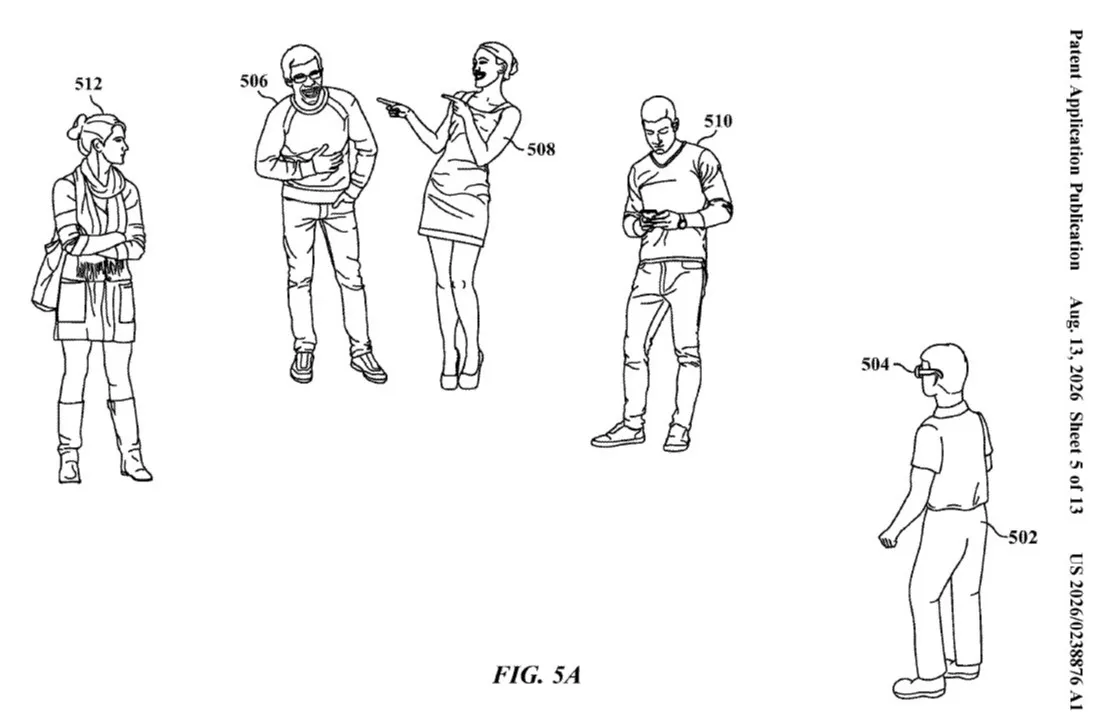
A filing submitted by Meta to the US Patent and Trademark Office shows that Meta has continued developing features that use facial recognition in conjunction with its controversial smart glasses. The application for the patent was submitted in February and made public this week. There’s no indication of how long the approval process could take or whether the patent will ultimately be granted.
The application, which CNET has viewed, includes 44 pages of drawings and descriptions of a system that would use Meta’s smart glasses technology in conjunction with AI facial recognition. The system would use AI facial recognition to identify people and create media, including videos, that contain that information. It could also use inputs such as location data or information from online services to create those media files, support a wide range of content-creation activities or interact with Meta services, according to the lengthy filing.
A representative for Meta did not immediately respond to a request for comment.
The patent filing comes at a sensitive time for Meta and this product category. Privacy advocates have heavily criticized the company’s lack of privacy protections, while the nickname “pervert glasses” has been used more frequently in media stories about its smart glasses.
Advertisement
That sentiment was expanded upon by the nonprofit Center for Democracy and Technology, which issued a statement about the patent application, calling it an escalation of privacy harms.
“Meta’s patent application includes relatively innocuous use cases, but, if deployed, this tech can and will be used for much more nefarious purposes and will put marginalized people like victims of stalking and domestic violence at risk,” wrote Ariana Aboulafia, project lead for disability rights in technology policy for the center.
“No one should be forced to constantly question whether the person next to them at a party, in the doctor’s office, or on the train is constantly recording, identifying, and storing information about them,” Aboulafia wrote.
Meta isn’t the only company that has been the target of increased public scrutiny over technology and privacy; Flock Safety has been countering bad publicity and vandalism as well as pausing or canceling contracts for its license plate reader cameras in cities, including Los Angeles and Dayton, Ohio. Flock’s technology has also been criticized for incidents in which law enforcement officers have misused the tech to track people; despite policy changes, there are many ways to circumvent its safeguards.
Jared Cooney Horvath has spent over 15 years studying how people learn, and he says the picture for today’s kids isn’t good. The neuroscientist and former teacher argues that classroom technology is quietly eroding how children think and retain knowledge, according to a report from The Guardian.
Horvath’s new book, The Digital Delusion, lays out the case that generational progress in health and education has stalled since around 2000, right around the time kids started to get access to screens. Concerns about early exposure run even deeper, with some researchers now warning that screen habits formed before age two carry their own developmental risks.
What does Horvath think screens are the problem?
Horvath points to falling IQ scores across the West even as time spent in school has stayed steady or increased. He traces the shift to the rapid growth of educational technology, an industry he says is now worth $400 billion in the United States alone.
Laptop adoption in schools took off around 2010, then accelerated sharply when Covid forced a digital pivot. Most schools never reversed course afterward. Horvath cites Pisa testing data showing that students who spent more than six hours a day on screens scored significantly worse than peers who avoided screens entirely.
Advertisement
Ron Lach / Pexels
Does everyone in education agree with him?
Not quite. Rose Luckin, an emerita professor at the UCL Knowledge Lab, says Horvath is right that edtech was oversold without solid proof behind it. But she points out that the same Pisa data shows moderate device use actually correlates with better outcomes than no use at all.
Meanwhile, Dylan Wiliam, an education assessment expert at UCL, adds that the current research only shows correlation, not causation. Daisy Christodoulou of No More Marking agrees society got too comfortable with unproven tech, even if she’s more optimistic about its potential going forward.
As with most robot mowers, the power adapter is large and may not fit your outdoor socket, so you’ll likely need an outdoor box and extension lead. The TerraMow V100 also comes with a covered charging base to shield it from bad weather, something many manufacturers will charge you a couple of hundred extra for.
There’s no antenna or anything else to set up, because this mower relies on its triple camera system and AI to map and navigate your lawn. You can connect your phone via Bluetooth, and it supports Wi-Fi. It also comes with a year of 4G service ($19 per year after that), but you don’t need it if you have Wi-Fi in your garden. The 4G and Wi-Fi are just for firmware updates and remote control when you’re away from home. It has GPS tracking for theft alerts.
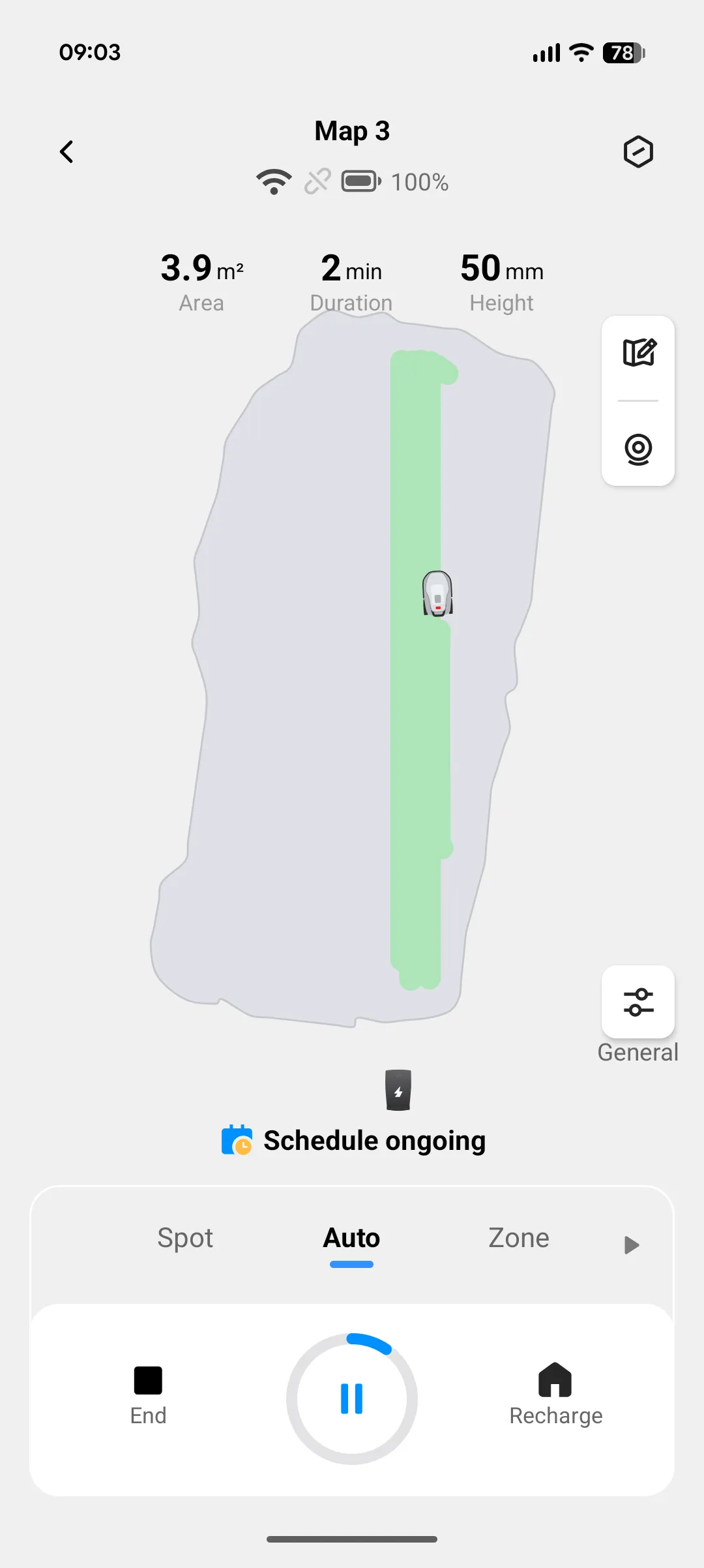
The setup was by far the easiest of any robot mower I’ve tested. Aside from not having to fiddle with wire or an RTK antenna, the TerraMow V1000 has an automapping feature. Usually, you have to remote-control your robot mower around the borders of your lawn to define the cutting zone. I have tried other mowers with automatic mapping, but I always ended up having to make significant edits to the map. Not so with the TerraMow. The V1000 successfully mapped my (admittedly straightforward) lawn without any input required.
The spec sheet for the TerraMow V1000 is relatively modest. It can handle slopes up to 18 degrees, offers a cutting height of 0.98 to 2.95 inches (25 to 75 mm), and a cutting width of 8 inches (20 cm). I like that you can define different settings for different zones. Perhaps you want a finer cut or closer edge mowing on one section of lawn. It can run for 150 minutes on a full charge and takes two hours to recharge. Like most robot mowers, it leaves the cuttings to mulch, and you can set a cutting schedule in the app.
A Cut Above
I didn’t have high expectations of the TerraMow V1000, because it relies entirely on AI vision, which can be erratic in my experience. To my surprise, it mowed my lawn in perfect straight lines with a kind of fish-tail maneuver at the end of each turn, leaving neat but narrow stripes and a fairly uniform cut. Where the edges allowed, such as along a path, the TerraMow cut right up to the edge. On sides with obstacles, such as a garden shed and tall plants, it left a modest border. Strips of uncut grass of various sizes seem to be unavoidable with robot mowers, but the TerraMow V1000 got closer to finishing the job than most.
Advertisement
We have three cats, so obstacle avoidance is crucial, and the TerraMow V1000 does not disappoint. I always test mowers with a football, and I also had a badminton net on the lawn with very thin posts. The V1000 was able to skirt around both without touching them.
The navigation is generally impressive, and that extends to creating paths between lawn areas and also back to its charging station. You don’t have to install the charging station on the lawn; I put mine slightly farther back, tucked out of sight next to some wooden outdoor furniture across concrete paving, and it had no issues finding its way in and out.
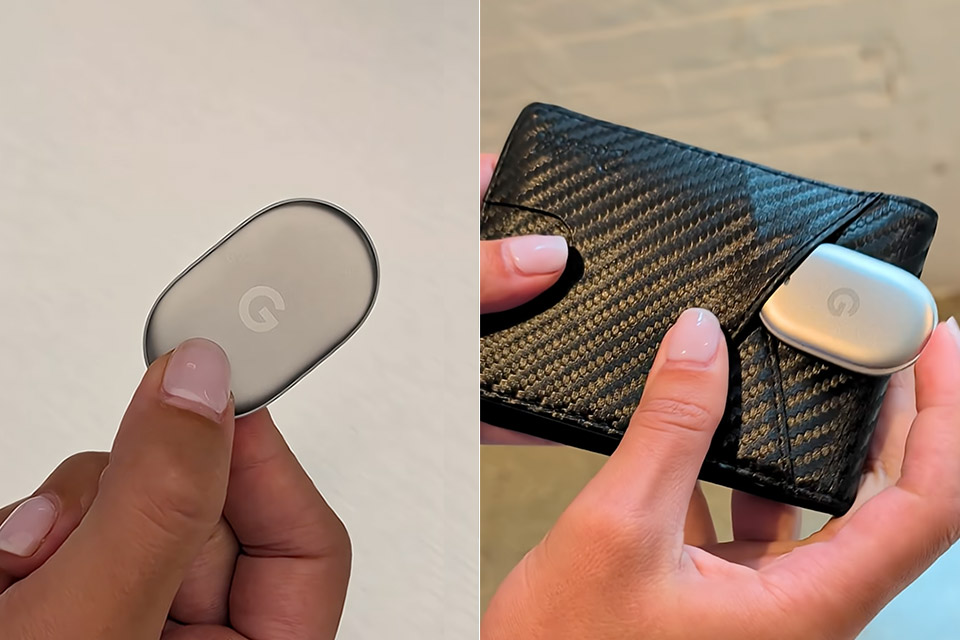
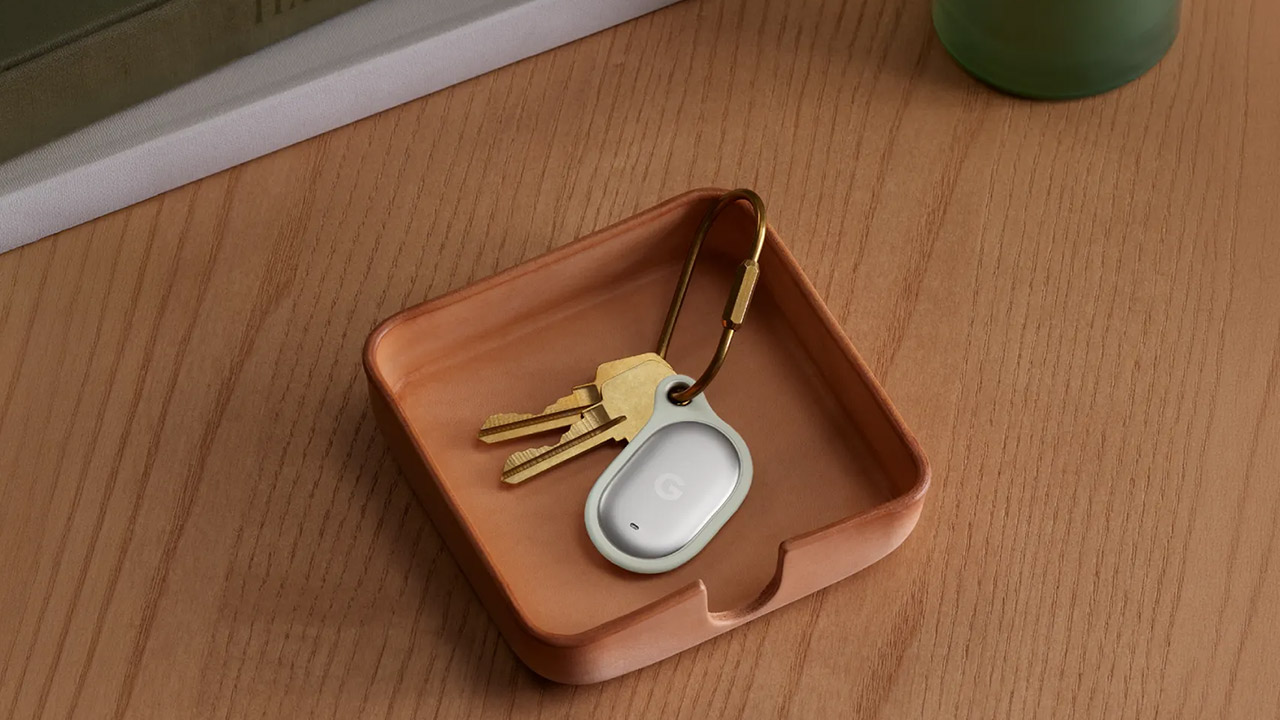
Keys sneak into couch cushions, wallets slip behind desks, and luggage disappears from the airport carousel. For years, Android users saw Apple’s AirTag handle routine disappearances, while Google delegated the task to third-party devices. That gap was bridged this week. Google developed its own finder, the Pixel Tag, a small oblong tracker designed to travel alongside the items people really lose.
The Pixel Tag is noticeably slimmer than Apple’s circular AirTag, measuring just 1.8 inches tall and 1.1 inches wide. And at only 0.2 inches thick, it’s a clear and pleasant contrast. The Pixel Tag, weighing barely 0.4 ounces with its battery inside, is available in only one soft grey-green color, Fog, as named by Google. The Pixel Tag is made of stainless steel and polycarbonate, with a little G logo sitting on the metal face next to a speaker opening, resulting in a basic yet effective design. The battery cover can be removed from the back by twisting it, and it accepts a regular CR2032 coin cell. Google estimates that the battery will last more than a year in ordinary use, and you can replace it yourself if necessary. The IP67 seal keeps dust out and can resist a 30-minute submersion in a meter of water.
FIND YOUR ITEMS ON FIND MY — AirTag (2nd generation) helps you keep track of what matters. Attach one to an item you want to keep track of using the…
EXPANDED PRECISION FINDING ON IPHONE AND APPLE WATCH — Get step-by-step directions to your lost item on iPhone and, now, Apple Watch.*
ENHANCED SPEAKER — With a 50% louder speaker and a new, distinctive chime, it’s easier than ever to hear and find AirTag.*
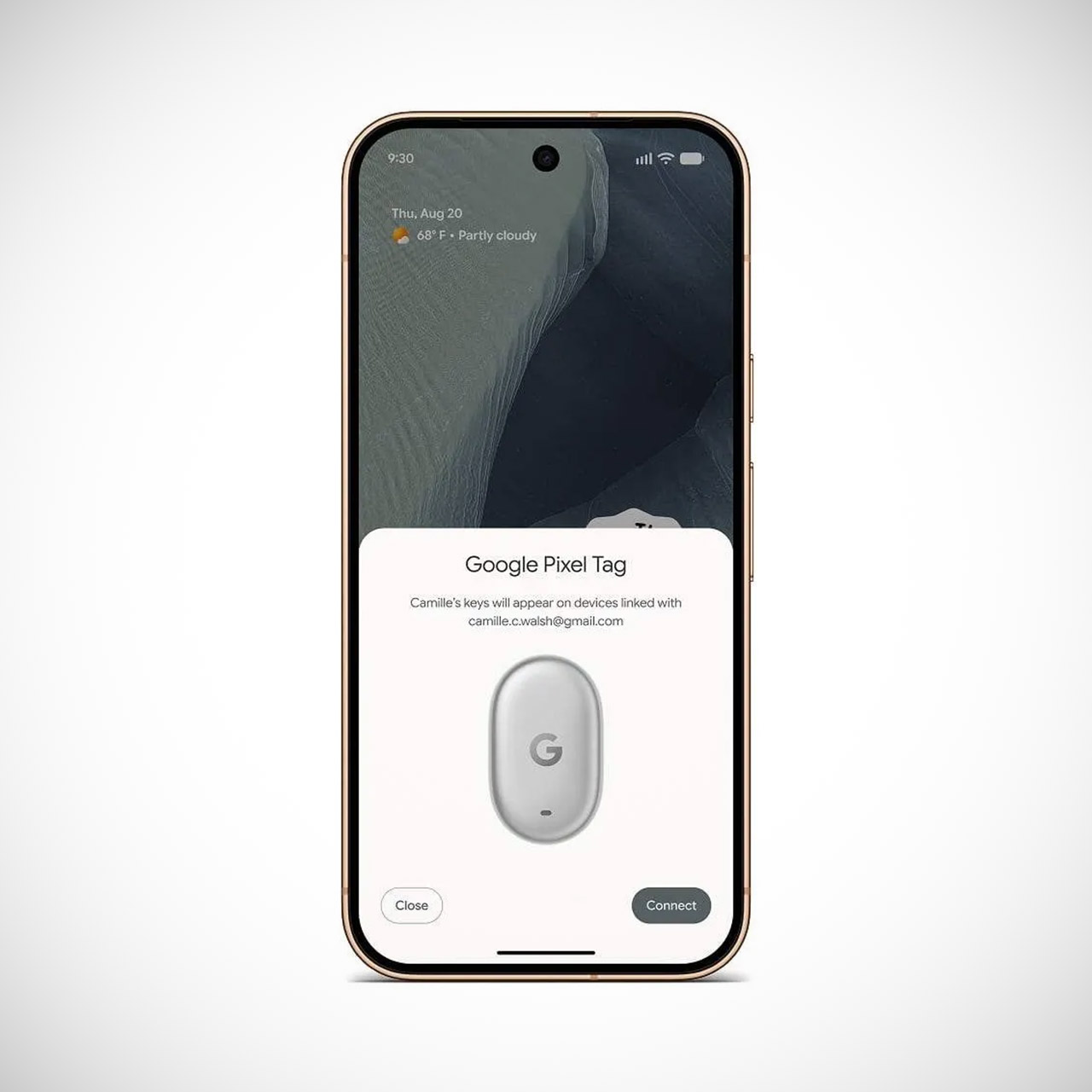
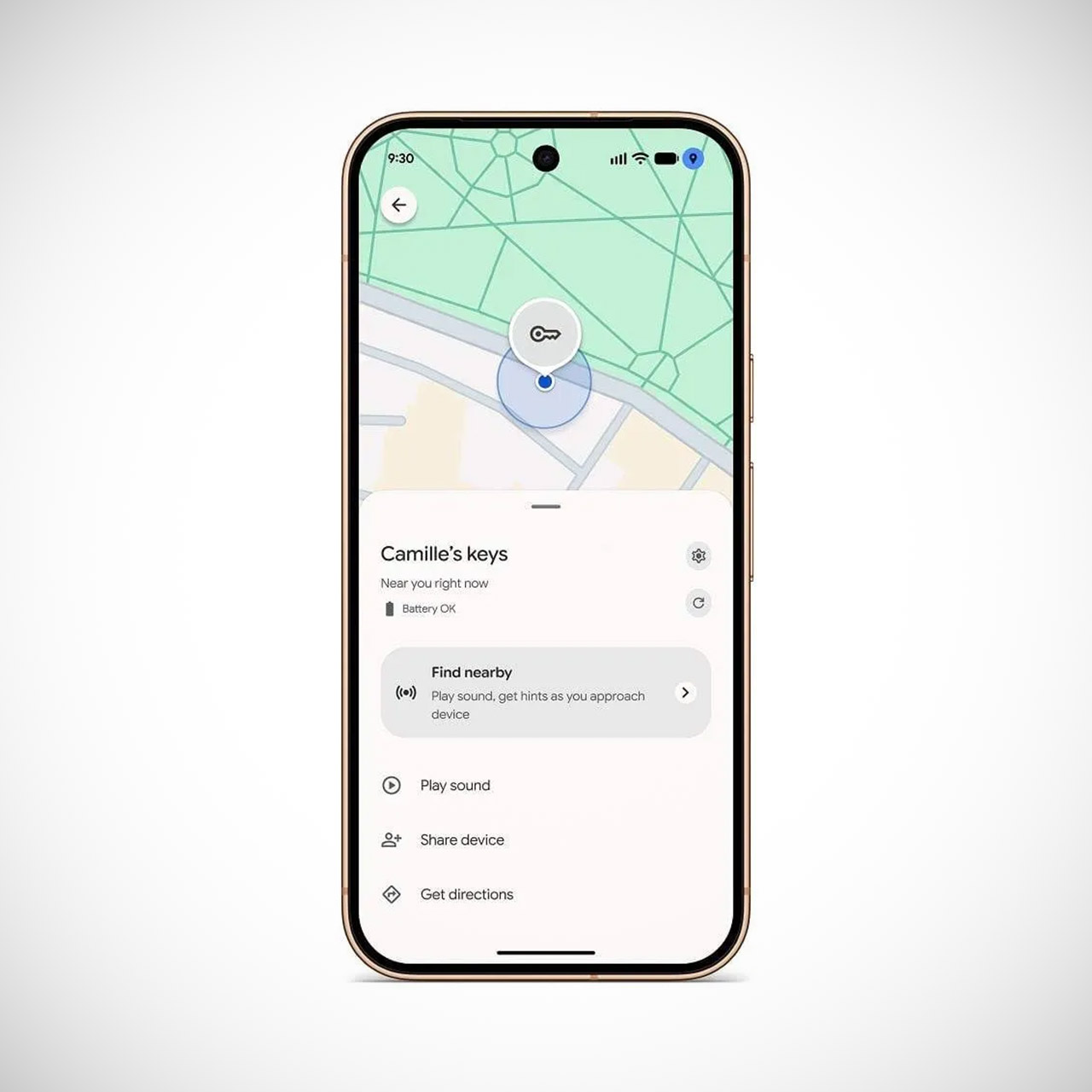
Users simply pull the battery tab, bring the tag near any phone running Android 9 or later, and Fast Pair will do the rest. Once linked, the tag displays in the Find Hub app, where you may name it to distinguish between your keys and your bag. When the item is nearby, the phone can play a sound thru the tag’s speaker, and if you push the physical button on the tag itself, your phone will ring even if it is on quiet, which is a handy feature when the phone is missing.
Advertisement
As soon as the tag leaves your Bluetooth range, Google’s Find Hub network will step in to assist. More than a billion Android devices quietly listen for the signal and send the owner an encrypted position. Google is quite concerned with privacy, so rest assured that location data is encrypted from beginning to finish, and they are also keeping an eye out to warn you if an unknown tag appears in your presence. You can also share a single tag with up to 10 individuals, which is particularly useful for family keys or a shared suitcase.
Precision improves greatly as you get closer. Phones with Ultra Wideband capability show not only the distance to your item but also the direction, which is quite useful while looking for misplaced items. There’s also a feature called Bluetooth Channel Sounding, which adds another layer of accuracy to distance measurements. However, some features necessitate a current device, such as the new Pixel 11 series or certain high-end Samsung handsets. Older phones continue to track the tag via basic Bluetooth and the network.
The rest of the Pixel family can lend you a helping hand. Your Pixel Watch can simply locate or ring your Pixel Tag via the Find Hub app or a browser. If you have Pixel Buds, simply ask Gemini to make the tag beep. Left-behind alerts will also notify you if your tagged item remains behind as you walk away, as the Pixel Tag contains an accelerometer that detects when the object starts or stops moving, providing the app with extra important data.
Google charges $29 for a single Pixel Tag and $99 for a four-pack, which is the same as Apple’s AirTags. They will be available on the Google Store on November 11th. Even while it does not come with a built-in loop or clip, you can easily add a keychain or case, exactly like with the competition’s AirTags.
Anthropic CEO Dario Amodei recently pushed back against the idea that he’s been painting an overly pessimistic picture of artificial intelligence and how it might shape the future.
Claiming that Amodei has “lost the argument” when it comes to AI regulation (Anthropic has advocated for some regulations, including a California bill that imposes transparency requirements on large AI companies), and given that “he is about to be the CEO of one of the most important companies in the world,” Baker wrote, “I respectfully think he should make an effort to be a more positive advocate for his own industry.”
Baker is far from the only one arguing that AI skepticism and even government crackdowns stem in part from simply taking the dire warnings of some AI executives seriously. But in his response, Amodei disagreed with the idea that his “messaging has been disproportionately negative.” Instead, he said that his writing has been “about equally balanced between risks and benefits,” and that he wrote his essay “Machines of Loving Grace” because he “didn’t feel the AI industry was painting an inspiring enough picture of how the technology could radically transform the world for the better.”
Advertisement
Nonetheless, Amodei acknowledged that “the public has a negative view of AI” and he agreed that “this is a big problem.” Where he disagreed was with the idea that this is “primarily caused” by Amodei “or any other AI leader warning about AI’s risks.”
“I think it is fundamentally a crisis of trust,” Amodei said. “I think that ordinary people don’t trust companies, governments, or the tech industry and always suspect that we are cooking up some new way to screw them over.”
Indeed, “trust” is a word that often comes up in debates about the AI industry, especially around OpenAI CEO (and Amodei’s rival) Sam Altman. In Amodei’s telling, however, this is a crisis that’s been decades in the making, with the AI backlash “just the latest iteration of it.”
“I think by far the most accurate criticism of AI companies including Anthropic is that we haven’t yet delivered on our big promises to benefit the world,” Amodei said. “That is totally on us, and I think it’s the criticism you should be making, instead of all this stuff about messaging and marketing.” (Naturally, he also said Anthropic is “doing our best to fix this.”)
Advertisement
As for regulation, Amodei argued that Baker was painting “a false choice” between distributing AI widely without regulation, or concentrating the technology in the hands of a few companies through regulation.
“I know that there’s a sort of Silicon Valley shorthand where regulation = regulatory capture = concentration of power, but I’ve always found this to be an overly simplified picture of the world,” Amodei said. “Many people outside this bubble think of regulation as something that constrains corporate power and benefits ordinary people.”
Amodei added that he doesn’t “necessarily agree with that perspective either,” but he said that’s “why Anthropic has always made its policy proposals very carefully.”
“We try very hard to make proposals that disadvantage (slow down) frontier AI companies while *advantaging* smaller competitors,” he said.
Advertisement
2/2 Second, on the messaging around AI. I do not agree that my messaging has been disproportionately negative. In fact it has been about equally balanced between risks and benefits: I’ve written one major essay about each, and even in interviews where I discuss the risks, I…























































You must be logged in to post a comment Login