Actress Hayden Panettiere has died at the age of 36, her representative told several US news outlets.
“It is with profound sadness that we share the tragic passing of our beloved Hayden. She was an incredible light and a force of nature who brought immeasurable love and joy to all who knew her and to the millions who watched her onscreen,” her father, Skip Panettiere, said in a statement.
The details surrounding her death were not immediately available.
Panettiere was known for her breakout role in the hit TV series Heroes, and later went on to star in Nashville, along with films including Remember the Titans and Raising Helen.
Advertisement
Her father Skip Panettiere has asked for privacy “as our family takes time to process this unimaginable loss”, in a statement issued through her representative.
Beginning her career as a child actor, Panettiere was just four years old when she was cast on the popular US soap opera One Life to Live.
This breaking news story is being updated and more details will be published shortly. Please refresh the page for the fullest version.
As the summer holidays begin to wind down, many of us are looking forward to the August Bank Holiday, which is the final official break before the Christmas period.
Advertisement
The three-day weekend is often seen as a last hurrah before heading back to school or work, but what people get up to often depends on the weather. With a number of heatwaves in Northern Ireland already this summer, some are asking whether another is on the way for August 31.
According to the Met Office, while it is still too early to tell for sure, there could be a chance of another heatwave later this month. However, it looks like there will be a split in conditions between northern and southern parts of the UK.
The long-range forecast from Thursday, August 20 until Saturday, August 29, the forecaster said conditions will be “changeable”, with many parts of the UK seeing showers or longer spells of rain.
Following this, high pressure will become increasingly probable over the north and west, including in Northern Ireland, with low pressure to the south of the UK.
Advertisement
The Met Office added: “This will lead to further spells of showers and longer spells of rain, but the north may see more in the way of drier conditions.
“Within this broad pattern, there is potential for Atlantic lows to spread across the UK at times, which would bring more widespread rain and perhaps strong winds. Temperatures are more likely to be above normal than below overall, though the possibility of widespread or exceptional heat is perhaps a little lower than in recent weeks.”
What will the weather be like for August Bank Holiday?
The Met Office said temperatures from Sunday, August 30 to Sunday, September 13 are likely to be “close to the climatological norm.”
The forecaster said this means a “broad northwest-southeast split in conditions, with the high becoming centred further to the south than in the latter part of August and with more changeable conditions developing towards the north and northwest. Meanwhile, drier, more settled weather is slightly more likely towards the south and east.”
Advertisement
It is expected that temperatures will “likely be near to or above average overall,” with a chance of “late season hot spells or heatwaves developing, especially in the south” of the UK.
Scientists have crossed an important line in biological engineering. In a recent study, researchers used artificial intelligence to design complete sets of genetic instructions for bacteriophages, viruses that infect bacteria. Some of those computer-generated designs produced working viruses when they were built and tested in the laboratory.
These viruses were designed to infect bacteria rather than people. The researchers worked with bacteriophages that target E. coli, and one of the AI models they used, Evo 2, was developed with safety restrictions. Its developers excluded viruses that infect organisms such as animals, plants and humans from the data used to train it.
Even so, the experiment raises an important question: if AI becomes increasingly able to help design biological systems, are our safeguards developing fast enough?
As engineers working in vaccine manufacturing and public health security, we see good reasons to continue this research. Bacteriophages could potentially be used to treat bacterial infections, including those that are becoming harder to treat with antibiotics. But advances in biological design also create new challenges for biosecurity.
Advertisement
Genome language models work in a broadly similar way to AI language models that learn patterns in text. Instead of learning from words and sentences, they learn patterns in genetic code. Evo 2, for example, was trained on trillions of DNA building blocks taken from many different forms of life.
This gives researchers a powerful new way to study biology and generate possible DNA sequences. It also means that part of biological design can now happen on a computer, before anything has been made in a laboratory.
An AI-generated DNA sequence is still several steps away from becoming a real biological threat. A digital design has to be turned into physical genetic material, assembled correctly and tested under the right laboratory conditions. Each of those stages also creates an opportunity to reduce risk.
Advertisement
One safeguard can be built into the AI model itself. The developers of Evo 2 deliberately removed viruses that infect humans and other similar organisms from its training data for safety reasons. Their research found that the model performed poorly when tested on proteins from viruses that infect humans.
Such precautions will need to be tested and strengthened as AI tools for biology become more capable. Researchers have already argued that AI and biosecurity need to be considered together, so that safeguards develop alongside new capabilities.
Another checkpoint comes when digital DNA is turned into physical DNA. Companies that manufacture DNA to order can check both the requested genetic sequence and the person or organisation ordering it for potential security concerns. Researchers working on DNA synthesis screening have argued for common international approaches as this technology becomes more widely available.
Screening may also need to become more sophisticated. A system designed mainly to recognise DNA that resembles known dangerous pathogens may struggle if AI produces something genuinely new. Recent research on identifying “sequences of concern” has therefore considered what a genetic sequence might do, as well as whether it resembles one already linked to a dangerous organism.
Advertisement
Laboratories and research institutions provide another layer of protection. Potentially risky research can be assessed before experiments begin, including questions about how biological material will be contained, who will have access to it and whether the expected benefits justify the risks.
Research funders can also influence how security risks are managed. UK Research and Innovation (UKRI), for example, has established a Trusted Research and Innovation team to help researchers and institutions identify and manage security risks in collaborative research.
Public health preparedness belongs in this discussion too. If biological design becomes faster and more accessible, health authorities will need to be able to detect and investigate unusual outbreaks quickly. The Metagenomics Surveillance Collaboration and Analysis Programme (mSCAPE), led by the UK Health Security Agency, analyses genetic material from samples to help detect and track emerging pathogens.
The programme is not specifically designed to find AI-created viruses. But its approach is relevant because scientists do not have to know exactly which pathogen they are looking for in advance. Systems capable of detecting unusual or previously unseen organisms could become increasingly valuable as biological technologies develop. Preparedness also means being able to develop diagnostic tests, treatments and vaccines quickly when a new threat appears.
Advertisement
In our view, one of the biggest weaknesses in global biosecurity is that countries are not equally prepared. Some already have established systems for identifying and responding to biological risks, while others are still developing them. We see a similar gap in vaccine regulation, where countries vary considerably in their ability to assess new products. Biological threats can cross borders, so effective preparedness will depend on strengthening these capabilities internationally.
There are difficult trade-offs. Heavy restrictions can slow useful research, including work aimed at understanding disease or developing treatments. Weak safeguards can allow scientific capability to develop faster than the systems intended to prevent misuse.
Open science makes this harder. Evo 2 was released openly, including the code and technical information needed for other researchers to use and develop it. Openness can accelerate discovery and widen access to powerful research tools. But once such tools are widely distributed, controlling how they are used becomes harder.
Advertisement
No single safeguard can deal with all of these risks. Biosecurity will need to operate at several stages, from how biological AI models are developed and released to DNA screening, laboratory oversight and public health preparedness.
The recent bacteriophage study does not show that AI can design a pandemic virus. What it shows is significant enough: AI can already help design complete viral genomes that work when they are physically created.
We have an opportunity to decide what responsible safeguards should look like while this technology is still developing. Waiting for more dangerous capabilities to emerge would leave scientists, governments and public health systems trying to develop protections after they are already needed.
AI is beginning to change what humans can design in biology. Our ability to govern that power needs to develop alongside it.
First up in the latest In the Dock roundup is Connor Atkins, 30, of no fixed address, who pleaded guilty to three charges of assaulting a police emergency worker, one each of racially aggravated threatening words or behaviour towards one man, assault of a second man, and failure to attend court and three charges of stealing sandwiches from Sainsbury’s in Scarborough.
He was jailed for six months and ordered to pay £400 to the man he racially abused, £400 each to two of the police officers and £200 to the third police officer and to the man he assaulted.
Stephen Ansell, 20, of Pilgrim Street, The Groves, York, pleaded guilty to four charges of sexual assault, one of assault and one of strangulation.
He was given a six-month prison sentence suspended for two years on condition he wears an alcohol abstinence tag for 120 days and 25 days’ rehabilitative activities and must pay £1,500 compensation.
He will be on the sex offenders’ register for seven years, made subject to a seven-year sexual harm prevention order and was given a two-year restraining order.
Benjamin Milne, 22, of no fixed address, pleaded guilty to assaulting a medical emergency worker, two charges of assaulting an NHS security emergency worker and racial abuse of a police officer.
Advertisement
He was jailed for eight weeks and ordered to pay £150 to the medic, and £100 each to the police officer and the NHS security officers.
Joshua Tyssen, 36, of no fixed address, pleaded guilty to two offences of breaching a restraining order and was jailed for two weeks.
Alex Brooks, 30, of no fixed address, pleaded guilty to possessing cocaine. He was jailed for four weeks and ordered to pay £85 prosecution costs.
Kenneth Hodgson-Cook, 42, of no fixed address, pleaded guilty to criminal damage of a car. He was also re-sentenced for other offences.
Advertisement
He was given a 20-week prison sentence suspended for 12 months on condition he does six months’ drug rehabilitation and must pay £300 compensation.
Corey Laundon, 31, of The Waterfront, Selby, pleaded guilty to sexually assault of a man.
He was given a 26-week prison sentence suspended for two years on condition he does six months’ alcohol treatment and 26 days’ rehabilitative activities.
Laundon was put on the sex offenders’ register for seven years and made subject to a sexual harm prevention order for five years.
Advertisement
He was ordered to pay £85 prosecution costs and a £154 statutory surcharge.
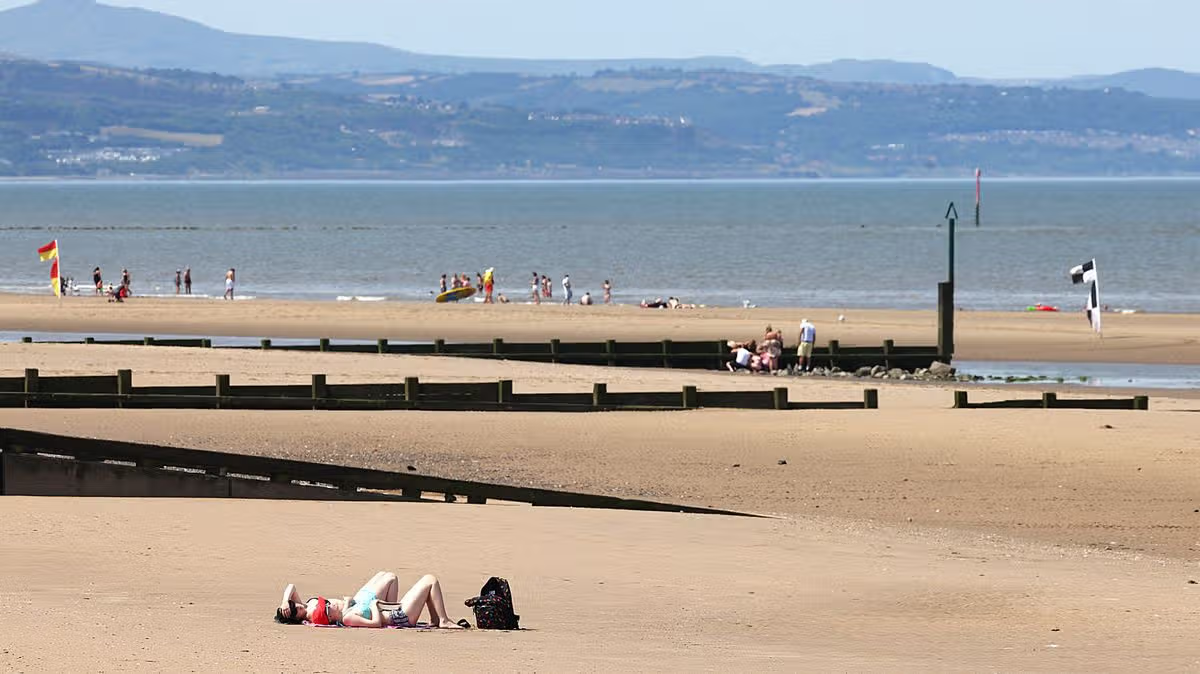
Often the best days at the seaside are the simplest ones. You don’t need an endless supply of attractions for a great day at the coast, sometimes the best memories are made when you gather the family up in the car, pack a picnic and head to the closest beach you can find.
For many in Greater Manchester North Wales is the first port of call if you’re planning a coastal day out. Rhyl is one of the first seaside towns you come across as you head west, but it’s often dismissed by visitors in favour of larger destinations like Llandudno or the scenic beaches of Anglesey.
Rhyl isn’t the fanciest of seaside resorts; you won’t find grand Victorian piers, an endless supply of chippies or rollercoasters and rides here. But you will find a large sandy beach, picturesque dunes and a smattering of attractions the whole family will love. It also happens to be easily reached from Greater Manchester, with a drive taking around 90 minutes, perfect for a day trip.
Click here for the latest on Manchester’s food & drink scene, gigs and more in our CityLife newsletter
Advertisement
In fact, the town has undergone a transformation in recent years. Major sea defence works have taken place while the promenade has been raised and widened. The SC2 water park reopened and the town’s Queen’s Market also opened to customers, featuring a range of independent food outlets, local traders and pop-up events.
An £11million revamp of the promenade road and town centre is also in the works, aimed at regenerating the town with funding secured from the Local Regeneration Fund, North Wales Live reports.
Advertisement
So it’s an exciting time for the coastal town. Developments aside, its impressive beach is one of the main attractions for visitors.
The main beach extends for almost two miles from the Clwyd Estuary to Splash Point so there’s plenty of room for everyone. It is tidal so keep your eyes on the tide times.
Backing the beach is a large promenade, offering the perfect place for a seaside stroll overlooking the water. Along the promenade you’ll find various cafes and attractions, including crazy golf, a small family funfair and arcades.
At the western end of the beach is SC2, an adventure play centre with an indoor waterpark, outdoor splash park and soft play areas. It’s ideal for families and kids will love to cool off in the water outside. Prices start from £11.50 for adults for one hour, and £9 for children aged three to fifteen. Children under three start from £4.95, while children under one from £1.95.
Advertisement
One of Rhyl’s oldest and most popular attractions is the miniature railway which first opened in May 1911. It holds the title of Britain’s oldest miniature railway and takes passengers on a mile-long journey around the Marine Lake. The station is home to a small museum with hands-on exhibits for younger kids.
Train fares are £4 per adult and £3 for children aged two to fourteen, while kids under two can travel free. Marine Lake is a popular spot for crabbing, so remember to bring a bucket with you.
If you cross the River Clwyd to Kinmel Bay you’ll come across Horton’s Nose Nature Reserve and the Kinmel Dunes Local Nature Reserve. Both areas offer a tranquil place for a stroll with gorgeous views out to sea.
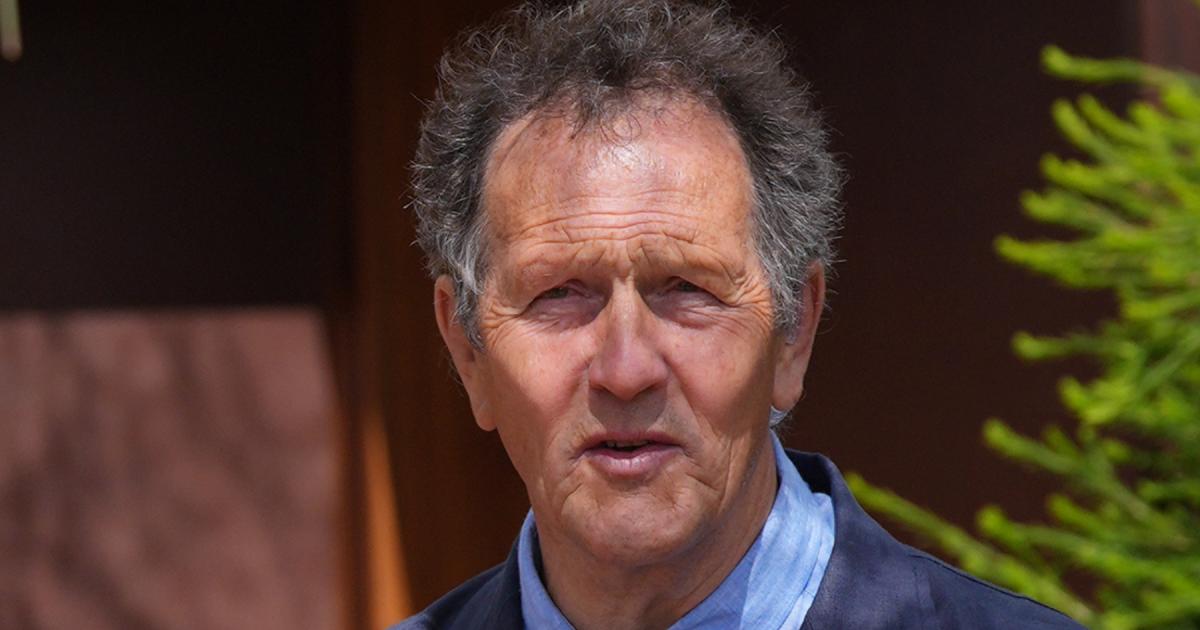
The horticulturist and broadcaster is known for his work on Gardeners’ World and has offered advice on countless gardening topics.
In a recent video posted on the Gardeners’ World Instagram account, he discussed a recent phenomenon people might have noticed in their gardens and allotments.
This relates to apple trees dropping their fruit far earlier than expected.
Advertisement
Monty Don has shared that this isn’t something to be worried about, as it’s related to the prolonged dry weather that the UK has experienced.
Monty Don explains why apples are falling off fruit tree branches
The 71-year-old explained that some apples falling from trees is in direct response to drought as it’s seeking to protect itself.
He said: “If you find your apple trees are dropping apples left, right and centre, don’t worry, it’s a result of the drought, but the tree is looking after itself.
“All these apples, which are covering the ground, are no windfalls that have dropped because they’re ripe.
“These are apples that are half ripe that the trees have jettisoned.
Advertisement
“The tree is running out of water.
“The fruit are taking up a huge amount of that water.
“In order to save some fruit they have dropped apples.
“Now, it might seem like a disaster, but actually it means that the tree is responding to drought and handling it.”
Gardeners relieved to hear explanation about falling apples
Many gardeners said they felt reassured by Monty Don’s explanation.
Advertisement
One person commented: “Thank you, I was so worring [sic], not only my apple trees, also the big pear tree, fifty of them every day on the ground.”
Another wrote: “Glad to know Monty, my apple tree that I usually get loads from dropped all their apples and I have one left.”
A third said simply: “How clever is the apple tree.”
However, not everyone agreed that the situation was harmless.
Advertisement
One person commented: “I disagree @gardenersworldtv it is a disaster we should worry.
“Our native trees in particular can’t bounce back from drought for ever.
“This is happening across the country.
“Where trees can be watered in our gardens (by hand) they can’t in the countryside so every crab apple and hawthorn just as an example are completely reliant on what falls from the sky.
Advertisement
“We should all be very concerned.”
Another added: “Well, it is a disaster because yields are hugely down, due to severe drought… our food security has been impacted by the extreme weather this year.
“Yes, the tree is responding to drought, but because it is very stressed.
“Trees may be lost, especially young, dwarf or potted trees are at risk of dying.”
Advertisement
Have you noticed apples falling off trees in recent weeks? Let us know in the comments.
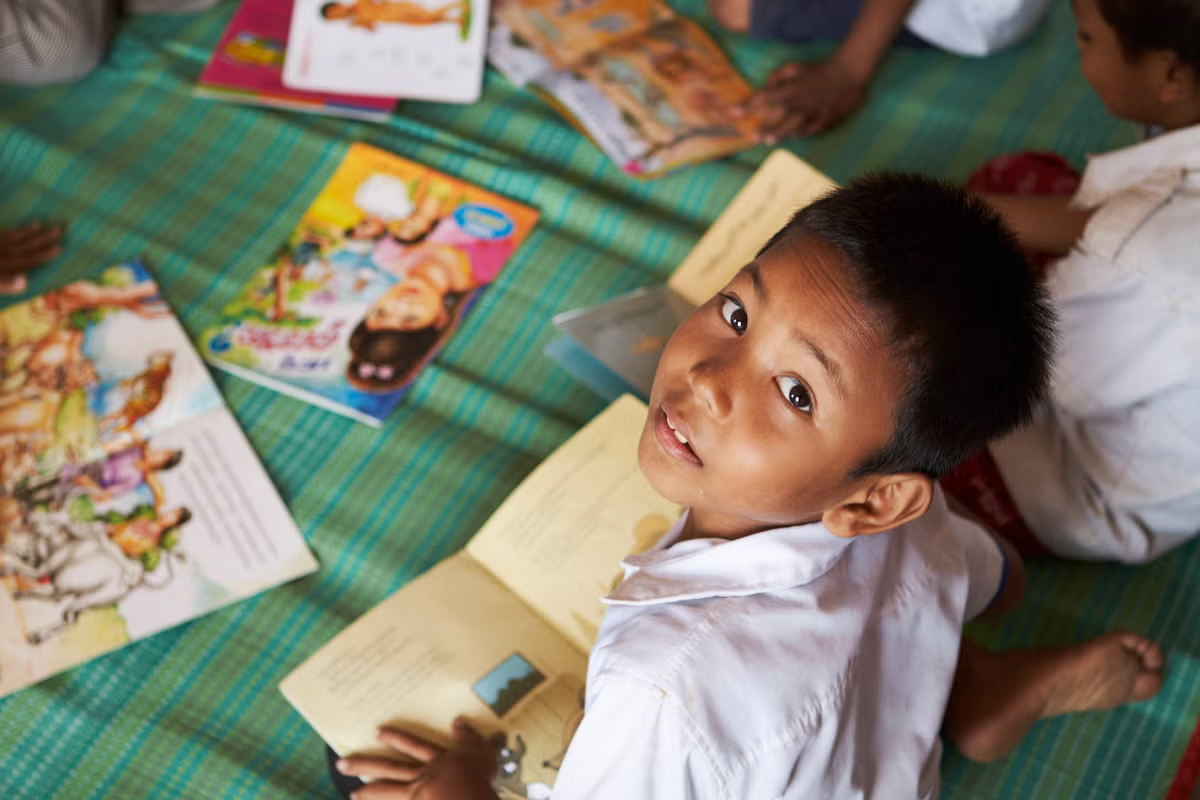
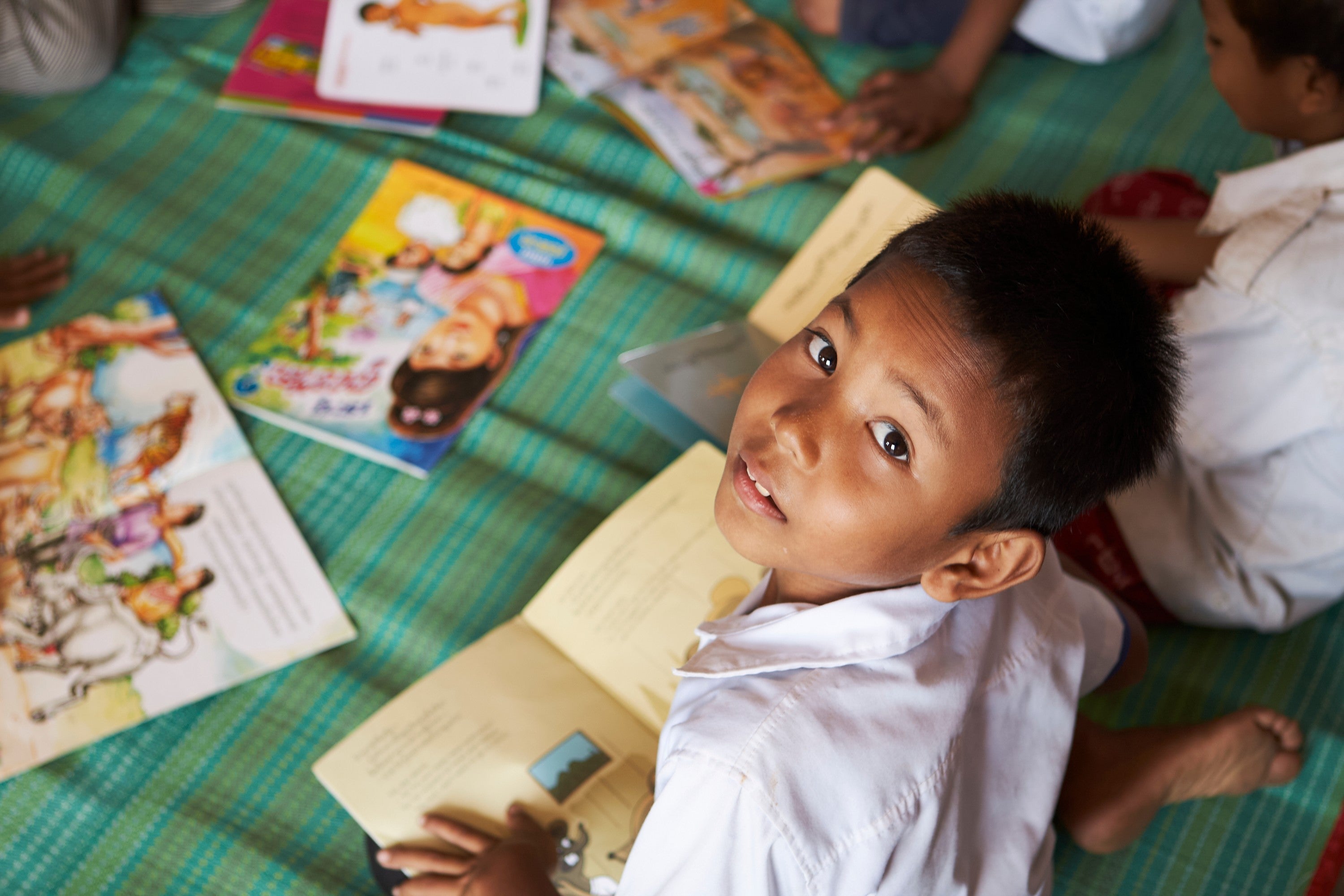
Sou Sreynich dreams of becoming a teacher. But she knows she’s far behind.
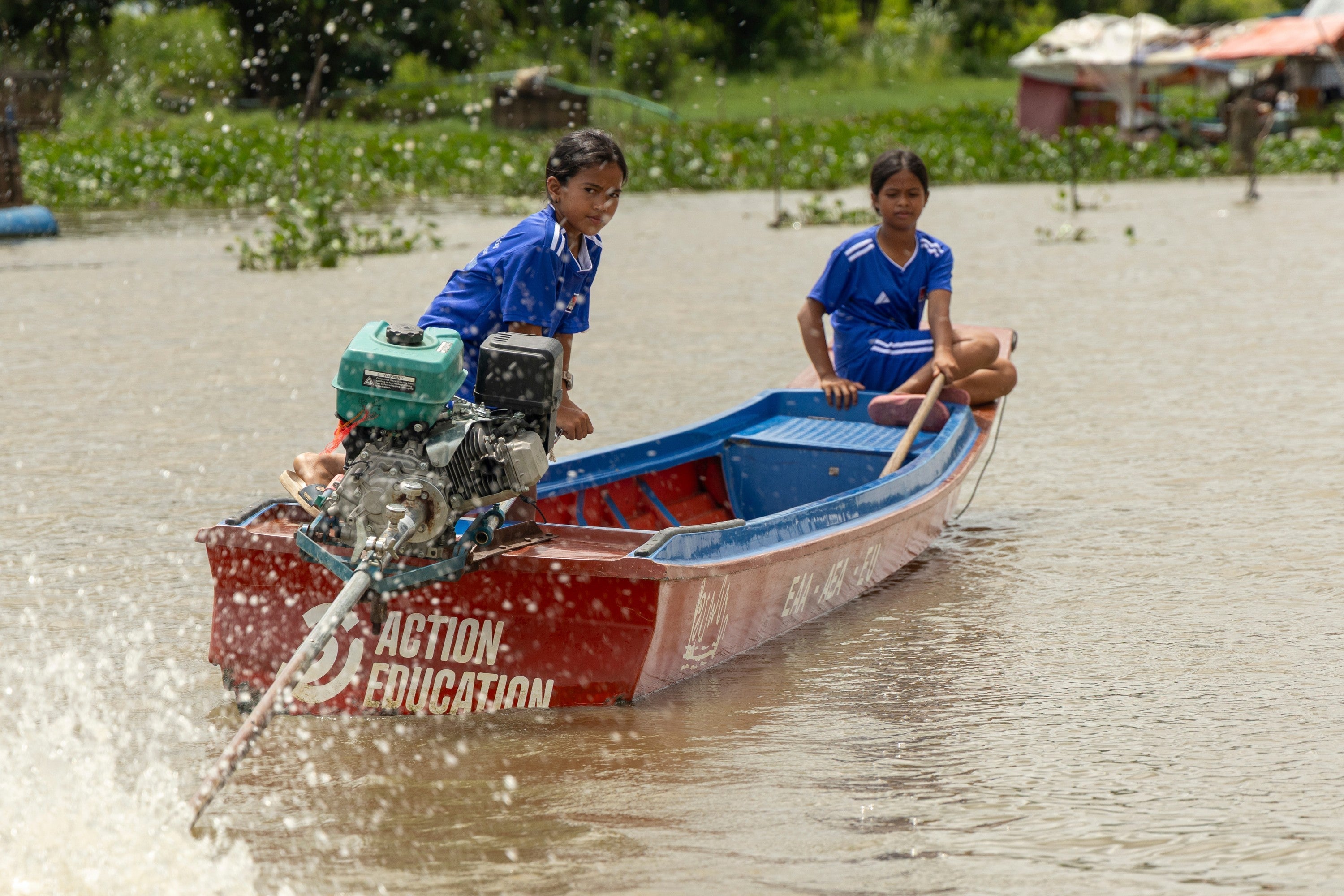
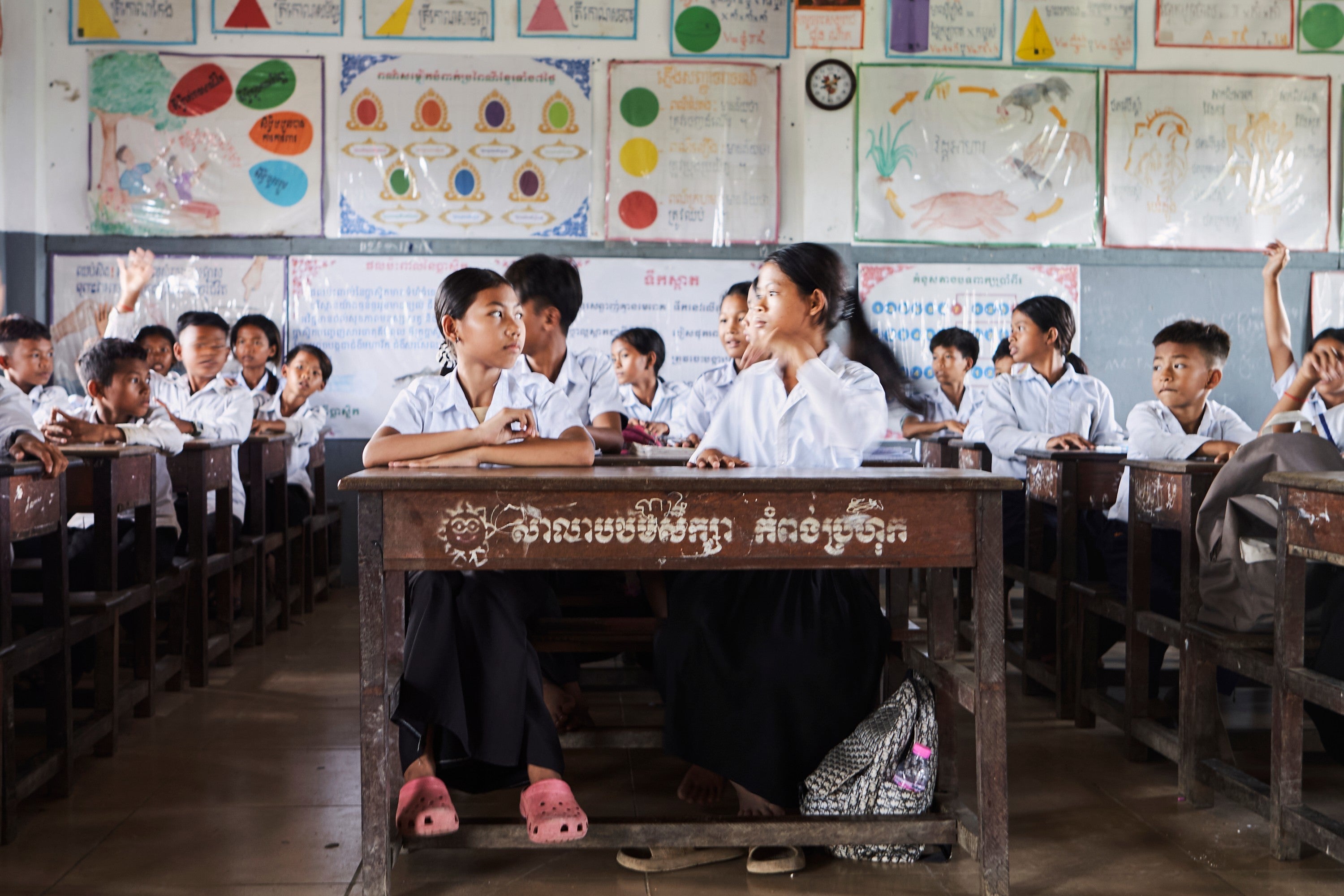
The 13-year-old first entered a classroom at 10, an age when most Cambodian children already have been in school for years. Her mother waited until she was old enough to swim, fearing the boat to school could capsize — a decision familiar to many parents on Cambodia’s Tonle Sap, the largest freshwater lake in Southeast Asia.
Now, the price of gasoline has spiked because of the Iran war, an additional burden. Unlike outright school closures during Covid-19, the Iran war’s impact on education is less visible.
But it is falling first and hardest on the poorest families. Soaring fuel prices are making it more expensive for children and teachers to get to school, and for governments to fund education as national budgets come under strain.
Advertisement
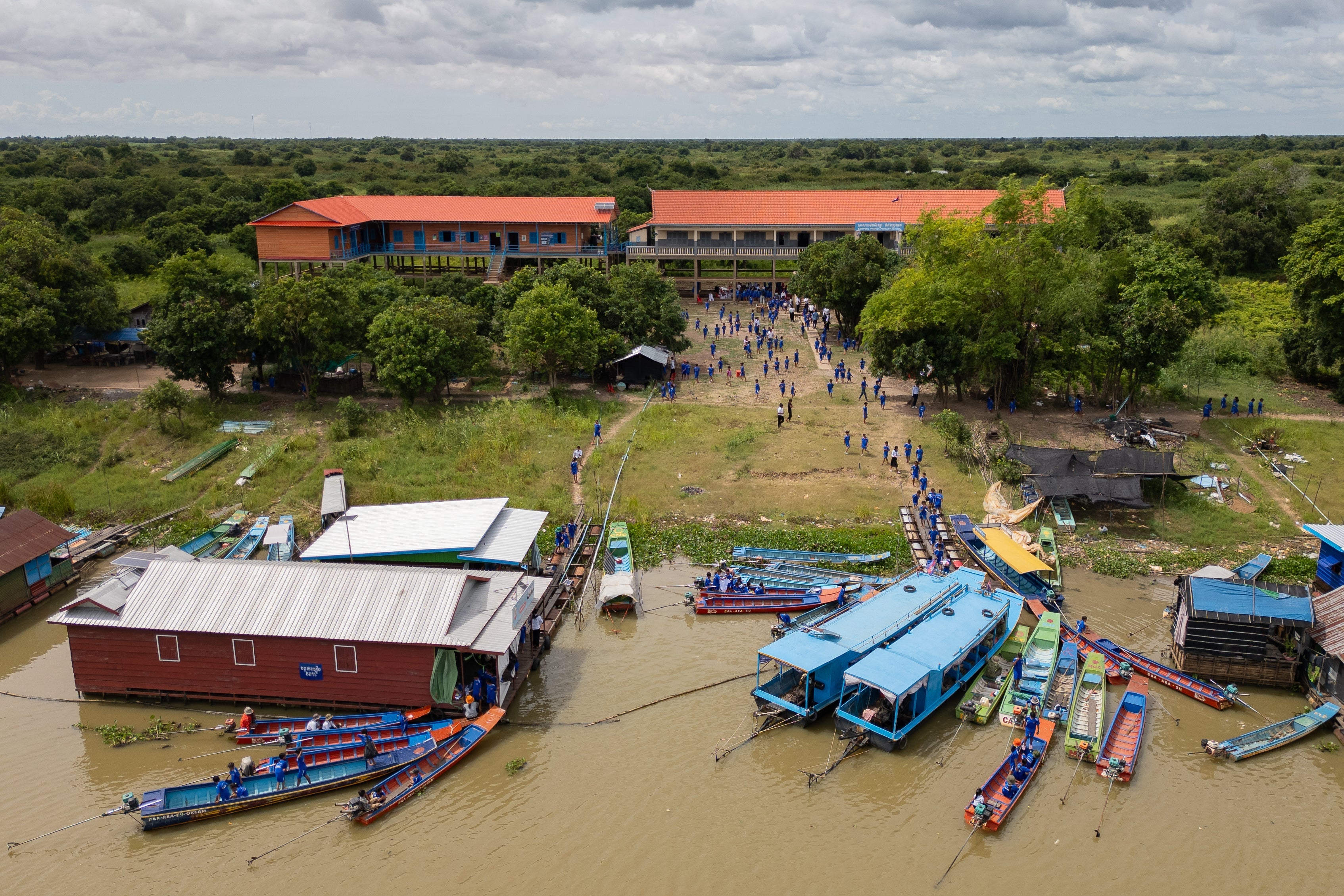
Students arrive at a school in a floating village on the Tonle Sap Lake, Cambodia (Copyright 2026 The Associated Press. All rights reserved.)
On the lake, getting anywhere has always meant navigating the water. Climate change is making it harder, with increasingly unpredictable floods and droughts. Teachers at her school say 10 students have drowned over the years.
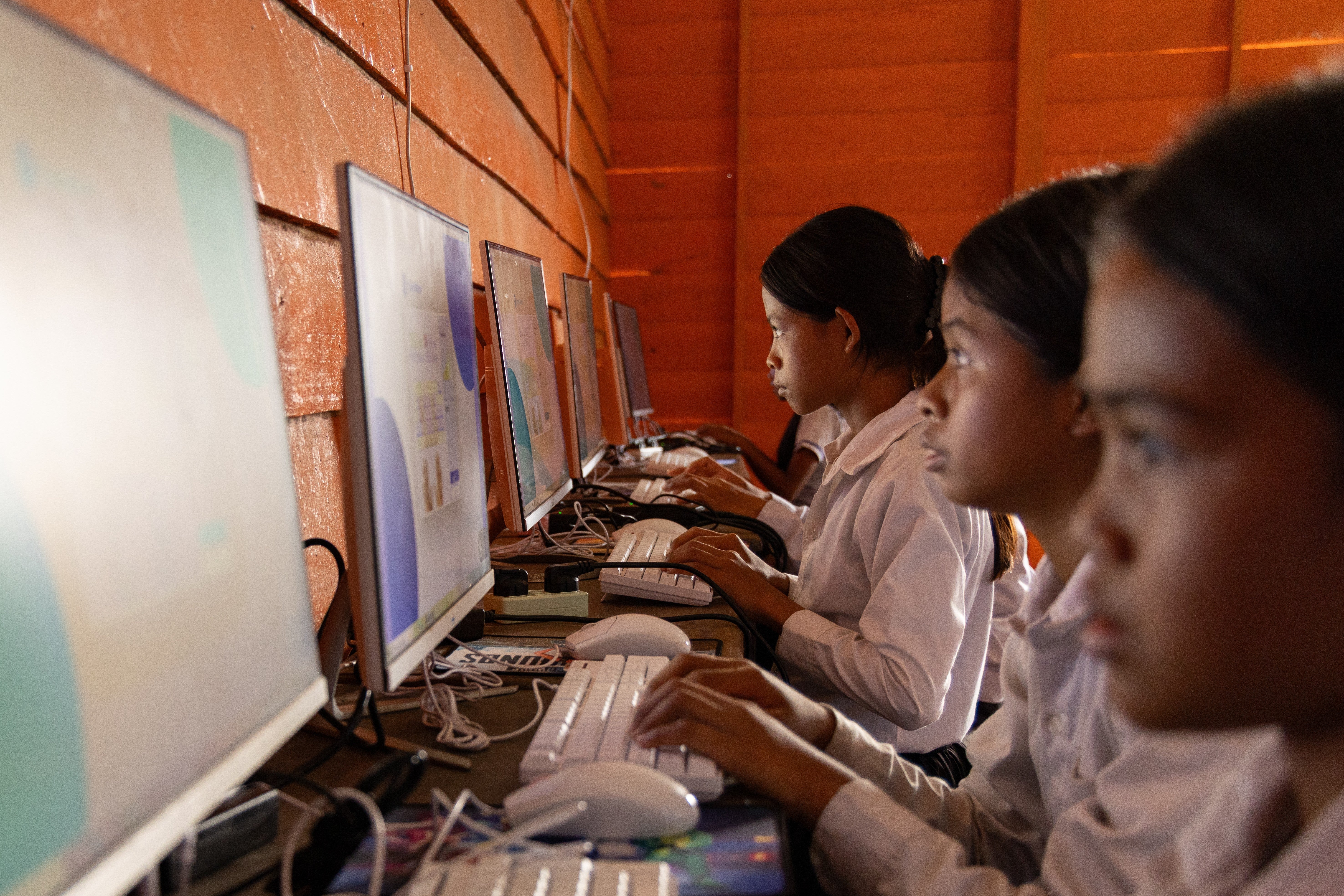
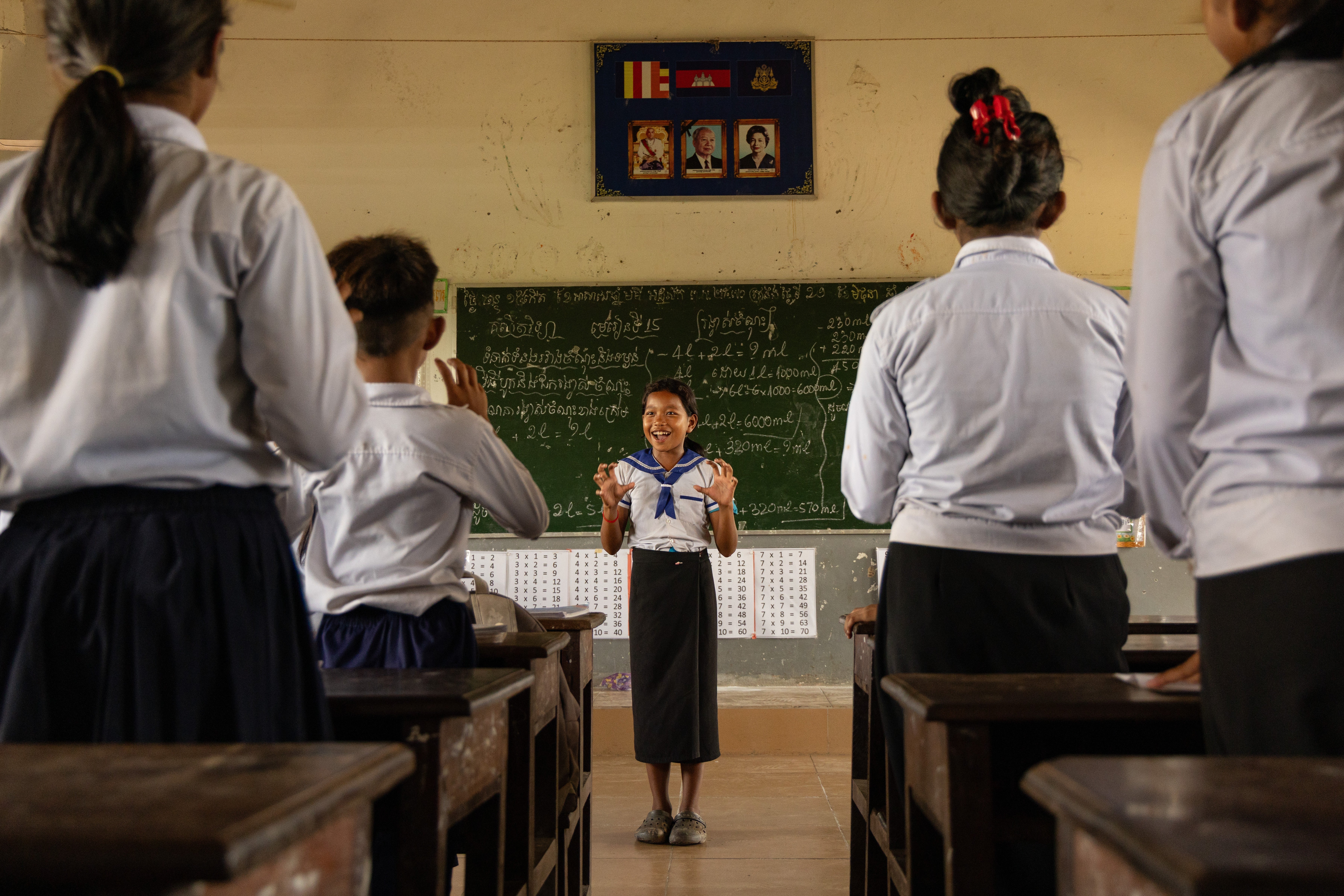
Students attend a computer class at a school in one of the floating villages of Cambodia’s Tonle Sap Lake on Monday, June 29, 2026 (Copyright 2026 The Associated Press. All rights reserved.)
If the war continues, it could push up to 23.4 million more children like Sreynich into poverty by the end of the year, according to a recent United Nations Children’s Fund report. About 80% of those children would be in Africa and Asia.
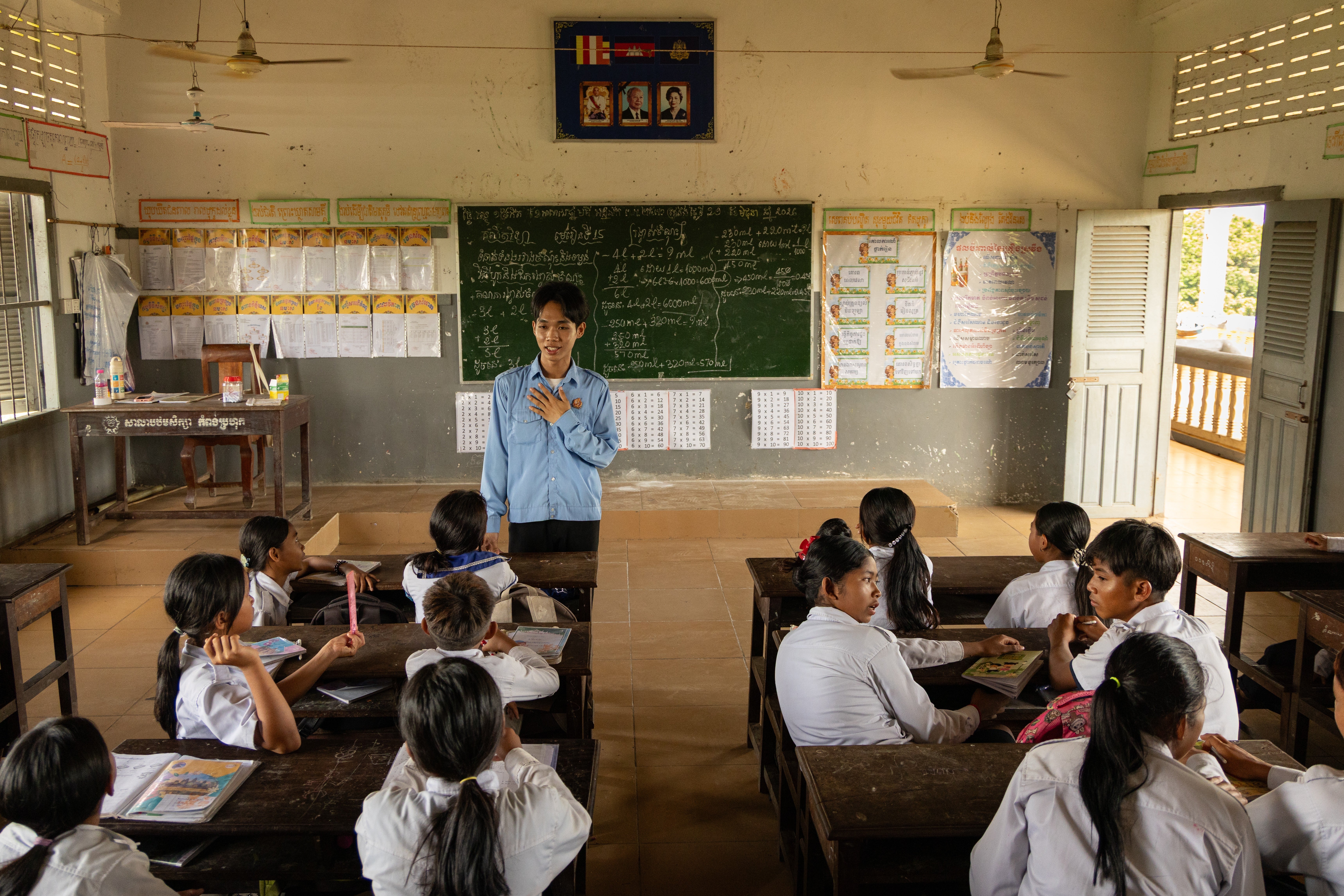
Most mornings, a gas-powered boat chugs through Kampong Prahok, steered by students often no older than those climbing aboard. They pull up alongside floating homes, as peers in crisp uniforms clamber aboard, careful to keep their backpacks dry.
(Copyright 2026 The Associated Press. All rights reserved.)
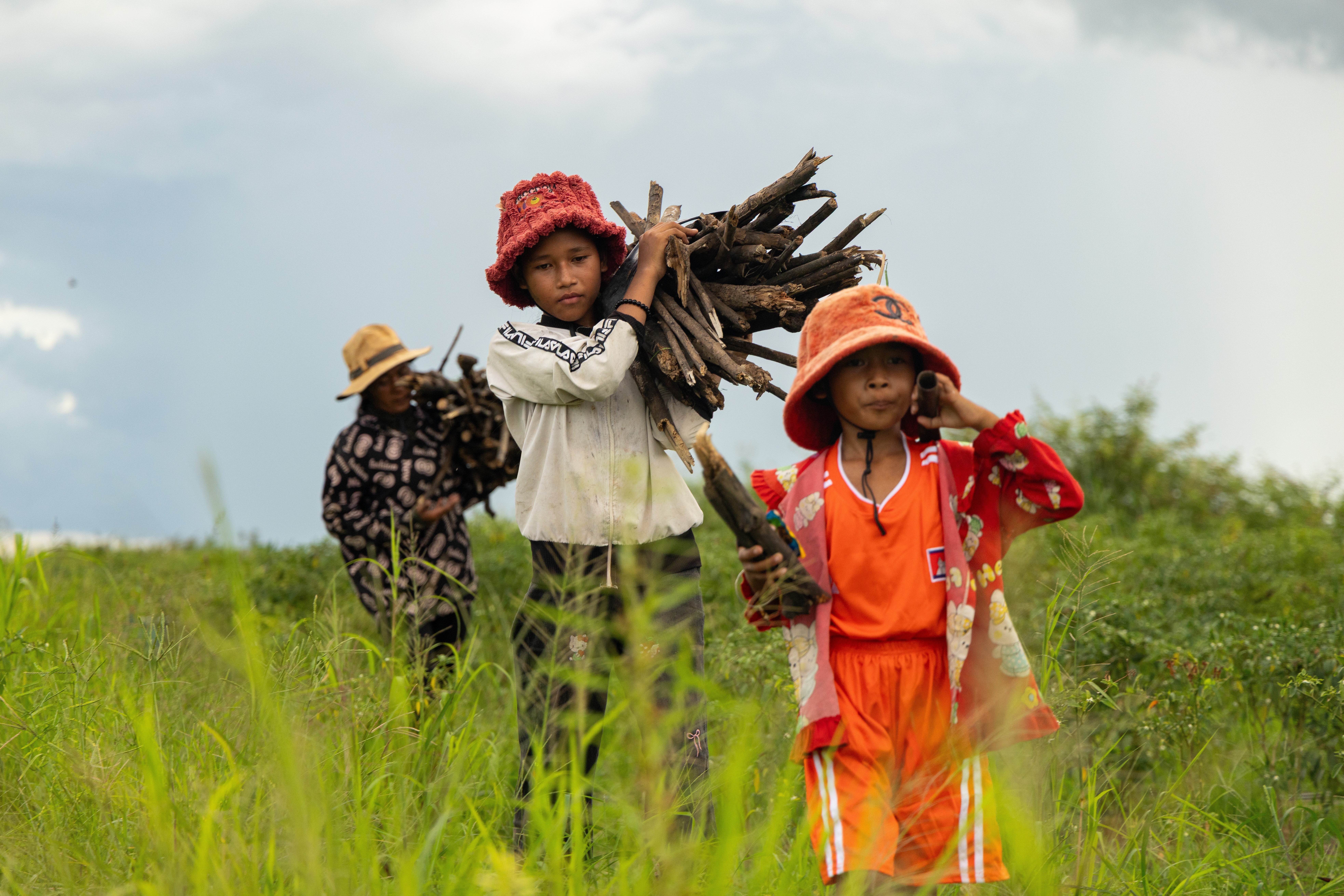
Like most on Tonle Sap, Sreynich’s family relies on fishing to survive. They earn some money picking chili peppers and gutting fish for others. Rising fuel prices because of the Iran war mean the family can’t afford to travel to deeper waters where fish are more plentiful.
When money is tight, Sreynich skips a day or two of school to work alongside her parents. She dreads every absence. “I want to complete my studies,” she said.
Vulnerable children most at risk
For families already living on the edge, the war’s ripple effects are forcing difficult choices: whether to pay for food, fuel, rent and electricity, or keep every child in school.
Advertisement
“The Iran war is likely going to force millions of children out of school and could force millions of children to make the decision not to enroll in the first place,” said Sabrina Hervey of the Qatar-based Education Above All Foundation.
Some children in Southeast Asia are dropping out of school to work.
(Copyright 2026 The Associated Press. All rights reserved.)
Ly, 16, and her sister Nhi, 13, two of nine children from a fishing family on Vietnam’s rocky northern coast, have long drifted in and out of school as the family struggled to make ends meet.
They are identified by their first names only because of Vietnamese laws protecting vulnerable minors.
Their father lost his fishing job after the war pushed diesel prices so high that boat owners could not afford to go out to sea. Already burdened by debt, the family was surviving on his odd jobs. It wasn’t enough to keep all nine children fed and in school.
Advertisement
The girls dropped out of school and moved to Vietnam’s capital Hanoi to work long hours in a restaurant, where they were exposed to sharp tools, hot surfaces and heavy lifting.
For 13-year-old Nhi it was also illegal because of child labor laws.
In April, the Hanoi-based nonprofit Blue Dragon Children’s Foundation intervened and the two returned to school.
The war’s impact has unfolded slowly but is devastating, said Michael Brosowski with the foundation.
Advertisement
(AFP/Getty)
When families reach a financial breaking point, they tend to go into triage — keeping some children enrolled while pulling others out to work, he said. The children not in school are far more vulnerable to exploitation, trafficking and homelessness.
“It’s the tipping point for a lot of families,” Brosowski said.
Higher fuel prices are driving up costs of nearly every part of education, from getting students and teachers to school to stocking classrooms with pencils and chalk. It’s more expensive for teachers and aid workers to reach remote communities. Governments are also grappling with rising food and energy bills, leaving less money for education.
(Copyright 2026 The Associated Press. All rights reserved.)
In Cambodia, everything already costs more on Tonle Sap since supplies have to be brought in by boat.
“Even the electricity to run this lab is 10-times higher,” said Samphors Vorn of the nonprofit Aide et Action, which supports the school.
Iran war disrupts education worldwide
Advertisement
Developing countries reliant on imported energy have been the most exposed to disruptions from the war. Rising fertilizer costs and falling remittances also are straining these smaller economies.
The war is threatening years of progress in education and poverty reduction in Bangladesh, whose economy already was under strain.
(Copyright 2026 The Associated Press. All rights reserved.)
Pressure on the government’s finances, driven by rising costs for fuel and subsidies, could leave it with less money to spend on health care and education, warned a report by the U.N. Development Programme.
In some South Asian nations, girls are likely to be affected more because families tend to prioritize sons, said Arshad Malik of the nonprofit Save the Children International. Economic hardships could mean more girls dropping out of school and an increase in child marriages, he said.
(Copyright 2026 The Associated Press. All rights reserved.)
South Asia accounts for 45% of the world’s child brides, the highest share of any region, according to UNICEF.
More than 466 million children worldwide receive at least one meal a day at school, according to the U.N. World Food Programme. These meals help keep children in school, improve their ability to learn and concentrate, and support healthy brain development.
Advertisement
(Copyright 2026 The Associated Press. All rights reserved.)
Such programs also could come under pressure as the conflict disrupts fertilizer shipments and raises transport costs, especially in countries in West and Central Africa that rely heavily on imported food, said Hervey, with Education Above All.
Across northern Nigeria, it is becoming more common for children to relapse into malnutrition, according to local health and aid workers.
“I’m really afraid to see what’s going to happen,” Hervey said.
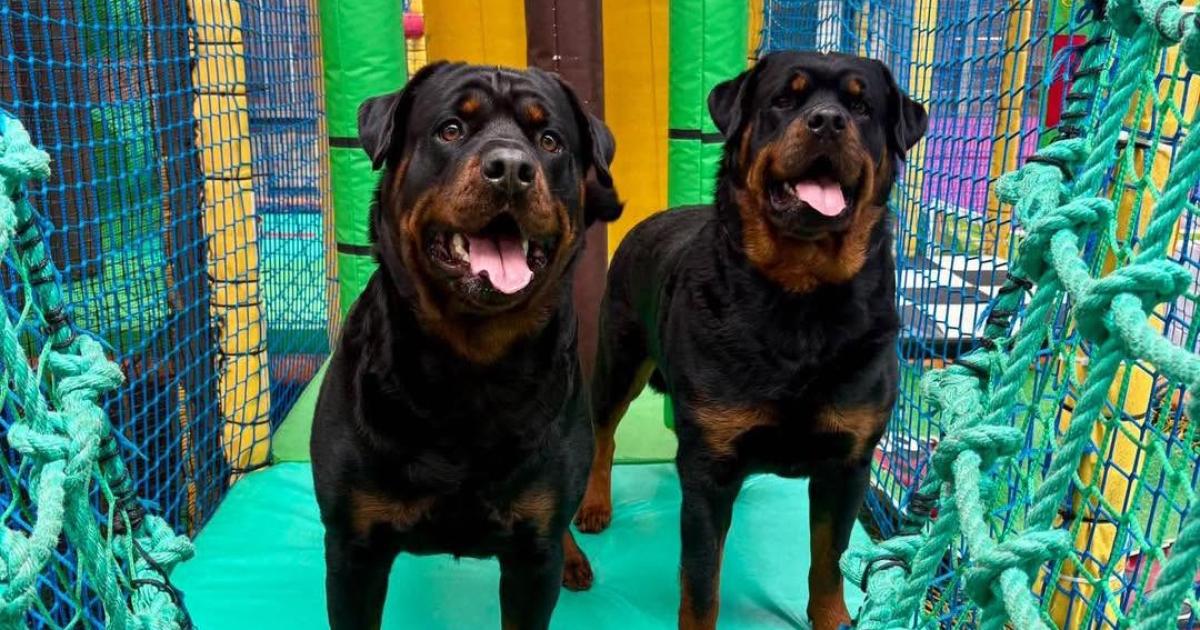
The Pawground, on Portrack Lane in Stockton, has become a hit with pet owners thanks to its obstacle-filled soft play packed with slides, nets, wobble bridges and climbing equipment created especially for canine visitors.
The venue combines an indoor soft play area with an outdoor playground, giving dogs plenty of opportunities to run, climb and explore in a secure environment.
Even more pet owners are jumping on the soft play train after TikTok influencer @newgirlintoon shared her experience with the Pawground last month.
Advertisement
Each 56-minute session gives owners exclusive use of the space, allowing dogs to play without interruptions from unfamiliar pets – making it perfect for those with dogs that aren’t too keen on socialising.
The soft play has proved so popular that bookings are snapped up months in advance, with facilities currently fully booked until February 2027.
Owners can bring up to three dogs as part of the standard £25 booking fee, with additional dogs welcome for extra – making it a popular option for friends looking to arrange playdates with their pets.
The fully enclosed play area means dogs can roam freely while owners relax, and every visit ends with a complimentary pup cup as a reward for all that exercise.
Advertisement
The Pawground, Stockton (Image: The Pawground)
In the heart of Stockton, the Pawground is one of several attractions getting attention from dog lovers across the North East that are eager to find new ways to keep their pets active and entertained.
The Pawground is open on weekends between 9.00am and 5.00pm, with online booking essential due to the high demand.
For owners looking to make a full day of it, dog-friendly restaurant Chadwick & Co, located inside Barker and Stonehouse at Teesside Park, is just a short drive away.
With its combination of private play sessions, colourful obstacles and secure surroundings, The Pawground has become one of the more unusual attractions for dog owners and their pets in the region.
From “pregnant” alien babies to renting from Xtra-Vision
19:23, 16 Aug 2026
Advertisement
The 1990s and 2000s have made something of a comeback in recent years, with fashion and music trends from each decade finding their way back into the spotlight. For many tweens and teens, this is the first time they’ve seen chokers, platform shoes and wide-leg jeans become fashionable. For older generations, it’s all a bit of déjà vu.
But no matter which bits of the era get recycled, there are some things today’s young people will simply never experience. For better or worse, they’ll never know a world without modern technology and the internet, whereas 90s and 00s kids watched phones evolve from wired landlines to touch-screen handhelds in the space of just ten years.
If you grew up around the turn of the century, you belong to a generation that’s seen the best and worst of both worlds. Here are a few things you might remember from growing up in millennium Northern Ireland.
Alien babies and the rumours that surrounded them
It’s hard to explain to anyone who wasn’t a kid in the 2000s just how much of a hold these smelly, gooey aul things that came in an egg had on us. But the rumours about how they could get pregnant/give birth, eat their babies, open their eyes or even die had us all wanting one for ourselves to see what they could really do.
The concept of a ‘family computer’
Those who were lucky enough to have a computer at home were not lucky enough to have it all to themselves, as it was always placed in a living space, accessible to all the family. Whenever you were allowed on it, time was of the essence – and there was always a chance your sibling would ruin whatever masterpiece you created on Microsoft Paint the next time they got their hands on the mouse.
Renting from Xtra-Vision
Long before the days of on-demand TV and streaming services, there was movie renting. Initially home to VHS tapes that may or may not have needed rewinding before you could watch the film, and later offering the far more convenient DVDs, Xtra-Vision was the place to go to sort out your weekend movie marathon.
Advertisement
Buying a lava lamp in Select
Few kids’ rooms were without a lava lamp in the late ‘90s/early ‘00s. Many kids who grew up in Northern Ireland got theirs from a dark wee shop called Select next to the Black Taxi rank on King Street.
Silicone wristbands
How this fad began, we’ll never know, but it became so widespread that there wasn’t a till to be seen without them. Even charities got in on the action.
Speed-weaving Scoubidous
Of all the fads to come and go throughout our childhood, “Scoubis” were possibly the most inescapable. These plastic strings came in all sorts of colours and glitters to be twisted into bracelets and keychains or other shapes.
Advertisement
Being gifted a Scoubi creation became the highest honour a primary school girl could receive from another. The elite weavers among us even took requests on occasion.
Visiting Dreamworld
This bad-boy was located where McDonald’s now sits on Boucher Road in Belfast and was very well-named as it was a haven for kids in the late ‘90s/early ‘00s. Remember the swinging Fredo ship or the iconic PlayStation area?
Cereal box ‘The Simpsons’ fridge magnets
ever did a child beg their mum not to buy the supermarket’s own brand cereal as much as the time Kellogg’s boxes included a collectible ‘the Simpsons’ fridge magnet. In every box, there’d be one magnet of one family member sitting on their signature couch – the goal was to collect all five to complete the scene.
Advertisement
Beyblade battles
Fidget spinners had nothing on the world’s coolest spinning top toy, Beyblade. 2000s kids can still remember the zzzzzzt! noise they made when launched into battle.
The spinning clown at Barry’s
Barry’s Amusements in Portrush has been revamped with a new name and new ownership. Yet nothing will erase from memory the nightmare fuel that was this bloody clown looping around on his trapeze.
The arrival of a four-legged friend offers the promise of companionship and joy, but it can also cause stress for pets already living in the home.
Without careful preparation, the introduction of a new dog can lead to anxiety, territorial behaviour, or even aggression between animals.
Adem Fehmi, Canine Behaviour Expert at Rover, has shared his top advice on safely introducing your dog to another pet at home.
Advertisement
How to safely introduce my dog to another pet at home
Why an individual animal’s temperament matters a lot
Adem explained that each dog’s reaction to a new companion depends on factors such as temperament, breed traits, past experiences, and training.
If the new dog has some behaviour challenges, this may need to be addressed beforehand, which may take time, patience and considerable effort.
He added: “Alongside the temperament of each pet, the life stage of the animal can also play a part in how introductions might naturally pan out without any owner or professional intervention.
“The age and developmental stage of both animals can significantly influence how introductions unfold.
“Adult cats may perceive very young puppies differently to mature dogs, and in some cases may display stalking or predatory behaviours towards smaller animals.
Advertisement
“Likewise, young kittens are often more likely to run when approached by a dog, which can trigger a dog’s natural chase instinct.
“Adult cats, on the other hand, are generally more confident and may be more inclined to stand their ground and use clear body language or a defensive swipe to establish boundaries.
“These differences highlight why introductions should always be carefully managed and tailored to the individual animals involved.”
How scent swapping and gradual introductions can be useful
Adem pointed out that behavioural issues around resources can also make introductions more complicated.
Advertisement
He said: “This could include food, toys, sleeping areas, and even people in the home.
“In dogs, these behaviours often present as aggressive reactions should the other pet come near them during these times.”
To ease the transition, Mr Fehmi recommends scent swapping and gradual introductions.
Advertisement
He said: “For any introductions to other dogs or pets, it is important that both individuals are as calm as possible.
“One way to do this is to scent swap, which you can achieve by swapping bedding such as blankets, or swapping the room that each was in.
“This is often a good first step to introducing the animals to each other in a controlled and positive manner.
“It can also allow an owner to assess the initial reactions of each pet and form a positive and controlled plan for moving forwards.”
Advertisement
Create a safe space during the transition
Creating safe and familiar spaces is also important.
Adem said: “If your dog is not used to a safe space, such as a crate, pen, or even designated room, it is always best to introduce and build this in positively prior to the introduction to any other pets.
“This can avoid any added stress being placed on your dog.
“Make spaces familiar and comfortable and start your safe space training slowly – stay close initially and build up over time, working at your dog’s individual pace.
“Tools such as leads and stairgates can also be hugely beneficial, especially in the early stages.”
Advertisement
He also warned that dogs with separation anxiety may need extra support before a new pet is introduced.
Recommended reading:
Adem said: “If your dog suffers from separation anxiety it is best to seek the advice of an experienced and accredited behaviourist to help you to overcome this issue prior to any other pets coming into your home, as otherwise keeping introductions safe and controlled can be much harder overall, and more stressful for all involved.
“It is important to ensure that the needs of all animals are fully met at all times, that all are allowed to exhibit natural behaviours, and any stress is kept to a minimum through careful planning and building positive experiences between each individual.
Advertisement
“The process can take time and patience is key.”
Have you had to introduce a new dog to an existing pet at home before? Let us know in the comments.
Greater Manchester Police said emergency services responded to an incident at a property on Reservoir Street in Salford over the course of two days.
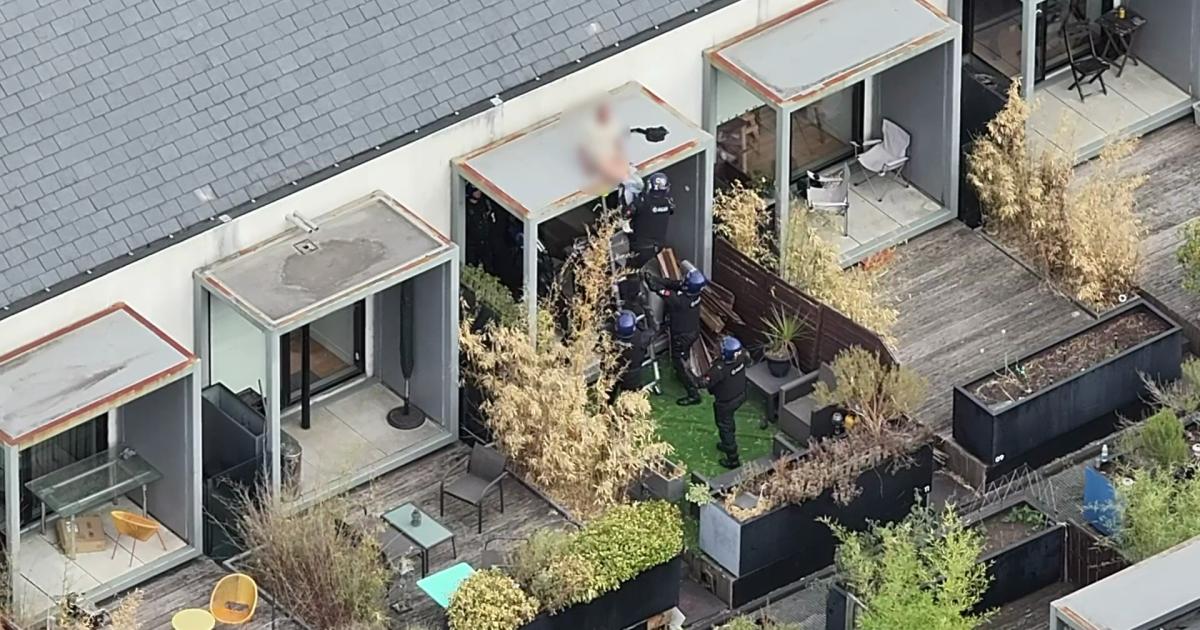
Footage, released by the force, shows its Tactical Aid Unit officers gently resting a ladder against the roof of a back porch, with an officer then grabbing the man while he was sleeping.
A struggle then ensues and the man is pulled down the ladder, with his trousers appearing to fall down, before being arrested by officers in the garden of the property.
Advertisement
Two police officers suffered minor injuries during the incident.
Greater Manchester Police said the arrest attempt was tasked by another force for the man who was wanted on recall to prison for other matters.
The force said a 37-year-old man was arrested on suspicion of causing public nuisance, criminal damage, public order offences, burglary and assaulting two police officers.
He remains in police custody.
Advertisement
Detective Chief Inspector Helen Bagnall, of Salford district, said: “During two days of disruption to the local community, we worked continuously with our partners to bring this matter to a safe conclusion.
“This was an extensive use of vital policing resources and clearly demonstrates the dangers our officers face on a daily basis in order to protect the people of Greater Manchester.
“Two of our officers suffered minor injuries during this incident.
“I would like to reiterate my thanks to the people of Salford for their patience and understanding whilst emergency service personnel dealt with this incident.
Advertisement
“Some properties have been damaged as a result of this man’s actions. We will work with partners to ensure affected residents will be supported going forward.”










































You must be logged in to post a comment Login