Connect with us

Tech

Is AI signalling the end of ‘learning on the job’ for young people?

Published

on

Dr Vivek Soundararajan of the University of Bath discusses how learning and training is changing for future employees in the wake of AI advancement.

For a long time, the deal for a wide range of careers has been simple enough. Entry-level workers carried out routine tasks in return for mentorship, skill development and a clear path towards expertise.

The arrangement meant that employers had affordable labour, while employees received training and a clear career path. Both sides benefitted.

But now that bargain is breaking down. AI is automating the grunt work – the repetitive, boring but essential tasks that juniors used to do and learn from.

Advertisement

And the consequences are hitting both ends of the workforce. Young workers cannot get a foothold. Older workers are watching the talent pipeline run dry.

For example, one study suggests that between late 2022 and July 2025, entry-level employment in the US in AI-exposed fields like software development and customer service declined by roughly 20pc. Employment for older workers in the same sectors grew.

And that pattern makes sense. AI currently excels at administrative tasks – things like data entry or filing. But it struggles with nuance, judgement and plenty of other skills which are hard to codify.

So experience and the accumulation of those skills become a buffer against AI displacement. Yet if entry-level workers never get the chance to build that experience, the buffer never forms.

Advertisement

This matters for organisations too. Researchers using a huge amount of data about work in the US described the way that professional skills develop over time, by likening career paths to the structure of a tree.

General skills (communication, critical thinking, problem-solving) form the trunk, and then specialised skills branch out from there.

Their key finding was that wage premiums for specialised skills depend almost entirely on having those strong general foundational skills underneath. Communication and critical thinking capabilities are not optional extras – they are what make advanced skills valuable.

The researchers also found that workers who lack access to foundational skills can become trapped in career paths with limited upward mobility: what they call “skill entrapment”. This structure has become more pronounced over the past two decades, creating what the researchers described as “barriers to upward job mobility”.

Advertisement

But if AI is eliminating the entry-level positions where those foundations were built, who develops the next generation of experts? If AI can do the junior work better than the actual juniors, senior workers may stop delegating altogether.

Researchers call this a “training deficit. The junior never learns, and the pipeline breaks down.

Uneven disruption

But the disruption will not hit everyone equally. It has been claimed, for example, that women face nearly three times the risk of their jobs being replaced with AI compared to men.

This is because women are generally more likely to be in clerical and administrative roles, which are among the most exposed to AI-driven transformation. And if AI closes off traditional routes into skilled work, the effects are unlikely to be evenly distributed.

Advertisement

So what can be done? Well, just because the old pathway deal between junior and senior human workers is broken, does not mean that a new one cannot be built.

Young workers now need to learn what AI cannot replace in terms of knowledge, judgement and relationships. They need to seek (and be provided with) roles which involve human interaction, rather than just screen-based tasks. And if traditional entry-level jobs are disappearing, they need to look for structured programmes that still offer genuine skill development.

Older workers meanwhile, can learn a lot from younger workers about AI and technology. The idea of mentorship can be flipped, with juniors teaching about new tools, while seniors provide guidance and teaching on nuance and judgement.

And employers need to resist the urge to cut out junior staff. They should keep delegating to those staff – even when AI can do the job more quickly. Entry level roles can be redesigned rather than eliminated. For ultimately, if juniors are not getting trained, there will be no one to hand over to.

Advertisement

Protecting the pipeline of skilled and valuable employees is in everyone’s interest. Yes, some forms of expertise will matter less in the age of AI, which is disorienting for people who may have invested years in developing them.

But expertise is not necessarily about storing information. It is also about refined judgement being applied to complex situations. And that remains valuable.

The Conversation
By Dr Vivek Soundararajan

Dr Vivek Soundararajan is a professor of work and equality at the University of Bath. He conducts research on the governance of labour rights in supply chains, inequalities in and around organisations and the future of work. He leads a research initiative called Embed-Dignity and acts as a deputy director of the Centre for Business, Organisations and Society (CBOS) at the University of Bath.

Don’t miss out on the knowledge you need to succeed. Sign up for the Daily Brief, Silicon Republic’s digest of need-to-know sci-tech news.


Advertisement

Source link

Continue Reading
Click to comment

Leave a Reply

Your email address will not be published. Required fields are marked *

Tech

Europe’s love for pets fuels Swedish insurtech Lassie as it raises $75m Series C

Published

on

Sweden’s Lassie, the ‘prevention-first’ pet insurer, has raised $75m in Series C funding to support its mission to become a leader in Europe’s pet care and insurance market.

It is one of the largest insurtech funding rounds in Europe in recent years and includes participation from Balderton Capital, Felix Capital, Inventure, Passion Capital and Stena Sessan.

The Lassie model works on the premise that insurance should be combined with proactive pet care to keep animals healthy and happy for longer. Its localised insurance products are delivered through a daily-use app that “educates, motivates and rewards pet parents for preventive care, using AI to remove friction from every part of the experience”.

“Pet parents don’t just want reimbursements – they want help keeping their pets healthy,” said Hedda Båverud Olsson, CEO and co-founder of Lassie, which currently operates in Sweden, Germany and France, insuring more than 250,000 pets.

Advertisement

“This round enables us to accelerate our growth and expand our prevention-first offering to even more pet parents. We’ve shown we can build outstanding insurance products and then scale them market by market. The key is deep localisation paired with a unique pricing model that combines real-time data with a preventive approach, and we’re excited to repeat this across more European markets.”

“Balderton are excited to invest again in Lassie as they create the leading pet care ecosystem across Europe,” said Rob Moffat, partner at Balderton.

“Lassie’s best-in-class user engagement enables them to expand from insurance into preventive care and, over time, all aspects of looking after your pet. Their world-leading use of AI automation has allowed them to scale successfully across Germany, Sweden and France with a very lean team.”

Powered by agentic AI, Lassie said its platform now processes 60pc of claims in Germany end to end in around six minutes. Customers simply upload a photo of their vet bill and receive near-instant payouts for straightforward treatments. Founders Olsson, Sophie Wilkinson and Johan Jönsson bring together a background in insurance and engineering-led automation. Now the start-up is planning to expand into other European countries.

Advertisement

The start-up is also focusing on building partnerships and already has collaborations with Lidl, offering pet insurance through its Lidl Plus rewards programme, and Tractive, enabling activity-based rewards and discounts through GPS pet tracking.

Don’t miss out on the knowledge you need to succeed. Sign up for the Daily Brief, Silicon Republic’s digest of need-to-know sci-tech news.

Source link

Advertisement
Continue Reading

Tech

What The FDA’s 2026 Wellness Device Update Means For Wearables

Published

on

Privacy as the Ultimate Moat in Crypto

With more and more sensors being crammed into the consumer devices that many of us wear every day, the question of where medical devices begin and end, and how they should be regulated become ever more pertinent. When a ‘watch’ no longer just shows the time, but can keep track of a dozen vital measurements, and the line between ‘earbud’ and ‘hearing aid’ is a rather fuzzy one, this necessitates that institutions like the US FDA update their medical device rules, as was done recently in its 2026 update.

This determines how exactly these devices are regulated, and in how far their data can be used for medical purposes. An important clarification made in the 2026 update is the distinction between ‘medical information’ and ‘signals/patterns’. Meaning that while a non-calibrated fitness tracker or smart watch does not provide medically valid information, it can be used to detect patterns and events that warrant a closer look, such as indications of arrhythmia or low blood oxygen saturation.

As detailed in the IEEE Spectrum article, these consumer devices are thus  ‘general wellness’ devices, and should be marketed as such, without embellished claims. Least of all should they be sold as devices that can provide medical information.

Another major aspect with these general wellness devices is what happens to the data that they generate. While not medical information, it does provide health information about a person that e.g. a marketing company would kill for to obtain. This privacy issue is unresolved in the US market, while other countries prescribe strict requirements about such data handling.

Advertisement

Effectively, this leaves the designers of wearables relatively free to do whatever they want, as long as they do not claim that the medical data being produced from any sensors is medical information. How this data is being handled is strictly regulated in most markets, except for the US, which is quite worrying and something you should definitely be aware of.

As for other medical device purposes like hearing aids, the earbuds capable of this fortunately do not generally collect information. They do need to have local regulatory approval to enable the feature, however, even if you can bypass any geofencing with some creative hacking.

Source link

Advertisement
Continue Reading

Tech

There’s a dedicated channel for Formula 1 in the Apple TV app now

Published

on

Apple continues to double down on its Formula 1 programming, following up on the box office success of its blockbuster movie by adding a dedicated channel for the racing league to the Apple TV app. This section of the streaming service hints at some of what may be coming when the F1 season begins with the kickoff event in Australia next month. The F1 channel has placeholders for practices, qualifying and the grand prix as well as a weekend warm-up show.

Although it announced the five-year deal to host F1 broadcasts in the US back in October, we still haven’t heard many specifics on how Apple’s presentation of the race events will work. The channel has a section labeled “Event Schedule: Sky Sports,” which suggests that Apple will show the commentary from Sky rather than providing its own hosts; ESPN took that approach during its tenure with the F1 broadcast rights. In addition to the forward-looking streams, Apple TV also has some videos with highlights from the 2025 season and a recap of the rule changes for 2026.

If you’re looking to follow Formula 1 in the 2026 season, some races will be available to watch for free. However, a F1 TV Premium streaming package is now part of an Apple TV subscription, so that’s likely to be the preferred ticket for serious fans. F1TV grants access to all the zooming around you could want as well as to behind-the-scenes content like driver cams and live team radios.

Source link

Advertisement
Continue Reading

Tech

ByteDance commits to change after legal threat from Disney

Published

on

‘ByteDance’s virtual smash-and-grab of Disney’s IP is wilful, pervasive and totally unacceptable,’ Disney’s cease and desist letter read.

TikTok’s Chinese parent ByteDance has promised to “strengthen current safeguards” against intellectual property theft after Disney threatened legal action over videos generated by the company’s latest AI video generator Seedance 2.0.

In a cease and desist letter, Disney claimed that Seedance 2.0 has a “pirated library” of Disney assets from its biggest franchises. The company accused ByteDance of using its proprietary content assets as if they were in the public domain.

“ByteDance’s virtual smash-and-grab of Disney’s IP is wilful, pervasive and totally unacceptable,” the letter read. “We believe this is just the tip of the iceberg – which is shocking considering Seedance has only been available for a few days.” The document was first seen and reported on by Axios.

Advertisement

Seedance 2.0 garnered immediate praise following its launch earlier this month. Swiss-based consultancy CTOL called it the “most advanced AI video generation model available”, placing it above OpenAI’s Sora 2 and Google’s Veo 3.1 in practical testing. The successful launched sparked growth in the Shanghai Shenzhen CSI 300 Index.

Responding to Disney’s criticism, ByteDance told media publications that it “respects intellectual property rights”.

It added: “We are taking steps to strengthen current safeguards as we work to prevent the unauthorised use of intellectual property and likeness by users.” The company, however, did not specify details of the safeguards it plans to implement.

Others were quick to share their displeasure as well. The Motion Picture Association (MPA), which represents major US studios including Warner Bros Discovery and Paramount, demanded that Seedance 2.0 “immediately cease its infringing activity”.

Advertisement

“By launching a service that operates without meaningful safeguards against infringement, ByteDance is disregarding well-established copyright law”, the MPA said in a strongly worded statement.

Meanwhile, US actors’ union SAG-AFTRA said that Seedance 2.0 has infringed on its members’ voices and likenesses. “Seedance 2.0 disregards law, ethics, industry standards and basic principles of consent,” it added.

The Japanese government launched an investigation into ByteDance over the weekend over potential copyright law violations after users generated videos of the country’s prime minister Sanae Takaichi, and characters from popular anime and manga series ‘Detective Conan’ and ‘Ultraman’, without consent.

Disney is known to be protective of its intellectual property that spans many successful franchises created over decades. The company sent a similar cease and desist letter to Google last December, alleging that the tech giant infringed on its copyrights. The move prompted Google to restrict Gemini and AI image creator Nano Banana from generating Disney-copyrighted content.

Advertisement

Disney’s attempt to stop Google came around the time the company announced a licensing deal with OpenAI’s Sora and ChatGPT – after initially opting out from allowing the company to use its content.

The three-year licensing deal would see users gaining access to more than 200 copyrighted characters, plus  costumes, props, vehicles and environments, but no talent likenesses or voices.

Last June, Disney and Universal sued Midjourney, accusing the AI company of being the “quintessential copyright free-rider and a bottomless pit of plagiarism”. The case is ongoing.

Don’t miss out on the knowledge you need to succeed. Sign up for the Daily Brief, Silicon Republic’s digest of need-to-know sci-tech news.

Advertisement

Source link

Continue Reading

Tech

Samsung Ad Confirms Rumors of a Useful S26 ‘Privacy Display’

Published

on

Samsung has all but confirmed that its upcoming Galaxy S26 will feature a built-in privacy display, releasing an ad that demonstrates a “Zero-peeking privacy” toggle capable of blacking out on-screen content for anyone peering over the user’s shoulder.

The underlying technology is reportedly Samsung Display’s Flex Magic Pixel OLED panel, first shown at MWC 2024, which adjusts viewing angles on a pixel-by-pixel basis — and leaker Ice Universe has shared a video of the feature selectively hiding content in banking and messaging apps using AI. Samsung’s Unpacked event is scheduled for February 25th.

Source link

Continue Reading

Tech

Twelve South Valet review: A bespoke catchall MagSafe charger that could be faster

Published

on

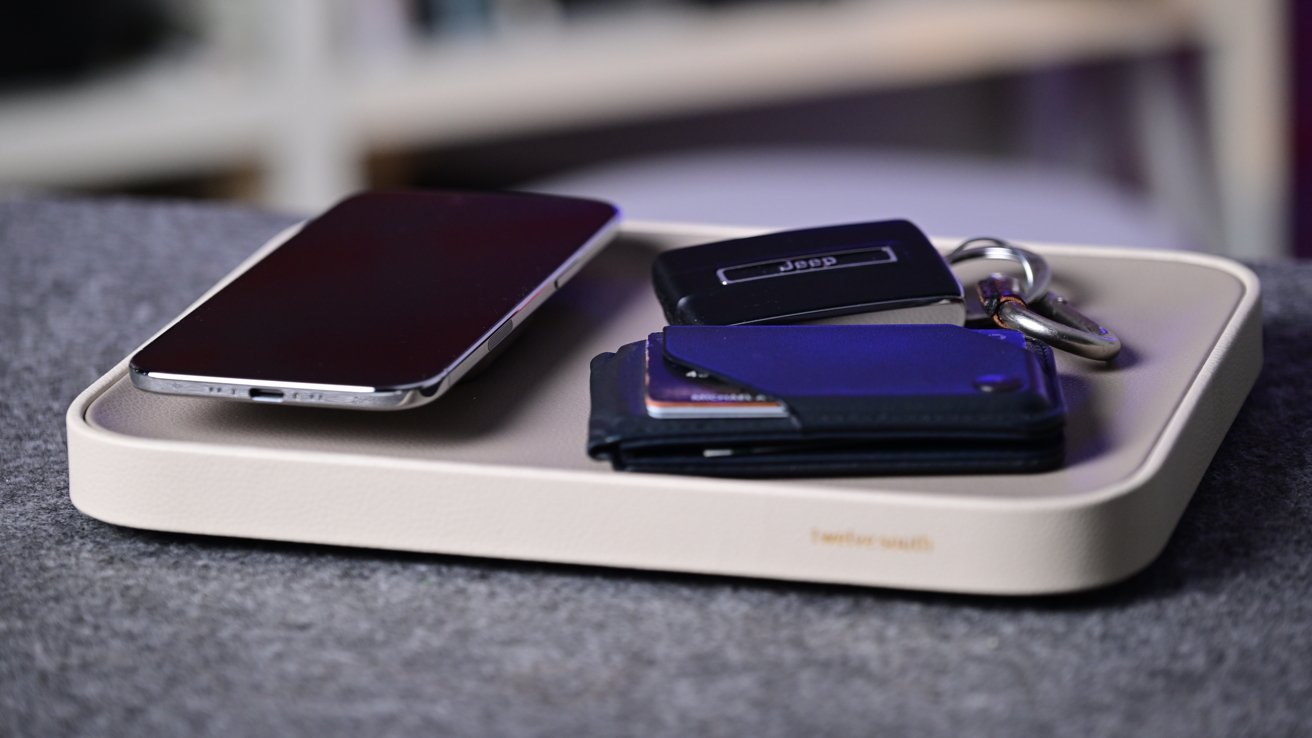
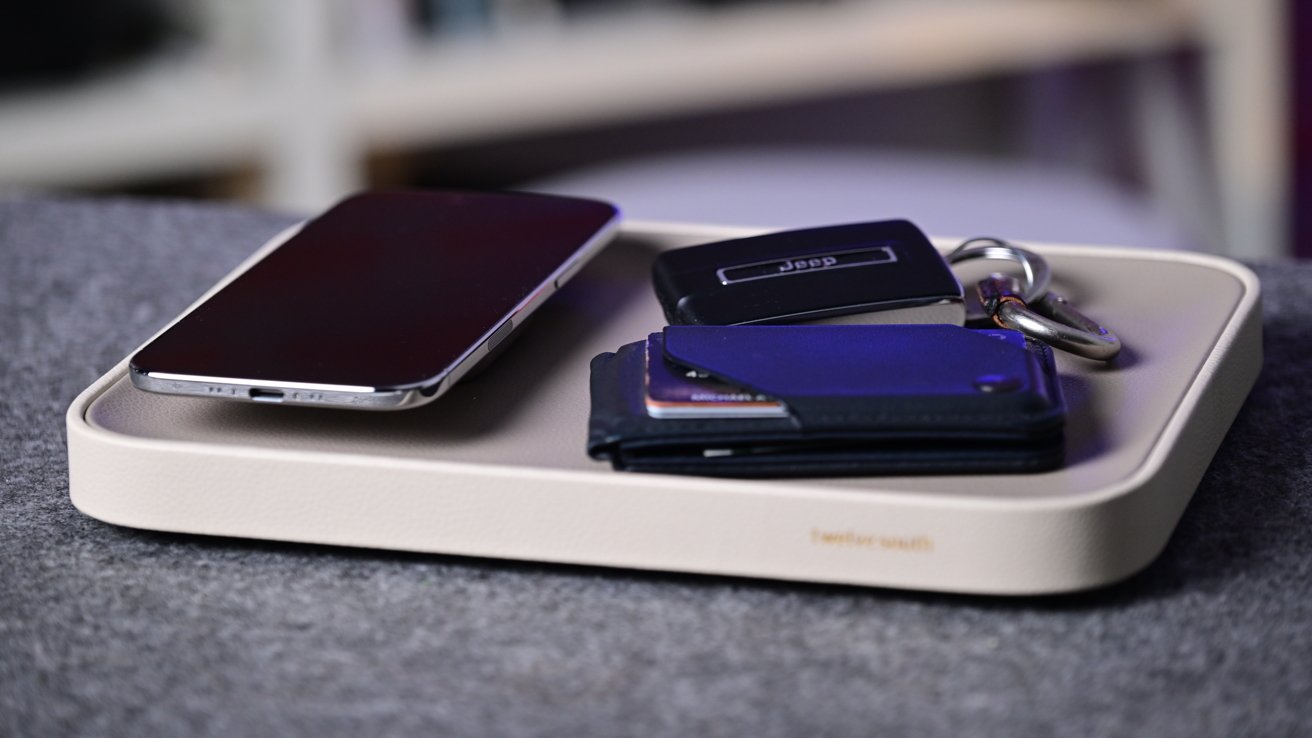
Twelve South’s latest accessory is a bespoke, leather-laden valet that will charge your iPhone with an elevated MagSafe-compatible perch and is impressively customizable.

Rectangular tray on a gray surface holding a smartphone, a set of keys with fobs, and a small blue wallet, suggesting an organized spot for everyday carry items
Twelve South Valet review: A sleek leather catchall with MagSafe charging

Like it or not, chargers are a necessary evil in our lives. Realistically, they will likely remain so for the foreseeable future.

When examining the available models on the market, which are numerous, several factors must be considered, including design and performance. Twelve South has mostly focused on the former with its new wireless charger.
Continue Reading on AppleInsider | Discuss on our Forums

Source link

Continue Reading

Tech

NASA confirms target date for crewed Artemis II lunar flight

Published

on

NASA has announced a date for the second wet dress rehearsal for the SLS rocket that will send a crew of astronauts on a voyage around the moon in the highly anticipated Artemis II mission.

The space agency also confirmed that the earliest the rocket could launch is Friday, March 6.

NASA is now targeting Thursday, February 19, for the fueling part of the wet dress rehearsal at the Kennedy Space Center launch site in Florida.

The rehearsal is a key part of flight preparation and involves engineers fueling the rocket and going through the entire launch procedure short of actually igniting the engines.

Advertisement

During the first Artemis II rehearsal at the start of this month, engineers spotted a hydrogen leak at the base of the SLS rocket, prompting the team to ditch the target launch date of February 8 while it addressed the issue.

NASA said that it will only announce a new target launch date once the results of the second wet dress rehearsal have been fully assessed, but said the rocket would not lift off before March 6.

“The wet dress rehearsal will run the launch team as well as supporting teams through a full range of operations, including loading cryogenic liquid propellant into the SLS rocket’s tanks, conducting a launch countdown, demonstrating the ability to recycle the countdown clock, and draining the tanks to practice scrub procedures,” NASA said in a post on its website on Monday.

It added that the launch controllers will arrive at their consoles in the Launch Control Center at Kennedy at 6:40 p.m. ET on Tuesday to start the nearly 50-hour countdown. The simulated launch time is 8:30 p.m. on Thursday.

Advertisement

The Artemis II mission will send NASA astronauts Victor Glover, Reid Wiseman, and Christina Koch, together with the Canadian Space Agency’s Jeremy Hansen, on a 10-day flight around the moon aboard the Orion spacecraft. It’ll be the first crewed lunar-bound flight since the final Apollo mission in 1972.

The mission will test the spacecraft’s systems and deep-space operations to validate them for future crewed moon missions and lunar landings.

Source link

Advertisement
Continue Reading

Tech

I review 4K Blu-rays for a living and these are 6 of the best 4K action movies to show off your home theater

Published

on

As TechRadar’s resident 4K Blu-ray tester, I’ve seen a ton of excellent 4K discs and reviewed them as part of my Blu-ray Bounty feature.

I recently wrote about my favorite six 4K ‘classic movies’. These are the movies from the Golden Age of Hollywood that benefitted hugely from the picture and audio restoration that 4K Blu-ray can provide.

Source link

Advertisement
Continue Reading

Tech

Micron launches first PCIe 6.0 SSD aimed at AI data centers

Published

on


  • First PCIe 6.0 SSD reaches market availability for hyperscale AI environments
  • Micron 9650 targets AI inference with up to 28GBps sequential reads
  • Storage performance shifts toward accelerator-fed data pipelines in hyperscale data centers

Micron has declared its 9650 NVMe SSD has entered mass production, making it the first PCIe 6.0 SSD on the market, although the customer list is likely to be limited to hyperscalers and giant AI data center operators rather than everyday enterprise buyers.

The drive arrives as storage architecture adapts to support AI inference workloads that need faster and more predictable data access.

Source link

Advertisement
Continue Reading

Tech

Samsung shows off Galaxy S26 Ultra privacy display in new teaser video

Published

on


Rumors that Samsung’s next-gen Galaxy S26 Ultra could offer a built-in privacy screen protector have been circulating since last August.
Read Entire Article
Source link

Continue Reading

Trending

Copyright © 2025