
Business
NICE Posts Another Nice Earnings Beat, As AI-Driven Software Sees Enterprise Demand



Albert Anthony is the pen name of a business author on Amazon and his newest book is “How To Pick Stocks: 8 Steps For Long-Term Investing with Fundamental & Technical Analysis,” now available as a 2026 edition paperback and Kindle ebook in several regions including the US, UK, Canada, and Europe. The author is an analyst & contributor for investing platform Seeking Alpha since 2023, where he has nearly 2,000 followers and has covered hundreds of stocks in multiple sectors including banks/financials, REITs, insurance, pharma, and more. He has also written for platforms like Investing dot com, and has taken part in many business conferences includes Bloomberg Adria’s Investment Outlook 2026 as well as Money Motion 2026. Albert Anthony has Croatian-American roots, having grown up in the US and living in the NYC/New Jersey area as well as the Austin Texas area while working in enterprise IT roles at several prominent companies, including a top 10 financial firm. The author earned a B.A. from Drew University, and also completed certifications from Microsoft, CompTIA, and Corporate Finance Institute where he earned the specialization in risk management. He is founder of a boutique equities research firm, Albert Anthony & Company, which is a trade name both in the US and Croatia. Besides his writing and analyst work, the author has been active on camera as well, as a film/TV extra for casting agencies in Croatia/Europe, and also took part in roundtable panel discussions and appeared in several media stories in that region. You can also check out the author’s video content on the Albert Anthony channel on YouTube where he discusses investing topics, @author.albertanthony Please note: The author does not write about non-publicly traded companies, small cap stocks, crypto, or startup CEOs, so any such mail received and pitches from PR agencies will be deleted. Any official mail to the author should be sent to albertanthony.info@gmail.com. *Author Disclaimer: Albert Anthony and Albert Anthony & Co, is a US-based sole proprietorship registered as a trade name in Austin, Texas, and a sole proprietor registered in Croatia. The author nor his company are registered financial advisors and do not provide personalized financial advisory services to clients and do not manage client assets but provide general markets commentary and research as well as actionable insights based on publicly-available data and their own analysis. The author does not sell or market financial products and services, nor is compensated by any company for rating them. The author does not hold any material position in any stock he rates at the time of writing, unless otherwise disclosed. All investment is assumed to be at risk and readers are expected to do their due diligence beyond the scope of this author’s commentary, agreeing to indemnify the author of any liability for potential investment losses.
Analyst’s Disclosure: I/we have no stock, option or similar derivative position in any of the companies mentioned, and no plans to initiate any such positions within the next 72 hours. I wrote this article myself, and it expresses my own opinions. I am not receiving compensation for it (other than from Seeking Alpha). I have no business relationship with any company whose stock is mentioned in this article.
Seeking Alpha’s Disclosure: Past performance is no guarantee of future results. No recommendation or advice is being given as to whether any investment is suitable for a particular investor. Any views or opinions expressed above may not reflect those of Seeking Alpha as a whole. Seeking Alpha is not a licensed securities dealer, broker or US investment adviser or investment bank. Our analysts are third party authors that include both professional investors and individual investors who may not be licensed or certified by any institute or regulatory body.


Politics And The Markets 08/17/26
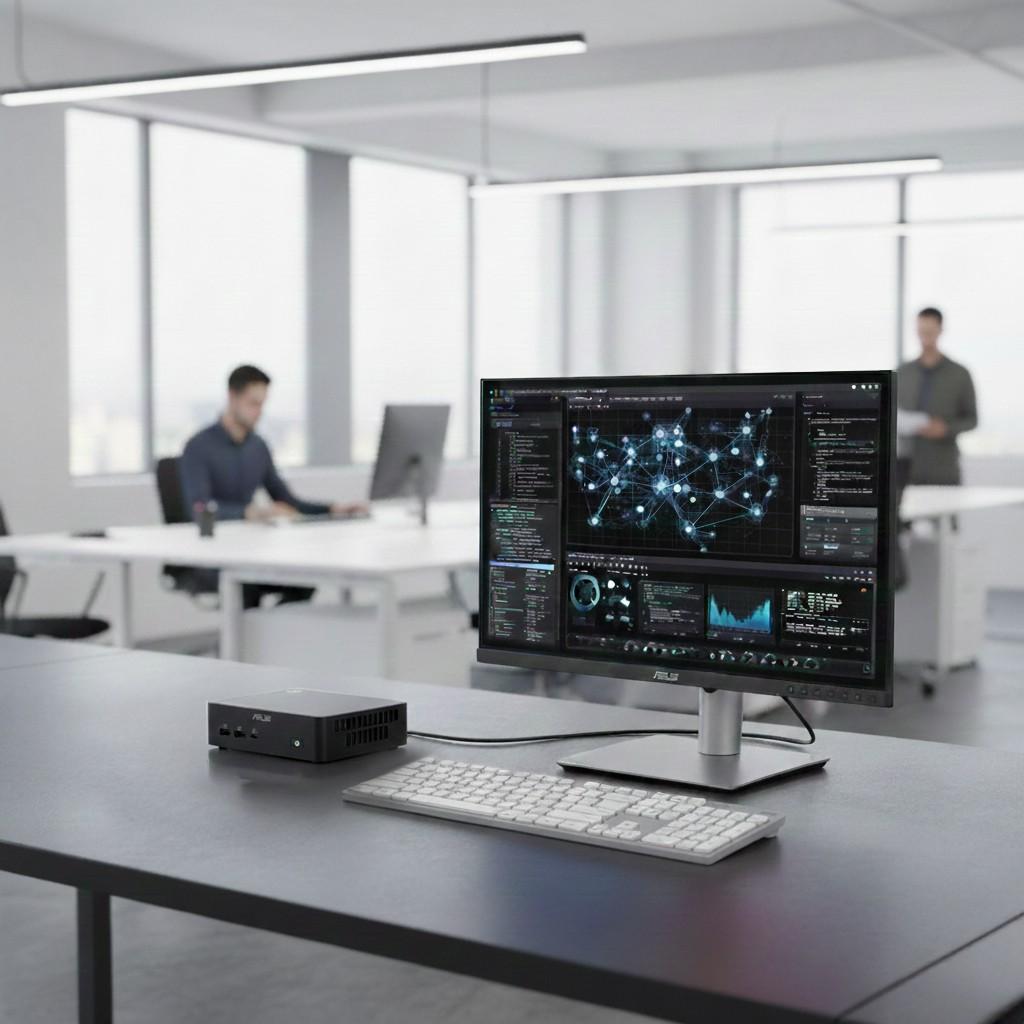
Want to maximize every square meter of your Philippine BPO without sacrificing performance? The ASUS NUC just might be the right solution for your business needs. It occupies up to 80% less desktop space yet delivers full business PC performance. It offers workspace efficiency, business productivity, and office modernity without breaking the bank. What more could you ask for?
The Growing Cost of Office Space
Nothing in this world is ever constant – and that office space you’ve been paying for could be many times the cost of what you’ve originally paid for when you just started out your BPO. With rising commercial rental costs, the need for efficient floor planning also increases.
With a space-saving PC like the ASUS NUC, you get to have more workers on the floor. Workspace optimization with this business-class mini PC helps you maximize your floor density for better office space efficiency.
Why Traditional Desktops Consume Valuable Workspace
Let’s face it. While bulky tower PCs have long been the face of businesses in the modern world, they lead to desk clutter because they occupy more space than space-efficient computing solutions available today.
Here are some stats for visuals: A 15L tower PC usually measures around 6.1 inches (width) x 11.2 to 11.7 inches (depth) × 13.2 to 27+ inches (height), while the ASUS NUC Pro+ and 16 Series are just around 5.3 inches (width) x 4.6 inches (depth) x 1.6 inches (height).
It’s easy to see now how the traditional tower desktops consume valuable workspace that you could have maximized to add more workers on the floor without crowding.
You even have to deal with cable management challenges with the trusted but older models.
Thanks to the ASUS NUC’s enterprise-ready design, these issues are a thing of the past. Your employees get more workspace, and your IT department won’t face cable management issues from the old computers.
The ASUS NUC Space-Saving Advantage
Amazingly, the ASUS NUC 16 Pro occupies up to 80% less desktop space than a traditional 15L tower desktop. This easily translates to cleaner workstations, freed-up valuable desk space, and improved employee comfort in high-density contact center environments such as BPO centers like yours.
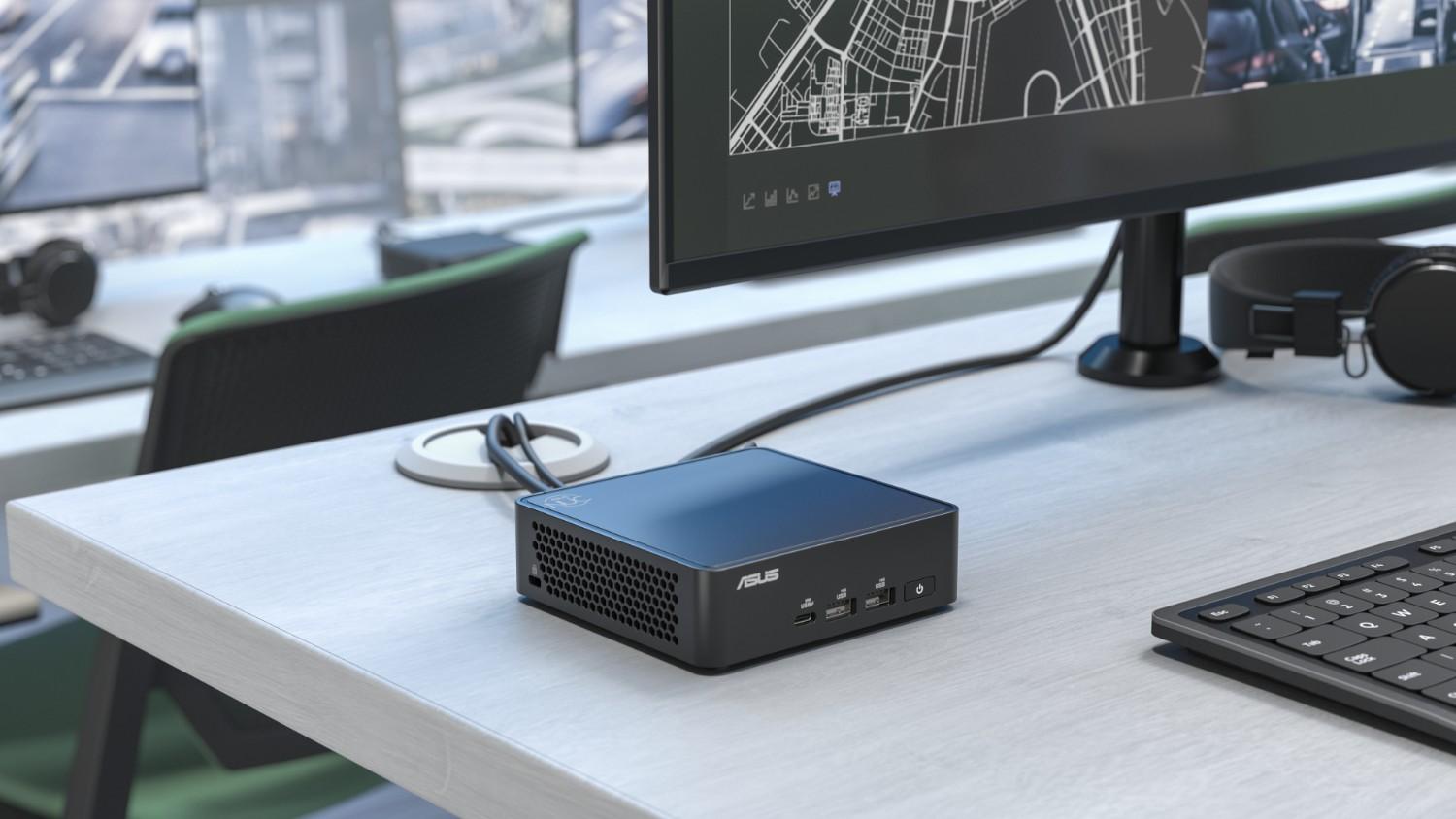
This modern, space-saving PC’s compact design enables businesses like yours to accommodate more workstations within the same office footprint than traditional tower desktops do, leading to a more scalable workplace infrastructure and better space utilization.
It’s impressive how a change in computers can improve overall operational efficiency so much, right?
Built for Modern Business Environments
Still unsure whether it’s time to shift to this modern space-saving PC range? Here are more advantages of the ASUS NUC:
- VESA mountable
- Tool-less upgrade design
- Easier deployment and maintenance
This computer supports VESA mounting, which allows the device to be mounted behind compatible monitors.
What does this mean for your business? Well, it eliminates desktop clutter and maximizes usable workspace. This could mean a lot for BPOs, especially if you’re operating hundreds or thousands of workstations on the floor.
The ASUS NUC also features an easy one-hand latch and spring-loaded chassis design. This allows for quick access to memory and storage components. While this is unlikely to be a major concern for your floor workers, it will greatly benefit your IT team’s efficiency. Given that the IT team is generally just a couple of people compared to the rest of your workers, this added efficiency can be highly beneficial to your company.
In short, it can lead to easier workspace deployment and computer maintenance.
Maximizing Floor Density
For BPO companies in the Philippines like yours, smaller workstation footprints help maximize office space and make it easier to accommodate growing teams. Since BPO operations often need to scale quickly to meet client demands, compact workstations such as the ASUS NUC enable more employees to be housed in the same office space without compromising productivity.
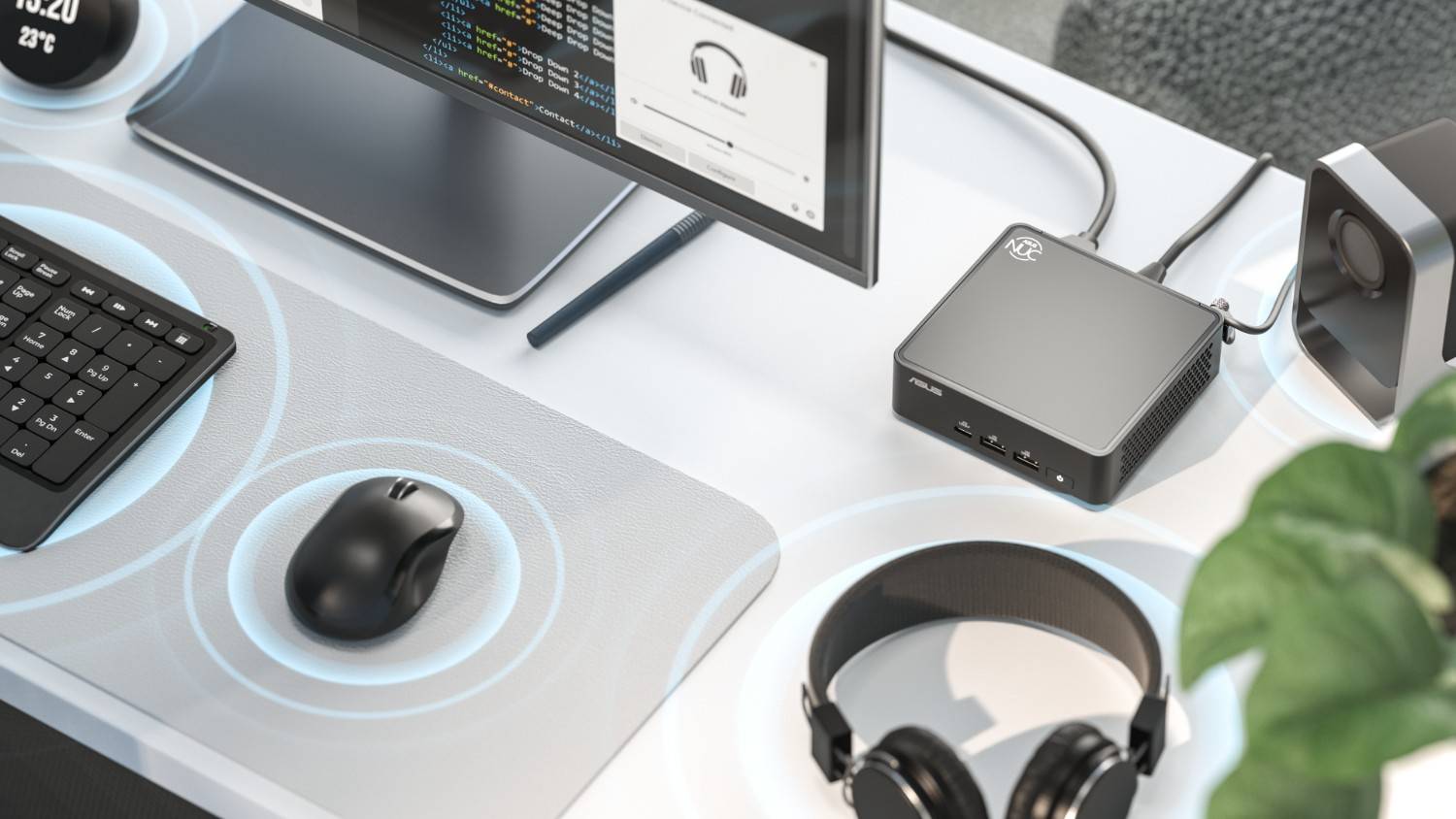
They also provide greater flexibility in arranging the workplace. Office layouts can be easily adjusted to create additional workstations, training areas, meeting rooms, or support spaces as business needs change. This helps BPOs like yours expand operations, onboard new accounts, and manage business growth more efficiently while reducing the costs associated with relocating or leasing additional office space.
Conclusion & Call to Action
So, you see how ASUS NUC delivers full business PC performance in an ultra-small form factor? This workplace optimization solution helps Philippine BPOs maximize valuable office space while maintaining your business-class performance.
This simply means that this space-efficient computer allows companies like yours to enjoy the benefits of a compact device without sacrificing productivity, reliability, or even manageability. It benefits your floor workers, your IT team, and the entire business.
So, what are you waiting for? Replace your clunky old tower computers now with this modern space-saving computer to increase your workstation density without sacrificing your workers’ performance.

Joy is a licensed chemist who left the lab for love! A certified bookworm who also loves to write, she chose to become a writer to pursue her passion and also have more time for her husband and kids. She’s the site’s pioneer writer.
Business
Sugar stocks Balrampur Chini, Triveni Engineering, Dhampur Sugar and others rally up to 7%. Here’s why

Domestic sugar prices in Mumbai are currently quoted at Rs 5,000-5,090 per quintal. Traders said deficient rainfall has further added a premium to prices, strengthening the bullish sentiment ahead of the upcoming festival demand season.
The rally comes amid a rapid surge in global sugar prices. US raw sugar prices moved above the $15/lb resistance level to $16/lb, while London White Sugar climbed to a 15-month high of more than $500 a tonne.
In today’s session, Balrampur Chini Mills gained 5% to Rs 654 on the BSE, while Dhampur Sugar Mills gained 5% to Rs 168 per share. Uttam Sugar gained 5% to Rs 278 per share. Triveni Engineering shares rose the most, rallying 7% to Rs 283, while EID Parry gained over 2% to Rs 794.
What’s moving stocks?
A key trigger is the worsening supply outlook in Brazil, the world’s largest sugar producer. The country has warned of a delay in the harvest amid adverse weather conditions. Adding to uncertainty, Brazil has suspended its bi-weekly harvest and production reports, leaving investors with limited visibility on the supply situation.

The shift towards ethanol is further intensifying concerns over a potential sugar supply crunch. In June, 58% of Brazil’s cane juice was diverted towards ethanol, as ethanol is likely to be more profitable than sugar. Brazil also raised its mandatory ethanol blending target to 32% in July from 30% in June, significantly higher than the 25-27% mix seen just months earlier.
Supply concerns are not limited to Brazil. Intense heatwaves and El Niño conditions across the EU and the UK have added to fears of tighter supplies, with sugar output from the region trimmed to 14.98 million tonnes. In Asia, Thailand, the world’s third-largest sugar producer, has cut its projected output by 15.6% to 9.5 million tonnes. India, the world’s second-largest sugar producer after Brazil, is also projecting lower sugar production. Authorities are physically verifying mill volumes to enforce strict hoarding limits.Global deficit estimates also point to a tighter market. Green Pool has projected a global sugar deficit of 3.3 million tonnes, while StoneX has estimated the shortfall at 1.7 million tonnes. The International Sugar Organisation has forecast a deficit of 0.26 million tonnes.
With production concerns mounting across major sugar-producing regions and global benchmark prices continuing to climb, the supply outlook has emerged as the key factor driving the sharp move in sugar prices.
India may cut exports
India, the world’s second-largest sugar exporter, is expected to have little surplus for export for at least three more seasons as El Niño weather conditions threaten cane production and rising ethanol demand squeezes supply.
The twin pressures are poised to keep millions of tonnes of sugar off the world market, tightening supplies for importers across Asia, Africa and the Middle East and supporting benchmark prices in London and New York.
A Reuters report stated that government sources and farmers expect lower cane availability and rising ethanol demand to leave little sugar for exports for several years. Dealers at global trading houses have also warned their head offices of shrinking opportunities in India, according to trade sources.
India exported an average of 6.8 million metric tonnes of sugar annually in the five seasons through 2022-23, accounting for about 10% of global shipments. This year, after exporting around 800,000 tonnes, India banned shipments until September 30, the end of the season.
A prolonged absence of surplus from major suppliers would remove a key balancing supplier as weather risks and biofuel policies reshape global sugar trade flows.
(Disclaimer: Recommendations, suggestions, views and opinions given by the experts are their own. These do not represent the views of The Economic Times)
Business
Nikkei 225 Climbs 506 Points Toward Record Territory as Bank of Japan Eyes a September Interest Rate Hike

TOKYO — Japan’s Nikkei 225 climbed 506.45 points, or 0.74%, to 69,220.25 as of 3:45 p.m. local time Monday, extending a recovery from Friday’s pullback and pushing the benchmark back toward the record territory it briefly touched last week, even as investors weighed fresh signals that the Bank of Japan may raise interest rates as soon as next month.
Monday’s session opened essentially flat, with the index starting near 68,713.80, unchanged from Friday’s closing level, before gaining momentum through the day. The advance came despite a report from Reuters indicating that the Bank of Japan is considering an interest rate hike as early as September, alongside a potentially faster pace of monetary tightening than markets had previously priced in, a development that carries significant implications for Japan’s export-heavy equity market through its effect on the yen.
The rate-hike signal matters most for Japanese equities through the currency channel. A stronger yen, particularly if reinforced by any coordinated effort between U.S. and Japanese authorities to push back against yen speculators, would tend to compress the value of overseas earnings that Japan’s major exporters convert back into domestic currency, potentially weighing on the profitability of companies whose sales are heavily weighted toward international markets.
Monday’s gains followed a volatile end to the previous week. The Nikkei touched a fresh intraday record high of 69,639.00 on Thursday before retreating through the afternoon session, ultimately closing at 68,732.00 on Friday, down 0.65% for the day. That pullback came after the index had opened Friday at 69,338.00, its highest opening level in recent trading, before steadily giving back gains as the session progressed. The day’s trading range, spanning from a low of 68,471.50 to the intraday record above 69,600, illustrated the scale of the reversal that unfolded within a single session.
Despite Friday’s retreat, the Nikkei has remained one of the standout performers among major global equity indices in 2026, having gained more than 58% over the trailing twelve months as of the most recent full-year comparison. The index has traded within a 52-week range of 41,835.17 to 72,831.73, with the upper end of that range representing a record high reached in June, underscoring both the scale and volatility of the rally that has carried Japanese equities sharply higher over the course of the year.
The broader Japanese market’s underlying strength has extended beyond the technology sector that has often driven headline gains. The TOPIX index, a broader gauge of the Tokyo Stock Exchange, set its own fresh record during the same week the Nikkei pulled back from its intraday high, suggesting the rally has drawn support from a wider base of sectors including financials, materials, energy and industrials, alongside the more closely watched technology and semiconductor-related names that have dominated recent market coverage.
Individual stock performance in recent sessions has reflected that broader participation. Gains on Friday were led by Nintendo, which rose 6.80%, followed by Sony, up 5.38%, and Furukawa Electric, which gained 5.33%, according to data compiled by Trading Economics. On the downside, Isetan Mitsukoshi fell 3.92%, DIC declined 3.84% and Toppan dropped 3.52% during that session, illustrating the uneven performance across sectors even as the broader index posted a moderate loss.
The rally in Japanese equities through the summer has been supported by a combination of factors, including a weaker yen earlier in the year that boosted the competitiveness and repatriated earnings of Japan’s export-oriented companies, alongside broader global enthusiasm for technology and artificial intelligence-related investment that has lifted markets in Japan alongside other major economies. Japanese Prime Minister Sanae Takaichi’s earlier expressed reservations about aggressive Bank of Japan rate increases, along with her nomination of academics viewed as favoring continued monetary easing to the central bank’s policy board, had previously reinforced market expectations that the BOJ would take a cautious approach to tightening, a dynamic that had helped support the yen’s weakness and, by extension, Japanese equity valuations.
The latest reporting suggesting a possible September rate hike represents a notable shift in that narrative, raising questions about whether the central bank’s approach to monetary policy may be evolving more quickly than markets had anticipated earlier in the year. Investors are likely to scrutinize upcoming commentary from Bank of Japan officials closely in the coming weeks for further clarity on the timing and pace of any prospective policy tightening, given the significant implications such a shift could carry for both the currency and the broader equity market.
Monday’s advance also came against a backdrop of generally positive sentiment across Asian markets, with Hong Kong’s Hang Seng index opening 1.3% higher the same day even after Beijing signaled it would support economic growth without introducing a major new stimulus package, according to Reuters reporting cited by market commentators. That broader regional risk appetite appeared to provide additional support for Japanese equities as they extended their recovery from Friday’s session.
Looking ahead, the Nikkei’s ability to reclaim and sustain levels above 69,000, and ultimately challenge its June record high of 72,831.73, is likely to depend heavily on how the balance between continued corporate earnings strength and the emerging shift in Bank of Japan policy expectations plays out in the coming weeks. Should the central bank move forward with a rate increase in September as recently reported, the resulting effect on the yen could test the durability of the export-driven gains that have powered much of the Nikkei’s rally so far this year, even as the broader strength evident across financials, materials and industrial sectors suggests the market’s advance has not been narrowly dependent on currency dynamics alone.

The company’s consolidated net profit for the June quarter stood at Rs 12 crore, sharply lower than Rs 41 crore reported in the corresponding quarter last year.
Revenue from operations, meanwhile, rose around 5% YoY to Rs 651.4 crore, compared with Rs 621 crore in Q1FY26. The company attributed the relatively moderate revenue growth to project execution timelines and the phased conversion of recent order wins into sales.
Profitability takes a hit
The sharp decline in earnings was largely reflected at the operating level. EBIT fell to Rs 32.1 crore in Q1FY27 from Rs 66.7 crore a year earlier. According to the company, profitability was impacted by commodity price volatility and delays in passing on higher input costs on certain legacy orders.
Despite the near-term pressure on earnings, Schneider Electric Infrastructure continues to maintain a strong order book, which could provide visibility for future revenue growth.
While the quarterly profit numbers disappointed investors, the company delivered a strong performance on the order front. Schneider Electric Infrastructure recorded its highest-ever quarterly order intake of Rs 915 crore in Q1FY27. Its order backlog stood at Rs 2,169 crore as of June 30, 2026, up 32.7% YoY.
The robust order book indicates healthy demand and provides the company with a strong revenue pipeline, although the pace of conversion into sales and the ability to pass on higher input costs will remain key factors to watch.Udai Singh, Managing Director & CEO of Schneider Electric Infrastructure, said Q1FY27 reflected the company’s strong market position, supported by record quarterly order intake, steady revenue growth and a robust expansion in its order backlog.
He added that while profitability was affected by commodity cost volatility and delays in passing through cost increases on certain projects, the company remains focused on operational excellence, project execution and improving business quality.
Stock performance and Technical outlook
The sharp Monday decline adds to the stock’s recent weakness, with shares having remained under pressure for some time. However, the longer-term performance remains impressive. The stock has delivered around 40% returns over the past one year, while it has surged nearly 265% in three years.
The company currently commands a market capitalisation of around Rs 29,146 crore, while its 52-week high stands at Rs 1,548.
On the technical front, the stock’s 14-day Relative Strength Index (RSI) stands at 51.1. An RSI below 30 is generally considered to indicate an oversold zone, while a reading above 70 is viewed as overbought. With the RSI currently near the middle of the range, the indicator does not point to an extreme oversold or overbought condition.
(Disclaimer: Recommendations, suggestions, views and opinions given by the experts are their own. These do not represent the views of Economic Times)

Exclusive-Shein eyes company valuation of around $25 billion in Hong Kong IPO, sources say

China’s July industrial output grew 4.5% y/y, retail sales up 0.6%
Business
Kate Middleton and King Charles Reunite for Cancer Research UK Event as Royals Continue Health Journeys

LONDON — King Charles III and Kate, the Princess of Wales, came together at a reception celebrating the 125th anniversary of Cancer Research UK, marking one of their joint public appearances centered on a cause that carries deep personal significance for both royals following their respective cancer diagnoses in 2024.
The reception, held at St. James’s Palace in London, was hosted by the king and Queen Camilla and launched Cancer Research UK’s 125th anniversary year. According to Buckingham Palace, the event also included the Duke and Duchess of Gloucester and brought together researchers, clinicians, volunteers and partners involved in the charity’s work to prevent, diagnose and treat cancer. Guests viewed exhibits highlighting the organization’s impact and ongoing innovations, including displays demonstrating how advances in technology are transforming cancer research.
For the occasion, Princess Kate wore a red dress featuring a white heart print. During the reception, she met with Sebastian Bowen, the husband of the late Deborah James, the journalist and cancer awareness advocate known publicly as “BowelBabe.” James died in 2022 after living with incurable bowel cancer and was awarded a damehood during a personal home visit from Prince William shortly before her death, an honor that underscored her prominent role in raising public awareness of the disease in Britain.
Cancer Research UK traces its roots to predecessor organizations founded in 1902 and 1923 and has played a significant role in advancing cancer prevention, detection and treatment across the United Kingdom. Charles has served as patron of the charity since 2024, while the Duke of Gloucester and Princess Alexandra hold the position of joint presidents.
The reception followed a difficult stretch for both royals. Charles announced in February 2024 that he had been diagnosed with an undisclosed form of cancer and has continued treatment since. A month later, Kate revealed she was also receiving cancer treatment following abdominal surgery earlier that year, a diagnosis that prompted her to step back from public duties while she focused on her recovery. She later announced she had completed chemotherapy in September 2024 and confirmed in January 2025 that she was in remission.
Since her remission announcement, Kate has periodically offered candid reflections on the lingering emotional and physical effects of cancer treatment. During a visit to Colchester Hospital in Essex, she described the difficulty of adjusting to life after active treatment ends. “You put on a sort of brave face, stoicism through treatment,” she said. “Treatment’s done, then it’s like, ‘I can crack on, get back to normal,’ but actually, the phase afterwards is really, really difficult.” She added that patients are often no longer under the direct care of a clinical team but still struggle to return to their previous routines, describing the adjustment as something that requires time and support. “You have to find your new normal and that takes time… and it’s a roller coaster, it’s not smooth, like you expect it to be,” she said.
In June, Kate visited the Christie NHS Foundation Trust in Manchester, where she met with a cancer patient and her family and was present as the patient rang a bell traditionally used to signify the completion of cancer treatment. Kate has continued to make public appearances tied to cancer awareness and treatment support throughout the year, gradually expanding her public schedule since returning to official duties.
King Charles, meanwhile, has continued his own course of treatment for an undisclosed form of cancer, a process that has occasionally required adjustments to his public schedule. He was briefly hospitalized in March for side effects related to his treatment, prompting a temporary pause in his royal engagements. An aide told reporters at the time that the king was doing “incredibly well” despite the setback, describing it as a minor bump in what remained a positive overall trajectory. Charles offered a rare personal update on his condition in December, announcing that his treatment schedule would be reduced in 2026, a development palace officials characterized as an encouraging sign in his ongoing care.
Prince William has occasionally spoken publicly about the toll the past two years have taken on the family, describing the period in which both his wife and father were diagnosed with cancer as among the most difficult of his life. In one televised exchange, when asked directly about Kate’s health, William confirmed she remained in remission, offering a brief but clear update on her status.
The reunion at St. James’s Palace came during a period when other developments within the royal family, including the fallout from Prince Andrew’s loss of his royal titles and continued scrutiny connected to his past associations, have dominated much of the recent public attention on the monarchy. Even so, the health journeys of Charles and Kate have remained a subject of sustained public interest, given both the scale of their public roles and the relatively rare instances in which either has spoken directly and personally about their experiences with cancer treatment.
Neither Buckingham Palace nor Kensington Palace has released detailed medical information regarding the specific types of cancer either royal has faced, a decision consistent with the family’s general approach to maintaining privacy around personal health matters while still acknowledging the diagnoses publicly. Officials have periodically provided general updates on treatment progress without disclosing further clinical detail, a pattern that has continued through the most recent public appearances by both Charles and Kate.
As Cancer Research UK begins its 125th anniversary year, the charity is expected to continue highlighting new research initiatives and technological advances aimed at improving cancer prevention, diagnosis and treatment outcomes across the UK, with royal patronage from Charles expected to continue supporting the organization’s public profile throughout the coming year. Both Charles and Kate are expected to maintain a gradually expanding schedule of public engagements as their respective treatment plans progress, according to statements from palace officials in recent months.
Business
Puravankara shares rally up to 13% after Q1 revenue jumps 62% YoY; EBITDA margin expands to 25%

The company, in its exchange filing, said it had a strong start to FY27, supported by improved realisations and disciplined execution across its residential and commercial portfolio.
Puravankara reported a consolidated Profit After Tax (PAT) of Rs 25 crore in Q1FY27, compared with a loss of Rs 69 crore in the year-ago quarter. EBITDA margin also improved sharply to 25% from 15% in Q1FY26.
Also Read |Listed developers eye Rs 1.82 lakh crore pre-sales in FY27 as housing demand holds firm: Report
Total revenue for Q1FY27 stood at Rs 877 crore, up 63% YoY from Rs 539 crore in Q1FY26. Operating inflows for the quarter stood at Rs 1,423 crore, against operating outflows of Rs 1,078 crore, resulting in an operating surplus of Rs 345 crore.
The company handed over 745 homes covering 0.94 msft during the quarter, up from 667 units in Q1FY26, sustaining the execution momentum built through FY26. In the quarter that ended in June, the company recorded pre-sales of Rs 1,439 crore, up 28% year-on-year, on sales volume of 1.36 million sq. ft. across 1,017 units.
The average sales realisation was recorded at Rs 10,589 per sft, up 18% year-on-year and the collections were recorded at Rs 1,199 crore, up 40% year-on-year. As of June 30, 2026, 3.20 msft of completed inventory (2,777 units) is pending revenue recognition.The gross debt stood at Rs 3,942 crore as of June 30, 2026, reduced by Rs 74 crore during the quarter even as the company deployed Rs 574 crore towards land payments, advances and deposits.
The net debt stood at Rs 2,836 crore, with a net debt-to-equity ratio of 1.57 for Q1FY27 and the cost of debt stood at 11.12% as of June 30, 2026.
The company completed 1.72 msft across ten towers and phases during the quarter: 1.00 msft in Goa (Provident Adora De Goa, Phases VIII to XI), 0.51 msft in Pune (Emerald Bay Towers B-2 and B-3, and Purva Aspire) and 0.21 msft in Mumbai (Purva Clermont, Wings A, D and E).
As of June 30, 2026, the total estimated surplus from ongoing projects stands at Rs 8,976 crore. The estimated surplus from commercial projects is Rs 2,220 crore. The estimated surplus from pipeline projects is Rs 8,636 crore. The overall estimated surplus across all categories stands at Rs 19,831 crore over the next three to five years.
In Q1FY27, Puravankara announced four land transactions in Bengaluru spanning approximately 41.93 acres, with a cumulative development potential of around 4.23 msft – Mandur, Doddagubbi, Sarjapura and Sanna Ammanikere.
The company has 20.48 msft of planned launches across the Southern and Western markets, with an approximate GDV of Rs 27,300 crore, with the majority of the pipeline concentrated in Bengaluru and Mumbai. The estimated future cash flow potential from total new launches (excluding new phases) is around Rs 8,636 crore. The pipeline is supported by a redevelopment portfolio of five projects in Mumbai, representing 2.23 msft of saleable area on the company’s share.
Also Read | Realty developer Puravankara acquires 9.73-acre land parcel in north Bengaluru
According to the filing, Purva Zentech, Bengaluru entered into a definitive agreement with ICICI Prudential AMC for the sale of the commercial property at an enterprise value of Rs 625.94 crore. Of the total consideration, Rs 145 crore will be received through the sale of shares of the SPV, while the balance will be realised through agreed balance sheet adjustments in accordance with the transaction structure.
In the past one month, the stock went up 1.09% and nearly 4.25% in the past one year. The stock went up 41.35% in the last three years.
(Disclaimer: Recommendations, suggestions, views and opinions given by the experts are their own. These do not represent the views of The Economic Times)
Business
Kentucky Governor Beshear Says He’s Heard ‘Absolutely Nothing’ From McConnell Amid Health Concerns
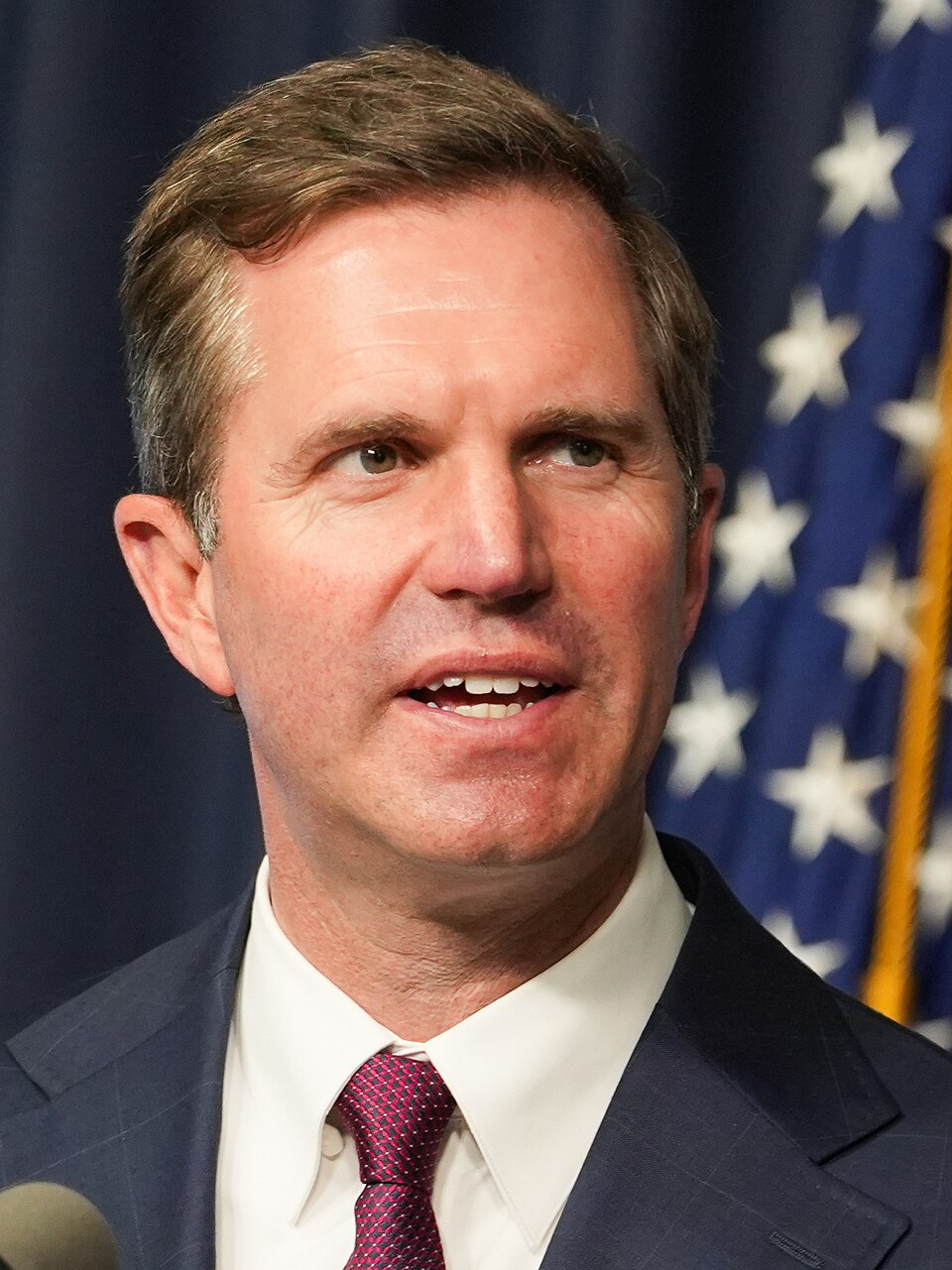
WASHINGTON — Kentucky Gov. Andy Beshear said Sunday he has received no response from Sen. Mitch McConnell following repeated formal requests for updates on the Republican senator’s health, escalating a monthslong standoff over McConnell’s prolonged absence from Capitol Hill.
“I’ve heard absolutely nothing back from Mitch McConnell,” Beshear, a Democrat, said Sunday on CBS News’ “Face the Nation with Margaret Brennan.” The comment echoed remarks he made days earlier. “I’ve received absolutely nothing, and that’s the same that the people of Kentucky have received,” Beshear told MS Now on Friday.
McConnell, 84, was hospitalized on June 14 after suffering a fall. He was briefly unconscious before being taken to the hospital, according to a statement he released at the time. “My doctors have confirmed that I didn’t break any bones or suffer a concussion,” McConnell said in that statement. “I didn’t have a heart attack or a stroke. I don’t have any tumors or hemorrhages. But I was briefly unconscious and was taken to the hospital.” Weeks into his hospitalization, McConnell disclosed he had also developed a case of mild pneumonia.
After nearly two months in a rehabilitation center, McConnell was discharged to continue his recovery at home. “Earlier today, I was discharged from the rehabilitation center to continue my recovery at home,” McConnell said in a statement announcing his release. He said he and his wife, former Transportation Secretary Elaine Chao, were grateful for the support he had received from constituents, colleagues and medical staff during his recovery, and said he would continue an intensive physical therapy regimen at home while remaining engaged with Senate business remotely. The statement did not include a specific timeline for his return to the Capitol.
Beshear’s frustration with the lack of communication from McConnell’s office predates Sunday’s remarks. The governor first sent a formal letter on July 8 requesting information on the senator’s condition, writing that Kentuckians had grown increasingly concerned about McConnell’s health and his capacity to continue serving in the Senate. In a follow-up letter later that month, Beshear pressed further, calling on McConnell to publicly and directly address his constituents. He urged the senator to “directly and verbally address the people of Kentucky and provide proof of your capacity to serve, or resign.”
Beshear reiterated that demand during Sunday’s CBS appearance, suggesting McConnell could quickly put concerns to rest with a brief public statement. “All he needs to do is call into this show for two minutes, or Fox News for two minutes, or do a video for two minutes to the people he’s supposed to serve,” Beshear said, adding that McConnell had so far declined to do so. “But you know what? He absolutely refuses to do it,” he said.
Despite his pointed criticism, Beshear said he hoped McConnell’s health was improving and noted the two have known each other for years. “I do hope that he is getting better,” Beshear said on CBS.
The governor also directed criticism toward Senate Majority Leader John Thune, arguing that Thune had failed to independently assess McConnell’s capacity to serve, instead relying on updates from McConnell’s own staff. Beshear said such deference raised questions about whether the Senate seat should be considered effectively vacant, a determination that could trigger a special election under certain circumstances. “As the leader of the Senate, you’ve got a duty to make sure all of your senators have the capacity to serve, and what is he saying?” Beshear told CBS. “Not my job.”
Republican lawmakers and conservative commentators have pushed back on suggestions that McConnell is unable to fulfill his duties, saying they have remained in contact with him and that he continues to be capable of serving in the Senate despite his extended physical absence from Washington.
McConnell’s prolonged recovery has intensified a broader national conversation about the age of members of Congress, a debate that gained additional urgency following the recent death of South Carolina Sen. Lindsey Graham, 71. A CNN/SSRS poll conducted in July found that 58% of Americans view the number of elderly lawmakers currently serving in Congress as a major problem, reflecting growing public unease about the health and longevity of aging political leaders across both parties.
McConnell, a survivor of childhood polio, has served in the Senate since 1985 and previously led Senate Republicans as majority and minority leader for nearly two decades before stepping down from that leadership post last year. His current term extends through January 2027, and questions about his ability to serve out the remainder of that term have grown alongside his extended absence from the chamber.
As of Sunday, McConnell’s office had not issued a public response to Beshear’s renewed calls for direct communication with Kentucky constituents, and no timeline has been provided for the senator’s return to active duty in Washington. The standoff underscores a broader tension playing out in state capitals and Washington alike, as governors, party leaders and the public grapple with how transparently aging or ailing lawmakers should be required to communicate about their health and fitness for office while still holding elected positions of significant national responsibility.

This Will Completely Change How You Think About Money

US military expands anti-cartel operations in Latin America from sea to land

Politics And The Markets 08/17/26


-

 Fashion3 days ago
Weekend Open Thread: Ann Taylor
-
 NewsBeat5 days ago
Communication cards help banking customers access services or report scams
-
 Business6 days ago
Oil Price Today (August 11): Crude oil rises to $88 after Trump’s compensation demand dents Hormuz opening. Here’s why
-
 Sports3 days ago
This U.S. Amateur is a glimpse into golf’s future in more ways than you think
-

 Crypto World6 days ago
Revolut wins French banking licence, creates second EU banking hub
-
 Crypto World6 days ago
Why Did Nvidia Stock Fall on Monday Despite a $500 Billion Wall Street AI Deal?
-

 Sports2 days ago
Birmingham 2026: Day 6 Timetable for Irish Athletes
-
 NewsBeat2 days ago
Myanmar says over 300,000 Rohingya refugees verified for repatriation as exodus enters ninth year
-
 Entertainment5 days ago
Keke Palmer Subtly Hints At Sean Evans Drama With Cryptic Post
-
 Crypto World7 days ago
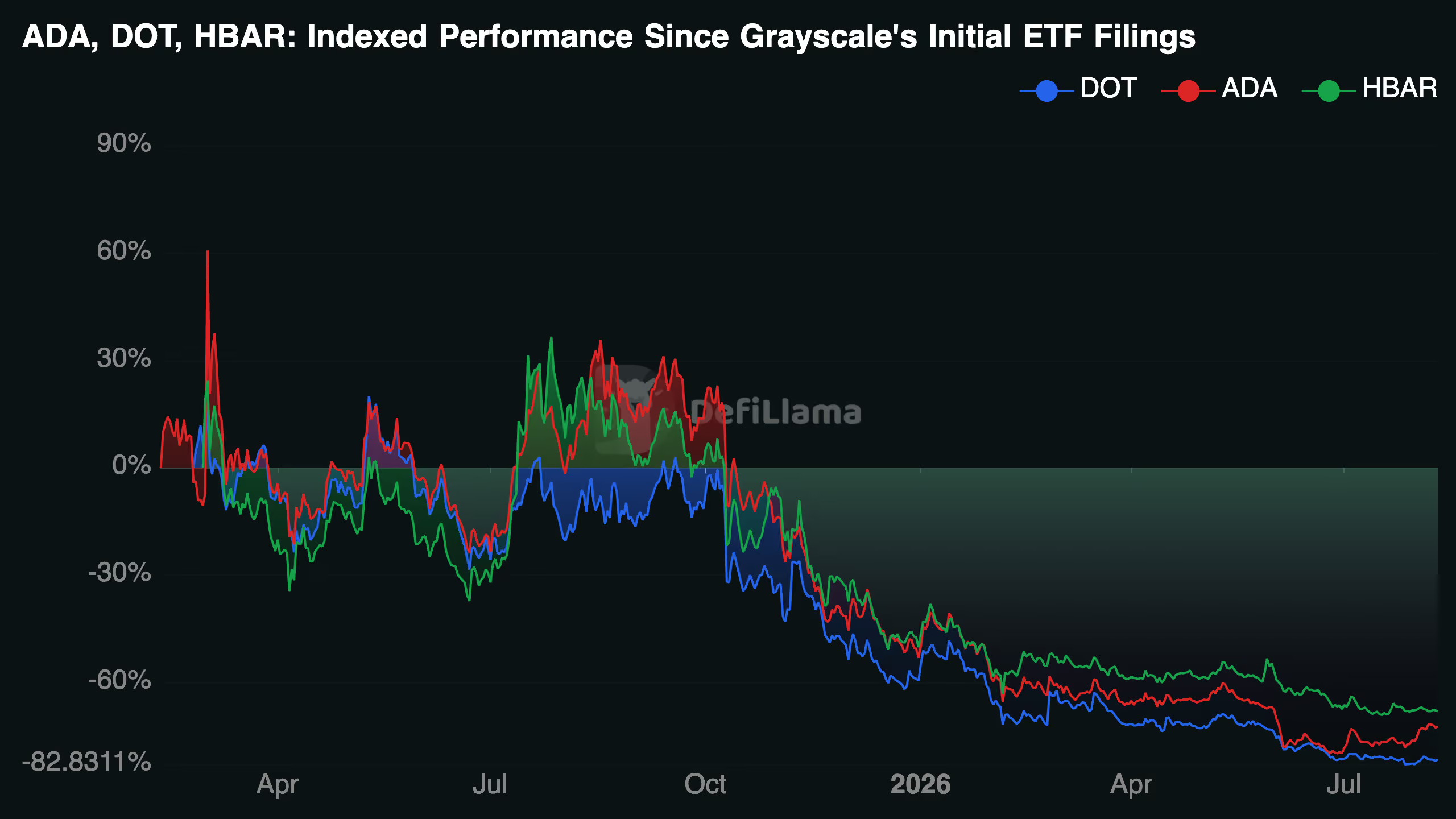
Grayscale quietly drops Cardano, Polkadot and Hedera ETF plans
-

 Politics2 days ago
SEQ Code: The Three Letter Boarding Pass Code That Could Give You The Worst Seat
-

 Fashion6 days ago
Coffee Break: The Fonteyn Jane Flat
-
 Entertainment6 days ago
57 Years Later, the Best Sitcom Ever Made Still Deserves a Reboot
-

 Tech6 days ago
Zoom Screen-Sharing Bug Let People Fully Take Over Other Devices On A Call
-
 Crypto World7 days ago
Hormuz Nerves Cost Bitcoin $65,000 Mark Despite Solid Institutional Flows
-

 Fashion7 days ago
Can You Wear Double Cloth Gauze Clothing To Your Office?
-

 Crypto World6 days ago
Bitcoin's BIP Editors Remove Luke Dashjr Two Days After BIP-110 Fork Stalled
-

 Fashion6 days ago
Should you refinance your debt? Pros, cons, and real numbers
-
 Crypto World5 days ago
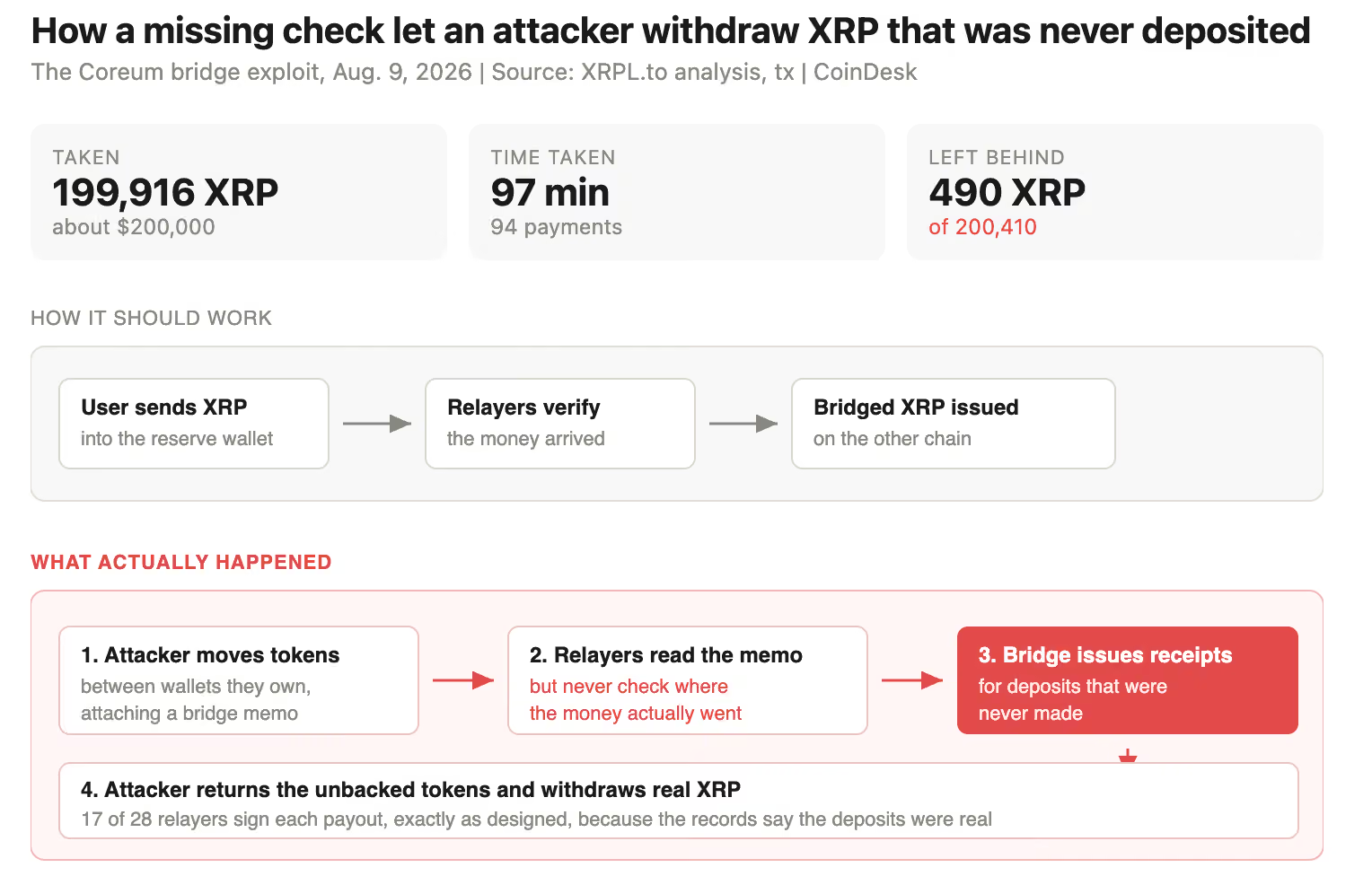
XRP bridge drained after software mistook fake deposits for real ones
-

 Fashion6 days ago
Claire Life: Kicking Off MVAAFF With the C Suite Luncheon Featuring Phylicia Rashad, Letoya Luckett, and More!
You must be logged in to post a comment Login