
Business
Krusteaz focuses on fundamentals to fuel growth




Business
Regulatory tailwinds to boost growth for MCX, says HDFC Securities, retains Buy for 18% gains

The brokerage expects FPI participation in deliverable contracts and new bullion and metals index options to drive the next leg of growth, with a potential 20-25% increase in options premium. It also sees structural headroom for volume growth as commodity derivatives remain a small share of equity-market trading.
HDFC Securities has set a target price of Rs 3,600 apiece, implying a potential upside of 18.42% from MCX’s August 18 close of Rs 3,040 apiece on the NSE.
Regulatory easing could widen MCX’s participant base
The brokerage highlighted that the FPI consultation paper, already endorsed by the Commodity Derivatives Advisory Committee (CDAC), proposes allowing FPIs in non-agricultural index derivatives and physically deliverable contracts such as gold, silver and base metals, subject to a pre-tender exit condition.

Sebi has also proposed a compulsory square-off or rollover window from T-3, with residual positions transferred to the designated trading member’s proprietary account at the T-1 closing price. FPIs currently account for only around 3% of MCX volumes, versus 16% at equity exchanges.
The second consultation paper focuses on ease of doing business, including removal of close-to-money option series, greater exchange discretion on position limits and outsourcing of position-limit monitoring to clearing corporations.Sebi has also allowed margin exemptions, except mark-to-market margins, for positions backed by early pay-in of certified goods, while extending the benefit to options. The margin and SGF frameworks are also under review.
“These developments amplify our earlier thesis of sustained options growth — supported by both product innovation and structural market reform — and strengthen our conviction on MCX’s long-term earnings trajectory,” wrote Amit Chandra and Arjun Savla of HDFC Securities in a report.
ALSO READ: Nifty to hit 50,000 before 2035? Raamdeo Agrawal maps 3 valuation-based timelines
FPI access, index options seen driving next leg of growth
According to HDFC Securities, the first-order impact of the proposed changes is a boost to volumes. FPIs account for around 5% of volumes in cash-settled contracts such as crude oil and natural gas. Applying a similar activity level to bullion, the premium ADTV could increase by 15-20%.
Additionally, deeper participation could improve domestic price discovery, tighten spreads and strengthen convergence with international benchmarks.
The second-order impact, according to the analysts, is larger and underappreciated: the scaling of index contracts.
BULLDEX and METLDEX exist but do not contribute to premium today because the institutional buyer of a commodity index product, such as an FPI, has been excluded wherever the underlying is physically settled. Removing that restriction could make index options more attractive as the product is cash-settled.
Bullion and metals contracts offer fresh premium opportunity
Base metals offer a parallel opportunity. Metals contribute only around 1% of premium despite a deep physical ecosystem in copper, zinc, aluminium and lead.
FPI access and index access together could support the formation of a genuine metals vertical in options rather than a futures-only franchise.
The analysts estimate that index and metals contracts together could add around 25% to premium and around 20% to PAT over the next two years.
“This optionality is not in consensus numbers. There could be some cannibalization in bullion futures volume but the rise in options/Index volume will be incrementally positive,” said the analysts.
Lower margins could improve capital efficiency and turnover
The third leg, according to the brokerage, is capital efficiency. Initial margins on MCX derivative contracts — crude at around 30%, gold at around 10% and silver at around 25% — are high and directly affect volumes.
“Any rationalization of margins, together with the early pay-in exemption and a lighter SGF, releases capital at both the member and the client level and should translate into higher turnover velocity,” said the analysts.
Valuation remains attractive versus historical levels
Analysts at HDFC Securities pointed out that MCX is down 13% over the last three months but is up 80% over the last one year and 32% year-to-date. The stock trades at 37x FY28E EPS.
Historically, MCX has traded at around a 15% premium to equity exchanges, reflecting its optionality and materially lower regulatory risk. HDFC Securities sees the case for that premium re-establishing itself.
Rising volumes, a stable technology platform, regulatory tailwinds and the option value attached to a visible pipeline of new products have driven the stock’s outperformance to date, the analysts said, adding that they expect this trend to continue.
The stock has traded at a three-year average one-year forward P/E of around 44x and is currently valued at 45x/37x FY27E/FY28E EPS.
“We assign a core P/E multiple of 45x to June-28E core PAT and add net cash excluding the settlement guarantee fund, which yields a target price of Rs 3,600; the implied multiple on Jun-28E EPS is 43x. We keep FY28/29E EPS unchanged and maintain our Buy rating,” wrote the analysts in the research note.
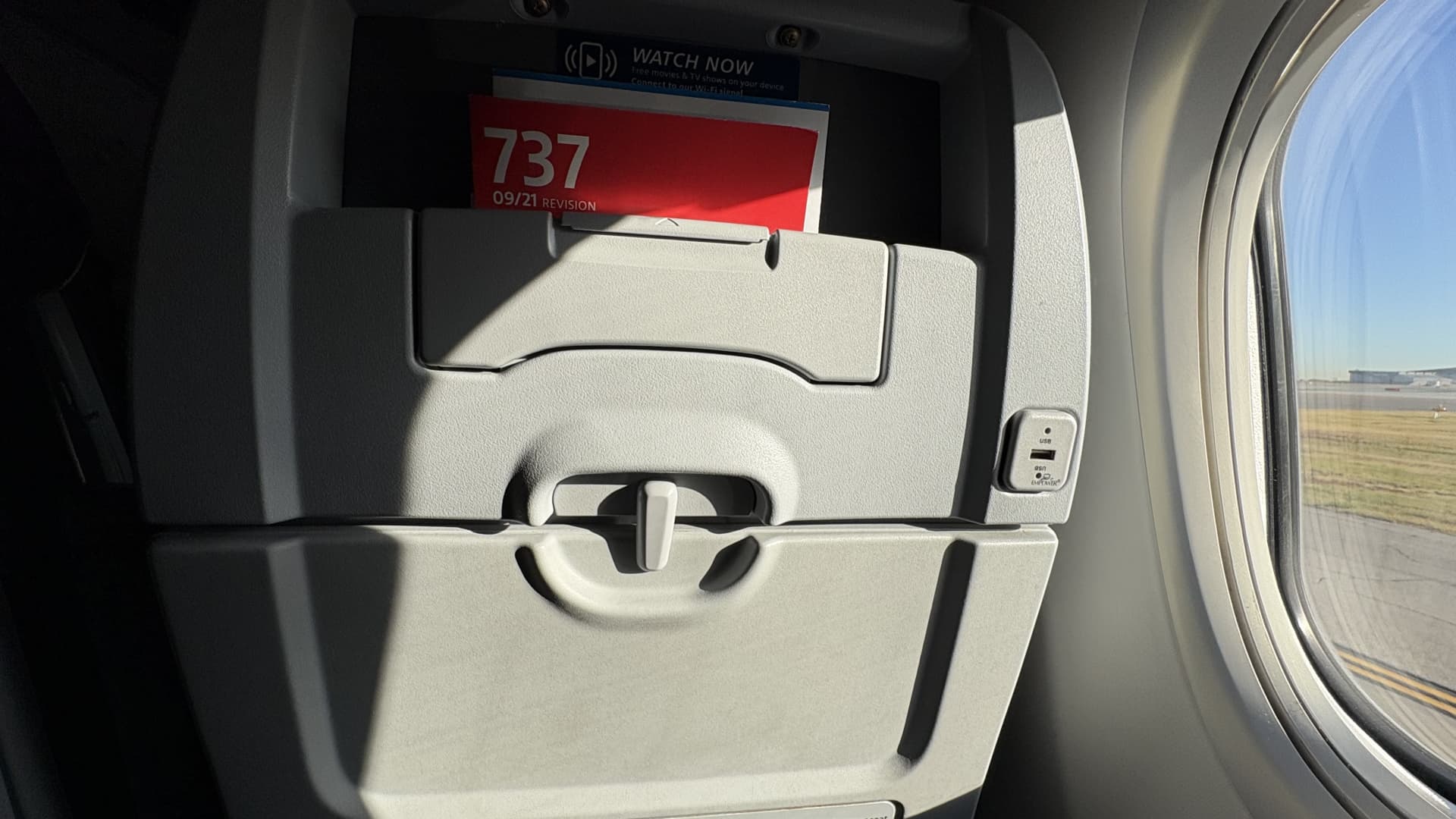
A seatback on an American Airlines Boeing 737.
Leslie Josephs/CNBC
American Airlines is finally giving a green light to seatback screens as the carrier works to close a profit gap with rivals Delta Air Lines and United Airlines. But customers will have to wait a little while.
The new screens, which will feature 4K displays, will start appearing with new deliveries from Boeing and Airbus in 2028. The airline will also retrofit aircraft so passengers in all cabins will be able to use the screens and other additions like Bluetooth audio pairing and USB-C charging.
American has been “seriously considering” the technology, along with a major cabin revamp, for months. The company had long eschewed seatback screens, with executives contending that it wasn’t worth the cost of equipment and weight they added to the aircraft and saying they expected flyers to use their own devices for entertainment.
“The technology has advanced so much from when we made this decision more than a decade ago,” Chief Customer Officer Heather Garboden said in an interview. “Ultimately, when you have customer preference and customer satisfaction improvements, that also generates revenue.”
She declined to say how much American is spending on the initiative but said the installations should be complete in the early 2030s.
On Tuesday, American announced that its revamp will include more first-class seats on its Airbus A321neos and its Boeing 737 Max 10s, though deliveries of the latter are still several years away. American is also adding more extra legroom seats across its fleet.
Those premium seats can be double the price of a coach ticket or more. For example, a round-trip ticket from New York’s John F. Kennedy International Airport to Dallas Fort Worth International Airport was going for $447 in coach and $1,161 in first class.
American CEO Robert Isom told CNBC in June that he and his team are working to close the profit gap with its large airline competitors, through more premium seats, plush lounges and improving the airline’s network. He said American is also planning to refurbish its Boeing 787-8 Dreamliners with the carrier’s new business-class suites, and add more of them. The carrier is also in the market for new wide-body planes and has been evaluating options from Boeing and Airbus.
American reported a profit of $71 million for the second quarter, compared with United’s $805 million and Delta’s $1.6 billion in the same period.

British sports and custom apparel company Y1 Group has acquired university clothing specialist Redbird Apparel in a seven-figure deal, creating a combined business generating more than £7.5 million in annual revenue.
The deal, announced on Tuesday, brings together two founder-led companies that each began with a few thousand pounds drawn from their founders’ student loans. Both have grown without taking on venture capital, funding expansion through profits. The companies said both businesses grew organically, building long-term relationships across education and grassroots sport.
Y1 Group, which appeared on BBC’s Dragons’ Den, supplies bespoke sportswear, teamwear and custom merchandise. Redbird Apparel sells fashion-led university clothing, rapid-turnaround collections and an e-commerce platform. The companies said the combination creates one of the UK’s leading providers of premium branded apparel for schools, universities, sports clubs and organisations.
Chris Rea, founder of Y1 Group, said the deal reflected a change in how organisations buy branded clothing. “Ten years ago, organisations bought branded merchandise to give away. Today, they invest in apparel that builds identity, loyalty and belonging,” he said.
“People want clothing they’re proud to wear – not promotional stash that ends up at the back of a wardrobe. Redbird recognised that shift early, building an exceptional business around great design and customer experience.”
Rea said the acquisition “puts us firmly on track to achieve our 2030 ambition of £20 million turnover and becoming the UK’s fastest-growing sports apparel provider”.
Redbird was founded by Guy Brown and Laurence Snow while the pair were students at the University of Exeter, each investing £1,000 from their student loans. The company has since fulfilled more than 200,000 orders, supplying clothing and merchandise to universities, sports clubs and student societies across the UK, including Oxford and Cambridge.
The founders said Y1 Group’s Dragons’ Den appearance had been well known among student entrepreneurs on the Exeter campus while they were building Redbird, and that the business that inspired them has now bought them.
Brown said: “The company that first inspired us has now bought us. We love that.
“We were both students at Exeter university. We both started Redbird with just £1000 each from our student loans because we believed university clothing deserved to be better. Students wanted apparel that looked and felt like brands they already wore – not generic merchandise designed around the cheapest possible product.
“We focused on building a sustainable business through great products and happy customers, growing to thousands of orders without taking on venture capital. Joining Y1 gives us the scale, expertise and investment to take that vision even further.”
According to the British Promotional Merchandise Association, the UK branded merchandise market is worth more than £1.2 billion annually. The companies said organisations are increasingly prioritising higher-quality apparel that builds long-term brand affinity over short-lived promotional giveaways.
The combined group will offer bespoke custom apparel, rapid-turnaround fashion collections, e-commerce merchandise platforms and branded accessories.
Y1 Group said the deal, an example of growth through acquiring an established business rather than building from scratch, forms part of its long-term strategy to expand across education, grassroots sport and premium branded apparel.

Amy Ingham
Amy Ingham is a reporter at Business Matters, covering UK business news with a focus on breaking news, business policy, late payments and insolvency. She joined the magazine in 2026 after completing the NCTJ Diploma in Journalism at Harlow College’s journalism school. Her recent reporting includes British Steel’s nationalisation and its impact on SME suppliers, the decline in late payments by large firms, and Insolvency Service director disqualifications. Reach her at aingham@cbmeg.co.uk.


JSB Industries acquires crustless sandwich maker from Gold Medal Bakery.

U.S. Federal Communication Commission (FCC) Chairman Brendan Carr speaks during a press conference, following an open meeting of the FCC, in Washington, D.C., U.S., July 22, 2026.
Kylie Cooper | Reuters
Disney’s ABC has filed a First Amendment lawsuit against the Federal Communications Commission, calling the government agency’s recent investigation into the company a “retaliatory campaign” due to the nature of its programming, which has been critical of President Donald Trump.
The broadcast network filed the lawsuit on Tuesday in a district court in Washington, D.C.
The move comes months after the FCC launched an early renewal of a set of ABC’s broadcast station licenses, citing concerns around the company’s diversity, equity and inclusion efforts.
However, that early review process came shortly after renewed political backlash against ABC following comments made by TV host Jimmy Kimmel on his late night show, which airs on the broadcast network.
ABC’s lawsuit calls for the FCC to halt its early broadcast renewal proceedings.
The FCC didn’t immediately respond to a request for comment on the lawsuit.
This story is developing. Please check back for updates.
Business
Stock Market Today: Tech Futures Slide As Treasury Yields Jump; Nvidia, Micron, Sandisk Sell Off

Futures for the Dow Jones Industrial Average and the other major stock indexes traded lower Tuesday, as Wall Street reacted to rising Treasury yields that hit multi-year highs. Meanwhile, Nvidia (NVDA), Micron Technology (MU) and Sandisk (SNDK) were big losers on the stock market today. Ahead of Tuesday’s open, Dow futures fell 0.2%, as S&P 500 futures moved down 0.5%. Nasdaq-100…
Copyright ©2026 Investor’s Business Daily, LLC. All rights reserved. 87990cbe856818d5eddac44c7b1cdeb8

Kaveh Rouhi
Chief Financial & Legal Officer and Member of Managing Board
Sunny welcome, everyone. We very much appreciate that you are taking the time for this investor and analyst call on our first half year 2026 results. This conference call is scheduled for up to 60 minutes and will be recorded. After the management presentation, we will be happy to answer your questions. Today’s presentation is available on our Investor Relations website. The replay will also be available there shortly.
I’m glad to welcome our CEO, Jurgen Reinert, to this call. He joins me today to provide you with the H1 update. First, I will walk you through our first half figures. And then Jurgen will provide you with an update on our transformation program as well as updates on our business, including new solutions to our portfolio, current regulatory developments and how we strengthen customer value with our Large Scale solutions. Finally, we will wrap up with the updated guidance for the 2026 financial year and take time for your questions. I expect the presentation part to last about 30 minutes.
So let’s start. I refer to our disclaimer on Page 2. Let’s move to Page 4, financial highlights for the first half 2026. Well, before we deep dive into the various financial KPIs, let me first say that we are very happy with the results of H1. It clearly shows

A bucket inside a Home Depot store in San Jose, California, US, on Thursday, Aug. 13, 2026.
David Paul Morris | Bloomberg | Getty Images
Home Depot on Tuesday reported fiscal second-quarter results that beat Wall Street expectations on the top and bottom lines and reaffirmed its full fiscal-year guidance.
“We continue to operate in what I call ‘frozen housing market’ conditions, but we also know that we’re taking share and that we’re serving our customers better every day,” CFO Richard McPhail told CNBC. “It’s a reflection of the continued investment we’ve made and the focus on executing our strategy.”
McPhail said Home Depot saw “broad engagement” across its categories, including in both its pro and do-it-yourself businesses, but the greater uncertainty in the market led the company to reaffirm rather than raise its guidance.
He added that Home Depot’s customer is “a healthy cohort,” though he said the company has still not seen consumers return to big projects.
“They’ve told us they have the means to spend, they’re just hesitant,” he told CNBC. “While we’re happy with their level of engagement in the first half, they do tell us they’re worried about inflation, about fuel costs and about, about general uncertainty, and so there is a little bit of hesitancy there as the project gets bigger.”
Here’s how Home Depot performed in its fiscal second quarter compared with what Wall Street was expecting, based on a survey of analysts by LSEG:
- Earnings per share: $4.92 adjusted vs. $4.73 expected
- Revenue: $47.86 billion vs. $47.27 billion expected
The home improvement retailer reported net income of $4.77 billion, or $4.79 per share, compared with $4.55 billion, or $4.58 per share, the year prior. Excluding one-time items, Home Depot reported adjusted earnings per share of $4.92. Revenue rose 5.7% to $47.86 billion.
Home Depot saw comparable sales rise 1.7%, beating expectations that they would be up 0.9%, according to StreetAccount. McPhail said it is the highest comparable sales number the company has posted since the fiscal third quarter of 2022.
Home Depot also reaffirmed its fiscal 2026 guidance, which it said includes tariff refunds that are “expected to partially offset unplanned fuel, energy, and other product input costs.” McPhail added that the tariff refunds allow the retailer to “maintain value” despite cost pressures in other areas.
The company expects total sales growth for the year to be between 2.5% and 4.5% and operating margin between 12.4% and 12.6%.
“The story of the quarter is a story of share gain with the pro and the consumer, and we’re confident that our investments are working to allow us to win in the market,” McPhail said.
Home Depot has been pressured by lower housing turnover, higher mortgage rates and economic uncertainty as customers have put off projects that come with buying a new home. Still, the company has been trying to attract more pro shoppers, a cohort that executives have previously said is largely unaffected by the macroeconomic conditions.
“We’re focused on controlling what we can control,” McPhail said. “We have been consistent through the years that in spite of a frozen housing environment, we’re going to keep leaning into investment because we know that over the long run, conditions for home improvement demand are strong.”
The company also announced last week that CEO Ted Decker is taking a “temporary medical leave of absence” for a few months. Ann-Marie Campbell, Home Depot’s senior executive vice president of U.S. stores and operations, will oversee the day-to-day operations while McPhail will head the financial management and pro business, according to the company.


Brunswick Corp., a global leader in boat manufacturing and recreation on the water, is counting on advanced technology to help with stalling sales.
The parent company of Sea Ray, Boston Whaler and other boat brands, says advanced navigation technology and autonomous docking can take some of the complexity out of maneuvering a vessel around a crowded marina.
The bet is twofold: convince would-be buyers to dive into a market that’s been sluggish — with retail sales of new vessels expected to remain subdued through 2026 — and increase aftermarket and recurring revenue through technology and software sales.
Brunswick’s portfolio extends well beyond the boat brands. Its Navico Group sells marine electronics and technology, while its Mercury Marine supplies engines and maintains a parts and accessories business.
Roughly 60% of Brunswick’s earnings now come from aftermarket or recurring revenue, and Roth Capital Partners analyst Scott Stember says that mix gives the company meaningful exposure beyond new boat sales.
Brunswick told investors it anticipates annual sales of 145,000 to 160,000 units by 2030. Roth characterizes that as modest recovery in demand from estimated U.S. retail sales this year of fewer than 135,000 vessels.
The sluggish demand is being felt most in Brunswick’s least expensive models.
“We’re seeing premium boats and what we call our core portfolio being very resilient,” CEO David Foulkes told CNBC. “What we’re seeing is value boats, which are more typically financed or more subject to interest rate pressures … they’re not doing badly, but they’re just not doing as well as some of our more premium products.”
Sea Ray SLX – W230 interior
Adam Jeffery | CNBC
But Brunswick could increase the amount of electronics and technology onboard, even if the number of boats sold doesn’t rise dramatically.
For instance, 55% of Navico’s original-equipment customers have increased their Navico content since 2023, according to the company. And Navico has launched more than 30 new products since 2025.
One of those is Simrad AutoCaptain, which helps navigate and dock boats. The business strategy makes sense: Make it easy to take the boat out, and more importantly back in, and you just might sell a bigger, more expensive boat. The company generates more business around the boat, too.
Another piece of the strategy is Freedom Boat Club — a kind of country club for boaters, with locations around the globe. Members pay a fee and monthly dues for access to vessels to take out on the water at any of the locations.
Brunswick reported during its August investor day that the club has more than tripled its membership since 2019 to more than 63,000 members. Trips and reservations have grown fourfold, while the network has expanded to more than 450 locations and a fleet of roughly 5,000 boats.
And unlike the cyclical sales of a new boat, Freedom Boat Club lands squarely inside Brunswick’s recurring-revenue profile, with about 90% of the club’s sales recurring and trips running 10% higher than a year ago, one indication that consumers are continuing to take to the seas even as new-boat sales remain weak.
That approach is becoming more important as Brunswick lays out ambitious financial targets without assuming a return to the industry’s boom years.
The company is targeting $7 billion to $8 billion in revenue by 2030, operating margins of 10% to 13% and earnings of between $8 and $12 per share.
KeyBanc, which has a sector-weight rating on Brunswick stock, said management expects pricing, a richer premium-product mix, market-share gains and new-product innovation to help drive growth.
Roth, which rates the shares buy with a $94 price target, is more bullish. Stember wrote that Brunswick is “uniquely positioned” within recreation and leisure to produce meaningful earnings growth even with only a “modest/non-heroic” recovery in new-boat demand.
Shares of Brunswick currently trade at roughly $82 apiece.
Brunswick is also trying to remove supply chain risk by reducing its China-sourced parts by as much as 75% and cutting tariff exposure by 70%.
Foulkes said that gives Brunswick an advantage over competitors based overseas.
Investors, of course, will weigh whether the sum total of advanced technology, more efficient engines and recurring revenue from Freedom Boat Club can keep profits afloat, even if unit growth remains challenging.
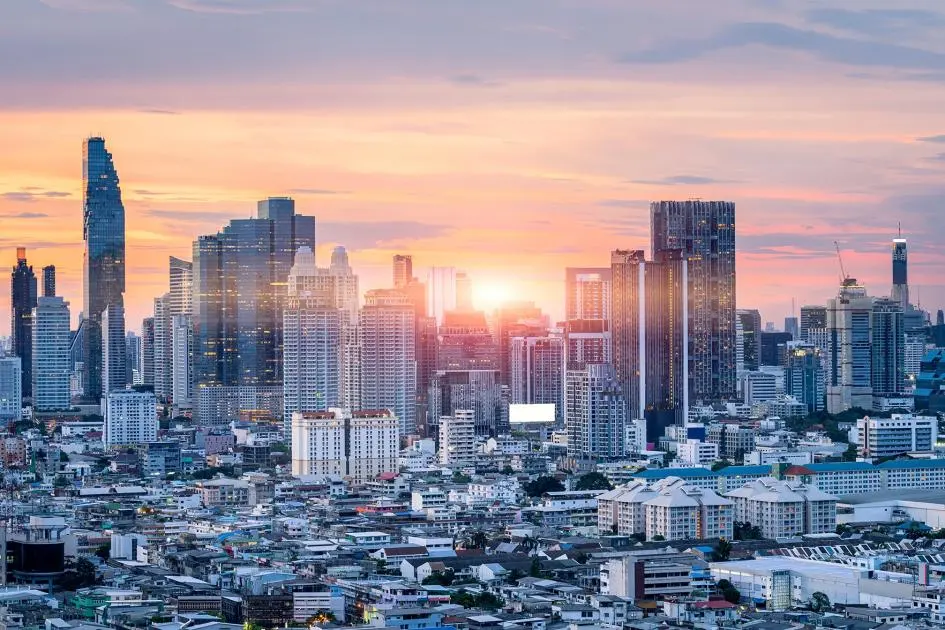
Thailand has recently dominated global headlines across multiple fronts—ranging from a devastating mass shooting and subsequent gun control debates to economic headwinds, diplomatic maneuvering, and a bustling sports and business calendar. This summary consolidates the major storylines shaping the country’s current narrative.
Economic Outlook and Trade Relations
Thailand’s economy is showing signs of strain, with second-quarter GDP growth slowing to 1.9%, driven largely by weak domestic consumption and challenges in the energy and travel sectors. Despite this, the government’s 2026 growth forecast midpoint stands at 2.2%, suggesting cautious optimism. Compounding these concerns, Thailand revised its factory gauge amid US transshipment concerns, and finance officials have warned that a THB600 billion deficit exposes vulnerabilities in the nation’s energy sector.
Trade negotiations with the United States remain a focal point, with officials expressing hope for deeper trade ties despite tariff doubts. Thailand has also ruled out any security-tariff trade-off ahead of a visit from US Secretary of Defense Pete Hegseth, signaling a desire to keep economic and security discussions separate. Meanwhile, Bangkok Post reports ongoing negotiations aimed at finalizing a broader US-Thailand trade deal (Bangkok Post).
Gun Violence and Public Safety Crisis
The most urgent issue facing Thailand is its gun violence epidemic, following a horrific school shooting near Bangkok that left at least eight to nine people dead, including a 12-year-old girl who succumbed to her injuries days later. Students described terrifying scenes, with some recounting how they had to climb over school fences to escape the gunman. The tragedy has reignited scrutiny of Thailand’s staggering 10 million privately owned firearms, prompting the government to tighten gun controls in response (BBC).
In Bangkok’s famous gun district, however, traders argue that the government’s crackdown “misses the mark,” claiming that legitimate dealers are being penalized while illegal firearms remain widely accessible. Some dealers have reportedly switched businesses entirely to survive the new regulatory environment. At a temple memorial, grieving parents mourned the loss of their children, with one father publicly pleading for forgiveness, underscoring the emotional toll the tragedy has taken on the community.
Business Expansion and Industrial Investment
Despite economic headwinds, Thailand continues to attract significant business investment. Global Switch announced its entry into the Bangkok data center market, while Delta Electronics’ Thai subsidiary reported resilience despite a recent share slump. Japanese companies operating in Thailand are reportedly preparing to upgrade production bases with new machinery and digital technology, reflecting confidence in the country’s manufacturing sector.
The renewable energy sector is also gaining momentum, with Thailand’s renewable energy pipeline drawing up to US$2.61 billion in investment. A separate solar hospital initiative aims to save US$1.63 million in power costs. In the automotive space, Thailand is reportedly overhauling its auto tax structure following Indonesia’s Toyota investment bid, while Toyota itself has expressed confidence in maintaining its Thai production base despite regional competition.
Diplomatic and Regional Developments
Thailand’s foreign policy has been active on multiple fronts. Deputy Prime Minister Anutin Charnvirakul stated that Thailand “will not choose sides” in broader geopolitical rivalries but must keep its options open, a stance reinforced by his visit to Sydney to advance the Thailand-Australia strategic partnership. Thailand has also positioned itself as neutral in the US-China AI race, reflecting its broader balancing act between major powers.
Regional tensions persist as well, with Thailand rejecting Cambodia’s “ASEAN police” accusation, and reports emerging of the US deepening police partnerships across Southeast Asia to counter Chinese influence. On the humanitarian front, Human Rights Watch raised concerns over the potential deportation of ethnic Karen refugees to Myanmar, highlighting ongoing human rights challenges along Thailand’s borders.
Sports and Cultural Highlights
Thailand’s sporting scene has been particularly active, especially in the ASEAN Championship, where the national football team faces Singapore in a highly anticipated semifinal clash. Coach Anthony Hudson has downplayed a reported confrontation with his Singaporean counterpart while balancing a personal friendship with Singaporean star Ilhan Fandi. Beyond football, Thailand is set to host the opening round of the 2027 MotoGP season, and boxer Nabil Anane has announced his bid to represent Thailand at the LA28 Olympics.
Culturally, Thailand continues to promote its culinary heritage through initiatives like “Soul of Thai Cuisine,” while environmental efforts include stepped-up dugong protection following 209 strandings over the past decade. A newly discovered “dragon” species in Thailand’s mountain forests also made headlines, adding to the country’s rich biodiversity narrative.
Tourism, Infrastructure, and Emerging Technology
Tourism infrastructure is receiving renewed attention, with Suvarnabhumi Airport upgrades accelerating ahead of peak season. Advanced air mobility is also emerging as a priority, with Eve Air Mobility and RV Connex signing an MOU to explore urban air mobility solutions, alongside broader discussions on airspace safety and infrastructure.
On the technology front, industrial AI is reportedly powering a significant shift in Thai manufacturing, while businesses are being urged to monitor three key technology trends shaping the future. These developments, paired with Thailand’s push into AI neutrality and digital transformation, suggest a nation actively repositioning itself within the global technology landscape.
Conclusion
Thailand currently stands at a complex crossroads—grappling with the aftermath of tragedy while simultaneously pursuing economic resilience, diplomatic balance, and technological advancement. As the country navigates these intertwined challenges, its ability to reform gun laws, stabilize trade relations, and sustain business investment will likely define its trajectory in the months ahead.
Source : Google News – Search

Shehzad Poonawalla Quits BJP, Cites Personal & Financial Constraints

1,600 homes could be built in tiny Cambridgeshire city as Network Rail raises ‘significant concerns’

Latam Digital Assets Conf to Bring Financial Institutions to Buenos Aires





-

 Fashion4 days ago
Weekend Open Thread: Ann Taylor
-
 NewsBeat7 days ago
Communication cards help banking customers access services or report scams
-
 Sports5 days ago
This U.S. Amateur is a glimpse into golf’s future in more ways than you think
-
 NewsBeat3 days ago
Myanmar says over 300,000 Rohingya refugees verified for repatriation as exodus enters ninth year
-

 Sports3 days ago
Birmingham 2026: Day 6 Timetable for Irish Athletes
-

 Politics3 days ago
SEQ Code: The Three Letter Boarding Pass Code That Could Give You The Worst Seat
-
 Tech4 days ago
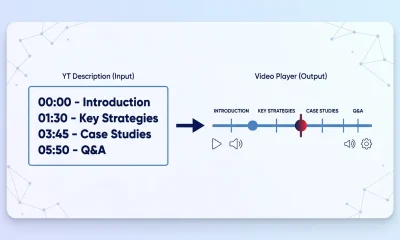
11 Ways to Rank Your Videos
-
 Entertainment6 days ago
Keke Palmer Subtly Hints At Sean Evans Drama With Cryptic Post
-

 Fashion7 days ago
Coffee Break: The Fonteyn Jane Flat
-

 Tech7 days ago
Zoom Screen-Sharing Bug Let People Fully Take Over Other Devices On A Call
-

 Fashion7 days ago
Should you refinance your debt? Pros, cons, and real numbers
-

 Fashion7 days ago
Claire Life: Kicking Off MVAAFF With the C Suite Luncheon Featuring Phylicia Rashad, Letoya Luckett, and More!
-
 Crypto World6 days ago
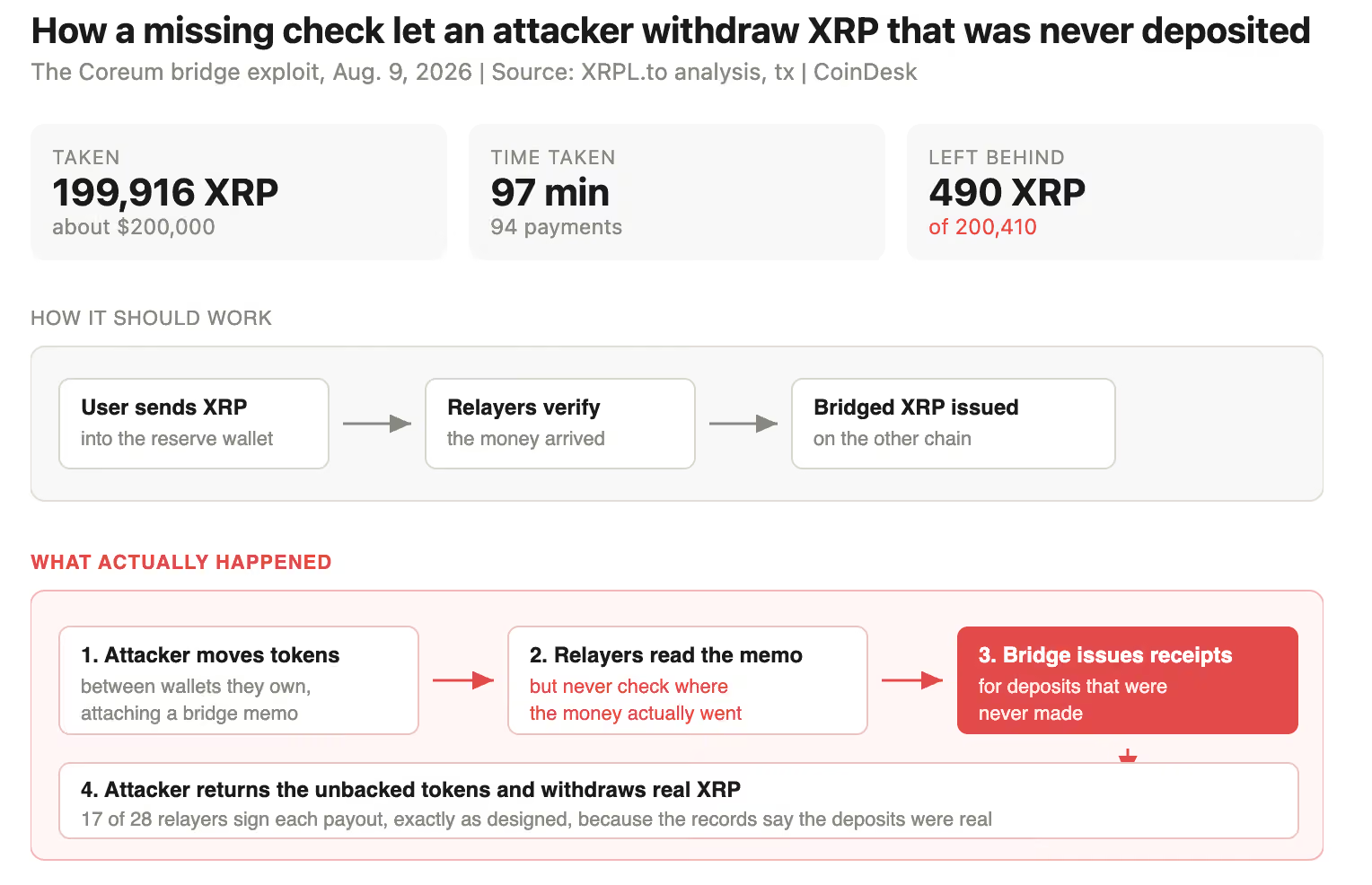
XRP bridge drained after software mistook fake deposits for real ones
-

 Sports6 days ago
DeQuan Jones in ‘high spirits’ after successful leg surgery
-

 Tech5 days ago
DeepSeek Harness launches as open source rival to Claude Code, alongside V4-Pro on API with higher prices
-
 Crypto World6 days ago
Perplexity AI Predicts an XRP Scenario Few Analysts Are Discussing
-

 Politics6 days ago
How Average Are You In The UK?
-

 Tech6 days ago
SpaceXAI’s Grok Bot turns agents into persistent digital coworkers that can operate your apps for $120-per-month
-

 Politics7 days ago
In the Chris Kaba case, the police watchdog capitulated to the mob
-
 Entertainment6 days ago
2026’s Most Ambitious Fantasy Movie Officially Scores Sequel Update
You must be logged in to post a comment Login