
Tech
Solar Power and Batteries Have Been Keeping Europe's Grid Stable


AleRunner writes: “Solar has been doing the ‘heavy lifting’ to help Europe meet its energy needs amid a string of blistering heatwaves,” Euronews tells us. Meanwhile, as Europe’s energy demands rise with the heat, jellyfish have been causing shutdowns and reduced power output at multiple reactors at French nuclear plants, as we already discussed. Euronews reports: A new analysis from energy think-tank Ember found that solar output in European countries rose by up to 17 percent on heatwave days in June and July. Researchers say that this helped power the grid as electricity demand increased by as much as a quarter on hot days. Heatwaves often trigger a spike in electricity consumption due to the sudden need for cooling, mainly from energy-intensive air conditioning (A/C) units.
The International Energy Agency (IEA) estimates that space cooling, which is mostly A/C units and fans, consumed around seven percent of the world’s electricity in 2022. Even in countries where A/C ownership is low, countries experience energy demand spikes when scorching temperatures hit. During the early summer heatwaves of 2025, France, for example, recorded an evening electricity peak that was 25 percent above the off-season average due to air conditioning.
Ember’s analysis found that during the late-June heatwave this summer, daily electricity demand rose byup to 28 percent in Italy, 23 percent in Hungary, 14 percent in France and 13 percent in Spain compared with pre-heatwave days. It says as heatwave-driven demand increased, solar was the only major power source to perform “better than usual.” Compared with other days in June and July, average daily solar generation during the heatwaves was 17 percent higher in France and Hungary, five percent higher in Spain and the same in Italy.


Read more of this story at Slashdot.

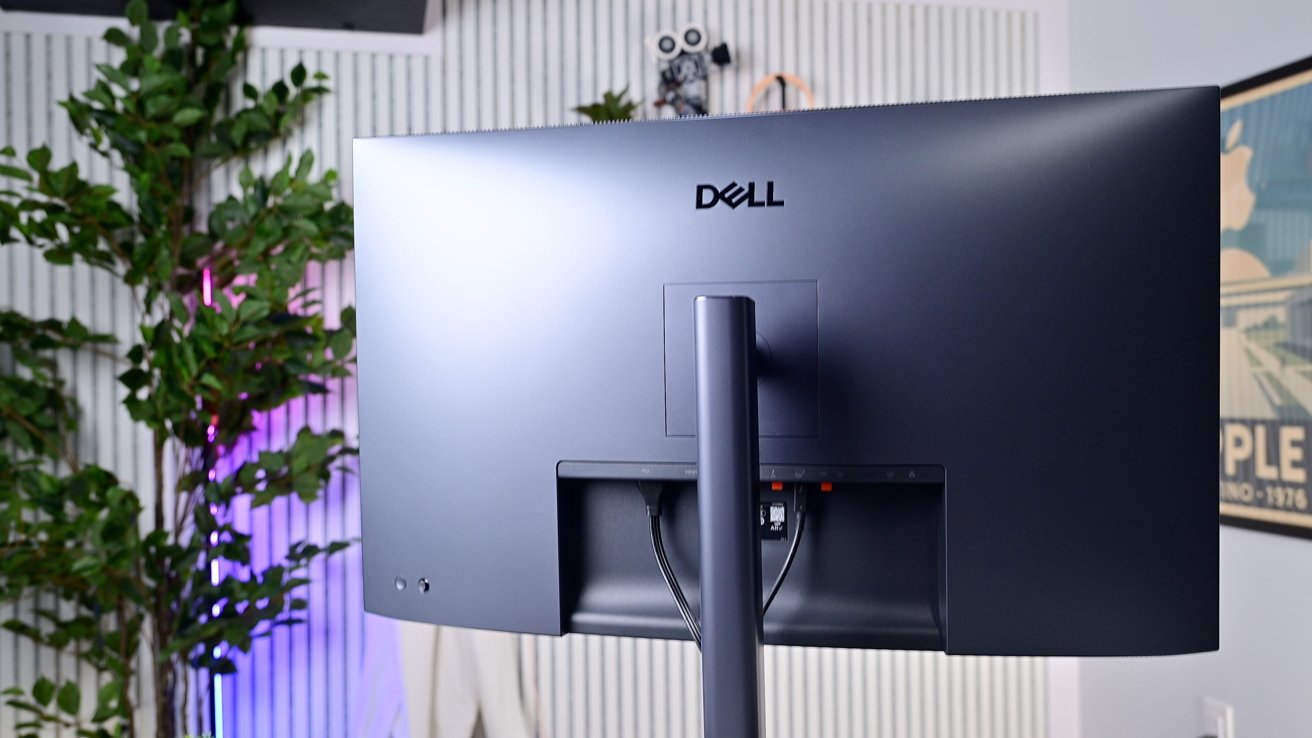
The Dell UltraSharp 32 4K QD-OLED model U3226Q is a color-accurate OLED monitor with a full port hub. It makes a strong case as a Studio Display XDR alternative for Mac users, assuming you’re fine with not having a Retina-class display.
A great monitor can anchor a whole desk setup. For Mac users who can afford it, the obvious choice has long been Apple’s displays.
Those displays are beautiful, but price and port quantity have always been limiting factors for most. Third-party OLED panels are an alternative, but generally with design compromises.
The Dell UltraSharp 32 4K QD-OLED (U322Q) is one such option, with both OLED and the aforementioned design compromises. It targets designers, photographers, videographers, and other creatives who need color accuracy.
It’s not Retina, but more on that in a bit.
Dell UltraSharp 32 4K QD-OLED review: Specifications
| Product | Dell UltraSharp 32 4K QD-OLED Monitor (U3226Q) |
| Price | $2,439.99 (sale), $2,599.99 estimated value |
| Panel | 31.5-inch QD-OLED, anti-glare low-reflectance |
| Resolution | 4K UHD (3840 by 2160), 140 pixels per inch |
| Refresh rate | 120Hz with Variable Refresh Rate |
| Response time | 0.03 ms gray-to-gray |
| Brightness | 300 nits standard, up to 1,000 nits peak |
| Contrast | 1,500,000:1 native |
| Color gamut | 99% DCI-P3, 100% sRGB, 80% BT.2020 |
| HDR | VESA DisplayHDR True Black 500, Dolby Vision |
| Thunderbolt | 1 upstream (140W), 1 downstream (15W) |
| Other video | 2 HDMI 2.1, 1 DisplayPort 1.4 |
| USB | Multiple USB-A and USB-C, up to 27W |
| Networking | 2.5GbE Ethernet, KVM switch |
| Stand | Height, tilt, swivel, pivot |
| Weight with stand | 21.7 pounds |
| Warranty | 3 years, includes OLED burn-in coverage |
Dell UltraSharp 32 4K QD-OLED model U3226Q review: Design
Design is the monitor’s clear weak point. It wears the same matte dark finish as most professional displays. Nobody will confuse this for a Studio Display.

Dell UltraSharp 32 4K QD-OLED model U3226Q review: The Dell monitor still has a boring, utilitarian design
For a desk built around Apple hardware, the contrast is visible. The Dell looks like typical plastic-clad office fare.
That said, you’re going to be buying this monitor more for its capabilities, rather than its appearance.
How much that appearance matters, is an exercise for the reader. This doesn’t matter so much to me.
The stand is versatile, with height, tilt, swivel, and pivot. This level of articulation is helpful for anyone who has to stare at their monitor for lengthy periods.

Dell UltraSharp 32 4K QD-OLED model U3226Q review: The monitor can pivot left and right, tilt, adjust its height, and rotate vertically
If your office environment is too light-heavy, a snap-on light hood is included for glare control. It’s a nice addition, but in this world of multiple displays on one desk for one workstation, I’m not sure how much use it’s going to get.
Dell UltraSharp 32 4K QD-OLED model U3226Q review: The panel
The panel is the reason to buy this monitor. It is a 31.5-inch QD-OLED running at 4K and 120Hz. This is notably not “Retina.”
The panel itself, QD-OLED, gives per-pixel light control for true blacks and color representation. Contrast, viewing angles, and response are all excellent.

Dell UltraSharp 32 4K QD-OLED model U3226Q review: The display does a decent job at avoiding glare, especially when in use
The anti-glare low-reflectance coating handles bright rooms well. It diffuses my Texas office’s lighting regardless of the time of day, without washing the picture out.
Color coverage reaches 99% of the DCI-P3 gamut. This is essential for people working with color, like YouTubers editing video or avid photographers.
When it comes to brightness, HDR peaks at 1,000 nits, The 300 nits available in standard use is more than enough to work with, too.

Dell UltraSharp 32 4K QD-OLED model U3226Q review: Content has great contrast and rich colors
In extended use, the color and contrast impress the most. HDR content looks vivid, and photos and video stand out.
Dell UltraSharp 32 4K QD-OLED model U3226Q review: Resolution
The panel’s one real actual weakness is pixel density. At 32 inches in size and at 4K, it works out to 140 pixels per inch.
That is not sharp by Apple monitor standards, and is nowhere near Retina. Users of high-density Apple displays will notice softer text up close without additional software

Dell UltraSharp 32 4K QD-OLED model U3226Q review: The Dell UltraSharp (left) is larger than Apple’s Studio Display (right)
An Apple display packs more pixels into less space. For reference, the Studio Display reaches 218 pixels per inch, while using a 27-inch screen.
For some workflows, the larger canvas is worth it. For others, density matters more than screen size. The tradeoff is size against sharpness at this price. A 5K OLED of this size would cost far more than this.

Dell UltraSharp 32 4K QD-OLED model U3226Q review: There’s no missing the lower pixel density when comparing the Dell UltraSharp (left) to the Apple Studio Display (right) with their respective 4K and 5K resolutions
In this case, the resolution isn’t necessarily a bad thing, considering the size and what OLED delivers.
Dell UltraSharp 32 4K QD-OLED model U3226Q review: Ports and Mac connectivity
Connectivity is a major strength for Mac users. The monitor is built around Thunderbolt 4.
One upstream Thunderbolt port delivers up to 140W to a Mac, as well as handling video duties. If you’re into a single-cable lifestyle, this means you can connect a MacBook Pro and recharge it without needing separate data or video cables.

Dell UltraSharp 32 4K QD-OLED model U3226Q review: The dell monitor has a full hub, including a downstream Thunderbolt port
A second Thunderbolt port handles data or daisy chaining. If you have enough screens available, it can drive up to three of these 4K 120Hz displays in a chain.

Dell UltraSharp 32 4K QD-OLED model U3226Q review: There are two HDMI ports on the Dell UltraSharp
The rest of the hub element of the display is generous. It adds two HDMI ports, DisplayPort, multiple USB ports, and 2.5GbE Ethernet. A front pop-down offers three more USB ports, all 10 gigabits per second.

Dell UltraSharp 32 4K QD-OLED model U3226Q review: There are two USB-C ports and a USB-A port hidden on the front for easy access
A built-in KVM switch lets one keyboard and mouse serve two machines, such as a Mac and a PC. This functionality is… okay. It does what it says it will do in the documentation. It’s all handled on the monitor, and it very much depends on your workflow if this matters at all.
In my case, it doesn’t matter. A display such as this one is my main working monitor, with a periodic delve into testing and so forth. In those cases, the attached peripheral either has its own I/O like a remote for a media player, a controller for a console, or for a network attached storage status display.
Even if it was my second landscape display on my desk that I use on busy days for a third display and for my PC after-hours, there’s still I/O that doesn’t need a KVM.
As with all things, your mileage may vary. It’s a nice feature to have on deck even if you don’t need it this second.
Dell UltraSharp 32 4K QD-OLED model U3226Q review: Versus the Studio Display XDR
The natural Apple rival is the Studio Display XDR. The two take different technical paths to a similar goal.
The Dell uses QD-OLED with per-pixel control and wide viewing angles. The Apple model uses Mini LED backlighting instead, which reaches a higher 2,000 nits.
Apple wins on pixel density, at 218 against 140. Apple also adds speakers and a Center Stage camera.
The Dell answers back with its port hub and larger screen. It also undercuts the Apple model on price.
The Studio Display XDR runs around $3,300. The Dell sits below it, at $2,439.99 when on sale.
Dell UltraSharp 32 4K QD-OLED model U3226Q review: A pro OLED that courts Mac users
The UltraSharp 32 QD-OLED is a strong pick for a specific buyer. It suits Mac users who prize color accuracy and connectivity, and need that extra screen estate.

Dell UltraSharp 32 4K QD-OLED review: A solid option for Apple users
The panel is its best feature, with reference color modes and a deep OLED contrast. The 140 PPI density is the main compromise to weigh in here, but the cost savings make a difference here.
Against the Studio Display XDR, it’s all about personal priorities. Apple leads on density and brightness, Dell on ports, size, and absolute blacks.
For me, those ports are critical. My workstation is cross-platform, relatively dark, and multiple machine. A one-input monitor, no matter how nice, no matter how stylish, isn’t my best choice.
For color-critical work with a big port count, the Dell delivers. If color-accuracy is less important, the consumer-focused Dell 32 Plus 4K QD-OLED (S3225QC) is a solid candidate, and has speakers, for $800.
Dell UltraSharp 32 4K QD-OLED model U3226Q Pros
- Reference-grade QD-OLED color and contrast
- 140W Thunderbolt with a deep port hub
- Built-in colorimeter for automated calibration
Dell UltraSharp 32 4K QD-OLED model U3226Q Cons
- 140 PPI looks soft against Apple displays
- Generic design next to a Mac setup
- Lower peak brightness than the Studio Display XDR
Rating: 4 out of 5
The Dell UltraSharp 32 4K QD-OLED display is a solid performer. Apple devout, like our videographer, won’t care for the design.
For me, though, I look at the monitor panel, and don’t need to savor bespoke aluminum. The color accuracy is a major selling point, and the Thunderbolt dock integrated into the unit is very nice.
A lack of speakers isn’t a big deal for the main buyers of this machine. Only Apple seems to have a handle on good and small speakers.
Where to buy the Dell UltraSharp 32 4K QD-OLED
The Dell UltraSharp 32 4K QD-QLED is available from Dell directly, with a regular price of $2,599.99. It has been spotted at closer to $2,400 when on sale.


Ken Okuyama, the Japanese designer who shaped the Ferrari Enzo during his years at Pininfarina, brought a new open mid-engine car to the Pebble Beach Concours d’Elegance on August 16. Named Kode89, it arrived after a quiet run on the Tour d’Elegance a few days earlier, with Okuyama himself at the wheel. The car marks twenty years since he set up his own studio and represents the first time his company has built a complete vehicle around an original chassis rather than adapting platforms from Lotus, Ferrari or Lamborghini.
The name and dimensions are reminiscent of 1989, which Koyama considers to be the pinnacle of automobile design. That period saw the introduction of the Pininfarina Mythos concept, but the real highlight was the wave of razor-sharp sports cars that began to appear that season. The Kode89 is a hard-edged beast, with flat front fenders and headlights that sit low and near to the front spoiler. The cooling intakes and the rather slim greenhouse remind me of the Enzo. The folds running over the back shoulders indicate a fixed wing with triangle lights tucked up in the corners. There is no roof to speak of, so the bodywork flows seamlessly.

LEGO Technic Ferrari 488 Pista Car 42235
- SPORTS CAR BUILDING TOY – Fuel kids’ passion for high-performance vehicles with the LEGO Technic Ferrari 488 PISTA Car (42235) model building kit…
- TOY CAR WITH REALISTIC DETAILS – Kids can learn new engineering skills as they put together and explore the V8 engine with moving pistons…
- FORZA HORIZON 6 UNLOCKABLE – Unlock a special LEGO Technic livery in the Forza Horizon 6 video game – please note that a copy of the game is…
The car’s construction begins with an aluminum spaceframe created and built in the company’s Yamagata facility, which is a bit of an antiquated method in an age of carbon fiber. The 12 cylinder engine, a genuine 12 cylinder engine, not a decapitated V6, is positioned longitudinally behind the cabin and, as in a legitimate sports vehicle, feeds power to the rear wheels. Using all of the current gimmicks, such as 5 axis machining and 3D printed parts, as well as certain traditional coachbuilding skills, is a really unusual approach. To be clear, the goal weight is little under 1,300 kilograms, with 235/30 R20 at the front and 295/30 R20 at the rear.


Power comes from a pair of naturally aspirated V12 engines, yes, two different ones, each linked to a six-speed manual transmission. The basic 5.4-liter engine produces 540 horsepower at 7000 rpm and 569 Nm of torque at 5,000 rpm. If you desire more power, a 5.9 liter version from a Japanese specialist produces around 750 horsepower. Plus, the chassis is adaptable to a variety of V12 configurations, and they are currently working on a bi-fuel hydrogen combustion variant that can run on either gasoline or hydrogen.


Only 8 of supercars will be produced. The first year’s allocation of two cars, including the one showed off at Pebble Beach, has already been sold, and each one will be built to order, giving you a say in the final specifications. In a market where everyone and their dog is going dual-clutch or electrification, the Kode89 is delightfully old-school, with three pedals and a high-revving 12-cylinder engine at the heart of the driving experience. Koyama’s team has actually planted the legacy of small-volume, designer-led automobiles in Japan, and combined it with some rather modern manufacturing techniques to create a limited run of open hypercars aimed straight at those who still want to shift for themselves.
[Source]
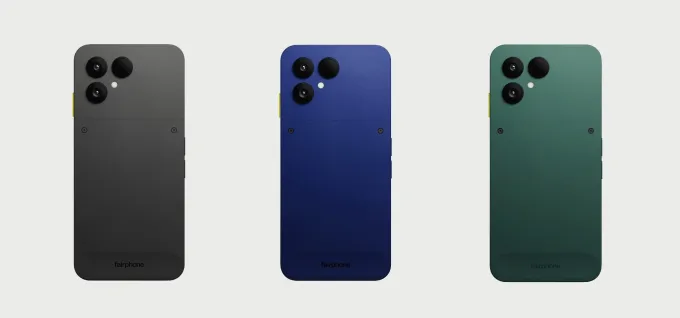
Fairphone, the Dutch company known for its sustainable and repair-friendly phones, on Tuesday said its latest smartphone, Fairphone (Gen 6+), is now available in the U.S, starting at $649.
The company previously had a partnership with French open-source operating system maker e/OS to sell a “de-Googled” version of its previous smartphones in the States, but this is the first time people in the U.S. can buy the company’s phones directly without any modifications. The company said the Fairphone 6+ will support T-Mobile and AT&T at launch.
The Fairpone 6+ is strictly a midrange Android offering, but given the increasing prices of consumer gadgets amid the ongoing component shortages, a repairable device that can be made to last for years may prove a good proposition.

“We’re delivering a device built from the ground up to be opened, repaired, and kept alive for many years,” Fairphone CEO Raymond van Eck said.
The Fairphone 6+ runs on Qualcomm’s mid-range Snapdragon 7s Gen 4 processor, and has 12GB of RAM. The phone has a 4,415 maAh battery with support for 30W fast-charging. It features a 6.31 LTPO OLED display with an adaptive refresh rate of up to 120Hz.
As for photography, the phone’s main camera has a 50-megapixel Sony sensor with an f/1.88 aperture, and the secondary camera has a 13-megapixel ultrawide sensor with an f/2.2 aperture. The selfie camera on the front is a 32-megapixel sensor with an f/2.0 aperture.
Personally, I would have preferred a telephoto camera instead of an ultrawide for a two-camera setup. On paper, these cameras look like they would be good enough to take photos in the daylight, but in low light, expect the performance to dwindle.
The Fairphone’s main selling point, however, are its 12 replaceable parts, which include important components like the battery, cameras, USB-C port, and the display, which can be swapped out using a single screwdriver. The company offers five years of warranty and software support until 2033.
Fairphone claims it also focuses on keeping its manufacturing process sustainable. The company said it was able to reduce the carbon footprint to 30 kg of CO2e for each of the Fairphone 6+ it manufactured.
The Fairphone 6+ is available in Forest Green, Horizon Black, and Cobalt Blue colorways. The company is also selling accessories, like a finger loop, lanyard and card holder, which users can install by removing the back cover.
When you purchase through links in our articles, we may earn a small commission. This doesn’t affect our editorial independence.
Tech
Just Video Walls Absolute Black MicroLED Targets OLED-Level Blacks at Massive Scale for CEDIA 2026
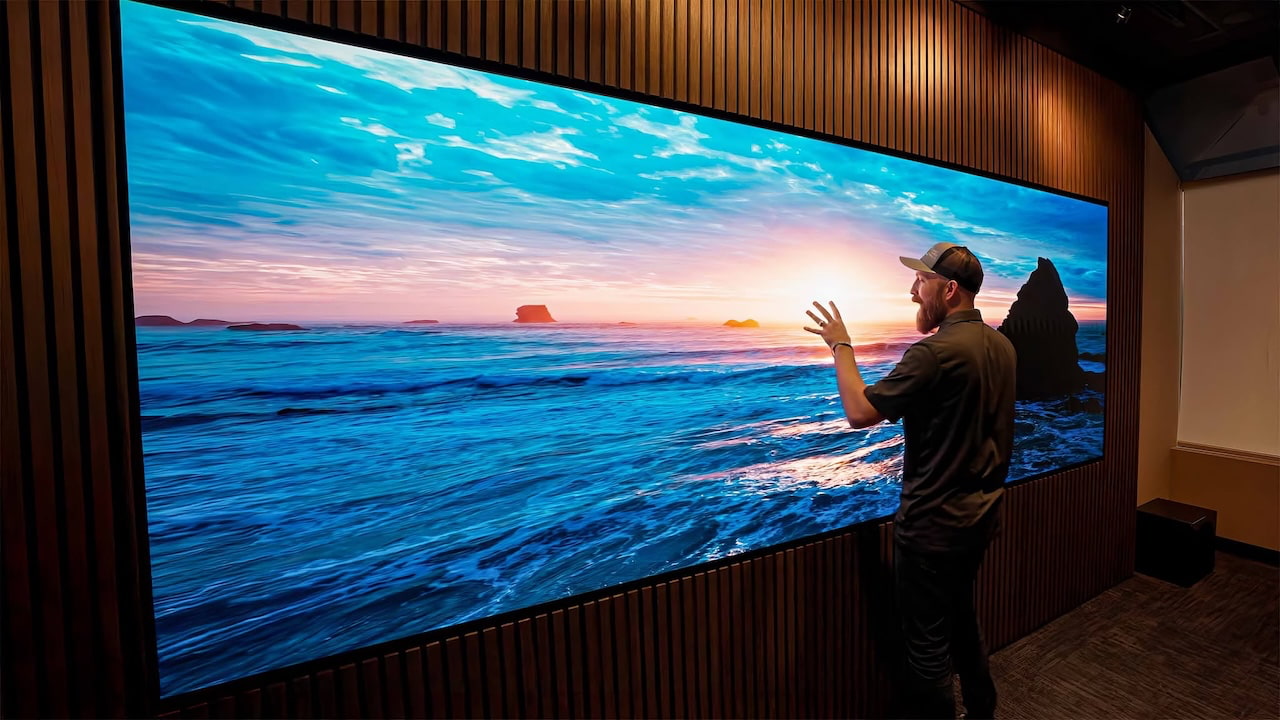
CEDIA Expo 2026 is rapidly turning into a very expensive argument over the future of the big-screen home theater. Quantum Media Systems is pushing native 8K processing, DreamWall is attacking MicroLED heat and installation complexity, and Christie is arriving with a 15,000-lumen native 4K projector that appears capable of illuminating portions of Colorado.
Just Video Walls is entering that fight from another direction with Absolute Black, its new flagship MicroLED platform for CEDIA Expo 2026. Instead of emphasizing resolution, heat management or raw light output, JVW is focused on the part viewers actually stare at: black levels, uniformity and whether a massive modular display can look like one seamless image rather than a wall assembled from individual LED cabinets.
If Absolute Black can pull that off, it gives MicroLED a much stronger argument against both premium projection and giant OLED displays.
What Is Just Video Walls Absolute Black?
Absolute Black is a new MicroLED platform designed around an ultra-dark phosphor surface combined with LEDs that occupy approximately one-tenth the visible surface area of more conventional MicroLED designs. The idea is rather clever: smaller visible emitters leave more genuinely dark surface between the pixels while also presenting less reflective LED area to ambient light.
Just Video Walls says that combination produces deeper perceived blacks, greater image depth and a display surface that becomes less noticeable when content is playing. The company is targeting approximately 99% coverage of DCI-P3 and supports 12-bit source color processing for smoother gradients and more precise color reproduction.
The other significant improvement involves uniformity.
Modular MicroLED walls are assembled from multiple cabinets, and even small differences in brightness or color between those modules can become visible across a very large image. JVW claims Absolute Black improves base color and brightness uniformity by 57% compared with its existing technology, reducing tonal differences and making the boundaries between modules harder to detect.
That sounds less exciting than putting “8K” on the front of the brochure until you have actually seen a giant video wall with one cabinet that does not quite match the others. Once you notice it, good luck looking anywhere else.
Dark Scenes Are Another Problem
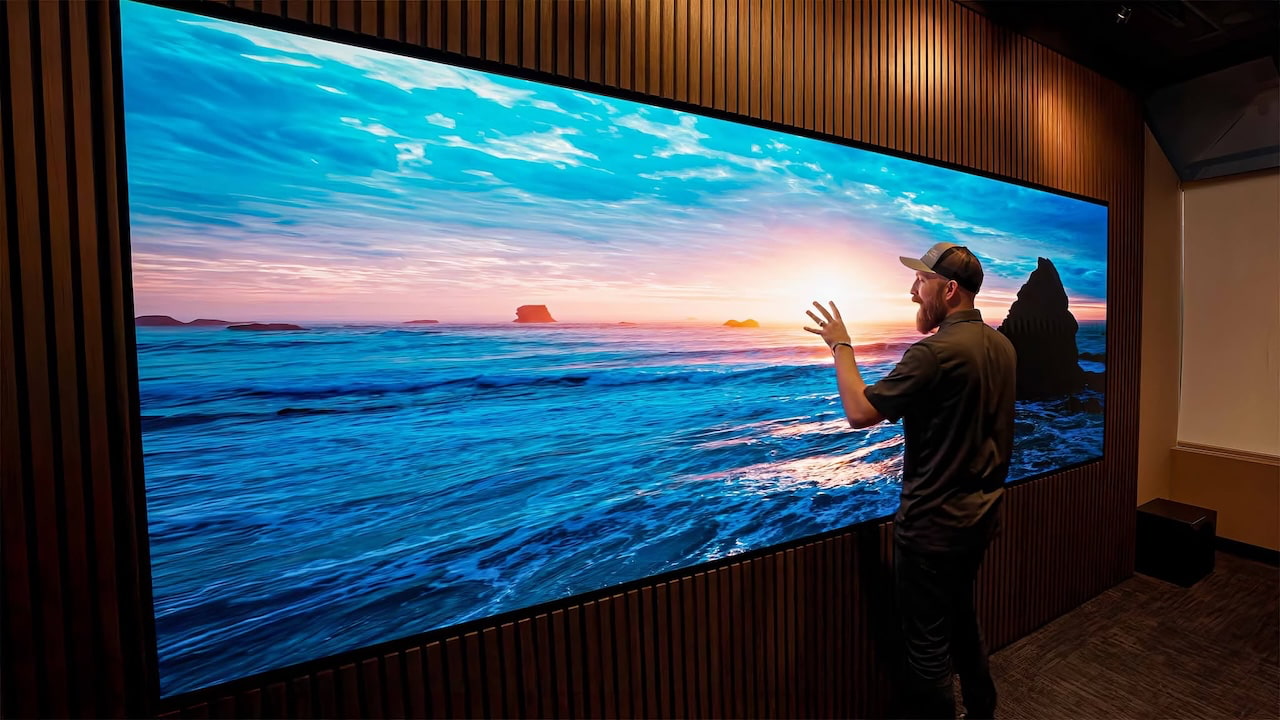
Absolute Black also uses what JVW describes as an ultra-high-frequency LED driving architecture designed to maintain motion fidelity across the grayscale range. Conventional direct-view LED systems can exhibit scan artifacts or reduced motion consistency at extremely low light levels; JVW says its new platform is designed to eliminate visible scan lines even in very dark scenes down to 0.001 nits.
That is potentially important for movies.
A giant MicroLED display capable of producing spectacular brightness with sports or HDR demonstration footage is not particularly difficult to appreciate. Maintaining clean shadow detail, uniform blacks and convincing low-level motion during something dark and deliberately miserable is a much harder test.
Anyone can make Top Gun: Maverick look impressive on a 150-inch wall.
Try The Batman.
Why Should Consumers Care?
MicroLED already offers something neither conventional OLED televisions nor projection systems can easily duplicate: enormous modular screen sizes combined with self-emissive pixels and enough brightness for rooms that are not completely dark. The problem is that scaling the image exposes other weaknesses, including module uniformity, reflections and visible seams. eCoustics encountered exactly those issues when examining large MicroLED systems at CEDIA Expo 2025.
Absolute Black is interesting because JVW is addressing the picture itself rather than merely making the wall larger.
If its claims hold up in Denver, deeper blacks and improved uniformity should be visible whether you are watching a 4K movie, football, gaming or an 8K demonstration. Consumers do not need a new content ecosystem to benefit from better black levels.
There is also a practical advantage over projection. Direct-view MicroLED does not require a projector hanging from the ceiling, a projection throw path or a darkened room to produce a punchy image. That makes these systems increasingly relevant for luxury media rooms and multipurpose spaces rather than just dedicated cinemas.
But MicroLED comes with its own complication: audio. A solid LED wall is not acoustically transparent, so the left, center and right loudspeakers cannot simply sit behind the image as they can with a perforated or woven projection screen. Even Just Video Walls has acknowledged that converting projection theaters to MicroLED can create substantial front-channel placement challenges.
Nobody said replacing a projector with several hundred thousand dollars of LEDs was going to make the room simpler.
Who Does Absolute Black Compete With?
The luxury MicroLED market is becoming surprisingly crowded.
Quantum Media Systems XDR5-8K is perhaps the most obvious competitor on the custom residential side. Its emphasis for CEDIA 2026 is different: Quantum is concentrating on processing multiple native 8K sources simultaneously and turning an enormous display into a configurable entertainment and information canvas.
DreamWall Elite Series Platinum P0.7 takes another route with a 0.7mm-pixel-pitch COB MicroLED platform that can create a 121-inch 4K display. DreamWall is also emphasizing its CooLED thermal architecture, reduced power and cooling requirements, and simplified residential installation.
Samsung The Wall remains one of the best-known names in modular MicroLED and already uses low-reflection black technology while offering multiple pixel pitches and highly configurable installations.
LG MAGNIT is another formidable competitor. LG’s latest 136-inch Active Micro LED uses an active-matrix architecture with individual pixel control and is specifically being positioned for premium home cinema and visualization applications.
Sony’s Crystal LED family also competes in the broader premium direct-view LED market, although much of Sony’s current emphasis remains professional and commercial installations. Its new 135-inch Crystal LED UNIFY demonstrates how quickly all-in-one large-format direct-view systems are evolving.
What We Still Don’t Know
Just Video Walls has not disclosed complete consumer specifications or formal pricing for Absolute Black in its CEDIA announcement. Peak brightness, available pixel pitches and configurations, specific resolutions and system pricing have not yet been detailed publicly.
There are already Absolute Black installations being demonstrated through dealers; Beyond Audio in Scottsdale, Arizona, for example, advertises a 156-inch, 0.9mm-pixel-pitch Absolute Black demonstration wall. But this is emphatically not something that arrives from Best Buy on Tuesday afternoon with two guys and a wall mount.
JVW sells through the custom-installation channel and requires Absolute Black dealers to maintain an active showroom demonstration, complete company training and meet specific installation and service requirements. That model makes sense because with modular MicroLED, calibration, structural preparation and installation are inseparable from the product itself.

The Bottom Line
Just Video Walls Absolute Black is interesting because it is not pretending that another enormous resolution specification automatically makes a better television. By reducing the visible LED area, increasing the amount of dark surface between pixels, improving uniformity and addressing low-level scan artifacts, JVW is targeting weaknesses that can become painfully obvious when a display grows to 150 inches and beyond.
The competition is also pushing MicroLED in different directions. Quantum is betting on 8K processing and multi-source flexibility, DreamWall is concentrating on heat and installation, while Samsung and LG bring enormous manufacturing resources and established display technology. Absolute Black’s pitch is simpler: make a gigantic MicroLED wall disappear into the image the way a great OLED can.
If Absolute Black delivers at CEDIA Expo 2026, the most interesting specification may not be the number of pixels on the wall but how little of the wall you actually notice. Better blacks, fewer visible module transitions and convincing low-level performance could make MicroLED a much more formidable alternative to premium projection for buyers who want a 150-inch-plus image without living in a permanently darkened room.
The unanswered question is price. Just Video Walls has not announced Absolute Black pricing, but comparable premium MicroLED systems already live comfortably in six-figure territory. Samsung currently lists its 146-inch 4K The Wall at $219,999, while other 0.9mm systems around 200 inches can approach or exceed $140,000 before the room, audio system and other integration costs enter the conversation. Absolute Black is JVW’s flagship platform, so anyone expecting Costco pricing should probably remain seated.
At this level, the competition is no longer between televisions. It is between an extremely expensive MicroLED wall and an extremely expensive projection system; and which one makes you forget how much you just spent.
For more information: justvideowalls.com
Related Reading:
Bruce66423 shares a report from The Guardian: Sainsbury’s has paused the use of AI face scanning in one of its stores after a customer was wrongly identified as a shoplifter and ejected from the shop. “I was embarrassed, mortified even, and felt quite humiliated and powerless,” Matt Arnold, 46, said of his ordeal. The comedy promoter was buying supplies in the store in East Dulwich, in south-east London, for a standup event at Dulwich Hamlet football club when, after scanning his items and a Nectar card, he was approached by two managers who told him he could not be served owing to an earlier incident. He was then asked to leave and they tried to escort him from the store.
As he left, he saw an overhead CCTV monitor alert with a red circle surrounding his face. He asked the shop staff to keep his shopping in the trolley so his friend could come and pick up the supplies for the comedy night happening soon next door. “I think they were quite confused by this, understandably, but agreed and my colleague Dave went in to pay for and pick up the shop about five minutes later. There was no pause for thought from the staff, no suggestion that they understood this is not how a shoplifter would behave. Just blindly following the machine’s orders.” Sainsbury’s head office apologised to Arnold the next day and has paused use of its AI-assisted Facewatch technology in the store while an investigation takes place. Arnold says the facial recognition tech should be paused in all stores. “Anyone could be falsely accused and at some point that will be someone vulnerable, someone with mental health issues like anxiety. It’s inevitable,” said Arnold. “Also, I would worry about the confidence-destroying effect of it happening to a younger person or someone less willing or able to stand up for themselves as I have done.”
A Sainsbury’s spokesperson said: “We have contacted Mr Arnold to apologise for his experience at our Dulwich superstore. The incident was caused by human error, not the facial recognition technology. Customers can be reassured that the Facewatch system has a 99.98% accuracy rate, and every match is reviewed by a trained manager.” A Facewatch spokesperson said their technology was not at fault in this case. “A correct alert was sent to the retailer, but was subsequently subject to human error in the way it was handled in store,” they said.
Read more of this story at Slashdot.
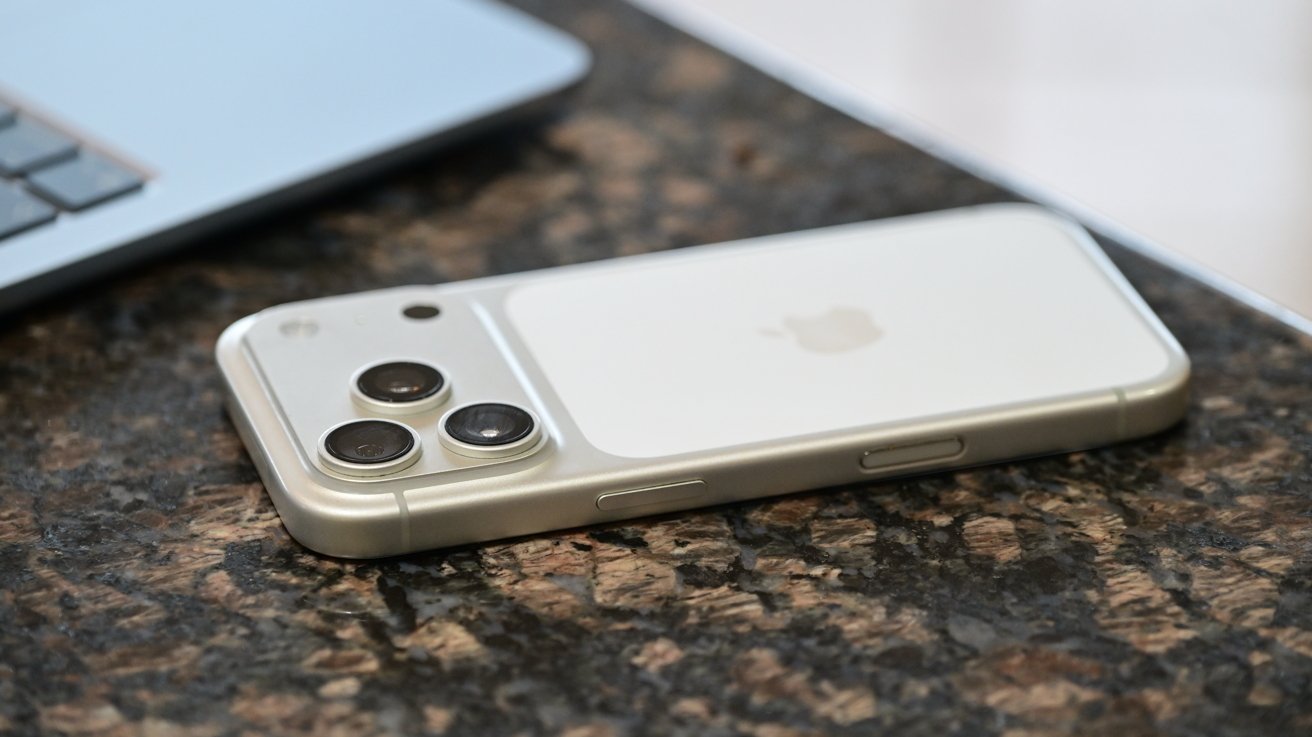
A leaker with a reasonable reputation has dropped the news that variable aperture is only coming to the iPhone 18 Pro Max, not both Pro models as previously expected.
Variable aperture is a feature that could narrow the gap between iPhone and DSLR photography still further, and it’s been rumored to be coming since at least 2024. More recent reports have said the camera component is now in production, but a new leak says it will be confined to the top of the range Pro model.
According to Ice Universe writing on Chinese social media site Weibo, the variable aperture feature will be exclusive to the iPhone 18 Pro Max. There are no further details, but the leaker implies that it’s because the component needs the larger size model.
“Even Apple isn’t immune to the trade-off,” writes the leaker (in machine translation), “where experiencing top-tier imaging capabilities means having to put up with the weight of a ‘brick.’”
The majority of smartphones, and all iPhones to date, have had a fixed aperture camera system. A variable one increases and decreases the hole through which light gets to the sensor, but it requires more internal volume as compared to a camera without to do so.
It’s the extra room needed by the apparatus that has proven to be a problem. It has previously been speculated that Apple’s moving to a camera plateau instead of a bump could provide enough space.
Given how strong the repeated rumors of this feature coming were, it has increasingly seemed certain that Apple has managed to include a variable aperture component. Then given that the camera system is a key selling point of the Pro models, it was presumed that it would come to both the iPhone 18 Pro and the iPhone 18 Pro Max.
Apple has done this before
There is a precedent for this with the iPhone 15 Pro Max in 2023. That model was the first to get Apple’s tetraprism system which meant it had a 5x optical zoom, compared to the iPhone 15 Pro’s 3x optical zoom.
In that case, the tetraprism feature was added to the non-Max version a year later, with the iPhone 16 Pro.
It’s likely that this will happen again, but it’s believed that there will be more of a size difference between the Pro and Pro Max models for 2026. As well as the regular difference in screen size, the iPhone 18 Pro Max is said to be larger than its predecessor in order to house a bigger battery.
Conceivably, the increased size of the chassis for the larger battery could mean there being more room for the variable aperture mechanism.
Note that Ice Universe has a generally good track record for leaks. Their most recent ones have centered on the iPhone Ultra dimensions.

Amazon’s updated terms of service now contain a clause that may take many subscribers by surprise. The online giant is revoking your right to file a class-action lawsuit against it if a dispute arises, according to its Conditions of Use page.
On Friday, Amazon sent an email to subscribers explaining that it will now settle any disputes via arbitration. Customers who have continued to use the corporation’s services after Aug. 14 implicitly waived their rights to bring new class-action suits against the online retail giant.
The language used in the Conditions of Use page states this new legal limitation outright.
“You and we agree that any dispute or claim relating in any way to your use of any Amazon service, or to any products or services sold or distributed by Amazon or through amazon.com, will be resolved by binding arbitration rather than in court,” the document reads. “There is no judge or jury in arbitration, and court review of an arbitration award is limited. A neutral arbitrator will resolve the dispute or claim and must follow the terms of this agreement as a court would.”
A class-action waiver is also included, which prevents customers from filing requests for arbitration together. Although Amazon is allowed to resolve batches of arbitration proceedings under detailed mass arbitration rules, each dispute must be filed individually.
Amazon’s language frames the change as a positive for its customers, since the company pledges to “pay most of the cost” for customers who choose to arbitrate disputes.
A representative for Amazon did not immediately respond to a request for comment.
A company spokesperson told CNET’s sibling site PCMag over email that Amazon has and will continue to “continually update our Conditions of Use to better serve our customers.”
“We determined that reinstating the arbitration clause will offer customers a fast, cost-effective way to resolve disputes while still giving them the option of going to small claims court,” the spokesperson wrote.
But at the end of the day, that arbitration clause may serve to stifle customer disputes by making it more difficult to seek financial restitution.

The big takeaway: Receiving compensation from Amazon may be harder
There are very few exceptions to Amazon’s new arbitration clause, and none of them are particularly great for customers. You can still take the company to small claims court, but the compensation you can receive is extremely limited.
Before the terms of service update, it only took one motivated individual to perform research, consult legal professionals and get the ball rolling on a class-action lawsuit. From there, other affected parties were able to sign on and receive compensation with comparatively little effort.
That’s not the case with an arbitration policy, which has a higher bar for individual effort and personal costs that may dissuade many customers from hashing out their financial disputes.
Before any arbitration proceeding can be filed, customers must submit a dispute claim to Amazon itself, giving the company 60 days to resolve it. If Amazon doesn’t respond during that two-month window, you can move on to the actual arbitration process.
Filing an official complaint with JAMS, Amazon’s chosen third-party arbitrator, requires you to pay a $250 fee upfront, which is a financial hurdle that the average class-action member likely won’t or can’t be bothered with.
From there on, “a neutral arbitrator will resolve the dispute or claim and must follow the terms of [the Conditions of Use] as a court would,” according to Amazon. “The arbitrator shall issue a written award that states the disposition of each claim and provides a concise statement of the essential findings and conclusions on which it is based.”
If you’re keeping a running tally of every hurdle presented to customers by the arbitration clause, you’ll realize that this process demands more time and money than any class-action lawsuit settlement claim does.
Technically, a critical mass of maligned customers could initiate mass arbitration and be compensated with more money than would ever be awarded to them in a class-action lawsuit. In fact, Amazon previously revoked an arbitration clause in its terms of service in 2021, after 75,000 people simultaneously filed disputes alleging Alexa was recording them without their consent.
Now, the e-commerce giant is trying to force customers into individualized claims once again, likely betting that the legal red tape of the arbitration process will put off many affected customers from ever fighting for financial restitution in the first place.

Existing lawsuits aren’t governed by the new legal language
The terms of service update only limits US Amazon customers from proposing new class-action suits, which means any case filed prior to Aug. 14 will be allowed to proceed.
That means a bevy of existing lawsuits, including separate cases that allege Amazon purposefully shortened the lifespan of its first- and second-generation Fire TV Sticks and violated the privacy of millions of Americans through Ring camera AI features, will still have their day in court.
The e-commerce giant recently settled a $2.5 billion class-action lawsuit that alleged it had used deceptive “dark patterns” to push customers into paying for Prime subscriptions, before making it intentionally difficult to cancel the recurring charge.
Amazon admitted no wrongdoing as the case concluded, but more than $1.5 billion was earmarked to refund customers after legal fees were paid out. A costly, high-profile case like this one may have been part of the reason why the company changed its terms of service.
Changes to Amazon’s subscriber agreement won’t insulate the company from litigation by government agencies, so it will still be subject to lawsuits filed by the US Federal Trade Commission.

BGMI is one of, if not the most popular games in India, with new events and modes arriving every few months. While this keeps things fresh for everyone, not every phone can run BGMI smoothly because it’s too heavy. And given that every phone today ships with less RAM, KRAFTON is bringing a lighter version of its popular battle royale game to the country. The company has officially announced that BGMI Lite is coming to India by the end of 2026, although details about its gameplay and hardware requirements are still under wraps.
What is BGMI Lite?
While KRAFTON hasn’t explicitly said that BGMI Lite is designed for budget smartphones, a lighter version could make the game more accessible to users with older or entry-level devices. The standard BGMI experience can be demanding on smartphones with limited processing power, RAM, or storage. A less resource-intensive version could potentially allow more players to run the game smoothly without upgrading their phones. However, KRAFTON has not confirmed the system requirements or hardware targets for the game, so it’s too early to say exactly which devices will support it.
KRAFTON’s previous experience with PUBG Mobile Lite offers some context for what a Lite version of BGMI could look like. PUBG Mobile Lite was launched in 2019 as a smaller version of PUBG Mobile for smartphones with limited hardware. It used a smaller installation size and reduced some aspects of the full game while retaining the core battle royale experience. The game featured a smaller map and supported up to 60 players, compared with 100 players in the standard PUBG Mobile. Matches were also considerably shorter, typically lasting around 10 minutes. That said, these specifications should not be treated as confirmed BGMI Lite features.

Reach Capital announced Tuesday the close of a $265 million Fund V. The thesis of the 11-year-old, San Francisco firm is to back founders building AI applications that can “expand human potential,” Tony Wan, head of platform at Reach Capital, told TechCrunch. In practice, he added, that means looking at founders building across three areas: learning, health, and work.
“We believe AI should serve human flourishing, not replace it,” Wan said. The firm’s previous investments include Replit, ClassDojo, and Coral Care.
The new fund will write checks of $1 million to $10 million, spanning pre-seed through Series A, into roughly 50 companies over the next three years. So far, no companies have been backed through Fund V.
Limited partners include Capricorn Investment Group, the Los Angeles Fire and Police Pensions, the LEGO Foundation, and College Board. Speaking to TechCrunch, general partner Jomayra Herrera said fundraising went smoothly and that the team was able to raise the new fund in less than six months.
“The vast majority of our LPs doubled down, and we brought on a few new marquee LPs,” Herrera said. “We attribute this to LP interest in sector-focused boutique funds that focus on conviction-based investments.”
Reach Capital’s new fund is noteworthy given the barbell shape the broader fundraising market has taken in recent years, with capital flowing overwhelmingly to giant, brand-name funds on one end and to sharply focused specialists on the other, with generalist firms in the middle struggling to get LPs’ attention.
Analysis by PitchBook and the National Venture Capital Association found that established firms captured more than 90% of the roughly $62 billion raised across U.S. VC funds through May of this year, leaving a smaller pool of first-time and mid-sized managers to compete for whatever’s left. Reach’s thesis, with over a decade of edtech and impact-investing, fits the mold of the kind of specialist fund LPs have remained open to funding.
The outfit previously raised $215 million for Fund IV in 2023 and $165 million for Fund III in 2021.
One of its most recent exits came in June, when Superhuman — the productivity platform now owned by Grammarly — acquired GPTZero, the AI-detection startup co-founded by Princeton graduate Edward Tian. Terms weren’t disclosed, but GPTZero had grown to more than 19 million registered users and $30 million in annual recurring revenue on just $13.5 million raised, and Reach was one of several investors in the company, alongside Uncork Capital, Footwork, and Jack Altman’s Alt Capital.
When you purchase through links in our articles, we may earn a small commission. This doesn’t affect our editorial independence.
Tech
Cursor launches Origin code hosting platform as GitHub outage exposes opening in AI coding race


Cursor began rolling out Origin, its own code hosting platform, to paid users on Monday morning. Roughly three and a half hours later, GitHub’s status page lit up with what became a six-hour-and-forty-two-minute global degradation — error rates near 20% across pull requests, issues and the API, and near 50% on archive and raw file downloads, according to GitHub’s incident log. Enterprise single sign-on went down with it: SAML, OIDC, SCIM provisioning and Team Sync all failed. So did Copilot.
The developer internet did what the developer internet does.
“You can now host your repos in Cursor Origin and deploy to Vercel via Cursor Origin which is itself hosted on Vercel,” Vercel chief executive Guillermo Rauch posted on X. “And unlike GitHub, it’s online 😁” Asked why he was smiling, Rauch replied: “trying to make light of the situation. We ourselves are stuck because of github rn!”
Matt Palmer, who works at Cursor, quote-tweeted his own company’s launch with the day’s best line: “We were going to ship this earlier, but GitHub was down.” A GitHub outage, in other words, delayed the launch of a GitHub competitor.
Product launches get locked weeks in advance, and no evidence suggests Cursor timed this one. But the coincidence did the company an enormous favor, because it dramatized the argument Origin exists to make. For eighteen years, choosing where to host your team’s source code has been the least interesting decision an engineering organization makes. Cursor is betting that AI agents have made it interesting again — and for technical decision makers, that is the real news here. Not a new product, but a new procurement question with a governance problem attached.
Inside Origin: what Cursor’s code hosting platform actually does
Origin lives in a new Codebase tab inside Cursor. Teams name a codebase, which becomes part of its URL, then push to it over the command line. From there they get the machinery you would expect from a forge — the service layer that wraps Git and handles storage, permissions, checks and merges. Every repository comes with pull requests: timelines, commits, checks and files changed. Reviewers read the diff, leave comments and merge, without ever opening a browser tab.
What Cursor built around that machinery is the part worth studying. Agents now operate in the same surface as the code and the pull requests they are modifying. “Your code, PRs, and agents are now in the same place,” the changelog reads. A developer can ask questions about the file on screen, hand an agent a review comment and have it revise the pull request in place, or tell it to push a branch — all inside the editor where the code was written.
Three integrations shipped on day one, and the choice of partners is telling. Vercel spins up a preview deployment for every pull request and ships to production on merge, available in public beta for Pro and Enterprise customers, its developer account said. Depot and Buildkite run continuous integration, and critically, both execute existing GitHub Actions workflows unchanged. Buildkite adds native pipelines on top.
That compatibility layer is the whole strategy in miniature. Cursor is not asking teams to rewrite their build system, retrain their engineers or rip out their deployment pipeline. It is asking them to try a second window onto code they already have — which is a far easier request to approve.
More partners are coming, the company said, and the ones it landed first are the ones that matter to a platform team evaluating whether Origin can carry real work. A forge without deployments and CI is a code viewer. A forge that runs your existing Actions workflows and ships previews to the CDN you already pay for is a candidate.
Why letting GitHub stay the source of truth is Origin’s smartest design choice
Here is the decision enterprise buyers should study most closely, because it determines whether Origin survives a security review at all.
Cursor does not ask you to leave GitHub. Connect a GitHub organization, pick repositories, and they appear alongside Origin-native ones. “Pushes keep going to GitHub, which stays the source of truth for anything started there,” the changelog says. Access permissions mirror GitHub’s existing read and write settings rather than establishing a parallel system. Pull request conversations sync in both directions — comment in Cursor and it posts to GitHub; reply or react on GitHub and it surfaces in Cursor “within seconds.”
This is a classic wedge, and a well-executed one. Rip-and-replace migration of source control ranks among the highest-risk projects an engineering organization can undertake. It touches continuous integration, compliance evidence, audit trails, branch protection rules, every integration in the toolchain and the muscle memory of every engineer on staff. Almost no chief technology officer approves that for a product in early beta.
A read-mostly mirror that leaves GitHub authoritative approves itself. It costs nothing to try, breaks nothing if abandoned, and quietly relocates the place developers spend their working hours. If Cursor’s review experience proves better — and Cursor spent real money to make sure it would — the source of truth eventually follows the attention.
That money went to Graphite, the code review startup Cursor bought in December 2025 for what Axios reported was well above its $290 million Series B valuation. Graphite built stacked pull requests, the workflow that lets developers keep shipping dependent changes without waiting on approvals. Announcing the deal, Cursor wrote that “the boundary between where you write code and where you collaborate on it feels increasingly arbitrary,” and promised “some more radical ideas we can’t share just yet.” Origin is the radical idea. Graphite co-founder Tomas Reimers unveiled it on stage at Cursor’s inaugural Compile conference in June and leads its development.
How AI agents turned code review into software’s new bottleneck
The case for an agent-native forge rests on a claim that is easy to state and, unusually for this market, well supported by evidence: writing code stopped being the constraint. Reviewing and integrating it became one.
Google’s 2025 DORA report, drawn from nearly 5,000 technology professionals, found that 90% of developers now use AI at work, spending a median of two hours a day with it, and more than 80% say it made them more productive. But AI adoption showed a positive relationship with software delivery throughput and a negative one with delivery stability. More output, more breakage. The report’s authors describe AI as “an amplifier” that “magnifies the strengths of high-performing organizations and the dysfunctions of struggling ones.”
Trust has not kept pace with volume. Stack Overflow’s 2025 developer survey of 49,009 respondents across 177 countries found 84% using or planning to use AI tools, while trust in their accuracy fell to 33% from 43% a year earlier and distrust climbed to 46% from 31%. Two-thirds named “AI solutions that are almost right, but not quite” as their leading frustration. GitLab’s ninth annual DevSecOps survey, of 3,266 practitioners polled by Harris, put numbers on the operational drag: 73% had hit problems with vibe-coded output, 70% said AI made compliance management harder, and only 37% would let AI handle daily tasks without human review.
The volume climbs regardless. GitHub’s Octoverse 2025 counted 180 million developers, 630 million repositories and 43.2 million pull requests merged per month, up 23% year over year. And RuntimeWire reported the internal figure that best explains Origin’s existence: 35% of pull requests merged inside Cursor were opened by agents running autonomously in cloud virtual machines.
A forge built for humans assumes a pull request represents human intent, opened by someone you can ask what they meant. Once a third of merged changes come from software, the queue stops being a conversation and becomes a scheduling problem. That is a real architectural argument, and it is the strongest thing Cursor has going for it.
GitHub’s reliability crisis handed Cursor an opening it did not have to earn
The supply-side case for an alternative is simpler: GitHub has been unreliable, and its own executives have said so.
An analysis by LeadDev counted 257 incidents between May 2025 and April 2026, 48 of them major — roughly one significant disruption per week. February was the worst month on record with 37. GitHub Actions alone accounted for 57 outages in twelve months. Chief technology officer Vlad Fedorov has said the platform “wasn’t built for the scale it’s now being asked to handle” and must design for 30 times today’s load. In an April engineering post covered by InfoQ, the company acknowledged it “failed to meet its own reliability standards,” citing rapid growth, tight architectural coupling and inadequate load shedding. Monday’s outage was the seventh incident on GitHub’s status page in fifteen days.
The fatigue is audible. “GitHub really doesn’t feel built for the agent era,” one developer wrote on X as Origin went live. “It goes down way too often, but until now there haven’t been many real alternatives.”
The defections started before Origin existed. The Zig programming language moved to Codeberg in November 2025, citing Actions failures among its reasons. In April, Mitchell Hashimoto announced that Ghostty — a terminal emulator with more than 52,000 stars — would leave too, pointing to near-daily outages that blocked reviews and CI for hours. And The Information reported in March that OpenAI, a company Microsoft holds a large stake in, began building its own GitHub alternative partly because outages left its engineers unable to commit for hours at a time, as Tom’s Hardware relayed.
Microsoft’s structure has not helped. Thomas Dohmke resigned as GitHub chief executive in August 2025 and was never replaced; the unit’s leadership was absorbed into Microsoft’s CoreAI organization under executive vice president Jay Parikh. In a May report, The Information wrote that Parikh had warned deputies that coding tools from Cursor and Anthropic could eventually make GitHub obsolete. GitHub’s own answer to the agent era, Agent HQ, lets customers orchestrate third-party agents from Anthropic, OpenAI, Google, Cognition and xAI inside GitHub — a coherent strategy that concedes the agent layer and keeps the substrate underneath. Origin attacks precisely that substrate.
Now that SpaceX owns Cursor, who actually holds your source code?
Cursor’s rise has been extraordinary even by the standards of this cycle. Founded in 2022 by four MIT students, Anysphere raised $8 million from the OpenAI Startup Fund in October 2023, per TechCrunch, then $100 million at $2.5 billion, $900 million at $9.9 billion, and $2.3 billion at $29.3 billion last November. In May, Bloomberg reported annualized revenue of $3 billion and more than 3,000 customers paying at least $100,000 a year.
Then, three days before Origin shipped, Bloomberg reported that SpaceX completed its $60 billion all-stock acquisition of Cursor — an agreement TechCrunch covered in June, days after SpaceX’s record IPO and six months after it absorbed xAI. Cursor now operates inside a division called SpaceXAI. The vendor asking to hold your proprietary source code became, last Friday, a unit of a rocket company with its own frontier-model division and a founder not known for institutional caution.
Jason Andersen of Moor Insights & Strategy raised the model-routing question to Tech Times in June, before the deal closed: “xAI’s models and treatment of guardrails are very different than what Cursor has stood for.” That piece framed the question a chief information security officer now has to answer. When one company controls the editor where agents write code, the host where that code lives and the model those agents run on, what governs what it does with the code?
Cursor has not published an answer. RuntimeWire noted before launch that Origin’s pricing, security architecture, data-handling terms and migration tooling were all unpublished, and Monday’s changelog adds none of them. It says only that Origin reaches “all paid plan users starting today, except enterprise orgs whose admins opt out.” Opt-out, not opt-in — a sentence administrators should read twice.
There is also a track record to weigh. In July, researchers at Mindgard disclosed that Cursor would execute a malicious git.exe planted in a Windows project’s root the moment a user opened it, with no prompt — a repository-poisoning flaw they first reported in December 2025. The Hacker News reported that Cursor declined to patch it, calling the issue out of scope under a shared-responsibility model while conceding it had not “closed the loop with the researcher in a timely manner.” No CVE was issued. The same flaw class turned up unpatched in GitHub Copilot CLI, Google’s Gemini CLI and OpenAI’s Codex — but a vulnerability the vendor declined to fix makes an awkward footnote for a product whose pitch is basically “let us hold your repositories.”
What engineering leaders should settle before they let Origin into the toolchain
Origin is a beta, not a migration, and treated as one it is worth evaluating. The sync mode gives platform teams a low-risk way to measure whether an agent-native review surface shortens cycle time, without touching a single branch protection rule. But three things deserve resolution before anything authoritative moves.
The first is the default. Origin switches on for paid users unless an enterprise administrator opts out, which means an organization that has not made an affirmative decision about whether proprietary code may be mirrored to a new host has effectively had that decision made for it. Confirming your posture is a Monday-morning task, not a next-quarter one.
The second is the paperwork. Retention, residency, training use, subprocessors and what changes now that Cursor reports into SpaceX are all unpublished, and a product page is not a contract. Until those terms exist in writing, the defensible position is to treat Origin as a convenience layer over GitHub rather than a system of record — which is, conveniently, exactly what its architecture already is.
The third is the exit. Origin’s Actions compatibility and its GitHub-as-source-of-truth design are the properties that make it safe to adopt. They are also the ones most likely to erode as Cursor’s incentives shift toward owning the substrate rather than borrowing it. Ask what egress looks like now, while the mirror is still a mirror.
None of which makes Cursor’s argument wrong. GitHub earned its incumbency by being boring, dependable infrastructure, and it has spent eighteen months being neither while a third of the code arriving at its front door stopped being written by people. Origin is a serious answer to a real problem, built by a team that bought the right company to build it.
But GitHub’s failure and Cursor’s are different in kind, and enterprises should not confuse them. Monday’s outage resolved at 20:22 UTC. Availability is an engineering problem, and engineering problems close. The question of who holds your source code, what they may do with it and who they ultimately answer to carries no such timestamp — and on that one, the company that spent Monday selling trust has yet to publish its terms.

Mum who killed her three children ‘expressed thoughts of harming them’, court told | News US

Regulatory tailwinds to boost growth for MCX, says HDFC Securities, retains Buy for 18% gains

NASA Taps Blue Origin, Firefly For Services. SpaceX Stock Hits Resistance.





-

 Fashion4 days ago
Weekend Open Thread: Ann Taylor
-
 NewsBeat7 days ago
Communication cards help banking customers access services or report scams
-
 Sports5 days ago
This U.S. Amateur is a glimpse into golf’s future in more ways than you think
-
 NewsBeat3 days ago
Myanmar says over 300,000 Rohingya refugees verified for repatriation as exodus enters ninth year
-

 Sports3 days ago
Birmingham 2026: Day 6 Timetable for Irish Athletes
-

 Politics3 days ago
SEQ Code: The Three Letter Boarding Pass Code That Could Give You The Worst Seat
-
 Tech4 days ago
11 Ways to Rank Your Videos
-
 Entertainment6 days ago
Keke Palmer Subtly Hints At Sean Evans Drama With Cryptic Post
-

 Fashion7 days ago
Coffee Break: The Fonteyn Jane Flat
-

 Tech7 days ago
Zoom Screen-Sharing Bug Let People Fully Take Over Other Devices On A Call
-

 Fashion7 days ago
Should you refinance your debt? Pros, cons, and real numbers
-

 Fashion7 days ago
Claire Life: Kicking Off MVAAFF With the C Suite Luncheon Featuring Phylicia Rashad, Letoya Luckett, and More!
-
 Crypto World6 days ago
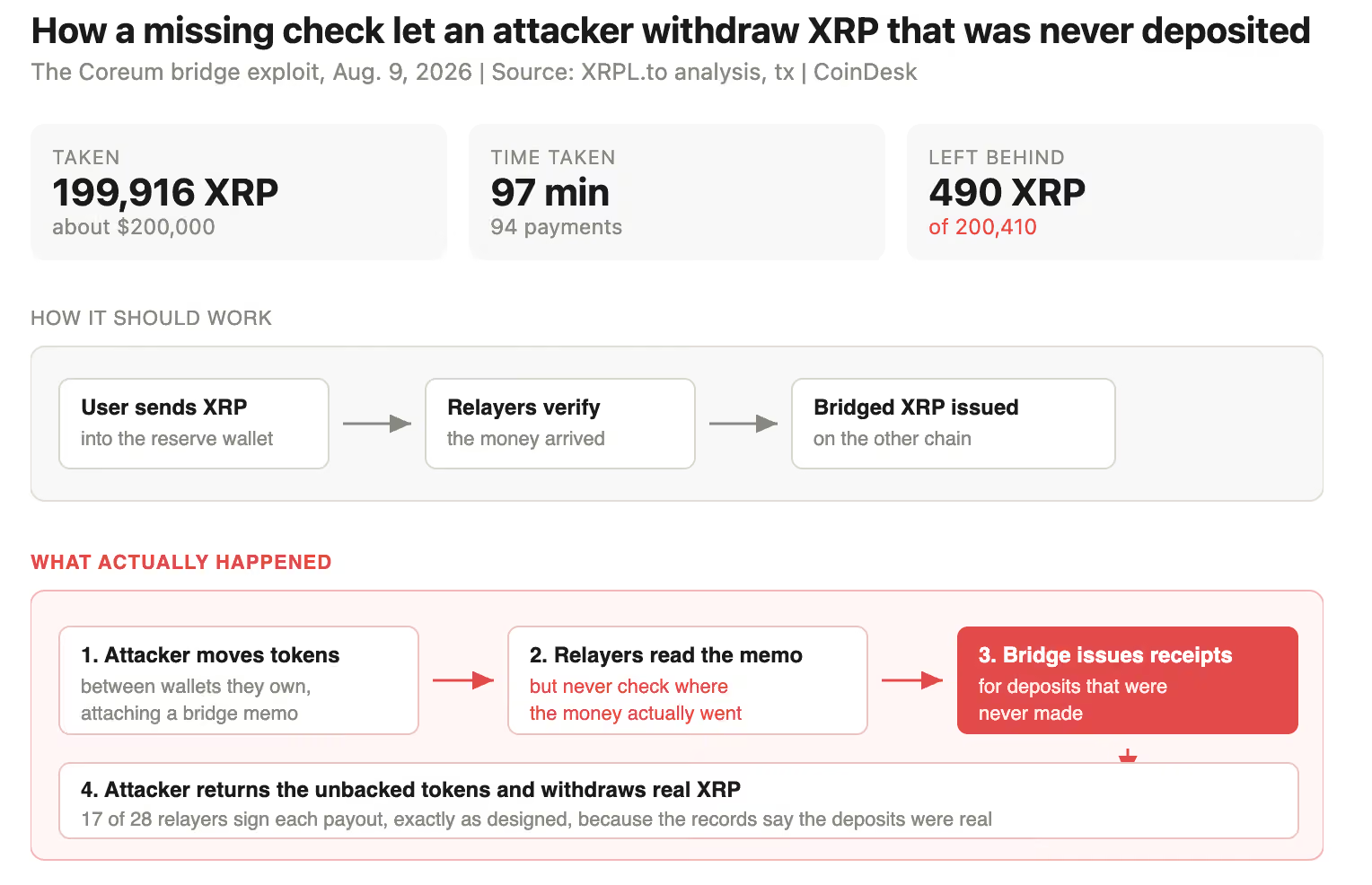
XRP bridge drained after software mistook fake deposits for real ones
-

 Sports6 days ago
DeQuan Jones in ‘high spirits’ after successful leg surgery
-
 Tech5 days ago
DeepSeek Harness launches as open source rival to Claude Code, alongside V4-Pro on API with higher prices
-
 Crypto World6 days ago
Perplexity AI Predicts an XRP Scenario Few Analysts Are Discussing
-

 Politics6 days ago
How Average Are You In The UK?
-

 Tech6 days ago
SpaceXAI’s Grok Bot turns agents into persistent digital coworkers that can operate your apps for $120-per-month
-

 Politics7 days ago
In the Chris Kaba case, the police watchdog capitulated to the mob
-
 Entertainment6 days ago
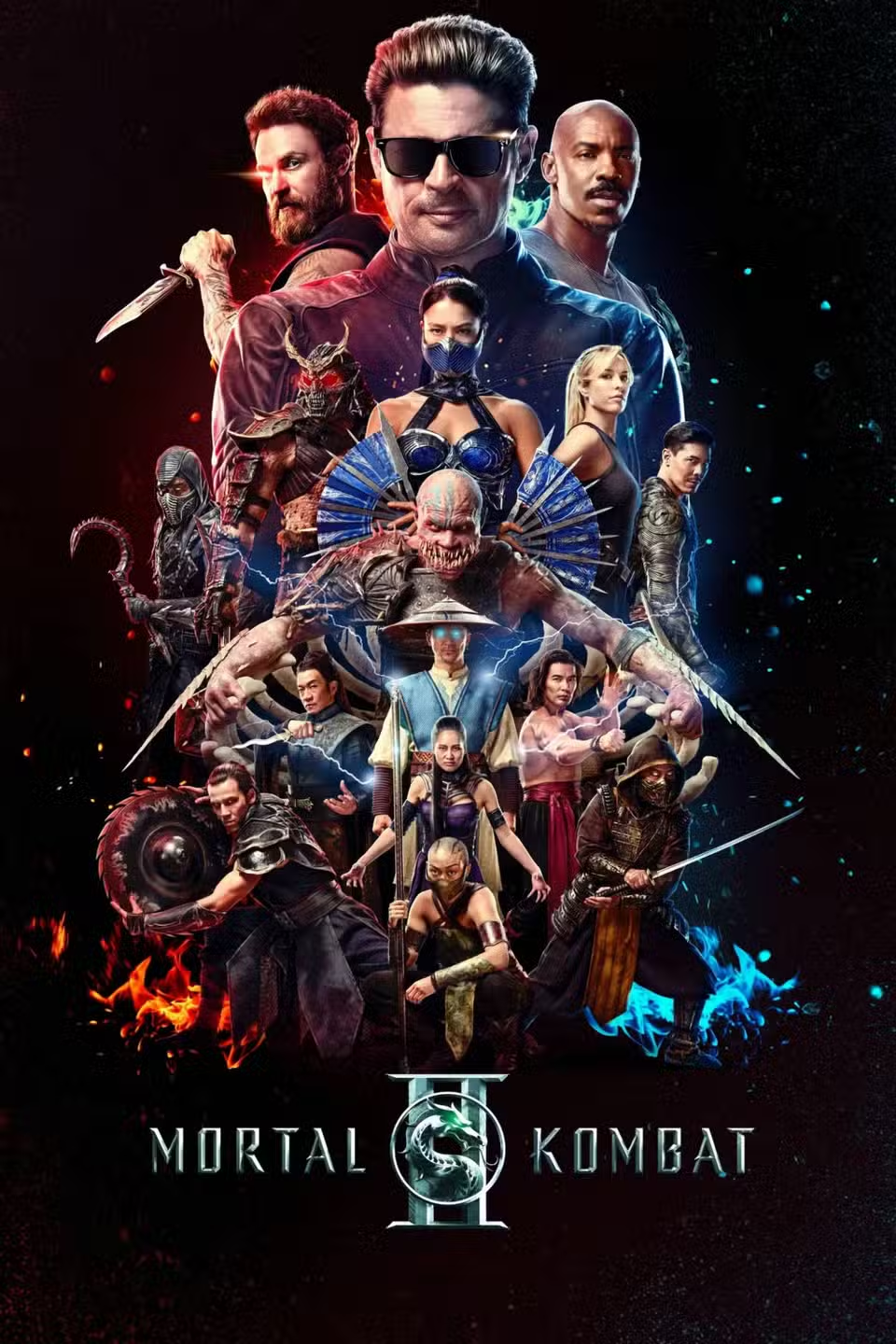
2026’s Most Ambitious Fantasy Movie Officially Scores Sequel Update
You must be logged in to post a comment Login