







Connect with us

Business

Demand for Wirral school uniform bank ‘has never been higher’

Published

on

A woman, aged in her 20s or 30s, with pink dyed hair and wearing a green coat with a fur lined hood, speaks into the camera. She has a nose ring and a necklace, and is standing in front of a clothes rail lined with white school shirts.

“We have people who, in the posh schools, their uniform is actually more expensive than anyone else’s so it really helps them if we can give stuff away,” she said.

One mother-of-four at the charity’s Birkenhead hub said: “It’s really helpful, it means that I can give the children days out and things like that rather than spend it on the uniform.

“It’d take a huge cut out of my budget, especially during summer holidays because they never stop eating.”

She gave examples including the cost of a pair of shoes for a primary school-aged child at around £50, a pack of shirts around £20 and described spending £60 on a new blazer last year.

Advertisement

“When you add it all up it’s a lot of money and a lot of stress from the beginning of the summer holidays right to the end,” she said.

Viktoria, who moved to the UK from Kyiv in Ukraine, said the uniform bank was extremely helpful while her family settled into a new life.

“We have two children and we only moved here two months ago, and now in my family only my husband works,” she said.

“It is a big help.”

Advertisement
Continue Reading
Click to comment

You must be logged in to post a comment Login

Leave a Reply

Business

Disney and ABC sue Trump’s media regulator to stop early licence renewal

Published

on

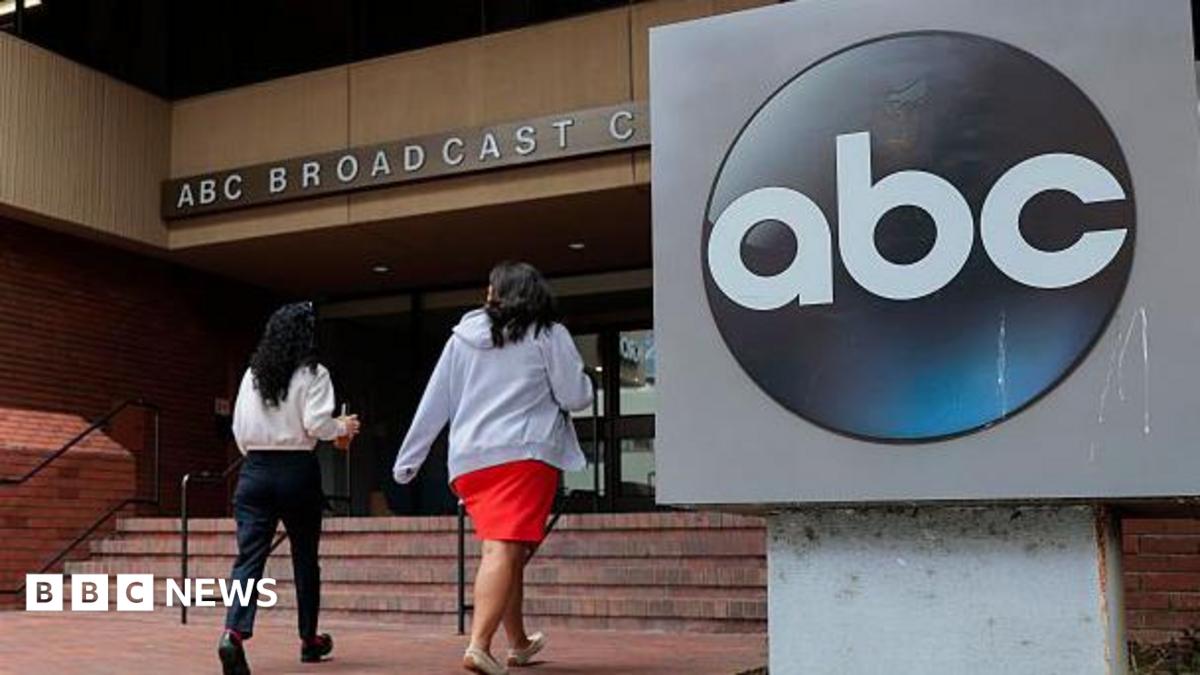
An office building for KGO-TV, ABC’s channel 7 news affiliate, is seen on June  in San Francisco, California

Disney and ABC have filed a lawsuit to stop the Trump administration from launching an early licence renewal process, arguing that the network is being unfairly targeted over its editorial content.

“Government censorship is deeply un-American,” the lawsuit says. “This case concerns the Administration’s sustained effort to do just that.”

The lawsuit says the Federal Communication Commission – the government’s media regulator – is being pressured to renew broadcast licences years early. It alleges the push stems from complaints from, and under the direction of, President Donald Trump.

FCC chairman Brendan Carr has said that the renewal requests were focused on “public interest”, not retaliation.

Advertisement

“If broadcasters don’t like that, that’s okay,” Carr told CNBC in July.

“They can become a cable channel, they can become a podcast, they can stream online. But if you want to uniquely be on the public’s airwaves, you have to comply with those obligations.”

The BBC has contacted the FCC for comment.

Disney and its eight owned-and-operated TV stations are plaintiffs in the lawsuit filed on Tuesday against FCC and its chairman.

Advertisement

The FCC ordered licence renewals for the Disney-owned ABC stations in April.

Disney previously had been under investigation for its alleged diversity, equity, and inclusion (DEI) practices and for ABC’s daytime talk show, The View.

But the notice for early renewal of licence from the FCC came a day after ABC’s late-night host Jimmy Kimmel made a joke about first lady Melania Trump.

In the lawsuit, Disney calls the order by the FCC “unprecedented”, saying that before then the commission had not called for early renewal in over 50 years.

Advertisement

“Acting through the Federal Communications Commission, the Administration has waged a retaliatory campaign against ABC for a single reason: it disapproves of what ABC broadcasts,” the lawsuit says.

It cites Trump’s own social media posts as evidence, including one in which Trump complained about ABC’s coverage of him being “almost 100% negative”.

In the same social media post, Trump also questioned whether their broadcast licences should “be terminated”, and answered his own question: “I say, Yes!”.

Under pressure from FCC chairman Carr, Disney pulled Kimmel off air in September 2025, after he made remarks about the murder of conservative activist and Trump ally, Charlie Kirk.

Advertisement

But Kimmel was quickly returned to his role after widespread public backlash over alleged free speech violations, including from Republican Senator Ted Cruz.

The FCC gave ABC and Disney 30 days to file applications, which, according to plaintiffs in the lawsuit, “ordinarily take months to prepare”.

The lawsuit also notes that the FCC has never demanded early renewal applications from a group of stations commonly owned by a single broadcast network.

ABC and Disney have requested a “speedy hearing” from the court and a temporary restraining order.

Advertisement
Continue Reading

Business

Accelerating innovation with virtual twins

Published

on

Accelerating innovation with virtual twins

Product developers are using predictive modeling to prototype specific product attributes.

Continue Reading

Business

SIF AUM crosses Rs 23,000 crore in July; Hybrid Long-Short funds lead with 66% share

Published

on

The Economic Times

SIF strategies attracted Rs 4,922 crore in inflows in July, up from Rs 3,782 crore in June. Since October 2024, the category has received Rs 22,328 crore, according to ValueMetrics.

Continue Reading

Business

Private sector pay growth falls to six-year low, ONS says

Published

on

Private sector pay growth falls to six-year low, ONS says

Pay growth in the private sector slowed to 2.8 per cent in the three months to June, the weakest rate in almost six years, while pay in the public sector rose by 6.1 per cent, according to figures from the Office for National Statistics published on Tuesday.

The annual rate of private sector pay growth was down from 2.9 per cent in the previous quarter and is the lowest since the three months to October 2020, during the coronavirus pandemic, the ONS said.

Public sector pay growth rose from 5.5 per cent in the previous three months. The ONS said the increase was driven by NHS staff receiving their pay award this year compared with 2025.

The unemployment rate held steady at 4.9 per cent. Vacancies fell by around 4,000 over the quarter to 707,000 in the three months to June, down from a peak of nearly 1.3 million in 2022 and the lowest level outside the pandemic since 2014, as job openings have continued to fall across the economy.

Single-month estimates for June alone, which the ONS says should be treated with caution, showed the unemployment rate climbed to 5.4 per cent from 4.6 per cent in May. The reliability of the ONS’s labour market data has weakened in recent years because of a decline in responses to the survey that underpins it.

Advertisement

Unemployment among people aged 18 to 24 edged down to 14.6 per cent from 14.8 per cent, although it remains close to an 11-year high. The economic inactivity rate, which measures the share of people not in work or looking for a job, was unchanged at 20.9 per cent.

Liz McKeown, director of economic statistics at the ONS, said: “Regular wage growth has remained broadly stable in recent months. However, private sector pay growth has continued to ease, while public sector pay growth remains elevated due to the timing of the latest NHS pay awards.

“The labour market picture is little changed overall, with some softening still evident. Employment, unemployment and inactivity rates have all remained steady, while the number of employees on payroll fell slightly in the latest quarter.”

The figures come as the Bank of England weighs its next move on interest rates. Bank Rate has been held at 3.75 per cent since December, and the Bank’s governor has played down the prospect of near-term cuts.

Advertisement

Yael Selfin, chief economist at KPMG UK, said the labour market figures “will provide the Bank of England with further evidence that its cautious approach to monetary policy remains the most appropriate path”.

She added: “Pay growth continues to show little sign of generating significant inflationary pressure, while wider labour market conditions appear to have bottomed out.”

James Smith, a developed markets economist at ING, said: “Barring a severe and persistent spike in energy prices [caused by the Middle East war], we think the Bank will keep rates on hold until next Spring, before cutting rates at least twice in 2027.”

After accounting for inflation, average pay excluding bonuses across the economy rose by 1 per cent in real terms in June, the ONS said, with real-terms pay under pressure in parts of the private sector. Inflation figures due on Wednesday are expected to show the annual rate climbed to 2.9 per cent in July from 2.6 per cent the previous month.

Advertisement

The ONS also said on Tuesday that productivity, measured by output produced per hour of work, rose by 0.7 per cent in the second quarter compared with the same period in 2025.


Jamie Young

Jamie Young

Jamie Young is Senior Reporter at Business Matters, covering SME finance, employment law and Westminster policy since 2016. He has reported on every Budget and Autumn Statement since 2018, helped make sense of the ‘covid era’ and the bounce-back loan scheme from launch through the fraud investigations, and broke the magazine’s coverage of the 2024 late-payment reforms. He joined Business Matters straight from completing his BA in Administration from Exeter University and is NCTJ-qualified. Reach him at jyoung@cbmeg.co.uk

Advertisement
Continue Reading

Business

Region Group Stapled Units (SCPAF) Q4 2026 Earnings Call Transcript

Published

on

OneWater Marine Inc. (ONEW) Q1 2026 Earnings Call Transcript

Operator

Thank you for standing by, and welcome to the Region Group FY ’26 Results Call. [Operator Instructions] I would now like to hand the conference over to Mr. Greg Chubb, Chief Executive Officer. Please go ahead.

Gregory Chubb
CEO & Managing Director

Advertisement

Thank you, and good morning, and thanks for joining us for the Region Group FY ’26 Full Year Results. My name is Greg Chubb, and it’s a privilege to welcome you to my first results presentation as Chief Executive Officer. David Salmon, our Chief Financial Officer, is presenting these results with me today, and Erica Rees, our Chief Operating Officer, is also in the room with us. This morning, I’ll start with an overview of our strategy before looking at the operating performance of the portfolio and the opportunities we see to drive both organic and inorganic growth. David will then take you through the financial results before I return to discuss the guidance and outlook for FY ’27.

And we’ll start with our strategy on Slide 4. And since joining Region earlier this year, I’ve met with our major retail tenant partners, a number of our investors and visited many of our centers around Australia, where I’ve spent time reviewing priorities with our people. This has reinforced 2 things for me. Firstly, we have a resilient scale supermarket-led portfolio of essential

Advertisement
Continue Reading

Business

Global borrowing costs hit fresh highs

Published

on

A person pays with a credit card in a restaurant

Long-term borrowing costs across some of the word’s biggest economies hit fresh highs because of concerns over inflation, government debt levels and spending on Artificial Intelligence (AI).

The interest rate on US borrowing over 30 years hit 5.33% on Tuesday, the highest since June 2007, meanwhile UK long-term debt reached 5.85%. There were similar moves in Germany and Japan.

Interest rates on bonds – which are a type of debt – are known as yields and can directly affect the borrowing costs consumers pay on mortgages, car loans and credit cards.

Rising oil prices are main driver behind this recent surge in bond yields, as investors fear inflation could spike again.

Advertisement

If that happens, central banks may choose to raise interest rates to cool inflation.

On Tuesday, a barrel of Brent crude, the global benchmark for oil prices, surpassed $90 following growing tensions over the conflict in the Middle East.

The recent surge came after President Donald Trump threatened to bomb Oman – a US ally – if it “gets in the way” of talks with Iran to reopen the Strait of Hormuz waterway.

The US and Oman have each been negotiating separately with the Iranian government to reopen the key passage which is vital for global oil supply and other trade.

Advertisement

The strait being largely closed for almost six months due to the US-Israel war with Iran has caused oil supply disruption, leading to higher prices.

As well as hiking the cost of motor fuel, elevated global oil prices can lead to price rises across the board as companies pass the higher expenses they face to consumers, pushing up inflation.

Oil is a key factor in business. More often than not goods are transported by lorry or van.

John Canavan, lead analyst Oxford Economics, told the BBC the inflation risk from higher oil prices, along with high levels of government debt and uncertainity around the vast sums being invested into AI – and when that will pay off – were all playing a part in higher borrowing costs.

Advertisement

He said this could lead to higher mortgage rates and borrowing costs for car loans for consumers as a result.

Higher yields, he warned, would mean companies could have to pay more to borrow money and might pass that on to customers.

“It adds to the overall inflationary impact,” he said, adding that in the longer-term the risk was higher inflation could slow economic growth.

Bond investors typically demand higher returns – or yields – if inflation is high or they expect it to be elevated in the future.

Advertisement

Governments and coporations sell bonds – essentially an IOU – to raise money for spending and in return they pay interest.

As well as inflation fears, Canavan said there had been a “push back” across the world from bond investors over the broad financial policies and spending plans of a number of governments.

The UK’s financial position and levels of borrowing has led to Prime Minister Andy Burnham to assure the bond markets that he is committed to sticking to the government’s existing borrowing limits, known as its fiscal rules.

Borrowing costs edged up when he took over the Labour leadership from Sir Keir Starmer this summer.

Advertisement

Prior to committments on the fisal rules, investors had considered that Burnham would be more likely to increase Britain’s already high public borrowing, especially following his comments last year that he UK had to “get beyond this thing of being in hock to the bond markets”.

Canavan said in long-term borrowing costs in the US were also being driven by a “record pace” of coporate borrowing in recent weeks, mostly for the development and build-out of AI and data centers.

However, with uncertainity over the hundreds of billions of dollars being ploughed into AI as well as the potential risks, investors are demanding higher returns on lending.

“The yields are troubling people because it portends a tighter environment and it’s going to be more expensive to borrow money,” said Kim Forrest, chief investment officer at Bokeh Capital Partners.

Advertisement

“Especially in this whole AI thing where time to pay it back is uncertain. It makes for a nervous investor environment.”

Continue Reading

Business

Manchester’s local plan: Where 60,000 new homes could be built in city

Published

on

Business Live

Public consultation launches into vision for city’s future

The Manchester skyline in  July 2026

The Manchester skyline in July 2026(Image: Christopher Furlong/Getty Images)

A new vision for Manchester’s future until 2039 is taking shape with a massive development plan getting closer to approval.

Advertisement

The council’s local plan has mapped out where up to 60,000 new homes will be built around the city, as well as how it will help create new jobs and places for business.

Places included in a ‘core growth area’ will take the bulk of work and have been earmarked for huge regeneration in future years, accounting for more than 42,000 new homes and 1.4 million sqm of office space.

This includes central Manchester where there are plans to expand the boundary of the city centre, as well as the areas of Holt Town near Ancoats and New Islington, Central Park near Harpurhey and Newton Heath, Sportcity in east Manchester, and part of the Victoria North project towards Collyhurst.

The core growth area is the ‘economic hub’ of Greater Manchester and is ‘located at the heart of the transport connections across the north of England.’

Advertisement

Other growth locations are mainly focused in areas of the city such as Strangeways and around North Manchester General Hospital, alongside Wythenshawe and Manchester Airport.

Manchester council said it wants the growth to help Manchester become a ‘zero-carbon city’ by 2038.

The council’s local plan is now at ‘publication stage’ as a final draft before being sent to an independent inspector to be reviewed, with the expectation that the proposals will be adopted in summer 2027.

Before that, a public consultation has been launched until September 28.

Advertisement

Councillor Gavin White is the lead on housing and regeneration matters in Manchester and said: “It’s important that future development plays its part well in making sure Manchester remains a great place to live, with great homes that our residents can afford in attractive neighbourhoods that they want to live in with quality green spaces nearby.

“This is the role of the local plan – to help guide development to help us deliver our vision and ambition.

“The local plan will complement a range of other strategies delivering for our city, in particular our housing strategy that has set an ambitious target to deliver at least 36,000 new homes by 2032 – 10,000 of which will be social, council and genuinely affordable homes.

“The Local Plan looks to increase the target of social rent and affordable homes each year to deliver the homes our residents need.

Advertisement

“Last year we saw thousands of responses that have helped guide our local plan review. This is the final chance for Manchester people to comment on the updated draft local plan, and we’d encourage as many people as possible to take part to play their part in guiding development in our city.”


Continue Reading

Business

UK borrowing costs hit 19-year high as gilt sold at 5.155%

Published

on

Global stock markets climbed to record highs on Tuesday as investors bet on falling interest rates and renewed optimism over global growth — with Apple reaching a $4 trillion market valuation for the first time.

The government sold a new ten-year gilt at a yield of 5.155 per cent on Tuesday, the highest interest rate attached to ten-year borrowing since August 2007, as a global bond sell-off gathered pace amid concerns over inflation and persistently high public borrowing.

The same debt was sold at a yield of 5.04 per cent only last month. The rise reflects a broader increase in government bond yields worldwide as investors weigh the risk that the war in the Middle East keeps inflation higher for longer by leaving the Strait of Hormuz effectively shut.

The sale comes as the prime minister, Andy Burnham, and the chancellor, John Healey, weigh their tax and spending plans ahead of the budget on 28 October.

Debt interest spending is on track to exceed £100 billion a year until the early 2030s, according to the Office for Budget Responsibility. Economists have said the government’s fiscal headroom has been more than halved to about £10 billion, in part because of higher gilt yields in the run-up to the 28 October budget.

Burnham has announced a series of measures aimed at easing the cost of living for families, including a cap of £2 on most single bus journeys in England, at a time of squeezed public finances and rising prices.

Advertisement

Inflation is expected to gather pace in the second half of the year. Official figures due on Wednesday are forecast to show consumer price inflation rose to 2.9 per cent in July from 2.6 per cent in June. Investors continue to price in the possibility that the Bank of England will raise interest rates to deal with price pressures, particularly if the Gulf conflict escalates further.

On Friday the Office for National Statistics is expected to report that government borrowing has exceeded the OBR’s forecasts since the fiscal year began in April.

Long-dated bonds have seen the heaviest selling in recent days, a signal of investor concern about persistent government borrowing, elevated debt-to-GDP ratios and still-high oil prices.

UK 30-year gilt yields rose by 0.04 percentage points to 5.86 per cent on Tuesday, close to the post-1998 peak they reached during the early stages of the US-Iran war, when long-term borrowing costs hit a 27-year high.

Advertisement

The yield on the 30-year US Treasury reached 5.33 per cent on Tuesday, its highest level since 2007, while the German equivalent hit a 15-year high of 3.78 per cent. Yields move inversely to prices.

Economists unaffiliated with either US political party have suggested the country’s debt-to-GDP ratio could exceed its post-Second World War high of 106 per cent within a decade. The US debt stock has almost reached $40 trillion.

Japanese long-term government borrowing costs also rose to a near record high on Tuesday as the Bank of Japan prepares to raise interest rates before the end of the year.

Some market participants have pointed to the volume of bond sales by the world’s largest technology companies, which are raising cash for investment in artificial intelligence infrastructure, as a further factor pulling long-term government yields higher.

Advertisement

An increase in the supply of bonds typically pushes yields up and prices down in order to give investors enough incentive to buy the additional debt, adding to the repayment burden on the companies and governments that issue it.

Oil prices edged higher on Tuesday, with Brent crude, the global benchmark, up 0.63 per cent at $91.16 a barrel and WTI, the US benchmark, up 1.35 per cent at $85.64. Gold slipped 0.4 per cent to $4,400 an ounce.


Amy Ingham

Amy Ingham

Amy Ingham is a reporter at Business Matters, covering UK business news with a focus on breaking news, business policy, late payments and insolvency. She joined the magazine in 2026 after completing the NCTJ Diploma in Journalism at Harlow College’s journalism school. Her recent reporting includes British Steel’s nationalisation and its impact on SME suppliers, the decline in late payments by large firms, and Insolvency Service director disqualifications. Reach her at aingham@cbmeg.co.uk.

Advertisement

Continue Reading

Business

Hayden Panettiere’s Top 5 Most Popular Movies, From ‘A Bug’s Life’ to the ‘Scream’ Franchise

Published

on

Hayden Panettiere Suffered Apparent Overdose, Was Unresponsive Despite Advanced Life

Following the death of actress Hayden Panettiere at age 36, fans have been revisiting the film career that ran alongside her more prominent television roles on “Heroes” and “Nashville.” While Panettiere became best known to audiences through television, several of her film credits reached significant commercial and cultural popularity throughout her career. Here are five of her most widely recognized movies.

1. “A Bug’s Life” (1998)
Panettiere’s earliest brush with major box office success came before she was even 10 years old, when she voiced the character Dot in Pixar’s second animated feature film. Released in 1998, “A Bug’s Life” became a major commercial hit for the studio, introducing Panettiere’s voice to millions of moviegoers years before she became a recognizable on-screen presence. The film remains one of the most widely seen credits of her entire career, given its enduring popularity as a staple of late-1990s family animation.

2. “Remember the Titans” (2000)

Advertisement

Panettiere appeared alongside Denzel Washington in this biographical sports drama, which tells the story of a newly integrated high school football team in Virginia in 1971. Playing Sheryl Yoast, the young daughter of assistant coach Bill Yoast, Panettiere featured in what became one of the most commercially successful and enduringly popular sports films of its era. “Remember the Titans” has remained a frequently watched and referenced film in the decades since its release, cementing it as one of Panettiere’s most widely recognized credits.

3. “Ice Princess” (2005)

Panettiere starred in this Disney sports drama centered on competitive figure skating, one of several family-oriented films she took on during her teenage years as she built her profile ahead of her breakout television role. The film found a lasting audience among younger viewers and has remained a recognizable part of Disney’s mid-2000s family film slate, contributing to Panettiere’s visibility as a rising young star during that period of her career.

4. “Scream 4” (2011)

Advertisement

Panettiere joined the long-running horror franchise as Kirby Reed, a sharp, horror-savvy character who quickly became a fan favorite among the film’s ensemble cast. Released as the franchise’s fourth installment after more than a decade away from theaters, “Scream 4” reintroduced the Ghostface killer to a new generation of horror audiences while drawing longtime fans back to the series. The film performed well commercially and introduced Panettiere to a broad audience of horror moviegoers who had not necessarily followed her earlier television work.

5. “Scream VI” (2023)

More than a decade after her franchise debut, Panettiere reprised her role as Kirby Reed in “Scream VI,” surprising fans who had believed the character had died at the end of “Scream 4.” The film became one of the franchise’s most successful entries at the box office, and Panettiere’s unexpected return generated significant promotional buzz and fan excitement ahead of its release. Her reappearance was widely covered by entertainment outlets as one of the film’s key selling points, making “Scream VI” one of the most prominent and recent film credits of her career.

Beyond these five films, Panettiere’s broader filmography included a range of other notable credits that also found audiences over the years, including Disney’s animated feature “Dinosaur,” the family comedy “Racing Stripes,” the teen romantic comedy “I Love You, Beth Cooper,” and the television movie “Amanda Knox: Murder on Trial in Italy,” in which she portrayed the American college student wrongfully convicted, and later acquitted, in the 2007 murder of her roommate in Italy.

Advertisement

Panettiere’s film career often ran in parallel with her more widely recognized television work, including her breakout role as Claire Bennet, an indestructible cheerleader, on NBC’s “Heroes,” which aired from 2006 to 2010, and her later role as country singer Juliette Barnes on the ABC and CMT drama “Nashville,” which earned her two Golden Globe nominations during its six-season run from 2012 to 2018.

Panettiere began her acting career as an infant, appearing in television commercials before she was 1 year old, and had her first television role on the soap opera “One Life to Live” around age 4. That early start placed her among the most experienced child performers of her generation by the time most of her peers had barely begun their acting careers, laying the foundation for the multi-decade career that followed across both film and television.

Panettiere’s death was confirmed Sunday by her representative in a statement provided to media outlets, in which her father, Skip Panettiere, described his daughter as “an incredible light and a force of nature” to everyone who knew her and to the audiences who had followed her work for nearly three decades. Authorities in Greenville, South Carolina, where Panettiere was found unresponsive at an apartment complex, have said their preliminary investigation found no signs of foul play, though a specific cause of death has not yet been publicly released pending further examination.

As tributes and retrospectives continue to circulate following her death, Panettiere’s film work, spanning family animation, sports drama, teen comedy and horror, has drawn renewed attention from fans and critics alike, reflecting a career defined by range and longevity across genres that began before she had even started elementary school and continued through her final theatrical release in 2023.

Advertisement
Continue Reading

Business

Zenith wins Northern Endeavour decomissioning contract

Published

on

Zenith wins Northern Endeavour decomissioning contract

Scottish company Zenith Energy Group has been appointed lead contractor for phase 2 of the $1 billion-plus Northern Endeavour decommissioning program off WA’s northern coast.

Continue Reading

Trending

Copyright © 2025