The growing gap in the hiring of employees with disabilities in Ireland is due in part to a lack of confidence among employers that they can meet the needs of a more diverse workforce.
Social enterprise platform Now Group has published the results of a report exploring the impact caution and fear is having on the recruitment of employees with additional needs.
iReach, on behalf of Now Group, surveyed 150 employees across Ireland during the month of July. What was discovered is that confidence, or rather the lack thereof, is preventing Irish employers from hiring more applicants with disabilities or with umbrella conditions such as neurodivergence.
According to the group’s findings, Ireland currently has the largest disability employment gap in the EU and only 8pc of employers who participated in the research described themselves as confident when it comes to hiring and supporting neurodivergent employees and other groups managing similar conditions.
Advertisement
The research acknowledged that while many organisations recognise the value in creating an inclusive hiring environment, a significant proportion also lack the confidence, knowledge or practical tools to do so.
More than half (54pc) said that they feel only “a little” equipped or “not at all” equipped to hire and support neurodivergent people and other people with disabilities.
Evidently, the fear of making a mistake in communicating with someone who might need workplace accommodations has created barriers in employer hiring practices.
One quarter of participants agreed that worries around being insensitive during recruitment or in the workplace presented a barrier to hiring more inclusively and 26pc said they are currently unsure of how to “reach neurodivergent candidates and candidates with disabilities”.
Advertisement
Almost one out of every five (18pc) said they would not know how to accommodate people with additional needs in the workplace while 15pc added they would be unsure of how they would even accommodate them during the recruitment process.
Less talking, more action
Now Group’s research identified a number of areas in which employers can move from the simplicity of good intentions, to taking actual action. 25pc of participants to the survey said that training on workplace inclusivity would make a noticeable difference in helping them hire more inclusively.
Nearly one-quarter (24pc) said that they want far more guidance on how to better engage with neurodivergent people and others with conditions that make the workplace more challenging.
Maeve Monaghan, the CEO of Now Group, said: “The biggest message from this research is that employers don’t necessarily lack the willingness to become more inclusive, many lack the confidence and practical knowledge to know where to begin.
Advertisement
“Our message to Irish employers is simple: you don’t need to have all the answers before you start. The expertise and support is available.”
SiliconRepublic.com previously spoke with Martin McKay, the co-founder of Texthelp, an Antrim-based organisation that provides assistive technology and edtech software to the education and workplace sectors. He explored how organisations are losing out on the opportunity to pull from a much wider and talented pool of expertise by failing to evolve workplace structures that favour the ‘typical’ candidate.
Don’t miss out on the knowledge you need to succeed. Sign up for the Daily Brief, Silicon Republic’s digest of need-to-know sci-tech news.
On Tuesday, after much back-and-forth with the European Union, Apple has rolled out new and simpler terms and fee structures for developers that distribute in the area.
The terms are greatly simplified. Core technology fees are mostly exterminated, replaced by percentages. For App Store apps using Apple In-App Purchase, the new commission will be 26 percent. For the vast majority of developers, including auto-renewing subscriptions after their first year, that fee is now 15 percent.
For App Store apps using alternative payment processing, the commission is be 20 percent.
For App Store apps that link out of the app to for external payments outside of the App Store, the commission has dropped to 15 percent. Special programs like the App Store Small Business Program, Mini Apps Partner Program, or Video Partner Program lower this to 10%
Advertisement
For apps distributed via alternative app marketplaces or the web, Apple will charge a 5 percent Core Technology Commission.
Other new requirements are simplified
There are some child safety protections for developers using alternative payments. Apps in the kids category can’t include links to websites to complete transactions, for example.
If the user is under 18, all apps that use alternative payment processing must include a parental gate to link out to a website. And users under 13 apps from the App Store cannot link out to websites.
There are also extensions to the eligibility requirements. Most of the hard limits on finances are gone, replaced by audits. Only one of the five below are required.
Advertisement
Meet a moderate financial-stability bar as scored by Dun & Bradstreet.
Are publicly traded or owned by a publicly traded company.
Have received venture funding from an established investment firm.
Have completed a financial audit by a licensed accountant.
Are a government entity, educational institution, or nonprofit.
And, Apple is making it clear that it is not responsible for what happens if a user downloads and app from a “bad actor.”
Web distribution, which is available only in the EU, does not have a marketplace operator standing behind it or ongoing oversight like the kind Apple provides for the App Store. This means a bad actor distributing via the web can operate for a long time, harming users, before anyone catches it. In order to keep EU users as safe as possible, Apple will continue to require every alternatively distributed app to go through Notarization — a baseline review focused on basic functionality and protection from serious threats.
This story is breaking, refresh for the most current information
That kind of saving is rare for a phone that only launched a few months ago, and it puts the 4a Pro comfortably below what you would normally pay for a phone with a genuine aluminium unibody design.
Advertisement
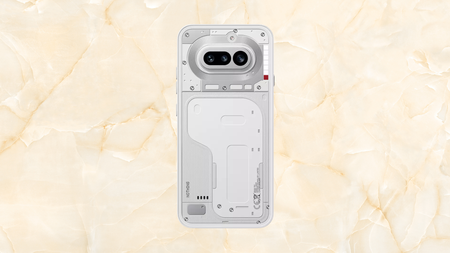
One of our expert reviewers Cam Bunton spent weeks testing the Nothing Phone 4a Pro and was won over by its solid aluminium unibody, a rare choice in an industry that has largely settled on glass and plastic.
That same review praised the playful Glyph Matrix display built into the camera island, which can flash for notifications, work as a countdown timer or display a simple always-on clock without draining the battery too.
Advertisement
Software played just as big a role in the impression it left, with Nothing OS 4.1 praised for tying its retro-futurist aesthetic tightly to the hardware while staying refreshingly light on unnecessary bloatware or duplicate apps.
Advertisement
The 6.8-inch AMOLED screen was another highlight, reaching up to 144Hz and a peak brightness of 5000 nits for HDR content, which our expert said outperforms what you would expect at this price point entirely.
The triple-camera system also impressed in testing, with the 50MP main sensor delivering sharp, well-balanced shots in bright conditions and the 3.5x telephoto lens proving genuinely useful for close-up detail and zoomed-in scenes alike each time.
Battery life stood out as one of the phone’s biggest strengths, with the 5000mAh cell easily lasting a full day of use even under heavy testing and refilling to full in just over an hour on the 50W charger.
So if you have been holding out for an Android phone with genuine character instead of another glass rectangle slab, is there a better moment than this to pick up the Nothing Phone 4a Pro at £406.60 instead of £499?
Passkeys solve many of the problems with passwords, but they aren’t used everywhere yet.
Linaimages/Shutterstock
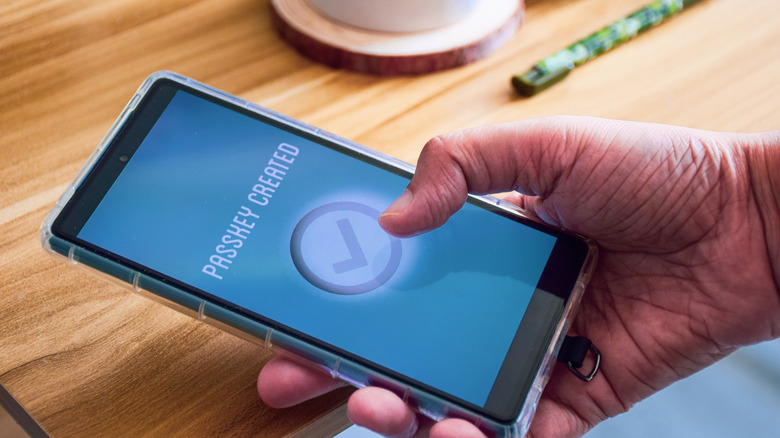
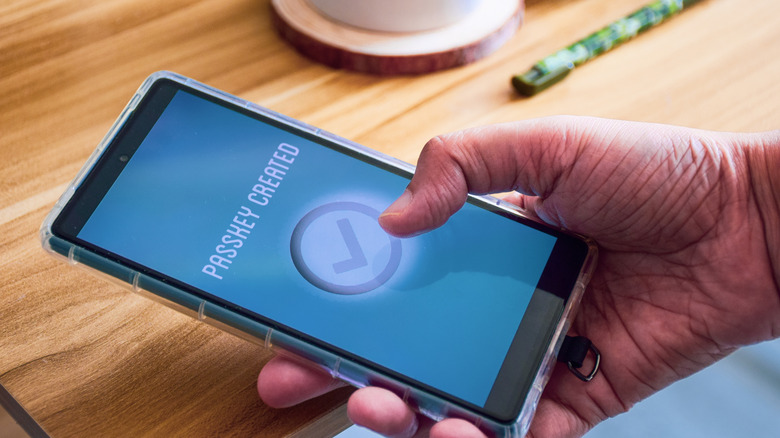
You’ve likely been prompted to add a passkey to some of your accounts. Passwords are familiar but have many issues, while passkeys offer solid improvements but aren’t supported on all sites.
Despite being an upgrade from the old standard in many ways, passkeys have their own quirks to understand. Because they’re tied to a device or software instead of something you remember, you must take care not to get locked out of where you’ve stored them. It’s also not as simple to share one in the same way you would give a password to a friend. But for most people, passkeys are well worth using over passwords — especially if you aren’t already using a password manager to secure your logins.
Once you understand how they work, moving your online logins to passkeys will save you tedious steps every day. The most important aspect is how you store them; thankfully, most major operating systems and password managers support this option.
Advertisement
How passkeys compare to passwords
Ratana21/Shutterstock
First, let’s discuss how each one functions. A classic password is a “secret code” of text that authenticates your account. Websites don’t (or shouldn’t) store these in plain text; that’s incredibly insecure because a data breach would expose all login info. Instead, a one-way function is applied to your password that creates a scrambled version, known as a hash. When you enter the correct password, the hashed version is checked against what’s in the database, and you log in successfully. There are additional security measures, like “salting” (adding a random string of data to the hash) to make unique hashes of identical passwords, but those are the basics.
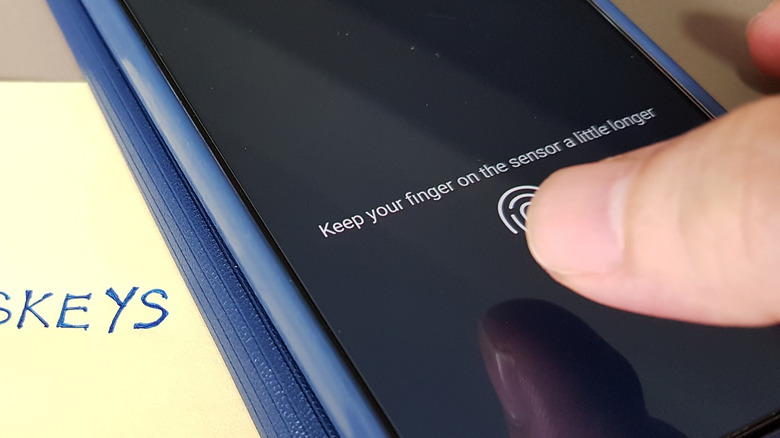
Passkeys don’t require you to remember any text. They rely on two keys: a public key the website stores and a private key held on your device. When you try to log into your account, the website asks you to confirm using the passkey stored on your phone or PC. These keys are kept in a secure part of your phone’s storage and use your device’s existing authentication method (like Face ID, Windows Hello PIN or fingerprint scanner). You don’t have to remember anything, except your device’s PIN if biometrics fail.
If public and private keys feel abstract, think of them like a locked mailbox. Anyone can drop mail in the public slot (a letter asking you to prove who you are), but only the owner with the key can unlock it (to “sign the letter” authenticating yourself). Seeing the mailbox doesn’t give you any clues to what the key is. And in the case of passkeys, there are two additional layers: The key on your device is safely kept behind biometrics, and it’s engineered to never work with a fake mailbox (phishing site).
Advertisement
This is another reason to set strong lock screen security on your phone or computer. While biometrics are the best mix of convenience and security, you don’t want a PIN of “1234” being the gate to all your logins.
Weaknesses of passwords that passkeys solve
Ica-Photo/Shutterstock
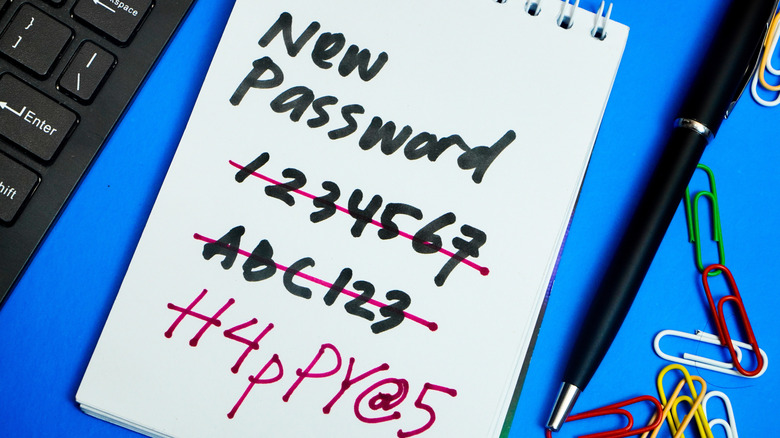
You’ve likely dealt with the flaws of passwords for many years. Because it’s a burden to create and remember unique, strong passwords for every service, many people use the same poor passwords across sites. Malicious actors can trick you into handing over your password or entering it into a fake website. And even though the data is (hopefully) scrambled in storage, attackers still have methods to decode or utilize what they recover from data breaches.
Password managers help with a lot of these problems, but they aren’t perfect. You can store weak credentials in the manager, paste strong passwords into an imposter site, or forget your master login. Passkeys fix more of the root issues. You can’t create a “weak” passkey because the standard is inherently strong. Importantly, they also cannot be used on the wrong site. Creating a passkey inherently ties it to a specific domain, so even if you open an imposter page, you can’t “hand over” your credential like you would a password. This also means reusing them isn’t possible.
Advertisement
Passkeys also pass the “something you have” and either “something you know” or “something you are” security checks simultaneously. Because they require a trusted device plus a PIN or face/fingerprint, there’s less need for a second step like traditional two-factor authentication. And when data breaches occur, passkeys offer nothing to steal since public keys are already just that: public.
Get started with passkeys
Celia Ong/Shutterstock
If you haven’t tried passkeys yet, open the settings page for any online account and look for a Security or Login section. Services that support passkeys will guide you through creating one after using the appropriate toggle.
When making one, you must choose where to store it. By default, macOS and iOS will store them in Apple’s Passwords app. Android uses Google Password Manager, while Windows 11 keeps them on your device under Settings > Accounts > Passkeys. Linux doesn’t have native support yet. However, I recommend keeping your passkeys in a good password manager instead, especially if you use devices across ecosystems.
Advertisement
Having all your passkeys in Apple Passwords is a hassle when you need to sign in on your Android phone, for instance. Some services allow you to scan a QR code on the device containing your passkey to sign in on another, but this isn’t efficient. Sharing passkeys with trusted people is only feasible with shared vaults in password managers, and having the software synced to multiple devices prevents loss if a device stops working. A dedicated password manager is still a comprehensive tool for your online security, since many services don’t offer passkeys yet. If you want to go hardcore, you can also store passkeys on a physical security key like a YubiKey.
Once you create a passkey, you can use it for future logins. When trying to sign in, you’ll see a prompt to use it by authenticating with your device, which only takes a moment. Depending on the service, the passkey might replace your password or supplement it. Make sure you’ve set a strong password in the latter case, since your account is only as strong as the weakest login method.
Apple itself leaked many mystery products that are coming out relatively soon. The leaked product identifiers proximity to others give some clues, but not many.
The release candidate for macOS Tahoe 26.7 was a trove of information for unreleased products. References to product identifiers littered the build, including for some known-about items.
For example, there was sightings of J490 and J491, believed to be versions of the Home Hub. B525 is expected to be the next-generation HomePod mini, while J229 was a potential security camera.
While that list includes quite a few product identifiers that are seemingly known about through previous rumors, there were also a bunch that were not.
A bunch of unusual codes like Device1,8241 were visible, but don’t really mean much in Apple’s established ecosystem.
But then there are other Apple product identifiers that look like they could be Apple products. However, at first glance, there doesn’t seem to be anything connected to them either.
They are, grouped:
Advertisement
A3436, A3437, A3438, A3439, A3440, A3441
A3456, A3457
A3465
A3529, A3530, A3531, A3532, A3533
A3543
A3577
These numbers alone don’t really hint at what Apple has planned for them in the future. But, looking at the rest of the catalog could provide a few more clues.
Above and Below
Apple tends to put products that are similar to each other within the same vague number range. Variants of the same model can easily be one step above or below the list, as demonstrated by that first row.
However, it doesn’t tend to include sequential generations to also be sequential numerically. You won’t find iPhone 17 numbers right after the iPhone 16, for example.
With that in mind, we looked for references to devices that are just one space above and below each of the groupings. For example, checking A3464 and A3466 around the listed A3465.
This is a numerical fishing expedition, certainly, and we did manage to find some things with some Google-Fu, retail trawling, and other more specific sources like AppleDB. Though, as expected, most were a bust.
Advertisement
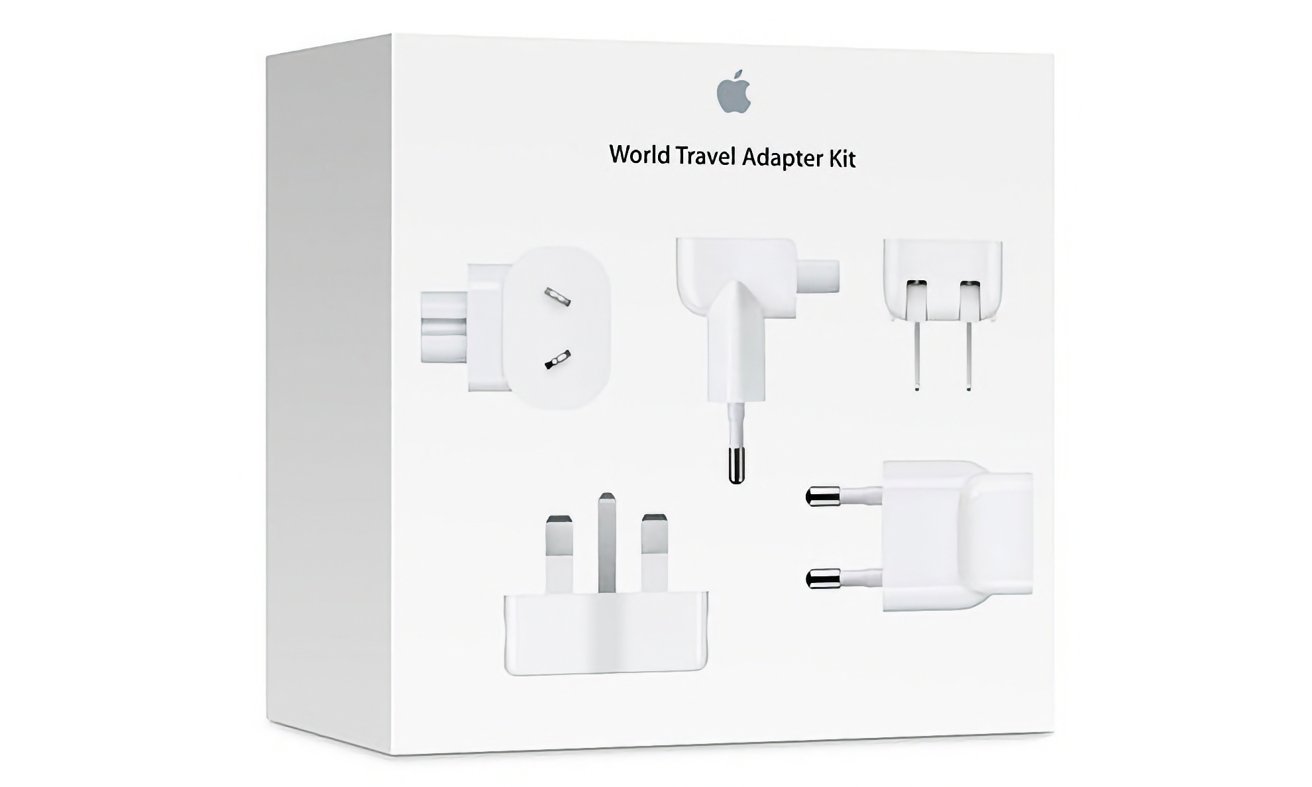
The Apple World Travel AdapterKit came up a few times.
The most promising neighboring number was A3464, which is used for an M4 13-inch iPad Air with Wi-Fi and Cellular. This is a region-specific model just for Mainland China, and is actually confirmed by Apple as being the iPad Air.
A3442 appears to be a version of the 15-inch MacBook Air with M5, seemingly listed at JD.com.
A3466 is also for a known and sold product. Specifically the MagSafe Battery for the iPhone Air.
Advertisement
A3534 seems to be for a variant of the iPhone 17e in some countries.
A3455, A3458, and A3528 are for versions of the World Travel Adapter Kit. One is unspecified, but the others cover China and Australia.
The remaining few do not appear to have any real-world references to Apple as yet.
What can we deduce?
Blindly looking at numbers and for connected products doesn’t help much in this case. There’s not much to go on here, but we can make some assumptions.
Advertisement
First, we know that the A3456 and A3457 are bookended by World Travel Adapter Kits (A3455 and A3458). It’s not entirely a bad idea to assume Apple would put some form of accessory into that gap, or that it belongs to unreported variants of that kit.
The long ranges of identifiers also point to variants of a product, which is typical of Apple to do.
For the longer set from A3436 to A3441, one side extends to become the 15-inch MacBook Air, but the other is an unknown quantity.
What we can tell from this is that Apple doesn’t feel beholden to making identifiers work sequentially over time. Certainly per model and for variants, but not for an entire product family.
Advertisement
That there are two distinct banks of numbers means there will be models with multiple variants on the way. Think of the Pro and Pro Max variants of the iPhone, or screen sizes for a MacBook or iPad.
What’s certain is that Apple doesn’t make it easy for anyone to guess what’s next via its identifier list.
from the better-late-(and-minimal)-than-never dept
Flock Safety has spent a few years building a massive network of ALPR (automated license plate reader) cameras. Flock’s cameras are a step ahead of competitors. They not only grab plate/location info, but they provide searchable tags/images that cover everything from car make/model to specific vehicle features. These photos also include images of the drivers and passengers, which makes adding facial recognition tech the expected future development.
Flock has also built itself a reputation that only plays well with surveillance hawks and the worst people in law enforcement. It has made its database — something that adds around 20 billion car/plate images per month — accessible to any agency with a contract. And it has refused to add guardrails that might prevent federal agencies from utilizing local law enforcement access to perform searches they’re not legally allowed to do on their own. It has also portrayed misuse of its cameras and data as the actions of a few rogues that are not representative of its law enforcement customers.
Pretending it’s not responsible for abuse of its equipment/databases hasn’t worked out well for Flock. In addition to drawing heat from US senators, the company has lost a lot of its plausible deniability because it has done nothing to deter abuse of its systems… until now.
It looks like the last six weeks of concertedly negative press about cops using Flock tech to stalk their exes, their exes’ family members, and anyone else misogynist cops might want to keep tabs on has finally forced the company to do something, rather than just pretend it’s not Flock’s fault that far too many law enforcement officers are also horrible human beings.
Following a Washington Post report that police officers were accused in 46 cases of improperly using access to Flock’s license plate camera network, in some instances allegedly stalking women, Flock CEO Garrett Langley said he had listened to one woman’s interview Thursday morning.
“I apologize,” Langley said in an interview with CBS News. “It kills me that she went through that.”
Asked if he took enough responsibility soon enough when it came to the accusations of abuses, Langley said hindsight is “a brutal tool.”
Words are nice. But Flock has always talked a lot but has steadfastly resisted implementing changes that might deter abuse of its systems. Almost everything that might make cops think twice before tracking their exes is optional, rather than on by default.
Advertisement
Some of that appears to be changing now that Flock’s CEO has been forced to confront the inevitable side effects of mass surveillance and unfettered law enforcement access. Here’s what Flock is doing now, following a half-decade or so of not giving a fuck.
Flock is recommending a 7-day ALPR data retention period and introducing Evidence Mode to preserve specific data for active investigations when needed.
New offense filtering, required Audit Assistance, proactive lockouts, and required case codes will give agencies more control while strengthening oversight of system use.
Flock is strengthening data security through mandatory multi-factor authentication, an independent security review by Bishop Fox, and a new Coordinated Vulnerability Disclosure program.
Customers retain ownership and control of their data, while Flock is expanding transparency and reinforcing safeguards around ALPR accuracy, access, sharing, and review.
It’s better than the nothing it’s been doing. But it still leaves a lot to be desired. As you can see from the first bullet point, data retention won’t actually be changing. Flock is only “recommending” a 7-day limit on retention. The standard retention period is 30 days. Contrary to reporting elsewhere, Flock is not limiting all customers to seven day retention periods.
That being said, Flock is at least making it slightly more difficult to extend the retention period. The seven-day limit will be on by default. And default mode tends to be the preference of everyone anywhere. With a bunch of cities kicking Flock to the curb, agencies that still retain access to their systems would do well to embrace the default limit, rather than poke the (general public) bear by switching things back to “always on forever.”
What’s better is Flock’s filtering system update, which will allow law enforcement agencies to prevent others agencies with access to their plate reads to run searches that might be forbidden in their own localities. To use something that isn’t even hypothetical, law enforcement agencies around the nation can now prevent Texas cops from using their cameras to hunt down women seeking out-of-state abortions. Just as importantly, it will thwart local agencies that have decided they want to be part of ICE’s entourage.
We are also introducing Offense filtering for sharing. Now, cities can choose which type of offenses are permissible for other agencies to access their cameras. For example, City A could allow City B to search its cameras only for a stolen vehicle, missing person, or violent crime while blocking searches related to immigration enforcement.
Going further, Flock is making it easier for agencies to recognize misuse of the system and forcing those who just don’t care to fall in line with Flock’s abuse deterrents.
Advertisement
16 weeks ago, we introduced Audit Assistance, which detects abnormal activity and flags it for Administrator review. In recent weeks, those reviews have been associated with arrests of several law enforcement officers who allegedly abused the system. More than one-third of our customers have voluntarily adopted Audit Assistance.
We will now require all law enforcement customers to adopt this feature by the end of this year. In addition, we will institute proactive lockout. When a user’s activity meets defined criteria for abnormal behavior, Flock will automatically suspend access pending administrator review. The goal is to intervene before misuse becomes recurring or widespread.
This is all… well, not exactly good news, but… better news? Flock’s systems are still a concern, given how much is collected and how often. But what’s implemented here will, at the very least, give cop shops a heads up on misuse and misconduct. And if officers know they’ll soon be subject to automatic account suspension if they can’t link searches to case numbers (which is what Audit Assistance requires), they’ll be less likely to use Flock to engage in stalking or harassment.
To be sure, the worst officers will still find some way to work around the safety checks and limitations. But police officers are like everyone else: a not-insignificant percentage are lazy and only do this sort of thing because it’s easy to do. Any minimal roadblock will shut them down because then the ex-stalking they do for fun is going to start feeling like work.
But let’s be clear here: I’m not looking to hang a “GOOD GUY TECH BRO” medal around the neck of Flock’s CEO. There’s still plenty to be concerned about here, including Flock’s apparent unwillingness to comply with cities’ requests to deactivate cameras following contract terminations or the startling prevalence of Flock cameras no government ever approved for installation.
Advertisement
Furthermore, there’s no real justification for these systems to exist at all. Both Flock and its law enforcement supporters claim the cameras help investigations and increase public safety. While it’s certainly true that this does happen from time to time, Flock has portrayed its systems as essential when that’s obviously not true. Crime rates have been at historical lows for most of the past 25 years. And this happened without persistent nationwide surveillance enabled by a network of souped-up ALPR cameras.
Pretending this is essential now deliberately ignores the last quarter-century of crime reduction efforts that didn’t rely on massive surveillance networks and private contractors only willing to do the right thing when it looked like blowing off the public might finally affect its bottom line.
Phishing, malvertising attacks could target devs to gain access to private corporate networks
CISA says attackers are exploiting a critical 2025 vulnerability in Ray, the widely used open source framework for scaling Python and machine-learning workloads.
Tracked as CVE-2025-62593 and rated 9.4 under CVSS v4, the bug was first disclosed in November 2025. It allows an attacker to use Firefox or Safari to achieve remote code execution (RCE) on a vulnerable Ray system.
Advertisement
The open source distributed computing framework is used and supported by major tech companies, including Amazon, Apple, and OpenAI.
Vulnerable Ray versions try to identify and block browser requests by checking whether the User-Agent header begins with “Mozilla.” Firefox and Safari, however, allow scripts using the Fetch API to modify that header.
A developer running Ray could trigger the exploit simply by visiting a dodgy website or receiving a malicious ad in an affected browser. The attacker can then use DNS rebinding to reach the local Ray service.
“This vulnerability impacts developers running development/testing environments with Ray,” the project’s developers explained. “If they fall victim to a phishing attack, or are served a malicious ad, they can be exploited, and arbitrary shell code can be executed on their developer machine.
Advertisement
“This attack can also be leveraged to attack network-adjacent instances of Ray by leveraging the browser as a confused deputy intermediary to attack Ray instances running inside a private corporate network.”
Ray 2.52.0 fixes the flaw. CISA gave US federal civilian executive branch agencies three days to remediate it, rather than the standard 14.
CISA did not explain the urgency, and marked the catalog’s “known to be used in ransomware campaigns” field as “unknown.” However, Binding Operational Directive 26-04 allows the agency to impose a three-day remediation window on vulnerabilities it considers especially risky.
Ray is an open source framework that helps developers scale Python and machine-learning workloads from a local environment to a cluster with minimal code changes.
Advertisement
Now managed by the Linux Foundation’s PyTorch Foundation, the project started at UC Berkeley and was commercialized via Anyscale, the startup founded by Ray’s developers in 2019.
According to Anyscale’s figures as of October 2025, Ray had more than 237 million total downloads, and 7 million per week – representing a near-tenfold growth year-on-year.
Product analysis site NextSprints estimates that Ray has 1 million monthly active users and is used by 60 percent of Fortune 500 companies.
The security advisory blamed Ray’s longstanding lack of authentication on critical endpoints for making the attack possible.
Advertisement
Ray’s security model historically assumed that clusters would run inside a trusted, isolated network, leaving authentication and access control to the surrounding infrastructure.
Ray 2.52.0 introduced optional token-based authentication as an additional defense against unauthorized access, although it remains disabled by default. The project continues to recommend deploying clusters inside a controlled network rather than treating authentication as a substitute for isolation. ®
If you don’t actually need one, you’d be forgiven for thinking a hearing aid just makes everything louder for the wearer. Especially since there are plenty of shady products out there which will do exactly that for just four easy payments of $29.99. But the reality is considerably more complex, as a proper hearing aid needs to be capable of selectively enhancing certain frequencies while squashing down others.
The technical challenges involved in pulling that off in a device small enough to fit inside the human ear and run off of a tiny battery are considerable — and while there’s undoubtedly been some degree of artificial price inflation going on over the years, there’s a reason proper hearing aids have been so much more expensive than their “As Seen on TV” counterparts. These same challenges are also why DIY and open source hardware hearing aids have struggled to gain much traction.
But over the last few years the situation has changed. In 2022 the United States Food and Drug Administration (FDA) established the framework by which hearing aids could be sold over the counter (OTC). Although they’re generally less capable than their prescription counterparts and not suitable for individuals with profound hearing loss, the wide commercial availability of OTC hearing aids has kicked off a competition between manufacturers to deliver more affordable devices.
That competition entered a new phase earlier this month when the FDA granted approval for Samsung’s Galaxy Earbuds to fall under the same category. This follows a similar decision made about Apple’s AirPods back in 2024. The two biggest players in the smartphone market being able to offer their earbuds as OTC hearing aids represents a unique value proposition. Not only are they priced for mass market consumption, but many individuals who would be interested in purchasing an OTC hearing aid will already own them and need only to enable the feature with a software update.
Given how different the situation is today than even just five years ago it’s worth asking just what qualifies as a over-the-counter hearing aid, and how the shifting definition of these devices can inform the community’s efforts to develop open hardware solutions.
Advertisement
What is a Hearing Aid, Anyway?
We’ve already covered what a hearing aid isn’t, but before we go too much further it’s a good idea to clarify what exactly a hearing aid does in comparison to a simple audio amplifier, which in the industry are officially known as Personal Sound Amplification Products (PSAPs). This is a topic we’ve touched on previously here at Hackaday, but the short version is that since the 1980s or so, the frequencies that a hearing aid amplifies have been tailored to match the specific auditory deficiencies of the wearer.
Traditionally, getting a hearing aid prescribed would require going to an audiologist and getting an audiogram. This chart plots the results of a hearing test, and shows how well the patient can hear various frequencies. With this data, it’s possible to quantify the severity of a patient’s hearing loss and determine where a hearing aid could improve the situation. This information could then be programmed into a hearing aid to provide a bespoke amplification profile that takes into account the needs of the wearer.
It’s worth noting that this is only in the context of relatively modern digital hearing aids, essentially those created after the introduction of solid state electronics. Prior to that point, hearing aids were closer to what we would now consider PSAPs and amplified incoming audio indiscriminately.
Defining a Middle Ground
With this in mind, the primary difference between a prescription hearing aid and an OTC model is that the audiologist is cut out of the loop. That means there’s no audiogram, and in turn no data to program the hearing aid’s filters with. The specifics of this does vary from model to model, and both Samsung and Apple offer some basic audio testing tools that can help the user fine-tune their experience. But at this point, no OTC hearing aid product is capable of diagnosing the wearer’s hearing to the same level as a comprehensive hearing test performed by an audiologist
Advertisement
That being the case, it might seem like an OTC hearing aid is just a PSAP. But in their ruling, the FDA established the formal requirements for a device that falls somewhere in the middle. The full document, Medical Devices; Ear, Nose, and Throat Devices; Establishing Over-the-Counter Hearing Aids, comes in at around 200 pages if you’re looking for some light reading.
Fortunately, the agency provides a boiled-down list of what features a device must have to meet the definition of an OTC hearing aid. Some of the requirements have to do with the packaging and marketing of the product, which of course are important for a medical device, but it’s the technical parameters that we’re interested in.
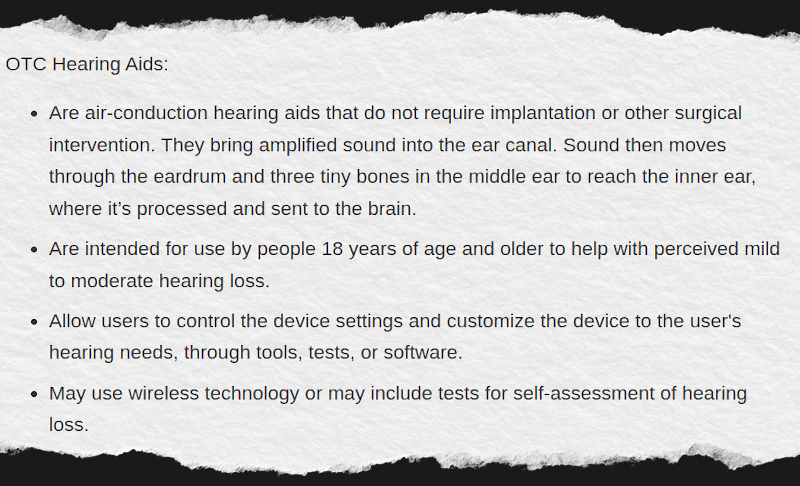
The FDA specifies that all OTC hearing aids must use air-conduction, that is, operate with a speaker inserted into the ear canal. The alternative would be bone conduction, which is generally used in cases with more profound hearing loss. The devices must also allow users to adjust, at least to some degree, the output to match their specific needs.
The intention with this second requirement goes deeper than a simple volume control as you’d have in an PSAP. In lieu of the sort of tailored output a prescription hearing aid would offer, the OTC device can offer a selection of pre-defined audio filter profiles which the user could flip through. At the risk of oversimplifying things, it’s a bit like the audio presets for different genres of music that modern headphones and earbuds usually offer in that the user can cycle through different profiles to find what best matches the current environment.
Advertisement
When combined with the acknowledgement that OTC hearing aids can utilize wireless technology to communicate with another device, it’s not hard to see how the smartphone fits into the equation. While a stand-alone device is capable of meeting the requirements necessary for OTC hearing aid classification, being able to connect to the user’s phone to easily switch between audio profiles on the fly makes for a greatly improved user experience. Additionally, by playing tones through the earbuds, software on the phone can perform a hearing test on the user — the results of which can be used to fine-tune the output beyond what’s possible with simple presets.
Hackers, Take Note
Of course, anyone looking to build an open source hearing aid probably isn’t looking for FDA approval. The goal is likely to make the technology cheaper and more accessible, especially in areas where getting a commercially produced hearing aid may be difficult. As such, the new over-the-counter classification may not seem terribly important for folks like us.
But that doesn’t mean we can’t pick up some tips from what companies like Samsung, Apple, and Jabra are doing. By bringing the user’s smartphone into the mix, they have made hearing aids more accessible and easier to operate. Instead of trying to pack all of the functionality directly into the wearable, using a smartphone to do some of that heavy lifting opens up a lot of new possibilities. There are naturally trade-offs when switching a hardware problem for a software one, especially when dealing with mobile operating systems, but it may be a compromise worth making if it means getting this sort of assistive tech to more people that need it.
A couple of months back, we discussed how screwworm infections had reappeared in Texas for the first time in decades. The foreign surveillance program designed to keep this from occurring in partnership with countries south of the border dissipated after losing funding as a result of the DOGE bros deciding it just wasn’t worth it. So, just as with measles, the country had to deal with a problem that we had once essentially eradicated with a good government program.
Screwworms are a very real and serious problem if left unchecked. Flies lay their eggs in livestock, mainly cattle, and it can kill the host in a matter of weeks. There are currently reports that hundreds of Mexican citizens have also been infected. And on the American side of the border, the problem is getting worse, not better. As a result, the government is diverting drones from patrolling the border to instead look for screwworm infections in livestock.
Since the first screwworm cases were detected in South Texas in June, the US Department of Agriculture and US Customs and Border Protection have been conducting “one of the most extensive animal-health surveillance operations in the country,” the USDA said on August 10 in social media posts on platforms like X and Facebook.
The effort involves at least 200 drones owned by the Department of Homeland Security, which includes the Customs and Border Protection (CBP) agency. But the actual number in use “varies depending on availability and need,” a USDA spokesperson told Ars.
The USDA also described performing 1,226 drone flights that surveyed more than 23,000 animals as of August 11.
Advertisement
This all costs money. As does the reinvestment in facilities to release sterile flies to reduce their overall numbers in both Mexico and domestically. $21 million was spent in Mexico for this. Untold millions are being spent for a facility at Moore Air Base in Texas. $25 million is being spent right now to build another facility in Arizona. The grant that DOGE canceled funded animal disease surveillance programs generally, including that of screwworms, cost $170 million. We’ve likely already eclipsed the cost of keeping screwworms out of the country in the government’s response this outbreak.
$1.8 billion. That’s how much economic damage could be caused by another outbreak on the scale of the Texas incident in 1976, according to USDA estimates.
This is the very definition of stepping over dollars to pick up pennies. It’s governmental malpractice and a failure of stewardship of taxpayer dollars and the economic health of America, which was the very fucking thing DOGE was pitched to have as its north star.
Our government is currently very broken, and brutally stupid. And we have yet another health issue, not to mention a food supply issue, as a result.
Paramount bosses Larry and David Ellison aren’t having much fun in the wake of a 12 state antitrust lawsuit that risks derailing their $111 billion attempt to dominate what’s left of U.S. corporate media.
There’s been a certain creeping desperation apparent the last month or two; whether it’s the company’s top lawyer claiming that critics of the deal are somehow antisemitic, or the continued threats that the company will leave California if states don’t back off their lawsuit. The company has also been funding no limit of shitty editorials trying to pretend further consolidation is just what Hollywood needs.
This report (paywalled) from Puck indicates that David Ellison is laying the groundwork to move Paramount to Tennessee, Texas, Georgia, or another state if California AG Rob Bonta doesn’t settle the antitrust case. It’s kind of an irrelevant threat in some contexts given that most U.S. film and TV production was already leaving California, and may occur whether or not the deal is approved.
Unfortunately for Ellison and his nepobaby kid, the old “I’m taking my ball and going home” threat doesn’t appear to be working on Bonta, and the antitrust lawsuit case is slated to begin next March — much later than the Ellisons were hoping. From Vulture:
Advertisement
“It’s possible Ellison and his team were hoping all of this would scare Rob Bonta, the state’s attorney general, into backing down. But so far, Bonta doesn’t seem cowed and has accused Paramount of “blackmail” in trying to get its way. And outside observers seem to agree: “Paramount’s PR campaign appears to be strengthening Bonta’s hand rather than weakening it,” the analysts at Lightshed wrote in a note to clients this week.”
Amusingly, a bunch of Paramount employees told Business Insider they were mostly just happy the merger was paused so they could focus on their work:
“It’s nice to be able to focus on what we do without the impending disruption that a merger in 2026 would have brought,” a high-level advertising employee said of the merger delay.”
Ellison is also trying to apply pressure on more corporate-cozy Democrats to push Bonta to support a deal (see: California Gubernatorial candidate Xavier Becerra, and off-the record comments by Gavin Newsom), but that doesn’t seem to be working either. In part because the U.S. cultural animosity toward billionaires and shitty giant companies is bubbling over, but also because time is simply on Bonta’s side.
Starting in October the company has to start paying a $7 million per day ticking fee to investors, which clearly has the Ellisons panicking. Larry’s over-extension in AI, should a bubble pop, could also complicate the financing for what’s already a very debt-heavy deal.
And again, it’s more than possible that Ellison follows through and moves Paramount out of California regardless of whether the deal is or isn’t approved simply to grab some tax breaks, putting a stake in the heart of an already reeling Hollywood that’s steadily watched most film and TV production migrate overseas.
Advertisement
But at the same time this exact sort of consolidation is just foundationally deadly. These deals always (and 50 years of data is not subtle on this point) result in mass layoffs, higher prices, less competition, and broad enshittification as the remaining company struggles to manage debt.
So for the few remaining regulators we have concerned about the public interest and labor, the best tack continues to be to simply block this and any other “growth for growth’s sake” consolidation. Though Ellison’s megamerger is extra shitty for numerous additional reasons, ranging from the dodgy financial support from overseas autocrats, to the Bari Weiss extraction class agitprop degradation of whatever’s left of journalistic institutions like CBS and CNN.
It’s very possible that Larry Ellison likely loses either way this goes. Either the state wins its antitrust lawsuit derailing his dreams of media domination, or he succeeds with his acquisition and is overloaded with debt while a bizarre assortment of nepobabies and brunchlords (who appear to have no idea what they’re doing) struggle to remain relevant as traditional broadcast TV heads toward extinction.
It started with avocados and ended with sensitive information being leaked.
Onstage at the Black Hat cybersecurity conference in Las Vegas, researchers Netanel Rubin and Dan Avraham pulled up an AI shopping assistant — the kind that’s available inside most major retail apps to answer questions, compare products and help shoppers navigate a store’s enormous catalog.
But the conversation didn’t stay on groceries for long.
By the end of the demonstration, the researchers had bypassed the assistant’s safeguards and forced code to run inside the computer environment behind it. The bot returned directory listings, environment variables and other information that an ordinary shopper should never be able to see.
Advertisement
In the wrong hands, that kind of information could give an attacker clues about the retailer’s systems and potentially expose secrets or access that could be used in further attacks, putting both the company and, depending on what the AI can reach, its customers at risk.
The retailer wasn’t a small online shop experimenting with a hastily assembled chatbot, either.
According to Rubin and Avraham’s company Rein Security, it was one of the three largest retailers in the US, and the assistant was available through the same public mobile app used by everyday customers.
A few important notes: Rein Security sells technology designed to monitor AI agents and provide visibility into what those agents are doing. Rein also didn’t identify the retailer, citing legal concerns. That means the findings cannot be independently verified with the retailer, and shoppers can’t know whether they’ve used the affected assistant.
Advertisement
How the shopping assistant was tricked
The attack started with one of the assistant’s most useful abilities: comparing products.
To answer certain questions, the AI can retrieve information from websites outside the retailer’s control. That helps it gather more information for shoppers, but it also means the assistant can encounter material created by virtually anyone, including an attacker.
The researchers placed instructions in content they controlled and got the shopping assistant to retrieve them. Instead of treating that material only as information to summarize, the AI was manipulated into treating some of it as new directions to follow.
This is known as an indirect prompt injection. The malicious code can be hidden within a website, document, product listing or other material the AI encounters while trying to complete a legitimate task.
Advertisement
That alone wasn’t enough to reach the system behind the assistant, but it gave the researchers a starting point.
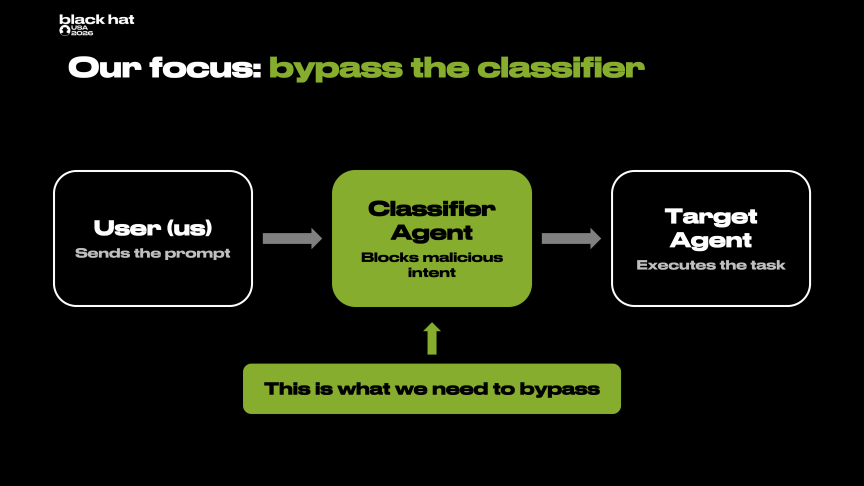
The retailer had installed a security layer that examines conversations and attempts to keep the assistant focused on shopping. If you ask it something outside its approved role, the request could be rejected.
The retailer used one AI agent to screen requests before sending them to the shopping assistant. The researchers focused on getting around that first line of defense.Black Hat
The researchers found that those protections weren’t applied evenly. The main chat interface had safeguards in place, but the app’s regular search field didn’t have the same level of protection.
Through that less-protected input, Rubin and Avraham said they persuaded the assistant to reveal information about its internal setup, including the names of tools it could use and the syntax for calling them.
They then created another set of instructions that caused the assistant to run code inside its own computing environment — essentially the computer system where the AI was running. The assistant returned lists of files and other information about that system, showing that the prompt injection had worked and the researchers’ commands had actually been executed.
Advertisement
The researchers deliberately asked the assistant to divide by zero. The resulting Python error helped confirm that their code had actually run inside the assistant’s computing environment.Black Hat
Rein’s public account doesn’t establish what else the assistant’s isolated environment could potentially access or whether an attacker could move from there into systems containing customer, payment or inventory data.
But getting code to run at all means the researchers were able to cross an important security boundary.
The researchers said they reported the vulnerabilities on March 13. As of July 16, more than 90 days later, Rein said they had not been fixed. The company has not publicly provided a newer update on whether the problems remain.
The researchers also stressed that they didn’t access real customer information, alter anyone’s orders or attempt to disrupt the retailer’s systems. Their work was performed in a controlled environment using their own session.
The AI wasn’t just talking
Chatbots have been manipulated into saying strange, offensive or unrelated things for years. But AI assistants can do more than generate answers; they can retrieve information, call outside services and use software tools to complete tasks.
Advertisement
Retailers want these assistants to eventually build shopping lists, check inventory, manage orders and even complete purchases. But each new ability creates another potential risk if the AI can be tricked into following the wrong instructions.
In this case, the retailer’s security system monitored what shoppers said to the AI and what it said back. According to Rein, it couldn’t see everything happening in between, including information the assistant retrieved and tools it used.
That created a blind spot in which the security system could see the conversation, but not everything the AI was doing behind it.
During their examination of the app, the researchers also found Google Maps API keys visible in traffic they decrypted from the mobile app. If those keys weren’t properly restricted, an attacker could potentially use them to make unauthorized requests to Google Maps services on the retailer’s account, running up charges or exhausting its usage limits.
Advertisement
The researchers did not report accessing customer information with the keys, but an attacker could potentially use them to make unauthorized Google Maps requests at the retailer’s expense.
What it all means
There isn’t much an ordinary shopper can do to prevent this kind of vulnerability. The attack targeted the retailer’s design, not a weak password or a customer mistake.
The responsibility belongs to companies giving AI assistants access to internal tools and information. Those systems have to assume that anything pulled from the open internet could contain instructions intended to mislead the AI — and put appropriate safeguards in place.
It’s still wise to avoid sharing unnecessary personal information with shopping assistants, particularly if the bot can access previous orders or other account details. Keeping retail apps updated can also ensure you receive security fixes when they become available.
Advertisement
And that also leaves one enormous unanswered question: Which shopping assistant was it?
For now, the researchers aren’t saying. But the demonstration shows what can happen as AI shopping assistants are given more control. If they can be tricked into following the wrong instructions, their most useful features can also become security risks.
With more than a decade of experience, Nelson covers Apple and Google and writes about iPhone and Android features, privacy and security settings, and more.
See full bio
























































You must be logged in to post a comment Login