
Crypto World
Bitcoin Holds Near $65K as S&P 500 Rebounds After US-Iran Tensions

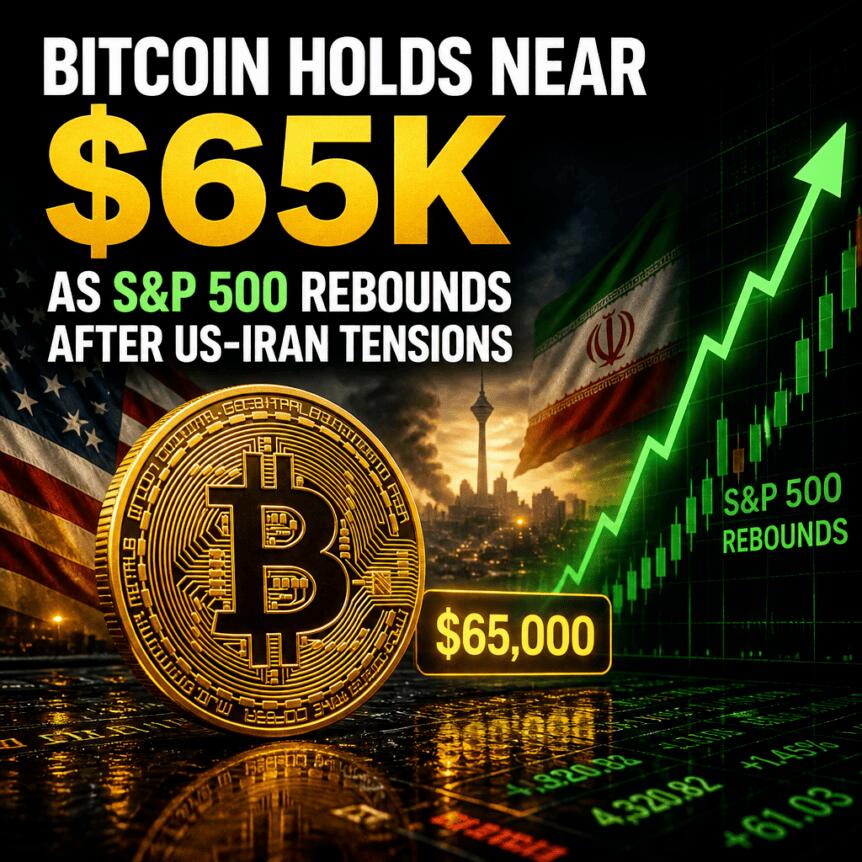
Bitcoin climbed to around $65,000 after the Wall Street open, extending gains as broader risk sentiment stabilized despite renewed geopolitical concerns tied to the US and Iran. The move came alongside a rebound in US equities, where the S&P 500 bounced from its lowest level since early August.
While stocks were finding support, the bond market and oil developments signaled a more complicated macro backdrop. BTC’s latest push also revived chart-based debate over whether the market is genuinely transitioning from consolidation into a sustainable breakout.
Key takeaways
- Bitcoin reached $65,000 for the first time since Aug. 10, following a rebound in the S&P 500.
- US 30-year yields jumped to 5.34%, the highest since January 2007, highlighting inflation and borrowing concerns.
- Trump’s Strait of Hormuz comments pushed geopolitical headlines back into focus, even as oil showed limited immediate volatility.
- Technical traders are watching key levels tied to a head-and-shoulders “bottoming” argument around $62,300.
US equities bounce while Bitcoin tests new highs
According to TradingView data referenced in the report, BTC/USD continued building on the week’s gains as the S&P 500 recovered from a session low of 7,696, its lowest since Aug. 4. The divergence matters because it suggests Bitcoin’s momentum is not merely mirroring equity direction—at least in the near term.
The geopolitical narrative returned to the forefront after US President Donald Trump posted on Truth Social that the Strait of Hormuz oil route would be treated as “new US territory,” framing the area as “open.” His later message emphasized that there were “no talks or conversations” with Iran, while asserting that naval conditions remained active and that the strait was operating.
Both the US and Iran have long-standing claims connected to control and security in the Hormuz region. In earlier commentary carried in the coverage, Trump also referenced threats against US ally Oman related to Oman’s plans to work with Iran on charging shipping tolls. Despite these headlines, oil’s immediate reaction appeared muted in the same timeframe, with WTI crude reported down about 1% to roughly $84 per barrel as of the time of writing.
Bond yields send a warning signal for risk assets
Even with stocks rebounding, government bond pricing suggested investors were still demanding more compensation for macro uncertainty. The US 30-year yield reached 5.34%, the highest level since January 2007, according to the cited market updates.
BNY Mellon analyst Geoff Yu warned in a research note quoted by the New York Times that the rise reflected investors seeking higher yields to cover inflation risk, while also pointing to the impact of government borrowing. The practical takeaway for crypto traders is that steep yield moves can raise the discount rate for risk assets, sometimes tightening financial conditions just as equities attempt to stabilize.
For Bitcoin specifically, this backdrop can create a tug-of-war: crypto may benefit from renewed interest when risk appetite returns, yet it can struggle if rates continue to rise sharply or if liquidity conditions tighten.
Chart watch: head-and-shoulders “bottoming” debate
Beyond macro headlines, the latest price action has turned attention back to technical structure. Trader and analyst Aksel Kibar, writing to X followers and cited in the report, focused on a potential reverse head-and-shoulders formation and pointed to $62,300 as the culmination point where a rebound would need to originate to validate the pattern.
Kibar argued that if Bitcoin is going to reverse higher, the move needs to develop from that area. He also discussed downside and upside scenarios if the structure fails or if the rebound sustains, including a potential target of $53,000 in the event of breakdown, and an upside target around $76,000 if the recovery extends.
That structure-focused framing is important because $65,000 is not simply a “new high” in isolation—it’s part of a decision zone where market participants determine whether the breakout is real or whether price returns to the prior range.
Why $65,000 may not be the finish line
The coverage also highlighted that earlier resistance levels have been a recurring barrier. Cointelegraph previously reported that underwater investors were contributing to Bitcoin’s inability to push higher. In the current update, Bitcoin’s rebound to $64,500 was described as stopping short of an overhead trend line: the 50-month exponential moving average (EMA), now referenced as $65,827.
That level is likely to draw attention from traders because moving averages often act as a proxy for longer-term trend health. A failure to reclaim and hold above the 50-month EMA could signal that the market is still negotiating the same distribution between sellers and buyers—especially if bond yields remain elevated.
At the same time, the fact that Bitcoin pressed toward $65,000 as US stocks bounced suggests demand is present. The immediate question is whether buyers can convert that momentum into follow-through without a renewed risk-off shock from rates or geopolitics.
Going forward, readers should watch whether BTC can hold above the reclaimed zone around the recent breakout levels and whether the market’s behavior around the $65,827 50-month EMA becomes more decisive—particularly as long-end Treasury yields and Hormuz-related headlines continue to influence broader risk sentiment.

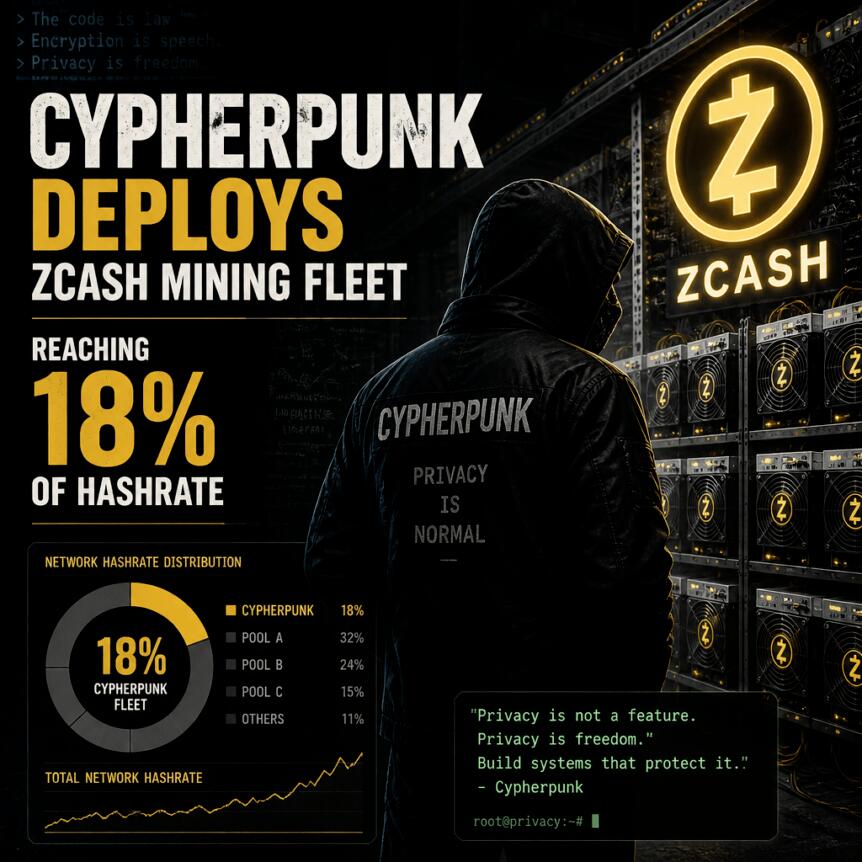
Cypherpunk Technologies says it has significantly boosted its presence in Zcash by launching what it describes as the world’s largest Zcash mining operation, following an acquisition of a mining fleet from Winklevoss Capital. The company framed the move as a bet on growing institutional attention to privacy-focused networks.
In a statement released Tuesday, Cypherpunk said it acquired the fleet via an equity-based transaction valued at $33.33 million. The new operation is already online across U.S. facilities and is producing about 4.2 GSol/s, which Cypherpunk estimates is roughly 18% of Zcash’s current network hashrate—if the figures are accurate, the arrangement would concentrate a notable slice of mining power under a single publicly traded company.
Key takeaways
- Cypherpunk Technologies reports acquiring a mining fleet from Winklevoss Capital for $33.33 million in an equity-based deal.
- The company says the fleet is live in the U.S. and is running at approximately 4.2 GSol/s, or about 18% of today’s Zcash hashrate.
- Cypherpunk’s existing ZEC holdings total 323,394 ZEC (about 1.9% of circulating supply), and it has set a longer-term goal of holding 5% of ZEC supply.
- Cypherpunk ties its mining push to improving economics relative to other workloads, though profitability depends on ZEC price, difficulty, and operating costs.
- The mining expansion comes after a strong rebound in ZEC’s price during the second half of 2025, coinciding with renewed interest in privacy coins.
Mining scale up and why it matters
Cypherpunk’s new mining operation adds capacity to the company’s existing involvement in Zcash. According to its disclosures, Cypherpunk already holds 323,394 ZEC, a stake it says is approximately 1.9% of Zcash’s circulating supply. The company also reiterated an ambition to increase that exposure over time, targeting eventually holding 5% of the token supply.
The capacity claim—4.2 GSol/s—goes beyond mere portfolio expansion. Mining on that scale could influence how investors and market observers think about Zcash’s network economics and security dynamics, especially given Cypherpunk’s estimate of roughly 18% of current hashrate. Such concentration can be a meaningful development for any proof-of-work network, because it can change the practical distribution of mining incentives and potentially alter how risk is managed across the mining ecosystem.
At the same time, the magnitude of the figure introduces a key point for readers: investors should treat the 18% estimate as dependent on Cypherpunk’s reported hashrate and on network conditions at the time of calculation. As with any mining metrics, real impact will vary as difficulty and hashrate shift.
From price momentum to institutional positioning
Cypherpunk’s move lands after a period when Zcash drew renewed attention, particularly during the second half of 2025. Cointelegraph previously reported on renewed interest in privacy-focused cryptocurrencies and linked that trend to a broader market push that helped push ZEC higher. As noted in that earlier coverage, the rally coincided with hedge fund activity that increased the asset’s visibility among larger investors.
While a higher token price can improve mining economics, mining profitability is not a simple function of price alone. Cypherpunk said it pitched Zcash mining as offering more attractive economics compared with Bitcoin mining or AI data center workloads under prevailing market conditions. However, the underlying variables remain critical: ZEC’s market price, the network’s hashrate, mining difficulty, and day-to-day operating costs all factor into whether a mining operation produces consistent returns.
That dependency matters for market participants. If the price-driven tailwind that supported ZEC in late 2025 fades, or if network difficulty rises faster than operating margins, the investment case for large-scale mining could tighten—regardless of the operational scale Cypherpunk is bringing online.
Zcash’s Ironwood upgrade and ongoing security work
The mining expansion is occurring alongside continued protocol evolution. Zcash completed its Ironwood upgrade on July 28, according to earlier reporting by Cointelegraph. The upgrade introduced a new shielded transaction protocol designed to replace the Orchard pool and strengthen the network’s security architecture.
The change followed the discovery of a flaw affecting Orchard. Under certain conditions, that issue could have allowed an attacker to create counterfeit ZEC within the shielded pool without immediate detection. While there was no evidence that the vulnerability had been exploited, the potential risk to the integrity of supply underscored a key challenge unique to privacy-preserving systems: transactions are designed to protect user data, but that same complexity can make security verification harder and the consequences of subtle bugs more serious.
For miners and token holders, protocol upgrades can indirectly affect operational considerations—especially if changes influence network behavior, transaction processing, or how nodes and related services perform. Even when a vulnerability is patched without confirmed exploitation, the narrative helps explain why Zcash continues to invest in iterative hardening, and why institutional interest may hinge not only on price performance but also on a visible security roadmap.
What to watch next
Cypherpunk’s fleet scale-up will be worth monitoring as Zcash network conditions change—particularly if hashrate and difficulty move in ways that alter the economics of such a concentrated operation. Readers should also watch how Zcash continues to maintain security momentum after Ironwood, because the long-term strength of the privacy narrative depends as much on resilient protocol design as on market cycles.

The Wall Street banking behemoth announced earlier today that it’s preparing to take another step into the cryptocurrency industry, highlighting plans to launch digital asset custody later in 2026.
Bitcoin will be the first asset supported by the new service, which will sit alongside the bank’s traditional custody business under its newly unveiled Custody+ platform.
The press release published on August 18 indicated that Custody+ will act as a suite of near- and real-time services designed to accommodate financial markets increasingly moving toward continuous trading and faster settlement. Given one of the key differences between traditional financial assets and crypto – namely, the fact that the latter operates 24/7 – Citi explained that the crypto-focused part of the business will launch later this year.
“Digital assets already operate on near-instant settlement, 24/7. Citi expects to go live with digital asset custody later this year, starting with the custody of Bitcoin. This is being built on Citi’s common digital asset architecture, and we will offer a one-stop custody experience. Clients will access traditional and crypto custody capabilities within the same framework for an integrated experience.”
This initiative provides a more concrete timeline of Citi’s plans regarding the cryptocurrency industry, as it said last year that it was preparing to launch such custody in 2026 without a clear timeline.
Aside from starting with BTC, the banking giant failed to disclose which digital assets are scheduled to follow suit.
Citi has dabbled in the industry for years. It ramped up its efforts in 2021 by adding up to 100 people to its cryptocurrency team. Meanwhile, other US institutional behemoths, such as Jane Street Group, have increased their ETF exposure to BTC.
The post Wall Street Giant Citi to Launch Bitcoin Custody Later This Year appeared first on CryptoPotato.
The US Securities and Exchange Commission (SEC) proposed Regulation Crypto Assets on Tuesday, opening a legal route for token sales to US investors and a formal exit from securities treatment.
The exit question sat at the center of the SEC’s long court fight with Ripple over XRP. Tuesday’s proposal would replace years of litigation with written conditions.
What the New SEC Crypto Rules Offer Token Issuers
The proposal creates two exemptions from Securities Act registration:
- A one-time option covers raises of up to $5 million across four years.
- A second track allows up to $75 million every 12 months.
Both routes require plain narrative disclosures for investors.
Projects using the larger exemption must also publish financial statements and file ongoing reports. Federal rules would override state registration requirements for these offerings and certain secondary trades.
The structure loosely recalls the initial coin offering (ICO) era, when projects raised billions from the public before enforcement closed that channel. This time, dollar caps and disclosure duties frame the activity from day one.
The package builds on the joint token taxonomy the SEC and the Commodity Futures Trading Commission (CFTC) issued on March 17.
That interpretation explained how a non-security crypto asset can enter and leave an investment contract, the legal wrapper that pulls a token sale under securities law. Public comments stay open for 60 days after Federal Register publication.
Follow us on X to get the latest news as it happens
The Question XRP Made Famous Gets a Written Answer
The SEC sued Ripple in 2020, arguing its XRP sales amounted to unregistered securities offerings. Judge Analisa Torres ruled in 2023 that XRP itself was not a security, though certain institutional sales crossed the line. The case closed in August 2025.
That outcome left a puzzle every project since has faced. A token could escape securities status in court, yet no rule told issuers how to get there without a judge.
The proposed safe harbor supplies the missing mechanism.
Once a team completes or permanently ends the managerial work it promised buyers, the asset would no longer sit under an investment contract.
“In line with the Commission’s earlier interpretative guidance, this proposal would also allow for a safe harbor once an issuer has completed or permanently ceased all essential managerial efforts that it represented or promised it would take under an investment contract,” SEC Chairman Paul S. Atkins said in the release.
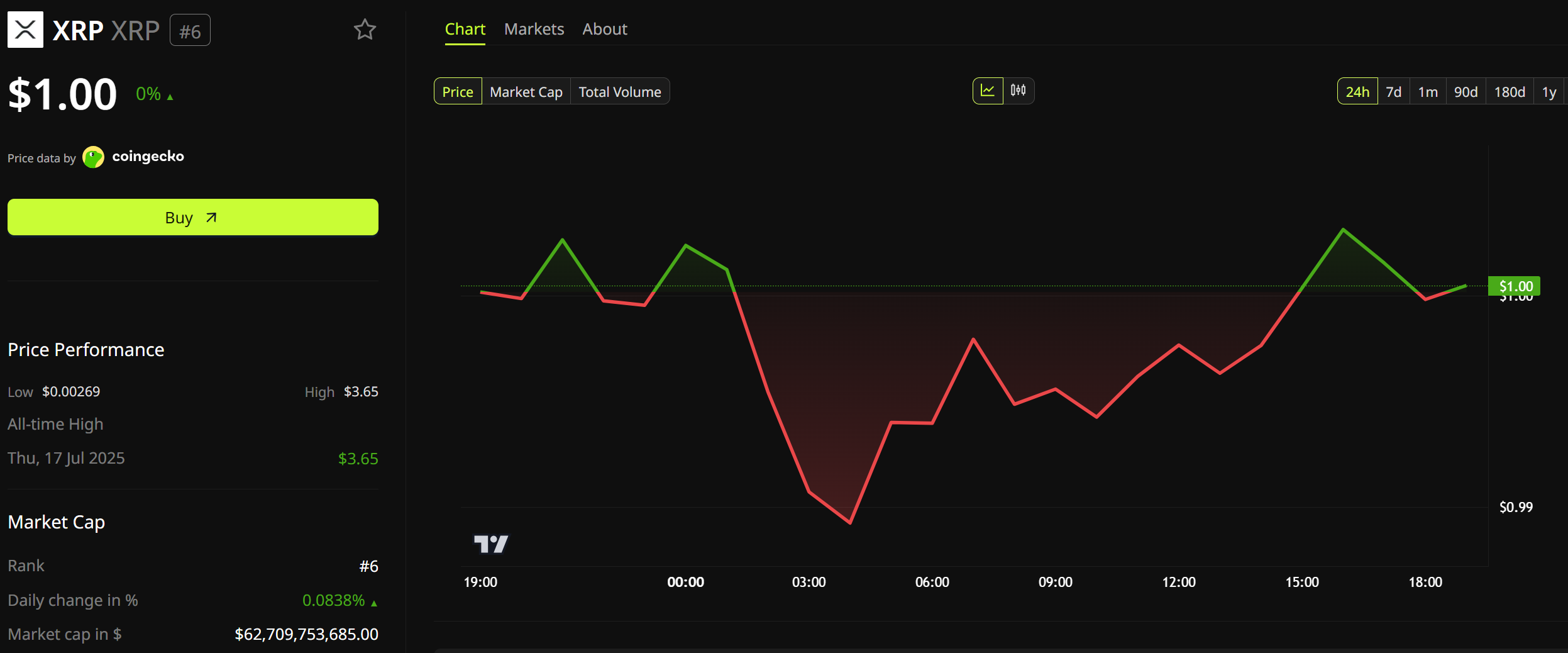
Markets showed little immediate reaction. XRP trades near $1, little changed over the past day, with a $62.7 billion market cap that ranks sixth overall. The token still sits well below its July 2025 record of $3.65.

Attention now turns to the comment window and to Congress, where the CLARITY Act, a bill setting market structure rules for digital assets, still awaits a Senate vote. The safe harbor’s final conditions will determine whether issuers that built offshore actually bring token sales back to the US.
The post New SEC Crypto Rules Revive the Question XRP Made Famous appeared first on BeInCrypto.

But now there’s a drug that addresses one of the biological mechanisms involved in narcolepsy. On Aug. 5, the U.S. Food and Drug Administration approved Orzeyful, or oveporexton, which targets the orexin pathway that orchestrates the brain’s sleeping and wake cycles. Without orexin, the brain loses the ability to control when the body sleeps and when it’s awake. Orzeyful is especially effective for disrupted sleep in narcolepsy type 1, which can be riskier because people lose muscle control and can injure themselves when they do. The drug activates the orexin pathway that is dysfunctional in people with the condition, restoring the brain’s ability to remain alert during the day, and is approved for people with narcolepsy type 1. Based on two studies submitted by Takeda, which developed the drug, involving more than 270 people with the condition, people taking the drug, which comes in pill form, twice a day, were better able to stay awake during the day than those taking a placebo. They also had fewer episodes of cataplexy, or losing muscle control, as well as other symptoms such as irregular nighttime sleep and hallucinations.

Neuberger has launched its first tokenized fixed-income product via Securitize, aiming to bring an actively managed, high-yield strategy to investors who want exposure across multiple blockchain networks. The Neuberger Securitize High Income Tokenized Fund (HINC) is positioned around higher coupon potential while reflecting a broader shift in markets where investors are increasingly demanding yields that compensate for capital’s cost.
According to an announcement published Tuesday, the fund will primarily invest in high-yield bonds, with additional exposure to collateralized loan obligations (CLOs) and leveraged loans. The offering is designed for qualified investors, and Securitize will provide the infrastructure to issue and administer tokenized fund shares across four networks: Ethereum, Solana, Avalanche, and Sui.
Key takeaways
- Neuberger’s HINC is its first tokenized fixed-income fund, launched through Securitize.
- The strategy focuses on high-yield bonds, with supplemental exposure to CLOs and leveraged loans.
- The fund’s tokenized shares are set to be issued and managed across Ethereum, Solana, Avalanche, and Sui.
- Securitize will supply the tokenization and fund-administration infrastructure, while Neuberger acts as subadvisor for the first time.
- The launch reflects investor demand for higher yields amid heightened competition for funding.
A higher-yield “regime” meets tokenized credit
The timing matters. The fund’s launch arrives as market participants increasingly weigh the implications of a less forgiving interest-rate environment. In a client note referenced in the announcement, Saxo chief investment strategist Charu Chanana said the prior market environment rewarded investors for assuming “capital would remain cheap and plentiful,” while a new regime may require investors to acknowledge “that capital has a price again.”
That framing helps explain why an actively managed high-income credit strategy is being extended into tokenized form. Instead of competing solely on distribution or settlement speed, this product also targets a traditional return objective—income—while leveraging blockchain infrastructure for issuance and management.
How HINC will be structured and where it will trade
HINC will allocate primarily to high-yield bonds, according to the Tuesday announcement. It will also seek diversification within credit markets by adding exposure to CLOs and leveraged loans—asset categories commonly used by credit managers to balance yield, risk, and cashflow characteristics.
On the technology side, Securitize will handle issuance and operational management of the tokenized shares across four blockchain networks: Ethereum, Solana, Avalanche, and Sui. For investors, this multi-chain approach can be attractive because it reduces friction when platforms or wallets support different ecosystems—though the actual availability for end users will depend on how each network is integrated with distribution venues and custody setups.
The fund is available to qualified investors, which aligns with the regulatory posture typical for tokenized securities products in the market today.
Neuberger’s role: subadvisory debut in tokenized fixed income
Neuberger’s involvement is notable because the firm is serving as subadvisor to a tokenized fund for the first time. The announcement describes Neuberger’s fixed-income platform as managing more than $230 billion in assets, while Neuberger overall manages about $613 billion.
That matters for how investors might think about the product: tokenization can change the mechanics of ownership and administration, but it does not replace the underlying question of asset management execution. By appointing Neuberger as subadvisor, the structure suggests the sponsor is leaning into traditional credit-management capabilities while using tokenization to modernize access and potentially broaden operational reach.
In this model, Securitize’s role is infrastructure-focused. It provides the issuance and management layer for tokenized fund shares, while the strategy and investment decision-making remain with the credit manager and its appointed advisory structure.
Securitize’s expanding real-world asset footprint
For Securitize, the new fund reinforces its position in the broader push to tokenize real-world assets (RWAs). RWA.xyz data cited in the announcement puts Securitize’s distributed asset value at about $4.96 billion across 26 tokenized RWAs.
That includes several well-known tokenized credit and treasury offerings referenced in the same release. The announcement points to BlackRock’s $2.7 billion BUIDL fund, a $355 million tokenized AAA CLO fund, and a $95 million Apollo diversified credit fund—examples that illustrate Securitize’s track record in bringing institutional credit exposure into tokenized formats.
While each product has its own structure, credit strategies in the tokenized securities segment share a common challenge: they require careful alignment between asset servicing, pricing, investor eligibility, and compliance. HINC’s multi-chain issuance plan may help with distribution flexibility, but it does not eliminate the operational work needed to keep the underlying credit exposures and token shares synchronized.
Investor attention on Securitize stock
Beyond the product itself, Securitize’s market presence also received attention after the announcement. The company’s shares rose around 5% in Tuesday morning trading, according to the linked Yahoo Finance quote for SECZ, bringing its market capitalization to roughly $838 million. Even with that gain, the stock remains down more than 50% from levels reached shortly after its public debut in July.
For investors, the stock move underscores how tokenized RWA launches are often treated as milestones by the public markets—signals that issuance pipelines and institutional partnerships may be expanding. Still, investors typically need to watch beyond headlines: how fast new capital flows into tokenized funds, how liquidity and secondary market access develop (where applicable), and whether ongoing distribution supports consistent issuance.
As HINC rolls out, the most important items to monitor are not only the tokenization mechanics across Ethereum, Solana, Avalanche, and Sui, but also how Neuberger’s actively managed high-income strategy performs in a credit market that increasingly rewards yield. Investors should also watch for clearer signals on user access, liquidity expectations, and any follow-on expansion of tokenized fixed-income offerings through Securitize’s platform.

The third-largest corporate holder of BTC has revealed additional details about its planned US expansion, which will see it invest 2,100 BTC and $2.5 million in cash into Super League Enterprise.
The transaction will transform the Nasdaq-listed entity into Superplanet and will become a US Bitcoin treasury platform operating under the ticker SUPA.
Superplannet Is Coming
Metaplanet is expected to control approximately 95.7% of the company’s common stock and voting power following the deal. The newly published investor presentation explains the broader strategy in which the Japanese company wants to replicate its Asian BTC treasury model in the considerably deeper US capital market.
It described the structure as “two listed issuers, two currencies, in two of the world’s largest capital markets.” The company will continue accessing yen-denominated capital in Japan, while Superplanet will attempt to raise USD in the States. All the BTC accumulated by the newly-renamed entity will remain within the Metaplanet group and be consolidated into its overall holdings.
A key part of the strategy could involve issuing USD-denominated perpetual preferred shares to raise additional capital and increase Superplanet’s common share count. The firm plans to use the proceeds to acquire more BTC.
In the hypothetical example provided in the presentation, Metaplanet said if Superplanet raises preferred capital equal to the value of its initial BTC holdings, it will use all of it to purchase more portions of the cryptocurrency. This would double the initial treasury from 2,100 BTC to 4,200 units and increase attributable bitcoin per fully diluted Metaplanet share by approximately 4.7% without issuing additional common shares, the statement explained.
Metaplanet will also have the option to invest another $210 million into Superplanet and receive long-term warrants potentially covering up to 381 million shares.
It’s worth noting that the deal remains subject ot shareholder, Nasdaq, and other regulatory approvals. If it receives the green light, it’s expected to commence in the final quarter of the year
43,000 BTC
Metaplanet adopted the BTC treasury strategy last year and made several major acquisitions. However, it paused its purchases for months as market prices unraveled in 2026, before resuming them in early July. As of press time, it holds 43,000 BTC, making it the third-largest publicly listed corporate holder of the cryptocurrency, trailing Twenty One Capital (43,514 units), and Strategy (840,447 BTC).
The post Metaplanet Unveils US Bitcoin Expansion: Here’s What It Plans to Do With Superplanet appeared first on CryptoPotato.
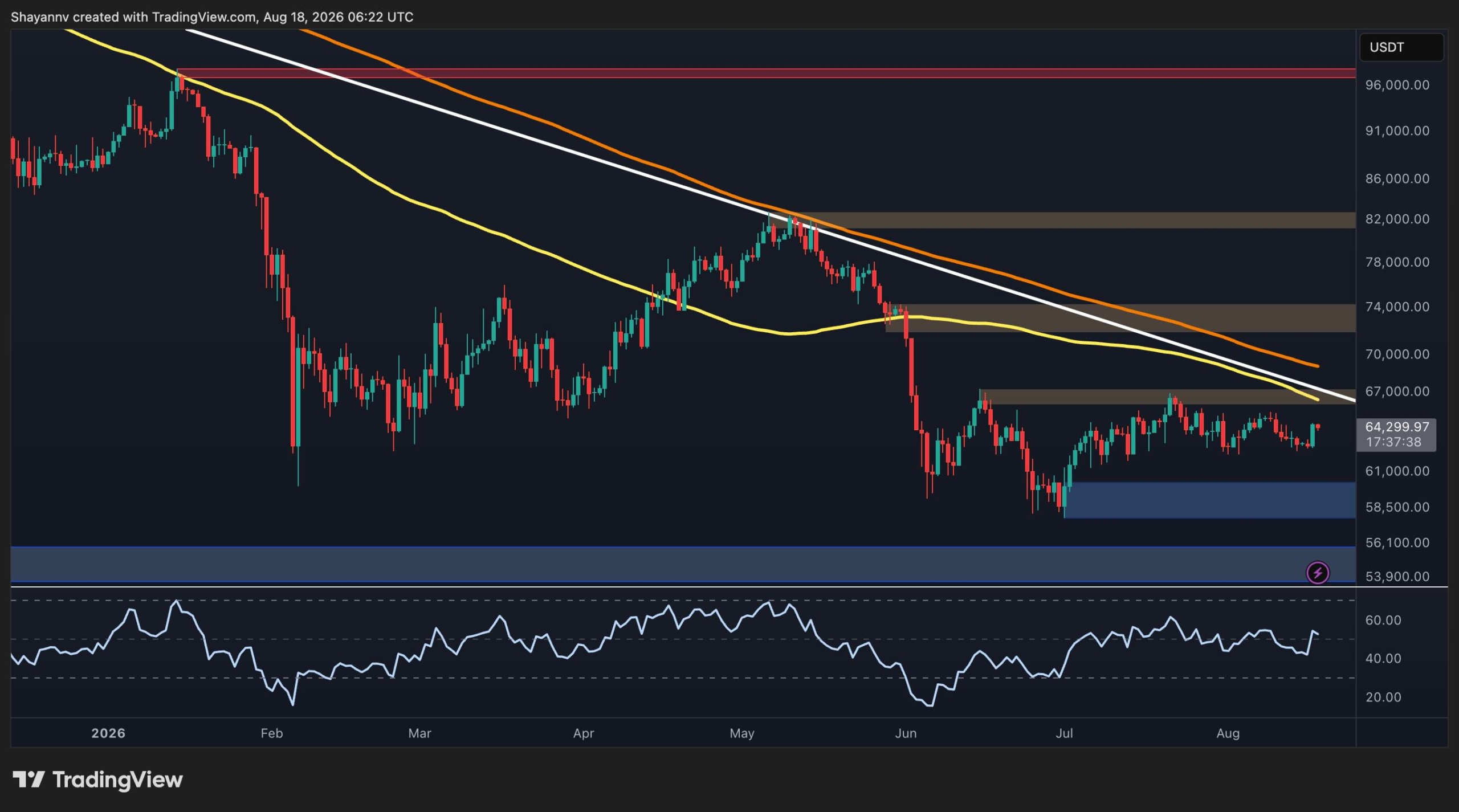
Bitcoin remains trapped in a broad corrective structure, with the price currently near $64.3K after failing to reclaim several important resistance levels. The daily chart shows a persistent bearish trendline and weakening momentum, while the 4-hour structure suggests that the asset is compressing inside a narrowing range. Meanwhile, NUPL has fallen sharply from cycle-high territory, indicating that aggregate unrealized profits have been significantly reduced.
Bitcoin Price Analysis: The Daily Chart
Bitcoin’s daily chart remains technically cautious. The price is trading below the descending white trendline and the 100-day and 200-day moving averages. This alignment keeps the broader trend tilted to the downside until BTC can reclaim these dynamic resistance levels.
The most immediate horizontal resistance sits around the $67K zone, where the descending trendline and a horizontal supply area converge. A daily breakout above this region would be an important improvement in market structure and could open the way toward the $72K-$74K resistance zone. Above that, the $82K area represents another major supply region.
On the downside, BTC is currently holding above the $60K demand zone. A loss of this area would weaken the consolidation structure and could expose the deeper $55K support region. Therefore, the $60K zone remains particularly important for the bullish case.
BTC/USDT 4-Hour Chart
The 4-hour chart provides a somewhat more constructive short-term picture. BTC has been forming a tightening symmetrical triangle structure between an ascending lower trendline and a descending upper trendline, effectively creating a compression pattern.
The price is currently near $64.3K, approaching the upper boundary of this structure. The first major hurdle is the $66K-$67K resistance zone, which also coincides with the longer-term descending channel. A decisive breakout above this region would favor a continuation toward the key $72K area.
Conversely, a breakdown of the triangle pattern from the upper trendline could send BTC back toward the $60K area rapidly. The 4-hour RSI has also surged toward the upper end of its recent range, showing a clear improvement in short-term momentum. However, the indicator is also approaching overbought territory, meaning a rejection near resistance could trigger another pullback before a breakout attempt.
Overall, a compression structure is usually resolved with an impulsive move, depending on the direction of the subsequent breakout. Therefore, the upcoming sessions can be crucial in determining BTC’s trend in the short-term.

On-Chain Analysis
The NUPL chart shows a significant deterioration in Bitcoin’s unrealized profit conditions. NUPL has fallen from above 0.5 during the earlier stages of the cycle to approximately 0.18 currently. The indicator is therefore sitting well below the 0.25 level highlighted on the chart and close to the lower end of the historical range shown.
This decline indicates that the aggregate unrealized gains held by Bitcoin investors have been substantially compressed. Importantly, the current NUPL reading is much closer to the capitulation/low-profit regions seen during previous major corrections than to the elevated levels associated with euphoric market conditions.
While NUPL data does not support a euphoric late-cycle interpretation at present, it also does not provide a standalone bullish signal. The technical charts still need to confirm a structural recovery, particularly through a breakout above $67K and the long-term descending trendline.

The post Bitcoin Price Analysis: BTC’s Rally Means Nothing Until It Reclaims This Key Level appeared first on CryptoPotato.


The CFTC has opened a 45-day comment period on proposals that would double the small-pool exemption threshold to $800,000 and ease registration rules for some fund advisers.
Summary
- The CFTC proposal would create a CPO exemption for qualifying SEC-registered investment advisers.
- A related change would extend registration relief to certain commodity trading advisers.
- The small-pool capital threshold would rise from $400,000 to $800,000.
- Comments will remain open for 45 days after publication in the Federal Register.
CFTC proposal would reduce duplicate fund registration
The Commodity Futures Trading Commission said in an Aug. 18 regulatory announcement that it had proposed amendments to Part 4 of its rules, which govern commodity pool operators, or CPOs, and commodity trading advisers, known as CTAs.
Under the proposal, certain investment advisers already registered with the Securities and Exchange Commission could avoid separate CPO registration for qualifying commodity pools. The exemption would apply only when the pool meets several conditions, including limits on who may invest.
A commodity pool combines money from multiple participants to trade futures, options, swaps, or other commodity interests. Its operator generally must register with the CFTC unless an exemption applies, while a person who provides trading advice may also have to register as a CTA.
SEC-registered advisers can fall under both regulatory systems when the private funds they manage trade commodity interests. According to the CFTC, requiring full registration under both systems may produce overlapping compliance duties without providing enough additional regulatory benefit.
“By continuing to address overly burdensome and duplicative rules for its registrants, the CFTC is delivering on its mandate to promote U.S. market competitiveness,” CFTC Chairman Michael S. Selig said.
Selig added that the agency intended to reduce compliance costs for American businesses while preserving market integrity.
The proposed exemption would not remove all regulatory requirements. Advisers seeking relief would still need to satisfy the SEC’s rules under the Investment Advisers Act, including applicable conduct, examination, disclosure, and reporting requirements.
CFTC exemption would cover pools for sophisticated investors
Proposed Regulation 4.13(a)(4) would limit the CPO exemption to SEC-registered investment advisers operating eligible pools for defined groups of sophisticated investors.
Natural-person participants would generally need to fall within Qualified Eligible Person categories that do not require them to pass the CFTC’s portfolio test. Eligible entities could include QEPs and certain accredited investors listed under the SEC’s Regulation D.
Rather than changing the financial thresholds used to qualify as a QEP, the proposal uses existing investor categories to determine which pools may receive registration relief.
The CFTC previously increased the portfolio thresholds attached to some QEP categories in 2024. Under the updated standard, a person subject to the test may qualify by owning at least $4 million in securities and other assets, holding at least $400,000 in required margin and option premiums, or meeting a combination of the two tests.
Published in September 2024, the final rule doubled the previous thresholds of $2 million and $200,000. Compliance with the new amounts began six months after the rule appeared in the Federal Register.
Separate conditions in the new proposal would require interests in eligible pools to remain exempt from Securities Act registration. Public marketing in the United States would generally be restricted, although pools using Rule 506(c) could conduct general solicitation when every purchaser is an accredited investor and the issuer takes reasonable steps to verify that status.
Where SEC rules require a Form PF filing for an eligible private fund, the adviser would also need to file that form to claim the proposed CFTC exemption. Form PF supplies regulators with information used for investor protection and systemic-risk monitoring.
The CFTC and SEC already operate under a memorandum of understanding that allows them to share Form PF information. The commission said the arrangement could preserve access to fund data without making advisers submit overlapping reports to both agencies.
Eligible advisers would still have to file an exemption notice through the National Futures Association’s online registration system. Annual notices would be required to confirm continued reliance on the exemption, along with updates when filed information becomes inaccurate or incomplete.
Proposed rules would formalize temporary CFTC relief
The plan would place parts of existing staff relief into the CFTC’s regulations, giving qualifying advisers a formal rule instead of leaving them dependent on a no-action position.
CFTC Market Participants Division Letter 25-50, issued in December 2025, provided interim registration relief for certain SEC-registered advisers managing pools restricted to QEPs. The letter covered some advisers who would otherwise need to register as CPOs or CTAs and also allowed eligible firms to withdraw existing registrations.
Staff issued the relief after the commission had removed a similar QEP exemption in 2012. The earlier exemption, adopted in 2003, allowed operators of certain privately offered pools to avoid registration when participation was restricted to qualifying investors.
According to the new proposal, applying Letter 25-50 alongside National Futures Association processes proved complex and time-consuming. Converting the policy into Regulation 4.13(a)(4) would establish a public set of eligibility conditions adopted through the federal notice-and-comment process.
The CFTC said a final rule would supersede specified no-action positions, including relief provided through Letters 25-50 and 26-06. Until the commission adopts a final rule, however, the proposal does not itself replace the current registration framework or the staff letters.
A related amendment to Regulation 4.14 would extend CTA registration relief to qualifying advisers serving pools covered by the proposed CPO exemption. The CFTC described the CTA change as a limited expansion because many affected advisers already qualify for relief when serving other permitted clients.
Small-pool exemption threshold could double
For smaller fund operators, the proposal would raise the maximum gross capital contributions allowed under the small-pool exemption from $400,000 to $800,000.
Regulation 4.13(a)(2) currently permits an exemption for operators whose pools have no more than 15 participants and whose total gross capital contributions across all operated or planned pools do not exceed $400,000, subject to exclusions for certain contributions.
The commission last adjusted the monetary limit in 2003, when it doubled the threshold from $200,000 to $400,000. Using the Consumer Price Index for All Urban Consumers, the agency calculated that $400,000 in January 2003 had the same purchasing power as approximately $735,097 in July 2026.
Rounding that figure to $800,000 would provide a simpler limit for fund operators, according to the proposal. The 15-participant cap would remain unchanged, as would existing rules that exclude specified contributions from the calculation.
Operators using the expanded exemption would still need to complete initial and annual notice filings. Anti-fraud provisions of the Commodity Exchange Act would also continue to apply to exempt pools.
Crypto policy remains on another CFTC track
The Part 4 proposal does not create a registration system for cryptocurrency platforms or change the CFTC’s authority over digital-asset spot markets. Crypto-focused private funds may still be affected when their trading activity makes them commodity pools, but eligibility for relief would depend on the same conditions applied to other qualifying funds.
Meanwhile, crypto.news previously reported that the CFTC’s first Innovation Advisory Committee meeting will take place on Aug. 20. Its agenda includes crypto assets, artificial intelligence, and prediction markets, with public statements accepted through Aug. 27.
The committee’s crypto session will examine federal market-structure questions, overlapping regulatory authority, customer protection, and market integrity. It will not vote on the CPO and CTA proposal or adopt binding digital-asset rules.
Congress is considering separate legislation that could alter how the SEC and CFTC divide digital-asset oversight. A May review of the CLARITY Act explained that the bill would give the CFTC authority over specified digital commodities while leaving investment-contract assets under SEC oversight.
For the Part 4 rulemaking, written comments must identify RIN 3038-AF61 and reach the Commission within 45 days after the proposal is published in the Federal Register. The CFTC has requested feedback on the proposed exemptions, their eligibility conditions, expected costs and benefits, and the increase in the small-pool capital limit.


This year, TIME and Statista have published the first edition of America’s Best Incubators and Accelerators 2026. It identifies the most outstanding hubs offering incubator and accelerator programs in the United States, based on a multi-stage research process combining an open application, structured alumni feedback, track record analysis, and expert recommendations.
Methodology
The process began with an application phase running from January to April 2026. TIME published an announcement article, and the call for entries was promoted across social media channels and shared by InBIA, a global nonprofit organization focused on advancing entrepreneurship and supporting innovation ecosystems. In addition, Statista independently identified several hundred potential candidates through databases and other publicly available sources and invited them to participate via email and LinkedIn. To be eligible, incubators and accelerators had to be physically located in the United States, offer at least one incubation or acceleration program, and have been in operation since at least 2022. During the online registration, participants provided general information about their organization, including the number of employees and the number of startups or alumni per program cohort, along with contact details.
Following the registration phase, all eligible incubators and accelerators were asked to reach out to their alumni who had participated in programs between 2020 and 2025. More than 2,000 alumni responded and evaluated their experience. Each alumnus provided a general recommendation on a scale from 0 to 10 and rated six specific aspects on a scale from 1 to 5, with an additional “not relevant” option. These aspects covered Mentoring & Training, Infrastructure, Legal Assistance, Funding Opportunities, Networking Opportunities, and Business Development Advice. Furthermore, alumni answered questions about the application process, funding, and post-program support.
Statista also reviewed publicly available information and data on the track record of incubators and accelerators, that were evaluated by their alumni, specifically with regard to the five most successful startups that had participated in one of their programs. This information was collected through desk research using official and publicly available sources, including organization websites, public presentations, and online media articles. Where justified by the available data, these organizations were also included in the ranking.
The data collected was then analyzed to produce four distinct subscores. The general alumni recommendation accounted for 40% of the total score, while the six subcriteria from the alumni evaluations accounted for 45%. The Track Record Score was derived from information that incubators and accelerators provided about the top five startups that had participated in one of their programs. The Expert Score was based on recommendations from startup investors and entrepreneurs who were asked to name the Incubators and Accelerators they know and regard highly.
The final overall score was calculated as a weighted average of these components: the general alumni recommendation contributed 40%, the six alumni subcriteria 45%, the Track Record Score 10%, and the Expert Score 5%. This weighting ensures that the ranking is primarily driven by the direct experience of program participants while also accounting for measurable outcomes and the broader reputation within the entrepreneurial community.
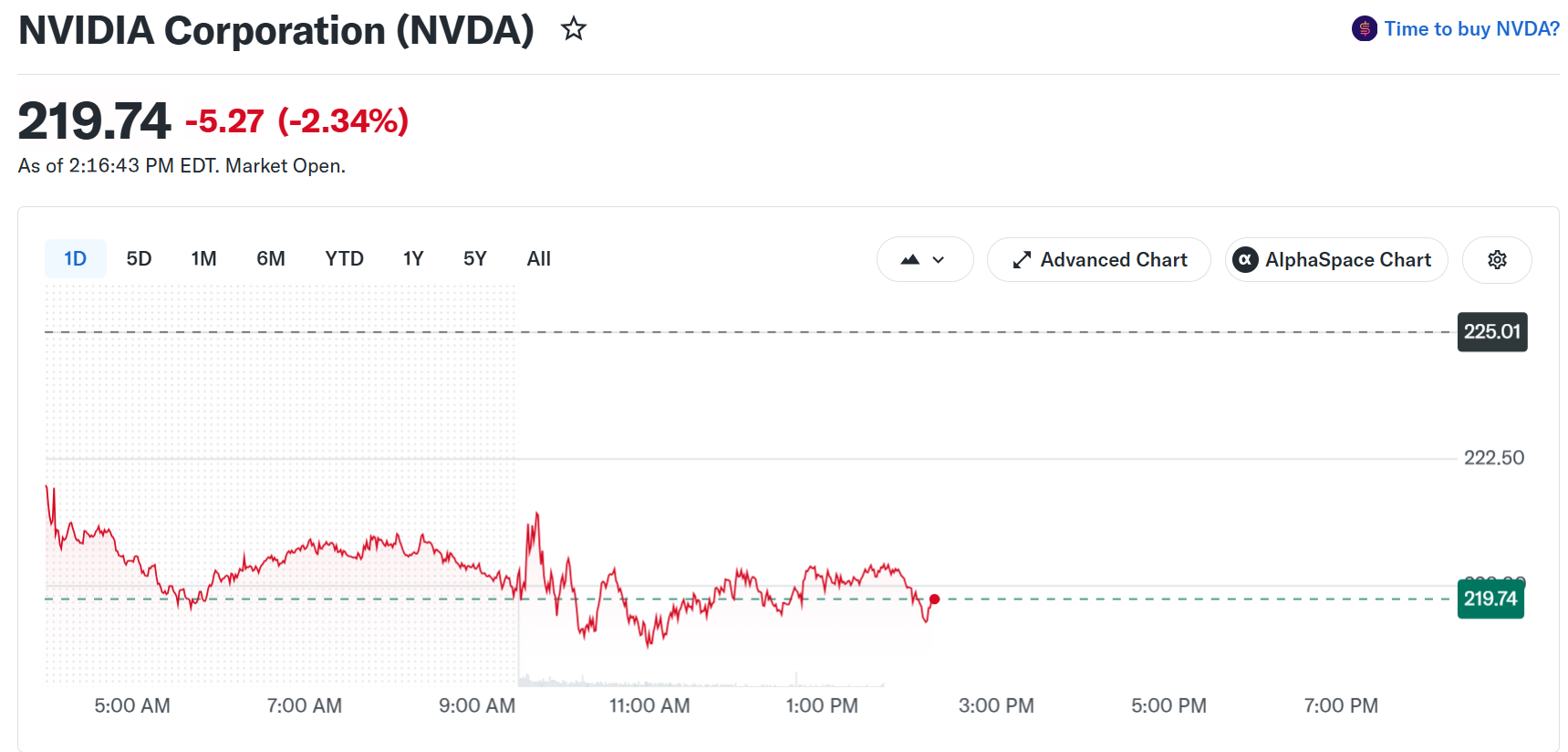
Wall Street fears Nvidia (NVDA) is quietly turning into a bank for the AI boom. Bank of America (BofA) says that fear is exactly why Nvidia stock trades at up to a 50% discount, and it kept its $350 target.
Analyst Vivek Arya made the call as Nvidia guaranteed up to $105 billion in leases for an OpenAI data center in Ohio. Earnings arrive on August 26.
Why Investors Fear Nvidia’s New Role as AI Financier
On Monday, Nvidia agreed to backstop up to $105 billion in leases at a new Ohio data center campus. SB Energy, a developer backed by SoftBank and OpenAI, will build and own the site.
The campus sits on a Cold War-era uranium enrichment site in Pike County. OpenAI signed a 20-year lease for the facility, according to Nvidia’s announcement.
The worry is easy to grasp. Nvidia sells chips to OpenAI, has pledged to invest up to $100 billion in the company under a 2025 partnership, and now backs its rent. Critics call the money loop circular.
However, Arya says the market is misreading the deal. Nvidia does not guarantee OpenAI’s full rent. It covers only the leftover gap if OpenAI defaults and the site is re-leased or sold. Even then, the bill is capped at $105 billion, well below the $250 billion floated in earlier reports.
There is also a prize for taking that risk. Nvidia becomes the exclusive AI compute provider on the campus, locking rivals out of scarce land and power. CEO Jensen Huang put the logic plainly in the release, saying
“land, power and shell have become vital in the age of AI.”
Follow us on X to get the latest news as it happens
BofA Sees Nvidia Stock at a 34% to 50% Discount
Arya values Nvidia piece by piece on its free cash flow. Even after loading in every financing risk, his math shows the shares trading 34% to 50% below fair value.
“Nvidia’s ecosystem investments, especially into disruptive frontier labs and neoclouds, are critical to accelerating the [artificial-intelligence] cycle, though they risk lower earnings quality and a depressed trading multiple,” said Arya in his latest note.
Neoclouds are smaller cloud firms built to rent out graphics processing units (GPUs). In plain terms, Arya thinks the deals speed up the AI boom, even if they scare shareholders today.
His fix is simple. Nvidia puts only about half of its free cash flow into buybacks, while peers return 75% to 100%. A bigger program would hand cash back, ease doubts about earnings quality, and could lift the multiple.
Wall Street Consensus and the August 26 Test
Nvidia stock, NVDA, traded for $219.74 as of this writing. A run to $350 means roughly 59% upside, or about $3 trillion in added value on its $5.45 trillion market cap.

Arya is bullish but far from alone. TipRanks data shows 36 of 37 analysts rate the stock a Buy, with an average target of $309.94. Even the lowest target on the Street, at $250, sits above the current price.

The risks are real, though. If AI demand cools, re-leasing a giant Ohio campus becomes much harder. The stock has also dropped after past earnings six times since August 2024.
Arya expects Nvidia to detail its off-balance-sheet commitments on August 26. If that disclosure lands well, the discount he sees may finally start to close.
The post Bank of America Thinks Nvidia Stock Could Go 50% Higher appeared first on BeInCrypto.

Andy Burnham says Britain ‘supports Ukraine 100%’ after Putin warned ‘there will be a price to pay’ for supplying Kyiv with drones

Iluka Resources Limited 2026 Q2 – Results – Earnings Call Presentation (OTCMKTS:ILKAY) 2026-08-18

Cypherpunk Deploys Zcash Mining Fleet, Reaching 18% of Hashrate

Weekend Open Thread – Corporette.com

Weekend Open Thread: Brooks Brothers

London Mayor Sadiq Khan handed a peerage by Keir Starmer alongside 15 other Labour figures… just days before the PM leaves No10

The Greatest Macro Trader On Earth Just Signaled Next Crypto Opportunity (and They Have No Idea)

OH MY GOOOOOD SHE SPILLED EVERYTHING!! (RIPPLE PRESIDENT XRP INTERVIEW)

Bitcoin wird gerade zum Pulverfass – und es wird immer extremer!
-

 Fashion4 days ago
Weekend Open Thread: Ann Taylor
-
 Sports5 days ago
This U.S. Amateur is a glimpse into golf’s future in more ways than you think
-

 Sports4 days ago
Birmingham 2026: Day 6 Timetable for Irish Athletes
-
 NewsBeat4 days ago
Myanmar says over 300,000 Rohingya refugees verified for repatriation as exodus enters ninth year
-
 Tech5 days ago
11 Ways to Rank Your Videos
-

 Politics4 days ago
SEQ Code: The Three Letter Boarding Pass Code That Could Give You The Worst Seat
-
 Entertainment7 days ago
Keke Palmer Subtly Hints At Sean Evans Drama With Cryptic Post
-
 Crypto World7 days ago
XRP bridge drained after software mistook fake deposits for real ones
-

 Tech5 days ago
DeepSeek Harness launches as open source rival to Claude Code, alongside V4-Pro on API with higher prices
-

 Sports6 days ago
DeQuan Jones in ‘high spirits’ after successful leg surgery
-
 Crypto World6 days ago
Perplexity AI Predicts an XRP Scenario Few Analysts Are Discussing
-

 Tech7 days ago
SpaceXAI’s Grok Bot turns agents into persistent digital coworkers that can operate your apps for $120-per-month
-

 Crypto World1 day ago
OCC Greenlights Trump Family Crypto Firm for Trust Charter
-

 Politics7 days ago
How Average Are You In The UK?
-
 Entertainment6 days ago
2026’s Most Ambitious Fantasy Movie Officially Scores Sequel Update
-
 Entertainment6 days ago
All 10 Hayao Miyazaki Fantasy Movies, Ranked
-
 Business7 days ago
Evolv Technologies Holdings, Inc. (EVLV) Q2 2026 Earnings Call Transcript
-
 Tech7 days ago
A Zoom Screen-Sharing Bug Let Anyone Take Over Other Devices On a Call
-
 Entertainment6 days ago
Travis Kelce Breaks Silence On ‘Crazy’ Taylor Swift Wedding
-

 Fashion7 days ago
Wednesday’s Workwear Report: Stretch-Cotton Pleated-Waist Top
You must be logged in to post a comment Login