
Crypto World
Bitcoin Holds Near $65K as S&P 500 Rebounds After US-Iran Tensions

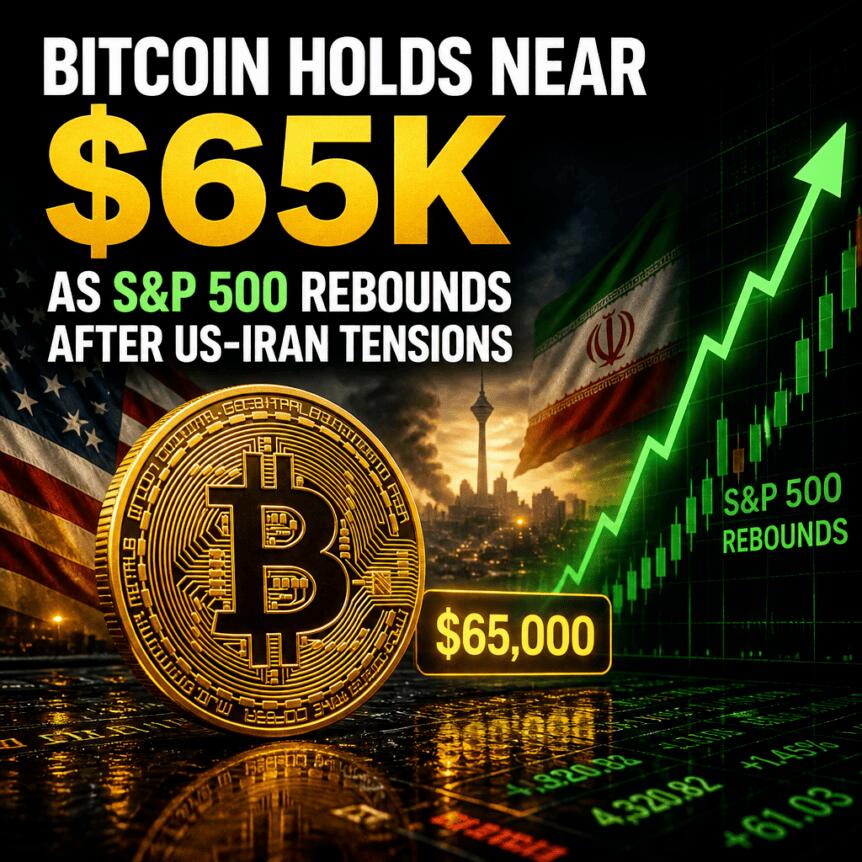
Bitcoin climbed to around $65,000 after the Wall Street open, extending gains as broader risk sentiment stabilized despite renewed geopolitical concerns tied to the US and Iran. The move came alongside a rebound in US equities, where the S&P 500 bounced from its lowest level since early August.
While stocks were finding support, the bond market and oil developments signaled a more complicated macro backdrop. BTC’s latest push also revived chart-based debate over whether the market is genuinely transitioning from consolidation into a sustainable breakout.
Key takeaways
- Bitcoin reached $65,000 for the first time since Aug. 10, following a rebound in the S&P 500.
- US 30-year yields jumped to 5.34%, the highest since January 2007, highlighting inflation and borrowing concerns.
- Trump’s Strait of Hormuz comments pushed geopolitical headlines back into focus, even as oil showed limited immediate volatility.
- Technical traders are watching key levels tied to a head-and-shoulders “bottoming” argument around $62,300.
US equities bounce while Bitcoin tests new highs
According to TradingView data referenced in the report, BTC/USD continued building on the week’s gains as the S&P 500 recovered from a session low of 7,696, its lowest since Aug. 4. The divergence matters because it suggests Bitcoin’s momentum is not merely mirroring equity direction—at least in the near term.
The geopolitical narrative returned to the forefront after US President Donald Trump posted on Truth Social that the Strait of Hormuz oil route would be treated as “new US territory,” framing the area as “open.” His later message emphasized that there were “no talks or conversations” with Iran, while asserting that naval conditions remained active and that the strait was operating.
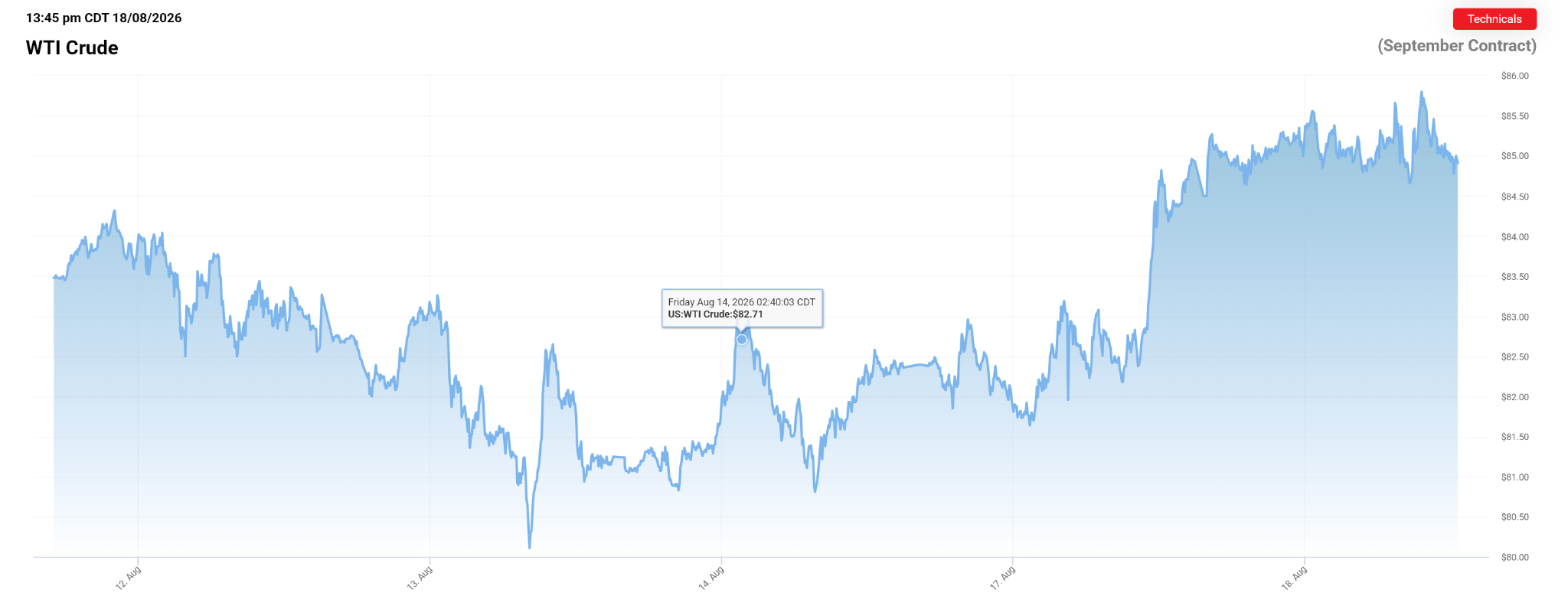
Both the US and Iran have long-standing claims connected to control and security in the Hormuz region. In earlier commentary carried in the coverage, Trump also referenced threats against US ally Oman related to Oman’s plans to work with Iran on charging shipping tolls. Despite these headlines, oil’s immediate reaction appeared muted in the same timeframe, with WTI crude reported down about 1% to roughly $84 per barrel as of the time of writing.
Bond yields send a warning signal for risk assets
Even with stocks rebounding, government bond pricing suggested investors were still demanding more compensation for macro uncertainty. The US 30-year yield reached 5.34%, the highest level since January 2007, according to the cited market updates.
BNY Mellon analyst Geoff Yu warned in a research note quoted by the New York Times that the rise reflected investors seeking higher yields to cover inflation risk, while also pointing to the impact of government borrowing. The practical takeaway for crypto traders is that steep yield moves can raise the discount rate for risk assets, sometimes tightening financial conditions just as equities attempt to stabilize.
For Bitcoin specifically, this backdrop can create a tug-of-war: crypto may benefit from renewed interest when risk appetite returns, yet it can struggle if rates continue to rise sharply or if liquidity conditions tighten.
Chart watch: head-and-shoulders “bottoming” debate
Beyond macro headlines, the latest price action has turned attention back to technical structure. Trader and analyst Aksel Kibar, writing to X followers and cited in the report, focused on a potential reverse head-and-shoulders formation and pointed to $62,300 as the culmination point where a rebound would need to originate to validate the pattern.
Kibar argued that if Bitcoin is going to reverse higher, the move needs to develop from that area. He also discussed downside and upside scenarios if the structure fails or if the rebound sustains, including a potential target of $53,000 in the event of breakdown, and an upside target around $76,000 if the recovery extends.
That structure-focused framing is important because $65,000 is not simply a “new high” in isolation—it’s part of a decision zone where market participants determine whether the breakout is real or whether price returns to the prior range.
Why $65,000 may not be the finish line
The coverage also highlighted that earlier resistance levels have been a recurring barrier. Cointelegraph previously reported that underwater investors were contributing to Bitcoin’s inability to push higher. In the current update, Bitcoin’s rebound to $64,500 was described as stopping short of an overhead trend line: the 50-month exponential moving average (EMA), now referenced as $65,827.
That level is likely to draw attention from traders because moving averages often act as a proxy for longer-term trend health. A failure to reclaim and hold above the 50-month EMA could signal that the market is still negotiating the same distribution between sellers and buyers—especially if bond yields remain elevated.
At the same time, the fact that Bitcoin pressed toward $65,000 as US stocks bounced suggests demand is present. The immediate question is whether buyers can convert that momentum into follow-through without a renewed risk-off shock from rates or geopolitics.
Going forward, readers should watch whether BTC can hold above the reclaimed zone around the recent breakout levels and whether the market’s behavior around the $65,827 50-month EMA becomes more decisive—particularly as long-end Treasury yields and Hormuz-related headlines continue to influence broader risk sentiment.

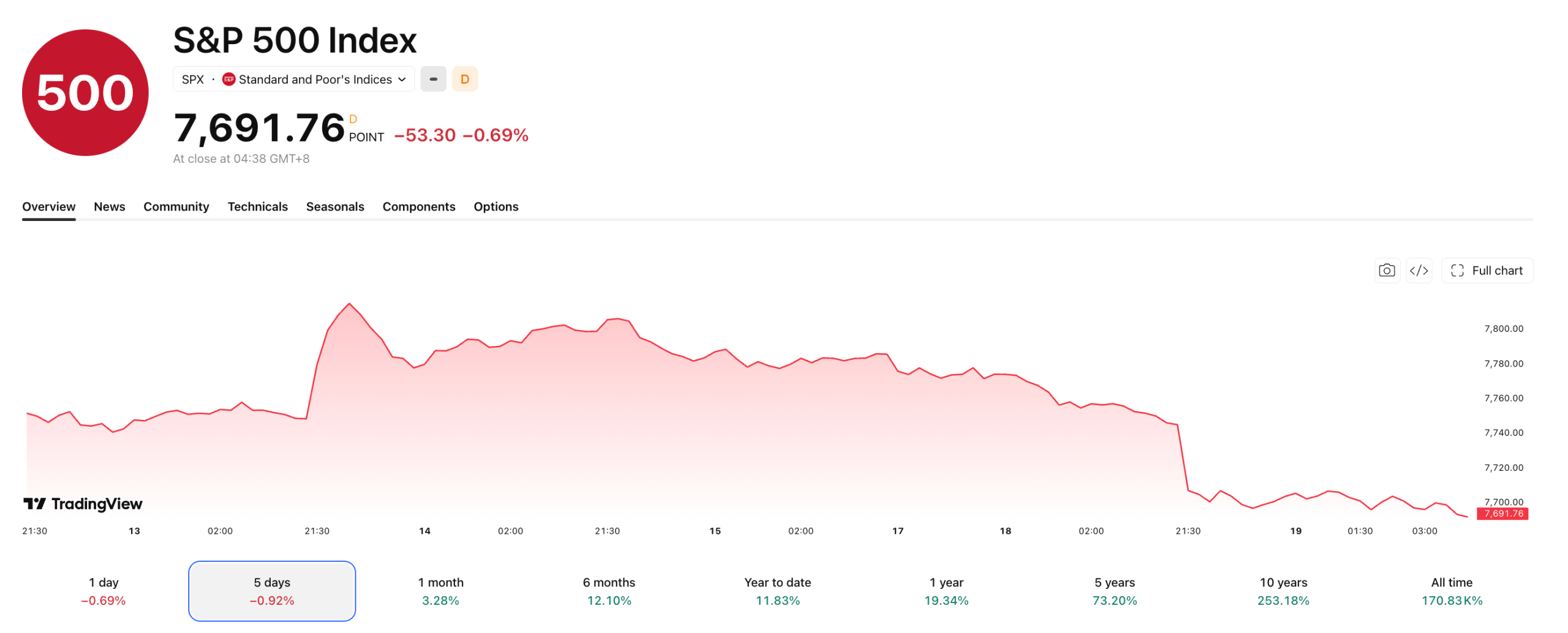
Bonds are slamming stocks just days after Wall Street set fresh records. A global bond selloff is now pushing borrowing costs to multi-decade highs.
The S&P 500 and Nasdaq Composite fell to two-week lows on Tuesday. In contrast, long-dated Treasury yields jumped to their highest levels in nearly two decades.
Records, Then a Reversal
The S&P 500 closed at a record 7,798.99 on Aug. 13. Cooling inflation data and strong AI-linked earnings had powered that rally.

The Dow Jones Industrial Average had also set an AI-earnings record close alongside the S&P 500 on Aug. 5. However, the mood flipped just days later.
The Nasdaq Composite slid to a two-week low as semiconductor stocks tumbled, denting a record-setting 2026 rally.
How Bonds Are Slamming Stocks
The US 10-year Treasury yield climbed to 4.748%, its highest since January 2025. The 30-year yield reached 5.33%, its highest level in 19 years.
The rout is not just American. Japan’s 10-year government bond yield reached a 30-year high of 2.945% this week.
The gap between short-term and long-term US yields is now the widest in four years. That steepening signals investors are demanding more compensation for long-run risk.
Renewed doubts over a Middle East peace deal pushed oil prices higher, fanning inflation fears. Meanwhile, a record wave of corporate bond issuance is competing with government debt for investor cash.
Issuance has totaled nearly $1.7 trillion so far in 2026, according to SIFMA data. That pace is on track to top last year’s record of $2.2 trillion.
A Moving Market is Worth a Look
Meanwhile, South Korea’s KOSPI fell 1.5% and Japan’s Nikkei dropped 2.5% in sympathy. The Philadelphia SE Semiconductor Index tumbled 5% as investors reassessed AI-linked valuations.
In contrast, the pullback lends weight to Fundstrat’s Tom Lee. He has said a 10% market correction may be needed before the S&P 500 can sustainably clear 8,000.
Wednesday’s Federal Reserve minutes may decide whether this pause holds or the selloff deepens. Investors are already positioning for that Fed minutes preview, the next major catalyst for both stocks and bonds.
The post Wall Street Notches Records, Then Bonds Slam Stocks Back Down appeared first on BeInCrypto.


Andrew Yang, the 2020 presidential candidate, renewed his call for an AI tax on CNBC’s Power Lunch. He argues the government should tax artificial intelligence (AI) instead of payroll.
Yang co-founded the Forward Party and now runs Noble Mobile as chief executive. He said firms skip payroll taxes and healthcare costs by choosing AI over new hires.
Andrew Yang’s AI Tax Push
Yang built his political brand on automation warnings during his 2020 campaign. He proposed a universal basic income plan he called the Freedom Dividend. He also backed cryptocurrency adoption and clearer digital asset rules as a candidate.
His comments echo remarks from March, when he told CNBC’s Squawk Box the government should stop taxing labor. That debate has also drawn similar AI job displacement concerns from sitting US senators.
Yang pointed to Anthropic chief executive Dario Amodei, who floated a 3% AI revenue tax in 2025. Amodei said the levy would apply each time a model generates revenue.
Yang said the same logic should apply broadly. However, he argued it would force firms to weigh AI costs against payroll costs.
What the Data Shows
A CNBC and Generation Lab survey published August 13 polled Americans aged 18 to 34. It found 45% expect AI to hurt their careers, while only 10% expect it to help.
Bridgewater Associates executives Greg Jensen and Nir Bar Dea wrote a New York Times opinion piece. They estimated AI could displace 18% of current US jobs within five years.
The pair used that estimate to back their own AI token tax proposal, echoing Amodei’s earlier idea. Meanwhile, the shift is already visible in customer service. The sector employs roughly 2.9 million Americans, according to the US Bureau of Labor Statistics.
Yang proposed sending the tax revenue directly to workers as checks. He said retraining programs rarely help displaced workers find new careers. He pointed to past efforts aimed at coal miners and warehouse staff as examples that largely failed.
The post Ex-Presidential Candidate Andrew Yang Pushes for AI Tax Over Payroll Tax appeared first on BeInCrypto.

Taken as a whole, the methodology rewards what can be observed from the outside. Capital raised, deals done, and marquee portfolio names are all visible; the money actually returned to limited partners, for the most part, is not. Firms that are big, busy, and prominent will therefore do well, and on the whole they deserve to. But the ranking is best read as a measure of franchise strength rather than of skill per dollar invested.
Every ranking methodology reflects the objectives of its creators. I also co-created a methodology for assessing VC firms, with an emphasis on the economically relevant portions of the net profits generated by individual VCs’ investments. What the two lists agree on is as informative as where they part. Both put the same handful of firms, which have been prominent for a decade or more, at the very top; firms such as Sequoia, a16z, and Lightspeed. That agreement is real: the elite of the American VC industry is very select, relatively stable, and well capitalized. Below that, of the roughly 110 firms in TIME’s top 200 that do not appear in ours, only fifteen are ones we rule out by definition: accelerators such as Plug and Play, angel networks, corporate vehicles, asset managers. We include some VC firms that are ineligible for TIME’s ranking (Meritech, Dragoneer, Addition, and Inflection Ventures all place in our top 100). We agree on the other firms: we simply score them lower. In other words, the industry has reached consensus on its top performers but not on the tier beneath it. For a founder or an allocator, that is the practical lesson: past the first twenty names, “top firm” is a claim about which yardstick you picked.
Bybit intercepted more than $700 million in potential user losses between January 1 and June 15, blocking over 30,000 suspicious withdrawal requests and protecting close to 20,000 users, according to a risk and security report it published on August 18.
That compares with $300 million intercepted across the whole of 2025 under what the company then called a new AI-driven risk framework. CryptoPotato reported the earlier tally alongside the 3 million credential-stuffing attempts Bybit said it blocked that year, when its recovery work covered roughly 4,000 users.
The company said the metrics should not be read as a guarantee of future performance or as a comparative ranking of exchanges.
“The cybersecurity arms race has entered an era of minutes,” said David Zong, Head of Group Risk Control and Security at Bybit, who noted that human judgment remains “at the center of critical security decisions.”
AI-Assisted Auditing
Bybit said AI-assisted auditing identified high-severity vulnerabilities at three to five times the rate of manual review, and that automation cut the time from security assessment to testing from about two weeks to two hours.
An automated red-team platform assessed 1,489 public-facing assets and flagged more than 100 high-severity vulnerabilities, with discovery to first penetration test down to under 24 hours. More than 100,000 alerts were processed with AI assistance. Monitoring now reaches 100% of business-relevant on-chain activity, including listed token contracts and the exchange’s cold, warm, and hot wallets. Also, the initial risk reviews averaged 4.7 minutes, with 95% finished within 10 minutes.
Bybit said it handled 10 incidents involving listed token projects with no platform losses, completing emergency responses ahead of other major exchanges in eight and detecting two before the affected projects did.
Lawsuit Freezes $30.5 Million
This comes shortly after Bybit sued North Korea, its Reconnaissance General Bureau, and the Lazarus Group in the US District Court for the District of Columbia, announcing on August 8 that it had secured a preliminary injunction freezing identified stolen assets.
It has recovered about $48.4 million and frozen more than $30.5 million across over 28 exchanges and custodians.
“Our focus has never changed: protect our users first, recover what we can, and make sure the people behind these attacks are held accountable,” stated Ben Zhou, Co-founder and CEO of Bybit.
In February 2025, attackers drained roughly $1.46 billion, by Bybit’s count, after compromising a cold wallet signing process. As reported, the FBI attributed the theft to the Lazarus Group, which US agencies valued at $1.5 billion and traced to more than 41,000 ETH.
Security firm Blockaid counted $1.1 billion stolen across 212 incidents marketwide in the first half of 2026.
The post Bybit Intercepts $700 Million in Potential User Losses During First Half of 2026 appeared first on CryptoPotato.
Crypto World
Arthur Hayes’ New Token Will Airdrop Before Its Blockchain Exists: What Do Holders Get?
Arthur Hayes says he is ending his retirement to lead Flop Labs, a new startup building a token for AI agents. The FLOP airdrop lands in Q4 2026, while the blockchain behind it only arrives in Q1 2027.
In other words, the token will exist before the chain it runs on. Almost nothing else about the project is on paper yet.
Follow us on X to get the latest news as it happens
FLOP Airdrop Comes Before the Blockchain
Hayes revealed the plan on X (Twitter) on Tuesday, hours after the official Flop Labs account introduced the project. He also rewrote his bio to read CEO of Flop Labs.
Flop Network calls itself a proof-of-useful-inference protocol. In plain terms, AI agents would pay FLOP for computing power and memory. Miners supply that power, while validators check the work, according to the project’s website.
Here is the catch. The airdrop arrives a full quarter before the network’s first block. Until then, recipients would hold a claim on a chain that does not exist.
The paper trail is just as thin. The project has published one landing page, three application forms, and one overview graphic. There is no whitepaper, no supply schedule, no named chain, and no audit. Meanwhile, Hayes brings roughly 806,000 X followers to a Flop Labs account that counted 570 at launch.
Fair Launch Promises and Missing Details
The pitch leans on the absence of insiders. No presale, no venture capital (VC) allocation, and a 100% fair launch. It echoes Bittensor (TAO), the best-known AI network to launch without investors.
Yet one group already knows how it will get paid. Key opinion leaders (KOLs) will earn FLOP based on their communities’ activity. That role is the most detailed part of the project so far.
Hayes also carries heavy history into this launch. He co-founded BitMEX in 2014 and co-created the perpetual swap, the contract that now dominates crypto trading volume. He pleaded guilty to a US Bank Secrecy Act charge in 2022 and received a presidential pardon in 2025.
BitMEX announced its closure in July after an 11-year run, and BeInCrypto examined why BitMEX shut down. Hayes’ retirement therefore lasted less than a month.
His recent trades add tension. In June, tracking firm Lookonchain tied a $2.09 million Hyperliquid (HYPE) purchase to Hayes days after he sold the token. He denied the disputed HYPE buyback.
The problem FLOP targets is real, however. Deutsche Telekom is helping build AI agent payment rails, and Hayes himself has warned an AI credit bust could reshape markets.
For now, FLOP is a promise attached to a famous name. The next tests are simple. Publish a whitepaper, name the chain, and show what airdrop recipients actually receive.
The post Arthur Hayes’ New Token Will Airdrop Before Its Blockchain Exists: What Do Holders Get? appeared first on BeInCrypto.

Accelerators can also become a vital local hub for businesses with good ideas in cities without well-established business networks. Linda Olson, CEO of Tampa Bay Wave (no. 3), founded the nonprofit accelerator because she realized there was no local startup ecosystem in Florida at that time when she was working on her tech startup. “I started a meetup group for fellow founders like me because there was nowhere else just to even get together to talk, and it was really impactful,” she says. “Out of that experience, as an entrepreneur, you want to fix things.”
Her goal was to build a world-class accelerator in a region that has almost no real density of technology startups, no track record, no capital, but a lot of potential. Since 2008, they’ve hosted companies from 30 different countries, and attracted new talent to the region leading to the creation of thousands of jobs. One startup, Refactr, led by a husband and wife pair, was struggling with fundraising and was on the verge of shutting down when they got accepted to Tampa Bay Wave’s program. Within months of completing the program, they landed significant funding that eventually led to an acquisition by British cybersecurity firm Sophos. South Florida is now becoming one of the fastest growing startup hubs.
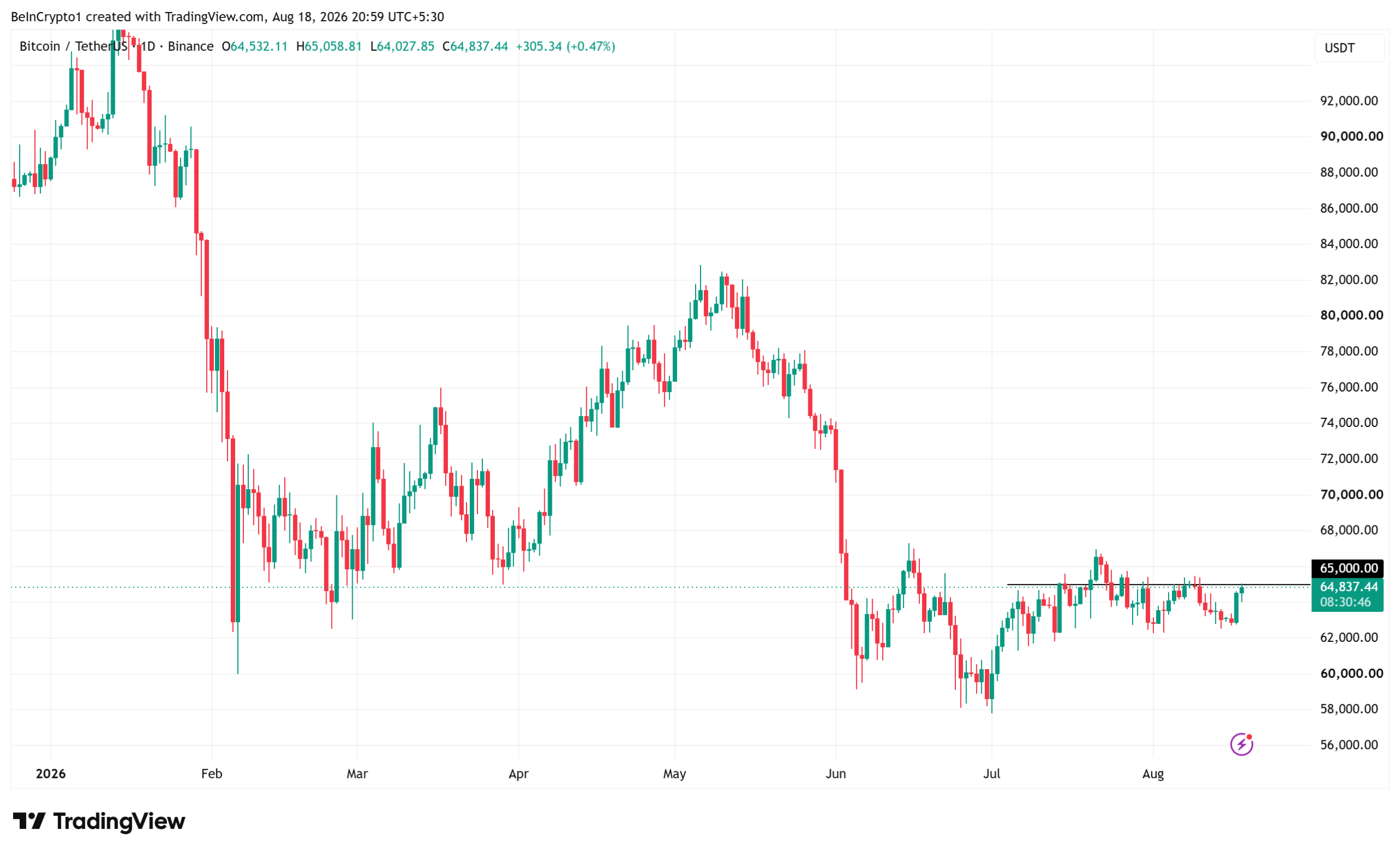
Bitcoin (BTC) pushed against $65,000 on Tuesday. At the same moment, two Wall Street giants deepened their commitment. BlackRock repeated its call for a 1-2% portfolio allocation, and Citi confirmed its Bitcoin custody service will arrive this year.
The timing is striking. Bitcoin still sits about 50% below its October 2025 peak, yet the firms building institutional access keep expanding.

BlackRock Sticks With Its 1-2% Bitcoin Allocation
BlackRock re-examined Bitcoin in a note published Monday. Digital asset executives Robert Mitchnick and Will Su wrote it after the market’s steep slide. Their verdict? The selloff came from forced selling inside crypto markets, not a weaker long-term case.
The refreshed 10-year analysis matched guidance from June. Back then, the firm first told institutions exactly how much Bitcoin to hold.
A 1-2% slice, funded from stocks, would have improved risk-adjusted returns in a classic 60/40 portfolio.
The authors also pointed to Bitcoin’s low long-term link with stocks and bonds. Periods when it trades in lockstep with equities tend to fade, they argued.
The stance matters because of BlackRock’s scale. It is the world’s largest asset manager. Its iShares Bitcoin Trust (IBIT) held over $47 billion in assets by March 2026.
Moreover, BlackRock client buying rebounded in late July, even with the average US spot ETF buyer sitting 22% underwater.
Citi Puts BTC Inside Its New Custody+ Platform
Meanwhile, Citi answered a different question. Where do institutions actually keep the bitcoin they buy? The bank unveiled Custody+ on Tuesday, a platform built for markets that never close.
Digital asset custody goes live later this year, starting with Bitcoin. Clients will hold stocks, bonds, and crypto inside one setup, with no separate crypto systems.
The scale behind the build is real money. Citi says it spends over $2 billion a year on its platform strategy. Its custody network covers more than 100 markets.
“Custody+ is the product of a multi-year commitment to building infrastructure that matches the speed of our clients’ strategies,” Amit Agarwal, Head of Custody at Citi Investor Services, said in the announcement.
The launch also feeds the race among major banks for institutional Bitcoin demand. Fidelity currently leads Strategy’s Bitcoin Banking Adoption Index, which ranks how far big lenders have moved into bitcoin. Citi sits among the chasers.
Bitcoin traded near $64,708 at press time, having pulled back from an intra-day high of $65,058, levels last tested over a week ago.
However, the bigger story sits behind the chart. Institutions have long cited two practical barriers, sizing and safekeeping. BlackRock now supplies the math. Citi supplies the vault.
The post Bitcoin Tests $65,000: Will BlackRock and Citi Fuel the Next Rally? appeared first on BeInCrypto.
How do you capture a new territory and expand your country in 2026? In ancient times, it happened through war, invasion, physically overthrowing a government, and claiming the land. But in modern times, one apparently just needs to post on social media. That is what the POTUS did today.
Donald Trump and the White House posted an image today showing the Strait of Hormuz as a brand-new US Territory. Perhaps the 51st state. Hormuz is open for all ships – the POTUS claimed, but maritime data would disagree.
To be clear, there has been no transfer of sovereignty. Hormuz remains an international strait between Iran and Oman. Trump’s claim may be political theatre. Or something more strategic, like an attempt to turn US military control into negotiating leverage.
Hormuz is Nowhere Near Open
Kpler data cited by Reuters showed just six commodity vessels crossed on Monday. Before the war, almost 140 ships would pass through every day.
So, yes, Hormuz might be technically open, but it’s not operational. Among the six ships that crossed, no VLCC crude supertankers or LNG carriers were recorded crossing.
Oil prices clearly reflect that. Brent crude oil has jumped nearly 15% in August. And global pressure is reaching a boiling point.
Market
Risk
Why
Bangladesh
Critical
Gas shortages and power-saving measures; reduced LNG availability
Pakistan
High
Heavy dependence on oil and LNG moving through Hormuz
India
High
Dozens of Qatari LNG cargoes disrupted
EU/Germany
High
Elevated gas prices and unusually weak storage ahead of winter

Then there is Bitcoin.
Bitcoin Price Could Care Less About Hormuz, More About Fed Action
BTC trades near $64,700, almost exactly where it stood a month ago around $63,900. During that period, oil surged, Hormuz talks broke down, and US Treasury yields climbed.
Bitcoin, for the most part, didn’t care. The slight uptake on BTC price this week came from positive ETF flow returning to the US spot and confirmation that the Fed won’t likely increase interest rates.
But there is also little room for easing interest rates. Continuous Hormuz disruption (despite Trump’s claim of liberation) keeps oil elevated, which feeds inflation and higher bond yields, reducing the Federal Reserve’s room to ease.
So, the US President can call Hormuz American territory. Oil traders clearly care about who actually controls the ships.
Bitcoin, for now, seems more interested in the Fed.
The post United States of Iran: Trump’s Delusion or Strategy? Bitcoin Doesn’t Care appeared first on BeInCrypto.
Cypherpunk Technologies says it has significantly boosted its presence in Zcash by launching what it describes as the world’s largest Zcash mining operation, following an acquisition of a mining fleet from Winklevoss Capital. The company framed the move as a bet on growing institutional attention to privacy-focused networks.
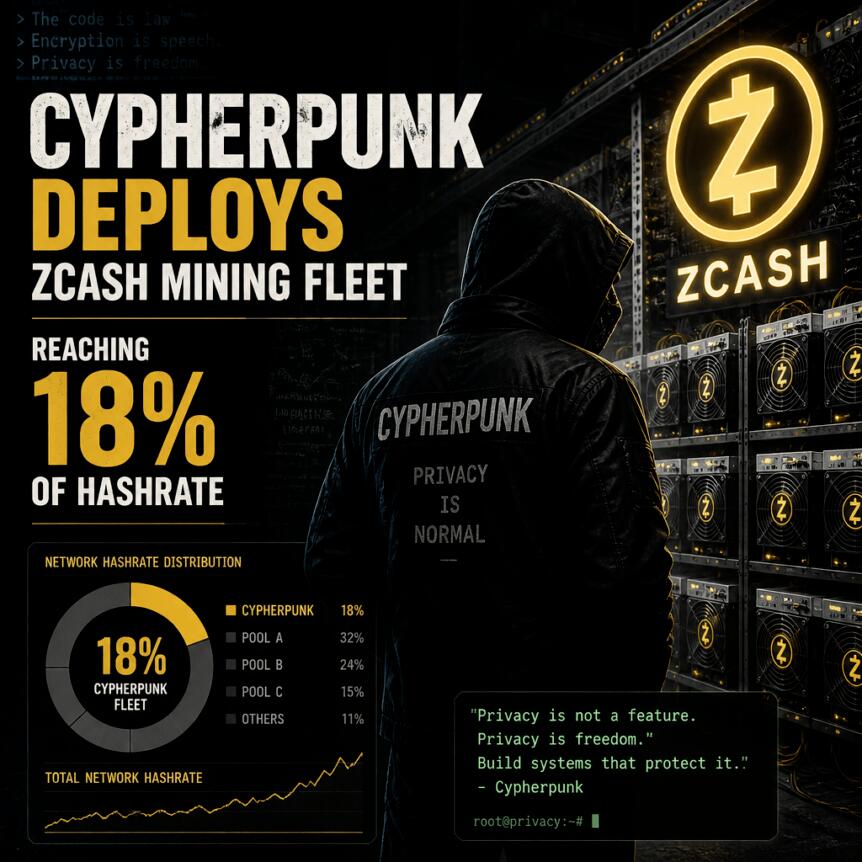
In a statement released Tuesday, Cypherpunk said it acquired the fleet via an equity-based transaction valued at $33.33 million. The new operation is already online across U.S. facilities and is producing about 4.2 GSol/s, which Cypherpunk estimates is roughly 18% of Zcash’s current network hashrate—if the figures are accurate, the arrangement would concentrate a notable slice of mining power under a single publicly traded company.
Key takeaways
- Cypherpunk Technologies reports acquiring a mining fleet from Winklevoss Capital for $33.33 million in an equity-based deal.
- The company says the fleet is live in the U.S. and is running at approximately 4.2 GSol/s, or about 18% of today’s Zcash hashrate.
- Cypherpunk’s existing ZEC holdings total 323,394 ZEC (about 1.9% of circulating supply), and it has set a longer-term goal of holding 5% of ZEC supply.
- Cypherpunk ties its mining push to improving economics relative to other workloads, though profitability depends on ZEC price, difficulty, and operating costs.
- The mining expansion comes after a strong rebound in ZEC’s price during the second half of 2025, coinciding with renewed interest in privacy coins.
Mining scale up and why it matters
Cypherpunk’s new mining operation adds capacity to the company’s existing involvement in Zcash. According to its disclosures, Cypherpunk already holds 323,394 ZEC, a stake it says is approximately 1.9% of Zcash’s circulating supply. The company also reiterated an ambition to increase that exposure over time, targeting eventually holding 5% of the token supply.
The capacity claim—4.2 GSol/s—goes beyond mere portfolio expansion. Mining on that scale could influence how investors and market observers think about Zcash’s network economics and security dynamics, especially given Cypherpunk’s estimate of roughly 18% of current hashrate. Such concentration can be a meaningful development for any proof-of-work network, because it can change the practical distribution of mining incentives and potentially alter how risk is managed across the mining ecosystem.
At the same time, the magnitude of the figure introduces a key point for readers: investors should treat the 18% estimate as dependent on Cypherpunk’s reported hashrate and on network conditions at the time of calculation. As with any mining metrics, real impact will vary as difficulty and hashrate shift.
From price momentum to institutional positioning
Cypherpunk’s move lands after a period when Zcash drew renewed attention, particularly during the second half of 2025. Cointelegraph previously reported on renewed interest in privacy-focused cryptocurrencies and linked that trend to a broader market push that helped push ZEC higher. As noted in that earlier coverage, the rally coincided with hedge fund activity that increased the asset’s visibility among larger investors.
While a higher token price can improve mining economics, mining profitability is not a simple function of price alone. Cypherpunk said it pitched Zcash mining as offering more attractive economics compared with Bitcoin mining or AI data center workloads under prevailing market conditions. However, the underlying variables remain critical: ZEC’s market price, the network’s hashrate, mining difficulty, and day-to-day operating costs all factor into whether a mining operation produces consistent returns.
That dependency matters for market participants. If the price-driven tailwind that supported ZEC in late 2025 fades, or if network difficulty rises faster than operating margins, the investment case for large-scale mining could tighten—regardless of the operational scale Cypherpunk is bringing online.
Zcash’s Ironwood upgrade and ongoing security work
The mining expansion is occurring alongside continued protocol evolution. Zcash completed its Ironwood upgrade on July 28, according to earlier reporting by Cointelegraph. The upgrade introduced a new shielded transaction protocol designed to replace the Orchard pool and strengthen the network’s security architecture.
The change followed the discovery of a flaw affecting Orchard. Under certain conditions, that issue could have allowed an attacker to create counterfeit ZEC within the shielded pool without immediate detection. While there was no evidence that the vulnerability had been exploited, the potential risk to the integrity of supply underscored a key challenge unique to privacy-preserving systems: transactions are designed to protect user data, but that same complexity can make security verification harder and the consequences of subtle bugs more serious.
For miners and token holders, protocol upgrades can indirectly affect operational considerations—especially if changes influence network behavior, transaction processing, or how nodes and related services perform. Even when a vulnerability is patched without confirmed exploitation, the narrative helps explain why Zcash continues to invest in iterative hardening, and why institutional interest may hinge not only on price performance but also on a visible security roadmap.
What to watch next
Cypherpunk’s fleet scale-up will be worth monitoring as Zcash network conditions change—particularly if hashrate and difficulty move in ways that alter the economics of such a concentrated operation. Readers should also watch how Zcash continues to maintain security momentum after Ironwood, because the long-term strength of the privacy narrative depends as much on resilient protocol design as on market cycles.

The Wall Street banking behemoth announced earlier today that it’s preparing to take another step into the cryptocurrency industry, highlighting plans to launch digital asset custody later in 2026.
Bitcoin will be the first asset supported by the new service, which will sit alongside the bank’s traditional custody business under its newly unveiled Custody+ platform.
The press release published on August 18 indicated that Custody+ will act as a suite of near- and real-time services designed to accommodate financial markets increasingly moving toward continuous trading and faster settlement. Given one of the key differences between traditional financial assets and crypto – namely, the fact that the latter operates 24/7 – Citi explained that the crypto-focused part of the business will launch later this year.
“Digital assets already operate on near-instant settlement, 24/7. Citi expects to go live with digital asset custody later this year, starting with the custody of Bitcoin. This is being built on Citi’s common digital asset architecture, and we will offer a one-stop custody experience. Clients will access traditional and crypto custody capabilities within the same framework for an integrated experience.”
This initiative provides a more concrete timeline of Citi’s plans regarding the cryptocurrency industry, as it said last year that it was preparing to launch such custody in 2026 without a clear timeline.
Aside from starting with BTC, the banking giant failed to disclose which digital assets are scheduled to follow suit.
Citi has dabbled in the industry for years. It ramped up its efforts in 2021 by adding up to 100 people to its cryptocurrency team. Meanwhile, other US institutional behemoths, such as Jane Street Group, have increased their ETF exposure to BTC.
The post Wall Street Giant Citi to Launch Bitcoin Custody Later This Year appeared first on CryptoPotato.

If You Hold Or Own Bitcoin Or Altcoins You’re Going To Need To Hear This Officially Happening

Pictured: Three sisters left with catastrophic injuries after crash on Irish motorway that killed five teenage boys ‘who boasted about joyriding days before smash’

Can Gaja Alternative Asset Management IPO deliver long-term growth for high-risk investors?

Weekend Open Thread – Corporette.com

Weekend Open Thread: Brooks Brothers

London Mayor Sadiq Khan handed a peerage by Keir Starmer alongside 15 other Labour figures… just days before the PM leaves No10
If You Hold Or Own Bitcoin Or Altcoins You’re Going To Need To Hear This Officially Happening

Bitcoin is LITERALLY about to EXPLODE! (Explained in 8 minutes)

You’re Going To Want To Buy Bitcoin & Crypto After Watching This No One Is Paying Attention
-

 Fashion4 days ago
Weekend Open Thread: Ann Taylor
-
 Sports5 days ago
This U.S. Amateur is a glimpse into golf’s future in more ways than you think
-

 Tech5 days ago
11 Ways to Rank Your Videos
-

 Sports4 days ago
Birmingham 2026: Day 6 Timetable for Irish Athletes
-
 NewsBeat4 days ago
Myanmar says over 300,000 Rohingya refugees verified for repatriation as exodus enters ninth year
-

 Politics4 days ago
SEQ Code: The Three Letter Boarding Pass Code That Could Give You The Worst Seat
-
 Entertainment7 days ago
Keke Palmer Subtly Hints At Sean Evans Drama With Cryptic Post
-
 Crypto World7 days ago
XRP bridge drained after software mistook fake deposits for real ones
-

 Tech5 days ago
DeepSeek Harness launches as open source rival to Claude Code, alongside V4-Pro on API with higher prices
-

 Sports6 days ago
DeQuan Jones in ‘high spirits’ after successful leg surgery
-
 Crypto World6 days ago
Perplexity AI Predicts an XRP Scenario Few Analysts Are Discussing
-

 Tech7 days ago
SpaceXAI’s Grok Bot turns agents into persistent digital coworkers that can operate your apps for $120-per-month
-

 Crypto World1 day ago
OCC Greenlights Trump Family Crypto Firm for Trust Charter
-

 Politics7 days ago
How Average Are You In The UK?
-
 Entertainment6 days ago
2026’s Most Ambitious Fantasy Movie Officially Scores Sequel Update
-
 Entertainment6 days ago
All 10 Hayao Miyazaki Fantasy Movies, Ranked
-
 Tech7 days ago
A Zoom Screen-Sharing Bug Let Anyone Take Over Other Devices On a Call
-
 Entertainment6 days ago
Travis Kelce Breaks Silence On ‘Crazy’ Taylor Swift Wedding
-

 Fashion7 days ago
A Fresh Take on Utility
-

 Fashion7 days ago
Why Botanical Fashion Never Goes Out of Style
You must be logged in to post a comment Login