
Connect with us

Politics

Why Labour’s puritans hate the disposable barbecue

Published

on

Why Labour’s puritans hate the disposable barbecue

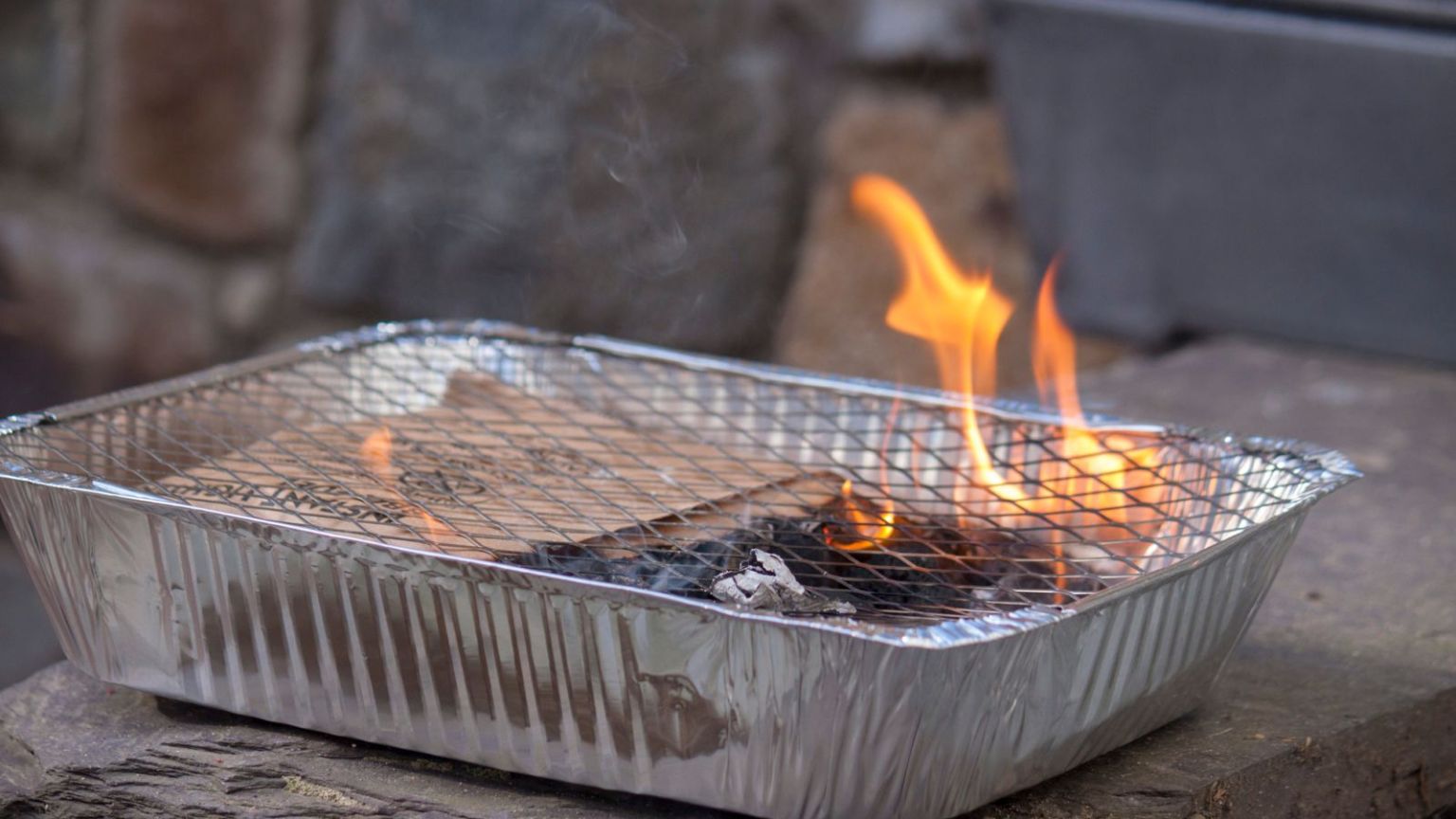
Disposable barbecues, of all things, have found themselves in the firing line after Andy Burnham’s government temporarily banned their sale over wildfire fears. Fair enough, you might think. It’s probably a good idea to refrain from firing up a tray of burning charcoal in tinder-dry woodland during an extreme heatwave.

However, the ban does fit a much less benign pattern of political-class policymaking. The humble disposable barbecue and attendant cook-up seem almost uniquely designed to offend chattering-class sensibilities. These barbecues are cheap, ubiquitous and associated with meaty, boozy, spontaneous fun.

It’s easy to paint a bit of a romantic picture of Brits cooking outdoors: a £5 barbecue from the supermarket, sausages and burgers, ketchup, mayo, crisps, a crate of lager or a box of wine, children running about, someone burning the onions, smoke getting in everyone’s eyes. Possibly a touch of rain. Possibly an irate father fumbling with the matches, trying to get it all started in the first place. Possibly an errant frisbee or football, and hopefully an overly excited dog chasing around and trying to pinch food. A proper British picnic barbecue, in other words, of the kind we used to have on the beach when I was a boy.

Advertisement

It’s quite gloriously ordinary and highly accessible. Much like the pub used to be, before smoking bans came in and eye-watering taxation drove the cost of a pint upwards (I paid £11 for a Weissbier and a kid’s apple juice in a silly hipster place the other day). You don’t need a garden of your own, an expensive outdoor kitchen, or a reservation at a BBQ gastropub. You just need a patch of grass, a few bits from the shop, a match and a few mates or family members.

Frustrated as I often am by the black squares of burned grass you often see in the local park after a sunny day, I would be sad to see the disposable barbecue go. It would be yet another example of the distinctly puritanical attitude of our governing class towards everyday pursuits, especially those enjoyed by the lower-middle and working classes.

Advertisement

Enjoying spiked?

Why not make an instant, one-off donation?

We are funded by you. Thank you!

Advertisement


Please wait…

Advertisement
Advertisement

Smoking damages your health and burdens the NHS. Drinking, we are increasingly reminded, has no safe level. Meat is bad for the planet. Cars pollute our cities. Cheap flights pump carbon into the atmosphere. Sugary foods make us fat. Bonfires dirty the air. And now even the humble barbecue, disposable or otherwise, can be understood primarily as a source of wildfire risk, pollution and unnecessary emissions.

Taken individually, there is truth in most of these arguments. But piled one on top of another like this, we see a certain worldview developing. Almost every ordinary pleasure now seems to arrive with a moral debit column attached. Whatever we enjoy, somebody is waiting nearby to calculate its cost to our bodies, the NHS, the environment or society at large. The old Roundheads worried about sin. The new puritans worry about externalities.

Advertisement

Our parents and grandparents inhabited a world in which grown adults were largely expected to make their own calculations about minor risks (though, of course, they weren’t always as aware of the risks as we are today). They regularly drank in pubs. They smoked, grilled meat, drove to the seaside, lit bonfires, let off fireworks and let their children disappear off into the local park without a second thought.

Some regulation has undoubtedly made life better – drink-driving wasn’t doing anyone any favours. But we seem to have moved from regulating obvious harms to regarding risk itself as something the government ought to save us from. There always seems to be a grey man with a clipboard somewhere telling us no.

There is an obvious class element to all of this. Wealthy people can typically buy more ‘respectable’ versions of the kinds of pleasures everyone gets lectured about. Eco-tourism takes the place of short-haul package holidays; driving is done in brand-new electric SUVs; disposable barbecues aren’t needed, because expensive outdoor kitchens in large gardens are ready to hand. Working-class versions of these pursuits attract the greatest disdain, while elite consumption gets a convenient pass.

Advertisement

The disposable barbecue is a perfect symbol of the kind of everyday enjoyment the new puritans so hate: cheap, unbranded and uncomplicated, it simply lets ordinary people enjoy themselves.

Human existence cannot be reduced to longevity, carbon budgets and the minimisation of risk. It should not be. Some things are still worth doing, even if they are physically unhealthy. We eat good food instead of throwing back supplements and greens shakes – sometimes we eat too much of this good food. We also sometimes stay up too late to watch a good movie or go for drinks with old friends. Small excesses like these are not unfortunate glitches in otherwise well-managed lives. They are a part of what makes life worth living, to get a little cliched and sentimental for a moment. They fill our souls. And, honestly, the content of our souls is absolutely none of the government’s business.

Prudence has a large role to play in the good life. We owe due care to our neighbours, and we have a duty of care to what we inherit and what we will pass on. But prudence is not abstinence, and living well isn’t the same as living as safely as possible. No grey man with a clipboard should be able to dictate your vanishing blink of a life on this great rock of ours.

Advertisement

Source link

Advertisement
Continue Reading
Click to comment

You must be logged in to post a comment Login

Leave a Reply

Politics

‘He was not assassinated. This is a sinister lie’

Published

on

‘He was not assassinated. This is a sinister lie’

The post ‘He was not assassinated. This is a sinister lie’ appeared first on spiked.

Source link

Continue Reading

Politics

The Jason Arday ‘vigil’ was a witch-hunt against the press

Published

on

The Jason Arday ‘vigil’ was a witch-hunt against the press

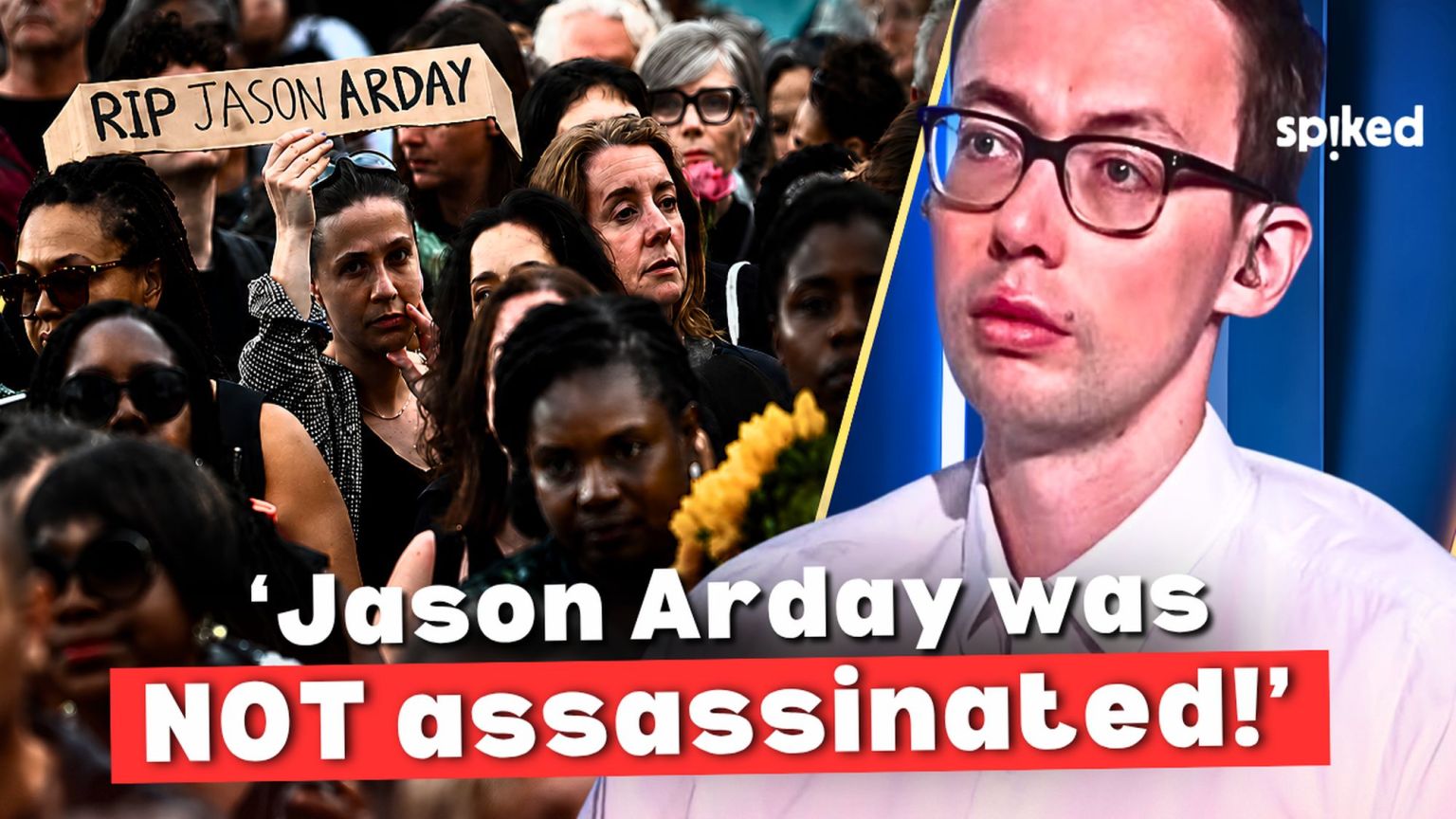
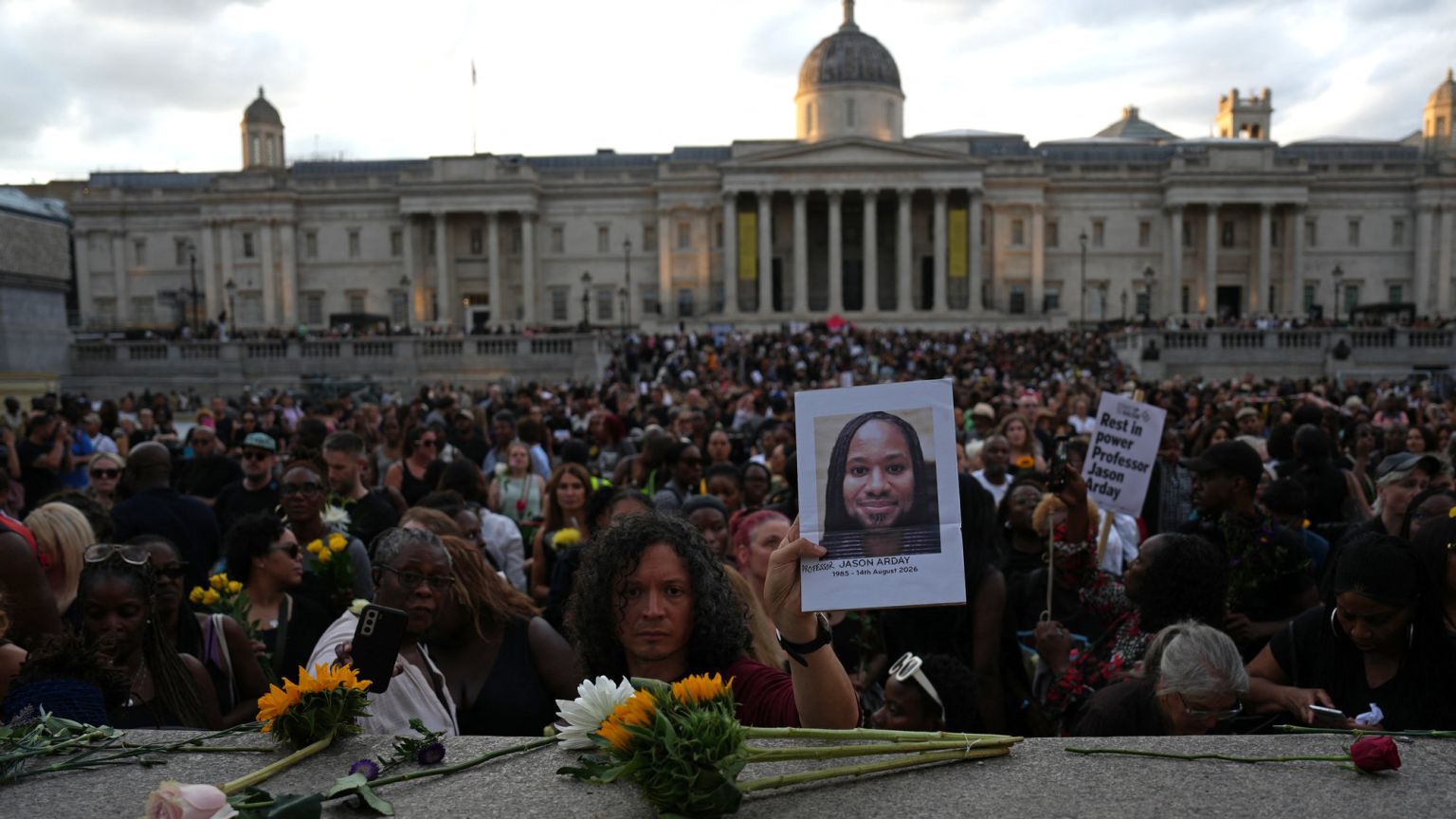
It was promoted as a ‘vigil’ for Jason Arday, but it wasn’t grief that united the large crowd that gathered in Trafalgar Square last night.

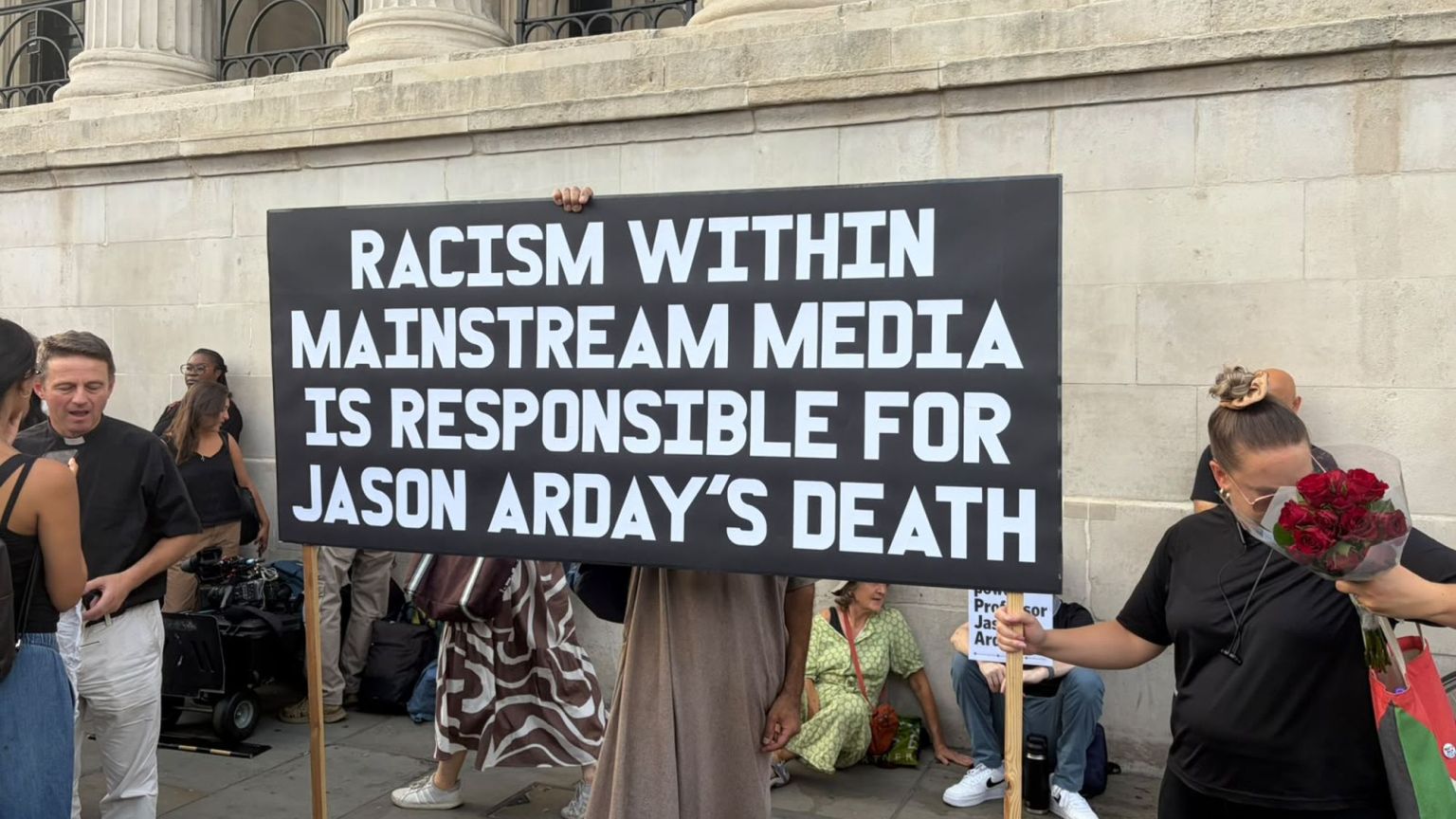
‘Racism within the mainstream media is responsible for Professor Arday’s death’ read a large sign held below the entrance of the National Gallery. Other signs read ‘249 articles in 22 days’ – a reference to what many people claim was the media’s racially motivated obsession with Arday – and ‘unalived by a witch-hunt’. Stand Up to Racism – the group that organised the vigil – had produced placards stating ‘Rest in Power Professor Jason Arday’. From the outset, the atmosphere was combative and indignant.

It became more so as the speeches began. Bell Ribeiro-Addy, the Labour MP for Clapham and Brixton Hill (the Arday family’s local MP), told the crowd that the late Cambridge professor hadn’t so much killed himself as he had been killed by the media. Arday, she said, was the victim of a ‘media onslaught’ that was ‘relentless, merciless, wicked’, carried out by ‘vicious, evil people’. Photographer Misan Harriman accused the media of ‘gleefully enjoying racialised harassment’ in its reporting of Arday. ‘Justice must be served’, Harriman added. ‘The impunity of the fourth estate must stop.’

Advertisement

The supposed bigotry of the media – the Spectator and the Telegraph were singled out to loud boos and cries of ‘shame’ – was the main target. Labour MP Diane Abbott said a ‘vicious media’ had ‘driven [Arday] to his death’. Simon Woolley, principal at Cambridge’s Homerton College, went even further. He said Arday’s suicide was a ‘lynching’ and a ‘public assassination’. Veteran activist Patrick Vernon said Arday, in his death, had joined the pantheon of modern black martyrs that included Stephen Lawrence and George Floyd.

The vigil had the shape and feel of a Black Lives Matter protest. And in essence, that is what it was. Stand Up to Racism’s Weyman Bennett told the crowd to ‘never surrender what our ancestors fought for’. Before performing an odd rendition of ‘Fix You’ by Coldplay, the musician Jermain Jackman urged his fellow ‘black kings and brothers’ to chant ‘I am great, I am loved, I am smart’.

On the question of Arday’s plagiarism, the answer appeared to be simple: it wasn’t true, or was greatly exaggerated. Vernon praised Arday’s ‘scholarship’ and ‘achievements’. Another speaker celebrated Arday as an ‘extraordinary academic’ and an example of what was possible when ‘talent, determination and opportunity come together’. Dawn Butler, another Labour MP, told the crowd that ‘when we say his name, do not miss out the “professor”’. The message was clear: under no circumstances could Arday – who was routinely hailed as a ‘once in a generation’ genius – have his academic bona fides questioned.

Advertisement

Enjoying spiked?

Why not make an instant, one-off donation?

We are funded by you. Thank you!

Advertisement


Advertisement

Please wait…

Advertisement

Looming over the event was the almost wholly fictitious account Arday had presented as his ‘life’ to his various employers and in his recently published memoir. This was an aspect of the Arday affair that no member of the audience, and certainly no speaker, wanted to touch. The avoidance of Arday’s repeated and extreme lies was perhaps unsurprising. It would, after all, have been an admission that this tragedy was not as simple – ‘a campaign against all of us’ in Abbott’s words – as the organisers were so eager to make out.

Was it racist to question whether Arday had run 600 miles in six days, as he had claimed? Was it relevant that Arday’s apparent health battles – his non-verbal autism, his brain tumour, his testicular cancer – were likely all fabrications? Did it matter that this celebrity academic at Cambridge had never single-handedly raised £5million for charity, as he originally claimed? Or that he had never been a visiting professor at the University of Glasgow, Ohio State University in the US or Nelson Mandela University in South Africa, despite what his CV said? And why did he claim he played football for Crystal Palace and won great sums of money as a snooker champion? Was none of this relevant to the media interest in his life?

Advertisement

Other inconvenient facts were also glossed over in what felt like an effort to instill a collective amnesia. There was predictably no mention of the fact that Arday had hired one of the UK’s most expensive law firms, Carter-Ruck, to silence his critics. Or that he’d prompted the Metropolitan Police to investigate a journalist from Times Higher Education who raised questions about Arday’s plagiarism last year.

The death of Jason Arday is undoubtedly tragic – but those at the vigil made no attempt to understand why his life unravelled. In blaming the media for his demise, they ended up deifying a fantasist, who saw no way out when he realised the game was up. The only things served by this spectacle were the forces of genuine reaction – of racial grievance-mongering and the authoritarian quest to silence the free press.

Advertisement

Source link

Continue Reading

Politics

The sanctification of Jason Arday

Published

on

The sanctification of Jason Arday

Jason Arday is dead and the ‘racist’ mainstream media killed him. That was the message of a vigil in Trafalgar Square last night, as thousands gathered to pay their respects to the disgraced Cambridge professor who tragically took his own life on Friday. It is also untrue.

We must make no bones about saying it. Because in the ‘anti-racist’ canonisation of Arday – whose awful death came after his own untruths, his plagiarism and fabulism were laid bare by the press – we see a kind of derangement that some vainly hoped had been and gone with Peak BLM.

The vigil on the steps of the National Gallery was the IRL expression of a sentiment that has been swirling on social media since the devastating news of Arday’s suicide broke: that he was hounded out of Cambridge by blood-thirsty journalists desperate to ‘lynch’ a young black man.

Advertisement

The tone was religious, in the fire-and-brimstone sense. ‘We are going to stand against the wicked, evil people who dragged his name through the mud’, said Labour MP Bell Ribeiro-Addy, from the stage. Lord Woolley – founder of Operation Black Vote and veteran ‘anti-racist’ leader – called the journalists who exposed Arday ‘the dogs of hell’.

Arday’s death, said Woolley, was a ‘public assassination’. A member of the crowd corrected him: ‘A lynching!’ ‘A lynching!’, repeated Woolley. I was standing about 10 feet away as he said all of this – blood-curdling, inflammatory lies not from a students’ union activist, but a deputy vice-chancellor of Cambridge and peer of the realm.

Advertisement

Enjoying spiked?

Why not make an instant, one-off donation?

We are funded by you. Thank you!

Advertisement


Please wait…

Advertisement
Advertisement

Woolley was a good friend of Arday. They sat together in his final days. Arday’s nearest and dearest are certainly entitled to their grief – their anger, even. What they can’t do is smear journalists for telling the truth, while expecting us to swallow their falsehoods. Indeed, in the tragic story of Jason Arday, there has been far too much of that already.

The narrative now being forged, both online and off, goes something like this. Arday was a young professor, minding his own business, when the media suddenly decided to take him down. He was accused of plagiarism, then ‘exonerated’. But still they kept on coming, so furious were they that a black man was given a perch at Cambridge.

Advertisement

He has been turned into a spotless figure, martyred by a vicious media. The problem is, this isn’t true. More than 100 passages were found in his PhD, apparently lifted from another’s thesis. He was also credibly accused of falsifying data, of lifting quotes from academic papers and passing them off as original quotes from people he had interviewed.

Then there is his personal story – from claims about running ultra-marathons to claims he was the subject of racist intimidation – which also collided with reality. Police directly contradicted his version of events. Experts pointed out that his alleged sporting achievements would, if true, make him a record-breaking athletic specimen. School friends even challenged his claim he was mute as a child.

I take no pleasure in repeating all this. But the truth matters. Indeed, had Cambridge refused to participate in the fantasy land Arday was constructing for himself, had it listened to academics and higher-education journalists who began raising the alarm years ago, and who were met with legal threats and police probes for their efforts, Arday might never have become the story of this long, hot summer.

Advertisement

The attempt to turn Arday into a saintly victim of a racist press is obnoxious on so many levels. A man’s suicide is being used as a platform on which to pursue pre-existing political agendas, from shackling the press to shoring up the rotten, racist ideology of DEI – which insists academic standards must be lowered for ethnic minorities to thrive.

If anything, the fall of Jason Arday was set in motion by DEI. So captured was Cambridge by this warped, phoney form of ‘anti-racism’ that it elevated a man who might have sounded all the right notes about ‘white supremacy’, but whose lies, or perhaps delusions, were always going to be exposed eventually, bringing his world tumbling down.

Everyone in possession of a pulse wishes Jason Arday, the man, were still with us. To say he erred is not to say he wasn’t a cherished friend, colleague, family member – a human being. Suicide touches far too many lives as it is. The thought of anyone making that worst and most final of decisions grates against our humanity. But the myth of Saint Jason is an affront to reason we simply cannot indulge.

Advertisement

Source link

Advertisement
Continue Reading

Politics

The 8 Best Water Bottles: Chillys Vs Stanley, YETI, And Frank Green

Published

on

Honey Jane Wyatt/HuffPost

I’ll hold my hands up and say it: I have a water bottle addiction. So when the joke about having an emotional support water bottle made the round a few years ago, I resonated.

My flatmate likes to joke that my water bottles become more comically large all the time, and it’s true: I like to have a bottle I can rely on.

As a result, I’ve tested plenty over the years on my quest to find the perfect size: one that I can travel with, that I only have to refill once or twice throughout the day, and that can keep my drink cold as long I need without it spilling all over my bag.

Advertisement

There are always new culty water bottles being released, so I decided to put them to the test. Keep reading for my round up of my favourites.

Best water bottles at a glance:

How I tested the best water bottles

Honey Jane Wyatt/HuffPost

Honey Jane Wyatt/HuffPost

Honey Jane Wyatt/HuffPost

I mean, I drank water out of them, that’s for sure. But if you’re wondering my methods, I filled each one to the brim, and left them out on the side for a day before drinking to see whether they’d keep the water cool.

Advertisement

I also considered price point, weight, whether it was dishwasher safe and leakproof, capacity, and if it came with a warranty. And of course, I considered bonus features like the type of drinking mechanism (straw or normal ‘opening’) and available colours. My favourites are rounded up below.

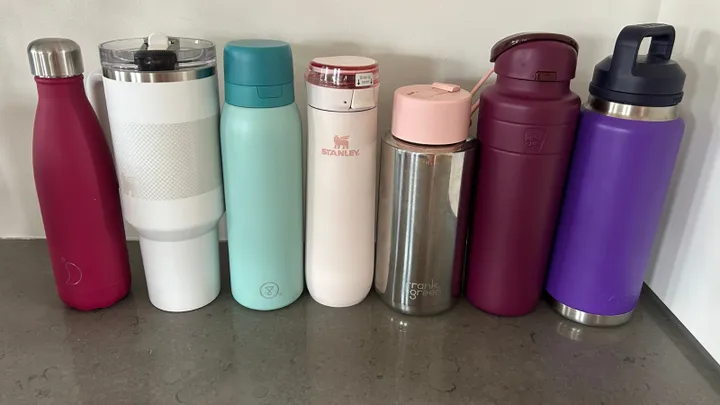
8 best water bottles to shop now

Best all-round water bottle

This ceramic bottle is completely customisable – you can choose the colour of the body and the lid. I’m a huge pink and silver girl, so this combo is perfect for me, and I’ve already developed a hyperfixation on this bottle as it keeps my water icy cold all day.

The straw is soft, unlike on other bottles, and releases by pressing the tab back, which feels super smooth and satisfying. There’s also a loop attached to it so you can carry it around with you and never have to leave it behind (ahem) or attach it to a bag.

Advertisement

The lid is also leak-proof, I’ve carried this in the same bag as my work laptop (risky!) and it hasn’t shed a single drop. Best of all, the lid is dishwasher-proof, but mind you only hand wash the bottom.

You can even monogram it if you want to wear your initials loud and proud – and match with your bestie.

Rating: 4.8/5.

Capacity: 1 litre
Warranty: 12 months
Dishwasher safe: Lid is, but bottle isn’t.

Advertisement

Best water bottle for outdoor adventure

Outdoor adventurers will appreciate just how hardy this bottle from YETI is. With double wall insulation, it can keep your drinks icy cold or warm and toasty no matter the climate you’re in. Seriously, one reviewer says they left it on their roof for a month during a heatwave and the water was still cold.

It has a chug cap, which is wide enough to fit ice cubes through, while the exterior is made of kitchen-grade stainless steel, so it won’t get even a dent if you drop it off the side of a mountain.

That lid can also be carabiner clipped to a climbing rope, backpack, or whatever surface you like so you can keep it safe, and the whole thing is dishwasher safe.

Rating: 4.8/5.

Advertisement

Capacity: 1 litre
Warranty: 5 years
Dishwasher safe: Yes.

Best small bottle

If you don’t like lugging a heavy bottle around with you everywhere you go, this slimline Stanley gives you all the benefits of a regular cup, but without the chunkiness.

Again, it has a loop handle for easy carrying, and the lid locks to prevent leakage. Once flipped open, it reveals a sippy straw with a removable spout so it’s easy to get the straw nice and clean.

If you can’t be bothered to fuck around cleaning a straw, you can also pop the whole thing in the dishwasher.

Advertisement

Rating: 4.7/5.

Capacity: 0.59 litre
Warranty: Lifetime
Dishwasher safe: Yes.

Best water bottle for work

This bottle from Owala is the perfect work bottle, as it holds 700ml – which is enough so that you don’t have to stand up every five minutes to fill it up, and small enough to fit in your bag.

As well as coming in a range of colours and sizes, the lid is leakproof and it comes with a sippy straw (our fave feature). The handle flips over the lid when it’s closed, so it doesn’t get in the way in your bag.

Advertisement

Plus, it’ll keep your drink cold for up to 24 hours, so you can leave it in your work locker overnight. Beware, though, it’s not dishwasher safe.

Rating: 4.7/5.

Capacity: 0.7 litre
Warranty: Yes
Dishwasher safe: No

Best BPA free water bottle

This gorgeous bottle from Keep Cup is made of 90% recycled steel, and is both BPA and BPS free, making it ideal for our eco-conscious readers out there.

Advertisement

It comes in two sizes (710ml and 946ml) and four colours (maroon, pink, blue, and black) and I love that both the lid and bottle are the same colour, which gives it a super sleek look.

The straw is one of the most smooth drinking experiences I’ve had, and again I love that you can carry it around with the flip handle. It’s also dishwasher safe, which makes my life 100 times easier than trying to hand wash a straw.

Rating: 4.8/5.

Capacity: 710ml
Warranty: 3 years
Dishwasher safe: Yes.

Advertisement

Best filter water bottle

Here’s another one for adventurers: a water bottle that has a filter built into it. Wherever you are in the world, the lid of this bottle uses NASA-created technology to filter out 99.99% of pathogens and make your water safe.

Inside the lid is a straw that leads directly to the filter, which draws out nasty particles as you drink, and you only need to replace it every two months. The bottle itself keeps your water cold for 24 hours.

But the suction of the straw isn’t the most satisfying I’ve tried, I must admit, so you won’t exactly be able to chug your water, but at least you’ll know what you’re drinking is safe.

Rating: 4.6/5.

Advertisement

Capacity: 0.74 litres
Warranty: 2 years
Dishwasher safe: No.

Best for working from home

Stanley might have been the culty bottle brand a few years ago, but I promise it’s for a reason. This cup is definitely the adult equivalent of a kids’ sippy cup, thanks in large part to the handle, but it’s a great bottle to have when you’re working at home.

I don’t care how stupid it makes me look, you can carry it around with you, and the straw lid makes it easy to sip on it when you’re in the middle of a task. It can hold over a litre, so you barely have to refill it throughout the day.

If you add ice, it’ll keep your drink cold for up to two days. It’s also a great companion on a roadtrip as it can fit into a car cupholder.

Advertisement

Rating: 4.7/5.

Capacity: 1.2 litre
Warranty: Lifetime
Dishwasher safe: Yes.

I always knew who had a Chillys water bottle at uni because you’d often hear a massive dong in the middle of a lecture and everyone would turn around and stare at them. Good times.

All of that to say, this isn’t the most stable bottle. It does keep your water cold, but I find that after a few years, the lid tends to come askew.

It’s not dishwasher safe, but it does keep your drink cold for 24 hours, or hot for 12 hours. It also doesn’t have a straw, in case you’re wondering why that’s now a requirement for water bottles.

Advertisement

Rating: 4/5.

Capacity: 500ml
Warranty: 2 years
Dishwasher: No.

Source link

Advertisement
Continue Reading

Politics

Why Hayden Panettiere’s Death Feels So Personal To So Many Millennials

Published

on

Hayden Panettiere died on Aug. 16, just days before what would have been her 37th birthday.

When a famous person dies unexpectedly, people who enjoyed their work often feel the loss deeply. The news of Hayden Panettiere’s death at 36 has particularly hit many millennials who grew up watching her performances in a way that can be hard to articulate.

Therapists and mental health experts say that reaction is completely understandable, and it says something meaningful about the generation that grew up with her.

“I hear this from clients all the time – that there is this confusion about why they’re crying over someone they’ve never even met,” Gina Moffa, a grief therapist and author of Moving On Doesn’t Mean Letting Go: A Modern Guide to Navigating Loss, told HuffPost.

“We have all felt it at some point with a favourite public figure. And what I say is this: Your brain doesn’t actually care whether the relationship was mutual. It bonds with what’s familiar, what’s constant, what’s shown up for you again and again, even if that showing up only ever went one direction over a TV screen or a radio.”

Advertisement

The clinical term that helps explain what many people are feeling right now is a parasocial relationship – a one-sided bond that the brain forms with a public figure through repeated exposure. But experts say the term doesn’t entirely capture what these connections actually feel like from the inside.

“If someone’s voice or presence has been an important or meaningful part of your life for years, through your breakups, your late nights trying to fall asleep, your growing up, your body doesn’t check whether they knew your name or were an actual part of your life in any reciprocal way,” Moffa said. “It only registers that this was steady, this was meaningful to me, and now it’s gone.”

Therapist Tychelle Graham-Moskowitz explained the neuroscience behind these bonds.

“Our brains process the familiar faces and voices of celebrities we come to know and love the same way they process real friends because we see them on our screens, often daily, in our own homes,” she said.

Advertisement

“This is partly rooted in mirror neurons, which fire when we observe someone else’s emotions and allow us to internally mimic or feel connected to what we see as we may be experiencing many of the same emotions and events in our own lives,” she continued.

“When we watch a celebrity on TV, these mirror neurons let us resonate with their emotions, creating a bridge of identification.”

That’s why your brain doesn’t need a two-way relationship to form a meaningful attachment. Spending formative years with a pop culture figure creates a sense of familiarity, which can foster a genuine sense of companionship.

“Whether it is music, movies, sports, television or social media, we can feel like our paths have mirrored the path of the celebrity and we have ‘grown up with them’ or they represent a particular moment or time in our lives,” said Dr. Jessi Gold, a psychiatrist and chief wellness officer at the University of Tennessee System.

Advertisement

“I think about this like, ‘Oh, that movie meant so much to me when…’ and we have feelings that associate with that movie, that time, that character, and those translate to the human who portrayed them.”

As we age as millennials, the death of celebrities shakes us out of our egocentric internal teenage feeling and forces us into the fragile reality that our own mortality is real.

– Tychelle Graham-Moskowitz, therapist

So when that celebrity dies, you might feel grief over who they were to you or that time in your life. For nostalgia-driven millennials, it can be a powerful gut punch.

Advertisement

“I do believe there is a special relationship with millennial grief of celebrities,” Moffa said. “With my millennial clients, what I notice is that the grief they experience is not really just about the person, but also about the version of themselves that existed the last time they watched them and how they felt about their own life and themselves in the world.

“These weren’t just actors and actresses – they were sitting on the couch with us as kids, shaping what we thought friendship or relationships or love looked like. So when they’re gone, part of what’s actually being mourned is that chapter of your life feeling unreachable in a new way.”

Because Panettiere was a child actor as well, many millennials literally grew up alongside her and feel her death in a deeply personal way.

“As we age as millennials, the death of celebrities shakes us out of our egocentric internal teenage feeling and forces us into the fragile reality that our own mortality is real,” Graham-Moskowitz said.

Advertisement

Public figures remind us of the passage of time and our own place within it.

“When a person who represented those memories or versions of ourselves dies, it can feel like a piece of history lost, or it can make us confront our own age more and the idea that we are getting older, our friends are getting older, and we will have more loss as a result,” Gold said. “Death reminds us that time has passed – even if part of us still feels like we were watching them on TV yesterday.”

Hayden Panettiere died on Aug. 16, just days before what would have been her 37th birthday.

Jon Kopaloff via Getty Images

Hayden Panettiere died on Aug. 16, just days before what would have been her 37th birthday.

Panettiere and other former child actors who have recently passed away – like Michelle Trachtenberg and Daveigh Chase – served as role models and influential peers in a sense.

“Celebrities who were present during your developmental years become part of your internal reference system,” said Chloë Bean, a licensed marriage and family therapist.

Advertisement

“They model resilience, sexuality, independence and aspirational qualities when you’re just starting to figure out who you are. You looked up to them in your youth for guidance and self-direction. So you’re grieving that chapter, your childhood, and the part of you that felt so connected to them.”

She also pointed to the role cable TV played in cementing these bonds as well.

“For many millennials, the TV was the babysitter and an escape,” Bean said. “These actresses felt like friends because they were in your home multiple nights a week, sometimes for years. You weren’t just watching them on the screen, the experience felt like you lived and grew up alongside them. Millennials compare themselves to millennial celebrities in a way that no other generation has before. We aged with them, watching them getting married, struggling, hitting their 30s and 40s.”

Other technological advancements further deepened the connection and the sense of certain celebrities as a constant, stable presence in life.

Advertisement

“Millennials were the first generation to have access to the internet in our homes as a regular occurrence, so not only did we see our favourite celebrities in movies, on television, in magazines and so on, but we got a chance to search more about them on the internet and eventually in the palms of our hands,” Graham-Moskowitz noted.

It’s safe to assume Gen Z may feel celebrity losses even more intensely due to their lifelong parasocial access as well.

“The loss of a celebrity can also be a grief trigger to other grief – other relationships we’ve lost or represent a loss of time, innocence and childhood, or even symbolise our own death or mortality,” Gold said. “And, the communal reaction on social media can also amplify the expression of it all. The grief is usually about more than just the person.”

Therapists pointed to another profound dimension in grieving Panettiere’s death.

Advertisement

“With Hayden specifically, I think what made this loss land so [personal] for so many people is that she wasn’t just a face we grew up watching – she used her platform to speak openly about postpartum depression and trauma and battles with drug use, at a time when very few public figures are willing to say those things out loud and be this vulnerable,” Moffa explained.

Indeed, Panettiere’s recent memoir and interviews added to the depth of connection.

“Unlike many celebrities who have struggled with mental health or substance abuse, Hayden was extraordinarily open about her experiences, and that kind of vulnerability results in followers truly rooting for her and wanting her to overcome these obstacles, which makes her loss even more devastating,” said licensed marriage and family therapist Becky Stuempfig.

“When someone visible says ‘me too,’ it gives people permission to stop hiding their own pain,” Moffa added. “She didn’t just play characters we loved; she showed up as herself, in her own struggle, and that kind of honesty tells people watching from their own dark moments that they’re not alone in the struggle. That can be a whole other part of the grief experience we don’t talk enough about.”

Advertisement

Bean captured what makes this grief so uniquely hard to put into words.

“The millennial generation will feel every celebrity passing because we grew up believing we knew them,” she said. “Social media provides intimacy and daily access, but growing up watching these actresses on shows created a fantasy that felt real. We’re grieving them like we’d grieve a friend who turned out to be a stranger, someone we only knew from one direction. That’s where the grief hits hardest, and it’s what makes it so difficult to articulate.”

She didn’t just play characters we loved; she showed up as herself, in her own struggle.

– Gina Moffa, grief therapist and author

Advertisement

If you’re feeling blindsided by how much a celebrity death is affecting you, therapists have some guidance.

“Don’t let anyone talk you out of feeling the shock and grief, because the relationship wasn’t ‘real’ in any traditional sense, or because they were ‘just a celebrity,’” Moffa said.

“Grief doesn’t require reciprocity to be legitimate. It only requires attachment and meaning. If someone shaped who you became, at any age, or time in your life, in any way, that grief deserves the same gentleness you’d give any other loss.”

She emphasised that you don’t need permission to feel deep sadness and loss.

Advertisement

“When a death is sudden and shocking, the unanswered questions and uncertainty about the death being accidental or intentional [exacerbate] the complicated nature of the grief process,” Stuempfig said. “This is very different than an anticipated dying process from a medical illness or ageing. Our brains and bodies have a harder time processing emotions when there are unanswered questions.”

Talk about those feelings with a trusted friend or family member, ideally even someone who was also a fan or can help identify these emotions.

“The concept of ‘name it to tame it’ can be helpful with grief as it is critically important to identify the various feelings that arise so they can be validated,” Stuempfig said.

Be mindful of social media consumption, too.

Advertisement

“You don’t need to read every tribute, every post, and every statement if you feel impacted,” Gold said. “You can still care about an event or person and their death, and detach and take time away from the news, if needed. You also should not feel like you have to post or comment if you don’t know what to say. You can take time to figure out your feelings about something or grieve alone, that is OK, too. You don’t have to say something to show you care.”

Remember that grief, as painful as it can be, may also be a source of social connection.

“As we mourn the deaths of our favourite celebrities, know that we collectively mourn together, much like to do when we mourn in our own family members,” Graham-Moskowitz said. “The connected space that the internet creates can bring us a sense of comfort and togetherness, where we feel seen. This can be helpful. Also, go call a friend!”

And when these experiences bring up heavier feelings around your own mental health, Gold encouraged reaching out.

Advertisement

“If any of these deaths make you think more about your own mental health, I hope you reach out and ask for help,” she said. “There are hotlines, local therapists and everything in between. You can also start with a trusted family member or friend. Just start somewhere.”

Source link

Advertisement
Continue Reading

Politics

Scream’s Melissa Barrera Remembers Hayden Panettiere ‘Showed Up For Me’ In Tribute

Published

on

Melissa Barrera

After paying a short tribute on Instagram, Melissa issued a lengthier statement to USA Today, admitting that she was “still in shock” about the news and lamenting that “Hayden should still be here”.

Back in April 2011, the late actor originated the role of Kirby Reed in Scream 4, returning to the franchise for the sixth instalment in 2023, by which point Melissa had joined the franchise.

Hayden also returned for the seventh film, which was released earlier this year. However, Melissa wasn’t involved in the series at this point, after being reportedly dropped from the franchise due to speaking out as a staunch supporter of Palestine, amid the ongoing conflict in the Middle East.

Melissa Barrera

Melissa said in her tribute: “I feel so incredibly lucky that I got to grow up watching [Hayden] and admiring her, and that I got to know her and share the screen with her. She will always be an icon in my book.

“Her strength and her light, despite everything she went through, were so evident and will always stay with me.”

Advertisement

She added: “I am forever grateful to her because she showed up for me when no one else did. That was just the kind of person she was: A rare, honest, badass who felt so deeply. Such a heart-shattering loss.

“My condolences and love to her mother, her beautiful daughter, and her loved ones.”

In 2024, Hayden told The Messenger that Melissa’s firing from the Scream series was “very unfair and upsetting”.

Hayden Panettiere at the Scream VI premiere in 2023

Kristin Callahan/Shutterstock

“After [Melissa spoke out], then a whole bunch of other actors and people in the industry started to do the same thing, right?” she observed (as reported by Variety). “It was almost like she just did it earlier than everyone else.”

Advertisement

Hayden added that she’d check in with Melissa to see how she was doing, which she appreciated as “a lot of people hadn’t really asked her how she felt”.

“[But I’m] not worried [about her],” Hayden concluded. “Melissa is such a badass as a human being and as an actress… She was hurt by it, but I think she took it in stride and was very, very gracious about it.”

At the time of Melissa’s Scream departure, production company Spyglass released a statement saying they have “zero tolerance for antisemitism or the incitement of hate in any form, including false references to genocide, ethnic cleansing, Holocaust distortion or anything that flagrantly crosses the line into hate speech”.

Melissa responded on Instagram: “First and foremost I condemn Anti-Semitism and Islamophobia. I condemn hate and prejudice of any kind against any group of people.”

Advertisement

“I believe a group of people are NOT their leadership, and that no governing body should be above criticism,” she continued. “I pray day and night for no more deaths, for no more violence, and for peaceful co-existence. I will continue to speak out for those that need it most and continue to advocate for peace and safety, for human rights and freedom. Silence is not an option for me.”

Police in Greenville shared earlier this week that they’d been called to an apartment block in the South Carolina city on Sunday night, after an “acquaintance” of Hayden contacted emergency services.

“Upon arrival, medical assistance was administered; however, the individual, later identified as Hayden Panettiere, was pronounced deceased at the scene,” a police spokesperson shared.

The Greenville Police’s statement went on to say: “The case is under investigation by the Greenville Police Department in conjunction with the Greenville County Coroner’s Office. The preliminary investigation has not indicated any signs of foul play or suspicious circumstances.”

Advertisement

Meanwhile, an autopsy report later revealed that there had been “no signs” of any physical trauma that could have contributed to Hayden’s death.

Source link

Advertisement
Continue Reading

Politics

UK Salmonella Outbreak: Potential Cause And Symptoms To Look Out For

Published

on

UK Salmonella Outbreak: Potential Cause And Symptoms To Look Out For

An outbreak of Salmonella in the UK has resulted in hundreds of people getting sick and one person dying.

More than a third of those impacted by the outbreak – thought to be linked to eating imported eggs – have ended up needing hospital treatment.

The majority have been able to recover without treatment, but would’ve suffered unpleasant food poisoning symptoms.

Of the cases identified by the UK Health Security Agency (UKHSA), 199 were in England (47 of which were in London and 38 in Yorkshire and Humber), six were identified in Scotland, with one case in Wales and one in Northern Ireland.

Advertisement

The main body of cases occurred between 6 and 29 July 2026.

Dr Damien Tully, Associate Professor at London School of Hygiene & Tropical Medicine, said the number of confirmed cases “is likely to be just the tip of the iceberg”.

He added: “Many Salmonella infections cause relatively short-lived gastrointestinal illness and people may recover without ever being tested.”

What has caused the outbreak?

Advertisement

The UKHSA said the outbreak has been caused by S. Enteritidis, a common type of Salmonella bacteria. It’s spread via contaminated food (like eggs, poultry, meat, etc); contact with the environment, and can also spread from person-to-person.

An investigation is underway to identify the source. Of those who suffered symptoms, 114 were interviewed and completed an outbreak questionnaire. The majority (83%) reported eating food prepared outside of the home in the week prior to symptom onset.

There were five food businesses identified where two or more independent cases reported attending in the week prior to symptom onset. Eleven of these cases reported eating dishes made with eggs which came from multiple sources, including outside of the UK.

UKHSA said there’s no identified link to UK-produced eggs or poultry, at present, and noted a previous outbreak from 2025 was also linked to imported eggs.

Advertisement

Dr Kathleen O’Reilly, Associate Professor at London School of Hygiene and Tropical Medicine, said previous research estimated that less than 10% of Salmonella cases require hospitalisation, “so it seems initially concerning that 38% in this outbreak have been admitted to hospital”.

“As the epidemic progresses, this number might change, especially as Salmonella cases are often underreported,” she added.

What are the symptoms?

Symptoms of salmonella poisoning include:

Advertisement
  • diarrhoea
  • stomach cramps
  • vomiting
  • fever

These unpleasant effects can occur roughly 12 to 72 hours after becoming infected, and can last up to a week.

The UKHSA said immunocompromised individuals and those in vulnerable groups (such as young children and older adults) can experience more severe illness as a result of it such as blood stream infections, sepsis and even multiorgan failure.

How to protect against food poisoning

It’s important to ensure eggs are fully cooked before eating them.

“Hygiene while preparing food is important, especially washing hands with soap, and chopping boards, after preparation,” Dr O’Reilly said.

Advertisement

The expert also encouraged consumers to look at restaurant food hygiene ratings before eating out.

“If you do get ill with diarrhoea or stomach cramps, take it easy, drink plenty of fluids, and cases will often resolve after a few days,” she said.

“If the illness is in young children, elderly, or other vulnerable groups, it would be sensible to contact your GP or ring 111 to talk with a health specialist.”

Advertisement

Source link

Continue Reading

Politics

The House Opinion Article | Security means more than military spending

Published

on

Security means more than military spending

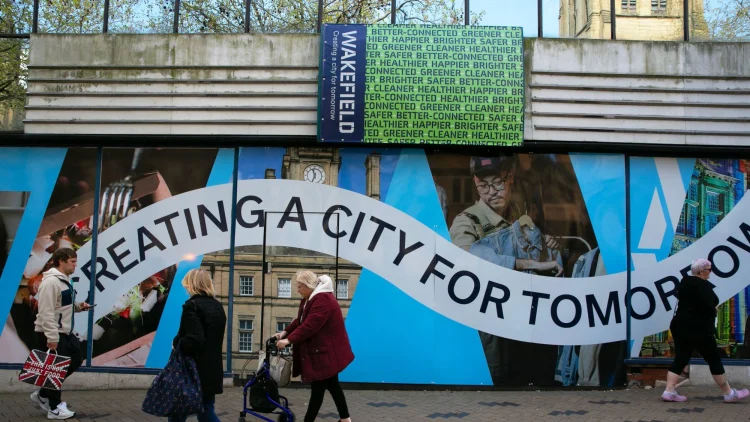
Wakefield town centre (Alamy)


3 min read

If you ask your average person on the street where I grew up what security means to them, you won’t get a lecture about defence policy or military strategy. You’ll hear something much simpler.

Advertisement

In my hometown of Wakefield, just as in towns up and down the land, security means being able to pay the bills, having a warm home and a secure job. It’s knowing your child will get a decent education and be able to see a GP when they’re ill. It’s feeling safe on the streets and knowing your elderly parents will get the care they need. It’s having confidence that when floods, fires or another crisis hits, your community will be protected. 

That’s what security looks like to most people. But if you listen to much of our political debate, you’d think security means only one thing: spending more money on the military. 

Every government has a duty to protect its citizens. The war in Ukraine reminds us all that Europe is not immune to conflict. The wars in the Middle East continue to cause devastating human suffering. None of us can ignore the dangers in the world. 

Advertisement

However, we should not accept that we must spend increasing amounts of money preparing for war, whilst everyday security collapses. 

At this year’s TUC Congress, the University and College Union (UCU) is asking the trade union movement to build on last year’s landmark ‘Wages Not Weapons’ policy by adopting a broader vision of what ‘security’ really means. Workers experience insecurity every single day, but it has nothing to do with foreign military threats. 

It comes from wages that don’t keep up with prices, insecure work, unaffordable housing and public services stretched to breaking point. From climate change making our communities more vulnerable to flooding, heatwaves and extreme weather. From growing inequality that enriches a wealthy few and impoverishes millions of workers.  

Advertisement

As general secretary of an education union, I see the consequences of insecurity every day.  

Further education colleges teach the workers of the future who will keep our economy going. Yet FE staff in England are poorly paid for the vital work they do and earn less than others in the education sector. Colleges struggle to recruit and retain lecturers because committed professionals simply cannot afford to stay.  

Our movement has always understood that security is about more than guns and bombs

Advertisement

In higher education, it’s estimated that universities have cut as many as 30,000 staff in the last three years. Those who still have a job have seen their workloads intensify. The funding crisis casts a dark shadow over our cash-starved universities, from which some may never escape.  

How can politicians talk about ‘national resilience’ when the institutions that educate and train the skilled workforce our economy depends on are hitting breaking point?  

The same applies across all of our public services. We cannot build a resilient country on the back of exhausted NHS staff, crumbling schools and near-bankrupt councils. 

The new government is right to speak about changing the economic model that has failed too many communities. 

Advertisement

But with the Budget fast approaching, they have choices to make. The military establishment across the West is demanding that governments devote a growing proportion of public money towards defence. If that comes at the expense of investment in things like health, education, housing, social care and climate resilience, then we risk making people’s lives far less secure. 

Trade unions have a responsibility to point this out. Our movement has always understood that security is about more than guns and bombs. Security begins when ordinary people have the power and resources to live decent lives. 

Neither should we abandon the belief that peace is possible. When you listen to today’s political debate, you would be forgiven for thinking that our leaders have given up on a peaceful world. As trade unionists, we cannot accept that. Internationalism has always been at the heart of our movement. We know that the working people of different nations have more in common with each other than with the corporate bosses profiting from war or driving down wages across global supply chains. Lasting peace depends on diplomacy, international cooperation, commitment to human rights and respect for international law. 

We must also confront the fact that greater militarisation at a time when Donald Trump sits at the head of NATO, is extremely dangerous. Tying ourselves closer to an increasingly violent and unpredictable military agenda will not make Britain safer. 

Advertisement

The new prime minister has powerful voices in his ear lobbying him to deliver unprecedented spending on defence, paid for by cutting other public services. It is crucial that trade unions make the argument for a clear alternative.  

The trade union movement is always strongest when it reflects the aspirations of millions of working people. At this year’s TUC Congress we have an opportunity to reclaim the meaning of security and root it once again in social justice, solidarity and peace. 


Jo Grady is general secretary of the University and College Union (UCU) and a senior lecturer in employment relations at The University of Sheffield

Advertisement

Source link

Continue Reading

Politics

How Much Water Do Data Centres Actually Use?

Published

on

A data centre situated near to a lake.

If the drought stretches on, further restrictions on water use might be put in place to preserve water supplies.

Per water regulator Ofwat, a non-essential use ban (NEUB) is a more serious step that water companies can take if dry conditions continue following a hosepipe ban.

Politics UK shared that ministers have been “told to prepare for a ban on car washes, window washing and refilling private swimming pools”, to which commenters unanimously aired concerns over data centres.

“Let’s ban data centres needlessly guzzling water,” read the top comment, which had garnered over 4,000 likes at the time of writing.

Advertisement

Another commenter chimed in: “I haven’t washed my car in 3 months because I feel bad about using the water. Meanwhile data centres are sucking it dry so people can make cartoon pictures of their dogs.”

What is a data centre?

Data centres are physical spaces which house the IT infrastructure (basically, a load of computer servers) that underpins modern life, from patient records and emails to product data and financial systems.

It’s thought there are around 555 data centres now in the UK – with this figure likely to jump by about 20% in the next five years.

Advertisement

The UK government has said that data centres are “critical to nearly all economic activity and public services, and were designated as critical national infrastructure in 2024”.

This puts data centres on an equal footing as water, energy and emergency services systems.

A data centre situated near to a lake.

Tom Keeble via Getty Images

A data centre situated near to a lake.

How much water do they use?

Concerns have been raised in recent times, as data centres require large energy and cooling capabilities – especially those supporting AI systems.

Advertisement

According to techUK, data centres either opt for air, refrigerant or water-based cooling systems “based on local climate, energy availability and water stress”.

It surveyed 80 data centre sites across England and, of the 73 responses, 51% of sites said they use waterless cooling systems, relying on air or refrigerants.

Almost two-thirds (64%) said they consume less than 10,000m³ of water annually, which is comparable to that of a leisure centre.

But water companies in areas where there are numerous data centres have shared concerns over usage.

Advertisement

Affinity Water serves Slough, which is home to a number of data centres (40 and counting), and said some individual facilities request supplies of up to 35 litres of water per second, equivalent to the peak water demand of 3,500 homes.

Roughly 40% of British-based data centres are within the M25 – an area which hasn’t seen any meaningful rainfall in some time.

Water UK, which represents water companies in the UK, has warned that the UK doesn’t have enough water for future data centres and estimates data centres in England are guzzling about 6.6 million litres of drinking water each day, which could rise to 19.8 million litres per day by 2030.

Per the Guardian, a briefing from the trade body said: “There appears to be an assumption that the country will always have enough water for its economic needs. Nothing could be further from the truth.”

Advertisement

At the time, the government said it was “looking at alternatives or ways to minimise impact on supplies and output of wastewater from data centres”, as well as “taking decisive measures to secure water supplies and meet higher demand”. This includes infrastructure investment and building nine new reservoirs.

Speaking to HuffPost UK about data centre water use, a government spokesperson said: “We want the UK to be a global leader in AI, but this must be done sustainably.”

They highlighted that many newer data centres are increasingly using advanced cooling systems that “significantly reduce water consumption”. The sector also operates under a Climate Change Agreement to encourage uptake of energy efficiency measures.

They ended: “Data centre water consumption amounts to 0.2% of non-household water usage in England. Our water resources and drought planning framework is kept under constant review to ensure that water is used efficiently and that essential services remain resilient during drought.”

Advertisement

Source link

Continue Reading

Politics

We’re All Eating Strawberries Wrong

Published

on

Strawberries in a bowl

Before I start, let me make one thing clear: I do not enjoy a pointless “proper” extra step when it comes to my food.

For instance, I am alright eating chocolate digestives the “wrong way” (according to McVitie’s). I will go choccie-up like a non-industry normie, thanks very much.

But sometimes, much to my annoyance, the pros are onto something.

Brie, for instance, loses its unpleasant ammonia tang after being brought to room temperature. Leaving it out for half an hour actually is worth your while.

Advertisement

And even though I do think fridge-cold strawberries are beautiful as is, berry producers Driscoll’s said those should come out of their chilly home long before you eat them, too.

So, I tried the tip this afternoon – and I’m so sorry, but they’re completely right.

Strawberries in a bowl

Anastasia Zhenina via Unsplash

Strawberries in a bowl

How long should you leave strawberries out of the fridge before you eat them?

Per the berry company, you can refrigerate strawberries in their original container for up to five days if you keep them dry.

Advertisement

But they “taste best at room temperature, so remove them an hour or two before you plan on eating them,” the company claims.

You should also rinse them just before eating them to get rid of any germs without risking making them soggy.

I’ll be honest; I thought the advice was a little too fussy for my liking. But Driscoll’s isn’t alone in recommending the method.

Southern Living go by a 30-minute warm-up rule.

Advertisement

BBC Good Food, meanwhile, puts it at an hour.

Even Worcestershire County Council weighed in, suggesting we “remove them from the fridge and bring to room temperature before eating”.

So, I thought I’d bring my punnet of this year’s beautifully sweet harvest out of my fridge an hour before my usual post-lunch snack to see for myself.

It does make a difference

Advertisement

I get it; I have been diving straight into the fruit the second I remove it from the fridge all week.

But, sorry to say, the inconvenience of bringing them to room temperature really does transform their flavour (not least because that wonderful fragrance is so much more noticeable).

This may be because, as America’s Test Kitchen (ATK) shares, strawberries don’t actually have that much sugar; the smell is a big part of why we perceive them as sweet.

“Just a little bit of heat is enough to coax [the smell] out of the fruit and into the air,” Dan Souza shared in an ATK video, adding that cold temperatures suppress sweet flavours.

Advertisement

No wonder the ones I’d left out had more of that signature scent and mouth-wateringly sweet flavour, too – it was a night and day difference.

Personally, I’m never going back. And even if you don’t adopt the habit every single time you crave the berry, I recommend trying it at least once.

Source link

Advertisement
Continue Reading

Trending

Copyright © 2025