
Business
Coles Defends Pricing Practices in Federal Court, Denies Misleading Shoppers

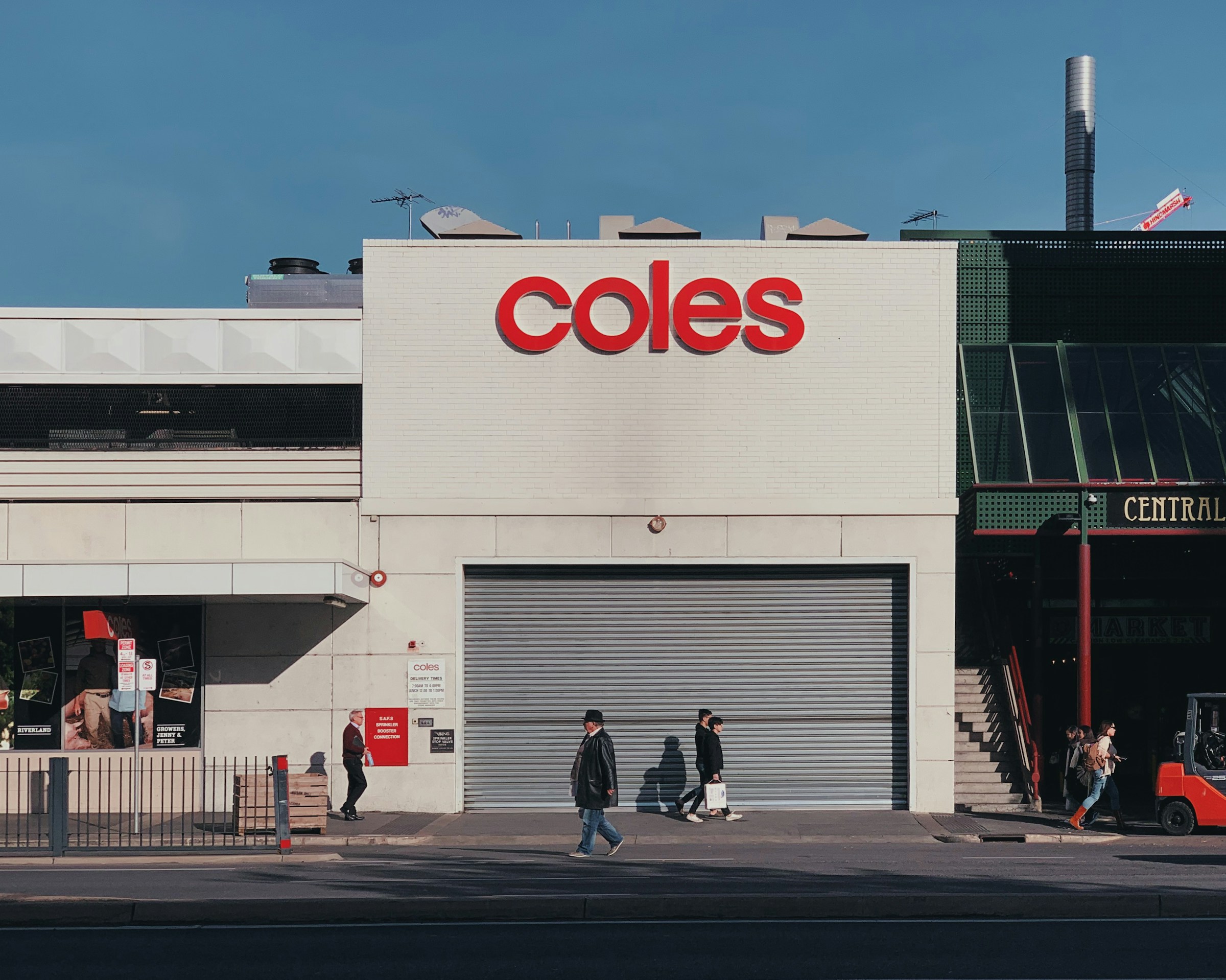
Coles is locked in a court battle with the Australian Competition and Consumer Commission (ACCC) and denies misleading shoppers with its pricing practices.
ACCC previously accused Coles of breaching the law with its “Down Down” promotion.
Coles Denies Misleading Customers
According to a report by The Guardian, ACCC accused Coles of offering “illusory” discounts on many common household products.
However, Coles denies doing this and claims that the promotional prices it offered are genuine discounts.
“What they would be concerned with when they’re walking down the aisle trying to work out what to buy today for their shopping is whether the claimed discount … was fair dinkum,” John Sheahan KC. Sheahan represents Coles in its federal court battle.
“So long as the was price is a genuine price, not contrived or ephemeral, then the consumer’s interest is appropriately satisfied,” he added.
ACCC’s Argument
According to ABC News, ACCC used three prices Coles charged on a tin of dog food to show that the supermarket chain has been misleading shoppers.
Between April 2022 and February 2023, the supermarket offered a 1.2 kilogram loaf of Nature’s Gift Wet Dog Food for $4, said ACCC legal counsel Garry Rich.
The price then went up by 50 per cent to $6 after. This lasted for seven days. On the eighth day, it went down to $4.50, a promotion that Coles labelled as “Down Down.”
This third price is 13 per cent more than the initial $6 shoppers were previously paying for the same product.
“It did not disclose that a reasonable consumer would not have understood that Coles had increased the price to $6 for just seven days, immediately before the promotion, and that for 296 days before that, the price was $4,” ACCC’s legal counsel argued.
However, Sheahan dismissed the argument by saying, “In the end, all prices are temporary. Nothing lasts forever.”


I spent 30 years in the institutional trenches as a trader, analyst, and portfolio manager, eventually running the equity trading desk at Northern Trust in Chicago. Those decades shaped my approach: stay disciplined, trust the data, and keep emotion out of the way. Since 2009, when I began publishing my stock selections, my portfolio has delivered solid long term results—compounding in the mid teens annually through 2025. Today I’m a private investor and investing coach, with a rules based framework that helps people build better portfolios. My work focuses on systematic thinking, behavioral awareness, and evidence over opinion. For my market outlook and model portfolio updates, visit zeninvestor.org. .
Analyst’s Disclosure: I/we have a beneficial long position in the shares of NVDA, AVGO, GOOGL either through stock ownership, options, or other derivatives. I wrote this article myself, and it expresses my own opinions. I am not receiving compensation for it (other than from Seeking Alpha). I have no business relationship with any company whose stock is mentioned in this article.
Seeking Alpha’s Disclosure: Past performance is no guarantee of future results. No recommendation or advice is being given as to whether any investment is suitable for a particular investor. Any views or opinions expressed above may not reflect those of Seeking Alpha as a whole. Seeking Alpha is not a licensed securities dealer, broker or US investment adviser or investment bank. Our analysts are third party authors that include both professional investors and individual investors who may not be licensed or certified by any institute or regulatory body.

Cracker Barrel: Sharp Traffic Declines And Severe Margin Erosion

Saudi non-oil sector hits first contraction since 2020 as war halts orders


Stephen Simpson is a freelance financial writer and investor.Spent close to 15 years on the Street (sell-side, buy-side, equities, bonds).
Analyst’s Disclosure: I/we have no stock, option or similar derivative position in any of the companies mentioned, and no plans to initiate any such positions within the next 72 hours. I wrote this article myself, and it expresses my own opinions. I am not receiving compensation for it (other than from Seeking Alpha). I have no business relationship with any company whose stock is mentioned in this article.
Seeking Alpha’s Disclosure: Past performance is no guarantee of future results. No recommendation or advice is being given as to whether any investment is suitable for a particular investor. Any views or opinions expressed above may not reflect those of Seeking Alpha as a whole. Seeking Alpha is not a licensed securities dealer, broker or US investment adviser or investment bank. Our analysts are third party authors that include both professional investors and individual investors who may not be licensed or certified by any institute or regulatory body.


Saudi Arabia’s non-oil business activity shrinks in March amid conflict, PMI shows

Oracle: OCI And Multicloud Execution Shift The Narrative To Buy (Rating Upgrade)
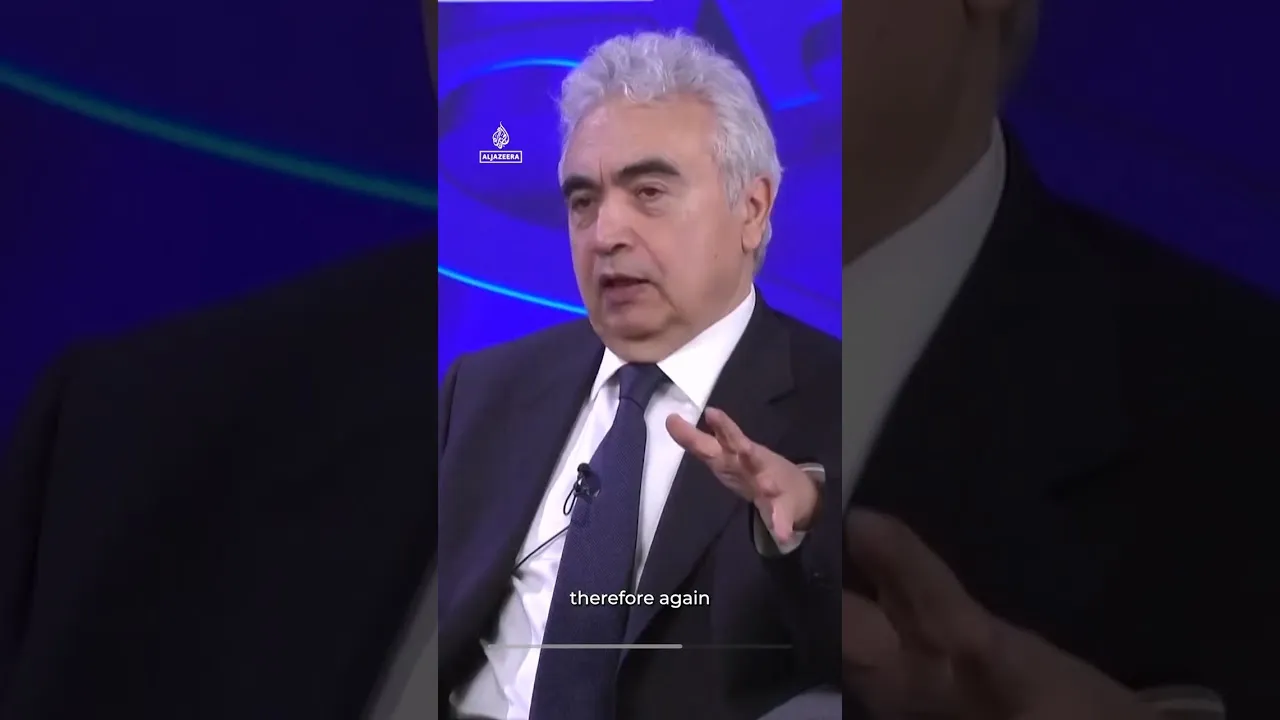
The International Energy Agency (IEA) may release more oil from emergency reserves due to disruptions caused by the Iran war, which threatens global supply. Executive Director Fatih Birol described the crisis as “very severe,” potentially worse than past oil shocks, emphasizing the importance of reopening the Strait of Hormuz to stabilize the market.
Severe Situation and Initial Silence
The speaker emphasizes the gravity of the current crisis, noting that it has been ongoing for approximately three weeks. During this period, they chose not to communicate with the press, believing the severity of the issue was not fully understood by global decision-makers. The message indicates a sense of urgency and concern about the impact of the crisis on the economy and energy markets.
Call for Market Intervention
Last Friday, the speaker decided to address the situation publicly, highlighting a key solution: the potential release of strategic oil reserves, including hydrocarbons and refined products if necessary. This action is intended to help stabilize the markets temporarily but is not viewed as a comprehensive solution. The focus remains on alleviating economic pain and preventing further turmoil.
Ongoing Monitoring and Collaboration
The speaker reassures that they will continue to monitor market conditions closely, assessing whether additional interventions are needed. Decisions will be made in consultation with member countries, emphasizing a collaborative approach. The crisis, characterized by two oil crises and one gas crash, underscores the complex and multifaceted nature of the current energy challenges.
Other People are Reading


War weighs on Egypt’s private sector as PMI hits near two-year low in March

Iran executes two men involved in January protests judiciary news outlet says

Mid-America: A Dirt-Cheap Way To Buy Apartments

Rose and Crown pub, Ainsworth car parking update shared

Hulu’s 6-Part Spy Thriller Is So Good, You Can Watch It Multiple Times

SarahPhotogirl publishes The Sleepless Nights of the Boy.


-

 NewsBeat3 days ago
Steven Gerrard disagrees with Gary Neville over ‘shock’ Chelsea and Arsenal claim | Football
-

 Business2 days ago
No Jackpot Winner and $194 Million Prize Rolls Over
-

 Fashion2 days ago
Weekend Open Thread: Spanx – Corporette.com
-
Entertainment6 days ago
Fans slam 'heartbreaking' Barbie Dream Fest convention debacle with 'cardboard cutout' experience
-

 Crypto World3 days ago
Gold Price Prediction: Worst Month in 17 Years fo Save Haven Rock
-

 Tech6 days ago
The Pixel 10a doesn’t have a camera bump, and it’s great
-
Crypto World5 days ago
Dems press CFTC, ethics board on prediction-market insider trades
-

 Tech6 days ago
Avatar Legends: The Fighting Game comes out in July and it looks pretty slick
-

 Business3 days ago
Login and Checkout Issues Spark Merchant Frustration
-

 Sports10 hours ago
India men’s 4x400m and mixed 4x100m relay teams register big progress | Other Sports News
-

 Tech6 days ago
Apple will hide your email address from apps and websites, but not cops
-

 Sports5 days ago
Tallest college basketball player ever, standing at 7-foot-9, entering transfer portal
-

 Tech5 days ago
EE TV is using AI to help you find something to watch
-

 Politics5 days ago
Should Trump Be Scared Strait?
-

 Tech5 days ago
Flipsnack and the shift toward motion-first business content with living visuals
-

 Tech7 days ago
Elon Musk’s last co-founder reportedly leaves xAI
-

 Fashion6 days ago
The Best Spring Trends of 2026
-

 Tech5 days ago
How to back up your iPhone & iPad to your Mac before something goes wrong
-
 Crypto World6 days ago
Bitcoin’s Six-Month Losing Streak: What On-Chain Data Says About the Market’s Next Move
-
Tech5 days ago
Daily Deal: StackSkills Premium Annual Pass
You must be logged in to post a comment Login