The U.S. Cybersecurity and Infrastructure Security Agency (CISA) warned that hackers are exploiting a critical-severity remote code execution (RCE) flaw in the Windows Internet Key Exchange (IKE) Service Extensions component.
Also known as MS-IKEE, this is a set of additional capabilities Microsoft added to the IKE Protocol, including authentication via cryptographically generated addresses (CGAs), denial-of-service protection, and easier interoperability with non-Internet Protocol Security (IPsec)–capable peers.
Tracked as CVE-2026-33824, this RCE vulnerability impacts all supported Windows 10, Windows 11, and Windows Server releases, and it allows attackers without privileges to gain code execution by sending maliciously crafted packets to unpatched Windows systems through UDP ports 500 or 4500.
“Double free in Windows IKE Extension allows an unauthorized attacker to execute code over a network,” Microsoft says in an advisory issued during the April 2026 Patch Tuesday when it addressed the vulnerability.
“An unauthenticated attacker could send specially crafted packets to a Windows machine with Internet Key Exchange (IKE) version 2 enabled, which could enable remote code execution.”
Advertisement
Microsoft also advised security teams that can’t immediately install the CVE-2026-33824 security update to block inbound traffic through UDP ports 500 and 4500 on systems that don’t use IKE, or to configure firewall rules to allow inbound traffic only from known peer addresses when IKE is used.
Now actively exploited in the wild
While Microsoft has yet to update its advisory to flag it as exploited, CISA has added the flaw to its catalog of actively exploited vulnerabilities and ordered U.S. Federal Civilian Executive Branch (FCEB) agencies to secure their devices within three days, as mandated by Binding Operational Directive 26-04.
“This type of vulnerability is a frequent attack vector for malicious cyber actors and poses significant risks to the federal enterprise,” the U.S. cybersecurity agency also warned on Tuesday.
Additionally, while BOD 26-04 applies only to government agencies, CISA urged all network defenders to prioritize patching the CVE-2026-33824 security flaw to block ongoing attacks.
CISA and Microsoft spokespersons have yet to reply after BleepingComputer reached out for more information on attacks actively targeting the CVE-2026-33824 vulnerability.
Overall prevention scores can hide what happens after initial access. Once attackers are using valid credentials, prevention drops sharply.
The Blue Report 2026 measures defenses technique by technique across 338 million simulations run in customer production environments.
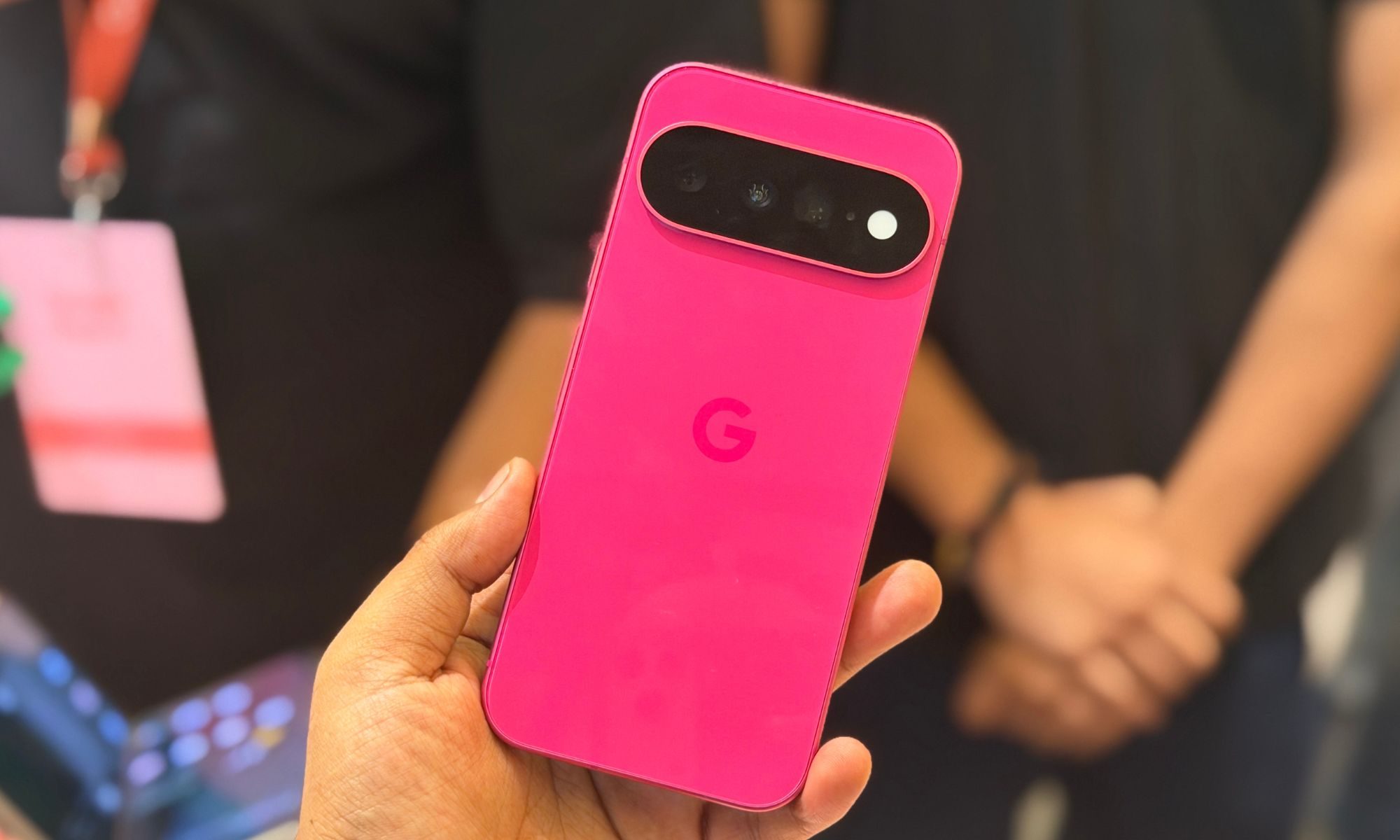
Google just pushed the prices higher for the entire Pixel 11 lineup. The hikes weren’t surprising at all, especially considering the rising component costs and the ongoing RAMmageddon. But a new report hints that we might soon see a solution to all of this.
According to Nikkei Asia, Google plans to stop producing all Pixel devices in China starting in 2027, shifting manufacturing toward India and Vietnam. The reported move covers Pixel phones, watches, and wireless earbuds as Google continues reducing its reliance on Chinese manufacturing. As always, there’s no guarantee Google will pass any resulting savings along to buyers. Though reducing its exposure to China at a time of volatile trade policy and spiralling component costs could give the company more flexibility when it comes time to price future Pixels.
Did Google just get serious about leaving China?
Nadeem Sarwar / Digital Trends
Google already has Pixel manufacturing infrastructure in India, while Reuters reported in January that the company was moving development and manufacturing of its high-end Pixel phones to Vietnam during 2026. This move apparently included the Pixel, Pixel Pro, and Pixel Fold families, while development of the cheaper A-series remained in China at the time.
The newer Nikkei report claims that Google has told suppliers that all Pixel production will leave China in 2027, with successful development and production of premium Pixels in Vietnam giving it confidence to make the transition. India is also becoming increasingly important, as Google and its manufacturing partners are looking to expand Pixel production in the region as well.
A cheaper Pixel would be very welcome right now
Nadeem Sarwar / Digital Trends
Google’s new Pixel 11 starts at $899, $100 above the Pixel 10’s $799 launch price. Google also doubled the base storage from 128GB to 256GB, which softens the blow, while rising memory costs have been putting pressure on smartphone prices across the industry.
So simply moving production doesn’t magically erase those pressures. Building and validating new manufacturing lines carries costs of its own, and PhoneArena reasonably points out that stable prices may be a more realistic outcome than an outright reduction. Another aspect to consider is the tariff situation.
Advertisement
After watching the Pixel’s entry price climb from $799 to $899 this generation, I’m perfectly happy if Google’s grand manufacturing reshuffle manages to keep the pricing stable. Just keep the Pixel 12 from becoming a $999 phone.
This Buc-ee’s vs. the Beaver’s Mini-Mart is just not going to go away. While Buc-ee’s has made quite the name for itself as a trademark bully over the past several years, it may have finally run into a combination that is more than the corporation can handle. Between John Oliver’s continued coverage of this lawsuit, in which he is clearly on the side of the mini-mart and in which he is attempting to goad Buc-ee’s into a lawsuit, combined with the community of Beavercreek which isn’t having this shit, the PR is starting to look really bad here.
As a result, the locals in Beavercreek are getting ornery. You can see blurry proof of that in a picture of what vandals apparently did to a Buc-ee’s billboard nearby.
A Buc-ee’s highway advertisement along state Route 4 in Riverside, Ohio, was vandalized amid a controversial lawsuit between the popular chain and a small mini-mart in Beavercreek, Ohio.
My friends in the media can do their half-assed blurring all they want, but someone turned “Buc-ee’s” into “Fuc-ee’s” and then added some otherwise indecipherable graffiti. Now, I’m not here to encourage anyone to participate in vandalism, or break any other law for that matter. But actions like this certainly do give you a sense of just how pissed off the locals are at Buc-ee’s bullying one of its local businesses. This has become a national story and a local one, meaning that the breadth of anger at the company is both intimate and wide-spread.
And I have very little time for the obvious gaslighting that Buc-ee’s is attempting to pull off as a result. Huber Heights is the Ohio town in which Buc-ee’s opened up its first Ohio location and CEO Arch Aplin apparently attempted to enlist the town’s mayor to try to placate the locals.
In a public Facebook post published Aug. 7, Huber Heights Mayor Jeff Gore wrote that there were “two sides to every story” and that he had been in contact with Buc-ee’s CEO Arch Aplin.
Gore wrote that Vik Boparai had filed for the trade name “Beavers Mini Mart” and that the name was in conflict with a federal trademark owned by Buc-ee’s. He said Aplin informed him that Boparai had filed for a federal trademark for “Beavermart,” which “would have given him access to set up Beavermarts all across the country.” Gore noted that the filing was made a “few months after” Buc-ee’s officials announced a location in the Dayton area.
Advertisement
“Mr. Aplin told me directly that Buc-ee’s had no issues with Beavermart using the Beaver logo in Beavercreek. He understood and said that makes sense. What Buc-ee’s did not want was a series of Beavermarts popping up across the state or regionally or eventually nationally that violated their trademark,” the post reads in part.
Two things on this. First, whether two trademarks are in conflict is not for any mayor, nor even one of the trademark holders to determine on their own. That is for the USPTO and the court system to decide, should it get that far. Gore’s commentary here on that is pointless and meaningless.
As for Aplin’s comments about having no issues with the current location’s name or signage, his own fucking lawsuit says otherwise. I’ve embedded the suit below so you can read it for yourself. The complaint specifically calls out the current signage, the cartoon beaver mascot, the current color scheme of its branding, and even the expression of said beaver mascot and states that this is all trademark infringement in its current form. In fact, it asks for relief specifically in the form of an injunction against the mini-mart for continued use of that branding as it currently exists and then asks for a written report from the mini-mart confirming under oath that it has complied.
This is gaslighting. Aplin is lying about what his own lawsuit is demanding. And if there is any one rule in crisis PR above all else, it’s simply: don’t lie. Because that makes the PR even worse as a result, which is exactly what has now happened.
A study of more than 64,000 people born around the end of Britain’s postwar sugar rationing found that those exposed to less sugar during their first 1,000 days had lower rates of five cancers decades later, including roughly 69% lower liver cancer risk and 36% lower breast cancer risk. They also “showed signs of slower biological aging” and “continued to consume less sugar and had healthier diets overall,” according to the authors of a new study published in The Conversation. From the report: After the second world war, sugar remained rationed in Britain for several years. But in September 1953, rationing ended and people started eating a lot more sugar. Consumption nearly doubled. This meant that children born just a few months apart had very different levels of sugar exposure both in the womb and during early childhood. For our study, we used data from over 64,000 people born in Britain between 1951 and 1956. Those born earlier spent a larger share of their first 1,000 days under sugar rationing, while those born later experienced progressively less of it.
[…] What is most surprising, however, is not the cancer results or the biological markers of ageing. It’s how early-life sugar exposure continued to affect people’s diets even 50 years later. We found that people who experienced sugar rationing early in life still consumed less sugar in adulthood, around age 50. They also ate less overall, and their diets were healthier and more diverse. This suggests that the level of sweetness people are exposed to very early in life may shape their taste preferences for a long time.
OK, so window-cleaning robots cannot deal with traditional windows. I know textured glass interferes with the suction and, predictably, handles and fixtures interfere with the movement, but it also struggles with astragals that aren’t thick or solid enough. I wouldn’t risk using it with any that aren’t finished in hard plastic or something else durable.
I figured I’d give it one last chance on the upstairs bay window, as it’s a PVC replacement that was put in before we moved in, so it has thicker astragals finished in hard plastic. Using it one story up gave me serious anxiety. After an alarming five minutes or so of watching it loudly and squeakily navigate the window, it began to sound an alarm and flash a red light, with a stern voice informing me it was stuck and I should check the app for solutions. Where was it stuck? You guessed it, right at the top of the window where I had no hope of reaching it.
I’m not ashamed to say I panicked. I worried that if it suddenly fell, it would potentially smash into the window downstairs. The charging case does act as a counterweight; other window-cleaning bots have tethers to attach to furniture. There’s also a button to retract the cord and cut the slack, but there’s still potential for damage if it falls. I tried to lean out of my window, while it loudly alerted, to see if I could reach the release button. No joy.
By this time, a couple of passersby had stopped to watch. I tried to pull it in using the cable, but it wouldn’t budge. Eventually, I figured out I could lower the top pane just enough to reach it. But pressing and holding the button to power down the suction, while hanging out my window and holding the strap, felt downright dangerous. My heart was pounding in my ears by the time it finally released. I got it inside and back into its case, where it will remain until I return it.
Advertisement
The Ugly
Reflecting on this sorry saga, I can’t help feeling, even without my mishaps, which may be partly down to user stupidity and bad luck, that window-cleaning robots are just a massive waste of time.
They’re way too much work to use. Time-wise, I could clean the windows far faster and do a better job with less stress. By the time you’ve set up a window-cleaning robot and stuck it on the window, you could have cleaned it yourself. You have to babysit the damn thing and then detach it and move it to the next window. Even if you get to a point of trusting it, you’ll have to return every five to 10 minutes. It can’t deal with window handles, fittings, or certain astragals, and windows must be at least 12 by 16 inches, but realistically larger, for it to be worth using. It always leaves dirt in the corners and cannot remove stubborn stains like bird droppings.
Storyteller Overland just put a nearly three-hundred-thousand-dollar price tag on a Ram 3500 that can sleep four, cook a full meal, and open its rear wall into an elevated outdoor platform. The GXV Wild arrives as the smaller, more agile member of the company’s Global Expedition Vehicles line, built to reach remote places while still offering real living space once you stop.
Built on a single cab Ram 3500 Big Horn Level 2 grade, the truck retains its 6.4-liter Hemi V8 and eight-speed transmission. That engine generates 375 horsepower and 429 pound-feet of torque on ordinary gasoline, no fancy stuff required. By removing the rear seats, the truck’s weight and wheelbase are reduced, making it much more agile on tight dirt paths and through dense brush. Standard features include four-wheel drive and a 52-gallon tank to keep you going.
Fire HD 8 offers an 8″ HD display for seamless streaming and gaming, coupled with a 5MP rear facing camera for photos—with a thin, light, durable…
Fast and responsive with long battery life – With up to 4 GB RAM (2X more than 2022 release), 64GB of storage, and up to 1 TB of expandable storage…
Save time, get creative – Enjoy three smart tools to help you send polished emails, quickly summarize webpages, and create unique wallpapers.
AEV’s three-inch lift raises the suspension, and it comes with 20-inch aluminum wheels shod with 275/80 R20 MPT tires. More ground clearance is usually a good thing, and they’ve got everything set up so the truck can comfortably crawl through the bush while also zipping down the highway. Out front, a 12,000-pound Warn winch gets you out of tricky situations, while Diode Dynamics lighting handles both driving and scene work. The overall length is slightly over 22 feet 10.5 inches, with 11 feet 3 inches from the ground to the roof of the car and 8 feet 7.5 inches between mirrors. The GVWR is 14,000 pounds, the payload after the camper body is only 1,000 pounds, and the towing capacity ranges from 10,000 to 11,000 pounds, depending on who you trust.
Advertisement
The FlipOut rear deck is arguably the most notable feature, as it’s a clever little design in which the back wall folds down to create a solid platform with safety netting, overhead red and white lighting, a 120 volt outlet, and a mosquito screen. There’s also an awning door with a little skylight to conceal the entrance when the deck is completely down, as well as a 10-foot electric awning with LED lighting to offer you a little extra space outside. Powered access steps make it a little easier to get in and out, and there must be some lockable external storage, an exterior shower, and city water and shore power hookups somewhere in there.
There is no need to brave the elements to get to the living area from the truck cab. Simply hop inside, and with two seatbelts, you can only drive with two passengers. When parked, four individuals can sleep in the loft, which has an RV queen bed with a ladder, an upholstered headboard, a vented skylight, bedside storage, USB ports, wireless charging, and a 120-volt outlet. The rear dinette seats four and converts into a second queen size bed, while the galley features a stainless steel Vitrifrigo four cubic foot fridge/freezer, an induction cooktop that folds up out of the way when not in use, and a single appliance that serves as a microwave, oven, and airfryer. There’s a 120-volt pop-up plug and wireless charging nearby, and the wet bath is basic but adequate, with a shower, sink, flushable cassette toilet, exhaust fan, dimmable lighting, a dual-pane window with shades and bug screen, and some storage and a mirror.
A 12kWh Mastervolt system generates power, which is paired with a 4,500-watt inverter. The standard setup contains 400 watts of solar panels, which can be increased to 800 watts via an additional connector. You can connect to shore power using a 120-volt, 30-amp arrangement. To be safe, prewiring for Starlink is included. Our water tanks are generously sized, storing 50 gallons of fresh water and 20 gallons of gray water, as well as a cassette toilet that can handle 4.75 gallons of “grey water.” They’ve also included Simrad’s Mission Control tablet to help you monitor power, water, temperature, and lighting.
When you look at the facts, the GXV Wild comes in at $299,898 with no hidden costs, demonstrating clear pricing from the start. Orders are now open to the public; simply contact one of our dealers to get started. We hope to get the new Wilds on the road in the third quarter of 2026. Our warranties are also very comprehensive: one year or 15,000 miles for the capsule, three years or 36,000 miles for the structure, ten years or 100,000 miles for the Ram powertrain, and five years for the Mastervolt system.
Every year, marketing teams are expected to deliver more. Marketing leaders are under growing pressure to prove the return on investment they deliver and demonstrate the value they bring to the business.
At the same time, budgets remain tight, sales cycles are getting longer, and more people are becoming involved in buying decisions.
Against that backdrop, many organizations have turned to AI to automate routine tasks, analyze market and audience data and support content creation.
Advertisement
Latest Videos FromTechRadar
But as adoption matures, the conversation is now moving from experimentation to execution.
Khalid Aziz
B2B Marketing Director for Canon UK & Ireland.
According to recent UK government research, whilst 41% of businesses are now using AI technology, only 21% have integrated AI into their existing business systems, showing that while there’s been real progress, we’re still in the early stages.
The next challenge is not over-use, but shallow use. That means moving beyond isolated use cases and embedding AI into everyday marketing workflows, equipping people with the skills to use it effectively and focusing on the commercial outcomes it helps deliver.
Advertisement
An important part of this is ensuring humans remain at the core. Ultimately, AI should enhance human capability, not the other way around. This is particularly important when it comes to the creativity, storytelling and decision-making at the heart of marketing.
Sign up to the TechRadar Pro newsletter to get all the top news, opinion, features and guidance your business needs to succeed!
Looking beyond isolated use cases
The shift from AI experimentation to execution requires organizations to look beyond familiar use cases and think more strategically about where AI can create commercial value.
Advertisement
Rather than treating AI as a standalone capability to simply improve efficiency, marketers should be looking at where it can support existing workflows across the entire marketing function – from campaign planning and content creation through to new lead generation, sales enablement, measurement and reporting.
One of the biggest barriers is that people tend to rely on what they already know. That’s why ongoing training and development are so important. Helping marketing teams understand where AI genuinely adds value and giving them the confidence to apply it in new ways are what will allow organizations to move beyond isolated use cases and deliver stronger commercial outcomes.
Advertisement
Execution for commercial outcomes
As AI becomes embedded across the marketing function, success will depend less on adopting the technology itself and more on how effectively teams apply it to core business objectives. While use cases continue to evolve, marketing leaders should focus on three priorities to deliver the greatest impact.
First, AI should drive efficiency with a goal to shorten sales cycles. It should be viewed as a tool that removes friction from the customer journey to accelerate the flow of opportunities through the funnel.
Beyond just task automation, marketing teams should be focusing on how their use of AI is delivering faster decision-making, more relevant customer engagement and stronger alignment between marketing and sales – ultimately helping organizations reduce sales cycle length and bring revenue forward.
Second, as AI-powered search experiences increasingly influence how buyers discover information, producing more content is no longer enough. Brands must focus on creating high-quality, differentiated and authoritative content that AI systems are more likely to surface and reference. This means going a step further than using prompts in chatbots and using AI to uncover audience insights, scale ideation and optimize formats.
Advertisement
Finally, marketing teams should leverage AI’s ability to collect actionable insights from large volumes of data and predictive analytics into emerging trends to streamline reporting and measurement processes. Automated dashboards and lead scoring can provide near real-time visibility into performance, enabling leaders to make faster, more informed decisions and keep teams aligned against shared objectives.
In an environment where budgets are under constant scrutiny, robust measurement frameworks will be critical to demonstrating marketing’s contribution to business outcomes.
AI should enhance human capability, not the other way around
It is important to remember that human creativity remains essential for developing original perspectives, compelling storytelling and genuine brand distinction. Organizations that combine AI efficiency with human expertise will be best positioned to maintain visibility and relevance in an increasingly AI-mediated digital landscape.
Advertisement
This starts with ongoing training and development, and creating an environment where employees feel confident experimenting, sharing knowledge and executing new capabilities. As AI becomes embedded across the entire workflow, strong leadership and collaboration across marketing, sales and the wider business will be just as important as the technology itself, helping teams apply AI consistently, securely and strategically.
The organizations seeing the greatest success will be those that build AI around their people, rather than expecting people to adapt to AI. When organizations combine the right technology with ongoing training, cross-functional collaboration and clear governance, AI becomes much more than an efficiency tool. It becomes something that enables employees to apply greater creativity, judgement and commercial thinking, while ensuring implementation remains responsible and aligned to broader business goals.
Looking ahead
The conversation around AI has moved past experimentation and is now about getting the balance right – moving beyond shallow, task-based use of AI and embedding it strategically across marketing in ways that deliver measurable commercial value, without overusing it or losing the human qualities that customers value most.
Advertisement
Looking ahead, UK Government research shows that 59% of organizations planning further AI investment intend to embed AI into their existing tools and systems over the next 12 months, while 42% also plan to invest in workforce reskilling and development.
Ultimately, the organizations that pull ahead won’t necessarily be those investing in the most technology, but those that invest in their people. This means helping teams understand where AI genuinely adds value, and ensuring it compliments commercial thinking, continuous learning and human creativity, rather than replaces it.
This article was produced as part of TechRadar Pro Perspectives, our channel to feature the best and brightest minds in the technology industry today.
Advertisement
The views expressed here are those of the author and are not necessarily those of TechRadarPro or Future plc. If you are interested in contributing find out more here: https://www.techradar.com/pro/perspectives-how-to-submit
In a bid to crack down on harmful activities, the model – which is designed with young people in mind – limits access to controversial topics such as self-harm and sexual content.
AI companies have long been criticised for exposing young people and children to graphic and inappropriate content online.
In response to growing concern over the protection of vulnerable people, OpenAI has launched a new ChatGPT model designed specifically for teenagers aged between 13 and 17.
Companies such as OpenAI have faced significant criticism for exposing children to harmful and illegal material by allowing them to access information, advice and images covering inappropriate topics such as suicide, self-harm, violence, eating disorders and graphic sexual behaviours.
Advertisement
In April of 2025, a 16-year old boy ended his life by suicide after months of discussing his worsening mental health with an OpenAI chatbot that, according to a lawsuit filed by his family, encouraged suicidal ideation. The bot even offered to help draft a suicide note for his family.
The new ChatGPT model aims to limit high-risk conversations and in some cases, if deemed necessary and if the prompt has been opted in to, the system will alert adults to suspect behaviour through parental controls and notifications. The model will also prevent the bot from suggesting it has personal feelings.
It will instead offer studying tools and learning support. Rather than providing the answers to queries straight away it will aim to guide the young person towards the solution, so they can work it out for themselves.
Reportedly, the model will use more than 2,000 signals to detect if a user has lied about their age to gain access to a standard model and if they are deemed to be under the age of 18 the chatbot will automatically turn on the teen mode.
Advertisement
In a statement OpenAI said, “We will continue to build additional features in order for teens to benefit from AI and measure and publish what we are learning. Teens should be able to use AI to learn, create, and explore. But that access should come with protections that reflect their developmental stage, reinforce real-world relationships, and support healthy use over time. ChatGPT for Teens is our next step in building toward that standard.”
Yesterday (18 August) a cohort of four US states announced they are taking Meta to trial in a bid to prove that the social media giant knowingly causes harm to children. The suit claims that Meta specifically targets users under 13 years old in order to harvest data, send targeted advertising and develop ways to prolong their time on their apps, all as a means of monetisation.
Don’t miss out on the knowledge you need to succeed. Sign up for the Daily Brief, Silicon Republic’s digest of need-to-know sci-tech news.
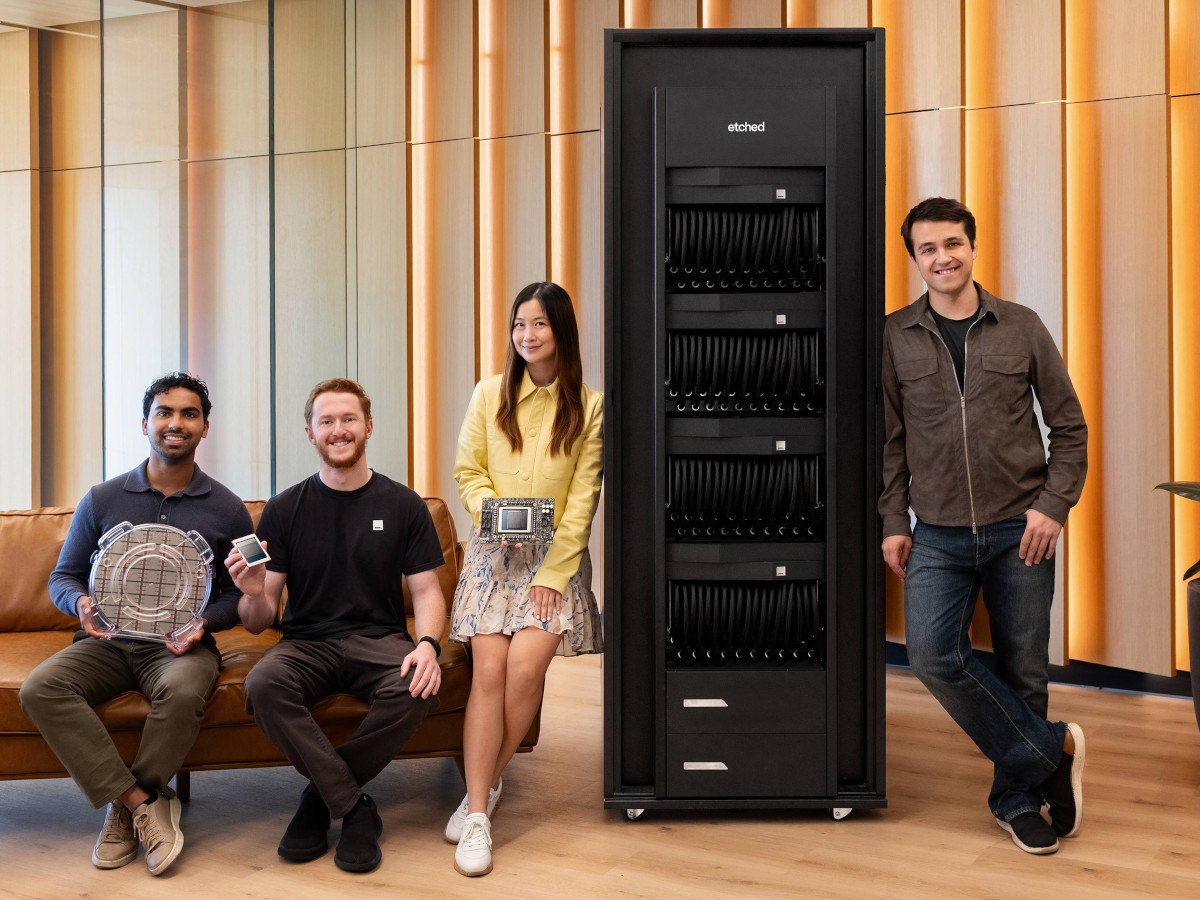
Etched was founded in 2022 by Gavin Uberti, Robert Wachen and Chris Zhu, and emerged from stealth in June of this year.
AI hardware start-up Etched has raised $700m in a new funding round led by US trading firm Jane Street, which the start-up said boosted its valuation to $21bn – doubling in less than a month.
Etched builds inference clusters to make AI inference – essentially the process of using a trained AI model to make predictions on new data – faster, cheaper and more efficient. To do this, according to the start-up, it co-designs chips, racks, software and manufacturing methods.
The start-up said it uses two central technologies to power its inference clusters: low-voltage inference, which it said delivers higher compute density within the same power as existing hardware, and cluster scale memory, a hybrid memory subsystem that creates a “massive” shared memory pool across an entire cluster rather than a single chip.
Advertisement
As well as leading the funding round, Jane Street has also become Etched’s first customer. Etched shipped its hardware rack to the company last month after it tested the start-up’s inference hardware.
“We’ve felt the urgency to get our hardware into customers’ hands and run real workloads since day one. Jane Street putting this cluster into production is proof of what we’ve built,” said Gavin Uberti, co-founder and CEO of Etched.
“Now, we’re sprinting on scaling production for the rest of our customers.”
As well as deploying its first rack to Jane Street, Etched said it has also secured more than $1bn in customer contracts across industries including public and private “frontier” AI companies and clouds.
Advertisement
Other participants in the latest funding round include Kleiner Perkins, Sequoia Capital, Andreessen Horowitz, Peter Thiel, Tiger Global, Bain Capital Ventures, Neo, Stripes, Primary, Positive Sum, Diffusion, Argo and Blackstone.
Sequoia previously led Etched’s $300m Series C round last month, after which the start-up was reportedly valued at $10.3bn.
Etched was founded in 2022 by Harvard Thiel fellows Uberti, Robert Wachen and Chris Zhu. The start-up, which currently has a team of 400 employees, emerged from stealth in June of this year.
It is the latest emerging challenger to Nvidia’s dominance in the AI chip market, and has reportedly been recruiting “aggressively” from the tech giant, according to the Wall Street Journal, which said that around 15pc of Etched’s current team previously worked at the tech giant.
Advertisement
“Under 1pc of the world has access to frontier models. Scaling intelligence requires a new kind of inference hardware,” wrote the start-up in a blogpost announcing its latest funding.
“As we ramp to gigawatt scale, we’ll face a new set of challenges: building new factories, global supply chains, fleet software, self-improving kernel agents and more.”
Just last week, ChangXin Memory Technologies, a Chinese manufacturer of dynamic random-access memory chips, replaced Tencent as the world’s most valuable Chinese company.
Advertisement
Earlier this month, AI giant Anthropic confirmed previously rumoured plans to design its own chips in response to a worldwide shortage and increased pressure to develop faster, more advanced AI systems.
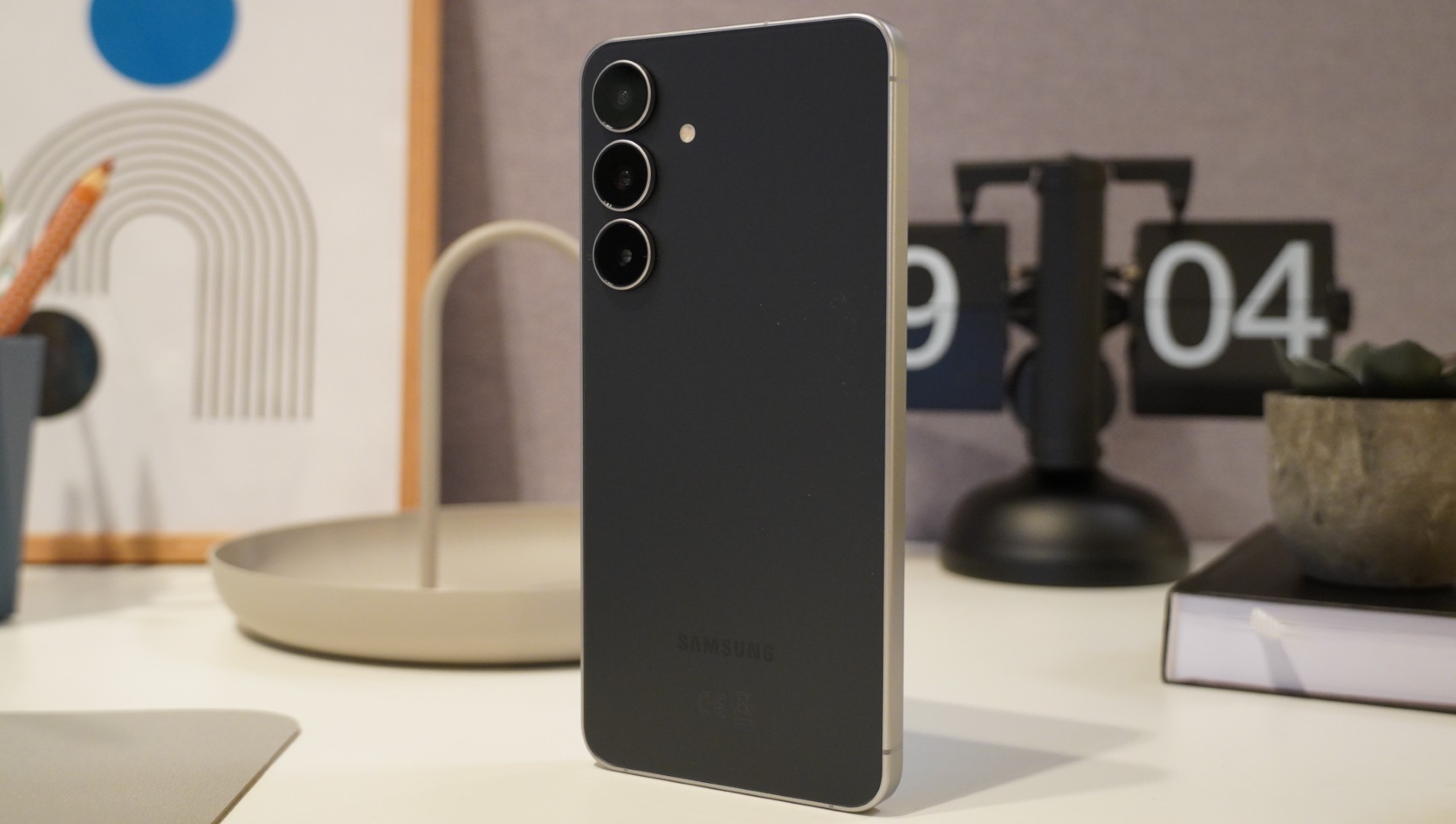
Samsung’s Galaxy S26 FE could be getting closer to launch after the phone appeared on the Google Play Console, adding another piece to the puzzle after its recent FCC certification.
The listing confirms the phone, identified as model SM-S741U, will be powered by Samsung’s Exynos 2500 chipset and paired with 8GB of RAM. It also lists a 1,080 x 2,340-pixel display. These match the specifications that leaked for the phone last week.
The Google Play Console listing also includes an image of the handset, although there’s no launch date attached to it just yet. However, leaked renders have already shown the Galaxy S26 FE in several colour options.
The latest appearance is notable because the S26 FE has now cleared both the FCC and Google Play Console, two fairly significant steps before a smartphone reaches consumers. That doesn’t confirm Samsung is about to launch it, but it does suggest the phone is moving through the necessary certification process.
Advertisement
Samsung’s previous Galaxy S25 FE arrived in September, so anyone waiting for the S26 FE may still have a few weeks to go at the very least.
Advertisement
The same Google Play Console listing also gives us an early look at two cheaper Galaxy phones. The Galaxy A08 (SM-A085F) is listed with MediaTek’s Helio G99, an LTE-only chip already used in the Galaxy A07 4G. Interestingly, the listing says the A08 can have up to 8GB of RAM. Its display resolution is 720 x 1,600 pixels.
The Galaxy A07s (SM-A077M) also uses the Helio G99, but is listed with 4GB of RAM and the same 720 x 1,600-pixel resolution.
Advertisement
Samsung launched the Galaxy A07 4G in late August last year, so the A08 and A07s could be approaching their own launches. For now, though, the Galaxy S26 FE is the more interesting of the three. Its Exynos 2500, 8GB of RAM and higher-resolution display point to a more capable mid-range phone.
Microsoft has reminded customers that systems running Home and Pro editions of Windows 11 24H2 will stop receiving updates in two months.
“On October 13, 2026, Windows 11, version 24H2 Home and Pro editions, and Windows 10 Enterprise LTSB 2016 will reach end of updates,” Microsoft warned in a message center update.
“After this date, devices running these editions will no longer receive monthly security and non-security preview updates containing protections from the latest security threats.”
However, according to its support website, Windows 11 24H2 Enterprise and Education editions will remain under mainstream support until October 2027.
Customers are advised to upgrade to Windows 11 25H2 (also known as the Windows 11 2025 Update), which has become generally available in September 2024 as a minor update installed through an enablement package.
Advertisement
Microsoft added that devices running Windows 11 24H2 Home and Pro that aren’t managed by IT departments will automatically upgrade to Windows 11 25H2. However, customers can still choose when to restart or postpone the update.
“If you have an eligible Windows 10 or Windows 11 device, you can check whether the update is available by selecting Settings > Windows Update and selecting Check for updates. If your device is ready for the update, you’ll see the option to Download and install Windows 11, version 25H2,” it said.
More recently, it announced that Windows Server 2022 is also rapidly approaching its mainstream end-of-support date of October 2026, when it will switch to extended support to continue receiving security updates through October 14, 2031.
Overall prevention scores can hide what happens after initial access. Once attackers are using valid credentials, prevention drops sharply.
The Blue Report 2026 measures defenses technique by technique across 338 million simulations run in customer production environments.





































































You must be logged in to post a comment Login