
Related: Amanda Batula Said West Wasn’t ‘Marriage Material’ for Ciara Before Romance
Advertisement


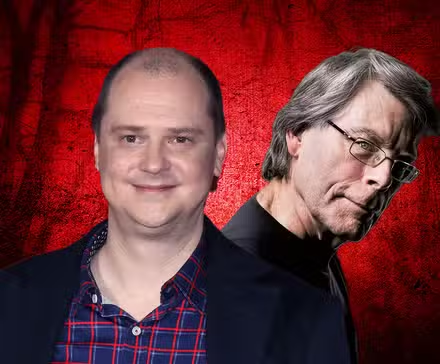
Stephen King is one of the most well-known and acclaimed authors of all time — so much so, in fact, that he’s been deemed the King of Horror on more than one occasion. His novels have been adapted into some of the horror genre’s most influential films, such as Carrie, The Shining, and Misery. His novels are still being adapted today, whether it be for movies or television, but there was one story in particular that he held onto for years, and that’s Lisey’s Story. But the time finally came when King felt ready to adapt the novel, and it was due in part to Ryan Murphy.
Lisey’s Story was published in 2006, but it wasn’t until 2021 that the novel finally earned an adaptation — though not from a lack of interest, as King has repeatedly said that it is his personal favorite of the novels he has written, and even expressed interest in Lisey’s Story being adapted into a TV series back in 2017. The story follows Lisey Landon (Julianne Moore), the widow of a novelist, who is plagued by repressed memories that connect back to her husband’s death.
King previously divulged that the idea for Lisey’s Story came to him after a bad case of pneumonia sent him to the hospital. While he was there, his wife, Tabitha King, decided to redecorate his office. When he came home and saw all his books and other belongings in boxes, he had a startling vision of what his office would look like upon his death.

Mike Flanagan Is Turning Another Stephen King Favorite Into a TV Series
Get the corn syrup and red dye ready.
Given that Lisey’s Story is King’s personal favorite novel, that love made it difficult for him to agree to let anyone adapt it for the screen. In an interview with Entertainment Weekly, the author revealed that he was actually inspired by the second season of Ryan Murphy’s American Crime Story anthology series, The Assassination of Gianni Versace:
“I saw this thing on FX that was about the fashion designer Versace and about the man who killed him. And I had not really thought about getting involved with Lisey at that point or tackling it as a TV project, but I looked at that thing, and I said to myself, my goodness, this guy, Tom Rob Smith, wrote the whole thing. He wrote all eight or nine episodes, and I thought, well, if he could do that and bring it home and do such a great job, what about Lisey? And I sat down, and I started, and I showed the scripts to Ben Stephenson at Bad Robot one by one, and he was very encouraging. So the scripts got done, and everything else followed from that.”
According to King, something else that inspired him to tackle his own small-screen adaptation of Lisey’s Story was the changes introduced by streaming TV. “You have a chance to do more,” he said. “You can be a little more graphic with language and with sexual situations and with length, just the chance to do something that has that kind of spread, texture, and a little more nuance. For guys like me, it’s been great.”
Alongside the possibility of a longer format with multiple episodes (anyone who has read the author knows how long-winded he can be, so it’s no wonder that TV held appeal), King admitted he was able to make some necessary updates to Lisey’s Story, looking at the book through different eyes after 15 years, which enabled him to streamline the plot or cut characters that were unnecessary for the screen version. A Stephen King adaptation is always exciting, but Lisey’s Story was one that fans had been especially eager to see brought to life. So, thanks, Ryan Murphy (and American Crime Story), Stephen King might not have done it without you.
Isn’t it so annoying when crime thrillers promise everything and end up delivering nothing? High stakes and shocking twists sound great until one realizes that the actual story starts collapsing under all that. A good crime thriller, that’s why, has to strike a very delicate balance. Twists and turns can only take things so far if the characters feel one-dimensional or if the beats of the story don’t add up.
That’s because shock value might grab attention, but it can never sustain it, and the sooner showrunners understand that, the better. For every half-baked story, though, plenty of others get things exactly right. This is a list of such crime thriller shows that come dangerously close to perfection.

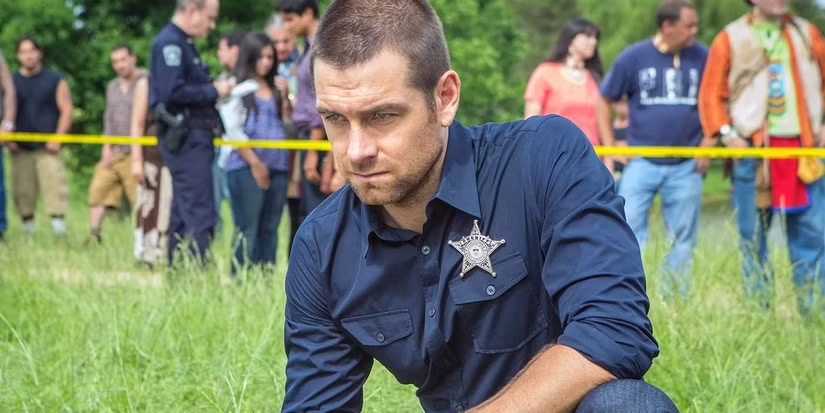
Banshee is a crime thriller that embraces chaos like no other. The series takes place in the fictional town of Banshee in Pennsylvania, where a recently released master thief (Antony Starr) assumes the identity of a murdered sheriff named Lucas Hood. The story revolves around Hood trying to keep up the charade while secretly continuing his criminal life. Most people would assume that these stakes are high enough for the show to create a sense of tension. However, Banshee keeps expanding its central conflict by introducing new characters, including the ex-Amish crime lord Kai Proctor (Ulrich Thomsen), along with Hood’s partners Job (Hoon Lee) and Sugar Bates (Frankie Faison).
Every season features new threats, while the town serves as a pressure cooker of violence that can explode at any moment. Banshee fully commits to its over-the-top premise and is packed with brutal hand-to-hand fight sequences, intense shootouts, and pulpy storytelling. The show can feel ridiculous at times, but it never stops being entertaining thanks to the depth it gives to its characters and their relationships. The series is one of TV’s most underrated crime thrillers and remains a true hidden gem.

Top of the Lake is the definition of quality TV. The story begins with the disturbing disappearance of a 12-year-old girl who is revealed to be pregnant in the opening moments of the show. Elisabeth Moss stars as Detective Robin Griffin, who becomes entangled in the investigation while she is in town to visit her dying mother. She believes that this will be yet another missing-person case, but little does she know that it will quickly unravel into something much darker. Top of the Lake is a slow-burning psychological drama that constantly plays with the audience’s expectations.
The investigation takes its sweet time to unfold and exposes complex systems of power and misogyny that exist within this community. The deeper Robin digs, the more the case becomes intertwined with her own unresolved trauma. Top of the Lake strikes the perfect balance between layered character work and a mystery that keeps getting increasingly addictive. In Season 2, the story moves to Sydney and continues Robin’s journey several years later. However, the show never lets go of its willingness to explore difficult themes. This isn’t a conventional thriller series by any means, but one that forces the audience to question their own role in systemic injustice.

Rubicon deserves way more appreciation than it gets. The political thriller follows intelligence analyst Will Travers (James Badge Dale), who works at the shadowy New York-based organization called the American Policy Institute (API). The story picks up when Will’s mentor and father-in-law dies in what appears to be a staged accident, and Will knows he needs to get to the bottom of what really happened. However, what pulls him deeper is a pattern hidden across crossword puzzles in multiple newspapers. At first, Will thinks it’s a coincidence, but when he begins to connect the dots, he realizes that the mystery is far more complex than he initially thought. All of a sudden, he suspects he is being watched and notices small inconsistencies in his everyday interactions.
Rubicon breaks away from the typical thriller beats by slowing the narrative down. Most of the action in the story happens in offices through conversations, data, and Will’s personal analysis of the situation. However, that pace only adds to the show’s constant sense of uncertainty. Rubicon thrives on this ambiguity, where the audience and Will don’t know who to fully trust. The show taps into the very specific fear of being exploited by those in power, and that’s exactly what makes its central conspiracy feel so plausible. Unfortunately, Rubicon was canceled after Season 1 before it could give its characters the long-term arcs they deserved. Even then, though, the show is a must-watch for anyone looking for sharp writing and a compelling mystery.

Mare of Easttown might be a miniseries, but it feels more complete than several long-running shows that lose the plot after the first few seasons. The crime thriller follows Detective Marianne “Mare” Sheehan (Kate Winslet), a local hero whose life is falling apart right when a teenage mother is found murdered, while another young girl remains missing. Mare is then forced to confront a complicated case as the town both relies on her and constantly questions her competence. What makes Mare of Easttown so special is how it connects the detective’s personal and professional lives. As her investigation deepens, she is forced to confront her friends, family, and neighbors to find answers.
All of this unfolds as Marianne copes with the suicide of her son, deals with an increasingly strained relationship with her daughter, and is involved in a custody battle over her grandson. The case is yet another factor that contributes to her downward spiral and makes the story feel emotionally heavy. The fact that nearly everyone is connected to the murder in one way or another makes the whole thing all the more unsettling. Mare of Easttown is a masterclass in building suspense and delivering payoffs that are actually worth the patience. By the end, the show is no longer a whodunit. Instead, it tells a much more complex story about loss and community.

Dexter flips the crime thriller formula on its head by making the audience root for the bad guy. The series is set in Miami and follows Dexter Morgan (Michael C. Hall), a forensic analyst by day and vigilante serial killer by night. The show revolves around this constant balancing act as Decter juggles his jobs and relationships while also targeting murderers who have escaped justice with chilling precision. The show could have easily leaned into the shock value of it all. However, it chooses to focus on Dexter’s psyche and how his life begins to unravel over time. Each season introduces a new adversary for the protagonist, but what’s interesting is how these killers mirror him in different ways.
The show moves smoothly between Dexter’s complicated personal relationships, especially his sister Debra (Jennifer Carpenter), who unknowingly gets close to the truth. Dexter is especially compelling in how it forces the audience into an uncomfortable position. Dexter’s internal monologue pulls viewers deeper into his mind, and that moral conflict becomes the driving force of the story. There’s no denying that the show really shines in its first few seasons compared to its later installments. Despite that, though, it still remains one of the most iconic crime thrillers of its time.

The Killing is the kind of crime drama that creates tension through its setting. The show takes place in a constantly rainy Seattle and follows homicide detectives Sarah Linden (Mireille Enos) and Stephen Holder (Joel Kinnaman) as they investigate the murder of a teenager. The case seems pretty straightforward initially, before it slowly expands into a complicated web of political conspiracies, dark secrets, and a never-ending list of suspects. However, the story isn’t a standard procedural. It focuses just as much on the victim’s family as they deal with grief, along with the detectives and the cost of their jobs.
The show doesn’t want to give the audience quick answers because the entire point is to sit with that unsettling feeling of not knowing what comes next. The Killing is committed to realism and explores the far-reaching consequences of crime. Not to mention that it doesn’t present Linden and Holder as typical heroes who swoop in to save the day. The fact that they are flawed and often make questionable decisions out of desperation only adds to the believability of it all. The Killing isn’t always comforting or even satisfying in its resolutions, but that’s exactly why it stays with the audience long after the credits roll.

Ozark is essentially a show about how one bad decision can spiral into a lifetime of consequences. The series follows financial advisor Marty Byrde (Jason Bateman), who is forced to relocate his family from Chicago to the Lake of the Ozarks after a money-laundering scheme for a Mexican drug cartel goes horribly wrong. However, this survival attempt quickly takes a dangerous turn as Marty and his wife Wendy (Laura Linney) find themselves involved with local crime families while also staying under constant pressure from cartel leaders and the FBI.
The narrative puts the characters and the audience in a world where the threats and betrayals just keep getting worse. Marty and Wendy are forced to adapt almost constantly, and that drives the plot forward. Wendy’s journey, in particular, is one of the highlights of the show because she starts operating out of fear that slowly turns into ambition and a ruthless power for hunger. Ozark is a complex show with no easy heroes or villains. It’s rooted in relatable family dynamics but takes those emotions a step further by exploring the psychological toll of crime.

Quarry is a crime thriller that does everything right, so it’s unfortunate that it slipped under the radar. The series is set in 1972 and follows Mac Conway (Logan Marshall-Green), a Marine returning home to Memphis after serving in Vietnam. However, instead of being welcomed back, Mac finds himself ostracized due to his rumored involvement in a wartime massacre. As he struggles to reintegrate into civilian life, Mac is approached by a mysterious figure known as The Broker, who recruits him into a network of contract killers operating along the Mississippi River.
Each job drags Mac into a world where morality is blurred, and soon enough, he is trapped in a web of violence, corruption, and manipulation with no way out. The show isn’t driven by constant action because it focuses more on the slow yet inevitable unraveling of the protagonist. The show was canceled after just one season, but despite its short run, it feels complete in its vision and execution. Quarry’s strong writing and immersive period detail are a masterclass in storytelling and deserve a lot more applause than they get.

Gomorrah is a story about pure evil. The crime thriller is set in Naples and follows Ciro Di Marzio (Marco D’Amore), a loyal member of the powerful Savastano clan, led by ruthless boss Pietro Savastano (Fortunato Cerlino). However, when Pietro is arrested, the entire power structure begins to collapse and triggers a brutal internal conflict between the old guard and the next generation led by his son, Gennaro “Genny” Savastano (Salvatore Esposito). Ciro finds himself constantly choosing between loyalty and power as alliances shift and members of the clan start betraying each other. However, it’s interesting that the show manages to portray all this chaos without ever romanticizing crime.
Gomorrah makes it a point to convey that it’s a show about flawed people operating in a system that is practically built on violence. The writing constantly subverts expectations, and none of the characters are given any plot armor. This constant sense of unpredictability drives the story forward and keeps the viewers hooked till the very end. The best part about Gomorrah is how lived-in and authentic the show feels. The narrative builds tension organically instead of relying on spectacle, and that elevates Gomorrah from another typical crime story to an unsettling exploration of power.

Mindhunter is a crime thriller that traded action for psychology, a gamble that definitely paid off. The show is set in the late 1970s and follows FBI agents Holden Ford (Jonathan Groff) and Bill Tench (Holt McCallany), along with psychologist Wendy Carr (Anna Torv), who interview imprisoned serial killers in an attempt to understand their behavior and use those findings to solve active cases. The exercise soon takes a dark turn as the detectives become increasingly immersed in these conversations and start to mirror the same manipulative tendencies that they are studying in all these killers. Their personal lives begin to intersect with the emotional toll of their work, and that’s where the emotional weight of the show comes from.
The interviews, of course, are the highlight of the show. They feel less like conversations and more like psychological chess matches where both parties are constantly sizing each other up. The show portrays real-life serial killers, including Edmund Kemper (Cameron Britton) and Jerry Brudos (Happy Anderson), with chilling precision, which adds a layer of authenticity to the story. Mindhunter is the perfect example of a show that is meticulous in its storytelling. Its slow-burn approach might feel a little too restrained at first, but it’s exactly what pulls the audience into this unsettling world.

2017 – 2019
Netflix
Joe Penhall
David Fincher, Carl Franklin, Andrew Dominik, Andrew Douglas, Asif Kapadia, Tobias Lindholm

Katherine Schwarzenegger is facing pushback over her latest comments about her husband, Chris Pratt.
Schwarzenegger, 36, sparked an unexpected social media debate on Tuesday, March 31, while thanking her “golden retriever husband” Pratt, 46, for building a dollhouse by hand for their children. (The couple share daughters Lyla Maria, 5 and Eloise Christina, 3, and son Ford Fitzgerald, 16 months. Katherine is also a stepmom to Pratt and ex-wife Anna Faris’ son, Jack.)
“I’ll never understand when women say, ‘I don’t need my husband,’ when I very much in fact do need my husband because who else would build our daughters a doll house,” she wrote via Instagram.
Fans debated her post in the comment section, with numerous people insisting that there was underlying — and likely inadvertent — sexism in her suggestion that a man was needed to build a child’s dollhouse. One Instagram user went so far as to call out the post’s “Handmaid’s Tale vibes.”
“Wives and women can build doll houses, too,” one person pointed out, with another adding, “My 70 year old mother builds things for grandkids. This is not specific to men.”
Yet another user argued, “Unfortunately, we [women] say that [we don’t need husbands] because we get tired of waiting for them to do the project. Which then forces us to just do it.”
Others defended Schwarzenegger’s intentions with the post, with a user insisting, “Omg these comments are ridiculous. 🙄 What a sweet thing he is doing that his daughters will remember forever.”
“Let’s be honest, he could easily afford someone to do it for him. Kudos @prattprattpratt there’s a lot of love your daughter will feel when you do it yourself,” a commenter pointed out.
Us Weekly has reached out to Schwarzenegger’s spokesperson for comment.
Schwarzenegger has frequently discussed her and Pratt’s parenting style since they tied the knot in 2019. Speaking exclusively to Us Weekly in September 2025, she revealed that the couple try to get “back to the roots” of their ‘90s childhoods by limiting the use of electronics in their house.
“I would say storytime is a really great part of our parenting journey,” she told Us. “We don’t really do a lot of electronic stuff in our house. So, we try to have our kids be outdoors and be creative and really kind of go back to the roots of how we all grew up.”
The author added, “Storytime and book reading is such a big part of our daily routine every single day. Our kids want to read books morning, noon and night. And I feel really like this is such a sweet time that you know your kid comes up to you and says, ‘Can you read me a story? Can you read me a story?’ So, I’m really excited just being in that space now as a mom.”
Katherine was born and raised in Los Angeles by her parents, action movie icon Arnold Schwarzenegger and journalist Maria Shriver. However, Katherine has refused to rule out moving her family out of Hollywood someday.
“I can see myself moving anywhere that my mother, father and my siblings would also move with my husband and I and my children,” she told Fox News Digital in November 2025. “So wherever that is, we can have a team huddle and all decide collectively where we’d like to go.”


She continued, “I’d like to go anywhere where we can just be around a lot of animals, me personally. But I feel like I can get that fix sprinkled in with having my home base be around my family.”
“Because there’s nothing that is more important to me than being able to be in close proximity to my parents and to my siblings,” she concluded. “And to be able to have that for our children is such a huge blessing and a gift. A gift that I can’t get anywhere else.”
Katherine is one of the former California governor’s five children. Arnold shares four — Katherine, Christina, Patrick and Christopher — with ex-wife Shriver and son Joseph Baena with Mildred Baena.
2026 has been a big year already for Cillian Murphy, who made his long-awaited Peaky Blinders return in the Netflix sequel film, The Immortal Man. Murphy has officially been playing Tommy Shelby for over 10 years now, and while the ending of The Immortal Man seems as if he’s ready to leave the role behind, it’s impossible to rule out a return further down the line. Murphy is still one of the hottest names in Hollywood right now, thanks to his first Oscar win for his performance in Oppenheimer. This Christopher Nolan-directed WWII epic collected some serious hardware at the 2024 Academy Awards. Murphy has starred in numerous big projects over the years, but one of his most underrated films came out in 2019, when he featured in the underseen action movie Anna.
Written and directed by Luc Besson, Anna co-stars Helen Mirren, Luke Evans, and Sasha Luss. The film tells the story of Anna Poliatova, a woman with striking beauty who becomes one of the most deadly assassins in the world. Anna has understandably been compared to John Wick, and while the stellar action makes this an apt comparison, its plot is much more similar to Charlize Theron’s Atomic Blonde. Anna has a few streaming homes in America, but it’s primarily available to watch on Prime Video. It’s also streaming for free on the Roku Channel, which can be watched by anyone, even without an account. However, in international markets, Anna is streaming on Starz, where it’s become one of the top 10 most popular movies in several countries. It’s also a VOD hit on Apple TV as one of the platform’s biggest purchases.

Remembering the Icons of Television — Collider TV Quiz
These television artists were posthumously recognized for their work, and the awards they received were testaments to their lasting legacies.
Cillian Murphy is in the middle of filming his new prison drama right now, which will be directed by Damien Chazelle. The first look at images of Murphy on set surfaced online last week. It will also star Daniel Craig. Murphy has also been tapped to reprise his role as Emmett in A Quiet Place Part III, which will be released in theaters everywhere next summer. Director John Krasinski recently shared the first-look photo from behind the scenes of the film, which is now in production ahead of its July 30, 2027, premiere date.
Check out Anna on Prime Video or the Roku Channel in America, and stay tuned to Collider for more streaming updates and coverage of Murphy’s future projects.

June 21, 2019
118 Minutes
Luc Besson
Luc Besson
Of the many actors to find success in this decade, the world seems most pleased about the recent triumph of Brendan Fraser. Lovingly dubbed the “Brennaissance” by his millions of fans, Fraser finally reached the summit of his emotional return to Hollywood in 2023, when he won the Academy Award for Best Actor, in his first nomination no less, for his starring turn in The Whale. Not one to rest on his laurels, Fraser has since turned in several great performances, including an underrated tearjerker in Rental Family.
Now, he is capping this incredible few years off with a return to the franchise that proved a breakthrough for him as a blockbuster leading star. Returning alongside Rachel Weisz and John Hannah, Fraser will star in a new installment in the cult classic The Mummy franchise. Directed by Radio Silence duo Tyler Gillett and Matt Bettinelli-Olpin, the pair behind 2024’s Abigail, the film is scheduled for a May 19, 2028, release date. It will serve as a sequel to 2001’s The Mummy Returns, and will ignore 2008’s The Mummy: Tomb of the Dragon Emperor.
With excitement running high as fans guess what another Mummy movie might involve, it seems many are returning to the film that started it all to get them in the mood. At the time of writing, 1999’s The Mummy is one of the most-watched movies on Hulu in the U.S. Directed by Stephen Sommers, this fast-paced fantasy adventure drew a mixed response from critics at the time, illustrated by a middling 63% score on review aggregator Rotten Tomatoes, with the consensus on the site reading, “It’s difficult to make a persuasive argument for The Mummy as any kind of meaningful cinematic achievement, but it’s undeniably fun to watch.”
Remembering the Icons of Television — Collider TV Quiz
These television artists were posthumously recognized for their work, and the awards they received were testaments to their lasting legacies.

Against a reported budget of $80 million, The Mummy defied a mixed critical reception with a huge global haul of $418 million. Split between $157 million in domestic revenue and a further $261 million from overseas markets, the film recently added to its total in 2024, when it returned to theaters for its 25th anniversary. A synopsis reads:
“The Mummy is a rousing, suspenseful and horrifying epic about an expedition of treasure-seeking explorers in the Sahara Desert in 1925. Stumbling upon an ancient tomb, the hunters unwittingly set loose a 3,000-year-old legacy of terror, which is embodied in the vengeful reincarnation of an Egyptian priest who had been sentenced to an eternity as one of the living dead.”
The Mummy is streaming on Hulu. Make sure to stay tuned to Collider for more streaming news.

May 7, 1999
124 minutes
James Jacks, Sean Daniel
From star-studded moments in Beverly Hills celebrating a captivating new fragrance from Christian Dior Parfums — crafted by Dior perfume creation director Francis Kurkdjian — to a hydrating, skin-smoothing formula from Marini SkinSolutions, this Hot Stuff roundup covers all the bases. Think: buzzy beauty events, noteworthy clothing store openings and standout launches that deserve a spot in your spring routine.
On the social scene, Joe’s Jeans — alongside creative director and celebrity stylist Dani Michelle — toasted the opening of its flagship store in Beverly Hills. The celebration drew a stylish crowd, including Stassi Schroeder, Rocky Barnes and Dr. Deepika Chopra, among others.
Beyond fragrances, several personal care standouts have also caught our attention. A clean, volume-boosting mascara from Sweed — used on Gisele Bündchen by makeup artist Jenna Anton — is quickly becoming a must-have.
Keep scrolling to check out what else is on our radar lately:
:max_bytes(150000):strip_icc():format(jpeg)/Hamza-Ripley-Abdallah-Jack-Tarlton-Gary-Lamont-Sam-Heughan-040226-971ee5015c1a499a98484596070ba55e.jpg)
And one man may not walk again.
Some thrillers vanish so quietly that even an A-list lead can’t stop them from slipping through the cracks. That’s pretty much what happened with Night Hunter, the grim 2018 crime thriller led by Henry Cavill. It never became much of a mainstream talking point, but streaming has a habit of rescuing exactly this kind of movie. Now Paramount+ viewers are giving it the sort of attention it missed the first time around.
The film has been charting on Paramount+ and was recently highlighted as one of the platform’s stronger-performing movie titles. Its ranking has moved around, but the bigger point is that it’s clearly being rediscovered. That’s not too hard to understand. Dark serial-killer thrillers tend to do well at home, and Cavill’s name gives the movie a fresh hook for viewers scrolling past it now.
The cast includes Cavill as Marshall, Ben Kingsley as Cooper, and Alexandra Daddario as Rachel. It’s a nasty, twisty movie with a much bleaker edge than some fans might expect from Cavill. But that’s also why it’s working as a sleeper hit. Paramount+ subscribers are clearly in the mood for something dark, and Night Hunter is benefiting from that.

Remembering the Icons of Film — Collider Movie Quiz
We pay tribute to the talents who helped define Hollywood.
Simon Abrams of RogerEbert.com stated that Night Hunter is the kind of thriller that thinks being darker automatically makes it deeper. The film throws viewers into a nasty story about a serial killer, broken cops, and vigilantes, but instead of feeling tense or smart, it mostly feels ugly and exhausting. It wants to explore moral gray areas, but its version of that is mostly just making everyone unpleasant.
“The most annoying thing about a movie that’s simultaneously as preachy and grim as Night Hunter isn’t that it’s ideologically repugnant, but that it’s also dramatically inert and actively unpleasant. I, myself, am a Stanley Tucci man (he is money in the bank, except maybe in the Hunger Games movies), but even I cringed when he, as the stereotypically overworked Commish, tries to take a swing at Simon (That guy killed a half dozen of my guys, and some had families!). Testing the limits of good taste in otherwise formulaic grimdark entertainment is one thing, but pushing against those boundaries for its own sake is just tiresome.”
Night Hunter is streaming now.

August 29, 2019
95 minutes
David Raymond
Kevin Scott Frakes, Nadine de Barros, Larry Harding, Nasrat Muzayyin, Zorin Finkelsen, Francesca Dutton, James Lancaster, Mitesh Parikh, Niraj Parikh, Gaurav Talwar, Pulak Parikh, Rob Wood, Mark Catton, Rick Dugdale, Sundip K. Bhundia, Steven Ashley, Peter Aitken, James Milligan, Chris Pettit, Alastair Burlingham, Buddy Patrick, Robert Ogden Barnum, Dave Hansen, Tony Parker
:max_bytes(150000):strip_icc():format(jpeg)/RuPaul-Misua-040326-7228dfd2efcb434f822abd490882cb65.jpg)
Misua was set to appear on an upcoming season of the franchise: “We are heartbroken.”
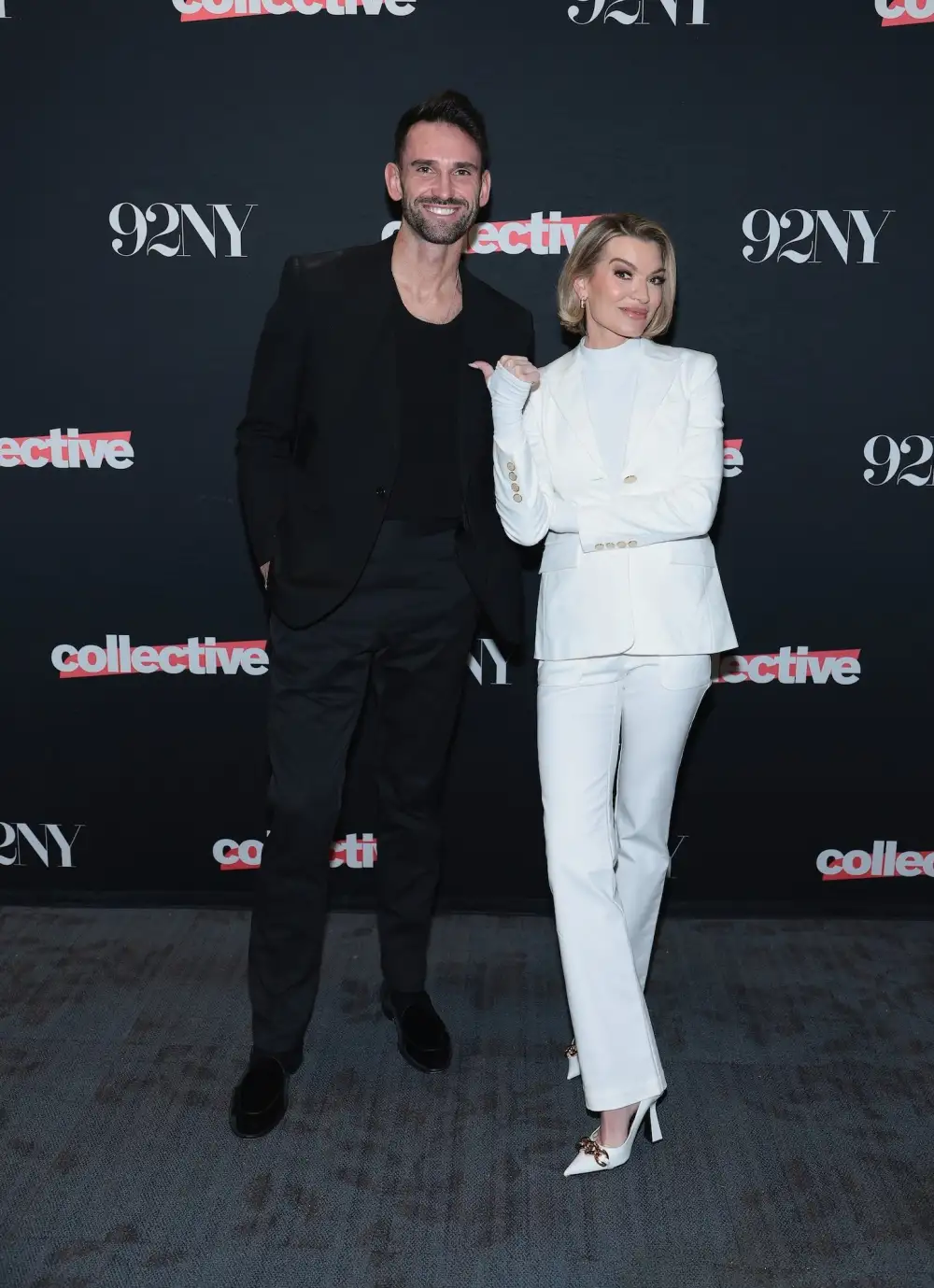
Lindsay Hubbard has taken a big step forward with her ex-fiancé Carl Radke amid all of the drama within the Summer House cast.
Lindsay, 39, and Carl, 41, teamed up for an Uber Eats campaign on Saturday, April 4, poking fun at the shocking fallout of Summer House costars Amanda Batula and West Wilson confirming that they are dating.
The clip plays into Amanda’s estranged husband Kyle Cooke telling a reporter this week that “Carl’s a mess” over the whole ordeal. The tongue-in-cheek ad sees Lindsay offering her former partner a tissue as he weeps over the big Summer House news.
“Is this [tissue] soft enough for you?” Lindsay asks while taking Carl’s hand.
The ad is full of Summer House Easter eggs, including a cameo appearance from Carl’s beloved zebra, Wesley Stripes.
“Can confirm, Carl is A MESS,” Lindsay joked in the caption.
As Summer House fans flooded her comment section, Lindsay revealed, “I unblocked him for this.”
The unblocking is a big step forward for the former couple since Carl confirmed to Us Weekly way back in February 2025 that Lindsay blocked him on all social media shortly after their split. (Carl announced he’d called off his wedding to Lindsay in September 2023.)

Carl Radke and Lindsay Hubbard in January 2026. Dimitrios Kambouris/Getty Images
“I’m blocked on social media, so I’ve kind of taken that as understood,” Carl revealed at the time. “[I’ve been] blocked since the breakup.”
Meanwhile, Amanda and West stunned the Bravoverse on Tuesday, March 31, by revealing that they are dating despite both repeatedly denying any romantic chemistry. (Amanda and estranged husband Kyle split in January after four years of marriage.)

Amanda Batula appeared to be adhering to “girl code” after Ciara Miller split from West Wilson — just months before Amanda confirmed she was dating West. Amanda, 34, exclusively told Us Weekly in January that she didn’t think West, 31, was “marriage material” — at least not for Ciara, 30. When asked whether West or […]
“We’ve seen the growing online speculation, so while this is still very new, we wanted to provide some clarity,” Amanda and West wrote in a joint statement. “It was never our intention to purposely hide anything. Given the complicated relationship dynamics involved and the scrutiny that comes with being on a reality show, we needed a little space to process things privately before speaking on it.”
They went on, “We’ve shown up for each other as friends over the years, through all the highs and lows, and what’s developed recently was the last thing either of us expected. Our connection grew out of a genuine, longstanding friendship, which made it especially important for us to approach this with care.”
“As our feelings evolved, we wanted to take time to understand exactly what we were feeling,” they added. “We also recognize that this has had an impact beyond just us and never wanted our actions to cause any hurt or be perceived as careless. We truly appreciate the understanding and respect as we navigate this.”
The news sent shockwaves through the Bravoverse — with Summer House cast members past and present, Andy Cohen and other Bravolebrities all weighing in.
While West’s former love interest Ciara Miller has yet to comment on the controversy, Kyle assured fans he was “good” during an interview on Wednesday, April 1.
“I appreciate people checking in. I’m actually really worried about Amanda, if I’m being honest,” he said. “I talked to [Amanda] last night, and I understand people have all sorts of opinions, and I’m not justifying any behavior, but, like, from what I’m seeing, she’s getting cyberbullied.”
He went on, “I just feel bad. Amanda knows that what she did was wrong, and she’s trying to come to terms with it, but she is not [doing] well.”
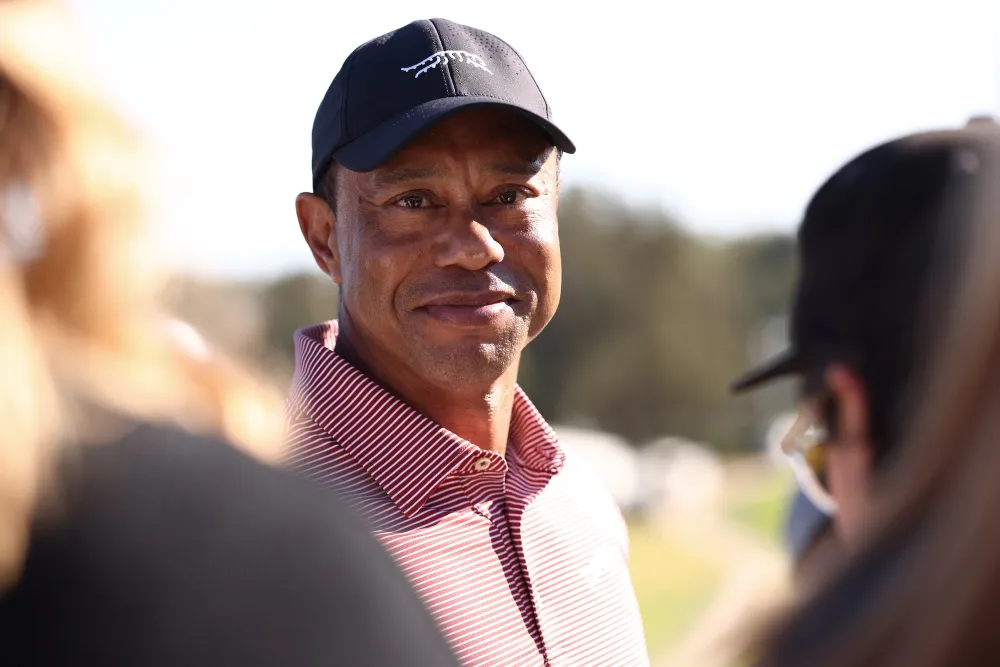
Tiger Woods’ private jet was seen landing in Switzerland on Friday, April 3, amid his DUI arrest and recent request for overseas treatment.
According to a report from USA Today, it was unclear if Woods himself was on the jet.
On Wednesday April 1, Woods’ request to travel outside of the United States for alleged treatment was approved by a judge.
In the request, Woods’ lawyer, Douglas Duncan, argued that the pro golfer has an “urgent need for a level of care that cannot safely or effectively be done within the United States,” according to court documents obtained by Us Weekly on Wednesday.
“Ongoing medical scrutiny and public exposure create significant barriers to his care and would result in setbacks and an inability to fully engage in treatment,” Duncan further claimed.
Woods, 50, was arrested on March 27 in Florida after he was involved in a rollover car accident. The golfer was subsequently charged with DUI, property damage and refusal to submit a lawful test.
Woods refused a urinalysis test when authorities arrived at the scene, according to authorities, but did submit to a breathalyzer test. The test resulted in triple zeros, suggesting Woods was not under the influence of alcohol at the time of the accident. Authorities allege Woods was under the influence of drugs, not alcohol.

PACIFIC PALISADES, CALIFORNIA – FEBRUARY 22: Tiger Woods looks on from the 18th green during the final round of The Genesis Invitational 2026 at Riviera Country Club on February 22, 2026 in Pacific Palisades, California. Mike Mulholland/Getty Images
An arrest affidavit obtained by Us Weekly revealed that Woods had two hydrocodone pills in his pocket and that he appeared “lethargic and slow,” with eyes that were “bloodshot and glassy” and “extremely dilated” pupils.
The golfer pleaded “not guilty” on March 31, the same day he announced he would be seeking treatment — though he did not specify what type of treatment.
“I know and understand the seriousness of the situation I find myself in today,” Woods said in a March 31 statement posted via X. “I am stepping away for a period of time to seek treatment and focus on my health. This is necessary in order for me to prioritize my well-being and work toward lasting recovery.”
He continued, “I’ve committed to taking the time needed to return in a healthier, stronger, and more focused place, both personally and professionally. I appreciate your understanding and support, and ask for privacy for my family, loved ones and myself at this time.”
On Thursday, April 2, Us obtained the bodycam footage from Woods’ arrest. The footage shows a police officer asking Woods if he has had any alcohol and what medications he had taken, before taking him through several tests.
Woods seemingly did not pass the tests to the officer’s liking.
The officer handcuffed Woods, saying, “At this time, I do believe your normal faculties are impaired and you’re under an unknown substance, so at this time, you are under arrest for DUI.”





Steven Gerrard disagrees with Gary Neville over ‘shock’ Chelsea and Arsenal claim | Football


No Jackpot Winner and $194 Million Prize Rolls Over


Weekend Open Thread: Spanx – Corporette.com
Fans slam 'heartbreaking' Barbie Dream Fest convention debacle with 'cardboard cutout' experience


Gold Price Prediction: Worst Month in 17 Years fo Save Haven Rock


The Pixel 10a doesn’t have a camera bump, and it’s great
Dems press CFTC, ethics board on prediction-market insider trades


Avatar Legends: The Fighting Game comes out in July and it looks pretty slick


Login and Checkout Issues Spark Merchant Frustration


India men’s 4x400m and mixed 4x100m relay teams register big progress | Other Sports News


Apple will hide your email address from apps and websites, but not cops


Tallest college basketball player ever, standing at 7-foot-9, entering transfer portal


EE TV is using AI to help you find something to watch


Should Trump Be Scared Strait?


Flipsnack and the shift toward motion-first business content with living visuals


Elon Musk’s last co-founder reportedly leaves xAI


The Best Spring Trends of 2026


How to back up your iPhone & iPad to your Mac before something goes wrong
Bitcoin’s Six-Month Losing Streak: What On-Chain Data Says About the Market’s Next Move


BBC slammed for ignoring author of The Fraud


You must be logged in to post a comment Login