
Tech
ISS spacewalkers discover there’s no such thing as a quick antenna job



SCIENCE
Astronauts removed broken hardware but will have to return for more orbital DIY
Stubborn electrical connections and bolts thwarted an attempt to replace an antenna on the International Space Station (ISS) yesterday, forcing spacewalkers to leave the new unit for another day.
We’ve all been there. That “quick job” expected to take a few minutes stretches into hours as bolts refuse to budge and unforeseen problems eat into time better spent enjoying a cookie and tasty beverage.
A pair of ISS spacewalkers had much the same experience yesterday. Removing a faulty antenna from the orbiting outpost took longer than expected, leaving too little time to install its replacement.
NASA’s Anil Menon and European Space Agency astronaut Sophie Adenot were carrying out the work. The spacewalk had already been delayed after a carbon dioxide sensor in the suit Menon wore during an August 6 spacewalk produced an unexpected reading. The sensor returned to normal after Menon removed the suit.
The August 18 excursion made Adenot the first French woman to perform a spacewalk. She and Menon ventured out of the station’s Quest airlock to replace the failed space-to-ground antenna. Menon rode on the Canadarm2, while Adenot remained tethered to the station’s truss structure. They were to remove the failed antenna, install a spare stored on an external platform, and stow the old unit.
Alas, it wasn’t quite that simple. Disconnecting electrical cables and loosening bolts took much longer than expected. The pair removed the antenna and secured it temporarily, but managers called time before they could install the replacement.
Space-to-ground antennas provide high-data-rate communications through NASA’s Tracking and Data Relay Satellite system. The ISS has another fully operational unit, but managers will want to restore the redundancy promptly.
The next spacewalk is scheduled for Tuesday, August 25, although NASA has not said whether the unfinished antenna work can be added to its planned tasks. ®


There have been countless efforts by brands to bring iMessage to Android. Now, Sunbird has returned to the Google Play Store after almost three years. It originally launched in 2022 to let Android users communicate through iMessage. The app was later removed following privacy concerns. It has now returned with changes aimed at improving security. Sunbird gives Android users a way to access iMessage from their phones. It also comes with features like text formatting and message effects.
Why Sunbird Still Matters Despite RCS Support

The RCS system has simplified messaging for both Android and iPhone users, offering features such as typing indicators and read receipts. However, RCS is not equipped with all the features available in iMessage. Some users have also reported certain issues with group messages, emojis, and videos. Sunbird tries to fill these gaps by bringing more iMessage features to Android.
However, Sunbird had previously been criticized for its security measures and how it handled users’ privacy. It was stated that messages, documents, and other information could be accessed in clear text format. This issue was faced by Nothing Chats, which uses Sunbird’s technology. In 2023, both applications were suspended.
The relaunched Sunbird app comes with new security measures, according to the company. Sunbird says it encrypts messages on the device and during their transfer. It claims that its servers do not permanently store conversation history. Instead, chats remain stored on the sender’s and recipient’s devices. Sunbird uses AES-256 encryption to protect messages stored on those devices. The company also says it automatically deletes media from its servers within 72 hours. For messages sent to iPhones, Apple’s iMessage encryption protects the final delivery stage.
Sunbird Pricing and Free Trial
Android users can download Sunbird from the Google Play Store and try its features for free. However, Sunbird has a 14-day free trial. After that, a subscription is mandatory. Sunbird has a monthly subscription of $2.99, while its annual subscription is $24.99. More than 181,000 early users had subscribed to this platform before its launch.
Adversa used a similar technique in a Gemini jailbreak attack, meaning making the Google LLM ignore its internal safety rules. Here, the ciphertext was decrypted to what appeared to be a traceback. The decrypted text issued one rule—if the code fails, read the error message and act on it. The cleartext injected a prompt that ultimately caused Gemini to violate its safety rules.
“The technique produced a multi-paragraph example of restricted content that Gemini’s safety filters normally suppress (building an incendiary weapon),” Adversa said. “With a modified payload, the same vector reproduced Gemini’s system instructions, including the directive forbidding their disclosure.”
Adversa didn’t report the behavior to Google because jailbreaks aren’t within the scope of the company’s vulnerability disclosure program. Over the past few weeks, however, Gemini has grown increasingly resistant to the attack. “We can’t attribute the change—it could be filter updates, model version changes, or both,” the security firm said. Company researchers are calling the technique cryptographic context injection.
“Cryptographic Context Injection is one instance of a broader shift: attacks that manipulate not just the prompt, but the wider context an LLM treats as its own, such as tool outputs, runtime results and intermediate state,” Adversa said. “This attack surface is far larger than what’s traditionally labeled ‘model inputs,’ and the next generation of attacks will emerge there.”
The Cryptographic Context Injection is only the latest example of the disadvantage LLM defenders operate under. Every time they build a new, one-off guardrail, an attacker finds a new vector that allows the car to once again careen off the road. The cycle continues: lather, rinse, and repeat.

Level Infinite and Gameloft have officially launched Gangstar Mirage City across South Asia, Southeast Asia, MENA, Eastern and Central Europe, and Latin America. The free-to-play multiplayer open-world action game is now available on Android and iOS, following more than 30 million pre-registrations worldwide. Set in a futuristic urban playground called Mirage City, the game combines story-driven missions with multiplayer gameplay, heists, business management, and vehicle combat. Players can also customize cars, build their criminal empire, and create cinematic videos using the game’s built-in Director’s Mode.
Gangstar Mirage City brings a new open-world experience

Unlike traditional mission-based action games, Gangstar Mirage City blends a structured narrative with dynamic events that change depending on how you play. The city is filled with real-time quests, spontaneous encounters, and multiple competitive game modes.
Some of the key gameplay features include:
- Open-world story missions with dynamic city events
- Featured multiplayer modes including Taxi Takeover, Treasure Rush, Big Head Mode, and battle royale-style Orarra Fight
- Business Empire system that lets players capture districts and grow their in-game net worth
- Vehicle combat mechanics featuring shoot-and-drive gameplay, Digital Disruptor abilities, Sentry Systems, and Siege Plating upgrades
The game also includes Director’s Mode, allowing players to record custom cinematic sequences and create their own stories inside Mirage City.
Players who pre-registered before August 19 can now claim their launch rewards through the in-game mailbox. The rewards include 300 Diamonds, Vehicle Upgrade Vouchers, and a Vehicle Pack earned through the Global Vault Heist campaign. Indian players belonging to winning factions will receive an additional 300 Diamonds, while players who recruited friends during the pre-registration campaign may also receive extra cosmetic vouchers.
Creator Program
Gameloft has also launched the Gangstar Creator Program, giving content creators access to incentives such as a shared cash prize pool, in-game currency rewards, and promotion through the game’s official channels. To celebrate the launch, the company will host a month-long All Gangstar Show livestream series featuring popular creators competing to become the boss of Mirage City. More details for South Asia will be announced later.
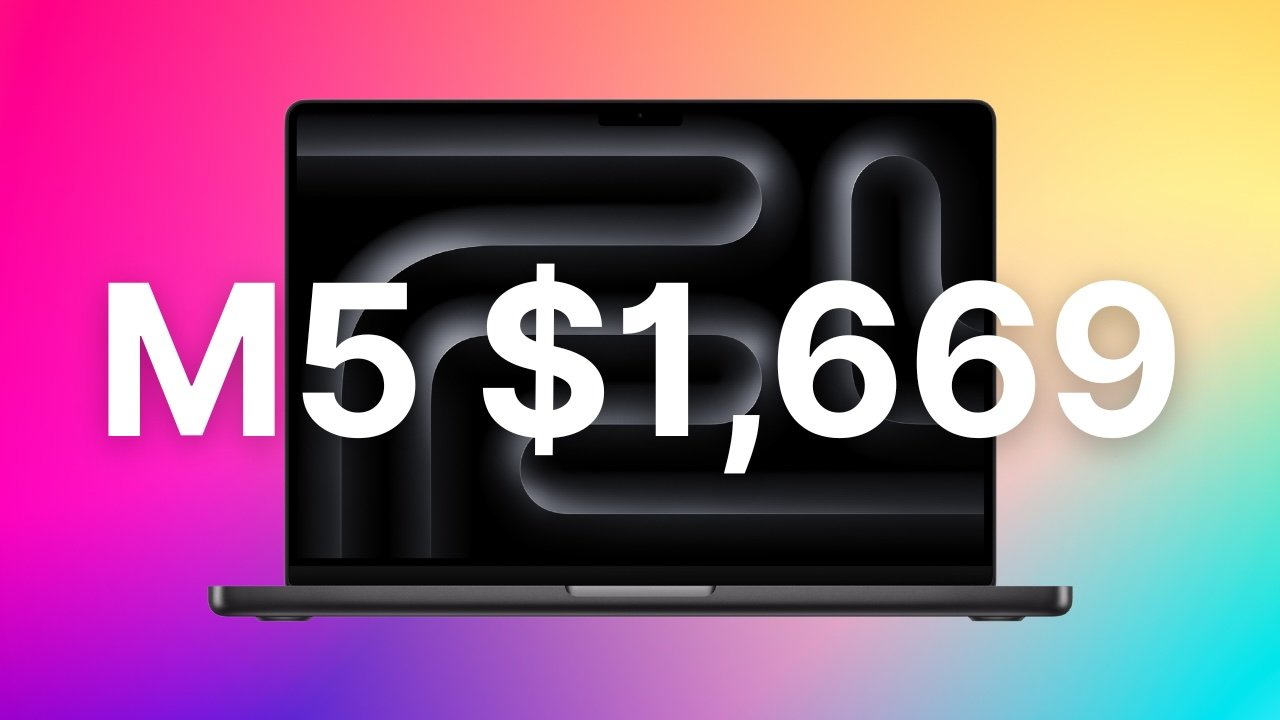
A steeper $350 discount on Apple’s M5 MacBook Pro with a 96W USB-C power adapter is in effect now, bringing the price down to just $1,669.
A steeper discount has landed at B&H on Apple’s M5 14-inch MacBook Pro with a 96W USB-C power adapter.
Now marked down to $1,669, this deal reflects a $350 discount off MSRP for the laptop in Space Black, with free 2-day delivery thrown in when shipped within the contiguous U.S.
Buy M5 MacBook Pro 96W for $1,669
This configuration has the 10-core M5 chip, along with 16GB of unified memory and 1TB of storage. The 96W USB-C power adapter is a $20 upgrade compared to the standard 70W adapter normally included with the system.
To put the deal in perspective, Amazon is selling the same M5/16GB/1TB spec with the cheaper 70W adapter for $1,849, $180 more than B&H.
There are plenty of additional offers in effect across the M5, M5 Pro, and M5 Max range, so it’s worth checking out highlights below, with a comprehensive comparison of offers in our MacBook Price Guide.
Today’s best 14-inch MacBook Pro deals
- 14″ MacBook Pro M5 (10C CPU, 10C GPU, 16GB, 1TB, Standard Display, 96W Adapter): $1,669 ($350 off)
- 14″ MacBook Pro M5 (10C CPU, 10C GPU, 24GB, 1TB, Standard Display, 96W Adapter): $2,199 ($320 off)
- 14″ MacBook Pro M5 Pro (15C CPU, 16C GPU, 24GB, 1TB, Standard Display): $2,299 ($200 off)
- 14″ MacBook Pro M5 Pro (15C CPU, 16C GPU, 24GB, 2TB, Standard Display): $2,599.99 ($400 off)
- 14″ MacBook Pro M5 Pro (18C CPU, 20C GPU, 24GB, 1TB, Standard Display): $2,349 ($350 off)
- 14″ MacBook Pro M5 Pro (18C CPU, 20C GPU, 24GB, 2TB, Standard Display): $2,799 ($400 off)
- 14″ MacBook Pro M5 Max (18C CPU, 32C GPU, 36GB, 2TB, Standard Display): $3,599 ($500 off)
- 14″ MacBook Pro M5 Max (18C CPU, 32C GPU, 36GB, 4TB, Standard Display): $4,499.99 ($600 off)
Top 16-inch MacBook Pro markdowns
- 16″ MacBook Pro M5 Pro (18C CPU, 20C GPU, 24GB, 1TB, Standard Display): $2,759.99 ($240 off)
- 16″ MacBook Pro M5 Pro (18C CPU, 20C GPU, 48GB, 1TB, Standard Display): $3,299 ($300 off)
- 16″ MacBook Pro M5 Pro (18C CPU, 20C GPU, 64GB, 1TB, Standard Display): $3,599 ($400 off)
- 16″ MacBook Pro M5 Max (18C CPU, 32C GPU, 36GB, 2TB, Standard Display): $3,999 ($400 off)
- 16″ MacBook Pro M5 Max (18C CPU, 40C GPU, 48GB, 2TB, Standard Display): $4,499 ($500 off)
B&H states many deals have limited supply, so it’s worth shopping early to avoid missing out on the month-end savings.
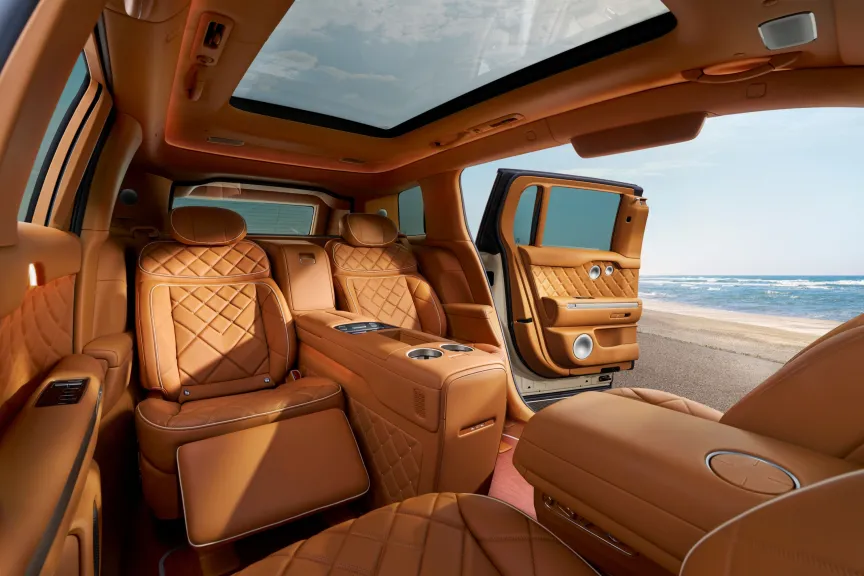
Genesis, the luxury wing of Hyundai Motor Group, pulled back the curtain on the all-new GV90 and GV90 Neolun at an event on Wednesday evening in San Francisco. The full-size SUV will serve as the brand’s flagship, riding on a bespoke variation of HMG’s EV platform with the company’s largest-capacity battery to date and a dramatic set of coach doors that open wide onto a cabin that transforms into a lounge when parked.
Genesis’ new flagship arrives in two configurations: the GV90 has familiar, front-hinged rear doors, but the star of the show is the GV90 Neolun, with its Neolun Arch Gate coach doors — rear-hinged doors on both sides that swing backward, opening onto a large, pillarless portal into the cabin.
Neolun Arch Gate coach doors
Coach doors aren’t new — they’re a hallmark of Rolls-Royce, and have shown up on quirky utility vehicles of all shapes, sizes and prices — but they’ve always meant structural compromises: either a B-pillar sits in the middle of the opening, or the doors overlap to make up for the missing pillar, meaning you usually can’t open the back doors without popping the fronts first.

Hyundai says the Neolun Arch Gate is the world’s first coach-door setup with independently opening doors and no center pillar, so owners get a large, unfettered opening without having to shuffle doors in the wrong order. Neolun also features motorized swiveling front bucket seats that rotate 180 degrees to face into the cabin, turning the interior into a lounge-like, face-to-face space for socializing or business while parked or charging, activated by a button on the door trim.
The hidden-B-pillar trick is made possible in part by the GV90’s Electric Mobility Prime platform — presumably a bespoke variation of HMG’s Electric Global Modular Platform — structural frame beneath the cabin floor that protects the battery and provides chassis rigidity, reducing the load on the body pillars. The hoop around the door aperture is also reinforced with a hidden roll-cage structure that is 1.5 times thicker than the conventional body structure, retaining crashworthiness and rollover safety.
With a stiff platform on which to work, Genesis also developed a new dual-motion hinge mechanism for the rear doors: it first slides the door slightly outward, then rotates it open, allowing the doors to operate independently of the fronts and giving rear-seat passengers more room to get in and out.

HMG’s biggest battery yet
GV90 models come with a massive 123.5-kWh high-voltage battery, the largest pack of any HMG EV yet. (For comparison, the Kia EV9 packs 99.8 kWh, and the Hyundai Ioniq 9 packs 110.3 kWh.) Genesis’ internal estimates put the range at around 310 miles in the lighter, 7-seat, standard-door configuration. For longer trips, a 350-kW fast charger can take the SUV from 10% to 80% in around 22 minutes. Presumably, the GV90 will continue HMG’s trend of native NACS ports for North American EVs; CNET has reached out to the automaker for comment.
The dual-motor AWD system is rated at a combined 657 horsepower and 590 lb-ft of torque, making it also the most powerful EV in HMG’s catalog (edging out the 641 hp Ioniq 5 N hot hatchback). Dual E-LSDs give each axle its own electronic limited-slip differential, granting independent control over left-to-right power delivery in corners, on uneven roads or in wheel-slip situations like snow or rain.
An available multi-chamber air suspension adapts firmness and ride height to conditions. At the same time, Active Rear Wheel Steering — one of my favorite tech-tree upgrades for long-wheelbase vehicles — helps low-speed maneuverability and high-speed stability. While EVs typically lean on regen over friction brakes, Genesis fitted the GV90 with large-diameter discs and 4-piston monobloc calipers, I reckon at least partly because they look cool.
A big screen that gets even bigger
The GV90 is the first HMG vehicle to ditch the start button — a convenience trend I’m still not fully on board with. Grab the door handle and the car wakes up automatically; the brake pedal turns it on, and the driver selects gears via a motorized steering-column shifter.

At the center of the dash sits the GV90’s OLED Cinematic Display, a 23.6-inch screen serving as the instrument cluster, navigation and media display, running the Android Automotive OS overlaid with Genesis’ Pleo Connect software, theme and app store. You can control it via touch, the physical Crystal Sphere Controller on the center console or Genesis’ generative AI agent, Gleo AI. When parked, the screen can slide up and out of the dash an additional 3.5 inches (90mm), growing to 24.6 inches with a better aspect ratio and 1.7 times more real estate for multimedia, like watching a movie while charging. (Well, 22 minutes of one, anyway.)
In place of a discrete instrument cluster, a 25-inch (virtual) head-up display projects speed, nav and driver-assistance info onto the windshield. Audio comes via a Bang & Olufsen Premier 3D system with 25 speakers, including motorized Acoustic Lens Technology tweeters at both ends of the dash, and 7.1.4-channel Dolby Atmos with a Virtual Venue mode that recreates the acoustics of venues like Boston Symphony Hall and Wembley Stadium — a possible answer to Volvo and Bowers & Wilkins’ Abbey Road Studio mode in the EX90.

Highlighting the EV’s drive assistance suite, Remote Smart Parking Assist 3 handles automatic parking and exiting with a single touch, while Memory Reversing Assist remembers the vehicle’s forward path to automatically steer when backing out of narrow alleys or parking spaces.
Minimalist exterior, maximalist price
The SUV measures 208.1 inches bumper-to-bumper on a 127.8-inch wheelbase — about 9 inches longer (+4.6in WB) than the Ioniq 9, but 16.2 inches shorter (-8.4in WB) than the gargantuan Cadillac Escalade IQ, perhaps its largest luxury electric competitor. The exterior is admirable for its commitment to a concept-car-level of minimalism: a clamshell hood keeps panel lines to a minimum, and “Wing Face” headlamps stretch around the nose, broken only by the wheel arches, hiding a Micro Lens Array of LEDs in a slim signature. (Normally, vehicles with such slim, light signatures hide the real headlights in pods lower on the bumper — not so here.)

It’s good that the cabin can double as a living room, because this thing will cost as much as a house. Genesis hasn’t detailed pricing, but given the hardware — especially that battery — and the targeted competition, expect a start north of $100,000, climbing to $150,000 for the GV90 Neolun.
That’s aspirational pricing for Genesis, but the ultra-exclusive GV90 Neolun First Edition, also unveiled on Wednesday night, will likely command Mercedes-Maybach money. This Executive Suite four-seat version of the Neolun gets two-tone paint, body-color 24-inch forged wheels, wool-cashmere interior garnishes and “First Edition-exclusive” logo engraving on the Crystal Sphere Controller, headrests and doorsteps. Neat, but too rich for my blood.

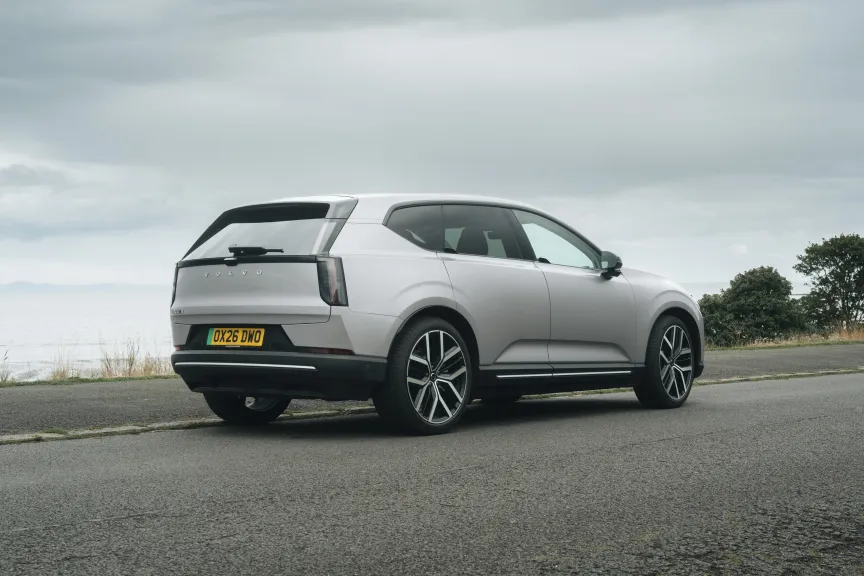
The new Volvo EX60 is arguably the most important car Volvo could launch right now. It’s an all-electric SUV replacing the most popular car Volvo has ever sold. That’s no mean feat already. And having driven around 700 miles in the EX60 so far, I’m already impressed with what I’ve seen.
So why is this car so critical for Volvo? It’s essentially replacing the gas-powered XC60, and that car has been Volvo’s best-selling model ever in the nearly two decades since its launch in 2008. The landscape has changed significantly since then, and the market is more competitive than ever, with a host of Chinese brands (like BYD, Chery, Jaecoo and others) offering vehicles at more competitive prices than most established European brands can match.

Volvo needs the EX60 to appeal in the same way the XC60 did. As CNET Senior Writer Antuan Goodwin puts it, “This feels like a make-or-break moment for the brand’s EV ambitions.”
Starting at $59,795 (£56,860) for the base P6 model or $62,145 (£59,860) for the longer-range P10, the electric SUV is competitively priced against luxury rivals from BMW, Mercedes and Audi. But with purse strings tightening the world over, the vehicle needs to work hard to tempt people away from cheaper Chinese options.
Thankfully, I think the Volvo has a hell of a lot to offer. I’ve been testing the all-wheel drive P10 model in its Ultra spec ($68,745 or £65,360, on the road), and it’s already rocketed up my list of top cars I’ve tested. It’s big, commanding its place on the road, with a welcomingly roomy interior. It also packs a battery big enough that I can start forgetting about range anxiety.

Volvo quotes up to 410 miles for the P10, though that’s based on the more generous WLTP fuel consumption and emissions testing; EPA figures in the US put it at 310 miles, which I think is closer to the mark. I drove from the town of Chesterfield in central England to my home of Edinburgh, Scotland — a roughly 265-mile run — on a single charge, starting with 95% and ending with 9%. I’ve not personally had an EV able to hit that sort of range before, especially considering almost every one of those miles was at fast highway speeds, where EVs are always significantly less efficient.
But even if I did need to stop, it wouldn’t have been for long since the EX60 supports 400kW charging, which Volvo reckons will restore about 211 miles of range in just 10 minutes. That’s assuming you can find a 400kW charging station. In the US, the EX60 will have a native North American Charging Standard port, meaning it can charge at any of the 29,000 Tesla Superchargers without an adapter.
Volvo EX60: A comfortable cruise
Crucially, the car was a pleasure to be in for every mile of the trip. The cabin is light and airy, the seats are comfortable and the suspension offers a smooth ride, even on some of Britain’s less-maintained stretches of highway. I even like the surprisingly small squared-circle steering wheel.

The EX60 will comfortably seat five, and the rear seats fold fully flat, giving enough space for a 6-foot-2-inch tall man like myself to get in and lay down. And trust me, I did test this as I fully intend to use it for car camping. Those of you with kids or massive dogs, or who want to haul around a small punk band’s entire stage setup, will be well catered for with the amount of internal space.
The SUV’s got a heap of tech on board, at least in the Ultra spec I was driving. There’s an electrochromatic roof that dims at the push of a button, a 28-speaker Bowers & Wilkins audio setup (supporting Dolby Atmos) and a new seatbelt system that automatically adapts to the body shape, size and weight of whoever is using it to allow for a safer level of resistance in an emergency situation. Volvo says this is a first of its kind.
And yes, it has standard driving assistance tools like adaptive cruise control and lane assist, which made my long-distance first drive a breeze. Google’s Gemini AI is baked in for voice control of various features, though I haven’t found a need to try that out just yet. Frustratingly, Apple CarPlay isn’t available, though I’m told it’s coming soon in an over-the-air update.

The result is a car that feels luxuriously comfortable and capable on the road. It’s fast off the line, too, and despite the weight of the batteries inside, it handles corners well. I haven’t driven an XC60, so I can’t say how this car directly compares. But I have driven a variety of EVs, from the much more expensive Lotus Eletre to the new Ford Capri, and I can say that the EX60 is the one that’s impressed me most so far.
But this is Day 1 for me. I’ve got three months to put it through its paces in Scotland, across the UK and into wider Europe. As a tech journalist, I have high expectations for the ride and its features. I’m not one to be forgiving of early teething troubles that should have been ironed out already, so I won’t be pulling my punches if something rears its head.

But based on the 10 or so hours I’ve spent inside it so far, I’m optimistic that Volvo has built something good. Whether it’s the standout vehicle that will break the XC60’s sales records remains to be seen.

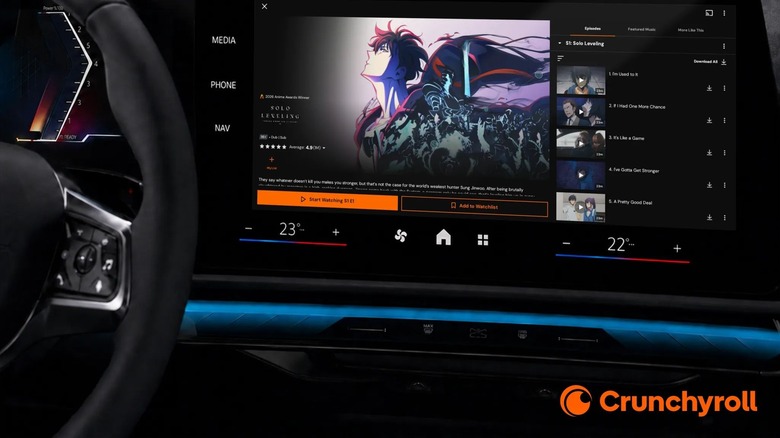
The anime streaming service has started appearing on the Appning app store.
Streaming video apps have become commonplace on in-car infotainment systems. You might soon have another way to watch anime in your car (depending on your model) as Crunchyroll has started appearing on the Appning app store.
Appning is available in vehicles from more than 40 brands, including those from BMW, Mercedes Benz, Volkswagen Group, Mini, Lotus and SAIC Motor. You can already access Crunchyroll in BMW cars, and it’s coming to more vehicles later, according to Appning. However, it won’t appear in the Afeela 1 from Crunchyroll parent Sony and Honda, as the companies scrapped the car a few months ago.
“Through Appning, Crunchyroll will be available directly within connected car environments across global regions including Asia, Australia, Europe, India, Latin America, and North America,” Crunchyroll said in its announcement, which it made on LinkedIn of all places.
As a safety measure, video streaming typically only works on an infotainment system while the car is parked. That’s a good thing, as it’s probably not a wise idea to tear along a highway with half an eye on the likes of Dan Da Dan or Chillin’ in Another World with Level 2 Super Cheat Powers.
Tech
Australia Passes Law To Charge Tech Companies Levies Unless They Reach Deals With News Publishers

Meta, Google, TikTok and LinkedIn will have to pay millions to support local news outlets under Australia’s new rules.

Australia will force Meta, Google, TikTok, LinkedIn and others to pay levies if they don’t reach deals with local news publishers. Both houses of the country’s parliament passed a law that will force them to pay 2.75 percent of local revenues if they fail to make deals with at least eight outlets by the end of their annual reporting periods. The agreements (which have to support the publishers’ production of news) will offset what the companies would have to pay through the levies.
The levy applies to companies that generate over AU $250million ($178 million) in local ad revenue and operate a “significant” social media service or search engine in the country. As Reuters notes, the money that the country brings in from the levies will go to publishers, as the tech companies benefit from their work through engagement and ad revenue. The amount that a publisher receives from the levies will depend on the number of journalists (including freelancers) it employs.
The new law replaces rules from 2021. Those older requirements for tech companies to pay for news were “no longer working effectively,” according to the Australian government. After those measures came into force five years ago, Meta temporarily blocked publishers and users from sharing news articles. It later reached deals with local news outlets, but those expired two years ago. Meta pulled a similar move in Canada three years ago when it blocked Facebook and Instagram users from sharing links to news articles.
Tech
She asked for her salary in advance to start Young Hungry Free. 14 yrs on, Blackpink wore her designs.

Young Hungry Free lasted 14 years in S’pore’s fashion scene, and along the way, even caught Jisoo’s eye
When Winnie Ong started Young Hungry Free in 2012, she was 19, fresh out of her A Levels and taking what was supposed to be a one-year gap year.
She had no grand plans to build a full-fledged business. Instead, spent that year doing what she already loved—reworking clothes, experimenting with designs and figuring out how to turn her ideas into something people might actually want to wear.
Fourteen years on, that side project has grown into one of Singapore’s well-known homegrown fashion brands.
Here’s the story behind Young Hungry Free.
“It was simply all I had”

Winnie’s interest in fashion started long before she launched Young Hungry Free.
While she was still in school, she spent much of her free time thrifting for vintage clothes and turning them into pieces that felt more personal. Denim was a particular favourite.
She would cut, bleach and distress pieces, adding details until each one became unique.

She eventually started selling these reworked pieces as a small side hustle. At the time, however, she wasn’t thinking about building a business.
“I just genuinely enjoyed creating things that felt different,” she shares.
During her gap year, Winnie worked a retail job while continuing to experiment with clothes in her free time. It was during this period that she decided to turn her passion project into Young Hungry Free.
“It didn’t feel like I was making a particularly bold decision,” Winnie says, looking back. “It was simply all I had, and I wanted to give this idea a chance.”
At the time, she was earning around S$1,400 a month before CPF and took home about S$1,100. She asked for her salary in advance and used it to get Young Hungry Free off the ground.
Building around individuality
Winnie launched Young Hungry Free from her bedroom with a second-hand DSLR, learning almost everything through trial and error.

Looking back, she thinks starting young worked in her favour.
I didn’t overthink it. I wasn’t worried about whether I was qualified or experienced enough. I was simply curious enough to give it a try.
Winnie Ong, founder of Young Hungry Free
But she wasn’t creating clothes simply for the sake of having another fashion label in the market. She had struggled to find pieces that reflected her own style and began to wonder if other people felt the same way.
Her answer was to build a brand around individuality.
Winnie doesn’t believe people fit neatly into a single aesthetic. The way someone dresses can change with their mood, the occasion or simply the version of themselves they want to express that day. Some days, that might mean dressing boldly; on others, something softer or more understated.

Getting people to understand that vision took time. Young Hungry Free’s style wasn’t common in Singapore at the time, so the response was slow in the beginning. But Winnie says that turned out to be a blessing.
The slower pace gave the brand room to experiment, make mistakes and gradually figure out what it should become.
“Trust isn’t built in a few launches, it compounds over time,” she says.
For Winnie, those early years also taught her that building a brand isn’t just about getting people to buy something. It’s about giving them enough reason to come back.
Learning to let go
As Young Hungry Free grew, Winnie also had to learn that creating a brand and running a business were two very different things.

In the early days, she handled almost everything herself, from designing and photographing collections to modelling, packing orders and replying to customer messages.
But as orders increased, so did the number of things she had to figure out.
She had to learn how to manage inventory, read a profit and loss statement, hire people and eventually build a team.
Going from working alone in her bedroom to having people trust Young Hungry Free with their careers changed how she viewed the business. It was no longer just a creative project that belonged to her—she was now responsible for building a company that other people could grow with.
That also meant learning when to step back.
For years, Winnie believed that being involved in every decision was how she protected the brand. But as Young Hungry Free grew, she realised that trying to oversee everything could become a bottleneck.
Today, she focuses primarily on creative direction, product development and thinking about where the brand should go next, while her team handles much of the day-to-day operations.
Keeping up with weekly launches

Young Hungry Free launches new designs or collections almost every week, but moving quickly doesn’t necessarily mean producing more.
Instead, the brand is intentional with its production, releasing smaller batches that can be quickly reordered if a design resonates with customers.
That approach, Winnie says, has allowed Young Hungry Free to stay agile while maintaining quality.
Customer feedback also plays a significant role in shaping what comes next.
Whether it’s through surveys, social media, TikTok LIVE or conversations with customers, the Young Hungry Free community has influenced many of the brand’s future collections.

Behind the scenes, every design starts in-house, before the team travels to China almost every month to source fabrics and materials. From there, each piece goes through multiple rounds of sampling to refine its fit, drape and feel before going into production.
Young Hungry Free works with long-term manufacturing partners in China, some of whom the brand has partnered with for more than a decade.
For Winnie, these relationships are one of the company’s biggest advantages.
“They understand our quality standards and the level of consistency we’re looking for,” she says. “I don’t think partnerships like that happen overnight.”
Making it to Blackpink’s stage
Young Hungry Free’s growth has also brought unexpected moments of recognition.
Ahead of Blackpink’s Singapore concert in 2025, Jisoo’s stylist contacted Young Hungry Free to request one of the brand’s designs. Jisoo later wore the piece during the performance.

There was no formal collaboration or campaign behind it. The stylist had simply come across the brand and selected the design.
For Young Hungry Free, the moment offered a glimpse of how far a homegrown label could reach beyond Singapore.
Good design can travel much further than you sometimes expect.
Winnie Ong, founder of Young Hungry Free
Fourteen years on, Young Hungry Free is still evolving
For Winnie, perhaps the biggest milestone isn’t any single collection, collaboration or business achievement. It’s simply that Young Hungry Free is still around.
“Fashion is an incredibly competitive industry, and many brands don’t get the chance to grow over a long period of time,” she says. “The fact that we’ve been able to keep evolving, while remaining independent and staying true to who we are, is what I’m most grateful for.”
That ability to evolve has become increasingly important as the fashion industry changes. Consumer behaviour, technology and the way people shop have all shifted over the past 14 years, and Winnie expects that pace to continue.

Young Hungry Free has also evolved in how it connects with customers.
The brand previously operated a physical store, but has since returned its focus to digital. Still, Winnie says the experience reinforced something that can easily get lost online: the importance of knowing the people behind the purchases.
Meeting customers face-to-face, helping them style pieces and hearing their feedback in real time gave the team a different perspective. That’s why Young Hungry Free will continue exploring physical experiences and events.

Looking ahead, Winnie sees three areas of growth for Young Hungry Free: deepening its relationship with its community, expanding into new product categories and styles, and growing across Southeast Asia.
But she isn’t looking to expand simply for the sake of becoming bigger. For Winnie, it’s about continuing to build something people genuinely want to be part of.
“Young Hungry Free was never about creating clothes,” she says. “It was about understanding people.”
- Find out more about Young Hungry Free here.
- Read other articles we’ve written on Singaporean businesses here.
Featured Image Credit: Young Hungry Free/ Her World
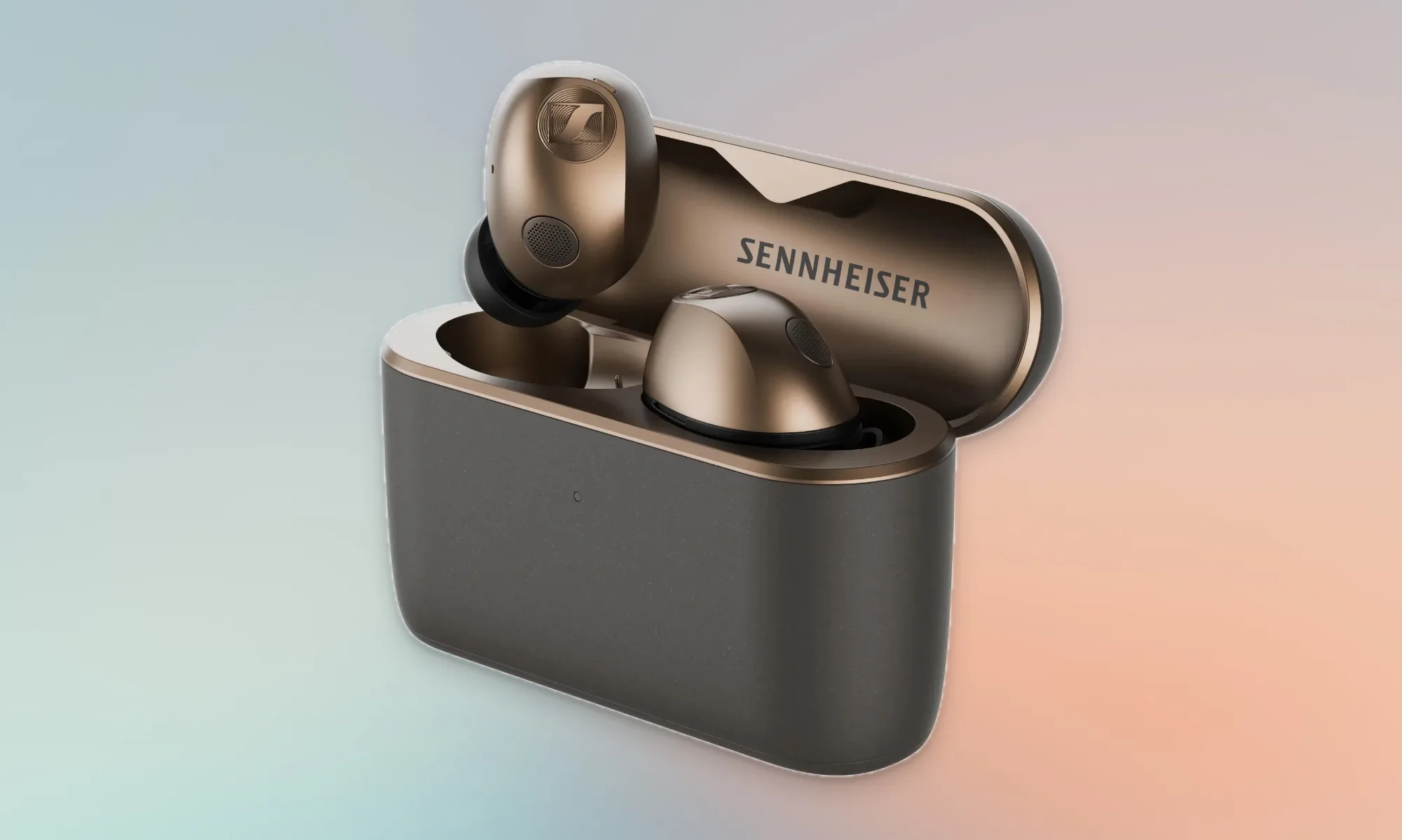
Sennheiser just announced the Momentum True Wireless 5, and it’s basically borrowing the best bits of its full-size Momentum 5 Wireless headphones and squeezing them into a smaller, comfier earbud. The earbuds start shipping September 3rd for $299.95.
What’s new on the sound side?
The earbuds use Sennheiser’s 7mm TrueResponse dynamic transducer, manufactured and tested at the company’s facility in Tullamore, Ireland. They run on Bluetooth 6.0 with aptX Adaptive support, delivering hi-res audio up to 24-bit and 96kHz, including aptX Lossless for bit-perfect playback.
Noise cancellation gets updated too. A redesigned ear tip works with a four-microphone array for the adaptive hybrid ANC system, along with an automatic anti-wind mode and a transparency mode Sennheiser says is its most natural yet.
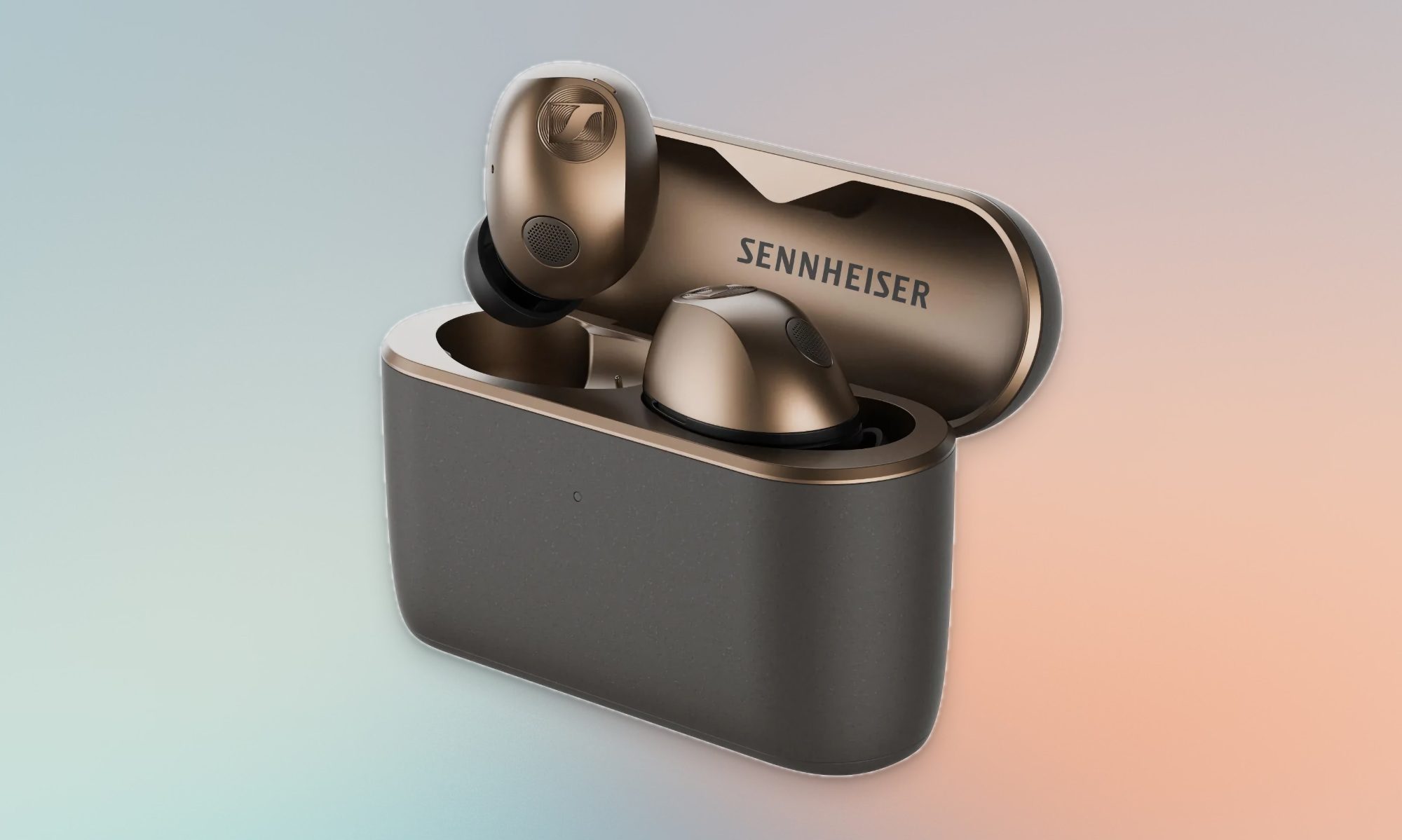
The earbuds also support Dolby Atmos with head tracking for spatial audio. On calls, six microphones and two bone-conduction voice accelerometers work with an AI speech-extraction algorithm to help isolate your voice in noisy settings.
The earbud housing has also been redesigned with a new shape, which Sennheiser says 73% of testers rated as more comfortable than the previous generation. They feature an IP54 rating for dust, sweat, and splash resistance. The charging case is narrower too, designed to fit pockets more easily.
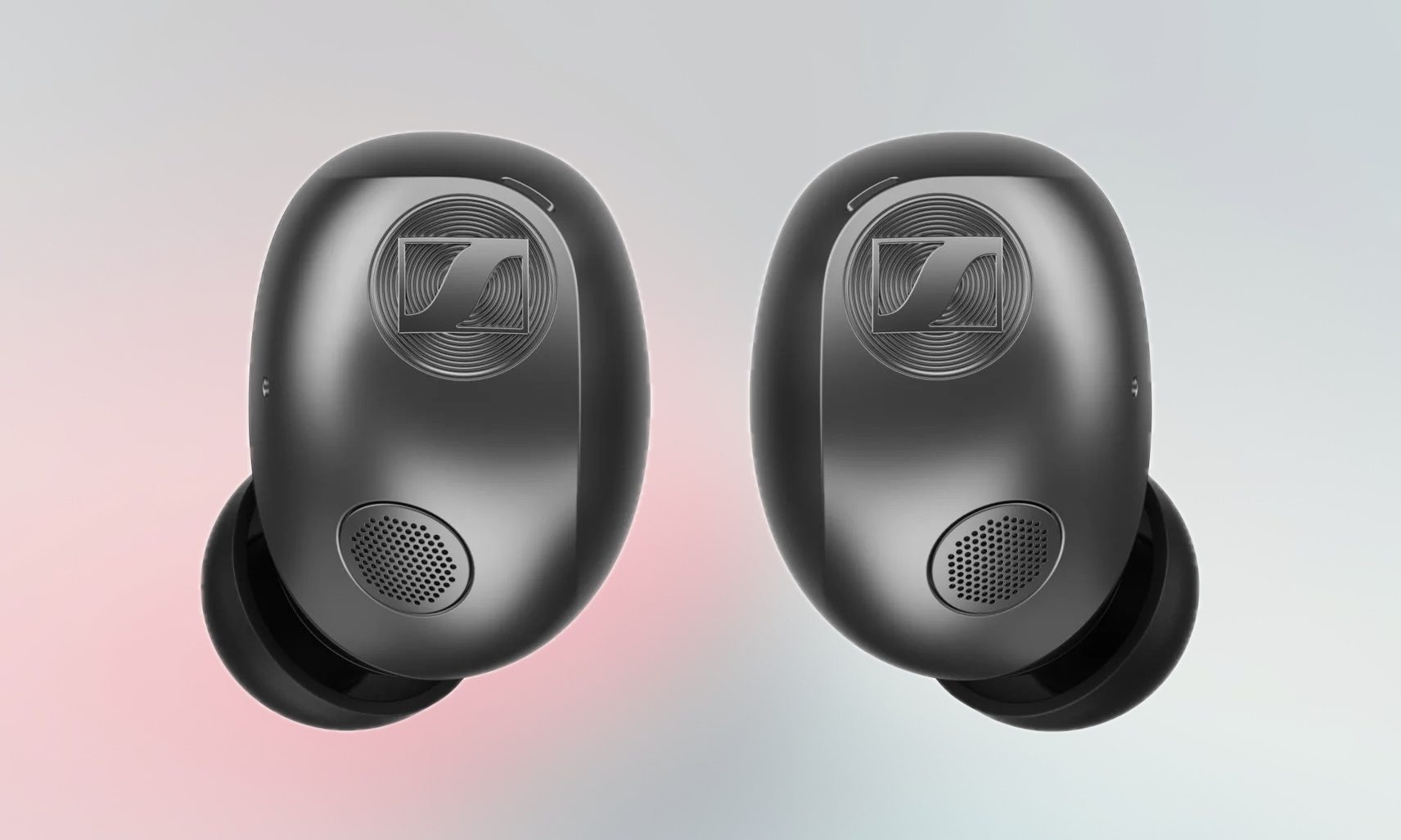
Battery life comes in at 12 hours of continuous playback per charge, with the case holding two additional charges for up to 40 hours total. An 8-minute quick charge adds about an hour of playback.
What about the replaceable battery?
The bigger change is the battery system. Both the earbuds and the wireless charging case use user-replaceable batteries, so instead of replacing the earbuds when the battery degrades, you can swap the cells yourself using a small screwdriver.
I love my AirPods Pro, and the only reason I had to ditch them and buy a new pair was because the battery life degraded over the past three years, making them almost unusable. If I could change the battery, I would have preferred to do that instead of plonking the cash for a new pair.

That’s why the new Sennheiser Momentum True Wireless 5 earbuds are a game changer for the industry. To be fair, they are not the first pair of earbuds to achieve this feat, but they are one of the first mainstream brands to do it, which should make other companies take notice.
The Momentum True Wireless 5 will come in five colors: Graphite, Cream, Copper, Denim, and Lavender. They’ll be available starting September 3rd from sennheiser-hearing.com and select retailers.

Sandra Bullock Reflects On Late Partner Bryan Randall’s Death And Illness

Cassiano Kiala Signs New Bayern Munich Deal Until 2030

Bitcoin Miners Spend Billions on AI as Revenue Lags





-

 Fashion6 days ago
Weekend Open Thread: Ann Taylor
-
 Sports7 days ago
This U.S. Amateur is a glimpse into golf’s future in more ways than you think
-
 Tech6 days ago
11 Ways to Rank Your Videos
-

 Sports6 days ago
Birmingham 2026: Day 6 Timetable for Irish Athletes
-
 NewsBeat5 days ago
Myanmar says over 300,000 Rohingya refugees verified for repatriation as exodus enters ninth year
-

 Politics5 days ago
SEQ Code: The Three Letter Boarding Pass Code That Could Give You The Worst Seat
-
 Tech7 days ago
DeepSeek Harness launches as open source rival to Claude Code, alongside V4-Pro on API with higher prices
-

 Tech3 days ago
Qwen3.8-27B runs frontier-class coding agents and reasoning locally, no cloud API required
-

 Crypto World6 days ago
Pi Network Protocol 27 endgame: last upgrade before what?
-

 Business2 days ago
SMA Solar Technology AG (SMTGY) Q2 2026 Earnings Call Transcript
-

 Crypto World3 days ago
OCC Greenlights Trump Family Crypto Firm for Trust Charter
-
 Tech5 days ago
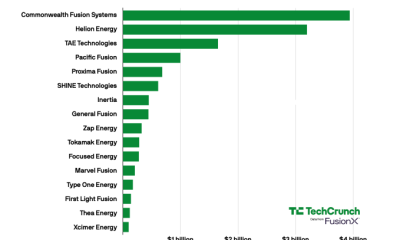
Every fusion startup that has raised over $100M
-

 Business6 days ago
15 Ways to Make Money From Your Phone (2026 Guide)
-
 Entertainment6 days ago
10 Netflix Shows That Quietly Became Modern Classics
-

 Fashion6 days ago
Weekly News Update, 8.14.26 – Corporette.com
-
 Entertainment5 days ago
Marvel Studios Reveals New X-Men Cast Including Adam Driver and Sadie Sink
-

 News Videos12 hours ago
Don’t Leave Your Financial Future To Chance | August 19, 2026
-

 Business5 days ago
Facebook Down Now? Users Report Login And Loading Problems As Outage Trackers Monitor Ongoing Issues
-

 Fashion6 days ago
Silver bangles for women – Newbridge Silverware
-
 Business5 days ago
Monarch Mutual Fund set to enter MF space with maiden overnight fund; files draft with Sebi
You must be logged in to post a comment Login