
Politics
It’s time to criminalise Britain’s West Bank settlement trade



For decades, the UK government has consistently stated that ‘Israeli’ settlements in the occupied Palestinian territories are illegal under international law. Yet it has taken no action to prevent British trade and financial dealings with businesses operating in the West Bank. Then, in June, former Foreign Secretary Yvette Cooper strengthened the government’s guidance to businesses, but still stopped short of introducing a ban. In a statement, she said:
“British citizens and businesses should not conduct any economic or financial activities in illegal Israeli settlements… We believe that settlements are a fundamental barrier to peace and a flagrant breach of international law, and that violent settler groups should not be profiting from the land they have seized from Palestinians.”
Growing pressure on government to ban any trade with settlements in West Bank
The Council for Arab-British Understanding (CAABU) has campaigned for a ban on UK trade and financial dealings with illegal Israeli settlements for many years. Chris Doyle is CAABU’s director. He tells the Canary the government needs to change its language from businesses “should not become economically involved with settlements” to businesses “must not” do so.
“In other words, there needs to be a criminal cost to it. This is even more important given the record pace of Israeli settlement expansion in recent years, and the massive levels of settler violence against Palestinian communities assisted by the Israeli army. The aim of a ban should be clear – that Israel should withdraw from settlements. They are illegal, and a ban should ensure that all of that ends.”
The pressure on the government is growing. In June, 137 Labour MPs signed a letter calling for an end to trade with settlements. This figure represented more than one-third of the party’s Commons representation. 238 MPs from across Parliament have also expressed support for a ban on trade and financial dealings with settlements.
In July, Labour MP Abtisam Mohamed secured a Commons debate on ending trade with Israeli occupation settlements. MPs from all parties except the Conservatives and Reform UK argued that Britain’s existing policy was inconsistent with its stated position on the illegality of settlements.
UK businesses helping to sustain ‘Israel’s’ system of domination and dispossession against Palestinians
One of those MPs was Andy McDonald. He is Labour MP for Middlesbrough & Thornaby East and Co-Chair of the Britain-Palestine All-Party Parliamentary Group. He tells the Canary that Parliament expects the law to reflect the government’s own stated position:
“The Government rightly says Israel’s settlements in Palestine are illegal under international law. But even after the former Foreign Secretary said last month that she had strengthened overseas business risk guidance, that guidance goes no further than saying ‘Businesses should not engage in economic and financial activities in Israeli settlements’. It does not say that trading with settlements is unlawful, and it does not say that such trade, financial services or investment are prohibited. The government cannot say settlements are illegal while allowing British commerce to help sustain them. It must use every available tool to uphold international law, and I will continue to urge them to do so.”
Prime Minister Andy Burnham has said his administration is considering “further measures” to deter settler violence. He is expected to make a decision once Parliament returns from its summer recess on 1 September. But it is not yet known what form such a ban could take. It may be limited to the import and export of goods from the occupied West Bank and other illegal settlements. But it could also extend to services provided between the UK and illegal Israeli settlements. It could potentially cover financial services, investment, tourism, construction, property transactions and other economic activity connected to the settlements.
There is also the possibility the government could back away from a ban altogether. Or it may delay a decision until after the Israeli elections in October. A new Israeli occupation government could create a different political atmosphere. And this could potentially give the UK government another reason to argue the time is not right for further measures.
Usual claims of victimisation by Israeli occupation
But Doyle believes the government is seriously considering a trade ban with West Bank settlements, although the change in ministerial teams has caused some disruption and delay. He says:
“I think what might trigger further movement is yet more aggressive Israeli announcements, such as moving forward with the tenders for constructing the 3,401 units in the E1 area. What is interesting is that, in contrast to the debate say four years ago, the government has for some time now not raised any ethical issues about doing this. Their position is not one which it used to be – ‘Oh, we don’t do BDS, we don’t do sanctions.’ They have sanctioned, maybe not as far as many of us would like, but we are away from that. They do not come back with ethical reasons, but tend to come back with technical reasons instead, such as ‘We’re not sure how to implement it.’”
The proposal has met opposition from Zionist organisations. Labour Friends of Israel (LFI) says it opposes the settlement project. But a paper it published in July argues that sanctions should not go beyond “violent extremist settlers and organisations”. It also describes a UK ban on trade with illegal West Bank settlements as “practically and politically impossible.” And claims it would become “a de facto boycott of all of Israel”.
LFI also implies that such a policy could be perceived by the Jewish community as antisemitic and:
“a further example of the government singling out and targeting Israel for punitive action and harsh rhetoric.”
The accusations from these genocide supporting lobby groups are incorrect. There has been no “singling out” of ‘Israel’ by the UK government. It has imposed sanctions on many other countries but as yet has taken no action against the Israeli occupation.
A ban on settlement trade and services would ensure British companies and consumers are not economically supporting illegal settlement activity. Many argue this is the bare minimum we should be implementing, and much broader economic sanctions against ‘Israel’ are necessary. But taking this action would at least be an important first step, and is crucial.
“Israel can avoid wider economic consequences by doing what international law demands”
Regarding the allegation of antisemitism, Peter Frankental, Amnesty International UK’s Economic Affairs Director, tells us:
“There is nothing antisemitic in holding Israel accountable for its genocide in Gaza, its ethnic cleansing of Palestinians from the West Bank, and its brutal system of apartheid. A settlement trade ban should only impact companies operating in settlements and those doing business with them. This is by definition illegitimate business which should be stopped. Israel can avoid wider economic consequences by doing what international law demands – ending its illegal occupation and the grave human rights violations that go with it.”
The International Court of Justice (ICJ) issued an Advisory Opinion, in July 2024. It ruled ‘Israel’s’ continued presence in the occupied Palestinian territory to be illegal. The Court also concluded states have obligations not to recognise the unlawful situation or give aid or assistance in maintaining it.
LFI says a trade ban with these settlements would “affect all Israeli businesses operating in the settlement blocs, as well as East Jerusalem and the Old City.” This is exactly what should be happening, as these businesses are operating illegally in occupied Palestine- whether in settlement blocs, or the Old City of East Jerusalem.
LFI also claims Palestinian livelihoods would be affected by steps against settlement trade. What the lobby group fails to mention is that ‘Israeli’ policies have intentionally destroyed Palestinian businesses and the economy. Palestinians very often face huge financial difficulties. So they have no choice but to work for their occupier, in a settlement built on stolen Palestinian land. The vast majority of Palestinians working in these places are exploited. And regularly have no contracts, working long hours, and often endure unhealthy, unsafe conditions.
London based Zionist news outlet the Jewish Chronicle is also trying to sell the case against a UK trade ban with settlements. It recently ran a story with the headline: Exclusive– Trade embargo against Israeli settlements runs risk of damaging the NHS. 3600 medicines produced by ‘Israeli’ drugs company Teva are used in the UK, while it produces one in every seven medicines prescribed by the NHS. Its products include anti-cholesterol medication, antibiotics, painkillers, cancer treatment and respiratory drugs. According to Declassified UK, the company also has a close relationship with Israeli occupation forces (IOF).
Arguments in support of UK trade with West Bank settlements are not convincing
The Jewish Chronicle argues:
“a practical difficulty in separating goods and services produced by the settlements and East Jerusalem from the rest of Israel”
It says it could mean these “vital supplies” to the NHS could be blocked if a UK trade ban with the settlements takes place. The Jewish Chronicle also says finding alternatives could:
“force the health service into paying out billions of pounds extra from taxpayer coffers.”
Firstly, the claim that a ban on settlement goods and services would be too “difficult” is not convincing. The UK already bans the import of goods from territories in Ukraine occupied by Russia. This includes Crimea and specified occupied areas of eastern and southern Ukraine. So the UK should have no problems implementing a comparable ban on goods produced in ‘Israeli’ settlements in occupied Palestinian territory.
Also, under the UK-‘Israel’ Free Trade Agreement, procedures already exist to distinguish ‘Israeli’ goods from those produced in settlements. Settlement goods are not entitled to the preferential tariff treatment available to qualifying goods produced within ‘Israel’. If the UK can distinguish settlement goods for the purpose of determining whether they qualify for preferential tariffs, it should also be possible to use those procedures as the basis for refusing entry to settlement goods altogether.
An investigation by Global Echo found one in every six agricultural shipments to the EU, UK, Norway and Switzerland was sourced from settlements. Its report, Importing Occupation, suggests the main problem is not an inability to identify settlement goods. Instead, shipments may be mis-declared or insufficiently checked before entering European markets.
But the issue goes beyond whether individual products can be identified. If the UK government wants to impose meaningful sanctions, it must also ensure critical supply chains are not dependent on human rights abusing companies or states.
No business with human rights abusers, we must have alternatives
Doyle argues the UK should be working now to diversify its supply chains and develop alternatives to critical products and components. He says:
“This shows us we are far too exposed. We need to ensure we are not stuck in a situation whereby we are dependent on, and cannot impose certain sanctions or bans against, a country like Israel who abuses human rights laws in a really serious fashion and violates international law. We should be looking to ensure our citizens are not dependent on key components that come from states with appalling human rights records.
We must be able to source alternatives. It takes time and there will be a cost, but it’s really important. That’s also why it’s important no future contracts in critical areas such as defence, key NHS facilities, and cyber, should be taken with Israeli state enterprises. They simply do not pass muster, in terms of their human rights record. We should instead be fostering industries at home, and also with states whom we have a much better sense of trust, in terms of their record.”
Slovenia’s new conservative government has lifted its ban on settlement imports. And efforts to introduce EU-wide sanctions on Israeli settlements have stalled. But several European countries have moved ahead with restrictions of their own, with Ireland, Belgium, the Netherlands and Spain introducing measures targeting settlement goods. The upcoming parliamentary session will show us whether the UK is also prepared to implement a ban.
Settlement expansion, settler violence, land confiscation and the displacement of Palestinian communities are interconnected elements of the same land-grabbing settler-colonial system. One in which successive Israeli occupation governments have tried to consolidate control over Palestinian land, restrict Palestinian movement and development, facilitate displacement and further fragment Palestinian territory.
Settlements therefore contribute to the ongoing ethnic cleansing of Palestinians in the occupied West Bank. So allowing British businesses to trade with, invest in and provide services to them, helps sustain an unlawful occupation and the system of dispossession and displacement that accompanies it. It is time the UK government says no.
Featured image via the Canary
By Charlie Jaay

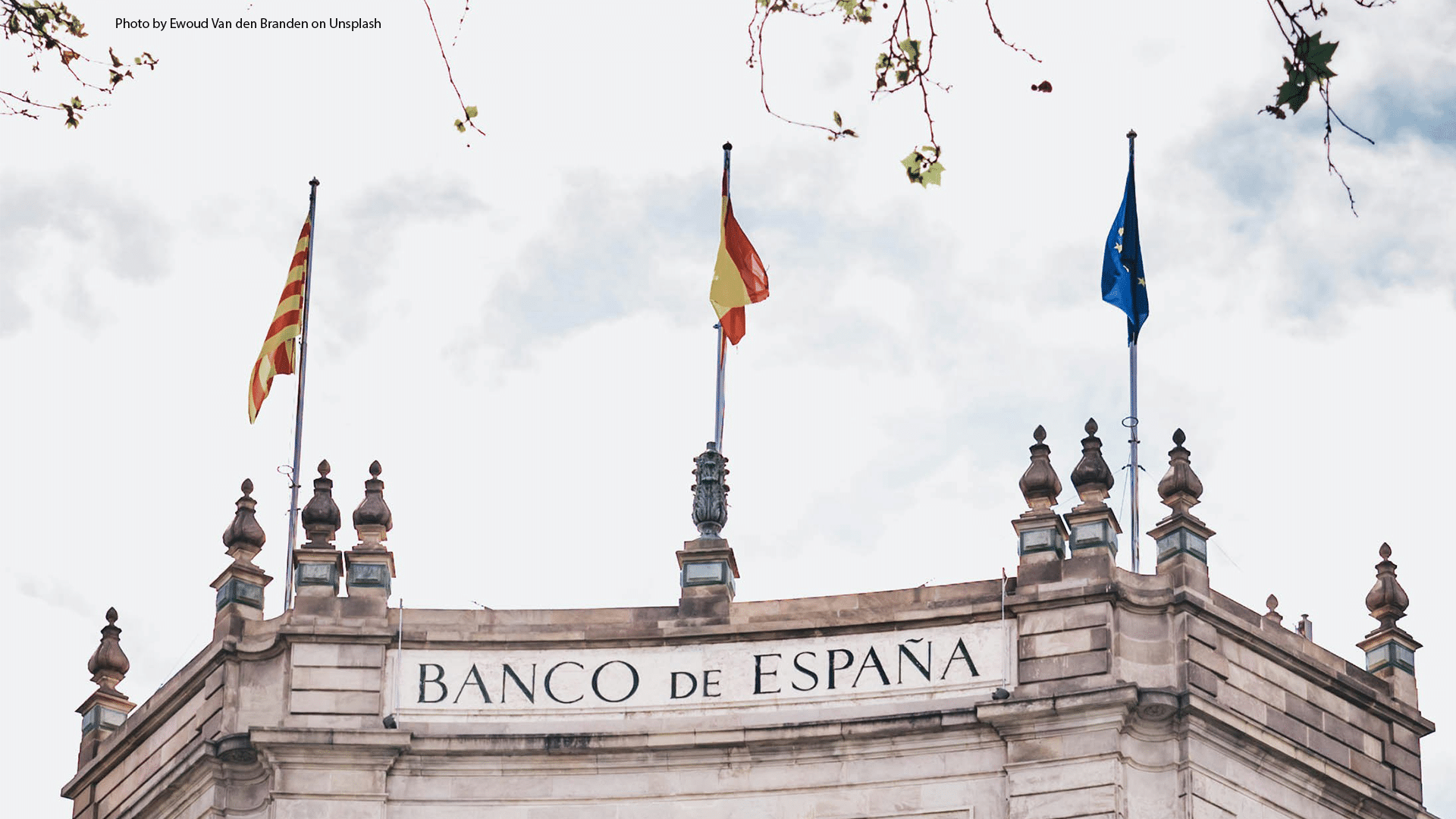
Caroline Gray outlines some of the key lessons that can be drawn from Spain’s experience of fiscal devolution between regions.
Prime Minister Andy Burnham wants to give mayors in England the power to retain a share of locally raised income tax and business rates. This is a landmark proposal for such a fiscally centralised country and the theory behind it seems sound: devolving financial powers should increase accountability, making regional leaders more clearly responsible for the consequences of their spending decisions. It should also improve efficiency by putting decisions into the hands of those closest to local realities and best able to assess needs. And it is not hard to argue that this would be preferable to the current deals-based approach to regional and local funding in England, where strategic authorities are too often left competing against one another to make their case for investment to Westminster.
Yet theory does not always translate into practice. Poorly designed fiscal devolution may create more problems than it solves. Considering the experience of other countries is a useful way to learn valuable lessons, and Spain offers an interesting example.
Spain is divided into seventeen regions, fifteen of which operate under a regional financing system that combines centrally-raised taxes, shared taxes and regional taxes (the remaining two regions have greater fiscal autonomy). Regional governments retain 50% of income tax receipts and have the power to vary rates on their share within certain parameters. Meanwhile, business rates – the other tax Burnham has proposed devolving – are set and collected by local authorities (an administrative level below the regions, equivalent to English councils), which retain the proceeds as a primary source of funding for local services.
While fiscal devolution has brought benefits to Spain, its experience also reveals lessons about what can go wrong. Spain’s regions have greater fiscal and spending powers, but their experience shows that transferring powers alone is not enough to guarantee accountability and efficiency.
Firstly, the Spanish case highlights the importance of a credible no-bailout commitment by central government, while also demonstrating how difficult such a commitment can be to enforce in practice. During the construction-fuelled boom years before the 2008 financial crisis, Spain’s regional financing system seemed to work well. Through a combination of central government transfers, regionally-raised revenues and relatively unrestricted borrowing, regional governments had ample fiscal space to pursue their priorities. Yet the model unravelled in the wake of the financial crash, when several regions found themselves on the verge of bankruptcy. Story after story about over-spending on vanity projects – including unnecessary airports – and corruption scandals surfaced.
Central government had arguably been too willing to turn a blind eye to regional spending and borrowing decisions, but once crisis hit, it could not credibly commit to a no-bailout principle either. Madrid became the lender of last resort, providing emergency support to cash-strapped regions via new mechanisms such as a Regional Liquidity Fund. Originally conceived of as a temporary measure, that Fund is still in place today.
Spain’s experience shows how difficult it would be to enforce a no-bailout principle in practice. Regardless of whether some regional governments had spent irresponsibly, could a government realistically refuse to intervene, given the implications for citizens’ access to essential services? And could it really allow regional defaults when those failures would inevitably have had a knock-on effect on perceptions of its own creditworthiness? The challenge for England if fiscal devolution is to work will be striking the right balance: enough central oversight to prevent strategic authorities reaching crisis point, but not so much control that it undermines the autonomy devolution is intended to provide.
A second lesson concerns the importance of transparency. Fiscal devolution can only increase accountability if it is clear which level of government is responsible for raising which revenues, how any redistribution mechanisms work to share revenues among regions, and ultimately where exactly responsibility for spending decisions lies.
In the Spanish case, there was never a consensus as to who exactly was responsible for the dire predicament in which many regions found themselves after the financial crisis. The regional financing system is complex, combining central, shared (‘partially ceded’) and regional (‘ceded’) revenues, alongside redistribution mechanisms that adjust for factors such as regional GDP per capita, population and geographical characteristics. These mechanisms are widely seen as treating some regions more generously than others. Did regions such as Valencia become heavily indebted because of poor spending decisions, or because they were treated unfavourably by the financing system itself? Did Catalonia’s fiscal problems stem from over-spending and corruption, or from the extent to which its wealth was redistributed to other regions? Did the Basque Country fare better because it managed its finances well, or because its fiscal autonomy model allowed it to retain a greater share of its revenues? The answer to each question is of course complex, but the lack of transparency made it possible for different political actors to promote different narratives.
The interviews I conducted with regional finance ministers in Spain for my latest research suggest that these questions remain unresolved. Explanations for regional funding challenges range from claims that the central government does not contribute sufficient resources to the system, through to arguments that a regional ‘race to the bottom’ over certain devolved taxes has contributed to fiscal pressures. Views also differ over the fairness of the technical criteria used to allocate funding. These problems are compounded by the lack of effective forums for negotiation between central and regional governments, with many regional governments feeling that those with greater political influence benefit from bilateral deals and trade-offs that are not available to others – a dynamic that could easily be replicated in England, where regional disparities in political influence already exist. England should take heed of these lessons if fiscal devolution is to succeed.
By Caroline Gray, Senior Lecturer in Politics and International Relations, Aston University.
Politics
Politics Home Article | Building Britain for children: why protecting playing fields matters


Somewhere along the way, we stopped designing Britain for childhood.
Not deliberately. No government ever announced that children should spend less time outdoors. No planner set out to reduce independence. No parent wanted their son or daughter to swap a bike ride for another hour in front of a screen. Yet, somehow, that is where we have arrived.
The latest report from the Royal College of Paediatrics and Child Health puts data to something many of us have sensed for years. Child health has stagnated or worsened across many of the measures that matter, from obesity to mental health to physical activity, and health inequalities are widening.
Their verdict was blunt: Britain’s record should be a “national embarrassment”. It is hard to argue otherwise.
When I was growing up on Merseyside, my parents rarely knew exactly where I was. Like millions of children of my generation, I’d disappear on my bike after breakfast and return when it was time for tea. We walked to school, climbed trees, built dens, kicked footballs around until it got dark and explored the world under our own steam. None of it felt like exercise. It was simply childhood.
Looking back, I realise those ordinary freedoms quietly built my health, my confidence and my independence. We weren’t active because someone organised it but because the world around us made activity the natural choice. Today’s children are growing up in a very different Britain.
Roads carry far more traffic; parents have understandable concerns about safety, and green spaces have slowly disappeared from many communities. Leisure increasingly happens indoors and for too many children, especially those growing up in more deprived neighbourhoods, movement has become something organised rather than something that simply happens. We didn’t choose to make children less active – but we built a society that has made it harder for them to be active.
Health doesn’t begin in hospitals; it begins years before anyone becomes a patient. It begins in the streets that children walk along, the parks they play in, the routes they cycle, the neighbourhoods they grow up in and the freedom they are given to explore them.
We spend endless time debating how to fix the NHS and far too little protecting the environments that stop people needing it in the first place.
That is why the Government’s decision to retain statutory protections for playing fields deserves recognition.
On the surface, it is a planning decision. But it’s much more than that: it is a statement about what kind of country we want to be.
Playing fields are not simply pieces of undeveloped land; they are places where children discover movement without thinking about exercise, where local sports clubs create belonging, where friendships begin and where confidence grows.
One in three children now leaves primary school overweight or obese. Behind every one of those statistics is a child whose future could have been different.
Protecting playing fields alone will not solve Britain’s child health crisis and neither will another strategy, awareness campaign or report. But it points us in the right direction. In an age when loneliness is rising and childhood is becoming increasingly indoor-based, playing fields are doing far more than hosting sport. They are quietly producing healthier and more connected children and people, which has a profound social and economic impact: active lifestyles save health and care services around £8 billion annually and prevent 3.3 million cases of chronic illness a year too.
The greatest gift we can give is a childhood where walking to school, riding a bike, climbing a tree or kicking a ball around with friends becomes unremarkable again. So if we are serious about creating the healthiest generation in decades, we need to start asking a different question. Not, “How do we persuade children to exercise more?” But, “How do we make movement an ordinary part of childhood again?”
Those are very different challenges. The first relies on changing individual behaviour, the second asks us to change the places we build and the choices we make. History suggests the second will always be more successful.
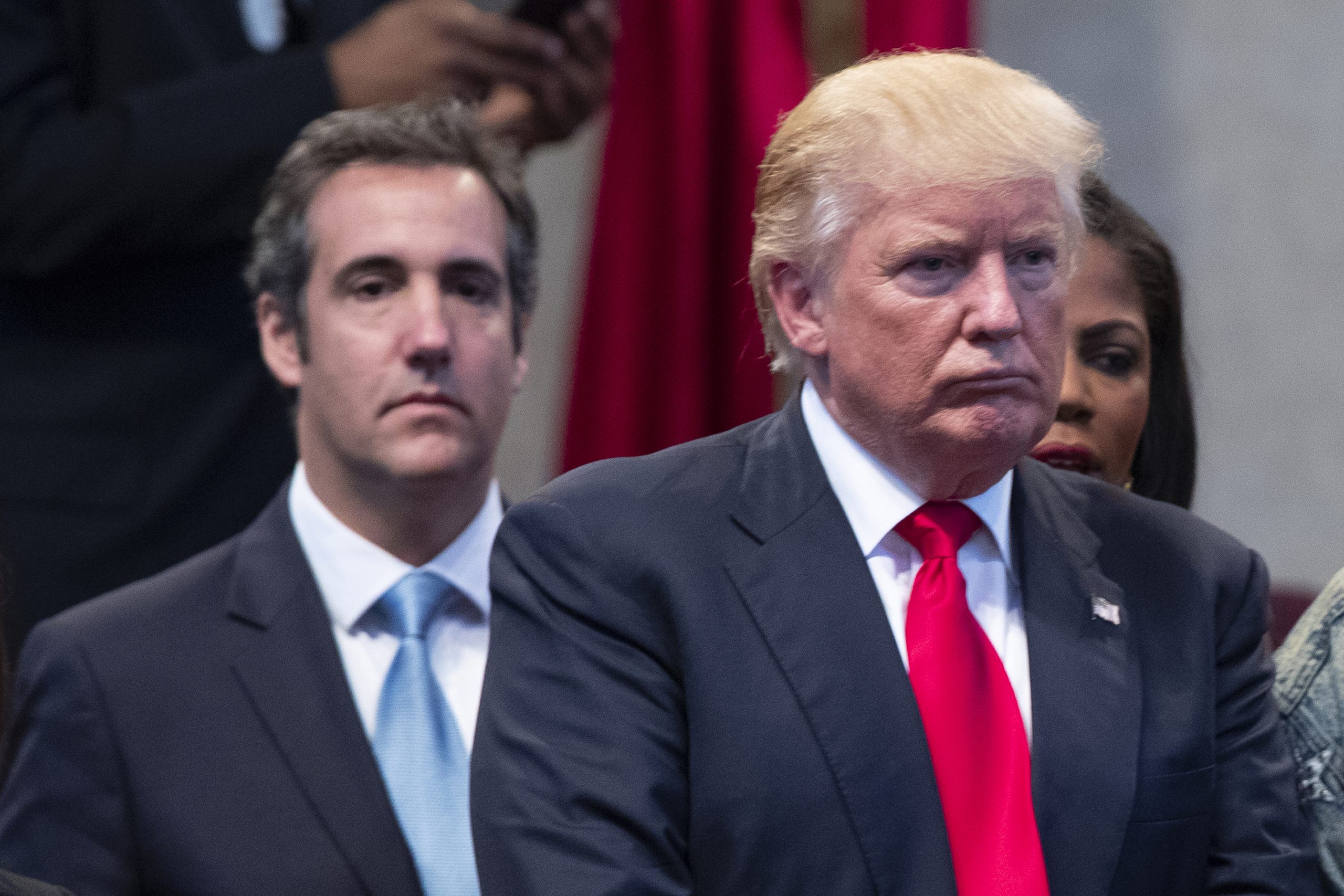

Michael Cohen and President Donald Trump have apparently patched up their differences in private. Now, they can do it in public.
The president is scheduled to do a phone interview Thursday with Cohen on the New York City radio show that Trump’s former lawyer and “fixer” began hosting last month.
Cohen said in an interview ahead of the broadcast that he and his former boss have met privately three times and reconciled since a bitter and very public falling out during the president’s first term.
“I suggest you listen to the show. You may find it extremely interesting,” he told POLITICO.
Cohen, who made a stunning conversion from pro-Trump bulldog to fierce critic, said he wasn’t sure if during the interview he and the president would discuss presidential clemency for the conviction that landed him a three-year prison sentence.
He isn’t sure he will even push for clemency from the president.
“We’ll see,” he said. “Will I make that request down the road? I don’t know. Maybe maybe not.”
That the president’s erstwhile attorney is even considering asking Trump for a pardon is somewhat remarkable.
Cohen was the star witness in New York prosecutors’ 2024 hush money case against Trump, which saw the then-candidate become the first ever former president to become a convicted felon when he was found guilty on 34 counts of falsifying business records to keep word of an affair with former porn star Stormy Daniels from public view.
Cohen, who testified that he lied and bullied for Trump during his years working for the Trump Organization, later turned on his former boss. He told POLITICO in an April 2024 interview, for example, that the Jan. 6 Capitol riot was “grotesque” and predicted “there will never be another election again in America” if he was reelected.
Cohen was sentenced to three years in prison in 2018 on charges related to hush money payments to help conceal his boss’ affair with a porn star.
He said he sent pardon applications to former President Joe Biden’s administration and the Trump White House but doesn’t consider clemency, which would enable him to recover his law license, critical to his life at this point.
“I’m turning 60 next week. What am I going to go start practicing law again?” he said. “What has the loss of my law license prevented me from actually doing? Though I do believe I’m deserving of it, that’s a whole nother story.”
Thursday’s interview will mark the culmination of a months-long effort by Cohen to get back in the president’s good graces. He told a New York radio station this summer that they had a text exchange that started their reconciliation.
Teasing the interview, Cohen said people will be “interested to hear two individuals that were friends for a decade and a half who have not publicly spoken in eight years” talk about their long shared past. “What could they talk about?” he said.
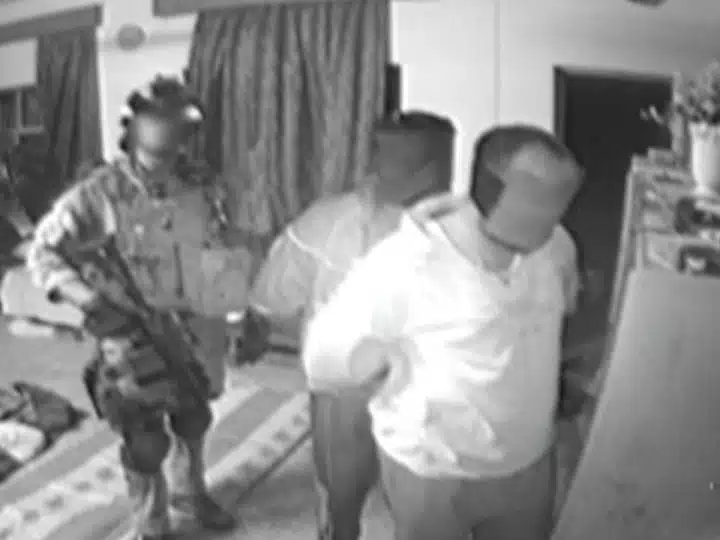

The UK media has consistently mis-framed SAS war crimes allegations while marginalising the voices of alleged victims. That’s according to a new report by Action on Armed Violence (AOAV) which delves into how the press has responded to the ongoing scandal. The report looks at a wide range of media coverage — with the Canary getting a positive mention for our work.
The study, titled ‘Witch hunts or war crimes? How the British media talks about allegations of SAS killings of civilians in Afghanistan‘, was published on 18 August. The Haddon-Cave inquiry into allegations of extrajudicial killings in Afghanistan at the height of the war is still underway. AOAV has covered the issue extensively; their top-tier work can read here.
SAS — Secrecy versus justice
As AOAV rightly points out, the UK special forces benefits from state secrecy. However, this also makes investigating allegations extremely hard:
That secrecy has helped sustain the SAS’s global reputation, but it has also made allegations of wrongdoing particularly difficult to examine.
The war in Afghanistan brought the challenges of investigation “default heroes” into sharp focus, as claims emerged that members of UK Special Forces had unlawfully killed detainees and civilians during night raids. Furthermore, those killings were – it is becoming very clear – inadequately investigated.
eventually led to the creation of the Afghanistan Inquiry, a statutory investigation examining possible unlawful activity by UK Special Forces between 2010 and 2013 and the adequacy of earlier military investigations.
However, the way the UK media has covered the issue is highly questionable. AOAV has set out to address those shortcomings.
Lawfare and warfare
The press response to these allegations reflects a set of deep problems. While the inquiry has certainly opened a doorway into the secret world of special forces operations:
terms such as “lawfare”, “witch hunt” and the “hounding” of veterans have become increasingly prominent.
These terms obfuscate the real issues, creating:
a powerful competing narrative: whether scrutiny of alleged abuses should be understood primarily as a matter of law and accountability, or as an attack on soldiers and military effectiveness.
For example, terms like ‘witch-hunt’, lawfare and ‘hounded’ have been used to delegitimise questions about alleged SAS killings.
A broad narrative emerged of veterans being unfairly ‘hounded’ by lawyers, subverting the perpetrator-victim relationship.
The term ‘lawfare’, generally used to describe a weaker actor using the courts to undermine a bigger actor, has:
become widely seen as a pejorative term to describe use of the law to achieve a non-legal aim.
It has often been used by ex-military figures in right-wing media to attack the investigations. The Canary is a notable exception:
The only use of the term outside of the right-wing media was its explicit rejection in Canary News.
And alleged victims appear to have been given very different coverage from military figures:
Coverage in general rarely platformed the perspectives of the affected Afghan families, choosing instead to focus on the perspectives of military figures and those involved in the inquiry itself – commentary from former military figures appeared [at] five times the frequency of the affected families.
Ultimately, the authors found that the allegations had up-ended a comfortable and widely held mythology about the SAS:
The Afghanistan Inquiry has forced the British media to confront allegations that cut against one of the most enduring narratives surrounding the SAS: that of an elite force defined by professionalism, secrecy and heroism.
And while the centrist and left-leaning media has focused on the allegations:
the right-wing media have shifted attention towards the supposed consequences of scrutiny, portraying investigations as “lawfare”, a “witch hunt”, a betrayal of soldiers or even a threat to national security.
AOAV director Iain Overton said there was more than the SAS’s reputation at stake here:
The way these allegations are reported helps determine whether alleged abuses committed in Britain’s name are treated primarily as questions of evidence, law and accountability, or as attacks upon the institutions accused of committing them.
The current inquiry, he added, represents “an unusual moment of insight”:
that breaches the sacred secrecy surrounding British Special Forces. But the British media response also makes it clear how difficult it remains for that breach to translate into a public debate in which the experiences of alleged victims carry the same weight as the reputation of the regiment.
Many horrors emerged from the War on Terror. And many more will emerge. It is the responsibility of the press to cut through the myths, obfuscations and lies which have characterised the post-9/11 world. It should do so without favour to any state, individual or organisation. Parts of the media are clearly failing in that task. This report is an important corrective. The UK media should heed the warning.
Featured image via the Canary
By Joe Glenton
Politics
10 years on, 41 organisations call for authorities to review the convictions of the Birmingham 4
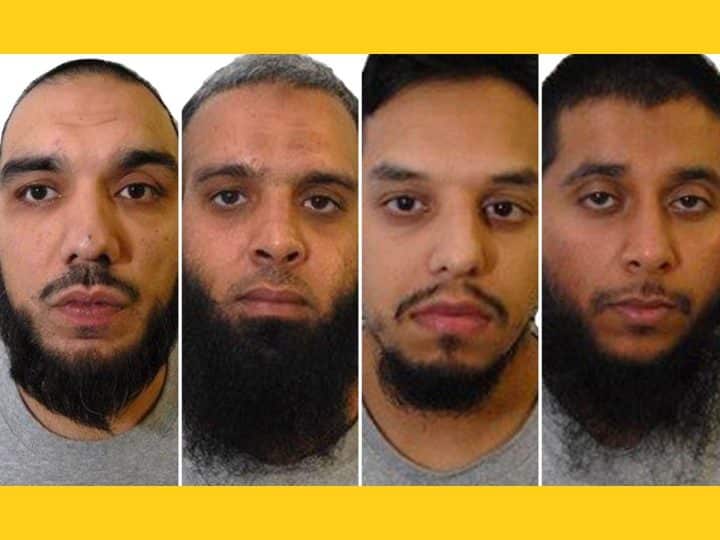

CAGE International and 40 other organisations have signed a call for an immediate review of the convictions of the ‘Birmingham 4’. First arrested over 10 years ago, these four men were convicted of terrorism offences back in 2017.
The courts sentenced Naweed Ali, Khobaib Hussain, Mohibur Rahman and Tahir Aziz to life in prison following a joint undercover operation by MI5 and West Midlands Police. However, all four men and their legal teams have maintained their innocence throughout.
Now, the 41 organisations have highlighted serious concerns, including:
allegations of evidence being improperly introduced, police being in contempt of court during the trial, and the absence of clear forensic or video evidence linking the defendants to the items in question. Taken together, these issues raise significant questions about whether the men received a fair trial.
You can read the full joint statement here.
Birmingham 4 — ‘Police fabrication and mendacity’
The day after the jury’s original verdict, Gareth Peirce — the solicitor who represented the Birmingham 4 — took the unusual decision to publish a public statement. The Justice Gap reported her words:
We register our unqualified respect for the system we have of trial by jury in this country. But jurors can on occasion get things wrong.
She went on to state that:
There were cases in the 1970s and the early 1980s where West Midlands Police planted and fabricated evidence to such an extent that the squad responsible was completely disbanded and dozens of defendants convicted, one by one had their convictions quashed. This case rests on police fabrication and mendacity in the clearest way.
Accusations of a setup
Now, CAGE and organisations including the Justice Gap, Black Lives Matter UK and APPEAL have put their weight behind a call for authorities to re-examine their convictions and release the Birmingham 4.
They’re demanding that the Criminal Cases Review Commission (CCRC) use an exceptional circumstances provision to reopen the case immediately. The special power allows the CCRC to accept a new appeal even without the usual requirement of new evidence.
Likewise, the 41-organisation coalition also questioned the conduct of the West Midlands Police, calling for a full and independent investigation. They explained that:
The convictions rested almost entirely on evidence produced through an undercover operation where the men were set up. West Midlands Counter Terrorism Unit, working with MI5, established a fake courier company – Hero Couriers – with the aim of ensnaring the men. On Naweed Ali’s first day of work, a ‘kill kit’ was discovered in his car after he had handed his keys to the undercover officer, known only as ‘Vincent’, who had sole and unobserved access to the vehicle for over an hour.
To make matters worse, no DNA, fingerprints or prior surveillance could link any of the four men to the items the police found. Likewise, the court withheld CCTV footage of the period when Vincent was alone with Ali’s car from the jury.
The judge presiding over the trial also found the West Midlands Police officers to have behaved in contempt of court. The officers claimed before the jury that they had never been in contact with one another. However, the evidence of 1,000 deleted messages between the undercover officers belied this falsehood.
History repeating itself?
Over two years ago, a formal application was submitted to the CCRC regarding the treatment of the Birmingham 4. However, to date, the commission has failed to action that complaint. CAGE stated that:
The CCRC was itself established in the wake of the Birmingham Six miscarriage of justice, a case bearing striking similarities to this one, making its continued inaction all the more concerning.
The Birmingham Six were six Irish men who were convicted of pub bombings in Birmingham back in 1975. In 1991, after 16 years in prison, their convictions were overturned due to the flawed and inconsistent nature of the evidence.
Regarding the Birmingham 4, Naila Ahmed — the head of campaigns at CAGE — said:
These four men have been unjustly imprisoned for ten years. There are major concerns about West Midlands Police’s conduct in a joint operation with MI5, especially regarding their undercover officers who have so far evaded any accountability. Any impartial assessment of the facts will recognise this as a gross miscarriage of justice. We urge the CCRC to do the same, and to use the exceptional circumstances provision to refer this case back to the Court of Appeal without further delay.
Featured image via the Canary
By The Canary
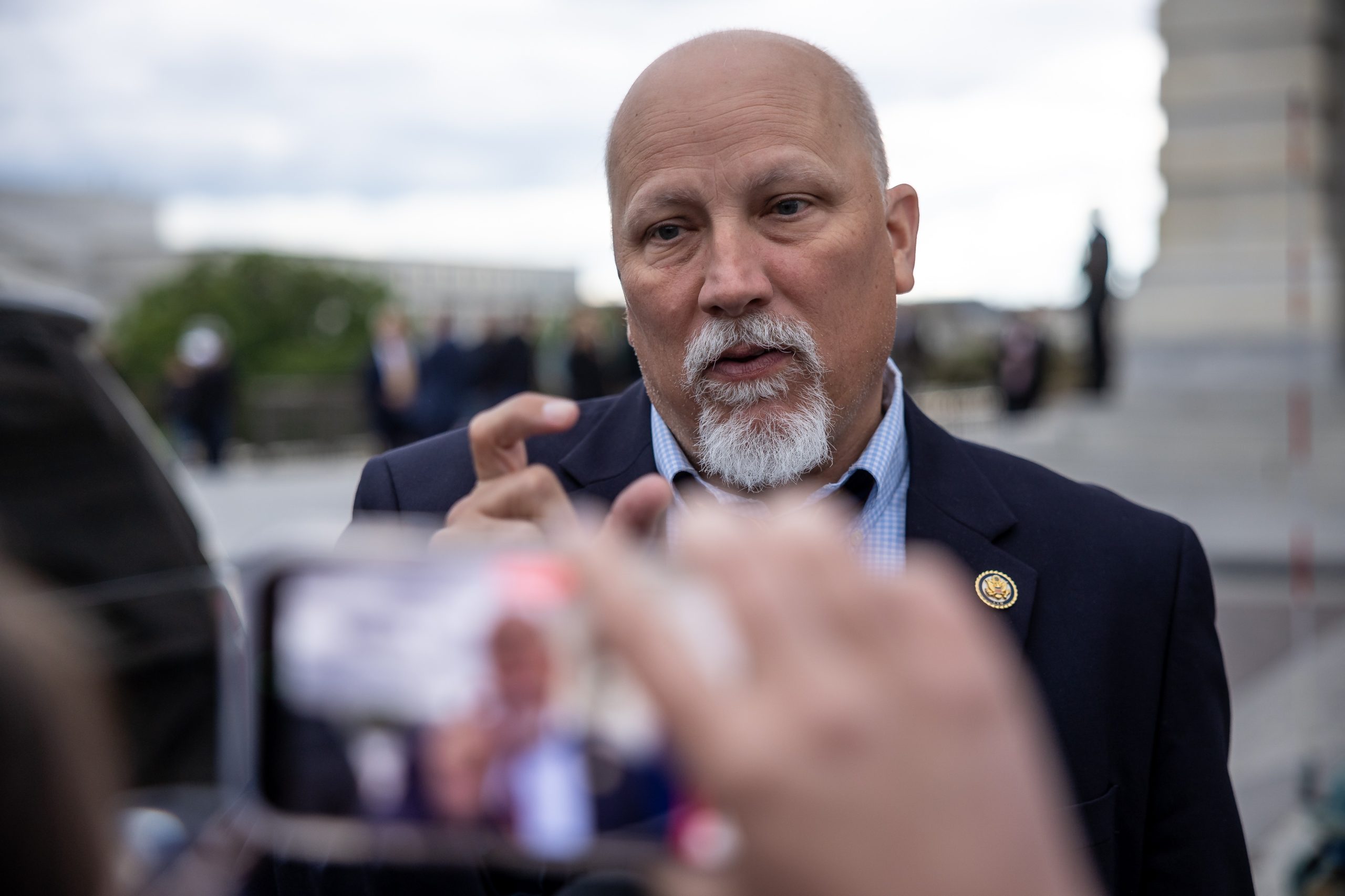

The hard-right Freedom Caucus is having a rough primary season.
Candidates with backing from the caucus and its allies flopped in primaries from Florida to Wyoming on Tuesday, adding to a string of recent losses for the group.
In Florida, Catalina Lauf lost in a House GOP primary to replace Freedom Caucus member and Florida Rep. Byron Donalds — despite backing from President Donald Trump as well as a late, small ad buy from the Freedom Caucus Fund and millions from other groups supporting her.
Hours later, more than a dozen Wyoming Freedom Caucus candidates in the state’s legislature lost to moderates. The group’s chair, Rachel Rodriguez-Williams, lost to a moderate in the secretary of state race, as did Freedom Caucus candidates for state superintendent and treasurer.
Those losses followed Rep. Andy Ogles’ (R-Tenn.) ouster earlier this month, Rep. Chip Roy’s (R-Texas) defeat in his run for Attorney General and Rep. Ralph Norman’s third-place primary finish in the race for South Carolina governor — all candidates who the Freedom Caucus Fund, the federal campaign apparatus of the House Freedom Caucus, spent hundreds of thousands of dollars to boost.
The State Freedom Caucus Network, which backed the Wyoming legislative candidates, is not officially affiliated with the House Freedom Caucus, but its website says its mission is “building on the success of the House Freedom Caucus” to bring the fiscally conservative principles of the group to statehouses nationwide.
While there have been some wins for Freedom Caucus members this cycle, the combined pattern suggests that the ultra-conservative group’s name and influence is waning with GOP voters, and it comes as the factions of the party battle for relevancy when Trump’s presidency ends.
“They became largely an island of misfit toys: problematic in their party, and not for reasons that are necessarily popular with the public,” said GOP strategist Matthew Bartlett, who served in Trump’s first administration. “So you’ve seen diminished influence, and you’ve seen them losing seats, losing stature.”
In Wyoming, Robert Short, a moderate Republican, defeated Rodriguez-Williams by campaigning on a slogan of “make the secretary of state’s office boring again.”
“What Wyomingites were not and still are not is extremists,” Short told POLITICO, arguing that by pushing an “extremist agenda” in the state, the local Freedom Caucus tried to “usher in a national-driven agenda that really does not have a home in Wyoming. And I think the voters of Wyoming responded resoundingly last night in saying, ‘not up in here.’”
The Wyoming losses were especially notable given how conservative that state is. Just two years ago, Freedom Caucus-aligned members took control of the state legislature and the state and gave Trump the highest vote share of any state in the nation. Two years before that, the state’s GOP primary voters resoundingly ousted former Rep. Liz Cheney (R-Wyo.), who defied Trump over his false claims that the 2020 election was stolen. It’s still one of only a handful of states where Trump’s approval rating is still positive. So for the Freedom Caucus to get thumped there is particularly notable.
Wyoming’s Freedom Caucus members struggled to pass its priorities and tried to axe broadly popular programs, from public media funding to dismantling the state’s economic development agency. In proposing those changes, the caucus often sparred with more traditional conservatives.
The caucus aimed to secure a supermajority through Tuesday’s primaries to ram its agenda through the legislature. Instead, voters resoundingly rejected them.
“It was a butt-whoopin,” said Wyoming GOP state Rep. Andrew Byron, who ran unopposed on Tuesday and is not a member of the Freedom Caucus. “It was a huge statement by the Wyoming voters that shows that if you’re not willing to govern and listen to your constituents, they react.”
Multiple Republicans in the state, including Byron, pointed to big spending from national outside groups backing the Freedom Caucus that made Wyomingites feel like out-of-staters were trying to influence their politics as reason for the sweeping losses.
“Wyoming people live in Wyoming because we like our way of life,” Byron said. “We’re not good at getting told what to do, and we really appreciate the Wild West out here.”
In a statement posted to social media, the Wyoming Freedom Caucus said it “IS NOT GOING ANYWHERE.”
“Last night’s results will not undo the policy wins we’ve delivered on behalf of the people,” the group wrote.
Their struggles are part of a broader pattern. The Freedom Caucus Fund has failed to elevate its candidates in four of the five races it spent in this year, spending a combined $1.5 million dollars to boost Lauf (who got just $30,000 in support from the group), Ogles, Norman, Roy and Nevada Republican David Flippo (who is the only candidate the group spent for and won).
These candidates didn’t all lose for the same reasons. Ogles had been plagued by various scandals, was running in a newly redrawn district with a number of new voters unfamiliar to him, and had limited campaign resources. Roy was hammered for his past support of Florida Gov. Ron DeSantis and criticism of Trump in the 2024 presidential primary. Norman was running in a crowded field in which Trump was backing another candidate (and he is again in the South Carolina special Senate primary). For her part, Lauf struggled to break out in a crowded 10-way primary in a ruby red seat.
But observers say there’s often a common through-line: The candidates have been mired in controversy.
“In a day and age where candidates matter, they tend to create their own headaches,” Bartlett said. “Sometimes behavioral, sometimes ideological.”
Neither the Freedom Caucus Fund nor a spokesperson for Freedom Caucus Chair Andy Harris (R-Md.) responded to a request for comment on Wednesday. Multiple Wyoming Freedom Caucus members who lost on Tuesday also did not return calls.
The only victory for the group where it spent money this cycle was in Nevada’s 2nd District, where it elevated Flippo in the race to replace retiring Rep. Mark Amodei (R-Nevada), who has declined to support Flippo in the general election for the deep-red seat. In other races where the campaign arm didn’t spend, Donalds and Reps. Andy Biggs (R-Ariz.) and Tom Tiffany (R-Wis.) cruised to their states’ GOP nominations for governor, and Rep. Barry Moore (R-Ala.) won the primary to succeed Sen. Tommy Tuberville in the upper chamber.
Some of those candidates, like Biggs and Tiffany, will face tough general election bids in battleground states — providing another test for the Freedom Caucus among a broader swath of voters.
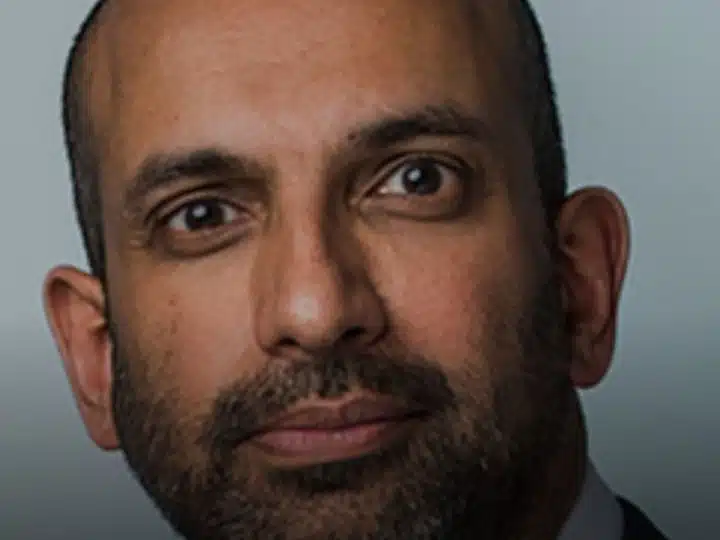

Filton 24 — Lawyers have issued a statement on behalf of barrister Rajiv Menon KC about the contempt of court proceedings brought against Menon by intelligence service-aligned judge Jeremy Johnson. Johnson is pursuing Menon for the closing speech he gave to the jury in defence of his client, Filton 24 defendant Charlotte Head.
Menon went public for the first time this week about the charges, giving an interview to news website Democracy Now. Lawyers want to remind the public that Menon denies any wrongdoing, but is currently in a phase of the case for technical challenges rather than direct argument on the merits of his case, judicial bias and the prosecution’s lack of merit.
Jenny Wiltshire, Head of Serious and General Crime at law firm Hickman & Rose, said:
Rajiv is grateful for the many messages of support he has received and is continuing to receive in relation to the contempt of court proceedings he is facing in respect of the closing speech he gave to the jury in defence of his client, Charlotte Head.
The legal challenges that Rajiv has so far made are necessarily procedural and jurisdictional. The pending appeal before the Court of Appeal (Criminal Division), which is awaiting a hearing date, concerns the legality of the Crown Court having purported to invoke a summary procedure on 22 June and 29 June 2026, more than five months after Rajiv’s speech, and further alleges that the proceedings against Rajiv raise apparent prejudice/bias.
That the nature of the challenges thus far have been largely procedural and jurisdictional means that there has been no forum in which to set out Rajiv’s strong legal and factual challenges to the allegations of contempt themselves.
As the proceedings are currently ongoing, it is not appropriate to set out the details of his challenges now. What can be said at this stage is that Rajiv’s defence is not limited to the issue of jury equity but includes the nature and extent of the trial judge’s orders themselves which are alleged to have been in force and breached. If the time ever comes when the details of Rajiv’s challenges need to be presented, this will be done in full.
Nevertheless, it is important that all of those showing any interest in this matter know that Rajiv strenuously denies that the speech he gave breached any order of the trial judge, was intended to do so, or was in any way in contempt of court.
This is separate from the profoundly concerning decision by several senior judges to pursue this matter as a potential contempt of court and the procedure which has now been adopted on two separate occasions, which must be having a chilling effect upon other barristers and advocates.
Featured image via the Canary
By Skwawkbox


An Australian court has rejected the Israel’s ‘IHRA definition‘ of antisemitism as “verbose and imprecise” and “detached from reality”. The New South Wales Supreme Court ruling aligns with the findings of legal experts — and even the creator of the ‘definition’.
Judge Desmond Fagan rejected the state government’s attempt to impose a terrorism supervision order on a Sydney man for vandalism. The attempt mirrors the UK government’s move to treat anti-genocide activists as terrorists. However, unlike the suborned UK court system the NSW court has, at least so far, embraced justice rather than political lawfare.
Fagan’s damning description of the (non) definition was only the start. He went on to describe the so-called IHRA definition as incompatible with Australia’s established meaning, concluding that it is an attempt to “repurpose” the term to repress criticism of Israel.
IHRA — Israel lobby tactics
As in the UK, Australia’s Israel lobby — well entrenched in government — is trying to force the ‘IHRA’ onto all areas of government, education and media. Again mirroring the UK, ‘Labor’ PM Anthony Albanese has used the Bondi massacre – whose perpetrators were not linked to Palestine and which was stopped by a Muslim man — to wage war on anti-genocide protest.
But Fagan threw a spanner in the works when he ruled that the IHRA is “preposterous” if it is used to demonise opposition to Israel’s genocide in Gaza:
the IHRA proposal is detached from the reality of the common usage and understanding of antisemitism in this country…
…it would be preposterous to suggest that 79% of Australians are antisemitic because they disapprove of Israel’s treatment of the Palestinians.
Anti-Zionism ≠ antisemitism
The judge also turned his fire to the lobby’s tactic of trying to equate opposition to the racist political ideology of Zionism with antisemitism:
As an ideology of Jewish nationalism, Zionism is open to political discussion and criticism, notably on grounds concerning the rights of the Palestinians.
This is a blow for the so-called ‘antisemitism plan’ of Australia’s Zionist ‘antisemitism tsar’ Jillian Segal, who frequently treats the two as interchangeable and used this to push for the blanket adoption of the IHRA. Fagan was having none of that, pointing out that being Jewish is not the same as being Zionist:
It may well be correct that ‘most, but not all Jewish Australians’ regard Zionism as ‘a core part of their Jewish identity’. That does not mean that anti-Zionists are hostile to that majority of Jews on account of their Jewishness; only that they hold a negative view of a political ideology with which the majority of Jews have chosen to identify.
And he correctly identified the fact that Israel’s supporters push the ‘IHRA’ specifically to conflate Jews and Israel:
Its tendency, and the apparent purpose of promoting it, is to graft onto the community’s abhorrence of antisemitism, understood as hostility to Jews for their Jewishness, a parasitic rejection of protest against Israel.
Fagan warned the federal government that it couldn’t change the real meaning of a word by means of a definition that “fails the first test of any definition: it is indefinite”. He said that courts had to work with real meanings and added a rebuke for the government’s lawyer:
You are treating all Jews as monolithic. It’s quite wrong to treat all Jews as supporting Israel, because they don’t.
Featured image via the Canary
By Skwawkbox
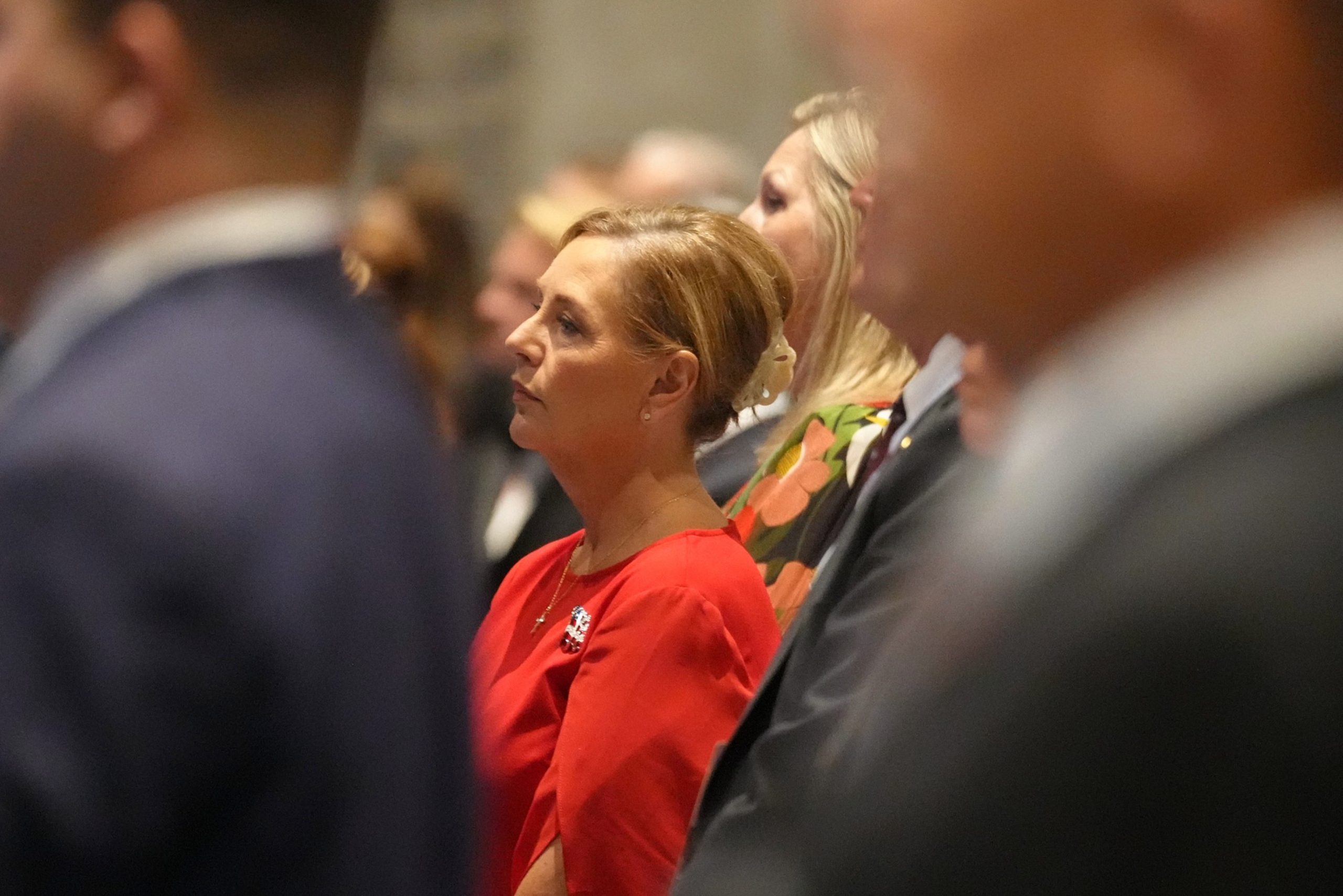

South Carolina Sen. Darline Graham has given opponents fresh ammunition to attack her on her biggest vulnerability: her inexperience.
She revealed a major blindspot in her understanding of a critical foreign policy issue, U.S.-Taiwan relations, during Tuesday’s debate for the Aug. 25 snap Senate primary runoff to replace her late brother Lindsey Graham. Her response spread like wildfire on social media, with critics saying it proves she is “unprepared” to take office.
Asked whether Taiwan and the South China Sea are relevant national security priorities, Graham responded: “I’m just going to be honest here … I’m not that informed on national security, so.” She added that “national security is not my thing, not my area of expertise, but I do support the military.”
It was a notable acknowledgement from a sitting senator, as tensions rise between China and Taiwan — and as the U.S. preoccupation with the Iran war calls into question how reliable a supporter it might be amid fears of a possible future invasion of Taiwan.
The gaffe exposed the exact weakness that her runoff opponent, GOP Rep. Ralph Norman, has been eager to highlight: the senator’s lack of tenure.
His allies immediately piled on.
Norman supporter and former U.N. Ambassador Nikki Haley wrote in a post on X that foreign policy experience is “not something you inherit” — a swipe at Graham’s appointment to fulfill her brother’s current term. Ken Cuccinelli, a former Trump administration official, expressed support for Norman, writing that Graham has “worked hard to hide any firm positions, and here she is at least being honest.”
“It very much confirmed many of our suspicions that while she might be a very nice lady, she is woefully underprepared or unprepared to be one of the 100 U.S. Senators in the Senate,” state Rep. Jordan Pace, who is supporting Norman in the runoff, said in an interview.
Norman said in a statement that South Carolinians deserve a senator with “know-how” on foreign policy: “Whether it’s spy balloons flying overhead or buying up land near South Carolina military bases, China continues to prove that it is a threat to the United States.”
Graham’s campaign, asked to clarify her response on U.S.-Taiwanese relations and her critics’ attacks over her misstep, pointed toward comments she made in the spin room after the debate: “What’s important are the people of South Carolina. They’re worried about their pocketbooks more than they’re worried about the South China Sea, quite honestly.”
Graham’s answer is also raising eyebrows among some of her own allies, with less than a week before next Tuesday’s election. And it increases the pressure on President Donald Trump, who had championed Graham’s appointment in July, encouraged her to run for a full term and is even planning to rally with her on Friday to boost her election chances.
“[Darline] just doesn’t have the experience of executing, you have to be able to deliver a story about herself and right now her story is that she’s Lindsey Graham’s sister,” said a former Trump administration official, granted anonymity to speak openly about private conversations.
The White House is still backing Graham, this person said, because the president had a close relationship with the late senator but also sees her as a better alternative to Norman, who endorsed Haley over Trump in the 2024 Republican presidential primary.
A second person familiar with the White House’s thinking, granted anonymity to speak candidly, said, “POTUS is still all in on the endorsement.”
The White House declined to comment on Trump’s support for Graham.
Still, the flub highlighted the danger for Trump, as he seeks to propel a political novice into a six-year term in the Senate and avoid yet another stain on his endorsement record. His high-profile rally for Graham in Myrtle Beach later this week is a particularly notable step in a year otherwise marked by a decrease in his explicit campaign travel.
Norman, for his part, said during the debate that Taiwan is a “definite ally” and that Trump is right to enable them to “defend themselves against China.” He declined to take a swipe at Graham over her comment in real time, but that hasn’t stopped his supporters from hammering the newcomer for the embarrassing misstep.
Graham’s stumble was a far cry from her late brother’s hawkish defenses of Taiwan, in which Lindsey Graham had openly criticized the expansionist aims of Chinese President Xi Jinping, called allies of China “dirtbags” and stressed the need to maintain the status quo between Beijing and Taipei to protect U.S. national security interests.
“Anyone running for a seat in Congress should be able to explain to the American people why Taiwan is important to American interests. Taiwan is a vibrant democracy of 23 million people and the source of over 90 percent of the world’s advanced semiconductors,” said Bonnie Glaser, managing director of the German Marshall Fund’s Indo-Pacific program. “A Chinese takeover by force would shatter U.S. credibility with its allies across the Indo-Pacific.”
American intelligence has long suggested that China’s People’s Liberation Army will be sufficiently capable of seizing the island starting in 2027.
Trump in June said he was open to speaking with Taiwan’s President Lai Ching-te, despite China’s warnings against doing so, in what would be the first direct dialogue between American and Taiwanese leaders in decades.
But the U.S.’ war with Iran is casting doubt on how effective an ally the Trump administration will be if China does invade Taiwan. Extended naval deployments to support airstrikes against Iran and a corresponding blockade of its ports have left the U.S. without a deployed aircraft carrier in the Indo-Pacific, as the USS George Washington steams toward the Middle East to relieve the extended Abraham Lincoln carrier, for instance.
The heightened risks and the rapid race to replace Lindsey Graham have left some in South Carolina’s GOP circles feeling less than optimistic about the choice they have to make to select a key proxy in Washington.
“It was shocking how we’re gonna give someone who was on stage last night six years in the U.S. Senate, and I think that’s the overall impression people are having today” said one South Carolina-based Republican operative who has stayed neutral in the Senate race and was granted anonymity to speak candidly. “One of these two is gonna get six years in the Senate? Like, big hanging question mark.”
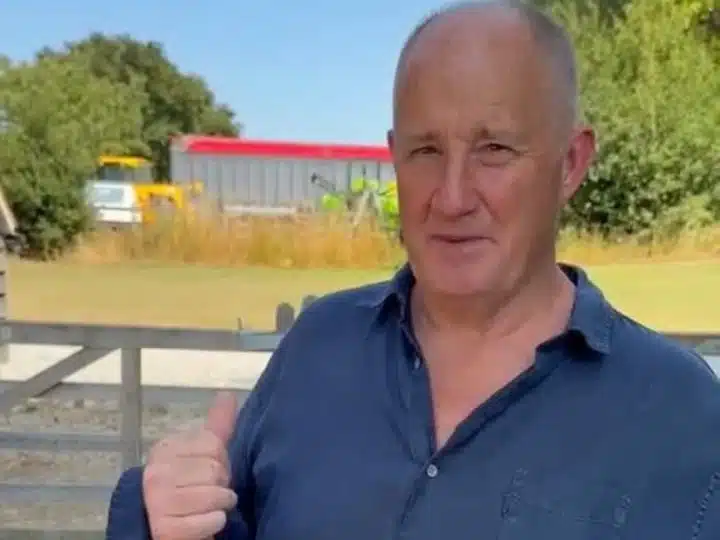

The chair of the Conservative party has called for the failed, racist Rwanda scheme to be reinstated. Kevin Hollinrake was quoted in the press arguing it was a better option than housing asylum seekers in a Yorkshire RAF base.
The Tory Rwanda scheme would have seen asylum seekers relocated to the African state. One of former PM Keir Starmer’s first moves upon taking power in 2024 was to scrap the scheme.
Hollinrake said:
We, in a previous government, decided where to put them, we said they should be detained and deported back to their home country, or if they couldn’t go to their home country they should go to Rwanda.
His comments followed an alleged Home Office attempt to apply:
for planning permission to house asylum seekers at former RAF Linton-on-Ouse near York, and two other Ministry of Defence sites.
They say this will help them close asylum hotels. The Yorkshire Post reported:
locals have reacted in uproar at the prospect of 1,300 men being housed in a small village of 650 people.
Rwanda scheme redux?
Hollinrake said:
Illegal migrants should not be in anybody’s community. That’s the reality. Whether it’s in hotels, houses of multiple occupation or air bases or military bases.
I set about a campaign with others in the local community in a village near me in my constituency in the last Parliament, because I think it’s totally wrong they should be in these communities.
Hollinrake, who is the current MP for Thirsk and Malton, said:
These people coming across the Channel should be detained in detention centres pending their immediate deportation back to their home country or a safe third country.
He invited the new Labour PM to work with the group:
That’s what should happen — Andy Burnham could work with us tomorrow to do exactly that.
As the Canary reported way back in 2022:
This scheme comes alongside the inhumane and discriminatory Nationality and Borders Bill, which seeks to criminalise vulnerable people seeking refuge in the UK. The European Court of Human Rights is questioning the lawfulness of plans to ship asylum seekers to Rwanda, a country with a poor human rights record.
For the Tories, violent deportations and a general love for anything carceral are eternal brain-worms. These kinds of dog-whistles allow them to appear relevant and appeal to the very worst tendencies in British public life. The Rwanda scheme encapsulated the current reactionary state of UK politics. And it completely failed to address the global instability which drives desperate refugees to come to the UK.
Featured image via the Canary
By Joe Glenton

Would fiscal devolution work? Lessons from Spain

Real Madrid boss Mourinho wants to unlock key defender’s full potential; has a surprise new role planned

Vaccine breakthrough stops cancer returning in trial





-

 Fashion6 days ago
Weekend Open Thread: Ann Taylor
-
 Sports6 days ago
This U.S. Amateur is a glimpse into golf’s future in more ways than you think
-

 Tech6 days ago
11 Ways to Rank Your Videos
-
 NewsBeat5 days ago
Myanmar says over 300,000 Rohingya refugees verified for repatriation as exodus enters ninth year
-

 Sports5 days ago
Birmingham 2026: Day 6 Timetable for Irish Athletes
-

 Politics5 days ago
SEQ Code: The Three Letter Boarding Pass Code That Could Give You The Worst Seat
-

 Tech7 days ago
DeepSeek Harness launches as open source rival to Claude Code, alongside V4-Pro on API with higher prices
-

 Tech2 days ago
Qwen3.8-27B runs frontier-class coding agents and reasoning locally, no cloud API required
-

 Crypto World2 days ago
OCC Greenlights Trump Family Crypto Firm for Trust Charter
-

 Fashion6 days ago
Weekly News Update, 8.14.26 – Corporette.com
-
 Tech5 days ago
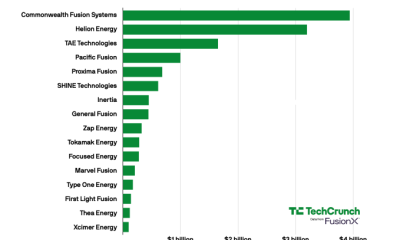
Every fusion startup that has raised over $100M
-
 Entertainment6 days ago
10 Netflix Shows That Quietly Became Modern Classics
-

 Crypto World5 days ago
Pi Network Protocol 27 endgame: last upgrade before what?
-
 Entertainment5 days ago
Marvel Studios Reveals New X-Men Cast Including Adam Driver and Sadie Sink
-

 Business2 days ago
SMA Solar Technology AG (SMTGY) Q2 2026 Earnings Call Transcript
-

 News Videos3 hours ago
Don’t Leave Your Financial Future To Chance | August 19, 2026
-

 Business6 days ago
15 Ways to Make Money From Your Phone (2026 Guide)
-

 Business5 days ago
Facebook Down Now? Users Report Login And Loading Problems As Outage Trackers Monitor Ongoing Issues
-

 Fashion6 days ago
Silver bangles for women – Newbridge Silverware
-

 Politics7 days ago
The migrant mega-dinghy – spiked
You must be logged in to post a comment Login