Tesla and SpaceX chief executive Elon Musk has once again singled out China as the most formidable competitor facing his companies in artificial intelligence and robotics, reiterating comments he first made earlier this year even as SpaceX itself increasingly contends with emerging rivals in the commercial rocket launch business.
Speaking on Tesla’s fourth-quarter earnings call in January, Musk was blunt in assessing where the company’s toughest competition would come from as it races to commercialize its Optimus humanoid robot. “I think China will be by far the biggest competitor in the humanoid robot market,” Musk told analysts on the call. He elaborated on the specific strengths he believes give Chinese firms an edge. “China is extremely good at scaling and manufacturing, and is also strong in AI — the models being released there are already quite good and are improving rapidly,” Musk said.
Musk’s remarks came in response to a question about the wave of Chinese startups entering the humanoid robotics space and what long-term advantages might allow Tesla to stay ahead. According to CnEVPost’s coverage of the call, Musk suggested Tesla currently has no significant competitors outside China in the category, framing the country’s combination of manufacturing scale and AI capability as uniquely difficult to match. “I always think people sort of outside of China kind of underestimate China. China’s next level,” Musk said.
Even while acknowledging China’s strength, Musk maintained that Tesla’s Optimus robot would ultimately outperform Chinese rivals on specific technical benchmarks. “We think we’ll be ahead in terms of the real-world intelligence, the electromechanical dexterity, especially the hand design, which is by far the hardest thing in the robot,” Musk said, according to CnEVPost. He pointed specifically to Chinese electric vehicle maker Xpeng’s humanoid robot, unveiled in November, as one example of the kind of competition Tesla is watching closely, offering a brief but notable compliment. “Not bad,” Musk said of the Xpeng robot, before adding a prediction about the broader shape of the industry: “Tesla and Chinese companies will dominate the market.”
Advertisement
Musk’s comments reflect a broader and longer-running pattern in how he has publicly assessed Chinese competition across his various companies. In 2021, he described Chinese automakers as the “most competitive in the world,” and he has previously credited Chinese workers for helping keep Tesla’s factories operational during pandemic-era disruptions, describing them at the time as “burning the 3 a.m. oil.” Chinese commentators have taken note of Musk’s repeated acknowledgments; the state-run Global Times cited unnamed Chinese experts describing his January remarks as reflecting “the growing strength of China’s robotics and AI ecosystem.”
Beyond humanoid robotics, Musk has also flagged China’s position in the broader artificial intelligence race in other public forums. Speaking at the World Economic Forum in Davos earlier this year, Musk told BlackRock chief executive Larry Fink that electrical power availability, rather than chip production, now represents the primary constraint on U.S. AI development, a limitation he suggested China does not face to the same degree. “I think the limiting factor for AI deployment is fundamentally electrical power,” Musk said, according to Fortune’s coverage of the discussion. “It’s clear that we’re very soon — maybe even later this year — we’ll be producing more chips than we can turn on.”
While Musk has focused much of his recent public commentary on China’s rise in AI and robotics, SpaceX itself faces a more immediate and increasingly crowded competitive landscape closer to home in commercial rocket launches. Rocket Lab, led by chief executive Peter Beck, has continued developing its medium-lift Neutron rocket as a direct challenger to SpaceX’s workhorse Falcon 9, with the company targeting Neutron’s first launch by the end of 2026, according to U.S. News. Rocket Lab entered the year with a $1.85 billion order backlog and plans to recognize 37% of that backlog by 2027.
Jeff Bezos-founded Blue Origin has also emerged as a significant rival, having completed a test payload launch on its heavy-lift New Glenn rocket, a vehicle intended to compete with SpaceX’s next-generation Starship. Ars Technica ranked Blue Origin as the second-most active U.S. rocket company of 2025, trailing only SpaceX itself. Newer entrants have joined the field as well, including Firefly Aerospace, which completed its own initial public offering in August 2025 and has continued expanding its rocket lineup beyond its current Alpha-class vehicle.
Advertisement
SpaceX’s dominant position in the U.S. launch market has also created friction with companies that depend on its rockets to reach orbit, even as new competitors emerge. According to a Reuters analysis of launch data compiled by astrophysicist Jonathan McDowell, Starlink satellites now account for roughly 79% of Falcon 9’s launch manifest in 2026, up from 54% in 2020, as SpaceX increasingly prioritizes deploying its own satellite internet constellation. At least seven spacecraft companies have reportedly been told that Falcon 9 is fully booked for all types of missions until 2028 or 2029, according to sources cited by Reuters, a bottleneck the news agency attributed in part to SpaceX’s ongoing transition toward its new, fully reusable Starship rocket.
Whether SpaceX’s growing internal demand for its own launch capacity, combined with the emergence of better-capitalized rivals such as Rocket Lab and Blue Origin, will meaningfully erode the company’s dominant position in the commercial launch market remains an open question, even as Musk continues to direct much of his public commentary on competitive threats toward Chinese advances in artificial intelligence and robotics rather than the more immediate rocket-launch rivals emerging within the United States itself. As both fronts continue to develop, Musk’s public statements suggest he views China’s combination of AI capability and manufacturing scale as the more structurally significant long-term challenge facing his broader business empire, even as SpaceX navigates a more crowded and increasingly competitive domestic launch market in the near term.
Oxfam is reviewing the operations of its three UK warehouses and has said it “cannot give guarantees” on the future of its high street shops, citing a “difficult economic climate”.
The charity said it has no plans to close either warehouses or shops. But insiders fear the Batley site in West Yorkshire, which houses Oxfam’s main textile recycling centre, could shut as part of a cost-cutting drive because its lease is up for renewal. The other two warehouses are in Bicester and Milton Keynes. Together the three sites employ about 90 people.
A source said Oxfam was considering closing up to 100 of its more than 500 UK outlets because sales at some were no longer viable. “Donations have dropped off,” the insider said, adding that the shops were also facing competition from online sellers of secondhand goods such as Vinted. “Oxfam is always more expensive, and that’s starting to have an effect,” the source said.
Oxfam GB did not confirm any closure numbers. Lorna Fallon, its chief supporter officer, said: “As is standard practice, we keep all parts of our retail operations under review via regular meetings. While we cannot give guarantees in this difficult economic climate, we are confident in and positive about our current retail performance and do not have plans to close our shops or warehouses at this time.”
The review follows two years of losses at Oxfam Activities, the charity’s trading arm. The division sells new goods through Oxfam’s shops, runs the Batley textile recycling plant and supplies stewards for festivals. It lost more than £2m in the year to March 2025, having also lost more than £2m the previous year. Sales fell by 7 per cent in the year to March 2025, driven by a slump in income from recycling. The division’s figures do not include direct income from the stores.
Fallon set those losses against the wider contribution of the retail operation. “In [the last financial year], Oxfam GB’s shops, warehouses and online retail teams generated a £6.3m (net) contribution to our humanitarian work, as well as raising dedicated funds through emergency appeals to support crises in Venezuela, the Middle East and Ukraine,” she said. Oxfam GB’s annual report and accounts for 2024/25 are published on its website, and its filings are recorded on the Charity Commission register.
Fallon also pointed to recent changes in the retail business. She said Oxfam had launched a new online rental service, brought fulfilment of online orders back in-house, and opened a second superstore, in Manchester.
The Batley site remains the main focus of concern among staff because of the lease renewal. Oxfam has not said when the review of its warehouses will conclude.
Advertisement
Amy Ingham
Amy Ingham is a reporter at Business Matters, covering UK business news with a focus on breaking news, business policy, late payments and insolvency. She joined the magazine in 2026 after completing the NCTJ Diploma in Journalism at Harlow College’s journalism school. Her recent reporting includes British Steel’s nationalisation and its impact on SME suppliers, the decline in late payments by large firms, and Insolvency Service director disqualifications. Reach her at aingham@cbmeg.co.uk.
Fortnite players reported widespread access issues early Thursday, according to outage-tracking service Downdetector, though the disruption appears tied to a planned, scheduled server downtime rather than an unexpected technical failure, as Epic Games rolled out its long-anticipated v42.00 update launching Chapter 7 Season 4.
Downdetector posted on its official account on the social platform X that “user reports indicate problems with Fortnite since 1:54 AM EDT,” tagging the post with the hashtag #FortniteDown and directing users to its outage-tracking page for further updates. The post had drawn more than 2,100 views within a short period after being published.
According to gaming outlet Insider Gaming, Fortnite’s servers were scheduled to go offline at 2 a.m. ET Thursday to accommodate the major seasonal update, a timeline that closely aligns with the spike in user complaints Downdetector began tracking at 1:54 a.m. ET. Fortnite’s regular update cadence has made server downtime a familiar experience for longtime players, but major seasonal transitions such as this one typically require a longer maintenance window than the platform’s routine weekly patches.
While Epic Games had not officially confirmed an exact return time for the servers as of the outage’s early hours, Insider Gaming pointed to a promotional post on X advertising the start of Fortnite Chapter 7 Season 4 at 6 a.m. ET, suggesting that timing likely indicated when servers were expected to come back online. The outlet cautioned that the timing was not a formally confirmed schedule and that delays or unexpected complications during the update process remained possible, a pattern that has occurred during past major Fortnite content transitions.
Advertisement
Epic Games’ official status page listed the Fortnite downtime for the v42.00 update as an unresolved incident as of the early hours of the outage, according to StatusGator’s tracking of the company’s public status dashboard. That same status tracker noted the platform had experienced several additional, smaller incidents in the days leading up to Thursday’s scheduled downtime, including a warning-level issue involving errors when installing or updating games through the Epic Games Store that had persisted for more than a day and a half, first reported on Aug. 17. Separately, StatusGator’s records showed brief Fortnite login issues on Aug. 14, lasting between 10 and 20 minutes, along with a short matchmaking and parties disruption earlier that same day.
Epic Games’ public status dashboard also flagged an active investigation into a separate issue affecting the Epic Games Launcher, in which users were reportedly unable to see Fab plugins they had previously installed, an issue the company said it was working to resolve as of Aug. 19. That issue appeared unrelated to Thursday’s scheduled Fortnite downtime but reflected a broader stretch of minor technical issues affecting various components of Epic Games’ platform in the days surrounding the major seasonal update.
Independent monitoring tools offered a mixed picture of Fortnite’s technical status heading into Thursday’s downtime window. UptimeRobot, which continuously checks Fortnite’s core web infrastructure from multiple global locations, reported that its most recent automated check, conducted at 07:13 GMT Thursday from North American infrastructure, did not detect any unusual response times or error codes, a reading that would have been taken before or around the start of the scheduled downtime window depending on the precise timing of the check relative to Epic Games’ maintenance start.
Scheduled downtime for major Fortnite updates has historically varied significantly in duration depending on the scale and complexity of the changes being introduced. According to GamesRadar, routine weekly Fortnite maintenance windows typically begin around 1 a.m. Pacific time, or 4 a.m. Eastern time, and generally last between two and three hours. However, major seasonal transitions, such as Thursday’s shift into Chapter 7 Season 4, have historically required considerably longer maintenance windows given the scope of new content, gameplay systems and Battle Pass changes typically introduced alongside a new season.
Advertisement
Fortnite has experienced longer-than-expected downtime during past seasonal transitions on occasion. During the March 2024 launch of Chapter 5 Season 2, subtitled “Myths & Mortals,” Epic Games encountered an unexpected technical issue partway through scheduled maintenance, forcing the company to extend the game’s downtime by at least eight additional hours beyond its original estimate. At the time, the official Fortnite Status account on X apologized to players for the extended wait, stating that “the team is working through this as quickly as possible” as engineers worked to resolve the unforeseen complication.
Fortnite has also experienced fully unscheduled, unplanned outages in the past unrelated to routine content updates. During one notable incident in January 2019, the game experienced a widespread, unplanned outage affecting logins, matchmaking and the in-game store, with Epic Games’ official Fortnite account confirming at the time that the company was “aware that players are experiencing issues when attempting to use Epic Games services” and was actively working toward a resolution. That particular incident was resolved within several hours, according to a follow-up post from the same account confirming that the game and all associated features had returned to full operation.
For Thursday’s scheduled downtime tied to the Chapter 7 Season 4 launch, the primary source of official updates has remained the Fortnite Status account on X, which the game’s developer has historically used to communicate both scheduled maintenance windows and any unexpected delays that arise during the update process. Players experiencing the “servers not responding” error message commonly displayed during planned maintenance windows have generally been advised that this is expected behavior during scheduled downtime rather than an indication of a broader, unplanned technical failure.
As of this report, Epic Games had not indicated any significant delays affecting Thursday’s rollout of Chapter 7 Season 4 beyond the originally anticipated maintenance window, though the company’s official status page continued to list the update-related downtime as an unresolved, ongoing incident, consistent with standard practice for tracking planned maintenance periods until services are fully restored and confirmed operational for all users.
Top of St John’s tower has been vacant since radio station left in 2024
David Humphreys and Local Democracy Reporter
08:26, 20 Aug 2026Updated 08:26, 20 Aug 2026
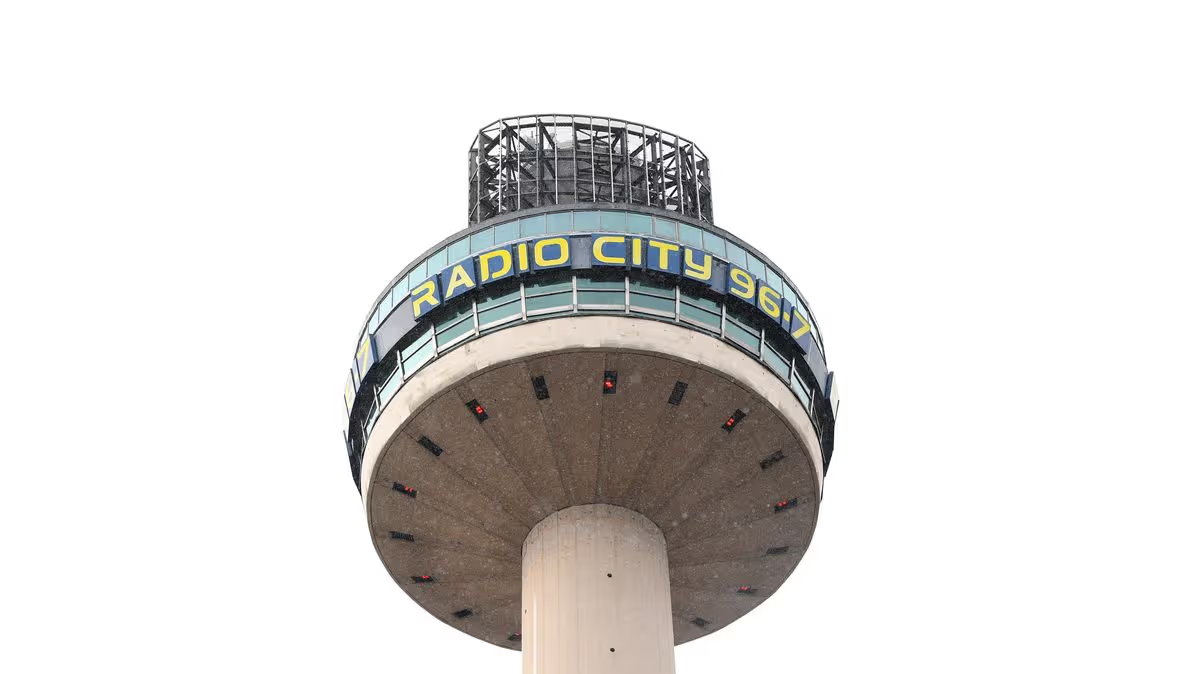
The Radio City Tower will soon lose the station’s branding(Image: Andrew Teebay/Liverpool ECHO)
The iconic Radio City signage atop St John’s Beacon is to be taken down after more than 25 years. Since 2024, the top of the tower has stood vacant after the city’s famous radio station relocated following its rebrand to Hits Radio.
Advertisement
Rumours have swirled about a possible new future for the grade II listed 450ft tower with invitations being sought for even the most “wacky” ideas. While no permanent occupant has been decided upon for the beacon, one very significant change is likely to be made to the Liverpool skyline.
A bid has been lodged with Liverpool Council to take down the Radio City 96.7 signage that spans the side of the top of the building for it to be replaced by a new animated LED screen. A heritage statement attached to the application submitted to city planners said this would “improve the visual quality of the signage as visible both during the day and in darkness.”
Built with the precinct at ground floor level, construction began on St John’s Beacon 60 years ago as a ventilation flue for its heating system. With its 10m long antenna, the tower is still the tallest structure in Liverpool if its rooftop structures are included.
Permission was granted for the station signage to be put up in 1999 and was completed in 2000. According to the heritage statement, the historic LED display has outlived its stay.
Advertisement
It said: “St John’s Beacon is continuing to be used to advertise a business that is no longer resident, and which retains no relationship with the building. This also confuses its own identity, giving the incorrect impression that it continues to be occupied by and part of the radio station.”
It is therefore proposed that a new LED signing band replace the lettering in the same position. No other external modifications are proposed to be made to the beacon or the tower.
Heritage assessments by Donald Insall Associates said upgrading the signage would provide a “slight enhancement, improving the building’s appearance by removing detracting illuminated signage dating from 2000 and now outdated in character and quality and replacing this with attractive lighting with a high-quality, more contemporary, character.”
It is said the new proposed signage is “sensitively signed, of a high quality and enhances and improves the building’s existing townscape role and prominence as a landmark and an illuminated feature in the skyline.”
Advertisement
A date has yet to be confirmed for the plans to go before Liverpool Council’s planning committee for a final decision.
Some universities are now allowing students and their families to pay tuition through PayPal and Venmo.
Among the first institutions offering the payment options are Bellarmine University, Butler University, Kansas State University, Michigan State University and Texas Tech University, although more universities are expected to join later this year.
Advertisement
Students and families may face transaction or processing fees, with the amount depending on the university and the funding method used.
The payment options are being integrated through campus payment platforms including Illumia, Nelnet Campus Commerce and TouchNet, which process tuition payments for institutions across the country.
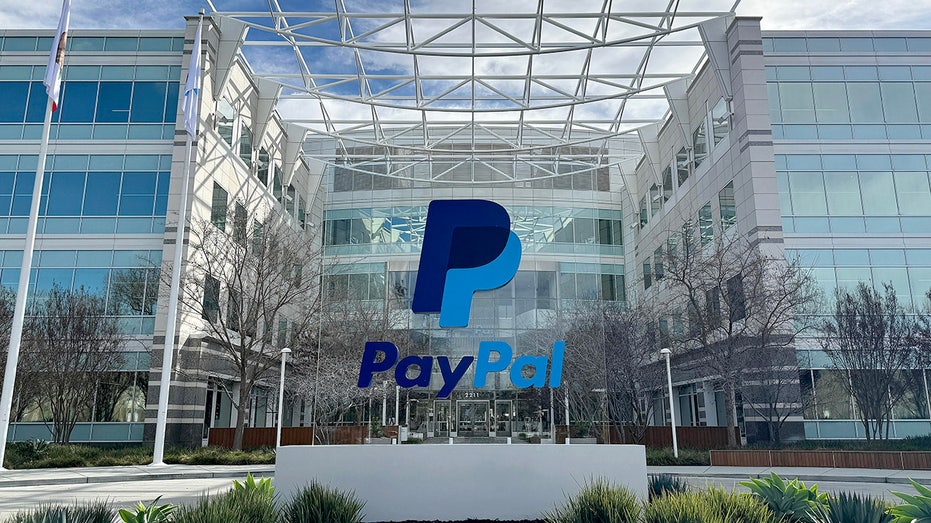
Some universities are now allowing students and their families to pay tuition through PayPal and Venmo. (iStock / iStock)
“A modern tuition payment experience has to work for both sides of the transaction,” Don Smith, Illumia’s senior vice president and general manager of integrated payments, said in a statement.
Advertisement
“Students and families want the flexibility to use payment methods that fit how they manage their money, while institutions need those options to work within the systems and processes their teams already rely on. This integration helps schools expand choice in a practical way, improving the payer experience without creating a disconnected path for campus teams,” Smith added.
PayPal and its Venmo subsidiary have aimed to further expand their presence in higher education over the last year, offering student-athletes the opportunity to receive institutional revenue-share payments through their platforms. Venmo also expanded its presence on college campuses through NIL partnerships with student athletes, college-branded cards, student ambassadors and gameday activations.
Students and families may face transaction or processing fees, depending on the university and funding method used. (Justin Sullivan/Getty Images / Getty Images)
The digital payment systems are already used by many students and families for daily money transfers, including purchasing groceries, splitting rent and sending money to friends and family.
“Tuition is one of the biggest payments a family will make, and it should come with the same flexibility and security that millions of people already count on PayPal and Venmo for every day,” Frank Keller, President of Checkout Solutions and PayPal, said in a statement. “That’s why we’re proud to bring that same choice and protection into the reliable systems schools have already built.”
Advertisement
The companies said PayPal and Venmo use security measures including encryption and fraud monitoring. Consumer regulators, however, have cautioned that money stored in nonbank payment apps may not carry the same deposit-insurance protections as funds held directly in a federally insured bank or credit union.
Consumer regulators have cautioned that some funds stored in nonbank payment apps may not carry the same deposit-insurance protections as traditional bank deposits. (Andrew Harrer/Bloomberg via Getty Images / Getty Images)
Certain eligible PayPal and Venmo balances may qualify for pass-through FDIC insurance when funds are placed at PayPal’s program banks, which currently include Goldman Sachs Bank USA, Wells Fargo Bank and JPMorgan Chase Bank. Not all PayPal or Venmo balances qualify for the coverage.
Advertisement
But FDIC pass-through insurance “protects against the failure of a Program Bank, not the failure of PayPal. PayPal is not a bank, does not take deposits and is not FDIC insured,” PayPal said in a statement.
The fifth and final season of “Outer Banks” premieres Thursday, Aug. 20, on Netflix, bringing the streamer’s long-running teen adventure drama to a close after four seasons chronicling the Pogues’ treasure-hunting exploits along the fictional Outer Banks of North Carolina.
Unlike Season 4, which Netflix split into two separate release batches, all 10 episodes of Season 5 will drop simultaneously worldwide, allowing fans to binge the entire final season at once rather than waiting for a mid-season release of additional episodes.
For viewers in the United States, the season becomes available at the platform’s standard release time for Netflix Originals: 12 a.m. Pacific time, which translates to 3 a.m. Eastern time. Because the release happens globally at the same moment rather than at midnight local time in each region, the actual clock time viewers see the season appear will vary considerably depending on where they live. In India, for instance, the season is set to become available at 12:30 p.m. IST, according to Esquire India, reflecting the significant time zone offset between the U.S. West Coast and South Asia.
Advertisement
Season 5 picks up immediately following the events of the Season 4 finale, which left the Pogues reeling from the death of JJ, played by Rudy Pankow, during a mission in Morocco. According to Netflix’s official season description on Tudum, the final season finds the group “at their absolute breaking point” in the aftermath of that loss. With JJ gone and antagonist Chandler Groff, played by J. Anthony Crane, still at large with the legendary Blue Crown treasure, the remaining Pogues — John B, Sarah, Kiara, Pope and Cleo — are drawn into one final mission built around revenge, danger and their pursuit of the treasure, this time alongside an unlikely ally in Rafe Cameron, played by Drew Starkey.
The returning cast for the final season includes Chase Stokes as John B, Madelyn Cline as Sarah Cameron, Madison Bailey as Kiara, Jonathan Daviss as Pope, Carlacia Grant as Cleo, Drew Starkey as Rafe, along with Austin North, Fiona Palomo, J. Anthony Crane and Cullen Moss in key supporting roles. The series was created by Josh Pate, Jonas Pate and Shannon Burke, who continue to serve as writers and executive producers on the final season.
In comments shared with Netflix’s Tudum ahead of the premiere, the show’s creators reflected on the emotional weight of closing out the series after four seasons. “We are over the moon to be setting out on one last trip with the Pogues,” Pate, Pate and Burke said. “Being back on set with our cast for this final round is nothing short of bittersweet and surreal. We can’t wait to show everyone what we have in store this season — it’s going to be a wild ride…”
Production on the final season began in June 2025 and wrapped in December 2025, with filming for the show’s concluding chapter taking the cast and crew to Croatia during the later stages of production, according to the Outer Banks Fandom wiki. The season was officially announced in November 2024, giving fans nearly two years to anticipate the show’s conclusion after its fourth season aired.
Advertisement
“Outer Banks” first premiered on Netflix in April 2020, quickly becoming a breakout hit for the streamer during the early months of the COVID-19 pandemic, as audiences gravitated toward the show’s mix of teen romance, treasure-hunting adventure and coastal setting. Across its first four seasons, the series has accumulated nearly 200 million views on the platform and has appeared on Netflix’s Top 10 English-language television list 25 separate times, according to figures cited by Tudum, underscoring the show’s sustained popularity throughout its run.
Season 4, the show’s most recent prior installment, saw the Pogues discover the legendary lost city of El Dorado before returning home to build what the group dubbed “Poguelandia 2.0,” a bait, tackle and charter-tour business. When financial difficulties threatened that new venture, the group agreed to help a wealthy client named Wes Genrette search for Blackbeard’s lost treasure, a pursuit that ultimately led them to the Blue Crown and set up the events now playing out in the final season.
Ahead of the full season’s release, Netflix offered fans an early preview of the show’s conclusion, releasing the first eight minutes of Season 5’s premiere episode in advance through the platform’s Tudum website, giving longtime viewers a taste of the emotional tone set to define the Pogues’ final adventure.
The show’s ending arrives alongside additional tie-in content tied to the series’ conclusion. A 25-track vinyl soundtrack compilation drawing from the show’s music across its run has been made available for pre-order, timed to coincide with the final season’s release and aimed at capturing what Tudum described as the “sun-drenched nostalgia” associated with the show’s coastal setting and soundtrack.
Advertisement
For fans wondering how to plan their viewing, the straightforward answer is that all 10 episodes will be accessible starting at 3 a.m. ET/12 a.m. PT in the United States, with international viewers seeing the season appear on their own local clocks according to the corresponding time difference from the West Coast release. Netflix has not indicated any staggered or region-specific release strategy for the final season, meaning the full 10-episode run should become available to subscribers everywhere within the same global release window.
As one of Netflix’s signature original series concludes its run, “Outer Banks” joins a small but notable group of the platform’s biggest hits to reach a planned final season in 2026, following a similar high-profile sendoff earlier this year for “Stranger Things.” With the Pogues’ fate now set to be revealed in full, fans eager to find out how the series resolves its central treasure hunt, along with the emotional fallout from JJ’s death, will be able to do so in a single sitting once the season becomes available early Thursday morning.
Seeking Alpha’s transcripts team is responsible for the development of all of our transcript-related projects. We currently publish thousands of quarterly earnings calls per quarter on our site and are continuing to grow and expand our coverage. The purpose of this profile is to allow us to share with our readers new transcript-related developments. Thanks, SA Transcripts Team
Yes. Corporate subscriptions are available for teams and organisations, with discounted rates as user numbers increase. Pricing starts from $1,625 + GST per user. Get in touch
to discuss the right option for your organisation.
Business News subscriptions are used by executives, investors, consultants and professionals who need to stay informed and make better decisions about the WA market. When you subscribe you’ll get
Unlimited access to WA’s most trusted business journalism
Data & Insights — detailed profiles of WA companies, people, projects and deals
MyBN — a personalised feed based on the companies, people and sectors you follow
Special publications and industry reports
Daily and weekly email newsletters
Data & Insights is a research tool built specifically for the WA market. It draws on more than 30 years of Business News reporting, updated regularly to reflect what’s happening now. Use it to:
Look up detailed profiles of WA companies, including financials, directors and ownership
Find decision-makers and track their career movements
Research live and completed projects across WA industries
Monitor deals, appointments and market activity
Access industry rankings and league tables
Data & Insights is updated daily by our dedicated research team, which uses the latest announcements, ASX filings and editorial coverage to keep our person, company, list and project records up to date.
Business News welcome all opportunities to make our dataset accurate, complete and current, so if you have an update request, please email the team at general@businessnews.com.au, and we’d be happy to assist.
Advertisement
MyBN
is part of every subscription. It’s your personalised view of Business News. You can follow the companies, people, sectors and projects that matter to you, and get a news feed and alerts tailored to your interests. You can save articles to read later and retain only what you need.
Only subscribers have full access to all content on the Business News website.
Advertisement
If staying informed about the WA economy is part of your job, and/or you’re looking for networking opportunities in WA, Business News is built for you.
Business News subscribers are:
Executives and directors tracking competitors, clients and market movements
Investors and advisers researching companies, deals and industry trends
Consultants and professionals staying across sectors relevant to their clients
Business owners looking for leads, context and market intelligence
Most Business News publications cover national or global markets. Business News is focused entirely on Western Australia, which means the journalism, the data and the intelligence are all built around WA companies, people and projects — not adapted from a national feed. Data & Insights, included with every subscription, combines more than 30 years of WA-specific editorial research with live business data. There’s no comparable product for the WA market.
Advertisement
The Morning Digest Email provides a comprehensive wrap of the major headlines, relevant to WA business, and includes with a snapshot of the overnight news covering oil, gold and ASX-listed companies.
The Afternoon Wrap Email focuses on the news covered by our team of journalists during the course of the working day, including exclusive stories and analysis, all of which relates to WA business and the local economy.
The BN Weekender Email contains a wrap of the Business News from the week that was, highlighting the top stories in each area of WA business. Sign up for free.
Advertisement
We’re happy to help. Get in touch
and our team will come back to you.
Yes. Corporate subscriptions are available for teams and organisations, with discounted rates as user numbers increase. Pricing starts from $1,625 + GST per user. Get in touch
to discuss the right option for your organisation.
Business News subscriptions are used by executives, investors, consultants and professionals who need to stay informed and make better decisions about the WA market. When you subscribe you’ll get
Unlimited access to WA’s most trusted business journalism
Data & Insights — detailed profiles of WA companies, people, projects and deals
MyBN — a personalised feed based on the companies, people and sectors you follow
Special publications and industry reports
Daily and weekly email newsletters
Data & Insights is a research tool built specifically for the WA market. It draws on more than 30 years of Business News reporting, updated regularly to reflect what’s happening now. Use it to:
Look up detailed profiles of WA companies, including financials, directors and ownership
Find decision-makers and track their career movements
Research live and completed projects across WA industries
Monitor deals, appointments and market activity
Access industry rankings and league tables
Data & Insights is updated daily by our dedicated research team, which uses the latest announcements, ASX filings and editorial coverage to keep our person, company, list and project records up to date.
Business News welcome all opportunities to make our dataset accurate, complete and current, so if you have an update request, please email the team at general@businessnews.com.au, and we’d be happy to assist.
Advertisement
MyBN
is part of every subscription. It’s your personalised view of Business News. You can follow the companies, people, sectors and projects that matter to you, and get a news feed and alerts tailored to your interests. You can save articles to read later and retain only what you need.
Only subscribers have full access to all content on the Business News website.
Advertisement
If staying informed about the WA economy is part of your job, and/or you’re looking for networking opportunities in WA, Business News is built for you.
Business News subscribers are:
Executives and directors tracking competitors, clients and market movements
Investors and advisers researching companies, deals and industry trends
Consultants and professionals staying across sectors relevant to their clients
Business owners looking for leads, context and market intelligence
Most Business News publications cover national or global markets. Business News is focused entirely on Western Australia, which means the journalism, the data and the intelligence are all built around WA companies, people and projects — not adapted from a national feed. Data & Insights, included with every subscription, combines more than 30 years of WA-specific editorial research with live business data. There’s no comparable product for the WA market.
Advertisement
The Morning Digest Email provides a comprehensive wrap of the major headlines, relevant to WA business, and includes with a snapshot of the overnight news covering oil, gold and ASX-listed companies.
The Afternoon Wrap Email focuses on the news covered by our team of journalists during the course of the working day, including exclusive stories and analysis, all of which relates to WA business and the local economy.
The BN Weekender Email contains a wrap of the Business News from the week that was, highlighting the top stories in each area of WA business. Sign up for free.
Advertisement
We’re happy to help. Get in touch
and our team will come back to you.
Seeking Alpha’s transcripts team is responsible for the development of all of our transcript-related projects. We currently publish thousands of quarterly earnings calls per quarter on our site and are continuing to grow and expand our coverage. The purpose of this profile is to allow us to share with our readers new transcript-related developments. Thanks, SA Transcripts Team























































You must be logged in to post a comment Login