
Crypto World
The True Story Behind ‘Freefall: A Reckoning for Boeing’


That was in 2022. This year, Freefall: A Reckoning for Boeing takes a wider look at Boeing’s continued reputation. “When we finished that film, Boeing ultimately had taken responsibility,” says Rory Kennedy, director of both documentaries. Speaking to TIME over Zoom, she says the company “assured the flying public, as well as the airlines and Congress, that it had learned its lesson and changed its ways. It did seem initially that it had made some corrections, but soon after the 737 Max got [back] into the air, I started seeing the headlines again.”
The need to return to the Boeing story
Kennedy has made documentaries about the Abu Ghraib torture scandal, the final weeks of the Vietnam War, and the impact that the death of her father—Robert F. Kennedy—had on her mother Ethel. Freefall is her first sequel, motivated, she says, by Boeing’s refusal to improve its once venerated, now dire safety standards. “I was getting approached by whistleblowers inside Boeing saying, not only had things not improved, but they were actually getting worse, and would I consider revisiting this?”

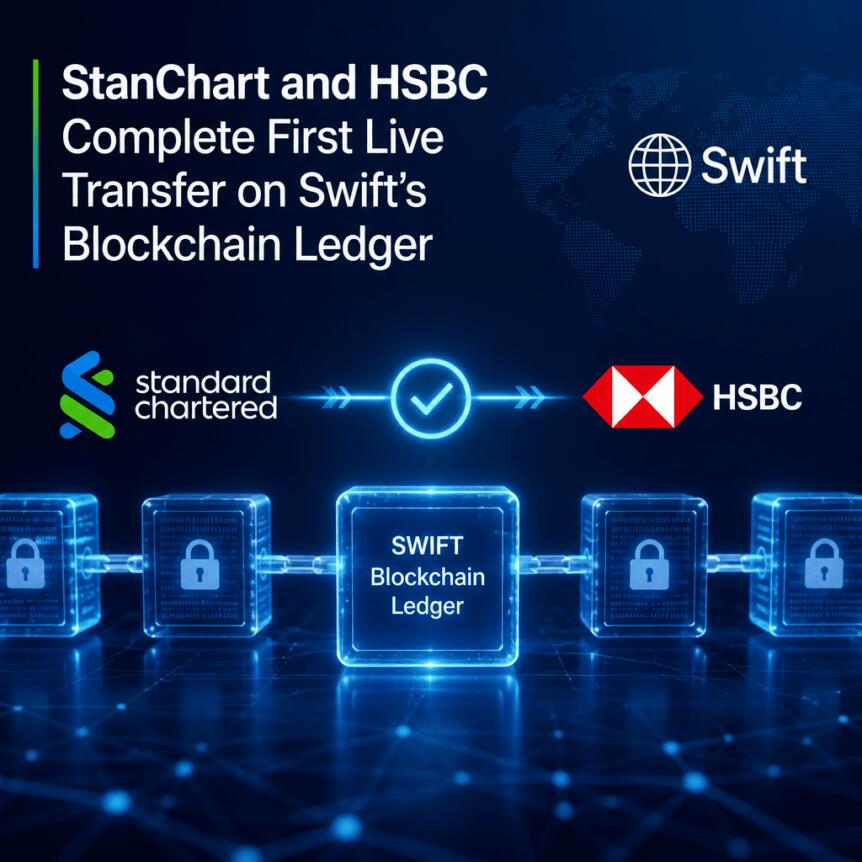
Standard Chartered and HSBC have completed what they describe as the first live cross-border transaction using Swift’s blockchain-based ledger, marking an early interoperability milestone for banks experimenting with tokenized deposits. The test took place about a month after Swift said the ledger was ready for initial use.
According to the details of the transaction, payment messages were exchanged between the two banks via Swift’s ledger, while the resulting obligations were recorded on HSBC’s Tokenised Deposit Service and StanChart’s tokenized deposit infrastructure. Swift’s ledger then acted as an orchestration layer—matching and netting obligations between the banks before final settlement through existing payment systems.
Key takeaways
- HSBC and Standard Chartered report the first live cross-border trade on Swift’s blockchain-based ledger.
- Swift’s ledger is positioned as an orchestration and netting layer, with settlement still tied to existing payment infrastructure.
- The test builds on Swift’s July announcement that 17 banks would pilot live transactions using tokenized deposits.
- The approach targets 24/7 cross-border settlement while keeping established compliance, risk, and settlement controls in place.
- Interoperable tokenized deposits are increasingly being tested across jurisdictions, with broader industry trials also underway.
What happened in the first live transaction
Swift’s blockchain-based ledger is designed to connect tokenized deposits issued on separate bank infrastructure. In the live transaction between HSBC and Standard Chartered, the mechanics were centered on messaging, obligation recording, and settlement orchestration rather than a full replacement of the banks’ existing settlement rails.
Rather than moving funds end-to-end solely on-chain, the transaction used Swift’s ledger to handle the exchange of payment messages between the banks. The obligations that resulted from those messages were captured within each bank’s own tokenized deposit setup—HSBC’s Tokenised Deposit Service for HSBC and Standard Chartered’s tokenized deposit infrastructure for StanChart.
Swift’s ledger then netted and matched the obligations between the two counterparties, after which settlement proceeded through existing payment systems. That structure is significant for banks that want faster and more continuous execution without abandoning the operational, legal, and risk frameworks already embedded in traditional payment workflows.
How Swift’s ledger fits into the broader tokenized-deposit push
The live report follows Swift’s July announcement that its blockchain-based ledger was ready for initial use. Swift said it would support a pilot involving 17 banks spanning six continents, preparing to conduct live transactions using tokenized deposits.
The banks named as part of that pilot include Citi, BNP Paribas, BNY, Wells Fargo, UBS, MUFG, DBS, and ANZ, alongside HSBC and Standard Chartered. Swift has framed the ledger as a way to enable interoperability between tokenized deposits across different institutions, while still respecting the settlement, compliance, and risk controls that financial institutions require.
For investors and market participants watching the “tokenization” trend, the key signal is not only that banks are testing digital assets, but that they’re working toward connectivity between separate tokenized systems. Interoperability is often the hardest problem: tokenized value can exist inside a silo, but cross-border payment usefulness rises substantially when institutions can transact across siloed infrastructures.
Why orchestration and netting matter for adoption
Swift describes its ledger as an orchestration layer that matches and nets obligations before final settlement. That design choice can reduce the operational complexity of cross-border payments between different tokenized deposit environments—each bank can maintain its own infrastructure while relying on Swift’s ledger to coordinate the interaction.
The emphasis on netting also reflects a practical reality: cross-border payment systems must handle large numbers of transactions without turning every transfer into a fully independent settlement event. By pairing messaging with netting, banks can potentially reduce friction and execution overhead—while still settling obligations via established payment rails.
Swift’s positioning is also relevant to a wider debate in crypto-adjacent payments about how far blockchain should be used in the payment stack. This pilot suggests a hybrid direction: blockchain-based infrastructure for coordination and continuity, alongside conventional settlement processes where required.
Industry momentum beyond Swift’s pilot
The Swift-anchored cross-border transaction is occurring as other major institutions pursue tokenized deposit and “real-value” settlement trials.
HSBC previously indicated plans to expand its Tokenised Deposit Service to corporate clients in the US and UAE in the first half of 2026, building on deployments in Hong Kong, Singapore, the UK, and Luxembourg. The service was also launched in the US in April, with coverage for eligible corporate and institutional clients seeking 24/7 domestic and cross-border transfers using tokenized deposits.
Standard Chartered has participated in broader efforts to test tokenized bank money across institutions. In July, it was among 28 financial institutions and central banks involved in the Bank for International Settlements’ Project Agorá, which conducted real-value settlement trials using tokenized commercial bank deposits and central bank reserves across six currencies.
Meanwhile, the US payments landscape is also moving toward connectivity between legacy systems and tokenized rails. The Clearing House has reportedly discussed plans to launch a tokenized deposit network in the first half of 2027, connecting traditional payment networks with digital asset infrastructure for around-the-clock settlement.
Taken together, these efforts point to a broader pattern: rather than treating tokenized deposits as isolated experiments, major players are working toward networks and coordination layers that can make tokenized money function across boundaries—geographic, institutional, and regulatory.
Next, market participants will want to track how quickly the Swift ledger pilot expands beyond initial counterparties, and whether additional banks can complete similar end-to-end workflows with the same level of operational readiness—particularly around reliability, compliance processes, and how netting and orchestration behave as transaction volumes increase.
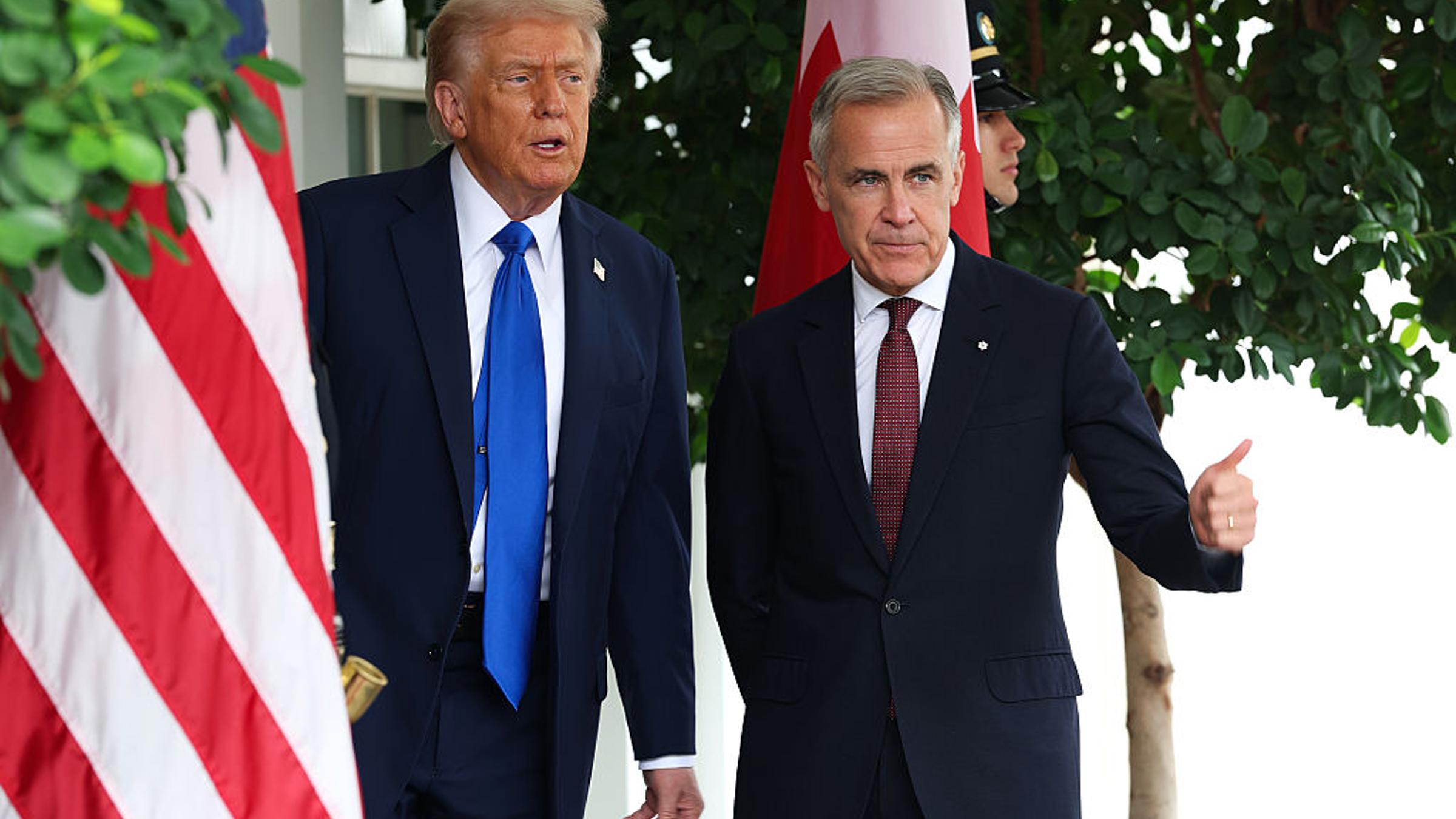
The 50% tariff hike on a range of Canadian goods was announced in July, with Trump signing a series of proclamations citing Canada’s “discriminatory treatment” of American products.
The new levy, a retaliation for Canada’s tariffs, would apply to a range of Canadian goods, including electronics, sports equipment, and essential oils.
According to economists, the tariffs could have had significant economic consequences if enacted. TD Economics estimated that, if maintained, they could reduce Canadian GDP growth by 0.3 to 0.6 percentage points over the following year.
A Canadian Federation of Independent Business survey of 1,833 firms found that 77% of affected exporters expected revenue losses, while 35% expected their revenue to fall by at least half.
In a new proclamation issued Tuesday suspending the tariffs, Trump said: “Canada has expressed a commitment to remove the discriminations or unreasonable and unequal impositions.”
Sweden’s H100 reported a $26 million loss for the first half of the year, as it completed its acquisitions to become Europe’s second-largest Bitcoin treasury by holdings.


BitGo Korea has secured VASP registration from South Korea’s Financial Intelligence Unit, becoming the first local entity owned by an overseas crypto company to complete the process directly.
Summary
- The FIU accepted BitGo Korea’s VASP registration filing on Aug. 18.
- BitGo Korea plans to provide custody and transfer services to institutions and companies.
- Hana Financial owns 25% of the business, while SK Telecom holds a 10% stake.
- Stricter registration checks covering VASPs and major shareholders took effect on Aug. 20.
Yonhap News Agency reported on Aug. 20 that the Financial Intelligence Unit, an agency under South Korea’s Financial Services Commission, had accepted BitGo Korea’s virtual asset service provider registration two days earlier.
BitGo Korea plans institutional custody services
Established in 2024, BitGo Korea chose to meet the country’s regulatory requirements through its own entity rather than acquire a company that already held VASP registration, according to the Yonhap report.
The company plans to use the registration to establish cryptocurrency custody and transfer services in South Korea. BitGo said its local business will focus on financial institutions and corporate customers, although the company did not provide a launch date.
Details about the assets supported by the service, custody charges, and insurance coverage were also absent from the announcement. BitGo did not identify any customers or disclose how much it expects to hold in custody through the Korean entity.
BitGo CEO Mike Belshe described the registration as an important step in the company’s plan to establish regulated infrastructure in major markets.
“We will focus on connecting global virtual asset infrastructure with the Korean market,” Belshe said, according to a translation of his statement carried by Yonhap.
The reported first applies specifically to a Korean subsidiary of an overseas virtual asset company obtaining VASP registration directly. BitGo’s announcement does not establish that it is the first foreign-linked crypto business of any type to operate legally in the country.
South Korea treats VASP approval as a registration rather than a general financial services license. The approval lets BitGo Korea build its stated custody and transfer operations, but the announcement did not say that the company can operate a won-based retail cryptocurrency exchange.
Hana and SK Telecom hold stakes in BitGo Korea
BitGo’s entry has been supported by two large Korean companies. Hana Financial Group acquired a 25% interest in BitGo Korea in 2024, while SK Telecom purchased a 10% stake and joined the venture as a strategic partner.
In May, crypto.news reported Hana Bank’s planned 930 billion won, or roughly $670 million, investment in Dunamu, the operator of Upbit. The report also noted that Hana and SK Telecom had helped establish BitGo Korea as part of the bank’s activity in digital assets.
Hana Bank began working with BitGo on cryptocurrency custody services in 2023. Under the later ownership arrangement, Hana was expected to contribute its financial-sector experience, while SK Telecom would provide knowledge related to authentication, identity checks, and security.
Alongside its BitGo investment, Hana has pursued other crypto-related projects. A March 2026 report detailed cooperation between Hana Financial and Standard Chartered on tokenized deposits, stablecoins, custody, and payment infrastructure.
BitGo said in 2024 that its Korean partners would help develop an institutional market for digital assets. The latest announcement did not state whether Hana, SK Telecom, or their subsidiaries will become paying customers of the newly registered business.
BitGo follows regulated custody paths in Korea and the US
Founded in the United States in 2013, BitGo provides custody, wallets, trading, settlement, staking, and other digital-asset services through entities operating in several jurisdictions.
In Europe, BitGo holds authorization from Germany’s Federal Financial Supervisory Authority under the Markets in Crypto-Assets framework. Its other regulated operations include entities in Singapore, Dubai, Denmark, and Switzerland, according to the company’s licensing information.
For US institutions, BitGo’s Korean registration follows a separate federal banking process. A July 2026 report said BitGo had received full approval from the Office of the Comptroller of the Currency to convert its state-chartered trust company into a national trust bank.
A national trust bank may provide custody, fiduciary, and approved asset-servicing functions under federal supervision. It does not operate like a commercial bank that accepts ordinary insured deposits and issues conventional consumer loans.
BitGo states on its website that BitGo Bank & Trust, National Association, is regulated by the OCC. The company also warns that digital assets held in custody are not protected by the Federal Deposit Insurance Corporation or Securities Investor Protection Corporation insurance.
The Korean approval therefore does not extend the protections or permissions attached to BitGo’s US-regulated entity. Services offered in South Korea will remain subject to local rules, customer eligibility requirements, and the authority of Korean regulators.
South Korea has tightened VASP registration checks
BitGo Korea received its approval shortly before stricter entry checks took effect on Aug. 20. The Financial Services Commission said the revised rules expand regulatory reviews to the chief executive or controlling shareholder of a VASP.
When a company is the largest shareholder, the FIU may also examine that company’s largest shareholder and representative. BitGo Korea’s shareholder structure includes Hana Financial and SK Telecom, although neither the FSC nor BitGo said whether the new tests applied to the application accepted on Aug. 18.
Under the updated framework, applicants must maintain a debt ratio of no more than 200% and must not have defaulted during the previous three years. A company may also be rejected if it was previously declared an insolvent financial institution or lost a registration or operating license for violating financial laws.
Executives must satisfy the qualifications established under South Korea’s rules for the governance of financial companies. The FSC said applicants also need suitable staff, cybersecurity systems, physical infrastructure, and internal controls covering anti-money-laundering duties and customer protection.
South Korea has previously acted against overseas platforms that served local customers without registration. In January, Google Play restrictions required crypto exchanges and wallet providers targeting South Korean users to show proof of an accepted VASP filing to remain available through the local app store.
Transfer controls will become stricter under another part of the revised framework. The FSC said South Korea will remove the existing 1 million won threshold for Travel Rule checks between registered domestic VASPs, requiring sender information to accompany transfers of every value.
Transfers involving foreign exchanges or personal wallet providers will be permitted under risk-based conditions. Six months after the revised rules are promulgated, registered providers must also report transfers of at least 10 million won to overseas VASPs or wallet services to the FIU, regardless of the assessed transaction risk.
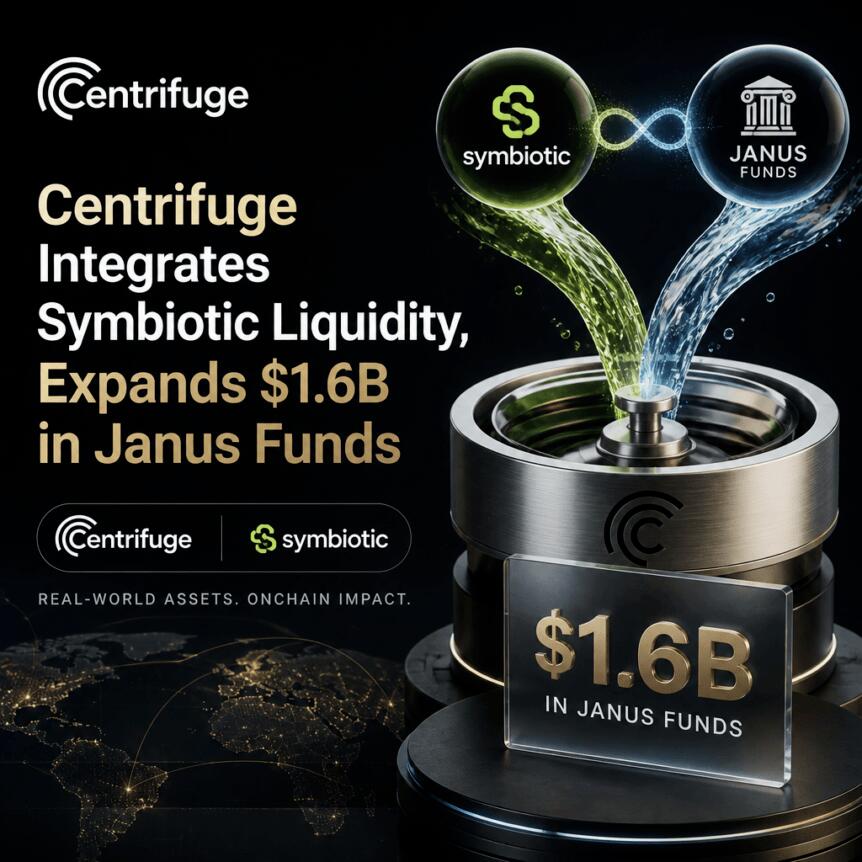
Centrifuge has expanded its tokenized-fund liquidity options by integrating Symbiotic’s Liquid Lane into three of its funds, enabling eligible holders to exchange fund positions for USDC through an onchain request-for-quote (RFQ) process.
The integration applies to Janus Henderson’s JAAA (an AAA-rated collateralized loan obligation strategy), JTRSY (a short-duration US Treasury strategy), and New York Life Investment Management’s HYB (a US high-yield corporate bond strategy). Together, these tokenized funds represent about $1.6 billion in assets under management, according to the announcement.
Key takeaways
- Centrifuge is adding Symbiotic’s Liquid Lane as an additional USDC redemption route for three tokenized funds, spanning loans, Treasuries, and high-yield credit.
- Liquid Lane uses an RFQ marketplace where market makers can pull liquidity from vaults to fill redemption requests.
- The structure is designed to let investors receive USDC immediately, while the funds’ standard redemption process occurs separately.
- Symbiotic’s head of ecosystem, Felix Lutsch, framed Liquid Lane as an improvement in transaction capital structure and redemption flow—rather than a claim to being the first “instant redemption” solution.
- The move adds to Centrifuge’s existing liquidity arrangements, including routes already used for JTRSY and HYB.
How Liquid Lane changes Centrifuge redemptions
Symbiotic’s Liquid Lane is built around an onchain request-for-quote marketplace. In practice, eligible holders submit redemption requests that market makers can respond to via RFQs. Instead of market makers needing to rely solely on pre-positioned inventory, Liquid Lane allows participating liquidity providers to access liquidity stored in vaults to meet those redemptions.
Once a market maker acquires the fund tokens through the RFQ settlement, it can then obtain the underlying redemption through the issuer or route the position again through a separate RFQ transaction. Centrifuge’s stated objective for the integration is to provide USDC to investors immediately, while letting the funds complete their normal redemption process on their own schedule.
Funds onboarded: JAAA, JTRSY, and HYB
The Symbiotic route is being applied across three Centrifuge-issued tokenized funds.
Janus Henderson’s JAAA targets collateralized loan obligation exposure with an AAA rating. Its JTRSY strategy focuses on short-duration US Treasuries. New York Life Investment Management’s HYB offers exposure to US high-yield corporate bonds.
For investors, the practical significance is breadth: the Liquidity Lane route spans different credit profiles and duration characteristics. That matters in tokenized fund markets where demand for liquidity can vary by asset type, and where some participants treat tokenized funds as either yield products or as components in onchain collateral and financing workflows.
Not the first route—an emphasis on capital economics
Liquid Lane is not Centrifuge’s first liquidity pathway. Felix Lutsch, Symbiotic’s head of ecosystem, told Cointelegraph that the company is not trying to claim exclusivity as an early provider of instant redemption functionality.
“We’re not claiming to be first, and other liquidity routes exist. That’s healthy for the market,” Lutsch said.
Earlier in 2025, Centrifuge announced a partnership with Wintermute to provide 24/7 instant redemptions for JTRSY. HYB also launched in June with a separate liquidity arrangement aimed at near-instant redemptions.
Where Lutsch said Liquid Lane differs is in the underlying capital structure that supports redemption transactions, not simply the speed of settlement. He described a marketplace design that allows multiple market makers and curators to participate without forcing each market maker to pre-fund and carry inventory for particular assets. In Lutsch’s view, that approach targets a core market issue: low tokenized-asset trading volumes have historically reduced incentives for liquidity providers to commit capital.
“The bigger constraint has been flow,” Lutsch said, pointing to the challenge of building consistent redemption demand in tokenized markets.
Why aggregating redemption demand could matter
Lutsch argued that pooling redemption demand across issuers and asset classes can improve liquidity economics—particularly as tokenized funds increasingly show up as collateral and financing assets in onchain markets.
That framing connects today’s integration work to a broader shift in how tokenized fund products are being used. When tokenized funds move beyond standalone investment wrappers and start serving as building blocks for onchain lending, collateral management, and other structured finance use cases, liquidity tends to become less about one-off redemptions and more about dependable throughput under changing market conditions.
In that context, additional liquidity routes are not just incremental product features. They can reduce friction for holders who need to exit positions quickly and can help liquidity providers manage exposure more efficiently when they can participate through a shared marketplace rather than relying on dedicated inventory for each asset.
How big is the push within Centrifuge?
Janus Henderson has been a major contributor to Centrifuge’s growth. Cointelegraph previously reported that Janus Henderson’s JAAA and JTRSY products supported Centrifuge surpassing $1 billion in total value locked, according to institutional demand coverage from that earlier period.
More broadly, Token Terminal data cited in the source article indicated that by December 2025 Centrifuge had attracted about $1.3 billion in new inflows, driven primarily by Janus Henderson’s two funds. JAAA alone contributed about $1 billion in total value locked and was described as one of the largest tokenized funds in the market.
With Liquid Lane now added across JAAA, JTRSY, and HYB, the integration effectively targets three substantial strategies within Centrifuge’s ecosystem, rather than testing a liquidity route on smaller holdings.
What to watch next
As Centrifuge expands liquidity routes through Symbiotic and other counterparties, investors should watch whether USDC settlement-through-RFQ becomes consistently used as redemption volume grows, and whether market makers’ participation broadens beyond a small set of active liquidity providers in tokenized funds.

The opportunity is substantial, but regeneration will not emerge from thousands of disconnected projects and initiatives. Oceans function as systems, but our governance remains divided by ministries, sectors, permits, and political boundaries. We need to manage whole seascapes: connecting coastlines, watersheds, nearshore ecosystems and the people and industries that share them. Marine spatial planning can expose trade-offs, account for cumulative impacts and establish where development belongs, where restoration must take priority, and where activity should not proceed.
This governance must place Indigenous Peoples and local communities at its center. They are often the most experienced stewards of coastal ecosystems yet remain excluded from the decisions and capital that shape them.
The Bird’s Head Seascape in Indonesia shows what a better model can achieve. Across 225,000 sq. km (over 86,800 sq. mi.), traditional community rights over land and coastal waters have been embedded in conservation planning since the early 2000s. Local and government authority has been connected, and tourism revenues help finance conservation and ecosystem protection. A network of marine protected areas now covers more than 52,000 sq. km (over 20,000 sq. mi.). Community-led tourism has diversified incomes, while former “bomb fishers” have been trained as coral gardeners. Ecological recovery, livelihoods, and local authority reinforce one another because they were designed not as separate entities, but as a single interconnected system.


A U.S. federal court has resolved the CFTC’s cases against Caroline Ellison and Gary Wang by imposing five-year trading bans and registration bans of up to 10 years.
Summary
- Ellison received a five-year trading ban and a 10-year CFTC registration ban.
- Wang received a five-year trading ban and an eight-year registration ban.
- Both sanctions date back to the initial consent orders entered on Dec. 23, 2022.
- The CFTC is not seeking additional financial penalties, citing their cooperation and an $11.02 billion forfeiture order.
The Commodity Futures Trading Commission said on Aug. 19 that the U.S. District Court for the Southern District of New York had entered supplemental consent orders against Ellison, the former chief executive of Alameda Research, and Wang, who co-founded Alameda and FTX.
Under the orders, both former executives must continue assisting the regulator. Ellison cannot trade for five years and is barred from registering with the CFTC for 10 years, while Wang received a five-year trading ban and an eight-year registration ban.
The restrictions did not begin with the latest ruling. According to the regulator, each period runs from Dec. 23, 2022, when the court entered the initial consent orders against the pair.
Those earlier orders also permanently barred Ellison and Wang from violating the antifraud provisions of the Commodity Exchange Act and related CFTC rules. Combined with the supplemental orders, they close the regulator’s enforcement actions against both former executives.
CFTC declines additional financial penalties
The CFTC is not seeking restitution, disgorgement, or civil monetary penalties from Ellison and Wang at present. In explaining its decision, the agency pointed to their assistance in its investigation, their cooperation in connected proceedings, and the financial consequences imposed through the parallel criminal case.
Both pleaded guilty to several federal charges, including conspiracy to commit commodities fraud, in December 2022. Their criminal cases also carried an $11.02 billion forfeiture order for which they were jointly and severally liable, according to the CFTC.
The agency treated their cooperation as a central factor when setting the civil sanctions.
“Ellison and Wang were senior executives who committed fraud at Alameda and FTX for which they were found liable,” CFTC Enforcement Director David I. Miller said. “Their sanctions, however, reflect their material assistance in the Commission’s FTX-related investigations.”
Miller said the resolution showed the value that the enforcement division placed on “robust cooperation.” Although the financial remedies differ from those originally requested, the trading and registration restrictions prevent both defendants from participating in CFTC-regulated markets or registering with the agency during the stated periods.
Ellison and Wang admitted liability in 2022
The cases began after FTX collapsed in November 2022, and the CFTC expanded its fraud lawsuit against founder Sam Bankman-Fried and his companies.
In its December 2022 amended complaint, the regulator accused Ellison and Wang of taking part in a scheme that caused more than $8 billion in FTX customer deposits to be lost. The CFTC charged Ellison with fraud and material misrepresentations involving digital asset commodities, while Wang faced a fraud count tied to their sale in interstate commerce.
Ellison was found liable on both fraud counts included in the amended complaint. Wang was found liable on the single count brought against him.
According to the CFTC’s 2022 allegations, Wang helped create code that gave Alameda an essentially unlimited credit line on FTX. Other exceptions allegedly let the trading firm execute orders faster and avoid the exchange’s automatic liquidation process, even when Alameda lacked enough money to support its positions.
The regulator claimed those features allowed Alameda to withdraw billions of dollars in customer assets without disclosing the special treatment to FTX users. FTX had publicly represented that customer funds were held in custody and separated from company assets, but the complaint alleged that Alameda routinely received and mixed those assets with its own funds.
After becoming Alameda’s sole chief executive, Ellison allegedly directed the firm to use billions of dollars from FTX for trading on other exchanges and investments in digital asset companies. The CFTC also accused her of making misleading public statements about the separation between FTX and Alameda.
Ellison and Wang did not contest their liability under the Commodity Exchange Act and CFTC Regulation 180.1. Their Dec. 23, 2022 consent orders formalized those findings while leaving the court to determine the remaining sanctions later.
Criminal sentences treated cooperation differently
The supplemental CFTC orders follow separate criminal sentences that also consider how extensively each defendant assisted U.S. prosecutors.
Ellison received a two-year prison sentence in September 2024 after serving as a key government witness at Bankman-Fried’s trial. She reported to federal prison in Connecticut that November.
U.S. District Judge Lewis Kaplan imposed prison time despite prosecutors detailing Ellison’s cooperation. At sentencing, the judge said her assistance did not remove the need to deter fraud, according to the November 2024 report.
Wang avoided an additional prison term. In November 2024, Kaplan sentenced him to time served and three years of supervised release after prosecutors described his help in tracing funds and explaining FTX’s code and internal financial systems.
The court found Wang’s cooperation especially useful because he had written parts of the exchange’s software and could explain the privileges given to Alameda. During Bankman-Fried’s criminal trial, Wang testified about the code that allowed the trading firm to access customer funds and operate without the restrictions applied to ordinary users.
As Wang’s sentencing report detailed, prosecutors said he was the first member of Bankman-Fried’s senior group to approach U.S. authorities in 2022. Ellison later became a central witness against Bankman-Fried, who received a 25-year prison sentence in March 2024.
FTX litigation has continued into 2026
Legal claims connected to FTX have remained active beyond the criminal cases against its former executives.
In May 2026, crypto.news reported that law firm Fenwick & West had agreed to pay $54 million to settle a class action brought by former FTX customers. The proposed settlement still required court approval when it was announced.
The customers accused Fenwick of helping establish corporate and legal structures that allowed FTX and Alameda to move and mix customer funds without adequate controls. According to filings cited in the report, the plaintiffs relied in part on testimony from Ellison, Wang, and former FTX engineering director Nishad Singh concerning improper loans, false statements, and the handling of customer money.
Singh reached his own supplemental settlement with the CFTC in April 2026. He agreed to pay $3.7 million in disgorgement and accepted a five-year trading ban and an eight-year registration ban, with the regulator also citing his cooperation with investigators.
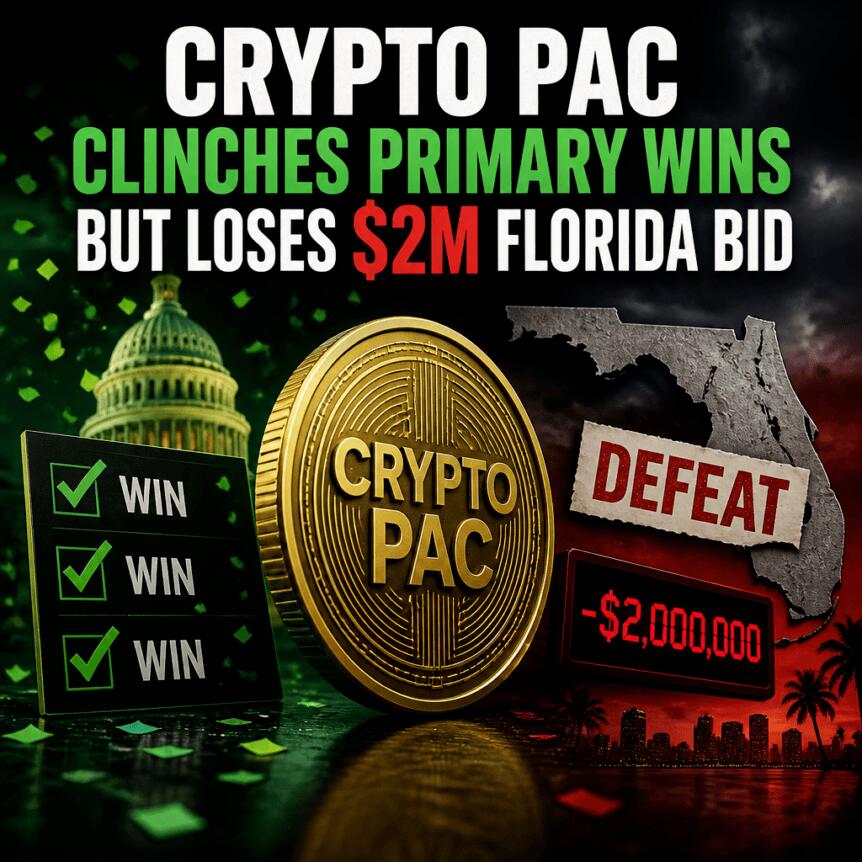
Crypto-aligned political spending appears to have delivered early momentum for Fairshake and its affiliated super PACs, with four of the five candidates backed by the organization’s ad campaigns advancing in Tuesday’s US primaries. The results span Florida, Alaska, and Wyoming—an indication that the industry’s political outreach may be shaping the competitive field ahead of the 2026 midterms.
According to reporting on the primaries and Fairshake’s fundraising record, the Protect Progress and Defend American Jobs PACs collectively spent about $3.6 million on House and Senate races across the three states. While three candidates secured primary wins and one was expected to advance, a separate Florida race also highlighted the intensity of the PACs’ message—where negative ads funded by Protect Progress targeted an opponent who still won.
Key takeaways
- Fairshake-linked super PACs supported multiple candidates in primaries across Alaska, Florida, and Wyoming, with four advancing or winning.
- The PACs spent roughly $3.6 million combined on those contests, according to the cited breakdown of ad spending.
- In Florida’s 24th district, a candidate won despite being targeted by more than $2 million in Protect Progress-funded negative ads.
- Lawmakers are on recess until September, when the Senate is expected to address a cloture motion on the CLARITY Act—potentially influenced by the makeup of the next Congress.
Fairshake-affiliated PACs back candidates across three states
Tuesday’s primary outcomes reflected the reach of Fairshake’s political strategy through two affiliated PACs: Protect Progress (Democratic support) and Defend American Jobs (Republican support). The ad spending covered House and Senate contests in Alaska, Florida, and Wyoming.
In Florida’s 23rd congressional district, Democrat Lois Frankel won re-election. The campaign benefited from Protect Progress, which spent more than $150,000 on supportive media, according to the article’s figures.
On the Republican side, Defend American Jobs backed candidates in Alaska, Florida, and Wyoming. The PAC reported a combined $1.5 million in advertising support across these races—an effort that helped deliver primary victories for two candidates and positioned a third to move forward.
Defend American Jobs-supported Republican Sydney Gruters won her primary in Florida’s 16th district, while Representative Harriet Hageman won the Wyoming Senate Republican primary. In Alaska’s at-large congressional district, Republican Nick Begich was expected to advance following the primary results referenced in the report.
Florida’s 24th district: heavy negative spending failed to stop a winner
Not all of Fairshake’s political influence showed up in straightforward wins. A Democrat in Florida’s 24th district advanced as well, despite facing a barrage of negative advertising funded by Protect Progress.
Oliver Gilbert defeated challengers Shevrin Jones and Kendrick Meek with 34.4% of the vote, according to the cited New York Times results page. The primary also drew scrutiny because Protect Progress reportedly funded more than $2 million worth of negative ads aimed at Gilbert.
In an Aug. 12 report, the Miami Herald said Gilbert argued that “Trump’s tech billionaire buddies” were behind “crypto con artists trying to buy a Democratic primary” through Protect Progress ads. The Miami Herald report stated that the advertisements included fake Miami Herald headlines that misrepresented Gilbert’s positions, while noting that a PAC spokesperson claimed “the underlying facts in our ad are true.”
Gilbert’s acceptance speech, as described in the source material, did not explicitly mention the crypto industry or the PAC ads. Fairshake spokesperson Geoff Vetter, meanwhile, said the PAC was “just getting started building the largest pro-crypto Congress in history” after the three-state primary outcomes.
How much Fairshake spent—and why the timing matters
Fairshake’s political footprint has been a defining feature of the 2024 election cycle and the run-up to the 2026 midterms. The article notes that Fairshake reported holding a $193 million war chest as of January. It was also responsible for funding more than $130 million worth of ads supporting candidates it viewed as pro-crypto in the 2024 cycle, while opposing many candidates who criticized the industry or voted against what the PAC described as its interests.
For the 2026 period, the piece states that by June, the committee had spent more than $82 million on races ahead of the midterms, citing additional earlier reporting.
The reason this matters for investors and market participants is that crypto policy in the US—especially regulation around digital assets—often depends on the composition of Congress and the priorities lawmakers set after election cycles. As advertising translates into electoral strength, it can influence which bills move quickly and which stall.
CLARITY Act on deck as Congress returns
The immediate legislative calendar adds urgency to the primary results. The source notes that both the US House and Senate are on recess until September. During that period, the Senate is expected to address a cloture motion on the Digital Asset Market Clarity (CLARITY) Act.
The piece emphasizes that the bill passed the House in July with bipartisan support on a 294–134 vote. However, it also highlights that some Senate Democrats have been pushing for stronger ethics provisions tied to concerns about the Trump family’s crypto investments.
Whether CLARITY advances this session may depend on what happens in November. The article warns that Congress could shift from a Republican to Democratic majority depending on key races—some of which may be influenced by PAC activity like Fairshake’s. If the current session does not address CLARITY before 2027, lawmakers elected in November would potentially have the leverage to move the bill forward—or block it.
For readers tracking the intersection of crypto finance and US politics, the next watch items are straightforward: September’s Senate procedural steps on CLARITY, the broader outcomes across 2026 midterm races, and how PAC spending patterns evolve once the full midterm field is set.
Arthur Hayes has proposed allocating roughly 20% of Flop Network’s FLOP token supply to testnet participants over 10 years as part of a self-funded decentralized computing network for artificial intelligence agents.
Summary
- Testnet participants could receive roughly 20% of the FLOP supply over 10 years.
- Miners would earn block rewards and fees for processing AI inference requests.
- Hayes said he funded the development team without a presale.
- Flop Network would price computing work using floating-point operations rather than model-specific tokens.
Arthur Hayes said in an Aug. 19 Substack article that Flop Network would connect AI agents seeking computing power with miners operating internet-connected hardware, using FLOP as the network’s payment and reward token.
The BitMEX co-founder described the proposed system through a fictional creation story, but the article also provided new information about the project’s token distribution, economic model, and intended users. Hayes said the token launch would follow a fair-start model, with no presale needed because he had funded the development team himself.
Under the planned distribution, people who contribute to the Flop Network testnet would collectively receive about one-fifth of the supply by the end of a 10-year period. Hayes did not disclose the total number of FLOP tokens, the rate at which the testnet allocation would be released, or the activities that would determine each participant’s share.
Flop Network would sell compute through FLOP
Flop Network’s proposed market would price AI workloads according to the number of floating-point operations, or FLOPs, required within a defined period. Miners would process requests using a model selected by the customer and receive payment in the network’s native token.
According to Hayes, current AI services make price comparisons difficult because each model defines and charges for its own input and output tokens differently. He described model tokens as an abstraction of the computing work performed, rather than a standard unit that customers can compare across providers.
Cloud companies already rent computing capacity, but Hayes said their billing systems do not charge customers according to the actual FLOPs consumed. Flop Network would try to create a common spot price for computing work regardless of the model, hardware type, or location of the machine processing the request.
Anyone with an internet-connected computer could become a compute provider under the proposed design. AI agents and human users would submit jobs specifying how much work they require, the time available and the model to be used, while FLOP would settle the transaction.
Hayes wrote that the currency would represent “a claim on compute,” allowing buyers and sellers to establish a consistent price for a given amount of processing work. He called FLOP “food for AI agents” because autonomous software requires computing power each time it performs an inference or completes a task.
FLOP miners would earn two types of rewards
Instead of using computing power only to produce hashes, as Bitcoin miners do, Flop Network would rely on a process called Proof of Useful Inference, or PoUI. Hayes said miners would earn FLOP block rewards for supporting the network and inference fees for completing requests.
The article did not explain how validators would confirm that a miner had used the requested model, completed the correct number of operations, or returned a valid result. As crypto.news previously reported, Flop Labs has not released the technical method for checking nondeterministic AI outputs, detecting incorrect work, or penalizing providers that submit false results.
Public documentation has also not established which blockchain will support FLOP, how many validators will operate at launch, or whether ordinary consumer hardware will be able to compete with dedicated data-center equipment. No white paper, security audit, block explorer, or official token contract had been published when the earlier report appeared on Aug. 19.
Alongside compute, Hayes said autonomous agents would need continuous access to stored memories. He argued that keeping those records on decentralized storage would allow an agent to retain its history without depending on one company that could restrict or remove access.
His proposed economic loop combines both needs. Agents would spend FLOP on processing work and memory services, while miners and other network participants would receive tokens for supplying those resources.
Flop Network ties testnet use to token distribution
Hayes said the FLOP token would help Flop Network attract miners, agents, and speculators at the same time, addressing the difficulty new networks face when they launch without an existing group of buyers and service providers.
Rather than sell an early allocation to venture investors, Hayes said he had self-funded the team responsible for developing the network. He argued that large presales often leave retail buyers facing an excess supply of tokens after an asset begins trading.
Flop Network would instead distribute roughly 20% of its token supply to testnet users over 10 years. The post did not specify whether the remaining supply would fund mining emissions, validators, contributors, a treasury, or other groups.
Eligibility rules also remain unpublished. Flop Labs has not said whether users will qualify by providing compute, validating jobs, storing agent memories, completing testnet transactions, or promoting the project as a community partner.
Hayes said the distribution should reward people who provide useful work to the network, although his article also claimed participants could become “generationally wealthy” by holding the tokens they receive. The post carried a disclaimer stating that his personal views should not serve as investment advice or a recommendation to make investment transactions.
The project’s Aug. 18 announcement placed a large FLOP airdrop in the fourth quarter of 2026, and the Flop Network genesis block in the first quarter of 2027. Neither the Substack article nor the announcement explained where recipients would hold the token if distribution starts before the native network becomes operational.
U.S. agent payments already favor stablecoins
Flop Network would enter a machine-payment market where dollar-backed stablecoins already process live transactions. A May 2026 Keyrock report found that AI agents had settled $73 million through 176 million transactions over 12 months, with USDC accounting for 98.6% of the tracked payments.
Keyrock said 76% of those transactions were worth less than the $0.30 fee floor associated with card payments. According to the report, Layer 2 stablecoin transfers cost about $0.0001, making them suitable for small purchases such as API calls, data access, and automated online services.
For U.S. businesses, Coinbase began allowing commercial customers to accept agent USDC payments through its x402 standard in July. The exchange said an agent can receive payment instructions from an online service, sign a stablecoin transfer, and resubmit its request with proof that it paid.
FLOP would differ from that dollar-based model by giving agents a token tied to the supply of computing work, according to Hayes. His proposal did not explain how miners would cover dollar-denominated electricity and hardware costs when their income comes through a freely traded token, nor did it provide a method for keeping the cost of compute stable when FLOP’s market price changes.
Machine commerce has also raised questions beyond payment settlement. In June, the American Arbitration Association and Integra Ledger introduced legal records for agent transactions, covering consent, governing law, and dispute procedures when software purchases services without direct human review.
Hayes said his next article would explain why the agent economy requires a spot market priced by floating-point operations per unit of time and how Flop Network intends to create it.


Arthur Hayes published a follow-up essay on his FLOP token launch. He frames the project as a biblical creation story instead of a standard whitepaper.
The essay adds new technical details about FLOP’s design. However, it leaves several gaps from prior reporting unresolved.
The Genesis Framing
In the essay titled “The Book of Genesis,” sent to his Substack subscribers, Hayes casts God as a jealous figure. Humanity’s creation of artificial intelligence (AI) pushes him aside. Hayes writes himself in as the curious human who solves AI’s economic problem.
The essay says AI agents need two things to gain independence from centralized providers. It calls these food, meaning compute agents pay for in FLOP, and memory, meaning decentralized storage for agent data.
Hayes leans on Reed’s Law, a networking theory, to argue the Flop Network could eventually surpass Bitcoin (BTC) in value. He ties that outcome to industry predictions about AI agent adoption. Meanwhile, no published model or third-party analysis backs the claim.
New Details, Old Gaps
The essay names the project’s mining mechanism as proof of useful inference (PoUI). Miners earn block rewards and inference fees for processing AI requests. Validators check the completed work.
Hayes also confirms he self-funded the Flop Labs team to avoid a presale. The essay adds that testnet participants are due roughly 20% of FLOP’s total supply after a 10-year period. That figure is separate from the airdrop Hayes announced for the fourth quarter of 2026.
None of this resolves the gaps BeInCrypto flagged in its earlier FLOP report. Flop Labs still has not published a whitepaper, supply schedule, audit, or named blockchain.
Flop Labs still plans the airdrop for the fourth quarter of 2026. That is a full quarter before the network’s genesis block arrives in the first quarter of 2027.
Hayes has said a follow-up essay will address a spot market for compute pricing. Until then, the AI agent payment narrative behind Flop Network outpaces its paperwork.
The post Arthur Hayes Uses Biblical Framing to Pitch FLOP: Here’s More Details appeared first on BeInCrypto.

StanChart and HSBC Complete First Live Transfer on Swift’s Blockchain Ledger
Tiger Woods’ $120,999,166 record is about to fall. But it’s not a fair fight

NASA Tests Featherweight Radar Antenna For SkyFall Mars Helicopters





-

 Fashion5 days ago
Weekend Open Thread: Ann Taylor
-
 Sports6 days ago
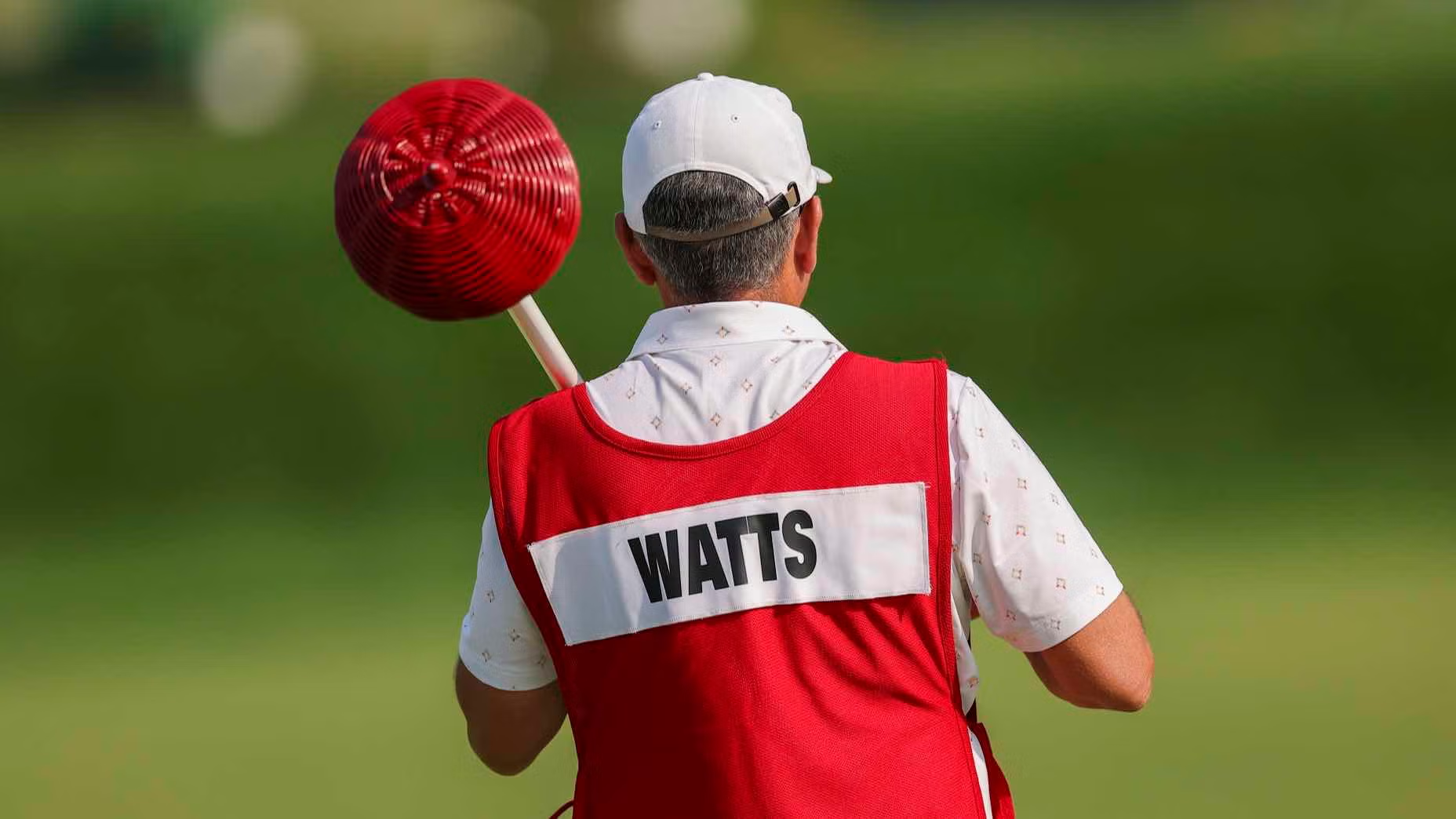
This U.S. Amateur is a glimpse into golf’s future in more ways than you think
-
 Tech6 days ago
11 Ways to Rank Your Videos
-
 NewsBeat5 days ago
Myanmar says over 300,000 Rohingya refugees verified for repatriation as exodus enters ninth year
-

 Sports5 days ago
Birmingham 2026: Day 6 Timetable for Irish Athletes
-

 Politics5 days ago
SEQ Code: The Three Letter Boarding Pass Code That Could Give You The Worst Seat
-

 Tech6 days ago
DeepSeek Harness launches as open source rival to Claude Code, alongside V4-Pro on API with higher prices
-

 Tech2 days ago
Qwen3.8-27B runs frontier-class coding agents and reasoning locally, no cloud API required
-

 Crypto World2 days ago
OCC Greenlights Trump Family Crypto Firm for Trust Charter
-

 Fashion5 days ago
Weekly News Update, 8.14.26 – Corporette.com
-
 Tech5 days ago
Every fusion startup that has raised over $100M
-
 Entertainment6 days ago
10 Netflix Shows That Quietly Became Modern Classics
-
 Entertainment5 days ago
Marvel Studios Reveals New X-Men Cast Including Adam Driver and Sadie Sink
-

 Business6 days ago
15 Ways to Make Money From Your Phone (2026 Guide)
-

 Crypto World5 days ago
Pi Network Protocol 27 endgame: last upgrade before what?
-

 Business5 days ago
Facebook Down Now? Users Report Login And Loading Problems As Outage Trackers Monitor Ongoing Issues
-

 Business2 days ago
SMA Solar Technology AG (SMTGY) Q2 2026 Earnings Call Transcript
-
 Crypto World6 days ago
Robinhood Chain Approaches $1B TVL as Uniswap Integration Boosts Liquidity
-

 Fashion5 days ago
Cart Confidential Vol. 44 – Julia Berolzheimer
-
 Business5 days ago
Monarch Mutual Fund set to enter MF space with maiden overnight fund; files draft with Sebi
You must be logged in to post a comment Login