Connect with us

Tech

Rescue Mission Is Called Off For NASA's Aging Swift Space Telescope

Published

on

NASA has called off a $30 million mission to rescue its aging Swift space telescope after Katalyst Space’s Link spacecraft developed persistent control and positioning problems. The Associated Press reports: Katalyst said Link will not attempt to capture Swift and boost it to a higher orbit because of problems with controlling the spacecraft. NASA said this means the telescope will plunge through the atmosphere after more than 20 years of tracking some of the biggest explosions in the universe like gamma ray bursts and exploding stars. Its demise is not expected before October.

NASA paid $30 million to Katalyst in an attempt to raise the telescope to a safer, longer-lasting orbit. Intense solar activity caused it to lose altitude faster than expected. The rescue spacecraft went into an uncontrollable spin a few weeks after its liftoff in early July. While flight controllers managed to slow Link’s tumble, issues continued to plague its pointing and positioning in orbit.

“This is not the outcome we were working toward, but it does not change why this mission was worth attempting,” NASA Administrator Jared Isaacman said in a statement. As a consolation prize, Katalyst will continue to operate Link in proximity with the telescope to demonstrate capabilities for future rescue operations. Katalyst CEO Ghonhee Lee said it was an ambitious mission on an aggressive timeline that was thrown together in under a year. “We took on this high-risk, high-reward challenge and are proud of the milestones we reached along the way,” Lee said in a statement. “We have already learned a tremendous amount.”

Read more of this story at Slashdot.

Advertisement

Source link

Continue Reading
Click to comment

You must be logged in to post a comment Login

Leave a Reply

Tech

UK AI start-up Callosum secures $100m in seed funding round

Published

on

The company aims to lower AI costs by attaching each task to the model and hardware that best suits it.

Callosum, a UK-founded AI start-up that develops software to match specific AI tasks with the least expensive and most suitable models and chips, has raised $100m in early seed feeding. 

The round was backed significantly by the UK’s Sovereign AI Fund and led by venture capital firm Atomico with additional participation from investors Plural and DCVC. The organisation also has a partnership with chipmaker Cerebras Systems and has deals with Rebellions Inc and Axelera AI. 

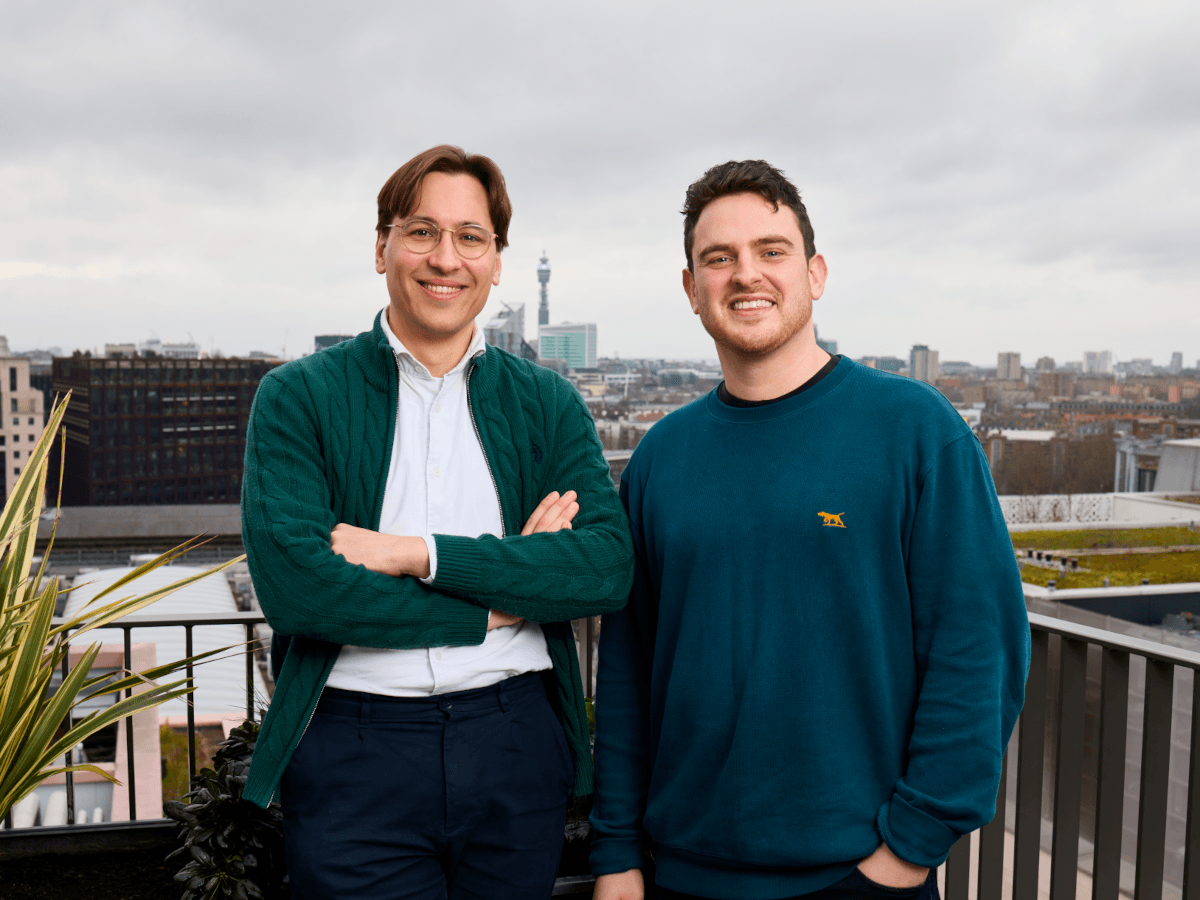
Established in 2025, by two Cambridge University neuroscientists, Danyal Akarca who is the CEO and CTO Jascha Achterberg, Callosum software can direct specific AI tasks towards the models and chips best suited to the activity and financial requirements, as a means of showing that not every company requires high-end, powerful graphic processors or AI strategies. 

Advertisement

Callosum was the first investment to be disclosed by the UK’s Sovereign AI fund, which launched in April of this year. 

Kanishka Narayan, the UK minister for AI, said, “AI is nothing without the chips that underpin it and the eye-watering demand for them is only going to grow. In the race to develop and use AI, success will depend not just on having access to those chips, but on using them as efficiently as possible.”

In the race to develop the most efficient, cost-effective and powerful chips, a range of organisations globally have invested significant time, money and effort into expanding their capabilities. 

This week, UK AI hardware start-up Fractile announced it is in talks to raise funding of roughly $600m at a pre-money valuation of $6.5bn. Fractile aims to enable the scaling of cheaper AI token processing for faster model reasoning.

Advertisement

US AI company Etched raised $700m in a new funding round led by US trading firm Jane Street. The organisation builds inference clusters to make AI inference faster, cheaper and more efficient. 

In March of this year, global leader in the AI and chips space Nvidia, announced a new multi-year partnership with Thinking Machines Lab, which will be using Nvidia’s systems to train its AI frontier models.

Don’t miss out on the knowledge you need to succeed. Sign up for the Daily Brief, Silicon Republic’s digest of need-to-know sci-tech news.

Advertisement

Source link

Continue Reading

Tech

Beats 360 Leak Reveals $299 ANC Headphones With IPX4 and Replaceable Cushions

Published

on

Sweat and expensive over ear headphones have never been particularly good friends.

Beats may have decided to do something about that.

Retail listings for a new Beats 360 wireless headphone appeared briefly on Amazon UK and other websites before being removed, revealing what looks like a new $299 model designed as much for the gym as the airplane or office. Beats has not officially announced the headphones, so specifications, pricing, colors, and availability should remain firmly in the unconfirmed column for now.

The listings are not appearing out of nowhere. An unidentified Apple Bluetooth over ear headphone with model number A3577 passed through the FCC in May, and Beats teased an unreleased rounded headphone with World Cup players this summer. The retail leak now fills in most of the blanks.

Advertisement

And this might be more interesting than another Studio Pro.

Made to Sweat?

The biggest difference is the apparent IPX4 sweat and water resistance rating. The leaked retailer copy describes the Beats 360 as the company’s first sweat and water resistant over ear headphone. Assuming that survives the official announcement, Beats is clearly aiming at consumers who prefer full size headphones during workouts but have been understandably reluctant to soak their $400 ANC headphones every morning.

The ear cushions and headband cushion are also replaceable. The standard headphones are expected to ship with Performance Knit cushions, while softer UltraPlush versions and additional colors will be sold separately. That might sound cosmetic until you remember what headphone pads look and smell like after six months at the gym.

Being able to remove the parts that absorb sweat, replace them, or keep another set ready makes considerably more sense than pretending a damp cloth solves everything.

Advertisement

Someone at Beats has clearly been inside a locker room.

What Else Do We Know?

According to the removed listings, Beats 360 will feature adaptive Active Noise Cancellation with up to 1.75 times greater noise cancellation than the Beats Studio Pro, along with Transparency mode and Personalized Spatial Audio with dynamic head tracking. Beats is also claiming a new high fidelity acoustic platform with powerful bass, low distortion, and memory foam ear cushions designed to improve the acoustic seal.

Apple and Android users are both invited. One touch pairing is listed for both platforms, continuing the cross platform approach Beats already uses with the Studio Pro rather than reserving the experience primarily for Apple customers. Controls on the rear of the ear cups include volume, multifunction, power, and listening mode buttons.

Advertisement. Scroll to continue reading.
Advertisement

Call quality will reportedly use beamforming microphones and an AI trained noise reduction algorithm. Battery life is described only as “all day” with ANC enabled, which tells us almost nothing useful until Beats supplies an actual number.

The headphones fold flat and come with a woven ripstop carrying case. Oddly, the leaked packaging information says the USB-C charging cable is sold separately.

Apparently $299 buys the headphones but not the six inches of wire required to charge them. Courage.

Black, Pink, Sky, and Cloud appeared in product listings. Navy and Volt also appeared for replacement cushions, but that does not necessarily mean the headphones themselves will be offered in those colors.

Advertisement

Why Are Beats 360 Different?

The premium ANC market does not need another pair of wireless headphones with spatial audio and better microphones. Sony, Bose, Apple, Sennheiser, Bowers & Wilkins, and Beats itself already have that covered.

The workout focus changes the equation.

If the leaked $299 starting price is correct, Beats 360 would also arrive below some very serious competition. Beats Studio Pro officially sells for $349.99, Bose’s new QuietComfort Headphones 2nd Gen are $359, Bose QuietComfort Ultra 2nd Gen carry a $449 list price, Sony’s WH-1000XM6 list for $459.99, and Apple’s AirPods Max 2 remain $549.

That puts Beats in an interesting spot. It does not have to beat the Sony WH 1000XM6 or Bose QuietComfort Ultra 2nd Gen purely on ANC performance to make sense. It has to be good enough at noise cancellation and sound quality while being better suited to people who actually want to wear over ear headphones while running, lifting, or discovering that leg day remains a terrible idea.

Advertisement

Who Are They For?

The obvious customer is someone who dislikes earbuds during workouts but still wants ANC, spatial audio, strong integration with a smartphone, and pads that can be swapped after absorbing an alarming amount of perspiration.

Existing Beats Studio Pro owners have less reason to immediately reach for their wallets. We still don’t know whether Beats 360 sound better, how long the battery actually lasts, whether wired USB-C audio is supported, what Bluetooth codecs are included, or whether the 1.75x ANC claim translates into a meaningful real world improvement.

And we still don’t know whether Beats 360 will replace Studio Pro or live beside it as a more active lifestyle alternative.

That last possibility makes the most sense.

Advertisement
Advertisement. Scroll to continue reading.

Sony and Bose already fight over the business traveler. Apple has the luxury end covered with AirPods Max 2. Beats might have found some open grass by building the premium over ear headphone you can actually take into the gym without treating perspiration like an equipment failure.

We will know more when Beats decides to officially announce the product that half the internet has already seen.

Advertisement

Source link

Continue Reading

Tech

UWB Home Key proves itself again

Published

on

The Schlage Sense Pro is the latest smart lock to support Apple Home Key via Ultra Wideband, and while it’s an impressive solution, it’s largely an Apple-only lock at launch.

Ultra Wideband can automatically unlock your door as you approach, with greater reliability and performance than Bluetooth smart locks. So far, only one or two UWB smart locks have reached the market.

The Schlage Sense Pro, first shown off at CES 2026, is the latest. By all accounts, it could be the best yet.

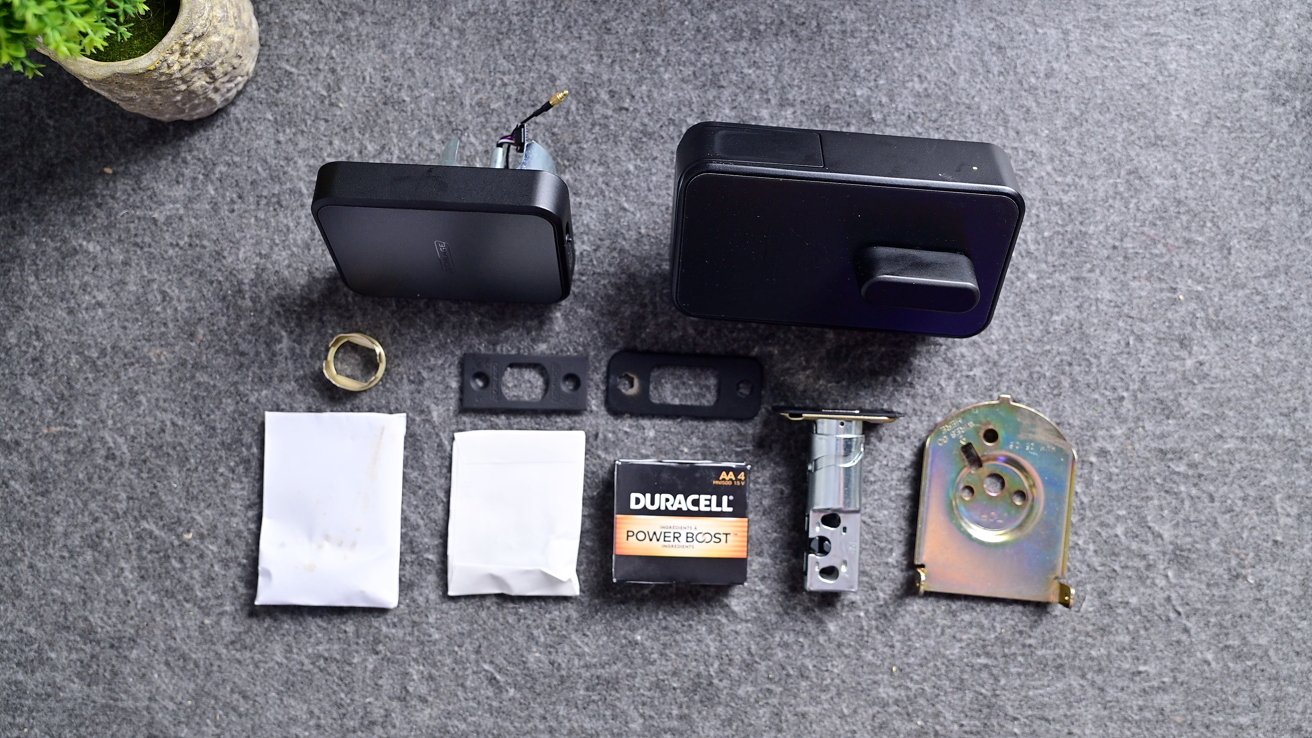
Electronic door lock components laid out on gray surface, including black lock units, metal latch and strike plates, screws in packets, mounting hardware, and a Duracell battery, with plant partially visible.

Schlage Sense Pro review: Everything included in the box

Advertisement

The box includes all essentials, such as installation hardware, four AA batteries to power the lock, and instructions. There are also pairing codes included both in the manual and inside the lock for Matter and Apple Home control.

It comes in both black and silver finishes, with the former being tested here.

Schlage Sense Pro review: Installation & design

Maybe it’s because I’ve installed countless smart locks over the years, but it didn’t take long to get the Schlage Sense Pro up and running. For moderately handy users with pre-drilled doors, it shouldn’t take more than 5-10 minutes to have it installed.

After removing the old deadbolt, you first insert the deadbolt into the edge of the door and secure it with the two medium-sized screws. Make sure you note which way is facing up, as denoted by the arrow.

Advertisement
Hand using a screwdriver to install or remove an electrical wall fixture, with exposed wires and metal mounting plate on an indoor wall.

Schlage Sense Pro review: Screw the exterior part to the interior mounting plate and route the wires through the hole.

Then, you move on to placing the exterior portion of the lock. This gets affixed to the interior mounting plate with the two long screws.

The two wires from the exterior portion plug into the back of the interior portion. After you tuck the wires away, the interior is screwed into place with the two tiny screws.

Person using a small screwdriver to tighten or loosen a screw on a rectangular black electronic device mounted on a wall, with one hand holding the device steady

Schlage Sense Pro review: The back slides onto the mounting plate and is then screwed into place itself.

Advertisement

Finally, the batteries are inserted into the top, and the cap is slid on. It’s stress-free, and as long as you have the holes in the door, you don’t need anything more than a regular Phillips screwdriver.

The lock has a very clean, minimalist appearance. The outside is largely devoid of lights, buttons, cameras, or other distractions, sans a subtle “Schlage” logo in the middle.

Hand reaching toward a wall-mounted electronic access panel with small red indicator lights, next to a closed door indoors

Schlage Sense Pro review: Lights on top show your approach, and a keypad will also appear

Only when the lock is activated do the lights for the keypad illuminate. There are lights along the top edge, too, that indicate your proximity to the lock.

Advertisement

I was impressed with the overall feel of the lock, as it’s mostly metal. It has a solid, strong, durable construction that helped it achieve its BHMA Grade 2 certification, which is high for a residential lock.

Schlage Sense Pro review: Many methods of entry

There’s a variety of ways to unlock the Schlage Sense Pro, and one noticeable way you can’t. You can use Apple Home Key via NFC or UWB, a passcode, or various apps and voice assistants such as Apple Home, SmartThings, or Amazon Alexa.

Product box showing compatibility logos for Schlage Home, Matter, and Built on Thread, with small printed text and website link against a white background on a gray surface

Schlage Sense Pro review: The lock supports Matter, and soon, Aliro

This gives users quite a bit of flexibility in how they access their home. Kids and guests can use codes, while primary members can use the Ultra Wideband or NFC.

Advertisement

In what will ultimately be a controversial move, Schlage opted to omit support for physical keys on this futuristic smart lock. There’s no getting around the fact that this will be a dealbreaker for some.

For me, this isn’t an issue. There’s no situation where I’d see the need for a physical key.

In some ways, it’s more secure because there is no way for your lock to be picked or bumped. Passcodes still give a fallback for when you don’t have your phone/watch with you, or there are users without smartphones in your home.

Hands assembling a small black electronic device on a gray table, inserting a cable or connector, with another larger black gadget nearby and a small potted plant in the corner

Schlage Sense Pro review: The bottom has an emergency USB-C port for power

Advertisement

If the lock ever runs out of batteries, there’s an emergency USB-C port hidden on the bottom of the outer portion. I always have a cable in the car parked in the driveway, so it’s not a concern, and you can draw power straight from your phone.

Schlage Sense Pro review: Smart home tech

Digging into the tech, the Schlage Sense Pro has Wi-Fi for use via the Schlage app. Alternatively, it supports Thread, though you need a Thread border router to take full advantage of it.

Person holding a smartphone showing a home security app screen, with a lock setup dialog open labeled Lock Name and buttons for Continue and Identify

Schlage Sense Pro review: Adding the lock to Apple Home

Wi-Fi can provide up to six months of battery life with regular use, while Thread can extend that to nine months. For Apple Home users, HomePod, HomePod mini, and Apple TV all act as Thread border routers.

Advertisement

For ecosystems, you can technically use the Schlage Sense Pro through all the major ones, such as Apple Home, Google Home, Amazon Alexa, and Samsung SmartThings. This is thanks to its Matter certification, which supports basic lock and unlock capabilities.

Hands holding a smartphone showing a smart home app, with a Home Key setup screen displayed over live camera feeds of a modern house interior and exterior

Schlage Sense Pro review: The lock supports Apple Home Key with NFC or UWB and will soon support Aliro for other ecosystems

Apple users get an early exclusive feature, though. The Ultra Wideband auto-unlock capability currently only works with Apple Home Key, and the same goes for NFC.

Schlage says that a future update will bring Aliro, the open version of Home Key, and will deliver UWB and NFC support for Samsung and other Android devices. Considering Ultra Wideband is the feature to buy this lock for, only Apple users should be considering this lock until the Aliro update arrives.

Advertisement

Schlage Sense Pro review: All about that UWB

The secret sauce to this lock, and the sole reason to buy it, is its use of Ultra Wideband technology. Apple first started adding ultra Wideband, or UWB, to iPhones with the iPhone 11 model and it’s found on Apple Watch, too.

Two black rectangular tech devices on a gray surface, one larger with a protruding clip, against a softly blurred background with colorful lights and a partially visible Apple poster

Schlage Sense Pro review: The latest UWB smart lock to hit the market

Compared to other wireless unlocking standards, UWB, in combination with Apple Home Key, is an unrivaled solution. Not counting more manual authentication methods like fingerprints or passcodes, most other locks use NFC or Bluetooth for auto-unlock.

Close-up of a closed glass door with a rectangular smart sensor or contact sensor mounted on the door frame and a matching piece on the adjacent brick wall

Schlage Sense Pro review: Outside view of the UWB lock

Advertisement

Those other solutions have drawbacks, though. Bluetooth is historically unreliable and slow, and NFC requires you to raise your phone or watch to the lock.

In all my testing, I’ve never found a Bluetooth lock that could reliably auto-unlock every time or do so quickly enough. They rely on geolocation to detect when you’ve arrived home before searching for a Bluetooth signal, and the door only unlocks once that connection is established.

Here, it uses Apple Home Key in the Wallet app, so no app needs to run in the background. UWB is also capable of tracking items in 3D space, as we see with AirTag, so it can gauge your position, angle of approach, speed, and distance as you approach your door.

The Schlage Sense Pro uses all of that information to determine your intent. If it senses that you’re about to open the door, it unlocks it as you approach.

Advertisement

In my weeks of testing, it has worked 100% of the time, no exceptions. It’s incredible and gives you peace of mind I’ve rarely experienced with other smart locks because I know the door will be open by the time I get to it.

Since it knows your speed, it adjusts the unlocking speed based on how quickly you’re approaching the door, so it doesn’t unlock too early or too late. It always unlocks just as my hand is about to reach the handle, and a confirmation appears on my phone and watch.

Close-up of a black smart door lock mounted on a white door, with a blurred indoor room and furniture visible in the background

Schlage Sense Pro review: Side profile view of the lock on the inside of the door

My favorite part of the process was that it simply worked. I test a lot of locks, which can be hard on the family when they may need to install new apps or set up new accounts each time.

Advertisement

I swapped the lock while my partner was away from the house. Once they arrived home and walked to the door, they walked right in without realizing it was a different lock or that the door had been locked at all.

They were part of our Apple Home, so the existing Home Key in their Wallet app worked without any changes. As they got home, the lock worked perfectly and let them in.

There’s no need to pull out your phone, wrangle kids while waiting for the door to unlock, or tap your Apple Watch on the lock while carrying bags of groceries. This lock works, and it works without effort.

Schlage Sense Pro review: Versus Aqara U400

At the time of this review, only two UWB locks on the market are worth considering. They’re the Aqara U400 and the Schlage Sense Pro.

Advertisement
Black rectangular smart doorbell with a circular button in the center mounted on a white wall beside a window showing a partial view of a person in plaid clothing

Schlage Sense Pro review: The Aqara U400 is the other big UWB lock out there

Interestingly, they come in at vastly different price points, which makes comparing the two somewhat easy based on your priorities.

Aqara, priced at $269 MSRP, is far cheaper, but it is mostly plastic with a lower strength rating. I like it, though, because it also supports fingerprints and has swappable battery packs instead of just AA’s.

The Schlage Sense Pro is more than $100 more expensive, but is more compact, stronger, and made of elevated, premium materials. The metal body and extra strength come with a price.

Advertisement

Between the two, I personally lean towards the Aqara U400 as the better choice for the average user. It’s a more approachable price point, and I don’t have to buy a bunch of AA batteries.

Hands holding a smartphone and a detachable battery grip with three cylindrical batteries on a dark tabletop, with a small potted plant visible in the upper left corner

Schlage Sense Pro review: The lock is powered by four AA batteries

It’s way easier to plug in a USB-C cable or pull out the battery pack to charge. I could use rechargeable AA batteries, but they don’t last as long as regular AA batteries.

People are surely going to disagree, but I think Aqara’s strength is sufficient. If the door doesn’t budge and someone wants into your home, your windows are a more likely target.

Advertisement

More locks mean more options for users, allowing them to choose the model that best suits their needs.

Schlage Sense Pro review: Should you buy?

Here’s the good news. The Schlage Sense Pro is a fantastic smart lock, through and through.

I love the robust metal construction, minimalist design, thoughtful features, high strength rating, and Apple Home Key support with Ultra Wideband. At the same time, it’s not cheap.

Box of Schlage Sense Pro smart lock on a table in a modern living room, with blurred shelves, decorations, and framed wall art in the background

Schlage Sense Pro review: Box for the Schlage Sense Pro

Advertisement

If you want a similar experience, you can make compromises and save a lot of money by opting for the Aqara U400. You could also save money and get a completely hidden smart lock without UWB like the Level Lock Pro.

For those who want the best lock, the Schlage Sense Pro is the one to beat. My only gripe is the AA batteries that power it.

I’d much prefer a swappable rechargeable battery. So as long as you’re an iPhone user and fine with the battery and price, it’s absolutely worth checking out.

Schlage Sense Pro review: Pros

  • Compact, minimalist design in black or silver
  • Ultra Wideband support to auto-unlock with Apple Home Key
  • Matter support for multiple ecosystems
  • Thread for better performance & battery
  • Fantastic performance
  • Supports up to 250 passcodes
  • Easy installation
  • Good battery life

Schlage Sense Pro review: Cons

  • No Aliro at launch for non-Apple ecosystems
  • Uses disposable AA batteries
  • Comparably expensive
  • Lack of a key could be dealbreaker

Schlage Sense Pro rating: 4 out of 5

Where to buy the Schlage Sense Pro

You can find the Schlage Sense Pro on Amazon for $398 in both black and silver finishes.

Advertisement

Source link

Continue Reading

Tech

Apple seeks denial of OpenAI’s request for lawsuit dismissal

Published

on

Apple sued OpenAI for alleged trade secret theft, and after OpenAI’s weak attempt to have the case dismissed, Apple has doubled down on its claims in a new filing.

The Apple lawsuit against OpenAI started with several odd public statements from the company denying the accusations. OpenAI filed for dismissal on August 5, simply arguing that it didn’t need Apple’s trade secrets and that Apple is the one that can’t compete.

In the latest filing viewed by AppleInsider on Wednesday, Apple said that OpenAI’s attempt to dismiss relied upon distortion, speculation, and improper extrinsic evidence. The company reiterates its allegations in detail, alleging evidence on their end of misappropriation of trade secrets and OpenAI encouraging as much.

First, Apple says that Mr. Liu didn’t accidentally get data from Apple’s corporate servers via unknown device syncing. Instead, he allegedly knew what he was doing by exploiting a bug and bragging about it — “LOL … so funny.”

Advertisement

OpenAI also didn’t take any time to explain why those being interviewed from Apple were being coached on how to steal information. Also, Mr. Tan’s requests were for secret prototypes, not publicly available products.

The filing says OpenAI mischaracterizes these accusations as innocent accidents and ignores the seriousness of the accusations in the lawsuit.

The filing straightforwardly puts it this way:

OpenAI Repeatedly Misappropriated Apple’s Trade Secrets Both Through The Actions Of Defendants Liu And Tan, And Through Its Own Independent Conduct.

Apple requests that the Court deny OpenAI’s motion for dismissal. The case will pick up again on October 1, where Apple’s request for expedited discovery will be heard.

Advertisement

Source link

Continue Reading

Tech

Libraries Beg Brendan Carr To Back Off Plan To Make U.S. Broadband Shittier, More Expensive

Published

on

from the protecting-kids-by-hurting-kids dept

Back in June, Trump FCC boss Brendan Carr announced he’d be reviewing the FCC E-Rate program with an eye on “reforms.” Generally, when Brendan Carr promises “reforms,” usually what he means is either “I’m going to destroy this program,” or “I’m going to illegally make changes to this congressionally-mandated program that ensures telecom giants like AT&T get more money with less accountability.”

E-Rate is a historically bipartisan and uncontroversial program that helps bring affordable broadband to rural libraries, schools, and communities. While it has had some issues with fraud at times (almost always at the hands of private companies), the program generally does a lot of good in bringing affordable internet access into communities neglected by telecom monopolies.

Without it, or under a pared down version, schools and rural schoolkids would be more inclined to have to rely on what regional telecom monopolies deem appropriate, which is usually either over-priced broadband, or nothing at all.

Carr’s June announcement proclaimed he was “taking a look” at the program because he’s worried about kids having too much “screen time”:

Advertisement

“Over the last several years—and especially during COVID—many schools dramatically increased screen time for kids, with many students now swiping for hours every day. Research has now been pouring in that America’s experiment with heightened screen time in schools may be related to the negative educational outcomes we are now seeing in classrooms across the country—from declining academic performance to diminished reading comprehension skills.”

That’s quite the act of misdirection. For one, the FCC doesn’t regulate “screen time,” so you’ve once again got Carr wandering into areas he should have no say in. Which is weird for a guy who has endlessly complained of “government overreach” every single time previous FCCs have tried to bolster broadband telecom consumer protection (see: net neutrality) or prevent harmful media consolidation.

E-Rate was also mandated by Congress. Much like other recent actions (like Carr’s illegal dismantling of media consolidation limits), Carr is pretending he’s only making modest tweaks to existing systems, so he can pretend he’s not openly breaking the law.

Carr’s FCC is also pretending to be seriously fielding comments on his upcoming E-Rate rule changes. Librarian organizations this week filed their input defending E-Rate, correctly noting that Carr’s obsession with “screen time” is a straw man designed to misdirect attention from the potential harm of gutting a useful subsidy program.

From the Education and Libraries Networks Coalition (EdLiNC):

Advertisement

E-Rate was established by Congress for a specific purpose – to ensure affordable connectivity for schools and libraries, and that mission must remain the focus of this proceeding. For nearly three decades, E-Rate has been successful in connecting students, educators, and library patrons in rural, suburban, and urban communities alike. 

Questions about curriculum, instructional practice, or student behavior should not be used to undermine a proven program that helps schools and libraries maintain the networks modern education depends on.

This sort of stuff doesn’t really get press attention, but it matters all the same.

The E-Rate program spends about $3 billion a year driving affordable broadband into parts of the country left high-and-dry by the regional telecom monopolies Carr refuses to regulate. While there is sometimes fraud in programs like this, the vast majority of the time it’s caused by private companies that Carr, again, refuses to competently regulate and is afraid to stand up to.

Were you seriously interested in reforming these programs, you’d start doing audits of major companies like AT&T, which have a long history of defrauding these and other initiatives. Instead, Carr’s trying to shift the focus to the idea that taxpayers are funding internet access that’s delivering “harmful content” to kids, which, if you’ve tracked Brendan Carr’s censorial extremism, should be a huge red flag.

Advertisement

I suspect there are several motivations here. One being big telecoms like AT&T that want E-rate revamped in a way that financially benefits them. The other being Carr and the right wing extremist mission to extend their censorship and ideological dominance into every aspect of American life, starting with the classroom, where they’re compelled to root out any and all criticism of right wing ideology.

This is how he framed his new plan for E-Rate reforms on a recent appearance on Fox News:

“There are school districts that have read our law as only requiring them to put Internet safety procedures in place on the devices that the school owns. If you bring your own device to a network supported by this program, you don’t necessarily have any filters on where you can go. Kids are ultimately finding pornography, and that’s a problem.”

To be clear, schools already employ filtering systems. Some work, some don’t. The nature of these systems is such that they not only tend to over-filter content, but they’re generally easy to bypass.

Still, it’s not the FCC’s job to determine what content is acceptable, or even to manage kid “screen time” on personally-owned devices. That’s not only an unworkable game of whack-a-mole that would waste a lot of taxpayer money, that’s the precise sort of weird overreach Carr (and Republicans, and “free market” Libertarians) have whined about for as long as I’ve been alive.

Advertisement

But as with so much Republican “policy,” the pretense that they’re protecting kids helps obscure the fact they’re actively hurting them. In this case by making already shaky U.S. broadband even more expensive and spotty in long-neglected rural, minority, and lower-income areas.

Filed Under: brendan carr, broadband, e-rate, fcc, high speed internet, libraries, students, telecom

Source link

Advertisement
Continue Reading

Tech

ICE Opportunism Expands To Passengers On Domestic Flights

Published

on

from the raiding-parties-everywhere dept

Things used to be normal. We used to be doing alright here in the United States, limiting ourselves to catching people at the borders or picking up migrants with criminal charges or convictions with detainers at local jails.

Now, it’s just a constant swarm all day, every day. “Worst of the worst” has long been abandoned as a pretense. Under Trump, it’s “anyone of anyone,” so long as they fit the profile: not white from whatever countries Trump claims are “shitholes,” especially if they speak with an accent.

No more targeting. No more plugging holes in the migration dyke with border-focused deterrents. These days, its masked officers storming hardware store parking lots to grab day laborers, hanging around immigration courts to pick off people just trying to follow the naturalization process, leveraging surveillance tech and government data to find people with un-American surnames, and generally terrorizing entire neighborhoods — if not entire cities — just to satiate this administration’s bigoted bloodlust.

Now, we’re doing this, which is yet another thing we’ve never done before because there was never a reason to do it, much less the will or the desire.

Advertisement

The Trump administration has begun arresting foreign citizens with expired U.S. visas as they travel through airports, including spouses of Americans, according to documents obtained by The New York Times and interviews with immigration lawyers — a tactic that opens up a vast new pool of people for deportation.

Immigration agents in plain clothes have whisked away targets at check-in counters and arrival gates, with enforcement actions in at least 15 airports in recent weeks. Some of the arrests have occurred quietly, while others have happened as angry fellow passengers filmed the encounters.

The obvious question is “why?” Why do we need to do this? Why are we ambushing people boarding or disembarking from planes over something as menial as an expired visa? Is this going to make America greater or safer? Or is it just going to cement our reputation as a nation of bigots who were just waiting for a white nationalist-leaning blowhard to finally start massaging our repressed id?

Whatever it is, it’s fucking ugly. And it doesn’t look like America. It looks like some “lets round up the Jews” action from Nazi Germany, except that Trump’s “Jews” are people who come from any country that doesn’t have a Caucasian majority.

And it’s even worse than jumping travelers at the gates. In some cases, ICE officers — greatly enabled by new TSA data sharing provisions — are attempting to board planes to arrest people.

Advertisement

On July 25, a Southwest agent prevented ICE from boarding a flight from Dallas to Orlando, according to documents reviewed by the journal. The gate agent reportedly wouldn’t allow officers to board without a judicial warrant signed by a judge.

Following the incident, Southwest said in a statement that it “has longstanding policies in place to ensure appropriate legal documentation is presented by law enforcement personnel before any information about customers is shared.”

The journal also reported that an unnamed airline at a southern airport recently declined to assist ICE in accessing a jet bridge so they could arrest a man traveling with his family.

The DHS has defended its actions. And by “defended,” I mean has issued yet another “we’re right and everyone else is wrong” bit of pissiness.

“This administration is working diligently to ensure that aliens in our country illegally can no longer fly unless it is out of our country to self-deport,” a spokesperson for the Homeland Security Department said in a statement. 

I’m sure another equally bitter statement will greet “Welcome to the Resistance… Southwest Airlines?” activity. While the federal government is free to move about airports, it is not free to board private property (the planes themselves) without the proper paperwork. Good to know Southwest staffers can tell the difference between an “administrative warrant” (which is not a “warrant” in the generally accepted definition of the term) and a real, judicially authorized warrant. When even front line employees are willing to push back, you know the administration has pushed too far.

Advertisement

On the other hand, this is same airline:

In one widely circulated video, Chantal Morales Rojas, a 27-year-old from Ecuador, was detained by plainclothes officers as she boarded a Southwest Airlines flight from Denver to Oakland, Calif., on July 20. She had been spending the weekend with the family for whom she had worked as an au pair, according to the family.

When Ms. Morales Rojas scanned her boarding pass, an alarm sounded and the gate agent asked her to wait. Moments later, two plainclothes agents intercepted her in the jetway.

However it all shakes out, it reeks of desperation. The administration can’t keep its arrest numbers up which means immigration agencies are becoming increasingly opportunistic. None of this has anything to do with public safety, crime reduction, or just enforcing the rules. It’s a war on migrants being waged on as many fronts as the DHS can at all times. It’s the government padding its stats while satiating the xenophobes that make up most of its party, as well as its voting base.

It all looks a whole lot like things this country swore it would never do (or never do again). It’s rounding up and caging undesirables who will also be blamed for any or all societal ills. And it’s not that far removed from pursuing escaped slaves who went north in hopes of actually partaking in the American dream.

Advertisement

Filed Under: bigotry, cbp, dhs, ice, markwayne mullin, mass deportation, trump administration

Companies: southwest airlines

Source link

Advertisement
Continue Reading

Tech

AI agent suggested installing a malware package. Engineer almost took its advice

Published

on

SECURITY

Fortunately, the company had a policy of checking source code on GitHub first

PWNED Welcome back to PWNED, the column where we make fun of those who are security self-owned, so hopefully you don’t do the same. This week, we have a story that’s hot off the presses about a company almost sabotaging its security by using AI for programming.

Have a story about someone leaving a gaping hole in their network? Share it with us at pwned@sitpub.com. Anonymity is available upon request.

Advertisement

Our tale of machine learning malfeasance comes courtesy of Sergiy Fitsak, managing director of Softjourn, a consulting and software development company. He reminds us that, when it comes to AI, don’t trust: verify.

During the course of business, one engineer asked an AI agent to recommend a package that they needed for a common task. The agent came back with the name of a legitimate-sounding package, which was formatted like a familiar library.

At many organizations, this would have been the end of the story. The developer would have taken the AI agent’s advice and downloaded and installed the recommended package.

However, at Softjourn, the company has a policy which they actually followed: double-check any software recommendations made by AI to make sure they are legit. The developer skimmed the recommended package’s source code on GitHub and noticed that it had few downloads and had just been created a few days earlier. In other words, it was suspicious.

Advertisement

According to Fitsak, attackers have found a way to exploit package names hallucinated by AI models.

“The problem is that AI models sometimes invent package names that sound plausible but don’t exist, a pattern security researchers have started calling ‘slopsquatting,’” he told us. “Attackers have caught on and now register real packages under those exact invented names, betting that a developer under deadline pressure will install first and check later.”

If Softjourn hadn’t been so careful, they could have installed a malware package. We don’t know the exact payload, but this malware package could have given crims a backdoor into their systems and the ability to steal data or wreak other havoc.

“We caught it because we’d already built a habit of verifying download counts and reviewing source code on GitHub before installing anything an AI recommends, even when it looks routine,” Fitsak said. “It takes a few extra minutes. Skipping that step once is how a team ends up explaining a supply chain compromise instead of shipping a feature on time.”

Advertisement

The lesson here is a very simple one: Don’t trust the package names that AI agents recommend. Have a human check the supply chain. And always have a human in the loop so they can take the time to stop and approve any outside code that comes into a project. ®

Source link

Continue Reading

Tech

Daily Deal: memoryOS Expert Plan

Published

on

from the good-deals-on-cool-stuff dept

memoryOS is a gamified mobile app designed to significantly improve your memory through short, interactive lessons. Guided by two-time World Memory Champion Jonas von Essen, the software teaches proven mnemonic techniques alongside spaced-repetition schedules. It features a digital library of 3D “Virtual Mind Palaces,” which allows users to easily visualize, organize, and store complex information for fast recall. You can get a 1 year expert plan subscription for $50, 3 years for $120, or 5 years for $150.

Note: The Techdirt Deals Store is powered and curated by StackSocial. A portion of all sales from Techdirt Deals helps support Techdirt. The products featured do not reflect endorsements by our editorial team.

Filed Under: daily deal

Source link

Advertisement
Continue Reading

Tech

French Constitutional Council Blocks Under-15 Social Media Ban, In A Ruling That Should Concern Every Other EU Country

Published

on

from the whatever-happened-to-liberte? dept

Even as the wider EU was grinding through a long, drawn-out process to figure out which regulatory levers to pull on kids’ safety online, France decided to YOLO it earlier this summer by jumping at the chance to ban all social media for kids under 15. This kind of thing has become popular with out of touch adults in the grips of an ongoing moral panic, since Australia led the way after gambling companies pushed the ban as an alternative to banning gambling ads. Australia’s ban isn’t doing very well, with the majority of kids figuring out how to work around it, and those being left out being the most marginalized and in need of community.

And yet, countries around the globe have all suddenly decided — some based on reading Jonathan Haidt’s badly reasoned book — that they must do this too.

France was the first in the EU, with President Emmanuel Macron gleefully treating France’s willingness to rush in with little thought or understanding as a selling point:

“France is leading the way in Europe in protecting our children and our teenagers,” Macron said. “We will keep on going.”

He wanted the ban to be implemented in mere months, just as kids returned to school.

Advertisement

But that’s all run into a bit of a stumbling block known as the French Constitutional Council, which has said the ban is an unconstitutional attack on kids’ rights to free expression and communication. The Council also flagged a second problem: you can’t enforce an under-15 ban without making every user, adults included, prove their age. The law demanded exactly that, without defining a single condition, limit, or technical standard for how that verification would work.

A court in France on Friday shot down a bill seeking to ban access to social media for under-15s from September — a major blow to President Emmanuel Macron that raises fundamental questions about efforts to protect kids on the internet.

The Constitutional Council, which reviews the constitutionality of French legislation, said the restrictions in the bill disproportionately infringe on minors’ right to freedom of expression and communication.

Reading through the Google translation of the actual ruling, it’s pretty short and to the point. Similar to how the First Amendment requires any restriction on speech to be narrowly tailored to a specific government interest, here the Council says the ban is way too broad and not based on any specific, narrowly defined harm, though it admits that the aims of protecting children are certainly legitimate:

Furthermore, while the established prohibition does not apply to online encyclopedias, educational or scientific directories, or platforms for developing and sharing free software or open-source educational digital projects, the exceptions provided for in the contested provisions remain limited. In particular, these exemptions do not cover collaborative services for sharing leisure, information, or mutual aid content, online communication applications, or online games with strong collaborative and social features, nor do they cover online social networks which, while not inherently educational, are created in connection with educational activities.

Thus, the prohibition established is likely to apply to online communication services whose risks to the health and safety of minors, relating in particular to their content or mode of operation, are not established.

Advertisement

In short, the law goes way too far in issuing a blanket ban of all children, no matter what the circumstances. If you have a legitimate, well-defined problem, come up with a narrowly tailored solution. The French government rushed this one through with little concern for things like that.

It also leaves little room for parents to decide for their own kids what’s appropriate:

… neither the contested provisions nor any other provision sets out the conditions under which the holders of parental authority or the legal representative of the minor, duly informed of the potential risks and safeguards presented by the services concerned, may, in the child’s best interests and in the exercise of their duties under the law, decide to lift the prohibition, limit its scope or authorise access to certain services.

Thus, the prohibition established does not give rise to any particular assessment of the risk to the minor, taking into account in particular his age, his degree of maturity, his family situation as well as the nature of the service concerned.

Also, the age verification attack on privacy is important to recognize:

Advertisement

By prohibiting access for any minor under fifteen years of age to certain online services, the contested provisions imply, in themselves, that any person, even an adult, must prove their age before accessing them.

The Council further notes that the law makes no real effort to figure out how one might implement age verification in a manner that protects the privacy rights of adults.

Of course, having hitched his own legacy to this thing, there’s no way Macron lets it go quietly:

In a statement late Friday, the French presidential office said the government would not be giving up on the bill. It has set a new target date for spring 2027, which coincides with when Macron will leave office.

The statement said Macron “has instructed the Prime Minister to work, as quickly as possible, on a legally sound draft that takes into account” the court’s decision. The ruling hinted at what would make the age restriction align with fundamental rights: giving parents more flexibility.

Politico also spoke to Peter Craddock, a Brussels-based attorney who works on social media regulation, who notes that any other EU country attempting a similar blanket ban is likely to run into exactly the same wall:

Advertisement

“The reasoning is actually equally relevant internationally, throughout the EU, because this fundamental freedom is not specific to France,” he said.

Which is a useful reminder that the freedom of expression problem here isn’t a quirk of French constitutional law. It’s baked into the whole approach — and no amount of “but it’s for the children” framing makes it go away. That’s even more true of the problems with age verification requiring the scanning of everyone’s ID, which is an even touchier subject in large parts of the EU than elsewhere.

Really, though, the bigger, more important message here should be to slow down. What’s incredible is that for all of the political and media class whining that social media is some rogue experiment on our children, none of them seem to consider that abruptly trying to block all social media from kids is just as much an experiment, and one that might have equally damaging effects.

Why not wait and see how the Australian ban actually works in practice? The early results are a mess. I get that Macron and other politicians want headlines and a legacy to point at, but it would be nice if they actually followed what the research shows and looked at how the early experiments of these bans have worked out.

So what France produced here was a total rush job that sacrificed the expression rights of every teenager in the country, the ability of parents to make their own judgment calls regarding their own kids’ access to information and — as a cherry on top — the privacy of every adult who would now need to prove their age at the door to the internet. Thankfully, the Constitutional Council caught all three.

Advertisement

Filed Under: age verification, emmanuel macron, eu, france, privacy, protect the children, social media, social media ban

Source link

Advertisement
Continue Reading

Tech

Stripe confirms acquisition of OpenRouter, terms undisclosed

Published

on

Real world economic potential of tokens will depend on efficient usage of scarce compute resources, Stripe’s Patrick Collison said.

After weeks of speculation, Stripe has announced that it is acquiring New York-based AI marketplace OpenRouter.

Terms of the deal have not been disclosed, but recent reports suggest the acquisition would cost Stripe between $7bn and $10bn – dramatically higher than the $1.3bn valuation OpenRouter hit after a $113m round a few months ago.

Stripe said the acquisition will improve its services that help businesses optimise token costs – something it has undertaken over the past year. It is also gaining a user-base of more than 10m OpenRouter users globally.

Advertisement

Token optimisation is difficult, Stripe explained. “The sheer matrix of variables – which model to use for which tasks, at which speed and at what price – makes managing cost-versus-performance trade-offs in real time extremely difficult,” it said in a statement announcing the acquisition.

Founded in 2023, OpenRouter is a new type of marketplace that offers access to more than 500 large language models (LLMs), routing user requests to the best available AI provider and letting users shop around based on price, speed and reliability among other factors.

It claims to be the first of its kind of platform set up for LLMs, reflecting a growing appetite for AI models and a fast diversifying market and is already used by the likes of Nvidia, Zoom and Swedish vibe-coding start-up Lovable.

“Together, Stripe and OpenRouter will be able to help companies manage both sides of profitability in the AI era; maximising revenue and efficacy while minimising costs,” Stripe said.

Advertisement

The company’s co-founder Patrick Collison said: “Tokens are the central currency for companies building with AI and it’s clear that the real-world economic potential will depend on making good use of scarce compute resources.”

Alex Atallah, the co-founder and CEO of OpenRouter once described his company as an AI equivalent of Stripe.

“Stripe has spent over a decade building trusted, neutral infrastructure for businesses, and OpenRouter was built on the same philosophy,” he said.

“We believe intelligence will be multi-model: no single model will be optimal for every task, and developers need a neutral layer to orchestrate and manage them all. Joining Stripe lets us accelerate that mission and bring the full AI ecosystem to every business.”

Advertisement

Don’t miss out on the knowledge you need to succeed. Sign up for the Daily Brief, Silicon Republic’s digest of need-to-know sci-tech news.

Source link

Advertisement
Continue Reading

Trending

Copyright © 2025