Connect with us

Business

Sugar stocks Bajaj Hindusthan Sugar, Balrampur Chini, others rally up to 8% even as govt tightens stock limits

Published

on

Sugar stocks Bajaj Hindusthan Sugar, Balrampur Chini, others rally up to 8% even as govt tightens stock limits
Sugar stocks rallied up to 8% on Thursday even as the government tightened inventory limits, barring dealers handling more than 10 metric tonnes of sugar per month from holding stocks for over 15 days.

Bajaj Hindusthan Sugar shares rose around 8% to Rs 22, while Shree Renuka Sugars and Dhampur Sugar Mills gained 6-7%. Balrampur Chini Mills climbed over 3%, while EID Parry India advanced nearly 2%.

Why are sugar prices rising?

India’s sugar demand typically rises between August and November as the country celebrates festivals such as Ganesh Chaturthi, Dussehra and Diwali, driving demand for sweets, biscuits and other confectionery products. Manufacturers of these products also build inventories ahead of the festive season, further supporting sugar demand.

Advertisement

Last month, the government directed dealers to hold sugar stocks for no more than 30 days to bolster supplies. Despite the move, sugar prices have risen 10% over the past month to record highs, with analysts expecting prices to remain elevated for at least the next three months. Meanwhile, patchy rains and dry weather conditions have affected sugarcane output. Since the crop requires substantial water for irrigation, concerns over supply have added to upward pressure on prices.

Also read |India tightens sugar stock limits to tame record prices


The worsening supply outlook in Brazil, the world’s largest sugar producer, has also triggered a sharp rally in sugar prices. The country has warned of a delay in the harvest due to adverse weather conditions.
Adding to the uncertainty, Brazil has suspended its bi-weekly harvest and production reports, limiting visibility into the country’s supply outlook.Meanwhile, a shift towards ethanol is adding to concerns over a potential sugar supply crunch. In June, 58% of Brazil’s cane juice was diverted towards ethanol, which is expected to offer better profitability than sugar. Brazil also raised its mandatory ethanol blending target to 32% in July from 30% in June, significantly above the 25-27% levels seen just months earlier.

India to cut sugar import duty?

India, the world’s second-largest producer of sugar, is considering reducing its import duty on the commodity to help curb domestic prices that recently climbed to a record, Bloomberg reported. Officials are weighing plans to lower or scrap the 100% tax on inbound shipments in an effort to boost local supplies, the report said, citing sources. This come just before a seasonal surge in sugar demand for the festival season, adding to the incentive to rein in rising prices.

Also read | Why is market rising today? Sensex rallies 500 points, Nifty tops 24,200. 5 key factors behind market rebound

Advertisement

(With inputs from agencies)

(Disclaimer: Recommendations, suggestions, views and opinions given by the experts are their own. These do not represent the views of The Economic Times)

Continue Reading
Click to comment

You must be logged in to post a comment Login

Leave a Reply

Business

CyanConnode acquisition secures additional shareholder support

Published

on


CyanConnode acquisition secures additional shareholder support

Continue Reading

Business

results day is a hiring moment for UK employers

Published

on

results day is a hiring moment for UK employers

This morning, hundreds of thousands of teenagers opened their GCSE results. For most, the next step is already mapped out. For a growing number, it is not, and that is where one of Britain’s most expensive problems begins.

The latest official figures show that 1.01 million 16 to 24 year olds are not in education, employment or training, 13.5 per cent of the age group and the first time the total has passed one million since 2013. The number had been edging towards that mark for months. Analysis by the charity Impetus puts the annual cost in lost GDP at £27 billion.

I have spent 25 years working across education, employability and youth services, and this month I became chief executive of City Year UK. I have argued before that the NEET challenge is now a business problem, because every one of those million young people is a customer, a colleague and a taxpayer the economy is doing without. Results day is where the pipeline into that statistic quietly begins.

Nobody becomes NEET on the day the envelope opens. It happens in the months that follow, when a teenager without family networks cannot find work experience, when entry level vacancies ask for experience nobody will give them, and when the first knock-back turns into a second and a third.

Government is moving. Alan Milburn’s independent review into youth inactivity is due to publish its final report this summer, and the Youth Guarantee is backed by £1.5 billion to help young people into work or training. I have set out elsewhere what I would ask of policymakers. But employers do not need to wait for Whitehall, and the smartest ones will not.

Advertisement

Make service the first rung

At City Year UK we recruit 18 to 25 year olds to spend a year volunteering in schools serving all communities across London, the West Midlands and Greater Manchester. They mentor and tutor pupils who need extra support, and in return they gain training, structure, professional networks and a track record that proves they can turn up, take responsibility and deliver.

It is a straightforward exchange. Schools gain capacity, pupils gain a role model close to their own age, and a young adult gains a launch pad into work. Nothing on a CV says more about readiness than a year spent showing up for other people’s children.

That is exactly what employers say they cannot find at entry level. So here is my ask of business leaders this results week. Offer guaranteed interviews to young people who complete a year of service or similar programmes. Open work experience to teenagers whose parents cannot arrange it through their own contacts. Strip out entry criteria that screen for polish rather than potential.

And remember that six in ten of the million are economically inactive rather than unemployed, many managing health conditions. They will not respond to a job advert. They need employers willing to meet them halfway, through supported routes back in.

Advertisement

The official numbers are updated again within days, and few expect good news. But the figure is not fixed. Every teenager who opened an envelope this morning is somebody’s future hire. Business gets to decide whose.


Victoria Head

Victoria Head

Victoria Head is joining City Year Uk the beginning of August as Chief Executive Officer, bringing more than 25 years of leadership experience across education, employability, skills development, youth services, and social impact.

Throughout her career, Victoria has focused on creating opportunities that enable young people and communities to thrive. She has a strong track record of leading large-scale transformation programmes, securing and managing multi-million-pound contracts, and building strategic partnerships across government, education, and the voluntary sector. Her expertise spans workforce development, social mobility, and systems change, with a consistent focus on improving outcomes for young people.

Prior to joining City Year UK, Victoria was Strategic Director for Learning, Skills and Employability at Catch22, where she led a broad portfolio of programmes spanning education, employability, and social inclusion. She has also held senior leadership roles in national employability and skills organisations, driving innovation, sustainable growth, and high-quality frontline delivery.

Alongside her executive career, Victoria is a Trustee of Changing Lives and a Council Member of UK Year of Service, reflecting her long-standing commitment to strengthening the social impact sector.

As CEO of City Year UK, she is focused on expanding the organisation’s reach and deepening its impact, ensuring more young people are supported to succeed in education, employment, and life.

For more information on how to be involved, please contact Victoria on

vhead@cityyear.org.uk

Advertisement
Continue Reading

Business

US Says Waterway Open as Iran Loses Ground Amid Naval Blockade Standoff

Published

on

Kuwait International Airport

The Strait of Hormuz remains at the center of an escalating standoff between the United States and Iran, with American officials asserting the critical waterway is open and patrolled by U.S. naval forces even as attacks on commercial shipping and continued military strikes underscore how fragile the current situation remains.

President Donald Trump said Monday that he would reinstate a naval blockade of Iranian vessels in the strait, and the United States carried out additional strikes on Iranian targets overnight, according to CNN’s live coverage of the conflict. A statement attributed to U.S. officials characterized the current posture in stark terms: “The Naval Blockade remains in full force and effect. The Hormuz Strait is open and operating. All water mines have been removed or detonated.” Iran’s Islamic Revolutionary Guard Corps has separately denied that any back-channel negotiations with the United States are currently underway, despite Trump’s earlier claims of a direct line of communication with the paramilitary force.

According to a CNN Business analysis published Tuesday, the balance of control over the strait appears to be shifting in the United States’ favor after months of contested rhetoric from both sides. “The battle for control of the Strait of Hormuz has become the focal point of the Iran war,” the analysis noted, adding that despite competing claims of advantage from both Washington and Tehran over recent months, “the evidence is clear: The United States, patrolling the strait with its navy, is gaining ground — and Iran is losing much of its control of the critical waterway.” As part of that shift, Kuwait, Saudi Arabia and the United Arab Emirates have begun chartering Very Large Crude Carriers, the largest class of oil tankers, to transit out of the Persian Gulf via the strait before transferring cargo to customer vessels, a workaround that has allowed regional oil producers to continue moving crude despite the ongoing instability.

Even as U.S. officials describe the strait as functionally open, attacks on commercial and state-linked vessels have continued. A vessel affiliated with the United Arab Emirates’ state oil company, ADNOC, was attacked Friday, Aug. 15, in the strait, according to the UAE’s Foreign Ministry, which blamed Iran for the strike and described it as a “flagrant violation” of international law. That attack extended a pattern of assaults on ADNOC-linked shipping dating back to the earliest weeks of the conflict; according to CNN’s reporting from earlier this month, 15 ADNOC vessels had come under attack since the war began, resulting in one crew member killed and 20 others injured.

Advertisement

The dispute over the strait has taken an increasingly rhetorical and, at times, surreal turn in recent days. Trump has repeatedly suggested he intends to declare the Strait of Hormuz U.S. territory once the broader conflict with Iran concludes. Tehran has rejected that claim outright, responding that the strait “cannot be seized with a tweet.” Iranian diplomatic officials in India offered their own pointed rebuttal to the territorial claim; the Iranian consulate in Hyderabad posted a map of the United States with California highlighted, captioned “NEW TERRITORY OF ISLAMIC REPUBLIC OF IRAN,” a clearly satirical jab referencing California’s large Iranian diaspora population, particularly in the Los Angeles area, often referred to within that community as “Tehrangeles.”

Legal and foreign policy analysts have separately dismissed the practical seriousness of some of Trump’s more expansive threats regarding the region. Jasmine el-Gamal, a former Middle East adviser at the U.S. Department of Defense, said Trump’s earlier suggestion that he would bomb Oman if the country interfered with U.S. efforts in the strait was “not a credible threat in any sense,” according to CNN’s reporting.

Instability has extended beyond the strait itself into the broader Middle East maritime and security picture. Yemen’s Mokha port, a strategic Red Sea facility, was forced to suspend operations after sustained attacks by the Iran-backed Houthi movement. According to the port’s director, cited by Reuters, Mokha was struck by more than 25 missiles in recent days, killing seven people and causing an estimated $16 million in damage. Separately, deadly Israeli strikes in southern Lebanon killed at least 11 people, including women and children, according to the country’s Health Ministry, reflecting how the broader regional conflict has continued to expand well beyond the immediate U.S.-Iran standoff over the strait.

Iran’s Foreign Ministry has indicated the country has not yet made a final decision on whether to resume negotiations with the United States, according to CNN’s coverage from earlier in the week, leaving the broader diplomatic path forward uncertain even as military and economic pressure on the waterway continues to mount.

Advertisement

The economic stakes tied to the strait remain enormous. According to the U.S. Energy Information Administration, roughly 20 million barrels of oil, or about one-fifth of daily global oil production, historically flow through the Strait of Hormuz each day, with the agency describing the channel as a “critical oil chokepoint” for which “very few alternative options exist” if the passage is closed. The strait also carries approximately one-fifth of global liquefied natural gas trade, according to the same data. Energy analysts have cautioned that oil and natural gas prices are likely to remain elevated for as long as safe passage through the strait remains in question, even as Gulf oil producers work to expand alternative shipping routes to reduce their dependence on the waterway.

The current crisis traces back to late February, when tensions in the strait first escalated into open conflict, according to a timeline compiled by Wikipedia’s tracking of the situation. The confrontation has since resulted in significant maritime casualties, including one sunk tugboat, at least 17 damaged merchant ships, seven of which were abandoned, two merchant ships captured, 12 seafarers killed or missing, and one port worker killed with two others wounded in a separate incident in Bahrain.

As the standoff continues, the coming days are likely to hinge on whether Iran signals any willingness to resume formal talks with Washington, whether further attacks on shipping in the strait or the broader region continue to test the durability of the U.S. naval blockade, and whether oil-producing Gulf states are able to sustain their current workaround shipping arrangements if instability in the waterway persists.

Advertisement
Continue Reading

Business

Muthoot Finance, Manappuram, other gold financier stocks jump up to 4% as gold prices rise above Rs 1.58 lakh/10 grams

Published

on

Muthoot Finance, Manappuram, other gold financier stocks jump up to 4% as gold prices rise above Rs 1.58 lakh/10 grams
Shares of gold loan companies, including Muthoot Finance, Manappuram Finance and IIFL Finance, jumped up to 4% on Thursday as the yellow metal’s prices surged, following a surprise liquidity support announcement by the US Treasury.

Muthoot Finance shares jumped more than 4% to trade at Rs 2,985 apiece, while those of Manappuram Finance and IIFL Finance gained more than 3% each. This comes as gold futures for October delivery on the MCX rose Rs 447 per 10 grams to Rs 1,58,443 per 10 grams on Thursday morning. December contracts jumped above Rs 1.6 lakh per 10 grams, while February contracts traded above Rs 1.62 lakh per 10 grams.

In the international market, gold prices hovered near their highest level in more than two months on Thursday after a surprise liquidity support announcement by the US Treasury pushed yields and the dollar lower. Spot gold jumped to $4,526 per ounce, the highest level since June 2.

This came as US Treasury yields fell, with the increased demand following an announcement that the Treasury Department would double the size of liquidity support buyback operations for longer-dated notes and bonds. The US dollar meanwhile remained muted, making the American greenback-priced metals cheaper for buyers ⁠holding other ‌currencies.

Advertisement

Also read | Gold rebounds above Rs 1.58 lakh/10 grams as US bond yields decline. What lies ahead?

Why are gold financier stocks rising today?

Manappuram Finance, Muthoot Finance and IIFL Finance provide loans with gold as collateral. Rising gold prices will increase the value of the pledged collateral. Since gold loans are sanctioned based on the per-gram valuation of gold, higher prices will require borrowers to pledge less jewellery to access the same loan amount, which in turn can make such loans more attractive.
Muthoot Finance shares have gained over 3% in a week but declined more than 22% in 2026 so far amid a sharp correction in gold prices. In the longer term, the shares of the company have delivered over 10% returns in one year, 139% in three years and 103% in five years.Manappuram Finance shares are meanwhile up 11% in 2026 so far, delivering 136% returns over three years. IIFL Finance shares gained 15% in three years.

What lies ahead?

Higher crude prices and continued uncertainty after the US-Iran MOU ended without fresh talks kept sentiment cautious for gold in the previous session, said Jateen Trivedi, VP Research Analyst of Commodity and Currency at LKP Securities. He noted that the Strait of Hormuz remains a key geopolitical trigger, while markets will also track the FOMC meeting minutes, US jobs data and crude movements for further direction. “Gold is likely to remain volatile as geopolitical developments continue to drive safe-haven demand,” according to the analyst.

The recent pullback in gold prices may have created an opportunity for investors to gradually accumulate the yellow metal, according to Jefferies’ Global Head of Equity Strategy Christopher Wood and billionaire hedge fund manager John Paulson. Both believe the precious metal could be at the beginning of a long-term bull run.

Advertisement

Also read | Why is market rising today? Sensex rallies 500 points, Nifty tops 24,200. 5 key factors behind market rebound

(With inputs from agencies)

(Disclaimer: Recommendations, suggestions, views and opinions given by the experts are their own. These do not represent the views of The Economic Times.)

Advertisement
Continue Reading

Business

Max Verstappen Red Bull contract extended to end of 2030

Published

on

Max Verstappen Red Bull contract extended to end of 2030

Max Verstappen has signed a contract extension with Oracle Red Bull Racing that will keep the four-time Formula One world champion at the Milton Keynes team until the end of the 2030 season.

The announcement was made on Thursday, ahead of this weekend’s Dutch Grand Prix at Zandvoort, and replaces a deal that had been due to run until the end of 2028. It follows months of speculation about the Dutch driver’s future, including reports that Aston Martin was preparing a £1bn offer to lure him away.

Verstappen joined the Red Bull Junior Programme in 2014 and made his debut for the senior team in 2016, winning his first Grand Prix for the outfit. Since then, driver and team have secured four Drivers’ World Championships, two Constructors’ World Championships and 71 Grand Prix victories, according to the team’s statement.

Laurent Mekies, chief executive and team principal of Oracle Red Bull Racing, said: “Having Max continue with us and retaining the best driver on the grid is fantastic news for everyone at Red Bull, Oracle Red Bull Racing, as well as F1 and motorsport as a whole.”

He added: “The decision to continue our journey together is rooted in the trust Max and the Team have built over many years, as well as Max’s confidence in our people, our culture and our vision for the future. Forged through championship-winning success, intense battles and challenging moments alike, this relationship has only grown stronger, making it one of Formula One’s greatest success stories.”

Advertisement

“But we are not done yet. There are more races to win, more milestones to achieve and more history to write,” Mekies said. “Much will evolve as we move forward, but our ambition remains unchanged, united by one direction, one vision, one Team.”

Verstappen’s comments made clear that the team is no longer where it wants to be on the track. Formula One’s official report of the deal notes that McLaren took both titles in 2025, with Lando Norris beating Verstappen to the drivers’ championship by two points.

“I am really pleased with the contract extension,” Verstappen said. “We have the best people and I’m excited to keep working together with everyone to get back to the top again. This remains the ultimate goal that all of us have been working towards and will continue to pursue. I want to thank Red Bull, Laurent and everyone at Oracle Red Bull Racing for the trust they put in me.”

He said the team was “like a second family” and that staying with the same outfit for his whole career was “something I have always wanted to do”.

Advertisement

“Getting to work with Laurent now for over a year has also been great, I see a clear vision he has for the Team,” he said. “Everyone in Milton Keynes believes in what we are building and I am looking forward to the next chapter, fighting for more victories and competing for championships as we continue to shape the future of this Team.”

Verstappen added that making the announcement “during the last Grand Prix at Zandvoort is a great moment for me as well. Hopefully we can give the fans a special send-off for the final race.”

The team said the extension comes at “a defining moment” in its development, with Red Bull Ford Powertrains having entered its first season as an F1 power unit manufacturer and continued investment going into the team’s technical infrastructure and facilities. Neither side disclosed the financial terms of the new deal.


Paul Jones

Harvard alumni and former New York Times journalist. Editor of Business Matters for over 15 years, the UKs largest business magazine. I am also head of Capital Business Media’s automotive division working for clients such as Red Bull Racing, Honda, Aston Martin and Infiniti.

Advertisement

Continue Reading

Business

Former Royal Mail and Brains offices in Cardiff to become gym and padel courts

Published

on

Business Live

The buildings in Llanishen, which are now vacant, have been called ‘impossible to let’ in their current state

The padel court development frmo Avalon Glen. (CW Architects)(Image: CW Architects)

Former Royal Mail offices and a brewery distribution site in Cardiff will be completely transformed into a new sports facility.

Cardiff-based investment firm Avalon Glen has been granted permission by Cardiff Council to turn the now vacant offices, surrounded by Ty Glas Avenue, Earlswood Road and Parc Ty Glas in Llanishen, into a gym and padel courts.

Planning documents attached to the application say the site, once used by the Royal Mail and Brains as a distribution centre, is currently impossible to let in it’s current state and that the owner making a considerable investment to change its prospects.

As well as the gym and padel courts, the site will include a reception, cafe and other associated facilities.

Advertisement

Planning documents read: “The proposals will represent an increase in the visual quality of the built environment in this location and arrest visual decay by repurposing and reinventing buildings in a more visually pleasing manner.”

The site will consist of four indoor padel courts and three outdoor courts.

Padel Courts (Credit CW Architects

A render of the new padel courts on the site(Image: CW Architects)

Padel is a racket sport that blends elements of both squash and tennis. It’s usually played in doubles on an enclosed court with players using solid rackets and lower-pressure balls.

Scoring is the same as tennis. The court is similar, with it being divided in the middle by a net and containing service boxes.

Advertisement

However, a padel court is smaller than a tennis court.

The new scheme in Llanishen also proposes to demolish the front office block at the site as well as part of the existing warehouse.

Planning documents state: “The proposal retains a good core of employer uses on this tired, outdated employment site.

“The current facility is impossible to let in its current state and the owner is hereby making a considerable investment to change its prospects by sustainable use of the buildings in a new way and adding a modicum of ‘other’ uses.”

Advertisement

A commercial aspect will be retained for the site with smaller business spaces being available.

The number of parking spaces for the sports aspect of the site will remain the same but will be “more efficiently laid out” and contain more disabled spaces.

According to the application, the development will bring a “breadth of jobs that the current warehouse does not”.

It continues: “The creation of smaller business units rather than one large one sits well with Cardiff’s excellent ‘high growth of firms’ ethos and allows for places for start-ups to thrive and grow.”

Advertisement
Continue Reading

Business

Exclusive-Senate Democrats question USDA about data errors, staff losses

Published

on


Exclusive-Senate Democrats question USDA about data errors, staff losses

Continue Reading

Business

Strides Pharma Science shares jump 9% after USFDA EIR for Bengaluru facility

Published

on

Strides Pharma Science shares jump 9% after USFDA EIR for Bengaluru facility
Shares of Strides Pharma Science surged 9.05% to Rs 1,044.10 during Thursday’s trading session after the pharmaceutical company announced the successful closure of a USFDA inspection at its flagship manufacturing facility in Bengaluru.

This positive development followed the US Food and Drug Administration (US FDA) issuing an Establishment Inspection Report (EIR) for the facility, bringing the regulatory inspection to a close.

According to the company’s stock exchange filing, the USFDA conducted a current Good Manufacturing Practices (cGMP) inspection at the facility from May 12 to May 20, 2026. The inspection concluded with a Form 483 containing five observations, to which Strides submitted a comprehensive response within the stipulated timeframe.

Following a review of the company’s responses and the corrective and preventive actions implemented, the USFDA classified the inspection outcome as Voluntary Action Indicated (VAI) and issued the EIR, effectively concluding the inspection process.

Advertisement

The Bengaluru facility is Strides’ flagship manufacturing site and caters to regulated as well as other international markets. It manufactures a wide range of pharmaceutical dosage forms, including tablets, capsules and oral liquids, supporting both existing commercial products and the company’s future growth plans.


Strides said the successful closure of the inspection further strengthens its regulatory track record and reinforces its commitment to maintaining high-quality standards across its global operations.

Stock Performance and Valuation

The USFDA development comes as a relief for investors after a period of weakness in the stock. Before Thursday’s sharp recovery, Strides Pharma Science shares had declined around 10% over the past month and nearly 16% over the last three months. At Thursday’s level, the company’s market capitalisation stood at approximately Rs 8,825 crore, while the stock’s 52-week high is Rs 1,231.On the valuation front, Strides Pharma Science is currently trading at a price-to-earnings (P/E) ratio of 14.26, while its price-to-sales ratio stands at 1.78 and price-to-book ratio at 2.78.

Technical Indicators

Technically, the stock continues to show signs of recent weakness despite Thursday’s strong rebound. Its 14-day Relative Strength Index (RSI) stands at 36.3. An RSI below 30 generally indicates oversold conditions, while a reading above 70 is viewed as overbought.

The stock is currently trading above six of its eight key Simple Moving Averages (SMAs), while remaining below its 50-day and 100-day SMAs. The technical setup suggests that Thursday’s rally could mark an attempt at recovery, although the stock still needs to regain key moving-average levels to establish stronger upward momentum.

Advertisement

(Disclaimer: Recommendations, suggestions, views and opinions given by the experts are their own. These do not represent the views of Economic Times)

Continue Reading

Business

Shares break losing streak but banking slump continues

Published

on

Shares break losing streak but banking slump continues

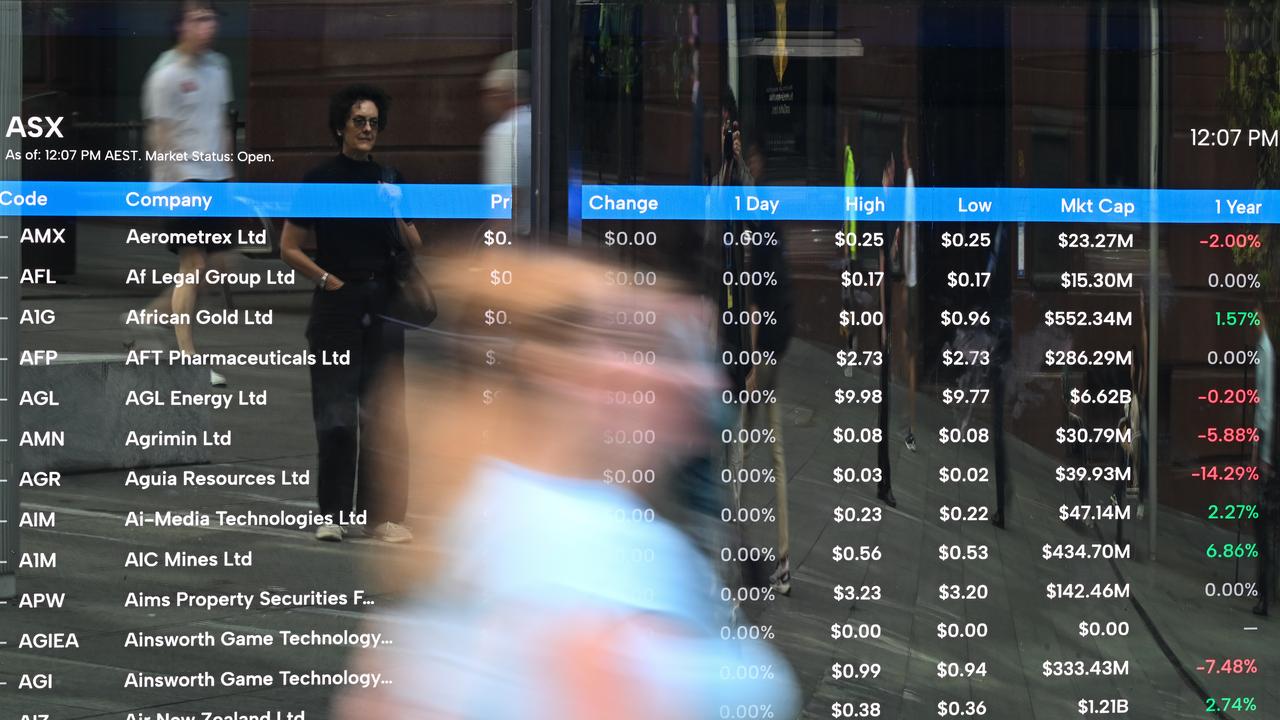
Australia’s share market has snapped a six-session losing streak, buoyed by strong miners, tech and health care stocks as banks continue to fall.

Continue Reading

Business

Can Turtlemint Fintech shares rally to Rs 190? Why Jefferies initiated coverage on the stock

Published

on

Can Turtlemint Fintech shares rally to Rs 190? Why Jefferies initiated coverage on the stock
Domestic brokerage firm Jefferies has initiated coverage on Turtlemint Fintech Solutions with a Buy rating, setting a target price of Rs 190, citing potential revenue growth of 38% over the next three years for the company with multiple levers at play, as it is the third-largest player in the “point of sales person” or POSP insurance sales channel.

Implying an upside of 37%, the brokerage’s estimate of 38% three-year revenue CAGR is led by 31% premium CAGR and higher take-rates. Adj. EBITDA margin is expected to improve from -10% to +10%, in this base case scenario, driven by operating leverage, higher retention (26% in FY29 vs 22% in FY26) led by rise in health renewals and technology allowing relationship managers to handle more distribution partners.

The brokerage expects the platform to onboard 100-125k partners (15% CAGR) over FY26-29e. This combined with improving partner productivity, noting a third of the distribution partners have been added in the last 2 years, could drive 31% premium CAGR till FY29e. Further, improvement in take rates led by profit sharing models could result in 38% revenue CAGR till FY29e.

POSP is among the fastest growing insurance sales channels in India, with 6% of premiums. The channel has grown 2-4x faster as compared to agencies and banks in the last 5 years. Platforms such as Turtlemint, which operate POSP networks offer insurers an alternative route to B30+ markets, which are typically difficult to penetrate. Turtlemint Fintech Solutions’ granular POSP network & tech stack drives better profitability on a smaller base, according to the brokerage. Turtlemint has 20% market share in POSP premiums.

Advertisement

Partner productivity i.e., premium generated per active partner, is expected to improve by 8% CAGR over FY26-29e led by cross-selling of other insurance products as well as increase in avg. ticket size, the brokerage stated in its report.


Renewals are 20% of Turtlemint’s revenues in FY26. The brokerage expects this to rise to 25% by FY29e, led by rise in share of health insurance within new business premiums. Turtlemint can have higher retention in renewals resulting in greater operating leverage.
Jefferies expects operating cash flows to turn positive in FY28 driven by improving profitability. The company has Rs 650 crore in cash post its recent IPO, which combined with improving cashflows reduces the risk of further capital raise.Key risks include regulation changes, commission cuts and competition from companies such as PB Fintech, which is the largest POSP in India, according to the brokerage.

Jefferies sees low risk of AI disintermediation for Indian insurance distributors, citing that insurance in India is “sold not bought”. While this is true globally, it is especially true in geographies with a lower life insurance penetration rate (such as India), as the consumer’s awareness of financial products is more limited, according to the brokerage. Hence, the reliance on support from intermediaries increases, which is not only limited to educating the customer w.r.t. the product (which AI could provide), but w.r.t. “need for insurance” and claim processing.

Life insurance is predominantly a savings product in India with investors using policies to plan for life events and retirement, the brokerage stated in its report. This has been the reason behind LIC and insurers backed with large private/PSU banks dominating the life insurance market. Hence, Jefferies sees investors less likely to depend on AI platforms alone for selecting policies.

Advertisement
Continue Reading

Trending

Copyright © 2025