
Crypto World
What It Is, Features & How It Works



RobTheCoins.com is an online publication covering cryptocurrency, blockchain, investing, business and selected gaming-related topics. Rather than focusing on a single digital currency or blockchain project, the website publishes guides, explainers, market-related articles and practical content designed to make complex financial and technology subjects easier to understand.
People searching for robthecoins .com may initially assume the name refers to a cryptocurrency, trading exchange or digital wallet. However, the current website primarily operates as an information and publishing platform, with sections dedicated to Cryptocurrency, Investing, Blockchain Business, Business Tips, Gaming and other topical content.
For readers interested in crypto without wanting to navigate highly technical material immediately, that broad editorial approach is an important part of what RobTheCoins offers.
What Is RobTheCoins.com?
RobTheCoins.com describes itself as a destination for information about cryptocurrency, blockchain innovation and investing. Its About Us page says the website was created to help explain subjects including DeFi, NFTs, smart contracts, crypto tax tools and evolving blockchain business models in more accessible language.
That means RobTheCoins.com should primarily be viewed as a content resource, rather than assuming that every topic mentioned on the website represents a financial product or service directly operated by RobTheCoins.
Its coverage has expanded beyond cryptocurrency alone. Recent and archived content includes subjects involving investing, fintech, online payments, business technology and gaming alongside traditional blockchain topics.
Who Is Behind RobTheCoins?
According to the website’s About Us information, RobTheCoins was created by Fyona Menas and Reg Payton.
Fyona Menas is presented as a writer and researcher covering areas including cryptocurrency trends, blockchain business models and related financial topics. Reg Payton is described as having interests in investing, alternative assets, fintech, side hustles and the overlap between gaming and crypto economies.
The site’s stated objective is to turn complicated subjects into information that readers can understand and use when carrying out their own research.
That distinction matters in cryptocurrency. Readers frequently encounter terminology such as staking, smart contracts, decentralised finance and tokenomics before fully understanding how the underlying systems work. Educational websites can therefore be useful starting points, provided readers continue to verify important financial information independently.
What Topics Does RobTheCoins.com Cover?
RobTheCoins has developed into a fairly broad publication. Its main subject areas include several categories.
Cryptocurrency
Cryptocurrency is one of the largest areas of the website.
Articles may discuss digital assets, cryptocurrency security, blockchain ecosystems, exchanges, wallets, market developments and emerging crypto concepts.
For a beginner, these articles can provide an introduction to terminology that might otherwise seem overly technical. More experienced readers may use the site to discover subjects that deserve further investigation.
However, cryptocurrency markets can change rapidly. Prices, regulations, exchange policies and individual projects can all change after an article has been published, so dates and primary sources should always be checked before making a financial decision.
Investing
RobTheCoins also publishes material about investing outside the narrow cryptocurrency sector.
Recent topics on the site have included portfolio management, alternative investments and broader approaches to managing personal money.
This wider coverage makes sense because crypto increasingly sits within a much larger investment conversation. An investor considering Bitcoin or another digital asset may also be comparing it with shares, bonds, funds, property or other asset classes.
Blockchain Business
The Blockchain Business section examines how blockchain and financial technology can be applied commercially.
The archive includes discussions around crypto business regulation, Web3, blockchain applications and technology infrastructure.
This section may therefore be particularly relevant to entrepreneurs, technology professionals and readers who are interested in blockchain for reasons beyond buying and selling tokens.
Business and Fintech
Business Tips is another significant part of RobTheCoins.com.
Coverage has extended into digital payments, software, online platforms and other technology affecting modern organisations.
The result is a website that increasingly overlaps with the broader fintech and digital-business publishing space rather than operating exclusively as a cryptocurrency blog.
Gaming
Gaming content also appears prominently on the website.
The connection between gaming and cryptocurrency is becoming increasingly relevant because digital ownership, virtual economies, NFTs, blockchain infrastructure and online payment systems can intersect with games.
Not every gaming article necessarily involves cryptocurrency, however, so readers can browse individual categories depending on the type of information they need.
Is RobTheCoins.com a Crypto Exchange?
Visitors should be careful about assuming that RobTheCoins.com itself is a conventional cryptocurrency exchange simply because some third-party pages describe it using trading-related language.
The current RobTheCoins website is visibly structured around articles and editorial categories, while its own About Us page describes its purpose in terms of cryptocurrency, blockchain and investing information.
This is an important distinction.
When considering any website involving cryptocurrency, users should independently establish whether they are dealing with:
- An editorial or educational website
- A cryptocurrency exchange
- A wallet provider
- A token issuer
- A decentralised application
- An investment company
- An unrelated third-party service using a similar name
A similar brand name does not necessarily mean two websites or products are connected.
How Can Readers Use RobTheCoins Effectively?
 The most sensible way to use RobTheCoins.com is as a starting point for research.
An article can introduce an unfamiliar term, explain how a technology works or highlight an emerging subject. Readers can then verify the important details through primary sources.
For example, information about regulation should ultimately be checked against the relevant financial regulator or government authority. Claims concerning an individual cryptocurrency should be compared with the project’s official documentation and independently verified blockchain data where appropriate.
The same principle applies to investment information.
A useful article can improve someone’s understanding of a subject, but it should not replace personalised advice or independent due diligence.
What Should You Check Before Acting on Crypto Information?
Cryptocurrency attracts both legitimate innovation and questionable claims, which makes verification especially important.
Before transferring money, connecting a wallet or buying an unfamiliar token mentioned anywhere online, readers should consider several questions.
Who Operates the Product?
Look beyond branding and establish which legal entity or identifiable development team is responsible.
Is the Service Regulated Where Regulation is Required?
Rules differ considerably by jurisdiction and by the service being offered.
Can Claims Be Independently Verified?
Guaranteed profits, unrealistic yields and vague explanations of how returns are generated deserve particular scrutiny.
What Happens to Deposited Funds?
Understand whether users retain custody of their cryptocurrency or transfer control to another party.
Can Funds Actually Be Withdrawn?
A displayed account balance does not necessarily prove that assets can be withdrawn.
How Old is the Information?
Crypto markets and regulations move quickly. An accurate guide from two years ago can contain details that are no longer applicable today.
These checks are useful regardless of whether information comes from RobTheCoins, social media, another cryptocurrency publication or an individual influencer.
Is RobTheCoins.com Legit?
There is an important difference between determining that a website exists and declaring every piece of information or third-party service associated with its name “legitimate”.
RobTheCoins.com is an active content website with an About Us page, contact information, published articles, editorial categories and terms governing use of the site.
That does not mean readers should automatically treat every investment opportunity, cryptocurrency project or external service discussed online as safe.
For financial subjects, readers should evaluate the specific claim, product or company involved rather than relying solely on the reputation of the publication where they first discovered it.
Independent checks become even more important when money, wallet access or personal information is involved.
Why Has RobTheCoins.com Attracted Attention?
The cryptocurrency information market has changed considerably.
Early crypto websites often assumed readers already understood blockchain terminology. Today’s audience is much broader. People may encounter digital assets through investing apps, online games, payments, social media or mainstream financial news.
That creates demand for explanations written for ordinary readers rather than developers.
RobTheCoins.com’s combination of crypto, investing, blockchain business, fintech and gaming places it within that broader trend. Its editorial scope means readers can move from understanding a crypto concept to exploring how the same technology may affect businesses or investment decisions.
Can Beginners Use RobTheCoins?
Yes. Many of the subjects covered are relevant to people who are still learning about cryptocurrency and digital finance.
Beginners should nevertheless avoid treating any single article as the final word on a financial decision.
A stronger research process is:
- Learn the basic concept.
- Check when the information was published or updated.
- Find the original source behind important claims.
- Compare information across reputable sources.
- Understand the risks before committing money.
- Seek regulated professional advice where appropriate.
Following this approach makes online financial content considerably more useful.
The Bottom Line
RobTheCoins.com is primarily a cryptocurrency, blockchain, investing and business information website. Its current site contains educational articles and editorial sections spanning crypto, investing, blockchain business, fintech-related subjects and gaming.
Readers searching for robthecoins .com should therefore distinguish the publication itself from individual products, coins, exchanges or third-party services that might use similar terminology.
For people researching digital assets, the website can serve as a place to discover topics and understand unfamiliar concepts. As with any financial publication, however, significant investment decisions should be backed by primary sources, independent verification and an understanding of the risks involved.
FAQs
Is Robthecoins a Cryptocurrency?
RobTheCoins.com itself is presented as an information website rather than a cryptocurrency token.
Who Created Robthecoins?
The website’s About Us page identifies Fyona Menas and Reg Payton as the people behind RobTheCoins.
Does Robthecoins Provide Investment Advice?
Its website primarily publishes informational and educational content. Readers should independently verify financial information and seek professional advice when necessary.
What Can Readers Find on Robthecoins.com?
Topics include cryptocurrency, investing, blockchain businesses, digital payments, financial technology, business and gaming.
Is Information About Cryptocurrency Always Current?
Not necessarily. Cryptocurrency prices, projects, legislation and platform policies can change rapidly, so readers should check publication dates and verify important details with current primary sources.
Should Investors Rely Only on Robthecoins?
No financial website should normally be the sole basis for an investment decision. RobTheCoins can be used for research and discovery, while important claims should be independently verified.



The approved plan reallocates 546.9 million OP from user airdrops to a Foundation-controlled Strategic Ecosystem Fund.


AI agents may not converge on public blockchains, Fidelity Digital Assets said, naming that outcome as one of the largest potential risks to the sector’s AI thesis.
The warning came days after Grayscale named 4 blockchain networks that could benefit from the adoption of artificial intelligence (AI).
Fidelity Flags Risks in Crypto’s AI Agent Thesis
Senior Research Analyst Max Wadington published the Fidelity report on August 19. He listed the scenario among six structural risks to the AI and digital assets thesis.
Wadington explained that closed systems run by large technology firms and fintech platforms could absorb the same activity. He cited advantages in performance, cost, user experience, and regulatory clarity.
“Even if AI drives a substantial increase in overall digital economic activity, there is no guarantee that public blockchains will capture a meaningful share of it,” he wrote.
This follows comments from Grayscale Head of Research Zach Pandl, who said the growing adoption of artificial intelligence (AI) will generate demand that public blockchains are well-positioned to meet.
He named Ethereum (ETH), Solana (SOL), Worldcoin (WLD), and Bittensor (TAO) against three demand areas. Pandl grouped that demand into agentic finance, verifiable record-keeping, and decentralized AI. He argued that traditional systems were not built for what AI will generate.
Follow us on X to get the latest news as it happens
The Other Risks Fidelity Outlined
A second risk concerns payments. The report noted that payments can drive significant transaction volumes, but they generally generate relatively low fees and compete with established financial institutions and technology platforms.
As a result, higher payment activity could boost adoption and usage, particularly among stablecoin issuers, without necessarily translating into comparable value accrual for native tokens, especially at the base blockchain layer.
“The primary economic beneficiaries of payment-driven growth may be stablecoin issuers and adjacent service providers rather than the underlying blockchain networks themselves,” the report read.
The remaining risks cut across the same thesis. Wadington wrote that more software output does not guarantee more economic value.
He also stated that technical differentiation could weaken as AI commoditizes development. Liquidity, distribution, security, and trust become the durable advantages instead.
Security itself turns into a competitive differentiator. AI lowers the cost of finding vulnerabilities while also lowering the cost of writing code.
Compliance rounds out the list. Systems offering clearer identity and permissioning frameworks may suit institutional adoption.
Fidelity did not forecast any of these outcomes. The firm framed each as a risk that could reshape how much value public chains capture.
Subscribe to our YouTube channel to watch leaders and journalists provide expert insights
The post Fidelity Digital Assets Names 6 Risks to Crypto’s AI Agent Thesis appeared first on BeInCrypto.


A federal appeals court has ruled that crypto theft victims can sue Binance in US courts, rejecting the exchange’s attempt to push their claims into arbitration under terms they never signed.
The Eleventh Circuit granted a writ of mandamus on Wednesday, a rare remedy that forces a lower court to correct a clear error. The panel directed a Florida district court to vacate its arbitration order.
Court Says Victims Can Sue Binance Without Signing Its Terms
Eight theft victims filed proposed class actions against Binance Holdings, BAM Trading Services, which operates Binance.US, and founder Changpeng Zhao. None of them ever held a Binance account or accepted its Terms of Use.
They allege criminals drained their wallets, then laundered the proceeds through the exchange. The complaints cite the Racketeer Influenced and Corrupt Organizations (RICO) Act, conversion, and consumer protection laws in California and Massachusetts.
The plaintiffs say Binance ran an unlicensed money transfer business and disregarded the Bank Secrecy Act. That US law requires financial firms to detect and report suspicious transactions.
A judge in the Southern District of Florida sent the dispute to arbitration anyway, relying on equitable estoppel. The doctrine can force non-signers into a contract’s arbitration clause when they benefit from the agreement.
The three-judge appeals panel called that a misreading of the complaints. According to the order, the claims rest on a “duty otherwise imposed by law” rather than on Binance’s terms.
The procedural route matters. Federal law bars appeals of orders compelling arbitration, so mandamus was the victims’ only exit after two years of fighting over the forum. The panel also credited evidence they would forfeit claims and face unreasonable costs arbitrating abroad.
What the Ruling Means for Binance and Other Exchanges
David Silver founded Silver Miller, the firm representing the victims. He said Binance told his clients to arbitrate in Hong Kong, one case at a time.
“A contract you never signed shouldn’t keep you out of court,” Silver noted.
The compliance allegations track a record Binance has already admitted. The exchange pleaded guilty in November 2023 to Bank Secrecy Act violations and running an unlicensed money transmitting business.
It paid a $4.3 billion resolution, and prosecutors said it never filed a single suspicious activity report with FinCEN. Zhao admitted failing to maintain an anti-money laundering program and served a four-month prison sentence in 2024.
Laundering speed explains why victims target exchanges rather than thieves. Global Ledger’s review of 255 hacks worth $4.04 billion found stolen funds can move within two seconds of an attack.
Binance’s courtroom record remains mixed. It won dismissal of terror financing claims in March, yet investors filed a $200 million UK lawsuit in June over leveraged trading losses.
The case now returns to the Southern District of Florida, where the civil RICO count allows triple damages if the victims prevail. Other circuits may soon face the same question about non-customers and exchange arbitration clauses.
The post Court Opens Door for Crypto Users to Sue Binance Over Stolen Funds appeared first on BeInCrypto.

The conversations offer clues to DSA’s sudden relevance. Members talk about rent and health care, Donald Trump and immigration enforcement, Israel and Gaza, jobs that do not pay enough and homes they cannot afford. Others describe a Democratic Party they no longer believe is capable of addressing the problems shaping their lives.
There is plenty at the summit to remind visitors that this is an avowedly socialist organization. A bookseller in the hallway sells Marxist literature; The Communist Manifesto sells out by evening. Nearby, organizers decorate a “Free Stuff!” booth with fake bags of money and gold bars. But many of the grievances drawing people toward DSA no longer sound especially fringe. For Katie Sims, DSA’s 28-year-old electoral chair, the revelation came after graduating from Cornell in 2020 and looking at what a job would pay, then what rent and health insurance would cost. “I was like, none of these numbers add up,” Sims says. Polls show younger Americans are increasingly pessimistic about reaching the basic milestones available to their parents: homeownership, financial security, raising a family without amassing crushing debt. But, while Mamdani was elected mayor of New York with 51% of the vote, the people DSA has attracted are disproportionately young, white, urban, and college educated—hardly a representative sample of the working class the organization hopes to organize.

SEC Crypto News: The Securities and Exchange Commission proposed Regulation Crypto Assets, a framework that would allow eligible projects to raise up to $75 million in any 12-month period without registering the offering under the Securities Act. The proposal also includes a conditional safe harbor under which a crypto asset could be deemed not subject to an investment contract if specified conditions are met.
- Fundraising exemption: Up to $75 million per 12-month period, with financial statements and ongoing reporting requirements.
- Startup exemption: Up to $5 million over a four-year period, with principles-based narrative disclosures.
- Investment contract safe harbor: A conditional path under which a crypto asset could be deemed not subject to an investment contract.
The proposal creates two exemptions from the Section 5 registration requirements for certain investment contracts involving crypto assets, which the SEC refers to as covered investment contracts.
The smaller route would cap offerings at $5 million over four years. The larger fundraising exemption would permit offerings of up to $75 million during each 12-month period.
Issuers using either exemption would be required to provide principles-based narrative disclosures and would remain subject to federal antifraud and antimanipulation provisions.
Crucially, issuers using the larger exemption also would be required to provide financial statements and comply with ongoing reporting requirements.

Crypto thought leaders such as Deepankar Kapoor, Chief Growth Officer for Global Markets at compliance-first digital asset marketplace eXchange1, believe the framework could unlock a new phase of positive mature growth for the industry.
“What excites me here isn’t fewer registration headaches for issuers, it’s what it does to the pipeline,” explained Kapoor.
“For years, promising projects either delayed launching or built offshore because the securities question was unresolved.
“A defined $75 million tier with real financial reporting attached means we should see a wave of well-disclosed, legitimate projects come to market over the next year or so.”
Kapoor also shared his expert insight into the best strategy for retail investors looking to get ahead of the SEC’s crypto move.
“The platforms that build out their due diligence bench now, ahead of that wave, are the ones that end up capturing it.”
Why the Safe Harbor Matters More Than the Dollar Figure
The headline number draws attention, but the proposal’s safe harbor addresses when a related investment contract could cease to exist.
Under the proposed rule, a crypto asset could be deemed not subject to an investment contract if the issuer certifies to the SEC that it has ceased or terminated all essential managerial efforts it promised to undertake under that investment contract and satisfies the other conditions of the safe harbor.
SEC Chairman Paul Atkins said the proposal is designed for non-security crypto assets that are subject to an investment contract.
In a statement accompanying the release, Atkins said issuers have had to conform to existing SEC rules that were not designed with those assets in mind, and that this approach has impeded capital formation and innovation.
He also said the agency’s past approach had driven investment offshore and limited the protections available to U.S. investors. Atkins credited Commissioner Hester Peirce’s long-standing safe harbor proposal with laying much of the groundwork for Regulation Crypto Assets.

Where This Sits in the Broader Crypto Regulation Push
Atkins said legislation remains indispensable for creating rules durable enough to protect the SEC’s work from being undone by a future regulator. He said the SEC will continue to support Congress in delivering the CLARITY Act to President Trump.
The proposed exemptions would establish tailored routes for offerings involving covered investment contracts, while preserving disclosure obligations and the securities laws’ antifraud and antimanipulation provisions.
The fundraising exemption would add financial-condition disclosures, including financial statements that must be audited at certain capital-raising thresholds, according to Atkins’s statement.
What Happens Next
The release identifies Regulation Crypto Assets as a proposed rule under File Number S7-2026-27. It states that comments should be received on or before 60 days after publication in the Federal Register.
The SEC provides an online comment process for the file number and says submitted comments will be posted on its website.
DISCOVER: XRP Price Prediction – 2026, 2027, 2030
The post SEC Crypto Proposal Offers New Paths for Crypto Asset Issuers appeared first on Cryptonews.

GnosisDAO has voted to approve a major upgrade for Gnosis Chain: the network will transition from operating as a standalone layer-1 to becoming a ZK-proven “Ethereum Economic Zone” (EEZ) rollup aligned with Ethereum. The decision is intended to move Gnosis Chain’s transaction settlement to Ethereum while still running its smart contracts in an environment designed to improve how users and applications interact with Ethereum-native liquidity and assets.
In the governance vote, Gnosis Chain reported that GIP-153 passed with 123,158 GNO in support, 115 against, and 151 abstaining across 54 voters. The proposal’s turnout totaled 123,425 GNO, surpassing the 75,000 GNO quorum requirement. Gnosis Chain now says an initial launch is targeted for late 2026 or early 2027, contingent on the EEZ technology being ready.
Key takeaways
- GnosisDAO approved GIP-153 to transition Gnosis Chain from layer-1 to an EEZ rollup that settles transactions on Ethereum.
- The vote cleared the 75,000 GNO quorum with 123,425 GNO in turnout, signaling broad governance support despite a low “no” count.
- Under the proposal, Gnosis Chain’s validator set would be retired, shifting settlement responsibility to Ethereum validators.
- Gnosis Chain-native contracts would gain tighter access to Ethereum assets and liquidity, including the ability to call Ethereum and use results within the same transaction.
- The EEZ concept is aimed at reducing fragmentation across Ethereum’s growing rollup landscape, potentially lowering reliance on bridges.
What GIP-153 changes for Gnosis Chain
The approved proposal, GIP-153, outlines a fundamental architectural shift. Instead of settling transactions on its own chain as a layer-1, Gnosis Chain would settle transactions on Ethereum, making it effectively an Ethereum layer-2 that depends on Ethereum’s validator set for settlement finality.
In the same proposal framework, Gnosis Chain’s existing validator set would be retired, aligning core settlement with Ethereum while preserving the network’s application layer. Gnosis Chain also said it would retain its “existing applications, balances and xDAI gas token,” suggesting a continuity plan for users and developers even as the underlying consensus and settlement model changes.
A key promise of the EEZ approach is improved on-chain interoperability for smart contracts. The proposal states that Gnosis Chain-native smart contracts would be able to call Ethereum and use that information in the same transaction—an ability it claims is not currently available on existing layer-2 systems.
Why the EEZ framework is being pursued
At a broader level, the EEZ concept is designed to address a structural issue in Ethereum scaling: fragmentation. As Ethereum’s rollup ecosystem has expanded, liquidity and usage have increasingly become siloed across separate networks. Different rollups can also limit how easily contracts from one environment can synchronously coordinate with contracts on another.
According to the coverage referenced in the original report, the EEZ framework was developed by Gnosis and ZisK, with funding from the Ethereum Foundation. The stated objective is to unify Ethereum-aligned rollups so that smart contracts across different participating networks can execute synchronously—without requiring bridging mechanisms.
This matters for investors and builders because bridges and cross-chain messaging have become recurring points of failure in the broader ecosystem. The EEZ plan attempts to reduce one major source of operational and security risk while improving how assets and logic can interact across rollups.
Timing is also a central uncertainty. Gnosis Chain’s rollout target—late 2026 or early 2027—explicitly depends on the underlying EEZ technology being sufficiently developed. That means market participants may want to track technical milestones and readiness signals long before deployment.
Buterin’s critique and the rollup security trade-off
The push for an EEZ-aligned design comes amid ongoing debate about how layer-2s fit into Ethereum’s long-term architecture. Ethereum co-founder Vitalik Buterin previously argued that some assumptions behind the original L2 vision no longer hold up. In a Feb. 3 X post, Buterin wrote that “the original vision of L2s and their role in Ethereum no longer makes sense, and we need a new path,” pointing to potential weaknesses including centralized sequencers and trusted bridging mechanisms.
Those concerns align with the EEZ pitch: move settlement closer to Ethereum’s security model and reduce bridge dependence while enabling more direct execution pathways for cross-network smart contract interactions.
Rollup adoption remains substantial. Data referenced from L2Beat indicates that 22 Ethereum rollups are listed as securing $27.82 billion, while the platform tracks $34.88 billion in total value secured when including validiums, optimiums, and other scaling networks. As that footprint grows, the industry pressure for smoother composability and reduced fragmentation is likely to intensify.
Standard Chartered: fewer bridges, more composability
Standard Chartered’s digital assets research team has also weighed in on what an EEZ could change operationally and economically. In a May 28 report shared with Cointelegraph, Geoffrey Kendrick—global head of digital assets research—said the EEZ could reduce reliance on blockchain bridges and increase the usability of assets in EVM environments.
Kendrick wrote that “the EEZ will have the benefit of reducing the need for bridges (where hacks tend to occur) and increasing the usability of assets in EVM chains.” He added that these factors are “likely to lead to greater activity in the Ethereum ecosystem.”
From an application standpoint, Kendrick also highlighted the potential for stronger composability. The idea is that smart contracts across participating networks could interact within the same transaction, enabling richer cross-asset and cross-contract workflows without the fragmentation that can arise when operations span multiple independent rollups.
What to watch as the transition approaches
With GnosisDAO’s approval now in place, the key question for the market is execution: whether EEZ technology progresses on schedule and whether Gnosis Chain can migrate while maintaining continuity for users and developer tooling. As the late-2026/early-2027 target draws closer, attention will likely shift to implementation details—especially how Ethereum settlement, synchronous execution, and bridge reduction are delivered in practice.
Three hours spanning the London afternoon and New York morning account for about 23% of XRP moving onchain, up from roughly 14% a year ago.

Link Attracting Whales Amid Robust Buy-In
The entire cryptocurrency market is now in a fresh wave of bullish trend as Bitcoin and Ethereum made impressive gains during the past 24 hours. The positive performance of the two largest cryptocurrencies has spilled into altcoin space, with several altcoins gaining significant value.
In that regard, Chainlink’s LINK has emerged as a focus of traders after the token registered a robust uptrend during the last day. LINK has gained above 8%, taking the coin’s value close to $10.65. The uptrend comes at a time when LINK had been trading with weak momentum and lack of direction.
The uptrend is being backed by whales. Market trends suggest that there has been continued accumulation of LINK by whales rather than one-off very large transactions.
Such an accumulation can prove very important as buying pressure on LINK can play an essential role in supporting the token. Unlike other transactions, LINK buying activities indicate that there have been gradual purchases of the token by certain market players. Analysis of LINK shows that it has appreciated by more than 19% in just one week.
Link Breaks Crucial Resistance Barrier
The new price rise has been accompanied by yet another vital technical development. Specifically, LINK has risen above the crucial diagonal resistance barrier that previously prevented its price from moving higher. Another technical development is that LINK has risen back into its daily cloud area.
It is crucial to break resistance barriers because it indicates there is enough buying power to push the price past a point where sellers previously existed. Breaking out of the daily cloud adds more weight to the technical development in terms of overcoming an area that was earlier seen as a barrier.
Short-Term Correction Is Still Possible
Even with the improvement in the technical setup, LINK is still susceptible to a short-term correction, especially after the recent gains in its price.
The coin has appreciated quickly, and there might be some selling pressure from traders who choose to book profits from the current rally. However, this does not mean that a correction in LINK invalidates the bullish setup, especially when LINK is still trading above its previously reclaimed resistance levels.
The fact that whales are continuing to buy LINK can also help during any short-term sell-off. As long as whales continue to accumulate LINK amid the new technical levels, the recent breakout can become a long-lasting move.
At the moment, LINK’s technical setup of continuous whale accumulation, increasing momentum, and a break above major technical resistances has made the altcoin a favorite among traders. For some time now, LINK has been one of the weakest coins, and the token has been showing some of its best bullish setups in some time. It will be vital for upcoming sessions to determine what happens next.
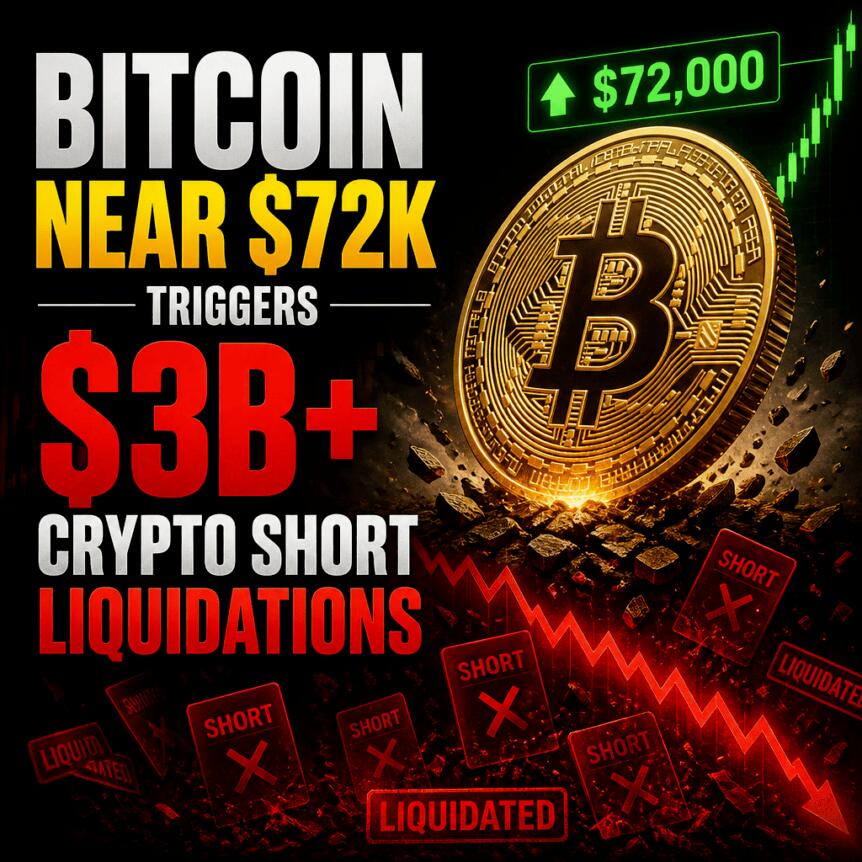
Crypto markets have been roiled by a rapid unwind of bearish leverage, with short liquidations pushing past $3 billion over the past two days. According to CoinGlass, total liquidations for Aug. 19–20 reached roughly $3.1 billion, while Thursday marked the largest single-day wipeout of shorts recorded by the platform.
Bitcoin has also been firming in the backdrop. The BTC/USD pair continued its upside reaction tied to a US Treasury liquidity intervention, trading around the $72,000 area, with local highs of $71,992 on Bitstamp reported via TradingView data.
Key takeaways
- Short liquidations exceeded $3.1 billion across Aug. 19–20, per CoinGlass.
- Bitcoin accounts for just over half of the two-day short liquidation total, at about $1.65 billion.
- Thursday’s short squeeze was the biggest on record for single-day short liquidations in CoinGlass’ data.
- Short-term holders rotated out of break-even territory, moving 43,300 BTC to exchanges as price improved.
Short liquidations surge to record levels
The liquidation figures reflect how quickly leverage can unravel when price moves persistently higher. CoinGlass data indicates that Aug. 19–20 combined for short liquidations of more than $3.1 billion, with Thursday contributing the most extreme daily spike in the dataset.
It’s important to distinguish between short-only and all-liquidation measures. The $3.1 billion figure refers specifically to shorts. If long positions are included, the total liquidation impact can be much larger; the article notes that the long liquidation cascade following Bitcoin’s October 2025 reversal from its then-most recent all-time high of $126,200 dwarfed the current short-only event, described elsewhere as a roughly $20 billion cascade.
CoinGlass’ emphasis on shorts also sits alongside historical context from CoinMarketCap. Using a combined long-and-short view, CoinMarketCap ranks Thursday’s total liquidations around seventh place historically, estimating $3.25 billion for the day when both sides are counted.
BTC’s climb stays tied to US Treasury liquidity signals
Part of the upside momentum is linked to a US Treasury liquidity intervention, which the article references as the catalyst behind BTC/USD’s move earlier in the week. Earlier coverage from Cointelegraph noted Bitcoin’s response to a liquidity intervention and the subsequent push to levels not seen since the start of June.
As of the time of writing, the rally was still playing out. TradingView data cited in the article shows BTC/USD reaching local highs of $71,992 on Bitstamp, reinforcing the broader pattern that spot gains and margin squeezes often feed each other: rising prices trigger forced closes for short positions, which can in turn add incremental buy pressure.
Why short-term holders are moving coins to exchanges
Beyond liquidations, the more structural read-through for traders is what longer-lived cohorts do when price crosses above cost. The article highlights that Bitcoin short-term holders—defined as wallets holding a UTXO for less than 155 days—have taken profit in a meaningful way.
According to on-chain analytics from CryptoQuant, short-term holders transferred 43,300 BTC to exchanges in what is described as their largest profit-taking move of 2026. That behavior matters because it can influence near-term supply dynamics: when “recent buyers” sell into a rally, the market’s ability to sustain higher prices depends on whether fresh spot demand absorbs that distribution.
CryptoQuant also points to the spent output profit ratio (SOPR) for the short-term holder cohort. As of Thursday, STH-SOPR stood at 1.01—its highest level since April. SOPR above 1 indicates that, on average, the coins being spent by the cohort are moving at a higher price than their prior transaction price. In practical terms, the majority of UTXOs moving from short-term holders were sold at prices above their earlier cost basis, consistent with profit-taking rather than capitulation.
What investors are watching next: staying power vs. profit rotation
The current unwind of shorts looks like a classic “payoff” for bearish leverage—forced selling pressure on one side is removed as price rises. But the longer question is whether the bid can keep absorbing new supply. The article notes that earlier Cointelegraph analysis found the short-term holder cohort’s aggregate cost basis (also called the STH realized price) at about $68,700, and that such a level previously suggested upside could face friction if investors felt compelled to exit positions that had been underwater.
Now, with STH-SOPR above 1 and a record-sized profit-taking transfer to exchanges, market participants should watch whether this rotation expands or fades. If short-term holders continue to distribute aggressively while price pauses, rallies could become choppier. If instead inflows remain strong enough to offset that selling, the liquidation-driven momentum may transition into steadier spot accumulation.
For the next session, the key signals to track are whether short liquidations taper off as leverage clears and whether the STH profit cycle continues or stabilizes—because that combination often determines whether “squeeze” gains convert into a sustained trend or revert once the forced selling stops.

- KuCoin earns ISO 42001 certification for its AI management system globally.
- ISO 42001 focuses on AI accountability, transparency and human oversight.
- New certification strengthens KuCoin’s wider security and trust framework.
KuCoin has secured ISO/IEC 42001:2023 certification for its Artificial Intelligence Management System, adding a dedicated AI-governance standard as crypto exchanges increasingly use artificial intelligence across risk, compliance and customer operations.
The certification applies to the management framework supporting KuCoin’s global digital-asset exchange.
The company said AI is used across areas including anti-money laundering, fraud detection, market surveillance, customer service, product intelligence and operational automation.
ISO/IEC 42001 was published in December 2023 and is the world’s first international management-system standard for artificial intelligence.
It sets requirements for establishing, maintaining and continually improving an AI management system, with a focus on accountability, transparency, risk management and oversight.

AI governance becomes a bigger financial-sector issue
The certification comes as financial companies expand AI use beyond simple automation into functions that can influence compliance, risk management and customer outcomes.
S&P Global analysts Miriam Fernández and Nicolas Charnay have warned that more complex AI systems could amplify risks including privacy concerns, operational failures and financial instability.
In a report on AI adoption in banking, they said: “Without careful governance, banks could be exposed to material operational risks with financial, regulatory, reputational, and systemic implications.”
Those concerns also apply to digital-asset platforms, where automated systems can operate continuously across transaction monitoring and fraud prevention.
KuCoin chief executive BC Wong said governance is becoming inseparable from AI adoption.
“AI is becoming a foundational capability of digital financial infrastructure, but greater capability must be matched by greater responsibility,” said BC Wong, CEO of KuCoin.
We believe the future of the industry will not be defined simply by more advanced AI, but by more trusted AI. Achieving ISO/IEC 42001 demonstrates our commitment to embedding responsible AI governance into the way we build, deploy and operate AI across our platform. As we continue to innovate, we remain equally committed to ensuring that every AI capability is transparent, accountable and designed to strengthen user trust.
Certification adds to KuCoin’s trust framework
ISO/IEC 42001 adds an AI-governance layer to KuCoin’s existing security and operational framework.
The exchange already holds ISO/IEC 27001 certification for information security, SOC 2 Type II attestation and ISO 22301 certification for business continuity and operational resilience, according to the company.
Unlike a cybersecurity standard, ISO/IEC 42001 focuses on how organisations manage AI throughout its lifecycle.
ISO says the framework covers policies, risk assessment, monitoring and continual improvement rather than certifying individual AI applications.
The distinction matters as financial platforms deploy AI into sensitive operations. It can improve fraud detection, compliance monitoring and efficiency, but also raises the need for clear human accountability.
For KuCoin, the certification is less about a single AI tool than formalising how the technology is governed across the platform.

Farage Accused Of Using Christianity To Fuel Anti-Muslim Sentiment

2026 St. Jude Fantasy football PPR mock draft 2.0: Jahmyr Gibbs goes No. 1 as RBs set the early tone

Qualtrics cuts jobs in Seattle, Utah and overseas as it absorbs $6.75B acquisition





-

 Fashion6 days ago
Weekend Open Thread: Ann Taylor
-
 Sports7 days ago
This U.S. Amateur is a glimpse into golf’s future in more ways than you think
-
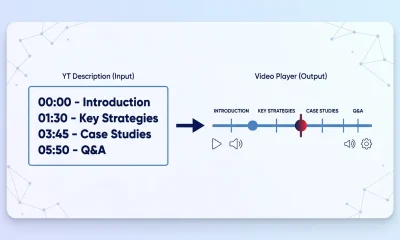
 Tech6 days ago
11 Ways to Rank Your Videos
-

 Sports5 days ago
Birmingham 2026: Day 6 Timetable for Irish Athletes
-
 NewsBeat5 days ago
Myanmar says over 300,000 Rohingya refugees verified for repatriation as exodus enters ninth year
-

 Politics5 days ago
SEQ Code: The Three Letter Boarding Pass Code That Could Give You The Worst Seat
-

 Tech7 days ago
DeepSeek Harness launches as open source rival to Claude Code, alongside V4-Pro on API with higher prices
-

 Tech2 days ago
Qwen3.8-27B runs frontier-class coding agents and reasoning locally, no cloud API required
-

 Crypto World5 days ago
Pi Network Protocol 27 endgame: last upgrade before what?
-

 Crypto World3 days ago
OCC Greenlights Trump Family Crypto Firm for Trust Charter
-

 Business2 days ago
SMA Solar Technology AG (SMTGY) Q2 2026 Earnings Call Transcript
-
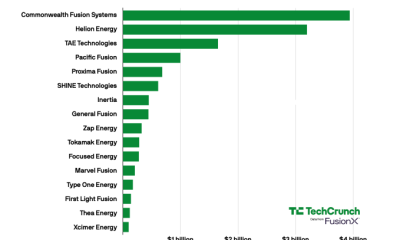
 Tech5 days ago
Every fusion startup that has raised over $100M
-

 Fashion6 days ago
Weekly News Update, 8.14.26 – Corporette.com
-
 Entertainment6 days ago
10 Netflix Shows That Quietly Became Modern Classics
-

 Business5 days ago
Facebook Down Now? Users Report Login And Loading Problems As Outage Trackers Monitor Ongoing Issues
-
 Entertainment5 days ago
Marvel Studios Reveals New X-Men Cast Including Adam Driver and Sadie Sink
-

 Business6 days ago
15 Ways to Make Money From Your Phone (2026 Guide)
-

 Fashion6 days ago
Silver bangles for women – Newbridge Silverware
-

 News Videos7 hours ago
Don’t Leave Your Financial Future To Chance | August 19, 2026
-
 Business5 days ago
Monarch Mutual Fund set to enter MF space with maiden overnight fund; files draft with Sebi
You must be logged in to post a comment Login