
Politics
The Real Reason Horseshoes Are Considered Lucky


It probably won’t surprise you to learn that “stealing someone’s thunder” and “spilling the beans” have a pretty unusual relationship to the weather and legumes they describe.
Common phrases like “o’clock” and “pardon my French” have unexpected origins, too.
But what about superstitions like horseshoes? How come an animal’s foot covering came to mean good luck, so much so that you can still find some nailed to the doors of people’s homes?
According to riding wear suppliers at Discount Equestrian, the answer is a little wilder (and darker) than I thought.
Why are horseshoes considered lucky?
One story, the horse experts said, related to 10th-century monk and bishop St Dunstan and the devil (oh!).
“The legend of the horseshoe is closely associated with St Dunstan, today the patron saint of goldsmiths, locksmiths, and jewellers,” they said.
“As the story goes, while living as a hermit in Glastonbury, he was visited by Satan, who asked him to use his blacksmithing skills to shoe the devil’s hoof.”
The legend says that because St Dunstan recognised the visitor for who he was, he nailed a red-hot horseshoe to his hoof.
So, the devil learned to be afraid of the iron symbol and steered clear of houses which displayed them on their doors.
Some also believe that nailing seven holes into a horseshoe attached to your door will add to its luckiness.
The ‘n’ angle, with the heels pointing down, has been believed to pour blessings on visitors, while the “U” shape may be used to keep any good fortune from spilling out.
Iron has long been considered lucky
This is not the only factor that goes into the choice, Discount Equestrian said.
Horsehoes are made from iron, which was once considered a talismanic metal used to keep witches and other supernatural forces at bay.
“The horseshoe is a perfect example of a symbol that has crossed centuries without people really knowing why they use it,” the pros explained.
“It combines practicality that iron was once precious, with deep religious folklore about protecting the home. When people hang one today, they’re unknowingly repeating a thousand-year-old superstition.”

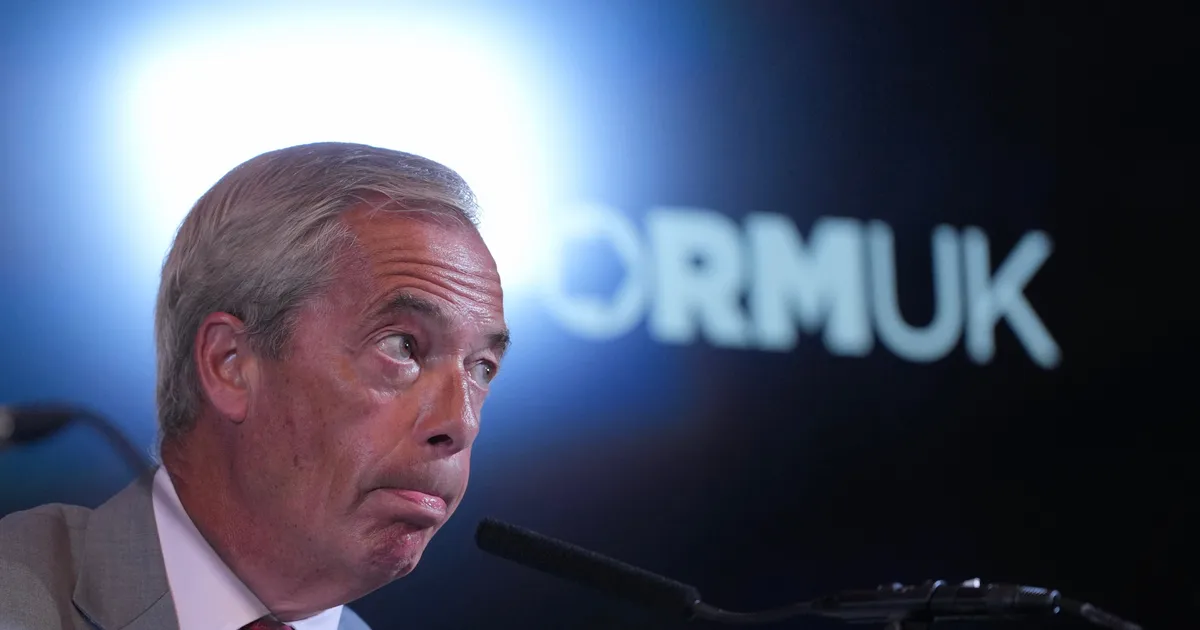
Nigel Farage has been accused of misusing Christianity to “channel anti-Muslim feeling” by the former Archbishop of Canterbury.
Life peer Dr Rowan Williams told the New Humanist magazine there was an “inevitable scepticism these days about some claims to religious conviction”.
He said: “I suspect really that Farage and others want to channel anti-Muslim feeling, and it helps to have ‘we’re a Christian society’ to fling back. It gives a sort of ballast.”
Williams, who served as the senior bishop for the Church for England from 2002 to 2012, said he believed there were a lot of possible causes driving Christian nationalism in the UK, including “anxiety about migration, anti-Islamism”.
He said: “In France, that anxiety has a secular aspect, but the St George’s Cross still means something in the English imagination, which still has a Christian aspect.
“The second thing is the globalising of all political discourse. The message given at international Christian conservative gatherings is that self-respecting nationalist movements need a bit of theology injected into them.
“Ironically, for someone like Nigel Farage, it’s about trying to find a presentational strategy that allows him to be taken seriously outside England. He’s often not here, after all.
“Then again, if we’re looking for what animates Christian nationalism, I think it’s in part the very simple search for someone to blame.”
Farage posted on social media at Easter, saying: “The Christian values on which our country is built are something to be proud of.”
In his first election interview back in 2024, he said there were a “growing number of young people in this country who do not subscribe to British values, in fact loathe much of what we stand for”.
He later told Sky News he was talking about Muslims.
The Clacton MP also criticised an iftar – the meal eaten to break Muslims’ daily fast during Ramadan – in Trafalgar Square earlier this year, describing it as an “attempt to overtake, intimidate and dominate our way of life”.
Williams went on to criticise Tommy Robinson, the far-right activist whose real name is Stephen Yaxley-Lennon who claims to have taken Bible studies in jail and is now a Christian.
His Unite the Kingdom march in London in May saw demonstrators carry wooden crosses and chanting “Christ is king”.
Williams said: “There’s an inevitable scepticism these days about some claims to religious conviction, and I don’t want to give way to this. If Tommy Robinson is doing his best to lead a life of Christian discipleship, I’m very glad, but I would really want to ask him some awkward questions.
“I would ask him how attempting to lead a life of Christian discipleship squares with public rhetoric designed to produce hostility and violence.”
Reform UK has been approached for comment.
Listen to Commons People, the podcast that makes politics easy. Every week, Kevin Schofield and Kate Nicholson unpack the week’s biggest stories to keep you informed. Join us for straightforward analysis of what’s going on at Westminster.
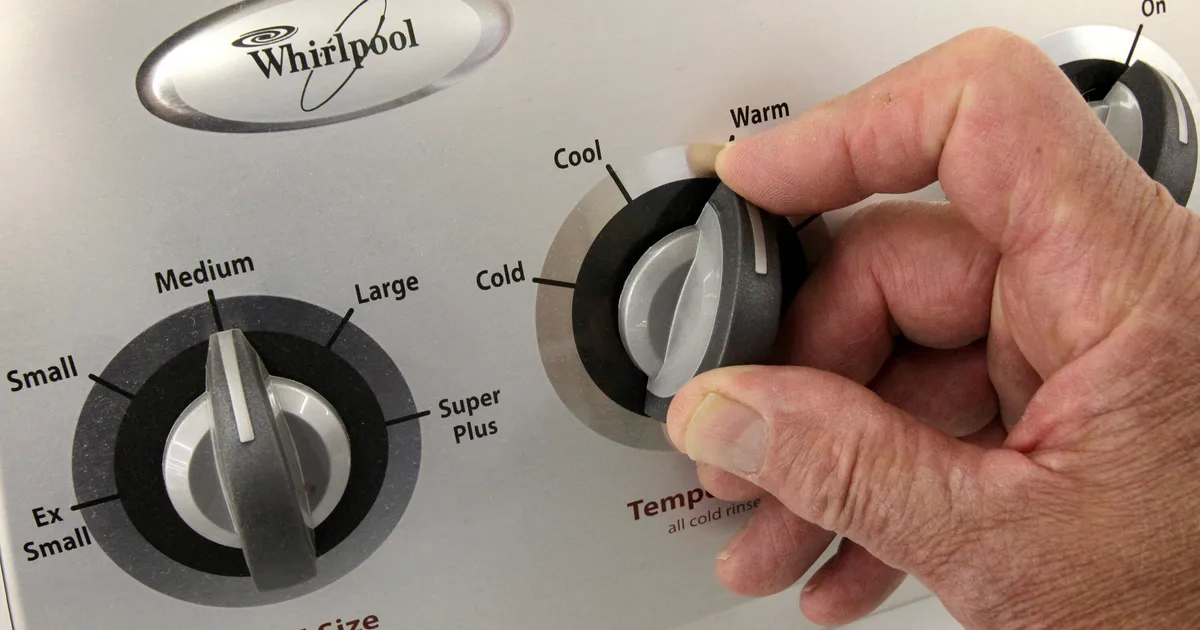
You might already know that overloading your washing machine drum dooms your clothes to longer-lasting dampness – but did you know it could also shorten your appliance’s lifespan?
Additionally, Lenor says we should consider shaking our clothes before bunging them into the dryer, as that helps to “extract surplus water and damp”.
And apparently, the temperature at which you set your washing machine matters much more than we think, according to doctor and broadcaster Dr Xand van Tulleken.
Speaking on BBC Morning Live, he said he doesn’t “see the point” in one setting in particular, as it neither kills off germs nor saves you much money.
Here’s the most “useless” washing machine temperature
Dr van Tulleken started off by saying that 90°C is usually a bit excessive, as it “almost boils” your clothes.
Though it does “kill” germs, the doctor joked that “whatever’s happened” to garments that need that extreme a heat setting likely means they need to be binned anyway.
If your household has an infection like Norovirus, Dr Van Tulleken stated you’ll probably be best off washing on a 60°C cycle.
Then he added, “personally, I don’t see the point in 40°C… it’s too hot to be cheap, and it’s too cold to kill [germs]”.
The NHS has advised patients who spend time in hospital to wear clothes that can be washed at 60°C to avoid spreading bacteria like Clostridium difficile (C.diff).
Any lower, and the germs will likely survive.
But what if I’m not sick?
Most of the time, if you’re not unwell, 60°C is excessive.
But even then, Dr van Tulleken (and consumer advocacy publication Which?) say 40°C isn’t ideal.
30°C “gets the job done,” the doctor shared (Which? found that on average, switching from 40°C to 30°C saved 38% energy, or about £24 a year).
Personally, though, the doctor is a “20°C guy for everything” except his workout clothes.
Which? wrote that this saves 62% energy or £39 a year compared to 40°C; they recommend washing at either 20°C or 30°C where possible.
Though this may leave your washing machine drum a little less boil-wash-clean than higher temps, that’s resolved by simply running “a monthly hot maintenance wash (60°C with the machine empty and washing machine cleaner in the detergent tray)”.


In a post on X, Irish satirist and pro-Palestine activist Tadhg Hickey has called out Piers Morgan’s glaring double standard over online abuse: defending some targets from trolls while piling on others.
Hickey’s intervention came after Morgan posted on X defending Ariana Grande and rightly condemning the trolls “making her life a misery”. But, as Hickey points out, Morgan has shown far less concern for Greta Thunberg, repeatedly adding fuel to the abuse directed at her.
Patriarchal double standards
Morgan was absolutely right to call out the trolls targeting Ariana Grande with nasty and offensive comments about her appearance. But, as Hickey has pointed out, where is that same compassion when it comes to activist Greta Thunberg?
That double standard matters.
Personal attacks, condescending pile-ons and relentlessly negative commentary can have very real consequences for the people caught in the crossfire. We saw just how tragic those consequences can be following the death of Jason Arday, who faced attacks from powerful people who disagreed with his views and, more disturbingly, from those who were entirely unable to accept a Black man achieving academic acclaim.
And that is the problem. For some people, personal attacks and irresponsible commentary suddenly become acceptable when the target holds political views they dislike.
Within our neoliberal establishment, a hugely successful actress who makes big sums of money for corporate wealth will find her wellbeing being defended, but an activist fighting for a better world against corporate greed and neglect, will be demonised and ‘left to the dogs’.
Let us be clear: both women deserve far better than the way they are treated in the media.
However, you cannot condemn online abuse when it suits you and then choose to ignore abuse when the target is someone you disagree with. This exposes a deeply cynical double standard in parts of the mainstream media and Western behaviour more broadly.
It also raises an important question: if the media and social media pile-ons continue to cross the line, isn’t it time we had much stronger accountability and regulation?
This is the same soulless rodent who regularly says hideous, baseless things about Greta Thunberg – perhaps the most attacked young woman on the internet. pic.twitter.com/uHDAzNZDEn
— Tehran Tadhg (@TadhgHickey) August 18, 2026
Morgan is a hypocrite
Thunberg often attracts the ire of white patriarchal men like Morgan, as she has long sought to challenge corrosive systems of power. This is both in relation to the climate crisis and in Western states’ failure to uphold international law in the face of a live-streamed genocide in Gaza.
This, unsurprisingly, has irritated people like Piers Morgan who seemingly believe they are the ultimate moral arbiters of what can and can’t be said.
Going further, Morgan has attacked Thunberg relentlessly for years, alongside other right-wing pundits, for the offensive crime of working to expose the irresponsibility, negligence and corruption at state and corporate level in the face of climate catastrophe.
After October 7th, 2023, Thunberg turned from a sole focus on the environment to speaking up against the genocide in Gaza which is still ongoing today. Pointing out the flagrant breach of international law by the occupying state of Israel, Thunberg has angered many pro-Israel pundits.
This drew the ire of Piers Morgan who showed a particular inclination to favour Israel’s ‘position’. He appeared to have quite the comfort in ignoring the brutal, murderous bombing campaign by the Israeli Occupation Forces (IOF) on innocent Palestinian men, women and children.
Nevertheless, Morgan eventually couldn’t excuse Israel’s war crimes, and he finally began to challenge Israel (a little bit, anyway) – but he was no more inclined to look at Thunberg’s efforts without feeling compelled to diminish and deride her.
This is because, for people like Morgan, it is always about his arrogant superiority:
"This stunt has done absolutely zero to help any of the people in Gaza. Zero!"
Piers Morgan clashes with UN special rapporteur on the Occupied Palestinian Territories, Francesca Albanese on Greta Thunberg – watch more — Piers Morgan Uncensored (@PiersUncensored) June 9, 2025

 https://t.co/64pOqfYq2R@piersmorgan | @FranceskAlbs pic.twitter.com/6O581NYeYM
Derogatory abuse
Morgan’s cruel and diminishing rhetoric towards Thunberg has been longstanding and has sunk to deplorable depths in his attempt to diminish her critical work.
Back in 2019, in response to her advocacy for action on the climate crisis, Morgan attempted to suggest Thunberg was “unstable”:
Piers Morgan with Toby Young agreeing with him just said 'Greta Thunberg is unstable' on Good Morning Britain.
Fox sacked a contributor for saying Thunberg had a mental illness.
Should GMB sack Piers Morgan? — RJ (@robjeffecology) September 25, 2019
As in the interview with Albanese, Morgan does little to hide his hatred for Thunberg. Ironically, he declared her to be someone who is just out for their own ego who is a “self-obsessed narcissist”.
Plenty have pointed out his hypocrisy, which only lays bare this double standard even further:
Piers Morgan called Greta Thunberg a self obsessed narcissist.
Has he looked in the mirror recently?
There really is a massive one there.
— BladeoftheSun (@BladeoftheS) June 9, 2025
Others have pointed out that Thunberg could seemingly do nothing which could possibly satisfy Morgan – or escape his cynical and damaging attacks.
if Greta Thunberg was doing nothing for Gaza except posting, Piers Morgan would call her a performative whiner afraid to take any real action. If she engaged in violent protest, he would call her an evil terrorist. If she does non-violent action like the freedom flotilla, she's… pic.twitter.com/UXWIEsTLo8
—

 (@zei_squirrel) June 9, 2025
The more likely reality is that Thunberg’s real offence is simply showing up – with no agenda beyond helping others, using her privilege and platform to challenge the most powerful and damaging structures of power.
5 minutes in the company of this f****** legend and you get why washed-up conservative white men like Piers Morgan are so hideous towards her on the internet, obsessively trying to find out what her 'angle' is: It's because there's no angle. She does what she does because she… pic.twitter.com/tM5YADifrX
— Tehran Tadhg (@TadhgHickey) August 9, 2026
Unfortunately, much of the media class is helping to uphold these damaging systems of power, as researcher Philip Proudfoot has pointed out on X:
It is clear we need a public inquiry into the British media, covering everything from its funding model that encourages harmful click-bait, to the over representation of nepo-elites.
Media is sick in Britain. It does not not “speak truth to power” — it upholds and defends it.
— Philip Proudfoot (@PhilipProudfoot) August 19, 2026
Practice what you preach, Morgan
There have been resounding calls across the political spectrum for stronger regulation of the media. The British public deserves a media watchdog which actually has ‘teeth’ when it comes to holding powerful, influential people to account for the harms they have afflicted and contributed to.
This crucial issue has been brought to the forefront of public debate in light of the abusive, irresponsible and cruel treatment towards Jason Arday, seemingly for clickbait. Continuously, we see the mainstream media, politicians and journalists actively encourage quick judgement. So few encourage real understanding.
Before the far-right DEI-haters swoop in, or those on the left who have been all too happy to churn out content that undermines the very principles we claim to uphold, let’s be clear: understanding is not the same as agreement.
It means reaching a conclusion informed by the full picture – not by the most manipulated, inflammatory or salacious details.
It is time for all those in the media and those engaging in public debate to practice what they preach, the World has had quite enough of hypocritical double standards.
Featured image via the Canary / IG
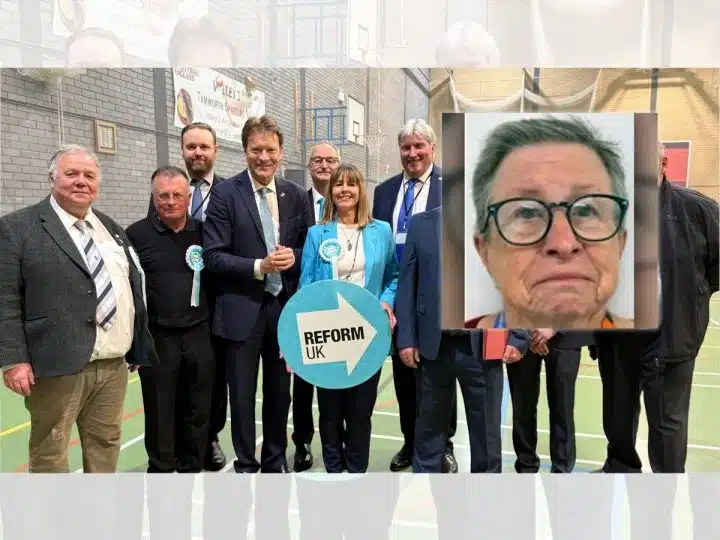

Here at the Canary, we’ve been very critical of the sort of people who run to become Reform UK councillors. Sometimes this has been because of their own actions; other times it’s been because the party they sought to represent is reprehensible. Given this, we’d generally praise someone for leaving the party. It is somewhat difficult to do that in this instance, though:
Reform councillor resigns, but sent their resignation letter to the wrong council — Harry Eccles (@Heccles94) August 20, 2026
 pic.twitter.com/5MkFTfVMYa
Confusion
The Reform councillor in question is one Christine Duffy. Duffy has previously complained that she “received no training” around the councillor role, which is a fair enough complaint. It’s not surprising, either, as we know that Reform doesn’t even seem to vet its candidates. We also know that Reform councillors have complained about having the tow the party line over local interests.
As noted, Duffy sent her resignation letter to the wrong council. For whatever reason, she addressed her correspondence to Kidsgrove Town Council instead of Newcastle-under-Lyme. This is a pretty big mistake, and while we know she “received no training”, that can only excuse so much.
Adding further intrigue to the story, Duffy has since withdrawn her resignation. While a resignation cannot be withdrawn once received, Duffy claims she withdrew before Kidsgrove handed the resignation to Newcastle. She also said:
I am not resigning as the Borough Councillor for the Town ward and I remain committed to representing the residents who elected me.
Additionally:
I am appalled that a private letter, provided in confidence to the Clerk of Kidsgrove Town Council, has somehow been obtained by the Kidsgrove Independents and is now being exploited for party political purposes.
And also this:
My position could not be clearer.
It probably could be clearer, to be fair, but maybe this is the best she can do?
Not alone
Duffy isn’t the only Reform councillor to have resigned recently. John Bell resigned on 17 August following the announcement that Reform want to abolish Personal Independence Payments (PIP):
The big question about Reform's plan to remove PIP disability payments from two-thirds of claimants is whether it's politically sustainable.
PIP pays ~£4,500 a year, tax-free, to ~10,000 people in a typical Reform target seat. Big debate ahead. https://t.co/fi1SlusXE8
— Fraser Nelson (@FraserNelson) August 18, 2026
Abolishing PIP entirely is an extreme position for Reform to take – both because of the damage it will do to sick and disabled people, and the damage it will do to the party’s electability:
Reform UK PIP changes: Reform UK MPs vs Old Tory MPs
Farage, Pochin, Anderson, Tice, Having reviewed PIP data and mapped it against Reform UK constituencies, and weighted for working age claimants, it's clear that there is a divide… pic.twitter.com/fMhqMmdlxF
— Reform UK Exposed
vs
Jenrick, Braverman, Rosindell, Kruger
 (@reformexposed) August 17, 2026
In Farage’s Clacton constituency, it’s more like one-in-five voters. And while Reform has done a good job conning PIP claimants into thinking they’ll only target the ‘layabouts’, it’s going to be hard to pull that same trick when the party is claiming every PIP claimant is a layabout.
By proposing to abolish PIP while simultaneously shunting other costs on to businesses, Reform seems to have designed a policy which will be hated by everyone. Obviously, there are many Britons who don’t own their own business of claim PIP, but bear in mind there are:
In other words, most Britons will know a PIP claimant or a business owner. And through word of mouth, they’re going to hear very bad things about this policy.
Reform: Going, gone
As detailed above, there are many reasons for Reform politicians to resign. Some have gone to take a moral stand; others have gone following a series of farcical mistakes. We do encourage all Reform councillors to abandon the party, though, and we hope fewer of them get in with the next local elections. This is looking more and more likely too given the party’s bizarre decision to attack its own potential voters.
Featured image via the Canary
By Willem Moore


The Palestinian city of Hebron has been the target of another Israeli military excursion. Occupation personnel flooded into the Old City to roll out the proverbial red carpet for “settlers tours” in the southern West Bank city — a coloniser gathering held on Shabbat that compounds the terror Palestinian residents experience in Hebron, one of the most heated fronts of colonial settler violence.
Israeli military presence is not incidental. It safeguards setters, offering them a carte blanche to overrun indigenous Palestinian territories. With the military on their side, they are answerable to neither local nor international law, acting with repugnant impunity.
Israeli system of Apartheid
The latest flood of alleged religious pilgrims — all of whom are illegal settlers — was not without violence. By the evening of the 15 August, the tormenting of Hebron’s Palestinian population had begun as the settlers playbook of intimidation tactics took a violent turn. Making their way towards nearby Kiryat Arba, colonists started attacking nearby neighbourhoods.
Meanwhile, Israeli occupation forces (IOF) forced shopkeepers to shutter their stores and businesses for the afternoon. Roads were also closed, severely restricting the movement of Palestinians in and out of the Old City.
A Palestinian who lives in Tel Rumeida tells the Canary that he and his wife felt ‘anxious’ and ‘fearful’ that evening.
“About 7.30pm, just before sunset, a group of settlers was roaming Tel Rumeida with the intention of attacking the Palestinian residents. They started throwing stones at our house. My wife and I were inside so, fearing we would be hit by stones and attacked, we had to lock ourselves in the house and wait.”
“They just wanted to kill the Palestinians”
By around midnight, settlers had reached Hebron’s Al-Ras neighbourhood, throwing stones and attempting to set cars alight. The Quds News Network, citing the Red Crescent Society, reported that it was treating 10 injured Palestinians that night.
Naser Jabari, 64, was shot in the back and hand, while his 40-year-old son, Fahed, was also shot and subsequently detained. Eight other Palestinians, including a 66-year-old woman, were beaten by settlers and soldiers. After shooting the two men, the IOF prevented an ambulance from reaching them for around 40 minutes.
A local neighbour, Alaa Jaber, describes these events to the Canary:
Two of my neighbours were shot by soldiers that night. The settlers turned up at midnight, and were intimidating people. The people were deterring them, and because of this the settlers started throwing rocks. The Palestinians then responded with the same. One of the rocks hit the Israeli settler’s car, so he then started shooting.
The soldiers heard this, and turned up quickly. They saw the two Palestinians, and maybe thought they had a gun, so shot them immediately. They made no attempt to see what was happening, but just wanted to kill the Palestinians. After that, the soldiers stormed the houses, defending the settlers.
Naser Al-Jabari was taken to a Palestinian hospital, while the IOF took his son to a hospital in Jerusalem, by military ambulance, and detained him.
No further information is known about their condition, or if Fahed Al-Jabari is still being detained. Jaber says:
The streets around this Restricted Area are closed off to Palestinian vehicles, so the only cars on the road belonged to Israelis. The Jabaris made a living repairing the settler’s cars, and even communicated with them in Hebrew. It’s sad.
There’s no stability here, the situation is so chaotic. The Israelis want everyone to leave. They used to get on well with the Muslims, and were treated well by them. But now they come in and do the same as what the Nazis did against them.
Skyrocketing settler violence

Settler violence in the occupied West Bank has hit an all time high. According to the UN Office for the Coordination of Humanitarian Affairs (OCHA), more than 3,000 settler attacks resulting in Palestinian casualties or property damage had been recorded from the beginning of 2025 through to the end of June 2026. Much of this violence happens in and around the Hebron area.
Last year saw record levels of settlement construction in the occupied West Bank, with over 63,000 housing units advanced or planned. Now, in 2026, the occupation has been focusing on formalising settlements, funding their expansion and building supporting infrastructure. This is so it can continue deepening its control over the territory and continue fragmenting Palestinian communities, and what is left of their land.
Medical Aid for Palestinians warns of a continuing escalation in attacks on healthcare workers in the West Bank. Two further serious incidents have occurred. A group of settlers attacked an ambulance carrying a patient from Hebron’s Tel Rumeida area to hospital.
Just northwest of Hebron, in the village of Sa’ir, settlers shot 26-year-old Palestinian nurse Muhammad Mutoor, in the back. The attack severed Mutoor’s spinal cord, leaving him paralysed.
Israeli holding patterns
In 1997, under the Hebron Protocol, Hebron was divided into H1 and H2. H1 covers around 80 percent of the city and falls under Palestinian Authority control, while H2 covers the remaining 20 percent and remains under ‘Israeli’ military control. It includes the Old City and several areas where ‘Israeli’ settlers live alongside Palestinian communities.
Tel Rumeida and Al-Ras are two Palestinian neighbourhoods within the Restricted Areas of H2, and are therefore subject to severe access and movement controls. Palestinian vehicles are prohibited from entering, while residents face numerous checkpoints and restrictions affecting access to their homes, schools, workplaces and essential services.
Featured image via the Canary
By Charlie Jaay
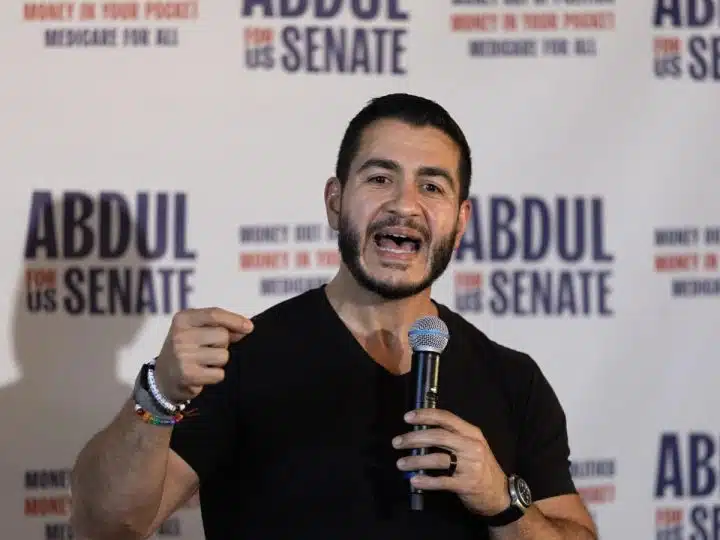

Left-wing politicians, like Zohran Mamdani, Abdul El-Sayed and (to an extent) Andy Burnham, have found recent success by taking a fresh angle on selling their politics. The Economist, a stalwart institution of liberalism and opponent of leftism, refers to this new approach as “Gen-Z socialism”, which it characterises as a “me-first doctrine” embodying:
a form of retail politics that appeals not to notions of the common good, as in prior waves of socialism, but to people’s narrow self-interest.
The demands, according to the Economist, are:
Lower my rent! Cut my bills! Give me free buses!
It believes, furthermore, that this strain of leftism differs from earlier ones because, where past left-wing generations proposed broad-based taxes, now the expectation is that the money will come “by squeezing the very wealthiest.”
Populist or popular?
The Economist might simply be resenting that leftism is now popular. The philosopher John Gray laid out the liberal’s resentful framing:
‘Populism’ is a term used by centrist liberals to describe political blowback from the disruption of society produced by their policies.
That same reflex traces back further, to John Stuart Mill’s 1859 work On Liberty and his fear that:
the tyranny of the majority is now generally included among the evils against which society requires to be on its guard.
The same Mill, though, wrote elsewhere that a shared national identity was one of the background conditions a liberal order needs to survive, not a threat to it. What binds a nationality together, he wrote, is:
the possession of a national history, and consequent community of recollections; collective pride and humiliation, pleasure and regret, connected with the same incidents in the past.
Liberalism kept the fear of the crowd and dropped the recognition that a crowd needs something holding it together. That gap is roughly where what Gray calls “hyperliberalism” lives – treating every inherited identity as something to be dismantled rather than relied on. Point that habit of mind at a politics that speaks in terms of an “us,” renters against landlords, taxpayers against billionaires, and it reads exactly like the tribalism that liberalism trained itself to fear.
The way that plays out today is more concrete: neoliberalism didn’t defeat mass democracy so much as hollow it out, moving policy out of democratic reach and into the hands of technocrats. More than eight in ten Britons want water and energy back in public ownership, for example, yet neither party that has governed for three decades has acted on it. That isn’t a fringe demand; it’s a landslide majority rejected by an unaccountable one. The reaction when a liberal figure loses to that backlash is consistent. Gray recalls David Cameron shrugging off an upset as simply “populism”, as though his own policies had nothing to do with it. Hillary Clinton did the same in 2016, telling donors Trump’s coalition belonged in a “basket of deplorables.”
Pothole politics
Beyond the Economist‘s liberal pearl-clutching about leftist populism, the observation that left-wing politicians are increasingly adopting a form of retail politics holds up.
In August 2026, outsider Abdul El-Sayed beat the DNC establishment-backed Haley Stevens to become the Democrats’ candidate for Michigan’s Senate seat. In many ways, El-Sayed’s campaign strategy was to present Stevens as the ideologue, specifically a Zionist one, rather than advance an ideology of his own.
Stevens had previously said that:
Israel comes to me in my dreams.
Her campaign received almost $30 million from AIPAC’s Super PAC, whereas El-Sayed told voters that:
the money that we should have to invest in our schools is being sent to foreign governments to destroy other people’s schools, instead of investing in our own.
El-Sayed wasn’t trying to make anti-Zionists out of Michiganders. He was signalling that his opponent was the ideologue, spending their tax money on that ideology, while he would redirect it into their retail offer. Asked what label he’d choose for himself, he said:
I choose the word ‘populist,’ because I’m for people, and I want people to have more power, versus the elites.
This week, Burnham launched a “cost of living tour” built around “everyday fixes”: subscription traps banned, a £2 bus fare cap, cheaper pub rates, a VAT cut on electricity bills. BBC Verify put the whole first-week tally at about £1.5bn, which RSM UK’s chief economist called roughly 0.1% of annual government spending – too small to alarm the bond markets or change the economic outlook. That’s not a flaw, it’s the strategy: symbolic, itemised proof that government still works, priced low enough not to spook anyone who matters.
The same instinct reshaped New York. Mamdani won the mayoralty on universal childcare, free buses, a rent freeze and city-owned grocery stores, a “public option for produce.” The record so far is genuinely retail: $1.2bn secured for childcare, the rent freeze approved, the first site for the city’s grocery programme confirmed in East Harlem. Free buses remain stalled, with the administration’s immediate focus shifted to faster buses instead, and the broader wealth and corporate tax rises he ran on needed state approval he didn’t get, landing instead on a narrower pied-à-terre tax on luxury second homes.
That instinct also became a genuine social media phenomenon: in July, a New Yorker filmed two potholes on his street, then a follow-up hours later showing they’d been fixed, a clip that went viral. By his 100-day address, the city had filled 100,000 of them. As Mamdani put it around the same milestone:
How can you ask a New Yorker to believe in the promise of universal childcare if they look out of their window every single day and see the same pothole not being addressed?
Retail therapy
What has actually changed is not the ideology but the unit of persuasion. Mid-20th-century socialism argued in structural terms – nationalise the commanding heights, trust an entire theory of the economy before you see a result. What Mamdani, Burnham and the wider DSA slate are running instead is socialism itemised: not the abolition of landlordism, but a rent freeze for roughly a million rent-stabilised apartments; not the nationalisation of retail, but a network of five planned city grocery stores; not a reformed tax code, but a wealth tax pitched as the thing that pays for a bill cut on your account this month. The old method asked people to trust the whole system before they saw any of the parts, and that stopped working the moment trust in any system collapsed.
Retail offers succeed because they’re built for an attention economy. A pothole fixed on camera delivers a result you can check yourself; a promise to reform the tax base does neither. The deeper cause is a collapse in trust, in the age of the Epstein files as much as anywhere else. Just 12% of the British public trust governments of any party to put the country’s interests before their party’s interests – a record low. Just 17% of Americans trust the government in Washington to do what is right even most of the time – one of the lowest readings in almost seven decades of polling. Ask voters to trust a complicated new tax system, and you’re asking for something trust collapse has made almost impossible to give. Ask them to trust that a pothole gets fixed by Friday, and you’re asking for something they can verify themselves.
The honest answer is that retail politics is not zero-sum thinking dressed up, it’s what happens when politicians stop asking voters to take a fairer system on trust and start proving it one bill, or one pothole, at a time. What Mamdani, Burnham and El-Sayed have discovered is how to make collective action believable again. But a subscription-trap ban and a filled-in pothole are not, on their own, a wealth tax. Voters who were sold the small print will eventually ask what happened to the rest of the book.
Featured image via Axios
By Hugo Harvey


During President Donald Trump’s first term, they were resistance stars. During his second term, they couldn’t survive primaries.
Alexander Vindman’s Senate primary loss in Florida on Tuesday is the latest stumble for Democrats who rose to prominence during the impeachment trials and accountability protests of Trump’s first term. Vindman, a former National Security Council aide who testified during the 2019 House impeachment inquiry, made standing up to Trump and other forms of corruption a centerpiece of his campaign.
His national profile helped haul in big money, but that wasn’t enough to stave off an upset loss to democratic socialist Angie Nixon, whose win showed the shifting politics of the Democratic base.
“Vindman is a hero, but memories fade and the focus of most folks is on the cost of living,” said longtime Democratic strategist David Axelrod. “She made those issues her focus.”
Democratic voters clearly want fighters who will stand up to the president and the GOP. But the string of losses for resistance candidates from the first Trump term illustrates a new era for the restive Democratic base, where vocal opposition to the president through official channels and public remonstrations no longer guarantees success.
The political graveyard of Trump-resistance-fighter campaigns is growing by the week.
Two of the 2021 House impeachment managers, Reps. Diana DeGette (D-Colo.) and Eric Swalwell (D-Calif.), are among them: DeGette lost her reelection bid to a democratic socialist this summer, while Swalwell dropped out of the California gubernatorial primary after a string of sexual assault allegations. Rep. Dan Goldman (D-N.Y.), the lead majority counsel in the first Trump impeachment inquiry, was ousted in his primary. Harry Dunn, a Capitol Police officer honored for his heroics on Jan. 6, 2021, lost a House bid in Maryland — his second unsuccessful run.
Other Democrats who built their profiles on Trump resistance flopped as well.
Tom Steyer, a prominent financier of the Trump resistance movement, failed to advance in the California gubernatorial primary. Rep. Raja Krishnamoorthi (D-Ill.), a member of the Oversight and Intelligence committees during the 2021 impeachment, fell short in his Senate bid. Reps. Shri Thanedar (D-Mich.) and Al Green (D-Texas), both of whom led impeachment pushes against Trump, were ousted by younger challengers. And George Conway, a longtime Trump critic and Lincoln Project co-founder, won just six percent of the vote in a House primary in New York City.
“‘#Resistance’ was a very Trump 1.0 mood, and now we are in a different moment of anger,” said Lanae Erickson, senior vice president at center-left think tank Third Way. “They’re mad about the war. They’re mad about costs. They’re mad about the establishment not having delivered anything for them.”
Not all the races were defined by Trump accountability politics. Swalwell dropped his bid after multiple sexual assault allegations, several incumbents lost to DSA challengers in closed primaries, and in Goldman’s case, the debate over Israel was a major factor.
A Democratic operative who worked on one of the resistance races, granted anonymity to speak candidly, said the throughline is that those candidates are “institutionalists” who argued the justice system was going to hold Trump accountable. But voters have lost faith in those institutions after he returned to office, and were sold by other candidates’ messaging that relied more on railing against those very systems.
“The prescription isn’t what they were looking for anymore,” the operative said.
If Democrats retake control of the House, they will have to confront their base’s appetite for holding Trump accountable. Republicans have long warned that Democrats will immediately move to impeach Trump should they regain a House majority in 2027, which Rep. Robert Garcia (D-Calif.) — the top Democrat on the House Oversight Committee — has signaled openness to.
But some Democrats are more careful. “There are certain sections of people that definitely want Democrats to prioritize impeachment of the president. There are also other segments of people that want Democrats to prioritize bringing down the cost of living,” said Rep. Julie Johnson (D-Texas), who lost a runoff in a newly gerrymandered district. “You can’t just focus on one thing at the exclusion of the other.”
These electoral results, along with a growing list of Trump-endorsed candidates who have lost their primaries, suggest Americans are ready to move past Trump, argued Mike Madrid, who co-founded (and later disaffiliated with) the anti-Trump GOP group Lincoln Project.
“People are just tired of him, broadly. They don’t want to deal with him and the fights and the exhaustion and the never-Trump model, but also the sycophantic MAGA support model either,” Madrid said, pointing to the string of Trump-endorsed candidates who lost primaries on Tuesday, from Florida to Wyoming. “It’s Trump fatigue.’”
Some candidates are taking note — and adjusting accordingly.
David Jolly, the Democratic gubernatorial nominee in Florida and a former GOP House member, left the Republican Party in 2018 over disagreements with Trump. He was an independent after that and a regular MSNBC talking-head criticizing the president. He registered as a Democrat more than a year ago, before launching his bid for governor.
Despite Trump’s role in his political evolution, Jolly hasn’t made Trump central to his race for governor. “I’m not running the race about Trump. I rarely talk about him. But I am going to tie Byron to Trump’s economy,” Jolly told POLITICO after winning the nomination on Tuesday night, referring to his Trump-endorsed opponent, GOP Rep. Byron Donalds.
Former Rep. Elaine Luria (D-Va.), who served on the House Jan. 6th Committee, is running for her old seat against Rep. Jen Kiggans (R-Va.). She said in a statement that she was “proud of the work I did in Congress to hold Donald Trump and his Administration accountable,” but quickly pivoted into an attack focused more on pocketbook issues.
Some of the candidates who lost primaries say their resistance bona fides did help — just not enough.
Dunn, the Capitol Police officer, earned the Presidential Citizens Medal from former President Joe Biden for his heroism on Jan. 6, 2021 and became well-known for his outspokenness about that day. He said that had little to do with his primary loss — although he acknowledged that Democratic voters’ top priority this cycle has shifted to affordability concerns.
“While name recognition got me to be a formidable challenger, it didn’t put me across the finish line,” said Dunn, who finished third in a crowded primary in Maryland’s 5th District. “I just think it’s too nuanced to just drill it down to ‘people just don’t care anymore.’” The Democratic nominee, Adrian Boafo, is “strongly about holding Donald Trump accountable,” Dunn added.
Goldman, similarly, lost to former New York City Comptroller Brad Lander, who often highlighted how he put his “body on the line” to push back against the administration’s immigration policies.
Steyer, the billionaire who ran for California governor, lost to Xavier Becerra — who campaigned hard on his court fights with the Trump administration as California’s attorney general, but also leaned into unrelated sections of his resume like his time as Biden’s health secretary.
Months before entering the race, Steyer reminded voters of the Need to Impeach campaign he once funded in an ad supporting last year’s Democratic gerrymander in California. But those credentials — which he later stressed on the campaign trail — were too dated and too intangible to push him over the top, according to his former campaign spokesperson Kevin Liao.
“Tom Steyer led an impeachment movement almost 10 years ago now, and I think it’s hard to expect the electorate to hold that long of a memory on anything that happened almost a decade ago,” he said.
Adam Wren, Kimberly Leonard, Riley Rogerson, Blake Jones and Madison Fernandez contributed reporting.
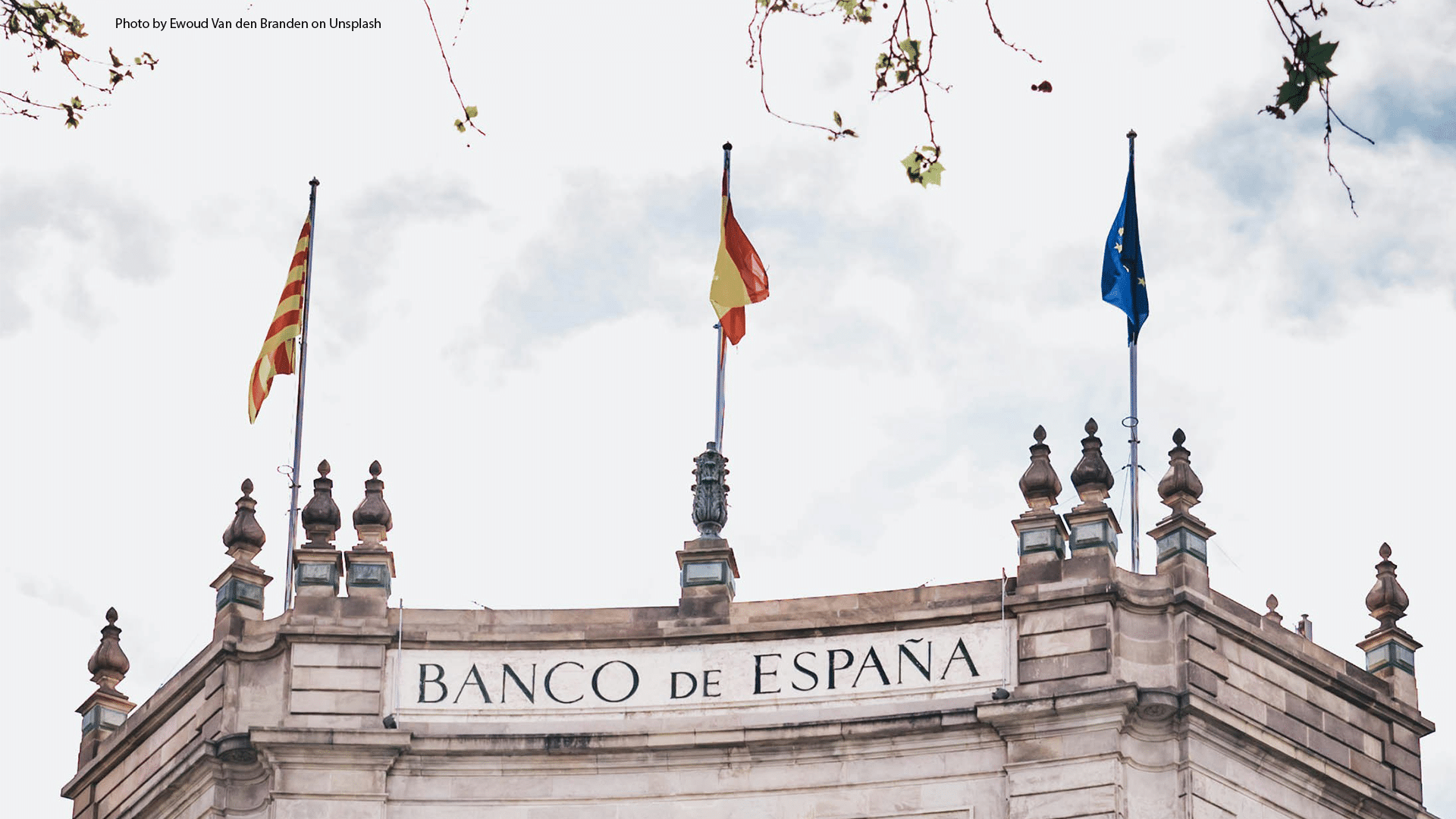
Caroline Gray outlines some of the key lessons that can be drawn from Spain’s experience of fiscal devolution between regions.
Prime Minister Andy Burnham wants to give mayors in England the power to retain a share of locally raised income tax and business rates. This is a landmark proposal for such a fiscally centralised country and the theory behind it seems sound: devolving financial powers should increase accountability, making regional leaders more clearly responsible for the consequences of their spending decisions. It should also improve efficiency by putting decisions into the hands of those closest to local realities and best able to assess needs. And it is not hard to argue that this would be preferable to the current deals-based approach to regional and local funding in England, where strategic authorities are too often left competing against one another to make their case for investment to Westminster.
Yet theory does not always translate into practice. Poorly designed fiscal devolution may create more problems than it solves. Considering the experience of other countries is a useful way to learn valuable lessons, and Spain offers an interesting example.
Spain is divided into seventeen regions, fifteen of which operate under a regional financing system that combines centrally-raised taxes, shared taxes and regional taxes (the remaining two regions have greater fiscal autonomy). Regional governments retain 50% of income tax receipts and have the power to vary rates on their share within certain parameters. Meanwhile, business rates – the other tax Burnham has proposed devolving – are set and collected by local authorities (an administrative level below the regions, equivalent to English councils), which retain the proceeds as a primary source of funding for local services.
While fiscal devolution has brought benefits to Spain, its experience also reveals lessons about what can go wrong. Spain’s regions have greater fiscal and spending powers, but their experience shows that transferring powers alone is not enough to guarantee accountability and efficiency.
Firstly, the Spanish case highlights the importance of a credible no-bailout commitment by central government, while also demonstrating how difficult such a commitment can be to enforce in practice. During the construction-fuelled boom years before the 2008 financial crisis, Spain’s regional financing system seemed to work well. Through a combination of central government transfers, regionally-raised revenues and relatively unrestricted borrowing, regional governments had ample fiscal space to pursue their priorities. Yet the model unravelled in the wake of the financial crash, when several regions found themselves on the verge of bankruptcy. Story after story about over-spending on vanity projects – including unnecessary airports – and corruption scandals surfaced.
Central government had arguably been too willing to turn a blind eye to regional spending and borrowing decisions, but once crisis hit, it could not credibly commit to a no-bailout principle either. Madrid became the lender of last resort, providing emergency support to cash-strapped regions via new mechanisms such as a Regional Liquidity Fund. Originally conceived of as a temporary measure, that Fund is still in place today.
Spain’s experience shows how difficult it would be to enforce a no-bailout principle in practice. Regardless of whether some regional governments had spent irresponsibly, could a government realistically refuse to intervene, given the implications for citizens’ access to essential services? And could it really allow regional defaults when those failures would inevitably have had a knock-on effect on perceptions of its own creditworthiness? The challenge for England if fiscal devolution is to work will be striking the right balance: enough central oversight to prevent strategic authorities reaching crisis point, but not so much control that it undermines the autonomy devolution is intended to provide.
A second lesson concerns the importance of transparency. Fiscal devolution can only increase accountability if it is clear which level of government is responsible for raising which revenues, how any redistribution mechanisms work to share revenues among regions, and ultimately where exactly responsibility for spending decisions lies.
In the Spanish case, there was never a consensus as to who exactly was responsible for the dire predicament in which many regions found themselves after the financial crisis. The regional financing system is complex, combining central, shared (‘partially ceded’) and regional (‘ceded’) revenues, alongside redistribution mechanisms that adjust for factors such as regional GDP per capita, population and geographical characteristics. These mechanisms are widely seen as treating some regions more generously than others. Did regions such as Valencia become heavily indebted because of poor spending decisions, or because they were treated unfavourably by the financing system itself? Did Catalonia’s fiscal problems stem from over-spending and corruption, or from the extent to which its wealth was redistributed to other regions? Did the Basque Country fare better because it managed its finances well, or because its fiscal autonomy model allowed it to retain a greater share of its revenues? The answer to each question is of course complex, but the lack of transparency made it possible for different political actors to promote different narratives.
The interviews I conducted with regional finance ministers in Spain for my latest research suggest that these questions remain unresolved. Explanations for regional funding challenges range from claims that the central government does not contribute sufficient resources to the system, through to arguments that a regional ‘race to the bottom’ over certain devolved taxes has contributed to fiscal pressures. Views also differ over the fairness of the technical criteria used to allocate funding. These problems are compounded by the lack of effective forums for negotiation between central and regional governments, with many regional governments feeling that those with greater political influence benefit from bilateral deals and trade-offs that are not available to others – a dynamic that could easily be replicated in England, where regional disparities in political influence already exist. England should take heed of these lessons if fiscal devolution is to succeed.
By Caroline Gray, Senior Lecturer in Politics and International Relations, Aston University.
Politics
Politics Home Article | Building Britain for children: why protecting playing fields matters


Somewhere along the way, we stopped designing Britain for childhood.
Not deliberately. No government ever announced that children should spend less time outdoors. No planner set out to reduce independence. No parent wanted their son or daughter to swap a bike ride for another hour in front of a screen. Yet, somehow, that is where we have arrived.
The latest report from the Royal College of Paediatrics and Child Health puts data to something many of us have sensed for years. Child health has stagnated or worsened across many of the measures that matter, from obesity to mental health to physical activity, and health inequalities are widening.
Their verdict was blunt: Britain’s record should be a “national embarrassment”. It is hard to argue otherwise.
When I was growing up on Merseyside, my parents rarely knew exactly where I was. Like millions of children of my generation, I’d disappear on my bike after breakfast and return when it was time for tea. We walked to school, climbed trees, built dens, kicked footballs around until it got dark and explored the world under our own steam. None of it felt like exercise. It was simply childhood.
Looking back, I realise those ordinary freedoms quietly built my health, my confidence and my independence. We weren’t active because someone organised it but because the world around us made activity the natural choice. Today’s children are growing up in a very different Britain.
Roads carry far more traffic; parents have understandable concerns about safety, and green spaces have slowly disappeared from many communities. Leisure increasingly happens indoors and for too many children, especially those growing up in more deprived neighbourhoods, movement has become something organised rather than something that simply happens. We didn’t choose to make children less active – but we built a society that has made it harder for them to be active.
Health doesn’t begin in hospitals; it begins years before anyone becomes a patient. It begins in the streets that children walk along, the parks they play in, the routes they cycle, the neighbourhoods they grow up in and the freedom they are given to explore them.
We spend endless time debating how to fix the NHS and far too little protecting the environments that stop people needing it in the first place.
That is why the Government’s decision to retain statutory protections for playing fields deserves recognition.
On the surface, it is a planning decision. But it’s much more than that: it is a statement about what kind of country we want to be.
Playing fields are not simply pieces of undeveloped land; they are places where children discover movement without thinking about exercise, where local sports clubs create belonging, where friendships begin and where confidence grows.
One in three children now leaves primary school overweight or obese. Behind every one of those statistics is a child whose future could have been different.
Protecting playing fields alone will not solve Britain’s child health crisis and neither will another strategy, awareness campaign or report. But it points us in the right direction. In an age when loneliness is rising and childhood is becoming increasingly indoor-based, playing fields are doing far more than hosting sport. They are quietly producing healthier and more connected children and people, which has a profound social and economic impact: active lifestyles save health and care services around £8 billion annually and prevent 3.3 million cases of chronic illness a year too.
The greatest gift we can give is a childhood where walking to school, riding a bike, climbing a tree or kicking a ball around with friends becomes unremarkable again. So if we are serious about creating the healthiest generation in decades, we need to start asking a different question. Not, “How do we persuade children to exercise more?” But, “How do we make movement an ordinary part of childhood again?”
Those are very different challenges. The first relies on changing individual behaviour, the second asks us to change the places we build and the choices we make. History suggests the second will always be more successful.
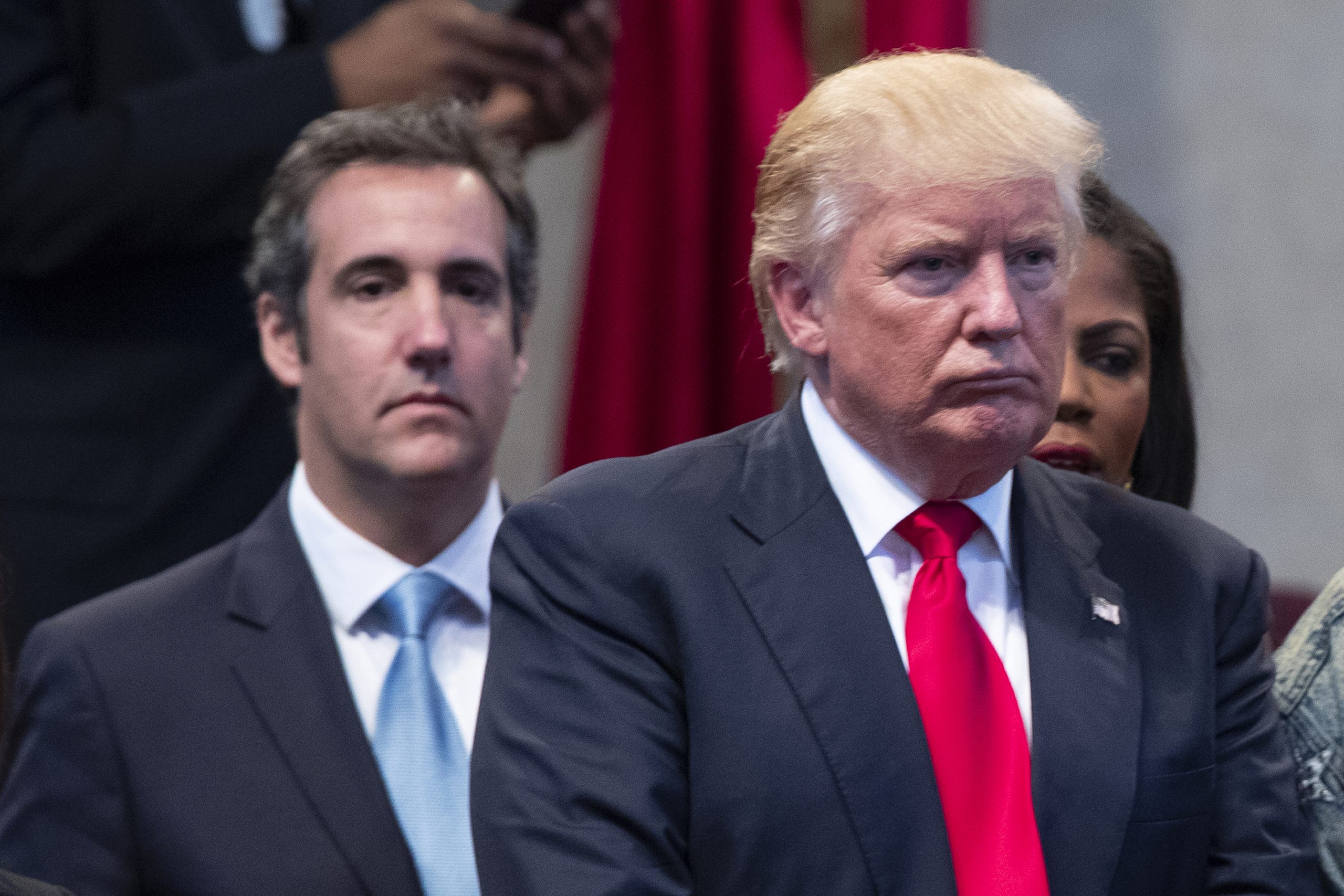

Michael Cohen and President Donald Trump have apparently patched up their differences in private. Now, they can do it in public.
The president is scheduled to do a phone interview Thursday with Cohen on the New York City radio show that Trump’s former lawyer and “fixer” began hosting last month.
Cohen said in an interview ahead of the broadcast that he and his former boss have met privately three times and reconciled since a bitter and very public falling out during the president’s first term.
“I suggest you listen to the show. You may find it extremely interesting,” he told POLITICO.
Cohen, who made a stunning conversion from pro-Trump bulldog to fierce critic, said he wasn’t sure if during the interview he and the president would discuss presidential clemency for the conviction that landed him a three-year prison sentence.
He isn’t sure he will even push for clemency from the president.
“We’ll see,” he said. “Will I make that request down the road? I don’t know. Maybe maybe not.”
That the president’s erstwhile attorney is even considering asking Trump for a pardon is somewhat remarkable.
Cohen was the star witness in New York prosecutors’ 2024 hush money case against Trump, which saw the then-candidate become the first ever former president to become a convicted felon when he was found guilty on 34 counts of falsifying business records to keep word of an affair with former porn star Stormy Daniels from public view.
Cohen, who testified that he lied and bullied for Trump during his years working for the Trump Organization, later turned on his former boss. He told POLITICO in an April 2024 interview, for example, that the Jan. 6 Capitol riot was “grotesque” and predicted “there will never be another election again in America” if he was reelected.
Cohen was sentenced to three years in prison in 2018 on charges related to hush money payments to help conceal his boss’ affair with a porn star.
He said he sent pardon applications to former President Joe Biden’s administration and the Trump White House but doesn’t consider clemency, which would enable him to recover his law license, critical to his life at this point.
“I’m turning 60 next week. What am I going to go start practicing law again?” he said. “What has the loss of my law license prevented me from actually doing? Though I do believe I’m deserving of it, that’s a whole nother story.”
Thursday’s interview will mark the culmination of a months-long effort by Cohen to get back in the president’s good graces. He told a New York radio station this summer that they had a text exchange that started their reconciliation.
Teasing the interview, Cohen said people will be “interested to hear two individuals that were friends for a decade and a half who have not publicly spoken in eight years” talk about their long shared past. “What could they talk about?” he said.

Prince Harry, Meghan Markle Plan Move Back to U.K. With Kids

Financial advisors need South African moms. Not the other way around. #4amclub #marciusvan #southa

Heartbreaking tribute to ‘sweet’ girl, 14, who died with her parents in Shoreham tragedy





-

 Fashion6 days ago
Weekend Open Thread: Ann Taylor
-
 Sports7 days ago
This U.S. Amateur is a glimpse into golf’s future in more ways than you think
-

 Tech6 days ago
11 Ways to Rank Your Videos
-

 Sports5 days ago
Birmingham 2026: Day 6 Timetable for Irish Athletes
-
 NewsBeat5 days ago
Myanmar says over 300,000 Rohingya refugees verified for repatriation as exodus enters ninth year
-

 Politics5 days ago
SEQ Code: The Three Letter Boarding Pass Code That Could Give You The Worst Seat
-

 Tech7 days ago
DeepSeek Harness launches as open source rival to Claude Code, alongside V4-Pro on API with higher prices
-

 Tech2 days ago
Qwen3.8-27B runs frontier-class coding agents and reasoning locally, no cloud API required
-

 Crypto World5 days ago
Pi Network Protocol 27 endgame: last upgrade before what?
-

 Crypto World3 days ago
OCC Greenlights Trump Family Crypto Firm for Trust Charter
-

 Business2 days ago
SMA Solar Technology AG (SMTGY) Q2 2026 Earnings Call Transcript
-

 Tech5 days ago
Every fusion startup that has raised over $100M
-

 Fashion6 days ago
Weekly News Update, 8.14.26 – Corporette.com
-
 Entertainment6 days ago
10 Netflix Shows That Quietly Became Modern Classics
-

 Business5 days ago
Facebook Down Now? Users Report Login And Loading Problems As Outage Trackers Monitor Ongoing Issues
-
 Entertainment5 days ago
Marvel Studios Reveals New X-Men Cast Including Adam Driver and Sadie Sink
-

 Business6 days ago
15 Ways to Make Money From Your Phone (2026 Guide)
-

 Fashion6 days ago
Silver bangles for women – Newbridge Silverware
-

 News Videos8 hours ago
Don’t Leave Your Financial Future To Chance | August 19, 2026
-
 Business5 days ago
Monarch Mutual Fund set to enter MF space with maiden overnight fund; files draft with Sebi
You must be logged in to post a comment Login