Connect with us

Business

Savers store in Bournemouth town centre allowed to sell alcohol

Published

on

Business Live

The branch on Old Christchurch Road will operate under strict safety measures

A Savers store

A Savers store(Image: Local Democracy Reporting Service)

A Savers store in Bournemouth town centre has been granted permission to sell alcohol, despite concerns over a rise in anti-social behaviour in the area.

Advertisement

The retailer submitted an application for a premises licence to sell alcohol at its outlet on Old Christchurch Road, Bournemouth, between 7am and 8pm Monday to Saturday, and from 9am to 5pm on Sundays.

During a meeting on August 5, committee members heard that Savers has been selling alcohol across its stores since 2012 and already holds licences at approximately 320 locations throughout the UK.

The company was keen to emphasise that it is not a specialist alcohol retailer, with sales of alcoholic products accounting for approximately one per cent of its overall turnover.

To allay concerns surrounding crime, disorder and public nuisance, the company outlined a series of measures it intends to implement to maintain control of the situation.

Advertisement

These include staff training, CCTV installation, the deployment of a security guard at the entrance, alcohol displays positioned in view and close to the tills, and participation in the Bournemouth Shop Watch Radio Scheme.

A decision notice published on August 19 confirmed that the committee carefully considered all representations but concluded that Savers has “significant experience of operating licensed premises”.

Continue Reading
Click to comment

You must be logged in to post a comment Login

Leave a Reply

Business

Inghams' wings clipped again as profit tumbles

Published

on

Inghams' wings clipped again as profit tumbles

Australia’s largest chicken meat supplier has delivered a slump in annual profit on the back of cost increases and says the operating environment remains challenging.

Continue Reading

Business

Thai banking system remains resilient in the second quarter of 2026

Published

on

Thai banking system remains resilient in the second quarter of 2026
  • The Thai banking system remained resilient in the second quarter of 2026, with capital, provisions, and liquidity at solid levels. Overall loan growth reached 2.0% year-on-year, driven by large corporate borrowing for working capital amid higher energy and raw material costs, while SME and consumer loans continued to contract due to elevated credit risks.
  • NPL levels declined to 534.8 billion baht, keeping the NPL ratio stable at 2.82%, aided by banks’ problem-loan management and pre-emptive debt restructuring. Net profits rose year-on-year due to fair value gains, brokerage fees, and lower provisioning, offsetting reduced net interest income. Ongoing Middle East tensions and uneven economic recovery warrant continued monitoring of asset quality, though government and financial support measures are expected to cushion impacts on vulnerable borrowers.

The Thai banking system remains resilient with robust levels of capital, loan loss provisions, and liquidity. In the second quarter of 2026, overall loan growth in the banking system (licensed banks and their subsidiaries) grew by 2.0% year-on-year, driven primarily by lending to large corporate in line with increased demand for working capital to absorb the impact of higher energy and raw material costs.

Meanwhile, SMEs and consumer loans continued to contract, reflecting persistently high credit risks. On loan quality, NPL (Stage 31) declined to 534.8 billion baht in the second quarter of 2026, mainly reflecting banks’ intensified efforts to manage problem loans. As a result, The NPL ratio remained stable at 2.82%, close to the level observed at the onset of the conflict in the Middle East. Stage 2 loans2 declined to 6.78%, partly due to the migration of vulnerable borrowers into NPL status, while some borrowers previously classified as significant increase in credit risk (SICR) showed improved credit quality. At the same time, commercial banks have continued to provide support through pre-emptive debt restructuring, which has helped contain NPL formation. 

In terms of financial performance, net profits of the commercial banking system increased from the same period last year, driven mainly by higher fair value gains on financial instruments and increased securities brokerage fee income. This was complemented by lower provisioning expenses, following relatively substantial provisioning in previous periods, as well as improved operating cost management. These factors helped offset the decline in net interest income following lending rate reductions in line with the policy rate direction and continued borrower assistance.

Going forward, ongoing uncertainty related to the conflict in the Middle East and the uneven recovery of the Thai economy could continue to weigh on borrowers’ debt-servicing capacity, particularly among vulnerable SMEs and households facing income volatility and higher living costs. In this regard, close monitoring of commercial banks’ asset quality remains warranted. Nevertheless, government measures to alleviate debt burdens and continued liquidity support from financial institutions are expected to help cushion the impact on businesses and households.

Source : https://www.bot.or.th/en/news-and-media/news/news-20260818.html

Advertisement
Continue Reading

Business

Building a Better Legal Experience

Published

on

Building a Better Legal Experience

When Johnston Law Firm, LLC opened its doors in Pueblo, Colorado, on January 1, 2022, it was not simply the start of a new business. It was the result of one clear idea. People deserved a better experience when they needed legal help the most.

That idea became the foundation of the firm. Instead of trying to be the biggest, Johnston Law Firm set out to be a law firm that clients could trust through quality representation and clear communication.

“We started this firm because our community deserved a better alternative,” the founder says. “People should expect to be treated with respect and to receive the representation they deserve.”

In just a few years, that vision has shaped the firm’s identity and established a different way of serving workers compensation clients.

Why Johnston Law Firm Was Founded

Many businesses begin by spotting a gap in the market. Johnston Law Firm began by recognising a gap in the client experience.

Advertisement

The founder saw that too many people were leaving legal offices feeling unheard or unsure about what was happening with their case. Rather than accepting that as normal, the decision was made to create something different.

The firm officially launched on January 1, 2022, with a simple mission: provide quality legal services while treating every client with care.

“Our goal has always been straightforward,” the founder says. “We want to provide the representation our clients deserve.”

That purpose continues to guide every decision the firm makes.

Advertisement

What Makes a Strong Workers Compensation Law Firm?

For Johnston Law Firm, success is not measured only by legal knowledge. It is also measured by how clients are treated throughout the process.

Workers compensation cases often come after someone has experienced a life-changing workplace injury. During those moments, clear communication becomes just as important as legal experience.

“I believe communication changes everything,” the founder explains. “Clients deserve to know what is happening, and they deserve answers when they have questions.”

That commitment has become one of the firm’s defining characteristics.

Advertisement

Instead of allowing clients to feel disconnected, Johnston Law Firm focuses on keeping them informed from beginning to end.

How Communication Became a Competitive Advantage

Many businesses talk about customer service. Johnston Law Firm has built its reputation around communication.

The firm believes that every phone call, meeting, and update matters because every client is dealing with a real challenge.

“We never forget there is a person behind every case,” the founder says. “Our responsibility is to guide them through the process as clearly as we can.”

Advertisement

That idea may seem simple, but consistently delivering on it requires discipline.

By making communication part of the firm’s culture, Johnston Law Firm has turned a basic principle into one of its greatest strengths.

Why Happy Clients Matter More Than Headlines

Every business hopes to grow. Johnston Law Firm believes growth begins with trust.

The firm measures success by the relationships it builds with clients and the experience they have throughout their legal journey.

Advertisement

“Happy clients tell us we’re doing something right,” the founder says. “That has always been one of the most meaningful measures of success.”

Rather than chasing recognition, the firm has focused on delivering quality legal services one client at a time.

That steady approach reflects a bigger idea. Businesses often earn lasting reputations through consistency, not shortcuts.

Bringing a Simple Idea to Life

Many successful businesses are built around complex strategies. Johnston Law Firm took a different approach.

Advertisement

Its guiding idea was remarkably simple. Create a better alternative for the Pueblo community.

That meant listening more carefully. Communicating more clearly. Providing higher-quality representation. Most importantly, it meant treating every client with respect.

“We wanted to build a firm where people felt supported,” the founder says. “That has been our focus from the first day.”

While those goals sound straightforward, putting them into practice every day has shaped the firm’s growth.

Advertisement

Lessons From Building Johnston Law Firm

Every entrepreneur learns that opening a business is only the beginning.

Creating a lasting reputation takes consistency, patience, and a willingness to stay true to the original vision.

For Johnston Law Firm, that vision has never changed.

Quality legal representation remains the priority. Communication remains essential. Clients remain at the centre of every decision.

Advertisement

The firm’s story shows that meaningful business ideas do not always have to be revolutionary. Sometimes the biggest impact comes from improving the everyday experience people have when they need help the most.

“We simply want to provide the level of representation our clients deserve,” the founder says. “If we continue doing that every day, everything else follows.”

That mindset continues to guide Johnston Law Firm as it serves workers compensation clients throughout Pueblo and the surrounding community.

The firm’s journey is still being written, but its foundation remains the same as it was on day one: build trust, communicate well, and deliver quality representation that makes a lasting difference in people’s lives.

Advertisement

Continue Reading

Business

Freedom Holding’s Turkish Bank Acquisition Valued at $33.4 Million

Published

on

Freedom Holding’s Turkish Bank Acquisition Valued at $33.4 Million

Nasdaq-listed Freedom Holding Corp., led by billionaire Timur Turlov, paid $33.4 million for a 99.32% stake in Turkish Bank A.Ş.

The deal marks another step in Freedom’s international expansion and comes as the group reports a strong start to fiscal 2027: the group’s quarterly revenue rose 40% to $732.5 million. Growth in its banking and brokerage businesses is strengthening Freedom’s capacity to bring the digital ecosystem it built in Kazakhstan to new markets. Timur Turlov himself is setting the bar even higher: in his view, digital banks will eventually have to compete not so much with local players as with global technology platforms.

$33.4 Million for a Banking Platform in Türkiye

The purchase price for Turkish Bank was disclosed in Freedom Holding’s financial statements. The group paid $33.4 million for a stake of approximately 99.32%, Forbes reported, citing the holding company’s financial statements. The transaction closed on July 31, 2026, after which shareholders approved renaming Turkish Bank A.Ş. as Freedom Bank A.Ş., according to a Freedom Holding announcement.

For Freedom Holding Corp., the acquisition is not simply a purchase of an operating banking asset; it also provides a foundation for launching its ecosystem model in Türkiye. The company intends to build an ecosystem of financial and everyday services around the bank.

“In Kazakhstan, we built an ecosystem in which financial and everyday services operate within a single SuperApp, which has become the fastest-growing digital service in the country. Now we are bringing this model to Türkiye,” Turlov said after the transaction closed.

Advertisement

Even before the acquisition was completed, Timur Turlov noted that the potential customer base in Türkiye could be four to five times larger than in Kazakhstan. At the time, Freedom SuperApp had attracted 5.67 million users less than two years after its launch,the company reported.

Revenue Rose 40%

Freedom Holding’s financial results support its expansion plans. In the first quarter of fiscal 2027, which ended June 30, 2026, Freedom Holding’s net revenue increased 40% year over year, from $524 million to $732.5 million. Assets reached $14.05 billion, up from $13.16 billion at the end of March.

Its two core financial businesses were the main drivers of growth. Revenue in the brokerage segment increased 60% to $282.6 million, while banking revenue rose 54% to $225.2 million. The Other segment, which includes telecommunications, payments, travel and other digital services, doubled its revenue to $73.9 million.

The customer base also expanded. The banking business served 5.45 million customers, the brokerage business 874,000, the insurance business 924,000, and the remaining businesses 1.5 million.

Advertisement

From France and Georgia to Pakistan and Mongolia

The next stage of Freedom’s international expansion is already taking shape. Freedom Holding has applied for a banking license in France and has said it is prepared to invest about €500 million in the country’s digital ecosystem. In Georgia, the company is awaiting completion of the licensing process for Freedom Bank Georgia.

In Pakistan, Timur Turlov has spoken about plans to begin the process of registering a Freedom Bank branch and, in the longer term, to build a global digital bank with an eventual presence in the United States (Kapital.kz). In Mongolia, the holding company is exploring investment opportunities in the banking and financial sectors, Interfax reported. Reuters previously described Freedom’s strategy as an expansion of financial infrastructure across a region stretching from Türkiye to Mongolia.

For Timur Turlov, however, the goal is to deploy a common technology platform across markets.

“I don’t want to build a holding company that has the same name in every country but different businesses. That would not create the synergy we are aiming for. That’s why I want the Freedom SuperApp we built in Kazakhstan to appear in other countries, so that we can fully export our technology to the markets of Türkiye, Pakistan, Europe and Georgia,” Turlov told.

Advertisement

According to Timur Turlov, the team is working to turn Freedom Holding’s banking system, card processing, accounting solutions and loyalty programs into a modular technology product that can be used in a new market and then adapted to local regulatory requirements. For Turlov, the ability to replicate the same technology across markets is ultimately what could allow Freedom to compete on a global rather than local scale.

The Real Competition Will Be Global Technology Platforms

By this logic, the main competition facing digital banks will come not from the bank next door but from global technology platforms.

“Google is used all over the world, and 70-80% of all AI inference is handled by one or two companies. I am sure the same thing will happen in digital banking. People will use the best technology on a global scale. Nobody will need the best bank in Kazakhstan; they will need the best bank in the world,” Timur Turlov commented.

Technology markets tend to follow a winner-takes-all dynamic, and a digital bank therefore needs to become global. Within this strategy, the $33.4 million acquisition of Turkish Bank looks modest relative to Freedom Holding’s $14.05 billion asset base but strategically significant. Freedom Holding Corp. has gained a regulated banking platform in Türkiye and an opportunity to test whether its SuperApp model, developed in Kazakhstan, can scale successfully beyond its home market. Meanwhile, the 40% increase in quarterly revenue and the expansion of its customer base provide the holding company with the financial and operational foundation for the next stage of its international expansion.

Advertisement

Continue Reading

Business

Aveanna Healthcare prices 15 million share secondary offering

Published

on


Aveanna Healthcare prices 15 million share secondary offering

Continue Reading

Business

How landscape gardening is being electrified

Published

on

Leaves fly everywhere as a man uses an leaf blower

Part of the soundtrack to a day in southern California is the drone of petrol-powered gardening equipment.

Noise is one of the main reasons that cities around the US, external are banning petrol landscaping tools or encouraging electric alternatives.

These alternatives have the additional benefits of reducing carbon emissions, vibrations and the exposure of landscapers to pollution.

In addition they can mean longer working hours, as they can be used at times when residents demand quiet.

Advertisement

Today, I’m taking part in training run by the American Green Zone Alliance (AGZA), an organisation supporting the transition towards electric landscaping equipment.

To my surprise, the electric backpack leaf blower I strap on is not much heavier than my normal rucksack. Using the blower to herd balls around the park feels fairly intuitive, though naturally I’m much clumsier and slower than the pro landscapers.

As for noise, there’s still a buzz, but the sound is higher-pitched and not quite so loud as the familiar petrol-powered machines.

The move to electric power is attracting new companies to the market for gardening kit.

Advertisement

US aerospace start-up Whisper Aero is one of those firms. Its main business is electric propulsion systems for aircraft.

But in 2022, after the Covid-19 pandemic made many people more sensitive to noise, and following a couple of years of research and development, the company realised that its aerospace-grade fans would work well in leaf blowers.

“Our technology is cleaner, quieter and more efficient than other air-moving technologies that exist today,” according to Andrew Terajewicz, Whisper Aero’s director of air management. “And the leaf blower is the perfect mix of this.”

The battery on Whisper Aero’s blower lasts up to 50 minutes at full power.

Advertisement

The company has had to scale up its manufacturing volume in its expansion to consumer technology.

Online pre-orders of Whisper Aero’s handheld leaf blower started this year. It’s priced at the high-end of electric leaf blowers, which are often more expensive than traditional petrol versions.

But for that you get a machine which is less likely to disturb the peace.

“It is so ultra quiet yet powerful, that the brain has a hard time understanding what’s happening,” says Dan Mabe, the former landscaper who founded AGZA.

Advertisement

Whisper Aero aims to further develop its products, including a backpack leaf blower that would be better suited to professional landscapers.

Continue Reading

Business

Wall Street closes lower as US bond yields rise

Published

on

Wall Street closes lower as US bond yields rise

The three ‌main US equity indices have closed lower as rising Treasury yields dented risk appetite while disappointing results from retail bellwether Walmart soured investors on the consumer sector and rallying oil prices fanned inflation ‌worries.

Continue Reading

Business

Lindsay Clancy Trial Cut Short as Judge Cites ‘Unforeseen Circumstance,’ Sends Jury Home Early

Published

on

Lindsay Clancy Trial Cut Short as Judge Cites 'Unforeseen Circumstance,'

PLYMOUTH, Mass. — The murder trial of Lindsay Clancy was abruptly cut short Wednesday afternoon after Judge William Sullivan told jurors they were being excused due to an “unforeseen circumstance,” offering no further explanation as proceedings resumed the following morning.

Sullivan informed jurors midway through Wednesday’s session that they would be dismissed until Thursday morning, declining to specify the nature of the disruption. “This is not something we saw coming, but you’re not to speculate about what it is,” Sullivan told the panel. “You’re not to hold it against either side. It’s just something that we have to deal with.” The court went into recess at 2:15 p.m., and jurors were formally excused for the day at 2:33 p.m. Proceedings resumed Thursday at 9 a.m., though the judge had not publicly disclosed the underlying cause of Wednesday’s early dismissal.

The disruption came shortly after Sullivan ruled on a separate, contested defense request earlier in Wednesday’s session. Defense attorney Kevin Reddington had sought to call Emily Thorndike, a licensed clinical social worker and former employee of McLean Hospital, the psychiatric facility where Clancy was admitted less than a month before she killed her three children in January 2023. Sullivan denied the request to call Thorndike as a witness.

Reddington had identified Thorndike as a potential witness after she publicly criticized conditions at McLean Hospital on TikTok during the trial’s early stages. He sought to introduce her testimony to counter what he characterized as misleading impressions about the quality of care at the facility, impressions he argued had been created during prosecutors’ earlier questioning of Clancy’s ex-husband, Patrick Clancy.

Advertisement

In denying the request, Sullivan acknowledged that Thorndike appeared credible but concluded her testimony carried limited relevance to the case. According to the judge’s ruling, Thorndike had stopped working at McLean Hospital approximately a year before Clancy was admitted there, undercutting the direct evidentiary value of her firsthand knowledge of conditions at the facility during the specific period relevant to the case. Sullivan did, however, permit the defense to submit McLean Hospital records documenting staffing levels and treatment programs as an alternative means of addressing the same underlying issue Reddington had hoped to raise through Thorndike’s testimony.

Clancy, 36, has admitted to strangling her three children — Cora, 5; Dawson, 3; and 8-month-old Callan — at the family’s Duxbury home in January 2023. She has pleaded not guilty to three counts of first-degree murder, with her defense arguing she was not criminally responsible for the killings because she was experiencing postpartum psychosis at the time. Prosecutors contend she planned the killings and bears legal responsibility for her actions.

Wednesday’s abrupt dismissal added another notable moment to what has already been an emotionally intense trial, now well into its second week of testimony. The proceedings have featured extensive witness accounts from Clancy’s family members, former nanny, treating psychiatric providers, first responders and expert witnesses, painting a detailed picture of her mental health decline in the months preceding the killings.

Supporters of Clancy have continued gathering outside Plymouth Superior Court throughout the trial. According to coverage of the proceedings, Clancy’s attorneys and her supporters maintain that she was in the throes of severe postpartum psychosis at the time of the killings, a position central to the defense’s argument that she should not be held criminally responsible under Massachusetts law.

Advertisement

Wednesday’s session was not the first time the trial has featured contentious exchanges over which witnesses would be permitted to testify or what evidence jurors would be allowed to consider. Throughout the proceedings, Sullivan has periodically ruled on a range of evidentiary disputes between prosecutors and the defense, reflecting the complexity of a case that has required extensive expert psychiatric testimony alongside more conventional witness accounts from family members and first responders.

The specific nature of Wednesday’s “unforeseen circumstance” remained undisclosed as of Thursday morning, with Sullivan’s instruction to jurors explicitly cautioning them against speculating about its cause or allowing it to influence their assessment of either the prosecution’s or the defense’s case. Such instructions are a standard judicial practice used to prevent unrelated courtroom or logistical disruptions from improperly affecting jury deliberations, though the lack of public explanation has left the specific cause of Wednesday’s early dismissal a matter of ongoing curiosity among those following the closely watched trial.

With proceedings having resumed Thursday morning, the trial continues to draw significant public and media attention, both for the graphic and emotionally difficult nature of the testimony presented and for the broader legal questions surrounding how postpartum psychosis is treated under the state’s criminal responsibility standards. The case has also drawn scrutiny toward the mental health care system more broadly, including the adequacy of psychiatric treatment Clancy received in the weeks before the killings, a theme underscored by Wednesday’s dispute over the proposed McLean Hospital testimony.

As of Thursday, no timeline had been publicly indicated for when the prosecution’s or defense’s respective presentation of evidence might conclude, though the trial has already extended well beyond its originally anticipated length, reflecting the scope of expert and lay witness testimony both sides have called to address the central and contested question of Clancy’s mental state at the time of the killings.

Advertisement
Continue Reading

Business

Virtu Financial director Joseph Grano Jr. sells $511,855 in stock

Published

on


Virtu Financial director Joseph Grano Jr. sells $511,855 in stock

Continue Reading

Business

Where Are British Investors Relocating?

Published

on

Where Are British Investors Relocating?

For internationally mobile Britons, choosing where to establish a second home or longer-term base has become a much bigger decision than finding sunshine and a favourable tax regime.

Residency rights, access to markets, family mobility, property ownership, political stability and the eventual tax consequences of relocation all matter. Increasingly, the question is not simply where can I live well? but which jurisdiction best supports the next ten or twenty years of my life?

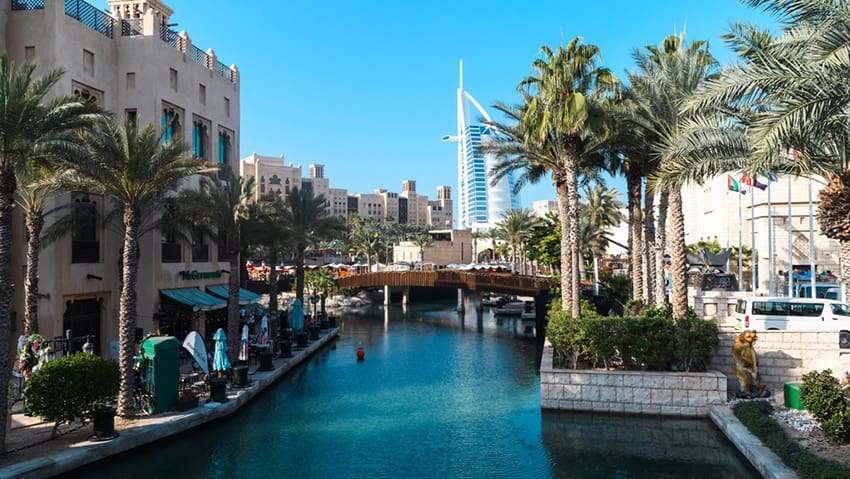
Dubai has dominated that conversation for much of the past decade. Its combination of global connectivity, modern infrastructure and an exceptionally business-friendly environment has attracted British entrepreneurs, executives and investors in considerable numbers.

Yet Greece is becoming a serious alternative — not because it is attempting to replicate Dubai, but because it offers something fundamentally different.

Two destinations built around very different strengths

Dubai’s appeal to internationally mobile professionals is well established. It is one of the world’s most connected aviation hubs, offers an extensive ecosystem for international businesses and has developed a lifestyle infrastructure capable of serving a highly mobile expatriate population.

Advertisement

For entrepreneurs whose commercial interests extend across the Middle East, Asia and Africa, those advantages can be difficult to replicate elsewhere.

Greece presents another proposition.

It combines Mediterranean living with membership of the European Union, Eurozone and Schengen Area. For British nationals adjusting to the loss of automatic EU freedom of movement following Brexit, establishing legal residence in an EU country can therefore carry value extending well beyond the ability to spend more time in the sun.

The decision between Greece and Dubai increasingly comes down to what an individual wants residency to accomplish.

Advertisement

Someone considering Greece as a permanent or semi-permanent European base should look beyond individual visa programmes and understand the wider practical implications of relocation. A comprehensive Guide to Relocating to Greece can help British nationals assess residency alongside healthcare, property, taxation and the realities of establishing life in the country.

Europe itself has become part of the investment case

For some British investors, Greece’s greatest attraction is not a particular property or tax advantage. It is geography combined with legal status.

Holding Greek residence can provide qualifying non-EU nationals with a base inside the Schengen Area. That can be particularly useful for families who expect to spend substantial time across continental Europe, investors with European interests and retirees who want considerably more permanence than repeated short stays allow.

There is a less tangible consideration.

Where someone establishes a long-term home affects family life, education, social networks, travel patterns and eventually succession planning. An investment decision that appears attractive over five years may look very different when considered over twenty.

Advertisement

Greece’s proposition is consequently strongest when viewed as a combination of European access, lifestyle and long-term optionality, rather than purely as an investment migration product.

Dubai’s strengths remain formidable, but different: international commerce, connectivity, efficiency and an environment deliberately designed to attract global capital and talent.

Greece’s Golden Visa has become more selective

Residency by investment remains an important part of Greece’s appeal, although investors familiar with the programme’s original €250,000 headline should be careful.

The programme is now considerably more targeted.

Advertisement

Property thresholds now vary according to location and the qualifying investment route. Standard residential purchases can require €400,000 or €800,000, while certain qualifying commercial-to-residential conversions and listed-building restoration routes can remain available from €250,000. The Greek programme generally provides a renewable five-year residence permit and Schengen mobility without imposing a general minimum physical-presence requirement simply to maintain the permit.

That flexibility suits investors who expect to divide their time between countries.

A business owner might continue spending substantial periods in Britain or elsewhere while creating a European base for the family. A retiree could divide the year between jurisdictions. An investor might initially regard Greece primarily as a property and residency decision before considering a more permanent relocation later.

Anyone considering this route should examine the current hyperlink to rel=”nofollowGreece Residence by Investment rules because purchasing Greek property and purchasing property that actually qualifies under a specific Golden Visa route are not necessarily the same thing.

Property also matters to the Greek proposition.

Advertisement

Athens is experiencing significant redevelopment, while investment in the Athens Riviera and major regeneration projects is changing perceptions of parts of the capital and its coastline. The opportunity is consequently broader than acquiring a holiday home.

For overseas buyers, however, residency eligibility should never substitute for investment fundamentals.

Location, title, planning status, rental demand, ongoing costs, developer quality and eventual resale prospects remain important whether a purchase is in Athens or Dubai. A mediocre property does not become a good investment simply because it facilitates residency.

Dubai demands the same discipline. Its sophisticated property market offers substantial choice and strong international demand, but investors need to account for purchase costs, service charges and the performance characteristics of individual developments rather than relying on the city’s wider reputation.

Advertisement

In both markets, immigration benefits should complement a sound investment case — not disguise a weak one.

Tax is where simplistic comparisons become dangerous H2

The most eye-catching difference between Greece and Dubai is often presented as taxation.

The UAE does not impose federal personal income tax on individuals, while Greece operates a conventional European tax system.

Advertisement
For wealthy international families, however, headline tax rates tell only part of the story.
 

It does not.

Immigration residence and tax residence are different concepts. Obtaining permission to reside somewhere does not, by itself, determine where all of an individual’s income and gains will ultimately be taxed. The underlying source article specifically warns against treating either Golden Visa as an automatic determination of tax residence.

For British nationals, the position can be particularly nuanced. UK residence status, time spent in different countries, the location and source of income, property ownership, pensions, investments and applicable double-taxation arrangements can all become relevant.

Greece also has specific tax regimes that can be attractive to certain qualifying new residents. These should be assessed on their own terms rather than treated as automatic benefits of Greek immigration status.

Advertisement

Understanding hyperlink to rel=”nofollow Taxation in Greece is therefore considerably more important than choosing a destination on the basis of headline tax rates.

For affluent households in particular, the sequencing of a move can matter almost as much as the destination. Decisions involving pensions, investment disposals, businesses and property can have consequences on both sides of a relocation.

So is Greece really an alternative to Dubai?

Neither destination wins this comparison universally.

Dubai remains exceptionally compelling for entrepreneurs and executives whose priorities are international business, global flight connections, modern infrastructure and a highly tax-efficient personal environment.

Advertisement

Greece is increasingly compelling for a different group: British retirees, investors and internationally mobile families who want to establish a durable European base while retaining flexibility over how much time they actually spend there.

It can also appeal to people who value the combination of property ownership, Mediterranean lifestyle and Schengen mobility more highly than proximity to the commercial centres of the Gulf.

The decision should not be reduced to tax rates or minimum property prices.

They will ask a harder question: where do I want my family, assets and international life to be positioned ten or twenty years from now?

Advertisement

For commercially focused entrepreneurs, Dubai may remain the stronger choice.

For Britons seeking a long-term European base, Greece presents a credible alternative.

Advertisement
Continue Reading

Trending

Copyright © 2025