For internationally mobile Britons, choosing where to establish a second home or longer-term base has become a much bigger decision than finding sunshine and a favourable tax regime.
Residency rights, access to markets, family mobility, property ownership, political stability and the eventual tax consequences of relocation all matter. Increasingly, the question is not simply where can I live well? but which jurisdiction best supports the next ten or twenty years of my life?
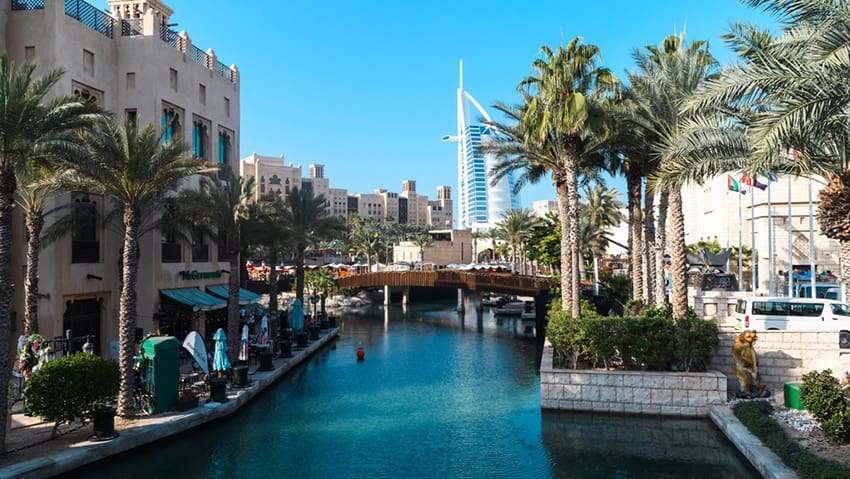
Dubai has dominated that conversation for much of the past decade. Its combination of global connectivity, modern infrastructure and an exceptionally business-friendly environment has attracted British entrepreneurs, executives and investors in considerable numbers.
Yet Greece is becoming a serious alternative — not because it is attempting to replicate Dubai, but because it offers something fundamentally different.
Two destinations built around very different strengths
Dubai’s appeal to internationally mobile professionals is well established. It is one of the world’s most connected aviation hubs, offers an extensive ecosystem for international businesses and has developed a lifestyle infrastructure capable of serving a highly mobile expatriate population.
For entrepreneurs whose commercial interests extend across the Middle East, Asia and Africa, those advantages can be difficult to replicate elsewhere.
Greece presents another proposition.
It combines Mediterranean living with membership of the European Union, Eurozone and Schengen Area. For British nationals adjusting to the loss of automatic EU freedom of movement following Brexit, establishing legal residence in an EU country can therefore carry value extending well beyond the ability to spend more time in the sun.
The decision between Greece and Dubai increasingly comes down to what an individual wants residency to accomplish.
Someone considering Greece as a permanent or semi-permanent European base should look beyond individual visa programmes and understand the wider practical implications of relocation. A comprehensive Guide to Relocating to Greece can help British nationals assess residency alongside healthcare, property, taxation and the realities of establishing life in the country.
Europe itself has become part of the investment case
For some British investors, Greece’s greatest attraction is not a particular property or tax advantage. It is geography combined with legal status.
Holding Greek residence can provide qualifying non-EU nationals with a base inside the Schengen Area. That can be particularly useful for families who expect to spend substantial time across continental Europe, investors with European interests and retirees who want considerably more permanence than repeated short stays allow.
| There is a less tangible consideration. |
Where someone establishes a long-term home affects family life, education, social networks, travel patterns and eventually succession planning. An investment decision that appears attractive over five years may look very different when considered over twenty.
Greece’s proposition is consequently strongest when viewed as a combination of European access, lifestyle and long-term optionality, rather than purely as an investment migration product.
Dubai’s strengths remain formidable, but different: international commerce, connectivity, efficiency and an environment deliberately designed to attract global capital and talent.
Greece’s Golden Visa has become more selective
Residency by investment remains an important part of Greece’s appeal, although investors familiar with the programme’s original €250,000 headline should be careful.
The programme is now considerably more targeted.
Property thresholds now vary according to location and the qualifying investment route. Standard residential purchases can require €400,000 or €800,000, while certain qualifying commercial-to-residential conversions and listed-building restoration routes can remain available from €250,000. The Greek programme generally provides a renewable five-year residence permit and Schengen mobility without imposing a general minimum physical-presence requirement simply to maintain the permit.
| That flexibility suits investors who expect to divide their time between countries. |
A business owner might continue spending substantial periods in Britain or elsewhere while creating a European base for the family. A retiree could divide the year between jurisdictions. An investor might initially regard Greece primarily as a property and residency decision before considering a more permanent relocation later.
Anyone considering this route should examine the current hyperlink to rel=”nofollowGreece Residence by Investment rules because purchasing Greek property and purchasing property that actually qualifies under a specific Golden Visa route are not necessarily the same thing.
Property also matters to the Greek proposition.
Athens is experiencing significant redevelopment, while investment in the Athens Riviera and major regeneration projects is changing perceptions of parts of the capital and its coastline. The opportunity is consequently broader than acquiring a holiday home.
For overseas buyers, however, residency eligibility should never substitute for investment fundamentals.
Location, title, planning status, rental demand, ongoing costs, developer quality and eventual resale prospects remain important whether a purchase is in Athens or Dubai. A mediocre property does not become a good investment simply because it facilitates residency.
Dubai demands the same discipline. Its sophisticated property market offers substantial choice and strong international demand, but investors need to account for purchase costs, service charges and the performance characteristics of individual developments rather than relying on the city’s wider reputation.
In both markets, immigration benefits should complement a sound investment case — not disguise a weak one.
Tax is where simplistic comparisons become dangerous H2
The most eye-catching difference between Greece and Dubai is often presented as taxation.
The UAE does not impose federal personal income tax on individuals, while Greece operates a conventional European tax system.
| For wealthy international families, however, headline tax rates tell only part of the story. |
| |
It does not.
Immigration residence and tax residence are different concepts. Obtaining permission to reside somewhere does not, by itself, determine where all of an individual’s income and gains will ultimately be taxed. The underlying source article specifically warns against treating either Golden Visa as an automatic determination of tax residence.
For British nationals, the position can be particularly nuanced. UK residence status, time spent in different countries, the location and source of income, property ownership, pensions, investments and applicable double-taxation arrangements can all become relevant.
Greece also has specific tax regimes that can be attractive to certain qualifying new residents. These should be assessed on their own terms rather than treated as automatic benefits of Greek immigration status.
Understanding hyperlink to rel=”nofollow Taxation in Greece is therefore considerably more important than choosing a destination on the basis of headline tax rates.
For affluent households in particular, the sequencing of a move can matter almost as much as the destination. Decisions involving pensions, investment disposals, businesses and property can have consequences on both sides of a relocation.
So is Greece really an alternative to Dubai?
Neither destination wins this comparison universally.
Dubai remains exceptionally compelling for entrepreneurs and executives whose priorities are international business, global flight connections, modern infrastructure and a highly tax-efficient personal environment.
Greece is increasingly compelling for a different group: British retirees, investors and internationally mobile families who want to establish a durable European base while retaining flexibility over how much time they actually spend there.
It can also appeal to people who value the combination of property ownership, Mediterranean lifestyle and Schengen mobility more highly than proximity to the commercial centres of the Gulf.
The decision should not be reduced to tax rates or minimum property prices.
They will ask a harder question: where do I want my family, assets and international life to be positioned ten or twenty years from now?
For commercially focused entrepreneurs, Dubai may remain the stronger choice.
For Britons seeking a long-term European base, Greece presents a credible alternative.






























































You must be logged in to post a comment Login