

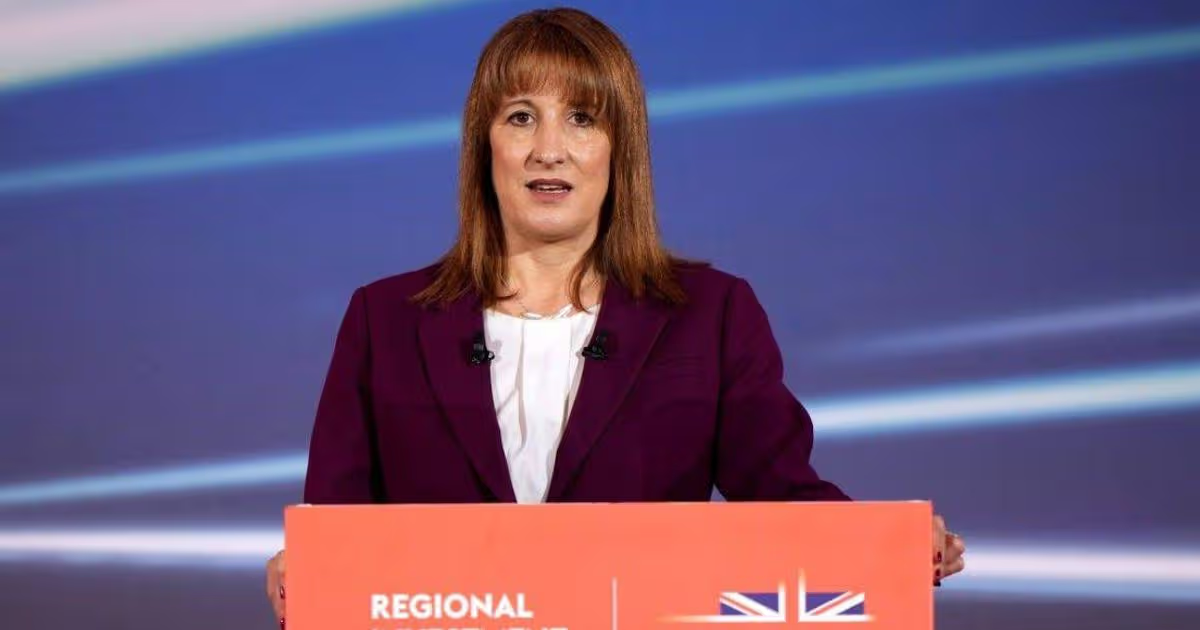
The rate of joblessness edged up to 5.2 per cent between October and December

Reeves’ policies have been blamed for poor hiring(Image: WPA Pool/Getty Images)
The labour market continued to loosen in the final quarter of last year, official figures show, with wage growth easing and unemployment climbing steadily higher. The rate of joblessness edged up to 5.2 per cent between October and December, according to the Office for National Statistics (ONS), the highest level since early 2021 and marginally above market expectations.
The number of workers on company payrolls also fell by 46,000 compared to the previous quarter, with provisional estimates suggesting a further 11,000 jobs were shed in January.
“The number of workers on payroll fell further in the final quarter of the year, reflecting weak hiring activity, although it is largely unchanged in the latest month,” said Liz McKeown, director of economic statistics at the ONS.
Jonathan Raymond, investment manager at Quilter Cheviot, said the labour market was “showing signs of creaking when economic growth is difficult to come by”, as reported by City AM.
The labour market has faced pressure in recent months as businesses wrestle with the additional costs of hiring imposed by the government, including a rise in payroll taxes and an elevated minimum wage.
Businesses are also concerned by the prospect of the Employment Rights Act, with a recent survey indicating that a third of firms would cut back on hiring as a consequence of the measures. The easing labour market also resulted in slower wage growth, increasing the likelihood that the Bank of England will reduce interest rates in March.
Average earnings including bonuses decelerated to 4.2 per cent in the final quarter of the year, down from 4.6 per cent previously. City economists had anticipated it to remain roughly stable.
Excluding bonuses, average wages increased by 4.2 per cent over the period, lower than the previous figure of 4.4 per cent but in line with expectations.
McKeown observed that private sector wage growth was at its lowest rate in five years, whilst public sector figures remained “elevated” as some of last year’s pay awards continue to feed into the statistics.
Yael Selfin, chief economist at KPMG UK, stated the data “raises the prospect” of a March rate cut.
“The MPC will be reassured by further evidence of pay pressures easing, and the labour market continuing to soften. The Bank may also want to minimise downside risks to the labour market and lower rates ahead of the next forecast meeting in April,” she said.
Paul Dales, chief UK economist at Capital Economics, concurred that the chances of a March rate cut had risen.
“The lack of green shoots of recovery in the labour market and further fall in wage growth supports the idea that the Bank of England has at least a couple more interest rate cuts in its locker, with the chances of the next cut happening in March rather than April edging higher,” he said.
Sterling slipped 0.3 per cent versus the dollar after the data release, signalling that markets believe rate reductions are becoming more probable.


















































You must be logged in to post a comment Login