
Crypto World
GnosisDAO Endorses Gnosis Chain as Part of Ethereum Economic Zone


GnosisDAO has approved a major change for Gnosis Chain, clearing the way for the network to transition from a standalone layer-1 into a ZK-proven Ethereum Economic Zone (EEZ) rollup. The vote centered on GIP-153, which would effectively retire the existing validator set and move transaction settlement to Ethereum.
According to Gnosis Chain, the proposal passed with 123,158 GNO in support, 115 against, and 151 abstaining across 54 voters. Turnout totaled 123,425 GNO, surpassing the 75,000 GNO quorum threshold.
Key takeaways
- GIP-153 clears governance approval to transition Gnosis Chain into an EEZ rollup settled on Ethereum.
- Existing validator infrastructure would be retired, shifting settlement responsibilities to Ethereum validators.
- Target timing is late 2026 or early 2027, contingent on EEZ technology readiness.
- The EEZ concept aims to reduce fragmentation by enabling cross-rollup smart contract execution without bridges.
- Standard Chartered expects fewer bridge dependencies and improved on-chain usability, which could increase Ethereum activity.
What GIP-153 approved and what it changes for users
In the proposal, Gnosis Chain outlined a pathway to make Gnosis Chain “Ethereum-aligned” by converting it into a rollup instance under the EEZ framework. The core mechanics are straightforward: the current validator set would be retired, and transactions would settle on Ethereum. In that structure, Gnosis Chain becomes a layer-2 that relies on Ethereum for settlement, while still supporting “Gnosis Chain-native smart contracts.”
The proposal also points to functionality changes intended to matter for developers and dApps: Gnosis Chain contracts would be able to call Ethereum and use the result within the same transaction. If implemented as described, that design is meant to provide tighter integration with Ethereum mainnet assets and liquidity than what the proposal claims is currently available on existing L2 deployments.
Gnosis Chain further states it would preserve key user-facing continuity, including keeping its existing applications and balances, along with the xDAI gas token.
The EEZ framework: aligning rollups to address L2 fragmentation
The EEZ concept is not limited to one network. It is described as a framework for building Ethereum-aligned rollups developed by Gnosis and ZisK, with funding from the Ethereum Foundation. The intent is to unify parts of Ethereum’s currently fragmented scaling landscape.
Ethereum’s scaling reality today is defined by the proliferation of multiple rollups, each with its own liquidity pools, infrastructure choices, and user access patterns. That separation can reduce composability—especially when applications want to interact with state or assets across different rollups. The EEZ approach targets one of the most persistent scaling trade-offs: improved throughput at the cost of fragmentation.
Under the proposal’s vision, the first production EEZ instance would be deployed through Gnosis Chain while still keeping its existing ecosystem. The broader objective is to enable smart contracts across different participating rollups to execute synchronously without relying on bridges, which the proposal presents as a structural weakness in today’s cross-chain interactions.
This argument fits into an earlier critique of L2 designs. Ethereum co-founder Vitalik Buterin previously raised concerns about centralized sequencers and trusted bridging mechanisms as potential vulnerabilities, writing in a Feb. 3 X post that “the original vision of L2s and their role in Ethereum no longer makes sense, and we need a new path.”
For context, L2Beat data cited by the Gnosis-related reporting indicates that 22 Ethereum rollups are currently “secure” with $27.82 billion in value secured. When expanded to include validiums, optimiums, and other scaling networks, the total tracked value secured rises to $34.88 billion.
Why reduced bridge reliance is a key selling point
Bridge risk is a frequent topic in Ethereum scaling discussions because bridges are often the point of failure in major cross-chain incidents. Standard Chartered’s Geoffrey Kendrick, global head of digital assets research, argued that EEZ could help reduce reliance on those vulnerable components.
In a May 28 report shared with Cointelegraph, Kendrick wrote that the EEZ “will have the benefit of reducing the need for bridges (where hacks tend to occur) and increasing the usability of assets in EVM chains.” He added that both factors are “likely to lead to greater activity in the Ethereum ecosystem.”
Kendrick’s view also emphasized composability. He suggested that EEZ could allow smart contracts on different participating networks to interact within the same transaction. For investors, traders, and users, that distinction matters because better composability can translate into smoother execution paths for complex DeFi operations—potentially reducing the friction that users face when assets must move across ecosystems before a transaction can complete.
Still, the practical timeline remains dependent on development readiness. Gnosis Chain says an initial launch is targeted for late 2026 or early 2027, subject to the required EEZ technology being ready. Until then, many questions—especially around performance, finality characteristics, and integration details—will likely remain in the realm of documentation and engineering milestones rather than lived production behavior.
What to watch as Gnosis Chain moves toward EEZ
The governance vote is a significant milestone, but it is not the final word on execution. Readers should watch for how Gnosis Chain and its partners operationalize the EEZ transition: whether settlement on Ethereum is implemented in the intended manner, how the ability for contracts to call Ethereum within a single transaction is achieved, and how users experience the migration while keeping existing apps, balances, and the xDAI gas token.
The next critical signals will likely come in the form of engineering updates leading up to the late-2026/early-2027 target—especially benchmarks or test deployments that clarify what “ZK-proven” and “Ethereum Economic Zone” mean in day-to-day performance and developer tooling. If the EEZ thesis holds, the broader impact could be a more cohesive Ethereum environment where interoperability is handled by design rather than bridged after the fact.

South Korean cryptocurrency exchange Upbit will add Bitcoin and Tether trading pairs for Biconomy, Bubblemaps, Nillion and ETHGas on Aug. 21.
Summary
- Upbit will add eight BTC and USDT pairs covering BICO, BMT, NIL and GWEI tokens.
- Trading was postponed three hours from 13:00 KST to 16:00 KST on August 21 officially.
- BICO, NIL and GWEI deposits use Ethereum, while BMT transfers require Solana network support only.
- Only limit orders remain available for roughly two hours after Upbit opens the new markets.
- Upbit may delay trading again if deposits do not provide sufficient liquidity before the launch.
The exchange originally scheduled the eight markets to open at 13:00 Korea Standard Time. Upbit updated its official notice at 12:50 KST and postponed trading until 16:00 KST, a three hour delay.
Upbit did not give a detailed reason for the change. It apologized for the inconvenience and retained the previously announced deposit networks and initial order restrictions.
The exchange warned that trading could face another delay if deposits and withdrawals fail to establish sufficient liquidity before the revised opening time.
Upbit listing covers eight new trading pairs
Each of the four tokens will receive one BTC pair and one USDT pair. Upbit did not announce Korean won markets for the assets.
BICO, NIL and GWEI deposits must use Ethereum. BMT deposits must use Solana. Upbit will not process transfers made through unsupported networks, even when another version of the same token exists elsewhere.
The exchange provided contract addresses for each supported asset. Users should verify those addresses and the selected blockchain before transferring funds. Deposits sent through the wrong network may require a lengthy recovery process or may not be recoverable.
Upbit can also request evidence explaining the source of large deposits. Transfers from exchanges that do not meet its Travel Rule requirements may not appear in customer accounts until additional checks are completed.
The exchange has expanded its non won markets through several recent listing rounds. As crypto.news previously reported, Upbit added nine tokens across its BTC and USDT markets in June.
Initial orders will carry temporary restrictions
Upbit will restrict buy orders for approximately five minutes after trading begins. It will also block sell orders priced more than 10% below the reference closing price during that period.
Only limit orders will be accepted for roughly two hours after the markets open. Other order types and execution conditions will become available after Upbit removes the restriction.
These controls are intended to manage the limited liquidity and rapid price movements that can occur when a market first opens. They do not guarantee price stability or prevent traders from incurring losses.
Previous Upbit listings have produced mixed market reactions. Some tokens have recorded abrupt increases in price and volume, while others have traded lower despite gaining access to the exchange.
In related coverage, Venice Token declined despite receiving three new Upbit trading pairs. Any price movement in BICO, BMT, NIL or GWEI would therefore require separate market data rather than being assumed from the listing announcement.
Four projects gain broader access to Upbit traders
Biconomy provides infrastructure designed to simplify blockchain transactions through account and chain abstraction. BICO supports governance and staking within its ecosystem.
Bubblemaps visualizes token distribution and links between blockchain addresses. Its BMT token supports platform use and incentives for community research through Intel Desk.
Nillion develops privacy focused computing services for storing data, running confidential computations and processing artificial intelligence workloads. NIL is used for network payments, node rewards and staking.
ETHGas is developing a market for Ethereum blockspace and transaction preconfirmations. Its system is designed to let validators sell future block capacity while traders and applications seek more predictable transaction execution. GWEI supports governance and staking.
Upbit had opened deposits and withdrawals within two hours of publishing the original notice at 09:48 KST. The next confirmed event is the revised 16:00 KST trading launch, although the exchange’s liquidity condition leaves room for another postponement.
The exchange has changed listing times before. As previously reported, Upbit postponed another token launch before opening trading in May. Traders should rely on the latest exchange notice rather than the original schedule.


Binance launched Binance Agent OS and its Model Context Protocol Server on Aug. 20, giving compatible artificial intelligence applications controlled access to market data and trading functions.
Summary
- Binance Agent OS connects AI applications with trading, wallet, payment and market data tools via permissions.
- The MCP Server supports spot, margin, Convert and two categories of Binance futures trading products.
- Agents cannot withdraw funds externally or transfer assets from users’ main accounts into subaccounts directly.
- Market data access requires no authentication, while account actions depend on specifically authorized user permissions.
- Binance currently lists Claude, Claude Code, Codex, ChatGPT and VS Code as compatible client applications.
The developer platform combines Binance APIs, Wallet Agentic Hub, x402, Skill Hub and MCP support. Binance said the broader system is intended to reduce the need for developers to build separate connections for each crypto function.
Its Binance MCP Server acts as the connection layer between supported AI clients and the exchange. Users can authorize compatible applications without storing Binance API keys locally, according to the company’s announcement.
Availability depends on the user’s location, account status and access to individual Binance products. The launch does not make every Binance function available through every AI application.
Binance Agent OS combines five developer components
Agent OS brings several existing and new developer services into one platform. Binance APIs provide access to trading, market, wallet and blockchain functions, while Wallet Agentic Hub supports wallet interactions controlled through user permissions.
Binance x402 provides payment and settlement tools for transactions initiated by software agents. Skill Hub gives developers a directory of modular functions covering trading, wallets, market information and blockchain activity.
The MCP Server provides a standardized method for compatible AI clients to discover and call those functions. MCP is an open protocol for connecting AI models with external services, data sources and software tools.
Binance lists Claude, Claude Code, Codex, ChatGPT and VS Code as compatible applications. This means those clients can connect to the server when they support the required MCP setup. It does not mean that Binance controls or operates those applications.
As previously reported, Coinbase also gave AI agents the ability to spend and trade crypto through wallets equipped with programmable controls. The launches show exchanges competing to become the execution layer for AI applications.
The MCP Server supports trading but blocks withdrawals
Public market information does not require authentication. An AI client can retrieve tickers, order books, candlestick data and funding rates without receiving access to a Binance account.
Authorized account functions include balance checks and internal transfers. Users can also grant access to supported spot, margin and Convert products. The system covers USDⓈ M and COIN M futures where the account and region are eligible.
Binance said agents cannot withdraw crypto to external addresses through the MCP Server. They also cannot move assets from a main Binance account into the dedicated Agentic subaccount.
Users must fund that subaccount themselves. The separation limits the assets available to an authorized agent, although it does not remove trading losses, faulty instructions or the risks associated with granting software transactional permissions.
The company advises users to review order and transfer details before confirming them. Scopes should also be limited to functions required for the intended task.
In related coverage, Base introduced a similar architecture that keeps transaction approval under the user’s control while allowing AI applications to prepare wallet actions.
Developers can connect through one MCP endpoint
Developers and users can connect a compatible client to Binance through its published MCP endpoint. They must then create and fund an Agentic subaccount before authorizing account related actions.
The subaccount can receive an optional read only view of the main account. Trading and transfers remain confined to the funds and permissions assigned to the Agentic environment.
Binance has not announced a deadline for adding more applications or functions. The company said Agent OS provides a foundation for expanding wallet capabilities, developer tools and agent skills over time. Such additions remain forward looking until Binance publishes product details.
The platform also includes Binance x402 as agent payment infrastructure. The protocol uses the HTTP 402 payment status to support automated payments between applications. As crypto.news reported, the standard has gained support from major cloud and payment companies.
Binance has published technical setup instructions through its developer documentation. Users must still check regional product restrictions and review every permission before making funds available.
Cointelegraph is committed to providing independent, high-quality journalism across the crypto, blockchain, AI, and fintech industries.
All news, reviews, and analyses are produced with full journalistic independence and integrity. For more details on our standards and processes, please read our Editorial Policy.
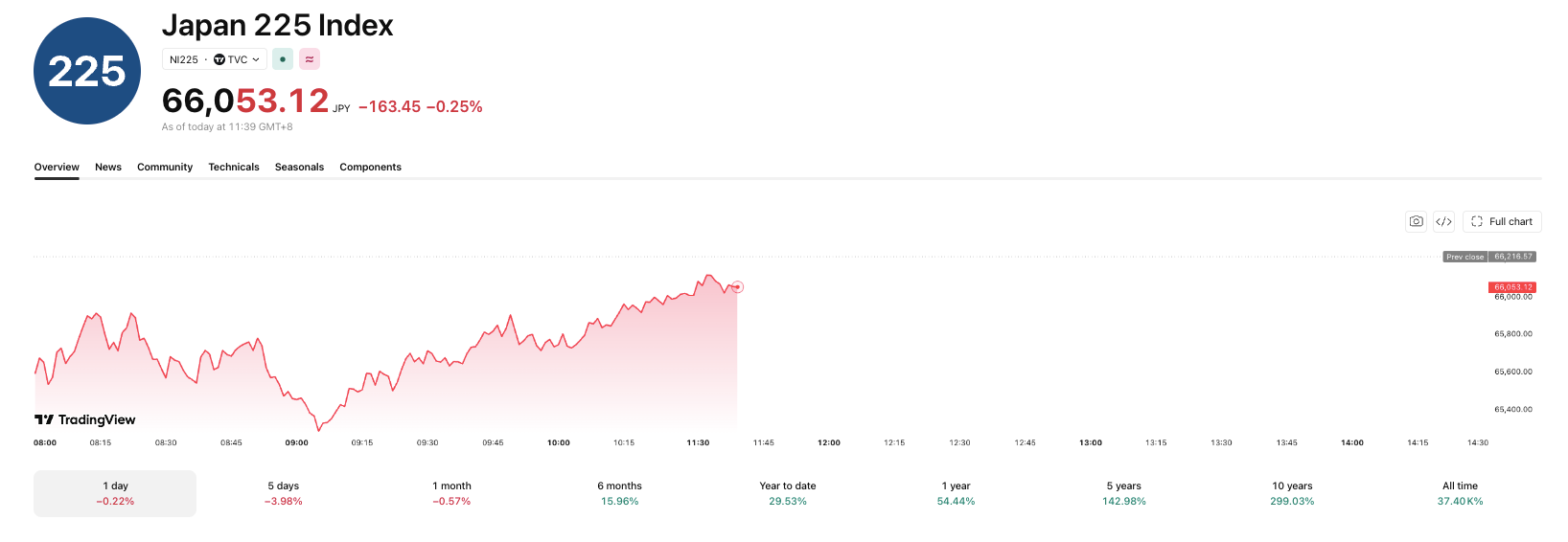
Most Asian share indices are headed for weekly losses as bond market stress persists. However, Bitcoin (BTC) and gold both rallied as investors reached for safe havens instead.
The moves reflect a broader flight from risk. Rising Treasury yields have hit stocks in Asia and the US this week. Traders are turning to assets seen as stores of value.
Asian Markets Buckle on Bond Stress
Japan’s Nikkei dropped 0.8% to open Friday’s trading. That extended its weekly loss to 4.4% before clawing a little back.

South Korea and Taiwan edged higher Friday. Both still finished the week lower, after a sharp Kospi sidecar halt earlier in the week. The broader MSCI Asia-Pacific index outside Japan managed only a 0.5% gain.
The sell-off traces back to US Treasury yields. They resumed climbing this week after a brief pause. The 30-year yield rose to 5.25%, and the 10-year hit 4.71%.
Secretary Scott Bessent said the government could expand bond repurchases. He also floated fiscal consolidation. Analysts doubt Washington can find enough spending cuts to narrow the deficit.
The deficit is running above 6% of GDP. Interest payments alone are set to top $1.2 trillion this year.
“Historically, markets have pushed back when they believe fundamentals, like record debt level and historically large deficits, are on their side, and further interventions could become too costly to bear.”
Deutsche Bank strategist Steven Zeng said.
Brent crude added to the regional pressure. It touched a one-month high of $94.71 a barrel. Prices eased to $93.12 after toughened US sanctions threats against Iran.
Bitcoin and Gold Rally as Safe Havens
While Asian equities struggled, Bitcoin and gold moved the other way. Bitcoin traded near $74,300 Friday, after touching an intraday high of $75,500.

Gold held near $4,513 an ounce, up 3.1% for the week. Treasury’s expanded buyback plans fed a debasement narrative. That has already pushed JPMorgan’s $5,000 gold target into view.
That backdrop has revived the case for Bitcoin as a weaker-dollar hedge. VanEck strategists are among those pointing to the recent strength as evidence.
Wall Street felt the same bond stress. US stocks fell hard on Thursday once the buyback relief faded. The Dow dropped 703 points, and Walmart fell 9% on soft US sales.
The S&P 500 was down 1.9% for the week through Thursday. The Nasdaq fell 2.5%. Futures pointed modestly higher Friday.
Nvidia’s results next week stand as the next test for the AI trade. The same risk appetite has also lifted Bitcoin’s price rally this month.
The dollar index is down almost 0.9% for the week, near a three-month low. The question for Asian investors is whether Bitcoin and gold keep working as a hedge. Or whether a Nvidia-driven swing on Wall Street drags every asset down together.
The post Asian Stocks Slide on Bond Stress: Will Safe Havens BTC and Gold Keep Rallying? appeared first on BeInCrypto.
Crypto World
Solana, Robinhood, BNB Clash for Meme Coin Season: Who is Winning the $3 Billion Rally?
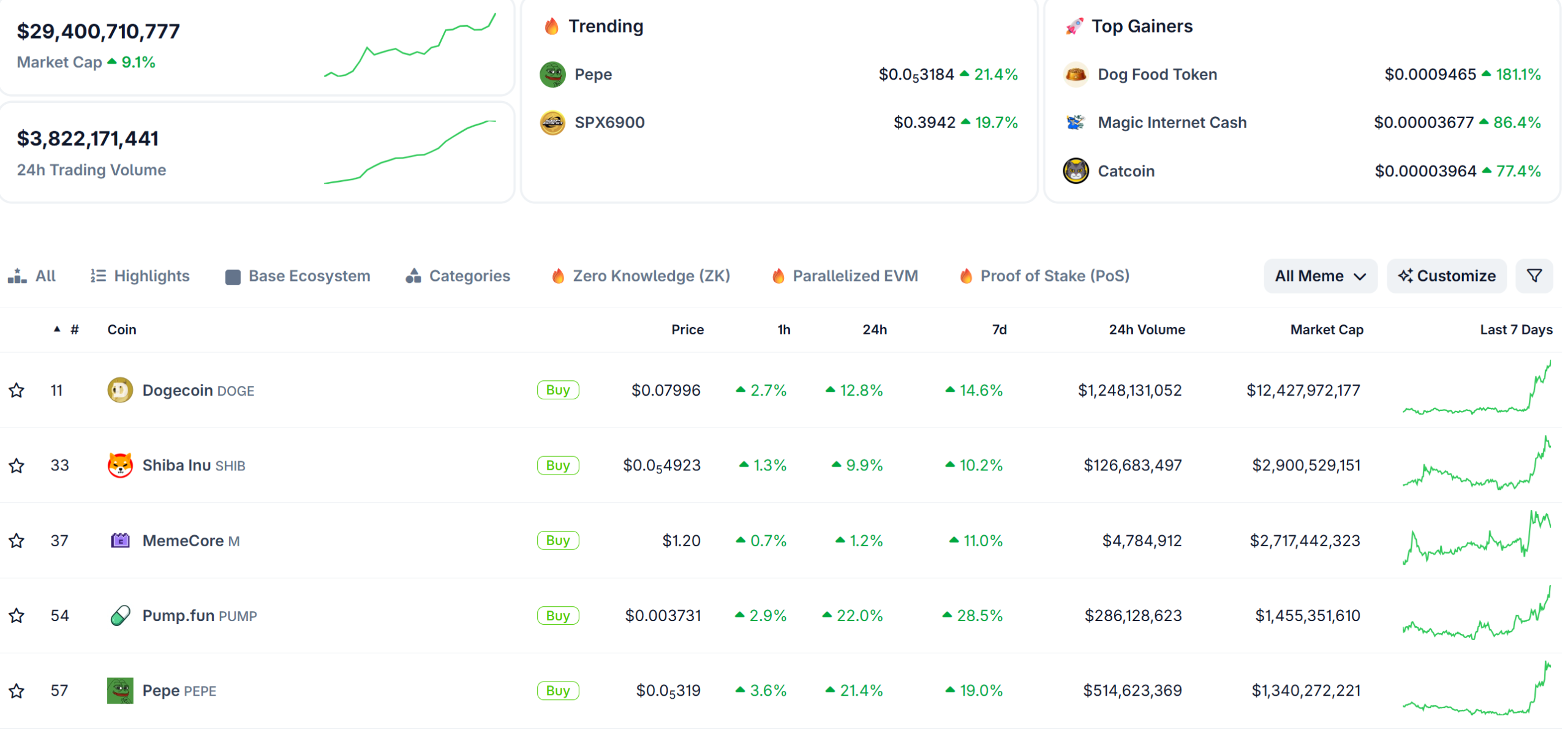
Meme coin market added close to $3 billion on Thursday. The sector is now worth $29.3 billion, up almost 10% today. Three blockchains are fighting over that money.
Solana, BNB Chain and Robinhood Chain each claim a share of it. Thursday’s trading data says only one of them is really winning.
Most of the $3 Billion Never Touched These Three Chains
The headline number flatters all three. Meme tokens traded $3.6 billion on Thursday, and three coins accounted for 59% of it.
Dogecoin (DOGE) led with $1.24 billion, and it runs on its own network. DOGE price rose 12.3%. Pepe (PEPE) followed with $514 million, and it sits on Ethereum. Official Trump (TRUMP) took $421 million.

So the contested pool is far smaller than the headline suggests. Market cap shows what a token is worth, not where traders went.
Two numbers show that. Volume records where money moved. Fees record what the chain kept.
Solana Wins Thursday’s Volume Test
Solana processed $3.01 billion in decentralized exchange trades over 24 hours, DefiLlama data show. BNB Chain handled $1.25 billion.
Robinhood Chain managed $510.8 million. It is the newest of the three, launched in July as a network for tokenized stocks.

Solana therefore out-traded both rivals combined. It took 63% of the three chains’ total flow.
Its launchpad token drew much of that. Pump.fun (PUMP) traded $286 million, fourth among all meme tokens.
One caveat applies to every figure here. These totals cover all tokens on each chain, not meme coins alone.
Fees Show Whose Volume Is Worth Something
Volume is the easier number to grow. Blockspace is cheap, and a dollar can change hands many times in a day.
Fees are harder. Solana earned $925,809 in chain fees on Thursday. BNB Chain took $689,745. Robinhood Chain collected $59,275.

The distance is stark. Solana moved 5.9 times Robinhood’s volume but earned 15.6 times its fees.
Now measure fees per dollar traded. BNB Chain converted 0.055% of its volume. Solana managed 0.031%. Robinhood Chain kept 0.012%.
That reorders the podium. Solana wins on scale, but BNB Chain extracts nearly twice as much value from each dollar.
The effect shows in the totals. Solana takes 63% of the three chains’ volume but only 55% of their fees.
Chains with no meme scene still earned more. Ethereum collected $1.22 million and Tron took $876,853.
Robinhood Chain ranked tenth among all chains, behind Polygon.
Who is Winning Meme Coin Season
Solana, on both measures. It leads on volume traded and on total fees earned, and no rival is close on either.
BNB Chain is the credible number two and the sharpest earner per dollar. Its flagship token lagged, with the Chinese-language meme BinanceLife up 4.7% against a sector up 10.1%.
Robinhood Chain runs third on everything. It can still produce a mover, and its flagship Cash Cat (CASHCAT) gained 30.3% on $32.27 million of volume.

One rival sits outside the three-way frame. Base matched BNB Chain on volume at $1.255 billion.
Its economics resemble Robinhood’s, however. Base earned $189,724, converting 0.015% of volume into fees.
The clash may already have four sides. Whether Solana keeps the crown rests on a number few traders watch.
Not how much volume it attracts, but how much of that volume it converts.
The post Solana, Robinhood, BNB Clash for Meme Coin Season: Who is Winning the $3 Billion Rally? appeared first on BeInCrypto.


Warning: This post contains spoilers for Outer Banks Season 5.
After years of treasure hunts, betrayals, shipwrecks, family feuds and increasingly improbable escapes, the Pogues finally make it home. The fifth and final season of Netflix’s Outer Banks sends John B (Chase Stokes), Sarah (Madelyn Cline), Kiara (Madison Bailey), Pope (Jonathan Daviss), Cleo (Carlacia Grant), and Rafe (Drew Starkey) through one last race for treasure—this time involving the Royal Merchant gold, the Blue Crown, a deadly hurricane, and the ghosts of everything they have lost along the way.
The finale takes the Pogues far beyond the Outer Banks before bringing them back. First, they learn that the arms dealer Anton Finch is planning to use the Blue Crown during a meteor shower. The group travels to Azerbaijan to stop him, while Cleo is arrested as they are leaving for the private plane. She tries to board as the plane is taking off, but a police officer shoots at the plane’s stairs, causing her to fall. Pope is already in Azerbaijan with the others when he discovers that Cleo has been deported to Nassau, Bahamas.
Kiara eventually gets the Blue Crown from Finch and takes it to the lake during the meteor shower, hoping it can bring JJ (Rudy Pankow) back. The crown doesn’t resurrect him, but it gives Kiara a powerful final connection to her memories of JJ and everything they shared. Finch later takes the crown back, meaning the Pogues return to the Outer Banks without it. They arrive just hours before Hurricane Cassandra hits.
Meanwhile, back in Kildare, Rose has the Royal Merchant gold after stealing it from the Pogues. Chandler Groff (J. Anthony Crane) attacks and tries to kill Rose, but Wheezie shoots him in the arm and saves her stepmother. Groff escapes in Rose’s car with the gold. During the hurricane, Kiara finds him aboard the stolen boat and confronts him about killing JJ. Their fight ends with Groff going overboard and presumed dead, while Kiara discovers that the boat is sinking.
Trying to keep the boat afloat, Kiara begins throwing heavy cargo into the ocean. Among the crates is the Royal Merchant gold Groff stole from Rose. She reluctantly pushes the gold overboard and soon falls into the water herself, but the Pogues find and rescue her.
The gold, however, isn’t lost for good. After the hurricane passes, Pope calculates where the treasure should have drifted by triangulating the fort, the lighthouse and the location where they rescued Kiara, while accounting for the currents and wind. John B dives into the ocean and discovers the gold beneath the debris and sand. The Pogues are able to recover part of it in the moment and retrieve the rest over the following days.
With the Royal Merchant fortune finally in their hands, the Pogues use the money to rebuild Kildare, buy back properties and restore their homes. They help create the community they always wanted, where Kooks and Pogues can live together.
So, where does everyone end up as the Outer Banks adventure finally comes to a close? Here’s what happens to the Pogues, their families and the people who shaped their story.

John B and Sarah Cameron
After everything John B has been through, the finale gives him the future he has been fighting for: a family and a home. He and Sarah welcome their first child, a son named JJ in honor of their late best friend.
One year later, John B and Sarah get married in a ceremony surrounded by their friends and family. Their son is also part of the celebration, with Kiara carrying him into the ceremony before Sarah walks down the aisle with Pope.
John B and Sarah begin their married life raising their son in the community they helped rebuild. In the final moments, John B rings the bell near their home and calls for JJ.
“I think he’s traveled the world searching for happiness and peace, and his identity has been around this treasure that is significant to him and his father, and it’s this weird relationship to it,” Stokes says. “You can travel the world, you can see beautiful places and meet incredible people, but home is always going to be home.”
Meanwhile, Sarah finally gets the freedom and stability she has spent years searching for. After breaking away from the unstable[?] world she grew up in, she builds a family of her own with John B and their son.
With Kildare rebuilt and the Pogues no longer living from one treasure hunt to the next, Sarah can settle into a life she chose for herself. Her journey from the daughter of a powerful Kook family to a member of the Pogues ultimately brings her to the family and sense of belonging she had been looking for all along.
“And I think a very, very full heart,” Cline says. “She finally got out of the bubble wrap, and that’s what she always wanted. She made her dreams come true, and I hope she feels that.”

Kiara Carrera
Kiara’s final chapter is defined by what comes after JJ’s death. The Blue Crown gives her an unexpected sense of closure, allowing her to revisit the memories she shared with him rather than simply focusing on what she lost.
Back in Kildare, Kiara confronts Groff and eventually turns her attention toward the future. She buys back the Maybank property with her share of the fortune and begins rebuilding it, while also pursuing her passion for marine life as an intern with North Carolina Marine Fisheries.
“I feel at peace with where she ends up,” Bailey says. “It’s a sweet ending for her, and I hope the fans love it too.”
.jpg?branch=production)
Pope Heyward and Cleo Anderson
After being arrested while trying to board the plane with the Pogues, Cleo is deported to Nassau, Bahamas and separated from Pope. But their story doesn’t end there. Pope eventually makes his way to Nassau and proposes to Cleo. She accepts and once the Pogues recover their fortune, Pope and his family are able to help Cleo resolve her immigration situation so they can live in Kildare together.
Cleo settles into a life with Pope and becomes part of the community the Pogues helped rebuild.
“It’s just a full 360 of how we met her,” Grant says. “We met her sort of on her own, or with a group of robbers, and now we see her in family, in a relationship, really blossoming into a young woman—still badass, but showing other sides of herself.”
Back home, Pope helps his father rebuild Heyward’s Seafood and uses his share of the fortune to buy a house for himself and Cleo. He also repairs his relationship with his father, bringing his personal and family lives into a more stable place.
“I think he’s proud of his growth as a person, and he’s proud of his relationship with the people he loves,” Daviss says. “His relationship with Cleo, his relationship with the Pogues, his family, him mending that relationship with his father, his own relationship with himself, growing up from a kid to being grown and being more confident.”
Rafe Cameron and Sofia
Rafe leaves Kildare with Sofia after helping her escape from jail during the evacuation. Sofia was arrested after helping Rafe evade the police, following the discovery of new evidence linking him to the murder of Sheriff Peterkin. Rafe believes the authorities will come down hard on Sofia if he doesn’t turn himself in, so he cuts the power to the station, frees her from her cell, and flees with her.
They are later confronted by Sheriff Shoupe, who reminds Rafe that he killed Peterkin, one of Shoupe’s friends. Rafe admits that he was responsible for her death, saying he never wanted it to happen. He tells Shoupe that he plans to disappear after the hurricane and asks him not to come looking for him.
Rafe and Sofia eventually take shelter from the storm before the Pogues help them leave Kildare by boat. Pope gives them enough fuel to reach New Bern, from where they plan to make their way to South America. Before leaving, Rafe says goodbye to the Pogues, thanking Sarah and telling John B that he is happy for him.
“I think Rafe in the end feels finally important, wanted and loved,” Starkey says. “There’s a lot of things that he’s leaving behind. It kind of feels like he’s leaving behind the worst parts of himself, and I think he needs to leave that location in order to do so. It’s a bit of a rebirth for him at the end.”

Rose and Wheezie Cameron
Rose and Wheezie evacuate Kildare along with the other residents as Hurricane Cassandra approaches, leaving the island behind as the storm tears through the community. With the Cameron family’s old life permanently changed, the two eventually return to Kildare as the island begins to recover.
Rose and Wheezie are among the guests at Sarah and John B’s wedding, marking their continued place in Sarah’s life and in the community the Pogues helped rebuild.
Dale Zeasy and Sheriff Shoupe
Dale’s plans to reshape Kildare fall apart after an insurance investigation discovers that his financing was illegitimate. He had been trying to acquire land to build apartments and pressured Pope’s father to sell his property, threatening to use a video of Pope and the Pogues trespassing on private property against him.
After Hurricane Cassandra damages the island, the Pogues use their fortune to buy back the properties and rebuild Kildare on their own terms, leaving Dale without the foothold he had been trying to establish. In the final moments, Shoupe arrests Dale, bringing his attempt to take over the island to an end.
A year later, Shoupe is among the guests at Sarah and John B’s wedding, showing how his relationship with the Pogues has also evolved over the years.
Binance said on Aug. 20 that two employees detained in the United Arab Emirates had been cleared and released after answering questions about third-party fund flows.
Summary
- Two Binance employees were detained, questioned and released after UAE authorities examined third-party fund flows.
- Binance says the employees provided statements and were not targets of the authorities’ financial investigation.
- UAE authorities have not publicly detailed suspected offenses, named subjects or announced any formal charges.
- Binance FZE retains an active Dubai license covering exchange, brokerage, lending and investment services activities.
- The company says it is developing clearer coordination procedures with police authorities across the Emirates.
The New York Times first reported the detentions, citing four people familiar with the matter. According to the report, authorities stopped the employees at airports in the Emirates during recent weeks.
Binance later told Reuters that a small number of employees had provided statements during what the company called a “routine inquiry.”
The inquiry involved third-party fund flows passing through a Binance client money account, according to the exchange. The exchange said the employees were not subjects of the investigation.
Binance employees were questioned about client money flows
The exact transactions under review remain unknown. UAE authorities have not published a statement identifying suspected offenses, the parties controlling the third-party funds or the intended recipients.
No formal charges against the employees were disclosed. Binance’s statement that they were “cleared” reflects the company’s account of events and has not been independently confirmed through a police announcement or court record.
Client money accounts generally separate customer funds from a company’s operating capital. Such accounts can involve banks, payment providers, corporate customers and other intermediaries. The presence of third-party transfers does not by itself establish unlawful activity.
The exchange said it was cooperating with Dubai Police and authorities in other Emirates. The company added that it was working to create clearer procedures for responding to similar inquiries.
Binance retains its active Dubai license
The inquiry has not resulted in a publicly announced change to Binance’s regulatory status in Dubai. The Virtual Assets Regulatory Authority lists Binance FZE as an active licensed provider in its public registry.
The license covers exchange, broker-dealer, lending, borrowing, management and investment services. It also permits the company FZE to serve retail, qualified and institutional investors. Derivatives and margin trading carry additional customer restrictions.
Meanwhile, the exchange received its current VASP license in April 2024. As crypto.news previously reported, the approval supported the exchange’s transition into Dubai’s regulated local market.
The UAE has since become a central part of Binance’s regulatory strategy. In related coverage, the exchange also expanded its regulated presence across Abu Dhabi through separately supervised entities.
UAE authorities have not announced further action
Binance said cryptocurrency transactions and institutional client money arrangements remain unfamiliar to some authorities. It described its discussions with UAE officials as an effort to establish “clear, appropriate coordination procedures.”
However, the exchange did not identify the client account, third parties or transaction values involved. It also did not disclose how long the employees were held or whether authorities imposed travel restrictions.
The case comes as Binance continues to defend its controls against money laundering and sanctions violations. As previously reported, the company has pointed to expanded compliance staffing and monitoring when responding to scrutiny of its transaction controls.
The situation differs from Binance’s dispute in Nigeria, where authorities detained executives in 2024 and filed criminal charges. One executive, Tigran Gambaryan, was later released after Nigerian prosecutors dropped the case against him personally.
For now, the UAE matter appears limited to questioning connected to particular fund flows. No deadline, court hearing or enforcement proceeding has been announced. Further clarity would require a statement from UAE authorities or the release of formal legal documents.
Jim Cramer said he sold his entire Bitcoin (BTC) position over quantum computing fears less than a month ago, then turned around and told a caller on the latest episode of Mad Money to buy the same asset.
The reversal has traders once again invoking “Inverse Cramer,” the running theory that fading the CNBC host’s calls beats following them.
The Sale
Cramer’s exit traces back to a July 31 Mad Money interview with IBM Chairman and CEO Arvind Krishna, who warned that quantum computers could eventually crack the cryptography protecting Bitcoin.
“I think that you should give yourself three or four years, and at that point, I would get rather paranoid about it.”
Arvind Krishna, IBM chief executive, on the quantum timeline.
Days later, Cramer said on air that he would sell his Bitcoin. No wallet address, filing, or position size has confirmed the trade actually happened though.
Then a Caller Asks
On a later episode, a viewer named Sanjay called into the show’s lightning round asking about Bitmine Immersion Technologies (BMNR), an Ethereum treasury stock he had bought before. Cramer waved him off the derivative play entirely, telling him to skip it and buy Bitcoin directly instead, warning that crypto-linked derivatives carry too much risk.
The advice landed awkwardly given Cramer’s own stated exit from Bitcoin weeks earlier. The so-called Inverse Cramer trade treats his calls as a contrarian signal rather than a forecast, a reputation built over years of flip-flopping on the asset.
Tuttle Capital once listed an ETF betting against his picks; the fund lost 15.7% against a 25.4% gain for the S&P 500 before it closed in February 2024, proof that fading any single pundit consistently carries its own risk.
Price Action Since
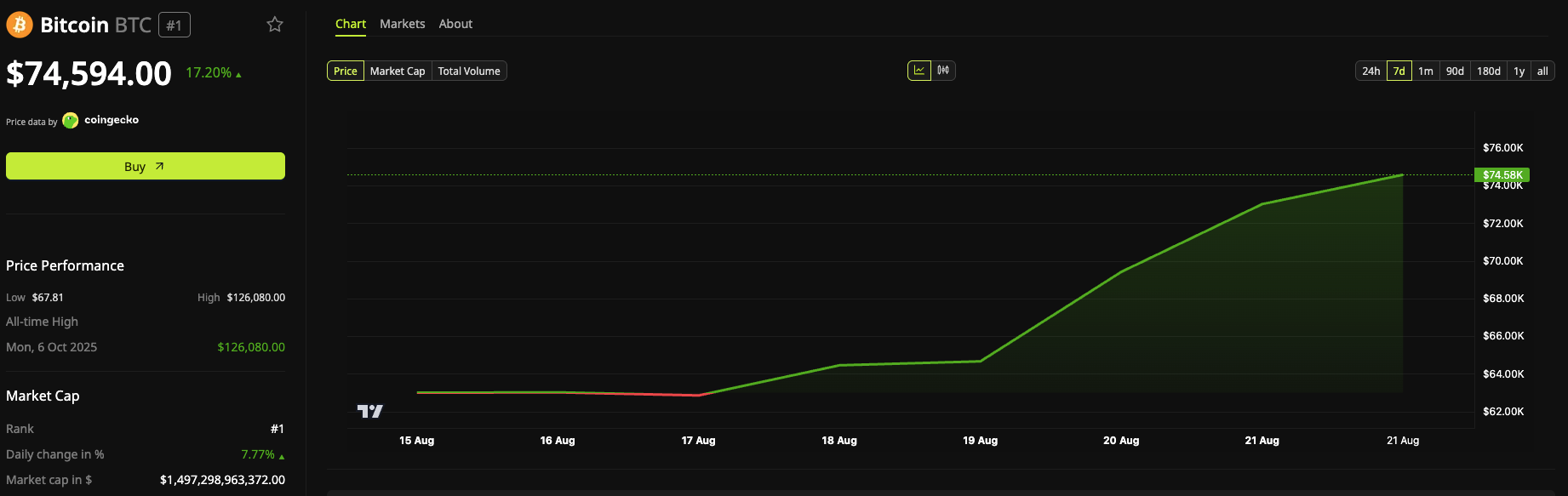
Bitcoin has climbed since Cramer’s original sell call, when it traded near $63,700. It now trades near $74,300 and touched an intraday high of $75,500, a run that has continued regardless of his stated exit.

Whether Cramer actually holds, sold, or has quietly bought back into Bitcoin remains unverified. What is clear is that his on-air signals now contradict each other within weeks, leaving viewers to decide which Cramer to listen to, if either.
The post Inverse Cramer Strikes Again as Jim Tells Caller to Buy the Bitcoin He Sold appeared first on BeInCrypto.

We are squarely in a longevity boom, and the field is now well established as serious science. But we are still near the beginning. Right now, there is no proven longevity drug you can take to make yourself live longer. (That we know of: Nir Barzilai, who thinks some existing drugs could be repurposed as longevity-boosting treatments, is eager to change that.) Some things are within your control, however. You can exercise, like Yamanaka; build muscle, which Dr. Gabrielle Lyon calls the “organ of longevity”; and strengthen your social ties, which Dr. Robert Waldinger has learned are crucial from directing the world’s longest study of human happiness. TIME’s 12 Longevity Leaders know that all of these approaches—medical, physical, social—are key in the quest to live as well as possible for as long as possible.
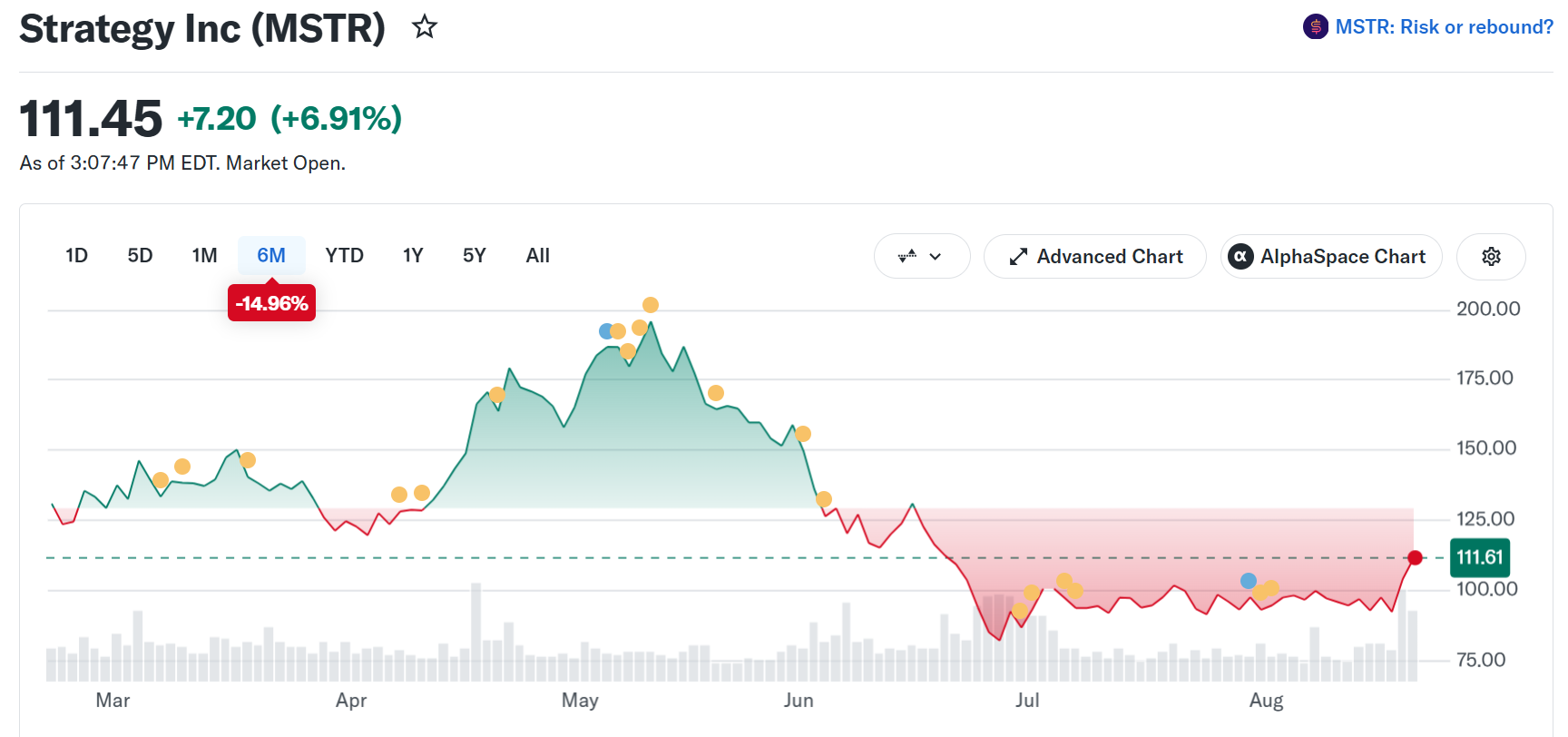
Strategy, the company once called MicroStrategy (MSTR), rose 6.9% to $111.14 on Thursday afternoon. That is its best price since June 18, which wipes out a two-month slide.
The stock market has forgiven the company. The balance sheet has not. MicroStrategy’s Bitcoin is still worth billions less than it paid.

How MicroStrategy Clawed Back Two Months
MSTR traded at $111.45 as of 3.05 p.m. ET, up 6.91% from Wednesday’s $104.25 close. The shares had bottomed at $81.81 in late June.
That is a 35.9% climb off the floor. July never produced a close above $101.95, so Thursday’s move clears the whole summer.
The fuel came from Bitcoin topping $70,000, marking the first time in 78 days. The token had not held that level since early June.
Two decisions in Washington did the heavy lifting. On Wednesday the Treasury doubled the size of its long-end bond buybacks. Each operation will now buy at least $4 billion from Sept. 9.
A day earlier, the Securities and Exchange Commission (SEC) proposed Regulation Crypto Assets. The rule would let crypto firms raise up to $75 million a year without full registration.
Short sellers were caught out. Traders covered roughly $1.5 billion of bearish bets, including $700 million inside one minute.
“…a quiet form of quantitative easing, a move that weakens the dollar and sends scarce, debasement-hedge assets like Bitcoin higher,” Matt Mena, crypto research strategist at 21Shares, on the Treasury move.
Follow us on X to get the latest news as it happens
The Bitcoin Stack is Still Underwater
Strategy holds 840,447 bitcoin. It paid an average $75,385 per coin, or $63.36 billion in total, according to its own ledger.
At $69,803 that pile is worth $58.67 billion. So the company sits about $4.69 billion in the red. Bitcoin has to rise another 8% before the treasury breaks even.
The gap already forced a change of habit. Strategy bought its first 21,454 coins on August 10, 2020, paying $11,652 each. The ledger records no sales at all until this year.
Then came four of them. The company sold 6,916 bitcoin between June 30 and August 10, at prices from $59,256 to $64,262. Measured against its average cost, that booked roughly $92 million in real losses on less than 1% of the stack.
The paper damage is far larger. Strategy reported an $8.22 billion second quarter net loss in July. It has also paused new bitcoin buying, raising $333.7 million last week without adding a single coin. In February, management spelled out its own breaking point in a deep bitcoin crash.
Which Crypto Stocks Really Got Back to June
The rebound was broad, but it was not equal.

BitMine, an ether treasury company, leads the group by a wide margin. Circle has climbed back above its June 18 level.
Coinbase beat every June close, yet it trails its July 21 peak of $175.85. Bitdeer is the outlier. The miner rose 8.57% and stays 41.7% below June.
The split is telling. Money returned to the treasury companies and the exchanges, which move with bitcoin most directly. It has not returned to the miners.
Big investors were already positioned. Twelve of the 15 largest MSTR institutional holders added shares in the second quarter, while the stock was falling.

“it’s a compelling time for investors with longer-term horizons to be allocating to Bitcoin and the crypto asset class,” said Zach Pandl, head of research at Grayscale.
One number decides whether this holds. Bitcoin must reach $75,385 for Strategy’s treasury to turn green again, and for Michael Saylor to start buying without booking a loss.
The post MicroStrategy Erases 2-Month Loss as Crypto Stocks Rally: Is the Damage Over? appeared first on BeInCrypto.

Massive supply-chain attack sees terabytes of data belonging to some of the world’s biggest and most sensitive organizations leaked online

How to escape the broke cycle #wealth #advice #money

Swiss tourist jailed for being out on beach and calling Bali’s sacred day of silence ‘crazy’





-

 Fashion6 days ago
Weekend Open Thread: Ann Taylor
-
 Tech7 days ago
11 Ways to Rank Your Videos
-

 Sports6 days ago
Birmingham 2026: Day 6 Timetable for Irish Athletes
-
 NewsBeat6 days ago
Myanmar says over 300,000 Rohingya refugees verified for repatriation as exodus enters ninth year
-

 Politics6 days ago
SEQ Code: The Three Letter Boarding Pass Code That Could Give You The Worst Seat
-

 Tech3 days ago
Qwen3.8-27B runs frontier-class coding agents and reasoning locally, no cloud API required
-

 Business3 days ago
SMA Solar Technology AG (SMTGY) Q2 2026 Earnings Call Transcript
-

 Crypto World6 days ago
Pi Network Protocol 27 endgame: last upgrade before what?
-

 Crypto World3 days ago
OCC Greenlights Trump Family Crypto Firm for Trust Charter
-
 Tech6 days ago
Every fusion startup that has raised over $100M
-
 Business7 days ago
15 Ways to Make Money From Your Phone (2026 Guide)
-
 Entertainment6 days ago
Marvel Studios Reveals New X-Men Cast Including Adam Driver and Sadie Sink
-
 Crypto World7 days ago
Robinhood Chain Approaches $1B TVL as Uniswap Integration Boosts Liquidity
-
 Entertainment7 days ago
10 Netflix Shows That Quietly Became Modern Classics
-

 Fashion6 days ago
Weekly News Update, 8.14.26 – Corporette.com
-

 News Videos24 hours ago
Don’t Leave Your Financial Future To Chance | August 19, 2026
-

 Fashion7 days ago
Silver bangles for women – Newbridge Silverware
-

 Business6 days ago
Facebook Down Now? Users Report Login And Loading Problems As Outage Trackers Monitor Ongoing Issues
-
 Business6 days ago
Monarch Mutual Fund set to enter MF space with maiden overnight fund; files draft with Sebi
-

 Fashion6 days ago
Cart Confidential Vol. 44 – Julia Berolzheimer
You must be logged in to post a comment Login