
Crypto World
Upbit lists 4 altcoins in South Korea with 8 pairs

South Korean cryptocurrency exchange Upbit will add Bitcoin and Tether trading pairs for Biconomy, Bubblemaps, Nillion and ETHGas on Aug. 21.
Summary
- Upbit will add eight BTC and USDT pairs covering BICO, BMT, NIL and GWEI tokens.
- Trading was postponed three hours from 13:00 KST to 16:00 KST on August 21 officially.
- BICO, NIL and GWEI deposits use Ethereum, while BMT transfers require Solana network support only.
- Only limit orders remain available for roughly two hours after Upbit opens the new markets.
- Upbit may delay trading again if deposits do not provide sufficient liquidity before the launch.
The exchange originally scheduled the eight markets to open at 13:00 Korea Standard Time. Upbit updated its official notice at 12:50 KST and postponed trading until 16:00 KST, a three hour delay.
Upbit did not give a detailed reason for the change. It apologized for the inconvenience and retained the previously announced deposit networks and initial order restrictions.
The exchange warned that trading could face another delay if deposits and withdrawals fail to establish sufficient liquidity before the revised opening time.
Upbit listing covers eight new trading pairs
Each of the four tokens will receive one BTC pair and one USDT pair. Upbit did not announce Korean won markets for the assets.
BICO, NIL and GWEI deposits must use Ethereum. BMT deposits must use Solana. Upbit will not process transfers made through unsupported networks, even when another version of the same token exists elsewhere.
The exchange provided contract addresses for each supported asset. Users should verify those addresses and the selected blockchain before transferring funds. Deposits sent through the wrong network may require a lengthy recovery process or may not be recoverable.
Upbit can also request evidence explaining the source of large deposits. Transfers from exchanges that do not meet its Travel Rule requirements may not appear in customer accounts until additional checks are completed.
The exchange has expanded its non won markets through several recent listing rounds. As crypto.news previously reported, Upbit added nine tokens across its BTC and USDT markets in June.
Initial orders will carry temporary restrictions
Upbit will restrict buy orders for approximately five minutes after trading begins. It will also block sell orders priced more than 10% below the reference closing price during that period.
Only limit orders will be accepted for roughly two hours after the markets open. Other order types and execution conditions will become available after Upbit removes the restriction.
These controls are intended to manage the limited liquidity and rapid price movements that can occur when a market first opens. They do not guarantee price stability or prevent traders from incurring losses.
Previous Upbit listings have produced mixed market reactions. Some tokens have recorded abrupt increases in price and volume, while others have traded lower despite gaining access to the exchange.
In related coverage, Venice Token declined despite receiving three new Upbit trading pairs. Any price movement in BICO, BMT, NIL or GWEI would therefore require separate market data rather than being assumed from the listing announcement.
Four projects gain broader access to Upbit traders
Biconomy provides infrastructure designed to simplify blockchain transactions through account and chain abstraction. BICO supports governance and staking within its ecosystem.
Bubblemaps visualizes token distribution and links between blockchain addresses. Its BMT token supports platform use and incentives for community research through Intel Desk.
Nillion develops privacy focused computing services for storing data, running confidential computations and processing artificial intelligence workloads. NIL is used for network payments, node rewards and staking.
ETHGas is developing a market for Ethereum blockspace and transaction preconfirmations. Its system is designed to let validators sell future block capacity while traders and applications seek more predictable transaction execution. GWEI supports governance and staking.
Upbit had opened deposits and withdrawals within two hours of publishing the original notice at 09:48 KST. The next confirmed event is the revised 16:00 KST trading launch, although the exchange’s liquidity condition leaves room for another postponement.
The exchange has changed listing times before. As previously reported, Upbit postponed another token launch before opening trading in May. Traders should rely on the latest exchange notice rather than the original schedule.

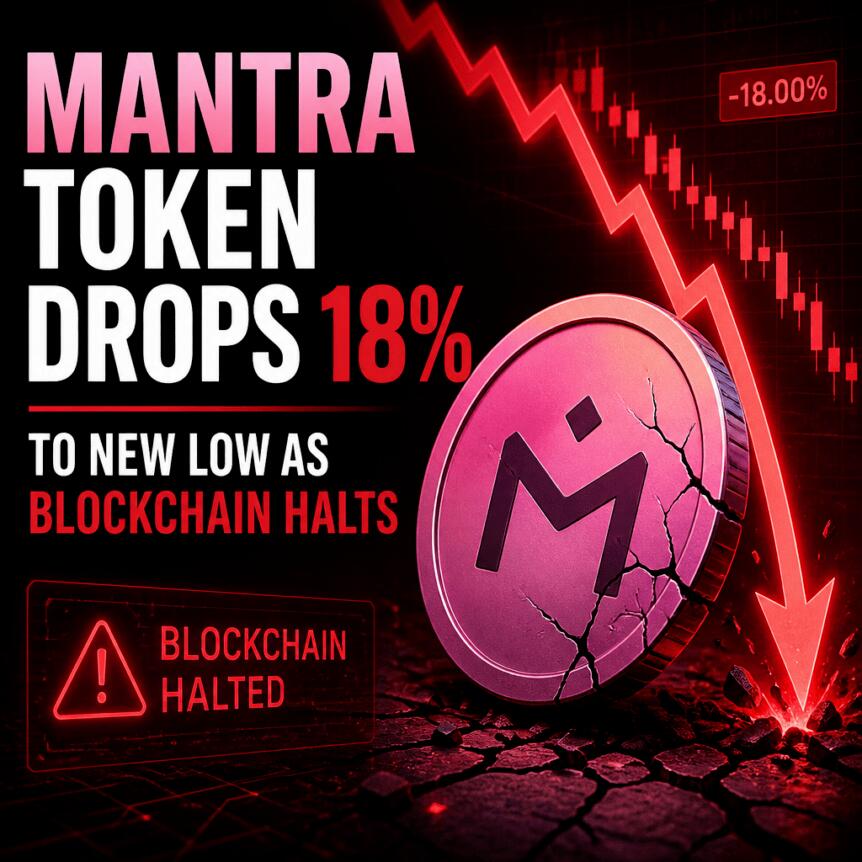
MANTRA’s native token has come under sharp selling pressure after the MANTRA Chain network stopped producing blocks, with the project citing an unexplained incident and ordering a precautionary halt. The pause has also triggered practical disruptions for users, as assets can’t move on the chain and exchanges have suspended deposits and withdrawals while they assess impact.
According to CoinGecko data, MANTRA fell from $0.005060 to an all-time low of $0.004126 shortly before 11:00 pm UTC on Thursday. Although the token later recovered to around $0.0044, it remained down roughly 10% over the past 24 hours. At the same time, trading volume reportedly climbed nearly 600% to $24 million, reflecting heightened attention around the outage.
Key takeaways
- MANTRA Chain halted block production and froze endpoints and transactions as a precaution while the team investigates an incident.
- CoinGecko shows MANTRA trading near a record low around 11:10 pm UTC Thursday, followed by a partial rebound.
- MANTRA’s status information describes a full outage affecting public endpoints, validators, bridge migration operations, and IBC relays.
- No root cause, timeline, or statement about whether assets were lost has been provided yet.
- Because the network is halted, exchanges and related services have paused deposits and withdrawals with no restart schedule.
Token rout coincides with a network halt
The timing of MANTRA’s sharp drop tracked closely with the chain’s sudden stop. CoinGecko’s pricing shows the token hitting its low around 11:10 pm UTC Thursday. A subsequent rebound to roughly $0.0044 did not erase the damage, as the token remained around 10% lower on the day.
While price swings during infrastructure disruptions are common, what stands out here is how quickly sentiment appears to have shifted once block production stopped. The volume spike to about $24 million—reported as nearly 600% higher—suggests many market participants were reacting to the operational halt and the uncertainty around what it means for funds on-chain.
MANTRA says endpoints and transactions are frozen
In a post Friday on X, MANTRA said it was “aware of an incident affecting MANTRA Chain” and had halted the network as a precaution while investigating. The project emphasized that it did not yet have a root cause or timeline to share.
Critically for users, the team stated that all endpoints and transactions were frozen. In practical terms, that means the chain is unable to process activity—so transfers, contract interactions, and bridging-related operations depending on on-chain state cannot proceed.
Consistent with that, multiple exchanges have reportedly paused deposits and withdrawals for affected users. With no timeline provided, users may face delays even if funds were never compromised—because services typically wait until they can confirm that the network is operating safely again.
Status page lists a full outage across critical components
MANTRA’s status page classified the incident as a full outage affecting public endpoints, validators, bridge migration operations, and MANTRA-managed Inter-Blockchain Communication (IBC) relays. The team also said it would not restart the network until it was confident it was safe.
Operationally, the last recorded block provides a reference point for the stoppage. MANTRA’s public RPC status listing showed block 17,449,398 produced at 11:13 pm UTC on Thursday as the latest block. The initial incident notice was posted at 11:44 pm UTC, after CoinGecko data showed the token reaching its low around 11:10 pm UTC.
As of this reporting, MANTRA has not clarified whether the token’s price movement was directly related to the outage, nor has it confirmed whether any assets were lost or placed at risk. Cointelegraph said it contacted the MANTRA team for additional information but did not receive a response by publication.
What this means for a token that has already faced major disruptions
This latest event lands after a turbulent history for MANTRA’s token ecosystem. Earlier coverage from Cointelegraph noted that MANTRA’s former OM token collapsed in April 2025, falling by more than 90% from about $6.30 to below $0.50 and wiping out more than $5 billion in market value. That kind of drawdown can leave parts of the market more sensitive to operational uncertainty, especially when outages prevent movement of assets.
Broader corporate developments have also shaped MANTRA’s narrative. In June, Cointelegraph reported that Inveniam Capital Partners announced plans to acquire MANTRA after investing $20 million in 2025. The acquisition followed January layoffs and restructuring, after CEO John Patrick Mullin described 2025 as the project’s most challenging year.
Against that backdrop, the chain halt raises investor questions that go beyond short-term price action: whether operational reliability is improving, how quickly the team can identify and remediate incidents, and what safeguards exist for bridges and IBC relays—components specifically listed by the status page as impacted.
With MANTRA Chain still halted, the immediate priority for market participants is clarity: readers should watch for an update that provides a root cause assessment, confirms asset safety, and outlines conditions for restart. Until then, the key uncertainty is whether this was an isolated infrastructure failure or a signal of deeper systemic risk—and how quickly exchanges and on-chain services can safely resume deposits and withdrawals.
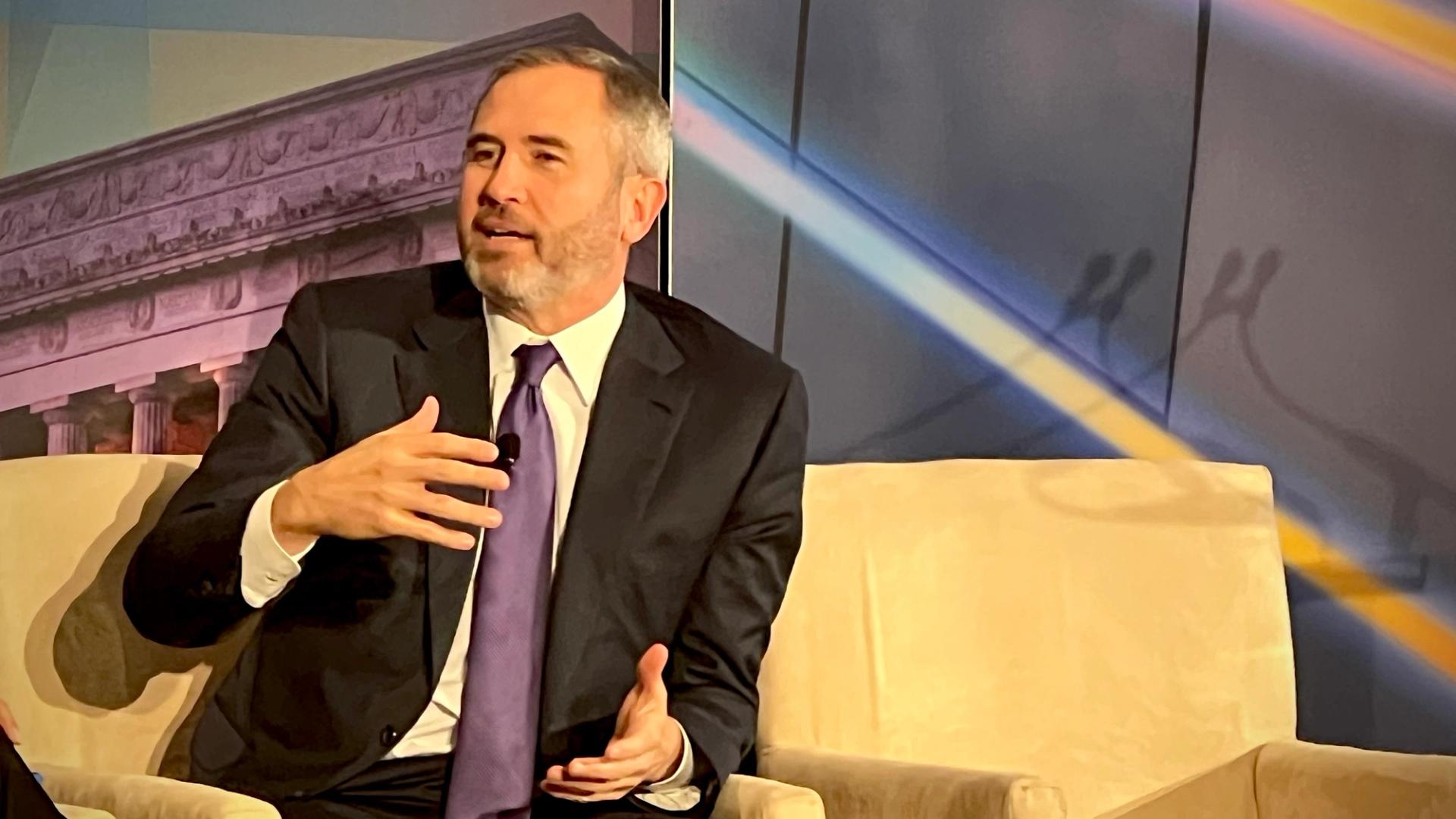
Clearpool and Cicada Partners are building an institutional lending product using RLUSD, though the XRP Ledger features underpinning it are still awaiting activation.
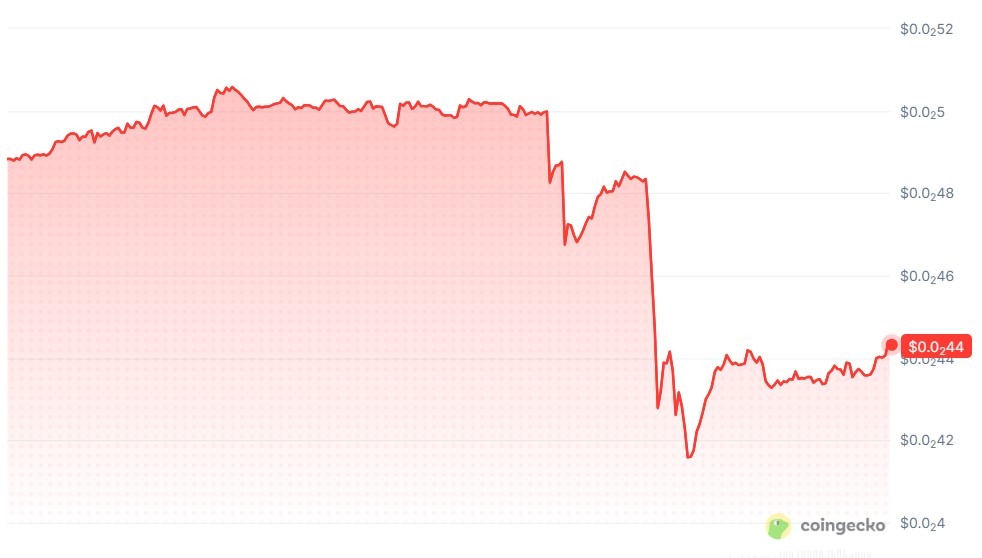
MANTRA’s native token sank 18.5% from its 24-hour high to a record low shortly before MANTRA Chain stopped producing blocks and its team announced a precautionary halt over an unexplained incident.
According to CoinGecko, MANTRA fell from $0.005060 to an all-time low of $0.004126 around 11:00 pm UTC on Thursday. It later recovered to about $0.0044 but remained down roughly 10% over 24 hours, while trading volume climbed nearly 600% to $24 million.
MANTRA said Friday it was “aware of an incident affecting MANTRA Chain” and had halted the network as a precaution while it investigated. “We don’t have a root cause or timeline to share yet,” the project said, adding that all endpoints and transactions were frozen.
The halt prevents assets from moving on MANTRA Chain and has prompted affected exchanges to pause deposits and withdrawals, with no timeline given for either service to resume.
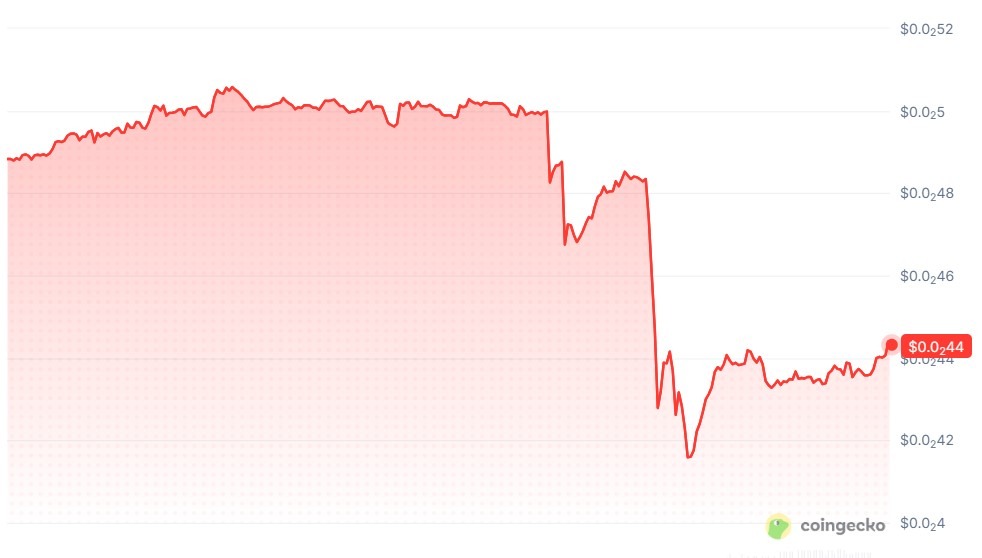
MANTRA’s 24-hour price chart. Source: CoinGecko
MANTRA Chain remains halted as investigation continues
MANTRA’s status page classified the incident as a full outage affecting public endpoints, validators, bridge migration operations and MANTRA-managed Inter-Blockchain Communication relays. The team said it would not restart the network until it was confident it was safe.
The network’s public RPC listed block 17,449,398, produced at 11:13 pm UTC on Thursday, as its latest block. MANTRA posted its initial incident notice at 11:44 pm, while CoinGecko showed the token reaching its low around 11:10 pm.
MANTRA has not said whether the price movement was related to the incident or whether any assets were lost or placed at risk.
Cointelegraph contacted the MANTRA team for additional information but did not receive a response by publication.
Related: Mantra says CEO has begun the process of burning his 150M OM tokens
The latest decline follows the April 2025 collapse of MANTRA’s former OM token, which plunged more than 90% from about $6.30 to below $0.50 and erased more than $5 billion in market value.
In June, Inveniam Capital Partners announced plans to acquire MANTRA after investing $20 million in the project in 2025. The acquisition followed January layoffs and restructuring after CEO John Patrick Mullin described 2025 as the project’s most challenging year.
Magazine: 200,000 fake AI ‘victims’ deployed to scam bait online fraudsters


Micron CEO Sanjay Mehrotra said memory has become the strategic infrastructure of the artificial intelligence era, a shift he argues has permanently reset the economics of a cyclical industry.
He made the comments on Thursday at a semiconductor fabrication site near the company’s headquarters in Boise, Idaho. The firm is building two fabs as part of a planned $250 billion investment in US manufacturing and research.
Why Mehrotra Calls Memory Infrastructure
Memory has long moved in cycles. Strong demand pulls in new capacity. Excess supply then pushes prices back down.
Mehrotra argues that AI has created a more durable source of demand. This is also changing how customers value memory, according to him. Customers can no longer treat memory as a commodity bought mainly on price.
Instead, memory increasingly needs to work alongside the processors and systems using it. That shift makes memory more important to overall system performance.
“That’s why I call it the strategic infrastructure of the AI era,” he said. “Today, there is no AI without memory. AI systems need more memory,” he said.
Follow us on X to get the latest news as it happens
What the Numbers Show
Micron’s results give the claim numbers. Fiscal third-quarter revenue reached $41.46 billion, against $9.30 billion a year earlier.
Gross margin reached 84.6% of revenue, up from 37.7% a year earlier. The company guided to a fiscal fourth-quarter margin of roughly 86%.
Supply remains the constraint. The CEO revealed that Micron still cannot produce enough memory to meet demand, with data-center customers seeking roughly 50% more supply than the company can commit.
Mehrotra expects demand to widen further. He named autonomous vehicles, robots, and AI-enabled consumer devices as future buyers.
However, the framing has critics. A June lawsuit accuses Micron, Samsung, and SK Hynix of inflating dynamic random-access memory (DRAM) prices.
Meanwhile, Chinese producers such as CXMT are also scaling output, which could reopen the price competition Mehrotra says AI impacted.
Subscribe to our YouTube channel to watch leaders and journalists provide expert insights
The post Memory Is the “Strategic Infrastructure of the AI Era,” Micron CEO Says appeared first on BeInCrypto.
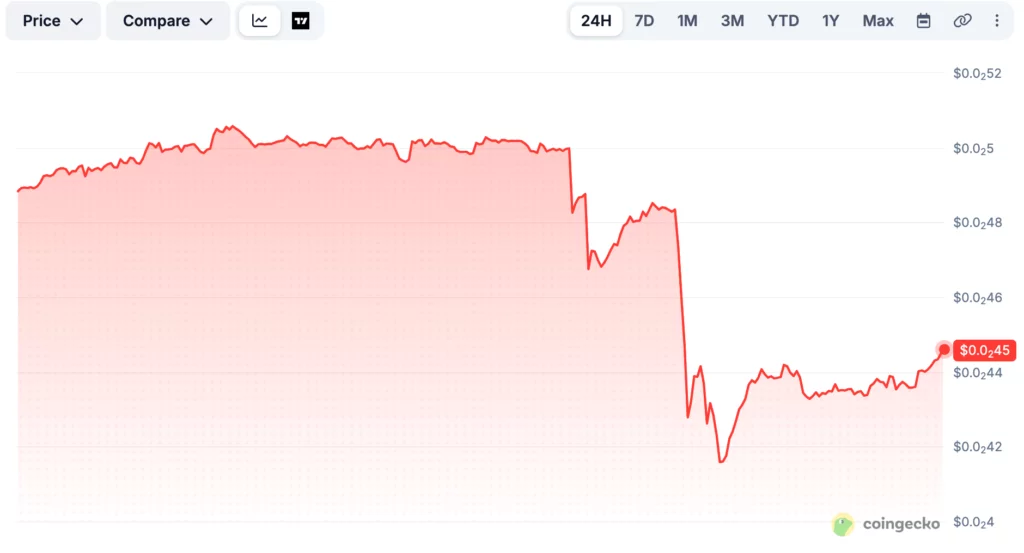
MANTRA Chain halted its network on Aug. 21 while investigating an unidentified incident, freezing transactions and preventing assets from moving across the RWA focused Layer 1 blockchain.
Summary
- MANTRA Chain halted validators, public endpoints, bridges and managed relays while investigating an unidentified incident.
- The halt prevents transactions from processing, leaving assets currently unable to move across the network.
- MANTRA says engineering and security teams are investigating alongside external partners before considering any restart.
- Affected exchanges have paused deposits and withdrawals, while the team says users need no action.
- MANTRA traded near $0.0044, down approximately 9.8% over 24 hours, according to CoinGecko market data.
The team initially described the shutdown as a precaution. Its latest status update said the network remained halted as engineering and security teams investigated alongside external partners.
Affected components include validators, public blockchain endpoints, MANTRA Bridge migration operations and MANTRA managed Inter Blockchain Communication relays. Deposits and withdrawals through affected exchanges have also been paused.
MANTRA has not disclosed the suspected cause, the block height where the incident began or whether an attacker gained access to funds. It has not reported any stolen, minted or otherwise compromised assets.
MANTRA Chain halt prevents assets from moving
The shutdown stops validators from processing new transactions. Users therefore cannot complete transfers, interact with applications or move assets through affected bridges while the halt remains active.
MANTRA said no action was required from users. It also warned against people offering “recovery” assistance, a common method used by scammers during blockchain disruptions.
“We will not resume the network until we are confident it is safe to do so,” the team said. It promised regular updates but did not provide a recovery estimate.
The project has notified exchanges and ecosystem partners. Upbit is among the platforms that have suspended deposits and withdrawals for the native MANTRA token. Trading can continue independently on centralized exchanges because internal orders do not require transactions on MANTRA Chain.
A network halt can preserve the existing ledger state while developers investigate. However, the action also demonstrates that validators or core participants can coordinate to suspend block production during an emergency.
Root cause and financial exposure remain unknown
MANTRA has not characterized the event as an exploit, validator failure, consensus problem or infrastructure outage. Claims assigning a cause remain unverified until the team publishes technical evidence.
No independent security researcher had released a confirmed transaction trail showing stolen funds at the time of writing. The halted network also prevents new onchain transfers, limiting the immediate movement of native assets.
The next update will need to identify the affected software or infrastructure, establish whether the chain’s recorded state remains valid and explain any required patch. Validators would then need to install or approve the relevant changes before block production could resume.
Developers may also need to determine whether the restart can continue from the latest accepted block. MANTRA has not indicated that it is considering a rollback, asset freeze or chain state modification.
The incident affects infrastructure developed for tokenized real world assets. MANTRA previously created a $108.8 million fund for RWA projects with a planned four year deployment period.
MANTRA price falls as trading activity increases
MANTRA traded near $0.0045 at the time of writing, falling approximately 9.8% over 24 hours, according to CoinGecko data. Its seven day decline reached about 12.8%.
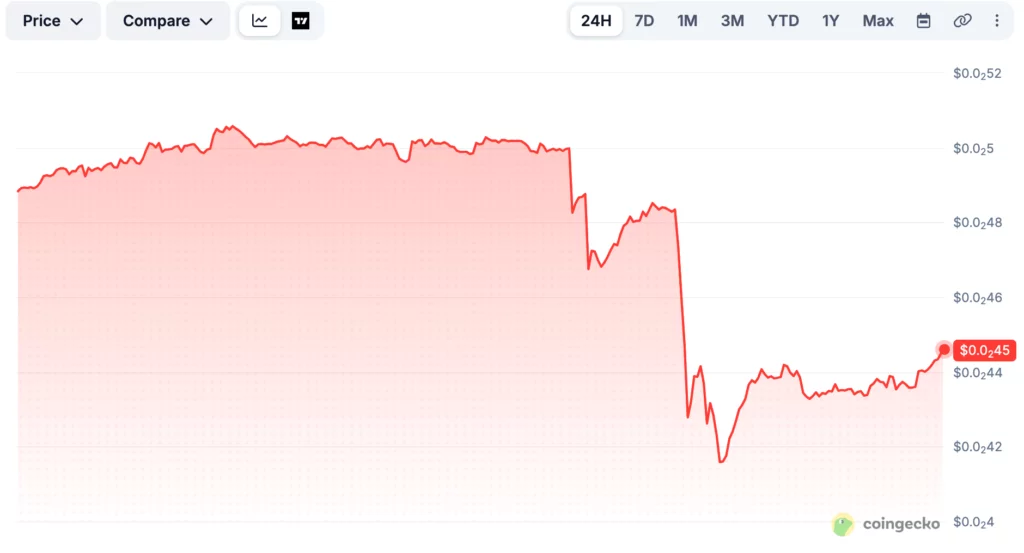
Trading volume rose by roughly 591% to more than $22.7 million. The increase shows greater market activity but does not establish whether every transaction was a direct response to the network shutdown.
The token reached a 24 hour low near $0.00413. Its market capitalization stood at approximately $27.8 million, based on CoinGecko’s estimated circulating supply of 6.3 billion tokens.
The current MANTRA token followed a March 2026 rebrand and denomination change. As previously reported, the project completed a one for four token split, replacing the former OM ticker without changing holders’ proportional value.
That change means current prices cannot be compared directly with the legacy OM price without adjusting for the split. The original OM token separately lost more than 90% during its 2025 collapse, which the project attributed to forced exchange liquidations. Other researchers questioned that explanation.
MANTRA said it would keep the network offline until its teams confirm that a restart is safe. Users must wait for an official root cause assessment, recovery plan and notice that validators and exchange transfers have resumed.


The two-day short liquidation total has reached about $3.8 billion, after Thursday’s figure set a record going back to 2021.
The UK’s HM Revenue and Customs (HMRC) sent 81,172 tax warning letters, emails and text messages to crypto investors during the 2025/26 financial year, according to figures reported on Aug. 20.
Summary
- 81,172 warnings reached crypto investors in 2025/26, up from 64,982 during the previous financial year.
- HMRC treats crypto sales, swaps, purchases and most gifts as potential taxable disposals for investors.
- UK service providers began collecting customer details under the Cryptoasset Reporting Framework in January 2026.
- Platforms must submit their first reports covering 2026 activity to HMRC by May 31, 2027.
- Unpaid domestic tax can attract penalties reaching 100% of tax due, plus accrued interest charges.
The number rose from 64,982 warnings in 2024/25 and 27,714 in 2023/24. The latest total was therefore about 25% higher than the previous year and nearly three times the figure recorded two years earlier.
The figures came from a Freedom of Information request obtained by accounting firm UHY Hacker Young and reported by the BBC. HMRC reportedly suspects that some undeclared liabilities arose from gains accumulated as crypto prices increased between late 2022 and 2025.
HMRC has not disclosed how much unpaid tax the latest warning campaign identified. A warning, commonly called a nudge letter, also does not automatically mean its recipient owes tax or faces a formal investigation.
HMRC crypto tax warnings target possible underpayments
HMRC sends warning communications when information available to the agency suggests that a taxpayer may have omitted income or capital gains. Recipients are generally asked to review their records and correct any errors.
UK taxpayers may owe Capital Gains Tax when they sell crypto for fiat currency, exchange one token for another, purchase goods with crypto or give tokens to another person. Gifts to spouses, civil partners and qualifying charities usually receive different treatment.
The tax applies to gains rather than the total value of a transaction. Individuals must calculate proceeds in pounds sterling and deduct eligible acquisition costs. HMRC’s official guidance also requires investors to maintain records for each token pool.
Crypto received through employment, mining, staking, lending or some decentralized finance arrangements may instead create Income Tax and National Insurance obligations. A later disposal can produce a separate capital gain.
Reporting rules will give HMRC more exchange data
The UK introduced the Cryptoasset Reporting Framework on Jan. 1, 2026. Since that date, covered crypto service providers have been required to collect identifying information and transaction data from customers.
Required information can include names, addresses, tax residences and tax identification numbers. Providers must submit their first reports covering 2026 activity between Jan. 1 and May 31, 2027, according to HMRC’s published rules.
The framework also supports information exchanges between participating tax jurisdictions. This could give HMRC access to records held by some overseas platforms serving UK residents. The agency estimates that the reporting measures could raise as much as £315 million by April 2030.
As previously reported, the new regime also introduced financial penalties for missing customer information. Customers who fail to provide required details can face a penalty of up to £300. Platforms can also receive penalties for incomplete or inaccurate reports.
Other countries are adopting related reporting systems. In related coverage, European Union rules have expanded tax data collection across crypto transactions, including some transfers involving external wallets.
Investors can correct unpaid crypto tax voluntarily
HMRC allows taxpayers to report previously unpaid crypto liabilities through its Cryptoasset Disclosure Service. The process can cover Capital Gains Tax and Income Tax arising from earlier financial years.
Taxpayers need transaction records from every platform and wallet used. Exchange statements alone may be insufficient because platforms do not always calculate pooled acquisition costs or track transfers between accounts belonging to the same person.
HMRC says unpaid domestic tax can result in penalties reaching 100% of the amount owed, plus interest. Offshore cases can attract higher penalties. The final charge depends on the taxpayer’s conduct, disclosure timing and cooperation.
The reporting regime does not create a new crypto tax. It gives HMRC more information for checking whether taxpayers followed rules that already applied. Investors receiving a warning should verify the agency’s calculations before confirming or disputing any liability.


Binance founder Changpeng Zhao said on Aug. 21 that countries could use tokenization to raise capital and attract foreign direct investment by offering digital representations of assets to global investors.
Summary
- CZ said tokenization could help governments raise capital and attract foreign direct investment from abroad.
- He supports issuing tokenized assets across multiple blockchains despite the resulting fragmentation of market liquidity.
- CZ argued that greater interchangeability between issuers could reduce some liquidity fragmentation across blockchain networks.
- BNB Chain reported 776,000 RWA holders, while RWA.xyz measured 776,428 addresses on August 19, 2026.
- Tokenized shares remain securities and must comply with applicable laws governing issuance and secondary trading.
“Let’s tokenize everything,” CZ wrote in an X post. He argued that countries and companies have an incentive to sell tokenized shares to investors worldwide.
CZ also backed issuing tokenized assets across every blockchain rather than selecting a single network. He acknowledged that this approach would create fragmented liquidity but said parallel development would be the fastest way to expand the sector.
His comments represented a policy and industry view, not a formal investment initiative from Binance, BNB Chain or any government. CZ did not identify countries preparing tokenized share offerings or provide a timeline for their launch.
Tokenization does not automatically create FDI
Tokenization converts ownership rights or economic claims into blockchain based units. Governments and companies can apply the model to shares, bonds, funds, commodities, property or other assets.
A token can broaden distribution by making an asset accessible through digital platforms. However, access does not guarantee new investment, liquidity or legal recognition across borders. Issuers must still address securities laws, custody, investor verification, disclosures and ownership rights.
CZ described tokenization as one of the best methods for attracting foreign direct investment. Under the OECD’s formal definition, FDI generally involves a foreign investor establishing a lasting interest and owning at least 10% of an enterprise’s voting power.
Smaller purchases of tokenized shares may instead qualify as portfolio investment. Whether a token sale counts as FDI therefore depends on the investor’s residence, voting rights, ownership level and relationship with the issuing company.
CZ supports growth across competing blockchains
CZ said issuing assets on multiple networks would allow more teams to develop tokenization infrastructure simultaneously. This could increase distribution but divide trading activity and capital between separate markets.
Liquidity fragmentation can produce different prices, wider spreads and shallower order books for representations of the same asset. Bridges and separate issuers can also introduce technical, custody and counterparty risks.
CZ said high interchangeability between issuers could address some of that fragmentation. Such compatibility would require consistent redemption rights, backing arrangements, settlement processes and legal claims. He did not propose a specific technical standard.
Existing projects are already expanding tokenized securities across several networks. As previously reported, Ondo developed infrastructure that moves tokenized stocks between supported blockchain markets while maintaining backing for transferred assets.
In related coverage, tokenized U.S. stocks were also extended into Hyperliquid’s blockchain trading environment, showing how issuers are seeking liquidity across multiple ecosystems.
BNB Chain reports rapid growth in RWA holders
CZ’s comments followed a BNB Chain statement that the network had reached approximately 776,000 holders of tokenized real world assets, up about 370% over 30 days.
RWA.xyz data recorded 776,428 RWA holders as of Aug. 19, an increase of 368.51% over the preceding 30 days. The platform listed $5.8 billion in distributed asset value and 1,284 assets.
The figures include categories selected by the data provider and should not be treated as proof of foreign investment or demand for tokenized national assets. A blockchain address also does not necessarily represent one individual investor.
BNB Chain’s recent growth includes institutional products. As crypto.news previously reported, the network secured 61.7% of assets on Franklin Templeton’s Benji platform, representing about $1.5 billion at the time.
Tokenized shares would remain subject to the laws governing their underlying securities. The U.S. Securities and Exchange Commission said in a January statement that stocks, bonds and other securities do not lose their legal status when represented through crypto networks.
CZ did not announce a product, regulatory application or launch deadline. The next developments would depend on issuers, governments and regulators establishing structures that define ownership, transfers, disclosures and cross border investor access.
CrowdStrike (CRWD) is set to report earnings on Aug. 26 after the regular session closes, and the options market is pricing in a 10% move in either direction. The stock has a solid recent history of strong performance following the cybersecurity company’s earnings reports. Bank of America recently raised its price targets on cybersecurity stocks, which could be good for…
Copyright ©2026 Investor’s Business Daily, LLC. All rights reserved. 87990cbe856818d5eddac44c7b1cdeb8


Binance launched Binance Agent OS and its Model Context Protocol Server on Aug. 20, giving compatible artificial intelligence applications controlled access to market data and trading functions.
Summary
- Binance Agent OS connects AI applications with trading, wallet, payment and market data tools via permissions.
- The MCP Server supports spot, margin, Convert and two categories of Binance futures trading products.
- Agents cannot withdraw funds externally or transfer assets from users’ main accounts into subaccounts directly.
- Market data access requires no authentication, while account actions depend on specifically authorized user permissions.
- Binance currently lists Claude, Claude Code, Codex, ChatGPT and VS Code as compatible client applications.
The developer platform combines Binance APIs, Wallet Agentic Hub, x402, Skill Hub and MCP support. Binance said the broader system is intended to reduce the need for developers to build separate connections for each crypto function.
Its Binance MCP Server acts as the connection layer between supported AI clients and the exchange. Users can authorize compatible applications without storing Binance API keys locally, according to the company’s announcement.
Availability depends on the user’s location, account status and access to individual Binance products. The launch does not make every Binance function available through every AI application.
Binance Agent OS combines five developer components
Agent OS brings several existing and new developer services into one platform. Binance APIs provide access to trading, market, wallet and blockchain functions, while Wallet Agentic Hub supports wallet interactions controlled through user permissions.
Binance x402 provides payment and settlement tools for transactions initiated by software agents. Skill Hub gives developers a directory of modular functions covering trading, wallets, market information and blockchain activity.
The MCP Server provides a standardized method for compatible AI clients to discover and call those functions. MCP is an open protocol for connecting AI models with external services, data sources and software tools.
Binance lists Claude, Claude Code, Codex, ChatGPT and VS Code as compatible applications. This means those clients can connect to the server when they support the required MCP setup. It does not mean that Binance controls or operates those applications.
As previously reported, Coinbase also gave AI agents the ability to spend and trade crypto through wallets equipped with programmable controls. The launches show exchanges competing to become the execution layer for AI applications.
The MCP Server supports trading but blocks withdrawals
Public market information does not require authentication. An AI client can retrieve tickers, order books, candlestick data and funding rates without receiving access to a Binance account.
Authorized account functions include balance checks and internal transfers. Users can also grant access to supported spot, margin and Convert products. The system covers USDⓈ M and COIN M futures where the account and region are eligible.
Binance said agents cannot withdraw crypto to external addresses through the MCP Server. They also cannot move assets from a main Binance account into the dedicated Agentic subaccount.
Users must fund that subaccount themselves. The separation limits the assets available to an authorized agent, although it does not remove trading losses, faulty instructions or the risks associated with granting software transactional permissions.
The company advises users to review order and transfer details before confirming them. Scopes should also be limited to functions required for the intended task.
In related coverage, Base introduced a similar architecture that keeps transaction approval under the user’s control while allowing AI applications to prepare wallet actions.
Developers can connect through one MCP endpoint
Developers and users can connect a compatible client to Binance through its published MCP endpoint. They must then create and fund an Agentic subaccount before authorizing account related actions.
The subaccount can receive an optional read only view of the main account. Trading and transfers remain confined to the funds and permissions assigned to the Agentic environment.
Binance has not announced a deadline for adding more applications or functions. The company said Agent OS provides a foundation for expanding wallet capabilities, developer tools and agent skills over time. Such additions remain forward looking until Binance publishes product details.
The platform also includes Binance x402 as agent payment infrastructure. The protocol uses the HTTP 402 payment status to support automated payments between applications. As crypto.news reported, the standard has gained support from major cloud and payment companies.
Binance has published technical setup instructions through its developer documentation. Users must still check regional product restrictions and review every permission before making funds available.

‘Stuff of nightmares’ as someone drives wrong way on motorway every week
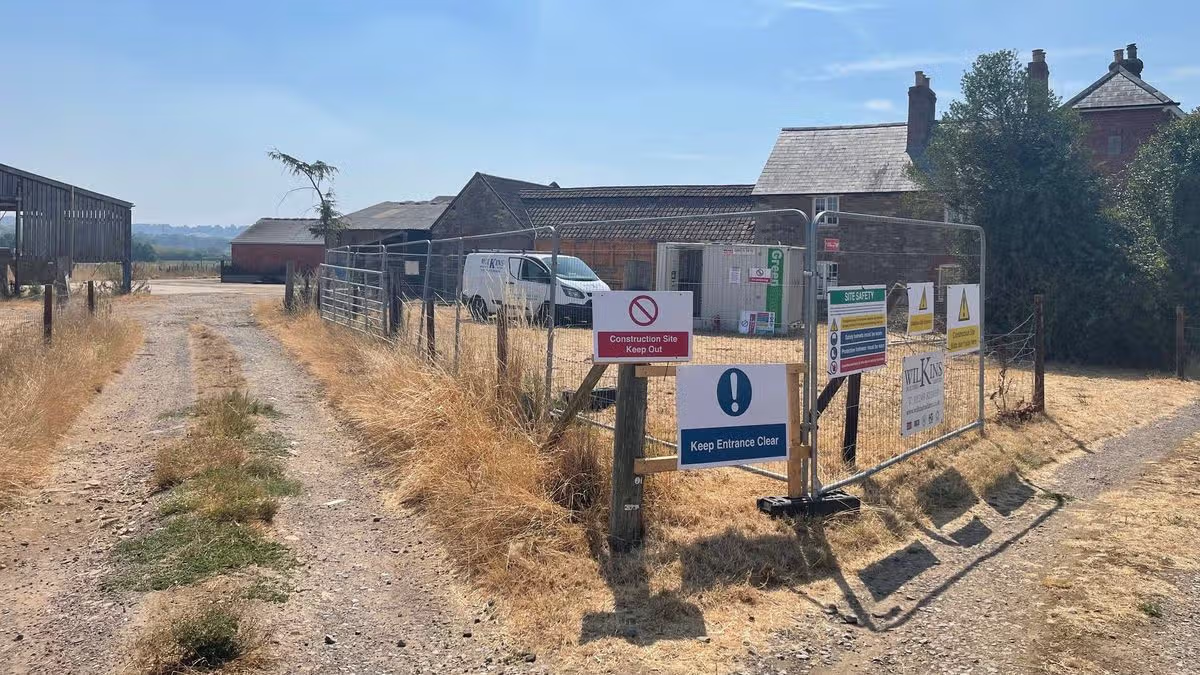
Residents fear ‘development by stealth’ after council gives go-ahead to ‘industrial park’

MANTRA Token Drops 18% to New Low as Blockchain Halts





-

 Fashion6 days ago
Weekend Open Thread: Ann Taylor
-
 Tech7 days ago
11 Ways to Rank Your Videos
-

 Sports6 days ago
Birmingham 2026: Day 6 Timetable for Irish Athletes
-
 NewsBeat6 days ago
Myanmar says over 300,000 Rohingya refugees verified for repatriation as exodus enters ninth year
-

 Politics6 days ago
SEQ Code: The Three Letter Boarding Pass Code That Could Give You The Worst Seat
-

 Tech3 days ago
Qwen3.8-27B runs frontier-class coding agents and reasoning locally, no cloud API required
-

 Business3 days ago
SMA Solar Technology AG (SMTGY) Q2 2026 Earnings Call Transcript
-

 Crypto World6 days ago
Pi Network Protocol 27 endgame: last upgrade before what?
-

 Crypto World3 days ago
OCC Greenlights Trump Family Crypto Firm for Trust Charter
-
 Tech6 days ago
Every fusion startup that has raised over $100M
-

 Business7 days ago
15 Ways to Make Money From Your Phone (2026 Guide)
-
 Entertainment6 days ago
Marvel Studios Reveals New X-Men Cast Including Adam Driver and Sadie Sink
-
 Entertainment7 days ago
10 Netflix Shows That Quietly Became Modern Classics
-
 Crypto World7 days ago
Robinhood Chain Approaches $1B TVL as Uniswap Integration Boosts Liquidity
-

 Fashion6 days ago
Weekly News Update, 8.14.26 – Corporette.com
-

 News Videos1 day ago
Don’t Leave Your Financial Future To Chance | August 19, 2026
-

 Fashion7 days ago
Silver bangles for women – Newbridge Silverware
-
 Business6 days ago
Monarch Mutual Fund set to enter MF space with maiden overnight fund; files draft with Sebi
-

 Business6 days ago
Facebook Down Now? Users Report Login And Loading Problems As Outage Trackers Monitor Ongoing Issues
-

 Fashion7 days ago
Cart Confidential Vol. 44 – Julia Berolzheimer
You must be logged in to post a comment Login