
Business
Accenture: Bears Are On Wrong Side Of High-ARR AI SaaS-Ification Trend



Business
Dropbox Down Now? Users Report Access Issues as Monitors Show Cloud Storage Service Mostly Operational

Some Dropbox users reported difficulty accessing the popular cloud storage and file-sharing service in recent days, though independent monitoring tools have largely characterized the platform as operational, illustrating the kind of mixed signals that often accompany scattered or localized service disruptions.
Dropbox, which offers online backup, file sharing and file synchronization across desktop, mobile and web platforms, relies on a dedicated application to keep files synced between users’ devices and its cloud-based storage servers. Any disruption to that syncing infrastructure can leave users temporarily unable to access, upload or share files stored on the platform.
Independent status-tracking services have offered a range of readings on Dropbox’s recent performance. According to UptimeRobot, the most recent automated check of Dropbox’s core infrastructure, conducted Aug. 18 from North American servers, did not detect any unusual response times or error codes. IncidentHub similarly listed Dropbox as currently operational as of a check performed Aug. 20, though the service noted Dropbox had recorded one confirmed outage across one component within the preceding 30 days. According to that same tracker, all of Dropbox’s major components, including its API, Dash platform, desktop application, DocSend service, MCP server and mobile application, showed normal operational status as of the most recent check.
StatusGator’s tracking similarly found no evidence of a widespread, ongoing disruption. The service reported that its most recent check, conducted July 27 at 9:14 a.m. UTC, found Dropbox operational, with no user-submitted outage reports logged in the preceding 24-hour period at that time. According to StatusGator, the most recent officially acknowledged Dropbox outage occurred on July 23, 2026, a date that multiple independent monitoring services have cited as the platform’s last confirmed service disruption prior to this week.
Despite that general pattern of operational status across most monitoring tools, individual user complaints have continued to surface on various outage-tracking and community platforms. According to VeePN’s Dropbox status tracker, isolated reports of access problems can occur even when broader monitoring infrastructure shows the service functioning normally, particularly when an issue is limited to a specific feature, such as login functionality or file syncing, rather than affecting the platform as a whole. The service noted that a genuine, widespread outage is typically identifiable by a sudden, simultaneous spike in user reports combined with failures detected across multiple independent monitoring regions, whereas a more limited or localized problem tends to show a much smaller and more contained pattern of complaints.
Dropbox’s own community forums have continued to reflect periodic user frustration with connectivity and syncing issues. According to StatusGator, one longtime Dropbox user described ongoing difficulty accessing the service over an extended period, writing in a forum post that they had been unable to connect to the platform for several months despite repeated attempts, a complaint that predates this week’s reports but illustrates the kind of individual, sustained access problems that can sometimes persist even when broader service monitoring shows no confirmed platform-wide outage.
Dropbox has a documented history of both brief, isolated outages and larger, more disruptive incidents affecting users broadly. In May 2025, the service experienced a global outage lasting approximately two hours, according to Tom’s Guide, which began around 10:45 a.m. Pacific time and prompted a sudden spike of roughly 1,500 user reports on the outage-tracking service Downdetector. During that incident, users reported being unable to access their files or upload new content across Dropbox’s browser, desktop and mobile applications simultaneously. Dropbox acknowledged the issue relatively quickly at the time and began investigating, ultimately implementing a fix by around 12:45 p.m. Pacific, though it took an additional 30 to 40 minutes for the company’s official status page to fully return to a normal, all-green operational status. The precise cause of that particular global outage was not disclosed publicly at the time.
Dropbox’s status page has, on rare occasions, displayed unusual or informal incident descriptions during past outages. Historical incident records associated with the company’s status page have included candid, sometimes lighthearted internal updates during active outages, such as one earlier incident in which engineers described database issues using informal language while working to restore service, a pattern reflecting Dropbox’s historically more casual internal communication style during active technical incidents, even as the underlying disruptions themselves were treated with appropriate urgency by the company’s engineering teams.
For users currently experiencing difficulty accessing Dropbox, monitoring services have generally recommended a standard set of troubleshooting steps before assuming a broader, platform-wide outage is underway. According to UptimeRobot’s guidance, users should first attempt to access Dropbox from an alternative browser, device or network, such as a mobile hotspot, and consider disabling any active VPN connection, clearing their device’s DNS cache, or restarting their router. If the service loads successfully through any of those alternative methods, the underlying issue is more likely to be local to the user’s specific device or network rather than reflecting a confirmed, company-wide Dropbox outage.
Given the discrepancy between scattered individual user reports and the largely operational readings recorded by independent monitoring services this week, it remains possible that any access issues experienced by Dropbox users reflect a more limited or intermittent disruption rather than a broad, platform-wide outage comparable to the company’s more significant service disruptions in the past. As of this report, Dropbox had not issued a public statement acknowledging any specific, ongoing service disruption beyond the previously confirmed July 23 incident, and the company’s official status page, along with the majority of independent third-party monitoring tools, continued to reflect normal operational status across the platform’s core components as of the most recent available checks.
Business
COVID-19 Cases Growing in All 50 States as ‘Nimbus’ Variant Drives Late-Summer Surge Nationwide
COVID-19 infections are growing or likely growing in all 50 states, according to the latest estimates from the Centers for Disease Control and Prevention, marking a dramatic nationwide expansion of the virus’s seasonal summer wave just as students return to school and Americans wrap up summer travel.
As of Aug. 12, 2026, the CDC’s Current Epidemic Trends model estimated that COVID-19 infections were growing or likely growing in 50 states and declining or likely declining in zero states, with the agency reporting no estimate available for Iowa due to insufficient data. According to the CDC’s own modeling summary, that leaves the entire country, apart from Iowa’s data gap, showing an upward trajectory in transmission for the first time this summer.
The shift represents a striking reversal from conditions just weeks earlier. According to Newsweek, on July 22 the CDC had estimated infections were growing or likely growing in only 37 states, with 11 states showing little change in transmission at the time. By mid-August, those stable pockets had disappeared entirely from the map, with 47 states now classified as “Growing” and New Hampshire, Rhode Island and the District of Columbia categorized as “Likely Growing.” In many states, the CDC estimates there is greater than a 99% probability that infections are actively increasing.
The reversal is even more pronounced compared with earlier this summer. According to a report from Political.org, the CDC had estimated infections were declining or likely declining in 41 states, with growth seen in just one state, as recently as June 2. The speed of that turnaround reflects a now-familiar seasonal pattern public health officials have observed for several consecutive years.
Andrew Pekosz, a professor of molecular microbiology and immunology at Johns Hopkins Bloomberg School of Public Health, described the current surge as consistent with an established late-summer pattern. “This looks like a pattern that has been documented in the past few years,” Pekosz told Newsweek, referring to the recurring late-summer and early-fall increase in COVID-19 transmission the country has experienced in recent years.
Dr. John Brooks, an infectious disease physician at Emory University in Atlanta who previously worked at the CDC, offered a similar assessment while acknowledging the psychological gap between public perception and current data. “I think most of us kind of feel like it’s fading away and are certainly very grateful for that,” Brooks said. “But nationally we’re seeing it ticking up pretty much everywhere.”
Wastewater surveillance data has provided further confirmation of the trend’s scale. Amanda Bidwell, scientific program manager for WastewaterSCAN, told Today.com that viral concentrations detected in wastewater samples have risen sharply this month. “So far in August, SARS-CoV-2 concentrations are up 106% compared to July 2026,” Bidwell said, adding that the West and South currently show the highest concentrations nationally.
Despite the widespread geographic growth, health officials have emphasized that overall COVID-19 activity remains comparatively low and that the surge has not translated into a significant strain on hospitals. According to the CDC, as of Aug. 14, the amount of acute respiratory illness prompting people to seek medical care remains very low overall, even as COVID-19 activity specifically is increasing in the West and South. Emergency department visits tied to COVID-19 have similarly remained low, according to multiple outlets citing CDC data.
Dr. Patrick Koo, division chief of pulmonology and critical care at Erlanger Hospital, said fewer patients are seeking emergency care for COVID-19 compared with earlier phases of the pandemic, attributing the shift both to the virus’s evolution and to more people managing mild illness at home. “The virus has, of course, gone through multiple passes and mutations, and therefore the symptoms of COVID-19 are now much much milder compared to what we saw during the pandemic, so I think that if we take proper precautions and you know try to practice good hand hygiene to stay away from others that are sick for until they get better, of course, and that would minimize a lot of the transmission,” Koo said. He added that current seasonal patterns should not cause alarm. “We do see periodic rises in certain months usually in the summer and then also in the winter as well so and so I think that there’s no there’s nothing to be alarmed about COVID-19 right now,” Koo said.
The current wave has been driven primarily by a variant known as NB.1.8.1, commonly referred to as “Nimbus,” a descendant of the JN.1 Omicron lineage that had already accounted for an estimated 43% of circulating cases by late June, according to Political.org’s reporting. Separately, a more heavily mutated strain known as BA.3.2, nicknamed “Cicada,” has been spreading globally since emerging earlier this year, though it has not gained significant traction within the United States. According to Today.com, roughly 15% of current U.S. cases are attributed to the Cicada variant, even as no major new mutation has driven the current wave beyond the continued spread of Nimbus.
Public health researchers have noted that COVID-19’s biannual surge pattern, occurring in both summer and winter, remains distinct from more familiar seasonal illnesses such as influenza, which typically peaks only during colder months. The precise biological reason behind COVID-19’s dual seasonality remains unclear, according to reporting from Political.org, though experts have pointed to a combination of factors, including waning immunity following winter infections, increased indoor gatherings in air-conditioned spaces during hot summer months, and continued summer travel patterns, as likely contributors to the recurring late-July and August peaks the country has now experienced for three consecutive years.
Symptoms associated with the current wave remain broadly consistent with those seen in earlier omicron-lineage variants, typically appearing within two to 14 days of exposure. According to the CDC, common symptoms continue to include fever, cough, fatigue, congestion, sore throat, and loss of taste or smell, among other cold- and flu-like signs.
As students return to classrooms and colder weather approaches in the coming months, health officials are likely to continue monitoring whether the current nationwide growth trend persists, plateaus or begins to recede, following the pattern of prior late-summer surges. This story includes information on a virus that can pose greater risk to certain populations. If you are concerned about COVID-19 symptoms or exposure, particularly if you are immunocompromised, elderly or otherwise at higher risk, consult a health care provider for personalized guidance.

PEO: An 8% Yielding Income Powerhouse To Buy Now

WA’s foremost Jewish faith leader has criticised parliament house for hosting a pro-Palestine event.

BMO starts chip stocks coverage: Here are its preferred picks
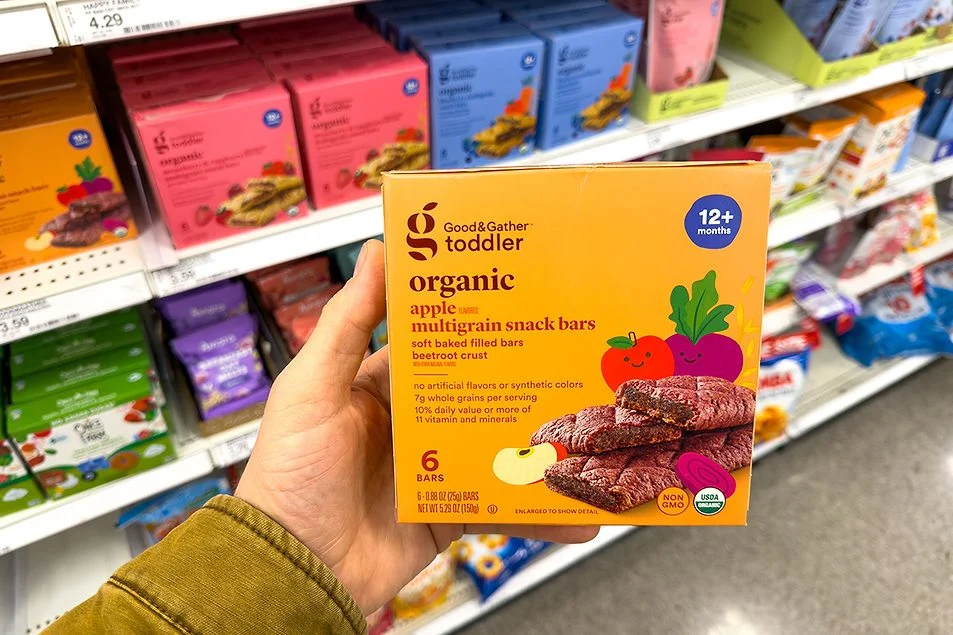

MINNEAPOLIS – Target Corp. is benefiting from a shift in its food and beverage strategy, the company said. Category sales ticked up to $6 billion during the second quarter ended Aug. 1, up from $5.6 billion during the same period as the previous year.
“Earlier this year, I talked about our ambition to make food a destination, not simply a category a guest shops while they’re in our stores, but a reason they choose to come to Target,” said Cara Sylvester, chief merchandising officer, during an Aug. 19 conference call with securities analysts. “We recently completed our largest food transition in more than a decade, changing the presentation of nearly half of our center store grocery assortment, adding new and unique offerings, and reimagining end caps and in-aisle presentation to make discovery easier.”
As part of the reset, the retailer added space for products perceived as trendy, like snacks, global foods and functional coffee.
“The response has been really encouraging,” Sylvester said. “Snacks, beverages, and candy were already among our largest categories by sales, and these transitions are building on that strength.”
She said snack sales are 15% ahead of last year, with “outstanding momentum” from protein bars, meat sticks and better-for-you snacks.
“Just as importantly, we’re pairing that innovation with incredible value,” she said. “That’s merchandising authority in action, understanding where the guest is going and moving with speed to get there, bringing together trend, quality, differentiation, and affordability in a way that’s uniquely Target.”
The retailer’s net income for the quarter was $1.9 billion, equal to $4.13 per share on the common stock, and an improvement over the second quarter of 2025 when the company earned $935 million, equal to $2.05 per share. A $994 million tariff refund drove the surge in earnings. Adjusted earnings per share with the refund stripped out were $2.46 per share.
Quarterly sales rose 5% to $26.5 billion from $25.2 billion the year before.

Werewolf Therapeutics stock soars 120% on Ambros merger deal

President Donald Trump urged governors and mayors to welcome AI plants and data centers into their communities, saying he would “absolutely want” such projects because of the jobs and tax revenue they bring.
President Donald Trump said earlier this week that any governor or local government official should want to welcome the construction of AI data centers.
“The construction jobs are enormous. We’re building the biggest plants anywhere in the world. And I can say, if I were the mayor of a town or the governor of a state, and I had a chance to get a big plant in an AI plant or a data center, I would absolutely want it because the jobs are enormous, and the money paid, the taxes paid are just enormous,” Trump said at the White House on Wednesday.
“And if you don’t take it, you’re going to be left behind because there are plenty of places that want it,” he added during a meeting with technology and cryptocurrency industry leaders in the Roosevelt Room. “But if I were a governor or mayor, I would want that plant in my community. And many of them are designed in a very beautiful way. It’s really very positive.”
CLICK HERE TO DOWNLOAD THE FOX NEWS APP

President Donald Trump speaks during a meeting with crypto and prediction market executives in the Roosevelt Room of the White House in Washington, D.C., on Aug. 19, 2026. (Al Drago/The Washington Post/Bloomberg via Getty Images / Getty Images)

China was once one of the most attractive and fastest-growing markets for many American brands.
With its population of more than 1.4 billion people and massive opportunities for businesses, companies were racing to take advantage of the boon that China could offer.
But in recent years, some consumer brands, including Nike, Starbucks and General Motors, have begun to see the tide turn. With rising geopolitical tensions, a surge in domestic competition and a disconnect from the Chinese consumer, American companies have lost ground in the region that once offered fuel for growth.
“China is such a big market. The numbers are so big so quickly when you talk about China that sort of everybody has wanted to try, and that’s why all brands went there,” Aaron Cheris, head of global retail practice at Bain & Company, told CNBC.
Yet those companies haven’t adjusted to the local market and its changing structures and needs, he said.
“If anything, the question isn’t what’s going wrong in China — it’s why isn’t that happening in the rest of the world,” Cheris added.
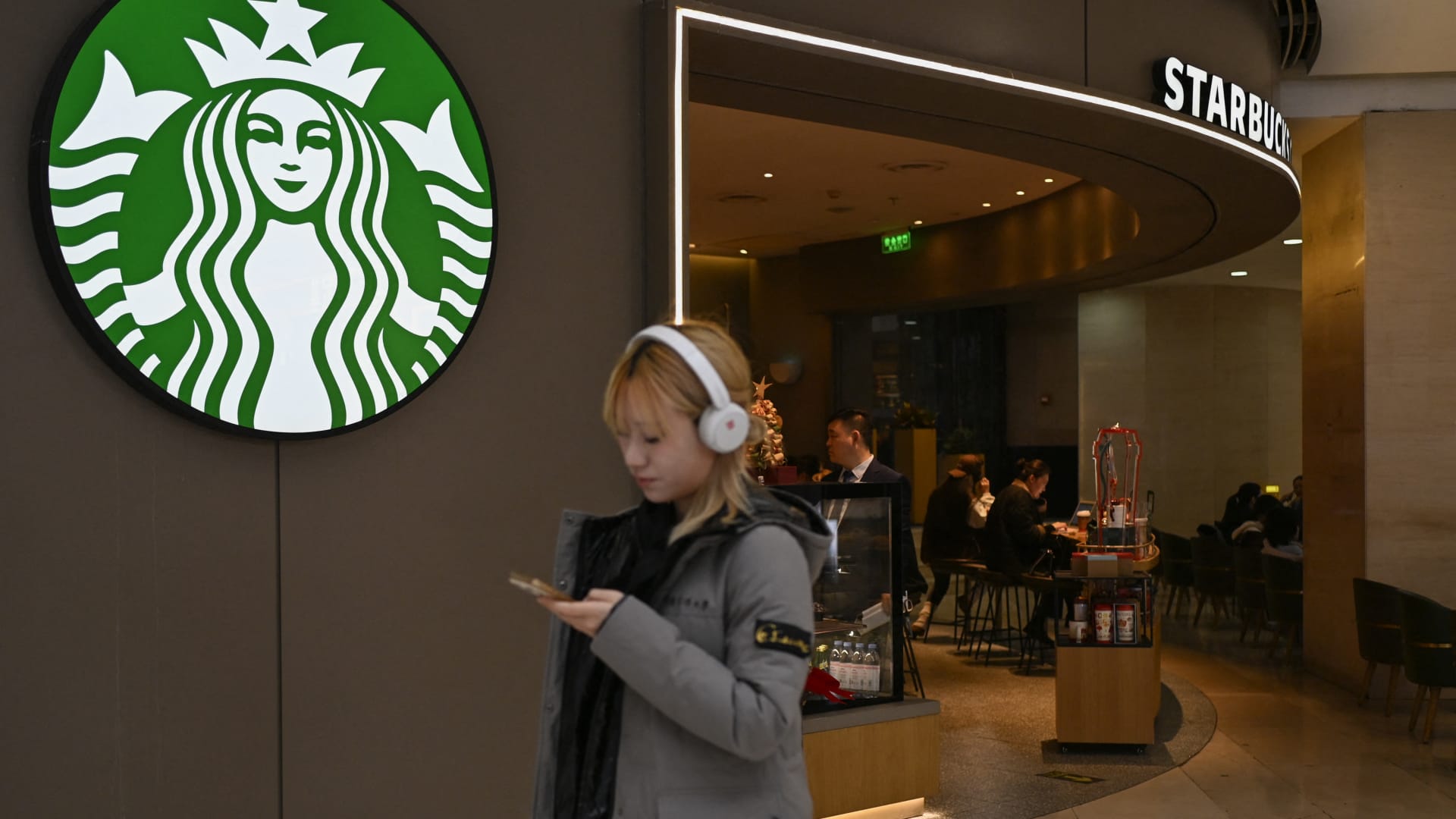
A person walks past a Starbucks coffee shop at a mall in Beijing, Nov. 5, 2025.
Wang Zhao | Afp | Getty Images
Cheris said price premiums for American products are often not worth it for Chinese consumers, and Chinese brands often have a fast innovation cycle and better distribution within the region.
“We’re just not nearly as developed. Our brands don’t necessarily think and develop quite in the same way,” Cheris said.
The U.S. and China have also been embroiled in geopolitical tensions over the past few years, especially with President Donald Trump‘s volatile tariff agenda. And while the political backdrop may be disincentivizing Chinese consumers from buying American, it coincides with a rise in pride for domestic brands as consumers look to buy more local.
Some of those domestic brands have also disrupted the broader industry, reset innovation cycles and launched price wars.
Still, some companies — such as Lululemon, Ralph Lauren and Kentucky Fried Chicken — are finding success in China with their products, a discrepancy Cheris said is due to “the basics” of their business strategies.
“Am I coming in with a good value? Did I have a compelling product that felt locally relevant? Am I advertising and making it available in the channels and stores that are winning in that market?” he said. “It really is a blocking and tackling and running your brand right kind of story.”
For more U.S. companies to turn around their China businesses, Cheris said, they’ll have to make sure the product is worth the price premium and quality.
“The key will be which brands take it seriously enough and really build enough local capability to do that, rather than just saying, ‘I’m going to take what I built globally and try to sell it to a Chinese consumer,’” he said.
Here’s how some consumer companies have seen their influence in China dwindle over the past few years:
Retail
Some retailers’ popularity and relevance have tanked in China over recent years as their bets to go big internationally faltered.
Nike is one of the biggest victims. The sneaker company has seen its China business shrink 30% since 2021, with its annual revenue hitting its lowest level in eight years in the spring. While China was once Nike’s fastest-growing region, shoppers are increasingly turning to domestic brands over international ones, while Nike is attempting to overhaul its distribution model in the country.
Yaling Jiang, founder of consumer research firm ApertureChina, previously told CNBC that Nike has “just become irrelevant” in China, while Adidas has gained traction.
That slowdown is against a backdrop of China’s sports renaissance, with the country’s sportswear market more than doubling over the past decade, according to GlobalData.
And Nike isn’t sure it’ll be able to recover its losses. On its most recent earnings call in June, outgoing CFO Matt Friend said he was unable to determine when the company’s China business would return to growth. Still, Cathy Sparks, the vice president and general manager of Greater China for Nike, previously told CNBC the company is actively working to reconnect with Chinese consumers.
A Nike store in Guangzhou, Guangdong Province, China, July 22, 2026.
Qin Zihang | Visual China Group | Getty Images
Other retailers have seen similar struggles.
Beauty retailer Estée Lauder has faced significant headwinds in China, with CEO Stéphane de La Faverie saying on a conference call in early June that he doesn’t believe China will soon resume to double-digit growth.
“We deal by making sure that our brands are the most locally relevant in the market where we operate,” he said, adding that he’s “confident” the company’s performance will be revived.
In 2022, Gap sold its China business to e-commerce firm Baozun in a $40 million all-cash deal after experiencing a slowdown in its business and an inability to connect with Chinese consumers. Under the deal, Baozun refined the company’s local strategy and Gap broke even for the first time earlier this year, with plans to open 50 new stores in mainland China in 2026.
Abercrombie & Fitch is also reportedly looking for local partners in China to hand off the reins of its business there and strengthen its performance.
Some brands, such as Lululemon and Ralph Lauren,have managed to maintain relevancy and sales. Lululemon has seen its China business rise and now expects China to grow about 20% for the year, while Ralph Lauren saw 40% growth in China in its most recent quarter.
Food and consumer packaged goods
While some food and beverage companies, such as Kentucky Fried Chicken, have continued to see success in the region, others have seen stark declines.
Starbucks entered mainland China in 1999, and it became the company’s second-largest market by 2015. But the Covid-19 pandemic started a downward turn for the company, which saw Chinese consumers seeking out lower-priced local brands instead.
“The market is going through a transition as we see an increase in mass market competitors, which we believe will shake out over time, and the market will emerge looking fundamentally different than what we see today,” then-CEO Laxman Narasimhan said on a Starbucks earnings conference call in early 2024.
Starbucks has seen intense competition from Chinese brand Luckin Coffee, which now has more than three times the number of stores in China. It also sells its drinks at a steep discount.
At the same time, Starbucks’ U.S. business was struggling, leading CEO Brian Niccol to create a joint venture with Boyu Capital to operate the company’s business in China. Boyu holds a roughly 60% stake in the joint venture and aims to use its local knowledge to lift Starbucks’ sales in China once again.
China is also the second-largest market for consumer packaged goods giant Procter & Gamble. But in recent years, P&G’s product sales have struggled in China.
“Coming out of Covid, [Greater China] was a depressed market. It was a tough competitive environment, and the results were not great,” P&G CEO Shailesh Jejurikar said on the company’s earnings conference call in late July.
Sales of its pricey SK-II skincare brand have seesawed. Chinese consumers are traveling less and scaling back spending even when they do go on vacation, hurting sales of SK-II, which relies heavily on luxury travel retail and duty-free stores. In late 2023, SK-II, which originated in Japan but is owned by P&G, also saw sales plummet, as anti-Japanese sentiment weighed on demand from Chinese consumers.
Still, P&G maintains that many of its brands are strong in China, saying some segments are hurt more by the consumer environment than a loss in brand equity. Company executives said they can grow sales in China, such as with diapers made with silk fibers that are winning over consumers.
“We are now growing share in China for the first time in 15 quarters, driven by fundamental changes we made similar to what we’re doing in the company,” Jejurikar told analysts in late July.
Autos
Employees work on a car assembly line at the SAIC General Motors Co., May 18, 2022.
Ren Yong | SOPA Images | Lightrocket | Getty Images
The U.S. automotive industry has been crippled in China.
What was once the largest potential growth market for automakers a decade ago has now turned into a massive restructuring, largely driven by the rise of domestic Chinese car companies and overcapacity creating a price war.
Detroit’s “Big Three” automakers — GM, Ford Motor and Chrysler parent Stellantis, which is no longer based in the U.S. — have collectively fallen from a global market share of 21.4% in 2019 to an estimated 15.7% in 2025, according to S&P Global Mobility. As a result, they’ve retreated from the region or restructured their Chinese operations.
General Motors, which is the longest-standing U.S. automaker in the country, is now just a shell of its former self in China. Its earnings in the region fell from around $2 billion annually in 2018 to two consecutive years of losses in 2024 and 2025.
GM’s fall from grace in the country comes as the automaker is seeing increased domestic competition and changing consumer sentiment. Experts have said local automakers are being fueled by government funding, as well as a culture of innovation and speed that China has instilled in its workers.
Still, a slowing Chinese market and underutilization have forced domestic companies — such as BYD, Geely and more — to begin exporting to major auto markets globally, including Europe, Canada and South America.
More Chinese consumers are also choosing electric vehicles over traditional gas-powered cars for their price and quality. New energy vehicles, which include battery and hybrid-powered cars, accounted for 65.1% of new passenger cars sold in July — up from 54% a year ago, according to China Passenger Car Association data released Tuesday.
GM isn’t the only American automaker considering its future in the region. EV leader Tesla is reportedly weighing the sale or spinoff of its Chinese business, according to a July report by The Wall Street Journal.
Ford, which in recent years has worked to position itself as the most American automaker, has been moving more of its operations and sales efforts to the U.S., including shifting the production of its Lincoln models from China to the U.S. beginning in 2030.
Between 2018 and 2022, Ford said, it saw a 32.4% decline in China sales. The company no longer reports its financial results by region.
– CNBC’s Gabrielle Fonrouge, Amelia Lucas and Mike Wayland contributed to this report.

Western Australian-domiciled companies accounted for more than a fifth of ASX debutants after 22 local firms listed during the 2026 financial year.

The Witcher Officially Returns With New Release in 4 Months

V $ X V PRiNCE – MONEY (KNCNTRT 2020 ALBUM)
Bedale High School celebrates record GCSE results





-

 Fashion7 days ago
Weekend Open Thread: Ann Taylor
-

 Sports6 days ago
Birmingham 2026: Day 6 Timetable for Irish Athletes
-
 NewsBeat6 days ago
Myanmar says over 300,000 Rohingya refugees verified for repatriation as exodus enters ninth year
-

 Business3 days ago
SMA Solar Technology AG (SMTGY) Q2 2026 Earnings Call Transcript
-

 Politics6 days ago
SEQ Code: The Three Letter Boarding Pass Code That Could Give You The Worst Seat
-

 Crypto World6 days ago
Pi Network Protocol 27 endgame: last upgrade before what?
-

 Tech3 days ago
Qwen3.8-27B runs frontier-class coding agents and reasoning locally, no cloud API required
-

 Crypto World4 days ago
OCC Greenlights Trump Family Crypto Firm for Trust Charter
-
 Tech6 days ago
Every fusion startup that has raised over $100M
-
 Entertainment6 days ago
Marvel Studios Reveals New X-Men Cast Including Adam Driver and Sadie Sink
-
 Business6 days ago
Monarch Mutual Fund set to enter MF space with maiden overnight fund; files draft with Sebi
-

 Fashion7 days ago
Weekly News Update, 8.14.26 – Corporette.com
-

 Fashion7 days ago
Silver bangles for women – Newbridge Silverware
-

 Business6 days ago
Facebook Down Now? Users Report Login And Loading Problems As Outage Trackers Monitor Ongoing Issues
-

 Business6 days ago
Cristiano Ronaldo’s Secret Wedding Deepens As Presenter Claims Family Learned ’30 Seconds’ Before
-

 News Videos1 day ago
Don’t Leave Your Financial Future To Chance | August 19, 2026
-

 Fashion7 days ago
Cart Confidential Vol. 44 – Julia Berolzheimer
-

 Crypto World4 days ago
NAVI Prime launches institutional lending framework on Sui
-
 Crypto World5 days ago
Data of 54K Wallet Users Leaked, Clarity Odds Just 10%: Hodler’s Digest, Aug. 16
-
 Fashion7 days ago
knitwear for women sale – up to 50% off
You must be logged in to post a comment Login