
Business
10 Biggest Earthquakes in Japan’s History, From the 2011 Tohoku Disaster to Ancient Megaquakes Ranked by Size


Japan sits atop one of the most seismically active regions on Earth, where four major tectonic plates converge along the Pacific Ring of Fire. The country experiences roughly 1,500 earthquakes annually, according to Live Science, and accounts for approximately 20% of the world’s earthquakes with a magnitude of 6 or higher, according to StudyIQ. From that long and often destructive history, here are 10 of the most powerful earthquakes ever recorded in or near Japan, ranked by magnitude.
1. Great Tohoku Earthquake (2011) — Magnitude 9.0 to 9.1
The strongest earthquake ever recorded in Japan struck off the northeastern coast of Honshu on March 11, 2011, at 2:46 p.m. local time, according to VolcanoDiscovery. The quake triggered a devastating tsunami that swept across the Sanriku coastline and caused a nuclear meltdown at the Fukushima Daiichi power plant, marking one of the most catastrophic natural disaster events in modern Japanese history. VolcanoDiscovery confirmed this remains the largest earthquake to occur in or near Japan in more than 100 years, dating back to 1900.
2. Hōei Earthquake (1707) — Magnitude 8.6 to 8.7
Striking south-central Japan on Oct. 28, 1707, at around 1:45 p.m. local time, the Hōei earthquake ruptured along the Nankai megathrust fault and affected the Chūbu, Kansai, Shikoku and Kyūshū regions, according to Wikipedia’s earthquake records. The quake produced a tsunami reaching 25.7 meters, or roughly 84 feet, and killed between 4,900 and 21,000 people. Before the 2011 Tohoku disaster, the Hōei earthquake held the record as the most powerful earthquake in recorded Japanese history.
3. Meiji-Sanriku Earthquake (1896) — Magnitude 8.5
This devastating earthquake struck the Sanriku region and killed more than 27,000 people, according to Live Science, making it one of the deadliest quakes in Japanese history despite occurring at a magnitude below some of the country’s other major seismic events. The disaster’s death toll was driven largely by the massive tsunami the earthquake generated along Japan’s northeastern coastline.
4. Ansei-Tokai and Ansei-Nankai Earthquakes (1854) — Magnitude 8.4 (Twin Quakes)
Japan experienced a remarkable pair of nearly simultaneous major earthquakes in late 1854, striking one day apart. According to Live Science, the Ansei-Nankai earthquake killed 10,000 people on the island of Kyushu, making it the deadliest earthquake of its magnitude class recorded in Japan, while the Ansei-Tokai earthquake, which struck the previous day, killed roughly 2,000 people. At the time, according to a 2006 Journal of Social History article cited by Live Science, the quakes were popularly blamed on a giant mythical catfish named Namazu, said to be thrashing beneath the earth’s surface.
5. Tokachi-oki Earthquake (1968) — Magnitude 8.2
Striking off the east coast of Honshu on May 16, 1968, this powerful quake ranked as the strongest earthquake recorded worldwide that year, according to Wikipedia’s compiled earthquake data for 1968, which logged a total of 12,081 fatalities across all recorded earthquakes globally that year, with Iran’s South Khorasan earthquake serving as the year’s single deadliest event.
6. Tonankai Earthquake (1944) — Magnitude 8.1
This earthquake struck off the south coast of Honshu on Dec. 7, 1944, and stood as the largest earthquake recorded anywhere in the world that year, according to Wikipedia’s records of 1944 seismic activity. The quake occurred during the final year of World War II, a period during which wartime conditions in Japan limited the country’s ability to fully document and respond to the disaster’s impact.
7. Great Kanto Earthquake (1923) — Magnitude 7.9
Striking the greater Tokyo region, the Great Kanto Earthquake remains one of the deadliest natural disasters in Japanese history, claiming more than 140,000 lives, according to StudyIQ. The catastrophic death toll stemmed largely from the widespread fires that swept through Tokyo and Yokohama in the earthquake’s aftermath, as the densely built wooden structures common at the time proved highly susceptible to fire following the initial shaking.
8. Sanriku Earthquake (1953) — Magnitude 7.9
Striking off the east coast of Honshu on Nov. 25, 1953, this quake was recorded as the strongest earthquake worldwide that year, according to Wikipedia’s earthquake records for 1953, a year during which a total of 11 earthquakes of magnitude 7.0 or greater were recorded globally, with Japan producing the year’s single strongest event.
9. Aomori Earthquake (2025) — Magnitude 7.6
The most recent addition to Japan’s list of major earthquakes struck Aomori Prefecture on Dec. 8, 2025, at 11:15 p.m. local time, according to VolcanoDiscovery, making it the largest earthquake to strike in or near Japan over the past decade. The quake underscored the continued frequency of significant seismic activity across the country even in recent years.
10. Ansei Edo Earthquake (1855) — Magnitude 6.9 to 7.0
Striking Edo, present-day Tokyo, roughly one year after the twin 1854 Ansei earthquakes, this quake killed an estimated 6,600 people, according to Live Science, and is widely regarded as the most destructive of the broader Ansei earthquake sequence that struck Japan during that era, given the extensive fires and structural damage it caused throughout the densely populated capital.
Japan’s long, well-documented history of major earthquakes has driven the country to develop some of the most advanced earthquake-resistant building codes, early-warning systems and public education programs in the world. Even so, the sheer scale of seismic energy periodically released beneath the Japanese archipelago, illustrated most dramatically by the 2011 Tohoku disaster, continues to underscore the ongoing risk the country faces given its position along the convergence of four major tectonic plates. According to World Data, more than 8,100 people in Japan have died as a direct result of earthquakes since 1950 alone, with an additional 120 recorded earthquakes triggering subsequent tsunamis responsible for further loss of life and damage.
As Japan continues to experience frequent seismic activity, including smaller, more recent quakes that regularly test the country’s early-warning infrastructure, the historical record compiled above serves as a reminder of both the destructive potential embedded in the region’s tectonic geography and the resilience Japan has continued to build in response to it over centuries of recorded seismic history.

Business
(VIDEO) Hawk Fire Near Reno Tops 10,500 Acres as Nevada Declares State of Emergency in Washoe County Saturday
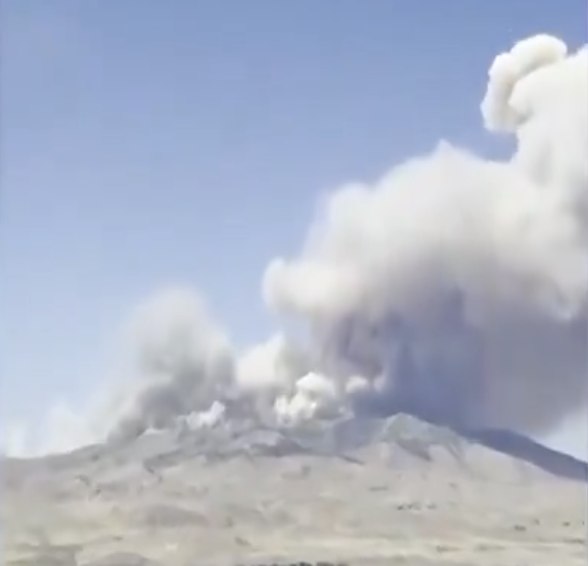
RENO, Nev. — A fast-moving wildfire burning in the mountains northwest of Reno grew to more than 10,500 acres by Saturday evening, forcing thousands of residents from their homes and prompting Nevada Gov. Joe Lombardo to declare a state of emergency in Washoe County as dry, windy conditions continued to fuel the blaze.
The fire, named the Hawk Fire, was first spotted just before 11:30 a.m. Saturday and expanded rapidly throughout the day, reaching 2,500 acres by early afternoon before continuing to grow to 10,523 acres by Saturday evening, according to figures from the mapping platform Perimeter Map. According to CNN, the fast-growing brush fire forced residents of northwestern Reno from their homes Saturday night, prompting Lombardo’s emergency declaration in Washoe County.
A fast-moving wildfire north of Reno has burned more than 10,000 acres and forced thousands of residents to evacuate, prompting Nevada to declare a state of emergency as dry, windy conditions keep the blaze at 0% containment pic.twitter.com/BH6PKdyyc3
— Breaking911 (@Breaking911) August 23, 2026
The Hawk Fire is burning in a mountainous area with roughly 1,000 homes located along U.S. Highway 395, according to 8 News Now. The area lies north of Interstate 80 and south of U.S. 395, a region with extensive roads but relatively limited development. Reno officials advised residents in the affected area to evacuate to the Evelyn Mount Northeast Community Center, the same evacuation center previously used for two other wildfires, the Bug Fire and the Stallion Fire, that had burned in the same general area earlier this month and have since been contained.
Reno police asked residents to check the Perimeter Map platform for up-to-date evacuation information, according to La Voce di New York. Portions of Highway 395 were shut down as a result of the fire’s rapid growth, further complicating evacuation efforts and travel through the affected region.
Saturday’s fire adds to what has already been an intense and sustained wildfire season for the area north of Reno. Earlier this month, the Bug Fire, Stallion Fire and Fred Mountain Fire burned simultaneously in the same general region, prompting more than 13,000 residents to evacuate at the height of that combined threat, according to the Nevada Army National Guard. Eleven structures were lost across those earlier fires, though officials noted that initial fire behavior predictions had forecast far worse outcomes than what ultimately occurred following the fires’ ignition on Aug. 9.
Col. Kyle Cerfoglio, director of the Nevada Joint Staff, whose own home fell within Washoe County’s “get ready to evacuate” zone during that earlier fire complex, credited the rapid emergency response for preventing more severe damage. “There’s no doubt this fire would have been much worse had it not been for the quick and rapid response from first responders around the region,” Cerfoglio said. “This fire came dangerously close to many homes.” The Bug Fire ultimately reached 93,733 acres before crews achieved 94% containment, while the Stallion Fire reached 95% containment after also burning tens of thousands of acres, according to the Nevada Army National Guard’s summary of the earlier response.
That earlier fire complex expanded dramatically in the days following Nevada’s initial state of emergency declaration. According to 8 News Now, the combined perimeter of the Bug and Fred Mountain fires grew by more than 500% in the days after Lombardo’s initial emergency declaration, driven by wind gusts reaching up to 30 mph, eventually stretching evacuation zones from the California border to areas roughly 30 miles east near the southern tip of Pyramid Lake. At the height of that earlier crisis, the combined fire perimeter approached 100,000 acres, with water-scooping aircraft working to defend homes and other structures directly in the fires’ path.
Deputy Chief Shannon Lewis of the Truckee Meadows Fire Protection District emphasized the importance of prompt evacuation compliance during the earlier fire response, guidance that remains directly relevant to residents now facing the Hawk Fire. “If we do have an evacuation warning it is so important to leave,” Lewis said. “If you are leaving at the last minute its gonna slow our resources down. And also you could get stuck in a traffic jam and you wont be able to get out and the fire could get close to your vehicle.”
The scale of destruction from earlier wildfires in the broader Reno-area region has varied significantly depending on wind conditions and terrain. During a separate, earlier wind-driven wildfire that burned between Reno and Carson City, an estimated 18 homes were lost in Washoe Valley, with Truckee Meadows Fire Protection District Chief Charles Moore warning at the time that the entire Washoe Valley area was considered at risk given the fire’s unpredictable behavior amid winds gusting in excess of 70 mph along the eastern front of the Sierra Nevada.
Evacuation centers established during earlier fires in the region have sheltered significant numbers of displaced residents. According to This Is Reno, the Evelyn Mount Community Center sheltered nearly 70 residents during one recent evacuation period, with additional evacuees staying outside in the parking lot overnight due to capacity constraints. Air quality monitoring conducted by Northern Nevada Public Health during that earlier fire event found conditions generally in the “good” to “moderate” range across most of Washoe County, though areas near and downwind of the fire experienced unhealthy air quality for sensitive groups or worse.
Officials have repeatedly emphasized the importance of residents relying on official channels, including the Perimeter Map platform and the Watch Duty app, for accurate, real-time evacuation information rather than unverified reports circulating on social media. Residents have also been asked to reserve 911 calls specifically for new emergencies, with general information available through the Washoe311 non-emergency information line.
With the Hawk Fire continuing to burn at 0% containment amid dry, windy conditions Saturday evening, officials have not provided a timeline for when containment efforts might begin gaining meaningful ground. Given the pattern established by earlier fires in the same region this month, further evacuation orders and warnings are likely as fire crews, the Nevada National Guard, and mutual aid resources from surrounding states continue working to protect homes and infrastructure across the fire’s expanding perimeter northwest of Reno.

Bitcoin pares losses as recent rally finds fresh momentum

Burry exits Alibaba, builds large JD.com position over valuation concerns
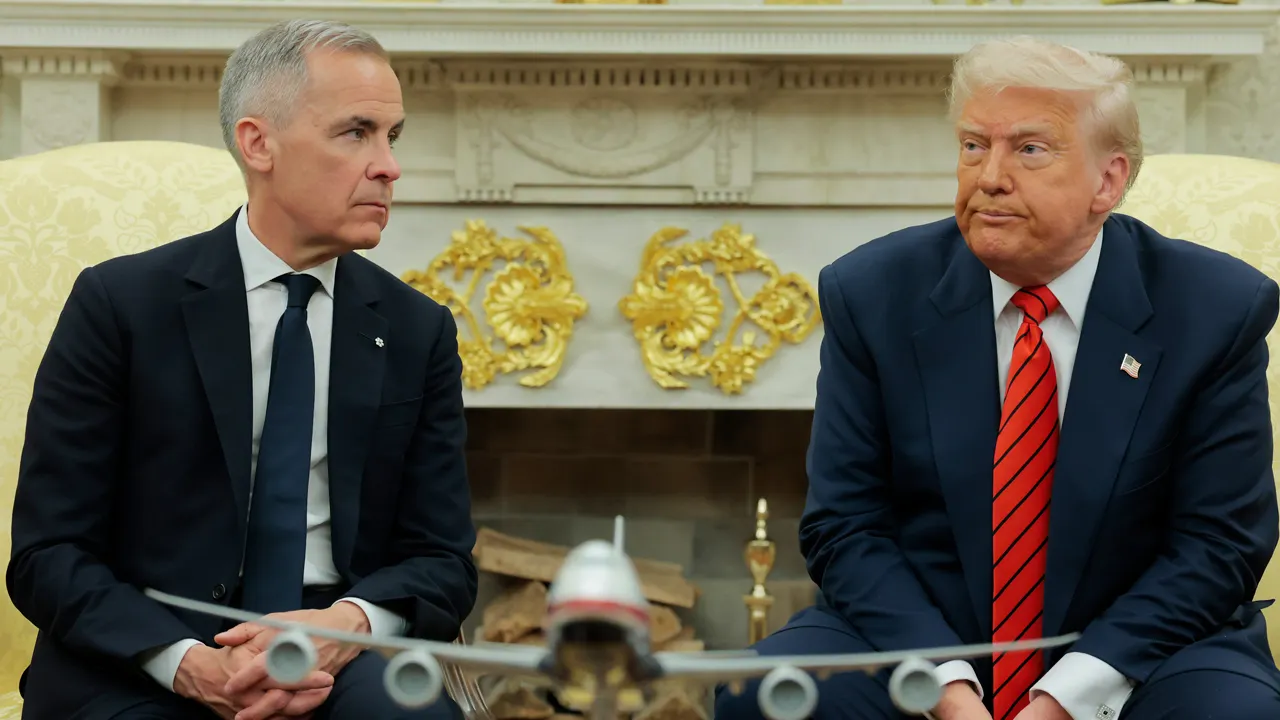
Canadian prime minister says U.S. sought to restrict Canada’s ability to strike trade deals with other countries.
President Donald Trump’s latest trade fight with Canada has a faraway force at its center: China.
As Washington presses Ottawa to do more to prevent Chinese steel, aluminum and other goods from reaching the U.S. market through North American supply chains, Canada is pursuing renewed economic ties with Beijing, adding a fresh complication to already tense trade talks.
At the heart of the fight is transshipment — routing goods through an intermediary country, sometimes after limited processing, before they reach their final market. U.S. officials fear steel and aluminum made in China or elsewhere could be processed in Canada or Mexico and then enter the United States as regional content.
TRUMP JUST EXPANDED HIS TARIFF PLAYBOOK WITH A POWERFUL TRADE WEAPON NO PRESIDENT HAS EVER USED
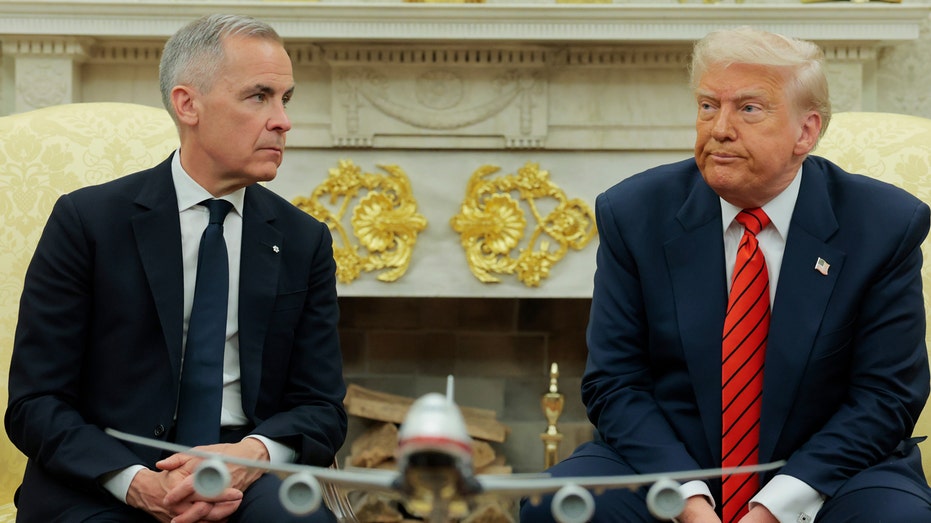
President Donald Trump and Canadian Prime Minister Mark Carney have traded criticism following the collapse of U.S.-Canada trade negotiations. (Anna Moneymaker/Getty Images) / Getty Images)
The U.S. and Canada addressed that risk in a 2019 joint statement resolving an earlier steel-and-aluminum tariff dispute. The countries agreed to prevent steel and aluminum made outside the U.S. or Canada from being transshipped into the other country, and said they could distinguish between steel melted and poured in North America and steel made elsewhere.
U.S. trade hawks now argue Canada should accept tougher safeguards as Washington seeks to limit China’s role in critical manufacturing supply chains.
Canada claims it is already taking steps to keep foreign steel from flooding its market. Ottawa limits some steel imports from countries without a free-trade agreement, including China, and imposes a 50% surcharge once those limits are exceeded.
A POPULAR COCKTAIL HAS A TRUMP TRADE PROBLEM YOU PROBABLY DIDN’T KNOW ABOUT
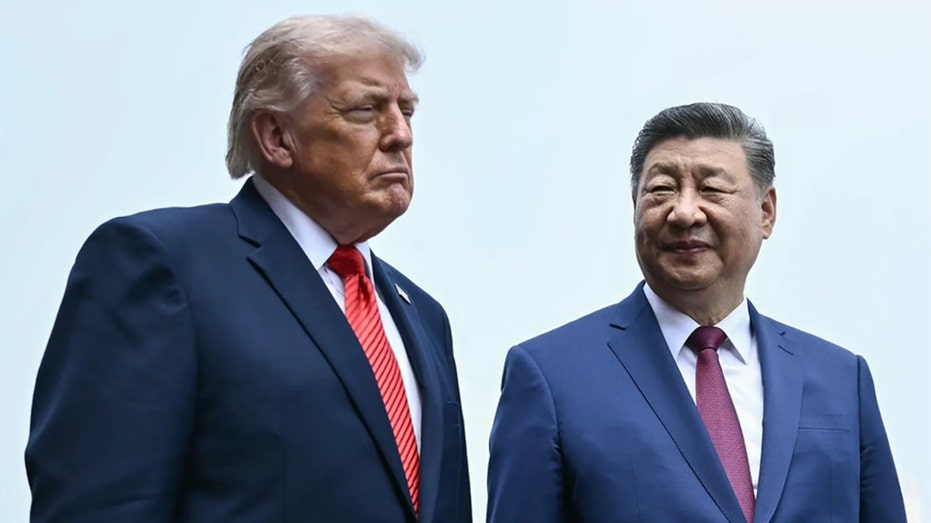
China’s President Xi Jinping and President Donald Trump visit the Temple of Heaven on May 14, 2026, in Beijing, China. (Brendan Smialowski/Pool/Getty Images / Getty Images)
But Canada has also moved to strengthen trade ties with Beijing.
In March, China agreed to reopen its market to several Canadian farm and seafood exports, including canola, peas, lobster and crab. Canada, meanwhile, established a 49,000-vehicle annual quota for Chinese EVs at the 6.1% most-favored-nation tariff rate, removing its previous 100% surtax.
Canada also extended tariff relief for some Chinese steel and aluminum products it says are in short supply. Officials say the arrangement is part of a broader effort to diversify Canada’s trade relationships. China is Canada’s second-largest merchandise trading partner.
CLICK HERE TO DOWNLOAD THE FOX NEWS APP
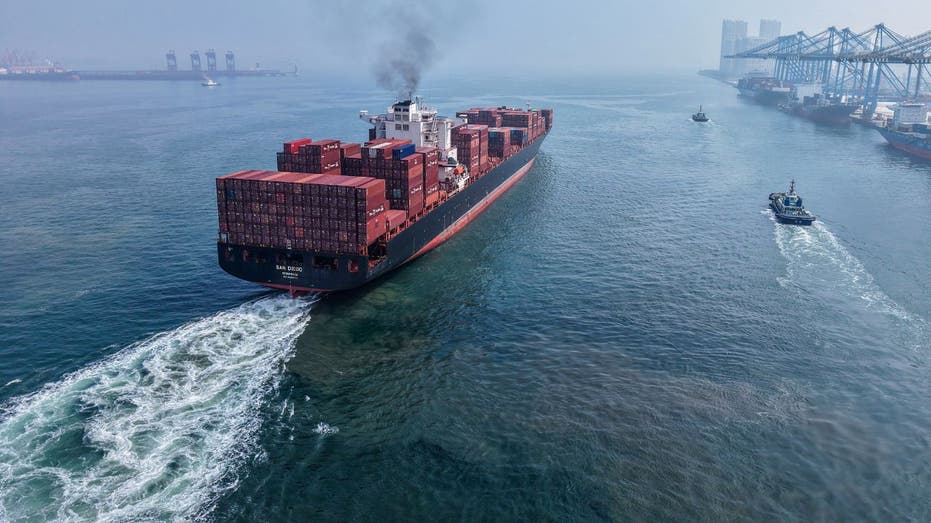
A container ship sails out of the port in Qingdao, in China’s eastern Shandong province on August 7, 2025. (STR/AFP/Getty Images / Getty Images)
The arrangement has fueled criticism in Washington that Canada is moving in the opposite direction from the Trump administration’s effort to build a more China-resistant North American trading bloc.
For Trump, the growing question is whether Canada is willing to embrace the same approach — or whether it’s bid to expand trade with Beijing will become another fault line in an already tense relationship.

Nvidia, Fed Confab, Inflation, GDP, and More to Watch This Week

Jaguar Land Rover has delayed plans for an all-electric version of the Defender, its bestselling model, after placing a two-year pause on a full redesign of the vehicle as part of a cost-cutting shake-up at Britain’s biggest carmaker.
The pause applies to the standard, full-sized Defender. Plans for JLR’s “baby Defender”, a smaller electric version of the vehicle, will still go ahead.
The company has previously said that the “architecture” of the full-sized Land Rover Defender, relaunched in late 2019, means it is too difficult to incorporate an electric vehicle battery. As a result of those restrictions, it said customers would have to wait for the fully redesigned version to be launched.
That generational redesign had been anticipated in 2028-29, although no date had formally been announced. Sources familiar with the situation said it will now be delayed into the 2030s.
JLR said: “Defender is one of JLR’s greatest success stories. With more than 75 years of heritage, purpose and proven capability, it is our class-leading bestseller due to continued strong global demand and enduring brand appeal.”
The move comes with JLR’s new chief executive, PB Balaji, under pressure to cut costs following a tumultuous 18 months for the carmaker, according to industry sources. JLR is owned by the Indian giant Tata Motors.
The company has had to contend with President Trump imposing tariffs on its vehicles. While Sir Keir Starmer negotiated a deal to reduce import taxes on UK-made vehicles to 10 per cent, Balaji is understood to have conceded that even this increase cannot be passed on to American customers.
JLR is understood to have told staff that the two-year pause on the next version of the Defender is down to the current model’s success. The company is selling 110,000 Defenders a year, almost a third of the 350,000 cars it sold in total in its financial year to March 2026.
North America is JLR’s biggest single market, representing 28 per cent of sales. Earlier this month, the company announced it would begin manufacturing the Defender in the United States in conjunction with Vauxhall owner Stellantis, in order to avoid Trump’s tariffs.
American-bound Defenders are currently designed and engineered in the UK, with the engines built in Wolverhampton. But the vehicle’s final assembly line is in Slovakia, meaning it attracts US import tariffs of 15 per cent rather than 10 per cent, on account of being exported from the EU.
The decision to delay the Defender’s full redesign, and therefore push back an all-electric version of the car, comes as the UK consults on watering down electric vehicle sales targets. Initially hatched during the final throes of Sir Keir’s administration, Andy Burnham, the prime minister, has unveiled a consultation on reducing those targets, for the proportion of EVs among all new cars sold, to as low as 50 per cent by 2030, from the current goal of 80 per cent.
The consultation follows the government conceding that demand among UK drivers for EVs is lower than anticipated.
Ministers have insisted that a ban on the sale of new petrol and diesel cars in 2030 will remain in force, although there is scepticism within the industry about the feasibility of this commitment, as it may require 50 per cent of all cars sold to be hybrids and the government has yet to define exactly what constitutes a hybrid vehicle.

Amy Ingham
Amy Ingham is a reporter at Business Matters, covering UK business news with a focus on breaking news, business policy, late payments and insolvency. She joined the magazine in 2026 after completing the NCTJ Diploma in Journalism at Harlow College’s journalism school. Her recent reporting includes British Steel’s nationalisation and its impact on SME suppliers, the decline in late payments by large firms, and Insolvency Service director disqualifications. Reach her at aingham@cbmeg.co.uk.
Business
‘The Voice UK’ Fans Furious as Show Skips Coaches’ Opening Performance for First Time in 15 Years


Fans of “The Voice UK” reacted with frustration Saturday night after the ITV singing competition returned for a new series without its traditional opening coaches’ performance, a staple of the show’s format that had appeared at the start of every previous season for 15 years.
The show returned Saturday with will.i.am, Sir Tom Jones, and McFly members Danny Jones and Tom Fletcher back in their coaching chairs, joined for the first time by Destiny’s Child singer Kelly Rowland as the newest addition to the panel. While fans expressed excitement at seeing Rowland take her place in the show’s signature spinning red chair, many were disappointed that her debut did not include participation in the coaches’ traditional group performance, which typically opens each new series.
Instead of the customary performance, Saturday’s episode simply introduced the coaches directly to the audience without the accompanying musical number. The change quickly drew criticism from longtime viewers on social media. One fan wrote on X, “They got Kelly Rowland on the panel and for the first time in 15 years DIDN’T open the series with a coaches performance?! Fire the producers #TheVoiceUK.” Another viewer echoed the frustration more bluntly, writing, “No coach performance?!? wtf #TheVoiceUK.” A third fan questioned whether the segment had simply been left out of production entirely, tweeting, “Did they not film a coaches performance this year or what.”
Beyond the absent tradition and Rowland’s arrival as a new coach, Saturday’s premiere also introduced a new format twist to the show: a “rewind button.” The new feature gives each coach the opportunity to offer a singer a second chance to turn their chair, even if that coach did not initially turn around during the contestant’s original performance.
Coach Danny Jones offered an enthusiastic endorsement of the new mechanic following its debut. “The Rewind Button is a total game-changer!” Jones said. “It’s brilliant because it gives that extra bit of power to right a wrong.”
Rowland’s arrival on the panel marks a significant casting change for the British edition of the singing competition, bringing a globally recognized music star with decades of experience in the industry to the show’s coaching lineup for the first time. Her introduction alongside returning coaches will.i.am, Tom Jones, Danny Jones and Tom Fletcher rounds out a panel blending established “Voice UK” veterans with a high-profile new addition, even as that debut came without the customary fanfare of a joint opening performance that fans had come to expect from the format.
“The Voice UK” has run for multiple seasons on ITV, building a loyal fan base around its signature blind-audition format, in which coaches select contestants based solely on their vocal performances before seeing them, followed by a competitive process in which coaches mentor and battle for their chosen singers through the remainder of the series. The coaches’ opening performance had become an established tradition within that broader format, typically used to introduce each season’s panel with a collaborative musical number before the blind auditions themselves get underway.
The show’s producers have not publicly addressed the reason behind the absence of the traditional opening performance during Saturday’s premiere, leaving fans largely to speculate about whether the segment was intentionally cut from this year’s format, simply not filmed, or held back for a later broadcast. As of this report, ITV had not issued a statement clarifying the decision or indicating whether the coaches’ performance might still appear in some form later in the current series.
Saturday’s episode continues to air as part of “The Voice UK’s” regular Saturday night broadcast slot on ITV1, with episodes also made available for streaming through the network’s ITVX platform. The series has continued to draw a dedicated weekly audience throughout its run, with fan reaction to individual episodes, casting changes and format tweaks frequently generating significant discussion on social media in the hours following each broadcast, a pattern reflected in Saturday’s swift and pointed criticism over the missing coaches’ performance.
The introduction of Rowland to the panel adds to a broader pattern of coaching lineup changes the British version of “The Voice” has undergone throughout its run, with the show periodically refreshing its panel to maintain audience interest and bring new perspectives to the competition. Previous coaches on the UK edition have included a rotating cast of prominent musicians and personalities over the years, with the current lineup of will.i.am, Tom Jones, Danny Jones, Tom Fletcher and now Rowland representing the newest configuration heading into the current series.
With the season’s blind auditions now officially underway following Saturday’s premiere, attention is likely to shift toward how Rowland’s coaching style and song selections compare with her fellow panelists as the competition progresses, alongside continued fan reaction to the newly introduced rewind button mechanic, which offers coaches a fresh strategic tool for securing talented contestants they may have initially missed during the standard blind audition process. Whether the traditionally expected coaches’ opening performance returns in some capacity later in the season remains unclear, though Saturday’s strong fan reaction suggests the missing tradition is likely to remain a talking point among viewers as the series continues.
Daniel Chetroni/iStock Editorial via Getty Images
Listen below or on the go on Apple Podcasts and Spotify

Nvidia earnings put the AI trade back in focus. (0:33) Kevin Warsh heads to Jackson Hole as bond vigilantes stir. (1:32) Canada hits back with retaliatory tariffs on U.S. imports. (2:33)
The following is an abridged transcript:
The summer doldrums disappear with a huge week ahead for stocks and bonds.
Nvidia (NVDA) stars Wednesday with what has become the biggest earnings event on Wall Street. On Friday, Fed Chairman Kevin Warsh gives the keynote address at the Jackson Hole Symposium at a time when bond vigilantes are stirring.
With Nvidia, investors will be looking for updates on AI infrastructure demand, product ramp timing, China exposure and the economics of the chipmaker’s expanding financing partnerships. Options traders are pricing in a roughly 6% move in Nvidia shares following the report.
Seeking Alpha analyst Mott Capital said investors and traders may be left with “the post-Nvidia earnings hangover” again if the numbers are good but not spectacular.
“A decline could be sharp, pushing the stock down by as much as 11% to an important area of technical and options-related support at $190, while upside seems limited,” they said.
The results could reverberate across the semiconductor and AI complex. Marvell Technology (MRVL), Micron (MU), Arm (ARM) and Advanced Micro Devices (AMD) have shown some of the closest trading correlations with Nvidia following earnings.
Here’s how the rest of the earnings calendar shapes up:
PDD Holdings (PDD) and XPeng (XPEV) report Monday.
Intuit (INTU) reports Tuesday.
On Wednesday, Nvidia is joined by CrowdStrike (CRWD), Salesforce (CRM), HP Inc. (HPQ) and Okta (OKTA).
Marvell (MRVL) and Ulta Beauty (ULTA) report Thursday.
Looking to Jackson Hole, Warsh will speak at 10 a.m. ET Friday.
At his last press conference, Warsh indicated that higher Treasury yields were doing the job of tightening financial conditions for the Fed. But since then, higher yields have spooked the White House, leading Treasury Secretary Scott Bessent to boost buybacks of longer-dated debt in an attempt to tamp down rates.
Seeking Alpha analyst Geneva Investor says “the two men want opposite things in the long end.”
“Bessent wants the 10-year and 30-year lower, and has said so repeatedly,” they said. “Warsh wants a smaller Fed footprint concentrated at the front end of the yield curve, which mechanically raises the long end.”
“Bessent wants a larger FIMA facility, which expands the balance sheet. Warsh wants the $6.7T balance sheet to come down.”
Seeking Alpha analyst Damir Tokic said Warsh will be under the spotlight to address the current bond market selloff, “and he will restate that real rates are rising, while inflation expectations remain anchored, so that will be a dovish message.”
“However, with this dovish message, the nominal long-term rates will continue to rise, steepening the yield curve,” he added.
In the news this weekend, Canadian Prime Minister Mark Carney said his country will impose retaliatory tariffs on a wide range of U.S. imports starting Sept. 8 in response to the Trump administration’s new 50% tariffs on Canadian goods.
His remarks came after weeks of trade negotiations between the two sides collapsed late Friday. The new U.S. tariffs, which could impact roughly $20B worth of Canadian exports, took effect immediately.
Meanwhile, President Trump posted on Truth Social that Canada has “charged our great farmers, for many years, massive amounts of Tariffs.”
He added that “Canada wants the benefits of being a State, without being one!!!”
And for income investors, 3M (MMM) goes ex-dividend Monday, paying out on Sept. 11.
Hyatt (H) goes ex-dividend Thursday, with a Sept. 10 payout date.
T-Mobile (TMUS) and eBay (EBAY) go ex-dividend Friday. T-Mobile pays out on Sept. 10 and eBay on Sept. 11.

Turkey’s central bank to restart one-week repo auctions

Invesco is an independent investment management firm dedicated to delivering an investment experience that helps people get more out of life.Be the first to know! Sign up for Invesco US Blog and get expert investment views as they post.Disclosure for all Invesco US articles: Before investing, carefully read the prospectus and/or summary prospectus and carefully consider the investment objectives, risks, charges and expenses. The information provided is for educational purposes only and does not constitute a recommendation of the suitability of any investment strategy for a particular investor. Invesco does not provide tax advice. The tax information contained herein is general and is not exhaustive by nature. Federal and state tax laws are complex and constantly changing. Investors should always consult their own legal or tax professional for information concerning their individual situation. The opinions expressed are those of the authors, are based on current market conditions and are subject to change without notice. These opinions may differ from those of other Invesco investment professionals. NOT FDIC INSURED MAY LOSE VALUE NO BANK GUARANTEE All data provided by Invesco unless otherwise noted. Invesco Distributors, Inc. is the US distributor for Invesco Ltd.’s retail products and collective trust funds. Invesco Advisers, Inc. and other affiliated investment advisers mentioned provide investment advisory services and do not sell securities. Invesco Unit Investment Trusts are distributed by the sponsor, Invesco Capital Markets, Inc., and broker-dealers including Invesco Distributors, Inc. PowerShares® is a registered trademark of Invesco PowerShares Capital Management LLC (Invesco PowerShares). Each entity is an indirect, wholly owned subsidiary of Invesco Ltd. ©2015 Invesco Ltd. All rights reserved.

EastEnders boss reveals changes to Sean Slater amid ‘exciting’ plans | Soaps

(VIDEO) Hawk Fire Near Reno Tops 10,500 Acres as Nevada Declares State of Emergency in Washoe County Saturday

Mail journalist fooled by obvious AI video





-

 Fashion2 days ago
Weekend Open Thread: Madewell – Corporette.com
-

 Crypto World2 days ago
anatomy of crypto’s biggest liquidation event since 2021
-

 Business5 days ago
SMA Solar Technology AG (SMTGY) Q2 2026 Earnings Call Transcript
-

 Tech6 days ago
Qwen3.8-27B runs frontier-class coding agents and reasoning locally, no cloud API required
-

 Crypto World6 days ago
OCC Greenlights Trump Family Crypto Firm for Trust Charter
-

 Politics1 day ago
6 months on, Irish renters crushed by effects of government housing bill
-
 NewsBeat1 day ago
The ‘Lucky Dip Gang’ causing carnage for clicks: After five thugs were killed speeding in the wrong direction on a motorway, GUY ADAMS investigates a sick new trend… and why police aren’t even allowed to pursue them
-

 Crypto World6 days ago
NAVI Prime launches institutional lending framework on Sui
-

 News Videos4 days ago
Don’t Leave Your Financial Future To Chance | August 19, 2026
-

 Crypto World7 days ago
Data of 54K Wallet Users Leaked, Clarity Odds Just 10%: Hodler’s Digest, Aug. 16
-

 Tech4 days ago
GLM-5.3 hits the API at $1.4/$4.4 per million tokens
-

 Business5 days ago
Stock Market Today: Tech Futures Slide As Treasury Yields Jump; Nvidia, Micron, Sandisk Sell Off
-
 Crypto World6 days ago
Dow’s 3-Year Winning Run Isn’t a Crash Signal, Still 49% Odds of Double-Digit Gains
-
Tech6 days ago
5 Of The Most Reliable Car Brands To Consider If You’re Buying A Used SUV
-

 Tech6 days ago
Keychron K8 Ultra 8K review: a great value keyboard with comfort issues
-
 Tech6 days ago
Straight Up the Cliff, Yunnan’s New Fuyao Ladder Turns a Three-Hour Climb Into a 50-Second Ride for Students
-
 NewsBeat6 days ago
Trump explodes at CNN reporter after question about young blonde aide who wrote him besotted letters
-
 Tech6 days ago
Nvidia discloses $21B stake in SpaceX
-

 Business3 days ago
Five Below: Kids Discount Retailer Reaps Rich Rewards
-

 Business1 day ago
Musk’s Tesla, SpaceX Confirm $16.8 Billion ‘Terafab’ Chip Plant as World’s Largest Building in Texas
You must be logged in to post a comment Login