Connect with us

Business

Business rates review launched for pubs and hotels

Published

on

Business rates review launched for pubs and hotels

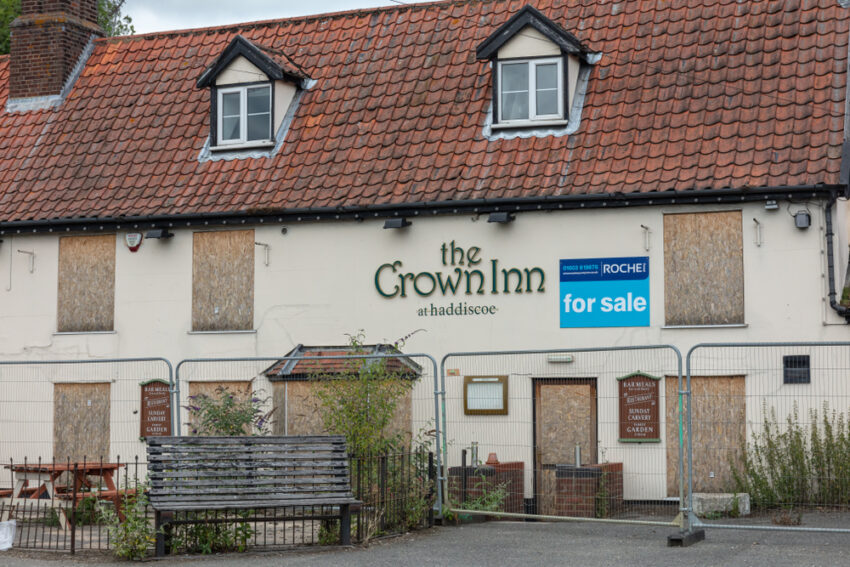
Andy Burnham has launched a review into how business rates are calculated for pubs and hotels, in an attempt to make the tax fairer for two sectors hit hard by this year’s revaluation.

The prime minister has appointed Jerry Schurder, a business rates expert who has repeatedly called for reform of the levy, to lead an independent review into valuations. Schurder will report his recommendations to the Treasury by March 2027, in time for them to be implemented at the next revaluation.

Government insiders said they expected the review to lead to a major change in business rates, given his previous comments and the evidence he has submitted to earlier government consultations.

Schurder has called for “fundamental reform, not tinkering”, including pressing for business rates to be cut significantly to ensure competitiveness with local property taxes in the EU.

He has stopped short of saying business rates should be scrapped altogether. He has said revaluations should be undertaken annually, and that the revenue HMRC takes from business rates should fluctuate directly in line with changes in property values. Both proposals, if adopted, would change the tax from a fixed sum the Treasury collects regardless of market conditions into one that moves with the property cycle.

Advertisement

The government is also launching a call for evidence from landlords, brewers, hoteliers and business owners.

Why April hurt

The review follows concerns that the way businesses are valued does not reflect the realities of the pub and hotel market.

Pubs are not valued on floor space in the way an office or a warehouse is. They are valued on their fair maintainable trade, an estimate by the Valuation Office of the annual turnover, excluding VAT, that the property might be expected to achieve under reasonably efficient management. Trading history, location, food, accommodation and gaming income all feed into the figure, and a percentage is then applied to arrive at a rateable value.

That method is what made this year’s revaluation so painful. The rateable values that took effect on 1 April 2026 were based on trading conditions in April 2024. The previous list had been drawn from a 2021 baseline, when pandemic restrictions had flattened pub takings. Comparing a recovered year with a shut one produced steep increases across the sector.

Advertisement

The ending of those pandemic-era valuations sent some pubs and hotels out of business in April and left others teetering on the edge. In the hotel sector, the scale of the shift prompted calls to freeze revaluations altogether after Northern Ireland paused its own process.

A cut that did not reach everyone

Last month Burnham announced a 20 per cent cut to business rates for pubs, social clubs and live music venues from April 2027. The government said the measure would be worth about £1,100 a year to a typical pub and would reach nearly 32,000 venues, at a cost of £100 million a year, funded by reviewing reliefs for businesses that do not contribute and by tightening compliance among online marketplace sellers.

That announcement was largely welcomed, but it came with calls to apply the relief to a wider range of businesses and to go further with broader changes to the system. Ahead of it, there was disquiet that relief would be targeted at pubs alone while restaurants, hotels and leisure operators facing similar increases were left out, and hotel and holiday park bosses pressed for relief to be extended beyond pubs.

The distinction between the two interventions matters for anyone budgeting beyond next spring. The 20 per cent cut is a discount applied to a bill. The review deals with the number the bill is calculated from, and would reset valuations permanently rather than for the life of one relief scheme.

Advertisement

James Murray, financial secretary to the Treasury, said: “Pubs and hotels are vital for communities and bringing growth to every postcode.

“Last month we announced tax cuts for pubs to give them the breathing room they need. Today we’re going further with a rethink of valuations, so that we can build a fairer system for the future.”

Emma McClarkin, chief executive of the British Beer and Pub Association, said: “For years pubs have paid a disproportionately higher business rates bill which has ground down their ability to keep the doors open, so this review is sorely needed and hugely welcome.”

Neal Jones, EMEA president at Marriott International, said: “The current valuation methodology creates a significant burden for hotels, and it is right that the system is being examined to ensure it is fair, transparent, and reflective of today’s market realities.”

Advertisement

Allen Simpson, chief executive at UK Hospitality, said: “Business rates remain a significant burden for hospitality businesses and the system needs to better reflect the trading realities for the sector.

“Comprehensive review and reform can address these challenges, while also supporting investment and growth.”

For operators, the immediate practical point is the call for evidence. It is open to landlords, brewers, hoteliers and business owners, which means the trading data that has been used to argue the current method is unfair can be put in front of the person writing the recommendations rather than only in front of a trade body.

The timing also leaves a gap. Schurder does not report until March 2027, and any change he recommends lands at the next revaluation, so the bills that arrive next April will still be calculated the way this year’s were.

Advertisement

Nearer term, No 10 has said it will look to set out further reform, including small business rates relief, at the budget. That is the moment for firms outside the pub, club and live music categories to find out whether the wider changes they have been asking for are coming, or whether they wait for Schurder.


Jamie Young

Jamie Young

Jamie Young is Senior Reporter at Business Matters, covering SME finance, employment law and Westminster policy since 2016. He has reported on every Budget and Autumn Statement since 2018, helped make sense of the ‘covid era’ and the bounce-back loan scheme from launch through the fraud investigations, and broke the magazine’s coverage of the 2024 late-payment reforms. He joined Business Matters straight from completing his BA in Administration from Exeter University and is NCTJ-qualified. Reach him at jyoung@cbmeg.co.uk

Advertisement
Continue Reading
Click to comment

You must be logged in to post a comment Login

Leave a Reply

Business

3 REITs To Buy Before They Hike Their Dividends

Published

on

3 REITs To Buy Before They Hike Their Dividends

3 REITs To Buy Before They Hike Their Dividends

Continue Reading

Business

Market Fear Index Jumps

Published

on

Stocks Little Changed After Fed Decision

The stock market’s so-called fear index jumped ahead of the market open with several key events coming this week.

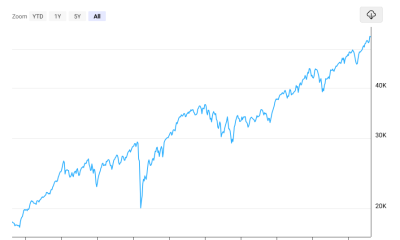
The Cboe Volatility Index, or VIX, was up 5.1% at 15.91 as ongoing yield pressure in long-term Treasuries alongside tensions in the Middle East hitting crude oil markets added extra macro uncertainty to equities.

U.S. Treasury Secretary Scott Bessent is set to ​hold a press conference at 2 p.m. Eastern time when he is expected to announce details about new economic restrictions on Iran.

Continue Reading

Business

Graduate job vacancies drop by almost 50% in a year

Published

on

A forlorn young woman slumped over a desk looking at a laptop

The number of graduate jobs has fallen almost in half in the past year, according to new figures, as employers cut entry-level roles in favour of AI and battle rising costs.

Jobs website Adzuna said it had just 8,383 graduate vacancies listed in July, down from 15,397 at the same point last year.

Adzuna also found competition among job seekers across all levels is rising, with an average of 2.14 job seekers per vacancy in July, up from 1.93 a year earlier.

Businesses have said employer national insurance and minimum wage hikes have made hiring more expensive, particularly for junior staff.

Advertisement

The number of graduate vacancies listed hit its lowest level since Adzuna started recording such data in 2016. The firm pointed to a peak for graduate roles in 2017, when it had more than 55,800 listed on its website. That is more than six times the number of roles listed on the site in July.

Andrew Hunter, the co-founder of Adzuna, said the figures show “employers still haven’t found a reason to open up hiring” for recent graduates.

Official figures show the UK’s youth unemployment rate – which covers 16-to-24-year-olds – was 16.2% in the three months to March 2026. The number of young people not in education, employment or training (Neet) is now over one million.

Young people have told BBC News previously they have applied for hundreds of jobs before even receiving a response.

Advertisement

They also expressed frustration at the growing number of employers using AI to screen applications.

Many university graduates also face mounting student debt.

Former government minister Alan Milburn is leading a major review of the youth unemployment crisis. He has previously said the number of entry-level jobs is shrinking, as is the number of part-time jobs traditionally filled by teenagers and students.

The Adzuna data also showed vacancies for jobs in travel, teaching and construction rose in recent weeks.

Advertisement

But sectors including healthcare, nursing, hospitality and logistics posted fewer vacancies.

Prime Minister Andy Burnham recently changed the rules for public contracts so that companies bidding for them have to show how they will create jobs and training opportunities.

Continue Reading

Business

Wall St futures under pressure ahead of Bessent briefing, Nvidia earnings

Published

on


Wall St futures under pressure ahead of Bessent briefing, Nvidia earnings

Continue Reading

Business

Iran faces ‘economic D-Day’, says US Treasury Secretary Scott Bessent

Published

on

US Treasury Secretary Scott Bessent's head and shoulders in profile. He has grey hair and glasses. He is wearing a grey suit with a US flag lapel pin, a silver tie, and a white shirt. Behind him in soft focus are US flags and a podium.

The US Treasury Secretary has threated Iran with “the single greatest financial offensive ever”, claiming the US-Israel war with Iran was “entering its endgame”.

Scott Bessent said the US would sever all economic ties with the country in “an economic D-Day” and that any nation partnering with Iran financially would also be isolated.

Bessent’s threat to the Iranian regime follows several U-turns and extended deadlines from US President Donald Trump’s administration on previous threats.

Iran dismissed Bessent’s comments and said it would shut down all oil exports from the region “if the war continues”, according to news agency Reuters.

Advertisement

The Iranian regime has also issued a new warning to shipping not to pass through the Strait of Hormuz without its permission, the agency reported.

One fifth of the world’s oil and gas usually passes through strait, a waterway south of Iran, but the flow has been effectively blocked by the country since the conflict began at the end of February.

Bessent made the comments in an opinion piece for the Financial Times, external. He did not detail what the economic pressure on Iran would involve, but he is expected to do so in a press conference in the US at 13:00 local time (18:00 BST) on Monday.

“The world should understand that our objective is to sever every economic lifeline that sustains the tyrannical regime until Tehran stands alone,” he wrote in the piece.

Advertisement

The US has made several threats to Iran over the course of its war with the country, including Trump saying in April that “a whole civilisation will die tonight” unless Iran agreed a deal to end the war and unblock the Strait of Hormuz.

The US eventually climbed down from that position after mediator Pakistan intervened and called for more diplomacy.

The Iranian regime already faces tough economic sanctions from the US.

Former US president Barrack Obama and several US allies had agreed a deal with the country in 2015 which lifted many sanctions in return for Iran agreeing to limit its nuclear programme.

Advertisement

However, Trump pulled out of that deal in 2018, calling it “defective at its core, and reimposed all US sanctions on Iran.

During Joe Biden’s term as US president, he made some attempts to reinstate the Obama-era deal, but this did not happen.

In April this year, the Trump administration launched a wave of sanctions on foreign banks and firms doing business with Tehran after it became clear its military operations had not caused Iran’s regime to surrender.

Advertisement
Continue Reading

Business

Endeavour Group Limited (EDVGF) Q4 2026 Earnings Call Transcript

Published

on

OneWater Marine Inc. (ONEW) Q1 2026 Earnings Call Transcript