
Entertainment
Melissa Gilbert Sounds Alarm After Child Star Tragedies

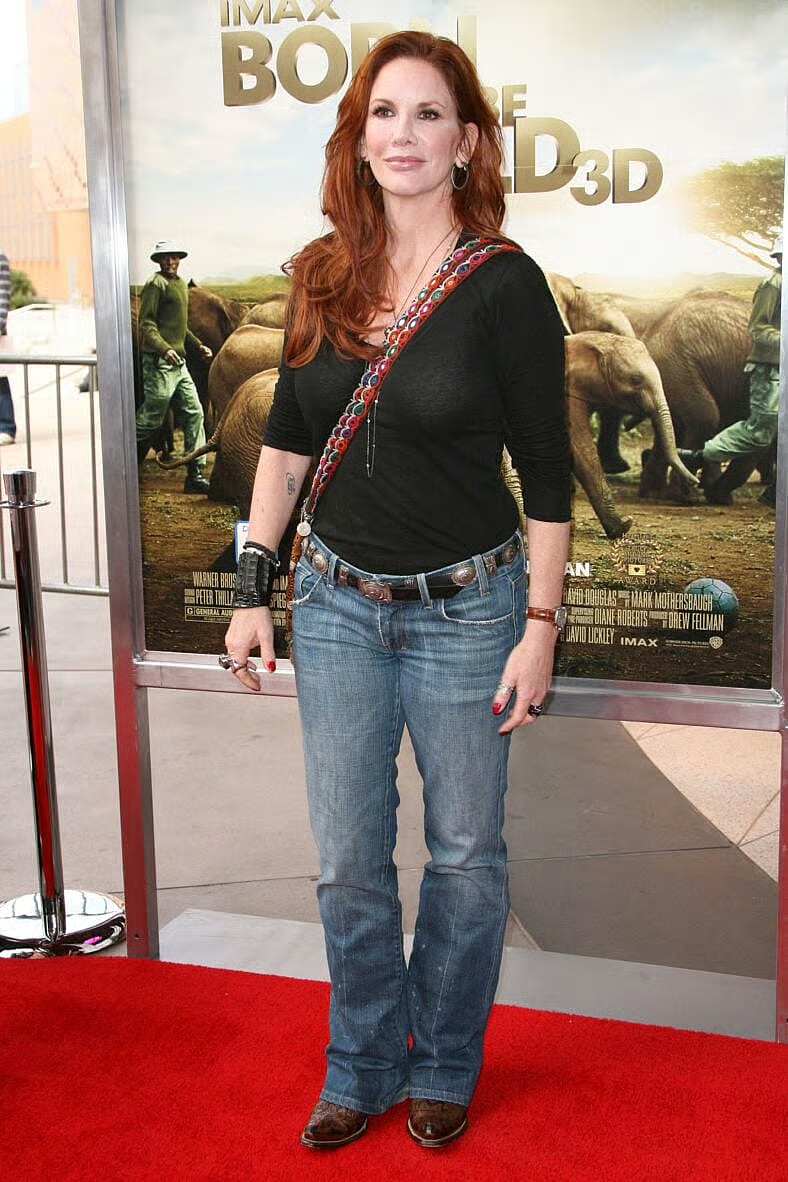
The sudden death of Hayden Panettiere has reignited a painful conversation that Melissa Gilbert believes Hollywood can no longer avoid.
The former child star is speaking out after three young actresses from the same generation died within a relatively short period, arguing that their deaths point to a much deeper problem within the entertainment industry.
Drawing from her own experiences growing up in front of the cameras, Gilbert is now calling for serious reflection on how child performers are treated long after the spotlight fades.

For Melissa Gilbert, the loss of Panettiere was not an isolated tragedy. It became part of a troubling pattern that has left her searching for answers.
In a Substack essay titled “Enough Is Enough,” the actress reflected on the deaths of Panettiere, Michelle Trachtenberg, and Daveigh Chase, noting that all three were former child performers who died far too young.
“Within one year, Michelle Trachtenberg, Daveigh Chase and Hayden Panettiere have died,” Gilbert wrote, adding, “Three former female child actors of the same generation are gone. Tragically, heartbreakingly, agonizingly too soon.”
The losses hit especially hard because Gilbert saw herself in them. Having spent much of her childhood working in television, she said the deaths felt personal in a way that outsiders might not fully understand.
“They are gone and the question I have been turning over and over in my head is, ‘WHY?’ Why are these three sweet, wildly talented, vibrant, vital young women gone?” she continued.
Gilbert expanded that thought by pointing to a larger community of women who grew up in the industry, naming stars such as Brooke Shields, Dakota Fanning, Elle Fanning, and Drew Barrymore among those who share similar experiences.
Gilbert Says Former Child Actors Share A Bond Few Others Understand

According to Melissa Gilbert, former child performers belonged to what she described as a unique “tribe,” one bound together by experiences that often remain invisible to the public.
“We are all members of the same tribe; Female Former Child Performers, and when one of us dies, it runs through all of us like an electrical current,” she explained.
That feeling became even stronger after three deaths occurred so close together. Gilbert argued that the industry should not dismiss the situation as coincidence.
“When three of us die so close together, something is very, very wrong,” she wrote.
The 62-year-old believed many former child stars carried similar emotional scars because they grew up navigating an environment that often prioritized production schedules and profits over their well-being.
Gilbert argued that those who lived through it understood firsthand “how the entertainment industry uses, abuses, exploits and then throws away its youngest.”
While concerns about child stardom have existed for decades, Gilbert believed the problem had intensified in recent years. She suggested that modern technology may be making matters worse, citing the rise of smartphones and the constant public scrutiny they create.
Melissa Gilbert Reflects On Her Own Childhood Trauma In Hollywood

Gilbert’s concerns were rooted not only in observation but also in her own life story.
The “Little House on the Prairie” star recalled how little emotional support was available to child actors during difficult moments. She described working through illness, injuries, and personal trauma because the expectation was always to keep going.
“I can’t tell you how many times I worked while horribly sick, injured or worse,” she wrote.
One memory continued to stand out decades later. Gilbert revealed that her father died when she was just 11, yet she returned to work only months afterward. What remained painful, she said, was the lack of acknowledgment from the adults around her.
“And not one single adult on that set discussed it with me or offered condolences,” Gilbert recalled. “I later found out that the fear was I would become too upset to work. I was eleven, my Daddy had just died and I was shattered.”
Looking back, she believed her character’s frequent emotional scenes became an unintended outlet for grief.
“Thank God my character cried in every single episode,” Gilbert wrote, further noting, “That, as twisted as it sounds, was my therapy. My release.”
Gilbert Addresses Netflix’s ‘Little House On The Prairie’ Reboot
While Melissa Gilbert’s recent essay focused on the lasting impact Hollywood can have on young performers, the actress has also revisited another defining chapter of her career in recent months.
In July, Gilbert broke her silence on the “Little House on the Prairie” reboot, a project that sparked intense discussion among longtime fans of the beloved series.
Having portrayed Laura Ingalls Wilder for nearly a decade, Gilbert explained that she had deliberately stayed silent because she questioned whether she could approach the subject objectively.
“Honestly, I’m afraid that I am unable to be fully objective because I am too deeply involved to weigh in without emotion,” Gilbert wrote per Us Weekly, adding that she also felt it was not her “place to weigh in.”
However, she said one issue had become impossible to ignore: the debate over whether either version of the series was historically accurate. Her answer was unequivocal, as she stated, “The short answer is no, neither are entirely accurate to the times nor the books.”
Gilbert then pointed to specific differences, explaining that the real Laura Ingalls Wilder did not spend significant time in Independence, Kansas until she was 60, while the Ingalls family lived in Walnut Grove for only a short period.
Rather than treating those inaccuracies as a reason to dismiss either adaptation, Gilbert urged viewers to recognize the creative choices involved. “My hope is that folks realize that these are all perfect examples of dramatic license,” she noted.
Melissa Gilbert Fires Back At ‘Woke’ Criticism Of ‘Little House On The Prairie’

Weeks before Gilbert weighed in on the Netflix reboot itself, she found herself defending the legacy of the original “Little House on the Prairie.”
As anticipation for the new series grew ahead of its July premiere, some commentators criticized Netflix for potentially taking the beloved franchise in a more politically progressive direction.
Among the most prominent voices was Megyn Kelly, who questioned whether modern producers were attempting to reshape the beloved story to fit contemporary political and social values.
Gilbert strongly disagreed with that characterization and argued that critics were overlooking what the original series actually represented.
According to the actress, “Little House on the Prairie” addressed difficult social issues long before such topics became part of today’s cultural debates.
Gilbert pointed out that the original show tackled subjects including racism, antisemitism, addiction, domestic violence, sexual assault, and discrimination. “Before people start throwing around words like ‘woke,’ they should probably watch the original series again,” she told Entertainment Weekly, emphasizing that confronting injustice was always part of the show’s DNA.
Gilbert also noted that the series frequently explored prejudice and inequality through the experiences of the Ingalls family and the broader Walnut Grove community.

Continue Reading
A good thriller has the power to keep you enthralled from the beginning to the end. Whether action-packed adrenaline rushes or masterful mysteries with sensational suspense, a thriller should elicit a satisfying reaction when the credits roll. Imagine a thriller film so good that it spawns not one but two follow-ups! A good thriller trilogy, whether unifying stories or united by themes, will keep you glued to your screen begging for one more.
We’re here to celebrate eight near-perfect thriller trilogies. From epic mysteries led by the world’s most beloved sleuth to the most iconic desert-set dystopian movies, these trilogies remain a major part of cinema history because they were so good, there was more in store. Now, these are the films that fall just shy of perfection. Whether it’s due to a single film that falls flat or lacks the legacy to boost them up a notch, these near-perfect film trilogies are most certainly worth a weekend watch.
8
The Apartment Trilogy

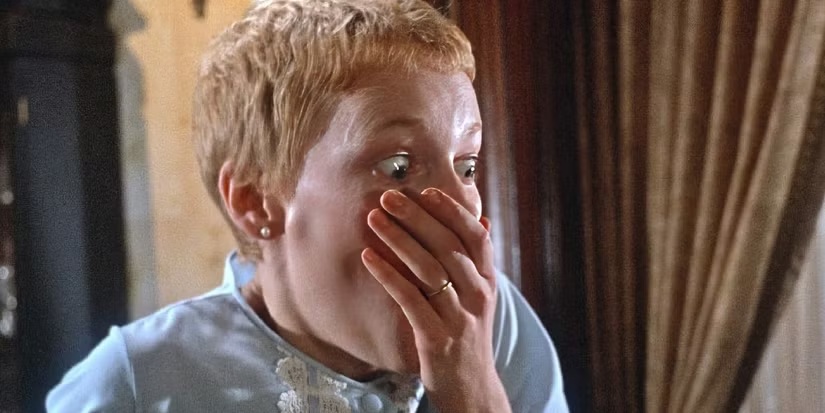
The reason Roman Polanski‘s unofficial trilogy falls into near-perfect status is due to the filmmaker’s legacy and that the bookend films are not nearly as extraordinary as the middle film. Which also just so happens to be one of the greatest psychological horror films of all time. Neverthless, Polanski’s Apartment Trilogy features three standalone psychological horror films thematically linked by their confined apartment settings. Together, they explore themes of isolation, paranoia, and the gradual loss of sanity. In the first film, Repulsion, Carol Ledoux (Catherine Deneuve), a withdrawn young woman, is left alone in her sister’s apartment. She spirals into deep depression, intense paranoia, and homicidal mania as she hallucinates unwanted sexual advances and violently attacks those who enter her space. The second and most well-known, Rosemary’s Baby, tells the story of Rosemary Woodhouse (Mia Farrow), who moves into a historic New York apartment building with her husband, Guy (John Cassavetes). As she goes through a difficult pregnancy, she becomes increasingly isolated and paranoid, eventually suspecting that her eccentric neighbors and her husband belong to a sinister cult. Finally, The Tenant chronicles Trelkovsky (Polanski), a quiet man who moves into a Parisian apartment where the previous tenant committed suicide. He becomes consumed by the belief that his hostile neighbors are gaslighting him and plotting to force him to take on the dead tenant’s identity.
Polanski treats physical space as a living, hostile character that traps the protagonist’s mind. Through tight, indoor settings, these stories turn normal rooms into rooms of deep terror where a descent into madness occurs and where the blurred lines of reality are destined to torment its victim. The walls come to life as the rooms take shape, crack open, or close in to capture the mindset of its subject. The once safe spaces are also long gone, as outside forces or evil neighbors take control. The three films work masterfully together as paranoia is in full bloom. Each protagonist faces escalating pressure, gaslighting, or imagined threats from the outside creeping in. Domestic boundaries break down, leaving audiences to fear their own homes. Though the filmmaker’s legacy may be marred, there’s absolutely denying the sheer brilliance of his work. If you loved Rosemary’s Baby, the other two are must-watches at least once.
7
The Pusher Trilogy

If the Pusher Trilogy may sound unfamiliar, that’s not necessarily a major shock to the system. They do fall into the underrated gem category of cinema. Brought to life by Danish filmmaker Nicolas Winding Refn, the trilogy explores the violent criminal underworld of Copenhagen through gritty realism. Each film follows a different subject as they deal with debt, stress, and total ruin over the course of a few highly intense days. In Pusher, Frank (Kim Bodnia), a mid-level dealer, has his life fall apart after a botched heroin deal leaves him owning a massive debt to a ruthless Serbian gang leader named Milo (Zlatko Burić). Pusher II: With Blood on My Hands centers on Frank’s ex-con friend Tony (Mads Mikkelsen) as he attempts to earn the respect of his criminal father and rebuild his broken life after prison. Pusher III: I’m the Angel of Death shifts the action to the aging kingpin Milo as he juggles cooking for his daughter’s birthday party, struggling with sobriety, and managing a chaotic, disastrous drug shipment. The Pusher Trilogy showcases how crime is no glamorous trade as each central character is one bad deal away from total collapse.
Through masterful realism, Pusher pushes its main characters to the brink. In turn, the action is tantalizing. With a raw documentary style direction, each film offers different perspectives as different levels and assets of Copenhagen’s criminal underworld are innately captured. The trilogy brings an unflinching examination on the mundane consequences of a life of crime. Shot on location in the Danish city, Refn’s abiltity to bring the backstreets into the spotlight provides a spellbinding and enriching perspective. By working their way through the hierarchy, the Pusher films work as a cohesive unit, yet have immense standalone depth. But truly, seeing the ecosystem in action across the three films is worth the journey. The films are wonderfully raw and natural, as the dialogue is properly messy and entirely human. The Pusher Trilogy is also responsible for launching Mikkelsen into global stardom, so we should be thankful for that! Though there are remakes, nothing beats the originals.
6
Robert Langdon Trilogy

If there was one book that took the world by storm in 2003, it was The Da Vinci Code by Dan Brown. It was inevitably going to be given a theatrical life. It was so good, the sequel novels were also adapted into feature films. Centering on the fictional character Robert Langdon (Tom Hanks), a Harvard symbologist, the action-adventure movies may not have been critical darlings, but they continued our fascination with the genre. In The Da Vinci Code, Langdon investigates a murder at the Louvre Museum, uncovering a hidden religious secret guarded for centuries. Angels & Demons moved the action to Rome and Vatican City as Langdon attempts to stop an ancient society known as the Illuminati from destroying the Vatican with stolen antimatter. Rounding out the trilogy was Inferno, which finds Langdon, waking up with amnesia, racing against the clock to stop a madman from releasing a global biological plague linked to Dante’s Inferno. Sitting right in the middle of escapism and guilty pleasure, the Robert Langdon film trilogy uses it’s time to educate while entertaining.
A fan-favorite trilogy, Ron Howard directs the film with panache and flair. By combining high-stakes global treasure hunts, stunning real-world backdrops, and the brilliance of Hanks to anchor the action, the trilogy masters the mission of entertainment. Just like the novels, the films offer fictional tourism for its viewers who may otherwise not have the chance to visit. The films flip cryptic historical stories, secret societies, and anagrams into a pulse-pounding play-along puzzle. Where else do you have the opportunity to gain genuine academic trivia about architecture, history, and literature? The three films feature Hanks bringing instant intellect, empathy, and charm to carry Brown’s tales to victory. And if you’re eager for high-profile stars along for the adventure, expect to see the likes of Ian McKellen, Ewan McGregor, and Felicity Jones, among others. While the Robert Langdon Trilogy may not be Indiana Jones or even National Treasure, they’re just a step below.
5
The ‘Taken’ Trilogy

Every great actor needs a career revitalization. For Liam Neeson, that came thanks to the unlikely hit-turned-pop culture obsession: Taken. Created by Luc Besson and screenwriter Robert Mark Kamen, the film series redefined Neeson as a late-career action star, catapulting him to new heights. In Taken, directed by Pierre Morel, retired CIA operative Bryan Mills (Neeson) races against a 96-hour clock in Paris to rescue his teenage daughter, Kim (Maggie Grace), after she is kidnapped by human traffickers. In Taken 2, directed by Olivier Megaton, Mills and his ex-wife, Lennie (Famke Janssen), are taken hostage while in Istanbul by Murad Hoxha (Rade Šerbedžija), the father of a kidnapper killed in the previous film, forcing Kim to help free them. Finally, in Taken 3, also directed by Megaton, Mills is framed for his ex-wife’s murder and must evade the pursuit of a relentless police inspector, Frank Dotzler (Forest Whitaker), while tracking down the real killers. A guilty pleasure phenomenon, Neeson and his “particular set of skills” became lean, mean, fast-paced 21st century action classics.
Though the first film is an exception, laying the groundwork for the franchise and other men of a certain age action genre, the reason the trilogy as a whole drops to near-perfect status is the steady decline following the original. That said, Taken and its sequels do exactly what the film franchise is meant to do. Never do they stray away from its main concept, borrowing what works from the original aand tweaking it along the way. The moment Neeson got on the phone and delivered, “I will look for you, I will find you, and I will kill you,” a pop culture touchstone was born. The film delivered in no-nonsense, high-octane action without an overcomplicated plot. Though the intensity was dropped to a PG-13 rating in the subsequent films, the DNA remained the same. If you were taken by Taken, watching the trilogy is a must-do. You’ll even be intrigued by the two-season run of the TV series. Be warned, no Neeson to be found there.
4
The Mexico Trilogy

Thanks to Robert Rodriguez, the contemporary Mexican/American neo-Western was revitalized through the Mexico Trilogy. Also referred to as the Desperado Trilogy or the Mariachi Trilogy, Rodriguez brings viewers along the ongoing bloody and musical exploits of a wandering, gun-toting musician known as El Mariachi. The trilogy began with the ultra-low budget El Mariachi, where the titular character, played by Carlos Gallardo, is a traveling musician mistaken for a vicious criminal, Azul (Reinol Martínez), in a small Mexican border town. Now with a bigger Hollywood budget, Desperado serves as a reimagining and sequel in which El Mariachi, now played by Antonio Banderas, seeks revenge against drug lord, Bucho (Joaquim de Almeida), who shot his lover. He is aided by a local woman named Carolina (Salma Hayek) on his quest. Rounding out the films, Once Upon a Time in Mexico, El Mariachi is thrust into a sprawling, high-stakes political coup involving a corrupt general, Emiliano Marquez (Gerardo Vigil), who killed his wife, and a rogue CIA agent, Sheldon Sands (Johnny Depp).
Armed with a guitar case packed with heavy artillery and automatic firearms, The Mexico Trilogy launched El Mariachi to epic levels of Western heroism. Rodriguez keeps a common theme where El Mariachi loses his romantic interests or loved ones to escalating cartel violence, which drives his lonely path of vengeance and retribution. Rodriguez’s signature style blended Hollywood ideals with a distinct blend of fast-paced energy, dark humor, and a sublime Tex-Mex vibrancy. The films are an integral part of cinema history as the first film represented a genuine DIY approach to filmmaking. Rodriguez proved he could make a stellar indie flick with panache and maintain that gritty integrity when the budget ballooned. Desperado is certainly an upgrade that turns the kinetic energy of the first film into a hyper-stylized and super cool action thriller. By Once Upon a Time in Mexico, Rodriguez and his star-studded cast let loose in a playground of fun for an over-the-top adventure. The films will forever be celebrated by marrying Mexican folklore with Spaghetti Western tropes without pretension.
3
Hannibal Lecter Trilogy

It’s often the heroes who earn long-running franchises. But when you’re Anthony Hopkins and you craft one of the greatest villains of all time, Hannibal Lecter, it’s inevitable that your terrifying face extends beyond the original film. Based on the eponymous brilliant, cannibalistic serial killer created by Thomas Harris, the three Hopkins-led films haunted our waking dreams. Though the character does appear in 1981’s Manhunter and 2007’s Hannibal Rising, for this entry, we will focus on the subsequent projects with Hopkins. In the Big Five-winning The Silence of the Lambs, directed by Jonathan Demme, FBI trainee Claire Starling (Jodie Foster) consults with the imprisoned Lecter to catch another active serial killer, Buffalo Bill (Ted Levine), before it’s too late. Ten years later, Ridley Scott directed Hannibal, where a wealthy survivor, Mason Verger (Gary Oldman), uses Clarice (Julianne Moore) to plot vengeance against a free Lecter living in Florence. Finally, Red Dragon, directed by Brett Ratner, serves as a prequel where retired FBI profiler Will Graham (Edward Norton) asks Lecter for help in tracking down the “Tooth Fairy” killer, Francis Dolarhyde (Ralph Fiennes).
No matter who is sitting in the director’s chair, the three films are examples of masterclass tension and rare psychological depth in the horror realm, all centered around a brilliant and iconic central character. The three films served as an important blueprint in elevating high-stakes crime thrillers into sensational high art. While Red Dragon and Hannibal didn’t match the sheer brilliance Demme captured in The Silence of the Lambs, they did continue to pique our fascination with the cold-blooded killer mastermind. Hopkins defined the chilling archetype of a terrifying villainous intellect. The slow-burning psychological chess matches served as a brilliant canvas for atmospheric tension. The narratives blur the lines between the monsters and the individuals who set out to hunt them. They introduce a wealth of emotional stakes that other horror thrillers tend to lack. The Hannibal Lecter Trilogy is not for the faint of heart. If you’re squeamish, steer clear!
h
2
Hercule Poirot Trilogy

There are many iconic detectives, but none are as brilliant as Agatha Christie‘s creation, Hercule Poirot. The incredible Belgian sleuth had been the source of many Christie stories, as well as many film adaptations, but the character truly came to life thanks to Kenneth Branagh‘s star-studded modern film adaptations of the detective tales. Pulling double duty as director and star, Branaugh kicked off the adventure with the iconic Murder on the Orient Express. The mystery follows Poirot as he investigates a stabbing aboard a snowbound luxury train filled with a plethora of mysterious passengers. The action shifts to Egypt in Death on the Nile as Poirot seeks to find the culprit when a glamorous river cruise turns deadly when a wealthy heiress, Linnet Ridgeway-Doyle (Gal Gadot), is murdered. Finally, Poirot heads to Italy for A Haunting in Venice, in which a reluctant retired Poirot attends a Halloween seance in a spooky palazzo where another guest dies. As three large-scale mystery masterpieces, the Hercule Poirot Trilogy marries the camp of the Christie character with the vast visuals that reinvigorated the classic detective genre.
The Branagh-directed trilogy is filled to the brim with lavish set pieces that immerse the viewers into the mystery alongside Poirot. Each film captures a richly distinct locale and aesthetic. From the snowy, isolated exterior that traps a glorious train to the sun-drenched waters of the Nile and the moody, gothic Venetian palazzo, each location serves as its own indirect character. They help shape the characters of the story and serve as a perfect backdrop for the mysterious thrills of each death. Branagh uses classic filming techniques to honor the past while bringing the films to the present. What makes the films work as a three-piece and not just three standalone films is that Branagh ensures the right amount of character growth and evolution from its central sleuth. From his growing loneliness, his crisis of faith, and how human cruelty sees morality and sanity, Poirot becomes more than an eccentric detective with an iconic mustache. If there is ever a reason to watch the films, it comes from the cavalcade of stars, including Penelope Cruz, Judi Dench, and Michelle Pfeiffer in Murder on the Orient Express, Annette Bening, Dawn French, and Jennifer Saunders in Death on the Nile, and Tina Fey, Jude Hiil, and Michelle Yeoh in A Haunting in Venice. While there is still potential for the Hercule Poirot franchise to expand, these three are reasons why audiences are drawn to classical murder mysteries.
1
Original ‘Mad Max’ Trilogy

Before we saw what perfection could look like, George Miller and Byron Kennedy launched a ’80s-tinged post-apocalyptic and dystopian trilogy known as Mad Max. Starring Mel Gibson, Mad Max depicts a societal collapse caused by resource shortages. Max Rockatansky (Gibson) is a highway patrol cop who goes on a vengeance streak after a violent motorcycle gang murdered his family. In Mad Max 2: The Road Warrior, a hardened Max roams the wasteland as he helps a small, isolated oil-refining community defend themselves against a brutal marauding gang. Finally, Mad Max Beyond Thunderdome sees Max wander into the corrupt trading post of Bartertown, get exiled, and assist a tribe of lost children in a battle against the local ruler, Aunt Entity (Tina Turner). Establishing an iconic aesthetic, Mad Max may be responsible for laying the foundation for all post-apocalyptic action thrillers that followed.
While it’s hard to compare the first film to the two most recent iterations, what the original trilogy proves is that an organic evolution from raw, low-budget revenge flick can emerge into a mythic lore-filled juggernaut of a franchise. Miller does a sensational job at making the setting distinctly its own. There had been nothing like it before, so Mad Max set the tone for what a desert-set dystopia should feel like. And it was a living nightmare it was. The three film rely heavily on motion and cinematic language to explore its narrative. These films are not littered with exposition of world-building dialogue. Instead, they allow a show-and-tell visual vocabulary to do the trick. Max is the ultimate vengeful hero who goes from grieving man into a universal lone hero whose mission is to improve the lives of others—even risking his own life to do so. The Mad Max trilogy is considered perfect by many, but in comparing them to Mad Max: Fury Road, they simply cannot compare. That said, they’re the best of the almost-best!

Mad Max
- Release Date
-
April 12, 1979
- Runtime
-
91 minutes
- Director
-
George Miller
- Writers
-
James McCausland, George Miller
-

Joanne Samuel
Jessie Rockatansky
-

Godzilla has fought just about everyone Marvel can throw at him, but apparently that was only the beginning. Godzilla Conquers the Marvel Universe has already embraced the inherent chaos of dropping the King of the Monsters into Marvel history, and its latest adventure has found a particularly ridiculous way to bring two of the publisher’s biggest icons together.
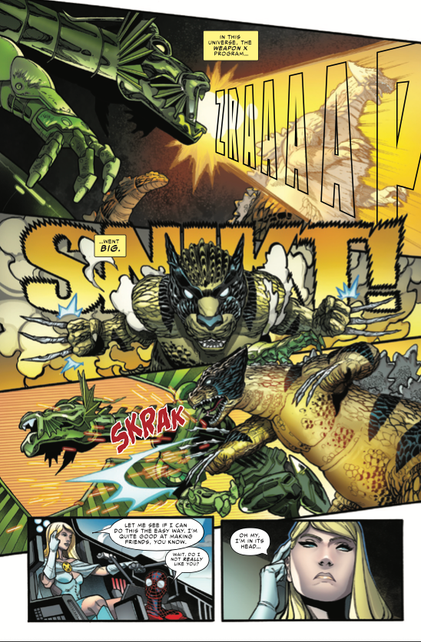
This time, however, Wolverine isn’t fighting Godzilla; Marvel has apparently decided the kaiju could use a little of Logan’s powers for himself. The result is exactly the kind of monster you would expect from a universe where the Weapon X program was allowed to experiment on Godzilla, and somehow, things only get stranger from there.
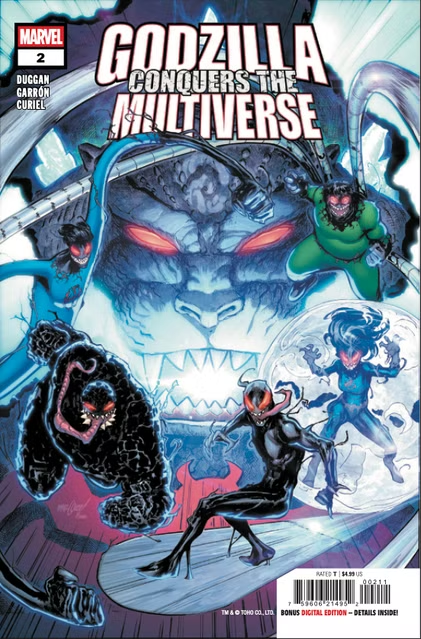
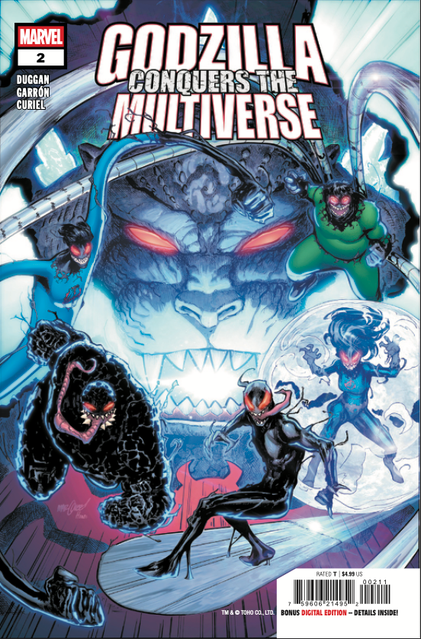
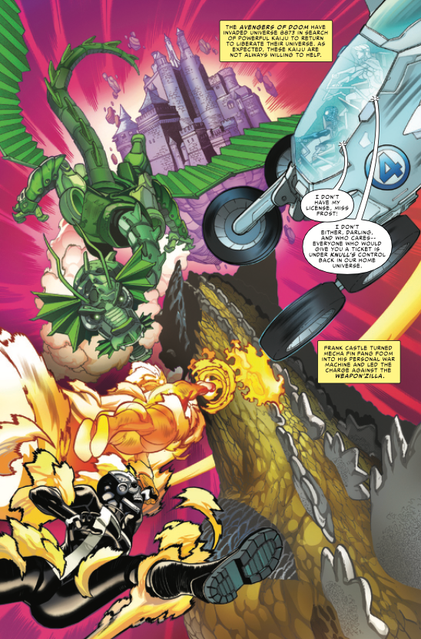
The preview for Godzilla Conquers the Marvel Universe #2 takes readers to Universe 8873, where the Avengers of Doom have arrived looking for powerful kaiju to recruit. Their search brings them to a world where Frank Castle has already transformed Fin Fang Foom into the mechanical Mecha Fin Fang Foom, while the Weapon X program has apparently decided that regular mutants simply weren’t ambitious enough.
Godzilla Just Got His Own Wolverine Transformation
-
-
-
-
-


-
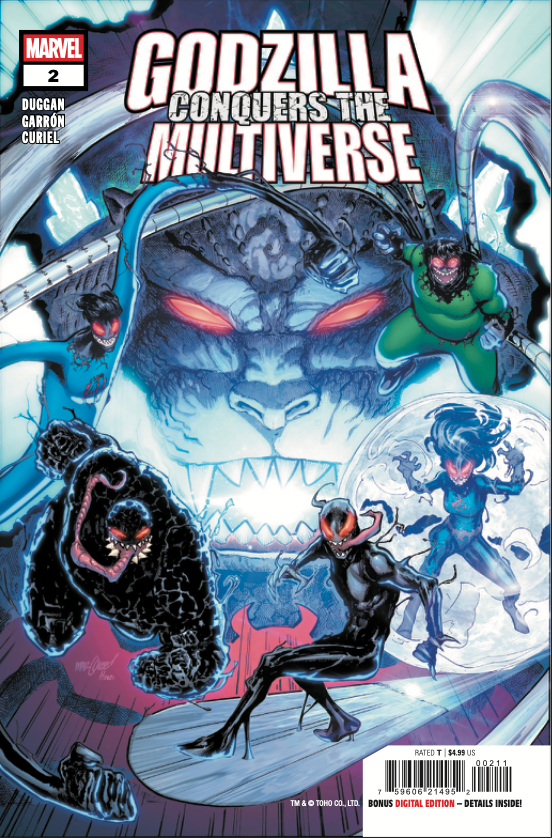 Image via Marvel Comics
 -
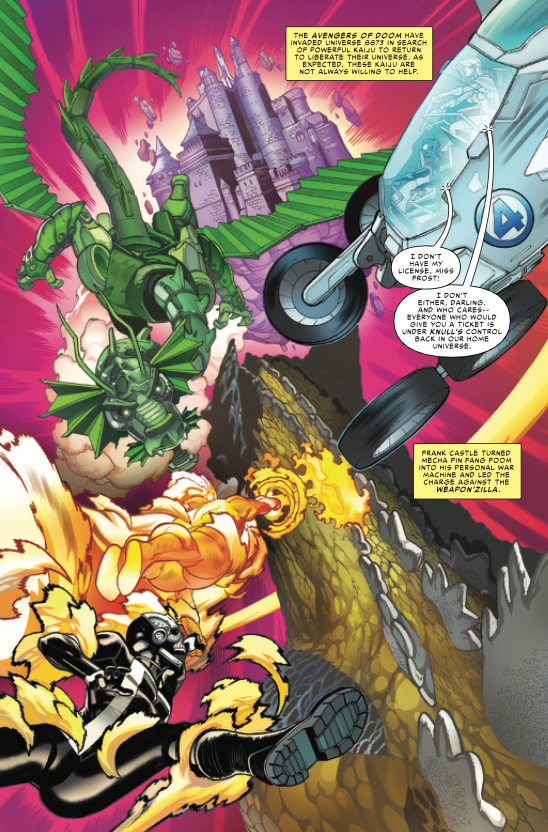 Image via Marvel Comics
 -
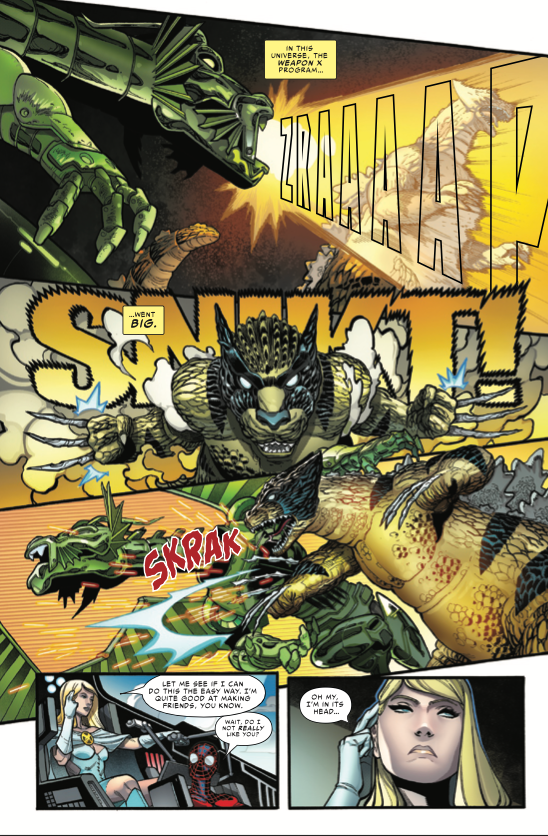 Image via Marvel Comics
 -
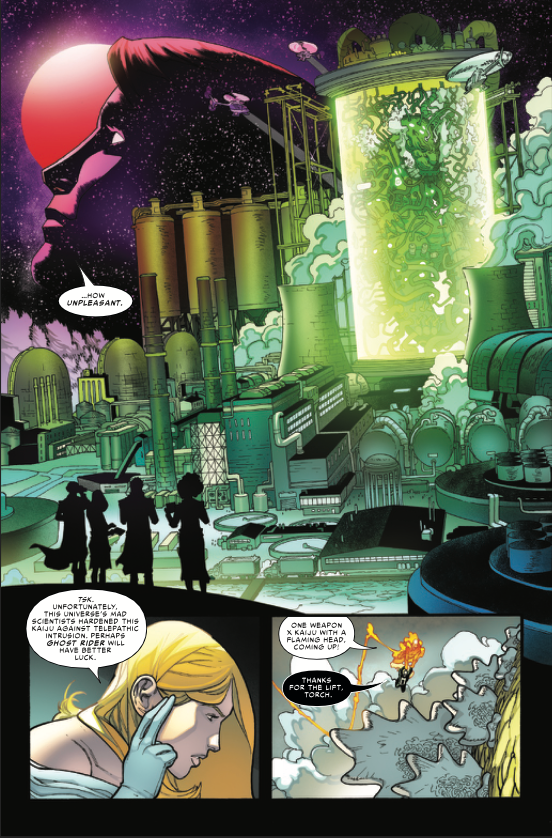 Image via Marvel Comics
 -
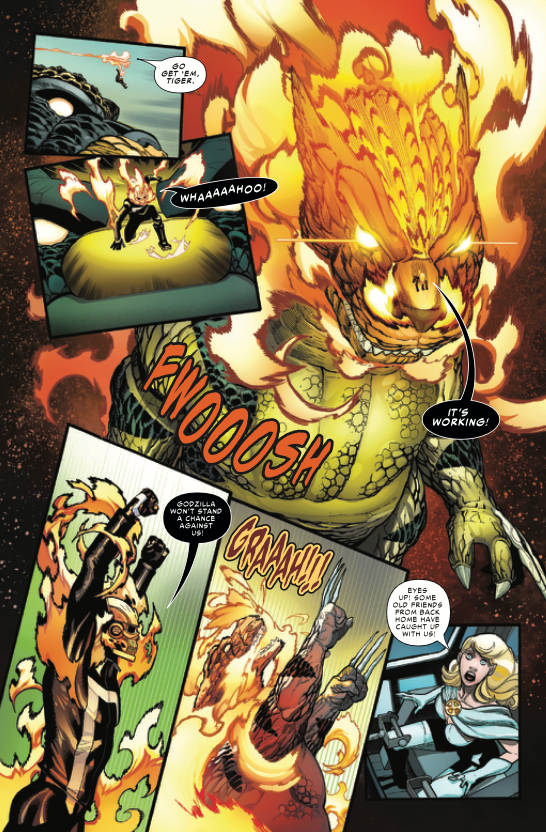 Image via Marvel Comics
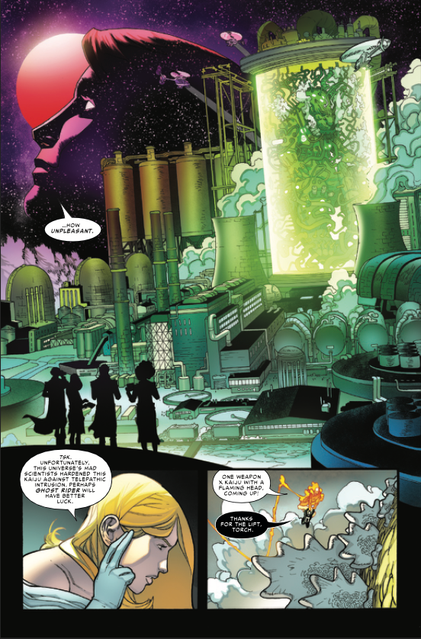
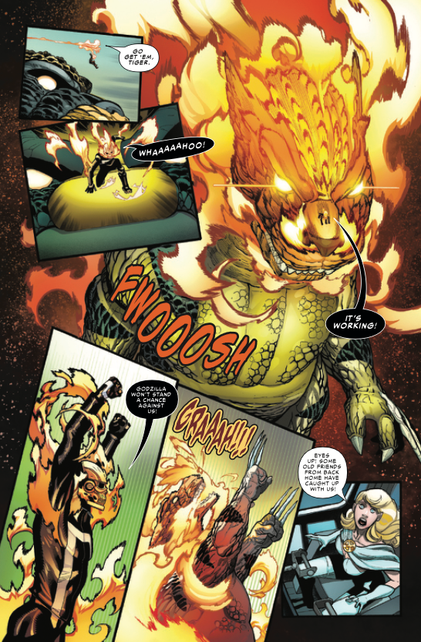
Enter Godzilla’s new Wolverine-inspired form. The kaiju emerges sporting Wolverine’s signature claws, with the Weapon X experimentation effectively transforming Godzilla into a gigantic version of Marvel’s most famous mutant berserker. The combination is already absurdly powerful, but Ghost Rider decides that even Godzilla with Wolverine claws could apparently use an upgrade. After Emma Frost explains that the scientists have hardened the kaiju against telepathic intrusion, she suggests that Ghost Rider may have better luck getting through to him. Ghost Rider promptly jumps onto Godzilla’s head, engulfs the creature in hellfire and discovers that his plan actually works. The preview ends with a flaming, Wolverine-clawed Godzilla charging into battle while Ghost Rider rides along on his head. Because apparently Godzilla becoming Wolverine wasn’t bonkers enough.
The crossover continues the increasingly bizarre premise of Godzilla Conquers the Marvel Universe, which has been using Marvel’s Multiverse to mash Toho’s monsters together with some of the publisher’s most recognizable characters. Issue #2 comes from writer Gerry Duggan, artist Javier Garrón and color artist Matt Curiel.
Godzilla Conquers the Marvel Universe #2 is on sale August 26.

- First Film
-
Godzilla (1954)
- Created by
-
Tomoyuki Tanaka

Rose McGowan has weighed in on Hayden Panettiere‘s unexpected death with a pointed message about children growing up in Hollywood. The actress used her tribute to question the toll the entertainment industry can take on young stars.
Panettiere’s own career began before her first birthday and kept her in front of the camera throughout much of her childhood.

Rose McGowan is speaking out about the dangers of childhood fame following the death of her fellow “Scream” star Hayden Panettiere.
McGowan paid tribute to the late actress in an Instagram post on Friday, which would have marked Panettiere’s 37th birthday. “Rest in Power Hayden Paniettiere [sic],” the 52-year-old wrote alongside a video of the ocean.
McGowan then turned her message into a stark warning about young performers entering the entertainment industry. “Don’t put kids in show business,” she wrote. “None of this is normal. May her spirit be free of those who orchestrated.”
Panettiere died at 36 over the previous weekend. Her official cause and manner of death remain pending as authorities conduct further investigation.
Hayden Panettiere Spent Nearly Her Entire Childhood On Screen

Panettiere began working in Hollywood as a child, appearing in her first toy commercial at just 11 months old. By age four, she had graduated to daytime television as Sarah Roberts on “One Life to Live.”
Her childhood résumé continued expanding from there. Panettiere landed the voice role of Princess Dot in Pixar’s “A Bug’s Life” before scoring a memorable part opposite Denzel Washington in “Remember the Titans” at 10.
She later said that the football drama was her favorite movie to make, recalling the experience as an “incredible time” in her life. Panettiere continued working steadily through her teens, appearing in “Ice Princess” and “Bring It On: All or Nothing.”
At 17, she made another major leap with NBC’s “Heroes.” Her role as indestructible cheerleader Claire Bennet put her at the center of the hit series, which regularly attracted more than 14 million viewers in its first season. By then, Panettiere had already spent her entire childhood virtually working on screen.
Panettiere Admitted Childhood Fame Came At A Cost

Panettiere herself later acknowledged that growing up in Hollywood came with a cost. While promoting her memoir, “This Is Me: A Reckoning,” in May, she told NPR that she felt robbed of the chance to experience a normal childhood.
The actress described being caught between “two different worlds.” One was the adult environment of the entertainment industry, while the other was the life she wanted among children her own age.
Although Panettiere said she fit more easily into the adult world, she longed to attend school, play sports, and have friends her age. Instead, she recalled struggling to be accepted by her peers. She offered a similar assessment in an earlier interview with IRK Magazine, admitting she “didn’t have much choice” about entering acting.
Panettiere also recalled being bullied at school while spending much of her working life surrounded by adults. That unusual divide left her feeling as though she belonged in neither environment. “Growing up in the spotlight is tough,” she said, adding that it “made it hard to fit in anywhere.”
Rose McGowan Has Spent Years Taking Hollywood To Task

McGowan’s criticism of Hollywood stretches back years, with the actress repeatedly arguing that its problems run deeper than individual bad actors.
She became a prominent voice in the #MeToo movement after publicly accusing disgraced producer Harvey Weinstein of rape in 2017. Weinstein denied allegations of nonconsensual sex.
McGowan also claimed she was threatened with being blacklisted after speaking about the alleged assault. She later turned her attention to those she believed enabled misconduct within the industry, vowing to pursue people who were “aiding and abetting” such behavior.
Rose McGowan Branded Hollywood A ‘Complicity Machine’

By 2018, McGowan was describing Hollywood as a “complicity machine.” The “Charmed” alum told ABC News that she initially viewed her problems with the industry as isolated issues before reaching a broader conclusion.
“It’s the entire system that’s wrong,” she recalled realizing. The actress also compared Hollywood’s culture to the cult-like environment she experienced growing up, arguing that similar tactics were used to control people.
Her activism ultimately became a defining chapter of her career, with McGowan using her platform to challenge the industry that employed her for decades.

Bret Michaels thought he was ready to reclaim the stage, but one comeback performance quickly forced the rock star to rethink his plans.
After undergoing emergency surgery last month, the Poison frontman returned to performing, only to encounter further health complications.
Now facing more time away from the stage, Michaels is opening up about the disappointment, the physical toll of the comeback, and his determination to return stronger.
For Bret Michaels, getting back onstage was supposed to mark the beginning of a return, not another interruption. The 63-year-old underwent emergency surgery to address kidney stones in July, but he remained determined to perform despite the complications that followed.
His Friday concert in Sugar Hill, Georgia, became a test of how much his body could handle. Michaels later explained that he had poured everything into the performance because it was his first show back, but several factors combined to make the experience more difficult than expected.
“It was my first show back and I wanted to give every ounce of energy I had in me,” Michaels revealed in an Instagram post.
The singer, who lives with Type 1 diabetes, also had to contend with medication changes and the physical demands of travel. He acknowledged that he had not properly accounted for the impact of flying across the country before taking the stage.
“With my excitement, I also forgot to factor in the coast to coast flight, which had an effect on my blood sugar & blood pressure with the new medicine adjustments, including my insulin,” Michaels explained.
The heat in Atlanta also became another factor, making it clear that his recovery needed more time.
Michaels’ Health Battle Forces Him To Miss Another Festival

The consequences of the difficult comeback show became apparent when Bret Michaels was forced to miss Saturday’s Mountain Music Festival in Gatlinburg, Tennessee.
For an artist whose connection with his audience is central to his identity, the cancellation was particularly painful.
Michaels said he was “truly upset that” he missed the festival, pointing to his affection for its setting and the people involved. He specifically mentioned his love for “the fans, the outdoors,” and Tennessee, while also looking ahead to the possibility of eventually returning.
“And I vow to return in ‘27 or ‘28 and make it the best show ever, plus I wanted to see the rumored BearSquatch & rock with so many great bands, fans and crew,” he shared.
The “Talk Dirty to Me” singer has also been leaning heavily on the support surrounding him. He expressed gratitude toward family, friends, fans, fellow musicians and crews who reached out after the setback. He also acknowledged the get-well messages from performers at the festival he could no longer attend.
Bret Michaels Refuses To Let The Setback Define His Comeback

Despite the frustration, Michaels is approaching the latest health setback with the same determination that has shaped his career. Rather than framing the situation as defeat, he emphasized his desire to overcome what his body is currently demanding of him.
“I always choose victory over being a victim to my disease,” Michaels noted, explaining that he had genuinely believed he could complete his scheduled shows despite the series of medical complications.
The star said he had been working “diligently” alongside doctors and physical therapists while adjusting to new medication and accounting for the different factors affecting his recovery.
Still, the emotional difficulty of being away from music remained obvious. “You’ve gotta know that my energy and my soul really want to play music,” he said.
Michaels made clear that if the decision were entirely his, he would already be back in front of an audience. “If I could, I would be back out there tomorrow,” he stated, before closing with a message to those who have continued supporting him.
“Sincere love to all…stand strong, rock on and remain Unbroken!” he noted.
Fans Rally Around Michaels With Messages Of Support

In no time, fans flooded Bret Michaels’ Instagram post with encouragement as he continued to focus on his recovery.
The comments repeatedly urged the singer to prioritize his health and take the time he needed before returning to the stage.
One supporter wrote, “Dear Michael, your health is what matters most; follow the professionals’ advice, and I have no doubt you’ll be back on stage making music very soon. Your fans here are rooting for this to happen and will be waiting for you-take good care of yourself.”
Another fan offered a similarly reassuring message, telling Michaels, “You got this bro! Enjoy a vacation of writing and listening to music. Enjoy your family and friends and heal. Looking forward to your return when you are completely recovered!”
Others reflected on seeing Michaels perform live, with one fan writing, “Put yourself first and rest. Thank you for still rocking the stage! I got to see you in Phoenix and it was amazing Sending you healing light.”
Another supporter kept the message simple but affectionate, sharing, “Keep resting and I’ll be there when you are back rocking having nothing but a good time!! My favorite human!!”
Bret Michaels’ Health Crisis Forces Nashville Cancellation
Years before the kidney stone emergency that later derailed Michaels’ comeback, the Poison frontman had already experienced another frightening medical setback that forced him to cancel a major performance.
On June 30, 2022, Michaels was scheduled to perform with Poison at Nashville’s Nissan Stadium as part of the massive stadium tour featuring Def Leppard, Mötley Crüe and Joan Jett and the Blackhearts.
However, shortly before Poison was due to take the stage, Michaels was hospitalized because of an “unforeseen medical complication,” forcing the band to pull out of its Nashville set. His bandmates eventually went onstage to explain the cancellation to the crowd.
Michaels later addressed the disappointed audience, apologizing to the fans who had come specifically to see Poison. At the time, TMZ reported that Michaels said the medical emergency may have involved a reaction to medication associated with COVID treatment, with his Type 1 diabetes reportedly contributing to the reaction.
Despite missing the Nashville performance, Michaels remained hopeful about getting back onstage quickly. “I hope you rocked hard with my friends Motley, Leppard, Joan and Classless Act!” he wrote on Instagram.
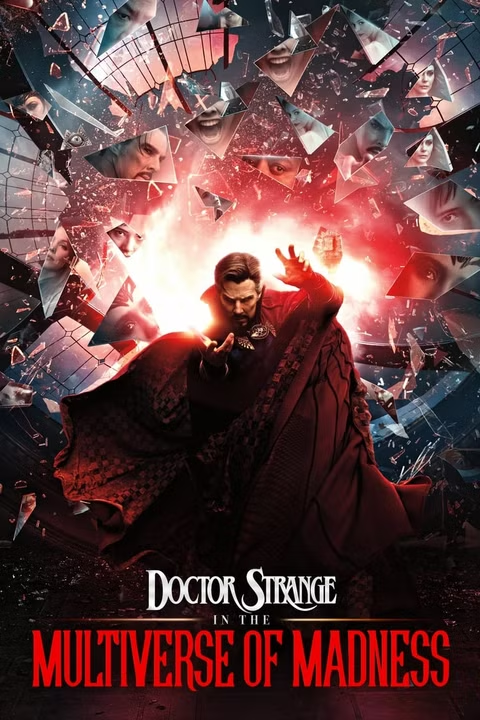
Life has never been easy for the Scarlet Witch within the pages of Marvel Comics. Wanda Maximoff is a character defined by tragedy, whether it be her upbringing with her brother, plagued by war, persecution, and experimentation, or the loss of her artificial children and marriage with Vision, leading to the pivotal House of M storyline. Yet, her trials and mistakes, while painful, have often been catalysts for her to become a stronger, more thoughtful, and more empathetic hero in the end. With her latest storyline on the page, however, she’s about to experience a test of mental and physical fortitude unlike any other she’s ever faced.
Marvel kicked off a new run with the character at the end of last year called Sorcerer Supreme, which picked up in the aftermath of Victor von Doom’s fall, leaving the Eye of Agamotto and the Cloak of Levitation without a wielder. Enter Wanda, who saw an opportunity to change her destiny, rescuing both items from the ashes and defying tradition to become the new Sorcerer Supreme of Earth despite what the Vishanti or her mentor, Agatha Harkness, had to say. Since then, she’s built herself a powerful counsel of confidants, escaped the grasp of Limbo and Madeline Pryor, faced down Dormammu, and, in the most recent issue, stopped the firing of the Extinction King’s super-cannon. Rarely has she gotten a moment to truly celebrate her victories, though, as she and the Sorcerer Supreme of the Quantum Dimension, Turin, found themselves transported to the next of the monarch’s Extinction Weapons — the Torture Star — where a fate worse than death awaits them.
While issue #9 doesn’t release until Wednesday, August 26, Marvel Comics released a preview showcasing exactly what the Torture Star does to those unfortunate enough to be caught in its grasp. This living sun is an ancient cosmic being that burns with hatred and agony, which the Extinction King commands it to bring down on Wanda and Turin. The pages pick up right after it teleported them to Jupiter’s moon, Io, where the Scarlet Witch describes their living hell of being frozen, broken, and incinerated with the heat of a star over and over again, with only brief respites between phases. Worse, one horrifying moment clarifies, as they’re roasting alive, that they feel every moment of searing agony, even once they’re reduced to nothing but bones. It’s “torture beyond mortal constraints” that threatens to break their minds, unless they can find some way to escape the eternal torment.
‘Sorcerer Supreme’
The Torture Star represents Wanda’s greatest challenge yet since becoming Sorcerer Supreme. She and Turin’s new prison is essentially a black hole of infinite pain and, to make matters much worse, they’re completely stripped of their magic. All they have is the ability to telepathically communicate with each other and plan their escape, but without the powers that make them so formidable, they’ll need nothing short of a miracle to make it out with their minds intact. Sorcerer Supreme continues DC favorite Steve Orlando‘s run with the Scarlet Witch, pairing him with artists Bernard Chang and Leirix, the latter of whom provides the covers.
Sorcerer Supreme #9 hits store shelves on August 26. Check out the preview pages in the gallery above.

- Release Date
-
May 6, 2022
- Runtime
-
126 minutes
- Director
-
Sam Raimi
- Writers
-
Michael Waldron
- Producers
-
Jamie Christopher, Kevin Feige, Louis D’Esposito, Scott Derrickson, Victoria Alonso

Pregnant Farrah Aldjufrie is ready to take her romance with former Buying Beverly Hills costar Zach Goldsmith public.
Shortly after confirming via social media on Sunday, August 23, that Goldsmith is the father of her first child due in November, Farrah, 37, took to her Instagram Stories with the pair’s first public couple photo.
The snap, taken on the day the real estate agents discovered they were having a baby boy, showed Farrah holding her cat with a blue bow collar wrapped around his neck as a smiling Goldsmith leaned into the duo with his eyes closed.
A video recorded by Farrah’s younger sister Sophia Umansky and shared via Farrah’s account just hours earlier showed Goldsmith hugging Farrah as the couple learned of their child’s gender. The footage also captured Goldsmith, who still works with Farrah at Mauricio Umansky’s real estate brokerage The Agency, kissing his partner’s head while tenderly holding her in a long embrace.
Farrah, who is the daughter of exes Kyle Richards and Guraish Aldjufrie, shared her pregnancy with fans via an Instagram post on July 3 that did not disclose the father’s identity. “My most exciting launch yet. Coming soon late November 2026,” the post, filled with snaps from a maternity shoot, was captioned.
Richards, 57, shared her joy over the news at the time, commenting on her eldest daughter’s announcement, “I can’t wait for this new chapter!! I love you so much Fairy.” (Richards also shares Sophia, 26, with her ex Mauricio, 56, as well Alexia, 30, and Portia, 18.)
Richards and Mauricio were in attendance at Farrah and Goldsmith’s gender reveal, both sharing footage from the occasion via their own Instagram Stories on Sunday night.



Kyle Richards’ eldest daughter, Farrah Aldjufrie, has sparked speculation that she and Alex Manos are over after the Buying Beverly Hills star was spotted without her engagement ring. Farrah, 34, shared photos from her family’s trip to Italy on Tuesday, August 22, geotagging La Conca del Sogno restaurant. In one picture, she could be seen […]
Farrah and Goldsmith’s on-screen chemistry sparked public discussion among fans of Buying Beverly Hills, which was cancelled by Netflix after two seasons in 2024. Noting that the pair appeared flirty while on the show, which followed The Agency’s multi-million dollar listings as well as Mauricio’s family dynamics, some social media users took to Reddit to speculate that Goldsmith was in fact Farrah’s baby daddy. (Goldsmith is already father to two sons, whom he shares with his ex, Jennifer Hamilton-Goldsmith.)
“You guys, she’s liked a comment about the father being the realtor who was nervous to talk to her – assuming Zack Goldsmith,” wrote one Reddit user in light of Farrah’s announcement.
While Goldsmith is yet to address Farrah’s pregnancy, he often shares social media content featuring his sons, including a Sunday video that showed him driving with one of them and a family dog while jokingly reflecting on his “uncontrollable cuteness aggression” towards his boy.
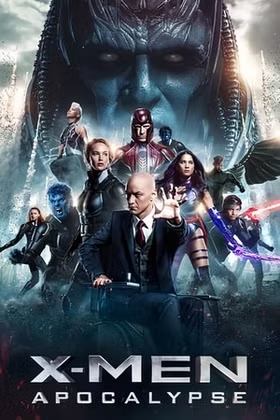
Charles Xavier may be one of the most important figures in the history of the X-Men, but Marvel is about to explore what might happen if Professor X never got the chance to build his mutant dream at all. The publisher’s latest What If…? story goes all the way back to Xavier’s beginnings to change one of the most important moments in X-Men history.
And this isn’t simply a world where Charles Xavier dies a little earlier than expected. Marvel is rewriting the bizarre connection between Xavier and Cassandra Nova, creating a reality where the X-Men’s greatest mentor never survives long enough to become Professor X and his most terrifying enemy takes his place.
What If…? X-Men #1 asks a particularly ominous question: What if Cassandra Nova killed Charles Xavier? The preview returns to the strange circumstances surrounding the two characters’ origins. Cassandra is a mummudrai, described by the Watcher as an astral-plane entity that exists as the equal and opposite of a person’s spirit. In the familiar version of events, Charles senses Cassandra’s presence while the two are still in the womb and fights back against her. This new reality changes the outcome completely.
Cassandra Nova Just Took Professor X’s Place
In the new reality, Charles fails to defeat Cassandra, and the preview shows the two becoming one, with the Watcher asking what would happen if “the parasite became the host.” Years later, the consequences are horrifying. Cassandra has seemingly inherited the life that should have belonged to Charles Xavier. The preview shows her operating from the Xavier estate while discussing her attempts to consolidate power, and she makes it clear that she has very different ideas about mutantkind than her brother ever did. Instead of Charles creating a school where young mutants can learn to control their abilities, this reality has mutants, including Jean Grey and Emma Frost, desperately trying to escape. They don’t get far.
The final preview page reveals a team of mutant enforcers waiting for them, including twisted alternate versions of several familiar X-Men. Cyclops, Wolverine and Gambit appear among the group confronting Jean and Emma, completely reversing the familiar idea of Xavier’s X-Men as a team created to protect mutantkind. It makes the one-shot much more than a simple story about Professor X’s death. Marvel is effectively rebuilding the X-Men’s history around the idea that Cassandra Nova won before Charles Xavier ever had the opportunity to become Professor X.
What If…? X-Men #1 is on sale August 26.

- First Film
-
X-Men
- Created by
-
Stan Lee, Jack Kirby
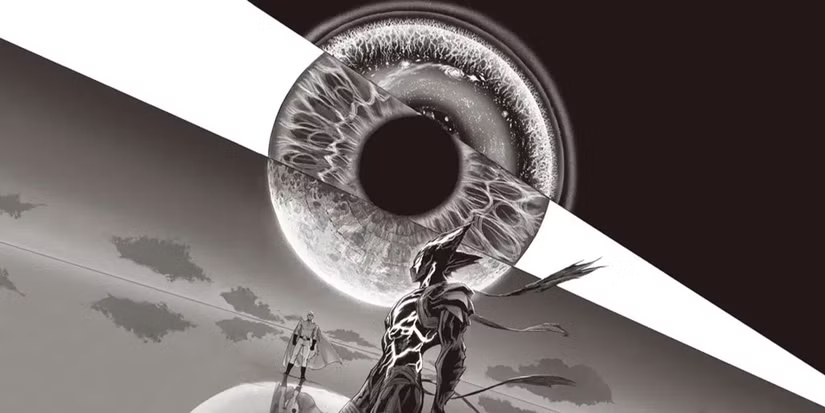
Everyone loves anime, especially now that the medium has become so much more popular with titles like Jujutsu Kaisen and Frieren: Beyond Journey’s End. But manga, on the other hand, is still rather underrated despite being the original version of many of these stories. Whether they are underappreciated or not doesn’t change the fact that manga contain some of the greatest stories ever.
The modern landscape for manga is only getting better, and that is why this list will rank the greatest manga masterpieces from the past 25 years, which is from 2001 to 2026. Based on aspects such as writing, art, detail, originality, popularity, fan opinion, critical acclaim, and overall quality, these ten series are the best of the best in the 21st century and will remain renowned for the next 25 years as well.
10
‘One-Punch Man’ (2012-present)

Masterpieces aren’t reserved for dramatic stories with intricate plots. Sometimes the best manga of the past quarter-century can be a simple but fun, action-packed adventure. One-Punch Man follows Saitama, the strongest hero in the world; however, nobody knows it. This gets him into hilarious misadventures, even on some of the most dangerous missions against the strongest opponents.
In terms of action, there isn’t a better manga than One-Punch Man, which wows readers with some of the best art they will ever lay their eyes on. Outside the striking manga panels and stunning character designs, this manga is also surprisingly funny, using its characters for hilarious moments and epic battle sequences. One-Punch Man is an action masterpiece that defines the genre of the past 25 years.
9
‘Grand Blue Dreaming’ (2014-present)

Comedy manga are vastly underrated in favor of their anime counterparts, but this list features a couple of sidesplitting classics of this century, including Grand Blue Dreaming. Iori moves to a seaside town for university, staying with his cousins. When he joins a diving club expecting something new, he is tricked into what is basically a drinking club, but that doesn’t mean he can’t have fun.
There are a lot of fantastic modern shounen manga, but seinen is where the best stories and comedies are, and the proof lies with Grand Blue Dreaming. The eccentric cast of characters and typical college humor is absolutely perfect, even if rare for manga, adopting a unique sense of comedy in comparison to others. Grand Blue Dreaming isn’t just senseless silliness, but it is also a moving story about maneuvering college life.
8
‘Golden Kamuy’ (2014-2022)

The anime of Golden Kamuy is coming to an end in 2027, but if fans can’t wait any longer, then they should pick up the manga, the superior version of the story. With rumors of a massive stash of gold hidden somewhere in the country, a soldier and an Ainu girl team up to find it. The map is tattooed, and dozens of escaped convicts are involved, and the only way is to capture them and put the pieces together.
There aren’t many manga that can switch between absurd humor and a serious plot like Golden Kamuy, which blends its ridiculous sense of humor and bizarre characters into a dramatic war story. From shocking plot twists to some of the weirdest moments in manga history, Golden Kamuy is a quirky series, but that doesn’t get in the way of its adventure and core themes, which drive the compelling story.
7
‘The Climber’ (2007-2011)

A lot of these manga are masterpieces in written form, but this medium is also acclaimed because of its art, and when it comes to that, barely any series beats The Climber. The protagonist doesn’t want to be bothered by others, but when he discovers the joys of climbing, he tries not to let them get in his way as he aims for the next highest peak after each successful climb.
Manga like Berserk are often claimed to have the best artwork, but The Climber might be reaching for the crown of the best art in manga history. The grounded aesthetic and realistic portrayal of characters are detailed to perfection, but the use of imagery creates hallucinatory visions that depict the character’s inner thoughts. The Climber is a distinct manga that revels in the beauty of being alone and doing what one loves.
6
‘Yona of the Dawn’ (2009-2025)

Most fans think that action anime is only for men, but there are plenty of woman-focused action stories out there, with Yona of the Dawn being one of the best shoujo manga ever. Once upon a time there was a dragon and his four guardians, but as time passed, that fact became legend. After the kingdom is taken over, Yona, the exiled princess, learns that in order to take her homeland back, she must find these fabled dragon warriors.
The anime is soon to get a second season, but with the manga completed, it is the best way to experience the story. Yona of the Dawn is praised for its character development, which grows a spoiled and annoying brat into a reliable leader and resilient princess. Plus, the manga has a strong supporting cast that helps develop her while also having their own moments to shine.
5
‘Yotsuba&!’ (2003-present)
Grand Blue Dreaming is a hilarious manga, but one of, if not the greatest, comedy manga is Yotsuba&! The titular character just moved to a new town with her father, and while he is busy with his job, she can roam around town, make new friends, and have fun. There isn’t much to this manga, but the simple joys define the pure childlike wonder that it embodies.
Many people dismiss comedy manga, but it has so much more storytelling than many other genres. Yotsuba mixes life lessons into its hilarious plot. While it is well written, Yotsuba is beloved for its protagonist and comedy, which has her causing adorable chaos around town. From simple farm trips to playing with friends, every moment is hysterical for young and old fans, proving this series has what it takes to blow up as an anime.

Fullmetal Alchemist is considered the greatest anime series of all time, and while the manga doesn’t have the same status, it is still among the best ever. After brothers Edward and Alphonse lose parts or all of their bodies in a taboo experiment, they set out on an adventure to find the philosopher’s stone. However, all they uncover is a government conspiracy that threatens to consume the entire world if they don’t intervene.
Fullmetal Alchemist is one of the most complete manga ever, and by that, this list means it contains everything a manga fan could want, from great artwork and characters to an engaging story, riveting drama, mystery, action, worldbuilding, romance, and shocking plot twists. It is one of the best-crafted plots that works in adventure and drama seamlessly to create an outstanding and timeless manga legend.
3
‘Vinland Saga’ (2005-2025)

Some manga of the past 25 years are still going, but others have finished their stories, and Vinland Saga is the most recent manga to have concluded its grand adventure. After the death of his father, Thorfinn joins the crew of the Vikings who murdered him, hoping to get his revenge when he is stronger. However, years later, he has a crisis of faith, unsure of what direction he should take in a life that is defined by bloodshed.
When it comes to the greatest manga ever made, many fans bring up three specific works, and Vinland Saga is among them. It is hard to argue, because Vinland Saga boasts arguably the best character development in the medium, taking Thorfinn from an angry annoyance to a deep and nuanced character. There is a reason why it is considered one of the best seinen manga, proving it is among the best of the last quarter-century.
2
‘Goodnight Punpun’ (2007-2013)

A good manga makes people feel things, and Goodnight Punpun will make anyone break down and cry. The titular character is a normal boy living in a less-than-ideal situation, and this manga chronicles his life, from the good to the bad to the ugly. As a hopeless romantic, he wants nothing more than to fall in love, but this is where the root of his problems stems from.
A lot of fans don’t experiment outside their comfort zones, sticking to action or shounen series, but viewers should dip their toes into the ocean that is Goodnight Punpun. It may be an ocean of tears that will make viewers bawl their eyes out, but it is an incredibly profound and hard-hitting manga that will be relatable for some and tragic for all. It is a manga that will leave a pit in fans’ stomachs, but its realistic story is one of the most engaging of the past 25 years.
1
‘Kingdom’ (2006-present)

As mentioned, many of the manga on this list have come to an end, but some continue, further proving why they are the best of the last 25 years. Kingdom is about a young boy who dreams of becoming the greatest general in the Warring States period of China. One fateful day brings him into contact with the emperor-to-be, and thus begins the duo’s journey to unite the kingdoms and achieve their lifelong dreams.
Manga sometimes feature big stakes and flashy battles, but the grandeur of Kingdom is better than any other over-the-top manga. Its intricately crafted war sequences are a spectacle to witness, because not only are they gorgeous to look at through the art, but they also use genuine strategy. Kingdom is all about the battles, but it has plenty of endearing characters and political intrigue to prove why it is one of the best manga series of all time.

Kingdom
- Release Date
-
June 4, 2012
- Directors
-
Jun Kamiya, Akira Iwanaga, Kenichi Imaizumi, Kazuya Monma
- Writers
-
Naruhisa Arakawa, Noboru Takagi
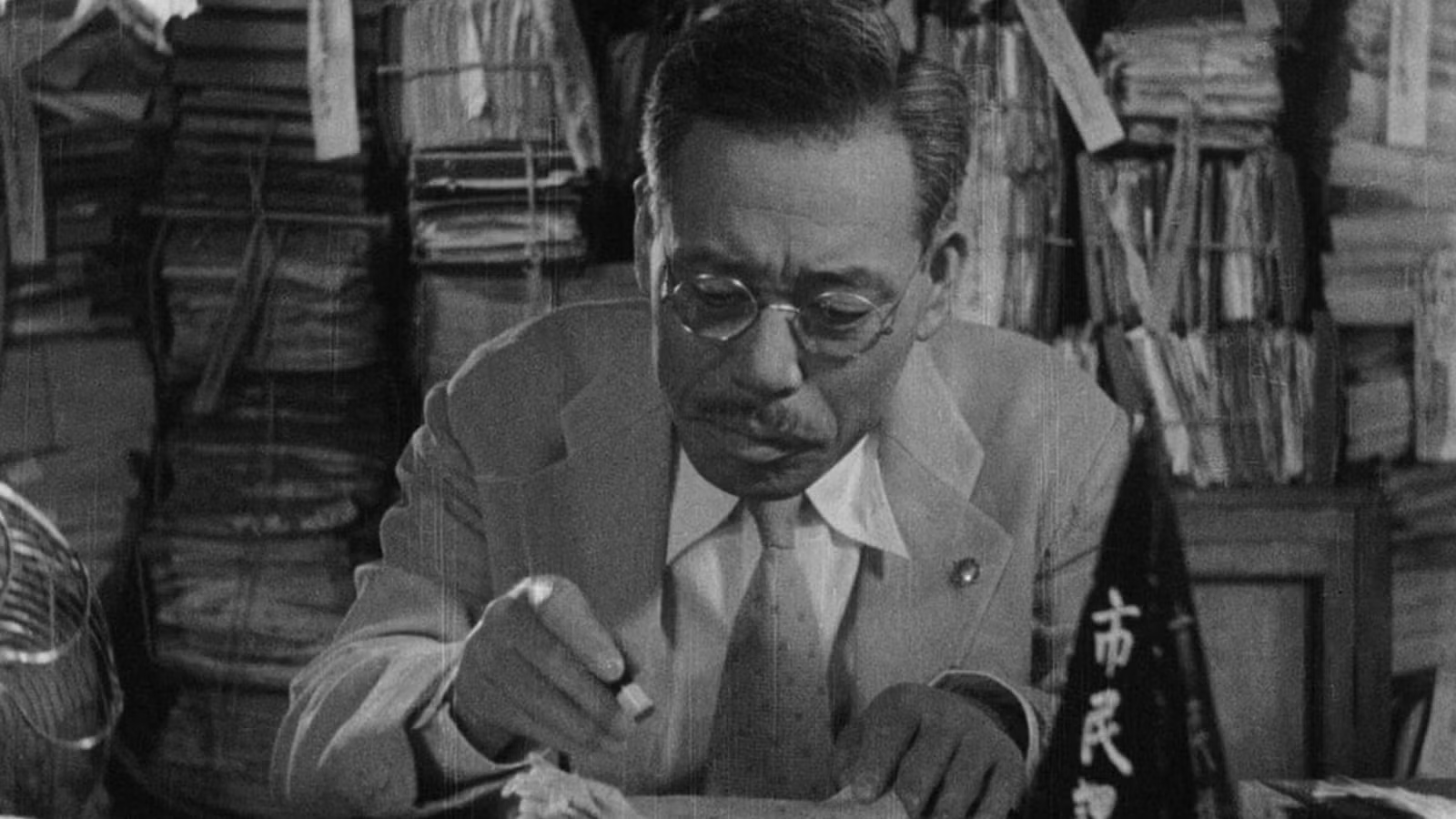

Western audiences will probably associate Akira Kurosawa with epics such as Seven Samurai and Ran, and, of course, the widely influential drama Rashomon. However, the legendary Japanese filmmaker also made a quietly meditative drama that is just as well-regarded. The movie in question was released in 1952, which makes it 74 years old. It’s currently available to stream in the United States on HBO Max, giving a new generation of audiences a great opportunity to check it out. That said, they may want to hurry, because it’ll be removed from the platform soon.
The movie was inspired by a Leo Tolstoy novella, and it follows a man from Tokyo who learns to appreciate the small joys of life after he’s diagnosed with a terminal illness. Seven Samurai is well known for having inspired the classic Western The Magnificent Seven and George Lucas’ culture-defining original Star Wars movie. But Kurosawa’s 1952 classic has been just as influential; it’s only that the movies it inspired are equally unassuming. Most recently, it served as the basis for Living, the British drama film that earned the veteran Bill Nighy his first-ever Oscar nomination, and also for the Oscar-nominated Wim Wenders drama Perfect Days.
Here’s How Long You Have Left to Watch the Japanese Classic on HBO Max
We’re talking, of course, about Ikiru. The movie now holds a near-perfect 98% score on the aggregator website Rotten Tomatoes, where the consensus reads, “Ikiru is a well-acted and deeply moving humanist tale about a man facing his own mortality, one of legendary director Akira Kurosawa’s most intimate films.” The late critic Roger Ebert was one of Ikiru’s most passionate fans. Adding it to his collection of “great movies,” he wrote, “Over the years I have seen Ikiru every five years or so, and each time it has moved me, and made me think.” You can watch the film on HBO Max before it is removed from the platform on September 30. Stay tuned to Collider for more updates.

- Release Date
-
March 25, 1956
- Runtime
-
143 Minutes
- Director
-
Akira Kurosawa
Thriller isn’t just a word used as the title for one of pop music’s biggest albums of all time. It’s also a word used to describe an incredibly popular and long-lasting genre of movies: something that lies somewhere between horror, drama, and action, with a story that aims to excite, unnerve, or thrill its audience. The thriller genre has been popular ever since the silent era, and has continued to thrive as a reliable type of movie well into the 21st century.
It’s also a fairly broad genre, with countless movies that can be described as thrillers, or perhaps have elements of a thriller combined with other genres. The following selection of movies aims to look at the greatest thriller films of all time, predominantly focusing on movies where “thriller” is the primary genre. Above all, they’re very likely to get one’s heart racing, and are all easy to recommend to viewers who crave more adrenaline rushes in their movie diet.
35
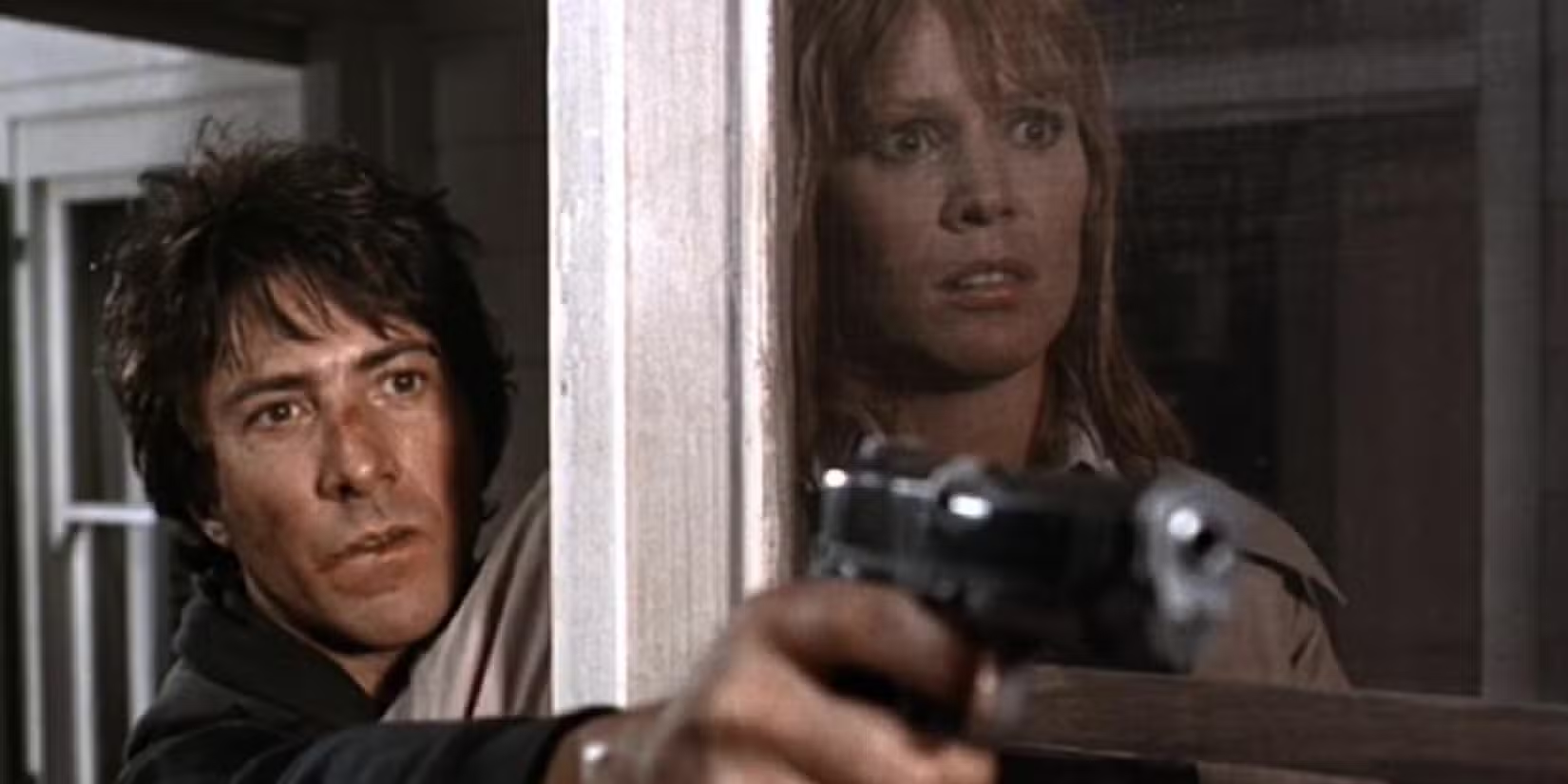
‘Marathon Man’ (1976)

With a dynamite screenplay coupled with excellent performances by Dustin Hoffman and Laurence Olivier, Marathon Man is a movie that never lets up. It stands in contrast to other films from the 1970s that sometimes had slower pacing, with this movie about a man getting wrapped up in a bizarre and convoluted conspiracy likely to make you as breathless as running a real marathon. Some would argue that the genre is at its best when it’s at its most stressful, and Marathon Man is indeed a nail-biting and stressful movie.
There are also times when Marathon Man verges dangerously close to becoming a grisly horror film, and will likely make viewers fear a trip to the dentist even more than they might’ve before. Any way you cut it, it’s good stuff, and sufficiently thrilling for those who are after something pulse-quickening in nature.
34
‘The Chaser’ (2008)

There have been plenty of great South Korean crime thrillers released in the 21st century so far, and The Chaser‘s would have to rank among the best of the lot. It follows a corrupt cop who discovers there may be a serial killer targeting prostitutes, and he sets out to try and find this murderer by any means necessary.
The results aren’t pretty, with The Chaser being an exceedingly dark, gritty, and oftentimes unpleasant movie that’s nonetheless difficult to look away from, compelling as it needs to be for a film of this kind. Its particularly dark take on the thriller genre might well ensure it’s not to everyone’s liking, but those who feel like they can handle something that gets very down and dirty might well find themselves sufficiently thrilled.
33
‘Le Samouraï’ (1967)

Being an assassin has never looked as cool as it’s looked in Le Samouraï, it has to be said. While the film doesn’t glamorize the life of its main character, or suggest his line of work is easy by any means, Le Samouraï is ridiculously stylish and just effortlessly suave, thanks to its deliberate pacing, visual aesthetic, and lead performance by Alain Delon.
It was also one of the best films released in 1967, which itself was very much a cool and radical year for cinema, in many ways. It tells a simple story about an assassin fighting for his life after a hit gone wrong, and does so in a timeless and very efficient way that makes Le Samouraï a singular crime/thriller movie, an enduring classic of French cinema, and a shining example of how good arthouse crime movies can be.
32
‘All the President’s Men’ (1976)

There has never been a better era for political thriller cinema than the 1970s. The contemporary skepticism of the American public was stoked by incidents like the Watergate scandal, creating an atmosphere of distrust and cynicism that many movies capitalized on. All the President’s Men is the absolute best of these films, taking direct interest in the Watergate scandal itself as it follows two reporters’ investigation of a botched burglary of the Democratic Party Headquarters that has ties to the White House and Richard Nixon’s presidency.
Its biographical status imbues it with a sense of urgent realism that is palpable, especially as government agents resort to intimidation to dissuade the journalists from persevering with their investigation. However, All the President’s Men is also bolstered by the exceptional performances of and dynamic between Robert Redford and Dustin Hoffman, the brilliantly naturalistic writing, and Alan J. Pakula’s sharp direction, making it an ageless triumph of political thriller cinema as well as a provocative expose on presidential corruption. —Ryan Heffernan
31
‘Zodiac’ (2007)

David Fincher is something of a maestro when it comes to thriller cinema. His technical precision, icy aesthetic, and his intense interest in stories of amorality, crime, and obsession have made for several of the genre’s defining triumphs over the past 30 years. While it might not be quite as revered as some of his other films, Zodiac stands tall as a commanding true crime thriller in its own right as it follows cartoonist Robert Graysmith’s (Jake Gyllenhaal) festering interest in investigating the Zodiac killer.
With a runtime of 157 minutes, Zodiac flaunts an epic, all-encompassing sense of scale that boldly marries its simmering slow-burn suspense with several sequences of blood-curdling terror. Fincher’s trademark ability to worm into the viewer’s mind is on full display from the film’s creeping opening minutes right through to its disconcerting final scene. Further propelled by a litany of strong performances, flawless period production design, and a sense of lingering and weighted resonance, Zodiac is a modern masterpiece of cinematic tension. —Ryan Heffernan
30
‘Double Indemnity’ (1944)

It might be most classifiable as a movie within the film noir genre, but Double Indemnity is also excellent when judged as a thriller. It’s about an insurance agent being targeted by a cunning femme fatale type of character, and seduced into helping her murder her husband for insurance money.
Things go about as well as you’d expect them to (essentially, things end in disaster; it’s a film noir tradition, after all). The thrill comes from watching things fall apart in an inevitable yet still somehow surprising way, with Double Indemnity holding up almost 80 years on from release as one of the most exciting movies from the film noir genre. Everything adds up to make Double Indemnity easily up there with the very best releases of the 1940s, regardless of genre.
29
‘Rear Window’ (1954)

A classic Alfred Hitchcock movie that ranks as one of the best films released in 1954, Rear Window is a highly inventive and ambitious mystery/thriller movie with a remarkably confined setting. It follows a man unable to leave his apartment, due to an injured leg, and as a strange hobby of sorts, he begins passing the time by spying on his various neighbors through their windows.
It touches on voyeurism and, in turn, paranoia, given the main character begins to suspect that one of his neighbors may have committed a murder. Rear Window stays surprisingly engaging, working wonders with a small cast and limited scope, showing that few directors could make thrillers quite as well as Hitchcock could in his prime. And no one can deny that Hitchcock was undoubtedly on fire throughout the 1950s.
28
‘Black Swan’ (2010)

Darren Aronofsky specializes in making intensely psychological movies, and while most of them could probably be classified more as dramas than thrillers, Black Swan certainly feels like a psychological thriller. It arguably feels like a horror movie in parts, too (as various intense movies from Aronofsky tend to be), telling a fiercely intense story about a young ballerina getting very immersed in her role during a production of Swan Lake, with violent and alarming results.
Black Swan is a stomach-churning movie, with a dizzying style, a continuing sense of escalating tension and dread, and an amazing lead performance from Natalie Portman. It’s one of Darren Aronofsky’s best films, and though its 2010 release makes it more recent than other classic thrillers, it deserves to be recognized among the best of the best.
27
‘Fatal Attraction’ (1987)

Fatal Attraction is a movie that has a reputation that precedes it. It’s a quintessential 1980s thriller, telling the now familiar-sounding story about one man having an affair with a woman who turns out to be more than he bargained for, and the way his family life is affected when she decides to stalk/terrorize him after he moves on.
Some elements date the movie, without a doubt, which can make it a little uncomfortable to watch today. It doesn’t handle a delicate topic like mental health with much care, even by the standards of a movie that came out more than three decades ago. However, Fatal Attraction is undeniably iconic as a thriller, earning six Oscar nominations and becoming a huge success at the box office (the highest grosser worldwide in 1987).
26
‘Straw Dogs’ (1971)

Anyone familiar with the filmography of Sam Peckinpah probably won’t be surprised by the direction Straw Dogs ends up going, though it does stick out for being one of the director’s few well-known non-Westerns (it’s no less violent, though). The plot follows a couple who go to live in a small rural town; one that at first seems to offer a peaceful alternative to life in a busy city.
However, things don’t go to plan. Certain townspeople harass the new couple, with things escalating from verbal to physical abuse. At that point, the slow-burn nature of the thriller’s plot explodes into violence, with the third act being an unsettling and still shocking rampage of revenge. Straw Dogs is a difficult film that won’t be to everyone’s tastes, but it’s amazingly well-made and acted overall.

Crypto World1 minute ago
Pakistan kicks off crypto licensing regime with Sept. 5 registration deadline

Politics2 minutes ago
7 Plants UK Gardeners Won’t Be Growing Again In 2027

Sports4 minutes ago
Scottie Scheffler reveals he has illness





-

 Fashion3 days ago
Weekend Open Thread: Madewell – Corporette.com
-

 Business6 days ago
SMA Solar Technology AG (SMTGY) Q2 2026 Earnings Call Transcript
-

 Crypto World2 days ago
anatomy of crypto’s biggest liquidation event since 2021
-

 Business2 days ago
Musk’s Tesla, SpaceX Confirm $16.8 Billion ‘Terafab’ Chip Plant as World’s Largest Building in Texas
-

 Tech6 days ago
Qwen3.8-27B runs frontier-class coding agents and reasoning locally, no cloud API required
-

 Crypto World7 days ago
OCC Greenlights Trump Family Crypto Firm for Trust Charter
-

 Politics2 days ago
6 months on, Irish renters crushed by effects of government housing bill
-
 NewsBeat2 days ago
The ‘Lucky Dip Gang’ causing carnage for clicks: After five thugs were killed speeding in the wrong direction on a motorway, GUY ADAMS investigates a sick new trend… and why police aren’t even allowed to pursue them
-

 Crypto World7 days ago
NAVI Prime launches institutional lending framework on Sui
-

 News Videos4 days ago
Don’t Leave Your Financial Future To Chance | August 19, 2026
-

 Tech5 days ago
GLM-5.3 hits the API at $1.4/$4.4 per million tokens
-
Tech6 days ago
5 Of The Most Reliable Car Brands To Consider If You’re Buying A Used SUV
-
 Crypto World7 days ago
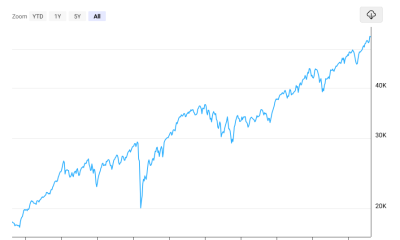
Dow’s 3-Year Winning Run Isn’t a Crash Signal, Still 49% Odds of Double-Digit Gains
-

 Business6 days ago
Stock Market Today: Tech Futures Slide As Treasury Yields Jump; Nvidia, Micron, Sandisk Sell Off
-

 Tech7 days ago
Straight Up the Cliff, Yunnan’s New Fuyao Ladder Turns a Three-Hour Climb Into a 50-Second Ride for Students
-

 Tech6 days ago
Keychron K8 Ultra 8K review: a great value keyboard with comfort issues
-
 Tech7 days ago
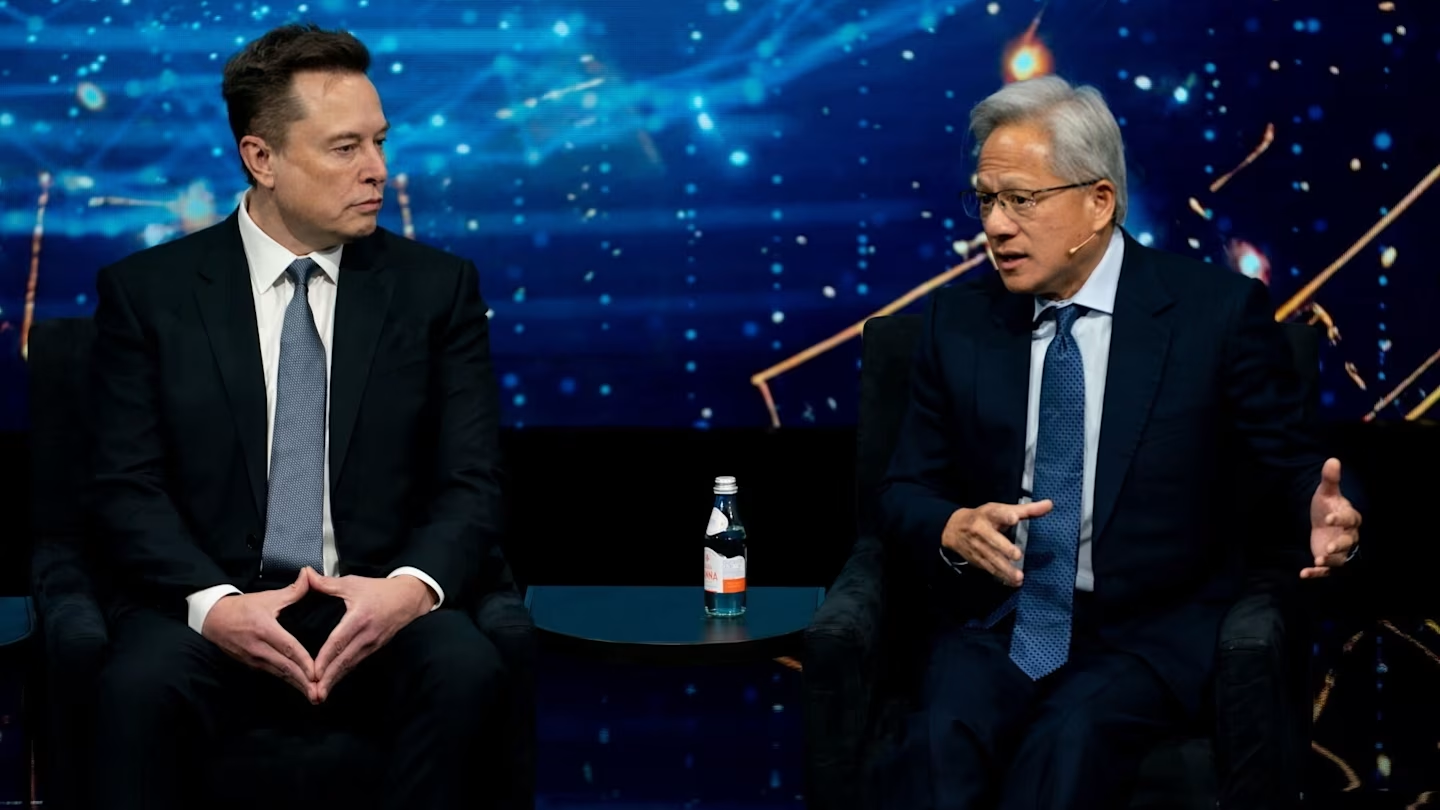
Nvidia discloses $21B stake in SpaceX
-
Business6 days ago
Fabrinet (FN) Q4 2026 Earnings Call Transcript
-

 Business4 days ago
Five Below: Kids Discount Retailer Reaps Rich Rewards
-

 Business5 days ago
Marvell Shares Jump 7% as Google Chip Deal Confirms Custom AI Silicon Partnership, Analysts
You must be logged in to post a comment Login