Connect with us

Business

Utz Brands finding more space in consumers’ pantries

Published

on

Utz Brands finding more space in consumers’ pantries
Continue Reading
Click to comment

Leave a Reply

Your email address will not be published. Required fields are marked *

Business

Security Convergence and The Human Error

Published

on

The cyber defences of UK businesses are faltering as 50 per cent of businesses reported a cyber attack or breach over the past 12 months, according to the government’s latest Cyber security breaches survey 2024.

Human error makes up for 74% of all data breaches according to Verizon’s Data Breach Investigation Report of 2023. This makes it the biggest risk to corporate security, as well as one of the most difficult to target. Everyone makes mistakes, and it’s tricky for security measures to account for this.

In this article, Titan Security Europe discusses the risk of human error and explores the benefits of implementing security convergence in efforts to combat it.

Cyber security & human error

In cybersecurity, human error is defined as unintentional action (or inaction) by a person that results in unsafe outcomes such as data breaches. There are two key types of human error:

  • Skill-based errors: In which errors occur as a result of temporary lapse. The employee knows the correct procedure for the task they are carrying out, but as a result of tiredness, inattention or distraction, they make a seemingly small error that can have a huge impact.
  • Decision-based errors: In which an employee makes an active decision that leads to breach or risk but does not do so with malice. Usually, this is as a result of lack of knowledge or training. Inaction also counts as a decision-based error; such as ignoring a security alert and continuing with a task regardless.

Human error can take forms such as:

  • Employee Negligence: Employee negligence takes up around 42% of all human error-based cyber threats. Negligence includes devices left unattended and data mishandling. Such negligence is rarely malicious but can lead to data falling easily into the wrong hands, which can cause major breaches.
  • Security Vulnerabilities: Small and seemingly insignificant factors such as weak passwords, leaving accounts and devices unlocked and leaving credentials out in the open can lead to hacking, stolen credentials and stolen data.

Such errors can lead to:

  • Phishing Scams: Phishing scams are the most common cyber attack against businesses. Phishing scams see fraudsters contacting employees claiming to be a partner, client or fellow employee requesting sensitive data to be sent to them. In most cases, falling for these attacks comes down to human error.
  • Lost/Stolen Devices: Taking up 28% of human error based cyber threats, devices that contain employee credentials, sensitive data and more can become lost through negligence, or can become stolen easily if a remote worker or a commuter carrying their work device becomes distracted.
  • Stolen Employee Credentials: Accounting for 33% of all data breaches based in human error, employee credentials can be stolen if record of them is left out where anyone could find them, or even if remote workers work on a public network, leaving them susceptible to hackers. Stolen credentials allow non-employees to gain access to systems and data without being caught out.

Importance of security convergence

Little can be done to entirely prevent human error. However, steps can be taken to minimise the chance of human error occurring, and to prevent the fallout if an error does occur.

This is where security convergence comes in. Security convergence is the process in which physical security measures are used alongside cyber security measures to create a security system with less room for failure.

Physical and cyber security measures work together to cover each other’s blind spots. While cyber security works to protect data stored in the cloud in ways physical security cannot achieve, physical security measures act to cover human error – and do not rely on electricity, internet connection or other digital means that could fail.

Advertisement

Security convergence, in short, ensures that a business is covered on all grounds, at all times.

Security convergence in action

If implemented correctly, security convergence minimises the risk and fallout of human error, protecting businesses from careless and costly mistakes.

Below are some examples of security convergence in action.

Human Error: Phishing Scams.

Advertisement

The Cyber Side: Multi-Factor authentication should be put in place for email authorisation. Emails coming through to employees should be screened, with only recognised identities being able to contact employees of a company.

The Physical Side: Employers should hold regular training sessions for employees on how to spot and prevent phishing scams. Employees should be told to send any suspicious requests on to superiors for checks. Employees should also ask for authentication – be it a password or proof of credentials – before sending sensitive data at the request of someone else.

Human Error: Employee Negligence.

The Cyber Side: Devices should lock when idle for longer than a couple of minutes and require password entry to unlock. Data encryption should be in place on all sensitive data. Employees would have to enter a specific code in order to unscramble and use the data. Passwords should be secure and changed often.

Advertisement

The Physical Side: CCTV should be in operation and consistently monitored throughout the building to allow intervention to occur should someone be found handling a device that is not their own. Security guards should also be in place in the main reception of an office, checking identifications of everyone who enters and preventing entry to any unauthorised persons.

Human Error: Stolen Credentials.

The Cyber Side: MFA ensures that credentials alone are not enough to access an account, system or data. Even if someone gets hold of an employee’s credentials, they would not be able to access data without having access to the employee’s phone to receive a code, or without having the employee’s biometrics.

The Physical Side: Enforce zero-trust policies and forced password resets monthly. Run security awareness programs to alert employees to the dangers of leaving credentials out for anyone to find – employees should be discouraged from writing credentials down in notebooks or on paper, and even if they do, these should not be left out on desks or in public spaces.

Advertisement

Human Error: Lost/Stolen Devices.

The Cyber Side: Data held on corporate devices should be protected by firewalls, passwords and data encryption. Failsafes should be in place that cause the device to be wiped entirely if the wrong passwords are entered a certain number of times.

The Physical Side: For in-office work, devices should be used at work and at work alone. When not in the office, employees should hand their devices into security personnel, who will only distribute devices to their registered employee. For remote workers, employees should be provided with separate laptops and phones for work purposes, to prevent important data being mixed in with their personal device.

Conclusion

The unavoidability and unpredictability of human error are what makes it such a huge risk to corporate security. No amount of cyber protocol alone can fully prevent a distracted mis click or a careless loss.

Advertisement

Security convergence minimises the chance of human error leading to a costly loss. The introduction of physical alongside cyber systems covers blindspots, allows for intervention, and offers a final line of defence that cyber security alone struggles to provide.

Advertisement
Continue Reading

Business

The Ultimate Guide to Calculating Real Influencer Campaign ROI

Published

on

If you have ever tried to defend creator spend in front of a CFO, you know the problem. The campaign can look busy on the surface. Views are high, comments are positive, and the creators are asking when the next deal is coming.

If you have ever tried to defend creator spend in front of a CFO, you know the problem. The campaign can look busy on the surface. Views are high, comments are positive, and the creators are asking when the next deal is coming.

Then the CFO asks one question: what did we get back in revenue, and how do you know it came from this spend? When the answer leans on Earned Media Value (EMV) only, engagement rate, or brand awareness, the conversation usually ends with budget pressure.

In 2026, that standard is changing. Vanity metrics might help you improve creativity, but they do not justify investment. What wins the budget is attribution to Net Revenue and profit, plus clear math that ties spend to Customer Acquisition Cost (CAC), Customer Lifetime Value (CLV), and conversion. CFOs in particular and brands in general need performance-based influencer marketing.

This guide shows how to calculate influencer marketing ROI using the same financial logic you would use for any growth channel. We will also separate Return on Ad Spend (ROAS) from profit based ROI, and walk through creator campaign attribution models and the tracking stack needed to connect an influencer post to a closed deal.

Key Takeaways

  • Move beyond EMV to Hard Revenue.
  • Include all costs (agency, product, shipping) in the formula.
  • Use U-Shaped or Linear attribution to see the full picture.
  • Automate tracking with UTMs and pixels.

ROI vs. ROAS vs. EMV: Defining Financial Success

Marketers often mix these metrics in the same report. A CFO will not. If you want influencer spend to be treated like a real growth investment, you need to be precise about what each metric measures, what it ignores, and what question it answers.

Earned Media Value (EMV)

  • What it is: A dollar estimate assigned to impressions, views, likes, or engagement by comparing them to what you might have paid for similar reach in ads.
  • What it answers: “How much would this exposure have cost if we bought it?”
  • Why it fails in the boardroom: EMV is built on vanity metrics. It has no direct link to net revenue, profit, or even verified customer actions. Two campaigns can have the same EMV while one drives sales and the other drives nothing but attention. EMV can be useful for creative benchmarking, but it is not a financial result.

Return on Ad Spend (ROAS)

  • What it is: A revenue efficiency metric.
  • Formula: ROAS = Gross Revenue / Ad Spend
  • What it answers: “How much gross revenue did we generate per dollar spent?”
  • Why it matters: ROAS is a clean way to compare channel efficiency when your goal is revenue generation. It forces you to connect spend to revenue. But ROAS is not profitable. It does not subtract costs like Cost of Goods Sold (COGS), shipping, discounts, refunds, or agency fees. A campaign can look strong on ROAS and still lose money.

Influencer Marketing ROI

  • What it is: A profitability metric for creator investment, and the primary financial KPI if you need CFO level approval.
  • Core logic: profit compared to Total Investment.
  • What it answers: “Did we make money after all costs, and how much profit did this Investment produce?”
  • Why it matters: ROI is what finance teams use to decide whether to scale, hold, or cut spend. It forces you to define total investment properly and connect it to profit, not just revenue.

Comparison table: EMV vs. ROAS vs. ROI

Metric What it measures Core inputs Best use Main weakness
EMV Estimated value of exposure Vanity metrics like views, impressions, engagement, plus assumed media rates Creative comparison, top of funnel reporting Not tied to net revenue, profit, or verified outcomes
ROAS Revenue efficiency Gross revenue, ad spend Comparing efficiency across paid and creator programs Ignores costs, so it can overstate success
ROI Profitability Net profit, total investment Budget justification and scale decisions Requires clean cost accounting and attribution

The math difference that matters

  • ROAS uses Revenue, not profit:
    • ROAS = Gross Revenue / Ad Spend
    • Useful when you need to show Revenue per dollar, but it does not tell you if the campaign was profitable.
  • ROI uses profit and full Investment:
    • ROI is built on Profit compared to Total Investment, not just the creator fee.
    • Finance cares about Profit, because Profit is what remains after costs.

If you want a creator report to survive a CFO review, treat EMV as supporting context, not the headline. Lead with investment, revenue, and profit. Then back it up with transparent assumptions and a repeatable tracking method. For more on this, see metrics that matter.

The Exact Formulas to Calculate Creator ROI in 2026

1. ROI

Start with the only ROI formula a CFO will accept. Influencer marketing ROI is a profitability metric, not a feelings metric. The standard formula is:

Advertisement

ROI (%) = (Net Profit – Total Cost) / Total Cost x 100

This is the formula you should use when you want to claim a creator campaign “paid back” the budget.

2. Total Cost

Define Total Cost correctly, or your ROI will be wrong. Most influencer reports quietly treat the influencer fee as the whole cost. That is the fastest way to lose credibility with finance. Total Cost must include every real expense required to produce and fulfill the sale.

Include in Total Cost:

Advertisement
  • Creator fees (and usage rights if paid separately)
  • Agency fees or internal labor allocation (if you report that way)
  • Product seeding costs (free product sent to creators)
  • Cost of Goods Sold (COGS) for units sold
  • Shipping and handling
  • Payment processing fees and platform fees
  • Returns, refunds, chargebacks (treat as revenue reduction or as cost consistently)
  • Discounts and coupons (again, handle consistently)

If you leave out COGS and shipping, you can show a positive ROI on paper while the business loses money on every order.

3. Net Profit

Calculate Net Profit the same way your finance team does. Net Profit is what remains after costs. A simple way to structure it for creator campaigns is:

Net Profit = Net Revenue – Total Cost

Where Net Revenue is revenue after refunds, returns, and any adjustments your finance team uses. This is why Net Revenue matters more than top line gross sales when you are trying to prove real ROI.

4. Break-even Revenue

Know your break-even point before you scale. Before you ask for more spend, you should know the Break-even Point, meaning the minimum revenue you must generate to avoid losing money.

Advertisement

Break-even Revenue = Total Cost / Gross Margin %

Example:

  • Total Cost of the influencer program this month: $50,000
  • Your gross margin is 60% (0.60)
  • Break-even Revenue = $50,000 / 0.60 = $83,333.33

If your attributed revenue is below $83,333.33, you are not breaking even yet. If it is above it, you have room to scale, assuming the attribution is credible.

5. CAC

Calculate Customer Acquisition Cost (CAC) for creator campaigns. ROI tells you profitability. CAC tells you efficiency of acquiring new customers, which is often how senior teams compare channels.

Influencer CAC = Total Spend / New Customers

Advertisement

Important details:

  • Total Spend should match your Total Cost logic, not just creator fees.
  • New Customers must be net new customers, not all purchases. Otherwise CAC looks artificially low.

Example:

  • Total Cost: $50,000
  • New customers attributed to creators: 250
  • CAC = $50,000 / 250 = $200

If your blended CAC target is $150, creator CAC at $200 might still be acceptable if it brings higher CLV, stronger retention, or higher average order value. For a deeper breakdown, see calculating CAC: /marketing-efficiency-ratio.

6. CLV

Bring in Customer Lifetime Value (CLV) to judge payback, not just first purchase. Influencers often drive higher trust and higher intent, which can affect retention. That is why CLV matters, especially for subscriptions, high ticket items, or products with repeat purchase behavior.

A simple CLV model:

CLV = Average Order Value x Purchase Frequency x Gross Margin x Average Customer Lifespan

Advertisement

Then compare CLV to CAC:

  • If CLV / CAC is healthy (many teams target 3x or more), the channel can be worth scaling even if first purchase ROI looks modest.
  • If CLV is unknown, at least estimate the payback period: how long it takes gross profit to recover CAC.

7. What about brand awareness campaigns?

Use cost efficiency, not fake ROI. If the campaign truly has no conversion event to measure, you do not calculate financial ROI honestly. You measure cost efficiency for awareness outcomes, and you keep it separate from performance claims.

Practical options:

  • Brand lift studies (awareness, consideration)
  • Share of voice or search lift
  • Cost per qualified visit, cost per email signup, or cost per lead, as a proxy when you are building the funnel

The key is consistency. If you want to say influencer marketing ROI improved, you must anchor it to profit math and full cost accounting, and then validate the attribution method you used to assign revenue and customers to influencers.

Attribution Models: Tracking the Invisible Touchpoints

If your influencer marketing ROI looks weaker than Facebook or Google, there is a good chance the campaign is not actually underperforming. You are likely seeing an attribution problem, not a performance problem. Influencer campaigns often create demand at the top of the funnel, while paid search, retargeting, or email captures the final click that converts. If you rely on Last-Click Attribution, creators will look expensive even when they are the reason the customer entered your world in the first place.

Below are the attribution models you can use to assign credit across touchpoints. The goal is not to “make influencers look good.” The goal is to assign credit in a way that reflects how people actually buy in 2026.

Advertisement

Last-Click Attribution

  • What it does: Gives 100% credit to the final touchpoint before purchase.
  • Why it breaks influencer campaign attribution: An influencer post might drive the first site visit, the email signup, or the app install. Then the customer returns later through Google search, a retargeting ad, or a branded direct visit. Last click gives all credit to the closer and none to the introducer.
  • When it is acceptable: Rarely. It can work for impulse purchases with one session conversion, but most creator driven journeys are not one session.

First-Touch Attribution

  • What it does: Gives 100% credit to the first recorded touchpoint.
  • Why it helps: It credits discovery, which is often the influencer’s true role. It is useful when your objective is growing new demand and you need to prove the creator’s “opening” value.
  • What it misses: It can undervalue the channels that do the heavy lifting in the middle and at close, like retargeting, email, sales, or affiliates.

Linear Attribution

  • What it does: Splits credit equally across every touchpoint in the journey.
  • Why it helps: It prevents one channel from stealing all credit and gives creditors a fair share when they are part of a longer path.
  • What it misses: Not all touchpoints are equally important. Some are decisive. Some are noisy.

U-Shaped Attribution

  • What it does: Assigns more credit to the first touchpoint and the last touchpoint, with the remaining credit spread across the middle touches. The model in this brief is: 40% First, 40% Last, 20% Middle.
  • Why it is often best for creator campaigns: It matches how many influencer paths work. Influencers introduce the brand and frame the intent. Retargeting or search closes the deal. The middle touches still matter, but they should not erase discovery.
  • How to use it in reporting: Treat the creator as the 40% opener when they are the first recorded touchpoint, or when they are the first meaningful engagement that can be verified (click, signup, install, or survey confirmed source).

Multi-Touch Attribution as the Umbrella Concept

  • Multi-Touch Attribution is any approach that assigns credit across multiple touchpoints instead of one. First touch, linear, and U shaped are common “rules based” versions. More advanced versions use data driven weighting, but the principle is the same: share credit across the journey.

Why your influencer ROI can look lower than Facebook ads ROI

In many stacks, Facebook is the closest because it retargets the people who first visited from creators. If your reporting uses last click, Facebook appears to generate the sale “cheaply,” and creators appear to “not convert.” That is an attribution error. The sale was assisted by creators, but the credit was not assigned.

Visual description for a U-Shaped model diagram

Imagine a path that goes left to right with five boxes:

  • Influencer Post
  • Website Visit
  • Email Signup
  • Retargeting Ad
  • Purchase

Above each box is a percentage.

  • The Influencer Post box has 40% credit
  • The Purchase box, labeled Retargeting Ad as the last touch, has 40% credit
  • The three middle boxes share the remaining 20% credit equally, so each middle box gets about 6.7%

The diagram makes one point clear: the model gives real credit to both introduction and close, instead of letting Last-Click Attribution erase the first touchpoint.

The Tech Stack: Automating the Tracking Loop

A strong attribution model only works if you can capture the right data. The goal is simple: every creator touchpoint should leave a measurable trail that can be tied to a user, a lead, and eventually net revenue in your reporting. You do not need a perfect setup to start, but you do need a consistent one.

UTM Parameters for every single creator link

Create UTM Parameters for each influencer, each platform, and ideally each post.

Minimum fields to standardize:

Advertisement
  • utm_source (influencer name or handle)
  • utm_medium (influencer)
  • utm_campaign (campaign name)
  • utm_content (platform or post identifier)

UTMs make the first click traceable, which protects Creator Campaign Attribution from being erased by Last-Click Attribution in your analytics.

Promo codes to track conversions that happen without a click

Not every customer clicks a link. Some see a post and search your brand later, or share it in a chat. This is dark social, and it is common for influencer driven demand.

Promo codes give you a second line of tracking when link data is missing.

Best practice:

  • Unique code per creator for clean attribution.
  • A consistent code structure (for example INFLUENCER10 or BRAND CREATOR).
  • A defined policy for discounting so codes do not destroy profit while chasing revenue.

Attribution pixels and conversion events

Use attribution pixels (your ad platform pixel or a server side event) to capture key actions:

  • View content
  • Add to cart
  • Lead form submit
  • Purchase or subscription start

Pixels let you build remarketing audiences and connect creator driven traffic to later conversions. They also help you see assisted conversions inside multi-touch views.

CRM integration from click to closed won

If you sell B2B, high ticket, or anything with a sales cycle, you cannot stop at checkout tracking. You need CRM Integration so each lead keeps its original source through the pipeline. Tools that are commonly used are HubSpot, Salesforce, and the like.

Advertisement

Minimum setup:

  • Capture UTMs on the first visit and store them in hidden form fields.
  • Push those fields into the CRM as lead properties.
  • Maintain the original source through deal stages, not just last activity.

This is where creator programs become CFO friendly, because you can show an influenced pipeline, closed won revenue, and payback timing.

Post purchase surveys to fill attribution gaps

  • A simple “How did you hear about us?” questions at checkout can catch what UTMs miss.
  • Offer structured answers that include top influencers or “Creator on TikTok” or “YouTuber.”
  • This is not perfect data, but it is often the only way to capture dark social influence when links are not clicked.

A practical reporting view that finance can trust

Build a weekly or monthly report that includes:

  • Total Investment by influencer and by platform
  • Attributed Net Revenue by model (first touch, U-shaped, or linear)
  • Profit and Influencer Marketing ROI
  • Creator CAC and payback period where possible

The point is to show the same language finance uses: Investment, Revenue, Profit, and time to recover spend.

The ROI Tracking Setup Checklist

  • UTMs on every creator link, standardized naming convention
  • Promo codes, ideally unique per creator
  • Attribution pixels with key conversion events configured
  • CRM Integration that stores original source and ties leads to closed won revenue
  • A post checkout or post signup survey to capture dark social touchpoints
  • A consistent attribution rule (often U shaped or linear) applied across reports

Conclusion

Influencer programs do not fail in finance reviews because creators “do not convert.” They fail because the measurement is incomplete. If you report EMV, views, or engagement as the headline, you are asking a CFO to fund feelings. In 2026, budget is won with revenue attribution, transparent cost accounting, and a repeatable method for assigning credit across touchpoints.

The fastest path to credible influencer marketing ROI is simple: pick an attribution model that reflects how people buy, and build a tech stack that captures the data consistently. For most teams, that means moving away from Last-Click Attribution, applying a U-Shaped or Linear approach for influencer campaign attribution, and enforcing tracking hygiene with UTMs, pixels, and CRM fields that survive the full journey to closed won.

If you want more budget next year, audit your current campaigns this month. Replace vanity reporting with Net Revenue, profit, CAC, and payback. Then you will have numbers that hold up in the boardroom.

Advertisement

Continue Reading

Business

Shein under EU investigation over childlike sex dolls

Published

on

Shein under EU investigation over childlike sex dolls

Europe is examining whether the fast fashion giant breached the Digital Services Act.

Continue Reading

Business

Smithfield to build $1.3 billion pork plant

Published

on

Smithfield to shutter sausage plant

New facility will replace existing plant in South Dakota.

Continue Reading

Business

Lakers’ Jeanie Buss says dad would have supported sale to Mark Walter

Published

on

Lakers' Jeanie Buss says dad would have supported sale to Mark Walter
Jeanie Buss on her family's decision to sell the Lakers: 'It's bittersweet'

Six-time NBA Champion Los Angeles Lakers owner Jeanie Buss said new majority owner Mark Walter’s access to capital will help the team best compete with the NBA’s top franchises — and that her late father, Jerry Buss, would have supported the sale.

“What was important to him was that the Lakers stay at the top of the NBA, and to stay at the top of the NBA, you need to have the resources,” Buss said. “You need to have everybody pulling together. And he would want [that for] the Lakers, because the Lakers are his legacy.”

While the NBA has a salary cap that can limit team spend, franchises do have some flexibility if owners are willing to pay a luxury tax. Team spend per season currently ranges from about $154 million to $220 million, with the Lakers seventh overall at $197 million, according to Basketball Reference. Walter has consistently been one of the top spending owners in Major League Baseball since acquiring the Los Angeles Dodgers in 2012.

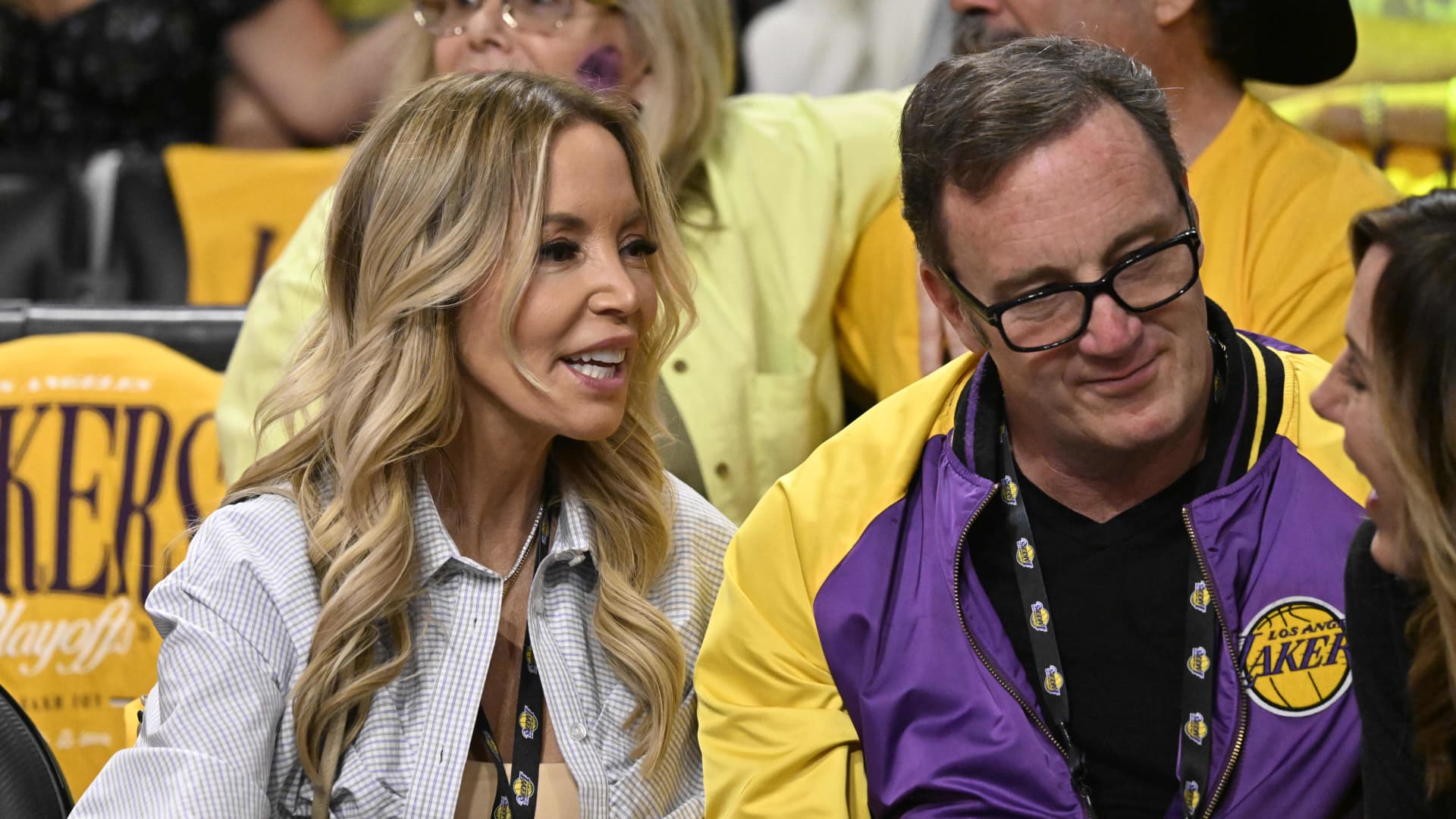
Minority owner Jeanie Buss of the Los Angeles Lakers and her husband, Jay Mohr, prior a first round NBA playoffs game between the Lakers and the Minnesota Timberwolves at Crypto.com Arena in Los Angeles, April 19, 2025.

Advertisement

Keith Birmingham | MediaNews Group | Pasadena Star-News | Getty Images

Buss and her family agreed to sell their majority stake in the team to Walter last year at a $10 billion valuation. ESPN recently documented significant conflict between the Buss siblings that led to the sale, which Buss called “bittersweet.”

Jerry Buss willed ownership of the team to his six children in a trust when he died in 2013.

“My siblings were involved in the decision that was made,” Jeanie Buss said. “It’s about the Lakers and the greatness and what the fans expect, and you need resources and you need a direction. I think it’s fair to say that my family — we all have our different opinions and [are] living our lives, choosing what we want to do with our time, and this was the best decision for all six of us.”

Advertisement
Jeanie Buss on Lakers sale, partnering with Jordan and LeBron James' future

The Buss family kept about 15% of the team, and Jeanie Buss agreed to stay on as governor for at least five years. Still, when asked if she plans to stay for the full term, Buss seemingly hedged her answer.

“That’s what I agreed to,” Buss said. “Mark Walter and I are very comfortable with the way things are set up. And I expect things to go on and be successful. And you know, I’m not going anywhere.”

Buss acknowledged the past 12 months have been one of transition for the team, given both the sale and the team’s decision to trade star forward Anthony Davis for Luka Dončić about a year ago. Buss said the team’s focus is now on building around Dončić, rather than 41-year-old LeBron James, who has been the face of the team since he joined in 2018.

Luka Dončić, holding jersey, with Los Angeles Lakers head coach JJ Redick, right, and General Manager Rob Pelinka at his introduction.

Harry How | Getty Images Sport | Getty Images

Advertisement

“The partnership will give us the stability to continue to move forward as we build towards a team around Dončić,” Buss said. “We couldn’t be more proud that he is a Laker. He is a young all-star that the fans love to see.”

James said Sunday he’s still unsure whether he’ll play beyond this season. Buss said she’d leave James’ future with the Lakers to James. Still, she sounded doubtful that he would return to the team next season, either because he would retire or because he would choose to play elsewhere.

Get the CNBC Sport newsletter directly to your inbox

The CNBC Sport newsletter with Alex Sherman brings you the biggest news and exclusive interviews from the worlds of sports business and media, delivered weekly to your inbox.

Subscribe here to get access today.

Advertisement

“Never say never, but you know, he certainly hasn’t given an indication,” said Buss. “He’s earned the right to decide how his career will go, and you know, he continues to impress.”

Launching a tequila brand

Buss also discussed her tequila brand, Cincoro, created in 2016 when five friendly competitors met for dinner around an NBA board of governors meetings, bonding over their shared passion for tequila. That group included Buss; then-Charlotte Hornets owner Michael Jordan; Milwaukee Bucks co-owner Wes Edens; and former Boston Celtics co-owner Wyc Grousbeck and his wife, Emilia Fazzalari.

Cincoro tequila founders, from left, Wes Edens, Michael Jordan, Emilia Fazzalari, Jeanie Buss and Wyc Grousbeck.

Source: Cincoro Tequila

Advertisement

“We all had a mutual appreciation for tequila,” Buss said. “And us being a very competitive group, we thought, ‘You know what? We could probably make one better.’ And so, that night, Cincoro was born.”

Jordan, known for being a fierce competitor on the court, isn’t any different behind the scenes and is deeply involved in the business, Buss said.

“I knew he was a tough competitor because his first championship, he beat the Los Angeles Lakers,” she said. “He’s just like that in the boardroom. It’s, ‘Who are we up against? Let’s be better than that. Let’s work harder. Let’s be more creative.’”
Jordan brought in his design team, resulting in a distinctive bottle that Buss called “a work of art.”

Advertisement

“When you work with Michael Jordan, the bar is set high,” she said. “Not just him as a player, but him as a businessman. And we’ve seen he’s been pretty darn successful.”

Cincoro is now a sponsor of the Los Angeles Lakers, and Buss unveiled Tuesday a limited-edition añejo bottle in Lakers purple and gold. Buss said it’s a nod to both the franchise’s championship pedigree and the brand’s premium positioning.

Continue Reading

Business

Bayer offers $7.25bn to settle weedkiller cancer claims

Published

on

Bayer offers $7.25bn to settle weedkiller cancer claims

The company has faced years of legal battles over Roundup, a weedkiller made by Monsanto.

Continue Reading

Business

Cyber security firm snapped up in deal creating 900-strong company

Published

on

Business Live

Stripe OLT has offices in Bristol, Manchester and London, and will become part of Littlefish Group

Business figures shaking hands

Generic image of business figures shaking hands(Image: Getty Images/iStockphoto)

A Bristol-headquartered cyber security firm has been acquired for an undisclosed sum by an IT company with offices in Nottingham, Sheffield, London and Ireland. Stripe OLT, which has built its growth around its Microsoft-led offering, will become part of Littlefish Group, creating a company of some 900 staff.

Littlefish said the deal would “further solidify” its position in an expanding market and marked a “major milestone” for the business. It is understood the acquisition will help Littlefish accelerate the expansion of its managed services and advanced cyber security operations across the UK.

Ursula Morgenstern, chief executive of Littlefish Group, said: “This acquisition is a decisive step in how we scale the business. Our ambition is to build a truly end-to-end services organisation, with a user-centric approach at its core —to help organisations work smarter, reduce friction, operate safely and deliver better outcomes for their people.

“Stripe OLT is a fast-growing, Microsoft-focused business with deep cyber capability and a culture that closely mirrors our own. Bringing their team into the group strengthens our security proposition, accelerates our growth, and meaningfully enhances the value we deliver to customers.”

Advertisement

Following the deal, Littlefish Group said it would leverage Stripe OLT’s Microsoft expertise to “elevate workplace experiences and transform outcomes” for its customers, which currently include University Hospitals of Derby & Burton NHS Trust, PureGym and Brentford Football Club.

Stripe OLT, which was founded in 2004 by Mark Dale and also has offices in Manchester and London, supports and protects critical infrastructure for established organisations across finance, legal, transport, public sector and healthcare. Its client portfolio includes The NHS Confederation, Haseltine Lake Kempner, Bristol Airport and MoneySuperMarket Group.

Mr Dale added: “Joining Littlefish Group marks an exciting next chapter for our business. Having grown year on year since 2021, it was important to partner with an organisation that shares our ambition and values.

“This move allows us to scale our impact, creating greater opportunities for our people and enhanced capabilities for our clients, while remaining focused on end-user centricity.”

Advertisement
Continue Reading

Business

Trump promises big tax refunds in 2026 from One Big Beautiful Bill

Published

on

Trump promises big tax refunds in 2026 from One Big Beautiful Bill

President Donald Trump said tax refunds this year will be substantially larger than ever before because of his signature “One Big Beautiful Bill,” which was passed last year.

Trump took to Truth Social to promote the expected refunds ahead of the 2026 filing season, arguing that some taxpayers could see more than 20% returned.

Advertisement

Taxpayers generally must file their 2025 federal returns by April 15, 2026, and if they file electronically with direct deposit, most refunds are issued within about three weeks after the return is processed, according to the IRS.

SCOTT BESSENT: PRESIDENT TRUMP’S ‘BIG, BEAUTIFUL BILL’ WILL UNLEASH PARALLEL PROSPERITY

Donald Trump celebrates 'big, beautiful bill'

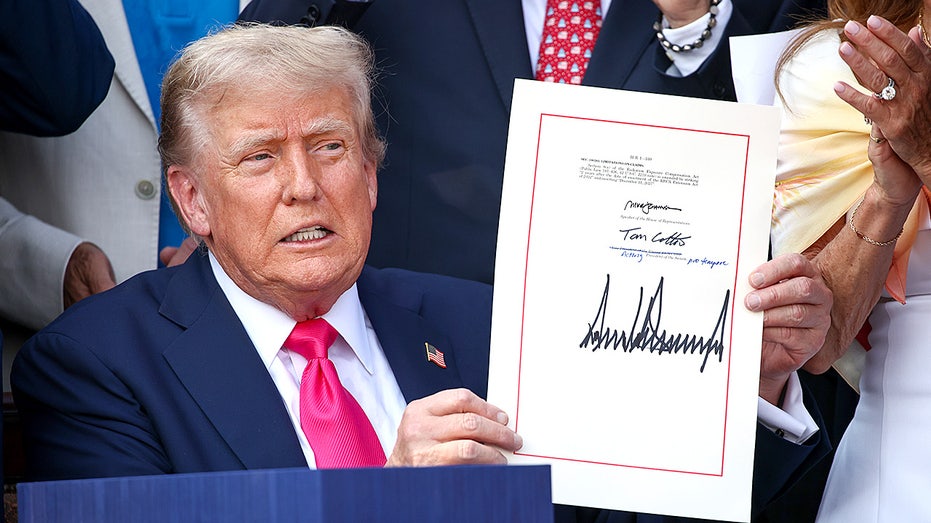
President Donald Trump signs the “One Big Beautiful Bill” from the South Lawn of the White House on Independence Day, July 4, 2025 in Washington. (Tom Brenner For The Washington Post via Getty Images / Getty Images)

“Tax Refunds this year, because of ‘THE GREAT BIG BEAUTIFUL BILL,’ are substantially greater than ever before,” Trump wrote. “In some cases, estimates are that over 20% will be returned to the Taxpayer.”

He pointed to provisions he said eliminate taxes on tips, social security benefits for seniors and overtime pay, while allowing interest deductions on car loans, among other measures.

Advertisement

“So, when you get your Tax Refund, think about what a wonderful President you have — NO TAX ON TIPS, NO TAX ON SOCIAL SECURITY FOR OUR GREAT SENIORS, NO TAX ON OVERTIME, INTEREST DEDUCTIONS ON CAR LOANS, AND MUCH MORE,” Trump continued. 

“Don’t spend all of this money in one place! President DJT.”

TRUMP SPEECH SPARKS OPTIMISM AS ‘GANGBUSTER’ ECONOMY FORECASTED FOR 2026

Donald Trump signs a document at a table while surrounded by Republican lawmakers during an outdoor event.

President Donald Trump, joined by Republican lawmakers, signs the One, Big Beautiful Bill Act into law during an Independence Day military family picnic on the South Lawn of the White House in Washington, D.C.,, on July 4, 2025. (Samuel Corum/Getty Images / Getty Images)

The White House has promoted the upcoming filing season as potentially the largest tax refund season in U.S. history, citing provisions in the One Big Beautiful Bill Act that affect 2025 tax returns filed in 2026.

Advertisement

A central goal of the bill was to extend and make permanent many tax cuts originally created under the 2017 Tax Cuts and Jobs Act, many of which were slated to expire at the end of 2025.

GET FOX BUSINESS ON THE GO BY CLICKING HERE

Trump on federal income taxes

President Donald Trump pitched the idea to eliminate federal income tax during his address at a GOP conference in Doral, Florida, on Monday. (Getty Images/Photo illustration / Getty Images)

The legislation also included billions for the Pentagon and border security, deep spending cuts and changes to Medicaid.

The nonpartisan Congressional Budget Office estimated the package could add roughly $3.3 trillion to the federal deficit over a decade under current law projections.

Advertisement

On Sunday, White House Senior Counselor for Trade and Manufacturing Peter Navarro touted what he called a “Goldilocks economy” under Trump, while promising Americans the “biggest rebate” in U.S. history.

Continue Reading

Business

10 Key Facts About the Oscar-Winning Legend’s Life and Career

Published

on

James Van Der Beek

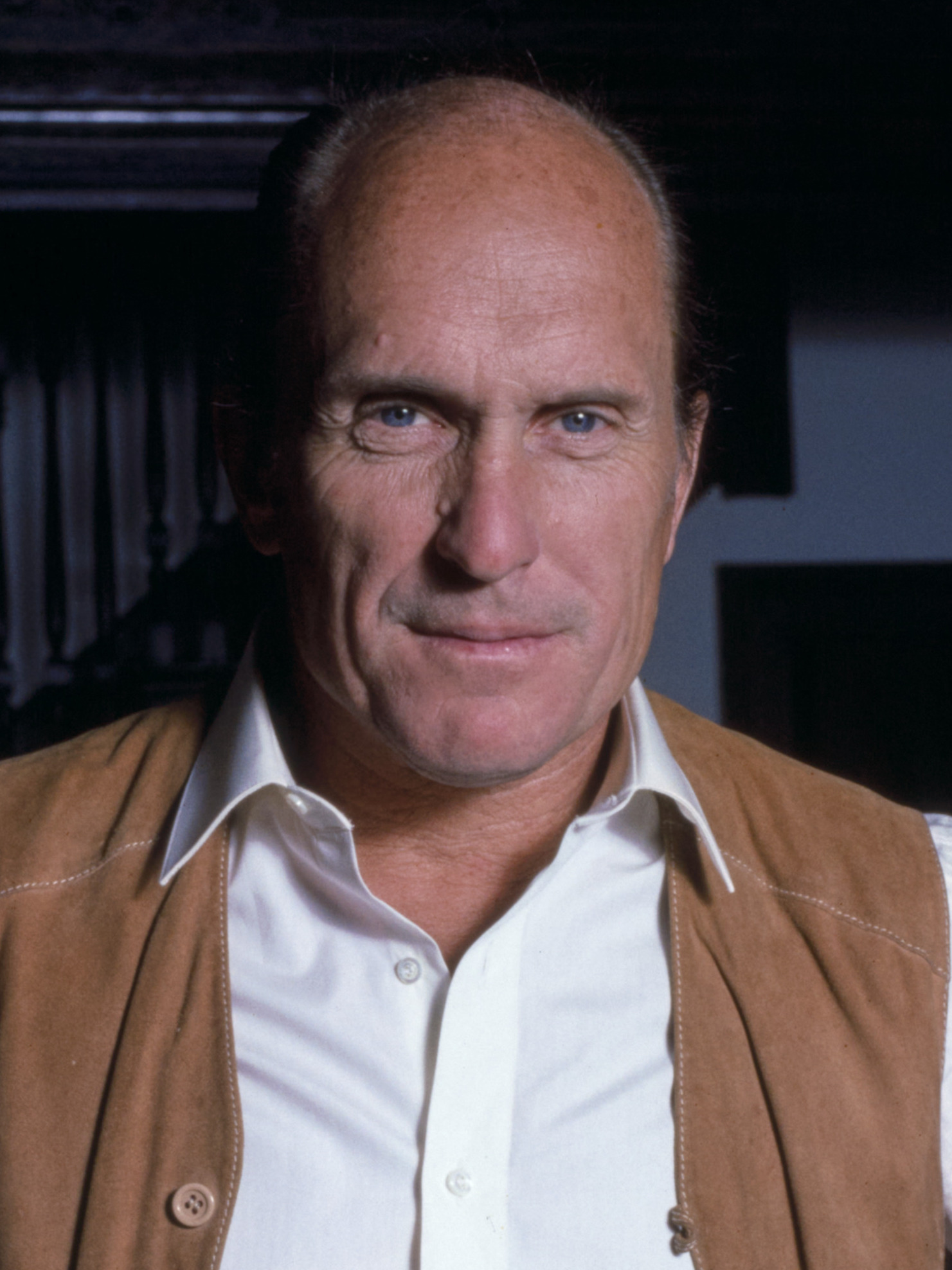
Robert Duvall, the versatile Academy Award-winning actor whose unforgettable performances in “The Godfather” as Tom Hagen and “Apocalypse Now” as Lt. Col. Bill Kilgore defined generations of cinema, died peacefully at his home in Middleburg, Virginia, on Feb. 15, 2026. He was 95.

'Godfather' Icon Robert Duvall
‘Godfather’ Icon Robert Duvall

His wife, Luciana Duvall, announced the news on the actor’s official Facebook page Feb. 16, writing: “Yesterday we said goodbye to my beloved husband, cherished friend, and one of the greatest actors of our time. Bob passed away peacefully at home, surrounded by love and comfort.”

Duvall’s death was confirmed by his publicist and reported widely by outlets including The New York Times, CNN, Variety, AP News and People. No cause of death was disclosed. He had lived for decades on a horse farm in Virginia’s Fauquier County, embracing a quieter life after a prolific seven-decade career that spanned more than 90 films, television roles and directing projects.

Born Robert Selden Duvall on Jan. 5, 1931, in San Diego, California, to a military family — his father was a Navy admiral — Duvall grew up across the U.S. and Europe before studying acting at Principia College and the Neighborhood Playhouse School of the Theatre in New York.

Here are 10 essential things to know about Robert Duvall’s remarkable life and legacy:

Advertisement
  1. Breakthrough Role in ‘To Kill a Mockingbird’ — Duvall made his film debut in 1962’s “To Kill a Mockingbird,” playing the reclusive Boo Radley opposite Gregory Peck’s Atticus Finch. The small but pivotal part earned praise for his subtle, haunting portrayal of vulnerability beneath a fearsome exterior.
  2. Iconic ‘Godfather’ Consigliere — As Tom Hagen in Francis Ford Coppola’s 1972 masterpiece “The Godfather” and its 1974 sequel, Duvall brought quiet intelligence and loyalty to the Corleone family’s adopted Irish-American advisor. Nominated for an Oscar for best supporting actor in the first film, his line “I’m gonna make him an offer he can’t refuse” (delivered on behalf of Don Corleone) remains one of cinema’s most quoted.
  3. Memorable ‘Apocalypse Now’ Helicopter Scene — Duvall’s Lt. Col. Kilgore in Coppola’s 1979 Vietnam War epic delivered the famous monologue: “I love the smell of napalm in the morning.” His surfing-obsessed, fearless commander provided dark comic relief amid the film’s chaos, cementing another legendary performance.
  4. Oscar Win for ‘Tender Mercies’ — Duvall earned the Academy Award for best actor in 1983 for his role as Mac Sledge, a washed-up country singer seeking redemption. The low-key drama showcased his ability to convey deep emotion with restraint, earning him widespread acclaim.

  5. Emmy and Golden Globe Success — Duvall won two Emmys — one for the 1989 miniseries “Lonesome Dove,” where he played retired Texas Ranger Augustus McCrae — and four Golden Globes across his career. His “Lonesome Dove” performance is often cited as one of television’s greatest.
  6. Directing and Producing Ventures — Beyond acting, Duvall directed “The Apostle” (1997), in which he also starred as a flawed Pentecostal preacher, earning another Oscar nomination. He produced several projects and championed independent filmmaking.
  7. Late-Career Accolades — At age 84, Duvall received his seventh Oscar nomination for best supporting actor in 2014’s “The Judge,” opposite Robert Downey Jr. He held the record as the oldest nominee in that category until surpassed later.
  8. Personal Life and Marriages — Duvall was married four times. His fourth wife, Argentine actress Luciana Pedraza, whom he wed in 2005, was by his side at the time of his death. They shared a passion for tango and horses, often appearing together at events.
  9. Military Family Influence — Growing up as the son of an admiral shaped Duvall’s portrayals of authority figures. He served briefly in the Army after college and drew on that experience for roles in military dramas like “The Great Santini” (1979), where he played a domineering Marine pilot.
  10. Tributes from Hollywood — Following the announcement, co-stars and admirers paid homage. Al Pacino and Robert De Niro, his “Godfather” castmates, led tributes, with Pacino calling him “one of the greatest actors we ever had.” Francis Ford Coppola remembered Duvall’s dedication, while fans on social media celebrated his range from tough guys to tender souls.

Duvall’s final screen appearance came in recent years with roles in Netflix films like “Hustle” (2022) and “The Pale Blue Eye” (2022). Though he slowed down in his later years, his influence endured through streaming revivals of classics and ongoing discussions of his craft.

Hollywood and fans mourned the loss of a chameleon-like performer who brought nuance to cowboys, cops, soldiers and mobsters alike. As one obituary noted, Duvall imbued even the edgiest characters with a compassionate core, leaving an indelible mark on American cinema.

Funeral arrangements were not immediately announced. Duvall is survived by his wife Luciana and extended family.

Continue Reading

Business

Why youth unemployment is rising

Published

on

Why youth unemployment is rising

Unemployment in the UK rose to its highest rate in nearly five years at the end of 2025

Continue Reading

Trending

Copyright © 2025