Amazon raised the price of its own devices overnight on 21 August. The increases run to 60% on the cheapest product in the range, and they were not announced.
Fortune reported the change across the hardware line. Pocket-lint had reported the Fire TV increases earlier the same day. Amazon confirmed the rises and blamed memory and storage costs.
What Amazon said
Kristy Schmidt, senior communications manager for Amazon Devices and Services, gave The Verge the statement the company issued to every outlet that asked.
“The consumer electronics industry is facing significant increases in memory and storage component costs,” it reads. “After absorbing these increases for as long as we could, we recently adjusted pricing across our product lines. Our approach has always been to offer great products at accessible prices, and that commitment hasn’t changed.”
Amazon told Fortune it will run promotions across the lineup through the year.
The speakers
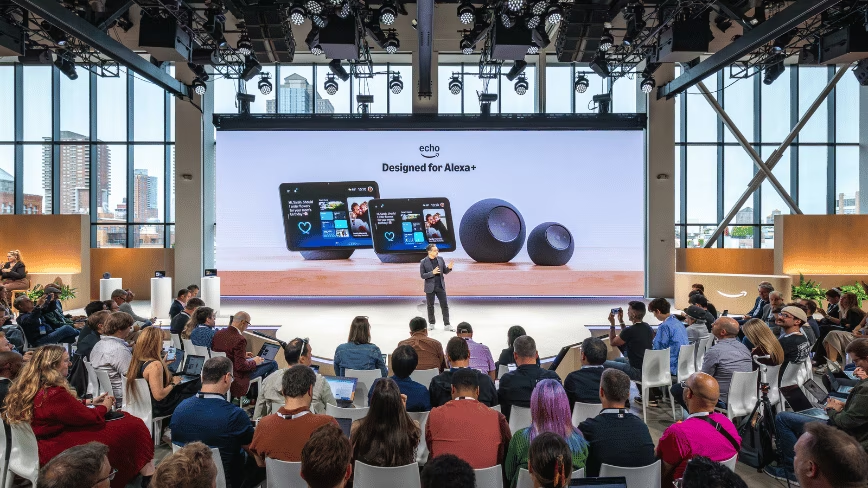
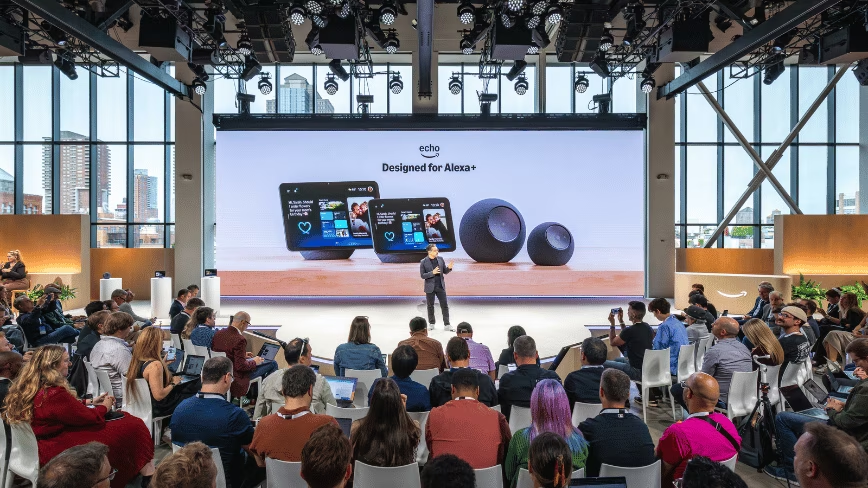
The Echo Dot went from $49.99 to $79.99. That is a 60% rise on the cheapest way into Amazon’s smart home range.
The Echo Spot rose from $79.99 to $109.99. The Echo Dot Max, which launched last year, went from $99.99 to $119.99. The Echo Show 8 rose to $199.99, the Echo Show 11 to $249.99, the Echo Show 15 to $349.99 and the Echo Show 21 to $499.99.
The e-readers
The 16GB Kindle went from $109.99 to $149.99, a rise of about 36%. The 16GB Kindle Paperwhite went from $159.99 to $199.99.
The streaming sticks
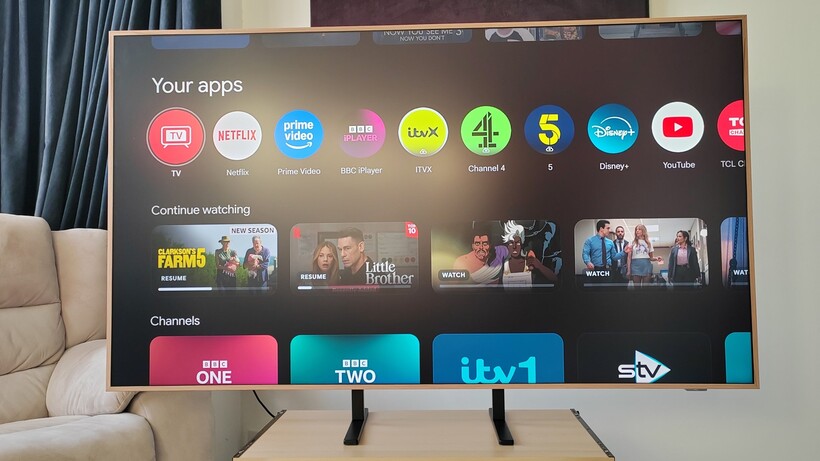
Pocket-lint listed the Fire TV range in full. The Fire TV Stick 4K Max rose from $60 to $85. The 4K Plus went from $50 to $70, the 4K Select from $40 to $50, and the HD model from $35 to $40.
The largest single increase in dollars was the Fire TV Cube, which went from $140 to $200. That device does not appear in the table The Verge published.
The Wi-Fi kit
The eero 7 three-pack rose from $349.99 to $399.99. The eero Pro 7 three-pack went from $699.99 to $799.99. Both are increases of about 14%.
What did not move
Ring cameras and video doorbells kept their prices, according to Fortune and The Verge. So did the Echo Studio, Amazon’s $219.99 speaker.
The Verge notes that Google has held the Home Speaker at $99.99. Pocket-lint notes that Google has held the TV Streamer at $100.
How the change was made
Amazon issued no announcement. Pocket-lint’s reporter found the increase by opening the Amazon app and noticing that the Fire TV Stick 4K Max was listed at $85.
Price history shows the Fire TV rises took effect across the board on 21 August, according to Pocket-lint, which contrasts that with Apple and Roku announcing theirs in advance.
Roku did this in July
Roku raised streaming device prices by up to 60% last month, and gave the same reason. The desk covered that increase on 26 July.
Engadget puts the Roku rises at up to $50.
The others who have raised prices
Apple raised Mac and iPad prices in June. Chief executive Tim Cook called the situation “a 100-year flood on memory pricing”. The desk covered the MacBook Air rise on 3 August. Apple also moved the HomePod Mini to $129 from $99.99 this summer.
Microsoft is raising Xbox console prices by $100 to $150 depending on the version, Fortune reports, and has stopped selling the 2TB configuration. Dell, HP, Lenovo and Asus have raised prices or cut the memory in their products.
The same squeeze in other categories
Nvidia’s largest customers were told that servers containing its AI chips will cost more than 15% more. The desk covered that rise on 22 August.
Chinese carmakers say printed circuit boards and multilayer ceramic capacitors are 20% to 30% short globally. The desk covered the carmakers’ shortage on 22 August. Xiaomi’s profit fell again last quarter as memory costs pushed up what its phones cost to build, which the desk covered as the memory crunch on 19 August.
Where the shortage started
The squeeze traces back to demand for memory from AI data centres. Counterpoint Research has warned that the surge threatens supply of broadband routers and set-top boxes, the same class of device Amazon has just repriced.
Two of the repriced Fire TV models, the 4K Select and the HD, run Vega OS, the Linux-based operating system Amazon introduced to replace Android on its cheaper hardware.
What Amazon told investors about memory
Andy Jassy raised the company’s capital expenditure guidance in late July. Amazon now expects to spend $220bn this year, up from a prior estimate of $200bn, mostly on data centres, and Jassy attributed part of the increase to higher memory costs.
He also told investors the company would not “have enough capacity to meet all the demand we have in 2026”, and added: “I believe this dynamic will also be true in 2027, too.”
Amazon Web Services took $42.2bn in the second quarter, up 37% from $30.9bn a year earlier. Jassy called it the fifth consecutive quarter of accelerated growth.
What the coverage does not settle
Amazon has not said how long the new prices hold, or which components drove which increase. It has not explained why Ring and the Echo Studio were left alone.
The two published price tables do not fully match. The Verge lists thirteen products with percentage changes. Pocket-lint lists five Fire TV models, including a Cube increase the other table omits. Neither is Amazon’s own list, because Amazon did not publish one.
The company has a device event coming this autumn, Fortune notes.
One number is worth holding lightly. The 60% headline applies to a single product, the Echo Dot. Most of the range moved between 11% and 25%, on The Verge’s figures.























































You must be logged in to post a comment Login