
Business
Monadelphous net profit up 52pc


Business
Carrier Pigeon Apps Roost and Carrier Pidge Surge in Popularity as Users Embrace Slow Messaging Trend
NEW YORK — Two independently developed mobile apps that deliver digital messages at the simulated speed of carrier pigeons have attracted hundreds of thousands of users since their April launches, reflecting a growing appetite for deliberately slower forms of online communication.
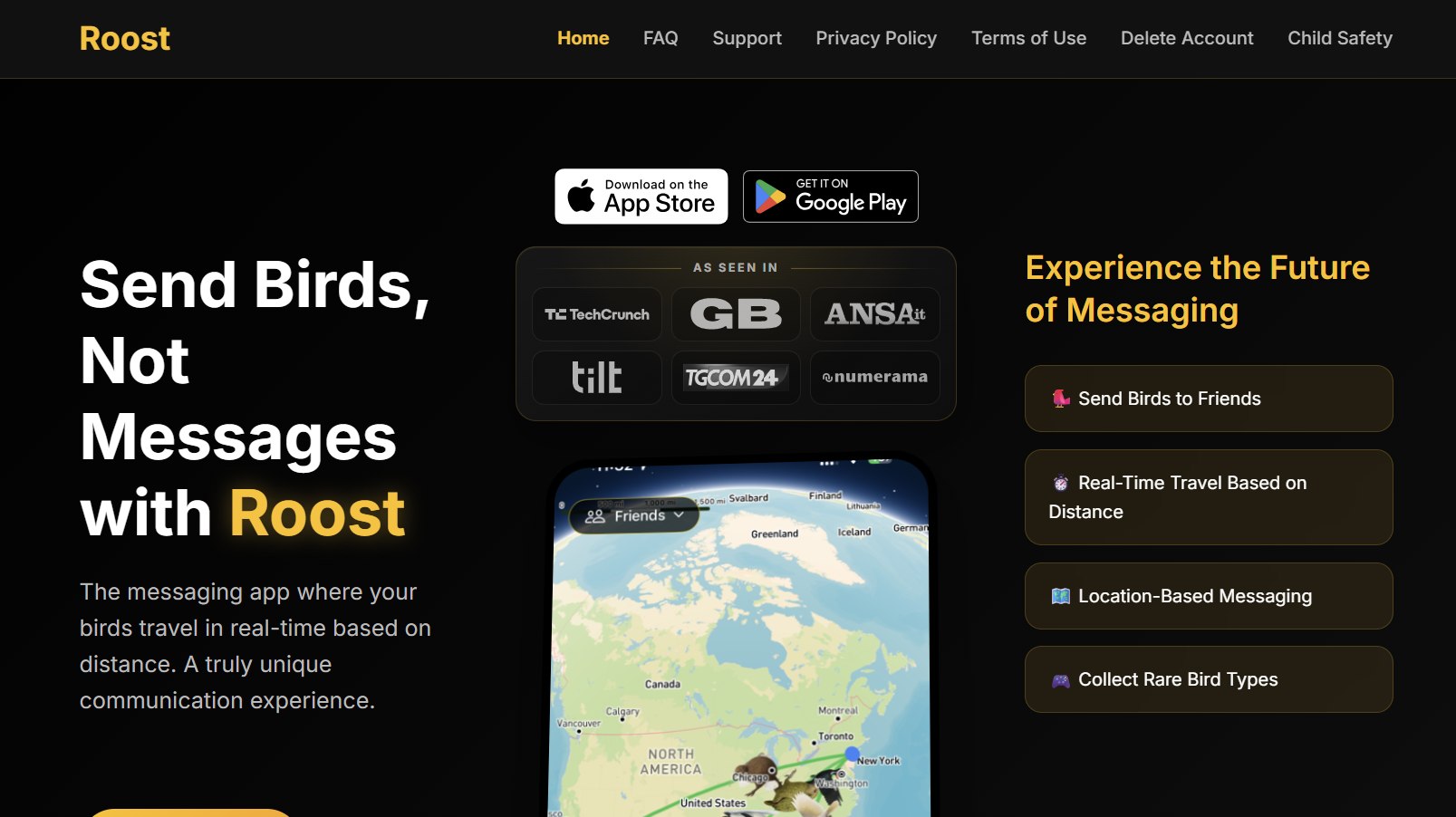
Roost Social, created by Logan Mendelsohn, and Carrier Pidge, developed by Noah Iarrobino, function similarly at their core. Users enter their location, compose a message and dispatch it to another app user. The message then travels in real time at a pace approximating how long a bird would take to cover the geographic distance between the two people. There is no instant delivery, no constant notifications and no endless scroll.
As of Aug. 18, Mendelsohn reported that Roost had more than 700,000 users. Iarrobino said Carrier Pidge had reached 76,000 users. Both apps remain free to download and rely on in-app purchases for additional features. Roost is available on both the Apple App Store and Google Play. Carrier Pidge is currently limited to Apple’s store.
Mendelsohn, 31, a senior product manager at Ticketmaster who lives in New York, first joked about the concept more than a decade ago. “We were backpacking Europe and I made a joke about, ‘Hey, we should make an app to send carrier pigeons to our friends back home and it would be so funny if it took a super long time to get there,’” he told USA TODAY. “I guess since then, it’s always been a joke.”
He began developing the idea in earnest in May 2025 after posting about it on TikTok, where early reactions were enthusiastic. One commenter wrote, “As a person who loves silly apps but also does the occasional birding, I need this app bad.” Mendelsohn released Roost on the Apple App Store on April 30. The app lets users select from a range of birds and other animals, each with speeds based on real-world capabilities. Options include a mallard at 51 mph, a rock dove at 49.5 mph and a red-eared slider turtle at 1 mph. Users start with four animals and can purchase more for between 99 cents and $9.99. The platform also includes mini-games to level up animals and a pen-pal feature that randomly pairs users worldwide.
Iarrobino, 29, a software engineer in Brooklyn, arrived at a nearly identical concept independently and more rapidly. “I was just sitting on my couch one night and the idea just came to me,” he said. “I just couldn’t get the idea out of my head and that night, I just starting building the project. I just had a big smile on, just laughing the whole time while developing it.” He had a working version on the App Store by April 18. Carrier Pidge focuses solely on pigeons, which travel at 110 mph within the app — faster than the 50-60 mph typical of real racing pigeons. Each conversation begins with one pigeon that travels back and forth. There is a 0.2 percent chance the bird dies en route, requiring a 99-cent replacement.
Both developers used artificial intelligence tools extensively. Iarrobino said he first brainstormed with an AI chatbot and then relied on Claude Code, an AI coding assistant released in February 2025, which “wrote a lot” of the app. Mendelsohn wrote the initial code himself but has used Claude Code to resolve issues since launch. He initially incorporated AI-generated artwork, which drew criticism upon release. He has since launched an in-app artist challenge allowing users to submit and vote on original illustrations to replace the AI images.
The two creators were unaware of each other’s projects at launch. They have since spoken and agreed that the apps offer distinct experiences despite the shared premise. Running the platforms has proven expensive. Mendelsohn shared Google Cloud billing statements showing more than $10,000 in costs for Roost in July alone and more than $7,600 by Aug. 18.
The apps’ appeal aligns with broader trends among younger users seeking less instantaneous digital interactions. Gen Z consumers have shown interest in “dumb phones,” some millennials have installed rotary landlines, and companies have marketed tools designed to reduce screen time. Eventbrite previously labeled the warmer months “The Offline Summer.” Mendelsohn said conversations with Roost users often center on intentional communication and the absence of noisy feeds or constant alerts. Iarrobino offered a similar observation: “I think people are getting tired of technology being so integrated into our lives, especially a couple years past COVID. People want to get outside, people want to get off of their phones. I think slow messaging kind of helps with that.”
Users can track their messages’ progress on a map in real time, watching the selected animal make its journey. Delivery times range from minutes for nearby contacts to many hours or even days for longer distances. The deliberate friction is the point. Messages arrive only when the virtual courier does, encouraging users to compose more thoughtfully and to wait without the pressure of immediate replies.
Neither app has affiliation with traditional messaging platforms or major tech companies. Their growth has occurred largely through word of mouth, social media posts and organic interest in slower digital experiences. Mendelsohn continues to manage Roost alongside his full-time role while exploring ways to sustain the service through purchases and potential expansion. Iarrobino has indicated plans to bring Carrier Pidge to Android eventually.
The simultaneous emergence of two nearly identical concepts underscores a shared cultural moment. After years of platforms optimized for speed and constant engagement, a segment of users is actively choosing tools that reintroduce waiting, distance and a measure of unpredictability into everyday communication. Whether the novelty sustains long-term engagement remains to be seen, but the early numbers show that the idea of digital carrier pigeons has clearly taken flight.
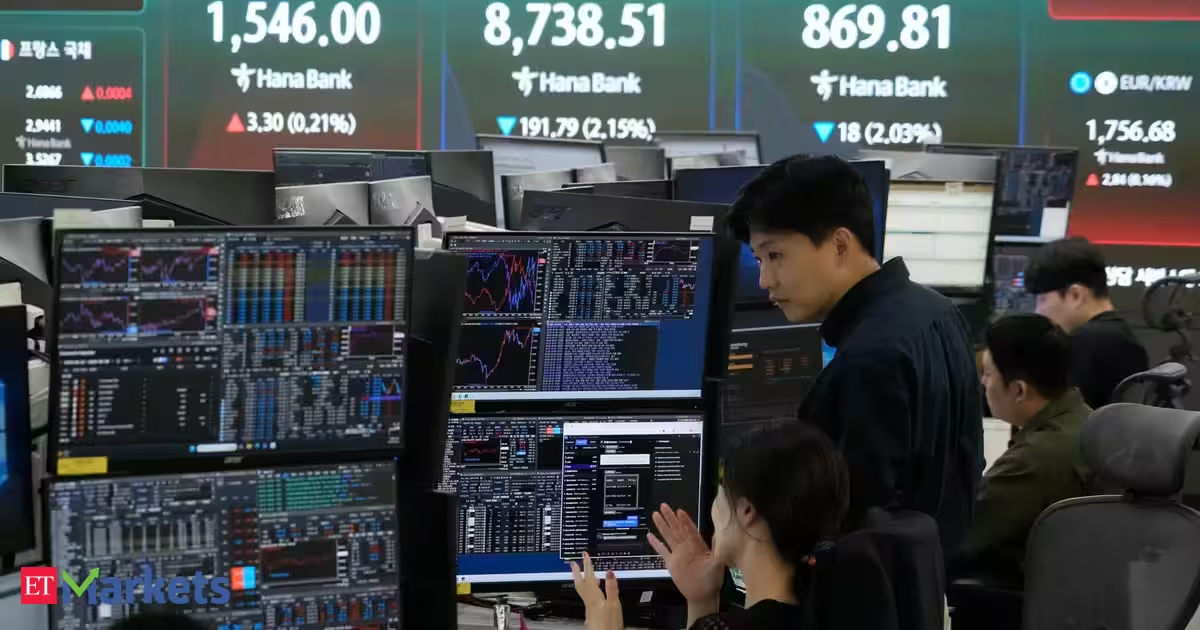
The MSCI Asia Pacific equities gauge slipped 0.4% with benchmarks in Japan and South Korea falling. Earlier, a selloff in semiconductor giants dragged the Nasdaq 100 Index down nearly 1% on Monday. Nvidia Corp. fell for a seventh straight session — the longest losing streak since 2022. Equity-index futures for US stocks edged lower in early Asian trading.
Elsewhere, global crude oil benchmark Brent was little changed on Tuesday, trading around $92.20 a barrel after US Treasury Secretary Scott Bessent threatened economic punishment against any country doing business with Iran. The commodity fell more than 2% on Monday, snapping a six-day rally.
Read more: Investors’ equity rush helps SIP assets triple in five years
Lower energy prices lifted Treasuries on Monday, with the 10-year yield falling four basis points to 4.70%. Gold rose 0.5% to near $4,680 an ounce, hovering around levels last seen in May as the US Treasury’s intervention in the bond market revived concerns about fiscal policy and its impact on the dollar.

Investors are weighing mounting geopolitical risks against a packed week of economic data and corporate earnings, with the outlook for technology shares emerging as a key test for broader risk sentiment. Nvidia’s results on Wednesday will be closely watched for signs that the recent weakness in chipmakers has further to run.
“Details about US economic sanctions on Iran, the Treasury’s attempts to lower long-term yields, and economic data may shape much of the sentiment backdrop,” said Chris Larkin at E*Trade from Morgan Stanley. “But Nvidia and other tech earnings are positioned to be a major weight on the market’s momentum scale.”Investors are also looking for clues on how the US central bank will respond to stubborn inflation when Federal Reserve Chair Kevin Warsh speaks at its annual gathering in Jackson Hole, Wyoming.
With Treasury yields still elevated by sticky inflation and concerns over fiscal deficits, traders are watching for any clear guidance from Warsh on how the Fed might respond over the rest of the year.
Earlier, Treasuries were also supported by a CNBC report that the Treasury Department could tap its cash pile to fund buybacks of higher-yielding older securities in an effort to curb borrowing costs.
Bessent, however, stopped short of signaling any changes to US debt management in a speech Monday following the report.
“We haven’t bought a single bond yet,” Bessent said when asked in a press conference whether he’s going to soon increase the buybacks.
In tariff news, the Canadian dollar was little changed after Canadian ministers were set to announce a response to US tariffs on Tuesday.
Back to the technology sector, Nvidia shares fell 2.9% after the company had notified customers of AI-related price increases on systems shipped early next year.
Nvidia’s results have become an important gauge of the artificial intelligence trade, which has come under pressure in recent months as investors question whether massive spending on the technology will translate into commensurate profits.
“This is a key week for markets with Nvidia’s earnings and the annual Jackson Hole speech, which normally wouldn’t have a link, but Nvidia needs to impress in order to keep one leg of the stock market stable, and Warsh needs to provide clarity on interest rates in order to keep the other leg of the stock market stable,” said Richard Reyle, chief investment officer at Questar Capital Partners.

Australian developer Bathla calls administrators, citing ’perfect storm’

Ctt pharmaceutical holdings CEO Ryan Khouri buys $115 in shares
Business
(VIDEO) New Galaxy S27 Ultra CAD Renders Show Conflicting Camera Designs as Fans Blast ‘Atrocious’ Look Online
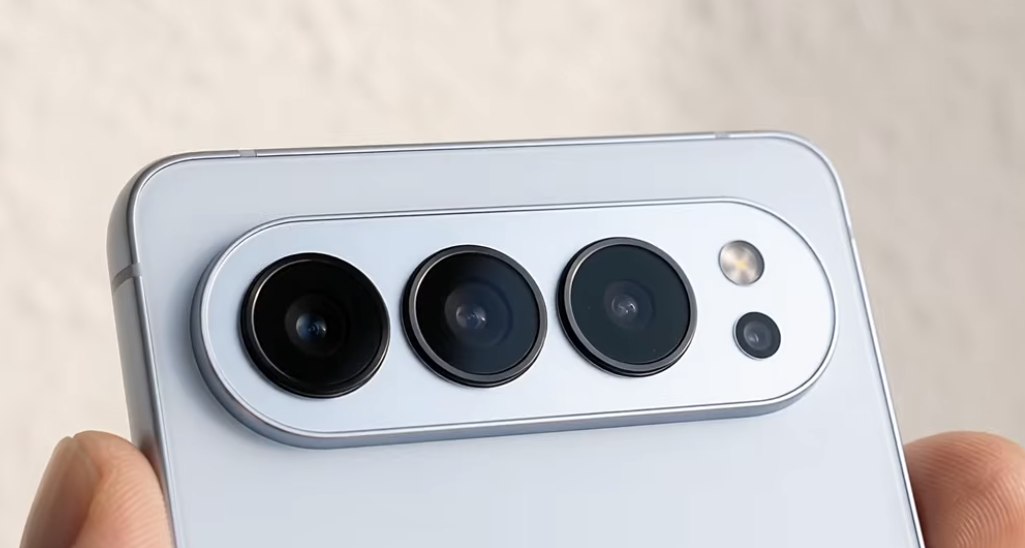
A newly leaked CAD render of Samsung’s upcoming Galaxy S27 Ultra has revealed a rear camera design that diverges sharply from previous leaks, sparking a wave of negative reaction from fans online even as the conflicting nature of competing leaks underscores just how unsettled Samsung’s final design choice appears to remain.
Well-known tipster Ice Universe shared the alleged CAD render on the social platform X, according to GSMArena, showing a rear camera arrangement that closely resembles the plateau-style camera module Apple introduced with the iPhone 17 Pro. The render depicts two camera sensors positioned in separate individual cutouts, alongside a third camera housed together with the flash in a shared pill-shaped cutout. According to the tipster, that pill-shaped cutout could contain a 5x telephoto camera, which is rumored to replace the 3x telephoto lens found on the current Galaxy S26 Ultra.
The design shown in Ice Universe’s render stands in direct contrast to earlier leaks pointing toward a fundamentally different rear camera layout for the device. Multiple prior reports had suggested Samsung was planning to move away from the separate camera rings that have defined recent Galaxy Ultra models entirely, replacing them with a single, unified horizontal camera island intended to give the phone a cleaner, more streamlined appearance, a design direction that differs substantially from the plateau-style module now shown in Ice Universe’s newly leaked render.
Adding a further layer of uncertainty, separate tipster Sonny Dickson shared two additional CAD renders of the Galaxy S27 Ultra, according to GSMArena. Dickson’s leaked renders suggest Samsung could offer the upcoming Ultra model in two distinct sizes, a potential departure from the single-size approach the company has typically taken with its flagship Ultra device in recent generations.
GSMArena cautioned that these CAD renders should be treated with a degree of skepticism given how directly they contradict earlier leaks pointing toward the horizontal camera module design, illustrating the broader pattern of conflicting information that has characterized much of the Galaxy S27 Ultra rumor cycle so far, more than six months ahead of the device’s anticipated launch.
Reaction from readers to the newly leaked design was swift and overwhelmingly negative. One commenter on GSMArena’s report expressed blunt disapproval, writing, “god no, please I hope this is not real. absolutely atrocious design.” Another reader offered a more pointed comparison, writing, “The renders are a bit like ‘If an iPhone and a Pixel had a retarded child…’” A third commenter drew a comparison to a lesser-known device from a rival manufacturer, writing, “It looks basically identical to the Honor 600, which is probably the second worst iPhone clone, only after the 600 Pro.”
The negative reception to the plateau-style design reflects a broader pattern of skepticism that has followed Samsung’s Galaxy S27 Ultra rumor cycle throughout the year, as leaks have repeatedly shifted between multiple competing camera design concepts without any single direction gaining clear, sustained consensus among tipsters covering the device.
Beyond the camera housing debate, other previously reported leaks have painted a broader picture of what Samsung’s next flagship Ultra device may include. According to earlier reporting on the device, the Galaxy S27 Ultra is expected to feature a 2-nanometer Snapdragon 8 Elite Gen 6 Pro for Galaxy processor, a 5,700-to-5,800 milliamp-hour silicon-carbon battery, and a triple-lens rear camera system built around a 200-megapixel main sensor. Samsung is also reportedly planning to introduce a new Galaxy S27 Pro model positioned between the existing Plus and Ultra tiers, expanding the lineup to four distinct devices for the first time.
Samsung’s camera hardware sourcing for the device has also remained a point of ongoing debate among leakers. While some earlier reports suggested Samsung might adopt Sony’s newly released 200-megapixel LYT-901 sensor for the Ultra’s main camera, prominent leaker Ice Universe has more recently indicated Samsung currently has no plans to use that specific sensor for its next flagship, according to separate reporting from Notebookcheck. Samsung is separately said to be developing its own new 200-megapixel ISOCELL sensor internally, though no leak has definitively confirmed which sensor will ultimately ship inside the production version of the Galaxy S27 Ultra.
The current wave of conflicting CAD renders adds to a broader trend in which Samsung’s design decisions for the device appear to remain genuinely unsettled this far ahead of its expected early-2027 launch, a pattern that has made the Galaxy S27 Ultra rumor cycle notably more volatile and inconsistent compared with some previous Galaxy flagship generations. Whether the plateau-style design shown in Ice Universe’s render, the horizontal unified camera module described in earlier leaks, or an entirely different configuration ultimately makes it into the shipping device remains an open question that industry observers expect will only be fully resolved once Samsung formally unveils the phone.
Given the strength of negative reaction to the newly leaked plateau-style design among GSMArena’s readership, some industry observers may interpret the backlash as an early signal of how a similar design choice could be received more broadly if Samsung ultimately moves forward with that camera layout for the production Galaxy S27 Ultra. As with all pre-announcement smartphone leaks, however, the specific design details shown across these various CAD renders remain unconfirmed by Samsung directly and are subject to change as the company continues finalizing its plans ahead of the device’s eventual official unveiling, expected sometime in the first quarter of 2027.

WOTSO FY26 slides: coworking network hits 40 sites, EBITDA up 1%

‘The Big Money Show’ panel discusses AFT President Randi Weingarten launching a back-to-school boycott of Target, over its silence regarding immigration operations.
Target has apologized for a circus clown Halloween costume that critics accused of evoking Blackface and 19th-century minstrel shows following online backlash.
The costume was sold as the “Kids’ Glows Under Blacklight Circus Clown Halloween Costume,” according to the since-deleted listing. The costume was sold as part of the retailer’s seasonal Hyde and EEK Boutique brand.
Target removed the “offensive” costume and said that it should never have been featured in its stores.
TARGET RECALLS 200,000 CHILDREN’S SANDALS OVER POTENTIAL CHOKING HAZARD: CPSC

Target has apologized for a circus clown Halloween costume that critics accused of evoking Blackface and 19th-century minstrel shows. (REUTERS/Brendan McDermid/File Photo / Reuters Photos)
“As a company, we know we got this wrong, and we are deeply sorry. The costume is offensive and should never have been part of our assortment. It is no longer available for sale,” company spokesperson Brian Harper-Tibaldo said in a statement to FOX Business.
“We know this is especially hurtful for our Black guests, team members and partners. Removing the costume is an important first step, and the company is looking closely at how this happened and what needs to change to ensure this won’t happen again,” he continued.
The move to pull the costume comes after social media backlash in which critics accused the Minneapolis-based retailer of selling racist merchandise.
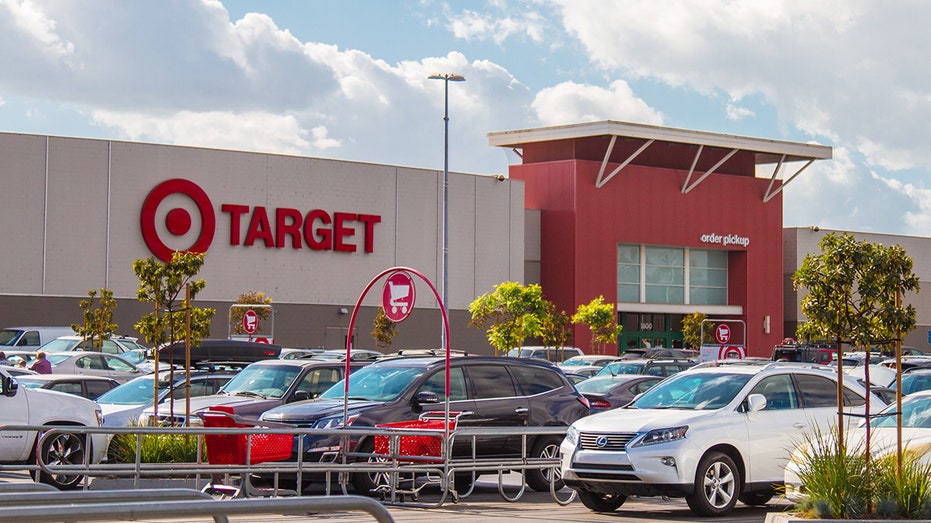
The costume was sold as the “Kids’ Glows Under Blacklight Circus Clown Halloween Costume.” (iStock / iStock)
“You really don’t have anyone left in Minneapolis to say, ‘Hey, that’s racist’? Y’all cut DEI and now you’ve got a minstrel clown costume for kids on your website,” one user said on Threads.
This comes on the heels of several reputational hits for the retailer that have hurt sales in recent years, including Target’s handling of its Pride Collection in 2023 and its rollback of diversity, equity and inclusion initiatives after President Donald Trump returned to the White House.
POPULAR PRODUCT SOLD AT TARGET RECALLED DUE TO CONTAMINATION CONCERNS
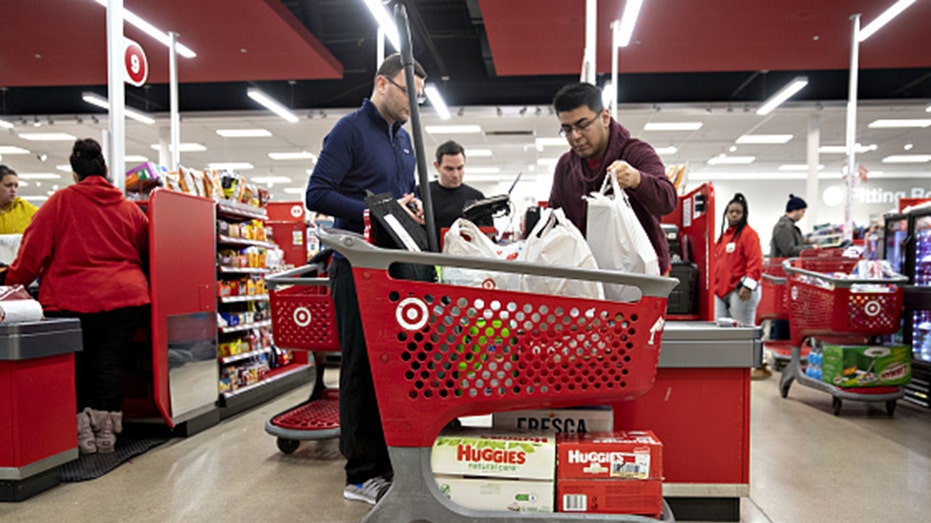
Target removed the “offensive” costume and said that it should never have been featured in its stores. ( Daniel Acker/Bloomberg via Getty Images / Getty Images)
CLICK HERE TO GET FOX BUSINESS ON THE GO
Target joined a broad corporate effort to scale back diversity initiatives after Trump issued a series of executive orders aimed at rooting out DEI.
The retailer scaled back initiatives aimed at increasing representation of Black employees and supporting Black-owned businesses and suppliers, saying it needed to stay in step with “the evolving external landscape.” The reversal drew backlash from some Black consumers and business owners who had supported or benefited from Target’s diversity efforts.
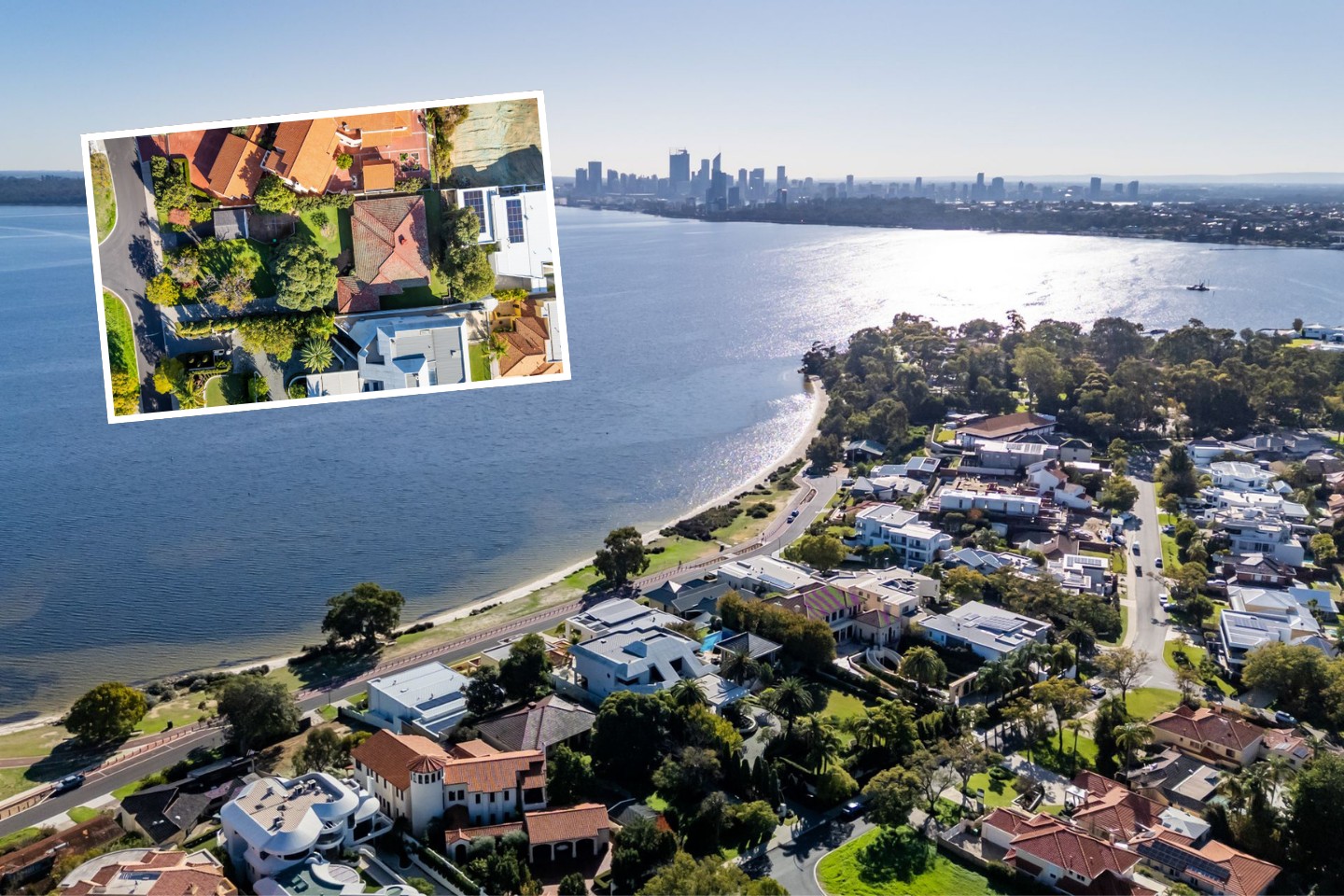
An Applecross block – described as the ‘final undeveloped parcel on Duncraig Road’ with views of the Swan River and Perth city – has been sold for $11.7 million.

 ET BureauET BureauET Bureau
Earnings call transcript: Acrow posts strong revenue growth in H2 2026, shares fall
BNB Chain Activates Pasteur Hard Fork on BSC
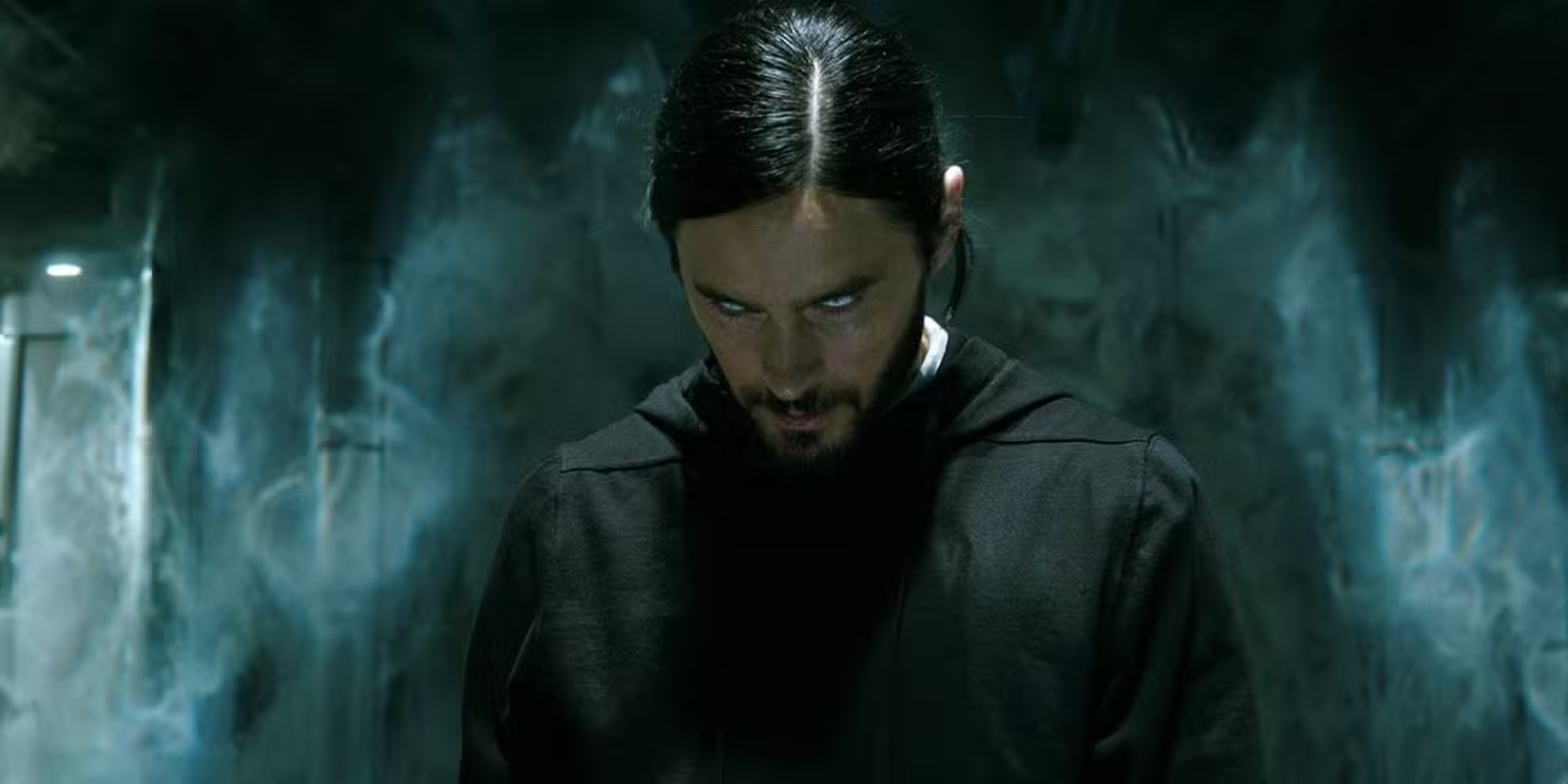
These 10 Movies Have Spawned The Most Memes

Alejandro Garnacho ‘alarm bells ringing’ already as Man United flop handed brutal reality





-

 Fashion3 days ago
Weekend Open Thread: Madewell – Corporette.com
-

 Business3 days ago
Musk’s Tesla, SpaceX Confirm $16.8 Billion ‘Terafab’ Chip Plant as World’s Largest Building in Texas
-

 Crypto World3 days ago
anatomy of crypto’s biggest liquidation event since 2021
-

 Business7 days ago
SMA Solar Technology AG (SMTGY) Q2 2026 Earnings Call Transcript
-

 Politics3 days ago
6 months on, Irish renters crushed by effects of government housing bill
-
 NewsBeat3 days ago
The ‘Lucky Dip Gang’ causing carnage for clicks: After five thugs were killed speeding in the wrong direction on a motorway, GUY ADAMS investigates a sick new trend… and why police aren’t even allowed to pursue them
-

 Tech6 days ago
GLM-5.3 hits the API at $1.4/$4.4 per million tokens
-

 News Videos5 days ago
Don’t Leave Your Financial Future To Chance | August 19, 2026
-

 Business2 days ago
Mystery AI Model ‘Ox Alpha’ Draws Developers With Free Access as Chinese Lab Origins Remain Debated
-

 Tech7 days ago
Keychron K8 Ultra 8K review: a great value keyboard with comfort issues
-

 Business4 days ago
Five Below: Kids Discount Retailer Reaps Rich Rewards
-

 Business7 days ago
Stock Market Today: Tech Futures Slide As Treasury Yields Jump; Nvidia, Micron, Sandisk Sell Off
-

 Business5 days ago
Marvell Shares Jump 7% as Google Chip Deal Confirms Custom AI Silicon Partnership, Analysts
-

 Tech7 days ago
Ken Okuyama’s Kode89 Supercar Features Three Pedals and a Choice of V12s
-
 Politics7 days ago
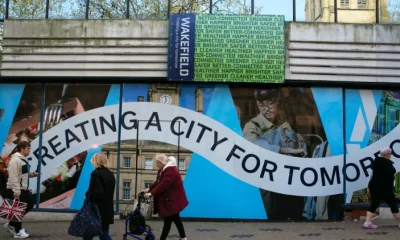
The House Opinion Article | Security means more than military spending
-

 Tech7 days ago
Payments giant Stripe is about to drop over $7 billion to become a gateway to AI token sales
-
 Business7 days ago
Walmart, Target, Home Depot, Housing, Fed Minutes, and More
-

 Crypto World7 days ago
Compound approves $52M institutional DeFi program
-

 Tech7 days ago
Lock It Up: Android 17’s Latest QPR2 Beta Introduces a Built-In App Lock
-
 Tech7 days ago
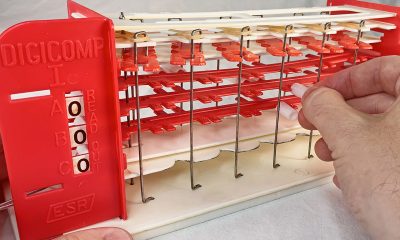
This May Look Like Plastic Rods and a Hand Lever, But It’s Acutally a Digi-Comp 1 Mechanical Computer from 1963
You must be logged in to post a comment Login