Connect with us

Tech

Massive DDoS attack disrupts Norway’s government digital services

Published

on

Massive DDoS attack disrupts Norway’s government digital services

A large distributed denial-of-service (DDoS) attack has disrupted Norway’s shared government digital infrastructure since Monday, affecting services used by the public sector.

The attack started at 03.38 CEST on Monday and has targeted  the infrastructure supporting services operated by the Norwegian Digitalization Agency, Digitaliseringsdirektoratet (Digdir), and its operations provider, Vivicta.

Digdir operates Norway’s shared digital government infrastructure, including public-service logins, electronic IDs and signatures, secure digital mail, government forms, public-record access, and data exchange between agencies.

image

In an announcement published earlier today, the organization states that several services were completely unavailable for short periods.

The agency says many affected systems have now been stabilized, although some services, like ID-porten and eSignering, remain partially inaccessible.

Advertisement

As a result of the attack, users may encounter errors such as failed connections, slow server responses, and unusually long login times.

For live updates on the availability of Digdir services, people may consult the services’ operating status page as well as the incident report page with updates from Norway’s Directorate for Digitization.

Digdir director Frode Danielsen says the investigation into the incident showed no indication of a security breach affecting the organization’s systems or any compromise of personal data.

Danielsen added that this is the third DDoS attack targeting Digdir recently, following one in June and another on August 3.

Advertisement

The Norwegian National Security Authority (NSM) and the Norwegian Data Protection Authority (Datatilsynet) have been notified accordingly.

There is currently no official attribution for the attack, although Norwegian media have speculated about potential Russian involvement.

Meanwhile, services that rely on Digdir but are not directly targeted also experience disruptions.

Altinn, Norway’s central digital platform for communication between citizens, businesses, and government agencies, published a warning about login issues and operational problems, linking to Digdir’s status page.

Advertisement

Skatteetaten, Norway’s tax administration agency, displays a similar notice about login issues on its website and urges users to try again later.


article image

Overall prevention scores can hide what happens after initial access. Once attackers are using valid credentials, prevention drops sharply.

The Blue Report 2026 measures defenses technique by technique across 338 million simulations run in customer production environments.

Get the report

Source link

Advertisement
Continue Reading
Click to comment

You must be logged in to post a comment Login

Leave a Reply

Tech

Apple Maps ads begin rolling out in US, Canada

Published

on

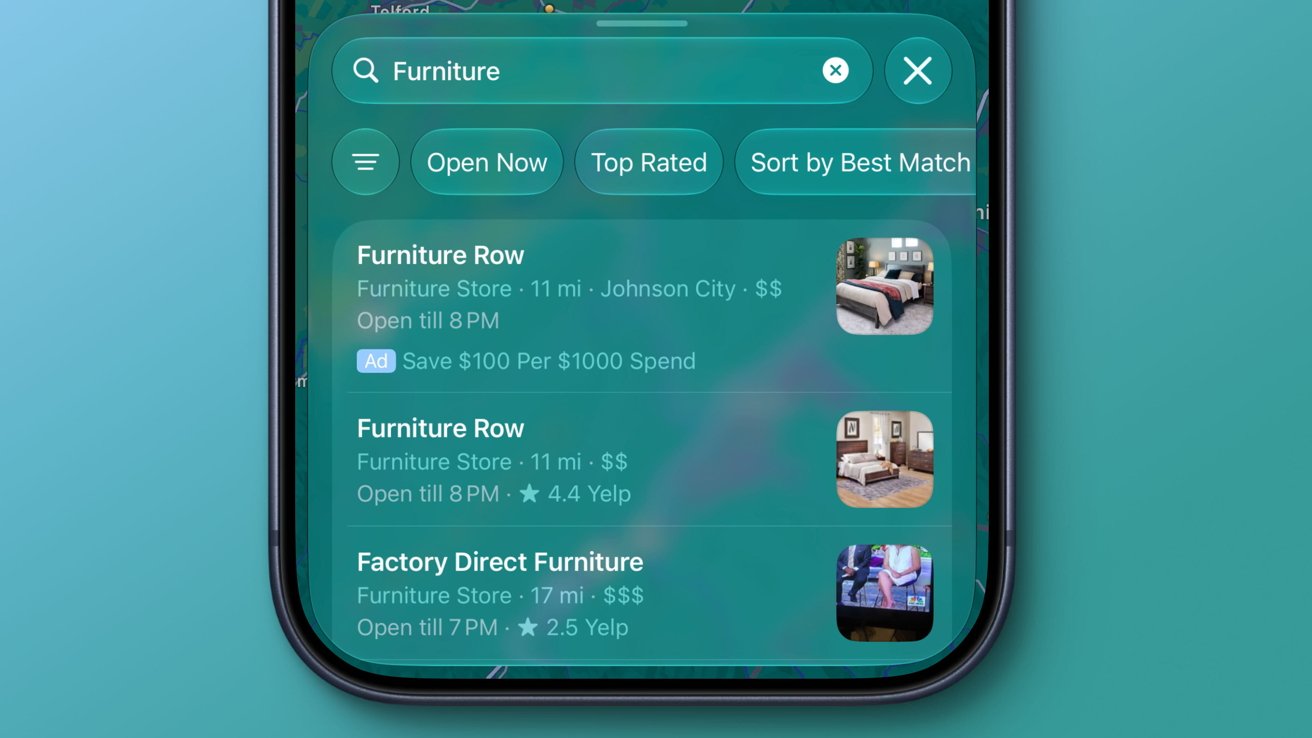
Apple Maps ads have finally arrived after months of buildup, with the first sponsored listings rolling out on iPhones across the US and Canada.

In March, Apple confirmed it would bring ads to Apple Maps. The ads were part of the greater Apple Business rollout.

It wasn’t known exactly when Apple would begin rolling out the ads, but the company had set a tentative release date for Summer 2026. And, true to its word, we’re now seeing ads popping up in Apple Maps.

When you open Apple Maps on iPhone, you’ll see ads in two key places. The first is when you tap the search bar, but before you search for anything specific.

Advertisement

The second is in the actual search results. Apple has said that results will only appear here when relevant.

Apple has confirmed to 9to5Mac that the rollout began in the past few days. Ads are rolling out gradually in parts of the US and Canada.

Apple has promised a privacy-first advertising model. Unsurprisingly, the rules for advertising on Apple Maps are significantly stricter than those of Google Maps.

For instance, Apple Maps has strict prohibitions on certain advertising categories outright. Banned categories include bail bonding services and cryptocurrency ATMs.

Advertisement

Additionally, any home services ads are also banned. Medical services aren’t banned outright, but will need to be evaluated on a case-by-case basis.

Source link

Advertisement
Continue Reading

Tech

iPhone 18 Pro price tease gives us a hint at how much you will pay

Published

on

Apple could raise the iPhone 18 Pro’s starting price to $1,199 as component costs climb.

Bloomberg’s Mark Gurman floated that figure and said it would follow the roughly $100 price increases Samsung and Google already applied to their own flagship phones this year, both citing rising memory costs across the industry.

Apple has kept its iPhone starting price frozen for several years even as it raised storage tiers and shifted other costs elsewhere, a restraint that has left base models with specifications increasingly behind rival phones at the same price point.

Behind that pressure sit sharp increases in RAM pricing driven by AI data centre demand, alongside the higher per-unit cost of the 2nm process TSMC will use for the A20 Pro chip inside the iPhone 18 Pro compared with the 3nm process behind the A19 Pro.

Advertisement

Apple has already applied similar increases across most of its non-iPhone lineup and raised prices by an average of 23%, with a $200 jump for the MacBook Air and a $500 jump for the Mac Studio.

Advertisement

Gurman estimates that a matching $100 increase would put the iPhone 18 Pro at $1,199, a 9% rise over the iPhone 17 Pro‘s $1,099 starting price, with the larger iPhone 18 Pro Max expected to start closer to $1,299.

iPhone 17 Pro camerasiPhone 17 Pro cameras
iPhone 17 Pro. Image Credit (Trusted Reviews)

Historical jumps of that scale remain rare, since only the iPhone X‘s rise to $999 in 2017 was a steeper 54% increase over the iPhone 8, a leap tied to an entirely new device category much like the first iPhone Fold, expected to cost over $2,000 when Apple announces it on 9 September.

Apple has generally preferred to protect its headline pricing by raising base storage tiers or trimming its own margins instead, an approach it reportedly took with the iPhone 17 rather than adjusting the sticker price outright.

Advertisement

Gurman notes that Apple has already warned investors about margin pressure this quarter, a signal that the company may absorb part of the higher component costs rather than pass the full amount on to buyers.

Advertisement

New payment plans are also said to ease the impact of any price rise for customers upgrading their handsets, though Apple has not confirmed final pricing ahead of the iPhone 18 series launch expected in September.

Advertisement

Source link

Continue Reading

Tech

Hospital operator Nutex Health says data stolen in cyberattack

Published

on

Hospital operator Nutex Health says data stolen in cyberattack

Healthcare and services provider Nutex is investigating a data breach incident where an unauthorized third party exfiltrated information from company servers.

The organization has disclosed the cyberattack in a filing with the U.S. Securities and Exchange Commission (SEC), noting that the stolen data includes details that may be private or confidential.

“Based on preliminary findings from the Company’s ongoing investigation, the Company believes that certain information maintained on the Company’s servers was accessed and exfiltrated by an unauthorized third party, including some information that may be private and/or confidential,” Nutex says.

image

Nutex Health is a for-profit healthcare company that operates 28 facilities across 12 states, including the Bayou City ER & Hospital in Texas and Green Bay ER & Hospital in Wisconsin.

The company had an annual revenue of $875 million in 2025, a market capitalization of $1.28 billion, and is publicly traded as NUTX on the Nasdaq Capital Market.

Advertisement

After detecting the intrusion, the company hired external incident-response and forensic specialists, activated its cybersecurity response plan, implemented containment measures, and notified law enforcement.

Nutex has yet to determine the type of data that may have been compromised and if the impact includes patients, employees, or business partners.

“The Company continues to assess whether, and to what extent, patient, employee, credentialed provider, confidential business and financial information, intellectual property, or other information may have been accessed, acquired, or exfiltrated and continues to evaluate the potential impact of the unauthorized activity on the Company, including any potential disclosure of private and/or confidential information by the third party,” reads the SEC filing.

As of August 24, the company says it found no material impact on its operations or financial reporting systems, and it currently does not believe the incident will materially affect its business strategy, operations, financial condition, or results.

Advertisement

BleepingComputer could not find any threat actor claiming the attack on Nutex.

We contacted Nutex for a comment about the incident and we will update this post as soon as we receive a response.


article image

Overall prevention scores can hide what happens after initial access. Once attackers are using valid credentials, prevention drops sharply.

The Blue Report 2026 measures defenses technique by technique across 338 million simulations run in customer production environments.

Get the report

Source link

Advertisement
Continue Reading

Tech

How To Turn Off Find My iPhone (And When You Definitely Should)

Published

on

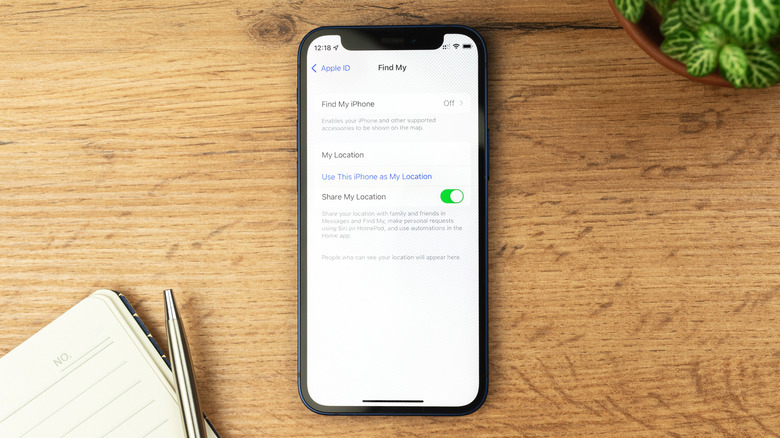
There are times when turning off Find My is necessary, but you should always have it on otherwise to keep your phone safe.

Apple’s Find My service will help you locate your iPhone, iPad or other Apple device that has been lost, stolen or simply misplaced. It relies on Apple’s Find My network, which is a crowdsourced system where other people’s Apple devices use Bluetooth to detect the location of your item — in some cases, even when it’s switched off. It then reports the approximate location of the device to you.

While the feature can be a life-saver, there are instances when you should switch it off. Primarily, Apple recommends disabling Find My before selling, giving away or trading in your device, as well as if you’re sending it in for repair. This ensures technicians won’t be hampered by security features and can properly run diagnostics to figure out what’s wrong with your device. However, disabling Find My at other times will reduce your phone’s security. 

Advertisement

Disable Find My by resetting your device

If you’re selling or giving away your device, the process to factory reset your iPhone (Settings > General > Transfer or Reset iPhone > Erase all Content and Settings) is the easiest way to disable Find My. This will ask for your Apple Account password to make sure it’s you wiping the device, and automatically disables Find My as part of the reset process.

Importantly, turning off Find My also disables Activation Lock, which links your Apple Account to the device. When Activation Lock is enabled, your device cannot be used without entering your Apple Account credentials, even if someone factory resets it. This means someone who steals your iPhone can’t wipe it to resell it.

In case your phone was lost or stolen, erasing it remotely via Find My or iCloud on a computer will not switch off Find My and Activation Lock. Those features will continue protecting your device and letting you track it. 

Advertisement

Manually disabling Find My

If you’re not planning to factory reset your phone, such as when sending your device in for repairs, you’ll have to disable Find My manually. Thankfully, this is easy: go to Settings > [Your Name] > Find My. Tap Find My iPhone and then toggle it off. This option will be grayed out if Stolen Device Protection is enabled, which is the default as of iOS 26.4.

Stolen Device Protection implements additional security measures when your iPhone is away from familiar locations, such as your home or workplace. It’s designed to protect your data if someone steals your phone and knows your passcode. Your device will require Face ID or Touch ID to access sensitive info like stored passwords, and it adds a delay before changing crucial settings like your Apple Account password. 

If you need to switch off Find My, you first have to disable Stolen Device Protection. You should ideally do this while at home to avoid the aforementioned security delays. To do so, go to Settings > Face ID & Passcode > Stolen Device Protection and toggle it off. To re-enable these features after your device is serviced, follow the same steps to toggle them back on.

Advertisement

Find My also lets you share your location with friends and family; if you disable it, this won’t work anymore. If you’re concerned about a particular friend having access to your location, removing their access is better than turning off the entire Find My suite. Open the Find My app, tap the People tab, choose the person, and hit Stop Sharing My Location. Unless they’re on an “older operating system,” they won’t be notified that you stopped sharing with them (though they may notice when they don’t see your name in the Find My app anymore). And others won’t know when you check their location using the app.

What happens when you turn off Find My?

The most obvious answer is also the most important: once you disable Find My, you cannot locate your device through Apple’s network anymore. If you lose your iPhone with Find My switched off, you won’t be able to check its location through the Find My app on another of your Apple devices or the iCloud site in a browser. 

Advertisement

Find My’s suite of features also includes Lost Mode, which enables you to display a custom message with your number on the screen for anyone who finds it. This won’t be available once the feature is disabled, and Activation Lock will no longer protect the phone either. Because of all this, you should only disable Find My when you’re sending your phone to a trusted repair center, and re-enable the feature as soon as you get the phone back.

There’s one major scenario in which you should never disable Find My: after you’ve lost your device, especially if you receive intimidating messages about doing so. There are hundreds of stories on Reddit about people who lost their phones and later received messages demanding they disable Find My. They’ll threaten to publish the personal data on your phone, or make up sad stories about wanting to harm themselves because the phone they bought for their child isn’t working. 

If this happens to you, do not remove the device from your Apple Account. Because of Activation Lock, your lost phone is useless to someone who’s stolen it and is trying to resell it — as long as you keep Find My enabled. You can erase the phone to know your data is safe, but don’t give these crooks what they want.

Advertisement

Source link

Continue Reading

Tech

Unitree shares fall 45% from their debut peak, wiping out $30bn

Published

on

Unitree’s shares have fallen roughly 45% from the peak they hit on their first day of trading in Shanghai. The slide has turned a national success story into an argument about how China prices its listings.

The stock steadied on Tuesday after three consecutive days of decline, Reuters reported. The valuation of the Hangzhou humanoid robot maker reached $66bn at one point. It has since dropped by $30bn.

Unitree finished its debut up 460%. Newly listed Chinese stocks have gained an average of 226% on their first day over the past three years. Even in a market used to opening-day surges, that stood out.

The gap between the price and the debut

Unitree listed on 19 August at 150.8 yuan a share, valuing the company near $9bn. The $66bn peak came later, intraday, once the market had its say.

Advertisement

Dong Baozhen chairs the Beijing asset manager Lingtong Shengtai. The distance between the offer price and the debut means “either one of them must be wrong”, he told Reuters. He thinks the debut was the mispriced one.

Debut performance is the barometer of market mood, Dong said, and exuberant mood breeds bubbles. The technology revolution narrative carried investors away. All bubbles are doomed to burst, he added.

What the company earns

Unitree’s adjusted net profit fell 53% in the first three months of 2026, to 40mn yuan, or about $5.95mn. The figure comes from the company’s own prospectus.

Its machines are famous for running, dancing and performing martial arts. One of them beat Usain Bolt’s 100m record at the World Humanoid Robot Games in Beijing this month. Roboticists were quick to qualify that result.

Advertisement

Broader commercial applications have been harder to come by. Analysts had put the company’s likely worth at $7bn or more in the weeks before the float.

The company competes with Tesla and with Boston Dynamics, which Hyundai Motor Group owns. Its backers include Tencent, Alibaba and the AI developer DeepSeek. Founder Wang Xingxing holds about a third of the shares.

The mechanism behind the swing

Chinese stock exchanges vet listing candidates. They also guide IPO pricing, which limits how far bankers can move to meet feverish demand. Analysts told Reuters that this distorts prices.

Two other features compound it. Regulators carry a duty to shield small investors from harm, and rules restrict short-selling. An overpriced listing therefore meets no immediate pushback from anyone betting against it. Bankers described that combination to Reuters.

Advertisement

Unitree’s fast-tracked listing on the STAR Market carried its own signal. The board takes only hard-tech companies in China’s national strategic industries. Analysts read a place on it as government blessing.

Who was left holding it

Abraham Zhang chairs the venture capital firm China Europe Capital. He told Reuters that a desire to pump up the shares and dump them later at lofty prices drove the debut, rather than any rosy prospect.

Loopholes in the IPO system let major shareholders cash in, Zhang said. The risk then moves to small investors buying in the secondary market. Those who won allocations walked away with smiles, he added.

Yuan Yuwei, a hedge fund manager at Trinity Synergy Investments, put it more bluntly. A stock worth 10 yuan can open at 100 yuan and then slide for years. He called it a rip-off.

Advertisement

Restricted short-selling is what makes those schemes possible in the first place, Yuan said.

Retail demand for the offer had been extraordinary. Small investors oversubscribed it more than 8,000 times, a STAR Market record, which left an allocation rate near 0.018%. Almost everyone who wanted the stock had to buy it after trading opened.

One retail investor who lost money wrote in a blog post that he supports Chinese innovation. He also wrote that the rapid concentration of wealth cannot be built on the pains of retail investors.

The case for patience

Not everyone reads the fall as a verdict on robotics. Gao Xingkun manages a fund at China Southern Asset Management, and he told an online roadshow that judging these companies on profit alone is unfair.

Advertisement

Many robot makers spend heavily on research while commercial orders are not yet in sight, Gao said. He compared the moment to the early years of China’s electric vehicle industry, which now dominates its category.

Unitree’s founder Wang Xingxing has made a version of the same argument. Robots are approaching a ‘ChatGPT moment’, he said last week, days after the listing.

Unitree is not the only one

The memory chipmaker CXMT saw its shares climb 466% on its own Shanghai debut last month, a near-identical pattern in a different strategic industry.

Scarcity plays a part. Only 21 companies went public in Shanghai during the first seven months of this year, against 104 in Hong Kong, because of tight regulatory scrutiny.

Advertisement

Yuan said investors chase what few opportunities there are. There are not many good companies in China’s stock market, he told Reuters.

A queue of domestic rivals is preparing to list, and Unitree’s debut was meant to set the tone for them. It still may, though not in the way those companies would have chosen.

What Europe is watching

European robotics has no comparable listing to point to, and its builders are earlier. UMA, founded by an ex-Tesla Optimus scientist, is building Europe’s humanoid from a much smaller base of capital.

Most accounts call that gap a European weakness. The past week offers a reading in which slower capital is not only a handicap. A listing that swings by $30bn in three sessions tells a founder very little about demand for the product.

Advertisement

The question the Shanghai market is now asking is whether the demonstrations that made Unitree famous convert into recurring orders. Zhang expects more of these episodes, saying the capital drama at Unitree is not the first in China and will not be the last.

Source link

Advertisement
Continue Reading

Tech

AppleCare for the new Macs is hidden but available

Published

on

Despite the New Mac mini and Mac Studio apparently not including an option to add AppleCare where it has historically been during the order process, you just have to click through a few pages to get it done.

It’s not remotely clear why Apple would choose to hide AppleCare for the new Macs since the option is front and center with other Macs. With those, AppleCare is on the order page, right after processor, RAM, and storage options.

With the new Mac mini and Mac Studio, there is no such option on that page, but there is later in the process. Apple uses this extra step to promote the Studio Display and the way it’s done is simply confusing.

Unless you do want a Studio Display, you have to:

Advertisement
  • Configure your Mac
  • Click on Continue
  • Ignore everything about the Studio Display
  • Instead, click on Add to Bag at the top
  • Choose your AppleCare plan from the next page
Apple website customization page for Mac Studio, showing options to add a Studio Display, choose glass type, and select stand configuration, with product descriptions, prices, and an Add to Bag button

Click “Add to bag” to get past this page, and proceed to the AppleCare page.

To get to the AppleCare page, you hit “Add to bag” next to the name of the computer you’re buying. AppleCare options are on the next page.

Again, if you don’t want anything on the AppleCare page, click the “Review bag” next to the computer name.

If you continue on with your pre-order of a new Mac, you get this AppleCare screen later in the process.

If you continue on with your pre-order of a new Mac, you get this AppleCare screen later in the process.

Advertisement

Then you review, and choose payment options.

AppleCare pricing

There are two flavors of AppleCare, with AppleCare+ covering one device and the AppleCare One bundle covering up to three devices for one $19.99 monthly price without additions.

There’s some math to do about how to get the most out of your AppleCare One bundle, and it is generally not in the Mac mini’s favor. We have more details here on that.

The Mac Studio on its own, AppleCare+ is $6.49/month or $64.99/year. For the Mac mini, it’s $3.99/month or $39.99/year.

Advertisement

Source link

Continue Reading

Tech

The Supreme Court’s Mail-In Ballot Ruling Is a Step Toward Chaos in the Midterms

Published

on

“This would create a parallel federal eligibility infrastructure on top of existing state voter rolls,” Issue One, a nonprofit seeking to reduce the role of money in politics, wrote shortly after the order was issued.

The second provision targets election officials by demanding that the US attorney general “prioritize the investigation and, as appropriate, the prosecution of State and local officials … who issue Federal ballots to individuals not eligible to vote in a Federal election.”

The final provision in the order directs the USPS to create new rules for absentee and mail-in ballots. Under the rules, states would need to provide the USPS with a list of voters they intend to send ballots to. The order prevents the USPS from sending ballots to anyone not on the list. This rule would require the printing of millions of new ballot envelopes with trackable barcodes.

Last week, before the Supreme Court ruling was issued, the USPS issued a 95-page final rule explaining how it plans to enforce Trump’s proposed changes to mail-in voting in order to “reduce the risk of fraud, and help protect the integrity of federal elections.” The rule compares mail-in ballots to fake bombs or cremated animal remains. The New York Times reported on Monday that Trump is seeking to take control over the USPS board by stacking it with members who have questioned the outcome of the 2020 election.

Advertisement

The provisions of the executive order were mostly blocked by federal courts before the Trump administration appealed the rulings to the Supreme Court in July. Earlier this month, the administration pushed the court to issue a ruling quickly, claiming that failing to do so would cause “irreparable harm to the federal government, the public, and election integrity.”

While the states are likely to file another lawsuit once the USPS rule goes into effect on Wednesday, the Supreme Court decision will still likely cause disruption, given how close the general election is.

“The Court seemed to create complete chaos leading up to the midterm elections, waiting weeks after an administration filing, and just days before mail ballots go out, to completely rewrite the rules of the election,” David Becker, the head of the Center for Election Innovation and Research and a former Justice Department lawyer, wrote in an emailed statement.

That chaos will hit election officials the hardest.

Advertisement

“From a strictly practical perspective, there simply is just not enough time to implement the proposed requirements for the 2026 general election,” Stuart Holmes, director of elections in Washington state, tells WIRED.

Holmes said that county election offices already have ballot packet mailing materials printed and ready to mail, and that destroying and reprinting them is not realistic, financially or otherwise. The USPS rules would also require new envelope designs, which would in turn need to be reviewed and approved by the USPS to ensure compliance with their automation equipment.

“Even if new designs could be developed and approved in time, it is unrealistic to expect the limited number of printing vendors serving Washington’s counties to produce entirely new supplies of ballot envelopes for every county before the general election without significant disruption,” Holmes adds.

Finally, Holmes flagged that the demands of maintaining the USPS lists required under the order would be virtually impossible. “Voter registration data does not remain static. Voters continually update their registrations, ineligible voters are removed from the rolls, and newly eligible voters are added,” he says. “Meeting the proposed reporting requirements would require the Office of the Secretary of State to dedicate staff to provide updated information to USPS while those same staff are already responsible for other essential list maintenance and election preparation activities.”

Advertisement

Source link

Continue Reading

Tech

Waymo robotaxis are headed to Munich

Published

on

Waymo said Tuesday it plans to launch a robotaxi service in Munich, months after the Alphabet-owned autonomous vehicle company set up an entity in Germany.

The company still must weave its way through mapping and testing, as well as clear regulatory hurdles before it can launch commercial operations.

Waymo will begin, as it has in other 11 cities where it has commercial robotaxi operations, by first manually driving its vehicles to map the streets of Munich. It will then test its autonomous vehicles with human safety drivers behind the wheel, before removing them. Waymo typically allows its employees, media, and other invited guests to ride in its driverless vehicles at this stage.

The company will eventually open its robotaxis to limited service, and eventually to all riders once it receives the regulatory approval required to operate commercially. Waymo said in a blog post on Tuesday that it is working with Germany’s Federal Motor Transport Authority (KBA), state authorities and local officials, and expects to open commercial ride-hailing to the public towards the end of 2027.

Advertisement

Waymo’s entry into Germany comes more than five years after the country’s lawmakers adopted legislation to allow driverless vehicles on public roads, and in that process making it the first country in the European Union to create a legal framework for Level 4 autonomous driving. Level 4 autonomy is a designation by the Society of Automobile Engineers (SAE) that means the self-driving system handles all the driving, with no expectation of a human taking over, in certain conditions or environments.

This legal framework has made Germany a hotspot for autonomous vehicle testing. Today, several companies, including Mobileye and Volkswagen, hold permits to test their autonomous vehicles in the country, according to the KBA’s latest data. Waymo does not currently have any permits.

However, the vast majority, including U.K. self-driving startup Wayve, and Israel-based Autobrains, hold Level 3 permits. Level 3, or conditional automated driving, is a system that can handle all the driving within specific operating conditions, such as low speeds on highways, but the driver must be able to take over when needed.

Germany isn’t the only overseas hotspot for AV developers. The U.K., especially London, is shaping up as another robotaxi battleground. Waymo has said it plans to launch a commercial service in London in 2026, which will pit it against Wayve and its partner Uber. Chinese tech giant Baidu has also started testing autonomous vehicles in the city as part of its partnership with Lyft and Freenow.

Advertisement

When you purchase through links in our articles, we may earn a small commission. This doesn’t affect our editorial independence.

Source link

Continue Reading

Tech

Report: Amazon eyes ‘fully automated’ delivery stations to bring robotics to the last mile

Published

on

Amazon’s ZancaSort system brings packages to workers automatically at its Last Mile Innovation Center in Dortmund, Germany. A separate initiative, Project Tetromino, reportedly aims to bring full automation to delivery stations. (Amazon Photo)

Visiting an Amazon delivery station can feel like walking into the past.

While many of its massive fulfillment centers are equipped with the latest robots and automation, Amazon’s delivery stations — the final stop before packages reach the doorstep — remain mostly manual. Workers often sort parcels by hand, load them into bags, and stage them for drivers.

That could be changing. Business Insider reports that Amazon is developing an internal initiative called Project Tetromino to build “fully automated” delivery stations, citing an internal planning document that includes specific financial projections.

The name appears to be a nod to Tetris, reflecting the puzzle-like challenge of efficiently organizing packages for delivery vehicles.

“We’re always exploring and testing new technologies across our operations to improve safety and the delivery experience for customers,” Amazon spokesperson Brad Glasser said in a statement. He added, “The details cited here are inaccurate and don’t reflect our current plans. Like any early-stage concept, this is one of many initiatives we regularly evaluate, and plans evolve significantly as we learn.”

Advertisement

Business Insider reported that a key technology behind the effort could come from Boxbot, an Alameda, Calif.-based robotics startup that uses conveyors and AI-driven storage trays to automatically sequence packages for vehicle loading. The company says the process is up to 10 times faster than manual methods.

Boxbot has raised $29.5 million from investors including Toyota Ventures, Playground Global, and Maersk Growth.

Responding to an inquiry from GeekWire, Boxbot CEO Austin Oehlerking said he could not comment on activities with any specific customer but said the company has “tested and deployed live systems within the parcel delivery, logistics, and automotive industries over the last several years.”

Oehlerking described Boxbot’s technology as filling a gap left by traditional warehouse automation. Rather than bringing bins of packages to workers for sorting — the standard approach — Boxbot stores and retrieves individual packages of varying sizes, making it possible to sequence them precisely for loading.

Advertisement

“This type of storage system can be very useful at different points in the supply chain, depending on the customer,” he added.

Amazon said its delivery station initiatives are “designed to complement and empower our workforce.” The company has been ramping up automation across its operations, with more than a million robots now deployed in its fulfillment network and plans to more than double its fleet of robotic arms this year, citing goals to improve safety, ergonomics and efficiency.

The company has also opened a Last Mile Innovation Center in Germany, where it has been testing delivery station technologies including automated unloading, sorting, and scanning systems.

Source link

Advertisement
Continue Reading

Tech

Don’t Trust The Name On The PAC

Published

on

from the politics-is-all-about-the-lies dept

This article is republished from The Conversation under a Creative Commons license. Read the original article.

Political action committees are responsible for nearly two-thirds of all federal election funding, with about US$6.3 billion raised and $4.8 billion spent since January 2025. But their outsized political influence does not just come from their wallets. It’s also generated from their names.

Political strategists are adopting PAC names that signal the opposite political goals from what those organizations truly intend. They hope to taint voter perception of the candidates or ballot initiatives to which they donate.

And, as our research shows, the strategy is working.

Advertisement

The history of deceptive PAC naming

Typically, PAC names borrow expressions from the party they wish to help, like ActBlue or WinRed, which raised the most money in the 2024 federal election cycle.

Many of those names have been ridiculed for their overreliance on throwaway clichés. In 2012, comedian Stephen Colbert created the PAC Americans for a Better Tomorrow, Tomorrow to prove the point.

But a more sinister custom has emerged. Our research has shown that for the past decade or so, PACs have engaged in what we call “tactical naming,” the practice of giving laws and PACs names designed to manipulate voter perception.

One tactic is to choose a name derived from slogans of the opposing party, falsely signaling ideological kinship to gain the trust of voters from the other side. In 2014, for example, the PAC Americans for Progressive Action provided no support for Democratic candidates. Instead, it gave over $1.3 million to Republican Gabriel Gomez’s 2014 campaign for a U.S. Senate seat in Massachusetts.

Advertisement

Examples can be found on both sides of the aisle. The PAC Patriot Majority USA, which sports a gun-toting minuteman logo and foregrounds the word “patriot,” a term that recent research indicates is a strong marker of conservative political identity, ran ads in support of Democratic candidates. It also opposed Republican candidates in multiple states for years.

The PAC Protect Women Ohio Action, Inc. contributed to conservative ads opposing a ballot initiative that limited Ohio’s authority to restrict abortion.

Deceptive PAC naming today

Tactical naming continues in current primaries.

Earlier in this primary cycle, the PACs Real Change and Lead Left ran television ads and mailers in competitive congressional districts attacking Democratic candidates, ostensibly from the left. The ads accused candidates of standing with President Donald Trump, opposing Medicare for all and “cashing in on Trump’s terror.”

Advertisement

To any casual observer, Real Change and Lead Left look like progressive groups holding Democrats accountable. But closer scrutiny reveals something else.

When people subscribed to Real Change’s email list, they received emails confirming their subscriptions that routed through cavalryllc.com. That’s the domain of Cavalry LLC, one of Washington’s premier Republican communications firms, founded by Republican Sen. Mitch McConnell’s former chief of staff.

Cavalry has received more than $10 million from the Congressional Leadership Fund, the super PAC aligned with House Republican leadership. And investigative reports revealed that Caleb Crosby, the treasurer of the Congressional Leadership Fund, founded a political compliance firm that supported personnel at two conservative PACs that used the same unusual address as Lead Left: a Staples store in Tallahassee, Florida.

The science behind the names

It’s tempting to think that this tactic won’t work on the politically savvy people who pay attention to PAC names. But our research shows otherwise.

Advertisement

To test the effects of deceptive PAC names, we conducted a controlled online experiment involving more than 650 participants recruited through Prolific, an online academic research studies platform. The sample was balanced by gender and diverse in age, though participants were somewhat more educated than the general U.S. population.

Participants evaluated four proposed laws before and after learning that each law was sponsored by a PAC. The PAC’s name was manipulated to be either congruent with the law’s ideological direction, incongruent with it or politically neutral. For example, a left-leaning environmental proposal might be sponsored by a PAC called Save the Earth, Americans for Oil or Smith. By comparing participants’ ratings before and after exposure to those names, we measured the extent to which naming alone could alter attitudes toward otherwise identical proposals.

We found that misleading PAC names significantly shifted voter opinion. We also found that PAC names were most effective when they were deceptive. When participants who supported a particular law were told that an incongruently named PAC was sponsoring it, their support for that law dropped sharply, even when the law’s text sat right in front of them.

For example, when people who identified as left-leaning already favored a law that expedited refugee worker rights, their favorability ratings dropped sharply when they learned that the sponsoring PAC had a right-signaling name, Building the Wall. By contrast, learning that an aptly named PAC, Humane Treatment of Migrants, had sponsored the same law did not significantly affect the ratings of left-leaning people and barely affected the ratings of right-leaning people.

Advertisement

Our research also found that stronger partisans are more susceptible to this tactic. The more firmly someone identified with a political party, the greater the swing in their opinion when an inapt PAC name was introduced.

Sophisticated voters are not automatically inoculated – if anything, their stronger priors make them more vulnerable to cues that appear to confirm or threaten their political identity.

What makes this especially troubling is where tactical names appear. Federal regulations require that PACs disclose their names “in a clear and conspicuous manner” in their political advertisements.

One might wonder whether tactical naming is just everyday politics. But weaponizing names introduces a hazard that goes far beyond ordinary negative campaigning.

Advertisement

A Republican group running ads against Democrats is unremarkable. A Republican group pretending to be a Democratic group to run those same ads is something different: It is a deliberate attempt to corrupt the informational environment in which voters decide whom to support.

Can anything be done?

Our research addressed this question, and our conclusions are sobering.

An outright ban on deceptive PAC names would face serious First Amendment obstacles. Naming a PAC is a form of expression that receives constitutional protection.

Courts have been reluctant to allow the government to dictate how political organizations present themselves. In Doctors for a Healthy Montana v. Fox in 2020, a federal district court struck down a Montana law requiring PACs to name themselves in a way that clearly identified the economic or special interest of a majority of their contributors. The court found that the statute did more than require disclosure of factual information; it unconstitutionally dictated “how that information must be packaged to the public.”

Advertisement

Required disclaimers, such as warnings to voters not to treat a PAC’s name as reliable evidence of its political identity, would probably be the most legally viable intervention. Even their constitutionality is uncertain, however.

That leaves two other remedies: transparency journalism and voter skepticism.

The reporting on Real Change PAC, which followed money through shell companies, traced email domains and mapped connections to the Congressional Leadership Fund, is the kind of investigative work that gives voters a fighting chance.

Voters can also follow a simple rule of thumb: When you see a PAC name, don’t treat it as gospel. Ask who is paying for it and who benefits.

Advertisement

Be mindful when the PAC is critical of a person or position that is supported by the very party that the PAC appears to serve. And remember that the most dangerous political actors don’t always attack your political allies.

Sometimes, they just steal their names.

Brian Sheppard is Professor of Law at Seton Hall University. Andrew Moshirnia is Associate Professor & Director of Education – Business Law & Taxation at Monash University.

Filed Under: campaign finance, campaigning, elections, misrepresentation, pacs, political funding, superpacs

Advertisement

Source link

Continue Reading

Trending

Copyright © 2025