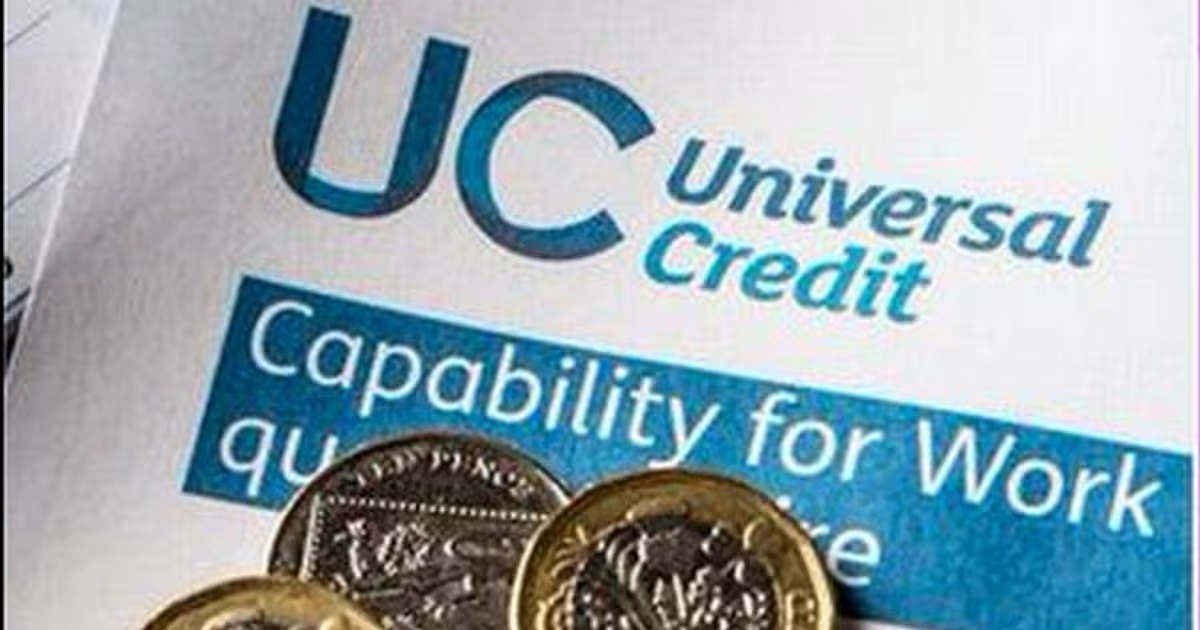
The DWP has confirmed that it plans to complete migration of claimants on income related Employment and Support Allowance (ESA) to Universal Credit by March
Linda Howard Money and Consumer Writer
20:00, 17 Feb 2026
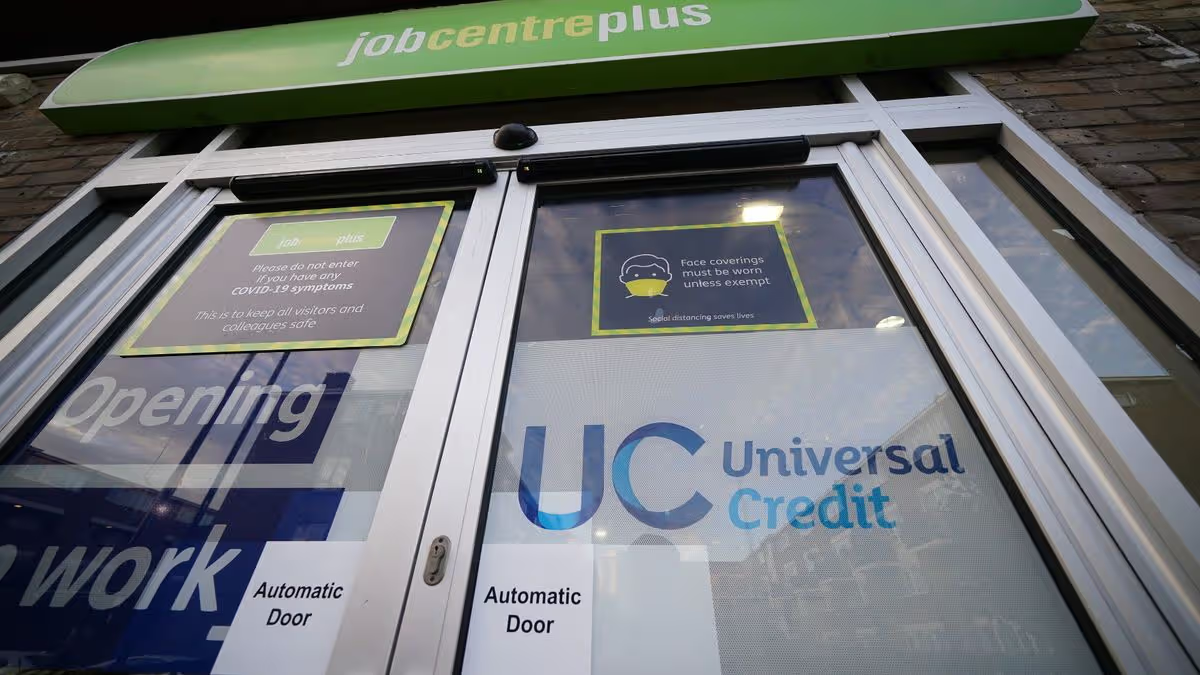
The Department for Work and Pensions (DWP) recently confirmed its intention to complete the transition of claimants on income-related Employment and Support Allowance (ESA) to Universal Credit by March.
Minister for Social Security and Disability, Sir Stephen Timms, also stated that part of this migration process will involve ESA claimants moving to the Universal Credit Health Element.
Advertisement
Welfare reforms set to be implemented in April aim to address these ‘perverse incentives’ by introducing a lower Universal Credit Health Element rate of £217.26 per month for new claimants, compared to the higher rate of £429.80.
Those with the most severe, lifelong conditions, those nearing end of life, and all existing Universal Credit health claimants will continue to receive the higher rate. The change does not affect existing claimants, only new applicants.
Sir Stephen’s remarks were made in a written response to Labour MP Amanda Martin, who queried whether claimants with disabilities, receiving the Personal Independence Payment ( PIP ) and legacy work-related benefits, will be “treated as new claimants for the purposes of the proposed changes to the Health Element of Universal Credit when they are migrated”.
The Portsmouth North MP also questioned whether claimants on legacy benefits transitioning to the Universal Credit system would “see a reduction in their income as a result of these proposed changes”, reports the Daily Record.
Advertisement
The DWP Minister responded: “The Department plans to complete migration of ESA claimants to Universal Credit by March 2026. As part of this ESA claimants will be migrated to the Universal Credit Health Element. To protect any claimants who have not migrated by April 2026 we intend to mirror as closely as possible the changes made in Universal Credit in the ESA rates.
“Changes to the ‘support component’ and the two disability premia (severe and enhanced disability premium rates) will reflect changes to Universal Credit LCWRA ( Limited Capability for Work and Work-Related Activity) rates for existing claimants.”
He added: “Including these commensurate measures aims to give fair treatment for all customers moving onto Universal Credit from income related ESA, regardless of their point of migration.”
The DWP has previously stated that nearly four million households will receive an annual income increase estimated at £725 under new legislation designed to reform the welfare system.
Advertisement
Changes outlined in the Universal Credit Act will aim to rebalance the core payment and health top-up within Universal Credit. The Act will result in the Universal Credit standard allowance rising permanently above inflation, totalling £725 by 2029/30 in cash terms for a single person aged 25 or over. According to the Institute for Fiscal Studies (IFS), this represents the largest permanent real terms increase to the main rate of out-of-work support since 1980.
The Universal Credit Act The DWP has announced a rebalancing of Universal Credit health and standard elements to address what it calls a ‘fundamental imbalance in the system which creates perverse incentives that drive people into dependency’. The Act recently received Royal Assent.
In addition to these changes, the DWP has introduced significant new measures, giving those receiving health and disability benefits the right to try work without fear of reassessment. This new ‘Right to Try Guarantee’ applies to individuals with a disability or health condition – such as those recovering from illness – who wish to return to work now their health has improved.
All current recipients of the Universal Credit Health Element and new customers with 12 months or less to live or who meet the Severe Conditions Criteria will also see their standard allowance combined with their Universal Credit health element rise at least in line with inflation every year from 2026/27 to 2029/30.
With household bills and petrol and diesel prices set to rise further, budgets are stretched. But there is some help on the way.
With household bills, petrol and diesel prices rising, we’re all feeling the pinch. Broadband payments, TV licences, council tax and water all look set to go up.
Advertisement
And with the ongoing war in the Middle East affecting petrol and diesel prices, budgets could be stretched even further. The ongoing conflict could lead to food inflation reaching at least 9 per cent by the end of the year, up from the 3.2pc that economists for the Food and Drink Federation forecast in September last year.
Get MEN Premium now for just £1 HERE – or get involved in our WhatsApp group by clicking HERE. And don’t miss out on our brilliant selection of newsletters HERE.
Prime Minister Sir Keir Starmer last week said he knew people were worried about how the war will impact them and their families. He said: “I want to reassure them that they have a Government on their side, working with allies on de-escalation and bearing down on the cost of living.
Advertisement
“Today, millions of people up and down the country will see energy bills go down by £117, wages go up for the lowest paid, and more support will be available for people who need it most – because of the decisions this Government has taken.
“But we must go further to bear down on costs, and that means pushing for de-escalation in the Middle East and a re-opening of the Strait of Hormuz. That is the best way we can bring down the cost of living for families and that is my focus.”
Here are all the financial, money and benefits changes from this month.
Advertisement
HMRC Child Benefit to increase
Every year rates go up in line with the rate of inflation from the previous September. In September 2025 this was confirmed as being 3.8%, according to the consumer price index. Child benefit payments are made to parents or anyone looking after a child. They are intended to help you withthe costs of your children.
They are usually paid every four weeks on a Monday or Tuesday, but there are different payment dates if it’s due on a bank holiday. You can getChild Benefit paid weekly if you’re a single parent or if you or your partner are getting certain benefits, such as Income Support.
You can get Child Benefit if you’re responsible for bringing up a child who is under 16 years old or under 20 years old and still in approved education or training. Only one person can receive Child Benefit for a child. Here is how much it is going up by from April 6.
Advertisement
Payments for the first or eldest child: increasing from £26.05 a week to £27.05 a week
Payments for any additional child: increasing from £17.25 a week to £17.90 a week
State Pension payments to go up
State Pension payments are set to rise by up to £44 a month from April as the new financial year begins. Pensions will increase in line with the average earnings growth figure for May to July 2025.
They will be uprated by 4.8% from April 6. State Pensionsincrease each April and the amount they go up by is worked out by the triple lock – a mechanism used to ensure the payment rates rise each year in line with whichever is higher out of inflation, earnings or 2.5%. This is to prevent the value of pensions being reduced by cost of living pressures.
The planned rises for pensions for the 2026/27 financial year (from April 2026) are as follows:
Full New State Pension
Weekly payment: £241.30 (from £230.25)
Four-weekly payment: £965.20 (from £921)
Full Basic State Pension
Weekly payment: £184.90 (from £176.45)
Four-weekly payment: £739.60 (from £705.80)
Rise in DWP Universal Credit payments
Rates of Universal Credit payments are set to go up along with many other DWP benefits. Every year rates go up in line with the rate of inflation from the previous September.
Advertisement
In September 2025 this was confirmed as being 3.8%, according to the consumer price index.Universal Credit is a means-testedbenefit that was first introduced in the UK to replace the old benefits in 2013. By 2018, all new customers were required to apply for UC, while existing legacy benefit customers continued receiving their awards.
Below are the confirmed new monthly rates for Universal Credit due to come into place from April 2026.
Single
Single under 25 from £316.98 to £338.58
Single 25 or over from £400.14 to £424.90
Couple
Joint claimants both under 25 from £497.55 to £528.34
Joint claimants, one or both 25 or over from £628.10 to £666.97
Child amounts
First child (born prior to April 6, 2017) from £339.00 to £351.88
First child (born on or after April 6, 2017) or subsequent children from £292.81 to £303.94
Disabled child additions
Lower rate addition from £158.76 to £164.79
Higher rate addition from £495.87 to £514.71
Limited Capability for Work
Limited Capability for Work amount from £158.76 to £158.76
Limited Capability for Work and Work-Related Activity amount from £423.27 to £217.26
Limited Capability for Work and Work-Related Activity amount (Pre-2026 claimant, severe conditions criteria claimant or claimant who is terminally ill) from £423.27 to £429.80
Carer amount
Carer amount from £201.68 to £209.34
Childcare costs amount
Maximum for one child from £1031.88 to £1071.09
Maximum for two or more children from £1768.94 to £1836.16
Housing cost contributions
Non-dependants’ housing cost contributions from £93.02 to £96.55
Work allowances
Higher work allowance (no housing amount) – One or more dependent children or limited capability for work from £684.00 to £710.00
Lower work allowance
One or more dependent children or limited capability for work from £411.00 to £427.00
New DWP Personal Independence Payment rates
Like Universal Credit payments, Personal Independence Payment (PIP), rates will increase by 3.8% in April. Below are the confirmed new monthly rates for Personal Independence Payment due to come into place from April 2026.
Advertisement
Personal Independence Payment (PIP) & DLA Care Component
Enhanced/Highest Rate: Rising from £110.40 to £114.60 per week
Standard/Middle Rate: Rising from £73.90 to £76.70 per week
The lowest rate of DLA care will rise from £29.20 to £30.30 per week
PIP & DLA Mobility Component
Enhanced/Higher Rate: Rising from £77.05 to £80.00 per week
The standard/lower rate of mobility will rise from £29.20 to £30.30 per week
Pension Credit
Pension Credit is paid to people over theState Pension age who are on a low income and need extra money to help with living costs. The means-tested benefit can also help with housing costs, such as ground rent or service charges. Like other DWP benefits, this will rise by 3.8% in April.
Recipients might also get extra help if they’re a carer, severely disabled, or responsible for a child or young person. Pension Credit is separate from your State Pension, and you can get Pension Credit even if you have other income, savings or own your own home.
Pension Credit recipients can also access other things, such as council tax discounts and free TV licences for over-75s. There are also additional elements available if you’re a carer, you’re disabled, you look after children, or if you have savings and reached State Pension age before April 2016.
Standard minimum guarantee
Advertisement
Single: increasing from £227.10 to £238.00
Couple: increasing from £346.60 to £363.25
Additional amount for severe disability
Single: increasing from £82.90 to £86.05
Couple (one qualifies): increasing from £82.90 to £86.05
Couple (both qualify): increasing from £165.80 to £172.10
Additional amount for carers
Increasing from £46.40 to £48.15
Savings credit
Threshold – single: increasing from £198.27 to £208.07
Threshold – couple: increasing from £314.34 to £329.75
Maximum – single: increasing from £17.30 to £17.96
Maximum – couple: increasing from £19.36 to £20.10
Children
First child born before 6 April 2017: increasing from £78.10 to £81.07
Subsequent children: increasing from £67.42 to £69.98
Disabled child
Lower rate: increasing from £36.54 to £37.93
Higher rate: increasing from £114.12 to £118.46
Polygamous marriage
Amount for claimant and first spouse: increasing from £346.60 to £363.25
Additional amount for each additional spouse: increasing from £119.50 to £125.25
Non-State Pensions (for Pension Credit purposes)
Statutory minimum increase to Non-State Pensions: increasing from 1.70% to 3.80%
DWP Attendance Allowance rates to rise
Like other DWP benefits, Attendance Allowance rates will increase by 3.8% in April 2026. More than 1.7 million people across the UK were receiving additional financial support through Attendance Allowance at the end of February this year.
Attendance Allowance is a benefit paid to people over the state pension age who need help or supervision with personal care due to illness or disability. Rates of Attendance Allowance payments depend on the level of help you need, broken down into a lower rate of payment and a higher rate of payment, both paid weekly.
Attendance Allowance rates from April 2026:
Higher Rate: £114.60 per week (up from £110.40).
Lower Rate: £76.70 per week (up from £73.90).
Minimum wage to rise
Minimum wage will rise again in April. The National Living Wage, the minimum wage rate for all workers aged 21 and over, will rise by 4.1 per cent to £12.71 per hour. The minimum wage for people aged between 18 and 20 will increase to £10.85 and the rate for 16 and 17 year olds will increase to £8.00.
The government said the rate rise will ensure “a real-terms pay rise for low-paid workers” and marks progress towards aligning the rate for 18 to 20 year olds with the National Living Wage.
Advertisement
The new rates from April 2026 will be:
National Living Wage (21 and over): £12.71 per hour – up 50p
Rate for age 18-20: £10.85 per hour – up 85p
Rate for age 16-17: £8.00 per hour – up 45p
Apprentice Rate: £8.00 per hour – up 45p
Millions to pay more in Council Tax
Across England, the average Band D council tax in 2026/27 will be £2,392 – an increase of £111 or 4.9% on 2025-26, according to the Ministry of Housing, Communities & Local Government.
The figures include all additional charges, including adult social care, parish precepts and costs levied by police, fire and regional authorities where appropriate.
It is the fourth year in a row that the England-wide increase has averaged around 5%.
Advertisement
Single-person households qualify for a 25% discount, full-time students can be fully exempt, and those on low incomes can apply for a reduction of up to 100%. Carers and people with disabilities may also qualify. Discounts are not applied automatically, so households need to contact their council to claim.
Households can also contact their local authority to review their bill or spread payments over more months to help manage costs.
Household water bills to increase
Household water bills across England and Wales are to rise by an average of 5.4%, equating to £33 a year for the average household.
There is significant regional variation in bill increases, with Severn Trent customers seeing a 10% increase, Sutton and East Surrey imposing an 11% increase, Bristol Water a 12% rise and Affinity Water (central region) customers warned they have a 13% jump coming.
Advertisement
Around 2.5 million households are eligible for social tariffs, with savings of around 40%.
Monthly broadband and mobile phone prices to rise
BT, EE, Plusnet and Virgin Media are all hiking broadband prices by £4 a month, Sky by £3, and Vodafone by £3.50 – adding nearly £50 more per year to bills.
Additionally, one in four broadband customers are out of contract, paying up to £9 per month more than those in contract.
Household energy prices will fall
The price most households pay for energy will fall by 7% from April 1. Ofgem’s price cap will drop from the current £1,758 to £1,641 – a reduction of £117 or around £10 a month for the average household using both electricity and gas.
Advertisement
However, the reduction is lower than the average £150 cut to bills pledged by the Chancellor in November, when she moved 75% of the cost of the renewables obligation from household bills onto general taxation and scrapped the energy company obligation (Eco) scheme.
There is also increasing concern that energy bills will rise by from July as a result of the Middle East conflict – with latest predictions suggesting this could be by £288 a year.
Car tax has increased
Vehicle Excise Duty (VED) is changing for motorists from this month. The new changes primarily focus on aligning electric vehicles (EVs) with the existing tax system and adjusting rates for inflation. The most notable shift is the end of the “tax-free” era for electric cars, alongside a higher “luxury tax” threshold specifically for zero-emission vehicles.
For most cars registered on or after 1 April 2017, the annual flat rate is also increasing. This rate applies to petrol, diesel, hybrid, and now fully electric vehicles.
Advertisement
The petrol and diesel rate has increased from £195 to £200, while the rate for hybrid vehicles has risen from £185 to £190. Fully electric vehicles have gone from an annual flat rate of £195 to £200.
Cars with a high “list price” (the price before discounts) will pay an additional supplement for 5 years (from years 2 to 6). For petrol, diesel and hybrid cars, the threshold remains at £40,000.
For EVs, the threshold increases to from £40,000 to £50,000. The supplement itself rises to £440 (up from £425).
If your car exceeds these price thresholds, you will pay the £200 standard rate, along with the £440 supplement. If you buy a brand-new car registered after 1 April 2026, the first year of tax is based on CO2 emissions.
Millions of patients face higher NHS dental costs from April 1. From Wednesday NHS dental charges in England have risen by around 1.7 per cent, with the cost of a routine check-up (Band 1) increasing from £27.40 to £27.90.
Band 2 treatments like fillings, root canal treatments and tooth extractions will now cost £76.60, while Band 3 treatments like dentures or crowns will cost £332.10.
Advertisement
From 1 April 2026 the dental charges are:
Band 1 course of treatment and urgent treatments will rise by £0.50, from £27.40 to £27.90.
Band 2 course of treatment, there will be an increase of £1.30 from £75.30 to £76.60
Band 3 course of treatment will increase by £5.40 from £326.70 to £332.10
BBC TV licence costs more
The price of a TV licence went up on April 1. The annual cost of a TV licence is now £180 from £174.50. This will mean a monthly bill of £15, up from £14.54. The cost of an annual colour TV licence will rise by £5.50, or the equivalent of an extra 46p a month.
Every household which watches live TV programming or anything on BBC iPlayer must have a TV licence, but for those who don’t watch these – or don’t have a TV at all – you can declare to the TV licencing company that you do not require a licence.
The odds of winning will reduce from 22,000 to one to 23,000 to one from the April draw, and the interest rate will drop from 3.6% to 3.3%. It comes after several reductions were made to the interest rate in 2025, which was 4% at the start of last year. It was reduced to 3.8% in April 2025, and slashed even further to 3.6% in August 2025.
Advertisement
Stamps going up in price again
Royal Mail said the price of a second-class stamp would go up by 4p to 91p and first-class stamps would increase by 10p to £1.80 from April 7
It means thecost of a first-class stamp has now more than doubled – up 137% – in the past six years after eight rises, while thecost of a second-class stamp has been hiked six times.
The price of a passport is rising
The cost of a British passport is to pass the £100 mark for the first time. From April 8, the cost of a standard adult online renewal set to rise to £102 – an 8% increase.
Advertisement
The adult online application will rise from £94.50 to £102, while the child online application will rise from £61.50 to £66.50.
The adult postal application is increasing from £107 to £115.50, while the one-day premium will go from £222 to £239.50
Overseas applications will also rise, with the adult online service rising from £108 to £116.50 and the adult postal going from £120.50 to £130.
After Donlad Trump sent a barrage of menacing threats towards Iran on Sunday morning Piers Morgan hit out at the President’s “embarrassing” post on Truth Social
Pers Morgan has blasted Donald Trump after his latest barrage of menacing threats towards Iran.
Advertisement
President Donald Trump spent Sunday afternoon at his Virginia Golf Course after bypassing traditional Easter events amid speculation about his wellbeing. Trump was captured by Reuters arriving at the facility on Sunday morning dressed in golf shoes. He paused to take photographs with supporters, while social media posts revealed various Easter-themed events taking place at the venue.
Just hours earlier the president sent a barrage of menacing threats towards Iran. He posted on Truth Social: “Tuesday will be Power Plant Day, and Bridge Day, all wrapped up in one, in Iran. There will be nothing like it!!!” Trump, 79, started. “Open the F***ing’ Strait, you crazy b*****ds, or you’ll be living in Hell – JUST WATCH!” he fumed. “Praise be to Allah. President DONALD J. TRUMP”
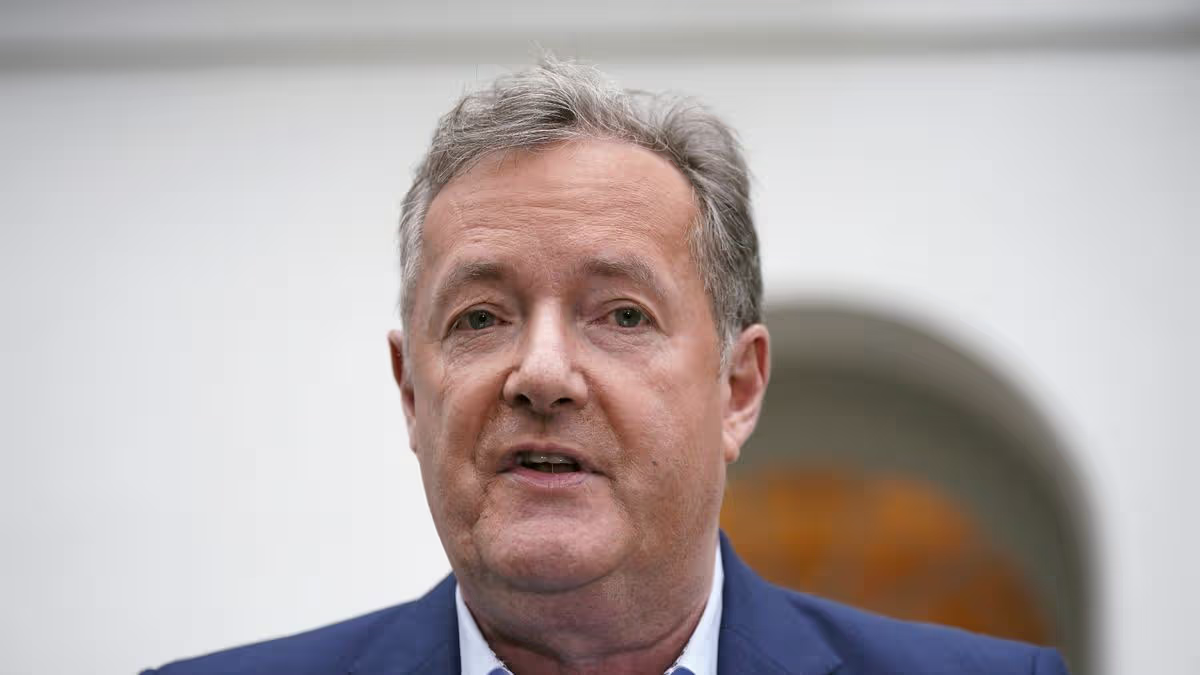
His message has triggered fierce criticism, with many challenging the President’s state of mind. Outspoken broadcaster Piers Morgan reacted: “This is embarrassing. Delete it, President – unless you want everyone to think you’ve lost your marbles.”
But it isn’t all negative from Piers as two hours later he took to X to address the US mission to rescue their second downed airman in Iran. He said: “The more I read about the US mission to rescue their 2nd downed airman in Iran, the more astounding it is. Kudos to the CIA, SEAL Team 6, and all the others involved in finding their man & getting him out. And to him, for incredible guts & tenacity.”
It comes after Social media erupted on Saturday afternoon with unverified claims that Trump had been transported to Walter Reed Hospital – with some users on X even suggesting the president had passed away.
The speculation intensified when the White House announced a lid on Trump’s schedule for the remainder of the day at 11 a.m., prompting widespread questions about the Commander-In-Chief’s whereabouts. The White House subsequently refuted any health concerns, stating the President was continuing to work throughout the Easter weekend.
Advertisement
For the latest Middle East conflict updates click here.
The Government claim the Universal Credit reforms will tackle ‘perverse incentives’
Welfare changes kicking in today will see new claimants of the health element of DWP Universal Credit get paid almost 50 per cent less than those already on the benefit. The Government says the change will reform a system that has ‘for too long locked disabled people and people with long-term conditions out of work’.
Advertisement
Number 10 claims the reforms will tackle what ministers have branded ‘perverse incentives’ which they argued encouraged people to stay on benefits without support to move into work. From today (Monday), new claimants for the health element of universal credit (UC) will get a lower rate of £217.26 a month.
Universal Credit is a payment to help with living costs and is available for people in work who are on low incomes, and those who are out of work or cannot work. People with the most severe, lifelong conditions, people nearing the end of life, and all existing UC health claimants will continue to receive the higher monthly rate of £429.80.
Get MEN Premium now for just £1 HERE – or get involved in our WhatsApp group by clicking HERE. And don’t miss out on our brilliant selection of newsletters HERE.
The change will save taxpayers around £1 billion, the Government has said. Statistics published last month showed there were 2.7 million people on UC assessed as having limited capability for work and work-related activity (LCWRA) across England, Scotland and Wales. People in this category are not required to undertake any interviews or work-related activity.
Advertisement
The Government has pledged that its investment in tailored employment support can offer people opportunities, supporting them to move into and stay in work “rather than leave people stuck on benefits”. Also this week, the standard rate of UC will be boosted, in what ministers have said is an effort to “bear down on the cost of living”.
It said this will result in almost four million households on the standard rate of UC getting around £295 extra this year in cash terms.
Social security and disability minister Sir Stephen Timms said: “The welfare system we inherited has for too long locked disabled people and people with long-term conditions out of work. Laws coming into force today will change that, reducing projected expenditure on universal credit by almost £1 billion.
“Simultaneously boosting the standard allowance and investing £3.5 billion in employment support means we’re creating a welfare system that backs people to work and helps them build a better future.”
Advertisement
Last year, ministers were forced to climb down on plans to also reform disability benefits, including for those with mental health conditions, in the face of backbench Labour opposition. Instead of immediate reform, the Timms review is seeking views on personal independence payment (Pip) and how it works.
Minsters have promised any changes to the benefit – which helps with extra living costs for people who have a long-term physical or mental health condition or disability and difficulty doing certain daily tasks or with mobility because of their condition – have been postponed until after that takes place.
The review is expected to report to Work and Pensions Secretary Pat McFadden by autumn, with the Government stating that an interim update will come ahead of that.
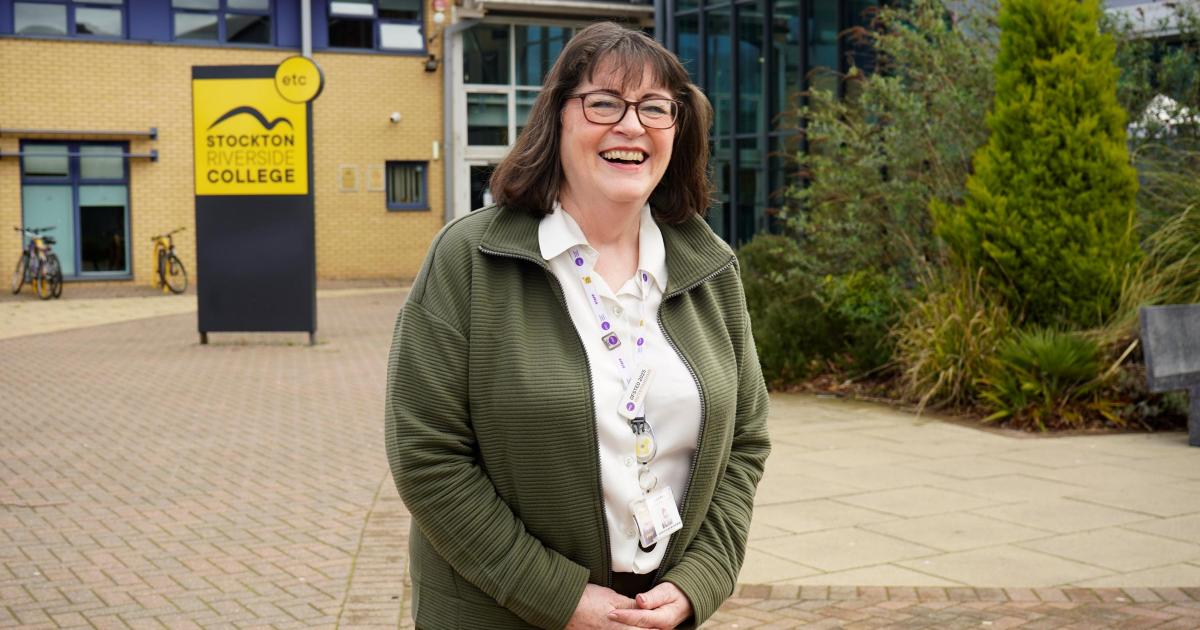
Carol Race has spent the past 22 years supporting students at Stockton Riverside College, with a further 22 years spent guiding pupils in schools before that.
Now, after a career spent helping thousands achieve their ambitions, she is stepping into retirement with a sense of pride and nostalgia.
Ms Race said: “It all feels very surreal at the moment.
Carol Race is retiring after a 44-year career in careers guidance (Image: Supplied)
“To leave is a wrench because, like everyone who works in a college, this is a role where you make a real difference to students.
Advertisement
“You always want to do your best for the students and help them find the opportunities they are looking for.”
Known for her practical advice, interview coaching, and assistance with university applications, she has left a lasting impression on countless students over the years.
The careers advisor said: “You get to meet so many different people and hear about their lives.”
She also supported adult learners, often guiding those returning to education through the application process and helping them regain confidence.
Advertisement
Her journey into careers guidance began unexpectedly after the company where she worked in a secretarial role went into liquidation.
Applying for a position as an employment assistant, she was later seconded for training at Edinburgh Napier University and qualified as a careers advisor in 1985.
She spent the next 20 years working in schools as part of the Cleveland County Careers Service before joining Stockton Riverside College in January 2004.
Over the past 22 years, she has worked with hundreds of students every year and is now senior careers co-ordinator.
Advertisement
Ms Race said: “I don’t think I had any particular expectations when I joined the college, I just got my head down and cracked on.”
Her commitment to students never wavered.
She continued to take appointments even on her final day, ensuring every person received her full support.
She said the most rewarding part of her job was seeing people achieve their goals, whether that meant starting a career, securing university offers, or simply finding meaningful employment.
Advertisement
For adult learners, especially, the transformation could be remarkable.
Ms Race said: “When access to higher education students arrive in September, I say to them that this will be the fastest year of their lives.
“I see them again at the end of the course, with their university offers and they can’t believe how fast it has gone.”
Her genuine care extended beyond career advice.
Advertisement
She remembered the ambitions and journeys of her students, even if names sometimes escaped her.
A mother and grandmother, Ms Race now looks forward to spending more time with family and enjoying time in the garden, though she admits retirement will be bittersweet.
She said: “It’s a cycle in education but I like helping people with their university applications, getting to know the students and just being able to help them gives you a lot of satisfaction.
” It’s the people I work with that I’ll miss most, you spend a lot of time at work and they support you.”
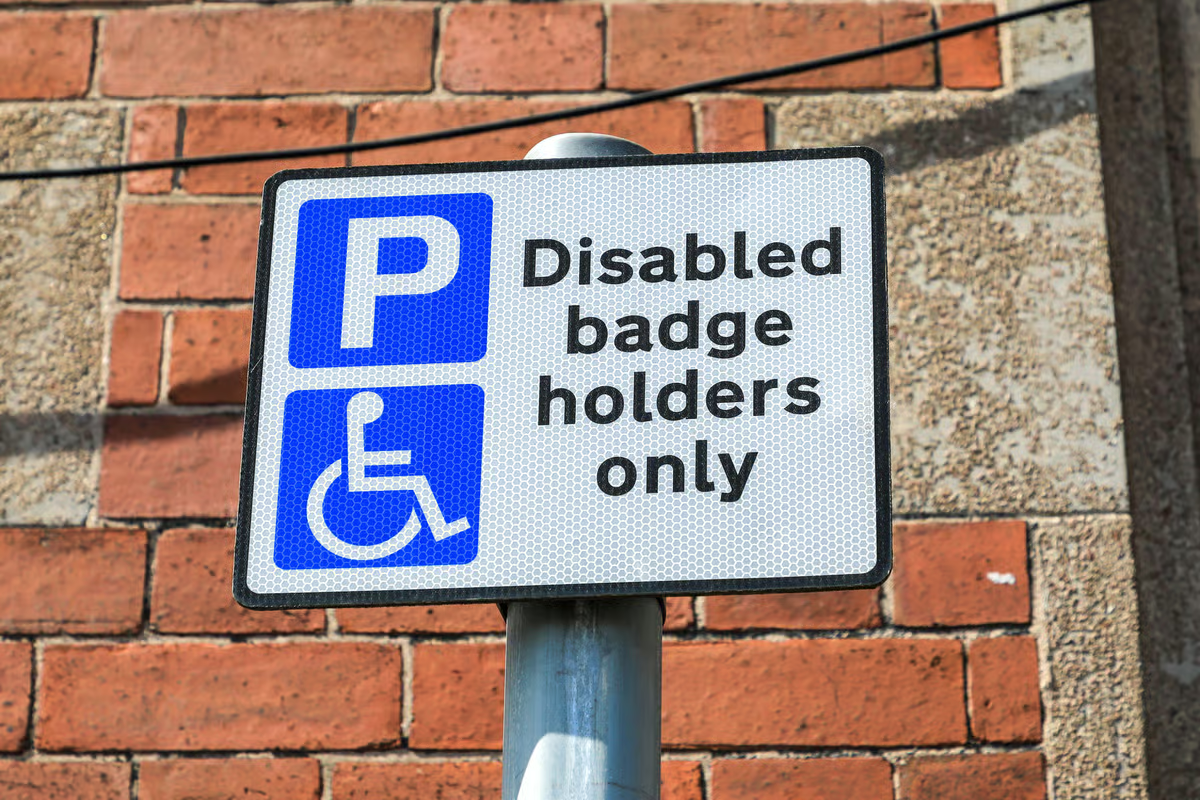
A Local Government Association spokesperson said: “Although the vast majority of badges are used correctly, there is a small minority who fraudulently use other people’s, either to save money by parking in disabled bays or through laziness, depriving someone with a genuine need.
The alerts were also considered for severe weather events across the UK, including when widespread flooding occurred in Cumbria, Lancashire and Greater Manchester in 2025, and when Storm Babet brought exceptional rainfall and winds to Scotland and the North East of England in 2023.
“Doctors told me it would have been years before I felt anything wrong and I shudder to think what that delay could have meant for my future”
Bronagh Mulholland’s breast cancer was detected in 2024, when she was just 40, during a routine mammogram. The mum-of-three is now sharing her journey to highlight the work of Action Cancer.
Advertisement
Bronagh, 42, lives just outside Downpatrick with her husband and their three children, Cara, 14, Ruairi, 11, and Eva-Rose, 6. Her breast cancer was detected by Action Cancer in 2024. The Co Down woman says she is forever grateful to Action Cancer for giving her a second chance at life and the opportunity to look ahead to many more healthy years with her husband and children.
Every year, the charity helps to save and support over 15,000 local people across Northern Ireland through the delivery of its life-saving early detection and cancer support services to people affected by cancer, including the provision of up to 8,000 breast screening appointments at Action Cancer House and on board the Big Bus.
On Friday June 5, a sea of pink will sweep through Belfast once again as Action Cancer hosts the Breast Foot Forward Walk, sponsored by SuperValu.
Advertisement
“Action Cancer is a truly incredible charity that changed my life,” she said.
“Thanks to their early detection service, my cancer was caught at a very early stage, long before I would have noticed any symptoms. Doctors told me it would have been years before I felt anything wrong and I shudder to think what that delay could have meant for my future.
“I am grateful to Action Cancer for providing such an amazing service, it quite literally saved my life. Taking part in this event is my way of giving back to the charity that gave me a second chance and I am so excited to be doing it alongside my two amazing sisters. This journey means the world to me and I am proud to support a cause that continues to save lives every day.”
Advertisement
She continued: “I am so excited to get involved with Action Cancer’s Breast Foot Forward Walk and I know this year will be bigger and better. It is a fun-filled event for an amazing cause and I hope to see you there.”
This year, the charity is calling on 800 enthusiastic walkers to help raise vital funds and awareness for Action Cancer’s life-saving breast screening service.
It is encouraging men, women and children of all ages to participate in the fun-filled event – where dogs are welcome too! Walkers will gather at Belfast City Hall from 6pm for a lively warm-up with Fitness Freddy, plus plenty of free goodies to kick things off. Participants can choose between a 5K or 10K route, helping to raise vital funds and awareness for breast cancer across Northern Ireland.
This year’s Breast Foot Forward Walk aims to raise £70,000 to fund potentially life-saving breast screening appointments for 583 local women.
Advertisement
Maurice Cusack, Head of Retail Marketing for SuperValu, added: “As a proud partner of Action Cancer for more than 25 years, SuperValu is delighted to sponsor this fantastic event once again. The Breast Foot Forward Walk is about community at its best – bringing together friends, families, workplaces and local groups – all united by a shared purpose: having fun while raising vital funds for a charity that makes a real difference close to home.”
Action Cancer is the only charity in Northern Ireland offering free breast screening to well women aged 40-49 and over 70 – those who fall outside the NHS screening programme. While these appointments are free for the women who need them, each screening costs the charity £120 to deliver. That’s why taking part in the Breast Foot Forward Walk is so important. Every step helps fund this vital, life-saving service.
All participants are encouraged to raise a minimum of £120 in sponsorship, the amount it costs Action Cancer to provide digital breast screening for one woman.
Every year Action Cancer helps to save and support over 15,000 people across Northern Ireland through the delivery of its services including the provision of 8,000 breast screening appointments at Action Cancer House and on board the Big Bus, supported by SuperValu and Centra. For every 1,000 women screened, an average of six breast cancers are detected, hopefully at an early and treatable stage.
This is only possible because of the continued, generous support Action Cancer receives from the general public in Northern Ireland and through its charity partnership with SuperValu. The charity needs your support now, more than ever, to continue with the work and help save lives.
Early registration is now open and will run to the end of April with a reduced price of £10 per adult and £5 per child. Everyone taking part will receive a drawstring bag for life and complementary pink t-shirt. So, grab your BFF or your 4-legged friend, get dressed up in pink, and step your way to the finish line with Action Cancer. An added bonus is that everyone who registers before 30th April will be entered into a prize draw to win an overnight stay for two people, including breakfast at the Grand Central Hotel, Belfast. So sign up, save a life, and support a friend.
At least seven people were injured after the ceiling of Poseidón Palace hotel in Benidorm collapsed on Easter Sunday while guests were dining
Paige Ingram Multimedia Journalist and Callum Hoare
00:30, 06 Apr 2026
At least seven people have been left injured after a hotel ceiling gave way on Easter Sunday.
The shocking incident took place at Poseidón Palace, a well-known tourist hotel in Benidorm. Large chunks of plasterboard and air conditioning ducts came crashing down on around 60 guests who were eating at the hotel at the time.
Advertisement
Emergency services rushed to the scene and confirmed that among those hurt were an eight year old boy and a 78 year old man, both of whom were taken to hospital before being discharged following treatment.
Ensure our latest headlines always appear at the top of your Google Search by making us a Preferred Source. Click here to activate or add us as your Preferred Source in your Google search settings.
A further five people, aged between 33 and 80, were taken to hospital following the frightening incident, with one person still under observation at Hospital de la Marina Baixa, according to reports from local media.
CICU officials dispatched SAMU medical units along with basic life support and non-assisted transport teams to deal with the situation. Red Cross staff assisted in caring for those affected during the chaotic scenes at the well-regarded Costa Blanca resort. The cause of the collapse at the three-star hotel remains unknown at this stage, though this is not the first such incident to have affected Benidorm’s hotel industry. The much-loved coastal resort in Spain is well known for its vibrant nightlife, vast array of accommodation and high-rise buildings, golden beaches and much more. It remains a popular choice for hen and stag parties, while others are drawn to the charm of the Old Town and the stunning, dramatic coastlines that stand in stark contrast to the more widely recognised imagery associated with Benidorm.
Advertisement
According to the annual report from Visit Benidorm, the Spanish destination welcomed over three million tourists in 2025, with an estimated 900,000 travelling from the UK.
The MEN has contacted Poseidón Palace for comment but is yet to receive a response.
People with a terminal illness can have their PIP claim fast-tracked with special rules that mean no face-to-face assessment and higher daily living payments
Personal Independence Payments (PIP) offer financial assistance to those living with long-term physical or mental health conditions or disabilities who face difficulties with everyday tasks or getting around. Claims are assessed primarily on how a condition impacts an individual’s daily life, rather than their specific diagnosis, unless their doctor has informed them of one particular thing.
Those who have received a terminal diagnosis are subject to different rules when applying for PIP, which can effectively ‘guarantee’ a fast-tracked application and entitle them to the highest rate of the daily living payment, currently set at £110.40. This figure is due to rise to £114.60 from April 6, 2026.
Citizens Advice states: “If you have a terminal illness, you’ll usually get PIP automatically. The DWP will fast-track your application – this means: you won’t have to fill out as many forms, you won’t have to go to a face-to-face assessment, you should get your first payment sooner.
Advertisement
“Someone else can claim on behalf of a person who is terminally ill. For example, because the person doesn’t know that they have a terminal illness. If you do this, let the person know that the claim for PIP is being made, even if they don’t know it is because they’re terminally ill.”
To be eligible for PIP under the special rules for end-of-life cases, applicants must be aged 16 or over at the time of applying, be residing in England or Wales, and have a doctor confirm that they may pass away within 12 months. However, Government guidance notes: “It can be difficult to predict how long someone might live for. If a medical professional has not talked to you about this, you can still ask them to support your claim under the special rules for end of life,” reports the Mirror.
Should you meet these criteria, you will automatically receive the higher daily living element. However, you will only be eligible for the mobility element if your health condition directly causes mobility difficulties.
Citizens Advice adds: “Make sure you tell the DWP if you have problems most of the time when moving around or going out. For example, tell them how far and how fast you can walk before these problems start.”
Advertisement
It advised people with terminal diagnoses inform the DWP if they:
Can’t walk without pain, breathlessness or help
Need a wheelchair, walking stick or other mobility aid
Experience stress and anxiety that makes it difficult to go out
To make a PIP claim under the special rules for end-of-life, you will need to telephone the PIP team and state that you wish to begin a claim under these provisions. The PIP team will then ask a series of questions regarding your condition in order to assess your eligibility.
You will also need to request an SR1 form from your medical team, which they may either hand directly to you or submit to the DWP on your behalf. This can be provided by your GPs, consultants, specialists, hospice doctors or registered nurses, including Macmillan nurses. Individuals with a life-limiting diagnosis may also be eligible to apply under the special rules for Universal Credit and Employment and Support Allowance if they are of working age.
Those above state pension age can access Attendance Allowance, while children under 16 will need to apply for Disability Living Allowance for children.
After submitting your application, Macmillan specialists indicate you should receive your initial payment within a fortnight of applying. You’ll also be able to skip some of the standard PIP eligibility requirements, such as demonstrating daily living or mobility challenges for the previous three months.
The BBC’s senior international correspondent Orla Guerin has travelled to the edge of the Strait of Hormuz in Oman, which Iran has put a stranglehold on since the war broke out.
The critical artery is normally used for 20% of the world’s oil and liquefied natural gas.
By leaving ships stranded in the waterway, Iran is reducing the global supply of oil, driving up prices and creating fear among consumers as well as amplifying pressure in the international community.
















































You must be logged in to post a comment Login