
Crypto World
32 NFT predictions that aged like milk



Non-fungible tokens (NFTs), at their 2022 peak, created a multi-billion dollar market.
Since then, however, even the blue-chip projects have, with few exceptions, plummeted in value, backed away from promises, or been abandoned.
Indeed, looking back now and it all feels like a fever dream in which huge swaths of the industry imagined futures that never even partially materialized.
Protos looked back at 32 predictions about NFTs from various individuals to see how accurate they were.
Read more: Justin Sun’s NFT marketplace managed just four sales last month
Insurance, tax, and real estate NFTs
In January 2022 Kevin O’Leary of Shark Tank infamy claimed, “You’re going to see a lot of movement in terms of doing authentication and insurance policies and real estate transfer taxes all online over the next few years, making NFTs a much bigger, more fluid market potentially than just bitcoin alone.”
Ask yourself, did you get your insurance policy this year in the form of a NFT? Anyways, Bitcoin is a much larger and more liquid market than NFTs.
Cuban on collectibles and Mavericks tickets
Mark Cuban, also of Shark Tank infamy, once predicted that the collectible nature of NFTs would “completely turn the…industry upside down.”
While it’s hard to describe those industries as right-side up, it’s easy to see that NFTs haven’t transformed them.
In 2021, Cuban mentioned that the Mavericks were “trying to find a good option for turning our tickets into NFTs. We want to be able to find ways so that not only can our consumers, our fans, buy tickets and resell them, but we continue to make a royalty on them.”
Unsurprisingly, this didn’t happen, either.
Read more: Serial crypto failure Mark Cuban says he’s in it for the apps
This game ‘could bring billions of users’
Michael Wagner, the founder of Star Atlas, predicted that this game, which integrates spaceship NFTs “could bring in billions of users,” according to Zeke Faux’s Number Go Up.
Star Atlas’ most recent economic report claimed that SAGE: Starbased had 2,000 monthly active users when it stopped tracking that information.
Perhaps the final game will be sufficiently impressive to onboard one out of every four people alive, something no game has ever done before.
‘Every fashion brand is going to figure out this tech’
Brian Novogratz, of Galaxy Digital, predicted, “Your healthcare records will be NFTs, every brand, every fashion brand, everyone who owns an IP, the music industry, the creative industry, is going to figure out ways to use this technology.”
Your healthcare records aren’t NFTs, not everyone has figured out ways to use this technology, and much intellectual property has never become an NFT.
NFT market cap headed to $80 billion?
Stephanie Wissink of Jefferies released a forecast that predicted the NFT market-capitalization would exceed $80 billion by 2025.
The current market-capitalization is hard to get a concrete number on, but CoinGecko pins it at somewhere in the region of $1.7 billion.
GDP we’ve never even thought about!
Aleksander Larsen, the co-founder of Sky Mavis, predicted that “blockchain games” would “be a provider of jobs for hundreds of millions of people around the world” and “will create GDP for the world in a way that we have never even thought about.”
Axie Infinity, the flagship blockchain game for Sky Mavis, failed in a spectacular way, in part funding the North Korean nuclear program.
Read more: Axie co-founder hacked for $10M two years after $625M Ronin attack
MetaKovan claimed this artwork was worth $1 billion
Vignesh Sundaresan, who also goes by MetaKovan, purchased the Beeple piece Everydays: The First 5000 Days, and in the Christie’s press release announcing this he stated that this work was “worth $1 billion.”
We may not know what value he places on this in his heart; he has yet to resell it, but it seems unlikely that it would currently fetch $1 billion.
Do you have a parallel digital identity?
Movie star Reese Witherspoon once predicted that, “In the (near) future, every person will have a parallel digital identity. Avatars, crypto wallets, digital goods will be the norm. Are you planning for this?”
Some of this has arguably come true for some people, but her efforts to turn NFTs into TV shows and movies seem to have quietly failed.
Brian Armstrong had high hopes for NFTs
In 2021 Brian Armstrong, founder and chief executive for Coinbase, claimed that the company’s NFT initiatives “could be as big or bigger” than its cryptocurrency-focused businesses.
Coinbase sunset its NFT trading platform about two years ago.
Read more: Zora abandons NFTs without warning, launches airdrop with zero rights
Do NFTs still have a major role to play?
Tyler Winklevoss, founder and chief executive of Gemini, which acquired Nifty Gateway, once stated that “Non-fungible tokens and the digital goods (and collectibles) they enable will play a major role in the next era of the digital economy.”
Duncan Cock Foster, founder of Nifty Gateway, said “I like to think that in 10 years, everyone will be commissioning artists to create nifties to give away at a dinner party.”
That role won’t be facilitated by Nifty Gateway since it’s been shut down.
Justin Sun hails ‘spectacular’ chapter of art history
In 2021 Justin Sun launched his JUST NFT fund and predicted, “The emergence of NFT-backed artworks ushers NFT-based art into a new, spectacular chapter of human art history with JUST NFT Fund being the prologue.”
When we checked in on his NFT platform in February, we found that it had $6/day in trading volume.
Bringing the metaverse to life worth $1 trillion
David Grinder and Matt Maximo of Grayscale Research stated that “the market opportunity for bringing the metaverse to life may be worth over $1 trillion in annual revenue.”
This has yet to happen.
Could the metaverse be worth even more?
Eric Sheridan, Goldman Sachs analyst, predicted that the metaverse “could be as much as an $8 trillion opportunity on the revenue and monetization side.”
Again, it’s yet to reach this lofty goal.
Read more: What it was like to have Quontic Bank’s metaverse pool party all to myself
NFTs have a role to play in social networks
In his dreadful book Read Write Own, A16z partner Chris Dixon claimed, “NFT identifiers can play a similar role in newer social networks, letting users switch applications with their names and connections intact.”
Meanwhile, Cuy Sheffield, head of crypto for Visa, stated that “NFTs will play an important role in the future of retail, social media, entertainment, and commerce.”
While in theory this may be true, in practice it does not seem to be implemented, and even X has eliminated its NFT profile pictures.
Meta added NFTs to Instagram. But not for long
In 2022 Mark Zuckerberg, founder of Meta, announced that the firm would be adding NFTs to Instagram, a feature that was implemented and then removed.
He also hoped “that the clothing that your avatar is wearing in the Metaverse can be minted as an NFT and you can take it between different places.”
This was not a feature ever implemented in the effectively abandoned Meta metaverse.
Nike probably sticking to shoes from now on
In 2021 Nike acquired RTFKT, and its chief executive stated that this acquisition was “another step that accelerates Nike’s digital transformation and allows us to serve athletes and creators at the intersection of sport, creativity, gaming and culture.”
Nike has since sold RTFKT.
Read more: Nike sues over sneaker NFTs to clean house before metaverse arrives
More metaverse hype
Bob Chapek, then chief executive of Disney, stated in an internal email that the Metaverse “is the next great storytelling frontier and the perfect place to pursue our strategic pillars of Storytelling Excellence, Innovation, and Audience Focus.”
Since then, Bob Iger has replaced him as chief executive and shitcanned the metaverse work.
Autograph was going to offer NFTs but then didn’t
Tom Brady, former National Football League (NFL) quarterback, was a co-founder of Autograph, a firm that was going to offer NFTs for sports fans and eventually ended up pivoting away from NFTs before being acquired.
When is a band not a band? When it’s an NFT ape
Universal Music believed that NFTs were the future of music, even creating a band composed of several Bored Apes.
This band never released any music, raising fascinating philosophical questions about how little music you can release and still be a “band.”
Read more: China’s Olympic panda NFTs sell out but local fans shit out of luck
NFT: Year One didn’t last long
In 2022 Yosuke Matsuda, the president of Square Enix, was excited about the future of the metaverse and NFTs, stating that 2021 was not only “Metaverse: Year One” but was also “NFTs: Year One.”
He’s since stepped down and the firm has moved away from that strategy.
Snoop Dogg ‘doesn’t know shit’
Snoop Dogg predicted that his record label Death Row would become “a NFT label.” It did not.
When Snoop Dogg announced his move to the Sandbox metaverse, he stated that he was “getting this money” and stated that he doesn’t “know shit.”
He did get money and thoroughly proved he does not know shit.
Read more: Bored Ape Yacht Club turns five today and nobody seems to care
NFTs were going to be the ‘future of being social’
Heiress and entrepreneur Paris Hilton predicted that the metaverse was the “future of partying, going out, interacting with people and being social.”
Perhaps it has for her, but for me personally the metaverse has yet to fulfill that role.
Animoca CEO wide of the mark by at least $998 billion
Yat Siu, the chief executive of Animoca, predicted that the digital ownership economy would be “worth trillions.”
So far it’s lagged far below that, with CoinGecko suggesting the total NFT marketplace is less than $2 billion.
TIME abandoned its NFT gallery
Keith Grossman, the president of TIME, the firm behind the magazine, launched its own since-abandoned NFT gallery where it was selling pieces to raise revenue.
EA said NFTs were the ‘future of the industry’ then stopped making them
In 2021 Andrew Wilson, the chief executive of Electronic Arts (EA) believed that NFTs were “the future of our industry,” a future that EA has stopped striving towards as it no longer produces NFTs.
Logan Paul was exposed by Coffeezilla
Logan Paul predicted that his CryptoZoo NFT game would be a “really fun game that makes you money,” but it never launched and became the subject of a series of exposes by YouTuber Coffeezilla.
Read more: Charles Hoskinson’s $250M clinic to close after buying up NFTs and robots
Not everybody was wrong. Well, not completely
One of the rare successful predictions was Luca Netz, the chief executive of Pudgy Penguins, predicting that he would turn the then-failed project into “a brand that’s known both in and outside of the NFT world.”
The degree of success may be debatable; however, it has successfully gotten derivative toys into major stores and has improved its relative position in NFT rankings.
Got a tip? Send us an email securely via Protos Leaks. For more informed news and investigations, follow us on X, Bluesky, and Google News, or subscribe to our YouTube channel.



SQD has added validated data from 10 blockchain networks to Google Cloud’s BigQuery platform, giving developers and companies access to full chain histories checked through six cryptographic tests.
Summary
- SQD is supplying indexed blockchain data through Google Cloud Web3 Blockchain Analytics.
- 10 blockchain datasets cover records from each supported network’s genesis block.
- Six cryptographic checks verify each block before the data reaches BigQuery.
- SQD plans to add more networks and tools designed for AI agents.
SQD brings validated blockchain data into BigQuery
SQD said in an Aug. 24 announcement that its enterprise arm, SQD 360, is providing the indexing system and data pipelines behind datasets available through Google Cloud Web3 Blockchain Analytics.
The initial contribution covers 10 networks from their genesis blocks, allowing analysts to examine their complete available histories rather than records collected only after the integration began. SQD did not identify all 10 chains in its announcement or provide a timetable for adding the next group.
Before the information reaches BigQuery, SQD said each block passes six cryptographic checks. The process includes comparing data from multiple sources and checking transaction roots and state roots, which are cryptographic values used to confirm whether a block’s records match the underlying blockchain state.
SQD said the checks are intended to catch missing, incorrect, or inconsistent records before they enter analytics pipelines. Fresh blocks must also pass the validation process as the datasets continue to update.
Once loaded into BigQuery, the records become available through the same cloud environment used for business intelligence, machine learning, and large-scale data analysis. Developers can therefore examine blockchain activity without building an indexer, storing an entire chain history, or maintaining separate infrastructure for each network.
“Partnering with Google Cloud Web3 to bring our validated data standard to BigQuery is a defining step for SQD, and a strong signal that enterprise-grade blockchain data has arrived,” SQD CEO Wanja Oberhof said.
The companies did not disclose financial terms, revenue-sharing arrangements, or service-level commitments tied specifically to the partnership.
SQD Network distributes storage and query work
SQD operates a decentralized data network built to collect, verify, store and serve information generated by blockchains and Web3 applications. Its infrastructure separates the work among data providers, independent worker nodes, and gateways rather than relying on one central database.
According to SQD Network documentation, data providers submit blockchain records before a scheduler assigns pieces of each dataset to worker nodes. Workers supply storage and computing resources, hold copies of the assigned records, and answer queries submitted through gateways.
Each worker must bond 100,000 SQD tokens to register on the network. Workers receive token rewards based on factors such as uptime, the amount of data served, and delegated tokens, while provable violations of network rules can lead to penalties.
Gateways provide the connection between data consumers and the worker network. The amount of SQD locked by a gateway operator determines how many requests it can send, tying query capacity to the network’s token-based resource system.
SQD says its full data service covers more than 130 networks, although only 10 are included in the first Google Cloud contribution described in the announcement. Its Portal product offers historical and real-time information from chains across the Ethereum Virtual Machine, Solana, Substrate, and Bitcoin-based ecosystems.
Unlike a standard blockchain node, which may provide raw or recent network information, SQD’s system converts records into structured datasets containing blocks, transactions, logs, traces and changes in blockchain state. Structured records allow analysts to search large periods and compare activity without processing raw chain files each time.
Google Cloud expands access to indexed onchain records
Google Cloud describes Blockchain Analytics as a service that places indexed blockchain information in BigQuery for analysis through SQL, a common language for searching and organizing databases. The product lets users query blocks, transactions, event logs, and call traces without operating nodes or creating an indexer for every protocol.
BigQuery can also combine onchain records with a company’s internal data. A wallet service, for example, could compare blockchain transactions with activity recorded inside its application, while a compliance team could build searches for transfers involving specified addresses. The accuracy of any resulting report would still depend on the query design, address labels, and other data added by the user.
Google Cloud began placing blockchain records in BigQuery in 2018 with Bitcoin and later added Ethereum and other networks. In 2023, the company added 11 blockchain datasets, including Avalanche, Arbitrum, Optimism, Polygon, Polkadot, and Tron.
The SQD arrangement follows other efforts to connect decentralized data sources with cloud services. In July 2025, crypto.news covered OORT’s dataset listing on Google Cloud Analytics Hub and several other enterprise marketplaces. OORT’s offering contained 100,000 user-contributed data points, with their contributions recorded onchain to help users check the source and structure of the information.
Google Cloud has also built services that give applications direct access to blockchain networks. In September 2024, it launched an Ethereum RPC that initially supported the Ethereum mainnet and test networks. The preview offered a free tier of up to 100 requests per second and one million requests per day.
The RPC service and BigQuery datasets serve different tasks. RPC endpoints allow applications to request current blockchain information and submit transactions, while indexed datasets are designed for searches across large amounts of historical data.
BigQuery data supports enterprise and agent-based analysis
For U.S. developers and companies already using Google Cloud, the integration places SQD-supplied records inside a familiar analytics service rather than requiring a separate blockchain-data system. Google’s documentation says users can reach public datasets through the Cloud console, command-line tools or the BigQuery API.
Google pays the storage costs for datasets included in its Public Dataset Program, while users pay for the queries they run. The first one terabyte of query processing each month is free under Google Cloud’s current pricing structure, although access can be limited by an organization’s own security controls.
Dataset location also matters for American users, with internal policies governing where information is processed. Google says every public dataset has an assigned region, while its BigQuery sample tables are held in the U.S. multi-region. SQD’s announcement did not specify the storage location for each contributed blockchain dataset.
Agent-based access forms another part of the planned work. In May, earlier coverage reported that Solana Foundation and Google Cloud launched Pay.sh, which lets AI agents pay for APIs with stablecoins and supports services including BigQuery, Gemini and Vertex AI.
Under the SQD roadmap, additional agent functions could allow automated software to retrieve and analyze verified blockchain records inside Google Cloud. SQD did not explain which functions will be released, which AI systems will support them, or when they will become available.
More blockchain networks are also due to join the integration, according to the announcement. SQD has not named the next chains, disclosed how they will be selected, or provided a release schedule.
Nikita Bier, who ran product at X for 13 months until Aug. 5 and now advises the company, said trade buttons are coming to the crypto charts embedded in X posts. He gave no timeline. The claim has no corporate backing. X's public record on crypto products — the Cashtags launch, its roadmap, its… Read the full story at The Defiant
Bitwise launched Automated Token Portfolios (ATPs) on Tuesday, giving eligible investors outside the U.S. a way to hold Coinbase-issued tokenized stocks directly in their own wallets on Base while Glider automatically keeps the holdings aligned with Bitwise’s model. The product extends Coinbase’s… Read the full story at The Defiant
Cosmos Labs has urged affected networks in contact with its team to halt operations amid an ongoing security incident involving the EVM module.
Statements issued by KiiChain, TAC, and MANTRA have all pointed to flaws within the Cosmos EVM infrastructure when describing the attacks they faced in recent days. Cosmos Labs, however, has yet to establish publicly whether the incidents stemmed from one common flaw or clarify which networks were specifically instructed to suspend operations.
EVM Security Crisis Escalates
Cosmos Labs said it will publish an incident report once the situation has been resolved. Meanwhile, KiiChain said an attacker drained 148,326,583.15 KII from wallets on August 22, repeating the same technique 18 times against different targets. The chain detected the activity internally and halted at block 9,355,723, thereby stopping further theft and freezing funds that remained on the network. According to KiiChain, the root cause had been identified, reproduced and fixed.
It said that the vulnerability was in the shared Cosmos EVM module, rather than KiiChain-specific code. The chain said three upstream defects combined to enable the attack, including an underflow in the staking precompile when it writes a post-delegation balance back to the EVM, along with two other undisclosed bugs.
KiiChain said the same class of vulnerability affected Cosmos EVM chains with vesting accounts enabled and linked the issue to the compromises of MANTRA and TAC during the same week.
The handling of the vulnerability has also come under scrutiny. A security fix for one of the three flaws was made public on August 19, but KiiChain said affected networks were not given advance notice and the release was not clearly flagged as a critical security update. When communication reached the affected chains two days later, the fix was included with unrelated issues already being handled privately. It was not accompanied by a recommendation to halt networks.
By then, MANTRA had already been exploited. KiiChain said an emergency halt could have contained the risk much faster than a software upgrade, which requires validators to review, test, and deploy the patch.
TAC separately said an attacker exploited a vulnerability in the Cosmos EVM precompile layer on the same day and drained a single account. The chain was halted to stop the attack, and it was said that the defect was not in TAC-specific code. The chain said 2,985,651,403 TAC was moved between accounts. No new tokens were created, and the total supply remained unchanged. Only TAC was affected, while other assets on the network remained intact.
Mantra Security Incident
MANTRA halted its Layer 1 network last week as a precaution for about 30 hours. The project later said it had identified the root cause, contained the immediate threat, and that no user funds were exploited.
MANTRA said the incident affected two wallet addresses, and the network resumed operations after a patch was deployed.
The post Cosmos Labs Urges EVM Chains to Halt as KiiChain and TAC Attacks Raise Security Fears appeared first on CryptoPotato.


Bitwise Asset Management has launched automated portfolios of Coinbase’s tokenized US stocks that allow eligible investors outside the United States to follow preset investment strategies while keeping the assets in their own wallets.
The portfolios use Coinbase’s recently launched tokenized stocks, while Glider automatically rebalances users’ holdings to match model portfolios designed by Bitwise, according to a Tuesday announcement.
The initial lineup includes three strategies — the Mag7X, robotics and AI leaders — and include Apple, Nvidia, Microsoft, Tesla and SpaceX.
Tokenized listed stocks now total $2.49 billion, up 5.18% over the past month, with 2.25 million holders and $27.28 billion in monthly transfer volume, according to rwa.xyz.
Unlike a traditional fund, the tokenized stocks remain in users’ non-custodial wallets, with Bitwise setting the portfolio methodology and Glider handling trades and rebalancing. Bitwise charges a 0.15% methodology access fee, excluding trading and Glider platform fees.
Because users retain the individual tokens, Bitwise said the assets could also be used in DeFi applications for lending or borrowing, subject to the risks of those protocols.
The launch comes a day after Coinbase’s tokenized US stocks went live on Base, allowing eligible non-US users to trade the assets around the clock and use them across DeFi applications.
Magazine: MiCA is coming for DeFi vaults, but regulation will be difficult
With Bitcoin up more than 20% since last week, traders are rotating into altcoins for larger gains. Three particular tokens, Kaspa, Solana, and Hyperliquid, are drawing renewed attention from market observers heading into the fall trading season.
However, all three altcoins are at different distances from their all-time highs. Analyst outlooks broadly support the undervalued narrative for two of the three under constructive market conditions, though outcomes will depend heavily on Bitcoin’s path and overall risk appetite going forward.
This article is not financial advice. Crypto markets are highly volatile, projected price ranges are scenario-based estimates rather than guarantees, and readers should conduct independent research before making any investment decision.
Kaspa (KAS)
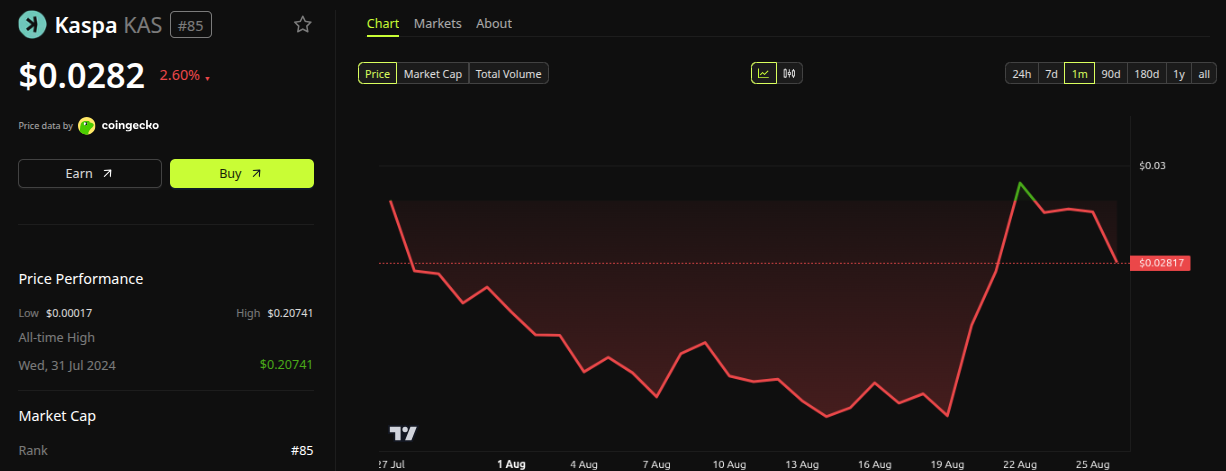
Kaspa trades at $0.0282, up 1.34% over the past 24 hours, according to BeInCrypto data. The token remains approximately 87% below its all-time high of $0.20741, reached on August 1, 2024.
Analysts point to its near-complete supply issuance and recent network upgrades as reasons for optimism.
In an upward scenario, price could climb toward $0.035 to $0.045 if network activity expands and emissions pressure continues to ease.
In a bearish case, it could retreat to $0.022-$0.025 if broader market weakness returns or developer adoption slows.
Follow us on X to get the latest news as it happens.

Solana (SOL)
Solana trades at $98.50, about 66% below its all-time high of $293.31, reached on January 19, 2025.
Observers cite tokenomics improvements, including potential cuts to inflation and stronger fee burns. Moreover, Solana hit a record $4.2 billion in on-chain transactions in July, up 13.5%, driven by the SOL rally and tokenized assets.
Bullish projections suggest a move toward $130 to $180, or higher in stronger cycles, if institutional flows accelerate. On the downside, a risk-off environment could push the token back toward the $75 support levels.

Hyperliquid (HYPE)
Hyperliquid trades at $82.34, up roughly 40% over the past week. The token set a new all-time high of $83.27 on August 23, meaning it now trades just 1% below its record.
Market participants view the token as attractively priced relative to its strong perpetual trading revenue and expanding infrastructure, even as it nears record levels.
On the other hand, Trump’s August 19 remarks about bringing Hyperliquid legally into the US sent HYPE surging nearly 20% within 24 hours.
In a positive scenario, sustained volume growth and buyback mechanisms could push it toward $100-$150. A bearish outcome might see a pullback to $60-$70 amid profit-taking or a broader market correction.
Subscribe to our YouTube channel to watch leaders and journalists provide expert insights.

None of the projections in this article constitute financial advice or price guarantees.
Cryptocurrency remains a highly volatile asset class, and readers should independently verify current prices and conduct their own research, or consult a licensed financial advisor, before making any investment decisions based on this analysis.
The post Top 3 Undervalued Altcoins to Watch in September 2026 appeared first on BeInCrypto.
The “BankChain Alliance” is aiming for a 2027 launch, and would foster stablecoins, payments and tokenized deposits inside the banking system’s regulatory sphere.
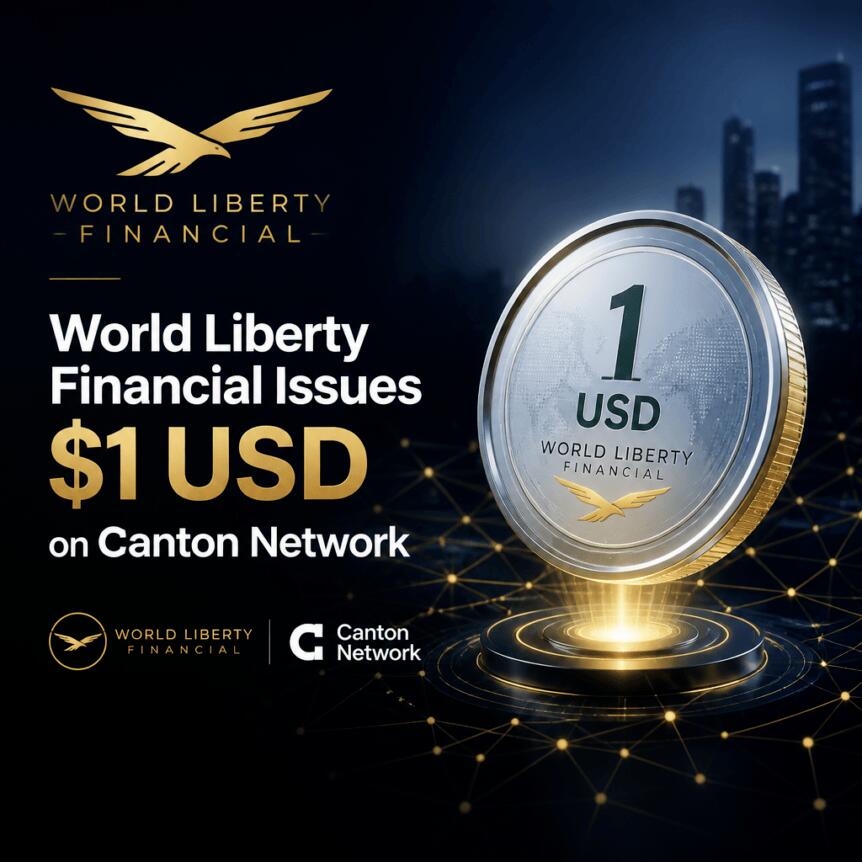
World Liberty Financial has rolled out its USD1 stablecoin natively on the Canton Network, positioning the token as a “cash leg” for settlements that pair stablecoin liquidity with tokenized real-world assets (RWAs). The company says the move is designed for institutional use cases where the stablecoin can sit alongside tokenized assets within the same transaction, including scenarios involving derivatives collateral, lending, and issuance and redemption flows.
According to a Tuesday announcement, USD1 is now issued and managed through the Canton integration with privacy and permissioning controls provided by the network. World Liberty adds that the design supports native issuance, allowing USD1 to be used directly in settlement rather than requiring institutions to rely solely on external exchanges or offchain routing.
Key takeaways
- World Liberty Financial launched USD1 natively on Canton to support institutional settlement alongside tokenized RWAs in the same transaction.
- USD1’s use cases span derivatives collateral, institutional lending, and RWA asset issuance and redemptions.
- The stablecoin’s market capitalization is about $4.05 billion, making it the sixth-largest stablecoin by DeFiLlama data.
- USD1 is issued and managed with reserves and mint/redemption processing handled by BitGo Bank & Trust, per World Liberty.
- The integration comes after additional Canton expansion plans, including a pilot connected to state-administered benefits distribution.
Why native USD1 on Canton matters for RWA settlement
For institutional finance, the key constraint in many tokenized-asset workflows is coordinating “cash” and “asset” legs efficiently and with appropriate governance. World Liberty’s announcement frames USD1 on Canton as a solution to this coordination problem: institutions can use USD1 directly for settlement that involves tokenized RWAs while simultaneously applying Canton’s permissioning and privacy features.
The company specifically highlights transaction categories where this structure is expected to be useful. In addition to serving as cash for tokenized asset transfers, USD1 is positioned for derivatives collateral, institutional lending, and the issuance and redemptions of tokenized assets. In practice, these are exactly the kinds of operations where onchain programmability needs to meet operational requirements typically associated with traditional settlement systems.
USD1 supply, reserves, and the role of BitGo Bank & Trust
USD1 has a market capitalization of about $4.05 billion, according to DeFiLlama’s stablecoin data, where it ranks as the sixth-largest stablecoin. That size matters because it suggests the token already has meaningful liquidity and visibility—two factors that institutions often consider when deciding whether a stablecoin can be operationally relied upon for settlement.
World Liberty states that USD1 is issued by BitGo Bank & Trust, which manages the stablecoin reserves and processes mints and redemptions. For readers assessing counterparty and operational risk, this is a notable detail: the integration is not simply a “token move” to a new chain, but a placement of USD1’s core issuance and redemption workflow into a Canton-based settlement environment.
When USD1 launched earlier, World Liberty said it was backed by reserves that include short-term U.S. Treasurys, government money market funds, and dollar deposits. The company’s current Canton deployment continues to emphasize the stablecoin’s use in institutional settlement rather than introducing a new asset class or altering the stated reserve backing in the announcement.
Canton’s institutional framing and network claims
Canton is described by the network as a public, permissionless blockchain intended for institutional finance. In the announcement, Canton’s positioning centers on scale and real-world asset throughput: the network claims it processes and issues more than $9 trillion in tokenized assets each month, and it reports moving more than $350 billion in onchain U.S. Treasurys daily.
Whether institutions focus on the specific magnitude of those figures or not, Canton’s broader pitch is consistent—enabling financial institutions to connect tokenized assets with settlement rails that can fit into regulated workflows. World Liberty’s move to list USD1 natively on Canton is aligned with that pitch: instead of treating the stablecoin as a separate settlement instrument that must be bridged or swapped, the integration targets same-transaction settlement behavior.
What’s next: Canton expansion and RWA distribution experiments
The USD1 launch on Canton follows another Canton expansion announcement made last week. In that update, Digital Asset and former U.S. House Speaker Paul Ryan’s American Idea Foundation described plans for a Canton-based system intended to distribute state-administered benefits across three U.S. states beginning in 2027.
That parallel matters for investors and builders because it suggests Canton is pursuing both “market infrastructure” goals—like RWA and treasury settlement—and “public services” applications that require operational controls. If these tracks progress, networks and stablecoin issuers tied to Canton could see increased relevance in institutional settlement flows beyond financial derivatives and lending.
Still, readers should watch how quickly institutions adopt the integrated settlement design. The announcement explains the capability at launch and ties it to established USD1 issuance and reserve processes, but it does not specify which institutions are actively using the new settlement path or what volumes are expected in the near term.
For now, the practical question is whether native USD1 settlement on Canton becomes a repeatable rails-choice for tokenized RWA operations—especially in lending, collateral management, and issuance/redemption cycles—while Canton’s broader institutional and benefits-distribution initiatives move from planning into execution.
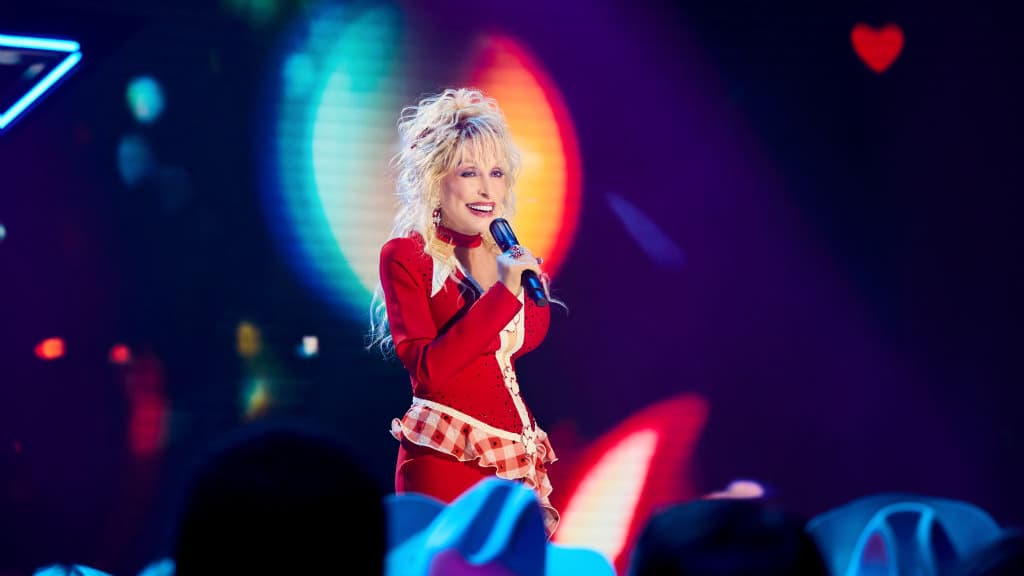
“I am as proud of the Imagination Library,” Parton told PBS News in 2020, “as I ever will be, anything I ever do for the rest of my life.”
Tributes
Tributes for the country music icon began pouring in on Tuesday afternoon, including from President Donald Trump, who called Parton “one of the greatest Country singers.” Trump said that, in Parton’s honor, he was ordering U.S. flags across the country to be lowered for a week, starting at 6 p.m. that evening.
“This is a true loss for millions of people,” Trump said on Truth Social. “There has never been anyone like her, and never will.”
Republican Sen. Marsha Blackburn of Tennessee said in a social media post that she and her husband were “absolutely heartbroken and saddened to hear of the passing of our friend.”
“Dolly’s life and career are forever woven into Tennessee’s music, culture, and history,” Blackburn said. “Her extraordinary talent, generosity, and love for the Volunteer State touched hearts around the world and will continue to inspire generations to come. Tennessee will forever be grateful for Dolly.”
The crypto infrastructure firm failed to get approval when it first sought a U.S. charter, and the company is quickly back with what it said would be a narrower effort.

York Postern Tower exhibition explores city’s Irish heritage

DICK’S Sporting Goods Stock Crashes 27% as Foot Locker Woes Force Steep Full-Year Guidance Cut

SQD adds validated onchain data to Google Cloud BigQuery

Weekend Open Thread – Corporette.com

Weekend Open Thread: Brooks Brothers

London Mayor Sadiq Khan handed a peerage by Keir Starmer alongside 15 other Labour figures… just days before the PM leaves No10

All Hell Just Broke Loose In Crypto (Guess Who Just Crashed Bitcoin?)

#stockmarket #investing #trading #stocks #investment #finance #money #nifty #forex #investor

Money is Important #money #mindset #reality #rajshamani #podcast #clips #motivation #shorts
-

 Fashion4 days ago
Weekend Open Thread: Madewell – Corporette.com
-

 Business3 days ago
Musk’s Tesla, SpaceX Confirm $16.8 Billion ‘Terafab’ Chip Plant as World’s Largest Building in Texas
-

 Crypto World4 days ago
anatomy of crypto’s biggest liquidation event since 2021
-

 Politics3 days ago
6 months on, Irish renters crushed by effects of government housing bill
-

 Crypto World22 hours ago
A $30 Billion AI Fund Implodes, Now the SEC Is Investigating Wall Street’s Role
-
 NewsBeat4 days ago
The ‘Lucky Dip Gang’ causing carnage for clicks: After five thugs were killed speeding in the wrong direction on a motorway, GUY ADAMS investigates a sick new trend… and why police aren’t even allowed to pursue them
-

 Tech7 days ago
GLM-5.3 hits the API at $1.4/$4.4 per million tokens
-

 Business3 days ago
Mystery AI Model ‘Ox Alpha’ Draws Developers With Free Access as Chinese Lab Origins Remain Debated
-

 News Videos6 days ago
Don’t Leave Your Financial Future To Chance | August 19, 2026
-

 Business6 days ago
Marvell Shares Jump 7% as Google Chip Deal Confirms Custom AI Silicon Partnership, Analysts
-

 Business5 days ago
Five Below: Kids Discount Retailer Reaps Rich Rewards
-

 Business4 days ago
UK firms in critical financial distress rise 9% to 53,756
-
 Sports3 days ago
Deshaun Watson fires back at Browns fans after being booed: ‘It’s a disrespectful thing’
-

 Fashion6 days ago
Jimmy Choo Autumn 2026 collection
-

 Business1 day ago
Moderna CEO warns China is pouring state money into mRNA technology
-
 Entertainment6 days ago
10 Most Perfect Fantasy Shows of the Last 25 Years
-

 Tech6 days ago
OpenAI confirms ChatGPT is down as logins and signups fail
-

 Business6 days ago
PayPal and Venmo now accepted for tuition at several universities
-

 Crypto World5 days ago
Optimism-funded team's deciding vote shifts $49 million in OP tokens away from users
-
 Crypto World3 days ago
Google Gemini AI Predicts Ethereum Could Become the Trade Retail Misses in 2026
You must be logged in to post a comment Login