Connect with us

Tech

5 Of The Most Affordable V6 Sedans You Can Buy In 2026

Published

on


In recent years, the SUV has solidified itself as the body style of choice for the majority of new car buyers. According to Edmunds, 60.9% of retail new-vehicle registrations in the United States in 2025 were SUVs. The continued popularity of both SUVs and trucks has led manufacturers to cut their sedan lineups dramatically over the last decade, and that trend doesn’t look to be reversing in the near future either.

At the same time, tightening emissions regulations and changing buyer preferences have seen engines drop in both displacement and cylinder count. Turbocharging and hybridization mean that today’s smaller engines offer similar power to their larger predecessors while being significantly more efficient. That’s bad news for anyone looking to replace their aging V6-powered sedan with a like-for-like equivalent, as many affordable models like the Toyota Camry and Honda Accord are now available only with four-cylinder engines under the hood.

Advertisement

The remaining V6-powered sedans on the market in 2026 hail from premium brands, and they sport correspondingly premium price tags. That said, average new car prices are still hovering around record-high levels, with the average new vehicle in July 2026 costing $49,855, according to KBB. In that context, the V6 sedans left on the market today don’t look unreasonably priced, although they’re still far from being cheap. These five models are the most affordable V6 sedans that you can buy new in 2026, ordered from the priciest to the least expensive.

Advertisement

Cadillac CT4-V Blackwing — $65,395

Usually, the word “affordable” doesn’t apply to a car with a starting price north of $65,000. Nonetheless, in 2026, the Cadillac CT4-V Blackwing, priced from $65,395 (including a $1,795 destination fee), is actually one of the most affordable V6-powered sedans left on the market.

Only the Blackwing variant of the car features a V6, since the standard CT4-V is equipped with a 2.7-liter turbocharged four-cylinder engine. Stepping up to the Blackwing comes at a premium of $13,000 over the standard CT4-V, but for the extra price, buyers get a 3.6-liter twin-turbo V6 engine making 472 horsepower. Unlike many other sedans left on the market, buyers get the option of either a six-speed manual or 10-speed automatic transmission too.

A powerful, rear-wheel-drive sports sedan with a manual transmission sounds like the ideal formula to appease enthusiasts. In reality, it’s just as good as you’d expect it to be, and then some. We spent time with the current-generation car back in 2024 and found very little to dislike.

Its engine offered more power than you could reasonably exploit on the road, its transmission felt accessible while still being precise during spirited driving, and the car didn’t go overboard with nannying electronics. Enthusiasts looking to harness its talents will need to be quick, though, as Cadillac ended CT4 production in June 2026, making 2026 its final model year.

Advertisement

Audi S5 — $64,695

The cheapest European sedan that features a V6 engine in 2026 is the Audi S5, which starts at $64,695 (including a $1,395 destination fee). It’s only $800 cheaper than Audi’s larger A6, with which it shares an engine. In both cars, the 3.0-liter turbocharged V6 engine makes 362 horsepower. The S5, however, is slightly faster off the line and is generally the sportier offering overall, with upgraded S suspension as standard and an additional adaptive suspension setup available.

Advertisement

That suspension keeps it feeling planted in the corners, but it doesn’t hinder the car’s overall appeal as a daily driver. In fact, our reviewer came away from a week with the S5 thinking it might just be the perfect everyday car. Aside from a few minor tech gremlins that crop up in new cars at virtually all price points today, the Audi never failed to impress, both during city commuting and on the backroads.

As impressive as it might be, the S5 isn’t short of competitors. Some of them also have V6 engines, like Cadillac’s pair of sports sedans and Genesis’ top-spec G70, while others like the BMW M340i have inline-6 engines. Both the BMW and Genesis are also less costly than the Audi, as is one of the two Caddys.

Advertisement

Cadillac CT5-V — $60,095

Cadillac’s smaller sports sedan, the CT4-V, sports a four-cylinder engine in regular form and a V6 engine in top-spec Blackwing form. Meanwhile, the larger CT5-V adds a pair of extra cylinders at both performance levels. Its base engine is a 3.0-liter twin-turbocharged V6, while the CT5-V Blackwing receives a 6.2-liter V8.

The catch is that the CT5-V’s V6 engine isn’t as powerful as the V6 in its smaller sibling. It’s not a close fight either — the regular CT5-V offers 360 horsepower, a full 112 ponies short of the CT4-V Blackwing. Given the significant difference in power, the difference in price isn’t as large as you might expect. For 2026, the CT5-V starts at $60,095 (including a $1,795 destination fee), only around $5,000 less than the Blackwing edition of the smaller sedan.

In 2025, buyers could optionally equip their CT5 with a V6 rather than the base four-cylinder, but the automaker did away with that option for the 2026 model year. That leaves the CT5-V as the only variant of the model to receive a V6 engine, but despite being slightly more affordable than the CT4-V Blackwing, it’s the latter that’s still arguably the superior choice for enthusiasts. Even so, the CT5-V remains one of the three most affordable V6 sedans on sale in 2026, as unlikely as that might sound.

Advertisement

Genesis G70 — $54,995

It might be a left-field choice compared to its German, American, and Japanese rivals, but the Genesis G70 is a sports sedan that shouldn’t be overlooked. It’s available with either a four-cylinder or a V6 engine, with the latter option starting at $54,995 (including a $1,395 destination fee). Not only is that a cheaper price than most of its competitors, but it also makes the G70 only around $5,000 more expensive than the average new vehicle.

Advertisement

Inside and out, the G70 is far from average. Reviewing the current-generation sedan in 2024, we found its straight-line power output particularly impressive for the price. Drivers get to experience that power from a cabin that’s competitive with many of its big-name rivals too. Thread the car through winding backroads, and it won’t quite match up to its German competition, but in everyday driving, the Genesis holds its own.

The 3.3-liter V6 engine is the superior choice for performance, but just like many of the brand’s competitors, Genesis charges a significant premium for the additional cylinders. The base-spec G70 features a 2.5-liter turbocharged four-cylinder engine, and it starts just under $44,895, roughly $10,000 less than the V6 variant. This entry-level engine is not short on power either, churning out 300 horsepower compared to the V6’s 365 horses.

Advertisement

Lexus IS — $46,895

The most affordable V6 sedan left in 2026 is the Lexus IS. The Japanese brand gave the long-running model some upgrades for the 2026 model year, but slimmed down its engine offerings to just the 3.5-liter V6. The base trim is now the IS 350 F Sport Design, and it starts at $46,895 (including a $1,395 destination fee).

It’s far from the sportiest of sports sedans, but pure performance was never the appeal for IS buyers anyway. Reliability and comfort have long been its major selling points, and there’s no indication that its longevity is set to change with the latest revisions to the car. The IS has previously been crowned one of the most likely Lexus models to reach 250,000 miles, so for buyers seeking an upscale replacement to their high-mileage Toyota or Honda, it’s the closest match left on the market.

That durability shouldn’t be too surprising — after all, Lexus is owned by Toyota, and some Lexus models share platforms with certain Toyota models. The IS doesn’t have a Toyota-badged sibling in the U.S. market, though, and so buyers looking for a traditional V6 sedan have little choice in 2026 aside from coughing up the cash for the premium model. If the models above are out of budget and a V6 engine is non-negotiable, it’s worth diving into the used market, where plenty of appealing cars still offer V6 power at a lower upfront cost.

Advertisement


Source link

Advertisement
Continue Reading
Click to comment

You must be logged in to post a comment Login

Leave a Reply

Tech

Cost-No-Object Audiophile Gift Guide – ecoustics.com

Published

on

Having a bank account with plenty of zeroes does not mean every listening room needs six figures of loudspeakers, amplification, and source components. Room size, system matching, and how you actually listen should still determine where the spending stops. But if the budget really is secondary, finding the best state-of-the-art audiophile gear of 2026 shows just how far manufacturers are willing to push performance when cost is no object.

That pursuit can take very different forms. Some listeners will spend heavily on reference headphones and headphone amplifiers, while others will build systems around statement loudspeakers, turntables, digital sources, DACs, and amplification designed to extract every last ounce of information from a recording. The best examples are not expensive simply for the sake of being expensive; they represent years, and sometimes decades, of engineering, refinement, and very deliberate choices about how music should sound in a serious listening space.

Our cost-no-object audiophile gift guide focuses on products that deserve to be heard before anyone dismisses their price tags as high-end audio lunacy. You may never buy any of them, but a proper demonstration can be instructive, occasionally humbling, and dangerous to both your expectations and your retirement account.

801-d5-light-walnut

Bowers & Wilkins 801 D5

The 801 D5 reference tower loudspeakers are the latest and most advanced version of the iconic Bowers & Wilkins 801, which have been the preferred speaker of Abbey Road Studios since 1988, because of their precision and accuracy. Available now in Light or Dark Walnut, Black or White finishes.

$65,000/pair at Bowers & Wilkins

Advertisement

MartinLogan Neolith

Combining massive physical scale with lightning-fast transient response, the MartinLogan Neolith stands near the absolute summit of modern loudspeaker design. Its balance of micro-detail resolution, electrostatic transparency, and effortless dynamic slam produces an expansive, three-dimensional soundstage that simply must be experienced to be believed.

$59,999/each at MartinLogan

martinlogan-neolith-red
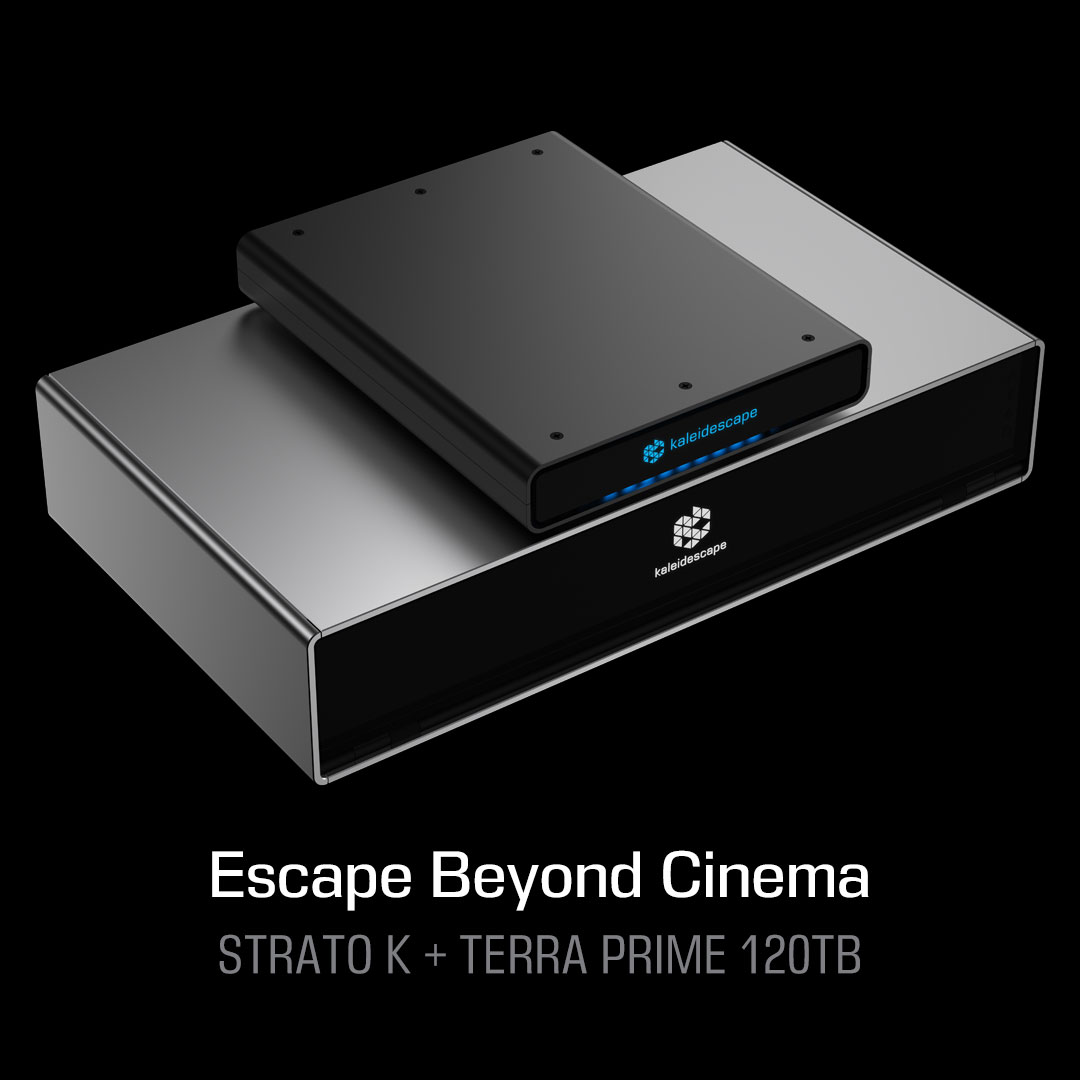
kaleidescape-strato-k-terra-prime-120tb-escape

Kaleidescape Connoisseur System

Escape beyond cinema with Kaleidescape Strato K and Terra Prime 120TB. Strato K is the world’s highest-fidelity movie player, providing access to Kaleidescape’s exclusive 4K Cinematic™ format. Terra Prime 120TB movie server stores up to 2,000 4K movies and unlocks the full Kaleidescape experience. Available from Kaleidescape dealers at $39,990 US MSRP.

Learn more at kaleidescape.com

Focal Scala Utopia Evo M

An exceptional 3-way floorstanding loudspeaker designed and manufactured in France. It unites innovative drive units, state-of-the-art audio technologies and an iconic, sculptural design, delivering sound reproduction with remarkable precision and expression for a truly unique musical experience. Engineered for high-end audio systems, it is conceived for the most dedicated high-fidelity enthusiasts.

Advertisement

$50,000/pair at House of Stereo

focal-scala-utopia-evo-m-lifestyle-taupe
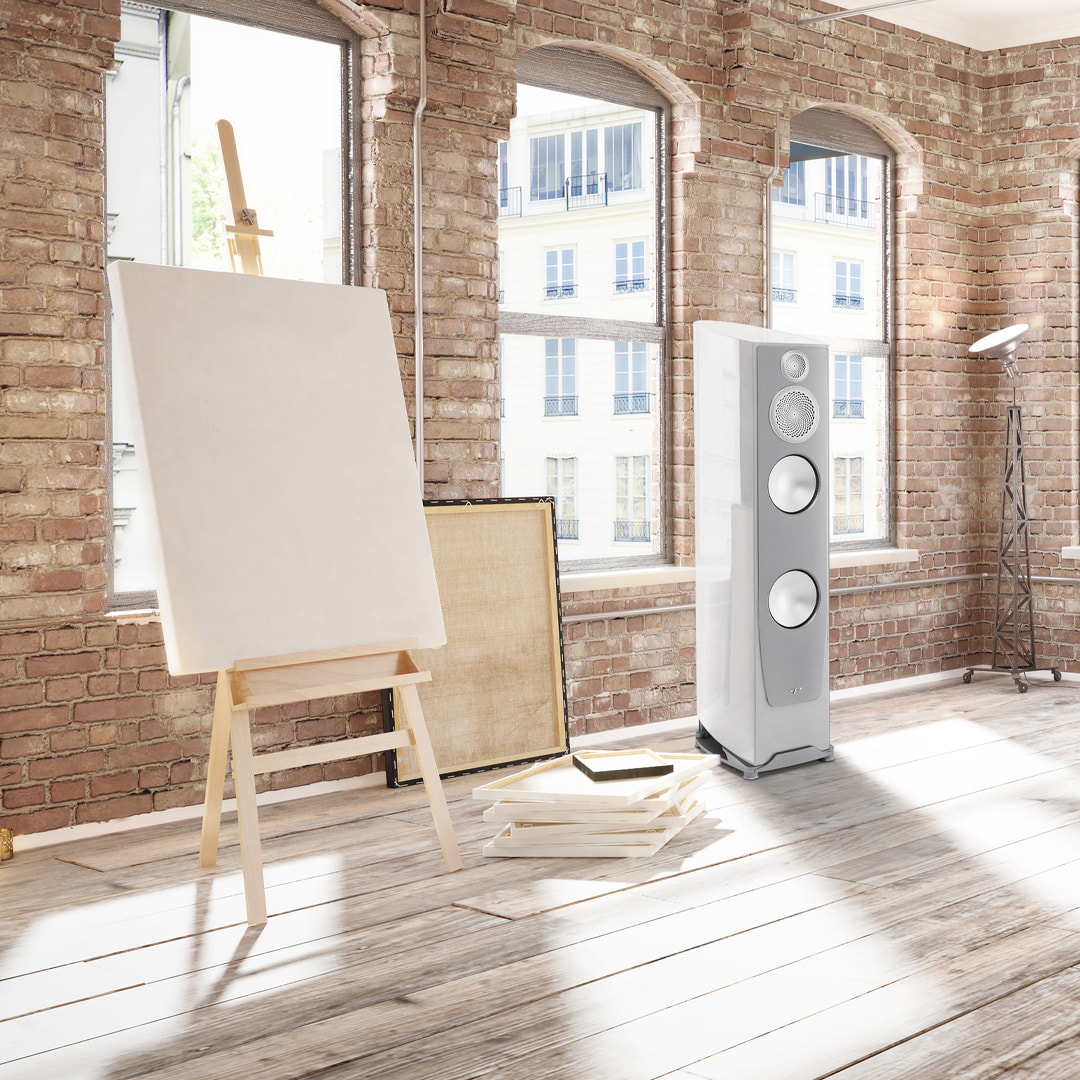
paradigm-persona-9h-white

Paradigm Persona 9H

Completely designed, engineered, and crafted in Canada, the flagship Persona 9H unleashes the full, untamed power of Paradigm engineering. This 6-driver, 3.5-way hybrid floorstander packs 1,400 watts RMS of DSP-controlled amplification to drive its active bass architecture. Encased in an intricately braced, vibration-canceling cabinet, it delivers surgical precision with effortless dynamics and total acoustic authority.

$19,999/each at Paradigm

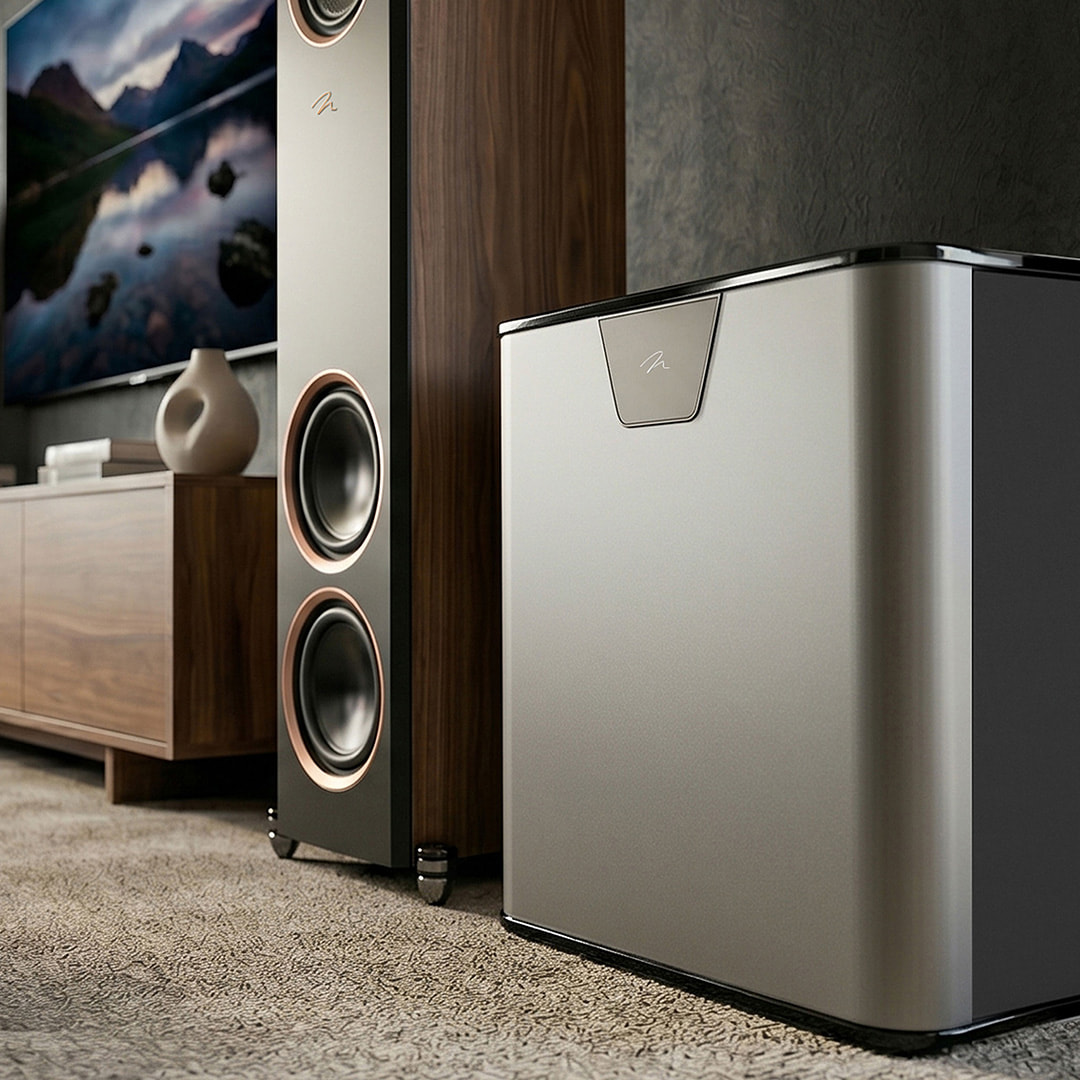
MartinLogan Depth 215

The ultimate expression of MartinLogan bass, the Depth 215 delivers pure low-end dominance. Dual 15-inch Carbon Aerocore woofers in a force-canceling setup eliminate cabinet vibration, while a 64-bit Vojtko DSP engine ensures surgical accuracy. Bone-rattlingly deep and distortion-free, it anchors high-end two-channel setups and elite home theaters alike.

$6,999 at MartinLogan

Advertisement
martinlogan-depth-215-black
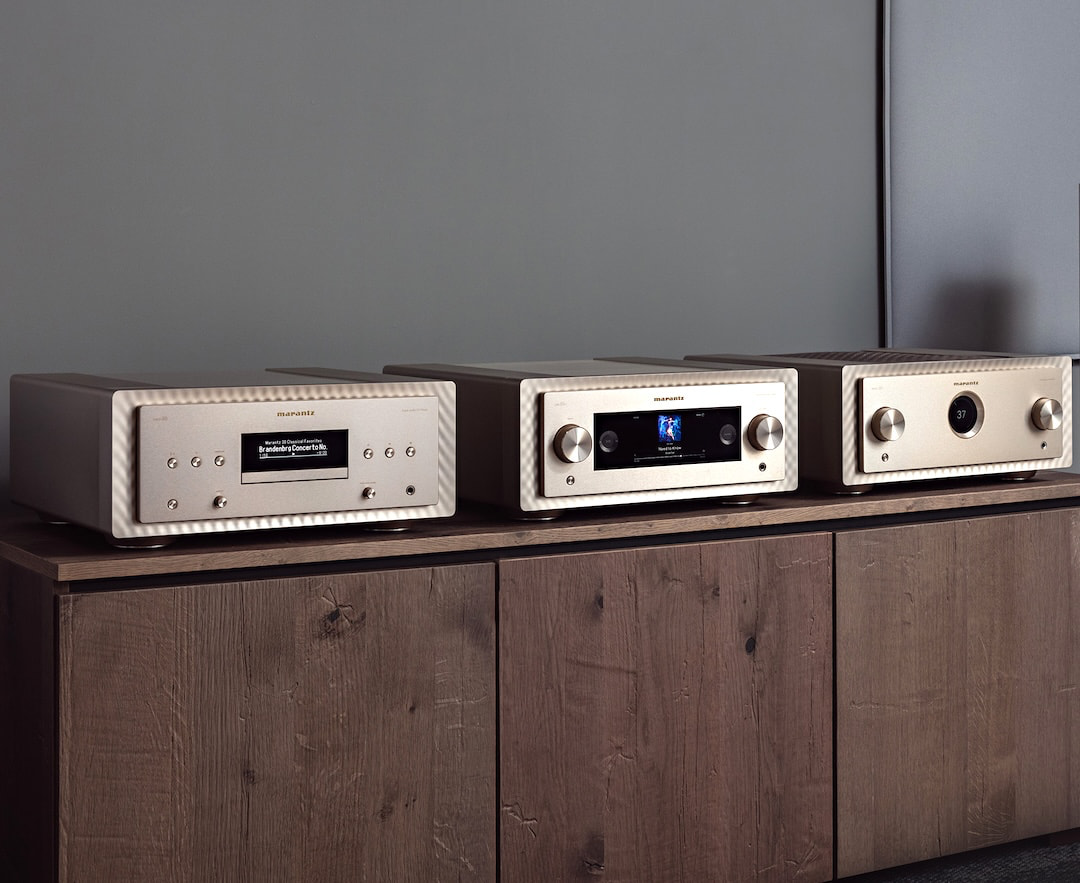
marantz-10-series-silver

Marantz 10 Series

Unlock the pinnacle of music performances with the top-of-the-line Marantz 10 Series hi-fi components consisting of the Model 10 Integrated Amplifier, SACD 10 Disc Player, and LINK 10n Streaming Preamplifier.

Bartolotta T10 Bespoke

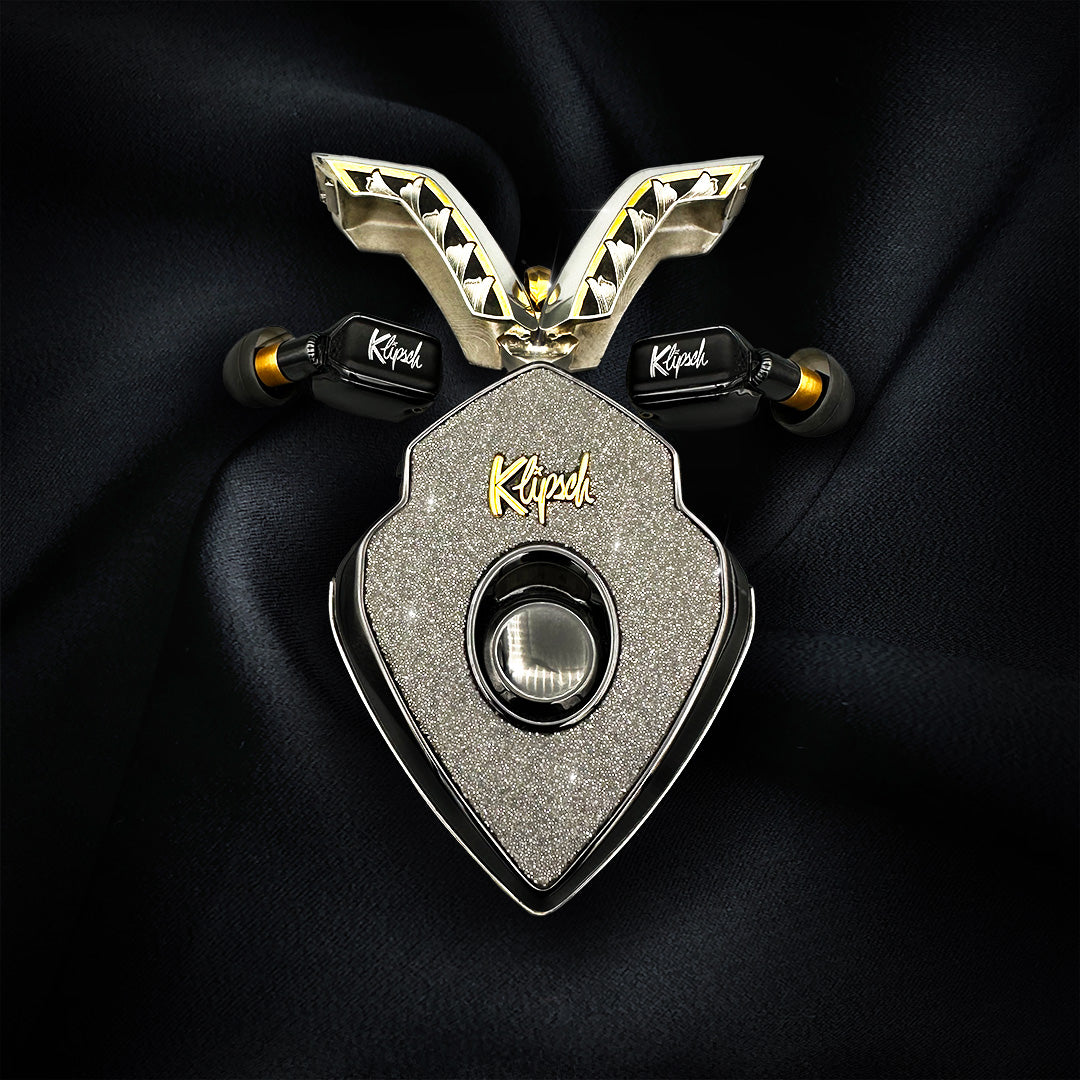
One-of-a-kind in-ear computers combine the craftsmanship of two artisans, Bear Clark and Phil Bartolotta. The charging case pendant features a soft-brushed 925 sterling silver metal frame with a 14k gold inlay border, while the buds deliver astonishing musical playback and functionality.

$22,012.50 at T10 Bespoke

t10bespoke-bartolotta

Need more gift giving ideas?

Disclosure: The products listed above are approved by our Editors, but may be requested by our sponsors. When links to buy are provided, we’ll direct you to the lowest price at time of publication. In doing so, eCoustics may earn a small commission from the associated retailer if purchased.

Source link

Advertisement
Continue Reading

Tech

Sony Is Reminding Us (Again) That We Don’t Own Our PlayStation Games

Published

on

Some things are too bizarre to make up, and Sony’s inability to read the room is one of them.

Over the last week or so, the media giant has sent emails to PlayStation users with its entire Terms of Service, which includes a reminder that their digital games are “licensed” and not “sold.” The communication comes as gamers continue to protest Sony’s removal of physical media from the PlayStation 6.

As an isolated incident, Sony’s email isn’t really anything untoward. It lets the user know that they have recently accepted the most recent Terms of Service, Code of Conduct, End User License Agreement and Privacy Policy. The company even included full copies of each in the email. 

But the timing of Sony’s email appears intentional, not just unfortunate. PlayStation users are furious over the company’s decision to remove the physical disc drive from the PlayStation 6, as well as its announcement that it will stop producing game discs altogether as of January 2028. Sony announced the end of physical discs just a few days after removing several digitally purchased movies from users’ accounts.

Advertisement

The email was spotted by The Verge’s Tom Warren, who posted about it on X over the weekend: “Sony emailing everyone about PlayStation terms of use during a backlash over the end of discs and a lack of digital ownership is certainly a choice.”

The backlash has grown large enough to inspire a PlayStation boycott — starting Sunday — with players pledging not to buy, log in to or play games for a week to protest Sony’s abandonment of physical media for the console.

So, right in the middle of a protest centered on concerns about game ownership, Sony is reminding us we’re merely buying a license to use a game under the company’s terms.

The new normal: Lease, not own

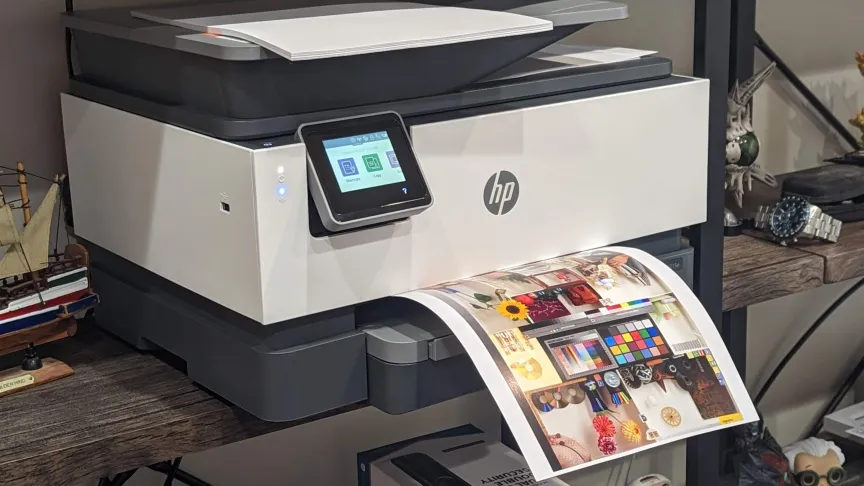
HP printers throw tantrums if you try to use third-party ink cartridges.James Bricknell / CNET

A move like this from another multibillion-dollar company underscores the new normal in gaming and tech, where companies appear to be shifting further away from the idea of ownership. Instead, they ask consumers to retain access to products that may be revoked or restricted at the company’s discretion. These changes didn’t come in one dramatic wave, but in a steady stream of small consumer-facing microaggressions that have built up over time. 

Take the recent HP printer controversy, for example. HP programmed its printers to lock users out if third-party ink is detected. That means you can buy an HP printer and own it — but if you don’t fill it with the official (more expensive) ink cartridges, the printer can sass back like an angsty, spoiled teenager and refuse to work. 

Advertisement

There are subtler attempts to chip away at our agency (and purchasing power) as consumers. Apple raised MacBook prices this year, then started a program where the company will literally rent you one, presumably because you can’t afford it otherwise. You wouldn’t own the MacBook, so Apple could lock you out of your device if you missed a lease payment. 

When it comes to music and movies, streaming has been the norm for years — we’re dutifully reminded every so often that we’re renting the ability to listen or watch something rather than owning it. I’ll never forget a couple of years ago when the entire library from the rock band Coheed and Cambria’s was removed from YouTube Music due to a licensing dispute while I was in the middle of listening. 

Sony and other gaming companies are starting to adopt the same lending-access business model in software and digital entertainment: In this brave new world, mega corporations can own everything and make us “purchase” rentals entirely on their terms. That means they can change, restrict, discontinue or shut down access, but we can never keep, lend, sell or pass down a product.

The shift is leaving older generations (millennials like myself included) increasingly nostalgic for a time when buying something meant taking home something tangible — something that belonged to us.

Advertisement

Source link

Continue Reading

Tech

Apple defies memory shortage with new Mac minis

Published

on

AI and ml

The cost of memory makes this an expensive ML meal

Apple on Tuesday heralded the imminent refresh of its headless Mac kit with new versions of the Mac Studio and the Mac mini that you can pre-order now for shipping on September 22, 2026. The diminutive desktops promise a high level of local AI performance with memory prices to match. 

Advertisement

“[T]he new Mac Studio is our most powerful Mac ever,” said Johny Srouji, Apple’s chief hardware officer, in a statement, citing the integration of Apple’s Neural Accelerators into processor GPUs and the utility of high-bandwidth unified memory to justify the assessment.

The Mac Studio became Apple’s high-performance standard bearer following the retirement of the Mac Pro in March.

With the “most powerful” slot taken, the Mac mini has been dubbed “our most versatile Mac,” as Srouji put it, highlighting the machine’s recently discovered role as “an always-on agentic device.” 

Earlier this year, the excitement around OpenClaw and open weight AI models led to a run on Mac mini hardware as AI aficionados found Apple’s compact desktop made a comfortable home for AI agents and local inference.

Advertisement

The Mac mini has unified memory – the CPU and GPU share the same RAM – making a Mac with ample unified memory (eg, 64 GB) well suited to GPU inference compared to a PC with 64 GB system RAM but only 16 GB GPU VRAM.

What’s more, Apple silicon hardware supports the company’s MLX machine learning framework, which provides respectable private inference performance on hardware that draws far less power than a desktop GPU workstation.

You have less power, but more money for memory. As outgoing CEO Tim Cook admitted in June, memory prices have been rising due to AI demand, and those costs are being passed on to customers.

The Mac Studio comes with two flavors of chip, M5 Max ($2,499) and M5 Ultra ($5,499).

Advertisement

The M5 Ultra, with up to 36 CPU cores and up to 80 GPU cores, is an inference beast, supporting up to 512 GB of high-bandwidth unified memory with 1.2 TB/s of unified memory bandwidth. 

That memory configuration isn’t available until October, but the existing 256 GB memory option for an extra $4,000 should give you a sense of how pricey a maxed-out Mac Studio will be ($18,299 for 256 GB RAM, 16 TB SSD).

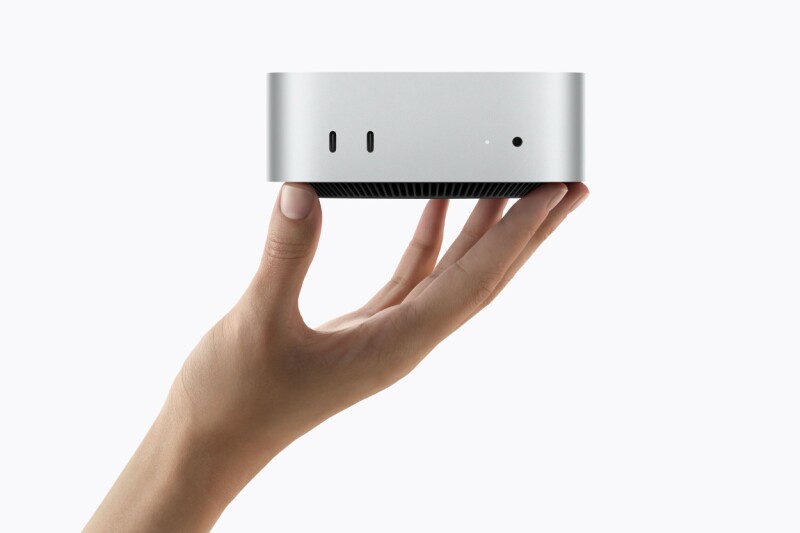
The Mac mini can be had with an M6 chip ($899) or an M5 Pro chip ($1,699), but the base model has just 16 GB of shared memory and it costs a whopping $400 to step up to 32 GB. The M6 is the first Apple silicon to use a 2 nm process. It’s a 12-core processor, which Apple notes is “two more cores than before.” 

“Built using the cutting-edge 2 nm process, M6 combines a new CPU complex, two additional CPU and GPU cores, a Dual 16-core Neural Engine, and more unified memory bandwidth to power through workloads with amazing energy efficiency,” Sri Santhanam, VP of Apple’s silicon engineering group, said in a statement.

Advertisement

The M5 Pro offers more in the way of memory and memory bandwidth, making it a better choice for data-intensive development applications. The M6 supports up to 32 GB of memory and up to 170 GB/s of memory bandwidth, while the M5 Pro supports up to 64 GB of unified memory and 307 GB/s of memory bandwidth.

The Mac mini comes with Wi-Fi 7, Bluetooth 6, two USB-C ports that support USB 3, and a headphone jack. Its rear gunport comes with three Thunderbolt 4 ports for M6 and three Thunderbolt 5 ports for M5 Pro, not to mention HDMI and Ethernet (2.5 Gb or 10 Gb). Thunderbolt 5 allows for clustering, so multiple Mac minis can be connected together to run large AI models on-device.

The Mac Studio also does Wi-Fi 7, Bluetooth 6, and Thunderbolt 5, with support for PCIe expansion chassis.

All of Apple’s incoming hardware comes with macOS 27, which is expected to debut in mid-September. ®

Advertisement

Source link

Continue Reading

Tech

Native SMB3 Client Brings Modern NAS Access To 20-Year-Old PowerPC Macs

Published

on

As software updates cease for operating systems, they eventually begin to lose access to parts of the LAN and internet due to out of date encryption features, as well as the inability to handle file sharing protocols like SBM3, which is somewhat of a necessity if you have e.g. a NAS on the LAN. Such too was the case with [watermark_hd]’s 20-year old PowerPC Macs and their installations of OS X Tiger and Leopard.

Cue Aqualink, a native SMB3 client for these older OS X versions that uses [Ronnie Sahlberg]’s libsmb2 server/client library for SMB2 and SBM3. The source code can be found over on GitHub, along with a Japanese translation. By using a local WebDAV server Tiger’s built-in mount_webdav feature can be used to mount these remote volumes.

While you can often still use SMB1 even on modern Windows and Linux/BSD via Samba, allowing even retro systems like these PowerMacs to speak SMB3 is at least a great boost for network security, even if the aforementioned encryption shortcomings mean that you cannot quite run encrypted file shares yet.

Advertisement

Although OS X eventually began to adopt modern SMB versions, some of us may remember how incredibly buggy they were, to the point that us OS X users often had to fall back to CIFS (SMB 1.0), so this is another potential use for this Aqualink application.

Source link

Advertisement
Continue Reading

Tech

Apple Quietly Fixes iCloud Private Relay Vulnerability in iOS 26.6.1

Published

on

Apple’s iCloud Private Relay is back to private status, after an apparent fix in iOS 26.6.1 patched the vulnerability that would expose a person’s IP address even when the feature was enabled.

iCloud Private Relay is a paid feature available only to those with an iCloud Plus subscription. When it’s active, it routes web traffic through proxy servers to mask your physical location and web traffic. It’s specific to Apple’s Safari web browser and apps that use Apple’s WebKit framework, and is not the same as a VPN, which hides all internet traffic.

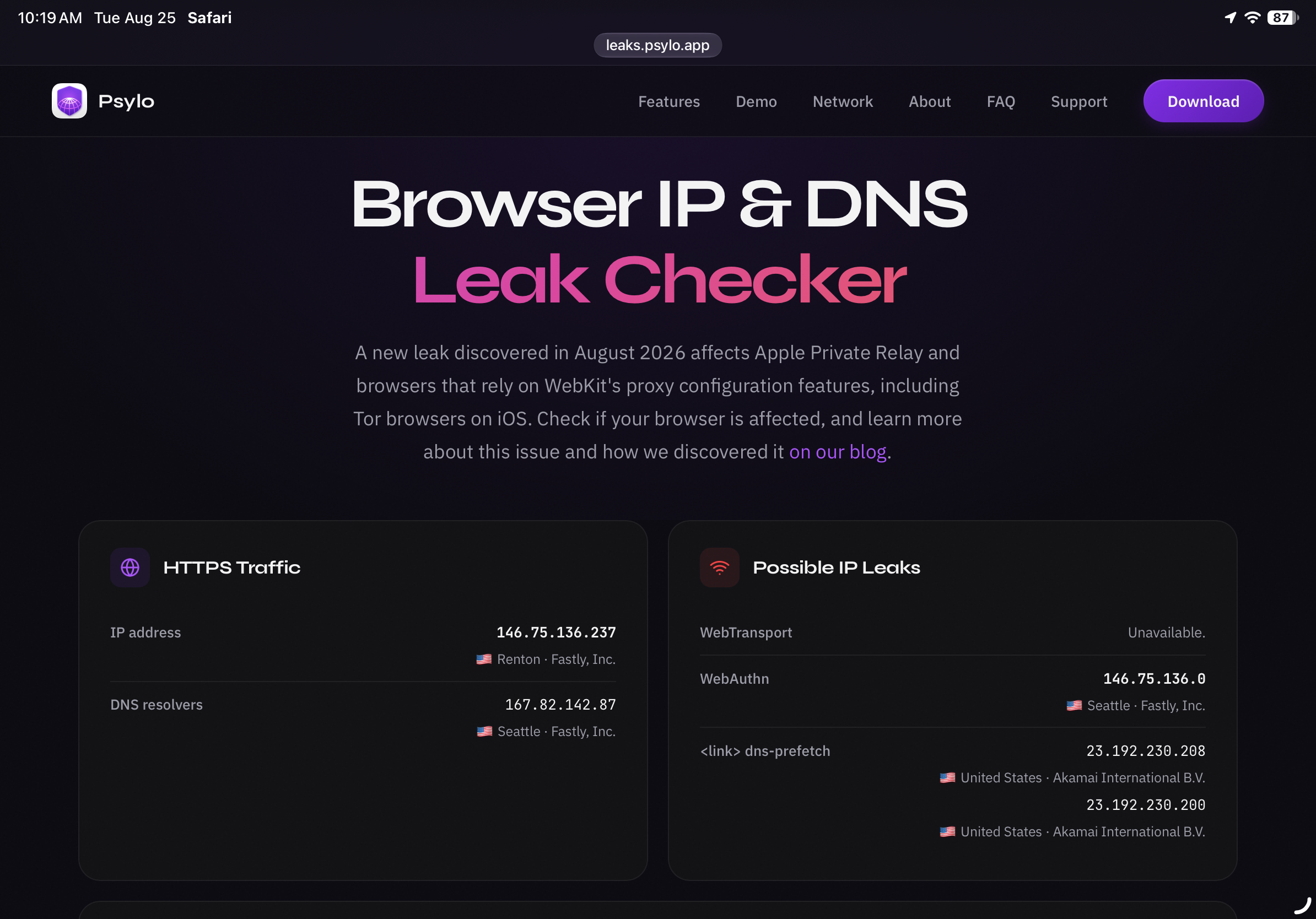
Earlier in August, developers Talal Haj Bakry and Tommy Mysk noticed that Apple devices with iCloud Private Relay enabled could still leak their IP addresses in three circumstances. The developers set up a web page at leaks.psylo.app where you could check whether you’re vulnerable.

On Tuesday, Mysk posted on X that Apple’s iOS 26.2.1 release (and the 26.2.1 releases of Apple’s other operating systems) is where the fix appeared, even though it’s not noted in Apple’s security release notes. Now, if you go to that leaks page, it reports the masked IP address, not the actual address, of the device you’re running. You need to have iCloud Private Relay on in Settings > iCloud.

Advertisement
Screenshot of a security leak checking website showing possible IP address leaks.
The Psylo leak checker website shows that none of the possible IP leaks reveal my device’s actual IP address.Screenshot by Jeff Carlson/CNET

Mysk also noted in a reply on X that, “It’s near to impossible Apple would have addressed this issue so quickly had we reported it to Apple first. As expected, they only fixed it for Safari.”

An Apple representative didn’t immediately respond to a request for comment.

Soon after its existence was revealed, the iCloud Private Relay vulnerability prompted a lawsuit by Clarkson Law Firm, the same outfit that negotiated a $250 million settlement with Apple over how the company advertised its Apple Intelligence features at launch. The firm has also recently sued smart ring maker Oura.

A Clarkson Law Firm representative didn’t immediately respond to a request for comment.

Source link

Advertisement
Continue Reading

Tech

A Remastered The Witcher 3 Will Be Released September 29

Published

on

Current owners of the popular RPG will get the upgrade for free.

Popular fantasy RPG series The Witcher was one of the big closing announcements during today’s Gamescom Opening Night Live showcase. CD Projekt Red revealed that it is releasing a remake of The Witcher 3, including both of its previous DLC expansions. The studio is offering the overhauled game as a free upgrade to existing owners starting September 29. That also covers a free Switch 2 upgrade for players who bought the game for the original Switch.

In addition to the visual updates you’d expect in a remaster, there are also some notable system overhauls. The skill tree has been revised and so have the combat systems, including tweaks to the camera and targeting, as well as new finishers. Movement and traversal as Geralt will feel smoother, and mount handling has also gotten some adjustment (although I’d personally be sad if they managed to eliminate all of Roach’s funny, glitchy moments).

Earlier this year, CDPR announced that The Witcher 3 was getting a third DLC next year in Songs of the Past, and the team offered a short teaser of gameplay at Gamescom as a post-script to the remaster news. Adding an expansion to a title that’s more than a decade old is pretty unusual, but maybe that’s a way to throw a bone to fans who are going to be waiting until at least 2028 for the next proper sequel to the franchise. And for an additional jaunt down there’s still an endeavor underway to create a modern remake of the first Witcher game.

Advertisement

Source link

Advertisement
Continue Reading

Tech

Daily Deal: Headway Premium | Techdirt

Published

on

from the good-deals-on-cool-stuff dept

Unlock a world of knowledge with a Headway Premium subscription. This exclusive deal gives you unlimited access to Headway’s massive library of 1500+ book summaries, with 30-50 new ones added monthly. Cover any topic you can imagine, from personal development and business strategies to health and wellness. It’s usually on sale for $60 for new users only, but for a very limited time you can get it for $50.

Note: The Techdirt Deals Store is powered and curated by StackSocial. A portion of all sales from Techdirt Deals helps support Techdirt. The products featured do not reflect endorsements by our editorial team.

Filed Under: daily deal

Source link

Advertisement
Continue Reading

Tech

Trump Told Asylum Seekers To Do It “The Legal Way.” Now He’s Revoking 200,000 Of Their Visas.

Published

on

from the only-white-people-deemed-to-do-it-the-right-way dept

Many Trump supporters keep insisting that his immigration purges are justified because the people swept up in them came here “illegally,” so who cares if they get kicked out (or shipped off to some random war-torn country). When asked what people seeking asylum should do, the answer is often “do it the legal way.” That the US government has spent years making “the legal way” harder and harder — and, as we’re about to see, has now started punishing the people who actually took it — never seems to enter the conversation. But here we have a really clear example of people doing it “the legal way, as instructed by Trump himself” who are about to get kicked out of the US.

The AP is reporting that the administration is about to pull out on the order of 200,000 visas from those who came to the US legally under B1 or B2 visas, and then sought asylum, just as Trump said they should. This would be the largest mass revocation of visas in US history.

The Trump administration is preparing to revoke the business and tourism visas of up to 200,000 foreigners who have applied for or are currently seeking asylum status in the United States. If it happens, the move would be the largest single mass revocation of visas in U.S. history and would likely face legal challenges.

Unless challenged or revised, the State Department is expected to announce in the coming weeks the revocation of so-called B1 and B2 visas issued between 2016 and 2026 whose holders have sought asylum or are now seeking asylum, according to State Department documents obtained by The Associated Press and two U.S. officials. The action will be taken in coordination with the Department of Homeland Security.

“We are coordinating with DHS to identify and revoke the nonimmigrant visas of foreigners who have come to the United States claiming to be short-term visitors, but then file for asylum to stay here permanently,” said State Department spokesman Tommy Pigott.

Advertisement

Go back to 2018, when the first Trump administration proclaimed that anyone crossing the southern border anywhere other than an official port of entry would be ineligible for asylum. The whole framing was that there was a legal way to seek asylum and an illegal way, and only the legal way was going to count. In remarks about this executive order, Trump said that those who wished to seek asylum would have to “lawfully present themselves at a port of entry,” at which point they could seek asylum.

Under this plan, the illegal aliens will no longer get a free pass into our country by lodging meritless claims in seeking asylum. Instead, migrants seeking asylum will have to present themselves lawfully at a port of entry. So they’re going to have to lawfully present themselves at a port of entry.

A few months later, in his State of the Union, he claimed he wanted immigrants to enter the country legally (in large numbers!):

“I want people to come into our country in the largest numbers ever, but they have to come in legally,” he declared…

Note that these are two separate demands: show up at a port of entry rather than sneaking across, and get into the country through legal channels in the first place. The people about to lose their visas satisfied both, and then some. They applied for a visa, got vetted and approved by the State Department, walked in through the front door, and filed an asylum claim through the official process. If there’s a more “legal way” available, nobody has described it.

That demand, that people come “legally” and then make their asylum claims at a port of entry (though the courts later deemed this “asylum only counts at port of entry” to be wildly against the law) still resulted in a ton of people getting legal visas to the US, and then seeking asylum when they entered.

Advertisement

It now appears that (unsurprisingly) the Trump administration was full of shit when they claimed they wanted asylum seekers to “come the legal way.”

There was nothing in what Trump said initially that said they had to get other types of visas to seek asylum. It just said “get here legally and then make your case.” Which is exactly what all of these people did, and Trump and Marco Rubio are about to pull their visas, even though they literally did things “the legal way” that Trump himself had encouraged.

While this won’t necessarily mean immediate deportations, it will likely mean that people with live, pending asylum claims lose their lawful status while those claims are still being adjudicated — which is precisely how you end up removable. And with bands of roving ICE thugs looking for anyone without legal status to deport, you know these people are likely to be added to the target list.

So once again, doing things “the legal way” turns out to protect you from exactly nothing. Follow the instructions the president himself gave you and on the visa the State Department itself issued you, file the paperwork the process demands, and the reward is having that visa pulled while your claim is still pending. What good is doing things “the legal way” when, with the stroke of a pen, Trump and Rubio will make that “legal way” illegal?

Advertisement

The New Colossus poem on the Statue of Liberty reads:

Give me your tired, your poor, Your huddled masses yearning to breathe free…

To which the Trump administration responds: “get the fuck out of here.”

Filed Under: asylum, deportation, donald trump, immigration, marco rubio, trump administratin, visa revocation, visas

Advertisement

Source link

Continue Reading

Tech

Metro 2039 has no heroes. It trades hope for revenge, and I’m all for this new direction

Published

on

Metro Exodus spent much of its time proving this series could survive outside the Moscow Metro. Artyom was always a dreamer and hoped for a better world for the people of the Metro. And despite everything, hope seemed to prevail if you made the right choices in Exodus.

So why is Metro 2039 drawing me back in? It’s not just the name and the setting that’s worth its weight in gold, no. It’s the fact that it takes the bleak world of Dmitry Glukhovsky’s Metro series and takes us deeper into darkness. 4A Games dropped a new Renegade gameplay trailer during Gamescom Opening Night Live, this time putting the new protagonist, The Stranger, in the spotlight once again.

We see him moving through the independent Sevastopolskaya station, where he explored the irradiated Moscow and fought mutants and humans alike. But the latest travel shows us brutality firsthand, reminding us that Artyom is gone. Thinking about the DNA the original Metro 2033 game shared with GSC Game World’s Stalker, this is exactly how I want my Metro.

Advertisement

The tunnels have learned a few tricks from Exodus

The big new location, Sevastopolskaya, was seen again in the new Renegade trailer. 4A describes it as an independent station being slowly destabilized from inside by propaganda and alcohol while Novoreich-backed Raiders put pressure on it from outside. The Stranger visits while chasing information connected to his mysterious target.

Aside from just looking pretty, the entire game feels more interactive, and by that extension, more immersive. Something small like the breaching tool that was used by the Stranger adds to new gameplay mechanics. Similarly, a new UV light can expose hidden mutants, repel flying Insectalis, and uncover codes used in environmental puzzles.

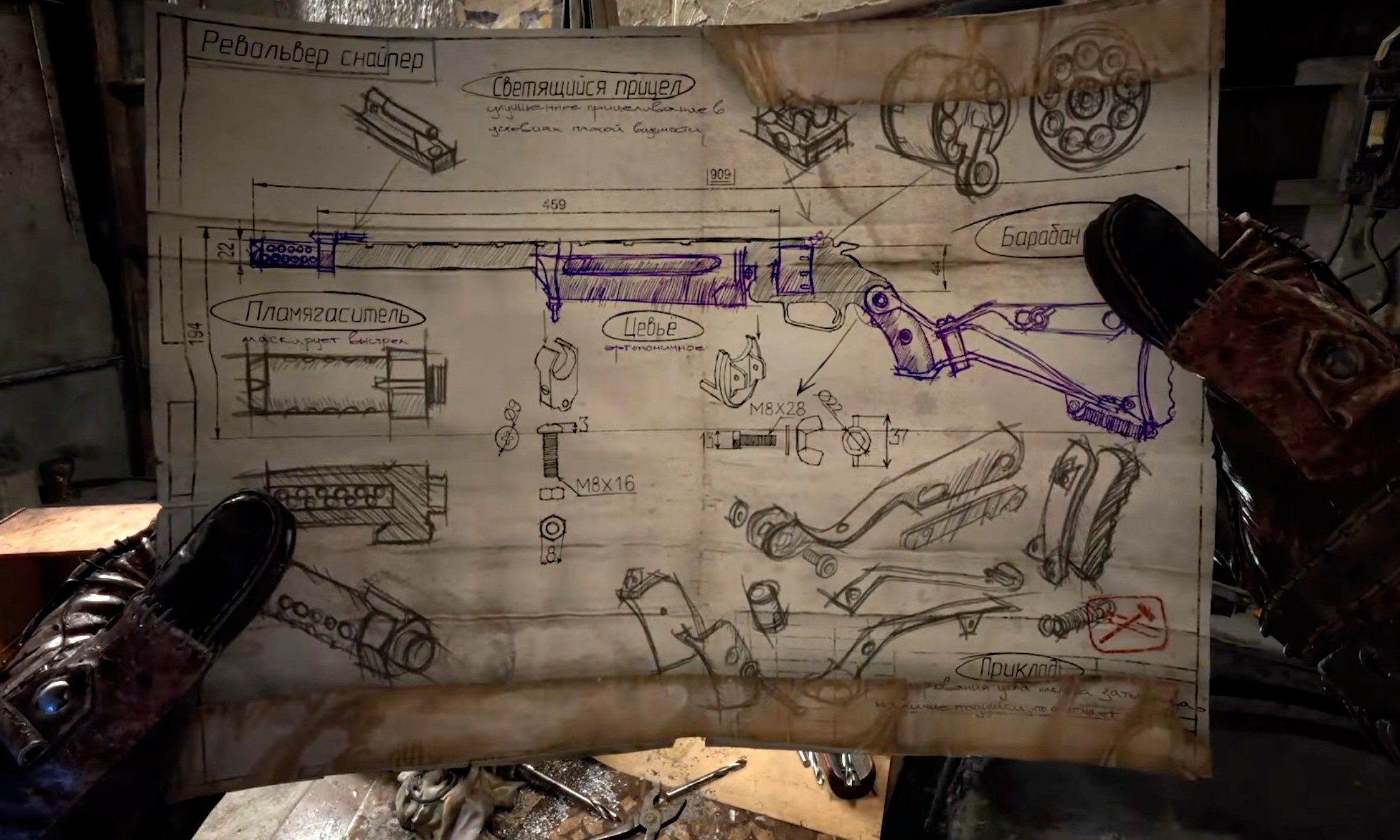
While I loved wandering through sprawling large environments in Exodus, Metro 2039 appears to be bringing that curiosity back into tighter spaces. The new Shatun pneumatic rifle looks appropriately Metro too. Its power depends on keeping the weapon pumped, giving you another mechanical thing to worry about while something horrible is trying to eat you.

Something strange is still lurking down there

Everything about the trailer that caught my eye was related to The Stranger. He wears Spartan armor, yet 4A describes him as a traumatized man focused almost entirely on his own mission rather than saving everyone suffering under Hunter’s Novoreich regime. One line summarizes him rather efficiently:

The Spartans were wolves in helmets. But I’m something worse.

Then comes the part that really has me curious. As Hunter’s propaganda repeats its call that the enemy must be destroyed, the voices of the Dark Ones join him. The trailer stops short of explaining what that means, leaving another supernatural thread hanging over The Stranger’s violent waking nightmares. Unlike before, the Dark Ones don’t look like they are just mysterious; they seem outright hostile.

I was already impressed by how much stranger and more eldritch its post-apocalyptic setting had become. This trailer makes the gameplay side equally promising. Metro 2039 launches in February 2027 for PS5, Xbox Series X/S, Steam, Epic Games Store, and Xbox on PC. An exact date hasn’t been announced.

Advertisement

Source link

Continue Reading

Tech

Secret Cold War Supercomputer Was Built for One Job

Published

on

At the height of the Cold War, one very specialized computer was so secret that the world didn’t know it existed. It ran its jobs up to 200 times as fast as any other computer of its time. It was the U.S. National Security Agency’s main cryptographic processor in operation from the time of the Cuban Missile Crisis in 1962 through the Vietnam War and on past the 1975 Helsinki Accords. The machine stopped running only when its moving parts finally gave out.

The Harvest computer mattered because of what it was as well as when it ran. For 14 years, it was the engine processing the NSA’s most sensitive intercepts at a time when signals intelligence was as close to a strategic weapon as anything short of a warhead.

Designed and built by IBM for the NSA, Harvest was one of the first machines designed to apply operations to enormous datasets rushing past, a precursor to the computers today that manage continuous video streams and security systems in real time. It was also one of the first machines built as an add-on—a specialized helper intended to do one job exceptionally well, bolted onto a general computer. Harvest’s modular design is like a 1960s version of today’s graphics chips that CPUs use to run intensive video-game and AI processing loads.

Advertisement

All that raw processing power meant that Harvest also needed nonstop rivers of data to run on. And that led to another pioneering achievement: the world’s first automated tape library that could robotically fetch any one of hundreds of large cassettes of magnetic tape from the machine’s racks.

Given Harvest’s unprecedented processing and storage capacity, the machine’s designers naturally needed to rethink how their system handled information. So IBM wrote a customized programming language called Alpha to let code breakers rigorously describe cryptographic problems, just as scientists at the time were using the emerging language Fortran to describe equations and data-processing algorithms.

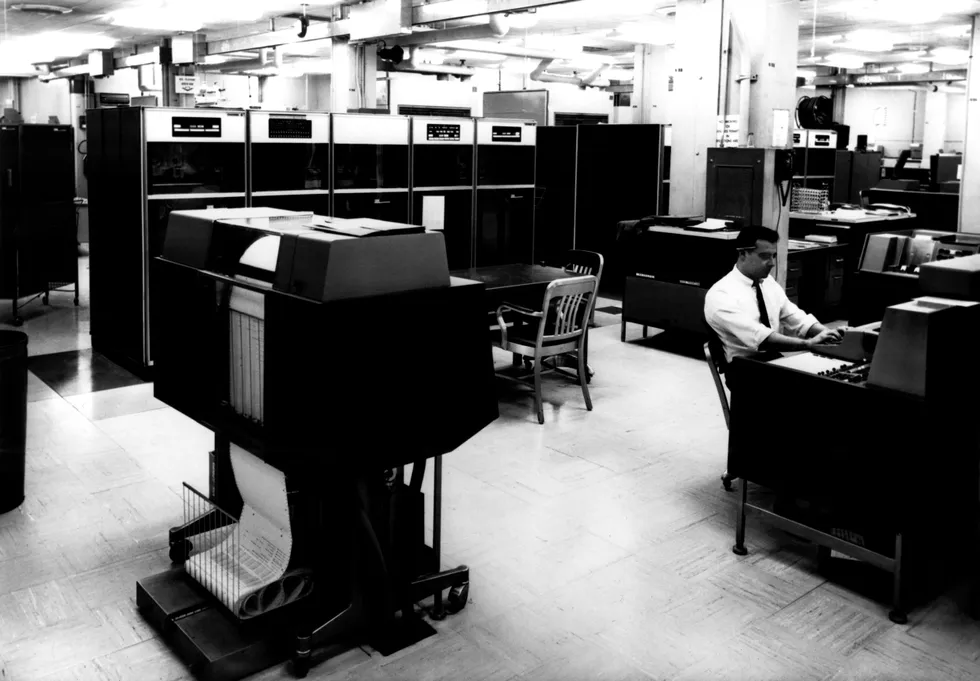
a computer center with printers and large cabinets and a man sitting at a computer keyboard In Fort Meade, Md., an NSA data center hosted one of the world’s fastest computers of its time—although not often discussed, because of its sensitive, high-security code breaking and cipher hunting work. National Cryptologic Museum

The story of Harvest, pieced together from declassified documents and contemporary manuals and technical overviews, provides a new and unexpected vista on the history of computing. It also offers a case study in how national security needs, especially during the Cold War, pushed computer technology beyond the far reaches of what unclassified, civilian computing could achieve. Harvest’s distinctive history reveals a visionary algorithmic, coding, memory, and hardware architecture occasionally decades ahead of its time. But this machine was also built only once, for one singular purpose, and then ultimately quietly retired.

The Heart of NSA’s Secret Machine

IBM’s landmark 1960 transistorized mainframe, the IBM 7030, better known as Stretch, provided the front end for Harvest (which was officially known as the IBM 7950). IBM delivered Stretch to eight or nine customers, mostly scientific research labs, from 1961 through ’63. Designed and prototyped throughout the second half of the 1950s, Stretch introduced the now standard notion of an 8-bit byte. For its first three years of operation, Stretch was the non-classified world’s fastest computer, although it failed to meet IBM’s aggressive goal of running 100 times as fast as Stretch’s predecessor, the IBM 704. While IBM engineers in Poughkeepsie, N.Y., were designing and building Stretch, the company was also quietly discussing a new system that would be built for NSA.

Advertisement

At the time, NSA’s existing cryptanalytic computers—large, batch-processing machines that required human operators to manually stage each tape run—were struggling to keep pace with the sheer volume of intercepted message traffic coming in from around the globe. What the agency needed was a machine that could process an unbroken river of incoming data, automatically, around the clock. That requirement alone profoundly shaped Harvest’s design.

Schematic illustration of the IBM/NSA Harvest computer, in operation from 1962 to 1976. IBM’s Harvest system, custom-built for the NSA for code breaking, paired the IBM 7030 Stretch mainframe with a bespoke data-stream processor. Stretch handled ordinary computing and input/output, including the Tractor automated tape library. Both units shared two kinds of memory: a large main bank and a smaller, faster bank. When Stretch switched to streaming mode, Harvest drew two streams of data, P and Q, from memory, processed them in parallel, and returned the results as a third stream, called R. Chris Philpot

After two failed proposals to NSA, in 1958 IBM finally landed the contract: a Stretch-based machine, augmented by a custom coprocessor, with a revolutionary tape-based storage system, called Tractor.

Stretch’s forte was floating-point math for scientific computations. IBM had designed it primarily for labs working on frontier research like nuclear weapons design and weather prediction. By contrast, the custom coprocessor to be built atop Stretch would help NSA analysts sift through alphanumeric characters—that is, essentially integer data.

Harvest’s coprocessor was the opposite of a general-purpose system. It was, rather, a streaming computer. Instead of executing long series of instructions, it followed one fixed sequence of steps and applied that same sequence to every pair of characters as they streamed past. Harvest shared memory with the main Stretch processor and ran in bursts. Either Stretch was operating, or else it suspended itself while Harvest’s coprocessor shot through data in memory at extreme speeds.

Advertisement

Stretch and Harvest were among the first large computers built entirely from transistors packaged in circuit cards and housed in large, refrigerator-size frames. A 1962 technical manual about Stretch describes the machine’s CPU as divided into functional sections—the instruction unit, the look-ahead unit, the (parallel and serial) arithmetic unit, and the memory bus unit. Harvest inherited Stretch’s basic circuit design but then added something unconventional: Its streaming units processed data in overlapping stages called a pipeline. So while one pair of data bytes was being compared, the next pair was being fetched from memory.

Harvest’s coprocessor operated by fetching two streams of data, called P and Q, from the system’s memory, performing operations on them, then writing the results to memory as a third stream, R. Each stream could be anywhere from 1 to 8 bits wide. Harvest’s memory was bit-addressable, meaning word boundaries could be ignored entirely. For instance, it could fetch just 5 bits rather than filling out a whole byte. Streams P, Q, and R included flexible provisions for looping and addressing data in complex patterns—allowing, for example, repeated fetching of short strings from memory.

Data from P and Q fed into two functional units. The simpler was the logic unit, which performed basic, bitwise operations—the same operations any programmer would recognize today—and wrote its results back to memory. The more complex was a table-lookup unit. It combined incoming data from P and Q to form an address in memory, which could then be used to advance a counter by one, set a specific bit, or retrieve a stored value. The latter unit functioned, in effect, like the rotor wheel inside a cipher-encoding/decoding machine of the era, the kind that electronically substituted one value for another according to the cipher machine’s wiring.

Harvest’s complexity baffled some at the NSA. During employee tours, according to James Bamford’s 2001 NSA history, Body of Secrets (Doubleday), officials would point to the machine and scoff, “It’s beautiful, but it doesn’t work.”

Advertisement

Not everyone at the agency was put off by the monumental device, however. One of the few documented examples of Harvest at work, recounted by Bamford, describes the machine searching 3.5 billion characters of text for any of 7,000 target terms, in just under 4 hours.

In unclassified remarks from 1972, NSA analyst Robert Looney mentions one job Harvest had tackled—though he didn’t specify the end goal or the code-breaking effort behind it. Codenamed “Moretown,” the job involved sifting through 11 million messages spanning 16 years of intercepted traffic against a list of some 8,000 search terms—all in about ten hours.

Black\u2011and\u2011white portrait of a woman at a desk with papers, wearing a striped shirt. IBM’s Frances Allen helped design Alpha, Harvest’s custom-built programming language.IBM

Headshot of man with moustache and glasses, in a business suit. IBM’s James H. Pomerene was chief engineer of Harvest, supervising its custom-designed circuits that’d been optimized for algorithms used in many cryptographic jobs.IEEE

Man in suit and glasses seated beside vintage mainframe computer equipment IBM’s Fred Brooks Jr. was a key co-architect of Harvest’s hardware system. Computer History Museum

As a unified system, Harvest—that is, Stretch plus IBM’s custom-built streaming processor add-on—streamed 1 byte every 0.3 microseconds, and it boasted about 800 kilobytes of addressable memory.

“Here you see one bank pulled out of its oil bath,” Looney said in his 1972 remarks celebrating Harvest’s tenth anniversary of operations. He held up a photo of Harvest’s magnetic core memory banks—six of them, submerged in oil for cooling.

Advertisement

Factor in the time demands of various data fetches from Tractor’s tape archives, and a single Harvest “instruction” sometimes carried on, without needing any human intervention, for hours.

“It was quite an amazing computer,” recalled IBM Fellow Emerita Frances Allen in a 2001 oral history. “One instruction, for example, could do sorts, and do statistical analysis of the data that was streaming by it.… Everything we were doing at that time was on the cutting edge. There was no question about it.”

Allen, who received the A.M. Turing Award in 2006, was one of the developers who worked on both Stretch and Harvest. At the time she started working on Harvest, Allen noted, the Fort Meade, Md.–based NSA was largely unknown outside of classified intelligence circles. So she at first assumed she was working on an unspecified naval project. “We thought of ourselves as working for the Bureau of Ships, because that was the code name for NSA in the budget!” recalled Allen, who died in 2020.

Other key Harvest designers and early developers wound up becoming influential figures over the course of computing history. Frederick Brooks Jr., recipient of the 1999 Turing Award and a major contributor to the hardware and software for IBM’s System/360, also helped develop Harvest. And James Pomerene, prior to his involvement with Harvest as its chief engineer, had previously helped build the pioneering IAS computer alongside John von Neumann.

Advertisement

How Tractor Stored a World of Data

IBM built the Tractor tape system (IBM 7955) to attach to the same Stretch machine that hosted Harvest, because no existing data storage technologies could keep up with the computer’s staggering throughput. Stretch handled the business of staging tapes from the library to the drives—using Tractor’s automated cassette handler. Stretch also coordinated reading data in from Tractor and writing results back out from Harvest. Harvest, in turn, did all its actual computing on the system’s shared main memory.

In the early 1960s, and even after Tractor and Harvest were installed, hard-drive data storage was in its infancy. For code-breaking jobs of the size Harvest was taking on, disk storage would have been impractical in terms of both cost and sheer floor space. So Tractor had to be based around tape storage.

Each tape was sealed inside a case built like a boombox—twin encased reels under a window, carried by a handle—and, at 6 to 7 kilograms, about as heavy as a bowling ball. Think of a Tractor cassette as an outsize predecessor of the audiocassette, which would come along a decade later, and holding some 120 megabytes of data on a reel of tape 550 meters long. Each storage unit housed up to 160 of these cassettes.

a man holds a very large cassette in front of cabinets of tape drives An IBM technician holds one of the data cassettes used with Harvest’s automated Tractor tape drives. IBM

When Harvest launched in 1962, it had three automatic cartridge units, each serving two drives. So the available online storage across the three Tractor units totaled a stunning 44 gigabytes. That’s more than 190 times as much capacity as the IBM 2314 disk storage system, announced in 1965, which held 233 megabytes across its full complement of eight drives.

Advertisement

Tractor had to run continuously, swapping cassettes in and out, 24 hours a day, seven days a week. The system’s tape-handling speed was tuned to keep pace with Harvest’s own appetite for data. The custom-built robotic mechanism for retrieving the cassettes was a servo-driven arm that traversed the system’s storage racks. It fetched a cassette from its slot and delivered it to a handler or received a cassette from one of the handlers and returned it to storage.

Running at 6 meters per second, Tractor’s tapes zipped past the read/write heads faster than the eye could track. Software running on Stretch handled the cassette shuttling as well as reading and writing. For one of Tractor’s drives to move from the completion of processing one tape to reading the next took about 18 seconds, assuming it had already been fetched and was ready to mount. Robotically fetching a cassette from the storage unit and preparing it for reading required no human handling or input whatsoever.

In addition to Tractor, the system had standard reel-to-reel tape drives attached to Stretch. Harvest’s technicians often used the conventional drives for importing and exporting data to and from other systems; there was no other practical way to get large datasets into or out of Harvest. Tractor could also store permanent files and retrieve them directly from its tape libraries when a job required them. In other words, Tractor’s substantial cassette libraries acted both as permanent data storage and as a place to hold transient data for processing by Harvest.

No system in the commercial computing world of 1962 came close to Tractor’s gigabytes of simultaneously accessible data. At most computer centers at the time, “available” data meant physical racks of tape standing somewhere near its drives—accessible only as rapidly as an operator could manually pull a reel and thread it onto a machine, one at a time, over the course of a shift.

Advertisement

Alpha Was Harvest’s Custom-Built Programming Language

Created jointly by IBM and NSA, the Alpha language existed solely to program Harvest’s streaming dataflow engine for code-breaking work. According to a declassified Pentagon history of NSA computers, Alpha stood for Advanced Language for Programming Harvest.

Alpha allowed the programmer to define the alphabet in which code-breaking data would be processed. The language also included two unusual characters with no equivalent in conventional computing until years later, when Multics and Unix introduced wildcard characters. A “scab” (which was represented on Harvest’s input keyboard, a repurposed early IBM Selectric typewriter, by a “?”) stood for a character that was real but unknown. And a “pad” (represented by a blank space) was a null or spacer. These characters provided flexibility of representation for code breaking jobs, in which unknown or uncertain characters were commonplace.

a man at typewriter typing on keyboard with computer equipment in background; in the center A Harvest operator types on one of the main system consoles, a repurposed IBM Selectric typewriter.IBM

The rules governing Alpha’s operations on strings anticipated other modern rubrics, like “not a number”—a designation describing an unknown value in a dataset that can propagate through calculations, rather than silently corrupting them. Strings in Alpha could also be aggregated into cords, and cords into ropes, giving cryptanalysts a hierarchical vocabulary for describing complex intercepts.

Allen wrote a final technical report on her section of the Harvest software when her part of the project concluded—and just as promptly lost access to it. “I spent the good part of a summer on that,” she recalled in 2001. “And it just disappeared into Fort Meade somewhere.”

Advertisement

Replacing an Irreplaceable Machine

By 1971, according to NSA analyst Looney, the machine was running at its highest utilization ever—115 hours of production a week, or more than two-thirds of the time. Yet the number of jobs it processed had been dropping since 1967. Ordinary data-processing work, Looney noted, was by 1972 migrating to newer, general-purpose machines, leaving Harvest to concentrate on the very large, specialized jobs no other system could handle.

At its tenth anniversary of operations, Looney concluded, Harvest was a machine “conceived in the fifties, born in the sixties, and irreplaceable in the seventies.”

He got the last part wrong.

On 27 February 1976, operators shut down Harvest for the last time. A custom mechanical component in the Tractor tape library had worn out, and the manufacturer of the part was no longer in business. By then Harvest had run continuously for nearly a decade and a half—through the roughest close call in the history of mutually assured destruction and into the age of détente—processing intercepts at a rate no civilian machine could touch. By the time it retired, Harvest had outlived several generations of commercial computing.

Advertisement

A wooden plaque with an etched bronze plate that reads \u201cSite of the Harvest computer system, 1962-1976"  A placard commemorates the 1976 decommissioning of IBM’s Harvest computer at the NSA’s headquarters in Fort Meade, Md. National Cryptologic Museum

Somebody at the NSA decided to commemorate the machine with a mock telegram, written under Harvest’s name on the machine’s last day (and now preserved in the agency’s archives). “I first began operations at NSA. Although not widely known, I was probably the largest, fastest, and most technically advanced computer system in the world,” the telegram said. “And now, fourteen years later, the time to retire has come. The cost of my upkeep and operation has been overtaken by more modern equipments and the newer technologies.”

The NSA ultimately replaced Harvest with the landmark Cray-1 supercomputer. The Cray-1 was built from faster, more tightly integrated circuits that could outperform Harvest’s aging transistors at nearly any task, including text processing. Although the Cray was designed primarily for numeric and scientific computing, it sold across many fields—which ultimately made the supercomputer win out once Harvest’s custom-built text-processing hardware was no longer worth the upkeep for just one customer.

The secrecy that shrouded Harvest meant it could claim no lineage of immediate successors. But the ideas it pioneered didn’t disappear—they resurfaced, again and again, in the years that followed.

Tractor’s automated tape library was the forerunner of the robotic storage silos that would become standard in enterprise data centers about 20 years later. Harvest’s pipeline architecture prefigured the dataflow computing movement of the 1980s. The continuous pattern-detecting logic of its match units finds direct echoes in modern hardware packet-inspection intrusion detectors and programmable network switches that today route traffic through the internet at wire speed.

Advertisement

Harvest didn’t found a dynasty. But, in its time, it steadfastly pointed toward the future—in several directions at once.

This article appears in the September 2026 print issue as “The Lost History of IBM’s ColdWar Code Breaker.”

From Your Site Articles

Related Articles Around the Web

Advertisement

Source link

Continue Reading

Trending

Copyright © 2025