Apple on Tuesday heralded the imminent refresh of its headless Mac kit with new versions of the Mac Studio and the Mac mini that you can pre-order now for shipping on September 22, 2026. The diminutive desktops promise a high level of local AI performance with memory prices to match.
“[T]he new Mac Studio is our most powerful Mac ever,” said Johny Srouji, Apple’s chief hardware officer, in a statement, citing the integration of Apple’s Neural Accelerators into processor GPUs and the utility of high-bandwidth unified memory to justify the assessment.
The Mac Studio became Apple’s high-performance standard bearer following the retirement of the Mac Pro in March.
With the “most powerful” slot taken, the Mac mini has been dubbed “our most versatile Mac,” as Srouji put it, highlighting the machine’s recently discovered role as “an always-on agentic device.”
Earlier this year, the excitement around OpenClaw and open weight AI models led to a run on Mac mini hardware as AI aficionados found Apple’s compact desktop made a comfortable home for AI agents and local inference.
The Mac mini has unified memory – the CPU and GPU share the same RAM – making a Mac with ample unified memory (eg, 64 GB) well suited to GPU inference compared to a PC with 64 GB system RAM but only 16 GB GPU VRAM.
What’s more, Apple silicon hardware supports the company’s MLX machine learning framework, which provides respectable private inference performance on hardware that draws far less power than a desktop GPU workstation.
You have less power, but more money for memory. As outgoing CEO Tim Cook admitted in June, memory prices have been rising due to AI demand, and those costs are being passed on to customers.
The Mac Studio comes with two flavors of chip, M5 Max ($2,499) and M5 Ultra ($5,499).
The M5 Ultra, with up to 36 CPU cores and up to 80 GPU cores, is an inference beast, supporting up to 512 GB of high-bandwidth unified memory with 1.2 TB/s of unified memory bandwidth.
That memory configuration isn’t available until October, but the existing 256 GB memory option for an extra $4,000 should give you a sense of how pricey a maxed-out Mac Studio will be ($18,299 for 256 GB RAM, 16 TB SSD).
The Mac mini can be had with an M6 chip ($899) or an M5 Pro chip ($1,699), but the base model has just 16 GB of shared memory and it costs a whopping $400 to step up to 32 GB. The M6 is the first Apple silicon to use a 2 nm process. It’s a 12-core processor, which Apple notes is “two more cores than before.”
“Built using the cutting-edge 2 nm process, M6 combines a new CPU complex, two additional CPU and GPU cores, a Dual 16-core Neural Engine, and more unified memory bandwidth to power through workloads with amazing energy efficiency,” Sri Santhanam, VP of Apple’s silicon engineering group, said in a statement.
The M5 Pro offers more in the way of memory and memory bandwidth, making it a better choice for data-intensive development applications. The M6 supports up to 32 GB of memory and up to 170 GB/s of memory bandwidth, while the M5 Pro supports up to 64 GB of unified memory and 307 GB/s of memory bandwidth.
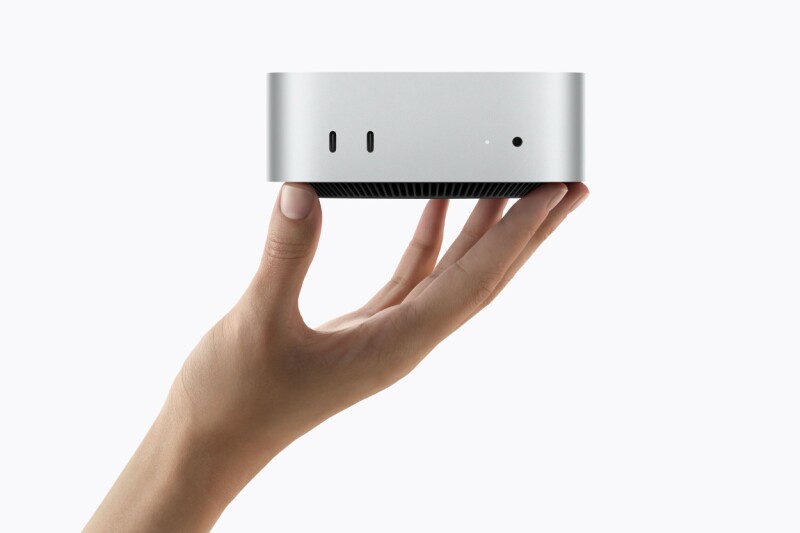
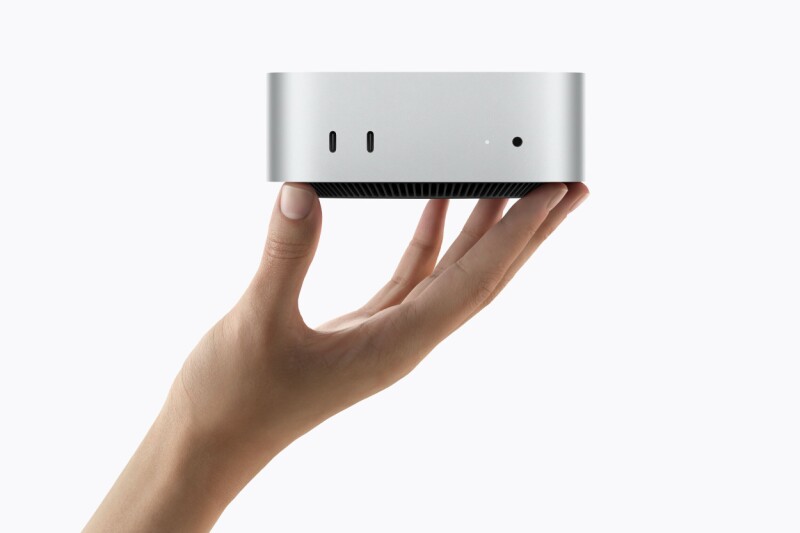
The Mac mini comes with Wi-Fi 7, Bluetooth 6, two USB-C ports that support USB 3, and a headphone jack. Its rear gunport comes with three Thunderbolt 4 ports for M6 and three Thunderbolt 5 ports for M5 Pro, not to mention HDMI and Ethernet (2.5 Gb or 10 Gb). Thunderbolt 5 allows for clustering, so multiple Mac minis can be connected together to run large AI models on-device.
The Mac Studio also does Wi-Fi 7, Bluetooth 6, and Thunderbolt 5, with support for PCIe expansion chassis.
All of Apple’s incoming hardware comes with macOS 27, which is expected to debut in mid-September. ®






















![Skilla Baby - GYSM (Get You Some Money) [Official Video]](https://wordupnews.com/wp-content/uploads/2026/06/1781824474_maxresdefault-80x80.jpg)






































You must be logged in to post a comment Login