
Business
A Step-by-Step Guide for Beginners


This is sponsored content produced in partnership with Plus500. CFDs are complex, leveraged financial instruments and carry a high risk of losing money rapidly. Trading involves risk of loss.

Contract for Difference trading has grown into one of the more accessible ways for everyday investors to speculate on price movements across global markets, without needing to own the underlying asset itself. Plus500, a publicly listed, multi-regulated trading platform, has positioned itself as one of the more user-friendly platforms for people looking to get started with CFD trading. Here’s a breakdown of how the process actually works.
Visit Plus500 (CFD service. Your capital is at risk)
What a CFD Actually Is
A Contract for Difference is an agreement between a trader and a broker to exchange the difference in an asset’s price between when a position is opened and when it’s closed. Rather than buying a physical share, a barrel of oil, or an ounce of gold, a CFD trader is simply speculating on whether that asset’s price will rise or fall. This structure allows traders to potentially profit in both rising and falling markets, since a CFD position can be opened as either a “buy” (going long, thinking that the price will rise) or a “sell” (going short, thinking that the price will fall).
Because CFDs are leveraged products, traders can open a position by putting down only a fraction of its total value, known as margin. That leverage cuts both ways: it can amplify gains, but it can equally amplify losses up to the full balance of your trading account, which is why regulators in most markets, including Australia’s ASIC, require brokers to display prominent risk warnings and, in many cases, cap the maximum leverage available to retail clients.
Step 1: Open and Verify an Account
Getting started with Plus500 begins with creating an account through the company’s website or mobile app. New users are asked to provide standard identity verification documents, consistent with regulatory “know your customer” requirements that apply across the online trading industry. This typically includes a form of government-issued ID and proof of address, a process most platforms complete within a short window once documents are submitted.
Step 2: Explore the Free Demo Account
One feature Plus500 highlights for newcomers is its free, unlimited demo account, which allows users to practice trading with virtual funds before committing real money. This lets beginners get familiar with the platform’s interface, chart tools, and order types, including stop-loss and take-profit orders, in a risk-free environment before transitioning to live trading.
CFD service. Your capital is at risk
Step 3: Fund the Account
Once verified, users can deposit funds into their trading account through standard payment methods, which typically include bank transfer, credit or debit card, and various e-wallet options, depending on the user’s region. Minimum deposit requirements and available payment methods can vary by country, so checking the specifics for an Australian account is a useful first step before funding.
Step 4: Choose a Market to Trade
Plus500 offers CFDs across a wide range of asset classes, including individual shares, indices, commodities such as gold and oil, currency pairs, and cryptocurrencies. Each instrument is displayed with its current price alongside a chart showing recent price movement, letting traders research an asset before deciding whether to open a position.
Step 5: Set Trade Size and Leverage
Before opening a position, traders select the size of their trade and take note of the applicable leverage mandated by regulatory requirements in their jurisdiction. In Australia, ASIC has implemented leverage caps on CFDs specifically to limit the risk exposure of retail traders, meaning the maximum leverage available will be lower than what might be offered to professional or wholesale clients.
Step 6: Set Risk Management Tools
Before or immediately after opening a position, traders can attach risk management tools such as stop-loss orders, which automatically close a position if the price moves against the trader by a set amount, and take-profit orders, which close a position once a target gain is reached. Given the leveraged nature of CFDs, using these tools is widely considered a core part of responsible trading practice rather than an optional extra.
Step 7: Open, Monitor and Close the Position
Once a position is live, traders can monitor its performance in real time through the Plus500 platform or mobile app, which displays unrealized profit or loss as the underlying asset’s price moves. A position can be closed manually at any time, or it will close automatically if a stop-loss or take-profit level is triggered.
Regulatory Standing
Plus500 operates as a publicly traded company, listed on the London Stock Exchange, and regulated across multiple jurisdictions, including Australia through the Australian Securities and Investments Commission. Regulatory oversight requires brokers to segregate client funds from company funds, provide negative balance protection, and adhere to specific disclosure and leverage rules designed to protect retail traders, though the specific protections available can vary depending on the regulatory jurisdiction under which an individual account is opened.
Why the Platform Appeals to Beginners
Industry commentary on retail trading platforms has generally pointed to a few consistent factors that make a CFD provider approachable for newer traders: a clean, intuitive interface; transparent fee and spread structures; a genuinely unlimited demo account rather than a time-limited trial; and responsive customer support. Plus500 has built its platform around those same priorities, offering a single, unified interface across web, desktop and mobile that mirrors the same charting tools and order types across every device.
A Note on Risk
CFD trading is not suited to every investor. Because of the leverage involved, CFD trading is considered higher risk than traditional share investing, though regulations by ASIC ensure retail client losses cannot exceed account deposits. Regulatory bodies including ASIC have published statistics in the past showing that a majority of retail CFD accounts lose money over time, a figure that brokers operating in Australia, including Plus500, are required to disclose to prospective clients. Anyone considering CFD trading should carefully review a platform’s risk disclosure statements and consider whether the product is appropriate for their financial situation before depositing funds.
Visit Plus500 (CFD service. Your capital is at risk)
Getting Started
For those looking to explore CFD trading, Plus500’s combination of a free demo account, straightforward account verification, and a wide range of tradable markets offers a practical way to learn the mechanics of leveraged trading before committing real capital. As with any financial product, prospective traders are encouraged to fully understand the risks involved and to only trade with funds they can afford to lose.
Plus500AU Pty Ltd (ACN 153301681), licenced by: ASIC in Australia AFSL #417727. Derivatives issuer licence (FSP No. 486026) in New Zealand for NZ clients, issued by the FMA, Authorised Financial Services Provider in South Africa FSP #47546. You do not own or have any rights to the underlying assets. Consider if you fall within Plus500’s Target Market Distribution. Please refer to the Disclosure documents available on the website.This article is sponsored content and should not be considered financial advice. Trading CFDs carries a high level of risk and may not be suitable for all investors. Past performance is not indicative of future results.

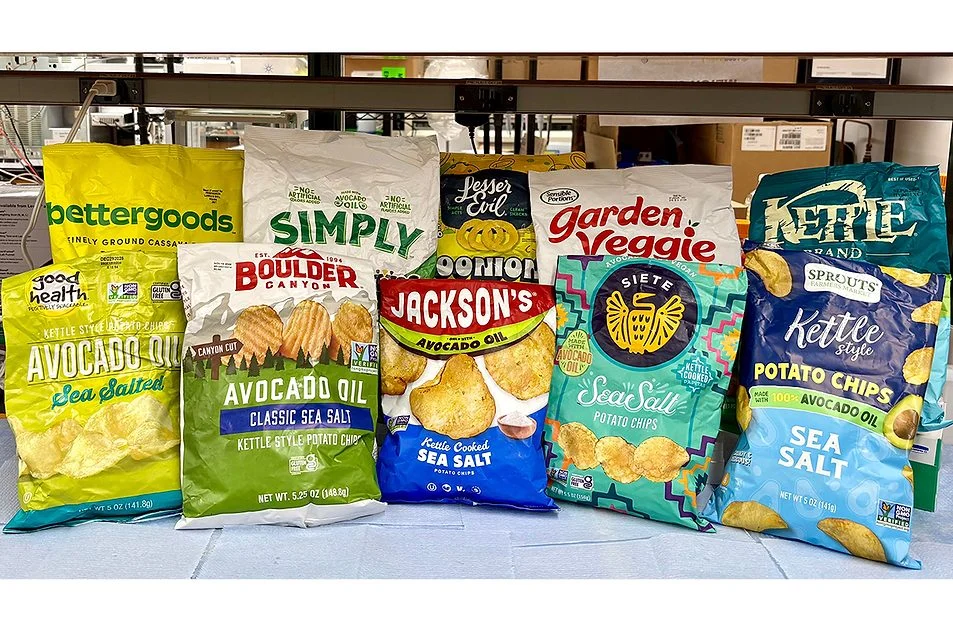
AUSTIN, TEXAS — Ken Paxton, attorney general for Texas, has launched an investigation into companies that market and sell products labeled as “made with avocado oil” after a study from the University of California, Davis found that such products may contain seed oils or other ingredients not identified on ingredient lists.
“Consumers should not have to worry if they are being deceived by labels when trying to choose healthier options at the grocery store,” Paxton said Aug. 20. “I will not allow companies to fraudulently mislabel products. My office will hold accountable any company that violates the law and misleads Texans about what is actually in their food.”
The study was published online July 11 in Applied Food Research. It evaluated 74 products, including chips, mayonnaise and salad dressings, that were labeled as containing avocado oil or olive oil. Among the avocado oil-labeled products, 89% exhibited compositional patterns that were inconsistent with authentic avocado oil. Ninety-three percent of the chips, 71% of the mayonnaises and 100% of the salad dressings were inconsistent.
“These findings suggest that ingredient-level oil claims may represent an underexamined source of economic adulteration in processed foods,” the researchers said.
Among 20 olive oil products, one failed the authenticity test. While the authenticity of olive oil has been studied, tested and scrutinized for decades, avocado oil has not been monitored at the same level, according to the researchers.
Products cost more
Products promoted for containing avocado oil or olive oil tend to cost more than other products in their respective categories.
In the study, chips labeled with avocado oil ranged from 30¢ to $2 per oz, which compared with 43¢ to $1.70 for olive oil chips and 44¢ to 62¢ for vegetable oil chips. Avocado oil mayonnaises ranged from 30¢ to $1.63 per oz, which compared with 53¢ to $1.07 for olive oil mayonnaise and 24¢ to 75¢ for vegetable oil mayonnaise. Salad dressings labeled with avocado oil ranged from 60¢ to $1.12 per oz, while olive oil dressings ranged from 42¢ to $1.12 per oz.
“Consumers are increasingly paying a premium for products made with avocado oil or olive oil,” said lead author Selina Wang, PhD, a professor of cooperative extension in the UC, Davis Department of Food Science and Technology. “They deserve to get what they pay for, and food manufacturers deserve confidence that the ingredients they purchase from suppliers are authentic.”

While the authenticity of olive oil has been studied, tested and scrutinized for decades, avocado oil has not been monitored at the same level, according to researchers at the University of California at Davis.
| Photo: ©CHANDLERVID85 – STOCK.ADOBE.COMProducts exhibited compositional patterns inconsistent with authentic avocado oil, characterized by reduced palmitic acid, palmitoleic acid, cis-vaccenic acid, beta-sitosterol and clerosterol as well as elevated stearic acid, campesterol, stigmasterol, delta-7-stigmastenol and delta-7-avenasterol. Laboratory frying and emulsification experiments showed minor shifts in authenticity markers, indicating that typical processing conditions did not explain the magnitude of deviations observed in the products, according to the researchers.
“In our experience we’ve noticed natural variables, such as geographic origin and avocado variety, can change these fingerprints,” Wang said. “So, we gave the samples some wiggle room, giving them a 10% margin of deviation to account for that, but 89% of the avocado products still failed.”
Supplier complexity
She said food manufacturers may not know their products contain adulterated oil since they source oils from third-party brokers or from several different suppliers.
Texas has issued civil investigative demands (CIDs) to Primal Kitchen, Siete Foods and Chosen Foods. The office of the attorney general will investigate to determine if the three companies and potentially other companies violated the Texas Deceptive Trade Practices Act (DTPA).
“A recent UC Davis study suggests that two of our mayos and two of our dressings contain seed oils, which is simply not true,” Chosen Foods said. “We never add seed oils of any kind. We believe the testing procedures used in this recent study do not fully account for the unique characteristics of finished products such as condiments and dressings.”
Primal Kitchen and Siete Foods did not respond to request for comment.

Energy bills for millions of households are expected to rise this winter to the highest level for three years
Business
(VIDEO) Death Toll Rises to 31 as Massive Flash Flood Devastates Nepal-China Border, Hundreds Still Missing

KATHMANDU, Nepal — At least 31 people have been killed and hundreds remain missing after a massive flash flood swept through villages along the Nepal-China border Wednesday, triggered by an earthquake that set off a landslide blocking a major river before sending a torrent of water crashing downstream.
The death toll, reported by local police in Nepal’s Bagmati province, is expected to continue rising as search and rescue operations remain underway. The flood struck near Nepal’s border with China’s Tibet Autonomous Region, devastating settlements in the Rasuwa district and surrounding areas, with hundreds of people, including foreign nationals from several countries, still unaccounted for.
Nepal’s Foreign Minister Shishir Khanal explained the sequence of events that triggered the disaster during a meeting at the House of Representatives. “An earthquake occurred at 8:37 a.m. today, and due to it, a large landslide occurred, blocking the river, which appears to have caused the flood,” Khanal said, referring to the Bhote Koshi river. The United States Geological Survey recorded a magnitude 4.4 earthquake in the region at the same time referenced by Khanal.
Dramatic footage captured by security cameras showed the moment floodwater crashed through the Nepal-China border area, with people seen running for safety as the water appeared to wipe out everything in its path. Video released by the Nepali Army showed rescue teams winching stranded residents from rooftops into helicopters, with some of those rescued covered in mud and appearing injured after being battered by the floodwater.
Among those still missing are 60 employees of an under-construction hydropower project in northern Nepal, according to Nepali state media. The workers were employed at the 20-megawatt Langtang Khola Hydroelectric Project in Rasuwa municipality, near the Chinese border. According to Nepal’s RSS national news agency, “the project was carrying out concrete construction work inside a tunnel” at the time of the disaster, adding that “the flood caused severe damage to the project.” Rasuwa municipality is home to several hydropower projects built to harness the region’s fast-flowing rivers.
The disaster has also struck heavily across the border in Tibet, where Chinese state media has warned of “major casualties,” though no official casualty figures for the Chinese side had been released as of Wednesday morning. A mudslide hit China’s Gyirong port, prompting Chinese leader Xi Jinping to call for “all-out” search and rescue efforts.
Gyirong port ranks among the most significant land border crossings between China and Nepal, developed as a major trade hub and viewed by Beijing as an important node within its broader Belt and Road global connectivity initiative. The border checkpoint sits more than 1,800 meters above sea level and typically handles hundreds of millions of dollars in annual two-way trade, accounting for nearly a third of total China-Nepal trade volume in 2024, according to Chinese state news agency Xinhua. The crossing has faced natural disasters before; floods swept away the bridge connecting the port to Nepal’s Rasuwa Port in July 2025, suspending goods trade there for roughly six months, and the port was also closed for months following a devastating 2015 earthquake. Authorities announced Wednesday that roads leading to the port would be closed to non-emergency vehicles for seven days, according to state media, while local reports indicated communications and power outages continuing in the area.
International reaction to the disaster began arriving quickly Wednesday. The U.S. Embassy in Nepal said it was “deeply saddened” by the loss of life. “We extend our sincere condolences to the families and loved ones of those who lost their lives, and our thoughts are with all those affected by this disaster,” the embassy posted on social media, while urging American citizens in the affected Rasuwa, Nuwakot, Dhading, Gorkha, Chitwan and Tanahun districts to stay away from riverbanks and low-lying areas, seek higher ground, and follow local instructions.
South Korean President Lee Jae Myung ordered an “all-out” rescue effort in response to the disaster, according to his spokesperson, directing the South Korean government to prioritize the safety of Korean nationals while cooperating with Nepalese authorities. Indian Prime Minister Narendra Modi expressed solidarity with Nepal in a social media post, saying the people of India stand with their “sisters and brothers in Nepal at this difficult time” and confirming India was prepared to provide “all possible humanitarian assistance.”
The Red Cross has deployed an emergency response team with relief supplies to the affected areas. The organization’s regional office for Asia-Pacific said it had “activated emergency response teams, mobilised volunteers and is deploying an emergency team with relief supplies,” while urging affected communities to “stay alert and follow official safety instructions.” The International Federation of Red Cross said it stood ready to support the broader response effort.
The disaster presents an early and significant test for Nepal’s relatively new government. Prime Minister Balen Shah, 36, a former rapper who took office in March following a youth-led movement against corruption and nepotism that swept aside Nepal’s establishment political parties, had not yet publicly commented on the floods as of Wednesday morning. Shah campaigned on promises to reform national politics and expand opportunity for young Nepalis in a country that relies on remittances from migrant workers for roughly a quarter of its gross domestic product. The disaster will likely require Shah to coordinate closely with both India, Nepal’s larger southern neighbor, and China to its north, a relationship that has at times proven complicated; as Kathmandu’s mayor in 2023, Shah previously canceled a scheduled trip to China after Beijing released an updated map that did not reflect Nepal’s own 2020 political boundaries covering certain disputed Himalayan territories.
With hundreds still missing and search and rescue operations continuing on both sides of the border, officials in both Nepal and China have cautioned that the full death toll from the disaster remains unknown and is likely to climb further as recovery teams reach areas cut off by damaged infrastructure, power outages and disrupted communications in the affected mountainous border region.

Andy Burnham has signalled that there will be more support to help people with their bills in the budget, as the energy price cap rose by 4 per cent, taking household energy costs in Britain to their highest level in three years from October.
Ofgem has increased the cap by 4 per cent from 1 October, taking the annual bill for a typical household to £1,723, up from £1,663, under the regulator’s updated definition of a typical consumer, which came into effect in July to reflect falling energy use. Under the previous calculation for the usage of the average household, the cap rises by £73, or 4 per cent, to £1,935 a year. The regulator said around 11 million households on fixed tariffs, roughly 35 per cent of the total, are unaffected by the change.
Speaking to reporters at a supermarket in London, the prime minister said the government would look at how to get prices “down in the long term”.
“It’s difficult for people and I recognise that,” Burnham said. “But it’s why, within days of taking office, I announced that we would remove VAT off electricity bills to give people that little bit of help.
“That kicks in from October. We know the price cap will have an impact, but it is what we can do right now.
“We’ll continue to look as we go forward at how we get energy prices down in the long term, and that’s what we need to do too.”
The increase comes despite the prime minister’s plan to remove VAT from electricity bills from October, which he previously said would knock about £45 off the annual Ofgem price cap. Ofgem said gas bills are set to rise by 8 per cent, while electricity costs remain broadly stable because of the VAT removal.
The war between Iran and America has sharply pushed up the price of wholesale gas, which remains elevated as uncertainty over a resolution to the conflict persists. Last week, Cornwall Insight warned that the war and its impact on global gas markets was hampering the ability of European gas storage operators to refill stocks ahead of winter, with gas-in-store levels remaining low for the time of year.
Neil Kenward, Ofgem’s director general for markets, said: “High international gas prices are continuing to drive energy costs in the UK. We welcome the government’s intervention to remove VAT from electricity bills, without which customers would have faced even higher costs this winter.”
Miatta Fahnbulleh, the secretary of state for energy and net zero, would not be drawn on criticising Donald Trump for starting the war, but told Sky News she was “frustrated that global events are having an impact on households”. She said the government would explore “what more we can do” to help those struggling with high bills through “fundamental reforms”, including investment in renewable energy.
Fahnbulleh told Times Radio: “We know that families are worried about their energy bills at a time that family budgets are under huge amounts of pressure with the cost of living. That is why the first thing that the prime minister did when he came onto the job was to take VAT off electricity bills.
“That is on top of the £150 that we’d taken off bills in April in order to provide people with a bit of breathing space. I think that signals a determination for us to do everything that we can do to support families from the impacts of the war in the Middle East at home and on family finances.”
Pressed on whether net zero was also driving up bills, following a Civitas report which found that Britain had put unusually large costs such as green levies on bills to pay for renewable infrastructure, she told Sky News: “We’re looking at fundamental reforms to the energy market to make sure that it does work for consumers.”
The chancellor could look at helping households weather rising bills through a one-off targeted payment, or by introducing a social tariff, which could allow eligible customers to pay a reduced price per unit of energy. Fahnbulleh said the government was also looking at how to reduce standing charges, the fixed daily fee added to gas and electricity bills, which she described as “a massive bugbear for many consumers”.
“My job and the thing that I’m trying to do alongside the regulator is to think about the most fair and affordable way in which we can recover those costs,” she said.
Analysts at Cornwall Insight on Wednesday released their latest forecast of a further 9 per cent increase to the price cap in the new year, which would put an average January bill at £1,872 a year, £149 higher than October’s £1,723. “The January figure will not be confirmed until November, and there remains a lot of time for wholesale market conditions to shift,” the Cornwall analysts said.
The price cap, introduced in 2019, limits the prices that suppliers can charge households for each unit of gas and electricity on standard tariffs.

Amy Ingham
Amy Ingham is a reporter at Business Matters, covering UK business news with a focus on breaking news, business policy, late payments and insolvency. She joined the magazine in 2026 after completing the NCTJ Diploma in Journalism at Harlow College’s journalism school. Her recent reporting includes British Steel’s nationalisation and its impact on SME suppliers, the decline in late payments by large firms, and Insolvency Service director disqualifications. Reach her at aingham@cbmeg.co.uk.

Google-parent Alphabet (GOOGL) is suddenly playing catch-up in the race to build leading-edge, “frontier” artificial intelligence models versus OpenAI and Anthropic. But if Henry Blodget, a former Wall Street stock analyst and founder of Business Insider is right, Google stock may get a boost from OpenAI faltering in the AI battle. In an article in Regenerator, his new business venture,…
Copyright ©2026 Investor’s Business Daily, LLC. All rights reserved. 87990cbe856818d5eddac44c7b1cdeb8
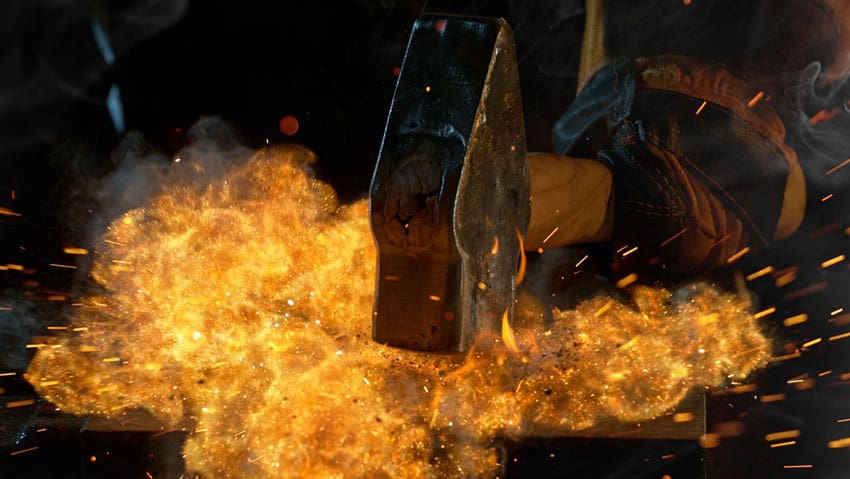
One of the UK’s oldest family-owned companies has praised the government’s decision to include forges in its energy subsidy scheme for manufacturers, forecasting savings of up to £250,000 a year on its fixed energy costs.
Somers Forge, which is based in the Black Country and has been owned by the Folkes family since 1697, supplies vital parts for naval vessels including nuclear submarines. The firm, part of the country’s defence manufacturing chain, was recently included in the British Industrial Competitiveness Scheme (BICS), which waives the obligation to fully pay three of the five levies imposed on UK manufacturers.
Tammy Inglis, the finance director of Somers, said it was “absolutely brilliant” to see forges included in the scheme. “Over a five-year period, we were going to expense an extra £1.1 million on that one-line cost. Now, because we are going to be saving a lot of that and a proportion of other renewable surcharges, we’re going to save around £200,000 to £250,000 per year from our fixed costs on energy,” she said.
The scheme was announced in June last year, promising to cut electricity costs by up to £40 per megawatt hour for more than 7,000 energy-intensive users such as automotive, aerospace and chemicals makers, by reducing what eligible firms pay towards the renewables obligation, capacity market and feed-in tariff from 2027. However, the industry code for businesses classed under forging, pressing and stamping of metal was initially left out.
Last month the government updated the criteria for BICS to include forges, after lobbying from groups such as the Confederation of British Metalforming. This month it published the final list of eligible activities and launched an eligibility checker so firms were aware they could claim.
Jonathan Reynolds, the business secretary, told The Times: “By making sure every eligible business in the country knows how to access the support they need, our Modern Industrial Strategy will help power Britain’s future and unlock good growth in every corner of the country.”
The support comes as energy prices continue to squeeze the firm, which celebrates the 160th anniversary of its engineering division this October. Inglis said the company was paying around 45 pence per therm, a unit of heat, in 2018, but the price has since risen to as much as £1.65. Somers now spends as much as 10 per cent of its turnover on energy bills.
“I’m getting to the stage … where I’ve got to start putting surcharges on customers, because it’s just a low profit,” she said.
Inglis previously told The Times that the company was struggling to compete with European rivals because of energy costs. She said the scheme will “definitely” help the firm compete in Europe, although energy prices still feed into the cost of other commodities the business buys, such as steel.
The wider strain on companies was underlined last week by the Red Flag report from BTG, a management consultancy, which found more than 53,000 British businesses at risk of collapse and a 9 per cent year-on-year jump in companies in critical financial distress. BTG warned of the impact of higher inflation and energy prices.
Stephen Morley, the president of the Confederation of British Metalforming, an association that represents 200 companies, said the changes mean that between 70 and 80 per cent of his members are now eligible for the scheme. The GMB union has separately criticised the exclusion of ceramics and brickmaking businesses from the support.
Morley welcomed the change for metalformers but said the “staggering price of energy in the UK remains at the forefront of industry’s mind”, creating an “unfair playing field for our firms trying to compete globally”. He said German companies complain about energy “until they realise our costs are 60 per cent higher”.
He urged the prime minister to go further. “BICS is a start, but it shouldn’t be the end … Burnham and his team have an opportunity to redraw the energy lines and give manufacturers the conditions to grow and create jobs,” Morley said.
Amy Ingham
Amy Ingham is a reporter at Business Matters, covering UK business news with a focus on breaking news, business policy, late payments and insolvency. She joined the magazine in 2026 after completing the NCTJ Diploma in Journalism at Harlow College’s journalism school. Her recent reporting includes British Steel’s nationalisation and its impact on SME suppliers, the decline in late payments by large firms, and Insolvency Service director disqualifications. Reach her at aingham@cbmeg.co.uk.

Financial expert Jeff Sica joins Stuart Varney to analyze retail earnings from Home Depot and Walmart, evaluating consumer health, real estate trends and the impact of inflation on home improvement sectors.
Walmart is making a new play for younger, style-conscious shoppers with a women’s fashion brand offering most items for less than $25.
The retail giant is rolling out Scenario, a modern bohemian collection featuring apparel, shoes, jewelry, handbags and other accessories, at all of its stores.
The launch includes 280 styles, according to Walmart.
“We’ve been on a journey to democratize fashion by focusing on expanding our assortment, elevating the experience in-store and online, reaching new customers and changing [the] perception [of] Walmart fashion,” a spokesperson for the retailer told FOX Business in an email.
The news was first reported by The Wall Street Journal.
WALMART SAYS IT WILL USE BILLIONS IN TARIFF REFUNDS TO KEEP PRICES LOW

Walmart is rolling out Scenario, a modern bohemian collection featuring apparel, shoes, jewelry, handbags and other accessories. (Scott Olson/Getty Images)
Scenario is designed to appeal to women around age 35 who want trendier details than Walmart’s existing brands traditionally offer, according to The Wall Street Journal.
The line includes embroidered blouses, pintuck denim shirts and faux leather bags, with a focus on natural fabrics such as cotton, the outlet reported.
| Ticker | Security | Last | Change | Change % |
|---|---|---|---|---|
| WMT | WALMART INC. | 105.38 | -1.11 | -1.04% |
Walmart said it developed the brand after research found nearly one in five women ranked bohemian fashion among their preferred styles, even though none of its existing private labels were perceived as directly catering to that look.
WALMART E-COMMERCE SALES SURGE AS CEO TOUTS ‘PRICE, SPEED AND CONVENIENCE’
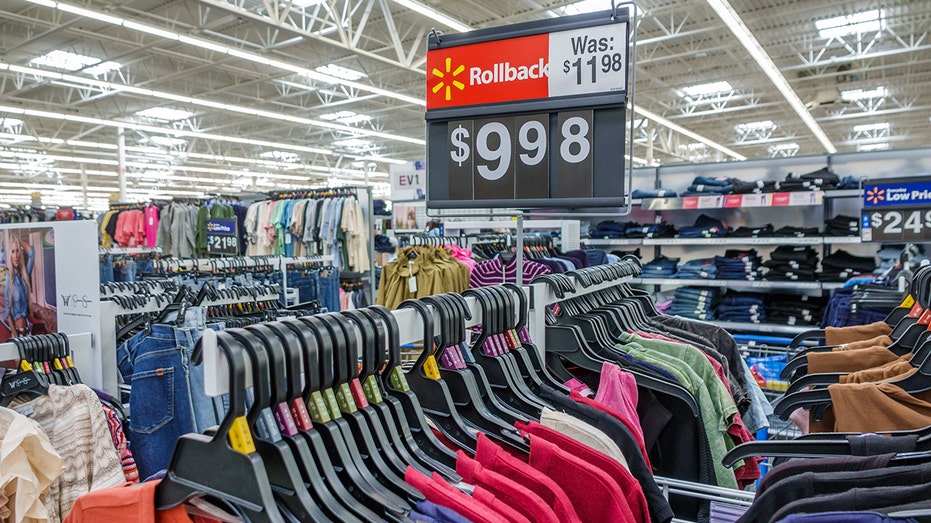
Scenario is designed to appeal to women around age 35 who want trendier details than Walmart’s existing brands traditionally offer. (Jeffrey Greenberg/Universal Images Group via Getty Images)
Scenario will take over some space previously devoted to Time and Tru, Walmart’s women’s brand focused on classic wardrobe staples, according to the Journal.
The retailer tested elements of the bohemian aesthetic within its Time and Tru assortment before deciding to build a dedicated lifestyle brand, the company said.
The existing brand will continue with a smaller selection focused on its most popular items, the outlet reported.
“This is an ‘and’ strategy,” Denise Incandela, executive vice president of fashion for Walmart U.S., told the Journal. “We’re still going to cover those big-volume driving socks and underwear and denim and Ts.”
POPULAR WALMART NUT BUTTER RECALLED AFTER TESTING DETECTS SALMONELLA
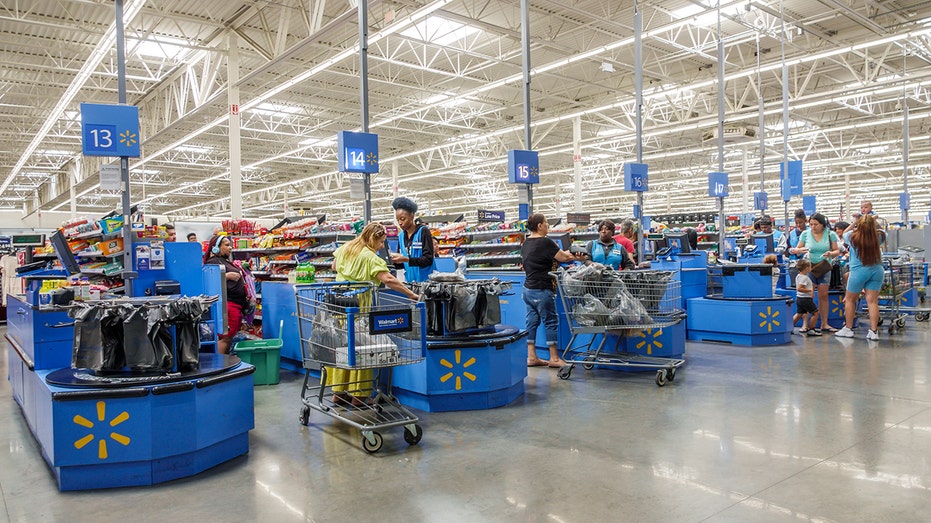
Walmart said it has launched or relaunched 15 private brands over the past five years as it works to modernize its fashion business. (Jeffrey Greenberg/Universal Images Group via Getty Images)
CLICK HERE TO GET FOX BUSINESS ON THE GO
Walmart said it has launched or relaunched 15 private brands over the past five years as it works to modernize its fashion business.
The retailer said it has also expanded its selection of premium brands through its online marketplace.
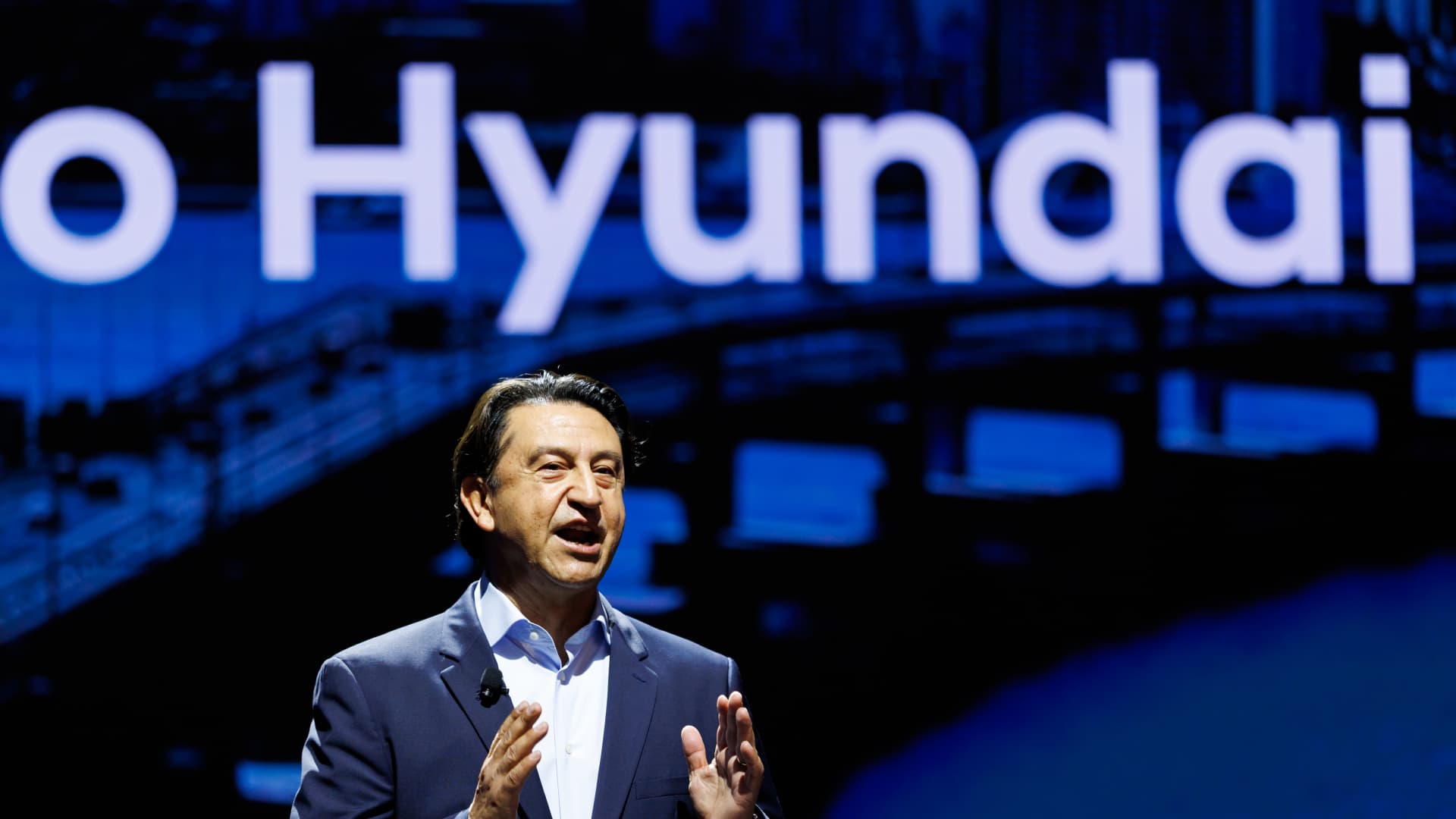

SAN FRANCISCO — Hyundai Motor Co. CEO José Muñoz smiled and nodded as a fellow executive discussed the automaker’s “mueos-ideun ganeunghada” philosophy during the reveal of its new flagship Genesis GV90 SUV.
The term means “anything is possible” in Korean. It’s a mantra for the South Korean automaker that has proved to be true for the company’s U.S. ambitions as well as for Muñoz himself, a Spanish-U.S. dual national who is the first non-Korean executive to lead the automaker.
Hyundai has experienced rapid growth in the U.S. so far this decade despite an onslaught of geopolitical changes and a slowing market. And it’s hoping to keep that going. The company is ramping up production at a new $7.6 billion plant in Georgia to continue to capture more sales and market share.
“My top three priorities are U-S-A,” Muñoz told CNBC during an interview last week after the Genesis reveal. “USA is helping us to really make good progress, not only in the most important market and the most competitive market in the world, but also elsewhere.”
Hyundai Motor Group, which includes its namesake vehicles as well as the Kia and luxury Genesis brands, has increased its market share this decade more than any major automaker in the U.S., according to data from Mobility Global.
The group has grown its U.S. market share from 8.4% in 2020 to 11.2% through last year, and its sales have grown 50% over that period, making the South Korean company the fourth best-selling automaker in the country. Its market share is up to 11.8% through the first half of this year, according to auto intelligence firm Mobility Global.
No other major automaker is even close to such market share gains, with most flat to down during that timeframe. Electric vehicle manufacturer Tesla, at an estimated 2.1 percentage point increase in market share, is the only company even close, according to Mobility Global.
Hyundai’s U.S. performance has helped it become the third best-selling automaker globally and the second most profitable based on operating income, Munoz said.

Hyundai Motor Group Executive Chair Euisun Chung downplayed the company’s rapid rise when speaking last week to CNBC: “It’s important, but speed doesn’t matter. How we grow in the right way [is what matters]. I think that’s more important.”
But investors have definitely taken notice of the growth, with shares of the company on the Korea stock exchange up nearly 250% since 2020.
Hyundai’s $26 billion U.S. plan
Hyundai expects its growth to continue with a $26 billion investment plan through 2028 that could include making its new Metaplant in Georgia the largest vehicle assembly plant in the country.
Muñoz told CNBC the company is considering plans to increase the expected production capacity at the plant from 500,000 units to between 700,000 and 800,000 units by 2028. It currently produces the all-electric Hyundai Ioniq 5 and Ioniq 9 as well as the Kia Sportage hybrid, with additional vehicles expected in the coming years.
Jose Munoz, chief executive officer of Hyundai Motor Co., speaks at the Busan International Mobility Show in Busan, South Korea, on Friday, June 26, 2026.
SeongJoon Cho | Bloomberg | Getty Images
The goal is for Hyundai to produce at least 80% of the vehicles it sells in the U.S. domestically by the end of this decade, up from roughly 40% in 2024.
“For that purpose, we need to add more capacity,” Muñoz said. “We are ramping up as fast as we can.”
The investment is the largest in the company’s U.S. history, as it aims to increase sales to 5.55 million vehicles globally under a “Bold 2030 Vision” plan outlined by Muñoz last year at the company’s first investor day ever held in the U.S.
The plan is an ambitious outline to increase sales by roughly 35% from last year to 2030. That includes entering new markets globally, with the U.S. as an anchor for continued profitable growth.
Muñoz on Wednesday reconfirmed those plans during the company’s 2026 CEO investor day, including a 6% targeted global market share for Hyundai and Genesis.
Muñoz last week said President Donald Trump’s tariffs, including 15% on autos from South Korea, have played a role in the company accelerating its U.S. production plans.
“Tariffs are helping accelerate our localization plan. That’s very, very simple,” he said. “The good thing is that we had already started before tariffs were announced. So in a way it’s helping us to accelerate.”
The Georgia plant is key for Hyundai and Kia, both of which have grown sales roughly 45% in the U.S. since 2020.
The Hyundai Metaplant is seen on Sept. 9, 2025, in Ellabell, Georgia.
Elijah Nouvelage | Afp | Getty Images
“This decade’s been about a brand transformation, and the growth has been phenomenal. We’ve really transformed everything,” Eric Watson, Kia America vice president of sales operations, said during an interview. “We continue to plan to grow.”
Kia’s growth plans include increasing U.S. sales to 1.02 million vehicles in the U.S. by 2030, the company’s CEO, Ho Sung Song, said earlier this year. That is expected to be assisted by Kia’s entry into pickup trucks and more capable SUVs that are known as “body-on-frame” vehicles.
“We think that’s an important segment to be involved in, a body on frame vehicle/truck,” Watson said. “It’ll be an important piece of our growth strategy that we’ll look forward to announcing more in the future.”
Hyundai also plans to add such vehicles, including a midsize pickup truck. The company earlier this year debuted a rugged concept vehicle called the Boulder, which could mean additional production capacity in the U.S. for body-on-frame models.
“It’s a new unexplored territory for us,” Muñoz said. “We are always, always assessing the opportunities that we have in the market.”
From ‘cheap’ to luxury, value
Hyundai entered the U.S. market in 1986, followed by Kia in 1993 with cheaper options than American consumers could get from U.S. automakers and aiming to compete against growing Japanese companies such as Toyota Motor.
Since then, Hyundai executives said several transformations — from overhauling quality and design to logos and dealer showrooms — have led the brands to where they are today as quality value plays.
“Both Kia and Hyundai are really good at being able to offer more in the vehicle than the consumer expects, and that they expect at that price point,” said Stephanie Brinley, associate director of Mobility Global’s AutoIntelligence. “It’s not about being a ‘cheap car.’ It’s just being able to offer a little bit more than expected.”
Muñoz attributed Hyundai’s success to its customer focus and its ability to surprise buyers, many of whom are new to the brand, with the capabilities and features of its vehicles. He also said the global reach of Hyundai, which also owns steel plants and other suppliers, is paramount to its progress.
“We have determined that being competitive is a key element for the American consumer. So, affordability is something that we fully understand and we apply,” he said. “We want to offer the customer the right product, the right features at the right level of price.”
That “right level” has been widening for the automaker in the U.S. It continues to sell entry-level vehicles that start in the $20,000s for Kia and Hyundai, while growing the top-end sales for both brands. Its Genesis luxury brand, meanwhile, has models that reach $100,000 or more.
Hyundai on Wednesday said it is planning more than 100 vehicle launches and refreshes across Hyundai and Genesis by 2030, including 58 in North America. It also will significantly increase its electrified vehicle offerings, including extended-range hybrids.
Genesis GV90 SUV EV
Courtesy Genesis
Genesis, which launched a decade ago in the U.S., has seen a particularly rapid growth, to become the fastest-selling luxury brand to 1 million sales globally, according to the company.
Executives described its newest GV90 flagship SUV, including a model with coach doors and rotating lounge seats, as a new chapter for the Genesis brand, reiterating that “anything is possible.”
“From the very beginning, the world took notice of Genesis,” Genesis North America Chief Operating Officer Tedros Mengiste said at the GV90 reveal as Muñoz nodded. “And tonight you will see mueos-ideun ganeunghada – anything is possible – come to life.”
In the long-term, the government and Ofgem wants to shift the country away from our reliance on gas, with its volatile international pricing.
Expect lots of fanfare over the sale, for the first time in the UK, of plug-in solar panels.
In the short-term ministers – and the new prime minister – say they are helping where they can, and promising that there is “more to do”.
VAT will be cut on electricity bills in October. It means the price of electricity will fall, but that’s been more than outstripped by an 8% rise in the price of gas.
In the last Budget, then-Chancellor Rachel Reeves cut some so-called policy costs and shifted some onto general taxation instead.
Ministers may be tempted to do more of that, but could face be criticised for simply shifting the burden off bills and onto taxes.
So, the options are limited. The new chancellor, John Healey, has choices to make – with lots of calls for help but with limited room for manoeuvre in the public finances.
All eyes will be on his first Budget, which comes soon after those higher autumn energy bills kick in.
Why Is Intuit Stock Tumbling After a Strong Quarter?

Avocado oil claims coming under fire

The evidence doesn't support the banks' case against stablecoin rewards

India vs Sri Lanka: A hold, the choke and then the frustrating close | Cricket News





-

 Fashion5 days ago
Weekend Open Thread: Madewell – Corporette.com
-

 Business4 days ago
Musk’s Tesla, SpaceX Confirm $16.8 Billion ‘Terafab’ Chip Plant as World’s Largest Building in Texas
-

 Crypto World4 days ago
anatomy of crypto’s biggest liquidation event since 2021
-

 Crypto World2 days ago
A $30 Billion AI Fund Implodes, Now the SEC Is Investigating Wall Street’s Role
-

 Politics4 days ago
6 months on, Irish renters crushed by effects of government housing bill
-

 Crypto World14 hours ago
SpaceX stock could rise 75% to $240, JPMorgan says
-
 NewsBeat4 days ago
The ‘Lucky Dip Gang’ causing carnage for clicks: After five thugs were killed speeding in the wrong direction on a motorway, GUY ADAMS investigates a sick new trend… and why police aren’t even allowed to pursue them
-

 Business3 days ago
Mystery AI Model ‘Ox Alpha’ Draws Developers With Free Access as Chinese Lab Origins Remain Debated
-

 News Videos6 days ago
Don’t Leave Your Financial Future To Chance | August 19, 2026
-

 Business7 days ago
Marvell Shares Jump 7% as Google Chip Deal Confirms Custom AI Silicon Partnership, Analysts
-
 Business6 days ago
Five Below: Kids Discount Retailer Reaps Rich Rewards
-

 Business2 days ago
Moderna CEO warns China is pouring state money into mRNA technology
-

 Business5 days ago
UK firms in critical financial distress rise 9% to 53,756
-

 Business2 days ago
NVIDIA Stock Drops Nearly 2 Percent to $210 on Seventh Losing Day Ahead of Critical AI Earnings
-

 Sports3 days ago
Deshaun Watson fires back at Browns fans after being booed: ‘It’s a disrespectful thing’
-

 Fashion7 days ago
Jimmy Choo Autumn 2026 collection
-
 Entertainment7 days ago
10 Most Perfect Fantasy Shows of the Last 25 Years
-

 Tech6 days ago
OpenAI confirms ChatGPT is down as logins and signups fail
-

 Crypto World6 days ago
Optimism-funded team's deciding vote shifts $49 million in OP tokens away from users
-

 Business6 days ago
PayPal and Venmo now accepted for tuition at several universities
You must be logged in to post a comment Login