
Entertainment
Young and the Restless: Billy & Phyllis Cross the Point of No Return – Both Lives in Ruins

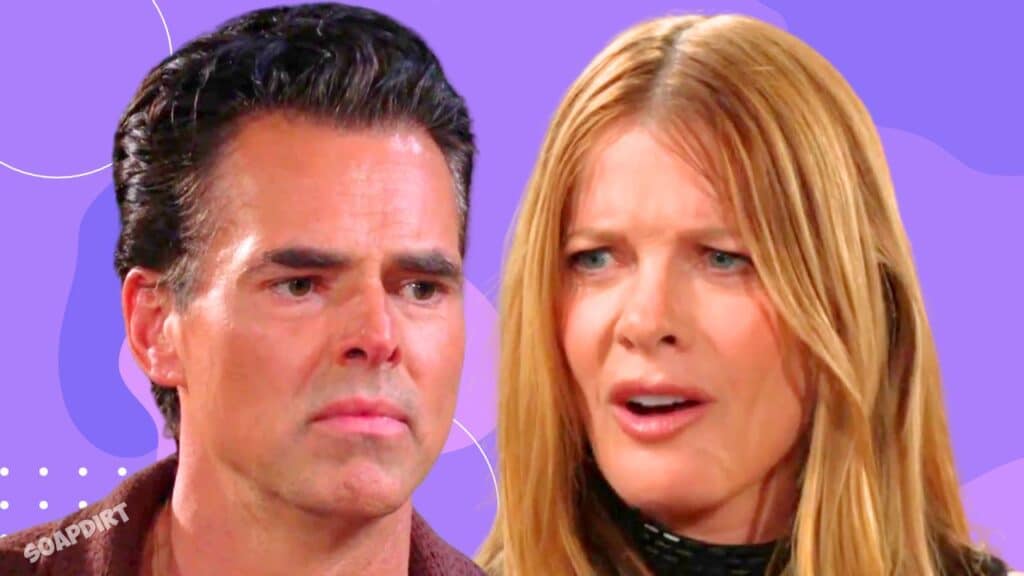
Young and the Restless indicates Billy Abbott (Jason Thompson) and Phyllis Summers (Michelle Stafford) are so deep into their need for revenge and power that they have alienated everybody and are ruining their lives. Let’s talk about how there’s no coming back at this point for Billy and Phyllis.
Soon, they’re going to be left with nobody but each other, which is kind of a dismal thought. So, Billy’s feeling pretty good because he’s got Chancellor, and Newman Media under the AbbottCom umbrella. He finally got revenge on Victor Newman (Eric Braeden), but that’s about the only thing Billy got going for him because this week, his relationships fall apart.
Billy Abbott’s Revenge Backfires as Relationships Crumble on Young and the Restless
Jack Abbott (Peter Bergman) and Billy are at odds. While talking to Jack, we’re going to see Billy accusing Jack of being mad that he got the best of Victor. Billy did it, not Jack. Then, his big brother messes up Billy’s plans somehow. Maybe he gets Jill Abbott (Jess Walton) involved or makes some other move.
Things get worse for Billy when Sally Spectra (Courtney Hope) hits her breaking point. Billy was just ranting that she didn’t have ambition, and he walked out on their Valentine’s Day dinner. After a talk with her ex, Adam Newman (Mark Grossman), we’re going to see Sally head over to Billy’s place. She tells him she’s packing and she’s going.
Sally says that Billy keeps lying and saying he wants her, but what he really wants is Chancellor and revenge. Despite Sally ready to walk out on him, Billy is still trying to defend his actions. It’s crazy. He’s still saying it’s not wrong to chase his dreams, as if he wants an Olympic medal or to learn to play the piano. It’s not that. His dreams are all about revenge and Victor.
Sally Spectra Dumps Billy as Victoria Newman Plots Punishment on Y&R
Sally tells Billy he’s blinded. They’re over. They’re done. She’s out of there. Of course, he’s asking Sally, “Don’t do this.” But she tells Billy, “You’re the one that did this.” Sally says there’s no coming back from it. Billy tries saying he loves her. Sally says she loves him, too, but that Billy doesn’t think Sally is enough for him because he’s still chasing all these other terrible things.
Billy is officially dumped. He’s got nothing and nobody at this point except Chancellor. On top of that, Victoria Newman (Amelia Heinle) is plotting against Billy. She wants him punished, and she’s going to use their kids to do it. Victoria may refuse to let Billy see the kids. She may take him to court if she has to. She’s already said she’s going to tell the kids these awful things he’s done.
Victor Newman Gaslights Cane Ashby to Reclaim Newman Assets on Young and the Restless
Then we’ve got Phyllis. She betrayed Cane Ashby (Billy Flynn), and Victor now has Cane spun up into thinking that he’s going to hurt Lily Winters (Christel Khalil) and the kids unless Cane finds a way to get all the Newman assets back from Phyllis. Victor has really messed with Cane’s mind. At this point, he’s just simple. I don’t know why he isn’t taking what Victor says with a grain of salt.
Cane is supposed to be this brilliant person. He is going to try and take down Phyllis and do what Victor is demanding to save Lily and the kids because Victor has gaslit him. Cane is going to go to Daniel Romalotti (Michael Graziadei) and ask him to help stop Phyllis. Daniel is probably going to do it. We know that he hates what his mom has done and thinks Phyllis has just gone too far.
Daniel may help Cane trick Phyllis and find a way to take it back. Daniel’s had enough. Summer Newman (Allison Lanier) had enough. They’re sick of Phyllis making one awful decision after another. It’s even worse because, let’s be honest, Phyllis already hit rock bottom a couple of years ago when she faked her death back in the Jeremy Stark (James Hyde) days.
Phyllis Summers Hits Rock Bottom as Daniel and Summer Walk Away
Everybody turned their back on her then. It took a while, but eventually, Daniel and Summer forgave her. You’d think after that rock bottom, Phyllis wouldn’t keep pulling these stunts and risk losing her kids again. Apparently, she didn’t learn her lesson. Phyllis has gone to rock bottom and then she started digging, trying to find a lower point.
Daniel and Summer may finally wash their hands of Phyllis once and for all. Honestly, if Daniel conspires with Cane to get Newman Enterprises away from her, Phyllis may lash out at Daniel for betraying her. I don’t think she’d let it slide. I think she might play the victim card and say that she was done dirty.
Nick Newman and Sharon Newman Vow to Make Phyllis Pay for Her Betrayal on Y&R
Nick Newman (Joshua Morrow) and Sharon Newman (Sharon Case) also both despise Phyllis now. She has pushed them past their breaking point. Sharon said, “Everybody always forgives Phyllis, but not this time.” Nick has vowed to make Phyllis pay, and he said for the rest of her life. We all know Nick’s always a hothead, but right now the pain pill addiction and the pain are both making him more aggressive and vengeful.
He’s been annoyed with Phyllis since back when they were in France and she was looking to team up with Dumas. That was right around the time they found out it was Cane. Nick may really be done with her now. Phyllis literally has nobody who can stand to be in the same room with her except Billy.
A Billy and Phyllis Reunion on Young and the Restless? The Last Two Stand Alone
Those two don’t even get along, but by the end of this week, Phyllis and Billy are going to be the only ones that each other has left in their lives. I think everybody else is going to be done with them. Phyllis and Billy might hook up. That would ice the awful cake, right? Phyllis and Billy were in love at one point, so it wouldn’t be unprecedented.
Sally just walked out on him, and Phyllis’s bed buddy, Cane, has turned on her. If Billy slid into the sheets with Phyllis, I think that Sally would absolutely never let that go. Any chance of reconciliation would be over if Billy sleeps with Phyllis. As for Red, she’s got nothing left to lose. Why not replay her past with Billy? She’d probably be all for it.
I actually liked them together. They were engaged and they were happy at one point. They lived together and were playing video games. Then, of course, Billy slept with Summer. That was awkward. A while back, when Billy first got with Sally, we saw Phyllis having this dream about reuniting with Billy.
Young and the Restless Spoilers: Will Victor Newman Stay on the Losing Side?
That dream happened right before Phyllis and Sharon were abducted by psycho Martin Laurent (Christopher Cousins) and held captive in that creepy abandoned psych hospital. It looked for a minute like they were hinting that Billy and Phyllis may reunite, but nothing ever came of it and he moved on with Sally. Maybe we are circling back around to it.
The big question is, of course, can Billy and Phyllis hang on to what they stole? I would hope she has everything locked down with super secret, extra secure passwords. Even if Cane gets Daniel to steal Phyllis’s laptop, they shouldn’t be able to get into it. I know that a bunch of Young and the Restless fans, even those that don’t like Phyllis and Cane, want to see Victor suffer for a while before he gets his companies back.
Victor Newman to Blame on Y&R
Victor says to Adam and Nikki Newman (Melody Thomas Scott) this week, “I know you probably blame me.” They’re both like, “No, we don’t blame you.” Ridiculous. It is 100% his fault. But I guess they’re not going to go there because Josh Griffith loves Victor Newman. We’ve got a week of sweeps left, and I just really hope that we come out of it with Victor still on the losing side of this.
He needs to pay for a while longer. I do hope that, at least in terms of their corporate assets, Phyllis and Billy keep winning for a little while longer. By the end of the week, though, it looks like Phyllis’s and Billy’s personal lives are ruined. Phyllis’s kids vow they’re done, even though she thinks they’ll come around. Billy’s kids are going to find out the things he’s done. Sally walked out on Billy. Honestly, I think she should have done it months ago.
This week is critical and life-changing for the two of them. What I really hope is someone gives Cane a reality check and tells him, “Look, Victor is lying to you. You’re being played.” Phyllis told Cane that Victor was bluffing, but he didn’t believe her. Maybe Cane will speak to Jack or somebody else who has a lick of sense and knows that this Lily kidnapping is fake. Maybe Cane will snap out of it and won’t help Victor get his stuff back.

Continue Reading
Us Weekly has affiliate partnerships. We receive compensation when you click on a link and make a purchase. Learn more!
We love our flowy fit‑and‑flare dresses and floral favorites, but nothing beats the ease and versatility of a breezy activewear dress when the weather warms up. Whether for running laps, running errands, serving on the court or serving chic style, these breathable activewear dresses prove that performance and style go hand in hand. And with all the creative designs popping up these days — from drop‑waist dresses to tiered tennis styles and half‑zip athletic pieces — there’s truly something for everyone.
In anticipation of the hot, humid days to come, we rounded up 19 breathable and easy-going athletic dresses that deliver everything you’d need, including slimming fits, great bust support and style versatility. Shop our top picks from retailers like Amazon, Walmart, Nordstrom and Macy’s below — and get ready to hit the treadmill, tennis court or coffee shop with well‑deserved confidence.
19 Lightweight Activewear Dresses for Staying Cool and Looking Chic
1. Our Favorite: It’s no surprise over 600 shoppers picked up this crossback tennis dress this past month. With built‑in shorts, roomy pockets and a bra that lifts and separates without underwire, it delivers style and dependable support in one easy piece.
2. Preppy Style: If built‑in shorts aren’t your thing, this bestselling sleeveless tennis dress gives you the best of both worlds. The stretchy, sweat‑wicking fabric pairs perfectly with separate shorts for customizable comfort.
3. Modest Pick: Going for a more modest, full‑coverage look? This polished zip‑front polo dress fully delivers, with built-in shorts and fresh spring colors, including pink and blue.
4. Slimming Silhouette: Walmart shoppers can’t get enough of this wrap‑waist activewear dress. They’re wearing it for everything — workouts, powering through errands and even brunch.
5. Perfect Cover: Trying to hide a muffin top? This sleeveless golf dress features a clever high-waist split skirt that lets you enjoy a smooth, flattering fit no matter how active your day gets.

Your work wardrobe is ever evolving, transitioning with fashion trends, dress codes and seasons alike. And while you probably already have your go-to slacks down pat, you might want to give them a rest for the spring and summer months when temps heat up. Those heavy options just won’t do it, which is why investing […]
6. Flowy Flare: This tiered athletic pick is as close to a traditional dress as you can get without losing the practicality that makes it a go‑to for busy days. The toggle waist design lets you tailor the fit exactly to your liking.
7. Quiet Luxury Style: Achieve that country club aesthetic with this pleated athletic dress from Zella. Complete the rich-mom look with crisp white sneakers, oversized sunnies and a structured tote.
8. Splurge Worthy: For those who gravitate toward premium brands like Alo Yoga or lululemon, this half‑zip athletic dress from TravisMathew is a perfect match. Shoppers praise its all‑day wearability on the golf course, even on the hottest days.
9. Dancer Vibes: Admirers will think you’re an off-duty ballerina in this Free People ruffle jumpsuit. While you won’t necessarily be running miles in it, you can absolutely float through errands, coffee runs and casual weekends in total comfort.
10. Mom-Approved: Quince shoppers are obsessed with this spaghetti‑strap active dress. Reviewers praise the breathable, stretchy fabric and all‑day comfort, calling it a “must‑have” for on‑the‑go moms.
11. Comfort Without Compromise: Some activewear dresses can feel a bit too revealing. This UPF 50 Lands’ End active dress enlists a longer skirt and a higher neckline, so you can feel comfortably covered without venturing into matron territory.
12. Style First: Don’t sweat about running laps in this racerback active dress that, let’s be honest, is more about looking cute than shaving seconds off your mile time.
13. Size Inclusive: Find your perfect fit in this scoop‑back athletic dress from Old Navy, which is available in regular, tall, and petite sizes from XS to 4X. We especially love the spring‑ready hues, including blue, pink and green.
14. Move With Confidence: Drop‑waist active dresses are popping up everywhere, and Old Navy’s take on the trend might just be our favorite. The super‑stretchy dress lets you move with confidence, thanks to its non‑chafing shorts, supportive built‑in bra and flared, fun skirt.
15. Twirl Worthy: Keep it girly and fun with this ruffle tennis dress that we’re dying to wear on and off the court. Pair it with a cardigan and tennis shoes for a sporty look that’s so in this spring.
16. Confidence Booster: Not into showing off a lot of skin? You can still keep things cute and stylish with this half-zip dress that has a flirty ruffle hem and tons of color options, including this pink houndstooth style.
17. Tummy-Hiding Fit: For those bloated days where nothing fits right, this tummy‑control tennis dress is just the piece for feeling supported, snatched and ready to take on the day.
18. Full Sleeves: Whether you need sun protection or just like the style, this long‑sleeve active dress is your go‑to for staying cool, covered and effortlessly chic.
19. Make a Statement: Stand out from the conventional crowd in this colorful tennis dress that uses a clever mesh overlay for the ultimate blend of breathability, movement and eye‑catching style.
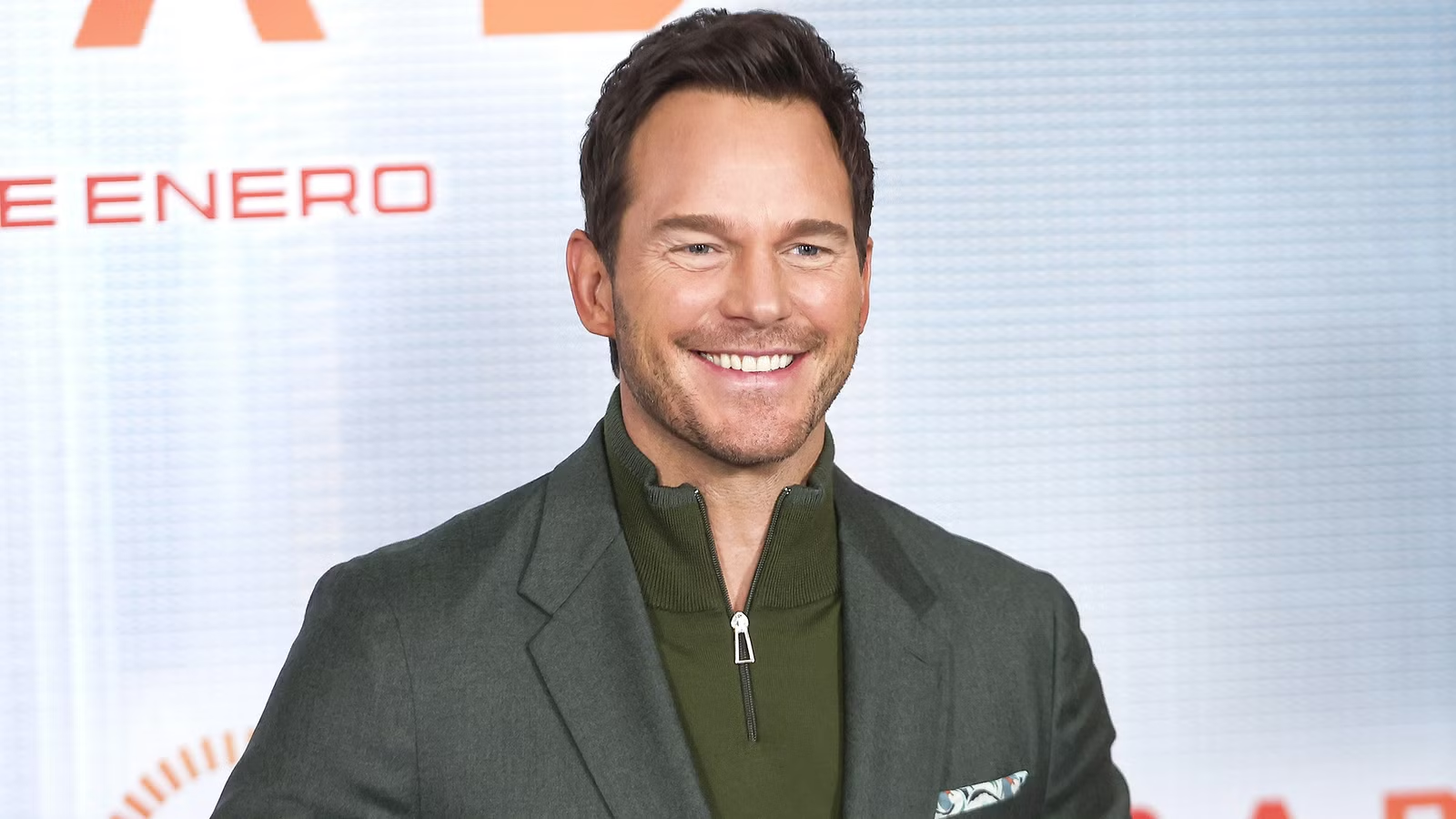

After a rather disappointing start to 2026 with the sci-fi mystery film Mercy, Chris Pratt made a resounding return to form this weekend with The Super Mario Galaxy Movie. The animated video game adaptation is a sequel to the 2023 blockbuster The Super Mario Bros. Movie, which grossed $1.3 billion worldwide against a reported budget of $100 million. A new franchise was born, and the performance of The Super Mario Galaxy Movie this weekend suggests that audiences can’t get enough of Mario and Luigi’s adventures. The sequel brings back voice stars Anya Taylor-Joy, Charlie Day, and Jack Black, alongside franchise newcomers Glen Powell, Brie Larson, and Donald Glover.
The new film unseated holdover hit Project Hail Mary from the top spot at the box office, and it did this without the support of critics. Like its predecessor, The Super Mario Galaxy Movie is counting on audience support to succeed. The first film holds a 57% critics’ score on the aggregator website Rotten Tomatoes, but its audience score is perched at a remarkable 95%. The Super Mario Galaxy Movie, on the other hand, seems to have settled at a 41% critics’ score and an impressive 89% audience score. In his review, Collider’s Ross Bonaime wrote that the movie “is more than just a play on nostalgia; it’s a genuine appreciation for everything Mario.”

Party Down in Pawnee — Adam Scott Comedies Collide in Today’s Collider TV Quiz!
Whether you’re an innie or an outie, you’ve undoubtedly enjoyed the workplace comedies of Adam Scott. Let’s all cater to this state auditor.
Here’s How Much ‘The Super Mario Galaxy Movie’ Grossed this Weekend
Directed by returning filmmakers Aaron Horvath and Michael Jelenic, The Super Mario Galaxy Movie is projected to gross an astonishing $190 million in its extended five-day opening at the domestic box office. It is expected to add another $180 million from overseas markets for a global debut of $370 million, against a reported budget of $110 million. Already, the movie has outgrossed Pixar‘s far more expensive Hoppers, which recently passed the $300 million mark worldwide. The Super Mario Galaxy Movie will probably pass the coveted $1 billion mark worldwide like its predecessor, giving Universal and Illumination a worthy successor to the Despicable Me franchise. Stay tuned to Collider for more updates.

- Release Date
-
April 1, 2026
- Runtime
-
98 Minutes
- Director
-
Aaron Horvath, Michael Jelenic, Pierre Leduc, Fabien Polack
- Writers
-
Matthew Fogel
- Producers
-
Chris Meledandri, Shigeru Miyamoto
Entertainment
“Saturday Night Live” recap: Jack Black joins the Five-Timers Club in a star-studded episode
:max_bytes(150000):strip_icc():format(jpeg)/jack-black-snl-1-e05aa04eed8a40abaccf9a6236ee4aab.jpg)
Meanwhile, Jack White makes his sixth turn as musical guest.

On a weekend dominated by two behemoths — the holdover hit Project Hail Mary and the new release The Super Mario Galaxy Movie — a film aimed at older audiences, primarily women, provided much-needed counter-programming. The film stars Zendaya and Robert Pattinson as a couple whose impending marriage is thrown for a loop when the bride-to-be makes a startling confession. The twist has already become a subject of heated online debate, with some calling it a clever piece of satire while others find it in poor taste. Nonetheless, the controversy seems to be helping build buzz around the movie, which delivered a solid haul in its first weekend at the domestic box office.
Project Hail Mary grossed more than $30 million in its third weekend, taking its domestic total past the $200 million mark and overtaking the lifetime haul of Christopher Nolan‘s Interstellar. Directed by Phil Lord and Christopher Miller and starring Ryan Gosling, the sci-fi film took the number two spot on the domestic chart this weekend. The number one spot was claimed by The Super Mario Galaxy Movie, a sequel to The Super Mario Bros. Movie, which grossed $1.3 billion in 2023. Featuring the voices of Chris Pratt, Anya Taylor-Joy, and Charlie Day, the sequel grossed roughly $190 million across the extended five-day Easter frame.
Party Down in Pawnee — Adam Scott Comedies Collide in Today’s Collider TV Quiz!
Whether you’re an innie or an outie, you’ve undoubtedly enjoyed the workplace comedies of Adam Scott. Let’s all cater to this state auditor.
Here’s How Much the Controversial New A24 Film Grossed
The third spot was claimed by Zendaya and Pattinson’s film, The Drama. The dark comedy, directed by Kristoffer Borgli, opened to mostly positive reviews. It now holds a “Certified Fresh” 77% critics’ score on the aggregator website Rotten Tomatoes, where the consensus reads, “Flirting with complex themes, The Drama walks a tonal tightrope with impressive poise thanks to career-highlight performances by Robert Pattinson and Zendaya.” In his review, Collider’s Ross Bonaime praised Borgli for making “one of the most excruciatingly uncomfortable and wonderfully honest approaches to a romance story to come around in quite some time.” The Drama, also starring Alana Haim and Mamoudou Athie, grossed an estimated $14 million in its opening weekend, against a reported budget of $28 million. This is in the same range as Zendaya’s 2024 release Challengers. It’s roughly thrice as much as the $4 million that the Andrew Garfield and Florence Pugh-led film We Live in Time, also distributed by A24, earned in its first weekend of wide release that same year. This is the third-biggest opening in A24’s history, ahead of Materialists and behind Marty Supreme and Civil War. Stay tuned to Collider for more updates.

- Release Date
-
April 3, 2026
- Runtime
-
105 minutes
- Director
-
Kristoffer Borgli
- Writers
-
Kristoffer Borgli
- Producers
-
Ari Aster, Lars Knudsen, Tyler Campellone
:max_bytes(150000):strip_icc():format(jpeg)/Best-Classic-movies-on-Netflix-032726-2c44787b4fde48a5b55fc1786203eaef.jpg)
Beloved favorites like “Goldfinger” and cult thrillers like “Wild Things” are available to stream.
:max_bytes(150000):strip_icc():format(jpeg)/best-comedy-series-on-netflix-012224-6627fbe325b54f89b96896f4a73b4879.jpg)
When all else fails, comedy might work. Give one of these shows the opportunity to pull you out of a funk.

Zendaya and Robert Pattinson star in the controversial new movie, “The Drama.” The movie focuses on a happy couple that is about to head down the aisle. However, things take a turn when Zendaya’s character reveals the worst thing she’s ever done in what is meant to be a lighthearted game. However, her confession shocks them all and leaves her fiancé wondering just how well he knows his bride-to-be.
Warning: Spoilers ahead.
What Is The Secret Twist In ‘The Drama’?

The biggest twist in “The Drama” doesn’t ultimately have much impact on the story, as Zendaya’s character never actually goes through with it. Instead, she recalls how she planned a school shooting and was very close to carrying it out, only to pull the brakes at the last minute. No one found out, and she did not face any consequences for her plan until perhaps now, when it makes her fiancé second-guess how well he really knows her.
The movie has been teasing a “dark twist” but has ultimately been marketed as more of a lighthearted romantic comedy, which has caused quite a stir online. Both the marketing strategy and the use of a school shooting as a plot device have been under scrutiny online, leading to one of the most controversial films of the year.
Parkland Shooting Survivor Addresses Zendaya’s New Movie
Jackie Corin is a survivor of the 2018 Parkland shooting at Marjory Stoneman Douglas High School that claimed 17 lives and the cofounder of March for Our Lives, a student-led organization that leads demonstrations in support of gun control legislation.
She told The Hollywood Reporter that she sees the film as “an inevitable evolution in storytelling,” given the frequency of school shootings, both in media and life. Although Corin admitted that she has yet to see the film, she addressed how incorporating a school shooting as a plot device can lead to “small tonal choices” that can change how a film is received.
Gun Violence Is ‘Not Just Another Dramatic Device’
“Gun violence, particularly in schools, is not just another dramatic device,” Corin said. “Art has the capacity to deepen public understanding and create emotional clarity and awareness, but it can also flatten and distort reality, especially when it leans on shorthand or tries to make something more palatable than it actually is. With something like a near school shooting, even small tonal choices can shift whether a story feels productive or dismissive.”
“I’m a survivor of the Parkland school shooting that killed 17 of my classmates and teachers,” Corin continued. “There isn’t distance from the subject. So when humor enters the frame, it can feel very different. Unfortunately, it’s also not even just people who have lived through this. It’s the millions of kids across this country who fear it every single day. So what might read as satire or tonal contrast to one audience can feel very jarring to another.”
Another School Shooting Survivor Weighs In
In 2019, Mia Tretta survived being shot in the stomach as a student during a shooting at her high school in Santa Clarita, California. She also addressed the film in a conversation with USA Today, saying, “A character planning a school shooting isn’t something that should be joked about.”
Corin acknowledged that humor can be a way for audiences to process fear or grief, and acknowledged that it has its place. However, she expressed concern about the casting of two popular Hollywood actors and worries that it might affect the film’s reception.
“That was my biggest concern upon hearing about the plot,” she told the publication. “When you have someone like Zendaya and Robert Pattinson attached to a project, they both — separately, but also especially together — bring an enormous amount of attention and cultural weight. They are icons for a lot of young people. That can be a real asset if the project is handled with care, but it also means that the message reaches audiences who might not otherwise engage with the issue. It raises the stakes.”
Parkland Survivor Wants Zendaya and Robert Pattinson To Use Their Platforms Responsibly

Although Zendaya and Robert Pattinson have not addressed the topic of school shootings during the press tour, likely to conceal the “dark twist” in the film, Corin called it “an interesting strategy” and hoped that the actors involved would, eventually, address the topic of gun violence in a responsible manner.
“I hope that they use their platforms to talk about gun violence responsibly because they chose to play these characters,” Corin says of Zendaya and Pattinson. “I don’t think that the question is, ‘Should someone like Zendaya or Robert Pattinson be in a project like this?’ But does the project actually rise to the level of care that her platform brings to it?”
“The Drama” was released in theaters on April 3, 2026.
Crystal Hefner has shared photos from her destination wedding to her second husband, James Ward.
On Saturday, April 4, the Only Say Good Things: Surviving Playboy and Finding Myself author, 39, posted a carousel of photos shot during her wedding in the Cook Islands on Thursday, April 2. The photos showcased Hefner’ long-sleeved “Margo” wedding gown from designer Oksana Mukha, which was covered in over 5,400 Swarovski crystals.
Hefner revealed to People that she picked out the lace “Margot” wedding gown because it felt like “a Disney princess dress.”
Another shot included a close look at Hefner’ stunning diamond wedding ring, which was accentuated by a flower crown that she wore during the ceremony.

Crystal Hefner and boyfriend James Ward are celebrating their first anniversary together with a luxurious getaway to Africa, and the former Playboy model is sharing the special photos exclusively with Us Weekly. We’re celebrating in a way that reflects who we are as a couple — with adventure, heart and purpose,” Hefner, 38, tells Us of the April 2 […]
The couple confirmed that Hefner walked down the aisle to a local band playing the Māori love song, “Akaipoipo Taua,” while the newlyweds’ first dance was to Ike Dweck’s track “Safe With Me.”
Hefner and Ward opted for a “simple, elegant, and ocean-inspired” ceremony to match their scenic Cook Islands location.
“We chose the Cook Islands because of how remote it is,” the bride told People. “There are no big chain hotels, which makes it feel incredibly peaceful and authentic. It’s also home to one of the most beautiful lagoons in the world. Since James and I both love the ocean and nature it felt like the perfect place for us to start this chapter of our lives.”
Ward beamed that he was over the moon about tying the knot with his bride.

James Ward and Crystal Harris. Crystal Harris/ Instagram
“Crystal’s heart, specifically for me and all non-human living things, is a thing to behold,” he said. “All creatures, great and small are bestowed a generosity and kindness, the likes of which I’ve never seen. She’s the classiest, brainiest, most adventure-seeking partner I could have ever hoped to find. My life is now better in every way, and I feel like the luckiest guy alive that I get to spend my life with her.”
The newlyweds opted to stay in the Cook Islands for their honeymoon.
As for what’s next for the couple, Hefner hinted, “[We hope for] more travel, more adventures in nature, and continuing to build a life centered around love, animals, the ocean, and meaningful experiences together.”
“We’re excited to keep exploring the world together, spending time in nature, and building a life that reflects the things we both love,” she added.

Crystal Hefner has entered a dispute with the Hugh M. Hefner Foundation over the potential release of the late Playboy editor-in-chief’s sexually explicit scrapbooks. Crystal, 39, filed regulatory complaints with the attorney generals of California and Illinois over her concerns that Hugh Hefner’s foundation is mishandling his private documents, including scrapbooks that allegedly feature explicit […]
Hefner confirmed her nuptials were imminent on Thursday when she shared a “wedding day” video of Ward picking her up in his arms. She also offered a sneak preview of their beachside wedding location, where stones had been arranged in the shape of a heart.
“Baby where the hell is my husband… probably waiting for me to walk down the aisle 🥹💍 Today is the day,” she captioned the post.
Us Weekly exclusively reported in March 2025 that Ward proposed to Hefner near their home in Hawaii with a six-carat, vintage mine-cut diamond set on a whisper-thin band.


“It truly feels like a full-circle moment. James completely surprised me. He had a hidden staircase and a winding trail cleared to reveal a handcrafted deck perched above a dramatic cliffside overlooking the ocean,” Hefner told Us.
She continued, “It was the exact spot where we’d had a quiet picnic together a year ago — a place that became ‘ours.’ I had no idea he was secretly turning it into something permanent and symbolic. I thought we were just going for a walk, but when I saw the flowers, the handwritten notes, and the sea stretching endlessly in front of us, I knew something extraordinary was about to happen.”
Crystal was previously married to late Playboy founder Hugh Hefner from 2012 until his death in 2017. (Hugh had been married twice before, to Mildred Williams from 1949 to 1959 and to Kimberley Conrad from 1989 to 2010. The Playboy magnate was a father of four children.)
Entertainment
Tom Hanks’ Near-Perfect Space Thriller Rockets Up the Streaming Charts After NASA Launch
Boosted by the interest in the ongoing Artemis II mission around the Moon — NASA‘s first crewed mission of this kind in decades — audiences seem to be revisiting the heyday of space exploration by watching an all-time classic. The Space Race of the 1950s and 1960s, which coincided with the Cold War, inspired numerous Hollywood productions. The Right Stuff, an epic drama that narrated the events leading up to the first-ever crewed space flight conducted by the United States, remains a favorite even more than four decades after its release. Other films that dramatized the events of that era include October Sky, starring a young Jake Gyllenhaal, and the more recent titles First Man and Hidden Figures. However, there is one movie that towers above them all when it comes to box-office success and cultural impact.
That movie was originally released in 1995. It was directed by Ron Howard, years before he won the Best Director Oscar for A Beautiful Mind, and starred Tom Hanks, who was coming off two back-to-back Best Actor wins at the Academy Awards. Hanks wasn’t nominated for his commanding lead performance in the 1995 film, which was nominated in nine categories overall — this remains one of the biggest snubs in Oscars history. He starred in the movie alongside Bill Paxton, Gary Sinise, Kevin Bacon, and Ed Harris. The film grossed approximately $350 million at the worldwide box office, against a reported budget of $52 million.
Party Down in Pawnee — Adam Scott Comedies Collide in Today’s Collider TV Quiz!
Whether you’re an innie or an outie, you’ve undoubtedly enjoyed the workplace comedies of Adam Scott. Let’s all cater to this state auditor.
A NASA Mission to the Moon During Times of Political Upheaval Isn’t New
We’re talking, of course, about Apollo 13, the survival drama that offered a dramatic retelling of NASA’s aborted 1970 mission to the moon. An entire nation — and, indeed, the world — was gripped when the spacecraft experienced a technical malfunction, endangering the lives of the three astronauts on board. The film remains a modern classic, and is now sitting at a “Certified Fresh” 92% score on the aggregator website Rotten Tomatoes. The site’s consensus reads, “In recreating the troubled space mission, Apollo 13 pulls no punches: it’s a masterfully told drama from director Ron Howard, bolstered by an ensemble of solid performances.” According to FlixPatrol, Apollo 13 is currently one of the most-watched movies on the domestic iTunes chart, as the crew of Artemis II prepares to perform a lunar flyby. Stay tuned to Collider for more updates.

- Release Date
-
June 30, 1995
- Runtime
-
140 minutes
- Writers
-
Al Reinert, William Broyles Jr., Jim Lovell, Jeffrey Kluger
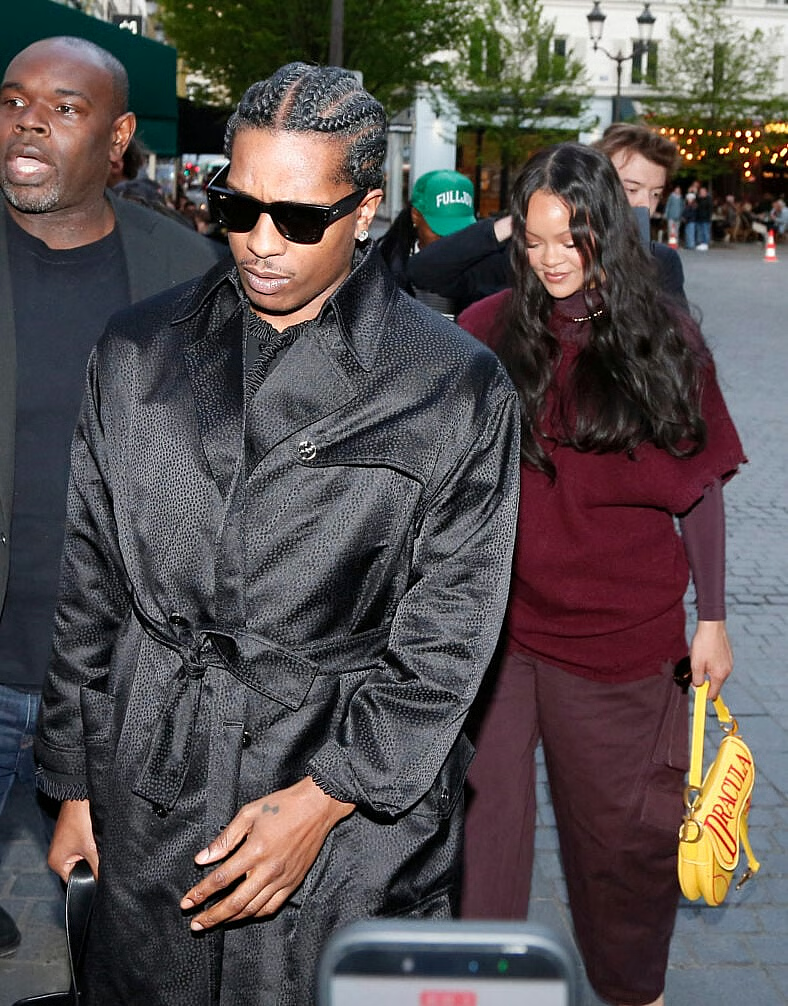
Rihanna and A$AP Rocky have resurfaced publicly weeks after a frightening shooting incident at their Beverly Hills residence, stepping out in Paris with family while legal proceedings against the suspect continue.
Their appearance signals resilience following the ordeal, as new details emerge about the alleged attack, the investigation, and how close the couple and those around them came to danger.
Rihanna Steps Out In Paris With Family

The global superstar and her longtime partner made their first public outing together since the alarming incident, appearing relaxed as they headed to dinner in Paris.
They were joined by two of their children, sons RZA and Riot, as well as Rihanna’s mother, Monica Braithwaite.
Despite the troubling events of recent weeks, the couple looked composed while enjoying the evening.
Rihanna, who has been in the French capital for major fashion appearances and promotional work tied to her Fenty Beauty brand, opted for a polished look.
She wore burgundy slacks paired with a red sweater vest, accessorizing with a striking yellow Dior purse and pointed shoes. A$AP Rocky complemented her style in a black trench coat and dark shades.
The pair arrived at Siena restaurant, an upscale Italian dining spot known for its refined atmosphere.
According to the Daily Mail, observers noted that they appeared in good spirits, a notable shift considering the frightening circumstances they recently endured.
Their ability to step out publicly suggested an effort to return to normalcy following the shock.
Details Of The Beverly Hills Shooting

The outing comes after a dramatic incident that unfolded on March 8, when authorities say 35-year-old Ivanna Lisette Ortiz allegedly fired multiple rounds from an AR-15-style rifle toward the couple’s Beverly Hills property.
Rihanna, Rocky, their three children, and several others were reportedly on the premises when the shooting occurred.
Also present were two staff members, while two additional individuals were in a neighboring residence that Ortiz allegedly targeted from her vehicle.
Although no injuries were reported, the situation quickly escalated into a major law enforcement response.
A law enforcement official emphasized how serious the danger was, telling the Los Angeles Times that Rihanna and Rocky “easily could have been hit.”
Authorities arrested Ortiz and charged her with attempted murder.
The case quickly gained attention due to the high-profile nature of the victims and the alarming details surrounding the alleged attack.
Rihanna Targeted In Disturbing Messages

Investigators revealed that Ortiz had previously posted messages and videos that referenced Rihanna before the shooting.
In one communication, the suspect suggested the singer had spoken negatively about her, even though no known connection existed between them.
Authorities also pointed to unusual videos in which Ortiz allegedly claimed Rihanna intended to harm her.
These posts added to the mystery surrounding the motive, which remains unclear.
Ortiz, who had worked as a licensed speech pathologist for more than a decade, has since lost her license in California.
The revocation reportedly came at the request of the state attorney general following her arrest in connection with the incident.
Court documents also indicate she faces 14 charges tied to the case, including attempted murder.
Reports further noted that Ortiz has had previous encounters with law enforcement, including arrests related to domestic violence, careless driving, and violations of pretrial release conditions in Florida.
Legal Fallout And Protective Orders

Following her arrest, a judge set Ortiz’s bail at $1,875,000.
In addition to the high bond, she was ordered to stay away from Rihanna and A$AP Rocky if released.
The court also required her to surrender all firearms.
Legal proceedings are still unfolding, and officials have not disclosed a clear motive for the alleged shooting.
Meanwhile, the case has drawn significant public attention as more information about the suspect’s background continues to surface.
The couple’s decision to step out publicly amid these developments suggests they are attempting to move forward, even as the legal process remains ongoing.
Close Call For Rihanna’s Journalist Friend

The incident also nearly impacted others in the area, including journalist Don Lemon, who revealed he had almost visited a friend in the same neighborhood the night of the shooting.
According to his account, he changed his plans due to complications caused by the L.A. Marathon.
As The Blast reported, Lemon explained that the change of schedule may have prevented him from being dangerously close to the scene. He later shared his reflections during an appearance at the 12th Annual Better Brothers Los Angeles Truth Awards.
The broadcaster noted that his friend’s home, located near the singer’s residence, sustained some damage during the incident.
Lemon remarked that his year could have taken an even worse turn, particularly as he has already been dealing with legal matters stemming from covering an anti-ICE protest.
The near miss added another layer to an already unsettling situation. For Rihanna and A$AP Rocky, the ordeal has been a sobering reminder of how quickly circumstances can change.

Sports11 seconds ago
Virgil van Dijk makes revealing admission over Liverpool’s season after FA Cup defeat: ‘It’s mentally very tough’

Tech1 minute ago
The US Navy Wants This Autonomous Sub For Deploying Heavy Payloads Under The Sea

NewsBeat3 minutes ago
Tree removed from rail track between York and Malton


-

 NewsBeat3 days ago
Steven Gerrard disagrees with Gary Neville over ‘shock’ Chelsea and Arsenal claim | Football
-

 Business3 days ago
No Jackpot Winner and $194 Million Prize Rolls Over
-

 Fashion2 days ago
Weekend Open Thread: Spanx – Corporette.com
-
Entertainment6 days ago
Fans slam 'heartbreaking' Barbie Dream Fest convention debacle with 'cardboard cutout' experience
-

 Crypto World4 days ago
Gold Price Prediction: Worst Month in 17 Years fo Save Haven Rock
-

 Tech7 days ago
The Pixel 10a doesn’t have a camera bump, and it’s great
-
Crypto World5 days ago
Dems press CFTC, ethics board on prediction-market insider trades
-

 Tech6 days ago
Avatar Legends: The Fighting Game comes out in July and it looks pretty slick
-

 Business4 days ago
Login and Checkout Issues Spark Merchant Frustration
-

 Sports18 hours ago
India men’s 4x400m and mixed 4x100m relay teams register big progress | Other Sports News
-

 Tech6 days ago
Apple will hide your email address from apps and websites, but not cops
-

 Sports5 days ago
Tallest college basketball player ever, standing at 7-foot-9, entering transfer portal
-

 Tech5 days ago
EE TV is using AI to help you find something to watch
-

 Politics6 days ago
Should Trump Be Scared Strait?
-

 Tech5 days ago
Flipsnack and the shift toward motion-first business content with living visuals
-

 Fashion6 days ago
The Best Spring Trends of 2026
-

 Sports6 days ago
Women’s hockey camp eyes fitness boost, tactics ahead of WC 2026 campaign | Other Sports News
-

 Tech5 days ago
How to back up your iPhone & iPad to your Mac before something goes wrong
-
 Crypto World7 days ago
Bitcoin’s Six-Month Losing Streak: What On-Chain Data Says About the Market’s Next Move
-
 Politics6 days ago
BBC slammed for ignoring author of The Fraud
You must be logged in to post a comment Login