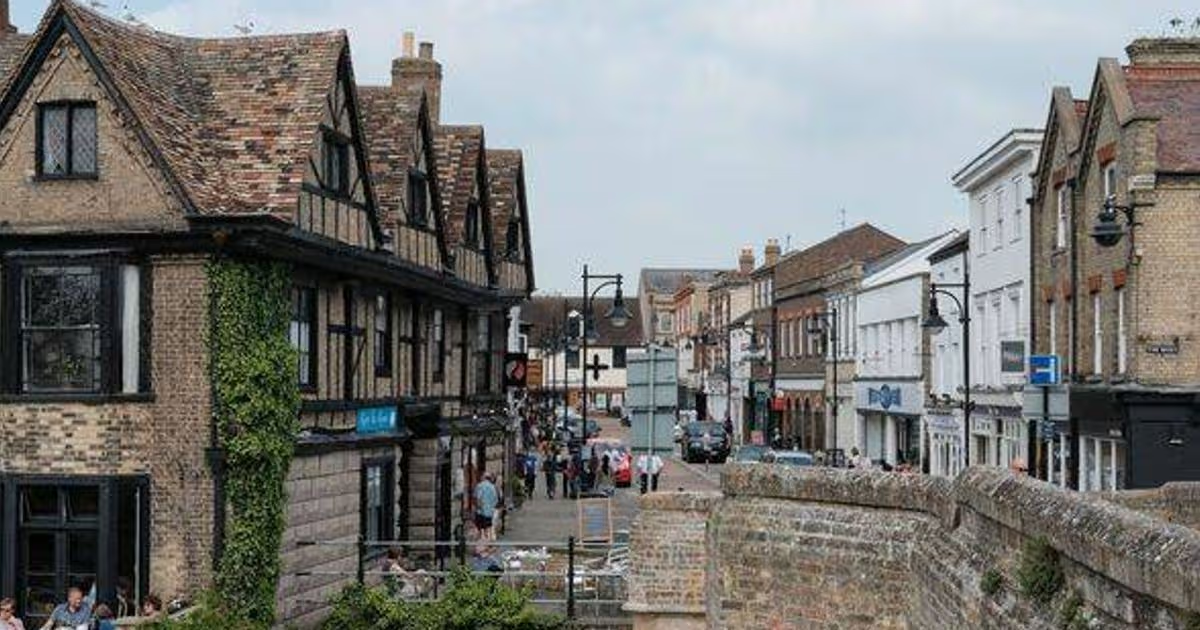
St Ives residents have been sharing memories and concerns as shops disappear from the high street, with blame falling on traffic schemes, big chains, and rising business rates
David Prince and Cambridgeshire Live readers
17:00, 17 Feb 2026
Readers of CambridgeshireLive have been responding to news about the disappearance of shops from the high street with a mix of nostalgia, warnings, and blame. Some have pointed fingers at large chains and escalating costs, while others reminisced about former markets and pubs that once gave St Ives its bustling atmosphere.
Locals have expressed their ‘disappointment’ over the ‘disappearance’ of some shops from their Cambridgeshire town’s high street. Over time, numerous stores have vanished from town and city high streets, leaving customers disheartened when their favourite brands depart.
Advertisement
This sentiment is shared by some residents in St Ives. Jackie Smith described St Ives as a “very safe” and ‘lovely’ town, but noted that more shops and cafés are vacating the high street.
She observed: “The bigger cafés are taking over from the smaller people. We used to have one café down the road that has gone now.
“There’s a big Caffe Nero, but also a Costa opposite. Younger people can afford to go somewhere like Costa now. You couldn’t do that in my day!”
Derek Green expressed his ‘disappointment’ that more shops are leaving the high street. He added: “That’s the only thing disappointing about St Ives. We used to have a lot more independents, like cafés and shops, but the bigger brands are taking over.”
Advertisement
His sentiments were echoed by another long-standing resident, who asked to remain anonymous. They lamented that the “high street is not what it used to be”.
Commenter Dcjo had this to say: “Large, foreign-owned chains have an advantage over local, independent shops, because they buy in quantity and have power to squeeze suppliers. Instead of staying local, the profits are removed from the country so the incomes of those at the top are not taxed. These outfits are also skilled at dodging corporate taxes on those profits as well. It’s a lose-lose for Britain.”
While MickJones2 comments: “I used to love St Ives, I worked there many many years ago at atcost:concrete [sic] buildings. And I used to go to the Manchester Arms for a liquid lunch, way before health and safety got ridiculous. I also used to spend many a night at a pub called the floods, and they had good music there, and other pubs in the area used to be lovely towns in those days, and the bank holiday, a massive market was there. It’s such a shame that I haven’t been there for years and years, but if it’s anything like March, there isn’t anything in my opinion worth visiting now. And I am born and bred and like St. Ives, it was a thriving town with everything, and now, nowt worth visiting.”
Whynot3 says: “I used to go to the Bank Holiday markets there rather than the ones at Bourn airfield. A nice walk around the market, then a good meal at the Golden Lion.”

Advertisement
Over on our Facebook page, Julian L comments: “Recently, the Ivo Lounge and Nero opened, and we have lost Black Robin and Rockerbillys!”
The Hunts Roast writes: “2026 rent. 2004 footfall. 1998 business rates. And we’re shocked the shops vanish. Same story up and down the country.”
Andrew Jackson says: “Seems to be the way of the world at the moment, the decline of the high Street with the Internet and the superstores selling everything on the outskirts of towns. Successive governments have promised to axe business rates. It does amuse me, though, that they keep on about the cost of living crisis, yet wherever you go, the big coffee chains like Costa’s are always full of people paying extortionate prices for a substandard latte. If I have a latte, I do try to use an independent coffee shop; the quality is so much better. Even Greggs, where you can get a drink and something to eat for the price of a latte in Costa’s.”
After weeks of relentless rain and flooding, and even more forecast, 2025’s droughts and hosepipe bans feel like ancient history. But they shouldn’t.
The UK is increasingly caught between these wetter winters and warmer, drier summers. What if this year’s summer brings water shortages again? The seemingly endless rainfall causing flooding across the UK right now could help solve future summer drought problems – if we capture it right.
The stakes are high in Speyside, home to around half of Scotland’s malt whisky distilleries. They had to cope with 2025 being the UK’s warmest and sunniest on record, where prolonged dry conditions led to widespread restrictions on water abstraction. Multiple distilleries were forced into temporary closures, costing the industry millions of pounds and highlighting just how vulnerable even Scotland’s famously wet regions are to water scarcity.
Whisky production represents one of the UK’s biggest industrial water users. Large quantities of water are required for the distilling process and the product itself, so understanding water conservation is both extremely important for the industry, and can also help others recognise the benefits.
Advertisement
If it was possible to retain this winter’s rainfall and release it gradually when it was needed, the nation could become more resilient to both floods and droughts without building expensive new reservoirs.
Managing droughts with floods
Across Speyside, they’re testing ways to slow, store and steadily release water by working with the landscape rather than against it. Distillers have invested in leaky dams (small barriers built across temporary upland streams) to slow the flow of water during heavy rain and allow the rainwater to soak into soil and recharge groundwater.
Leaky dams hold the water at surface level as well helping it store underground. Water in the soil and deeper groundwater move through the subsurface much more slowly than over land – taking weeks or months rather than hours or days – which is why rivers still flow even after long dry spells.
There are other examples of useful interventions. Peatland restoration, wetland creation and tree planting all work by increasing temporary storage in the landscape and slowing the movement of water into rivers.
Research across upland catchment areas in Cumbria and West Yorkshire shows how the principles being tested in Speyside could translate to elsewhere. A large academic review of natural flood management evidence concluded that measures increasing water storage, slowing the flow of water over the land or enhancing soil structure can consistently reduce the peak level of a flood.
This growing body of evidence supports a simple but powerful idea: the UK and other countries could be more resilient to droughts and floods by redesigning landscapes to keep water around for longer.
Advertisement
Three lessons for the rest of the UK
1. Design and location matter
Local factors and hydrology (the study of the movement and management of water) can determine what works best where. For example, planting trees “somewhere” delivers far less benefit than planting them in the right places, especially near rivers, near the source of the river, or where soil can absorb water.
2. Benefits must stack up or they won’t be adopted
Leaky dams and other projects, such as tree planting, are relatively inexpensive, compared with traditionally engineered flood defences or having to deal with flood and drought consequences. They can deliver benefits at a fraction of the cost, while potentially also increasing biodiversity, soil health, carbon capture and improving water quality.
Advertisement
But there are trade-offs, which need to be assessed early. For example, in some cases, large-scale tree planting can also reduce summer water availability in already stressed catchment areas. Tree canopies can temporarily store water on the leaves, but if this water evaporates it doesn’t return to the soil. Tree roots improve the soil so it absorbs and stores more water, but trees can also use more water. The net effects depend on factors such as climate, soil type and tree species.
3. Good governance will unlock funding
When water security has clear economic benefits, businesses are willing to engage. However, investment is not always private, and a recent review showed public funding is often fragmented, with inconsistent planning rules. Strengthening overall governance of these kind of schemes is essential, because farmers, businesses and landowners are far more likely to participate if they benefit.
Managing our landscapes appropriately won’t stop all floods or prevent every drought, but it can make both less severe, while restoring habitats, supporting farming, and protecting industries that rely on dependable water supplies.
Advertisement
Every river carrying floodwater to the sea represents water that could be stored for drier months. Thinking ahead for what happens during heavy rains can be part of forward planning for more extreme weather in years to come.
Both drivers were transported to hospital – the Hyundai driver, a man in his 80s, is still receiving treatment and a woman in her 30s driving the SUV has a serious hand injury, the force said.
Advertisement
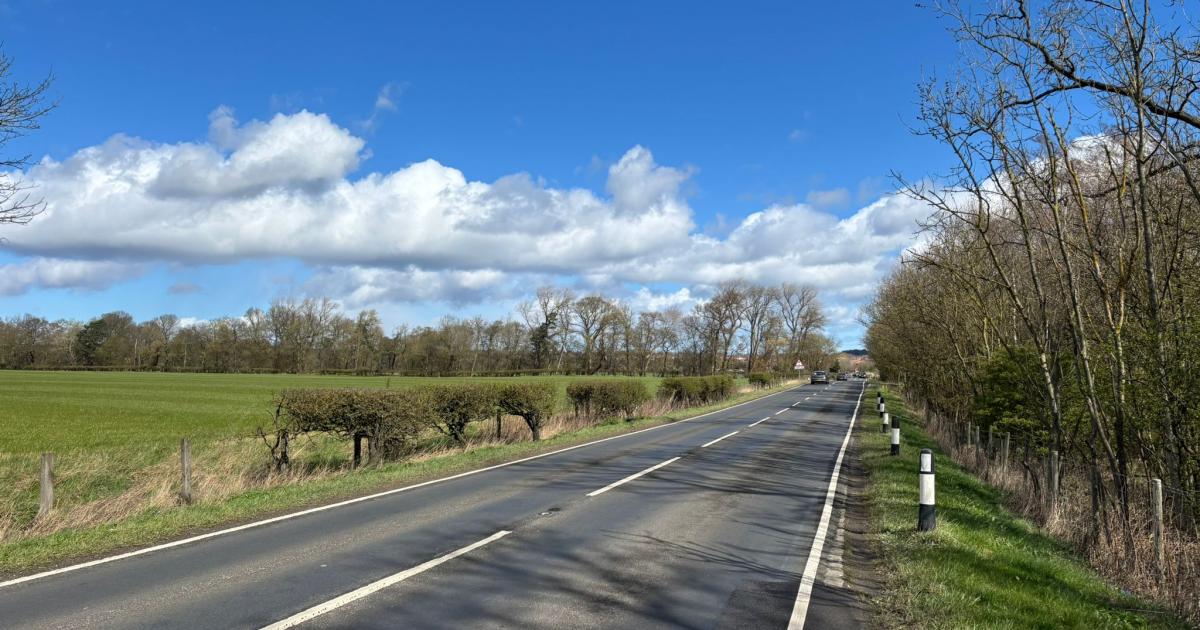
The road was closed for several hours after the crash to allow emergency services to work at the scene.
A North Yorkshire Police spokesperson said: “The Hyundai had been travelling along Lowmoor Road from the direction of A163 towards Moor Lane, with the Vauxhall heading in the opposite direction.
“If you saw the collision, have relevant dashcam footage, or recall seeing either vehicle prior to the incident, please get in touch without delay.
Advertisement
“Please email matthew.harvey@northyorkshire.police.uk or call 101 and ask for Matthew Harvey. Quote reference number 12260029149 when providing details.
Freezing temperatures early this year saw £35 million worth of cold weather payments made to households across England and Wales – but one million pensioners are still missing out
Nearly 1.5 million households across England and Wales have already received cold weather payments this winter, the government has confirmed.
Advertisement
The payments of £25 are made when the average temperature in a postcode area is recorded as – or forecast to be – zero degrees Celsius or below over seven consecutive days. Freezing weather in the first few weeks of 2026 have meant extra payments being made to eligible households.
The payments were triggered by temperatures plunging below zero at more than 30 Met Office weather stations across the country. Around 1.4 million cold weather payments were dished out last winter.
According to the Department for Work and Pensions, more than £35 million has been paid to vulnerable households across England and Wales so far this winter. The scheme runs from November 1 2025 to March 31 2026.
You will usually be eligible for Cold Weather Payments if you get Pension Credit. Those receiving Universal Credit, Income Support, income-based Jobseeker’s Allowance, income-related Employment and Support Allowance and Support for Mortgage Interest may also be eligible if they meet additional criteria, such as their employment status, health conditions, disability, or caring responsibilities for young or disabled children.
People in Scotland don’t receive Cold Weather Payments but may be eligible for an annual Winter Heating Payment instead. Work and Pensions Secretary Pat McFadden said: “This support is a lifeline for vulnerable households when temperatures plummet. Combined with our wider cost of living support – including a higher National Living Wage, £150 off energy bills, and a £300 Winter Fuel Payment for over nine million pensioners – these measures are making a real difference to households across the country.”
Pensioners on low incomes have been urged to apply for Pension Credit as it also provides access to other support including help with housing costs and free NHS dental treatment, as well as council tax discount, help with energy costs, and a free TV licence for over 75s. The charity Age UK says that around one in six – equivalent to 1.9 million – pensioners live in poverty yet many older people assume they won’t qualify, or find it daunting and difficult to complete applications without help.
Figures from 2023/24 showed nearly two in five of those eligible to claim Pension Credit – equivalent to one million pensioners – are missing out on average £50 per week, or £2,600 per year. Morgan Vine, director of policy and influencing at the charity Independent Age, said: “Cold Weather Payments can be a lifeline during cold snaps.
“With more than half of older people on low incomes across England and Wales regularly sharing that they are worried about meeting the cost of their heating bill, it is crucial that vital support like this reaches those who need it most. We welcome this £35 million investment from the UK Government to support people of all ages struggling to heat their homes and look forward to continuing to work with the Government to ensure older people on low incomes receive the financial support they need.”
The Wednesday letters page looks forward to a Pokémon Gen X reveal this month, as one reader imagines a Half-Life x Portal crossover game.
Games Inbox is a collection of our readers’ letters, comments, and opinions. To join in with the discussions yourself email gamecentral@metro.co.uk
Top of the list I realise it’s pointless talking about any kind of most anticipated game this year, when GTA 6 is out in November, but there are honestly a bunch of games I’m looking forward to more. I’m sure GTA 6 will look good, but I can tell from the trailer that it’s going to be the same old, same old.
I don’t hate it, but I’d much rather play Saros, Marvel’s Wolverine, and even Fable has me more intrigued. But the game I’m most looking forward to this year is Resident Evil Requiem, which is handy as it’s out soon.
Advertisement
I don’t think there’s any question that it’ll be worth getting, given the unanimous good previews and Capcom seeming to be on top of their game. The marketing has been good, without giving too much away, and I like the idea of the two characters being very different. I just hope I don’t get spoiled on anything this week, because I see copies are already out in the wild. Damon
Empty shelves Although I agree with the reader who said that the PlayStation 6 being delayed till 2029 is overall a good thing I think he’s overlooking the fact that if there’s no RAM – or hard drives – that means no PlayStation 5s either. We could be looking at a bit of a gaming apocalypse, where there’s no new consoles to sell and they can only sell games to their existing base.
Expert, exclusive gaming analysis
Sign up to the GameCentral newsletter for a unique take on the week in gaming, alongside the latest reviews and more. Delivered to your inbox every Saturday morning.
Advertisement
That’s not good for any company that wants their graphs to go up but it’s probably especially bad for Nintendo, who have only just launched a new console, so there aren’t that many Switch 2 owners in the world. It’d be an understatement to say that increasing the price doesn’t seem like a good idea in that situation.
But it’s difficult. It’s not actually the companies’ fault but I bet they want us to pay for the trouble anyway. They’ll be gutted to miss out on all the new business GTA 6 will bring too. Hammeriron
Still unbeaten While we’re talking about so many anniversaries this year there is another one, although compared to Zelda or Resident Evil I guess it’s not that big. But I was surprised and alarmed to find that Uncharted 4 is 10 years old in May. In my mind it’s a relatively new game but… I guess not.
Advertisement
It is really good though, even though I don’t really approve of the more grounded, non-supernatural approach. The bit around the middle, in Madagascar, is still absolutely peak action gaming and I’ve not seen anything since best it.
Worse thing is though I’ve barely seen anything even try. Only Uncharted (and the money Sony give them) can do things this well and I’m shocked there’s been no attempt to make a new game since or for anyone to outdo them. Maybe the new Tomb Raider can take the crown, but they’d have to be doing really well to get that good. Grackle
Slow-motion storytelling Since it’s cheap, I might check out ChromaGun 2, as I’ve never heard of the series before. But I do miss Portal. People have been talking about Valve not making games anymore, and whether they might come back with Half-Life 3, but I’ve never heard any talk of a Portal 3. I think that’s the one that really suffered from everyone leaving, because you can recruit people that make first person shooters pretty easy but people that can write comedy of the quality of Portal aren’t exactly common.
Advertisement
I always imagined there’d be a crossover game where Gordon Freeman meets Chell, which I think they were building up to at one point, but I really don’t know if they’d do that now. Even Half-Life: Alyx was six years ago now, so they’re not exactly rushing this, but I don’t have any faith it’s going to happen.
You need a bunch of games to build up to it and at this rate they’ll have just about got the prologue done when Gabe (and me) dies of old age. Hake
Pre-existing prequel As much as I’m looking forward to Resident Evil Requiem this month, I was secretly hoping that Capcom would re-release Resident Evil Outbreak in some way, to help promote it and to show who Alyssa Ashcroft is, because I’m sure many people do not know.
Advertisement
I always wanted to play the game online, but it didn’t have that feature when it was released in Europe, so I never got the chance. (I know the sequel had online but I didn’t have a PlayStation 2 by that point.) Maybe it was rubbish but that’s not what I hear and it always sounded a lot more interesting than the other multiplayer Resident Evil games Capcom has done. Scooter
Generational interest I hope that Gen X of Pokémon does get announced this month. By which I mean I hope they reveal some games that are actually worthy of the legacy and look like some actual money has been put into them. People are trying to guess what Nintendo will make their big Christmas game, but I think it’ll be Pokémon Wind and Waves, or whatever it’s actually called.
I feel nowadays that Pokémon games just come and go without as much fanfare as they used to, partly because there’s so many of them nowadays and only the uber fans can keep up with it all. It all seems kind of sectioned off from all the other Nintendo first party games, which is why I think Z-A didn’t really make much of an impression last year.
The 30th anniversary is going to put a lot of eyes onto it this year, so this is moment to go all out and make something more than an easy cash-in. It feels like that’s what Pokémon has been for so long now and it’s a shame because I have very fond memories of playing it as a kid and now my kid is the right age to give it a go. But they know the toys and the cartoon but not really the games.
Advertisement
I don’t like to push thing on them, and I’m actually interested to see what they pick up on and what they’re aware of and not. I’ll see if they’re interested in the Pokémon Presents when it gets announced and what they think of whatever’s in that. Belsh
Twin Snakes Never mind delisting PlayStation 3 games as soon as a new release is announced, I didn’t realise the new Metal Gear Solid Collection wasn’t remasters. So it’s just a straight port of Metal Gear Solid 4? That is disappointing, to say the least.
With this and the Rainbow Six Siege crossover Konami are clearly building up to doing more with Snake and co. but I can’t imagine it going well. For better and worse there was just too much of Hideo Kojima in those games and trying to copying him, or not making it weird like he would, both seem like a bad idea. Iceman
Don’t miss Gaming news! Add us as a Preferred Source
As a loyal GameCentral reader, we want to make sure you never miss our articles when searching for gaming stories. We have all the latest video games news, reviews, previews, and interviews, with a vibrant community of highly engaged readers.
Advertisement
Click here and tick Metro.co.uk to ensure you see stories from us first in Google Search.
GameCentral has been delivering unique games news and reviews for over a decade
Smash Street Fighter With all the success Nintendo have had with their Super Smash Bros. games, why haven’t Capcom done something similar with the Street Fighter games?
It would still play as a traditional Street Fighter game (1v1 on a 2D plane) but have all fighters with all their individual fighter colours, outfits, all variations of their stages, music, backgrounds, bonus stages, fighting styles, and so on and would surely be amazeballs!
Advertisement
Maybe in order to not overwhelm the player with all that content, these could be either unlocked through gameplay or (the most-likely route of) DLC.
I have been re-playing the Switch version of Street Fighter 30th Anniversary recently and thought it’d be great if all these games could merge into one.
The PS1 version of Street Fighter Alpha 3 remains my favourite Street Fighter game to this day, which sadly isn’t in this compilation.
I’m not sure if to include the Marvel or other non-Capcom characters for fear of the licensing. LeeDappa
Advertisement
GC: We’re not really sure what you’re after, you mean just more guest characters? Between them, Street Fighter 5 and 6 have featured fighters from games including Final Fight, Rival Schools, and SNK’s Fatal Fury. We’re sure there’ll be more over time.
Inbox also-rans I’m still trying to get over the idea of paying £12.1 million for a Pokémon card. What would you even do with it? I’ve seen the card and more than half of it’s Japanese writing, which I’m will to bet Logan Paul can’t read. Badgerman
Just beat Donkey Kong Bananza. That was an excellent final boss fight and last couple of levels! The game had some ups and downs but overall, really liked it. Pinky
The small print New Inbox updates appear every weekday morning, with special Hot Topic Inboxes at the weekend. Readers’ letters are used on merit and may be edited for length and content.
You can also submit your own 500 to 600-word Reader’s Feature at any time via email or our Submit Stuff page, which if used will be shown in the next available weekend slot.
You can also leave your comments below and don’t forget to follow us on Twitter.
Hikes approved in York Council’s budget are set to see the cost of an adult cremation with a 25 minute to half-hour service rise by £57 to £1,197.
A simple cremation at York Crematorium’s Ebor Chapel with a 20 minute service, two pieces of music and less than 20 mourners will cost £924 from April, £44 more.
Fees for a cremation without a service at the Bishopthorpe crematorium are set to stay at the current £620.
Cremations for still born babies, children up to age 18 and care leavers under 25 will remain free.
Advertisement
Interring ashes is set to cost £5 more from April, a total price of £105.
RECOMMENDED READING:
Costs for scattering ashes are set to rise by £20 to £170 for those from external sources that at non-witnessed.
Extra fees for ashes strewn or interred by appointment are set to rise by £3, to £53.
Advertisement
A new additional charge for ashes scattered or interred by appointment on Saturdays has been set at £100.
It will cost £20 to seal and send ashes abroad by custom letter from April.
The use of the Ebor Chapel for a memorial service will cost £28 more, increasing to £578.
Exhuming a body is set to cost £12 more from April when charges will rise to £261.
Advertisement
DVD recordings of services will be priced at £79, up by £14, while live webcasts with a 28-day download link will cost £66, £4 more.
A single photo for visual tributes will now cost £10 after previously being free, with slideshows going up by £7 to £55 and professional tributes by £5 to £92.
New themed tributes will be available for £95 from April.
Family-made tributes are set to go up by £4 to £36, with physical and downloadable copies for keepsakes both rising by £2, to £34 and £15 respectively.
Advertisement
Fees of £25, £95 and £130 for late submissions of visual extras, a video book and memory box respectively will be charged from April.
General costs for extra work for visual tributes are set to go up by £2 to £28.
The cost of burials in York is set to rise (file photo) (Image: Paul Heyes)
Services for under 18s including a webcast, single photo, basic slide show or music tribute will remain free.
The cost of a cardboard urn is set to rise by £2 to £23, with polycontainer costs also going up by £2 to £26.
Advertisement
Baby urns are set to cost £49 from April, £3 more than current prices, with metal ones set to go up by £4 to £68.
Wooden caskets will cost £5 more, increasing to £93.
Plaques and memorials at the crematorium, including bronze and arboria ones, vases, discs and benches, are all set to increase in price, with hikes ranging from £12 to £86.
Book of remembrance entries varying from two lines to an eight-line entry with a coat of arms will cost between £115 and £390, with increases ranging from £6 to £19.
Advertisement
Burying an adult in a grave at Dringhouses Cemetery is set to cost £52 more, £1,101 from April, but it will remain free for children up to 12.
Interring ashes at the cemetery will cost £330 from April, £16 more, with an up to four person plot with 50 years of exclusivity priced at £589, £28 more.
It will cost £261 to exhume cremated remains, an increase of £24 compared to current rates.
The price of a new headstone permit is set to be £216, £10 more, with additional inscriptions to existing ones going up by £6, to £118.
Advertisement
It will cost £1 more to mark out a grave, £30, and the removal of a memorial prior to interment by a stonemason is set to go up by £6, to £132.
Stephen Colbert’s comments that network executives pulled his interview with Democratic Texas Senate candidate James Talarico over fears it would violate regulatory guidance from the Trump administration has prompted a conversation about the rules governing how media outlets treat political coverage.
The concern about the interview, which the late-night host referenced in his Monday night show and later posted in full online, stems from a requirement that broadcast stations give equal time to political candidates when they appear on-air.
Although there are multiple exemptions to the provision, the Trump administration through the Federal Communications Commission — which regulates the nation’s airwaves — has been moving to clamp down specifically on programs like Colbert’s, which the agency has suggested may be “motivated by partisan purposes.”
“He was supposed to be here, but we were told in no uncertain terms by our network’s lawyers, who called us directly, that we could not have him on the broadcast,” Colbert said on his program, ”The Late Show with Stephen Colbert.”
Advertisement
In a statement issued Tuesday, CBS said Colbert’s show “was provided legal guidance that the broadcast could trigger the FCC equal-time rule for two other candidates” in the March 3 Democratic primary, “and presented options for how the equal time for other candidates could be fulfilled.” Thereafter, the network noted, it was decided “to present the interview through its YouTube channel with on-air promotion on the broadcast rather than potentially providing the equal-time options.”
Talarico, a critic of President Donald Trump, posted a nearly minute-long clip of his interview with Colbert on X and called it “the interview Donald Trump didn’t want you to see.”
What does equal time mean?
The Communications Act of 1934, the wide-ranging legislation that for nearly a century has broadly governed use of the nation’s airwaves, includes a provision that applies specifically to coverage of political candidates. If a station gives airtime to one candidate, then the same station must offer comparable time to other candidates competing in the given contest, should they ask for it.
It also delves into campaign advertising airtime sold by stations and networks. If a station sells airtime to one candidate, then it also has to offer to sell the same amount of time to other candidates for the same office.
Advertisement
There are exceptions to this rule, including newscasts, “bona fide” interview programs, coverage of live events or documentaries. But if candidates host TV shows or appear in non-news, entertainment programming, that does trigger the provision.
Equal time also only applies to broadcast television and radio. So pieces on cable, streaming services or social media aren’t included.
How the Trump administration has treated equal time
The rule requiring networks to give equal time to political candidates hasn’t traditionally been applied to talk shows, but the Trump administration has made moves to change that.
In January, the Federal Communications Commission issued new guidance warning late-night and daytime hosts that they need to give political candidates equal time, with FCC Chairman Brendan Carr questioning the talk show exemption and positing that hosts were “motivated by partisan purposes.”
Advertisement
“The FCC has not been presented with any evidence that the interview portion of any late night or daytime television talk show program on air presently would qualify for the bona fide news exemption,” according to the public notice.
FCC eyes talk shows like ‘The View’
The notice also said that television networks would need to apply for exemptions for individual programs.
In his comments, Colbert noted that the equal time provision applies to broadcast but not streaming platforms. Subsequently, his nearly 15-minute interview with Talarico was posted to the YouTube page for Colbert’s show, with the host noting specifically that the segment was only appearing online and not on broadcast.
Carr, appointed by Trump to lead the agency last year, has often criticized network talk shows, suggesting last year that probing ABC’s “The View” — whose hosts have frequently been critical of Trump — over the exemption might be “worthwhile.”
Advertisement
The FCC did not immediately respond to messages seeking comment Tuesday.
What about the Fairness Doctrine?
Created by the FCC in 1949, this rule mandated that broadcasters present contrasting viewpoints when covering publicly important and controversial issues. Unlike the equal time provision of the Communications Act, this was an FCC rule, not a law.
It didn’t apply specifically to political candidates, but topics. The U.S. Supreme Court upheld the doctrine on a First Amendment challenge in 1969, with the court writing that the limited availability of broadcast spectrum justified regulation.
In 1987, the FCC repealed the rule, arguing that spectrum scarcity was no longer an issue, and then-President Ronald Reagan vetoed Congress’ attempt to codify it into law.
Advertisement
___
Associated Press reporter David Bauder contributed to this report.
The prestigious Mercury Prize Awards is gearing up for another huge year after celebrating the biggest ceremony to date in Newcastle in 2025 as Sam Fender won the top gong
The Mercury Prize Awards has revealed its location for the 2026 ceremony. And for a second year running, Newcastle has been chosen as host city.
Advertisement
After the biggest year yet for the awards show last year, it has been announced that the biggest acts in British music will once again be heading to the north east. The Awards Show will feature live performances from many of the 12 shortlisted artists and the evening will culminate in the announcement of the overall winner of the 2026 Mercury Prize in Newcastle.
The Mercury Prize ‘12 Albums of the Year’ shortlist is curated by an independent judging panel of music industry professionals who are eternally passionate about spotlighting artistic achievement across a range of genres.
The short list recognises the best new British and Irish music and helps to celebrate artistic achievement. It takes in a range of contemporary music genres.
Last year was the year for the north-east’s own Sam Fender to claim the Prize. He follows in the footsteps of artists such as English Teacher, Ezra Collective, Little Simz, Dave, Wolf Alice and Young Fathers.
Last year saw the Prize celebrate its biggest year to date. It marked the first time the show had been held outside of London.
Dr Jo Twist OBE, BPI CEO, and YolanDa Brown OBE DL, artist and BPI Chair, jointly said of the decision: “We are delighted to see the Prize return to the Toon and to the North-East for what we know will be another memorable occasion for artists and fans.
Advertisement
Cllr Karen Kilgour, Leader of Newcastle City Council, said: “The return of the Mercury Prize to Newcastle for a second consecutive year is a tremendous vote of confidence in our city and our thriving music scene.
“Newcastle is at the heart of a bold cultural resurgence, and hosting this prestigious national event once again underlines both the strength of our music industry and the growing national recognition of our cultural ambitions. It’s a powerful endorsement of the talent, creativity and momentum that define our city.
“Last year, we showcased exactly what Newcastle can deliver on a major stage, and we’ve continued to build on that momentum. This follows Warner Music’s recent announcement of a three-year partnership with Generator, which will create even more long-term opportunities. It also supports our plans to establish Newcastle and Gateshead as a recognised Music City.
“And with more significant events in the pipeline including a firm commitment to build our own programme, Newcastle will soon be seen as one of the UK’s key cultural hubs.
Advertisement
“While many cities are celebrated for their musical past, Newcastle is shaping its musical future. The return of the Mercury Prize reinforces our reputation as a driving force for emerging talent, industry investment and world-class events — and we are incredibly proud to welcome it back.”
And Mick Ross, CEO at Generator, said: “The return of the Mercury Prize to Newcastle confirms that last year wasn’t a one-off – it was a shift in the centre of gravity of British music.
“When Mercury left London, it proved the North has the talent, infrastructure and ambition to lead at the highest level. The BRITs in Manchester followed. The momentum is real.
“For more than 35 years, Generator has championed Northern talent, lobbied for investment and built the partnerships that moments like this depend on. Through Generator’s Mercury Fringe programme, we turned a global awards show into a region-wide platform – creating real opportunities and lasting impact.
Advertisement
“This year, we’re going further – expanding access, opening more pathways and ensuring Northern artists don’t just take part, but set the agenda.”
The warning was given to Stacey Hanlon over three offences of conveying a prohibited article into HMP Deerbolt, near Barnard Castle, on June 14, last year.
Appearing at a Teesside Crown Court plea hearing, the 39-year-old defendant of Woodland Road, near Bishop Auckland, pleaded guilty to all three counts.
Defendant was caught carrying three different drugs intending to pass them on during a visit to HMP Deerbolt, on June 14 last year (Image: Andy Futers)
They relate to the class B drug ketamine hydrochloride and class C substances gabapentin and dimethylbutanoate.
Kate Barnes, representing Hanlon, asked if a pre-sentence report could be prepared on the defendant by the Probation Service, as she was “of previous good character”.
Judge Francis Laird KC agreed but told the defendant: “You must understand that despite your previous good character, you are likely to receive a prison sentence for this.”
He bailed Hanlon to attend the sentencing hearing, at Durham Crown Court, on Thursday March 12.
Portrayed as a “man of the people”, Prince Baelor “Breakspear” Targaryen (played by Bertie Carvel) unexpectedly decided to side with Dunk’s (Peter Claffey) team in an effort to shield his brother and nephews on the opposing side.
It was also his method of doing what was just and honourable and at first after the Trial of Seven, it seems that Baelor emerges without injury.
Advertisement
But sadly for him and viewers, Baelor didn’t receive the happy conclusion that audiences were anticipating.
The two Ser Humfreys Beesbury (Danny Collins) and Hardyng (Ross Anderson) were slain and the prince appeared amongst the winners after Dunk compelled Aerion (Finn Bennett) to surrender.
Advertisement
Yet, when Baelor does remove his helmet, it is disclosed that the rear of his skull had been crushed by Maekar’s (Sam Spruell) mace.
Viewers were optimistic that he would still pull through but Baelor eventually succumbs to his horrific wounds, leaving his family devastated.
Taking to X, formerly Twitter, a distressed user posted: “All of us at Baelor’s funeral,” accompanied by a crying emoji. A second exclaimed: “Baelor take me with you,” whilst another stated: “Baelor Targaryen you will be missed by all.”
Someone else shared: “What I love the most about how A Knight of the Seven Kingdoms portrays Baelor is that he is not just this perfect man who’s inherently good, but rather his goodness and honor is A CHOICE he makes every time.
“One that he could choose differently, and it ultimately makes what he does choose have meaning.”
Meanwhile, a fellow viewer added: “Just want to give a huge round of applause to Bertie Carvel for his performance as Baelor Targaryen.
“He really brought to life one of the best Asoiaf characters.”
Advertisement
Knight of the Seven Kingdoms is available to watch on Sky Atlantic and NOW.
Recent investigations have uncovered forced labour in agricultural supply chains, illegal fishing feeding supermarket freezers, deforestation embedded in everyday food products, and unsafe conditions in factories producing “sustainable” fashion. These harms were not visible on labels. They surfaced only when journalists, whistleblowers or activists exposed them.
And when they did, something predictable happened. Consumers felt uneasy. Brands issued statements. Promises were made. The point is that the force that set change in motion was not regulation. It was consumers.
Discovering that an ordinary purchase may be tied to exploitation or environmental damage creates a jolt of personal responsibility. In our research,
we found that when environmental consequences are clearly linked to people’s own buying choices, many are willing to switch products — especially when credible alternatives exist.
But guilt is private. It nudges personal behaviour. It does not automatically reshape systems. The shift happens when private discomfort becomes public voice.
Advertisement
Consumers are often also the first to make hidden environmental harms visible. They post evidence on social media. They question corporate claims. They compare sustainability promises with independent reporting. They organise petitions, boycotts and review campaigns. By shining a spotlight on the truth, the scrutiny shifts from shoppers to brands.
That shift matters because modern brands depend on trust. Reputation is an asset. When sustainability claims are publicly challenged, credibility is at risk. Research in organisational behaviour
shows that firms respond quickly to threats to legitimacy. Reputational damage affects customer loyalty, investor confidence and regulatory attention.
In many high-profile cases, supply chain reforms have followed intense public scrutiny rather than quiet compliance checks. Leaders may not act out of moral awakening — but they do act when inaction becomes costly to their reputation.
Consumers can trigger the emotional chain reaction. They feel guilt. They seek information. They speak collectively. That collective voice generates corporate shame.
Advertisement
Consumers have the power to demand more transparency from brands. Stokkete/Shutterstock
Sustainability professor Mike Berners-Lee argues in his book A Climate of Truth that demanding honesty is one of the most powerful climate actions available to citizens. Raising standards of truthfulness in business and media changes incentives. When the gap between what companies say and what they do becomes visible, maintaining that gap becomes harder.
Our research explores how that visibility can be strengthened. The findings were clear. When environmental and social consequences are personalised and traceable, sustainability feels less distant. People see both their own role and the role of particular firms. That dual awareness encourages two responses: behavioural change driven by guilt and corporate accountability driven by shame.
Shame works because it is social. Brands care about how they are seen. When the negative environmental and social effects of supply chains can be publicly connected to named products, corporate narratives become contestable in real time.
Advertisement
Making supply chains socially visible
The technology to improve transparency already exists. Companies track goods through logistics systems, supplier databases and digital product-tagging that collect detailed information about sourcing and production. The barrier is not data collection. It is disclosure.
Environmental indicators — carbon emissions, water use, land conversion risk, labour standards compliance — can be linked to products through QR codes or retail apps. Comparable reporting standards would ensure consistency. Simple digital interfaces would make information accessible. Social sharing tools would allow consumers to compare and discuss findings publicly.
Social media is crucial. It already enables workers, communities and campaigners to challenge corporate messaging. Integrating verified supply chain data into these spaces would shift transparency from crisis response to everyday expectation.
This strategy, with its behaviour change directive, could work more effectively than rules or green marketing campaigns alone.
Advertisement
Regulation is essential but often slow and uneven across borders. Marketing campaigns can highlight selective improvements while leaving deeper practices untouched. Transparency activated by collective consumer voice operates differently. It aligns emotional motivation with reputational consequence.
Consumers are not passive recipients of information. They are catalysts. By feeling the first twinge of guilt, asking harder questions and speaking together, they create the conditions under which companies experience shame. When shame threatens trust and market position, change becomes rational and inevitable.
Shame is uncomfortable. But when directed at opaque systems rather than consumers, it can be powerful. By demanding truth and making supply chains socially visible, consumers can push businesses towards greater transparency — and, ultimately, towards more sustainable practice.
Don’t have time to read about climate change as much as you’d like?