Seeking Alpha’s transcripts team is responsible for the development of all of our transcript-related projects. We currently publish thousands of quarterly earnings calls per quarter on our site and are continuing to grow and expand our coverage. The purpose of this profile is to allow us to share with our readers new transcript-related developments. Thanks, SA Transcripts Team
Canadian manufacturing activity picked up somewhat in December, driven by sales of motor vehicles and food products.
Factory shipments rose 0.6% on month to 71.0 billion Canadian dollars ($52.14 billion), Statistics Canada said Monday. This compares with a 1.3% drop in November.
Evercore ISI senior managing director Mark Mahaney joins ‘Varney & Co.’ to break down why he’s upgrading Airbnb and Expedia while downgrading Pinterest amid growing AI competition and slowing growth.
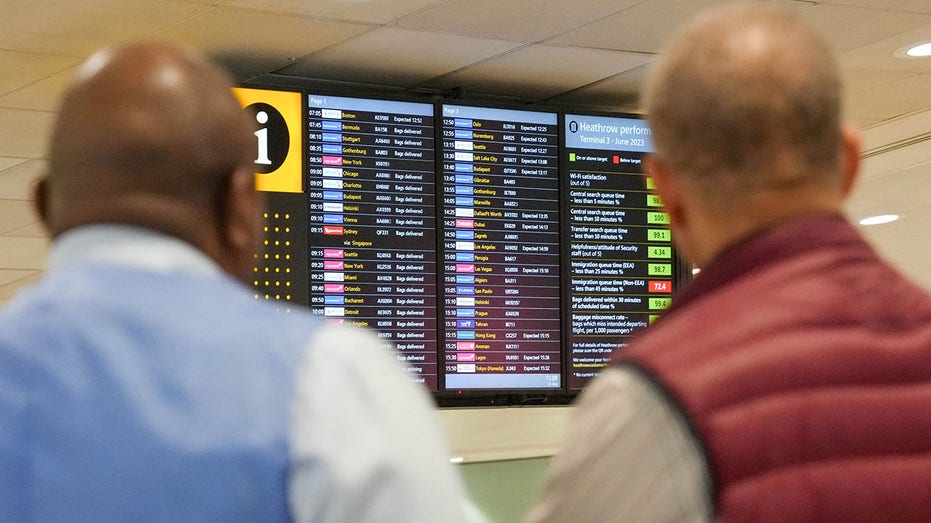
Americans set a new record for domestic air travel in 2025 even as travel patterns shifted, a new analysis found.
AAA Northeast examined several years of Transportation Security Administration (TSA) checkpoint data and found that over 904 million travelers went through a TSA checkpoint last year, an increase of 2.57 million passengers compared with 2024.
Advertisement
That figure marks a new annual record for domestic air travel, though the year-over-year increase was under 1% growth – much cooler than in prior years.
By comparison, the number of passengers going through TSA checkpoints was up 5.3% in 2024 from 2023, which had a 13% growth from 2022.
AAA Northeast found that 2025 set a record for domestic air travel, though the rate of growth slowed. (Matthew Hatcher/Bloomberg via Getty Images)
Fewer travelers flew on Mondays and Tuesdays in 2025, with passenger volume declining by 0.39% and 3%, while more travelers caught flights on Thursdays and Sundays with growth of 1.89% and 1.87%, respectively.
Advertisement
AAA’s report noted that the data could reflect “softness in business travel early in the workweek and continued strength in leisure travel, which tends to occur closer to weekends.”
The data also showed that 2025 had lower passenger volumes in the first part of the year when compared with 2024, with four of the first six months of last year showing declining growth compared with 2024.
The number of extremely busy travel days increased in 2025 despite the modest year-over-year increase in overall travel. (Reuters/Maja Smiejkowska)
January 2025 saw passenger volumes rise by 1.75%, though February experienced a 2.97% decline. A 0.17% decline in March and 0.23% gain in April were followed by declines of 1.48% in May and 0.45% in June.
Advertisement
Passenger volumes rebounded around the Fourth of July holiday, with the month of July seeing 1.16% growth, and the momentum carried over through October when volumes were up 3.63% year-over-year.
The holiday travel season was slightly slower in 2025 than in 2024, as volumes were down 0.15% in November and 0.08% in December. AAA suggested the decline could’ve been due to the effects of the government shutdown, although it added that travel during the actual shutdown was 2.2% higher than the prior year after a 6.2% decline in the final shutdown’s final week.
The holiday travel season was slightly slower in 2025 than in 2024, AAA Northeast reported. (Tayfun Coskun/Anadolu Agency via Getty Images)
AAA also noted that there was an uptick in the number of extremely busy days with over 3 million passengers passing through TSA checkpoints.
Advertisement
There were eight such days in 2025, as May 23, June 22, July 6, July 13, July 20, July 27, Oct. 10 and Nov. 30 all saw passenger volumes top 3 million. By contrast, there were only two such days in 2024: July 7 and Dec. 1.
TSA also set the record for largest passenger volume twice in 2025: June 22 had 3.09 million passengers screened, while Nov. 30 broke the new record with 3.13 million passengers.
DEXUS Stapled Securities (DEXSF) Q2 2026 Earnings Call February 17, 2026 5:30 PM EST
Company Participants
Ross Du Vernet – CEO, MD & Executive Director of Dexus Funds Management Limited Keir Barnes – Chief Financial Officer Andy Collins – Executive General Manager of Office Chris Mackenzie – Executive General Manager of Industrial Michael Sheffield – Executive General Manage of Funds Management
Conference Call Participants
Advertisement
Adam West – JPMorgan Chase & Co, Research Division Cody Shield – UBS Investment Bank, Research Division Simon Chan – Morgan Stanley, Research Division Andrew Dodds – Jefferies LLC, Research Division Adam Calvetti – BofA Securities, Research Division Benjamin Brayshaw – Barrenjoey Markets Pty Limited, Research Division Tom Bodor – Jarden Limited, Research Division David Pobucky – Macquarie Research Howard Penny – Citigroup Inc., Research Division James Druce – CLSA Limited, Research Division Yingqi Tan – Morningstar Inc., Research Division
Presentation
Operator
Advertisement
Thank you for standing by, and welcome to the DEXUS HY ’26 Results Briefing. [Operator Instructions] There will be a presentation followed by a question-and-answer session.
I would now like to hand the conference over to Ross Du Vernet, Group CEO and Managing Director. Please go ahead.
Ross Du Vernet CEO, MD & Executive Director of Dexus Funds Management Limited
Advertisement
Well, good morning, everyone, and thanks for joining us for our half year 2026 results presentation. I’d like to begin today by acknowledging the traditional custodians of the lands and waterways upon which we operate and pay our respects to elders past and present.
Today, you’ll hear from Keir on the financials, Andy on office, Chris on Industrial and Michael on Funds Management. Concluding the presentation, I’ll provide a summary and open up to any questions that you may have.
DEXUS is a unique investment proposition in the Australasian real asset market. Today, we manage $51 billion of assets across our platform with third-party funds under management at 2.4x
Development of the “Creative Hub” Model as a Factor of Sustainable Development and the Enhancement of Ethical Standards in the International Tattoo Business
The transformation of tattooing from a subcultural phenomenon into a recognized art form and a significant segment of the creative economy brings renewed attention to issues of professionalization and sustainability of business processes within the industry.
Against the backdrop of global market growth and increasing competition, the traditional tattoo studio operating model—often based on simple workspace rental—reveals its limitations. It does not consistently contribute to the long-term development of artists, the construction of their personal brands, or the implementation of unified ethical and service standards.
As a result, there is a growing need for new organizational structures capable of ensuring not only commercial success but also the creative growth of professionals and increased trust in the industry as a whole. The purpose of this article is to analyze and conceptualize the “creative hub” model as a factor of sustainable development in the tattoo business, using the Art Integration project as a case study.
The Concept of the Creative Hub in the Context of Art Business
The term “creative hub” refers to a physical or virtual space that brings together individuals engaged in creative industries for the purposes of knowledge exchange, collaboration, and joint development. Scholars such as Charles Landry emphasize that such ecosystems act as catalysts for innovation and economic growth in cities and regions [1]. Unlike traditional office spaces or coworking environments, creative hubs focus on community building and the provision of resources aimed at developing specific professional competencies.
As noted by Andy Pratt, the value of such spaces lies in the synergistic effect generated through interaction among talented individuals, as well as access to shared infrastructure and knowledge [2]. In the context of the art business, this model implies a shift from the artist’s individual activity toward the creation of a supportive environment that helps address administrative, marketing, and educational challenges.
Advertisement
Systemic Problems of the Traditional Tattoo Studio Model
An analysis of interviews with recognized industry professionals and data related to the Art Integration project reveals a number of systemic shortcomings inherent in the widely used tattoo studio business model. In many cases, the studio functions merely as a landlord, providing workspace and basic infrastructure, while its income may exceed that of the artist. Such a structure does not incentivize studio owners to invest in the long-term development of artists, their education, or their professional promotion.
As a result, artists are forced to independently manage marketing activities, client acquisition, and personal brand development, diverting time and resources away from their core creative work. The lack of a systematic approach to mentorship and professional skill development slows the growth of emerging specialists and contributes to stagnation within the industry.
The Art Integration Model as an Example of a Creative Hub
The Art Integration project, developed by Valerii Sirko, offers a solution to the aforementioned challenges through the creation of a new type of creative hub. This model replaces traditional rental relationships with a partnership-based ecosystem in which the studio actively invests in the development of its residents. The hub’s activities are built upon several fundamental principles.
The first principle is talent development. The program aims to create optimal conditions for creativity, continuous learning, and knowledge exchange among artists. This includes the organization of master classes, access to modern technologies, and structured mentorship.
Advertisement
The second principle is personal brand building. The hub assumes responsibility for the marketing promotion of artists, supporting their entry into the international market. This enables artists to focus on their creative work while entrusting business processes to a team of professionals.
The third principle is the implementation of high ethical and service standards. Art Integration is focused on promoting tattooing as a form of high art and on establishing exemplary client service. This includes in-depth psychological engagement with clients, the creation of exclusive designs, and the provision of maximum comfort and safety.
Analytical Synthesis and Application Potential
The Art Integration model demonstrates how creative hub principles can be adapted to address the specific challenges of a particular industry. Investments in human capital, according to the work of Gary Becker, represent the most effective strategy for long-term growth [3]. By creating conditions for artists’ development, the hub enhances their competitiveness and, consequently, its own commercial success. The centralization of business functions—such as marketing and administration—enables the achievement of economies of scale that are unattainable for individual practitioners.
The implementation of unified ethical and service standards contributes to greater transparency and trust in the industry from the consumer perspective, which is a necessary condition for sustainable development, as highlighted in studies on the economics of trust [4]. Thus, the proposed model not only optimizes business processes but also fulfills an important social function by fostering a more professionalized and ethically regulated market.
Advertisement
The study shows that the traditional rental-based tattoo studio model has systemic constraints that limit sustainable development for both individual artists and the industry as a whole. The “creative hub” model developed using the Art Integration project as a foundation offers an effective alternative. It shifts the focus from short-term extraction toward long-term investment in human capital, the development of strong personal brands, and the formation of higher ethical standards.
The synthesis of a creative environment with centralized business infrastructure enables artists to realize their potential more fully, while improving the industry’s prestige and investment attractiveness. Practical recommendations for implementation include establishing structured mentorship programs, developing an integrated marketing strategy, and formalizing ethical codes and client service standards. The proposed model is scalable and can be adapted to other segments of the creative economy where individual mastery is the core source of value.
ET Intelligence Group: Asian Paints has lost 10% on bourses since January 27 after a lacklustre December-quarter performance rekindled worries over softening demand. The rebound in sentiment seen after the September-quarter, driven by hopes of GST-led price relief and festive-season traction has faded with an extended monsoon, a shorter festive period and intensifying competition weighing on the near-term outlook. Though the paint major expects competitive pressure to remain intense in the short term, it has retained the FY26 guidance of 8-10% volume growth and 18-20% operating margin before depreciation and amortisation (Ebitda margin), supported by formulation and sourcing efficiencies. It also expects to gain market share over the next 12-18 months driven by waterproofing and home decor segments.
Decorative volumes grew at a slower pace of 8% in the December-quarter compared with 11% growth in the previous quarter, indicating lack of traction in the repainting activity. The international business revenue increased 6.3% due to steady performance in key markets. With loss-making Indonesia business now out of the portfolio and lower raw material costs, the company expects steady but measured progress from offshore units.
Agencies
on the wall Co retains FY26 volume growth guidance of 8–10% despite higher competition
A shift by consumers in discretionary spending towards travel and hospitality has resulted in lesser frequency of repainting. However, the rise in luxury and premium housing continues to show better growth at the higher end of the market, boosting demand for waterproofing solutions and construction chemicals.
Despite soft demand, Ebitda margin expanded by 90 basis points year-on-year to 20.1%, led by lower raw-material costs. Amid a cautious demand outlook, the company expects 5% value growth for FY26, which lags its near double-digit volume growth estimates. That suggests a subdued pricing growth.
Advertisement
The home decor segment showed early signs of stabilisation with narrowing losses in the kitchen fittings segment and the bath segment inching towards breakeven. The decorative retail division remained under pressure, but commercial (B2B) and projects businesses continued to outpace the rest of the portfolio, driven by orders from factories and government clients.
Live Events
Since growth has not picked up as expected, the brokerages have trimmed earnings estimates for the company by 1-3% for FY26-28 and cut target price by upto 10%. While margins remain strong, the slower-than-anticipated growth in the core decorative business has lowered expectations for the rest of the financial year. Asian Paints continues to rely on cost savings, new product launches and steady performance in some non-paint categories to support profitability as demand recovery remains gradual.
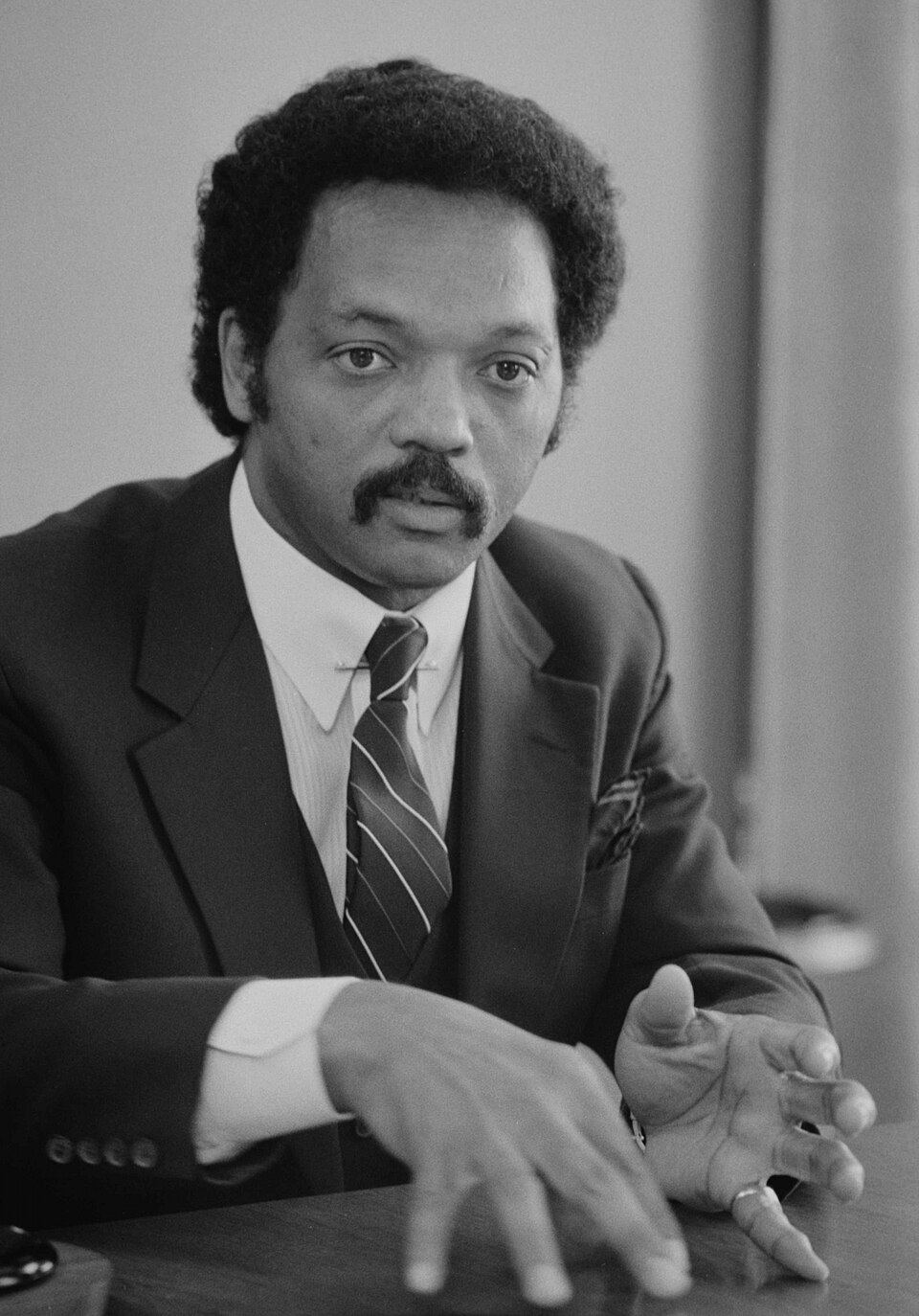
The Rev. Jesse L. Jackson Sr., a towering figure in the American civil rights movement who marched alongside the Rev. Martin Luther King Jr., reshaped Democratic politics with his trailblazing presidential campaigns and championed the causes of the marginalized through his Rainbow PUSH Coalition for more than five decades, died Tuesday. He was 84.
Rev. Jesse Jackson
Jackson died peacefully Tuesday morning surrounded by his family, according to a statement from the Rainbow PUSH Coalition, the organization he founded in 1996 through the merger of his earlier groups, Operation PUSH and the National Rainbow Coalition. No cause of death was immediately specified in the announcement, though Jackson had battled progressive supranuclear palsy (PSP), a rare neurodegenerative disorder, for more than a decade after an initial 2017 diagnosis of Parkinson’s disease. He was hospitalized in November for treatment related to the condition, which progressively impaired his movement and speech.
“Our father was a servant leader — not only to our family, but to the oppressed, the voiceless, and the overlooked around the world,” the Jackson family said in a statement. “His unwavering commitment to justice, equality, and human rights helped shape a global movement for freedom and dignity.”
Born Jesse Louis Burns on Oct. 8, 1941, in Greenville, South Carolina, Jackson grew up in the segregated South and was ordained a Baptist minister in 1968. He joined King’s Southern Christian Leadership Conference (SCLC) in the mid-1960s, becoming a key organizer in campaigns for voting rights, fair housing and economic justice. He was in Memphis, Tennessee, on April 4, 1968, when King was assassinated, cradling the civil rights leader in his final moments — an image that cemented Jackson’s place as a bridge between King’s era and the post-1960s fight for racial equality.
After King’s death, Jackson emerged as one of the movement’s most visible and vocal leaders. In 1971, he founded Operation PUSH (People United to Save Humanity, later People United to Serve Humanity) in Chicago, focusing on economic empowerment, education and employment for Black communities. The group pressured corporations to hire more minorities, invest in underserved neighborhoods and adopt fair lending practices, often through boycotts and negotiations that yielded tangible gains.
Advertisement
Jackson’s national profile soared in the 1980s with his runs for the Democratic presidential nomination. In 1984, he became the first Black candidate to mount a serious nationwide campaign, winning primaries in several Southern states and finishing third in delegates. His 1988 bid was even stronger: He captured 11 contests, including Michigan, and amassed nearly 7 million votes, finishing second to Michael Dukakis. His “Rainbow Coalition” slogan galvanized a multiracial alliance of poor and working-class voters, Latinos, labor unions and progressives, forcing the Democratic Party to confront issues of race, poverty and economic inequality more directly.
“Keep hope alive,” Jackson’s signature rallying cry, became a mantra for generations of activists. His oratory — passionate, rhythmic and rooted in the Black church tradition — inspired millions and helped pave the way for Barack Obama’s 2008 presidential victory, which Jackson celebrated as a fulfillment of the dreams he had pursued.
Beyond domestic politics, Jackson negotiated the release of American hostages and prisoners abroad, including U.S. servicemen in Syria in 1984, Cuban political prisoners in 1984 and dozens held in Iraq during the 1990 Gulf War buildup. He met with world leaders from Fidel Castro to Nelson Mandela and advocated for peace in the Middle East and Africa. In later years, Jackson remained active despite health challenges. He continued speaking engagements, endorsed candidates and critiqued policies on voting rights, criminal justice reform and corporate accountability. His son, Jonathan Jackson, serves as a U.S. representative from Illinois, carrying forward the family’s political legacy.
Tributes poured in from across the political spectrum and globe Tuesday. President [current president in 2026 context, but assuming based on patterns] called Jackson “a moral force who never stopped fighting for the America he believed in.” Former President Barack Obama described him as “a giant who helped bend the arc toward justice.” Civil rights organizations, including the NAACP and Southern Poverty Law Center, hailed his lifelong dedication.
Advertisement
Jackson is survived by his wife, Jacqueline, five children — including former U.S. Rep. Jesse Jackson Jr. — and numerous grandchildren. Funeral arrangements were pending. Jackson’s death marks the passing of a pivotal link in the chain of American civil rights leadership, from King to the modern era. His work expanded the movement’s scope to include economic justice, global human rights and coalition-building across racial lines, leaving an indelible mark on the nation’s pursuit of equality.