
Politics
UEFA set to drop boycott threat after FIFA assurances

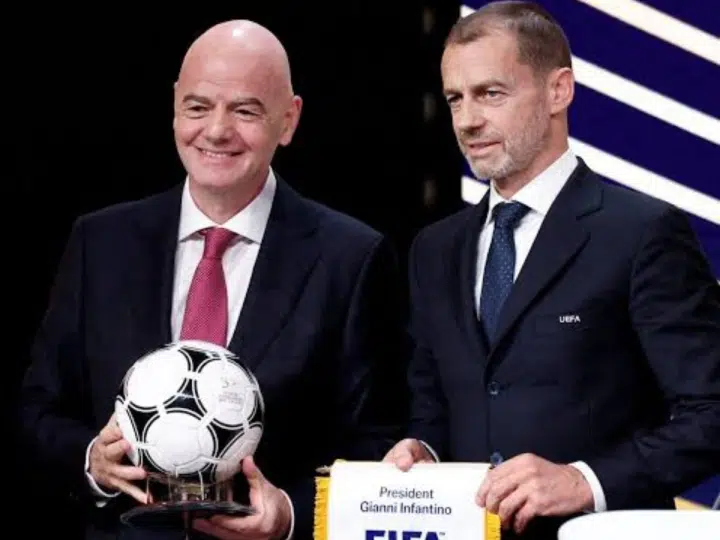

UEFA is poised to withdraw its threat to boycott FIFA competitions after receiving assurances that Gianni Infantino’s aborted plan to sell minority stakes in world cup commercial rights will not re‑emerge. The governing body is now ready to ease its stance. The matter is due to be discussed at Thursday’s executive committee meeting in Monaco.
The shift marks a significant moment in a dispute that has dominated global football politics for weeks. Earlier this month, UEFA insisted the conditions required to prevent a boycott had not been met. This was true even after Infantino apologised for errors and confirmed the FFE proposal was off the table.
Protecting UEFA players
UEFA’s position had been clear; guarantees were needed that FIFA would never again attempt to open governance or competitions to private ownership. The organisation has set the initial proposal as an attempt to disfigure the game. Europe’s 55 member associations voted to boycott all FIFA competitions until binding assurances were delivered.
Those assurances, sources say, have now been provided. While UEFA remains deeply critical of Infantino’s leadership, the governing body accepts that maintaining a boycott would risk harming players. In particular, it would affect those preparing for next month’s under‑20 women’s world cup.
Six European teams, including England, France, Italy, Portugal, Spain and hosts Poland are scheduled to compete in the tournament. UEFA insiders say the decision to step back from the boycott threat is not a concession. Instead, they describe it as a pragmatic move to avoid hurting young players and denying them a once‑in‑a‑lifetime opportunity.
One source close to discussions stressed that “this isn’t a climbdown”, insisting Infantino’s opponents “will continue until there are wholesale changes”. They added that the shift reflects “the reality of avoiding hurting young players” rather than any softening of Europe’s position on FIFA governance.
Infantino under sustained pressure
UEFA has led the backlash against Infantino since the FFE proposal emerged. The plan, which would have allowed private investors to buy stakes in a new commercial arm linked to World Cup rights, was met with widespread condemnation across Europe.
Infantino told national associations the proposal was “now off the table” and apologised for mistakes made during its development. However, UEFA maintained that assurances were still required to prevent similar attempts in future.
UEFA president Aleksander Ceferin has said he expects Infantino either to resign or face a challenge at FIFA’s presidential elections in March. European officials believe momentum is building behind calls for a change of leadership.
Europe’s long‑term strategy
Despite the expected withdrawal of the boycott threat, UEFA’s broader strategy remains unchanged. Senior figures say Europe will continue to push for structural reform within FIFA. This will include changes to leadership, governance and transparency.
The organisation believes the FFE proposal highlighted deeper concerns about FIFA’s direction under Infantino. While the immediate crisis may be easing, UEFA officials insist their campaign for reform will continue until there are wholesale changes.
What happens next
If the boycott threat is formally lifted on Thursday, preparations for the under‑20 Women’s World Cup will proceed without disruption. The tournament is scheduled to begin next month. Poland will host matches across multiple venues.
FIFA and UEFA have been approached for comment, though neither has publicly responded to the latest developments. Insiders expect both organisations to present a united front in the short term. Meanwhile, political tensions continue behind the scenes.
FIFA-UEFA’s fragile truce
The anticipated withdrawal of the boycott threat represents a fragile truce rather than a resolution. Europe remains deeply sceptical of Infantino’s leadership, and the assurances provided by FIFA are seen as a necessary step rather than a definitive solution.
UEFA’s stance reflects a balance between protecting players and maintaining pressure for reform. While the immediate threat to competitions may be receding, the underlying dispute over governance, transparency and leadership is far from settled.
UEFA’s readiness to drop its boycott threat marks a significant moment in football’s ongoing governance battle. Assurances from FIFA have eased the immediate crisis, allowing next month’s under‑20 women’s world cup to proceed as planned. Yet Europe’s push for change continues, driven by concerns over leadership and the future direction of the global game.
The dispute has exposed divisions among former players, drawn political attention and highlighted the fragility of trust between football’s major governing bodies. While the boycott may be lifted, the campaign for reform shows no sign of slowing. More importantly, the pressure on Infantino is set to intensify as March’s elections approach.
Featured image via the Canary
By Faz Ali

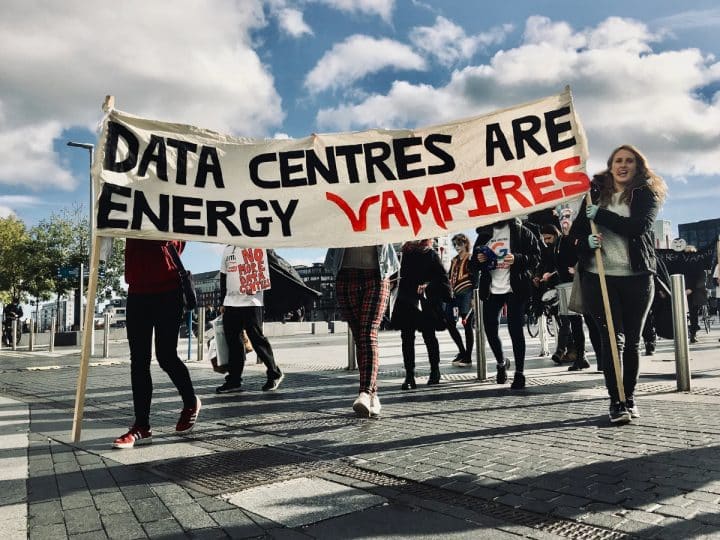

The “AI boom” has caused a surge in tech companies proposing to build massive data centres across the UK. Concerned about the resource use, disruption, noise, environmental impacts and the lack of public consent, local communities are pushing back.
Expansion and destruction
As the digital world expands so too does the amount of data that’s processed and stored. Data centres have become a key part of the physical infrastructure that enables this: they’re large – often huge – buildings that house arrays of servers, storage drives, cables, batteries and cooling systems.
Around 500 data centres have been built in the UK since the 1990s. But AI adoption is now driving a massive expansion, with the government expecting data centre capacity to double or even quadruple within the next few years. There are thought to be at least 100 proposed data centres angling to be given the go-ahead, and some of them are absolutely enormous ‘hyperscale’ developments.
It’s hard to overstate the demand AI expansion – and the data centres needed for it – is imposing on global resources: tech companies are sidelining their sustainability goals and using far more energy than ever before; drinkable water is being drained from places that desperately need it; hunger for minerals is driving yet more toxic and exploitative conditions for the people who mine them.
Concerned communities
Communities living near proposed data centres are increasingly worried about the noise, pollution and water stress their new neighbours would bring. They’re also seeing data centres consume space at the cost of agricultural land, local wildlife, housing and other valued infrastructure.
Nick Richards, who lives in east Cardiff where plans for a new data centre threaten a local hospital park and ride service, tells me:
The data centre will harm the community in many different ways. Staff and patients will have to spend up to an hour finding a parking space at the hospital. The gas turbines will have people living within a few miles breathing pollutants. Residents will be subjected to an intense humming noise continuously. My housing estate was only completed this year and most residents now fear they will never be able to sell their homes if the data centre goes ahead.
He also fears for how the community will fare as climate impacts intensify. He continues:
Then there’s the ‘heat island’ effect, where it’s understood that gas-powered data centres can raise the temperature of their surroundings by up to nine degrees. We’ve had a number of wildfires in that area this summer, and with 2027 set to be the hottest in a thousand years, I can’t picture things getting any better.
Communities respond
In Cardiff and beyond – including in London, Devon, Slough, Havering, Leeds, Selby and across Scotland – local people are organising their opposition to new data centres via campaigns and protests.
Local authorities are meant to inform residents who stand to be impacted by planning decisions and give them a chance to have their views considered. But campaigners are having to take on a lot of this work themselves, as Richards tells me:
I’ve spent two days walking door to door notifying the residents of the development; only 15% of them knew about it. The Local Authority’s public consultation consisted of four A4 notices on lampposts and three classifieds on page 38 of the Western Mail newspaper.
Communities have a huge challenge on their hands, especially as the government seems determined to fasttrack developments in the hope of becoming an AI ‘superpower’. Even when councils take positions against new data centres – for example, in Buckinghamshire, Slough and Tower Hamlets – they can find themselves overruled by ministers.
Momentum building?
Despite the hurdles, campaigners are buoyed by the groundswell in the USA where opposition to data centre expansion is becoming mainstream. Backlash there has blocked or delayed at least 75 major projects within a three-month window. New York and Texas now have temporary bans on new data centre approvals, with more than a dozen states considering similar action.
But could the grassroots organising and legal challenges we are seeing here in the UK replicate this momentum? All the campaigners I’ve spoken to hope it will, but also acknowledge how much effort it will take. According to Richards:
You can’t get disheartened… if you keep speaking to people, things will start to happen.
Featured image via The Commons / Climate Camp Ireland
By Abi Perrin
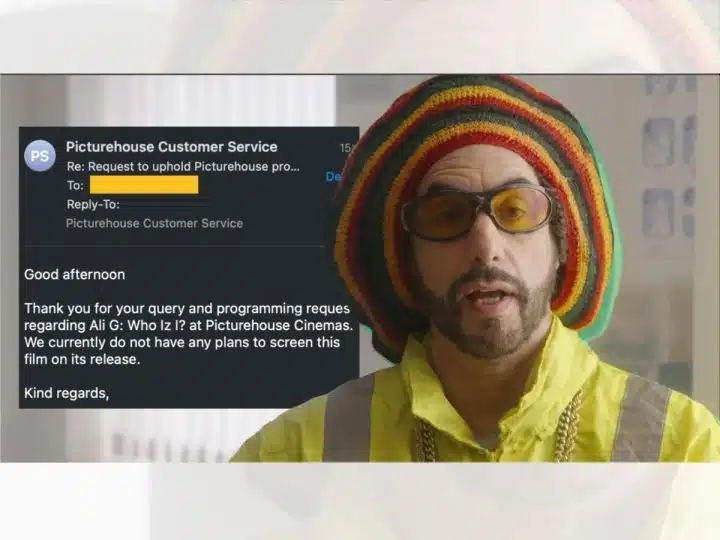

On 26 August, Sacha Baron Cohen and Sony Pictures showed off the new Ali G sequel. The response — it’s fair to say — has not been positive. And now, campaigners are asking cinemas to not show the film, with one UK chain already confirming the following:
Just in: Picturehouse Cinemas (UK chain) has already responded to action participants, saying that they will NOT screen the new Ali G film. https://t.co/oBYVSMaY6B pic.twitter.com/4WEx1mCiMO
— NewsCord (@newscord_org) August 26, 2026
Pushback
Cohen is receiving backlash for three primary reasons. The first is that the character is basically just Cohen doing blackface:
This tweet typifies the whole problem with Ali G. The character is supposed to be a white guy from Stains, Surrey who “thinks he’s black” but because his conception of blackness is inherently racist, he’s now a “swaggering London bad boy” whatever the fuck that means https://t.co/e7CkEYx877
— Steve Nyash (@yadanknow) August 25, 2026
When Ali G first came out, the joke was seemingly pastiching white guys who appropriated what they saw as Black culture in London. Whether you bought that joke or not, it’s clearly worn thin to the point of being non-existent at this point, and as such people are understandably taking the character to be Cohen’s impression of Black people.
The new Ali G is also facing pushback because of Cohen’s support for Israel – especially as the trailer literally features an Israeli government talking point:
“How dangerous is Iran?”
Sacha Baron Cohen, who lobbied TikTok for Israel during the Gaza genocide, uses his Ali G film to perpetuate the idea that the only effective state actor facing Israel is “dangerous.” https://t.co/myMbyBQn8T — Lowkey (@Lowkey0nline) August 26, 2026
The comedy film is also receiving pushback for not looking very funny:
Just to confirm. I don’t think it looks bad because of politics or appropriation. I just don’t see any funny bits. Thanks.
— Elliot Eastwick’s World Famous Hot Sauce (@WorldFamousHot1) August 25, 2026
Campaign against Ali G
In response to all this, NewsCord have issued the following statement:
New campaign: demand cinemas worldwide refuse to screen the new Ali G film.
Sacha Baron Cohen retired Ali G in 2007. Amazon has revived him. On 23 October, Ali G: Who Iz I? opens in cinemas worldwide, and Sony Pictures is selling it to the public with the line “He iz back. We ain’t liable.”
The distributor is joking about liability. But the screens belong to the cinemas, and a booking is a choice.
In January 2000, the Guardian reported the verdict of Black British comedians under the headline “Comics find Ali G is an alibi for racism”. Felix Dexter said the act lets “the liberal middle classes laugh at black street culture” while keeping their sense of political correctness.
The catalogue behind it hurt community after community. The Kazakh American Association told Amazon that in Borat “a white person adorns a Kazakh persona” and belittles everything Kazakhs stand for. Kazakh children were bullied at school off the back of the joke.
On The Dictator, Jack Shaheen said “Arabs are being ridiculed again and again and again”, and Dean Obeidallah called it a “modern-day minstrel show”.
Studios sell films. Cinemas choose them. No film is owed a screen.
So we’ve created a campaign where you can voice your opinion to the cinemas.
One click sends up to 20 personalised letters in your name to the booking desks of Odeon, Cineworld, Regal, Vue, Everyman, Picturehouse, Showcase, Cinemark, Harkins, B&B, Landmark, Cineplex, Event, Kinepolis, VOX, Reel, Pathé, CinemaxX, Cinépolis, Cinemex and Nordisk Film.
Every address is verified on the chain’s own website.
Non-English chains get the letter in their own language.
You read every letter before it is sent. The chains decide their bookings in the next eight weeks.
The link to the email campaign can be found here.
Zionists and cinema
It’s unlikely cinemas will ever put a blanket ban on movies linked to Zionists. We say this because several prominent movie producers have supported Israel throughout the genocide.
For clarity’s sake, when we say ‘Zionists’, we mean people who actively support Israel existing as an expansionist colonial state – a state which serves as America’s foothold in the Middle East. One such supporter is Larry Ellison, who owns Paramount Studios and is a major donor to the IDF (a.k.a. the ‘IOF’ or ‘Israeli Occupation Forces’). Ellison also owns Oracle – a company which has continued to provide tech solutions to Israel throughout the genocide. He was additionally involved in the US takeover of TikTok:
Many oppose Larry Ellison taking over TikTok, but do they know his firm Oracle stores data of the UK Home Office, Ministry of Defence & NHS?
He offered Netanyahu director role & employed relative of the UK PM at the same time as bidding for the contract.pic.twitter.com/mcI4ImLsB4
— Lowkey (@Lowkey0nline) September 19, 2025
Actor Mark Ruffalo recently spoke out against Paramount’s attempts to buy out Warner Bros, and he did so by pointing out Ellison’s links to the genocide. Paramount smeared Ruffalo as an ‘antisemite’. The response to that was an outpouring of support for Ruffalo from people who oppose the mass killings which Israel is continuing to perpetrate in Gaza.
Ali G loses his mojo
The backlash to the new Ali G movie is a sign that support for Israel is increasingly toxic. The reason for this is that the genocide has made it completely impossible to present Israel in a favourable light.
Of course, it’s possible many cinema chains aren’t going to show the movie purely because it doesn’t look very good. At the same time, it would have needed to be Citizen Kane levels of amazing to escape the backlash that now accompanies Cohen and his increasingly dated caricature.
Featured image via the Canary
By Willem Moore


The ‘People’s Prime Minister’ Andy Burnham has struck a concerning deal with Ukraine. It will see Ukrainian-developed war-tested AI used to ‘protect’ UK military bases from protestors. It seems like Burnham is going to pick up where Keir Starmer left off – a spiral into anti-democratic authoritarianism.
A government press release published on 24 August claimed:
New partnership set to see the UK and Ukraine develop battle winning technology as Britain secures access to Ukraine’s Avengers AI Labs.
A landmark AI deal between the UK and Ukraine has been signed today as the two countries join forces to develop new military capabilities and the technology of the future.
Secreted lower down in the document, the government has said (author’s bold):
The first of the trial technology is about to be rolled out at a UK defence site to protect bases from protestors and hostile actors trying to gain intelligence.
The press release confirms:
The project, which uses Ukrainian data and UK technology, turns buried fibre-optic cables into a giant AI-enabled sensor. As well as military bases, the technology could be rolled out to protect airports, prisons and even railways and energy plants in the future.
Burnham’s state visit
Burnham has spent several days in Ukraine leading an official state visit. He also talked up giving Ukraine more missiles too:
To underline the strength of this commitment, the Prime Minister is set to announce that the Government has agreed that defence firm MBDA can release classified information on UK components for the long-range missile, SCALP, as Ukraine and France look to establish local assembly lines in Ukraine.
Burnham’s commitment to the war machine is evident. So is that of his cabinet. Defence secretary Wes Streeting gave a speech to arms firm leaders on 23 July, soon after being appointed, which:
promised new arms contracts worth over £11 billion and pledged unstinting support for rearmament in a speech that never deviated from Ministry of Defence approved themes.
The same report from Europe Says stated:
Also today his boss, Prime Minister Andy Burnham, committed to allowing the US to use RAF bases in the UK to bomb Iran.
The new boss, then, same as the old boss.
Burnham’s gimmicky politics and DJ sets might appeal to centrist dads and naive liberals. His branding might appeal to middle-class ‘left’ cosplayers. But the increasingly obvious truth is that whether or not he likes Joy Division, his underlying politics are perfectly in line with establishment consensus. Labour is still for war, still for capital and still for US empire. Let’s at least be frank about it.
Featured image via the Canary
By Joe Glenton



4 min read
The Labour MP behind the campaign to make 2026 the “summer of sex” said she wants to talk about the subject so much in Parliament that it becomes “boring”.
The MP for South Derbyshire, Samantha Niblett, said she wanted to shift the Overton window – a term which means ideas being accepted as mainstream – so that talking about consent, intimacy and pleasure is entirely normalised.
Speaking on the latest episode of PoliticsHome podcast The Rundown, which will be published on Friday (28 August), Niblett said she hopes her campaign for lifelong sex education will help her MP colleagues feel more comfortable talking about the subject in the House of Commons.
“I have spoken to male MPs who are really supportive, but who are really scared about talking about it when it comes to the debate in the chamber, because they don’t want to be known as the ‘pervy male MP’, and that’s part of the problem,” Niblett said.
“But you know how we see the Overton window shift what we think of as normal in politics, I kind of want to be doing the same thing with sex. So, the more I talk about it, the more it’ll be boring, and when it’s boring, then won’t that be great?”
The Labour MP faced criticism, some of it from MPs in her own party, when in an interview with PoliticsHome earlier this year she announced her campaign to overhaul sex education in Britain.
Niblett said a more “inclusive” approach would encourage people to talk about sexual pleasure without feeling “ashamed”, as well as help people better understand consent, prevent abuse and violence, and raise awareness of how childbirth, the menopause, stress and other health conditions can impact sexual satisfaction.
She hosted a campaign launch party at a rooftop bar in London last month, where she told PoliticsHome that some MPs were “on a journey” to supporting it.
Speaking on the podcast, Niblett said the negative responses and becoming known as the “sex MP” have not put her off: “I am happy to take it on. I’m a belligerent swine.”
However, she admitted that some of the criticism had affected her, including a recent article which asked if she was “the most ridiculous MP in Britain”. “I am only human. Of course, there are going to be some times where it’s knocking me down,” she said.
“But that’s also why it’s absolutely delightful when I have Thames Valley Police reach out to me to say, thank you so much for your campaign. When I have spoken to the first-ever occupational therapist to work in a sexual health clinic in a hospital, saying, brilliant, thanks for your campaign’.
“I feel I’m justified in the work that I am doing, but I don’t think I will be alone for long.
“I think there will be more and more MPs who feel that they can talk about it, and then we can share the load.”
The Labour backbencher has secured a debate in Parliament on the topic in the autumn, and is currently working on a briefing for her MP colleagues about her campaign, which hopes to normalise conversations about sex that politicians usually shy away.
“If we start to normalise it, then it’s going to hopefully make it easier for some of my colleagues,” she said.
“I know there are loads of them that feel the same. They’re just a bit uncomfortable about getting the conversation started because they are nervous about the pushback, because they are nervous about the single clips for headlines.”
The Rundown is presented by Alain Tolhurst, and is produced and edited by Lulu Goad and Ewan Cameron for Podot
- Click here to listen to the latest episode of The Rundown, or search for ‘PoliticsHome’ wherever you get your podcasts.


Manchester City have signed Morocco midfielder Ayyoub Bouaddi from Lille on a five-year deal. The Premier League club confirmed the move on 26 August 2026, posting images of the 18-year-old signing on the dotted line.
Manchester City did not disclose the fee, although Reuters, citing British media, reported it was EUR 86 million.
Bouaddi joined Lille’s first team in 2023, aged 16, becoming the club’s youngest senior player. He went on to make 96 appearances for the French side, including 30 in Ligue 1 last season with Lille finishing third.
He also caught the eye in Europe during Lille’s Champions League win over Real Madrid in 2024.
Although born in France to Moroccan parents, Bouaddi came through the French youth system before choosing Morocco for his senior international career.
He made his senior debut for the Atlas Lions last May and was part of their 2026 World Cup squad, starting five of their six matches as they reached the quarter-finals.
Known for his ability to dictate the tempo, Bouaddi can maintain possession under pressure and play the ball forward from midfield.
His move to Manchester City comes as the club reshapes its midfield following the departures of Rodri, Bernardo Silva and Tijani Reijnders. City also signed England midfielder Elliot Anderson from Nottingham Forest last month for a reported £116 million.
In his first interview since the signing, Bouaddi said:
It’s a dream come true to join this club and to be able to call myself a City player.
For me, Manchester City is the best club in the world.
City will look to Bouaddi to make his mark at the club and play a big part in what comes next.
Featured image via Manchester city / the Canary
By Alaa Shamali
I’m writing this on the train back to London from Edinburgh. I always feel rather melancholy at the end of a Fringe run in the city I have grown to love. Appearing at the Fringe is something I never though I would ever do, but when I look back on my 64 years I think it’s one of the most enjoyable things I have ever done. The feedback this year has been absolutely excellent. People have made a point of coming up to me and telling me that they love my conversational style and that they have been to several shows. One gentleman said he had bought tickets to all fourteen!

It’s been quite a test to do three shows a day, but nothing good was ever easy. It’s not that I do any prep for them – I don’t, because I want them to be conversations, not interviews. But with only a short time between the end of one show and the beginning of the next, there’s not much time to talk to the guest before we go on stage.

Ticket sales were up more than ten per cent on average per show, which tells its own story. We only had two shows where I would describe the ticket sales as disappointing, but that’s inevitable when you do fourteen. The top five sellers were
1. Kemi Badenoch
2. Nicola Sturgeon
3. Zack Polanski
4. Sir John Curtice, Michael Crick, Brian Taylor
5. Nazanin Zaghari-Ratcliffe & Richard Ratcliffe
Many people asked which was my favourite show. I should probably say it’s an invidious question to answer, but will say it was the Nazanin Zaghari-Ratcliffe & Richard Ratcliffe show. It was quite an emotional moment for me because whenever I used to interview Richard on LBC I’d always end the interview saying the next time I would interview him I hoped it would be with Nazanin too. And so it came to pass. At times, you could hear a pin drop in the room. It was absolutely spellbinding.
A final thanks to the Seabright Live team (below) who do all the work behind the scenes to put the shows on. James, Andrei, Ollie, Kate, Gaby, Reuban, Luke and Benji all did a fantastic job in getting all the guests there, handling their demands and making it look and sound good on stage. I never forget that without them all, it wouldn’t happen at all.


And so the prep begins for next year’s shows. Who should I invite? Email me suggestions or leave a comment here.
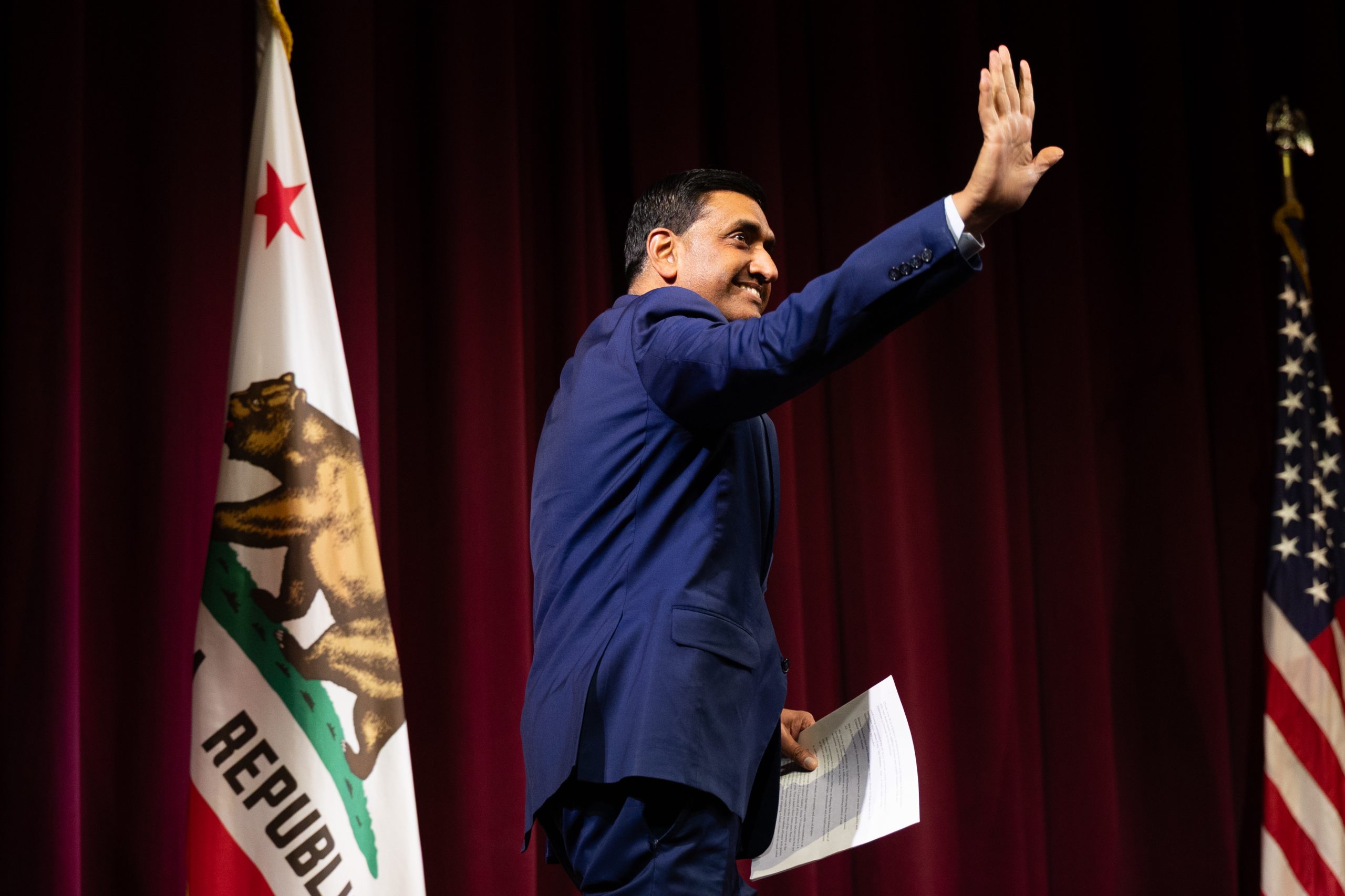
Top Democrats are using 2026 as a launching pad for potential 2028 presidential runs.
From progressive Reps. Ro Khanna (D-Calif.) and Alexandria Ocasio-Cortez (D-N.Y.) to the more moderate Pete Buttigieg and Pennsylvania Gov. Josh Shapiro, Democrats have sought to shape their party by endorsing in contested primaries this year. They’ve traveled the country to raise their own profiles and elevate candidates they see as the future of the party.
Their strategies have not always been successful — but they have been revealing: Some endorsed against incumbents based on generational or ideological differences. Some weighed in early to give candidates credence, while others waited until the last minute to help them close out the race. And some have focused on purple districts and other competitive races that could determine control of Congress in the fall.
“If you’re thinking about running for president, you need allies,” said Mike Nellis, a Democratic strategist whose firm works with House and Senate campaigns across the country. “The more that you’re out there, trying to get people elected and making a meaningful difference, voters are going to remember that.”
Appearing with candidates on the campaign trail is an opportunity for potential 2028 candidates to create social media buzz, Nellis noted. Traveling gives them opportunities to connect with donors and elected officials across the country who might be helpful for a future presidential run and pressure test how messages work in various parts of the country. For those not up for an election of their own this year, it’s also a way to stay relevant.
Some potential presidential candidates have been particularly prolific, while others have been more cautious or stuck to their home states, according to a POLITICO review of endorsements in House, Senate and gubernatorial races. And a handful mostly stayed out of this year’s primaries.
The most prolific endorsers
Few members of Congress threw out as many endorsements as Khanna.
The California representative, who has said he is “seriously considering” running for president in 2028, endorsed in more than a dozen races, often serving as one of the earliest national backers of progressive candidates such as Kat Abughazaleh in Illinois’ 9th District and Analilia Mejia in New Jersey’s 11th District. Abughazaleh lost her race, while Mejia won.
Khanna also backed left-wing candidates that other national progressives shied away from, most notably democratic socialist state Rep. Francesca Hong in the Wisconsin gubernatorial race.

His record is mixed. Hong lost and former Maine Senate Democratic nominee Graham Platner, who Khanna stood by despite a series of controversies, had to drop out after winning a primary but facing an allegation of sexual assault, which he denies — at which point Khanna, like many others, withdrew his endorsement.
Khanna told POLITICO he likes “endorsing early when an insurgent candidate is a bit of a longshot because that is when they need the endorsement most.” He looks for candidates who support Medicare for All and taxing billionaires and are opposed to foreign wars.
“My philosophy is to give those who are outsiders and have to scrape their way in — like I had to — a fair shot,” he said in a text message.
Ocasio-Cortez also endorsed a large slate of progressive candidates, but she’s been more selective than Khanna — a difference in approach that’s sparked some infighting within the Bernie Sanders wing of the progressive movement.
Critics have argued she’s played it too safe. But her selectivity has also meant she avoided high-profile stumbles.
Ocasio-Cortez has positioned herself as more of a closer this cycle. In California’s 22nd District, a battleground in the Central Valley, Khanna endorsed progressive professor Randy Villegas last September, while Ocasio-Cortez dropped her endorsement in May — about a month before the primary. Villegas ultimately defeated a moderate lawmaker backed by the Democratic Congressional Campaign Committee and is among the progressives who will now try to knock off an incumbent Republican in November.
Ocasio-Cortez actively campaigned for progressives in several contested battleground primaries, rallying with Sam Forstag in Montana and alongside Sanders with Abdul El-Sayed, who narrowly won the Democratic Senate nomination in Michigan.
She recently threw her support behind Sen. Ed Markey (D-Mass.), who faces a primary challenge from Rep. Seth Moulton next week.
The other most frequent endorser among potential Democratic 2028ers this cycle played in a different lane. Former Transportation Secretary Pete Buttigieg, a moderate, has been active on the campaign trail, visiting most presidential battleground states and endorsing in key Senate primaries, including Rep. Angie Craig in Minnesota’s Democratic Senate primary — which she lost to progressive Peggy Flanagan — and state Rep. Josh Turek in Iowa’s Democratic Senate primary, which he won.

Buttigieg, who has said he is “more inclined than not” to run for president again in 2028, has also notched endorsement wins with Rebecca Cooke in Wisconsin’s battleground 3rd District and former Hartford Mayor Luke Bronin in Connecticut, who defeated incumbent Rep. John Larson earlier this month.
Most governors stuck close to home
Governors eyeing White House runs kept their endorsements closer to home, largely trying to play kingmaker within state lines as they face their own reelection fights.
The local focus allows them to flex their influence while avoiding criticism for nationalizing their own states’ politics. And they’ve campaigned aggressively for their chosen candidates — political power plays that not only strengthen their standing on home turf but could also serve as springboards for national bids.
Illinois Gov. JB Pritzker pumped $10 million into a super PAC supporting his lieutenant governor, Juliana Stratton, in the contentious Senate primary to replace retiring Sen. Dick Durbin, and appeared alongside her on the campaign trail. He described the race as “personal” to him; Stratton won by 7 points.

Pennsylvania Gov. Josh Shapiro expended significant political capital in one of Democrats’ top House targets in his state, helping recruit longtime ally and firefighter union chief Bob Brooks into the race against GOP Rep. Ryan Mackenzie in the state’s swingy 7th District and then working to elevate him out of a four-way primary. Shapiro fundraised for Brooks, cut an ad for him and joined him on the stump ahead of Election Day; Brooks won by nearly 20 points.
Shapiro was also one of a handful of Democratic attorneys-general-turned-governors who backed Colorado Attorney General Phil Weiser in his gubernatorial primary against Sen. Michael Bennet. Weiser won by 14 points.
In Maryland, Gov. Wes Moore backed state Del. Adrian Boafo in the crowded race to replace retiring Rep. Steny Hoyer and boosted Rep. April McClain Delaney in her bruising primary against former Rep. David Trone — including recording a robocall on her behalf. An adviser to Moore said the governor had preexisting relationships with both candidates he endorsed, and that he prioritizes local and in-state races as he seeks to make endorsement decisions that will benefit his constituents.
Michigan Gov. Gretchen Whitmer also stuck to her state, only really playing in Michigan’s high-profile Senate race. She endorsed Rep. Haley Stevens in the final stretch of the race, although she wasn’t active on the campaign trail in the same way Pritzker was for Stratton or Shapiro for Brooks.
Disagreements among moderates
Even among candidates occupying a more centrist lane heading into 2028, there was room for disagreement.
Sen. Elissa Slotkin (D-Mich.), a former national security official, endorsed retired Navy SEAL Matt Maasdam, a moderate in Michigan’s 7th district, which she previously represented. Several Democrats had hoped she’d back former foreign service officer Bridget Brink, a fellow moderate — and as they split the centrist vote, progressive William Lawrence ascended to the nomination in the toss-up district instead.
A person familiar with Slotkin’s thinking, granted anonymity to speak candidly about internal deliberations, said that she connected better with Maasdam and saw him as a stronger general election candidate.
The person also acknowledged that Slotkin’s decision to wait to issue her endorsement until three weeks before the primary didn’t leave enough time for voters and party leaders to coalesce around Maasdam.

Sen. Mark Kelly (D-Ariz.) rolled out a slate of endorsements of veteran candidates, mostly for the general election, but has backed a range of other Democrats in primaries. That includes DCCC-backed political novice Marlene Galan-Woods in his home state, only for her to lose the primary in Arizona’s 1st District.
“As Navy combat veteran and former NASA astronaut, Mark Kelly knows the country is best served by leaders who represent their communities and bring a range of different backgrounds and experiences to the job. It’s why he’s endorsed candidates in competitive primaries and campaigned for Democrats up and down the ballot,” Kelly spokesperson Marisol Samayoa said.
In next week’s primary in New Hampshire’s 1st District, Kelly is supporting Stefany Shaheen, the daughter of his Senate colleague Jeanne Shaheen, praising her as a “fearless leader” who would stand up to President Donald Trump.
New Jersey Gov. Mikie Sherrill also went on a recent endorsement spree focused on military veterans. But she’s backing Maura Sullivan in the race against Shaheen next week, along with Rep. Seth Moulton in his primary against Sen. Ed Markey, who has gotten backing from progressives including Ocasio-Cortez.
“The fight isn’t moderates versus DSA candidates,” Sherrill told POLITICO earlier this month. “The fight is if we are going to have strong people in the Democratic Party that are going to actually make change to make people’s lives better, or people who you can just expect more of the same.”
The ones who (mostly) sat it out
Not every potential presidential candidate was eager to endorse this cycle.
Even after working to redraw boundaries in his home state to create more safely blue seats, California Gov. Gavin Newsom stayed out of the federal races — and the contest to succeed him. Kentucky Gov. Andy Beshear endorsed after primaries in his home state were complete. Former White House Chief of Staff Rahm Emanuel, who is considering his own White House bid, also eschewed endorsements.
And Kamala Harris declined to weigh in on the majority of competitive primaries because of her high profile, according to a person familiar with her thinking who was granted anonymity to speak candidly. The exceptions were “based on the closeness” of the former vice president’s relationships with the people she did endorse.

Harris recorded a robocall for Rep. Jasmine Crockett in the Texas Senate primary before Crockett eventually lost to James Talarico. She backed Del. Stacey Plaskett ahead of her U.S. Virgin Islands’ gubernatorial primary victory earlier this month. She has also endorsed Dan Koh in next week’s primary for Massachusetts’ 6th District.
All three candidates have close ties to Harris. Crockett served as co-chair of Harris’ 2024 presidential campaign, Plaskett endorsed Harris when she first ran for president in the 2020 primary, and Koh is a former Biden administration official.



3 min read
Imagine a warehouse where fleets of unmarked vans pull up every day. Their drivers break in, load up everything on the shelves, and sell it to businesses around the world.
No contracts are signed. The warehouse owner gets nothing. Multiply that by every business in the country, and you have a picture of what is happening to almost every major website in the UK, where bots harvest content on an industrial scale.
Many gather data to fuel AI models, and others extract valuable information from online businesses. Bots now account for more than half of all internet traffic, yet website owners cannot identify or verify 99 per cent of the bots attempting to access their site. There is no information on who is operating the bot – whether it be an AI firm, a search engine, or someone who just wants to sell the data on – or what they’ll do with the content.
Stealth bot operators have created a black market for data already estimated at over $1bn globally, growing fast as AI expands. British businesses produce some of the world’s most valuable digital content and data and so are squarely in the crosshairs.
The result is a wild west, where value is extracted with no accountability
Many bots are run by third-party companies set up specifically for this purpose. Online retailers are a prime target, with bots stripping out pricing and product data so relentlessly that they crash sites and lock out real customers. In the travel sector, bots add flights to their cart without buying them, blocking real customers from booking.
Other bots copy trusted journalism, feeding it straight into AI assistants the moment a user asks a question, so the user never visits the publisher’s site. If there’s no return on investment in trusted journalism, the stories AI can’t function without simply won’t get written.
Website owners often can’t see any of this. Bots disguise themselves, meaning attempts to block them are routinely circumvented. The result is a wild west, where value is extracted with no accountability.
A website owner should have the same basic ability to control who accesses their property as any high street retailer does. That is why I am introducing a Private Member’s Bill with a simple principle: if you run a bot that accesses and copies content from a website, you must tell the owner who you are and what you intend to do with it.
The principle at the heart of this is about being able to enforce property rights – a principle that underpins the efficient operation of market economies.
Once bots must identify themselves, an owner can see who is knocking on their door and decide whether to let them in, block them, or strike a deal on agreed terms, giving them real leverage to negotiate the value of what they’ve built.
This proposal is not anti-tech. It places no requirements on AI models. It doesn’t even tell the bots what to do. Many major search and AI firms already identify their bots responsibly. Honest operators stand to benefit as greater transparency separates them from the stealth operators. Right now, many website owners are pushed towards blocking all non-human traffic indiscriminately; my Bill flips that incentive, making transparency the best route to access.
There is an increasing awareness in other jurisdictions of the threat to publishers from anonymous bots. In the United States, members of the House of Representatives have introduced the Stealth Bot Prohibition Act, which would require bots to disclose their identity and purpose.
This is a complex problem with a simple solution, and I hope the government will support this proposal for a fairer, richer digital economy in the UK. The longer we wait, the more entrenched this wild west becomes, and the harder it will be to put things right.
Damian Hinds is Conservative MP for East Hampshire
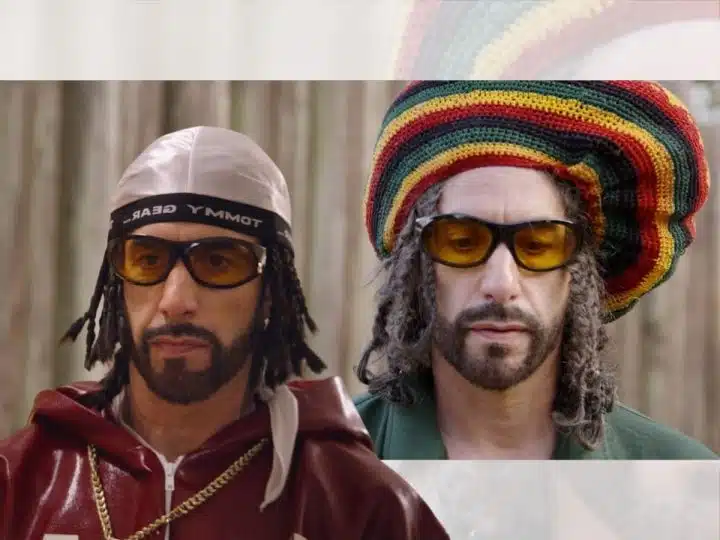

On 26 August, Sacha Baron Cohen and Sony Pictures gave us a look at the upcoming Ali G sequel. If you’ve been frozen in ice since the days of UK Garage, you may be wondering “is it, is it wicked?”. The response from many is ‘no’ – it is not wicked – and for a variety of reasons:
That Ali G trailer is worse than I thought it would be.
It’s the same clichéd, outdated, stereotype stuff & you can tell it's forced. Nobody is buying that a 54-year-old man speaks like that.
He obviously slips Iran in there. I say this as someone who grew up watching Ali G.
— Mukhtar (@I_amMukhtar) August 25, 2026
Ali Genocide
Sony Pictures describe the new movie as follows:
After twenty years spent “chillin’, tokin’ and bonin’”, Ali G is shocked to discover that his long-term girlfriend, Julie, is 8 months pregnant. Faced with an extra mouth to feed, he gets off his batty and heads to America to reclaim his former glory… but soon encounters adversaries who will ultimately threaten his and his child’s very existence. Sacha Baron Cohen’s new film, ALI G: WHO IZ I? marks his directorial debut and will be released in cinemas on October 23 by Amazon MGM Studios.
The original Ali G movie was a work of fiction; the sequel adopts the Borat model of having Cohen meeting real people while in character. While Borat was much more successful movie than Ali G, a big problem for viewers is that they know a lot more about the real Sacha Baron Cohen. Specifically, what they’ve taken exception to is his support for Israel; support which he gave when Israel was subjecting Palestine to apartheid conditions, and which has continued throughout the genocide in Gaza.
Thread Sacha Baron Cohen is being roundly condemned for his latest racist skit on national TV.
But few people know how closely he has worked with both US and Israeli intelligence throughout his career. My @MintPressNews investigation explores this:https://t.co/tmjTynAOXK
— Alan MacLeod (@AlanRMacLeod) October 26, 2024

Because of all this, people are now speculating on what that the ‘G’ in ‘Ali G’ stands for:
Ali Genocide https://t.co/7nngKwtcZ6
— Jake Hanrahan (@Jake_Hanrahan) August 25, 2026
It seems Amazon, a company which directly assists the Israeli military in killing people, is financing and distributing Israel lobbyist Ali Genocide’s new “film.”
Amazon also worked on his last Borat “film” in 2020. https://t.co/DkVwAdIIwF
— Lowkey (@Lowkey0nline) August 25, 2026
Another big issue people have is the use of blackface:
Variety have spent the last week pushing the lie that mark ruffalo is somehow antisemtic for opposing apartheid Israel’s genocide and they post this racist shit like it isn’t deeply offensive blackface shite https://t.co/vekCexxqN0
— jan (@smerkinkones) August 25, 2026
lol this is hilarious. I want a Jamaican person to do a parody of a Jewish man because it’ll be equally as hilarious ofc — Kawhi L (@KawhiLenz) August 25, 2026
 https://t.co/3MeT11n9wa
It’s worth noting that Cohen isn’t playing a Black man; he’s playing a white man who seems to have deluded himself into thinking he’s a Black man. There are potentially situations in which a comedian could do something interesting with this setup. This does not seem to be one of those situations.
Some people believe the Ali G concept is simply past it’s sell-by-date:
Just a completely outdated character now. I don’t mean that in a “friend that’s too woke” way – not that you can’t play this character any more because it’s insensitive, just these people, that style, that subculture doesn’t exist any more. https://t.co/QzNMb6u45c
— Oisín (@OisinMul_) August 24, 2026
Others just aren’t finding much to laugh at:
Just to confirm. I don’t think it looks bad because of politics or appropriation. I just don’t see any funny bits. Thanks.
— Elliot Eastwick’s World Famous Hot Sauce (@WorldFamousHot1) August 25, 2026
Popcorn
Cohen and Sony may have crafted a perfect storm of problems here. Whether it’s anti-Zionists or people who think comedies should be funny, this movie seems destined to upset everyone.
No wonder he looks so tired in the PR footage:
Sacha Baron Cohen is older than Victor Meldrew was when One Foot in the Grave started
He’s also 10 years older than Richard Madeley when he dressed up as Ali G https://t.co/yPIYXbBI02
— Ant (@M0kujin) August 25, 2026
Featured image via the Canary
By Willem Moore
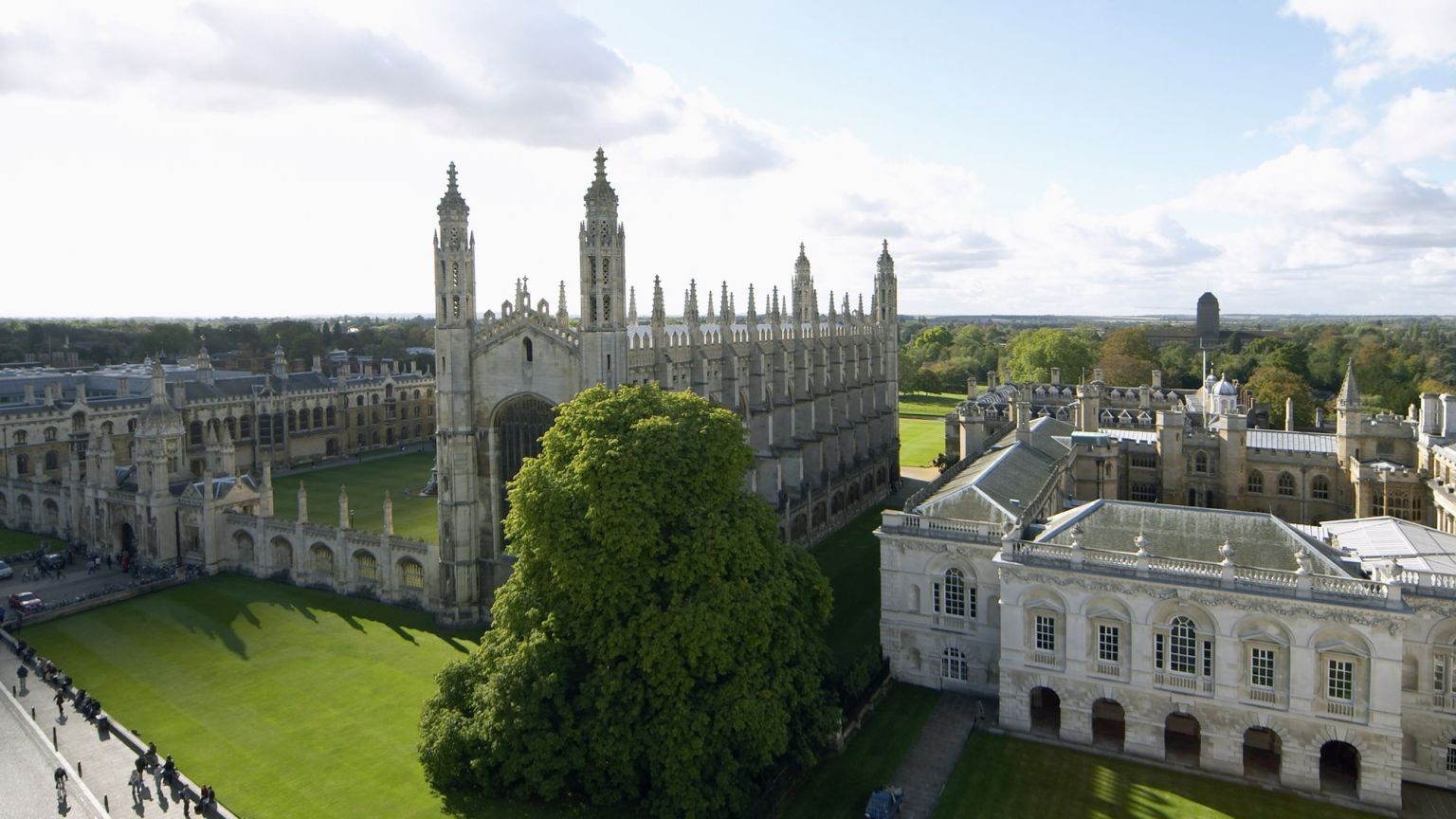
Next time someone asks me what I mean by ‘suicide of the West’, I’m going to tell them that Cambridge University has a professor who once said Muslims should build ‘advanced weaponry’ for the coming ‘jihad’ to elevate Islam ‘over all other [religions]’. I’m going to let them know that at one of the highest seats of learning in Christendom, on the same dappled lawns walked by William Tyndale, Isaac Newton and Alan Turing, there now skulks an academic who once said ‘Allah’s reward’ will be ‘immeasurable’ for those who make ‘machinery for jihad’. For there it is, in all its snivelling idiocy and decadence: the West’s death wish.
Her name is Farah Ahmed. She’s an assistant research professor in Cambridge’s education faculty, the same department that employed the late fabulist, Jason Arday. Only where his wacky life story had been highly embellished, Ahmed’s is all too real. She was once an activist in the virulently bigoted Islamist outfit, Hizb ut-Tahrir. It was during her mingling with those homophobic, Jew-hating religious supremacists that Ms Ahmed wrote lovingly about ‘jihad’ while lamenting the ‘corrupt tradition[s]’ of the West. Never mind Allah’s reward – Cambridge’s reward for the woman who once spouted such medieval drivel has been an assistant professorship.
It was the sterling reportage of Andrew Gilligan at the Spectator that brought to light Ahmed’s mad old writings. In his latest piece, Gilligan reveals that she once co-authored a crazy paean to jihad with another senior Hizb activist, Nazreen Nawaz. It was published in a Hizb pamphlet in 2002 and republished in 2017 (Ahmed was not involved in the republication). The authors lay out their chillingly intolerant dream: an education system built solely around Islamic pieties, in which nothing will be taught that ‘contradicts with Islam’. ‘Freedom, nationalism, democracy, evolution’ – no such haram idea will get a look-in in the Islamo-dictatorship.
Ahmed and her co-author fantasise about abolishing all schools except Islamic ones. No schools may be ‘established on any other religion’, they say. As for higher education – its sole purpose, as Gilligan summarises, would be to ‘equip Muslims for conquest’. So the only reason to ‘study engineering’ would be to ‘aid the development of machinery for jihad’. The only purpose of a ‘computer technology’ degree would be to make you a whizz at ‘elevat[ing] the Islamic society over all other societies’. The good student would be the student who makes ‘advanced weaponry’ for the coming struggle to raise Islam ‘over all other [religions], as commanded by the Creator’.
Ahmed’s intellectual wet dreams about jihad were accompanied by a staggering disdain for Western values, especially Western education. As Gilligan previously revealed, she wrote about the ‘corrupt tradition’ of democracy. And the depraved idea of ‘religious tolerance’, where Islam is blasphemously put on ‘the same level as Christianity, Buddhism, Judaism, Hinduism, Sikhism’. And the horrors of English literature, ‘one of the most damaging subjects’ in education, with all its scandalous stories that ‘contradict Islam’. And the sinfulness of teaching evolution, given it, too, ‘contradict[s] Islam’. And now she’s a prof at Cambridge, alma mater of Darwin. What can you even say?
Ahmed’s apologists will say she’s changed. It’s true that, back in 2010, she said she no longer supports ‘all’ of Hizb ut-Tahrir’s teachings. Yet just last year, she co-authored a toolkit titled ‘How Islamic is my school?’ for ‘educators seeking to centre the Islamic worldview in their schools and classrooms’. A Cambridge project she runs promotes an ‘Islamic curriculum’ that tells kids as young as 12 that Israel uses the threat of Hamas as ‘an excuse’ to ‘justify its attacks on the Gaza Strip’. It also refers to the Israelis kidnapped by Hamas as ‘prisoners of war’ and uses a map in which Israel is erased. I suppose I’ll be called ‘Islamophobic’ if I say I don’t like that such ideas have been allowed to fester at Cambridge.
What the hell is happening there? As with the Arday scandal, the Ahmed controversy speaks to the moral rot of this once towering citadel of thought whose discoveries have done so much to expand the knowledge, health and wonder of humanity. These are the quads where the atom was first split. And where the structure of DNA was discovered. And where Turing honed his genius that helped us slay the Nazis. And where Tyndale and others sowed the intellectual seeds of the Protestant Reformation and the glorious birth of freedom of conscience. ‘Little Germany’ their Cambridge pub was nicknamed, for it was there that they pored over Luther’s revolutionary pamphlets that had been smuggled upon pain of death into England.
And now? Now Cambridge fawns over fabulists like Jason Arday who churned out critical-race dross about how Britpop was racist. Now Cambridge has professors who tweet: ‘White Lives Don’t Matter. As white lives.’ Now Cambridge adds trigger warnings to Shakespeare, informing students his plays contain references to ‘sexual violence’ and ‘sexual assault’. Now Cambridge has students who’ve targeted people like me with rowdy protests because we say a lesbian can’t have a cock. From discovering the structure of DNA to swallowing the intellectual voodoo of ‘women with penises’ – ladies and gents, I give you the fall of the West.
From William Tyndale to Farah Ahmed – what a story. One gave his life – literally – to the searingly democratic idea that the Bible should be translated into English in order that every man, of the cloth or not, would be free to read it. The other once dreamt of bending education to the backward, suffocating cause of ‘jihad’. In my view, Cambridge’s employment of Ahmed is not a glitch – rather, her prickly attitude towards ‘Western education’ echoes that of the academy itself, where the obsession of recent years has been to ‘decolonise’ universities of their Western-centric ways. Oh, Cambridge – you thought you would renew yourself through wokeness, but you destroyed yourself. It’s the story of the West.

Best Buy (BBY) Q2 2027 earnings

Solana Votes on Plan to Cut $1.5 Billion in Future SOL Emissions: What It Means for Price?

Can local communities turn the tide on AI data centers?





-

 Fashion6 days ago
Weekend Open Thread: Madewell – Corporette.com
-

 Crypto World1 day ago
SpaceX stock could rise 75% to $240, JPMorgan says
-

 Business5 days ago
Musk’s Tesla, SpaceX Confirm $16.8 Billion ‘Terafab’ Chip Plant as World’s Largest Building in Texas
-

 Crypto World5 days ago
anatomy of crypto’s biggest liquidation event since 2021
-

 Crypto World2 days ago
A $30 Billion AI Fund Implodes, Now the SEC Is Investigating Wall Street’s Role
-

 Politics5 days ago
6 months on, Irish renters crushed by effects of government housing bill
-

 Crypto World1 day ago
Did Trump Just Move SpaceX Stock With One Truth Social Post?
-
 NewsBeat5 days ago
The ‘Lucky Dip Gang’ causing carnage for clicks: After five thugs were killed speeding in the wrong direction on a motorway, GUY ADAMS investigates a sick new trend… and why police aren’t even allowed to pursue them
-

 Business4 days ago
Mystery AI Model ‘Ox Alpha’ Draws Developers With Free Access as Chinese Lab Origins Remain Debated
-

 Business3 days ago
Moderna CEO warns China is pouring state money into mRNA technology
-

 Business7 days ago
Five Below: Kids Discount Retailer Reaps Rich Rewards
-
 Crypto World6 days ago
Nvidia Stock Suffers Longest Losing Streak Since 2022: Will Q2 Earnings End It?
-

 Business3 days ago
NVIDIA Stock Drops Nearly 2 Percent to $210 on Seventh Losing Day Ahead of Critical AI Earnings
-

 Sports4 days ago
Deshaun Watson fires back at Browns fans after being booed: ‘It’s a disrespectful thing’
-

 Business6 days ago
UK firms in critical financial distress rise 9% to 53,756
-

 Crypto World4 days ago
Google Gemini AI Predicts Ethereum Could Become the Trade Retail Misses in 2026
-

 Tech6 days ago
Unitree’s New Superman Robot Claims to Outjump and Outrun Every Human, Usain Bolt Included
-

 Crypto World7 days ago
Optimism-funded team's deciding vote shifts $49 million in OP tokens away from users
-

 Tech6 days ago
Faster chip in a familiar form factor
-

 Business5 days ago
Will Tesla Stock Be Higher or Lower a Year From Now? Here’s What Wall Street Analysts Are Saying
You must be logged in to post a comment Login