
Politics
The House Article | Anonymous bots are stealing from British businesses




3 min read
Imagine a warehouse where fleets of unmarked vans pull up every day. Their drivers break in, load up everything on the shelves, and sell it to businesses around the world.
No contracts are signed. The warehouse owner gets nothing. Multiply that by every business in the country, and you have a picture of what is happening to almost every major website in the UK, where bots harvest content on an industrial scale.
Many gather data to fuel AI models, and others extract valuable information from online businesses. Bots now account for more than half of all internet traffic, yet website owners cannot identify or verify 99 per cent of the bots attempting to access their site. There is no information on who is operating the bot – whether it be an AI firm, a search engine, or someone who just wants to sell the data on – or what they’ll do with the content.
Stealth bot operators have created a black market for data already estimated at over $1bn globally, growing fast as AI expands. British businesses produce some of the world’s most valuable digital content and data and so are squarely in the crosshairs.
The result is a wild west, where value is extracted with no accountability
Many bots are run by third-party companies set up specifically for this purpose. Online retailers are a prime target, with bots stripping out pricing and product data so relentlessly that they crash sites and lock out real customers. In the travel sector, bots add flights to their cart without buying them, blocking real customers from booking.
Other bots copy trusted journalism, feeding it straight into AI assistants the moment a user asks a question, so the user never visits the publisher’s site. If there’s no return on investment in trusted journalism, the stories AI can’t function without simply won’t get written.
Website owners often can’t see any of this. Bots disguise themselves, meaning attempts to block them are routinely circumvented. The result is a wild west, where value is extracted with no accountability.
A website owner should have the same basic ability to control who accesses their property as any high street retailer does. That is why I am introducing a Private Member’s Bill with a simple principle: if you run a bot that accesses and copies content from a website, you must tell the owner who you are and what you intend to do with it.
The principle at the heart of this is about being able to enforce property rights – a principle that underpins the efficient operation of market economies.
Once bots must identify themselves, an owner can see who is knocking on their door and decide whether to let them in, block them, or strike a deal on agreed terms, giving them real leverage to negotiate the value of what they’ve built.
This proposal is not anti-tech. It places no requirements on AI models. It doesn’t even tell the bots what to do. Many major search and AI firms already identify their bots responsibly. Honest operators stand to benefit as greater transparency separates them from the stealth operators. Right now, many website owners are pushed towards blocking all non-human traffic indiscriminately; my Bill flips that incentive, making transparency the best route to access.
There is an increasing awareness in other jurisdictions of the threat to publishers from anonymous bots. In the United States, members of the House of Representatives have introduced the Stealth Bot Prohibition Act, which would require bots to disclose their identity and purpose.
This is a complex problem with a simple solution, and I hope the government will support this proposal for a fairer, richer digital economy in the UK. The longer we wait, the more entrenched this wild west becomes, and the harder it will be to put things right.
Damian Hinds is Conservative MP for East Hampshire

I’m writing this on the train back to London from Edinburgh. I always feel rather melancholy at the end of a Fringe run in the city I have grown to love. Appearing at the Fringe is something I never though I would ever do, but when I look back on my 64 years I think it’s one of the most enjoyable things I have ever done. The feedback this year has been absolutely excellent. People have made a point of coming up to me and telling me that they love my conversational style and that they have been to several shows. One gentleman said he had bought tickets to all fourteen!

It’s been quite a test to do three shows a day, but nothing good was ever easy. It’s not that I do any prep for them – I don’t, because I want them to be conversations, not interviews. But with only a short time between the end of one show and the beginning of the next, there’s not much time to talk to the guest before we go on stage.

Ticket sales were up more than ten per cent on average per show, which tells its own story. We only had two shows where I would describe the ticket sales as disappointing, but that’s inevitable when you do fourteen. The top five sellers were
1. Kemi Badenoch
2. Nicola Sturgeon
3. Zack Polanski
4. Sir John Curtice, Michael Crick, Brian Taylor
5. Nazanin Zaghari-Ratcliffe & Richard Ratcliffe
Many people asked which was my favourite show. I should probably say it’s an invidious question to answer, but will say it was the Nazanin Zaghari-Ratcliffe & Richard Ratcliffe show. It was quite an emotional moment for me because whenever I used to interview Richard on LBC I’d always end the interview saying the next time I would interview him I hoped it would be with Nazanin too. And so it came to pass. At times, you could hear a pin drop in the room. It was absolutely spellbinding.
A final thanks to the Seabright Live team (below) who do all the work behind the scenes to put the shows on. James, Andrei, Ollie, Kate, Gaby, Reuban, Luke and Benji all did a fantastic job in getting all the guests there, handling their demands and making it look and sound good on stage. I never forget that without them all, it wouldn’t happen at all.


And so the prep begins for next year’s shows. Who should I invite? Email me suggestions or leave a comment here.
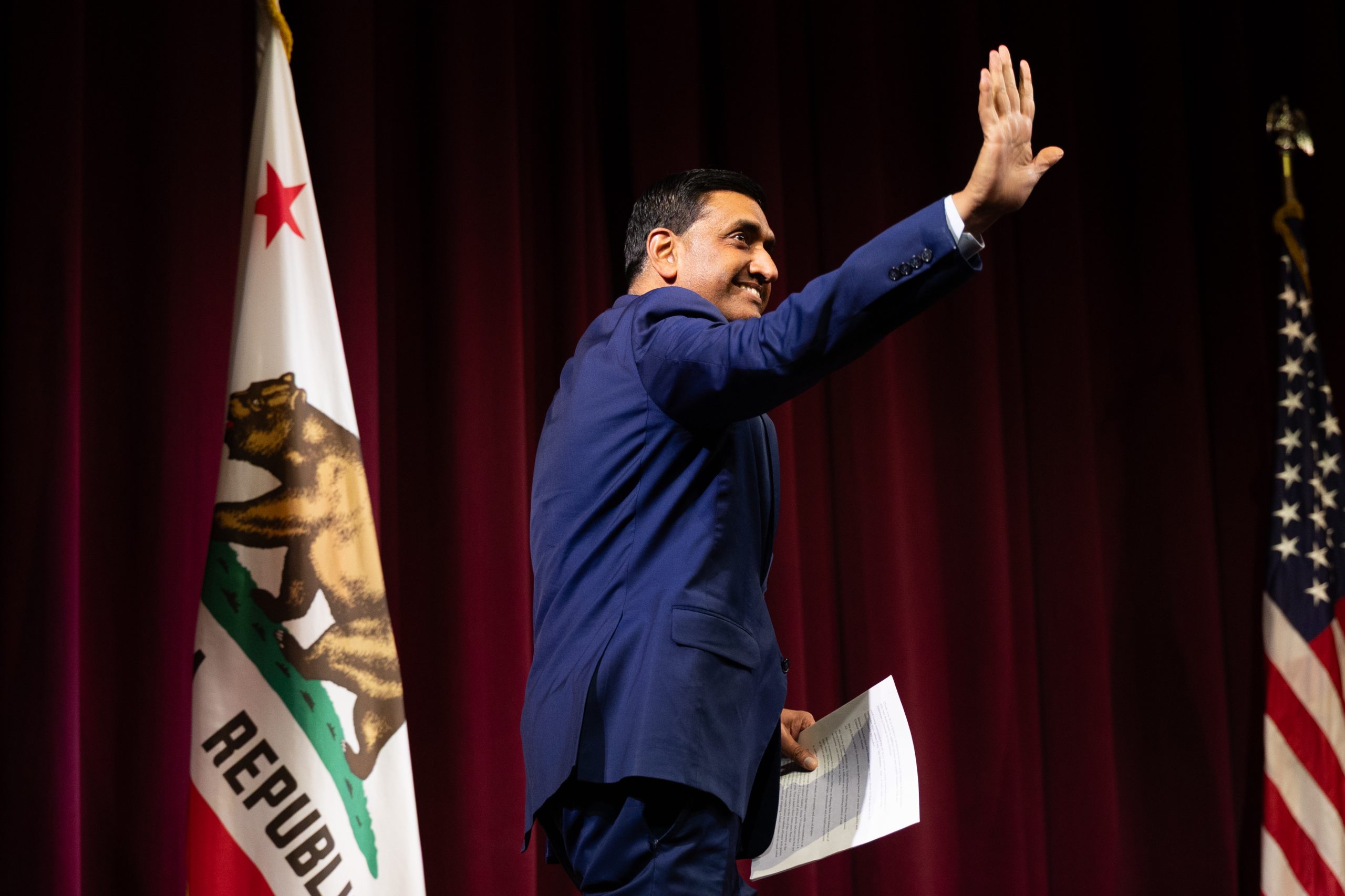
Top Democrats are using 2026 as a launching pad for potential 2028 presidential runs.
From progressive Reps. Ro Khanna (D-Calif.) and Alexandria Ocasio-Cortez (D-N.Y.) to the more moderate Pete Buttigieg and Pennsylvania Gov. Josh Shapiro, Democrats have sought to shape their party by endorsing in contested primaries this year. They’ve traveled the country to raise their own profiles and elevate candidates they see as the future of the party.
Their strategies have not always been successful — but they have been revealing: Some endorsed against incumbents based on generational or ideological differences. Some weighed in early to give candidates credence, while others waited until the last minute to help them close out the race. And some have focused on purple districts and other competitive races that could determine control of Congress in the fall.
“If you’re thinking about running for president, you need allies,” said Mike Nellis, a Democratic strategist whose firm works with House and Senate campaigns across the country. “The more that you’re out there, trying to get people elected and making a meaningful difference, voters are going to remember that.”
Appearing with candidates on the campaign trail is an opportunity for potential 2028 candidates to create social media buzz, Nellis noted. Traveling gives them opportunities to connect with donors and elected officials across the country who might be helpful for a future presidential run and pressure test how messages work in various parts of the country. For those not up for an election of their own this year, it’s also a way to stay relevant.
Some potential presidential candidates have been particularly prolific, while others have been more cautious or stuck to their home states, according to a POLITICO review of endorsements in House, Senate and gubernatorial races. And a handful mostly stayed out of this year’s primaries.
The most prolific endorsers
Few members of Congress threw out as many endorsements as Khanna.
The California representative, who has said he is “seriously considering” running for president in 2028, endorsed in more than a dozen races, often serving as one of the earliest national backers of progressive candidates such as Kat Abughazaleh in Illinois’ 9th District and Analilia Mejia in New Jersey’s 11th District. Abughazaleh lost her race, while Mejia won.
Khanna also backed left-wing candidates that other national progressives shied away from, most notably democratic socialist state Rep. Francesca Hong in the Wisconsin gubernatorial race.

His record is mixed. Hong lost and former Maine Senate Democratic nominee Graham Platner, who Khanna stood by despite a series of controversies, had to drop out after winning a primary but facing an allegation of sexual assault, which he denies — at which point Khanna, like many others, withdrew his endorsement.
Khanna told POLITICO he likes “endorsing early when an insurgent candidate is a bit of a longshot because that is when they need the endorsement most.” He looks for candidates who support Medicare for All and taxing billionaires and are opposed to foreign wars.
“My philosophy is to give those who are outsiders and have to scrape their way in — like I had to — a fair shot,” he said in a text message.
Ocasio-Cortez also endorsed a large slate of progressive candidates, but she’s been more selective than Khanna — a difference in approach that’s sparked some infighting within the Bernie Sanders wing of the progressive movement.
Critics have argued she’s played it too safe. But her selectivity has also meant she avoided high-profile stumbles.
Ocasio-Cortez has positioned herself as more of a closer this cycle. In California’s 22nd District, a battleground in the Central Valley, Khanna endorsed progressive professor Randy Villegas last September, while Ocasio-Cortez dropped her endorsement in May — about a month before the primary. Villegas ultimately defeated a moderate lawmaker backed by the Democratic Congressional Campaign Committee and is among the progressives who will now try to knock off an incumbent Republican in November.
Ocasio-Cortez actively campaigned for progressives in several contested battleground primaries, rallying with Sam Forstag in Montana and alongside Sanders with Abdul El-Sayed, who narrowly won the Democratic Senate nomination in Michigan.
She recently threw her support behind Sen. Ed Markey (D-Mass.), who faces a primary challenge from Rep. Seth Moulton next week.
The other most frequent endorser among potential Democratic 2028ers this cycle played in a different lane. Former Transportation Secretary Pete Buttigieg, a moderate, has been active on the campaign trail, visiting most presidential battleground states and endorsing in key Senate primaries, including Rep. Angie Craig in Minnesota’s Democratic Senate primary — which she lost to progressive Peggy Flanagan — and state Rep. Josh Turek in Iowa’s Democratic Senate primary, which he won.

Buttigieg, who has said he is “more inclined than not” to run for president again in 2028, has also notched endorsement wins with Rebecca Cooke in Wisconsin’s battleground 3rd District and former Hartford Mayor Luke Bronin in Connecticut, who defeated incumbent Rep. John Larson earlier this month.
Most governors stuck close to home
Governors eyeing White House runs kept their endorsements closer to home, largely trying to play kingmaker within state lines as they face their own reelection fights.
The local focus allows them to flex their influence while avoiding criticism for nationalizing their own states’ politics. And they’ve campaigned aggressively for their chosen candidates — political power plays that not only strengthen their standing on home turf but could also serve as springboards for national bids.
Illinois Gov. JB Pritzker pumped $10 million into a super PAC supporting his lieutenant governor, Juliana Stratton, in the contentious Senate primary to replace retiring Sen. Dick Durbin, and appeared alongside her on the campaign trail. He described the race as “personal” to him; Stratton won by 7 points.

Pennsylvania Gov. Josh Shapiro expended significant political capital in one of Democrats’ top House targets in his state, helping recruit longtime ally and firefighter union chief Bob Brooks into the race against GOP Rep. Ryan Mackenzie in the state’s swingy 7th District and then working to elevate him out of a four-way primary. Shapiro fundraised for Brooks, cut an ad for him and joined him on the stump ahead of Election Day; Brooks won by nearly 20 points.
Shapiro was also one of a handful of Democratic attorneys-general-turned-governors who backed Colorado Attorney General Phil Weiser in his gubernatorial primary against Sen. Michael Bennet. Weiser won by 14 points.
In Maryland, Gov. Wes Moore backed state Del. Adrian Boafo in the crowded race to replace retiring Rep. Steny Hoyer and boosted Rep. April McClain Delaney in her bruising primary against former Rep. David Trone — including recording a robocall on her behalf. An adviser to Moore said the governor had preexisting relationships with both candidates he endorsed, and that he prioritizes local and in-state races as he seeks to make endorsement decisions that will benefit his constituents.
Michigan Gov. Gretchen Whitmer also stuck to her state, only really playing in Michigan’s high-profile Senate race. She endorsed Rep. Haley Stevens in the final stretch of the race, although she wasn’t active on the campaign trail in the same way Pritzker was for Stratton or Shapiro for Brooks.
Disagreements among moderates
Even among candidates occupying a more centrist lane heading into 2028, there was room for disagreement.
Sen. Elissa Slotkin (D-Mich.), a former national security official, endorsed retired Navy SEAL Matt Maasdam, a moderate in Michigan’s 7th district, which she previously represented. Several Democrats had hoped she’d back former foreign service officer Bridget Brink, a fellow moderate — and as they split the centrist vote, progressive William Lawrence ascended to the nomination in the toss-up district instead.
A person familiar with Slotkin’s thinking, granted anonymity to speak candidly about internal deliberations, said that she connected better with Maasdam and saw him as a stronger general election candidate.
The person also acknowledged that Slotkin’s decision to wait to issue her endorsement until three weeks before the primary didn’t leave enough time for voters and party leaders to coalesce around Maasdam.

Sen. Mark Kelly (D-Ariz.) rolled out a slate of endorsements of veteran candidates, mostly for the general election, but has backed a range of other Democrats in primaries. That includes DCCC-backed political novice Marlene Galan-Woods in his home state, only for her to lose the primary in Arizona’s 1st District.
“As Navy combat veteran and former NASA astronaut, Mark Kelly knows the country is best served by leaders who represent their communities and bring a range of different backgrounds and experiences to the job. It’s why he’s endorsed candidates in competitive primaries and campaigned for Democrats up and down the ballot,” Kelly spokesperson Marisol Samayoa said.
In next week’s primary in New Hampshire’s 1st District, Kelly is supporting Stefany Shaheen, the daughter of his Senate colleague Jeanne Shaheen, praising her as a “fearless leader” who would stand up to President Donald Trump.
New Jersey Gov. Mikie Sherrill also went on a recent endorsement spree focused on military veterans. But she’s backing Maura Sullivan in the race against Shaheen next week, along with Rep. Seth Moulton in his primary against Sen. Ed Markey, who has gotten backing from progressives including Ocasio-Cortez.
“The fight isn’t moderates versus DSA candidates,” Sherrill told POLITICO earlier this month. “The fight is if we are going to have strong people in the Democratic Party that are going to actually make change to make people’s lives better, or people who you can just expect more of the same.”
The ones who (mostly) sat it out
Not every potential presidential candidate was eager to endorse this cycle.
Even after working to redraw boundaries in his home state to create more safely blue seats, California Gov. Gavin Newsom stayed out of the federal races — and the contest to succeed him. Kentucky Gov. Andy Beshear endorsed after primaries in his home state were complete. Former White House Chief of Staff Rahm Emanuel, who is considering his own White House bid, also eschewed endorsements.
And Kamala Harris declined to weigh in on the majority of competitive primaries because of her high profile, according to a person familiar with her thinking who was granted anonymity to speak candidly. The exceptions were “based on the closeness” of the former vice president’s relationships with the people she did endorse.

Harris recorded a robocall for Rep. Jasmine Crockett in the Texas Senate primary before Crockett eventually lost to James Talarico. She backed Del. Stacey Plaskett ahead of her U.S. Virgin Islands’ gubernatorial primary victory earlier this month. She has also endorsed Dan Koh in next week’s primary for Massachusetts’ 6th District.
All three candidates have close ties to Harris. Crockett served as co-chair of Harris’ 2024 presidential campaign, Plaskett endorsed Harris when she first ran for president in the 2020 primary, and Koh is a former Biden administration official.
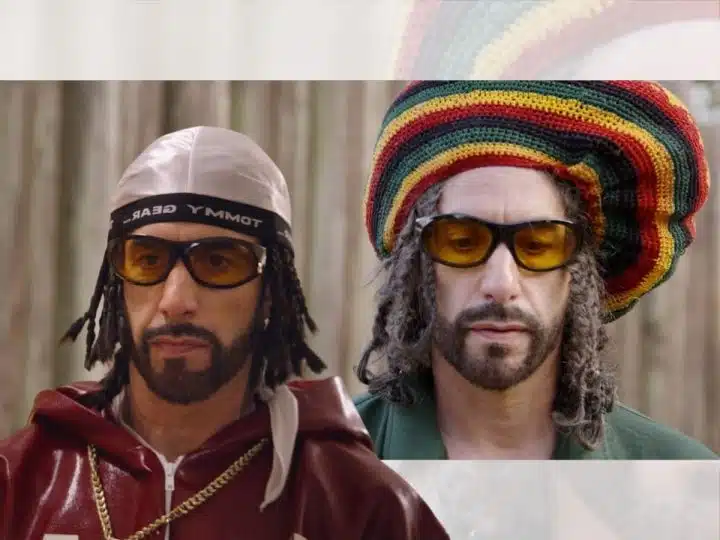

On 26 August, Sacha Baron Cohen and Sony Pictures gave us a look at the upcoming Ali G sequel. If you’ve been frozen in ice since the days of UK Garage, you may be wondering “is it, is it wicked?”. The response from many is ‘no’ – it is not wicked – and for a variety of reasons:
That Ali G trailer is worse than I thought it would be.
It’s the same clichéd, outdated, stereotype stuff & you can tell it's forced. Nobody is buying that a 54-year-old man speaks like that.
He obviously slips Iran in there. I say this as someone who grew up watching Ali G.
— Mukhtar (@I_amMukhtar) August 25, 2026
Ali Genocide
Sony Pictures describe the new movie as follows:
After twenty years spent “chillin’, tokin’ and bonin’”, Ali G is shocked to discover that his long-term girlfriend, Julie, is 8 months pregnant. Faced with an extra mouth to feed, he gets off his batty and heads to America to reclaim his former glory… but soon encounters adversaries who will ultimately threaten his and his child’s very existence. Sacha Baron Cohen’s new film, ALI G: WHO IZ I? marks his directorial debut and will be released in cinemas on October 23 by Amazon MGM Studios.
The original Ali G movie was a work of fiction; the sequel adopts the Borat model of having Cohen meeting real people while in character. While Borat was much more successful movie than Ali G, a big problem for viewers is that they know a lot more about the real Sacha Baron Cohen. Specifically, what they’ve taken exception to is his support for Israel; support which he gave when Israel was subjecting Palestine to apartheid conditions, and which has continued throughout the genocide in Gaza.
Thread Sacha Baron Cohen is being roundly condemned for his latest racist skit on national TV.
But few people know how closely he has worked with both US and Israeli intelligence throughout his career. My @MintPressNews investigation explores this:https://t.co/tmjTynAOXK
— Alan MacLeod (@AlanRMacLeod) October 26, 2024

Because of all this, people are now speculating on what that the ‘G’ in ‘Ali G’ stands for:
Ali Genocide https://t.co/7nngKwtcZ6
— Jake Hanrahan (@Jake_Hanrahan) August 25, 2026
It seems Amazon, a company which directly assists the Israeli military in killing people, is financing and distributing Israel lobbyist Ali Genocide’s new “film.”
Amazon also worked on his last Borat “film” in 2020. https://t.co/DkVwAdIIwF
— Lowkey (@Lowkey0nline) August 25, 2026
Another big issue people have is the use of blackface:
Variety have spent the last week pushing the lie that mark ruffalo is somehow antisemtic for opposing apartheid Israel’s genocide and they post this racist shit like it isn’t deeply offensive blackface shite https://t.co/vekCexxqN0
— jan (@smerkinkones) August 25, 2026
lol this is hilarious. I want a Jamaican person to do a parody of a Jewish man because it’ll be equally as hilarious ofc — Kawhi L (@KawhiLenz) August 25, 2026
 https://t.co/3MeT11n9wa
It’s worth noting that Cohen isn’t playing a Black man; he’s playing a white man who seems to have deluded himself into thinking he’s a Black man. There are potentially situations in which a comedian could do something interesting with this setup. This does not seem to be one of those situations.
Some people believe the Ali G concept is simply past it’s sell-by-date:
Just a completely outdated character now. I don’t mean that in a “friend that’s too woke” way – not that you can’t play this character any more because it’s insensitive, just these people, that style, that subculture doesn’t exist any more. https://t.co/QzNMb6u45c
— Oisín (@OisinMul_) August 24, 2026
Others just aren’t finding much to laugh at:
Just to confirm. I don’t think it looks bad because of politics or appropriation. I just don’t see any funny bits. Thanks.
— Elliot Eastwick’s World Famous Hot Sauce (@WorldFamousHot1) August 25, 2026
Popcorn
Cohen and Sony may have crafted a perfect storm of problems here. Whether it’s anti-Zionists or people who think comedies should be funny, this movie seems destined to upset everyone.
No wonder he looks so tired in the PR footage:
Sacha Baron Cohen is older than Victor Meldrew was when One Foot in the Grave started
He’s also 10 years older than Richard Madeley when he dressed up as Ali G https://t.co/yPIYXbBI02
— Ant (@M0kujin) August 25, 2026
Featured image via the Canary
By Willem Moore

Next time someone asks me what I mean by ‘suicide of the West’, I’m going to tell them that Cambridge University has a professor who once said Muslims should build ‘advanced weaponry’ for the coming ‘jihad’ to elevate Islam ‘over all other [religions]’. I’m going to let them know that at one of the highest seats of learning in Christendom, on the same dappled lawns walked by William Tyndale, Isaac Newton and Alan Turing, there now skulks an academic who once said ‘Allah’s reward’ will be ‘immeasurable’ for those who make ‘machinery for jihad’. For there it is, in all its snivelling idiocy and decadence: the West’s death wish.
Her name is Farah Ahmed. She’s an assistant research professor in Cambridge’s education faculty, the same department that employed the late fabulist, Jason Arday. Only where his wacky life story had been highly embellished, Ahmed’s is all too real. She was once an activist in the virulently bigoted Islamist outfit, Hizb ut-Tahrir. It was during her mingling with those homophobic, Jew-hating religious supremacists that Ms Ahmed wrote lovingly about ‘jihad’ while lamenting the ‘corrupt tradition[s]’ of the West. Never mind Allah’s reward – Cambridge’s reward for the woman who once spouted such medieval drivel has been an assistant professorship.
It was the sterling reportage of Andrew Gilligan at the Spectator that brought to light Ahmed’s mad old writings. In his latest piece, Gilligan reveals that she once co-authored a crazy paean to jihad with another senior Hizb activist, Nazreen Nawaz. It was published in a Hizb pamphlet in 2002 and republished in 2017 (Ahmed was not involved in the republication). The authors lay out their chillingly intolerant dream: an education system built solely around Islamic pieties, in which nothing will be taught that ‘contradicts with Islam’. ‘Freedom, nationalism, democracy, evolution’ – no such haram idea will get a look-in in the Islamo-dictatorship.
Ahmed and her co-author fantasise about abolishing all schools except Islamic ones. No schools may be ‘established on any other religion’, they say. As for higher education – its sole purpose, as Gilligan summarises, would be to ‘equip Muslims for conquest’. So the only reason to ‘study engineering’ would be to ‘aid the development of machinery for jihad’. The only purpose of a ‘computer technology’ degree would be to make you a whizz at ‘elevat[ing] the Islamic society over all other societies’. The good student would be the student who makes ‘advanced weaponry’ for the coming struggle to raise Islam ‘over all other [religions], as commanded by the Creator’.
Ahmed’s intellectual wet dreams about jihad were accompanied by a staggering disdain for Western values, especially Western education. As Gilligan previously revealed, she wrote about the ‘corrupt tradition’ of democracy. And the depraved idea of ‘religious tolerance’, where Islam is blasphemously put on ‘the same level as Christianity, Buddhism, Judaism, Hinduism, Sikhism’. And the horrors of English literature, ‘one of the most damaging subjects’ in education, with all its scandalous stories that ‘contradict Islam’. And the sinfulness of teaching evolution, given it, too, ‘contradict[s] Islam’. And now she’s a prof at Cambridge, alma mater of Darwin. What can you even say?
Ahmed’s apologists will say she’s changed. It’s true that, back in 2010, she said she no longer supports ‘all’ of Hizb ut-Tahrir’s teachings. Yet just last year, she co-authored a toolkit titled ‘How Islamic is my school?’ for ‘educators seeking to centre the Islamic worldview in their schools and classrooms’. A Cambridge project she runs promotes an ‘Islamic curriculum’ that tells kids as young as 12 that Israel uses the threat of Hamas as ‘an excuse’ to ‘justify its attacks on the Gaza Strip’. It also refers to the Israelis kidnapped by Hamas as ‘prisoners of war’ and uses a map in which Israel is erased. I suppose I’ll be called ‘Islamophobic’ if I say I don’t like that such ideas have been allowed to fester at Cambridge.
What the hell is happening there? As with the Arday scandal, the Ahmed controversy speaks to the moral rot of this once towering citadel of thought whose discoveries have done so much to expand the knowledge, health and wonder of humanity. These are the quads where the atom was first split. And where the structure of DNA was discovered. And where Turing honed his genius that helped us slay the Nazis. And where Tyndale and others sowed the intellectual seeds of the Protestant Reformation and the glorious birth of freedom of conscience. ‘Little Germany’ their Cambridge pub was nicknamed, for it was there that they pored over Luther’s revolutionary pamphlets that had been smuggled upon pain of death into England.
And now? Now Cambridge fawns over fabulists like Jason Arday who churned out critical-race dross about how Britpop was racist. Now Cambridge has professors who tweet: ‘White Lives Don’t Matter. As white lives.’ Now Cambridge adds trigger warnings to Shakespeare, informing students his plays contain references to ‘sexual violence’ and ‘sexual assault’. Now Cambridge has students who’ve targeted people like me with rowdy protests because we say a lesbian can’t have a cock. From discovering the structure of DNA to swallowing the intellectual voodoo of ‘women with penises’ – ladies and gents, I give you the fall of the West.
From William Tyndale to Farah Ahmed – what a story. One gave his life – literally – to the searingly democratic idea that the Bible should be translated into English in order that every man, of the cloth or not, would be free to read it. The other once dreamt of bending education to the backward, suffocating cause of ‘jihad’. In my view, Cambridge’s employment of Ahmed is not a glitch – rather, her prickly attitude towards ‘Western education’ echoes that of the academy itself, where the obsession of recent years has been to ‘decolonise’ universities of their Western-centric ways. Oh, Cambridge – you thought you would renew yourself through wokeness, but you destroyed yourself. It’s the story of the West.


The secrecy which surrounds information on the use of animal experiments in science has been ruled unlawful by the Upper Tribunal in a landmark case brought by animal protection organisation, Cruelty Free International.
A specially-convened three-judge panel heard the case in the Upper Tribunal, the equivalent of the High Court in the tribunal system which decides Freedom of Information Act appeals.
The case, ‘Cruelty Free International v Information Commissioner and Home Office’, concerned Section 24 of the Animals (Scientific Procedures) Act 1986 (ASPA). This prohibits Home Office ministers and officials from disclosing information given to them in confidence by animal researchers.
Crucially, this includes detailed applications for licences to conduct animal testing. The Home Office assumes everything is confidential, apart from the short summaries which the applicant legally has to publish but which often omit crucial information.
Under Section 44 of the Freedom of Information Act, statutory prohibitions on disclosure, such as Section 24 ASPA, constitute an absolute exemption from disclosure, whereby the public body in question does not have to consider whether there is overriding public interest in the information being available, as it does with most other exemptions.
Animal experiments shouldn’t be secret
Cruelty Free International argued that Section 24 is contrary to Article 10 of the European Convention on Human Rights, which, following a European Court of Human Rights case called Magyar, obliges governments to disclose information in certain circumstances.
These include where the information is publicly important and the requester acts as a public watchdog, such as the media or a responsible NGO such as Cruelty Free International.
Cruelty Free International’s request focused on the Home Office’s evaluation of applications for licences to conduct animal experiments on cosmetics. For 30 years, the department had refused licences for this purpose, on the basis that the pain suffered by the animals was not justified for products regarded as unimportant.
Before granting a licence, the home secretary has to be sure that the benefits of experiments outweigh the suffering to the animals (the harm:benefit test). However, the home secretary started granting cosmetics licences again in 2019, in secret.
Cruelty Free International wanted to know why the assessment of harms and benefits had changed. Public opinion overwhelmingly opposes cosmetics animal tests, in particular. The Home Office refused to disclose the evaluations, citing section 24.
Upper Tribunal accepts Cruelty Free International’s argument
The Upper Tribunal has now decided that Cruelty Free International met the Magyar tests and the Home Office could not rely on the exceptions to Article 10.
Crucially, the department accepted as long as 12 years ago that there was no justification for retaining Section 24 in its present form in an era of much greater governmental transparency. But it has done nothing to remedy the situation.
Importantly, legitimate interests such as confidentiality and safety already have full protection through other Freedom of Information Act exemptions.
The Upper Tribunal has limited remedies available to it. Cruelty Free International now expects the case to go to the Court of Appeal for final resolution.
Cruelty Free International’s director of science and regulatory affairs, Dr Emma Grange, said:
This is a really important ruling. The public has a right to know the basis for granting licences for animal experiments. It should not be a cosy club between researchers and regulators.
The harm:benefit test is essentially an ethical assessment, and public and parliamentarians should be able to influence its practical application. Far too many licences are granted which few would regard as justified on any basis.
In addition, how the Home Office reaches scientific judgements should be open to scrutiny, because there is increasing acceptance that many animal experiments are unreliable. This is of the first importance for human health.
Featured image via Cruelty Free International / Carlota Saorsa
By The Canary


So-called Israeli Minister of National Security, Itamar Ben-Gvir, has found himself in charge of the Israeli occupation’s police, its prisons and its internal security. This is despite being an illegal settler and convicted criminal.
Ben-Gvir: fulfilling his promise to ‘Israeli’ citizens
He has recently been showing off a new execution facility, which is currently under construction. He says there will be a hanging rope and “viewing chamber” so victims’ families can come and watch Palestinians being put to death. Ben-Gvir, who claims the plans are based on the US model of an execution chamber, says:
We are fulfilling what we promised.
In March, the Knesset passed a death penalty law which was initiated by Ben-Gvir. It mandates hanging for Palestinians convicted in military courts of lethal attacks against ‘Israelis’. This legislation means the Israeli occupation Prison Service is now responsible for execution — by hanging — within 90 days of sentencing.
Capital punishment legislation is part of a deliberate state project, promoted by Ben-Gvir. The aim is to strip Palestinian prisoners of what few rights they may still have, and any basic daily needs. And it provides legal cover for a reality already enforced on the ground.
The idea, since he became minister, has been to turn ‘Israeli’ detention facilities into sites of systematic deprivation, torture and abuse. He has succeeded. According to B’Tselem, Ben-Gvir has turned Israeli occupation prisons into a:
network of torture camps for Palestinians.
Prisoner advocacy groups claim the current conditions are the worst experienced by Palestinian detainees. Palestinian detainees are totally dehumanised, through institutionalised neglect and physical violence. But Ben-Gvir continues to treat them inhumanely, and makes this known to the ‘Israeli’ public.
The worst conditions possible for Palestinian detainees
Pushing for the death penalty and tougher prison conditions was the main promise of his 2022 campaign. Ben-Gvir attacked prison conditions as too soft. And he refused to join Netanyahu’s coalition without a deal to make life harsher for Palestinian detainees, and the introduction of executions. As national security minister, he used these crackdowns to show his supporters he was getting results. This was important, as polling in ‘Israel’ has shown for years, that the majority of Jewish-Israelis support the death sentence for Palestinians who kill ‘Israelis.’
The occupation’s national security minister has also given orders to prioritise the demolition of homes in Palestinian villages and towns in ‘Israel’. He has even said:
the best deterrent is evicting a [Palestinian] family from its home.
He has recently participated in a police campaign to demolish Palestinian buildings in the al-Jawarish area of Ramla, a predominantly Palestinian area in so-called ‘Israel.’ Citing lack of permits-which are almost impossible to obtain — he posted a video of himself, on X, in which a house in the neighbourhood was being flattened. He commented that the 10,000th “illegal” Palestinian structure was about to be demolished, and said the bulldozers were making
Wonderful sounds
and
sounds of sovereignty.
Ben-Gvir Celebrating the demolition of the 10,000th Palestinian They are counting Israel UK — Howard Beckett (@HowardRBeckett) August 20, 2026
 minister:
 home
home
They are celebrating
is a racist, apartheid state
 sanctions against now
Ban arms sales to now
Ban money from politics now. pic.twitter.com/k2JcPUuFZD
80 percent more demolitions of Bedouin homes
The occupation has marginalised Bedouin communities in ‘Israel’ and Area C of the West Bank for decades. The campaign of forced displacement and discrimination is now accelerating. Ben-Gvir has ordered the demolition of 80 percent more homes in Bedouin communities, in the last three years, especially in the Negev, in southern ‘Israel’, and parts of the West Bank.
In June, Ben Gvir boasted that he had:
demolished 5,700 homes in the past year alone,
vowing he would:
continue demolishing more and more homes in Bedouin communities.
He has framed the policy of stricter enforcement against “illegal construction” as central to restoring “governance and sovereignty” to the area.
Hundreds of Bedouin Palestinians demonstrated in the Negev desert against the demolition of homes in "unrecognised villages". Community leaders called for recognition of Bedouin communities and criticised National Security Minister Itamar Ben Gvir for promoting the policy. pic.twitter.com/HFCduwtaGN
— Al Jazeera English (@AJEnglish) June 25, 2026
Hundreds of thousands more Israeli-Jews now have a firearms permit
Ben-Gvir also promised to expand eligibility for gun ownership to:
ensure that as many citizens as possible can protect themselves and the State of Israel.
Soon after 7 October 2023, his new regulations saw licences fast-tracked and 280,000 Jewish-Israeli citizens, including illegal settlers in more than 200 localities, now have a personal firearms licence. This is a dramatic increase from before the start of the genocide in Gaza.
Volunteer civilian guard units have operated in West Bank settlements for decades. But after taking office, Ben-Gvir created hundreds of new squads, and directly distributed tens of thousands of automatic rifles to them. He also established new volunteer police units composed of settlers. These armed settlers have the full backing of the occupation, and operate with absolutely no accountability whatsoever.
They are out of control and used by the occupation to intimidate, terrorise, and even kill Palestinians, on a regular basis. The aim, as always, is to forcibly displace them from their homes and land. But as settler violence has reached a record high, the occupation’s police in the West Bank, under Ben-Gvir, have become extremely lenient. ‘Israeli’ news outlet N12 News reports a decrease of almost 75 percent in the opening of settler violence cases against Palestinians, since October 2023.
In a recent podcast, Ben-Gvir not only called for Jewish settlements in Gaza, but advocated for the killing of 30 to 40 Palestinians every night, saying Palestinians
do not need to live.
#Israel’s far-right minister Itamar Ben Gvir has called for the killing of 30–50 Palestinians in #Gaza every night, while making further dehumanising remarks about Palestinians. pic.twitter.com/7NNOafH7j4
— Doha News (@dohanews) August 16, 2026
“Utter contempt” for international law
According to the UN human rights office (OHCHR), Ben-Gvir’s words have incited
violence amounting to atrocity crimes
against Palestinians. They are:
yet another example of the utter contempt for international humanitarian law, international human rights law and the basic tenets of humanity displayed by senior Israeli Government officials.
But his comments did not receive condemnation from the ‘Israeli’ media, or government. This is not surprising, given the result of the Hebrew University of Jerusalem poll, in 2025. Almost two thirds of the Israeli public agreed with the statement:
there are no innocents in Gaza.
Ben-Gvir’s rise to national security minister shows how far-right ideas have moved to the heart of power in ‘Israel’ . When he was a teenager, he followed the violent Jewish-supremacist rabbi Meir Kahane. Kahane called for the expulsion or enslavement of all Palestinians, in ‘Israel’ and Palestine. As a result, Ben-Gvir was considered too dangerous to join the Israeli occupation forces (IOF).
Ben-Gvir — the face of the apartheid ‘Israeli’ state
He first became well-known in 1995, when he stole the badge from then prime minister Yitzhak Rabin’s car. He held it up on TV, saying:
We got to his car, and we’ll get to him too.
Rabin, who signed the Oslo Accords, was assassinated several weeks later.
Ben-Gvir is a criminal. He lives in Kiryat Arba, an illegal Israeli settlement on the outskirts of Hebron, in the occupied West Bank. And he has at least eight criminal convictions, including supporting a terrorist group, called Kach, and inciting racism against Palestinians. He kept a photo in his living room, until 2020, honoring the American-Israeli murderer Baruch Goldstein. In 1994, Goldstein, an illegal settler, shot dead 29 Palestinians while they prayed in Hebron’s al-Ibrahimi Mosque.
Once thought of in ‘Israeli’ society as a dangerous outcast, he is now a minister with deep public support. In the 2022 election, his alliance won over half a million votes to become the third largest bloc in parliament, being especially popular among young voters and soldiers. Recent polls show that over 70 percent of right-wing coalition voters still want him to keep his job.
Western media often frames Ben-Gvir as a rogue extremist, but he is not. He is the unmasked face of ‘Israel’s apartheid society. He says out loud what the state has practiced on the ground for decades, but others do not want to admit to. There is no mass outrage in ‘Israel’, over what he says and does because his thoughts and actions match what much of the public wants too.
And when Pew Research finds only four percent of ‘Israeli’ Jews think the occupation’s military has gone too far in Gaza, while polls show a majority backing for executing Palestinians, it shows us Ben-Gvir is delivering on mainstream Israeli demands.
Featured image via the Canary
By Charlie Jaay
Politics
RSPCA says slower growing chickens could be ‘secret weapon’ to tackling food poisoning crisis


Higher-welfare poultry farming could be a “secret weapon” in curbing the nation’s most widespread cause of food poisoning, according to the RSPCA.
The call comes as a new study highlights fresh concerns about the spread of the bacterium campylobacter, the UK’s most common form of food poisoning, and the role that highly-intensive farming systems play in its spread.
An urgent switch to slower-growing chicken breeds on farms will not only “drastically improve” animal welfare. It could also offer a vital line of defence for public health and reduce strain on the NHS.
Campylobacter is largely harmless to healthy adult chickens. But it can be a major infection risk for humans, causing severe stomach cramps, diarrhoea and illness.
Now, the RSPCA says more government intervention and industry action to promote slower-growing breeds reared under higher-welfare systems could not only improve the lives of millions of animals’ lives, but simultaneously help stem food poisoning and illness in the human population.
The RSPCA view
Charlotte Arthur, poultry welfare expert at the RSPCA, said:
In preventing the spread of campylobacter, hygiene and biosecurity have always been the focus. But evidence also suggests more welfare-friendly poultry farming could be a secret weapon in efforts to reduce the spread of a bacteria that can be so dangerous to humans.
Slower-growing chickens live longer, experience fewer welfare problems and may also be less susceptible to some of the biological processes that allow campylobacter to spread.
These birds don’t just experience better lives – evidence suggests they may be better equipped to cope with infections such as campylobacter.
That’s why slower-growing breeds of chicken must be part of a serious conversation about reducing risk, and building resilience that doesn’t involve more antibiotics, keeping people healthier, safer, and reducing the strain on the nation’s doctors’ surgeries, pharmacies and the NHS.
By switching to slower-growing chickens, we will not only drastically improve animal welfare standards, but could quite literally keep people safer and healthier.
RSPCA Assured is the RSPCA’s ethical food label and farmed animal welfare assurance scheme. Farms on the scheme utilise slower-growing breeds. And they’re reared at lower stocking densities with environmental enrichment, such as perches and pecking substrates.
These higher welfare standards allow birds to exhibit natural behaviours and significantly reduce stress levels.
Evidence suggests that less stressed, slower-growing chickens develop stronger immune systems. This makes them less susceptible to infections and reduces the likelihood of bacteria like campylobacter spreading into tissues such as the liver.
Consequently, these practices not only improve animal welfare but could also lead to fewer human infections.
It comes as a study by the European Food Safety Authority links the practice of ‘thinning’ to increased campylobacter rates. This is due to the associated stress and biosecurity challenges.
‘Thinning’ refers to removing part of a chicken flock from a shed for slaughter before the rest of the birds. This lowers the stocking density and maximises space. But it causes distress and health risks for the remaining birds. And this can further contribute to the spread of campylobacter. On welfare grounds, the RSPCA banned thinning on Assured member farms in 2016. This move may contribute further to safer meat for consumers.
Arthur added:
While no farming system can eliminate campylobacter, higher-welfare farm systems address many of the same risk factors that are being identified. Animal welfare and public health should be part of the same conversation.
And while the benefits to a chicken’s life of better systems should persuade governments to act, we hope the case for better public health and better food safety will also encourage politicians and industry to act.
The RSPCA is calling on retailers, food businesses and government to move urgently towards prioritising slower-growing breeds and promoting higher-welfare farm systems.
Meanwhile, the charity is urging people to carry out kind acts for animals in their communities as part of a Summer of Kindness. More information is available on the RSPCA website.
Featured image via RSPCA
By The Canary


Darts — Luke Littler’s push to qualify for the Players Championship Finals and keep alive his bid for a historic clean sweep of PDC majors in 2026 took a hit in Leicester, as he suffered a narrow quarter‑final defeat to Jermaine Wattimena. The world No 1 was beaten 6‑5 in a final‑leg decider, with Wattimena going on to win the title later in the day.
Littler, who has dominated the televised circuit this season, arrived at Players Championship 27 needing to bank floor earnings to climb into the top 64 of the Players Championship Order of Merit. Only those 64 qualify for the Finals in Minehead in November. With the projected cut‑off expected to exceed £30,000, every run matters.
His quarter‑final finish earned £4,000, which useful, but not transformative. This leaves him needing strong results across the remaining seven scheduled floor events.
The 19‑year‑old had opted out of the first 26 Players Championship tournaments before entering PC27 and PC28, both staged at the Mattioli Arena in Leicester. His season debut on the floor showed flashes of his usual control, but Wattimena’s finishing proved decisive at the key moment.
Clean early progress
Littler opened his campaign with a 6‑2 win over Archie Self, followed by a composed 6‑3 victory against Arno Merk. He then dispatched William O’Connor 6‑3 to reach the last 16, where he produced his sharpest performance of the day. That was a 6‑0 whitewash of Chris Dobey.
That set up the quarter‑final meeting with Wattimena, who had beaten Carl Sneyd 6‑4 in the previous round. The Dutchman, long known for his pace and heavy scoring, matched Littler stride for stride and forced the match into a final‑leg shootout. There, Wattimena produced the moment of the tournament. A clutch 115 checkout on tops to seal his first career victory over Littler.
The finish not only ended Littler’s run but also ignited Wattimena’s charge to the title.
Wattimena’s route to the Darts Championship title
Wattimena’s day built steadily before exploding into life after his win over Littler. In the semi‑final against Luke Woodhouse, he found himself 4‑1 down but reeled off six straight legs to win 7‑4, producing a remarkable sequence of five ton‑plus finishes to turn the match on its head.
He carried that momentum into the final against Kevin Doets, racing into a 6‑2 lead with another run of six consecutive legs. Doets responded by winning four of the next five to close the gap, but Wattimena steadied himself and fired an 11‑darter to close out an 8‑6 victory and secure his third PDC ranking title.
Afterwards, Wattimena noted that he “played really well today but some games I made difficult for myself,” and highlighted the confidence boost from his 115 finish against Littler. He also acknowledged he hadn’t realised he had hit five ton‑plus finishes in the semi‑final, adding that he was “very happy with this win” as he moved back into the world’s top 16 at the expense of Ross Smith.
Littler’s clean sweep bid still alive
Littler’s season remains extraordinary. He has won every televised PDC major so far in 2026. The World Championship, Masters, UK Open, Premier League, World Cup of Darts and World Matchplay. He still has the World Series, World Grand Prix, European Championship, Grand Slam of Darts and Players Championship Finals to chase.
A clean sweep of all ranked PDC majors in a single season has never been achieved, and Littler’s form across long‑format matches has made the possibility a genuine talking point. But the Players Championship Finals remain the biggest obstacle, not because of the format, but because of qualification.
With only seven floor events left and the cut‑off likely above £30,000, Littler needs deep runs and ideally a title to secure his place. The winner of each Players Championship event earns £15,000, meaning one strong day could transform his position. PC28, also held in Leicester, offers an immediate chance to respond.
Darts — What comes next
Littler returns to the floor for PC28 with immediate motivation. His televised dominance remains unquestioned, but the Players Championship Order of Merit demands consistency across the floor circuit. This is something he has not needed to prioritise until now.
With seven events left, the equation is simple, Littler must accumulate enough prize money to reach the top 64. His quarter‑final run at PC27 was a solid start, but deeper progress will be required. Given his level across 2026, a title run is well within reach.
Littler’s pursuit of a historic clean sweep remains one of the defining storylines of the year. PC27 was a setback, but not a derailment. The next chapter begins immediately in Leicester.
Featured Image courtesy of the Canary
By Faz Ali


On 25 August, we reported that PM Andy Burnham had reportedly backtracked on plans to temporarily nationalise Thames Water. While the plan didn’t go far enough, it was better than allowing the company to remain in the hands of Thames Water and its investors. And now, Green Party leader Zack Polanski is demanding answers:
I have written to the Cabinet Secretary to seek assurances that the Prime Minister’s Chief of Staff, who was lobbying for the privatised water industry until recently, has had no involvement in talks about the future of Thames Water. pic.twitter.com/T7QNfFkdWU
— Zack Polanski (@ZackPolanski) August 25, 2026
Conflicts of Interest
The full letter from Polanski reads:
It is reported in the media today that the Prime Minister has ‘shelved’ plans to take Thames Water into administration.
As is well known, the Chief of Staff in Downing Street James Purnell was until his appointment, the Chief Executive of Flint Global, whose clients it is widely reported include members of the privatised water industry, and Thames Water’s bondholders.
The Times reports that the Prime Minister has been ‘advised by officials’ not to go ahead with special administration. In addition to James Purnell, can you confirm that no other officials involved in this process have links to the privatised water industry, and have accepted no hospitality from anyone associated with or acting on behalf of members of the water industry, including Flint Global, post the departure of James Purnell.
It is especially concerning that the Times reports that the Prime Minister has listened to advice that even the half measure of temporary special administration would be costly and run into legal issues. Of course, this is what advisers and lobbyists for the privatised water industry will be saying and it is the ‘advice’ James Purnell would have been making weeks ago. It is also highly unlikely to be true, given the repeated catastrophic failures of Thames Water, including polluted rivers, sky high bills and water shortages, Thames Water could be taken into public ownership right now and Thames Water would not have a legal leg to stand on.
The public and I expect a proper explanation for this decision, including an update to parliament at the first possible time, and assurances that James Purnell has had nothing at all to do with discussions on this crucial matter of public importance. There is a new Prime Minister who has promised to do politics differently, and corporate lobbyists at the heart of government decision-making don’t feel too different at all.
Most of all we need assurance the Prime Minister is not acting in hock to the Thames Water bond holders.
Polanski — Answers needed
Polanski isn’t the only one criticising Burnham. As the pro-nationalisation pressure group We Own It told us on Tuesday 25 August:
If Burnham doesn’t take Thames Water into public ownership, he’ll go down in history as a same-old prime minister delivering sewage in our rivers and spiralling bills to households. This is his one and only chance, if he doesn’t take it he’ll be a laughing stock.
The idea that we can’t take back this company which has literally gone bust, been in breach of its licence for two years and has put forward several proposals for illegal sewage is a joke. It makes a mockery of households, of our entire water system, of the special administration regime, of England. Why should a handful of US creditors – whose own water is 87% publicly owned – cow a British Prime Minister into submission? Why can’t he stand up for us like the Blair government did when Railtrack went bust?
Officials should absolutely be investigating how to reward this failure as little as possible but let’s be clear – the shareholders don’t need compensation, they have already walked away. The creditors are expecting a huge haircut to the debt. So that means just refinancing a vastly reduced debt more cheaply in the public sector. The company can be brought into special administration on two counts – it’s insolvent and it’s failing to fulfil its statutory duties.
Andy Burnham went to court to fight for bus passengers in Manchester. He must continue defending the public interest if he wants to stay popular. The alternative is to rubber stamp the rip off of English households for decades to come. Because there has never been a cheaper or better time to take back Thames Water.
Solutions
If the latest reports are to believed, there may be some hope yet. Apparently, Burnham is considering a change to insolvency laws. This would allow the government to more easily take control of companies like Thames Water. The problem, of course, is that Burnham has promised and considered many things at this point. And we all know who’s whispering in his ear.
Featured image via Matthew Horwood / Carl Court
By Willem Moore
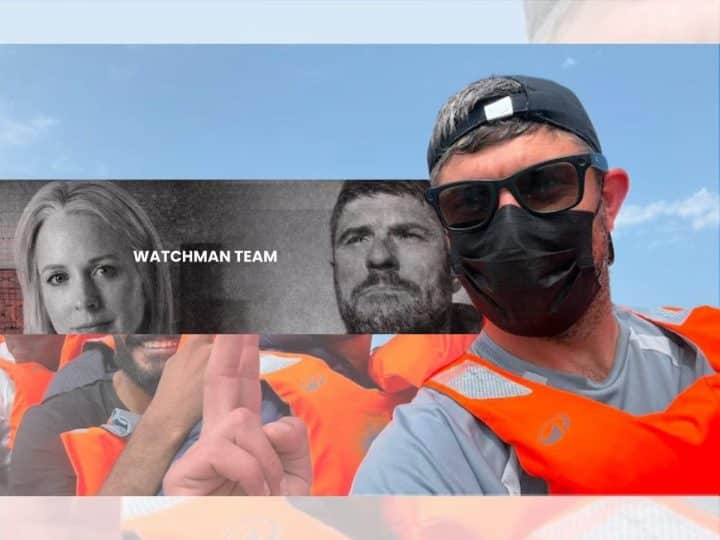

A journalist known for pushing anti-migrant sentiment has gone undercover on a small boat crossing in the channel. Now, people are asking if he’s broken the law by doing so.
Notably, the journalist carried this action out in coordination with Isabel Oakeshott — a Reform-supporting journalist who’s in a relationship with the party’s deputy leader, Richard Tice:
— Isabel Oakeshott (@IsabelOakeshott) August 25, 2026
 HOW did a white British man cross the Channel in a migrant dinghy? Read the full story of our year-long undercover investigation in the Channel for @watchman_raw and @TalkTV here: https://t.co/aoN6ssmHis
Migrant-investigating watchman
The journalist in question is one Christian Drogan of the ‘Watchman’ group. Watchman describes itself as following:
Watchman is a non-partisan platform documenting real-world experiences across Britain, with a focus on verified reporting, public submissions, and community-led journalism.
We publish carefully reviewed public submissions, including video footage, images and first hand testimony, highlighting the impact of migration in the UK, pressures on public services and wider social and political issues. Coverage includes small boat crossings, asylum seekers, housing pressures, NHS strain and the effects of UK migration policy on local communities.
The idea that the group is ‘non-partisan’ is interesting given that the Teams section of the Watchman site pictures just two people – Drogan and Oakeshott. Anyone with any awareness of Oakeshott knows she is one of the most partisan journalists in the UK. Much of her current reporting is openly supportive of Reform UK, and she’s in a relationship with the party’s deputy:
Reform accuses National Crime Agency of leaking bank statements https://t.co/9VIXkFKKFU
— Isabel Oakeshott (@IsabelOakeshott) July 7, 2026
Oakeshott has also attracted criticism for the following:
Here's Middle East migrant, Isabel Oakeshott, telling us that she hasn't bothered to learn the language yet. pic.twitter.com/kV0kcLUDq2
— Haggis_UK
 (@Haggis_UK) August 25, 2026
Crossing
Drogan’s story was published in the Telegraph. It focusses on his attempts to board a small boat from France to Britain, and features passages like this:
Boarding the blubbery black vessel that now lurked in shallow waters waiting for its human cargo would be the culmination of a year of painstaking groundwork and intelligence gathering. The preparations had been physically gruelling, expensive, and at times extremely dangerous. Through multiple failed attempts, I had learned the hard way that a white-skinned English man is an instant source of suspicion in these circles – no matter how downtrodden he looks. Though I could – and often did – pass for a Kurd, the ruse only worked while I kept my mouth shut. Unfortunately, I don’t speak a word of Arabic, Farsi, or any other foreign languages.
It’s notable that the situation for Drogan wasn’t as serious as it was for the asylum seekers he would later travel alongside:
On one particularly epic day of this twisted travelling circus, I notched up 42,000 steps. In cheap trainers that were never designed for such distances, I was soon limping like a bona fide asylum seeker.
Eye on the prize, I kept going.
Eventually, I received an alert that made my heart leap and my pulse quicken: “game” was tomorrow. I was instructed to make my way to a final holding camp in the woods.
Drogan would go on to board a small boat bound for the UK, but was caught by Border Force and taken to a processing facility.
Breaking the law?
One question people are asking is whether Drogan broke the law:
This should be fun.
These two twats filmed themselves breaking the law.
I'm going to assume you knew about it and did nothing.
That's you fucked too.@TiceRichard pic.twitter.com/OUU00uekrY — MrTibblesNewEra (@MrTibblesNewEra) August 25, 2026
In his piece, Drogan wrote the following (emphasis added):
Official Home Office figures will tell you that on Aug 2, 2026, a total of 35 illegal immigrants crossed the Channel. Quite rightly, the statistics do not record me: the only person to have invaded without breaking the law.
The problem is it’s illegal to enter the UK from a foreign country without doing so through official checks – even if you are a British citizen.
Drogan’s belief that he didn’t break the law might rely on the fact that he was caught by Border Force and taken to a processing facility. Drogan admitted he was a journalist at the facility, and so he did deal with customs in a sense; the question is whether this is legally excusable given the situation.
A counter to this is that there should be some leeway for journalists to observe criminal activity up close, and that sometimes that will necessitate breaking various laws. We might not like Watchman and we may be dubious of their intentions, but we’re also wary of attempts to further criminalise journalists.
Migrant dehumanising narrative
Regardless of the legality of all this, this coverage is being pushed by Oakeshott and other Reform sources to once again dehumanise and discredit asylum seekers. Why are they doing this? Because doing so draws attention from the people who are actually rinsing this country — the billionaires who have gotten richer and richer while the rest of us have suffered.
Featured image via Watchman Media
By Willem Moore

MONEY – SIDHU MOOSE WALA (OFFICIAL VIDEO) LATEST PUNJABI SONG 2026

Working 9 To 5 ‘until the day she died’: Dolly Parton was planning an avatar show, a biopic, a musical documentary and a scripted series in the months leading up to her death

'End of an era' for ice cream shop open 106 years





-

 Fashion6 days ago
Weekend Open Thread: Madewell – Corporette.com
-

 Crypto World1 day ago
SpaceX stock could rise 75% to $240, JPMorgan says
-

 Business5 days ago
Musk’s Tesla, SpaceX Confirm $16.8 Billion ‘Terafab’ Chip Plant as World’s Largest Building in Texas
-

 Crypto World5 days ago
anatomy of crypto’s biggest liquidation event since 2021
-

 Crypto World2 days ago
A $30 Billion AI Fund Implodes, Now the SEC Is Investigating Wall Street’s Role
-

 Politics5 days ago
6 months on, Irish renters crushed by effects of government housing bill
-

 Crypto World1 day ago
Did Trump Just Move SpaceX Stock With One Truth Social Post?
-
 NewsBeat5 days ago
The ‘Lucky Dip Gang’ causing carnage for clicks: After five thugs were killed speeding in the wrong direction on a motorway, GUY ADAMS investigates a sick new trend… and why police aren’t even allowed to pursue them
-

 Business4 days ago
Mystery AI Model ‘Ox Alpha’ Draws Developers With Free Access as Chinese Lab Origins Remain Debated
-

 Business3 days ago
Moderna CEO warns China is pouring state money into mRNA technology
-

 Business7 days ago
Five Below: Kids Discount Retailer Reaps Rich Rewards
-

 Business2 days ago
NVIDIA Stock Drops Nearly 2 Percent to $210 on Seventh Losing Day Ahead of Critical AI Earnings
-
 Crypto World5 days ago
Nvidia Stock Suffers Longest Losing Streak Since 2022: Will Q2 Earnings End It?
-

 Sports4 days ago
Deshaun Watson fires back at Browns fans after being booed: ‘It’s a disrespectful thing’
-

 Business6 days ago
UK firms in critical financial distress rise 9% to 53,756
-
 Crypto World4 days ago
Google Gemini AI Predicts Ethereum Could Become the Trade Retail Misses in 2026
-

 Tech5 days ago
Unitree’s New Superman Robot Claims to Outjump and Outrun Every Human, Usain Bolt Included
-

 Crypto World7 days ago
Optimism-funded team's deciding vote shifts $49 million in OP tokens away from users
-

 Tech6 days ago
Faster chip in a familiar form factor
-

 Crypto World7 days ago
Japan 225 Analysis: Index Declines Amid Rising BoJ Rate Expectations
You must be logged in to post a comment Login